Biden Goes to the Middle East
BY PHILIP GIRALDI • UNZ REVIEW • JUNE 28, 2022
The White House has confirmed that President Joe Biden will travel to the Middle East in mid-July. He intends to visit Israel, the Palestinian Authority and Saudi Arabia. The trip will be used to address outstanding bilateral and multilateral issues, including convincing the Saudis to pump more oil to bring down fuel prices. Among the key topics to be discussed will be the alleged Iran threat, a possible security alliance between Israel and Gulf states backed by Washington, the status of the US Consulate General in Jerusalem, and the future of the Palestinian Authority.
Biden has agreed to a controversial meeting with Saudi Crown Prince Mohammad bin Salman, in which he will ask the Kingdom to agree to “normalize” relations with Israel in addition to increasing its oil exports. There has also been considerable pressure on Biden to seek a commitment from the Prince to take steps to improve human rights in his country, but the subject is not likely to come up as it is Biden who is seeking concessions from the Saudis. The Prince, for his part, ordered the October 2018 killing of US resident and Washington Post journalist Jamal Khashoggi in Istanbul. Khashoggi had been highly critical of the Saudi monarchy, particularly regarding its human rights record. Some in Congress and the media have described the private meeting as inappropriate given that fact.
Indeed, pumping more oil aside, the trip is largely about doing many things to help Israel, which is expected to produce favorable reporting in the US media preceding the November mid-term election. Biden even described the trip as being “for Israel” and that loud sucking noise you hear is his repeated pledges of loyalty to the Jewish state. He has described himself as a “Zionist” and has enthused “My commitment to Israel is known and engraved in rock.” Lest there be any confusion in spite of all that, the White House statement regarding the trip also made very clear that the president will “reinforce the United States’ iron-clad commitment to Israel’s security and prosperity.” That means that Israel will not be pressured over its appalling human rights record, worse even than Saudi Arabia’s, to include the recent assassination of Palestinian-American journalist Shireen Abu Akleh. On the contrary, Biden is bearing gifts to reward the Israelis for being such great friends, including a proposal that increases US financial and logistical support for the Jewish state’s air and missile defense systems, which are already largely funded by Washington.
Other aspects reflecting the Israeli dominance of US-Mideast foreign policy include Biden’s convincing the Saudis and also representatives of the Gulf States to step up their efforts to actively counter what is being described as “threats from Iran.” It is being suggested that this might include a security arrangement, not quite an alliance, but a commitment by many of Iran’s neighbors to act jointly if the Islamic Republic threatens anyone in the region. The arrangement would have to include Saudi Arabia, the Gulf States and Israel, backed up by the US military presence in Kuwait, Bahrain and Qatar. Israel is also demanding a Plan B response proposal if Iran and Washington fail to restart the stalled Joint Comprehensive Plan of Action (JCPOA) nuclear monitoring program. Washington, under pressure from Israel, now appears to be reluctant to make the concessions that would reestablish the original plan and the Israeli government is seeking a commitment by the president to use force, if necessary, when Iran crosses an agreed upon “red line” by enriching uranium until it produces enough fissile material to put together a nuclear weapon. Of course, there is a trick to the demand as Israel claims that Iran already has enough enriched uranium to create one or more bombs.
Israel nourishes regional imperatives that might tempt it to steer the discussions in a direction that would be very favorable to itself at the expense of other US interests in the region. Israel’s leaders regularly boast about their ability to manipulate the American government. They might stage or manage an incident that takes place during the Biden visit to shift perceptions of the status quo in the Middle East. As Israel has demonstrated that at its most extreme it has little regard for American lives or property, one should not be surprised if something odd were to happen. Many credible observers credit the Israeli intelligence services with a whole series of attacks on American targets, possibly even including arranging the assassination of John F. Kennedy and instigating 9/11. And then there are also the Lavon Affair in 1954 which involved the bombing of US government buildings in Egypt, and the attack on the USS Liberty in 1967 which killed 34 American sailors. To be sure, Israel can be ruthless and its security services are very effective at assassinations and false flag attacks.
Israel wants very much to have two developments emerge from the Biden visit. First is to effectively eliminate Iran as a potential threat by degrading its military and preventing any moves to go nuclear and second is to delegitimize the Palestinians as negotiating partners for some kind of two-state solution, which Biden claims to support even though Israelis routinely and generically refer to the Arabs as “terrorists.” To prevent blowback coming from any direct moves to confront the Iranians and Palestinians, Israel would also prefer to have the United States take the lead and do the heavy lifting. To accomplish that, it is first necessary to change Washington’s assessment of the threats in the Middle East, and that just might be doable by arranging something spectacular while the president in the region, like a bombing, or an act of sabotage or even creating what appears to be a terrorist attack. If done properly, whatever occurs would have false flag Iranian and/or Palestinian fingerprints all over it.
To be sure, America’s Secret Service will do a thorough job to protect the president and his entourage, but the Israelis would be operating on their own turf or in their own backyard and would be able to run rings around them. They would also have intimate knowledge of exactly what is being done to protect the American party.
I am not at all suggesting that the Israelis would resort to lethal violence against a group of traveling top level American officials, but I am merely examining what might happen if Prime Minister Naftali Bennett’s government were to get a bit adventurous in an attempt to change the playing field. Bear in mind that Bennett’s government is in trouble. It lost a confidence vote and has called for new elections to be held on October 25th, which could mean a return to power of the truly ghastly Benjamin Netanyahu. What would be better than to stage an international crisis of some kind to rally the Israeli people behind the current government? That would be in addition to creating a mechanism for dealing effectively with the Iranians and Palestinians, which would be very popular among Israeli voters, if an election were to occur.
So, Joe Biden is heading into a crap shoot in the Middle East. Israel will be squeezing him hard and might even do something stupid, while the Saudis have little incentive to give the American president what he wants. The Palestinians meanwhile will wind up abandoned by everyone, once again. But one thing that is for sure is that when Joe returns the spin on how it was a fabulously successful trip will fill the newspapers and airwaves. And then everyone will sit back and hold their breath to see if that ploy has worked. Come November we will know.
Philip M. Giraldi, Ph.D., is Executive Director of the Council for the National Interest, a 501(c)3 tax deductible educational foundation (Federal ID Number #52-1739023) that seeks a more interests-based U.S. foreign policy in the Middle East. Website is councilforthenationalinterest.org, address is P.O. Box 2157, Purcellville VA 20134 and its email is inform@cnionline.org.
Israel Murders Iranians While Biden Kills the Iran Deal
By Connor Freeman | The Libertarian Institute | June 23, 2022
In a clear message to Tehran, an American B-52 flew over the Persian Gulf as soon as Joe Biden entered the White House. Biden promised to return the U.S. to the Iran nuclear deal. But indirect talks to revive the Joint Comprehensive Plan of Action (JCPOA), which began last April, have stalled for three months without a resolution in sight. Counting on the reliable support of Biden and bipartisan Iran hawks in Congress, the nuclear-armed Israeli apartheid regime intends to kill the deal entirely.
Tehran, a decades-long signatory of the Non-Proliferation Treaty, is neither seeking nor has ever sought nuclear weapons. But the Islamic Republic, once Tel Aviv’s “best friend,” serves as Israel’s favorite boogeyman, superficially justifying billions of dollars in American military aid each year. The JCPOA threatens the racket.
Formally known for years as “Israel’s man in Washington,” President Biden is essentially pursuing ultra-Zionist Donald Trump’s foreign policy regarding Iran and supporting, tacitly or otherwise, Tel Aviv’s relentless attacks against Iran and its allies. Biden is continuously imposing yet more sanctions, increasing the “Maximum Pressure” on the economically crippled Iranian people.
The rial has hit all-time lows. With a population of 82 million, almost half of all Iranians live below the poverty line, and inflation is somewhere between 40-50%.
America’s self-styled sanctions artists delight in seeing the results of their economic war on Iran: excess deaths, severe medical shortages, prohibitively high prices for staple goods, plummeting incomes, and social unrest over food costs.
This year, Tel Aviv has been bombing Syria, Tehran’s ally, at the usual weekly rate. A recent strike, coming from the illegally occupied Golan Heights, attacked Damascus International Airport. The airstrike targeted the facility’s only working runway Israel had not yet destroyed, rendering the airport temporarily inoperable.
Shortly afterwards, The Wall Street Journal put out a story confirming that Tel Aviv coordinates with the Pentagon on many of its strikes in Syria.
The Israelis just wrapped up month-long war drills, the largest held in decades, aimed squarely at Tehran. Exercises over the Mediterranean Sea, with over 100 aircraft and navy submarines, spanned 10,000 kilometers and were designed to simulate repeated airstrikes on Iran and their civilian nuclear facilities.
Early reports were that the U.S. Air Force would participate, providing refueling planes, but this reportedly did not come to pass. Although General Michael Kurilla, the new head of U.S. Central Command (CENTCOM), observed some of these Chariots of Fire exercises.
On May 22, 2022, the Israelis carried out a high profile assassination of a senior colonel in the Iranian Revolutionary Guard Corps (IRGC), Col. Hassan Sayyad Khodaei. Shortly afterwards, citing an unnamed intelligence official, The New York Times reported Tel Aviv had informed Washington that it was responsible. Israel’s attacks seem to be primarily focused on the Iranians’ drone program, namely killing people who work on drone technology and attacking related sites.
As Dave DeCamp, Antiwar.com news editor, reported,
Israel was immediately suspected of the assassination since it has a history of carrying out targeted killings and other attacks inside Iran. Israel rarely officially acknowledges such operations, and it’s typical that its responsibility is revealed by leaks to the media, often by Israeli officials.
Israeli officials claimed to the Times that Khodaei was in charge of a secret covert IRGC group known as Unit 840, which Iran denies exists. The Israelis claim Khodaei was involved in plots to kill and kidnap Israeli civilians and officials around the world, but there’s no evidence Tehran was planning to target Israelis abroad.
Two people affiliated with the IRGC told the Times that Khodaei was a logistics officer who played a key role in transporting drone and missile technology to Syria and Hezbollah in Lebanon and advised militias in Syria. Iran has said Khodaei was involved in the fight against ISIS in Iraq and Syria.
Israel is suspected to have subsequently poisoned and murdered two Iranian scientists including Ayoub Entezari, an aerospace engineer, who reportedly worked on missile and drone projects, and Kamran Aghamolaei, a geologist.
Last month, a few dozen miles south of Tehran, quadcopter suicide drones attacked the Parchin military complex. The drones hit a building being used for drone development and killed a young engineer. In February, Israel used six quadcopter drones in a strike targeting another Iranian drone facility in Kermanshah which did significant damage. In Tabriz, there were reports of another Israeli attack on a drone factory, as many as three people may have been killed. This month, two additional IRGC members also working in the aerospace industry died during mysterious accidents in Iran. Both deaths were declared “martyrdoms.”
In the midst of these soaring tensions, Robert Malley, Biden’s Iran envoy, is telling Congress “all options are on the table.”
The U.S. Senate overwhelmingly voted to pass a non-binding resolution which insists they would never support a restoration of the JCPOA if the IRGC were removed from the Foreign Terrorist Organization (FTO) blacklist. The FTO designation is ostensibly one of the final sticking points preventing the deal’s straightforward revival. Congress has been sending messages, loud and clear, to Tehran and Biden that the deal has virtually no support.
Meanwhile, Secretary of State Antony Blinken is peddling baseless stories about Tehran attempting to assassinate his predecessor Mike Pompeo. Pompeo enthusiastically supported Trump’s Maximum Pressure campaign as well as the drone strike murder of top Iranian General Qasem Soleimani, leader of the IRGC Quds Force. Though these claims of Pompeo’s life being endangered remain unproven, U.S. taxpayers pay millions per month for a security detail to put his and Blinken’s mind at ease.
Much like Tel Aviv’s unproven accusations that the IRGC is out to kidnap and murder Israelis, especially in Istanbul for some reason, this obviously plays well with the overall anti-JCPOA campaign.
The IRGC is the only state military organization on the terrorism blacklist. Considering the myriad preexisting sanctions on the unit, it is a superfluous insult. In 2019, Trump implemented this policy at the behest of Israeli-partisan hawks like Mark Dubowitz at the Foundation For Defense of Democracies, a notoriously anti-Iran think tank. This is one of the largest bricks in the so called “sanctions wall” precluding any of Trump’s successors from ever returning to the deal for fear of the built-in political toxicity. It is enough to keep Biden and the cowardly Democrats from backing what is ultimately Barack Obama’s deal in favor of a neoconservative-style Iran policy.
As May began, Israel started making these claims about a global Iranian plot to kill Israelis. At that time, the JCPOA negotiations were seemingly stalled irrevocably because of the IRGC-FTO issue. But then the Vienna talks’ broker, European Union nuclear negotiator Enrique Mora, traveled to Tehran. He took meetings with Iran’s lead negotiator Ali Bagheri Kani as a last ditch effort to break the deadlock. Mora was sent by EU foreign policy chief Josep Borrell. As a result of the American led sanctions blitz on Russia, Europeans are in desperate need of another crude supplier as Borrell has noted. The same week, the emir of Qatar, Sheikh Tamim bin Hamad Al Thani, also made a trip to Tehran and pushed for progress during meetings with President Ebrahim Raisi as well as Ayatollah Ali Khamenei. On May 13th, Borrell announced Mora’s mission went “better than expected,” Vienna talks had been unblocked, and a final deal was within reach.
Days later, coinciding with Israeli Defense Minister Benny Gantz’s visit to Washington, and his meetings with National Security Adviser Jake Sullivan and Pentagon chief Lloyd Austin, Khodaei was murdered in the drive-by shooting. Israel’s assassination campaign had commenced.
Two days after the Khodaei killing, Politico reported that the final decision to keep the IRGC on the FTO list was made. On Twitter, Israeli Prime Minister Naftali Bennett thanked Biden for the “principled decision and for being a true friend of the State of Israel.”
Following Trump, Biden’s administration is also continuing to seize tankers, stealing Iranian oil and pirating it for profit. Ironically, after Russian President Vladimir Putin invaded Ukraine, there was some talk from Biden officials about making a deal with the Islamic Republic to put Iran’s abundant oil back on the market to reduce global energy prices. But this was apparently never taken seriously.
Biden instead prefers to kowtow to the genocidal Saudi regime which along with Abu Dhabi and Washington have starved to death and bombed over 400,000 Yemenis, including more than 263,000 children.
Those deaths mean little to the Abraham Accords caucus. This bipartisan coalition in Congress is working to ensure Washington arms these tyrants further while the Pentagon assists them in joining forces, as well as integrating missile defenses with Tel Aviv eyeing Tehran. As Biden heads to the Middle East, there is even talk of the U.S. offering security guarantees to the United Arab Emirates.
For almost a year, the Israelis have been pushing an anti-Iran, NATO-style, U.S. led alliance in the Middle East. In recent weeks, Gantz has openly promoted this strategy which Bennett is said to have suggested to Biden during a White House meeting last year.
As Iran is encircled militarily and strangled economically, the American Empire is refusing to allow them any breathing room. Each day the U.S. forgoes lifting sanctions and restoring the deal the likelihood of a hot war increases.
Given the size of Iran, its population, its geostrategic location, substantial ballistic missile deterrent, its Axis of Resistance partners, and the wide variety of U.S. military targets in the region, a war with Tehran would likely dwarf the catastrophic damage, scope, and deaths of America’s other Middle East wars.
If the JCPOA fails, the hawks armed to the teeth surrounding Iran may try to goad Tehran into leaving the NPT. Whether this happens ultimately or not, Israel may use the coming breakdown in diplomacy to justify instigating its long desired war. Rightfully, the Iranians will see such an Israeli attack as an American declaration of war.
This week, Tehran has formally dropped their demand for removing the IRGC from the FTO list. Washington has not yet responded. Contrary to the corporate press narrative, the ball is now firmly in Washington’s court.
Iran called Biden’s bluff. It is imperative that the American people now assert our support for terminating the unjustified and brutal Maximum Pressure campaign as well as denounce Israel’s murderous aggressions.
The Iranian people deserve to live and trade in peace.
Explain It to Me, Please
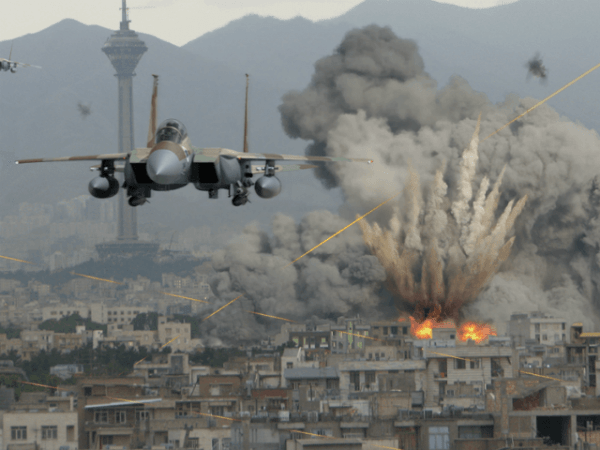
If you want a war with Iran, Russia, China and Venezuela tell me why and how it would benefit Americans
BY PHILIP GIRALDI • UNZ REVIEW • JUNE 21, 2022
So Honest Joe Biden is now going to give another $1.2 billion to the Ukrainians on top of the sixty or so billion that is already in the pipeline, but who’s counting, particularly as Congress refused to approve having an inspector general to monitor whose pockets will be lined. The money will be printed up without any collateral or “borrowed” and the American taxpayer will somehow have to bear the burden of this latest folly that is ipso facto driving much of the world into recession. And it will no doubt be blamed on Vladimir Putin, a process that is already well under way from president mumbles. But you have to wonder why no one has told Joe that the whole exercise in pushing much of the world towards a catastrophic war is a fool’s errand. But then again, the clowns that the president has surrounded himself with might not be very big on speaking the truth even if they know what that means.
Having followed the Ukraine problem since the United States and its poodles refused to negotiate seriously with Vladimir Putin in the real world, I have had to wonder what is wrong with Washington. We have had the ignorant and impulsive Donald Trump supported by a cast of characters that included the mentally unstable Mike Pompeo and John Bolton followed by Biden with the usual bunch of Democratic Party rejects. By that I mean deep thinkers about social issues who would not be able to run a hot dog stand if that were what they were forced to do to make a living. But they are real good at shouting “freedom” and “democracy” whenever questioned concerning their motives.
Indeed, opinion polls suggest that there is a great deal of unrest among middle and working class Americans who see a reversion to Jimmy Carter era financial instability, at that time caused by the oil embargo. Well, there is a new energy embargo in place brought about by the Biden Administration’s desire to wage proxy war to “weaken” Russia. Analysts predict that the costs for all forms of energy will double in the next several months and surging energy costs will impact the prices of other essentials, including food. Given all that, the fundamental issue plaguing both Democrats and Republicans is their inability to actually explain to the American people why the country’s foreign and national security policy always seems to be on the boil, searching for enemies and also creating them when they do not exist, even when the results are damaging to the interests of actual Americans.
That a serious discussion of why the United States needs to have a military that costs as much as the next nine nations in that ranking combined is long overdue and rarely addressed outside the alternative media. The 2023 military budget has been increased from this year’s, totaling $858 billion, and, if one includes the constantly growing largesse to Ukraine, approaching a hitherto unimaginable trillion dollars. The military budget has become a major driver of the country’s unsustainable deficits. The deaths of millions of people directly and indirectly in the wars started in 9/11 aside, the wars of choice have cost an estimated $8 trillion.
The Constitution of the United States makes it clear that a national army was only acceptable to the Founders when it was dedicated to defending the country from foreign threats. Do Americans really believe that bearing the burden of having something like 1,000 military bases scattered around the world really makes them safer? The recent rapid collapse of the security situation in Afghanistan suggests that having such bases turns soldiers and bureaucrats into potential hostages and is therefore a liability. One might also suggest that the insecurity currently prevailing in the country can in large part be attributed to the government’s depiction of numerous “threats” in order to justify both the commitment and the expense.
So where does all the money go? And what are the threats? Starting with a war that the United States is de facto though not de jure involved in, Ukraine, what was the Russian threat that demanded Washington’s intervention? Well, if one discards the nonsense of a “rules based international order” or a plucky little democracy Ukraine fighting valiantly against the Russian bear, Moscow did not threaten the United States in any way before the missiles starting flying. Putin sought to negotiate a settlement with Ukraine based on a number of perceived existential Russian national security interests, all of which were negotiable, but the US and its friends were uninterested in compromise while also plying the corrupt Zelensky regime with weapons, money and political support. The final result is a conflict that will likely only end when the last Ukrainian is dead and it includes the possibility that a misstep by the United States and Russia could lead to a nuclear holocaust. To put it succinctly, what is going on does not enhance US national security, nor does it benefit Americans economically.
And then there is China. Biden let the cat out of the bag on his recent trip to the Far East. He stated that the United States would defend Taiwan if China were to attempt to annex it. In saying that, Biden demonstrated that he does not understand the strategic ambiguity that the US and the Chinese have preferred over the past fifty years as an alternative to war. The White House for its part quickly issued a correction to the Biden statement, explaining that it was not true that Washington is obligated to defend Taiwan. Some uber hawkish congressmen have apparently found the Biden gaffe appealing and are promoting a firm US commitment to defend Taiwan, coupled with a $4.5 billion military assistance package, of course.
At the same time, some officials in the Pentagon and the usual gaggle of congressmen also keep warning about the over the horizon threat from China as an excuse to boost defense spending. Most recently, there was alarm over Chinese participation in a meeting in May in Fiji to consider a China-Pacific Islands free trade pact! In reality, the only serious current threat from China is as an economic competitor. A trade war with China would be a disaster for the US economy, which is heavily dependent on Chinese manufactured goods, but Beijing, with its relatively small military budget, does not pose a physical threat to the United States.
And let’s not ignore Iran which has been hammered by economic sanctions and also through the covert killing of its officials and scientists. The US/Israeli war on Iran has also spilled over into neighboring Syria, where Washington actually has troops on the ground occupying the country’s oil producing region and stealing the oil. Iran’s possible expansion of its nuclear program to produce a weapon was effectively impeded through monitoring connected to a multilateral 2015 agreement called the Joint Comprehensive Plan of Action (JCPOA) but Donald Trump, unwisely and acting against actual American interests, withdrew from it. Joe Biden has been warned by Israel not to re-enter the agreement, so he will no doubt comply with Prime Minister Naftali Bennett’s determination to have Washington continue to apply “extreme pressure” on the Islamic Republic. Does either Iran or its ally Syria threaten the United States in any way? No. Their crime is that they are in the same neighborhood as the Jewish state, which finds the US government easy to manipulate into acting against its own interests.
Finally, in America’s own hemisphere there is Venezuela, which has been elevated to the status of Washington’s most hated nation in the region. Venezuelans have been subjected to increasingly punitive US sanctions, including some new ones just last week, which hurt the poorer citizens disproportionately but have not brought about regime change. Why the animosity? Because the country’s leader Nicolas Maduro is still in power in spite of a US assertion that the country’s opposition leader Juan Guaido should rightfully and legitimately be in charge after a possibly fraudulent election in 2018. The latest therapy applied by the United States on Caracas consisted of blocking the country as well as Nicaragua and Cuba from participating in the recent meeting of the Ninth Summit of the Americas which was held in Los Angeles. A State Department spokesman explained that the move was due to the three countries “lacking democratic governances.” Mexican President Lopez Obrador protested against the move and removed himself from his country’s delegation, saying “There can’t be a Summit of the Americas if not all countries of the American continent are taking part.” The despicable US Senator Robert Menendez of the Senate Foreign Relations Committee then felt compelled to add his two cents, criticizing the Mexican president and warning that his “decision to stand with dictators and despots” would hurt US-Mexico relations. So where was the threat from Venezuela (and Cuba and Nicaragua) and why is the US involved at all? Beats me.
What all of this means is that there is absolutely no standard of genuine national security that motivates the US’s completely illegal aggression in many parts of the world. What occurs may be linked to a desire to dominate or a madness sometimes described as “exceptionalism” and/or “leadership of the free world,” neither of which has anything to do with actual security. And the American people are paying the price both in terms of decline in standards of living due to the upheaval created in Ukraine and elsewhere as well as a completely understandable loss of faith in the US system of government. By all means, let us shrink the US military until it is responsive to actual identifiable threats. Let’s elect a president who will follow the sage advice of President John Quincy Adams, who declared that “Americans should not go abroad to slay dragons they do not understand in the name of spreading democracy.” At this point, one can only imagine an America that is at peace with itself and with what it represents while also being considered a friend to the rest of the world.
Philip M. Giraldi, Ph.D., is Executive Director of the Council for the National Interest, a 501(c)3 tax deductible educational foundation (Federal ID Number #52-1739023) that seeks a more interests-based U.S. foreign policy in the Middle East. Website is councilforthenationalinterest.org, address is P.O. Box 2157, Purcellville VA 20134 and its email is inform@cnionline.org.
The Power of the Jewish Lobby
Israelis killing Americans is okay In Washington
BY PHILIP GIRALDI • UNZ REVIEW • JUNE 14, 2022
Anyone who has spent any time in Washington and who has been reasonably engaged in watching the fiasco playing out there might agree that the most powerful foreign lobby is that of Israel, backed up as it is by a vast domestic network that exists to protect and nourish the Jewish state. Indeed, it is the domestic element of the lobby that gives it strength, supported as it is by extravagantly well-funded think tanks and a media that is Jewish dominated when it comes to developments in the Middle East. The power of what I prefer to call the Jewish lobby is also manifest down to state and local levels, where efforts to peacefully boycott Israel due to its war crimes and crimes against humanity have been punished and even criminalized in more than thirty states. In several states, including Virginia, special trade arrangements are designed to benefit Israeli companies at the expense of local residents and taxpayers.
Given all of that, it should be no surprise that Israel consistently gets a pass on its aberrant behavior, even when it acts directly against US interests or kills Americans. Recall, for example, how when General David Petraeus rashly observed in 2010 that Israeli intransigence in advancing its own interests complicated relations with Arab states and could cost American lives in the Middle East, he was quickly forced to recant. And more recently an Israeli sniper murdered Palestinian-American journalist Shireen Abu Akleh without any consequences coming from the Joe Biden White House or from the Tony Blinken-led State Department. Biden has declared himself a Zionist and Blinken is Jewish.
But one of the most horrific Israeli outrages directed against Americans remains little known and hidden from view by the media and the political elite. Last week, on Wednesday June 8th there was a commemorative gathering at Arlington National Cemetery in Virginia that was unreported in the mainstream media. It was the annual day of remembrance for the dwindling group of survivors of the USS Liberty, which was attacked by Israel fifty-five years ago. The moving service included the ringing of a ship’s bell for each one of the thirty-four American sailors, Marines and civilians that were killed in the deliberate false flag attack that sought to sink the intelligence gathering ship and kill all its crew. The surviving crewmembers as well as friends and supporters come together annually, bound by their commitment to keeping alive the story of the Liberty in hopes that someday the United States government will have the courage to acknowledge what actually happened on that fateful day.
In truth the attack more than half a century ago on the USS Liberty by Israeli warplanes and torpedo boats on June 8, 1967, has virtually faded from memory, with a younger generation completely unaware that a United States naval vessel was once deliberately attacked and nearly sunk by America’s “greatest friend and ally” Israel. The attack was followed by a cover-up that demonstrated clearly that at least one president of the United States even back fifty-five years ago valued his relationship with the state of Israel above his loyalty to his own country.
It was in truth the worst attack ever carried out on a US Naval vessel in peace time. In addition to the death toll, 171 more of the crew were wounded in the two-hour assault, which was clearly intended to destroy the intelligence gathering ship operating in international waters collecting information on the ongoing Six Day War between Israel and its Arab neighbors. The Israelis, whose planes had their Star of David markings covered up, attacked the ship repeatedly from the air and with gunboats from the sea. They sought to sink the ship, blaming Egypt, so the United States would respond by attacking Israel’s Arab enemies.
A Liberty survivor Joe Meadors recalls how “No Member of Congress has ever attended our annual memorial service at Arlington National Cemetery on the anniversary of the attack. We are condemned as ‘anti-Semitic’ and ‘bigots’ simply because we have been asking that the attack on the USS Liberty be treated the same as every other attack on a US Navy ship since the end of WWII. All we have is ourselves. Not Congress. Not the Navy. Not the DoD. Just ourselves. We need a place where we are welcome. We need our reunions.”
Indeed, the incredible courage and determination of the surviving crew was the only thing that kept the Liberty from sinking. The ship’s commanding officer Captain William McGonagle was awarded a Congressional Medal of Honor for his heroic role in keeping the ship afloat, though a cowardly and venal President Lyndon Baines Johnson, who may have connived with the Israelis to attack the ship, broke with tradition and refused to hold the medal ceremony in the White House, also declining to award it personally, delegating that task to the Secretary of the Navy in a closed to the public presentation held only reluctantly at the Washington Navy Yard. The additional medals given to other crew members in the aftermath of the attack made the USS Liberty the most decorated ship in the history of the United States Navy.
The cover-up of the attack began immediately, to include concealing the White House’s actual recall of fighter planes launched by the Sixth Fleet to assist the under-attack Liberty. The Liberty crew was subsequently sworn to secrecy over the incident, as were the Naval dockyard workers in Malta and even the men of the USS Davis, which had assisted the badly damaged Liberty to port. A hastily convened and conducted court of inquiry headed by Admiral John McCain acted under orders from Washington to declare the attack a case of mistaken identity. The inquiry’s senior legal counsel Captain Ward Boston, who subsequently declared the attack to be a “deliberate effort to sink an American ship and murder its entire crew,” also described how “President Lyndon Johnson and Secretary of Defense Robert McNamara ordered him to conclude that the attack was a case of ‘mistaken identity’ despite overwhelming evidence to the contrary.” The court’s findings were rewritten and sections relating to Israeli war crimes, to include the machine gunning of life rafts, were excised. Following in his father’s footsteps, Senator John McCain of Arizona subsequently used his position on the Senate Armed Services Committee to effectively block any reconvening of a board of inquiry to reexamine the evidence. Most of the documents relating to the Liberty incident have never been released to the public in spite of the 55 years that have passed since the attack took place.
There has been one independent investigation into the Liberty affair headed by former Chairman of the Joint Chiefs of Staff Admiral Thomas Moorer, but it had no legal standing. Its report was headed “Findings of the Independent Commission of Inquiry into the Israeli Attack on the USS Liberty, the Recall of Military Rescue Support Aircraft while the Ship was Under Attack, and the Subsequent Cover-up by the United States Government, CAPITOL HILL, WASHINGTON, D.C., OCTOBER 22, 2003.” It concluded that “That there is compelling evidence that Israel’s attack was a deliberate attempt to destroy an American ship and kill her entire crew; evidence of such intent is supported by statements from Secretary of State Dean Rusk, Undersecretary of State George Ball, former CIA director Richard Helms, former NSA directors Lieutenant General William Odom, USA (Ret.), Admiral Bobby Ray Inman, USN (Ret.), and Marshal Carter; former NSA deputy directors Oliver Kirby and Major General John Morrison, USAF (Ret.); and former Ambassador Dwight Porter, U.S. Ambassador to Lebanon in 1967…”
More recently, the claim by apologists for the Jewish state that Israel acted in error or due to the fog of war, has been debunked by previously suppressed National Security Agency intercepts that included an Israeli pilot calling his flight controller and stating, in alarm, that they were about to attack what was clearly an American ship. The controller ordered him to continue his attack.
The faux court of inquiry and the medals awarded in secret were only the first steps in the cover-up, which has persisted to this day, orchestrated by politicians and a media that seem to place Israel’s interests ahead of those of the United States. Liberty survivors have been finding it difficult even to make their case in public. In early April 2016 a billboard that read “Help the USS Liberty Survivors – Attacked by Israel” was taken down in New Bedford Massachusetts. The billboard had been placed by the Honor Liberty Vets Organization and, as is normal practice, was paid for through a contractual arrangement that would require the billboard company to post the image for a fixed length of time. It was one of a number of billboards placed in different states. Inevitably, Israel’s well connected friends began to complain. One Jewish businessman threatened to take his business elsewhere, so the advertising company obligingly removed the billboard two weeks early.
After fifty-five years, the dwindling number of survivors of the Liberty are not looking for punishment or revenge. When asked, they will tell you that they only ask for accountability, that an impartial inquiry into the attack be convened and that the true story of what took place finally be revealed to the public.
That Congress is deaf to the pleas of the Liberty crew should surprise no one as the nation’s legislative body has been for years, as Pat Buchanan once put it, “Israeli occupied territory.” The Jewish Lobby’s ability to force Congress and even the presidency to submit to its will has been spelled out in some detail by critics, first by Paul Findley in They Dare to Speak Out, later by John Mearsheimer and Stephen Walt in The Israel Lobby and in Alison Weir’s Against Our Better Judgment and most recently in Kirk Beattie’s excellent Congress and the Shaping of the Middle East.
Congressional willingness to protect Israel even when it is killing Americans is remarkable, but it is symptom of the legislative body’s inclination to go to bat for Israel reflexively, even when it is damaging to US interests and to the rights that American citizens are supposed to enjoy. To cite only one example of how ambitious politicians rally around to protect Israel, Florida Governor Ron DeSantis is a former Navy officer who once served as a congressman for a district in Florida where several Liberty survivors were living. They recount how repeated attempts to meet with DeSantis to discuss a possible official inquiry were rejected, with the Congressman refusing to meet them. Even the veterans’ organization the American Legion walks in fear of Israel. It has refused to allow the USS Liberty Veterans Association to have a table or booth at its annual convention and has even banned any participation by the group at its meetings in perpetuity!
So, the treatment of the USS Liberty should surprise no one in a country whose governing class has been for decades doing the bidding of the powerful lobby of a tiny client state that has been nothing but trouble and expense for the United States of America. Will it ever end? As the Israel/Jewish Lobby currently controls the relevant parts of the federal government and much of the media, change is not likely to happen overnight, but there are some positive signs that the public is regarding Israel less favorably. As Israel is countering that trend by supporting legislation at federal and state levels declaring any group that criticizes Israel to be anti-Semitic, recounting the USS Liberty story could fall under that description and be declared a “hate crime” complete with civil and criminal penalties. One has to hope that the American people will finally wake up to realize that they are tired of the entire farce and decide to wash their hands of the Israel contrived narrative relating to the Middle East. Just imagine picking up the morning newspaper and not reading a front-page story about the warnings and threats coming from an Israeli Prime Minister or from Israeli mouthpieces named Biden, Schumer and Pelosi. That would be a quite remarkable development.
Philip M. Giraldi, Ph.D., is Executive Director of the Council for the National Interest, a 501(c)3 tax deductible educational foundation (Federal ID Number #52-1739023) that seeks a more interests-based U.S. foreign policy in the Middle East. Website is councilforthenationalinterest.org, address is P.O. Box 2157, Purcellville VA 20134 and its email is inform@cnionline.org.
How the West helped Israel take the IAEA hostage
By Syed Zafar Mehdi | Press TV | June 11, 2022
Israel, the world’s eighth-largest nuclear power, initiated its nuclear program in 1952 with technological support from France and the US, the two countries most vocal about Iran’s peaceful nuclear program.
The first nuclear weapons were developed by Tel Aviv somewhere around 1967-1968, according to military think tanks. After that, the production accelerated rapidly, with zero international outcry.
Today, the regime possesses over 90 nuclear warheads with enough plutonium to produce at least 200 nuclear weapons. Around 5 kg of weapons-grade plutonium is required for one nuclear bomb.
Despite its nuclear program being an open secret – thanks to technician Mordechai Vanunu who blew the lid off Pandora’s Box back in 1986 – the regime has obdurately refused to confirm or deny it.
Vanunu, who worked at the Dimona nuclear facility, was in 1988 convicted of treason and sentenced to 18 years in prison. The same year he was also nominated for the Nobel peace prize.
Vanunu isn’t the only one to blow the whistle. In December 2013, former Israeli Knesset member Avraham Burg in a rare admission said the regime possessed both nuclear and chemical weapons, dubbing the official policy of nuclear ambiguity as “outdated and childish”. He was soon reprimanded.
What has emboldened Tel Aviv to accelerate its nuclear activities while wrapping a cloak of secrecy around them is Western sponsorship made possible by Zionist lobbying groups in the US and Europe.
The two countries most critical of Iran’s nuclear program are Israel’s staunchest allies, who helped the regime become a nuclear power. Israel’s weapons-grade fissile material stocks originated in France in the 1960s and the US in the late 1960s.
The US support, in particular, has allowed Israel to escape accountability for its diabolic activities. In a classic case of double standards, successive regimes in Washington have made a conscious effort not to talk about Israel’s nuclear arsenal despite making hullabaloo for non-proliferation in the region.
It began back in 1968 when then-CIA director Richard Helms informed President Lyndon Johnson that Israel had built nuclear weapons and that its air force had conducted aerial maneuvers to drop them.
Johnson’s response, on expected lines, was muted. A year later, at a meeting between just-elected President Richard Nixon and then Israeli premier Golda Meir, it was agreed that Washington will not force Israel to sign the NPT, which had opened for signature months before, in July 1968.
The US policy of silence continued, which helped the illegitimate regime in Tel Aviv escape the scrutiny of the UN nuclear agency. This silence amounted to both cowardice and complicity.
Importantly, and quite scandalously, Israel is not the signatory to the Nuclear Non-proliferation Treaty (NPT). It has repeatedly rejected calls to join the keystone accord of the international arms control regime and refused to give UN nuclear agency inspectors access to its nuclear sites.
Despite the regime’s dismissive approach, the International Atomic Energy Agency has adopted a remarkably soft approach to the point that many see collusion between the two.
IAEA chief Rafael Grossi’s whirlwind trip to Tel Aviv ahead of the UN nuclear agency’s board of governors meeting in Vienna earlier this week lent credence to the plausible Israel-IAEA collusion theory.
Grossi dashed off to Israel to discuss the anti-Iran resolution drafted by the US and the European troika with Israeli officials, aimed at mounting pressure on Iran to give up its legitimate demands.
Does it make sense that the IAEA chief meets the head of an illegitimate regime, which has secretly built a nuclear arsenal and refused to cooperate with the UN agency, to discuss the nuclear program of a country that has signed the NPT, cooperated fully with the agency and fulfilled all its obligations? It smells of something deeply sinister, extremely despicable.
The resolution against Iran at the IAEA board of governors meeting, which has already seen a “firm and proportionate response” from Tehran, blamed Iran for lack of cooperation with the UN agency.
For those unnerved by Iran’s decision to ramp up its nuclear enrichment capacity, it is essential to understand that the Islamic Republic claims its rights under Article IV of the NPT to pursue a peaceful nuclear program for energy purposes, unlike rogue regimes like Israel.
It’s also imperative to understand that the decision to scale up uranium enrichment from 3.65 percent stipulated in the 2015 nuclear deal came a year after former US President Donald Trump in a unilateral and illegal move pulled his country out of the landmark agreement, followed by reinstatement of sanctions.
The negotiations between Iran and the world powers to salvage the deal have been paused not because of Iran’s excessive demands or non-compliance but due to the West’s obstructionism. Iran did everything to save the deal but the other parties continue to make all-out efforts to kill the same deal.
The latest move to remove cameras operating beyond the NPT safeguards agreement at some Iranian nuclear sites and feed gas into machines including IR-6 is a milder reaction to the hostile move at the IAEA board of governors meeting.
As Iran’s nuclear body chief Mohammad Eslami stated, it’s preposterous that the IAEA has been taken hostage by the illegitimate regime, which raises questions over its credibility and independence.
Unless the agency comes out of the ominous Israeli shadow and makes a concerted effort to focus on its professional and technical mandate, beyond politics, Iran reserves the right to take remedial measures.
And as President Ebrahim Raeisi asserted unambiguously, the Islamic Republic will not back down even an inch. The writing is on the wall.
Syed Zafar Mehdi is a Tehran-based journalist, editor and blogger. He has reported extensively from Kashmir, India, Pakistan, Afghanistan and Iran for leading publications worldwide.
US ‘Acknowledged’ Tehran is Not Looking to Build a Nuclear Bomb: Iranian Foreign Minister
By Dhairya Maheshwari – Samizdat – 09.06.2022
Iran has rejected a resolution adopted by the IAEA’s Board of Governors (BoG) censuring it for not disclosing the site of three uranium enrichment facilities. Tehran claims that the IAEA’s findings are based on inputs from Israel, as the agency’s director general Rafael Grossi met the Israeli PM in Tel Aviv this month.
Iranian Foreign Minister Hossein Amir-Abdollahian has claimed that the US and its Western allies have “acknowledged” that Tehran isn’t looking to build a nuclear bomb.
“The United States and the West know that the atomic bomb has no place in Iran’s Islamic beliefs,” Abdollahian remarked during an address to Indian Islamic scholars in New Delhi, as per a video released by Iran’s Foreign Ministry on Thursday. The visiting Iranian FM was speaking through a Hindi translator.
The foreign minister kickstarted his maiden three-day visit to India on Wednesday, meeting Indian Prime Minister Narendra Modi, Foreign Minister S. Jaishankar and National Security Advisor Ajit Doval on the opening day.
“The West once acknowledged in the nuclear talks that they could ignore all their problems with Iran’s nuclear programme as long as Iran stopped supporting Palestine and recognised Israel,” Abdollahian remarked at the gathering.
“With such incorrect excuses, the West sought the recognition of Israel by the Islamic Republic of Iran in order to achieve their goals, which, of course, failed,” the top Iranian diplomat added.
Abdollahian declared that in spite of the Western countries’ appeals, Iran remained steadfast in supporting “the cause of Palestine”.
“Iran considers it its religious and moral duty to support the liberation of Holy Quds (Jerusalem) and is fully committed to it,” added the dignitary.
Abdollahian told his audience that he wanted to give them a sense of ongoing negotiations between Tehran and Western powers, seeking to bring the US back into the Joint Comprehensive Plan of Action (JCPOA), or the Iran Nuclear Deal.
Former US President Donald Trump unilaterally pulled Washington from the pact in 2018, but his successor Joe Biden has indicated his willingness to reverse the controversial decision.
Tehran Slams US, EU Allies for ‘Political Resolution’
The Iranian Foreign Minister’s remarks came hours after the 35-member Board of Governors (BoG) of the International Atomic Energy Agency (IAEA) overwhelmingly approved a resolution calling upon Tehran to take “urgent steps” to comply with the IAEA’s nuclear safeguards.
The resolution was co-sponsored by the US and the E3 allies—Germany, the United Kingdom and France. Russia and China were the only countries which opposed the resolution, while three nations, including India, abstained from the IAEA vote.
The resolution was floated after a report this month from IAEA’s Director General Rafael Grossi claimed the “presence of uranium particles of anthropogenic origin at Turquzabad, Varamin and Marivan”.
Grossi has said that the three sites weren’t previously disclosed under ‘Safeguards Agreement and Additional Protocol’ negotiated between Tehran and IAEA in March.
The Iranian Foreign Ministry has rejected the resolution as “political, incorrect and unconstructive action”.
“The adoption of the resolution, which is based on the hasty and unbalanced report of the Director General of the IAEA and based on the Zionist regime’s false and fabricated information, will only weaken the process of Iran’s cooperation with the IAEA,” the Iranian Foreign Ministry said in a statement.
Tehran has claimed that the locations cited by the IAEA DG had been cleared by the agency “once and for all” in December 2015 and weren’t supposed to be covered under the March 2022 pact.
Israeli regime openly calls on IAEA to censure Iran
Press TV – June 7, 2022
The Israeli regime is openly putting pressure on the United Nations’ nuclear watchdog to censure Iran’s peaceful nuclear energy program.
“We expect the IAEA (the International Atomic Energy Agency’s) Board of Governors to place a clear warning light in front of the regime in Tehran, and make it clear that if it continues in its defiant nuclear policy, it will pay a heavy price,” the regime’s Prime Minister Naftali Bennett said on Tuesday, addressing the Knesset (Israeli parliament), The Times of Israel reported.
The comments came a day after the board started a five-day meeting in Vienna.
The event is set to adopt an anti-Iran resolution, drafted by Britain, France, Germany, and the United States to accuse the Islamic Republic of withholding cooperation with the agency.
Various media reports and official sources have warned about the existence of the Israeli regime’s footprints across the process that has led to the emergence of the draft resolution.
Raising even more suspicion was a Friday flying visit to the occupied territories by the IAEA’s Secretary-General Rafael Grossi, and his meeting there with Bennett, with some reports even sounding the alarm about the watchdog and Tel Aviv’s “collusion” against Iran.
“He (Grossi) arrived for a snap visit in Israel, and I made Israel’s stance clear — that we are operating and will continue to maintain our freedom of action to act against Iran’s nuclear program as long as necessary… nothing ties our hands,” Bennet said.
The Israeli regime has, over years, conducted several sabotage operations against Iran’s nuclear facilities and assassinated at least seven Iranian nuclear scientists.
The regime’s vicious anti-Iran campaign comes while Tel Aviv, itself, continues to be the sole possessor of nuclear arms in the Middle East region, with a stockpile of hundreds of atomic warheads. Due to the cover provided by the US and Europeans, however, the regime has refused to open up its nuclear sites to the IAEA’s inspectors and join the Nuclear Non-Proliferation Treaty (NPT).
“When it comes to nuclear weapons, we live in a world of double standards,” Frank N. von Hippel, an American physicist, who is a professor and co-director of the Program on Science and Global Security at Princeton University, told Press TV.
“This unequal situation cannot persist indefinitely: Either we get rid of nuclear weapons or nuclear weapons will get rid of us,” he added.
Iran and IAEA relations on tenterhooks
Press TV – June 7, 2022
The Vienna based International Atomic Energy Agency, the IAEA, is supposed to monitor compliance with the 1968 nuclear Non Proliferation Treaty, NPT, which has been described as the centerpiece of global efforts to prevent the spread of nuclear weapons, promote cooperation in the peaceful uses of nuclear energy and to achieve the ultimate goal of global nuclear disarmament.
The IAEA is supposed to engage upon technical, unbiased and professional cooperation with NPT signatories and to be free of politics or political considerations.
The IAEA has had a high profile role regarding Iran’s nuclear energy programme. In 2015, when Iran and the P 5+ 1 struck a deal known as a Joint Comprehensive Plan of Action. The IAEA was subsequently tasked with monitoring Iran’s compliance with the terms of the agreement.
In many of its reports over the years, the agency has said that it has found no evidence of any diversion in Iran’s nuclear programme.
As the fate of the faltering 2015 deal remains increasingly unclear, the technical role and supposed independence of the atomic watchdog are being tested.
In a recent report, the IAEA said Iran’s stockpile of enriched uranium had grown to more than 80 times the limit allowed in the 2015 agreement.
The agency also said Iran has failed to answer its remaining questions.
Tehran described the latest IAEA statements as one sided pointing out that it fails to reflect Iran’s extensive cooperation with the agency.
“The International Atomic Energy Agency seems to be succumbing to the same sort of takeover that the United States and the Anglo Zionist Empire has been doing to so many other international organizations such as, for example, in athletics, for example, in economics with the World Economic Forum, for example, all these organizations; they seem to want to control them.” – Tony Gosling, Investigative Journalist
Meanwhile, reports say Western countries lobbied by Israel are planning to push the International Atomic Energy Agency to criticize Iran at its upcoming meeting of the Board of Governors.
In March Rafael Mariano Grossi, the head of the International Atomic Energy Agency, visited Iran. The IAEA and Iran announced at the end of the visit that they had agreed on an approach for resolving remaining bilateral issues.
The visit came as representatives from Iran and the P 4+1 were trying to find a way to move forward in their negotiations which were aimed at reviving the 2015 deal. The talks are currently stalled with Iran saying the United States is failing to make necessary political decisions.
At this point, any stance by the IAEA could have an important effect on the stalled talks. This week Iran’s top diplomat said the agreement between Tehran and the agency in March was mutually satisfactory. He warned that political interference in the technical affairs of the agency is totally unconstructive.
The comments by Amir-Abdollahian came ahead of a meeting of the IAEA Board of Governors scheduled for June the sixth. With days left to the meeting the IAEA chief has arrived in Israel as Tel Aviv released documents alleging Iran spied on the IAEA.
Iran says Israel, which has refused to join the NPT and is believed to possess hundreds of nuclear warheads, hates the JCPOA and wants to derail the effort to revive it.
The problem with much of what the International Atomic Energy Agency has been doing is that it is trying to find excuses to, I suppose, make out that the Iranian nuclear programme is a military programme.
One of the problems with the IAEA is they’re not looking anywhere near as closely at the Israelis, who do have nuclear weapons.
“They tried to keep it secret, but Mordechai Vanunu blew the whistle in the Sunday Times here in Britain back in the 1980s and did a massive jail term for his, when he was kidnapped actually, for his trouble, that they do have many nuclear weapons, probably something like 200 …” – Tony Gosling, Investigative Journalist
Reports say the United States and its Western allies, pushed by Israel, plan to pile pressure on Iran at the upcoming IAEA meeting.
Tehran has warned that it would respond firmly and appropriately to any such move, because Iran has been cooperating based on the agreement reached in March.
The fate of months of negotiations between Iran and the P 4+1 seems to be at stake as a meeting of the IAEA Board of Governors draws close.
One wonders who would benefit from a possible collapse of the talks.
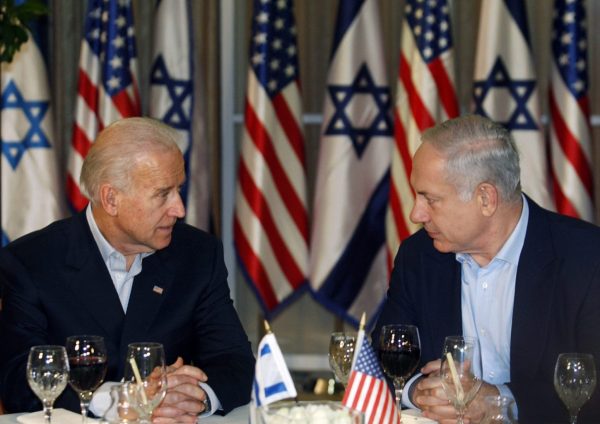
Biden Rocks the Middle East
Partitioning Syria may be on the way
BY PHILIP GIRALDI • UNZ REVIEW • JUNE 7, 2022
That dwindling band of observers that continues to express concern over the catastrophe that constitutes United States foreign policy under President Joe Biden have come to realize how the Ukraine situation is being used as cover for interventions and other similar mischief in other parts of the world. Recent reporting, for example, reveals that the Biden Administration has decided “to reestablish a persistent US military presence in Somalia to enable a more effective fight against al-Shabaab” in spite of the fact that “there is absolutely no constitutional authority for President Biden to send troops into Somalia or drop bombs on Somalia.” Nor does al-Shabaab represent a threat to Americans or American interests.
To be sure, the emphasis on Ukraine has a certain cogency as it is particularly dangerous and could lead to nuclear devastation in a situation where intervention by the United States was not only unwarranted but also unresponsive to any actual national interest of threat. And escalate it will if the White House continues on its current path. Ukrainian government sources are now stating that the United States is preparing to destroy the Russian Black Sea fleet to end the blockade of Ukraine’s ports. The commander of US forces in Europe General Christopher Cavoli seems to be confirming that report when he refers to the preparation of “military options” to help export Ukrainian grain.
One might suggest that such a move could just be enough to start World War III and World War III would almost certainly turn nuclear very quickly. Some might consider that taking a deliberate step that would inevitably escalate into destruction of the entire planet as we know it just might be a foreign policy mistake on the part of the President Joe Biden Administration but I’m sure the chairborne warriors down at Foggy Bottom would disagree, pointing out that nothing would make old Vladimir Putin run and hide faster than a barrage of harpoon missiles imbibed with his breakfast tea.
And, of course, there’s more. There’s always more. The focus on Ukraine in the US and international media combined with a stream of befuddling malapropisms coming out of the White House has obscured what is going on in other corners in the world, where Washington is also flexing its biceps in full knowledge that a manageable war or two will surely help one’s favorability rating come elections in November.
And there is always Israel. The Israeli army and police have recently been shooting dead Palestinian teenagers on a nearly daily basis, and that comes on top of the killing of Palestinian-American journalist Shireen Abu Akleh a month ago. Israel’s Defense Minister Benny Gantz was in Washington two weeks ago to meet and greet and one might suspect that he just might have been in town inter alia to express some apology for his army’s assassination of Abu Akleh, but that would be to misunderstand the bilateral relationship. In reality, when Israel shouts “jump” the Biden Administration responds “how high, sir?”
Also in the Middle East and also related to Israel, the US State Department has gone into a hissy fit over the May 26th Iraqi parliament’s unanimous vote to make illegal all “normalization” ties with Israel. State was quick to react, in contrast to its torpor dealing with most issues, but it was Israel involved, not just “most issues.” A statement was issued saying “The United States is deeply disturbed by the Iraqi Parliament’s passage of legislation that criminalizes normalization of relations with Israel [while also] jeopardizing freedom of expression and promoting an environment of antisemitism…” Ah yes, the old anti-semitism canard surfaces yet again!
There are also several interesting stories relating to Syria, which continues to be a hotspot because Israel wants to maintain its ability to freely bomb targets that it describes as “terroristic” or connected to arch enemy Iran. The bombing has continued regularly since the Ukraine situation started and has hardly ever been reported in the US media. And, yet again, there is more to the story in terms of US involvement. First of all, Russia reacted to the lukewarm Israeli support for its invasion of Ukraine. An Israeli attack on targets in Syria last week was met by a S-300 missile fired by Russian army manned air defenses. Up until now, Moscow has refrained from attempting to shoot down Israeli warplanes, but the missile was clearly a warning of what might be coming if Israel persists in its attacks.
Also relating to Syria, it is ironic that the US has accused Russia of war crimes over its intervention in Ukraine while at the same time continuing its own illegal occupation of Syria. And it has its own war crimes record. Last week the Pentagon announced that it had completed its investigation into an attack in Syria on March 18, 2019 that killed some presumed ISIS guerrillas as well as four civilians while wounding fifteen others. The Pentagon press secretary John Kirby said the Defense Department had determined that that the airstrike “did not violate the laws of warfare or the rules of engagement. Neither the ground forces commander nor anyone involved in carrying out the airstrike ‘acted inappropriately or acted with malicious intent’ or ‘deliberately wanted to and sought out to kill civilians.’” In an earlier investigation concluded last December, the Pentagon said “it would not hold anyone accountable for a drone strike also in Syria in late-August that killed 10 civilians, including seven children. A review of the strike concluded it was a ‘tragic mistake’ that was the result of ‘execution errors.’”
And there are also credible reports that the United States is preparing to de facto partition Syria, to create a separate state run by its Kurdish allies in the country’s northeast that would be under Washington’s protection and would include a garrison of American troops. Such a move would, of course, be completely illegal and is in fact eerily reminiscent of the alleged “war crimes” that the US is claiming regarding Russia for its attempted partition of Ukraine. Interestingly, the planning has not been reported in the mainstream media, yet another instance of the Ukraine crisis serving as cover to drown out all background noise and provide the US with opportunities to increase its meddling in places like the Middle East on behalf of feckless allies like Israel and Saudi Arabia.
Ironically, when the United States initially intervened in Syria, it claimed to do so to fight the terrorist group Islamic State in Syria (ISIS). Subsequently, it cooperated with an al-Qaeda affiliate while close ally Israel had a similar arrangement with ISIS itself. The Kurds and both ISIS and al-Qaeda are all believed to be involved in the theft and sale of Syrian oil. Now the US, which also has been stealing the oil, is seeking something like a permanent presence to solidify its control over Syrian resources.
Interestingly, the planning by Washington to create a sub-state or autonomous region in the north east of Syria was revealed by no less than State Department number three Victoria Nuland at a recent conference held in Morocco. Nuland, who was the driving force behind regime change in Ukraine in 2014, described the Syria development as a “stabilization” activity. The new entity would include Syria’s major oil producing region, which is currently being exploited by Washington and its “allies,” as well as much of the country’s arable land.
Washington has already applied unprecedented punitive sanctions on the parts of Syria controlled by the Russians and President Bashar al-Assad, to include the so-called Caesar Syrian Civil Protection Act’s secondary sanctions that punish anyone trying to avoid the restrictions placed by Washington. Former US Ambassador to Syria James Jeffrey put it this way “And of course, we’ve ratcheted up the isolation and sanctions pressure on Assad, we’ve held the line on no reconstruction assistance, and the country’s desperate for it. You see what’s happened to the Syrian pound, you see what’s happened to the entire economy. So, it’s been a very effective strategy….” He also added “My job is to make it a quagmire for the Russians.”
To circumvent the existing sanctions, the new mini-state would therefore be granted economic viability by making it sanction free as an inducement for foreign investment and development of settlements largely inhabited by Kurds associated with the United States. A “general license” will be issued to facilitate investment and other economic activity. The US will commit $350 million to the project, which is being carried out with the cooperation of the Turkish authorities controlling their own militias along the border. By securing the north east of Syria, Washington would also be able to maintain and protect the illegal US Al-Tanf military base in the south-east of the country bordering Jordan. Al-Tanf blocks the creation of a contiguous “Resistance Axis” from Iran to Lebanon and ultimately to Palestine, thereby maintaining “Israeli security” in the region. As is all too frequently the case, Israeli interests always come first in the minds of Washington politicians.
Philip M. Giraldi, Ph.D., is Executive Director of the Council for the National Interest, a 501(c)3 tax deductible educational foundation (Federal ID Number #52-1739023) that seeks a more interests-based U.S. foreign policy in the Middle East. Website is councilforthenationalinterest.org, address is P.O. Box 2157, Purcellville VA 20134 and its email is inform@cnionline.org.
Iranian nuclear chief: IAEA’s Grossi lacks serious will to find Tehran’s ‘accurate’ answers convincing
Press TV | June 6, 2022
The head of the Atomic Energy Organization of Iran (AEOI) says Tehran has given accurate answers to questions posed by the International Atomic Energy Agency (IAEA), but the Agency bases its reports on the information provided to it by the enemies of Iran.
In an interview with Al Jazeera network on Monday, Mohammad Eslami said the director general of the IAEA, Rafael Grossi, lacks serious will to describe Iran’s answers to the Agency’s queries as convincing.
“The International Atomic Energy Agency relies on the intelligence reports [provided by] our enemies, topped by Israel,” Iran’s nuclear chief said.
Eslami made the remarks after the IAEA chief, in his introductory statement to the Board of Governors’ meeting on Monday, once again repeated his anti-Iran rhetoric, alleging that since February 23, 2021, the Agency’s “activities have been seriously affected by Iran’s decision to stop the implementation of its nuclear-related commitments under the JCPOA, including the Additional Protocol.”
Grossi claimed, “Iran has not provided explanations that are technically credible in relation to the Agency’s findings at three undeclared locations in Iran.” Grossi’s allegation, however, came after his meeting with Eslami and the adoption of the two sides’ joint statement on March 5, 2022.
The AEOI and the IAEA agreed, in continuation of their cooperation as stated in the Joint Statement of August 26, 2020, to accelerate and strengthen their cooperation and dialogue aimed at the resolution of the issues, read part of the joint statement.
Grossi’s remarks came despite frequent warnings by Iran that in case the Agency drifts away from its technical nature and makes a politicized decision related to Iran’s peaceful nuclear program, the country will respond in kind.
Elsewhere in his interview, Eslami pointed to the possible adoption of an anti-Iran resolution during the ongoing meeting of IAEA’s Board of Governors and said even if adopted, such a resolution would not create a new situation.
Advising the UN nuclear watchdog to block political influence on its decisions and abide by its own regulations, the AEOI’s head said, “The IAEA has not condemned attacks on our [nuclear] facilities and this is a big question mark.”
Over the past years and amid lack of sensitivity and proper attention on the part of the IAEA towards performing a responsible role in the area of protection of various countries’ peaceful nuclear activities, some malign activities, for which the Zionist regime has implicitly accepted responsibility, have afflicted some damage to our country’s nuclear facilities.
Although these activities have never had a decisive effect on the progress of Iran’s peaceful nuclear program, given the sensitivity that is inherent to the nature of nuclear work, adoption of new strategies in the structural, hardware, and software aspects have found a place on the AEOI authorities’ agenda so the nuclear facilities’ security can be completely ensured.
Eslami also rejected allegations that Iran is planning to build nuclear weapons, saying, “Nuclear weapons have no place in our strategies” and that all such allegations are nothing but spiteful accusations.
Asked about the IAEA’s access to information recorded by monitoring cameras it has installed in Iran’s nuclear facilities, Eslami said this issue depends on the fate of the ongoing talks in the Austrian capital on the revival of the 2015 Iran deal, officially known as the Joint Comprehensive Plan of Action (JCPOA).
“If other parties commit to all articles of that agreement, we are ready for full compliance with the accord,” Iran’s nuclear chief said.
Under the JCPOA, Iran accepted certain caps on its nuclear program in exchange for the removal of international sanctions.
The US, however, unilaterally abandoned the deal in 2018 and re-imposed crippling sanctions despite Tehran’s full compliance with its share of obligations.
Israel-IAEA collusion: Grossi lands in Tel Aviv ahead of UN nuclear agency meet

Press TV – June 3, 2022
The chief of the UN nuclear agency has traveled to Israel and met the regime’s extremist premier Naftali Bennett, ahead of the body’s Board of Governors meeting on Monday.
The high-profile visit by Rafael Grossi also comes in the wake of the latest report by the International Atomic Energy Agency (IAEA) on Iran’s nuclear program amid a stalemate in Vienna talks to salvage the 2015 nuclear deal, called the Joint Comprehensive Plan of Action (JCPOA).
Iran has on many previous occasions cautioned the UN nuclear agency against allowing the Israeli regime to influence its independent mandate and decision-making.
On Thursday, during a phone call with his Singaporean counterpart Vivian Balakrishnan, Iran’s Foreign Minister Hossein Amir-Abdollahian described any political interference in the technical affairs of the IAEA as “unconstructive”.
He said during Grossi’s recent visit to Iran, the two sides had reached a mutually satisfactory agreement through a positive process.
However, the IAEA’s latest report last week drew Iran’s criticism, rejecting it as “unfair and unbalanced” that had deviated from the technical path under Israel’s pressure.
Earlier this week, Bennett accused Iran of stealing classified documents from the IAEA and using them to deceive international inspectors nearly two decades ago. Iran rejected the allegations as outright lies.
Iran’s Foreign Ministry spokesman Saeed Khatibzadeh on Wednesday called the Israeli regime “the world’s #1 JCPOA hater” which he said also “happens to be NPT-denier and the only nuke-possessor” of the region.
“We know this. The world knows this. Time for E3/US to stop pretending to be asleep. They can pursue diplomacy—or pursue the opposite. We’re ready for both,” the spokesman said.
Israel is the Middle East’s sole, though undeclared, nuclear-armed entity, but it has never allowed the IAEA to inspect its nuclear sites. It has also refused to sign the Non-Proliferation Treaty (NPT).
On the other hand, Iran’s nuclear energy program has been subject to the most intensive inspections. The Islamic Republic is a signatory of the NPT, but it continues to reel under harsh sanctions for working to benefit from the peaceful use of nuclear energy, like other countries.
On Friday, Bennett told Grossi that Israel would prefer a diplomatic resolution but could take unilateral action against Iran’s nuclear energy program.
Bennett “stressed (to Grossi) the importance of the IAEA Board of Governors delivering a clear and unequivocal message to Iran in its upcoming decision”, a
statement from the Israeli premier’s office said.
Warning to IAEA
The IAEA board of governors is slated to hold a meeting on Monday for which Britain, France, Germany, and the US have reportedly prepared a draft resolution to mount pressure on Iran.
The United States on Thursday confirmed that it will join Europeans in backing the resolution against Iran.
Iran has pledged a “firm and appropriate” response to any “unconstructive” move. “We will respond firmly and appropriately to any unconstructive action at the board of governors,” Khatibzadeh said on Wednesday.
China also warned that any confrontational moves at the upcoming meeting will only undermine cooperation between Iran and the IAEA, and disrupt the process to revive the 2015 nuclear deal.
Chinese Foreign Ministry spokesman Zhao Lijian said exerting pressure on Iran and the UN nuclear agency will escalate tensions and complicate the situation.
He called on Washington to make a political decision as soon as possible on the revival of the nuclear agreement and actively respond to what Iran’s legitimate concerns.
Iran has repeatedly stated that it is waiting for a response from the US on its proposals to revive the deal, but Washington has been dragging its feet on it.
A World at War?
Biden lashes out against “enemies” as our country declines
BY PHILIP GIRALDI • UNZ REVIEW • MAY 31, 2022
One recalls that when war fever surged demanding intervention by Imperial Britain in the Russo-Turkish War of 1877, a song became popular in the music halls which included “We don’t want to fight, But by Jingo if we do, We’ve got the ships, we’ve got the men, we’ve got the money too.” If the refrain sounds familiar, it should as the United States has been experiencing extreme “jingoism” since 2001. Any rejection of the “rules based international order” established and policed by “leader of the free world” Washington has resulted in immediate punishment by sanctions followed by threats of military intervention. In some cases, as in Afghanistan, Iraq, Libya and Syria, the actual armed intervention seeking regime change has been the end result. And it is all done to spread “freedom” and “democracy,” a claim that might be disputed by the millions of dead mostly Muslims who have had to suffer the consequences.
So the United States of America has been a country, like its best friend Israel, that seems to be perpetually at war… so what else is new? What’s new is that under President Joe Biden there has been zero diplomacy and almost reflexive reliance on wielding the “big stick.” To quote another bon mot from one of my favorite authors Raymond Chandler, creator of private eye Philip Marlowe, “… when in doubt, have two guys come through the door with guns.”
Don’t worry, Chandler’s two guys and many more like them are now in Ukraine under cover and in mufti training Ukrainians to use all the nifty Raytheon and Lockheed toys Uncle Joe has sent them. They are working together with the largely neocon advisers coaching Ukrainian President Volodymyr Zelensky, who is guarded by British and US special forces, on what to say and do during his increasingly strident international calls to widen the war. If they are successful and manage to sink another Russian ship or two using harpoon missiles, which Zelensky is threatening to do, the proxy US war with Russia could quickly become for real. Zelensky’s family meanwhile is reportedly safely ensconced in an $8 million villa in Israel. He also has a multi-million dollar villa property near Miami and another in Tuscany. Who would have thought that being president of the poorest country in Europe could bring such material rewards?
Australian journalist Caitlin Johnstone, who has a huge worldwide audience, opines that Biden is possibly the worst US president ever, worse even that his consistently denigrated predecessor and media punching bag Donald Trump. Her recent article succinctly addresses what makes Biden’s egregious failure both different and incredibly dangerous. She writes “Preventing nuclear war is a US president’s single most important job. It’s so important you shouldn’t even really have to talk about it, because it’s so self-evidently the number one priority. And this administration is just rolling the dice on nuclear conflict with increasing frequency every day. Even if humanity survives this standoff (and the one with China that’s next in line), Biden will still have been an unforgivably depraved president for allowing it to get this close. There’s no excuse whatsoever for just casually rolling the dice on all terrestrial life like this.”
Indeed, Joe Biden’s latest tricks include declaring that the US will go to war with China to protect Taiwan if Beijing should prove so bold as to want to take control of its wayward province. But the US established policy is to maintain “strategic ambiguity” about China/Taiwan, a diplomatic solution crafted in 1979 to help prevent any provocations by either party that would lead to the situation developing into a shooting war. Joe seems to have missed that point, if he ever understood it in the first place, and certainly his advisers appear to be no more savvy than he is, though the White House quickly issued a correction on the apparent gaffe in the form of a statement that automatic defense of Taiwan is not official policy. Yet.
But my favorite move by the Biden Administration, if one might be so bold as to suggest that it is actually capable of administering anything more kinetic than a hot dog stand, is the latest pander to Israel. The recent murder by military sharpshooter of Palestinian/American journalist Shireen Abu Akleh followed by a humiliating spectacle of police violence at the funeral as well as subsequently at a second Palestinian funeral, actually found some administration flunkies and congress critters calling for a full investigation by Israel. The Israeli government and army refused to do so and the White House has pretended that there is no longer anything to see or consider. Israeli Defense (sic) Minister Benny Gantz recently visited Washington but the issue of a murdered American was not even raised as top officials tried to outdo each other in expressing both their love for and fealty to the Jewish state, which Biden will soon be visiting. The US president will ignore the fact that Israel is celebrating his visit with its greatest eviction of Palestinian residents in twenty years.
That the United States has been a major source of money, weapons and political cover for Israel since 1967 if not before is indisputable, the result of corruption of America’s government at all levels by the groups and billionaires euphemistically described as the “Israel Lobby.” War criminal Israeli leaders like Ariel Sharon and Benjamin Netanyahu have boasted about their control over Congress and the White House as well as the media and every time Israel does something atrocious the only US response has been to give it more money. Israel would sorely love to have the United States fights its wars, most prominently by attacking Iran, but somehow that military intervention and regime change, apart from a number of assassinations, has not yet taken place.
But now all of that might be changing due to a combination of the Biden regime’s recklessness and Israel’s genuine contempt for the American people, who they have been parasitically feeding off of since their settler state was founded. The US has, for the first time, participated in a large-scale military exercise with Israel on May 18th which was designed to simulate an attack on Iran using American Air Force refueling planes to enhance the ability of Israel to keep its jets flying to maintain air superiority over the Persians. It was a war game in the most literal sense even though the tanker aircraft did not actually refuel any Israeli planes and it basically commits the United States to be a dedicated participant if the Israelis should throw the dice and chance on a military attack on Iran’s presumed nuclear and air defense sites.
I also smell a possible false flag if the exercise is repeated, as it surely will be. What if one of the US planes taking part in a future exercise were to be shot down in an incident staged by Israel that might plausibly be attributed to Iran? As the exercises will presumably take place over the Mediterranean Sea in the coastal waters part of which Israel has inter alia stolen from Gaza and controls, bringing Iran into the equation would be difficult but possible to manage with enough cleverness combined with hubris, which the Israelis have in plentiful supply. That Israel would without hesitation shed American blood if it were to advance its own perceived interests should not be doubted by anyone. Look only at the two Israel false flag attacks against the US, the Lavon bombing incident in 1954 and the bloody assault on the USS Liberty in 1967, which killed 34 American sailors and injured more than a hundred others in an attempt to sink the ship and kill all its crew. That is the Israel America has grown to love and nourish, a viper in one’s bosom, always willing to strike the body that feeds it.
But to return to Caitlin Johnstone’s observation, America is in deep trouble. Its economy is visibly sinking while standards of living are dropping and will decline further as military spending grows while both the increasingly “woke” educational system and industrial base are no longer competitive. We have a plausibly psychopathic government that is bringing us to the brink of war with several nuclear powers. What we Americans need is not another war, but rather an end to war, particular those wars that can somehow kill most or even all of us. Instead, help build pressure to wind down the Ukraine war through negotiations, stop feeding Zelensky with weapons and money. Leave China alone and stop being Israel’s patsy against Iran and inside Syria. Try to get along with competitors. It would indeed be a Brave New World, wouldn’t it? A country at peace with itself and working to benefit the American people – something that we have rarely seen since 1945.
Philip M. Giraldi, Ph.D., is Executive Director of the Council for the National Interest, a 501(c)3 tax deductible educational foundation (Federal ID Number #52-1739023) that seeks a more interests-based U.S. foreign policy in the Middle East. Website is councilforthenationalinterest.org, address is P.O. Box 2157, Purcellville VA 20134 and its email is inform@cnionline.org.
Featured Video

Trita Parsi: Middle East Unraveling — Are We on the Path to World War?
or go to
Aletho News Archives – Video-Images
New Book
Trans agenda is ‘normalization of sadism’ – US author

RT | September 23, 2026
The US Democratic Party has embraced a transgender agenda that amounts to “the normalization of sadism,” author A.J. Rice has said, warning that radical trans policies would return if the party is allowed to regain power.
Speaking to RT’s America First host Scotty Nell Hughes about his new book, ‘The Curse of the Bearded Lady: How the Trans Mafia Whacked American Sanity’, Rice argued that activists have gained significant influence in schools, medicine, and corporate America while people who questioned the agenda have faced pressure to stay silent.
The author described the “trans mafia” as the sprawling network of people and institutions that have helped the movement gain influence. He singled out parts of academia, wealthy backers, and corporations, and stated that providers of transition-related treatment also have a financial incentive to keep young people in their care indefinitely.
Rice argued that the consequences of these policies ultimately fall on children who are being drawn toward gender-affirming medical treatments and on girls who are expected to share locker rooms or compete in sports with biological males.
He noted that while voters rejected the Democrats’ approach to gender in 2024, the party, which has been “captured by madness,” has since only doubled down and is seeking what is effectively “the normalization of sadism.” … Full report
Blog Roll
 Aletho News
- German chemicals giant reveals details of downsizing
- Refaat Al-Areer Was The Canary In The Coal Mine In Israel’s War On The Truth
- Israeli election committee bars candidate from Knesset race over Gaza war opposition
- French-Lebanese man files war crimes complaint over Israeli attacks
- Mahan Air Flight Lands in China Despite US Threat against Iranian Airlines
- US eyes $10bn fund to rebuild war-battered Gulf infrastructure
- Trump meets Rodríguez near Maduro’s prison as Venezuela’s oil flows to US
- Trita Parsi: Middle East Unraveling — Are We on the Path to World War?
- Iran FM meets with US envoy on UN meeting’s sidelines at American side’s insistence: Report
- Qatar PM calls for Gulf security framework with Iran, says war must be ‘wake-up call’
- If Americans Knew
- Caught on Tape: AIPAC CEO Boasted of Controlling Trump’s National Security Officials
- Why Hamas Attacked Israel in October 2023 – Israeli professor Ilan Pappé
- They see them, then kill them: Israeli quadcopters track, deliberately target civilians in Gaza
- Winter could turn Gaza’s treacherous, war-damaged buildings into deathtraps
- Majority of Democratic Voters Want to Prosecute Both Biden and Trump Administration Officials Over Gaza
- As Gaza languishes, world leaders gather at the UN – Daily Update
- Sanctions are collective punishment: immoral and self-defeating
- Phosphorus Munitions Fired by Israel Burn Groves, Orchards in Southern Lebanon
- Israel Carries Out New Ceasefire Violations Across Gaza
- AI – Emphasis on the ‘I’: Israel Is Funding AI Chatbot Propaganda
- No Tricks Zone
- New Study: Earth And Venus Surface Warmth Largely Explained By Convection And Lapse Rate, Not CO2 Or Radiation
- 2025 Nature Paper Claiming Worsening Global Drought Gets RETRACTED …Heavily Flawed
- New Study: ‘Global Drought Shows No Detectable Recent Acceleration Under Climate Warming’
- Economic Masterminds: German Socialists Suggest Taxing Productivity Gains Stemming From Using AI
- The South China Sea Has Not Been Cooperating With The Climate Change Narrative
- Energy Crisis: Germany Enters Heating Season With Historically Low Gas Reserve Fill Levels
- New Study: The Antarctic Ice Sheet Gained Mass From 2020-2024 Due To Staggering Snow And Ice Accumulation
- Study: Ocean Heating Rates From Thousands Of Years Ago ‘Dwarf’ Modern Ocean Heating Rates
- Climate Extremists Target, Attack Large-Scale Power Grid Infrastructure In Germany!
- New Study: Antarctic Ice Melt Has Contributed Less Than 1 Centimeter To Sea Level Rise In The Last 30 Years

