IRAN’s NOT GOING BACK, New Demands Are Clear /Professor Seyed Marandi
Daniel Davis / Deep Dive – August 19, 2026
RT | August 24, 2026
US Treasury Secretary Scott Bessent has announced new sanctions against Iran, and threatened to boot any country dealing financially with Tehran out of the US dollar system, in a bid to make Iran an “economic outcast.”
The new sanctions target nearly 60 entities, individuals, and vessels in multiple jurisdictions that allegedly trade in “illicit nuclear and missile technology” with Iran, aid Iran’s “cyber operations,” and move Iranian oil, the US Treasury Department said in a statement on Monday. More than a third of the sanctioned entities and individuals – 21 – are based in China.
The Treasury also said it had identified digital assets, technology, gold, aviation and shipping as areas for potential secondary sanctions.
Speaking at a press conference later on Monday, Bessent went further, announcing the beginning of “Operation Economic Outcast,” which he described as “an economic onslaught against Iran’s financial connections around the globe.”
Bessent explained that the US would penalize any country refusing to sever its economic ties with Tehran. “Any entity that facilitates money laundering on behalf of Iran will be removed from the US dollar system,” he said, adding “the clock just started ticking.”
Iran exports goods to 147 countries, and imports from 114, according to the most recent data from the World Bank. Asked how the US intends to force three quarters of the world’s nations to cease trade with Iran, Bessent said that US President Donald Trump phoned multiple world leaders over the weekend “with specific requests to cease their interactions” with Iran, and that every country had been given “a defined timeline” to comply with his demands.
Bessent refused to share any more details, telling reporters that “we’re not going to name names,” nor was he “going to set timelines.” Pressed on whether Washington expected China – which is Iran’s largest trading partner – to abide by the sanctions regime, Bessent did not give a definitive answer.
“We find that the best way to engage with countries is through quiet diplomacy. And we are level-setting with every country to tell them our expectations. We know who they are. They know who they are,” he replied, adding “no-one is above the reach of US sanctions.”
Bessent’s threats were shrugged off in Tehran. “Americans know that no one buys their bombast,” senior Iranian negotiator Mohammad Bagher Ghalibaf wrote on X after the treasury secretary’s press conference.
“The United States is not in an economic position to further restrict its relations with other countries,”he explained. “Iran’s trading partners, both in the media and through messages sent to us, have made it clear that they don’t take these statements into account anywhere.”
Mohsen Rezaei, the head of Iran’s Supreme National Security Council, warned on Sunday that “not a single drop of oil will leave the Persian Gulf and the Strait of Hormuz” if the Gulf states join the US’ economic pressure campaign. If US President Donald Trump “wants to do something, we will retaliate in a seismic manner,” Rezaei added.
Last week, Trump threatened to inflict what he called “Economic D-Day” on Iran, after a 60-day window for negotiating peace with Tehran expired with no breakthrough. Trump ruled out a return to negotiations, but Pakistani Chief of Defense Forces Asim Munir arrived in Tehran on Monday in an attempt to revive the talks.
Al Mayadeen | August 24, 2026
Iran will strike US bases in European countries if those nations participate in aggression against it, Iran’s Foreign Ministry spokesman Esmail Baghaei warned on Monday.
During his weekly press briefing, Baghaei emphasized that “Iran does not accept that the aggressor sets the conditions for ending the war,” adding, “there is no justification for any country to fear Iran unless that country opens its territory to the United States for aggression against Iran.”
He stressed that “it is Iran’s right to target the source and origin of any aggressive action against the Islamic Republic.”
Baghaei also affirmed that “Iran did not start the war and was exercising its legitimate right to self-defense, and will not allow the war to end on the aggressor’s terms,” explaining that “Iran used all diplomatic tools to prevent war”.
He stated that, “we did not start the war, and we should not blame ourselves for the continuation of this situation”.
Iran did everything to pursue diplomacy, US violated agreements
Baghaei noted that “Iran did everything possible through the diplomatic path to prevent war and secure national interests and benefits. In many cases, arrangements and agreements were reached, but the US side violated all of them”.
He pointed out that “the memorandum of understanding did not last more than three weeks, after which America revoked all its provisions”.
Baghaei stressed that “Iran’s power and the cohesion of its people are the shield of the Islamic Republic”, affirming that “Iran was able to thwart all the enemy’s plans”.
Regarding the Mecca agreement, Baghaei noted that “Iran did not receive an official invitation to join the Mecca agreement, but proposals were presented to it in this regard.”
US Naval blockade considered aggressive act
Responding to reports of several million barrels of oil crossing through Hormuz daily, Baghaei said: “This is part of the enemy’s psychological warfare, and there is no such thing.” He continued: “Regarding what America calls the economic war, they used to say economic sanctions, and we used to say this is economic terrorism.”
Baghaei noted that “America uses every tool to punish Iranians simply for their insistence on their sovereignty, national independence, and dignity,” adding that, “the Iranian government is mobilizing all its capabilities to alleviate living pressures on the people”. He affirmed that “the naval blockade on Iran at the present time is in itself an aggressive act, and escalation of this situation will certainly have its own repercussions”.
Iran-Pakistan relations at their best stages
Regarding bilateral relations between Iran and Pakistan, Baghaei said they are “going through one of the best stages, and both sides are determined to expand these relations.” He added: “The visit of Oman’s Foreign Minister to Tehran has no connection to the visit of the Pakistani army chief. They coincided only in terms of timing.”
Baghaei continued: “During the visit of Oman’s Foreign Minister to Tehran, we will discuss bilateral relations and issues related to the security of the Strait of Hormuz and transit routes”. He concluded: “Iran and Afghanistan will expand their commercial dealings”.
Daniel Davis / Deep Dive – August 21, 2026
Global Times | August 21, 2026
US President Donald Trump announced on August 19 local time that he would launch a so-called “economic D-Day” operation against Iran. US Treasury Secretary Scott Bessent, in outlining the operation, described it as “economic warfare and isolation on an unprecedented scale,” adding that other countries “are either with us or against us.” When asked whether the new sanctions would involve China, Bessent urged China to “get with the program,” claiming that would do China “a big service.”
The US war against Iran has now entered its sixth month, with both sides now locked in a stalemate – unable to escalate the conflict further yet unable to reach a negotiated settlement. The so-called “economic D-Day” operation is less a new offensive launched by the US against Iran than it is yet another attempt by Washington to cut its losses as quickly as possible and extricate itself from the quagmire of the Middle East – a move to change tactics and keep gambling after military means have proven ineffective.
But it may well be heading in the wrong direction. Whether it is the ever-rising bills at US gas stations or the soaring energy and shipping costs in global markets, one thing is clear: Economic sanctions can concentrate pressure on a single country, but it is difficult to confine the costs to that country alone. War cannot solve problems, and sanctions only add fuel to the fire.
The so-called “either with us or against us” rhetoric, in a sense, exposes Washington’s strategic predicament: it “can no longer handle this mess on its own.” Ironically, while Washington has been spouting “bold rhetoric,” its circle of allies has remained silent on the matter. In fact, since the US’ war against Iran began, most US allies have been highly reluctant to go along with America’s radical strategy out of concern for the spillover effects of the conflict and the energy crisis. The reason is simple: for these countries, the Iran issue affects energy supply, shipping security, and inflationary pressures.
The US has set its own house on fire, yet it wants the whole world to help fan the flames, making the blaze even bigger – and in the end, it expects everyone else to foot the bill. Who would want to be such a patsy? The US has repeatedly labeled European nations “cowards” for refusing to join the war, further provoking a strong backlash from its European allies and creating a rare, deep‑seated rift in the alliance system.
If the US cannot even rally its own allies, it certainly cannot expect to boss China around. China has consistently opposed unilateral bullying and long-arm jurisdiction – not because China is Iran’s largest trading partner and maintains long-standing friendly relations with Iran, but because once this US logic is accepted, international trade would no longer be normal exchanges between nations. Instead, it would devolve into an absurd situation where the US unilaterally sets the rules and the flow of all goods must be approved by the US.
If the US can force China to cut ties with Iran today, will it be able to arbitrarily cut off all foreign trade with any country it regards as a “rival” tomorrow? If so, there is no doubt that the world would be reverting to the law of the jungle, where the basic rules of modern civilized society will cease to exist.
The Strait of Hormuz is a strait used for international navigation. Restoring safe and free passage through the strait as soon as possible serves the interests of all parties and is also the shared aspiration of the international community. But if the fact that “the Strait of Hormuz concerns a certain country’s interests” is used as a pretext to demand that this country unconditionally comply with Washington’s maximum pressure and trade bullying, that would not only put the cart before the horse, but also steadily deplete the US’ international credibility while exacerbating global energy volatility, high inflation, and market disorder.
Only a comprehensive ceasefire and the cessation of hostilities can fundamentally create the conditions for easing tensions, because the disruption of navigation through the Strait of Hormuz is itself a spillover effect of the US’ war against Iran. China has consistently supported all efforts conducive to a ceasefire and an end to hostilities. But ultimately, those who tied the knot must be the ones to untie it; this knot can and must be resolved by the parties directly involved.
America’s strategic predicament stems precisely from its obsession with the “big fist” and its inexplicable confidence that “there is always a way to force those who refuse to comply into submission.” If the US continues applying pressure at will, it will only be kept trapped for longer and sink deeper.
Simply expanding economic pressure will only prolong the conflict and increase the losses for all sides. The entire world can see this clearly. Not only will China not play along with the US’ “reckless games” on the Iran issue, but the international community will not stand with Washington either. From moral, legal, and practical perspectives, escalating unilateral sanctions has neither legitimacy nor feasibility.
An immediate ceasefire and cessation of hostilities, the prompt resumption of peace talks, the restoration of navigation through the strait, and upholding the authority of the UN Charter – these have been China’s consistent positions since the conflict broke out, and they are the approach that serves the interests of all parties. Only by abandoning the Cold War mentality of confrontation, setting aside the tool of maximum pressure, and returning to the proper track of dialogue and negotiation can Washington cut its losses in time and make a dignified exit.
By Robert Inlakesh | The Palestine Chronicle | August 22, 2026
What has been happening in Syria should come as a wake-up call for the Turkish leadership: as long as Israel is a major player in the region, you cannot simply compete with them without engaging in violent conflict.
Earlier this week, Israel began bombing Syrian military positions for the first time in around four months, specifically targeting an air base where Turkish military personnel are known to be present – this is not random violence; it is instead part of a concerted pressure campaign that is pushing boundaries that even the United States is not fully prepared to go along with.
Israeli air raids targeted and destroyed air strips and hangars at the Abu al-Duhur Air Base in the Idlib province of Syria, inflicting significant damage and intentionally attempting to curb efforts by Turkiye to revive the largest destroyed Syrian air force and air defense systems.
While Tehran and Moscow were the chief supporters of the former Syrian military, the country now depends on both Washington and Ankara. NATO member Turkiye has therefore taken it upon itself to try and get a military foothold inside Syrian territory, attempting to extract the maximum it can from its relationship with its neighbor.
Like Iran, Turkiye has different interests from its other major partner inside the country, but unlike the Iranians, the Turkish State is not backing resistance to Israel and instead has maintained strong economic ties with the occupying regime. However, the Israeli government does not care that Turkiye presents no military threat to it, nor are there any signs it will; it is only fixated on regional dominance and views Syria as competition.
Turkiye and Israel are both US allies, meaning that the American government will not throw its weight fully behind either side and instead play a balancing game. Yet, the Israelis evidently have much more sway over Washington and seek to crush Turkish regional influence, as they endeavor to achieve their dreams of a “Greater Israel”.
Israeli bombing attacks against military positions – with the exception of a few occasional strikes – largely halted after March, when a series of strikes were carried out. The reason behind most of the attacks carried out against positions affiliated with Damascus-aligned forces has been to send a message. This is precisely why the old Ministry of Defense was even blown to pieces and why Israel launched strikes in the vicinity of the Presidential Palace – they are demonstrating who the boss is and warning the Syrian leadership of the consequences should it step out of line.
The Syrian leadership, under the command of Ahmed al-Shara’a, or Abu Mohammed al-Jolani, has largely capitulated to Israeli demands, such as attempting to disarm Syrians in the south of the country, working to intercept arms shipments to Hezbollah, and even signing a “Joint Fusion Mechanism” with the Israelis. As part of this mechanism, it was clearly written that Syria would even pursue economic projects with the Zionist regime that continues to expand its occupation of southern Syrian lands.
The relationship between Syria, Turkiye, and Israel today is one of a tug of war. The Turkish State is attempting to help Syria revive its air force and hopes to introduce a functioning air defense system to the country, but the Israelis want Syria weak.
It is also clear why Tel Aviv is so paranoid. They know that the future of the Syrian State is not certain and they see the sentiments expressed by the fighters who have formed the new Syrian Army. They are also aware that everyone in Syria is armed and that with a different leadership, or an escalation that spins out of control, they could be in serious trouble.
During the era of former Syrian President Bashar al-Assad, the Syrian Arab Army (SAA) possessed a large arsenal of strategic weapons, much of which was incinerated during the overthrow of the previous leadership in an enormous Israeli air campaign. However, what Tel Aviv feared just as much was the strength of Syria’s air defense network – regarded as one of the most sophisticated in the region.
Not only did Israel destroy the air defenses of Syria during the regime change transition in December of 2024, but what impacted the nation’s ability to defend its skies even more was the disappearance of the old air defense teams. When it comes to these sophisticated weapons, the humans operating them are just as important as the systems themselves, and it takes a long time to properly train new operators. Under the new Syrian Army, there are no experienced operators who are on hand, meaning that it will take help from their Turkish allies if they are ever going to have a functioning air defense option.
Israel is competing with Turkiye as of now, with the situation not deteriorating into direct confrontation. Although we are far from the point of anything that could resemble war between the two, the Israelis will kill Turkish soldiers and may even explore options using intelligence operatives inside Turkish territory in the future.
Ankara is clearly not willing to respond to Tel Aviv with the use of force, or even using armed factions to carry out operations in the south, despite Turkish soldiers having been killed by Israeli airstrikes in the past. At some point, Turkiye will likely be forced to make a decision to defend its interests that will involve confronting Israel.
Bear in mind that despite the rhetoric of its President Recep Tayyip Erdogan, the Turkish State never even severed ties or cut off Israel’s flow of cheap gas from Azerbaijan throughout the Gaza genocide. The Israelis have interpreted the behavior of the Turkish leadership as weakness, meaning that they are going to push things to the limit, testing just how far they can go before the regional power decides to finally take concrete measures against it.
Ankara is seeking to become an international trade hub, sitting at the crossroads between Asia and Europe, benefiting immensely from the expansion of the Middle Corridor. Yet, Tel Aviv has been busy forming alliances to ensure it is a thorn in Turkiye’s side, including expanding tripartite relations with Greece and Cyprus.
What has been happening in Syria should come as a wake-up call for the Turkish leadership: as long as Israel is a major player in the region, you cannot simply compete with them without engaging in violent conflict. If Ankara seeks to truly assert its power, it must pursue confrontation and make the Israelis suffer in Syria; if it backs down and refuses to do this, it will end up feeling the consequences of its strategic mistake.
– Robert Inlakesh is a journalist, writer, and documentary filmmaker. He focuses on the Middle East, specializing in Palestine. He contributed this article to The Palestine Chronicle.
Kosher nationalist movements are merely stalking horses for Zionist geopolitical endeavors
José Niño Unfiltered | August 22, 2026
As the historic American population begins to awaken to its own dispossession, the establishment has deployed a new strategy of promoting “kosher nationalism.” By co-opting the language of sovereignty and tradition, these figures infiltrate the populist ranks to ensure that dissent remains impotent, performative, and above all else, harmless to the interests of the Jewish networks that have long dictated the terms of our political discourse since the end of World War II.
The most devious operator in this theater of managed opposition is Yoram Hazony, a man who has masterfully curated the boundaries of acceptable nationalism by purging anyone who dares to prioritize the actual survival of the American people over his own ethnic interests. Sitting across from Tucker Carlson in January 2026, Peter Brimelow—the British-born founder of VDARE, the immigration restriction website that New York State authorities forced into closure in 2024 through a prolonged legal campaign—recounted how Hazony had barred him from the National Conservatism conference. “He disinvited us from his National Conservative Conference because he was trying to gatekeep,” Brimelow told Carlson, adding that the two men then traded “a series of bitter exchanges in VDARE.com.”
The original 2019 exclusion was not an isolated act. When the first NatCon conference was held in Washington in July 2019, BuzzFeed News reported that Brimelow, American Renaissance founder Jared Taylor, and Identity Evropa leader Patrick Casey had all applied and been rejected, with Hazony addressing White nationalism directly in his opening remarks. Brimelow and Hazony subsequently exchanged pointed public criticism, with Brimelow characterizing the NatCon operation as an “extreme Zionist Gatekeepers Ball.”
John Derbyshire made a similar point back in 2019, identifying Hazony as the “sparring partner” of VDARE editor Peter Brimelow, a label that stuck because the friction between the two camps was never really about tone or manners. It was ultimately about substance. Brimelow’s entire project has centered on restricting immigration and restoring America’s White demographic core, a position that a genuine nationalist movement would be expected to enthusiastically champion. Hazony rejected him anyway, and that rejection is the thread that unravels the whole National Conservatism project once you pull on it.
To understand how a movement ostensibly built on the premise of “National Conservatism” became a vehicle for such systematic exclusion, one must look past the slogans and examine the architect of the project, whose entire career has been a singular exercise in advancing Zionist interests under the guise of American political theory.
Yoram Hazony was born in Rehovot in 1964 and raised in Princeton after his father, a former Princeton engineering professor, brought the family to New Jersey. He earned a BA in East Asian studies from Princeton in 1986 and a PhD in political theory from Rutgers, co-founding the conservative magazine The Princeton Tory as an undergraduate in 1984. By his own account, he was left “mesmerized” by an encounter as a Princeton undergraduate with Rabbi Meir Kahane—the Jewish supremacist advocate whose party, Kach, was later banned from Israeli elections for promoting racism against Arabs. After completing his doctorate, rather than pursue an academic career, Hazony joined the editorial staff of The Jerusalem Post and wrote speeches for the rising political star Benjamin Netanyahu.
He then co-founded the Shalem Center in Jerusalem in 1994 with funding from Ronald Lauder and Sheldon Adelson, where he served as president and then provost until 2012. He subsequently founded the Herzl Institute in Jerusalem, dedicated explicitly to Jewish political thought and Zionist theory, and in 2019 he teamed with David Brog—the former executive director of Christians United for Israel—to launch the Edmund Burke Foundation, which now runs the National Conservatism Conference.
He describes himself as “a Jewish nationalist, a Zionist, all my life.” Observers at Jewish Currents have documented how Hazony helped pioneer an alliance between the Israeli settler movement, the Kahanist camp, and Netanyahu’s Likud party, while championing Israel’s 2018 Nation State Law, which declared Jewish national self-determination as belonging exclusively to Jews within Israel. Every institution he has built traces back to this same Zionist core, which means the American movement he exports is never quite separable from the Jewish interests he was raised to defend.
That biography matters because Hazony has spent a decade dressing a Zionist project in the language of American populism. His book “The Virtue of Nationalism” argues for a world of independent nation states instead of supranational bodies like the European Union or the United Nations. This perhaps stems from a deep-seated Jewish apprehension that institutions such as the EU or the UN could crystallize into centralized, antagonistic entities capable of constraining Jewish geopolitical projects. Consequently, Hazony and his peers advocate for a world of atomized nation-states, viewing a landscape of quarreling, enfeebled powers as the optimal safeguard for their interests. By prioritizing a fractured international system, they ensure a climate of instability that favors the established Jewish influence networks, which have long mastered the technique of dividing populations—big and small—to consolidate their own power.
In a similar token, Hazony’s Conservatism: A Rediscovery provides an interesting nationalist dimension to his political agenda. In the book, he portrayed political loyalty as something inherited through family, tribe, and nation rather than chosen through liberal consent, and warned repeatedly against the “consuming fire of cultural revolution” that erodes marriage, borders, and religious tradition. On paper, this reads like a full-throated endorsement of the populism that figures like Pat Buchanan have argued for since the 1990s.
However, this nationalist rhetoric undergoes a convenient transformation when applied to the Jewish state, where the nuanced defense of sovereignty is swiftly supplanted by a rigid, unrelenting hawkishness against the enemies of the Jewish state. In sum, Hazony’s theoretical framework proves to be little more than a vehicle for his true objective: the tireless advancement of Israeli interests under the guise of Western nationalist arguments.
When Israel struck Iran’s nuclear facilities in June 2025, Hazony appeared on UnHerd alongside John Mearsheimer in a filmed debate hosted by Freddie Sayers. Hazony passionately defended Israel’s imperative to block Iran’s nuclear program as essential for national survival while debating the benefits and risks of U.S. involvement. He acknowledged the growing split among his own allies on the nationalist right, noting that “the nationalist conservatives have always had internal disagreements on issues like appropriate foreign policy” and specifically addressed the divergence with Tucker Carlson and Steve Bannon, who were “absolutely dead against the US getting involved in this at all.”
Hazony’s counter-argument was that U.S. support for Israel as a regional security partner ultimately served American interests, allowing the United States to focus on vital concerns elsewhere. Mearsheimer argued the opposite, noting that Israel lacked the capability to permanently eliminate Iran’s nuclear program and that U.S. involvement would be catastrophic and would strengthen Russia and China’s geopolitical positions.
On February 28, 2026, when the United States and Israel launched Operation Epic Fury, Hazony was among the intellectual voices who had spent months publicly building the case for exactly this kind of operation. In addition to arguing on UnHerd that Israel had to eliminate Iran’s nuclear capacity with or without U.S. support, Hazony defended the June 2025 Midnight Hammer strikes in The Free Press.
The fundamental problem in Hazony’s nationalist program lies in its practical application, which serves primarily to curate and sanitize the parameters of acceptable discourse. Rather than welcoming authentic solutions to the existential crises facing the West, Hazony and his lieutenants act as gatekeepers, systematically deplatforming gentile voices who prioritize the preservation of their own cultural and ancestral identity. In both rhetoric and practice, he remains fundamentally hostile to any ethnonationalist framework that elevates the bonds of blood and soil as the bedrock of political life. More importantly, the result of these political programs mainly consist of wars for Israel and other pro-Jewish ventures, while nationalists receive virtually nothing in return—for example, long-lasting immigration restriction. Keep in mind, this is a feature not a bug of this type of Faustian pact.
Nationalists must recognize that Yoram Hazony’s project is another containment strategy designed to undermine genuine nationalist movements in the West. It invites you to the table only to ensure that the menu never includes the actual preservation of the European state-building people of the United States. If we are to survive as a civilization, we must reject these managed movements and build an authentic nationalism that prioritizes our own sovereign survival over the pseudo-nationalist movements whose real agenda is the advancement of the organized Jewish community’s geopolitical interests.
Sputnik – 21.08.2026
Iranian Foreign Minister Abbas Araghchi said on Friday that US sanctions against Iran had repeatedly failed, recalling threats made by former US President Barack Obama.
Araghchi commented on Obama’s October 2012 social media post in which the former president cited then-US Vice President Joe Biden’s promise to impose “the most crippling sanctions in the history of sanctions” against Iran.
“14 years ago: ‘Most crippling sanctions in history.’ Failed. 8 years ago: ‘Maximum pressure.’ Failed. 5 months ago: ‘Unconditional surrender.’ Failed. Today: ‘Most crushing economic operation ever.’ Bound to fail. We have seen this movie before. Same bull. Different bullies,” Araghchi wrote on X.
On Wednesday, US President Donald Trump said that Tehran had not taken the opportunity to reach a deal with Washington, and that the United States was therefore launching a large-scale economic operation against the Islamic Republic.
Araghchi called the operation a distraction from the United States’ own crisis that would lead to an even greater defeat for Washington.
Press TV – August 21, 2026
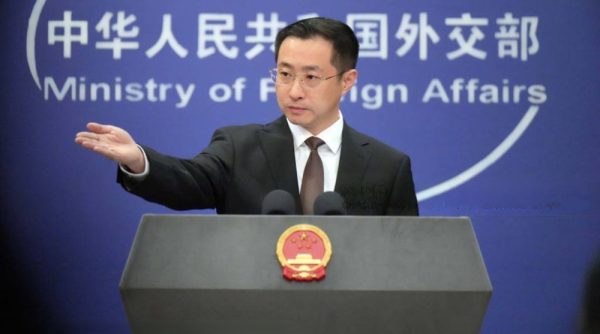
Beijing has rejected Washington’s latest demand that countries join a renewed campaign of economic sanctions against Iran, reaffirming that the escalating crisis requires political dialogue.
“Sanctions and pressure tactics are not the solution,” Chinese Foreign Ministry spokesperson Lin Jian told reporters on Thursday.
The rebuke came one day after the Trump administration issued an open call to allies and China alike to fall in line with what the president billed as the “most crushing economic operation ever taken against any country”—a boastful threat that came after Washington failed to achieve any of its war objectives military some six months after starting the aggression on Iran in late February.
Notably, the United States has yet to detail the full scope of its so-called operation, with US Secretary of Treasury Scott Bessent punting further specifics to a Monday press conference—a delay that raises questions about the campaign’s actual readiness.
China calls on parties to act responsibly and stick to the political and diplomatic approach, added Jian.
Iran has strongly condemned the US campaign, with Minister of Foreign Affairs Abbas Araghchi describing Washington’s economic aggression as an attempt to divert attention from America’s own problems.
Araghchi pointed to America’s “unprecedented debt & surging interest costs” as Washington seeks to impose further economic pressure on Iran.
Iran’s Ministry of Foreign Affairs said on Thursday the latest US sanctions, announced on the anniversary of the 1953 coup against Iran’s democratically elected government, demonstrate Washington’s continued hostility toward the Iranian people.
“The new US sanctions are not only another indication of the continuation of 73 years of hostility by US policymakers toward the Iranian people, but also demonstrate the anti-human, lawless and hegemonic nature of the US government,” the ministry noted.
The ministry further condemned the sanctions for targeting the fundamental rights of Iranian citizens and violating international norms.
“Without a doubt, the US economic sanctions against Iran, which target the fundamental human rights of every Iranian citizen, constitute ‘economic terrorism’ and ‘crimes against humanity,’” it maintained.
Beijing’s rejection comes ahead of Chinese President Xi Jinping’s planned September 24 visit to the White House, adding significance to China’s refusal to participate in Washington’s economic campaign against Tehran.
Press TV – August 20, 2026
Israel has issued a veiled threat against Turkey following airstrikes on a Syrian military airbase near the Turkish border, with war minister Israel Katz warning President Tayyip Erdogan against “dragging Turkey into dangerous adventures in Syria.”
The Israeli air force has completed the transfer of its Apache helicopter squadron from southern Israeli occupied territories to the Ramat David airbase in the north—the first such move in 25 years.
Israeli military officials have acknowledged that the reorganization was prompted in part by the perceived threat from Turkey.
The strikes on the Abu al-Duhur airbase in northern Syria, about 70 km from the Turkish border, come amid mounting tension over Ankara’s role in rebuilding military capabilities of the current regime in Syria.
Israel has accused Syria of allowing Turkish troops to deploy at the base, a charge both Turkish and Syrian officials have denied.
But beyond the immediate dispute, regional analysts and Turkish officials see a broader strategic realignment where Israel now views Turkey as the primary obstacle to its expanding plans in Syria.
Israeli officials have increasingly described Turkey in terms once reserved for Iran. Regime voices in Tel Aviv have referred to Ankara as the “new Iran.”
“Turkey may become the next target,” warned one Turkish expert, cited in Japanese media.
The warning echoes a view gaining traction among international observers that Israel’s strategy in Syria has evolved to containing Turkey’s growing military and political footprint in the country.
At the heart of the dispute lies a fundamental disagreement over what kind of Syrian state should emerge from years of conflict.
“Israel sees the fragmentation of its neighbors as a security strategy,” one analysis noted.
Turkish officials have made clear that any Israeli advance toward their interests in Syria would cross a red line.
Foreign Minister Hakan Fidan said Israel’s interest in Syrian territory “has not disappeared” but has been temporarily set aside while Tel Aviv focuses on other priorities.
“When the time comes, they will act,” he warned. “This is a vital interest and security zone for us. We must be prepared for any situation.”
Earlier this year, Ankara and Tel Aviv held rare “technical talks” in Azerbaijan to establish deconfliction mechanisms and prevent accidental clashes in Syria.
Israeli officials made clear during those talks that any Turkish military deployment in Syria, particularly around Palmyra, would be unacceptable.
Analysts and regional observers have linked Israel’s actions in Syria to broader colonial ambitions, noting that Israeli officials have openly declared forces will remain in southern Syria “forever.”
“What Israel wants, with US support, is a submissive Syria, stripped of national identity and armed forces, under Israeli occupation—just like the Golan Heights,” wrote Abdulbari Atwan, editor-in-chief of Rai al-Youm, in a commentary on the Abu al-Duhur strikes.
Greece, Cyprus, and Israel signed a military cooperation agreement in late 2025, forming what Turkish media has dubbed an “anti-Turkish alliance.”
Syria, according to observers, is just one front in Israel’s broader plan to expand its colonial ambitions across the region.
Tel Aviv sees both Iran and Turkey as the most serious hurdles to its “Greater Israel” aspirations—a vision that envisions Israeli dominance stretching from the Nile to the Euphrates.
After dragging the US into a large-scale war which it could not afford to wage alone against Iran, observers say Israel is now positioning itself for a potential confrontation with Turkey.
Al Mayadeen | August 20, 2026
Turkey’s Defense Ministry denied on Thursday that any Turkish military delegation was present at Syria’s Abu al-Duhur air base before or during Israeli attacks on the facility earlier this week, while vowing to continue “resolutely” supporting Syrian sovereignty and territorial integrity.
“We state that there was no Turkish military delegation at the Abu al-Duhur airbase before or during the attack carried out by Israel against that base in Syria,” a Turkish defense ministry official told journalists, per AFP.
The ministry warned against allowing a “perception” to take hold that Israeli military aggression against neighboring countries is “routine and acceptable,” and called it essential for the international community to adopt “more concrete and effective measures” against Israeli actions it said threaten regional peace and stability.
Ankara reiterated that its efforts to protect Syria’s sovereignty and territorial integrity, and to help build a “stable and secure structure” in the country, would continue. The ministry also affirmed that Turkey will continue supporting Syria’s efforts to develop its own military capability and infrastructure.
Katz, Netanyahu threaten Turkey
Earlier today, Israeli War Minister Israel Katz warned Turkish President Recep Tayyip Erdogan, writing in Turkish on X that Erdogan “is dragging Turkey into dangerous adventures in Syria” and that “Israel” will not “allow any actor to threaten its security”.
Katz added that “it would be better” for Erdogan to continue his “reality-detached, fantastical statements” against “Israel” in the Turkish parliament than to “attempt to test Israel’s resolve on self-defense”.
The statement followed remarks by Israeli Prime Minister Benjamin Netanyahu on Wednesday night, who said “Israel” will not “tolerate a Turkish military presence in Syria that threatens Israel”.
Netanyahu claimed the Israeli regime had delivered its warning “crystal clear” but that Turkey “didn’t hear it loud enough, so we made sure they understood it better”, an apparent reference to an Israeli attack a day earlier on Syria’s Abu al-Duhur airbase.
Attack on Abu al-Duhur airbase
Netanyahu’s office claimed late on Tuesday that Syria was “on the verge of breaching” a security understanding with “Israel” by allowing Turkish forces to deploy at an airbase near Aleppo, accusing Damascus of ignoring repeated Israeli warnings.
The claim came after Israeli aggression hit Abu al-Duhur airbase in eastern Idlib, the first strike on that base since Bashar al-Assad’s fall in December 2024.
Syria’s Foreign Ministry called the strike “unjustified aggression” and a “dangerous escalation.”
Turkey’s Communications Directorate rejected Netanyahu’s claims, calling them “frivolous allegations” intended to “legitimize Israel’s unlawful airstrikes targeting Syria’s sovereignty and territorial integrity.”
Ankara said the accusations stem from Netanyahu’s push to pursue “expansionist and destabilizing policies” in the region ahead of elections.
Americans are waking up to ugly truths
By George D. O’Neill Jr. | The American Conservative | August 19, 2026
Now that the lofty 250th-anniversary rhetoric about the greatness of our country has faded, it is time to face the reality of our country’s actual behavior. The U.S. fashions itself as a generous and benevolent world leader enforcing the “rules-based order”—a deceptive construct used by globalist elites to bully other countries. The rules are arbitrarily changed to suit the bullies and are regularly fashioned into pretexts for military action against uncooperative nations. In short, it is a hoax, untethered from the principles and ideals of our founders.
Almost daily we witness some spectacle illustrating the appalling corruption of our country’s leadership. The recent release of Anthony Fauci’s diary entries confirms long-held suspicions about the Covid-19 narrative, which we now know even Fauci himself did not fully believe. Think of the millions of lives ruined and harmed by that corruption. Yet this vain phony, when asked to testify before Congress, hid behind half a dozen lawyers and refused to answer any questions. What a fine example of transparency from one of our leading scientists and civil servants! What else are our leaders still hiding about the worldwide disaster caused by Covid-related deceptions and manipulations? There has not yet been any meaningful examination of our medical profession, which largely acted as cowards during the pandemic, adhering to the bogus official narrative at the expense of the welfare of their patients.
Our leadership has not even begun to scratch the surface of the horrors created by the many secret—and potentially illegal—biolabs scattered around the globe, supported by funds often hidden from voters under the guise of “national security.” The Fauci crowd appears to have been deeply involved in that dark world.
America’s Middle East policy remains a source of shame. The U.S. Treasury secretary brags about ruining the currency of the Iranian people, against whom we have waged a war of aggression. In Gaza, Washington has enabled a brutal assault on a vulnerable population. Not many years ago, most Americans considered standing up for the vulnerable and innocent an honorable act of a true American. Not our leaders. These days, opposing the harm of politically inconvenient innocents attracts name-calling, ostracism, and sanctions. What would our Founding Fathers have thought of that?
The current wars have exposed the shortcomings of our nearly trillion-dollar military and its multi-billion-dollar weapons systems. If the Covid mess is any indication, we should assume there is hidden and shockingly ugly information about the behavior and practices of the military-industrial complex. The failure of our various expensive defense systems to protect our Persian Gulf “allies” from Iranian missile and drone attacks is a tragic example of government dishonesty. Despite repeated failures, the administration continues to brag of its ability to destroy Iran’s military and shoot down its remaining missiles and drones. After years of being told we possess the “most powerful military” in history, Americans are beginning to realize it is a fantasy. The success of that false narrative rests on decades of fighting people riding donkeys and bicycles.
Our government classifies and redacts documents as a matter of course. Think of the billions of pages we are still not allowed to see—especially information about the most important events in our country’s history. Many significant, history-changing events remain shrouded in secrecy. How is it that information is still being withheld about the assassination of President John F. Kennedy? After six decades, what bad behavior are they still “protecting” from the public? Most Americans suspect the official government narrative was false, yet officials continue to withhold information that might shed light on that crime. The same is true for the assassinations of Robert F. Kennedy and Martin Luther King Jr., our government’s willful abandonment of U.S. prisoners of war in Vietnam, the September 11 attacks, and the late, disgraced financier Jeffrey Epstein. Not to mention the disgusting manipulations and secret operations used to drag our country into the long list of dishonest, illegal, and failed wars we have “fought.”
Our political leadership’s frenzied efforts to hide the Epstein files make it look as though the “national security” excuse is merely a convenient tool to obscure malfeasance, rape, blackmail, bribery, and plain old corruption. They clearly believe they are not subject to the same pesky and inconvenient laws as the rest of us who live in the country. So much for equal protection under the law and the “rules-based order.”
We watch with horror the chaos, death, and destruction currently being wreaked on the world—and on our own country—by our “exceptional nation.” Why has the second Trump administration bombed at least seven countries and engaged in underhanded efforts to weaken and harm the political systems of others? None of this serves the interests of the American people; it serves only the special interests of our elites. All this from a president who campaigned on an America First policy, an end to forever wars, and the promotion of peace. It looks like we were fooled again. Presidential candidate after presidential candidate promises peace, and we get war after war. The system is subverted by corruption.
As the failure of the illegal war against Iran becomes increasingly obvious, more Americans are realizing that it in no way serves their interests. As the war against Russia in Ukraine grinds toward failure, American and European leaders continue more frantically than ever to promote the fantasy that Ukraine can defeat Russia in that sad and disastrous conflict.
There is one positive development: The American people, especially the younger generation, are beginning to recognize the corruption at the top of our country and the magnitude of the war lies. They understand that the special interests driving these belligerent policies care nothing about the well-being of the general populace or of our nation. There has always been skepticism toward powerful special interests, but we are moving past skepticism into righteous fury.
This is also true of our “allies,” who watched U.S. elites prioritize Israel over American security when the missiles started flying.
Ours is not an “exceptional nation.” It is not the “shining city on a hill.” It is not “a thousand points of light.” Not anymore. It is a declining empire with a declining military—one unable to protect its allies, yet still seeking to bully and harm any country that angers its corrupt elites.
Our military defenses are so ineffective that Iran—a country one-fourth our size, with an economy smaller than our bloated military budget—can practically name its next round of targets knowing our mighty military can do little to stop them.
With a governing elite that serves foreign and special interests rather than the people and a sweeping surveillance state that stretches from sea to shining sea, Americans are becoming increasingly disillusioned. A sobering question to consider: When the illusion finally shatters, who will be left willing to defend a government that wouldn’t defend its own?
George D. O’Neill, Jr., is a member of the board of directors of the American Ideas Institute, which publishes The American Conservative, and an artist who lives in rural Florida.
Daniel Davis / Deep Dive – August 19, 2026
Daniel Davis / Deep Dive – August 19, 2026
Daniel Davis / Deep Dive – August 19, 2026

or go to
Aletho News Archives – Video-Images
By Kevin Barrett • Unz Review • February 1, 2019
 A Review of Conspiracy Theories and Other Dangerous Ideas by Cass Sunstein (based on an earlier paper co-authored with Adrian Vermeule); In Defense of Troublemakers: The Power of Dissent in Life and Business by Charlan Nemeth; and Conspiracy Theories and the People Who Believe Them, edited by Joseph E. Uscinski
On January 25 2018 YouTube unleashed the latest salvo in the war on conspiracy theories, saying “we’ll begin reducing recommendations of borderline content and content that could misinform users in harmful ways—such as videos promoting a phony miracle cure for a serious illness, claiming the earth is flat, or making blatantly false claims about historic events like 9/11.”
At first glance that sounds reasonable. Nobody wants YouTube or anyone else to recommend bad information. And almost everyone agrees that phony miracle cures, flat earthism, and blatantly false claims about 9/11 and other historical events are undesirable.
But if we stop and seriously consider those words, we notice a couple of problems. First, the word “recommend” is not just misleading but mendacious. YouTube obviously doesn’t really recommend anything. When it says it does, it is lying. … continue
 Aletho News If Americans Knew No Tricks Zone

