Iran, China & Russia v. Trump /Glenn Diesen & Lt Col Daniel Davis
Daniel Davis / Deep Dive – April 15, 2026
Glenn Diesen | April 16, 2026
Seyed Mohammad Marandi explains the Iranian perspective on why the negotiations with the US failed, what to expect from the US naval blockade, and the likely war that will continue. Marandi is a professor at Tehran University and a former advisor to Iran’s Nuclear Negotiation Team.
Follow Prof. Glenn Diesen:
Support the research by Prof. Glenn Diesen:
Daniel Davis / Deep Dive – April 15, 2026
Candace Owens – April 10, 2026
My response to Trump’s latest unhinged rant on Truth Social name dropping me.
By Max Blumenthal | The Grayzone | April 15, 2026
When he staged his first run for Congress in 2012, Eric Swalwell’s seemingly underdog campaign was aggressively propelled by AIPAC, Big Pharma, and corrupt land developers. Their target was Rep. Pete Stark, a legendary reformer and antiwar stalwart who had infuriated the Israel lobby with his consistent opposition to wars on Iraq and Lebanon.
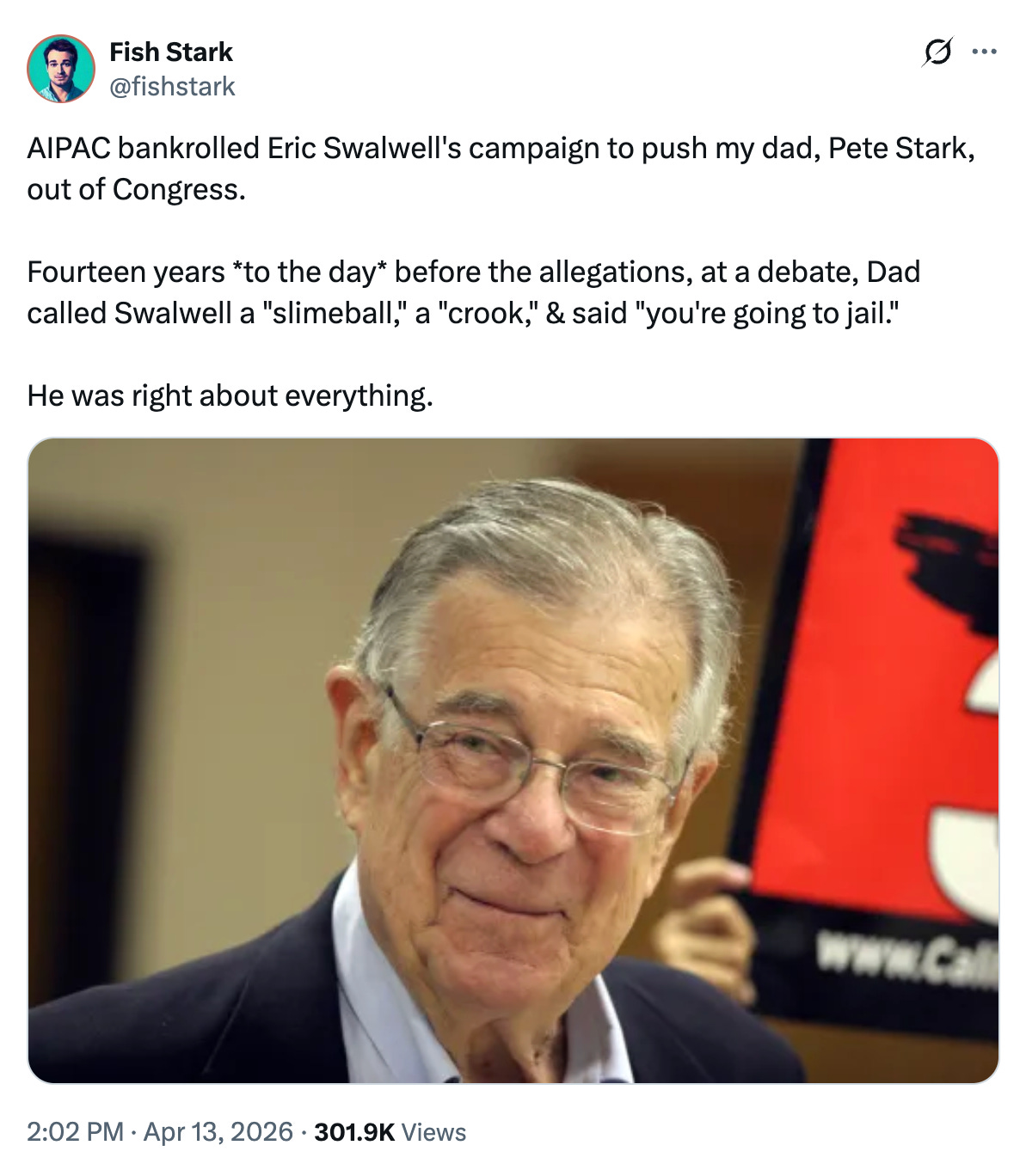
At the end of their only debate, Stark called Swalwell a “slimeball,” a “fucking crook,” accused him of bribery, and predicted, “you’re going to jail.” Mainstream media condemned Stark as a bully in the throes of cognitive decline, while Swalwell became their darling. After the centrist 31-year-old prosecutor eked out a victory, The New Republic hailed him as a “costume-donning, prop-loving thirty something who ousted Pete Stark.” No mention was made of the bathrobe he donned in his now-notorious role as a liquor-sodden lothario.
In Congress, Swalwell provided a reliable rubber stamp for military aid to Israel while distinguishing himself as the most cartoonish promoters of the Russiagate hoax. When he ran for president in 2019 – polling around 0% throughout his campaign – he branded himself the “Guns and Russia” candidate, meaning he would restrict guns for Americans while forking over billions in military aid to Ukraine.
With Swalwell’s demise, Pete Stark may have gotten the last laugh. But in a Democratic Party that is hostile to class politics, overrun by corporate lobbyists and occupied by Israel, Swalwell was a prototype. In his wake, new slimeballs will rise to the surface.
Press TV – April 15, 2026
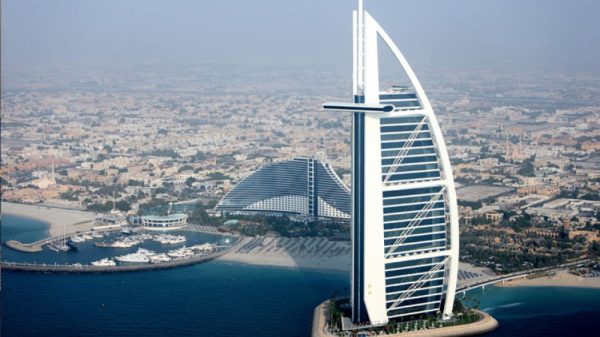
The United Arab Emirates is to close its flagship Burj Al Arab hotel for one and a half years amid a sharp drop in tourist visits to the Persian Gulf country, caused by Iran’s retaliatory attacks against US bases in the region, a report says.
The Wednesday report by Middle East Eye said that Burj Al Arab’s owner company said in a statement a day earlier that it would begin a lengthy refurbishment operation amid a drop-off in tourism activity in the UAE and the wider region as a result of Iranian operations.
The Reuters news agency also quoted a staff member of the hotel as saying that guests with prior bookings will be accommodated in alternative nearby hotels during the closure period.
The famous sail-shaped hotel which is located in the city of Dubai, suffered damage from the unsuccessful interception of an Iranian drone in March, when Iran was carrying out attacks on US bases and interests in regional countries.
The attacks came after the US and Israel launched an aggression on Iran, bombing civilian targets across the country.
Iran swiftly responded by targeting US bases and companies across the region, including in the UAE, a key US ally in the region that allowed its soil to be used for attacks against the Islamic Republic.
Burj Al Arab’s owner company admitted in its statement that Iranian attacks on the UAE and other countries in the Persian Gulf had caused an exodus of foreign expats and tourists from the region.
Reports say that Iranian reprisal attacks have caused stock markets in Dubai and Abu Dhabi to lose more than $120 billion since the start of the US-Israeli aggression on Iran in late February.
The UAE has also been forced to cancel some 18,400 flights over the period.
Iran carried out nearly 1,500 attacks on targets in the UAE, reports suggest, making the country the second most notable target of such attacks after the Israeli regime over March and early April.
Al Mayadeen | April 15, 2026
The cost of repairing energy-linked infrastructure damaged during the recent US-led escalation in the Middle East could reach as high as $58 billion, underscoring the scale of destruction inflicted across the region, Rystad Energy reported.
Rystad Energy estimates that oil and gas facilities alone could account for up to $50 billion of that total, reflecting extensive damage to some of the region’s most critical assets. The figure marks a sharp increase from $25 billion just weeks earlier, with the firm noting that “the scope of damage has expanded materially” as strikes intensified before a temporary ceasefire was reached between Washington and Tehran.
The bulk of the damage is concentrated in oil and gas infrastructure, the backbone of regional economies, with repair costs in this sector alone reaching up to $50 billion. Rystad noted that downstream refining and petrochemical assets account for the largest share of losses due to their technical complexity and the extent to which they were targeted in later stages of the war. However, the impact has extended further, affecting essential civilian and industrial facilities, including desalination plants, steel factories, and aluminum production sites, adding another $3 billion to $8 billion in losses.
Global fallout
Rystad stressed that the consequences extend far beyond the region, warning that rebuilding damaged infrastructure does not generate new energy capacity but instead diverts global resources, leading to project delays and inflationary pressure worldwide. The firm described the situation as “a stress test for the global energy supply chain,” noting that the same contractors, equipment, and engineering capacity required for repairs are already committed to major LNG and offshore projects launched in recent years.
This overlap is expected to slow the execution of new energy developments, as operators prioritize restoring existing production over advancing expansion projects.
As a result, recovery is increasingly shaped not by capital availability but by competition for access to constrained supply chains, logistics, and specialized labor.
Press TV – April 15, 2026
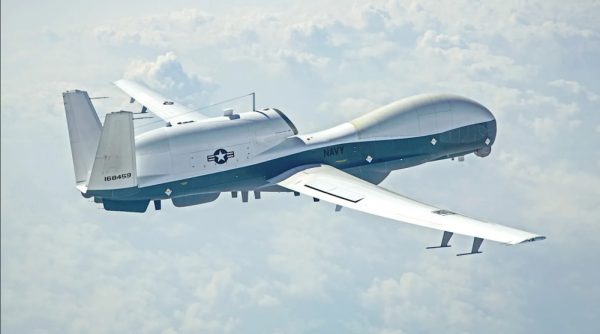
The US Navy has confirmed that an MQ-4C Triton unmanned surveillance aircraft crashed in the Persian Gulf region on April 9, with the incident now described as a mishap, although little was revealed regarding the circumstance under which it was lost.
After the aircraft had vanished unexpectedly from online flight tracking sites while flying over the Persian Gulf, multiple sources reported that it had been shot down by Iranian air defenses.
The MQ-4C is a significantly rarer and higher value aircraft than the F-15E strike fighter, MQ-9 drone, and other aircraft that have been shot down by Iranian forces, with only the US Air Force E-3 Sentry AWACS destroyed on the ground in Saudi Arabia being more valuable.
Where the E-3 is an ageing aircraft that was scheduled for retirement within the next 15 years, the MQ-4C is a cutting edge platform that is still being produced for the Navy.
Each MQ-4C is estimated to have a value of $235-250 million, with its extreme cost meaning only 20 have been brought into service.
The destruction of one of the aircraft by Iranian air defenses would not be wholly unprecedented, with the closely related RQ-4A Global Hawk developed for the US Air Force having been shot down by the Islamic Revolution Guards Corps on June 20, 2019.
Iran’s ambassador to the United Nations Majid Takht Ravanchi reported at the time that the aircraft “conducted an overflight through the Strait of Hormuz to Chabahar port in a full stealth mode as it had turned off its identification equipment and engaged in a clear spying operation.. When the [US] aircraft was returning towards the western parts of the region near the Strait of Hormuz, despite repeated radio warnings, it entered into the Iranian airspace.”
Iranian forces have more recently from late February shot down an estimated 17 MQ-9 drones, and multiple drones of other types such as the Israeli Heron.
The Triton is a derivative of the MQ-4 Global Hawk, and is specialized in maritime surveillance. The aircraft have ranges of over 13,000 kilometers, which are necessary for persistent wide-area surveillance, and have reinforced airframes for harsh ocean weather allowing them to stay on station over oceans in all conditions.
Each integrates the AN/ZPY-3 Multi-Function Active Sensor radar, which was designed for 360° maritime surveillance and can track ships over vast areas. They also integrate electro-optical / infrared sensors, as well as electronic support measures for signals detection.
Real-time data links via satellite communications allow them to serve as nodes in wider surveillance networks, sharing data with naval, air and ground assets. The aircraft are particularly heavily relied on in the Pacific theatre, although their survivability has repeatedly been questioned.
Before its sudden disappearance from flight tracking systems, the Iranian-downed MQ-4C Triton reportedly exhibited a dramatic loss of altitude, plunging from its typical cruising height of around 50,000 feet to below 10,000 feet.
At the time, the drone appeared to be returning to its base at Naval Air Station Sigonella in Italy after completing a surveillance mission in the Persian Gulf and the Strait of Hormuz, the US Navy said.
At the time of its descent, the drone’s transponder was broadcasting a distress signal, commonly known as “squawking.” Initially, it transmitted the code 7400, indicating a loss of communication with ground controllers, and later switched to the emergency code 7700.
While the latter is a general declaration of an in-flight emergency, it does not divulge the specifics of the situation.
In 2019, Iran successfully shot down a Navy RQ-4 Broad Area Maritime Surveillance-Demonstrator (BAMS-D) drone over the Sea of Oman and showcased the remains of the uncrewed aircraft.
Another MQ-4C was detected conducting a routine mission over the Persian Gulf on Wednesday.
Last week, defense publication TWZ noted that Tritons are likely to be crucial for monitoring the Persian Gulf and the Strait of Hormuz, especially during the fragile ceasefire between the United States and Iran.
Press TV – April 15, 2026
Iran’s Minister of Science, Research, and Technology Hossein Simaei has confirmed that over 60 university students and 10 professors have been martyred in the recent US-Israeli aggression.
During a visit to the Aerospace Research Institute of Iran (IARI) on Wednesday, Simaei expressed hope that the academic community would continue the work of those lost in the attacks.
“The students and professors martyred during the illegal aggression have been identified,” Simaei said. “We hope that other members of Iran’s academia continue the work of the martyred students and professors.”
Simaei described the strikes as part of a broader campaign of “scientific crimes” by the US and the Israeli regime. He said the IARI, a facility focused on non-military research in fields such as biology, agriculture, and surveying, was specifically targeted twice despite its peaceful academic objectives.
“This is another of the scientific crimes committed by the sinister US-Israeli alliance. This is a place where researchers in civilian fields like biology, agriculture, and surveying worked, and unfortunately, it has fallen victim to the barbaric attacks of the enemy,” Simaei stated.
Simaei reflected on the loss of Dr. Saeed Shamghadri, an associate professor at Iran University of Science and Technology, who was martyred in the attack alongside his two children.
He described this loss as particularly tragic, underlining the personal cost of the aggression beyond the destruction of academic institutions.
In his remarks, Simaei provided details about the broader damage to Iran’s educational and scientific infrastructure.
More than 20 state universities, as well as several research institutes, have been directly targeted by the attacks, resulting in both significant physical destruction and the loss of critical human resources.
Meanwhile, Dr. Bijan Ranjbar, the president of the Islamic Azad University, confirmed that 110 students from his institution have been martyred, and 21 university branches of his institution have sustained damage.
In addition, four faculty members and two employees, as well as two students from the SAMA schools, were martyred.
On April 6, Sharif University of Technology, one of Iran’s most prestigious engineering universities known as the MIT of Iran, was struck. The High-Performance Computing (HPC) Center, which supports over 3,000 researchers in fields such as artificial intelligence (AI) and computer science, was severely damaged.
The attack, which Simaei described as part of a broader strategy to cripple Iran’s scientific and technological progress, was not limited to the HPC center. Several laboratories and educational buildings were also hit, alongside a nearby mosque and other academic facilities.
The Sharif University attack followed a pattern of similar assaults on prominent Iranian institutions, including the Laser and Plasma Research Institute at Shahid Beheshti University, the Pasteur Institute, and a satellite development laboratory at Science and Technology University.
The attacks, according to Iranian officials, were deliberate efforts to target strategic research and technological infrastructure.
“The world is governed by international, legal, and ethical order, but we are facing an enemy that adheres to none of these principles,” Simaei said.
The minister highlighted that Iran is meticulously documenting all damage inflicted on its academic and research institutions, preparing to take legal action in international courts.
“We are documenting all the damages based on internationally accepted standards,” Simaei noted.
“Because claiming damages and filing legal suits have their own specific standards, we are conducting precise evaluations according to these criteria. The extent of the damages will be announced in the future.”
Simaei also commented on the plight of Iranian students who have been expelled from universities in the US amid the war.
“Given that the United States, contrary to legal and ethical principles, has expelled some Iranian students who were legally studying there, we announce that all these expelled students and professors can continue their studies at equivalent universities in Iran,” he said.
“We welcome them with open arms, and there is no need for them to be concerned.”
The president’s threat to annihilate Iranian civilization took America to a dark place
By Harrison Berger | The American Conservative | April 10, 2026
On Tuesday morning, President Donald Trump took to Truth Social to declare that “a civilization will die tonight.” By 8 p.m., the U.S. announced a two-week ceasefire with Iran had begun. Whether the ceasefire holds (or even takes hold) is already in question—Iran and the U.S. appear to be offering contradictory accounts of what the 10-point plan they allegedly agreed to actually says. The best hope that it might stick comes from Israel, where TV presenters who spent Monday salivating over a clock counting down the minutes and hours until Trump’s planned genocide of Iranians were left confused and outraged when the president backed down shortly before the deadline.
But whether or not Trump ultimately goes as far as the Israelis would like him to, Americans must now reckon with the destruction already carried out in our name, the civilization-destroying actions Trump has threatened, and the barbarians we have become in the process.
As Tucker Carlson, the most prominent critic of the war with Iran, pointed out in his viral monologue Monday, there was very little that was American or Western about Trump’s threat to destroy an entire civilization. That is not to say the U.S. government hasn’t committed serious crimes before, including wars of aggression. As a study published in The Lancet, a scientific journal, found, U.S. and European sanctions have killed 38 million people since 1971. But those shameful actions were at least concealed behind a pretext, not declared outright as the objective itself. Though it may seem like a distinction without a difference, Carlson convincingly argues it matters significantly. By abandoning even the aspiration of higher laws, we have embraced the “law of the jungle,” which is “a brutal and unforgiving law” that will not stop at Iran’s borders. “We know from history that the things you do will be done unto you,” Carlson said. “Once you set a standard, you will have to live by that standard.”
Indeed, Trump’s threat to destroy Iranian civilization was not an expression of American values but the purest expression, and logical endpoint, of an ideology the United States has attached itself to under both Joe Biden and now Trump: Zionism and the Greater Israel project, first through U.S. support for Israel’s genocide in Gaza and ethnic cleansing of the West Bank, and most recently through the joint war of aggression against Iran.
And while the American taxpayers forced to fund those wars are told they are fought on our behalf to save “civilization,” it is now impossible to think of any force in recent history more destructive and threatening to civilization than the Greater Israel project—which wages an ISIS-style campaign to destroy every artifact, center of knowledge, and source of beauty in the region, and does so with American weapons, American servicemembers, and American money.
The record of what has already been destroyed provides evidence that the U.S. and Israel wish to do exactly to Iran what ISIS and its various backers did to Syria. According to Iran’s minister of cultural heritage, U.S. and Israeli strikes have damaged more than 131 historical sites across the country including museums, palaces, and UNESCO-listed landmarks, with the heaviest losses in Tehran. Among the centuries-old structures destroyed by U.S.–Israeli bombs is Iran’s Golestan Palace, a UNESCO World Heritage site; the Chehel Sotoun pavilion in Isfahan, a 17th-century monument from the Safavid period; the Sheikh Lotfollah Mosque, one of the architectural jewels of the Islamic world; and the Fin Garden in Kashan, one of Iran’s oldest surviving gardens which dates to the late 16th century. Dozens of universities and research centers have been struck, including the Iran University of Science and Technology, Isfahan University of Technology, and Sharif University of Technology, “Iran’s MIT,” whose computer science center was reduced to rubble. A Tehran synagogue was also struck on Passover.
Our descent into barbarism has long been in the making, and the fingerprints all over that transformation are recognizably Israeli. One of the earliest signs of our transition came when the “War Department” began posting drone strike footage, often as memes, on social media. Where the government once prosecuted WikiLeaks and scrambled to conceal its war footage out of embarrassment, Defense Secretary Pete Hegseth’s Pentagon now shamelessly publishes such imagery on its own initiative, a direct import from Israel, which pioneered the model of broadcasting its own war crimes during the assault on Gaza. More recently, Israel-firsters like Laura Loomer and Mark Levin were the loudest voices pushing Trump toward escalation and cheering him on as he threatened civilizational annihilation. Loomer, whom Trump reportedly solicits for advice, called on him to channel Curtis LeMay, the general whose fanatical bloodlust inspired Dr. Strangelove and who came within a hair of igniting nuclear war. Levin, for his part, arguably insinuated on his Fox News television show that dropping a nuclear bomb on Iran would be justified.
Whether or not the ceasefire holds, Americans will have to reckon with what has already been done in our name, and with the fact that the Israel-firsters who cheered every escalation have not been removed from their positions of influence. They remain right in the president’s ear, defining not just his second term but the international symbol of destruction and barbarism we are in the process of becoming.
Israel’s erroneous belief that it can destroy Iran should not be supported by the US, the Russian foreign minister has said
RT | April 15, 2026
There is no quick fix to the crisis surrounding Iran, Russian Foreign Minister Sergey Lavrov has said. The US must recognize its underlying causes, including Israel’s goal of destroying the country, he added.
Speaking to reporters during a visit to China on Wednesday, Lavrov described the situation as “a crisis knot that will be extremely difficult to untangle.” He explained that “some parties are trying to cut it now – I don’t believe that would produce a [favorable] result.”
According to Lavrov, the current crisis stems directly from the US-Israeli attack on Iran in late February. The resulting disruption to global markets and the Iranian damage to Arab states hosting US military facilities were foreseeable consequences, he stressed.
“Israel appears totally convinced that Iran must be destroyed. I cannot understand how such a belief is possible,” Lavrov said, adding that remarks by US President Donald Trump about wiping out Iran’s civilization had sparked strong international backlash.
In addition to backing Israeli ideological motives, Washington is also pursuing dominance over global energy markets, as confirmed by Trump’s own messaging, Lavrov stated.
US and Israel hurting the Middle East
Commenting on recent US-Iran peace talks in Pakistan, Lavrov expressed hope that Washington would be “realistic, take the region’s interests into account and suspend its unprovoked aggression.”
He expressed solidarity with Gulf nations damaged in the conflict, but stressed that “those who started the war also have intentions not to allow normalization between the Arabs and Iran.”
Lavrov pointed to China’s quiet role in facilitating the 2023 agreement between Saudi Arabia and Tehran, which restored diplomatic ties after seven years and led to the reopening of embassies between the regional rivals.
Iran’s nuclear rights must be respected
Lavrov dismissed claims by the US and Israel that Iran is pursuing nuclear weapons, citing reports from international inspectors that found no evidence of such activities.
Concerns over Iran’s nuclear program were addressed under the 2019 multilateral agreement known as the JCPOA, Lavrov said, adding that “the United States destroying this initiative as Israel always wanted is a sad fact of modern history.”
He also criticized the European Union for acceding to Trump’s withdrawal from the agreement and playing “the most malicious role” in pushing snapback UN sanctions targeting Iran.
Russia, he said, remains ready to assist in finding a solution, provided that Iran’s right to develop a peaceful nuclear program is upheld.
A deep dive into how Charles Bronfman and his family shaped a century of shadow politics
José Niño Unfiltered | April 14, 2026
The Jeffrey Epstein files continue to spill their secrets. With each new document release, each newly unsealed court record, the spotlight inches closer to a network of Jewish billionaires who operated in the shadows long before the convicted sex trafficker became a household name. The names in Epstein’s black book read like a roster of Jewish power. But behind those individual names lies something even more intriguing, a structure, an architecture of influence that Epstein exploited with devastating effectiveness.
At the center of that architecture stands a mysterious organization that most Americans have never heard of. It was founded in 1991 by two men, one of whom would become Epstein’s most consequential patron, granting him sweeping power of attorney over his billion-dollar fortune. The other was a Canadian-American billionaire whose family name once adorned the world’s largest liquor company and whose philanthropic fingerprints can be found on nearly every major Jewish institution in North America.
His name is Charles Bronfman.
The Bronfman Empire
Charles Rosner Bronfman was born on June 27, 1931, into a Jewish family in Montreal, the youngest of four children born to Samuel Bronfman, the founder of Distillers Corporation Limited and later the Seagram Company. The Bronfman family’s origins trace to Bessarabia in the Russian Empire, from which they fled from ethnic tensions in 1889 to settle in the Canadian prairies.
Samuel Bronfman, known simply as “Mr. Sam,” built the Seagram empire partly through the shrewd exploitation of American Prohibition-era demand for Canadian whiskey. A 1927 Canadian inquiry found the family had gone years without paying income taxes. A brother-in-law was murdered at a family liquor warehouse in 1922. In 1934, Samuel and his brothers were charged with evading duties on over $5 million, though the case collapsed when investigators could not obtain the family’s account books. From these controversial origins, the family built what would become the world’s largest distilling firm.
Charles grew up as the self-described quiet one. In his 2017 memoir Distilled: A Memoir of Family, Seagram, Baseball, and Philanthropy, he described himself as less dominated by ego than his brother Edgar. He was educated at elite anglophone institutions before attending McGill University. His family kept a kosher home and provided the children with Jewish religious schooling. He began his philanthropic activity at the age of 17.
In 1951, his father gave him a 33% ownership stake in Cemp Investments, a holding company for him and his three siblings that controlled the family’s corporate empire. After Samuel Bronfman’s death in 1971, Charles and Edgar inherited and co-chaired the Seagram Company Ltd., which at its peak was one of the largest spirits companies in the world.
The family’s fortunes were severely damaged in the late 1990s when Edgar Bronfman Jr., Charles’s nephew, led a disastrous pivot into entertainment, culminating in the 2000 sale of Seagram to the French media conglomerate Vivendi. Charles had strongly opposed this move, calling it “a disaster, it is a disaster, it will be a disaster” and “a family tragedy.” The family’s paper losses on the deal exceeded $3 billion as Vivendi’s stock plummeted.
The Founding of the Mega Group
In 1991, Charles Bronfman and Leslie Wexner, founder of The Limited and Victoria’s Secret, co-founded what they called the “Study Group.” The innocuous name concealed something far more significant. This was an invitation-only club of approximately 20 of the wealthiest and most influential Jewish businesspeople in America, a number that would eventually swell to nearly 50 by 2001.
The group became publicly known as the Mega Group after a Wall Street Journal investigative report in May 1998, headlined “Titans of Industry Join Forces To Work for Jewish Philanthropy,” pulled back the curtain on its existence. Annual dues reportedly ran approximately $30,000. Members met twice a year for two-day seminars on philanthropy and Jewish identity. But the guest list alone suggested this was no ordinary study circle.
Members included Les Wexner, Charles Bronfman, Edgar Bronfman Sr., Max Fisher, Michael Steinhardt, Leonard Abramson, Harvey Meyerhoff, Laurence Tisch, Charles Schusterman, Lester Crown, Ronald Lauder, Marvin Lender, and Hollywood director Steven Spielberg. These were men who controlled billions in personal wealth and sat on the boards of the most powerful Jewish organizations in America.
Bronfman’s 1998 Wall Street Journal comment, “From the beginning, we didn’t want to be seen as a threat to anybody… We don’t want to be seen as the Sanhedrin,” functioned as a classic tactical admission. By explicitly citing the ancient Jewish governing body as the image he sought to avoid, he inadvertently confirmed that such a structure of Jewish influence was indeed the functional reality he managed.
Yet critics and investigative journalists described the Mega Group as something far more consequential than a philanthropic book club. It was an informal political machine, a network through which billions in charitable funds could be directed to shape U.S. policy on Israel. Executive Intelligence Review and other outlets reported that the group had contacts with Israeli intelligence and served as a base for influence operations in the United States.
The Wexner Affair
The connection between the Mega Group and Jeffrey Epstein runs directly through Leslie Wexner, Charles Bronfman’s partner in founding the organization. Wexner was Epstein’s most consequential patron. He granted Epstein power of attorney over his personal finances in July 1991, giving Epstein, in Wexner’s own words, “wide latitude to act on my behalf” — effectively making Epstein his personal money manager for years. Epstein exploited Wexner’s network to establish relationships with influential political, business, and philanthropic figures across the globe.
Epstein also used his status as a purported model scout for Wexner’s Victoria’s Secret brand to lure young women into his sex trafficking enterprise. Because Bronfman co-founded the Mega Group with Wexner, and owing to how the group’s membership overlapped extensively with Epstein’s social and financial network, Bronfman’s name appears regularly in analyses of the Epstein web. The connection has raised uncomfortable questions about what the members of this secretive group knew, when they knew it, and what they chose not to see.
A more direct Bronfman family connection runs through Edgar Bronfman Jr., Charles’s nephew, whose name and contact details appear in Epstein’s notorious “little black book,” the private directory of contacts that became public through court disclosures. Edgar Bronfman Sr., Charles’s older brother, is identified in some accounts as one of Epstein’s clients during his years at Bear Stearns in the late 1970s and early 1980s, when Epstein advised wealthy clients on tax mitigation strategies.
Epstein victim Maria Farmer has publicly connected Epstein’s network to the Mega Group and to Leslie Wexner specifically. In a phone interview with journalist Whitney Webb, Farmer described the group as connected through Wexner, whom she called “the head of the snake.”
Perhaps most striking is an observation made by Jeffrey Solomon, the longtime president of the Andrea and Charles Bronfman Philanthropies. In a 2019 interview with Inside Philanthropy, Solomon noted that “successful people don’t want to be the ones who have to deal with uncomfortable situations” and drew an explicit parallel between his own role at ACBP and Epstein’s role with Wexner — both served as the person who absorbs uncomfortable decisions so the principal does not have to. “It was very much part of our job to say no so that they don’t have to,” Solomon told Inside Philanthropy.
The Philanthropic Empire
Charles Bronfman extended his influence far beyond business into the institutional architecture of global Jewry. In December 1986, he founded the CRB Foundation, whose twin founding principles were “to enhance Canadianism” and to promote “unity of the Jewish people whose soul is in Jerusalem.” The CRB Foundation was the cornerstone of what became the Andrea and Charles Bronfman Philanthropies. Over its 30-year life, ACBP distributed more than $340 million to approximately 1,820 grantees.
The signature achievement of Bronfman’s philanthropic career is Taglit-Birthright Israel, which he co-founded in 1999 alongside Michael Steinhardt, another Mega Group member, in partnership with the Israeli government. The program offers free 10-day educational trips to Israel for young Jewish adults, explicitly designed to strengthen their Jewish identity and connection to the Jewish state. Since its founding, it has sent more than 900,000 young Jews to Israel, making it the world’s largest educational tourism organization.
From 1999 to 2001, Bronfman served as the first chairman of the United Jewish Communities, the merged organization comprising the United Jewish Appeal, the Council of Jewish Federations, and United Israel Appeal. According to Executive Intelligence Review, when his term expired, he was succeeded by a son of Laurence Tisch, another Mega Group charter member.
The philanthropic initiatives born from the Mega Group are substantial. The Partnership for Excellence in Jewish Education, Birthright Israel, and the renewal of Hillel International all emerged from the group’s deliberations. In 2003, the Mega Group hired Republican political consultant Frank Luntz to help members mobilize public support for Israel.
In early 2001, Mega Group members Leonard Abramson, Edgar Bronfman Sr., and Michael Steinhardt launched “Emet,” Hebrew for “truth,” described by its founders as a pro-Israel think tank aimed at improving Israeli public relations in North America. The $7 million initiative — with an additional $1 million pledged from Israel’s Foreign Ministry — drew scrutiny both from Israeli diplomats who felt American Jews were encroaching on their turf and from commentators who questioned whether it would promote a hard-line approach to the peace process.
The Scandals
Bronfman’s career has not been without direct controversy. The most serious and well-documented centers on illegal campaign financing in Israel. In the 1999 Israeli election, Bronfman, along with Jonathan Kolber, the CEO of Koor Industries, allegedly channeled funds through an Israeli non-profit organization called ROVAD to support the campaign of Labor candidate Ehud Barak. A special investigation by Israel’s Registrar of Non-Profit Organizations found that ROVAD was used as a financial pipeline for Barak’s election campaign rather than fulfilling its stated social purpose.
In September 2001, Israeli police opened a formal investigation against Bronfman and Kolber under the Party Financing Law and Non-Profit Organizations Law. Barak’s One Israel party was ultimately fined more than $3 million after the revelation that large amounts of foreign money had been funneled through nonprofits.
This was not an isolated incident. ABC News reported that as early as the 1988 Israeli election, Bronfman had given $1.6 million to Shimon Peres’s campaign, donations that were legal at the time but contributed to the policy environment that eventually led Israel to reform its campaign finance laws to ban foreign contributions to Israeli parties.
Bronfman’s chairmanship of Koor Industries, one of Israel’s largest investment holding companies, ended in significant financial loss. His approximately $500 million investment lost around 70% of its value as the company’s aggressive tech pivot was devastated by the global tech bust. In 1989, Bronfman also joined British press magnate Robert Maxwell in a joint bid to buy a controlling stake in The Jerusalem Post from Koor, which was selling its shares. Maxwell, who would later be widely reported as having ties to Israeli intelligence, described the venture with Bronfman as aimed at “developing The Jerusalem Post and expanding its influence among world Jewry.”
In 2017, the Paradise Papers implicated Stephen Bronfman, Charles’s son and chief Liberal Party fundraiser for Canadian Prime Minister Justin Trudeau. Documents showed that Stephen’s investment firm Claridge had close business ties to a Cayman Islands trust linked to the Kolber family, raising questions about unpaid taxes. Stephen Bronfman denied any impropriety, stating he and his family “have always conducted themselves in accordance with the highest legal and ethical standards.”
The extended Bronfman family faced its own scandal when Charles’s nieces Clare and Sara Bronfman, daughters of his brother Edgar Sr., became deeply enmeshed in NXIVM. Founded in 1998 by Keith Raniere and Nancy Salzman, NXIVM operated as an ostensible self-improvement organization that prosecutors proved was in reality a criminal enterprise involving sex trafficking, racketeering, and a secret society in which women were branded with Raniere’s initials. Clare spent more than $100 million funding the organization and was sentenced to six years and nine months in federal prison in September 2020 for conspiracy to conceal illegal immigrants and fraudulent use of identification.
The Last Known Meeting
The Mega Group held what is believed to be its last documented meeting on May 3 and 4, 2001, at Edgar Bronfman’s Manhattan mansion. The group operated entirely behind closed doors and received minimal mainstream press attention until its connection to Wexner, and through Wexner to Jeffrey Epstein, brought renewed scrutiny beginning in 2019.
Investigative journalist Whitney Webb and others have reported that Epstein’s connections to suspected Mossad asset Robert Maxwell, former Israeli Prime Minister Ehud Barak, and the Mega Group network have raised persistent questions about whether Epstein was working for Israeli intelligence. These questions remain unanswered, and the full truth may never be known.
What is known is that Charles Bronfman, now in his 90s with an estimated net worth of $2.5 billion, remains one of the most consequential figures in the institutional architecture of global Jewry.
In the final accounting, Charles Bronfman is not merely a man of wealth, but a pillar of a shadow-governance structure that has rendered the traditional legislative bodies obsolete. Our elected officials have been reduced to mere stage actors, reciting lines written by an unelected inner circle of organized Jewish interests that treat sovereign nations like proprietary assets. As the Epstein files continue to strip away the veneer of legitimacy from the elite, we are forced to confront an undeniable reality: the levers of state have been seized by a cohesive Jewish network whose loyalties reside solely within their tribe. Recognizing this hostile architecture is the prerequisite for the struggle ahead—a definitive political confrontation, Gentile versus Jew, that is the only path to reclaiming our country.
Dialogue Works | April 13, 2026
Substack: https://substack.com/@dialogueworks?u…
X (Twitter): https://x.com/Dialogue_NRA
Patreon: https://patreon.com/Dialogueworks?utm…
Support Me:
Sputnik – 14.04.2026
JAKARTA – Indonesia has secured agreements on the supply of crude oil, fuel and liquefied petroleum gas from Russia, Indonesian Minister of Energy and Mineral Resources Bahlil Lahadalia said on Tuesday.
“We will be able to increase our crude oil reserves. In addition, we will have the opportunity to receive liquefied petroleum gas… The Russian side declared its readiness to support Indonesia’s energy security, including oil and gas supplies, as well as the development of storage systems,” the minister said following talks in Moscow.
The results of the negotiations send a positive signal to strengthen Indonesia’s energy sustainability “against the backdrop of an unstable global situation,” the minister said, noting that the partnership with Russia could “become an important option, given the scale of its energy production and experience in the oil and gas industry.”

or go to
Aletho News Archives – Video-Images
By Kit Klarenberg | Al Mayadeen | July 11, 2024
Almost immediately after the proxy war erupted, ISIS-tier footage of the torture and murder of Russians in Ukrainian custody emerged.
On July 6th, the New York Times published an astonishing investigation: In Ukraine, Killings of Surrendering Russians Divide an American-Led Unit. The article documents in grim detail how Chosen Company, an international volunteer battalion for Kiev, routinely executes Russian prisoners of war. It is the very first mainstream admission that this practice – a brazen breach of the Geneva Conventions, and a grave war crime – is widespread among Ukraine’s fighters, both foreign and homegrown. … continue
 Aletho News If Americans Knew No Tricks Zone
