Remembering the Rabaa massacre
By Amelia Smith | MEMO | August 14, 2017
Four years ago today the Egyptian army stormed a sit-in at Cairo’s Rabaa square and slaughtered 1,000 people who were protesting against the removal of the country’s first democratically elected President, Mohammed Morsi. People were shot, burnt alive and suffocated with tear gas. Security forces blocked the entrances so that ambulances couldn’t get in to treat the wounded.
What: Rabaa Massacre
When: 14 August 2013
Where: Egypt
What happened?
After Morsi was ousted in a military coup on 3 July 2013 the Muslim Brotherhood called for counter-protests at Rabaa Al-Adawiya and Al-Nahda squares. Some 85,000 people joined the sit-ins.
Members of the Muslim Brotherhood had been demonstrating outside the Rabaa Al-Adawiya Mosque in Cairo for 47 days when security forces attacked at around 6am on 14 August 2013.
Security forces shot indiscriminately into the crowd, set fire to the tents people had gathered in and threw tear gas into the masses. Armoured vehicles and bulldozers advanced on the protesters.
Some 1,000 people were killed, thousands injured and over 800 people were arrested.
What happened next?
Supposedly liberal figures like the author Alaa Al-Aswany endorsed the massacre, as did the state media. “They are a group of terrorists and fascists,” Al-Aswany said.
Despite the fact that the police and army opened fire and used excessive force, since that day not a single security officer has been brought to trial or been held accountable for the massacre.
In 2015 the government renamed the square after Hisham Barakat, the public prosecutor who presided over the acquittal of Hosni Mubarak.
Authorities widened their crackdown, not just targeting members of the Muslim Brotherhood but anyone who opposes the regime. They arrested thousands, tortured them, denied them medical attention in prison and forcibly disappearing them.
Human Rights Watch and the Egyptian Initiative for Personal Rights both conducted independent investigations into the massacre and concluded that it had been launched on predominantly unarmed protesters.
Despite this the international community resumed arms exports to Egypt shortly after the massacre and have generally sought to strengthen ties with the Sisi regime.
Egypt to bear cost of Alexandria Synagogue renovation
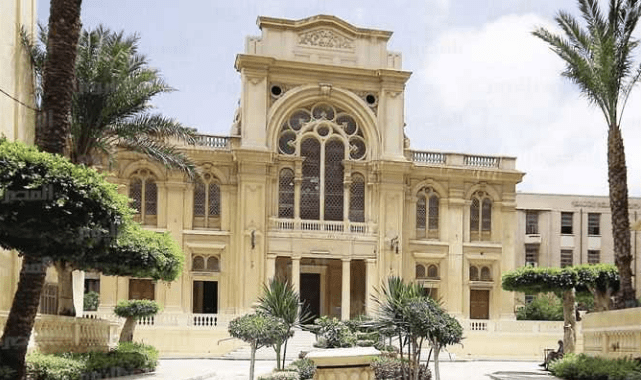
Eliyahu Hanavi Synagogue
MEMO | August 3, 2017
Egypt’s Antiquities Ministry on Thursday announced plans to carry out extensive renovations of a synagogue in Alexandria — despite the fact that, under Egyptian law, the local Jewish community should bear the cost of such restorations.
“The renovation of Alexandria’s Eliyahu Hanavi Synagogue will take about eight months and cost some 100 million Egyptian pounds [roughly $5.5 million], which will be provided by the Egyptian government,” the ministry said in a statement.
According to the same statement, the government had already allocated 1.27 billion Egyptian pounds (roughly $70.5 million) towards eight major historical renovation projects.
In July, Al-Said Helmy Ezzat, head of the ministry’s Islamic and Coptic Antiquities Department, announced that proposals to renovate the historical synagogue had been approved and the appropriate financial allocations made.
Under Egyptian law, however, Egypt’s small Jewish community should bear the cost of the project and the reason for the apparent exception remains unclear.
Cash-strapped Egypt continues to face difficult economic circumstances, with the government implementing an IMF-approved reform program, which includes the reduction of government subsidies and which has led to skyrocketing commodity prices.
Built in 1848, Alexandria’s Eliyahu Hanavi Synagogue is one of the largest Jewish synagogues in the Middle East region, capable of accommodating up to 700 people.
It also houses an impressive library containing dozens of ancient Torah scrolls, some of which date back to the 15th century.
Egypt hikes electricity prices by more than 40% as demanded by IMF
Press TV – July 6, 2017
Egypt has decided to raise electricity prices by more than 40 percent as demanded by the International Monetary Fund (IMF) in order to receive a $12 billion bailout loan.
Electricity Minister Mohamed Shaker said on Thursday the new charges would apply as of July, which are likely to further deepen the economic woes of most Egyptians.
He said households would now be paying between 18 and 42 percent more on their bills depending on the category and level of their consumption but some of the subsidies would remain in place.
Under the IMF-devised austerity plan, Cairo is obliged to cut subsidies as a condition to receive installments of the three-year loan.
“We were supposed to have been completely done with the (electricity) subsidy in the current and next fiscal years,” Shaker said.
“But considering the special situation related to the large increase in the exchange rate, we extended this period to an additional three years,” he added.
Since November, Egyptian authorities have floated the country’s currency, slashed fuel subsidies twice, and adopted a value added tax as part of the program, which has led to soaring consumer prices.
The value of the Egyptian pound has since plummeted. One US dollar which was worth 8.8 pounds at the official exchange rate in November sells for more than 17 pounds now. Annual inflation reached 30.9 percent in May.
Egypt’s economy has hugely suffered since long-time dictator Hosni Mubarak was ousted from power in 2011, and the country’s first democratically-elected president, Mohamed Morsi, was toppled in 2013.
The current president and former head of the armed forces, Abdel Fattah el-Sisi, came to power following a military coup.
The country has seen a rise in violence under Sisi and the once-booming tourism sector of Egypt has suffered greatly due to a hike in terrorism.
People also blame Sisi for wasting billions of dollars on mega-projects such as the controversial expansion of the Suez Canal.
The cash-strapped Sisi administration has tried to persuade the public that painful austerity measures would be to the benefit of the country.
However, frustration is high among Egypt’s 90 million population, especially in the wake of a controversial agreement to transfer the sovereignty of two islands in the Red Sea to Saudi Arabia.
El-Sisi: Egypt’s Antihero And The Broader Regional Implications
By Soraya Sepahpour-Ulrich | Dissident Voice | June 29, 2017
In Egyptian mythology, gods were considered heroes. In more modern times, it is men who are the heroes. Without a doubt, General Gamal Abdul Nasser has secured his legacy as a hero – a revolutionary who fought for Egypt and strived for Arab unity against Israel and Western imperialism. This month marks the 50th anniversary of the 1967 Arab-Israeli war; a pre-planned war of aggression and expansion by Israel against Egypt, Jordan, and Syria, aided by the US and Britain.
Israel’s cronies assisted in the planning and execution of the war which led to the seizure and occupation of East Jerusalem, the West Bank, Syria Golan (Golan Heights) and the Sinai Peninsula. Prior to the start of the war, as early as May, Lyndon Johnson, who assumed the presidency after the tragic assassination of John F. Kennedy, authorized air shipment of arms to Israel.1 Furthermore, the United States facilitated Israeli air attacks and advances by sending reconnaissance aircraft to track movement of Egyptian ground forces and American spy satellites provided imagery to Israel.2 According to reports American and British carrier-based aircraft flew sorties against the Egyptians and U.S. aircraft attacked Egypt. Judging by their cover-up, the American leadership had as little compassion for American blood as it did for Arab blood. The Israeli attack against USS Liberty that killed and injured American servicemen was buried in a sea of lies.
Fifty years on, the war rages on and Israel has a different set of cronies. In sharp contrast to Nasser, Abdel Fattah el-Sisi, Egypt’s antihero, has thrown his lot in with Israel and Saudi Arabia against his Arab brethren. El-Sisi’s betrayal has been so outlandish and stark that even the neocon leaning New York Times published a scathing article titled: “Egypt’s Lost Islands, Sisi’s Shame” by Adhaf Soueif. This is a remarkable piece rarely seen in the pages of the NYT given its reputation (see LOOT for example).
Soueif rightly calls el-Sisi to task for handing over the Tiran and Sanafir Islands at the mouth of Gulf of Aqaba to Saudi Arabia. More telling is the fact that the transfer had been discussed with — and had received the blessings of — Israel, according to Israel’s Defense Minister Moshe Yaalon. The implications of an Israeli-Saudi-Egyptian alliance are enormous; though hardly the first act of treason by el-Sisi.
In his article Soueif also touches on the dam being built by Ethiopia (the Grand Ethiopian Renaissance Dam) which was opposed by former President Mohamed Morsi who was ousted in a coup by el-Sisi. It is crucial that this project be further explored as it relates not only to Egypt, but also the past and future politics and geopolitics of the region.
Before moving on, however, it is important to recall that Morsi was democratically elected to office in the aftermath of the Egyptian ‘revolution’. His support of the Palestinians and his opposition to the dam did not sit well with Israel. Morsi had even called Jews “descendants of pigs and apes”. Both Hamas and the U.S.-backed Palestinian President Mahmoud Abbas welcomed Morsi’s election. Abbas called Morsi “the choice of the great people of Egypt” while one of his senior aides, Saeb Erekat, said the democratic vote for Morsi “meant the Palestinian cause was the Number One priority for all Egyptians. Though perhaps the greater concern for Israel was Morsi’s opposition to the construction of the dam, a construction favored by Israel and Saudi Arabia.
In 2012, it was reported that Saudi Arabia had claimed a stake in the Nile. Israel’s ambitions went much further back. First initiated by Theodore Herzl in 1903, the diversion plan was dropped due to British and Egyptian opposition to it only to be picked up again in the 1970s. At that time, Israeli’s idea was to convince Egypt to divert Nile water to Israel. In 1978, President Anwar Sadat “declared in Haifa to the Israeli public that he would transfer Nile water to the Negev. Shortly afterward, in a letter to Israeli Prime Minister Menachem Begin, Sadat promised that Nile water would go to Jerusalem. During Mubarak’s presidency, published reports indicated that Israeli experts were helping Ethiopia to plan 40 dams along the Blue Nile.”3
On May 30, 2013, The Times of Israel reported that the construction on the Grand Ethiopian Renaissance Dam (on the Blue Nile) had sparked a major diplomatic crisis with Egypt. The article also reported (citing Al-Arabiya) that Major General Mohammed Ali Bilal, the deputy chief of staff of the Egyptian Armed Forces, had said Egypt was not in a position to confront the project (countries). “The only solution lies in the US intervening to convince Ethiopia to alleviate the impact of the dam on Egypt.” No such solutions from the U.S.
On June 3rd, Morsi met with his cabinet to discuss the dam and its implications. Cabinet members were surprised to learn that the meeting was aired live. During the meeting, a cabinet member said: “Imagine what 80 million of us would do to Israel and America if our water was turned off”. Morsi contended that “We have very serious measures to protect every drop of Nile water.”
With el-Sisi’s “democratic coup” which was handsomely rewarded, the dam project is on schedule to be completed by year’s end. As Israel expands and accelerates its wars of aggression, the wider implications of el-Sisi will reverberate throughout the region as serve-serving Arab leaders fight their own to execute Israel’s agenda.
- Camille Mansour. Beyond Alliance: Israel and U.S. Foreign Policy, Columbia 1994, p.89
- Stephen J. Green. Taking Sides: America’s Secret Relations With A Militant Israel. William Morrow and Co., NY 1984
- “Will Nile water go to Israel? North Sinai pipelines and the politics of scarcity”, Middle East Policy (September 1997): 113-124.
Soraya Sepahpour-Ulrich is a Public Diplomacy Scholar, independent researcher, and blogger with a focus on U.S. foreign policy and the role of lobby groups.
Bahrain to jail Qatar sympathisers
Middle East Online | June 8, 2017
MANAMA – Bahrain Thursday followed the United Arab Emirates in announcing that expressing sympathy for Qatar over sanctions imposed by its Gulf neighbours was an offence punishable by a lengthy jail term.
Saudi Arabia, the UAE, Bahrain and Egypt on Monday cut diplomatic ties with Qatar over accusations that the emirate is a champion of extremist groups in the region.
Qatar firmly denies the allegations.
“Any expression of sympathy with the government of Qatar or opposition to the measures taken by the government of Bahrain, whether through social media, Twitter or any other form of communication, is a criminal offence punishable by up to five years in prison and a fine,” a Bahraini interior ministry statement said.
The UAE on Wednesday announced a similar decision, warning that offenders could face between three and 15 years in prison and a fine of 500,000 dirhams ($136,125, 120,715 euros) should they criticise the decision to boycott Qatar.
Bahrain, home to the US Navy’s Fifth Fleet, has been rocked by unrest since security forces crushed Shiite-led protests in 2011 demanding a constitutional monarchy and an elected prime minister.
The authorities accuse Iran of backing the protesters and aiming to incite unrest in Shiite-majority Bahrain, a charge Tehran denies.
Sunni-ruled Bahrain’s strict cyber crime law prohibits the expression of dissent online, including via social media.
Nabeel Rajab, one of the country’s most high-profile activists, is currently on trial for a series of tweets criticising a Saudi-led Arab military campaign in Yemen.
Hamas leader in Egypt for rare talks after spat
Press TV – June 5, 2017
A delegation from the Palestinian resistance movement Hamas, headed by the newly chosen leader in Gaza Yehiya Sinwar, has arrived in Cairo to hold the first high-level meeting with the country’s security officials after months of tensions.
Salah Bardaweel, an official within Hamas, said the three-member delegation crossed into Egypt on Sunday via the Rafah border crossing, the only passageway to the outside world for the besieged Gaza Strip which is mostly closed as part of an Israeli and Egyptian blockade.
Israel has been blockading Gaza since 2007 as a way of punishing its residents who voted for a Hamas administration. The blockade has caused a decline in the standard of living as well as unprecedented levels of unemployment and unrelenting poverty in the Palestinian coastal enclave.
Bardaweel said the Palestinian and Egyptian officials will discuss the humanitarian situation in the besieged Gaza Strip, Egypt’s role in making conditions better and the need to open Rafah crossing for Palestinian travelers.
Sinwar, a senior commander of Hamas’ military wing, was elected to head the movement’s political office in Gaza on February 13. He is second in rank only to the new chairman of Hamas political bureau, Ismail Haniyeh, who is also based in Gaza.
Ties between Hamas and Egypt have been tense in recent years as Cairo accuses the Palestinian resistance group of backing militants in Sinai Peninsula, an allegation strongly rejected by the movement.
Last month, Hamas dispatched forces to the Gaza Strip’s frontier with Egypt in a confidence-building measure aimed at boosting security in the border area. The deployment came as part of an agreement reached between the two sides in March.
Abbas cuts stipends for Hamas ex-prisoners
In the Palestinian territories, however, a Gaza-based official said the Palestinian Authority had cut this month’s support payments for dozens of Hamas activists once imprisoned by Israel.
“The prisoners went to the banks today and found no salaries in their accounts,” Abdelrahman Shadid, who runs a Hamas-linked prisoner advocacy group in Gaza, said.
He said that those affected had been freed along with over 1,000 other Palestinian inmates in a 2011 prison swap deal with Israel.
The development comes nearly two weeks after a visit by US President Donald Trump to the occupied territories.
The US and Israel are exerting pressure on Abbas to halt the monthly payments to thousands of current and former detainees who were jailed for actions linked to the Israeli-Palestinian conflict.
Some 6,500 Palestinians are currently being held in Israeli jails, 536 of them arbitrarily, according to figures provided by the Palestinian prisoners’ rights group Addameer in January. Palestinian inmates complain that they have been subjected to assault and torture at Israeli prisons.
Saudi, UAE, Bahrain, Egypt cut ties with Qatar
Press TV – June 5, 2017
Saudi Arabia, the UAE, Bahrain and Egypt have cut diplomatic ties and all land, sea and air contacts with Qatar, accusing the Persian Gulf country of supporting terrorism and interfering in their internal affairs.
Riyadh took the lead on Monday to sever relations and other countries fell in line after an official source said the kingdom “urges all brotherly countries and companies to do the same.”
A Saudi official cited by SPA said the country decided to “sever diplomatic and consular ties with Qatar, and to close all land, sea and aviation ports” in order to “protect its national security from the dangers of terrorism and extremism.”
The “decisive” measure, the Saudi statement said, was due to “gross violations committed by authorities in Qatar over the past years.”
The United Arab Emirates gave Qatari diplomats 48 hours to leave the country, citing their “support, funding and embrace of terrorist, extremist and sectarian organizations,” state news agency WAM reported.
Bahrain News Agency said the tiny kingdom was cutting ties with Doha over its insistence on “shaking the security and stability of Bahrain and meddling in its affairs.”
Egypt accused Qatar of supporting “terrorist” organizations, including the Muslim Brotherhood which it has been cracking down on since the 2013 coup against the country’s first ever democratically-elected leader, Mohamed Morsi.
Meanwhile, a Saudi “coalition” waging a war in Yemen said it was ending Qatar’s membership. The measure, it said, was due to Doha’s “practices that strengthen terrorism, and its support to organizations in Yemen, including al-Qaeda and Daesh, as well as dealing with the rebel militias.”
Qatar regretted the decision, saying “the measures are unjustified and are based on claims and allegations that have no basis in fact.” Doha-based Al Jazeera TV quoted Foreign Ministry as saying that the decisions would “not affect the normal lives of citizens and residents.”
“The aim is clear, and it is to impose guardianship on the state. This by itself is a violation of its (Qatar’s) sovereignty as a state,” the ministry said in a statement, referring to the severance of ties as an “incitement campaign based on fabrications, which reflects an intention to harm Qatar.”
Pakistan, another member of the “coalition” which has recently tried to distance itself from the Saudi group’s anti-Iran agenda, made it clear that the country had no plans to cut diplomatic ties with Qatar.
UAE carriers Etihad, Emirates and flydubai said they would suspend flights to and from Doha from Tuesday. Qatar Airways said it has suspended all flights to Saudi Arabia with immediate affect.
Trump factor
The crisis follows US President Donald Trump’s visit to the region last month, marked by the signing of a record $110-billion arms deal with Saudi Arabia.
US Secretary of State Rex Tillerson said the visit was aimed at getting Saudi Arabia and other Arab nations in the region to stand in “unity” with Israel and confront Iran.
After Trump’s visit, tensions escalated between Riyadh and Doha because of an article in Qatar’s state-run news agency in which the emir was quoted as criticizing the US, Saudi Arabia, and their client states for attempting to stir up tensions with “Islamic power” Iran.
The Qatari government quickly deleted the comments, saying the state agency had been hacked but the official denial failed to stop the rift between the Persian Gulf Arab countries from widening.
Saudi media then viciously attacked Qatar, accusing it of having “betrayed” the other Arab countries particularly at a time when they had attempted to stage a show of “unity” against Iran in a much-publicized and extravagant series of events in Riyadh.
Saudi Arabia and the United Arab Emirates also blocked Qatari websites and broadcasters. Qatari Foreign Minister Mohammed bin Abdulrahman Al Thani later said the country was being targeted in a “hostile media campaign, which we will confront.”
Prelude to invasion?
Qatar, home to the forward headquarters of the US military’s Central Command and some 10,000 American troops, long has faced criticism from its Arab neighbors over its support of the Muslim Brotherhood which has another admirer in Turkey.
Western officials have also accused Qatar of allowing or even encouraging funding of Takfiri extremists like al-Qaeda’s branch in Syria, once known as the Nusra Front. Saudi Arabia and the UAE similarly stand accused of supporting other Takfiri groups and the escalation exposes an underlying bitter rivalry among the neighbors for influence.
Former Yemeni president Ali Abdullah Saleh was quoted as saying that the conflict between Saudi Arabia and Qatar is rooted in “accumulated differences from the past even though both countries are followers of the Wahhabi school.”
Wahhabism is the radical ideology dominating Saudi Arabia, which is freely preached by government-backed clerics there and inspiring terrorist groups such as Daesh and al-Qaeda.
Prominent Palestinian journalist Abdel Bari Atwan said in a Twitter post that the diplomatic rupture is a “prelude” to a military action against Qatar.
“The next move may be a military offensive to change the regime in Qatar. It’s a war planned months ago,” wrote the editor-in-chief of the Rai al-Youm news website.
Saudi Arabia, UAE falling out over Yemen?
Recent reports have suggested Saudi Arabia and the United Arab Emirates were divided over their role in Yemen on which they have been waging a deadly war for more than two years now.
In a recent interview with Middle East Eye online news portal, Saudi-backed former Yemeni president Abd Rabbuh Mansour Hadi accused the UAE of acting “like an occupation power in Yemen rather than a force of liberation.”
Yemeni sources have revealed that the United Arab Emirates was trying to establish control over the strategic island of Socotra in the Arabian Sea, which Hadi had rented out to the country for nearly a century.
Tensions have taken a turn for worse under Saudi Arabia’s new rulers who have adopted an aggressive policy, waging a destructive war on Yemen, severing relations with Iran and assisting militants in Iraq and Syria to topple their governments.
Trump-Saudi orb-gazing summit not helping Sunni alliance
By Sharmine Narwani | RT | June 1, 2017
The glowing orb stunt should have been a sign that all was not what it seems. Theatrics, in the world of politics, usually suggest an illusion needs to be spun for audiences somewhere.
A week after US President Donald Trump’s eyesore of a visit to Riyadh, Saudi Arabia, the pressing question now is “why?” What was the purpose of convening leaders and representatives of 55 Arab and Muslim nations to greet a US head of state amidst so much pomp, ceremony and an excruciating amount of flashing cameras?
The Riyadh summit had several goals, most of which specifically served Saudi and American political interests.
The American leader’s potential gains were clear: he would score points at this impressive international showing of Muslim leaders who would help counter his anti-Muslim reputation at home. Trump would also be well-compensated in the form of the largest US arms deal in history, a booty he could claim would boost his home economy. The negotiations would take place in the Middle East, at the heart of his fight against “radical Islamic terrorism.” Trump would also leave with a blank check for Palestinian-Israel “peace,” bestowed by a Saudi king who has no authority to negotiate anything on behalf of Palestinians. And finally, the US president would piggyback the legitimacy of 55 Arab and Muslim states to craft a Middle East policy that targeted Iran, its allies and the Muslim Brotherhood (MB) – even though no consensus whatsoever was reached at the summit.
In their eyes, the Saudis scored even bigger. The cash-and-credibility-hemorrhaging Saudis are losing ground in their list of international fights – in Syria, Yemen, Iraq and against Iran. Here was an opportunity to convene leaders and representatives from 55 Arab and Muslim nations (only 33 heads of state showed up) to underscore Saudi Arabia’s position as the custodian of Sunni Islam. For the power-mad Saudis, nothing would showcase their primacy better than the presence of a US president on his first official foreign trip. They forgot, however, that legitimacy is derived from one’s own populations, not from a Western head of state sword-dancing next to one’s king. After the summit, Riyadh would go on to unilaterally craft a declaration, unseen and unapproved by the VIP guests, that claimed to outline the gathering’s foreign policy priorities.
But most importantly, this summit would allow the Saudis – who are terrified at the potential repercussions coming their way from decades of funding global terrorism – to very publicly take cover under the Trump presidency. And the US president, who knows very well that the Saudis are the epicenter of global terror, offered up America’s protection and complicity to secure his doggy bag of treasures.
This generous give-and-take between the Saudis and Americans took place on the day of the summit, amidst much back-slapping. Then, a few days later, the fallout began.
First, Saudi vs. Qatar
This past week, a flurry of media headlines alerted us to the first fissure between summit participants. News reports began emerging that Qatari leader Sheikh Tamim bin Hamad al-Thani had deviated from the Saudi talking points by supporting engagement with Iran and defending resistance groups Hezbollah and Hamas.
Saudi Arabia and the UAE retaliated swiftly to this slight by blocking Qatari media outlets, recalling their ambassadors and launching a war of words against Doha.
Why the swift and punishing response toward a fellow member of the six-nation Gulf Cooperation Council (GCC)?
Qatar has long struggled to get out from under the shadow of its much larger Persian Gulf neighbor Saudi Arabia and has spent the past dozen years building up media networks, like Al Jazeera, and investing in major Western corporate, think tank, educational and sports brands to project power well beyond its regional stature. The tiny sheikhdom’s biggest coup, however, was to secure the establishment of the US military’s largest regional base on its territory, which allowed Doha to continue provoking its Saudi competitor with little risk of consequence.
Then in 2011, the Qataris put their full weight behind “Arab Spring” efforts to overthrow a slew of Arab governments. Most of the Qatari-backed incoming regimes and opposition activists, however, were Islamists, mainly of the MB variety, which is reviled by Saudi Arabia and the UAE.
The Saudis were initially caught off-guard by the swift events sweeping the region, but quickly rallied to mount a region-wide counterrevolution to reverse the political gains of the Qatari- and Turkish-backed MB groups. Saudi operatives funneled manpower, money, and weapons to reestablish Riyadh’s influence. They revived their famed jihadi networks to flood Syria and other places with extremist militants that could tip the balance of power back in its direction.
It wasn’t just Qatar and the MB in Saudi sights – the regional uprisings, particularly in Syria, Yemen and Bahrain, threatened to shift the region in a direction that benefited Iran, Saudi Arabia’s biggest regional adversary.
In Riyadh ten days ago, the Saudis thought they had struck gold. After eight years of dealing with a somewhat unsympathetic Obama administration, here was Trump acquiescing to their every whim. The Saudi declaration issued at the end of the summit – as well as speeches delivered during the event – struck out at Iran, the Muslim Brotherhood, Hezbollah and Hamas, and promised American cooperation in isolating them. The Saudis were on a high, but they were also mostly alone.
A broad divergence of interests
Aside from the Saudi-Qatari spat, there are countless other differences among summit participants that will scuttle Riyadh’s ambitions.
The anti-MB UAE has stood firmly by Riyadh’s side in condemning Doha but diverges – even within its own borders – on assuming an aggressive position against Iran. Call it Dubai-versus-Abu Dhabi if you will. Dubai, with its large Iranian expat population and significant trade with the Islamic Republic, is less worried about its Persian neighbor. As a 2009 Wikileaks cable from the US embassy in Abu Dhabi puts it: “While MbZ (Crown Prince of the Emirate of Abu Dhabi Mohammad bin Zayed) is a hardliner on Iran, there are accommodationists within his own system, especially in Dubai, where the ruler, Mohammed bin Rashid Al-Maktoum (Prime Minister of the UAE) takes a position that is much closer to Qatar’s.”
Other GCC states are even more loathe to confront Iran. Oman has repeatedly ignored Saudi demands to toughen its stance against Iran and remains a key Iranian diplomatic partner in the region. The two states participated in joint naval exercises in the Gulf of Oman as recently as April, and it was Muscat that hosted the initial secret US-Iran meetings which kick-started the 2015 Iranian nuclear deal.
GCC member-state Kuwait also remains relatively neutral on Iranian matters. Up to 40 percent of Kuwaitis are Shiites, and the country has avoided much of the sectarian strife that afflicts Saudi Arabia and now Bahrain. It is to Kuwait that Qatar’s emir has now turned to negotiate peace with the Saudis and UAE in the aftermath of last week’s fallout. The Qataris, who have dealt opportunistically and not ideologically in their regional relations, share the world’s largest gas reserve with Iran, a further incentive to maintain a neutral stance on Tehran.
In fact, most of the Sunni states that attended the Riyadh summit are flat-out furious about the violent sectarianism and extremism that has emerged in the past few years. And many of them blame the Saudis for it.
Last August, an unprecedented conference of 200 leading Sunni clerics from around the world was held in Grozny to determine “who is a Sunni.”Excluded from the gathering were representatives of both the Wahhabi sect (Saudi Arabia and Qatar’s official religion) and the Muslim Brotherhood. The Islamic world is looking to tackle the deviance and sectarianism that has borne groups like ISIS and Al-Qaeda – not indulge it, as would be the case if they embraced the Saudi ‘vision’ in Riyadh.
But in an effort to bulldoze through a “Sunni consensus” under the umbrella of “Saudi-American power,” the Saudis ignored every gorilla in that summit room. Not only do many of the meeting’s participants blame the Saudis for unleashing the jihadi genie, but most of them also wouldn’t for a minute look to Saudi ‘leadership’ if it weren’t for Saudi cash. Case in point, Sunni regional giants Turkey and Egypt. Turkish President Recep Tayyip Erdogan didn’t even show up to Riyadh, citing other engagements. Egyptian President Abdel Fattah al-Sisi did attend – he was one of three invited to press his palms upon the ‘glowing orb’ to inaugurate the Saudi counterterrorism-something-or-other.
But more than anything, Sisi was invited to Riyadh as an important set extra – to visually demonstrate that the great Arab state of Egypt was passing the mantle of leadership to Saudi Arabia’s King Salman.
Where the Saudis viewed former Egyptian President Hosni Mubarak as a stalwart ally, they see Sisi as nothing of the sort. Sisi may agree with Riyadh on the evils of the Muslim Brotherhood, but he has absolutely no tolerance for Saudi Arabia’s support of terrorist groups throughout the region and has been a right royal pain on the issue of Syria.
Egypt may hanker after the Saudi billions – which it has received in spades for its anti-MB efforts – but Egyptians have little affection for the Saudis and have sparred publicly and privately in recent years and months. Whereas Riyadh could once count on Egyptian troops to support its military incursions, today Cairo has rejected participation in the Saudi-led war against Yemen – alongside another staunch Saudi ally, Pakistan.
The Saudis recently hired Pakistan’s former army chief General Raheel Sharif to head up their 39-nation “Muslim NATO” construct to fight terrorism, but now rumors are rife that he will resign amidst a national uproar over his decision. Pakistanis, like other straight-thinking Muslims, are uncomfortable about the prospect of a military alliance that appears to have been conceived primarily to fight Iran – and Shiites.
Dead On Arrival
On the surface, the purpose of the Riyadh summit was to amass a coalition of like-minded Arab and Muslim partner-states, under a Saudi-American banner, to wage war against terror. In fact, this is a Saudi and American-led initiative created not to tackle terror, but to ‘reframe’ it to encompass political adversaries.
Look out for pundits and politicians spinning these new narratives that Iran, Hezbollah, and the Muslim Brotherhood are equally as dangerous as ISIS and Al-Qaeda – never mind that the former have been around for decades without triggering the global security meltdown spawned by the latter.
In Riyadh, the Americans and Saudis made a great show of jointly announcing two additions to their “terrorism” list – one was a senior Hezbollah official, the other a senior member of ISIS.
This is not the war against terror that the heads of states gathered in Riyadh anticipated. This is a sectarian war, conceived by a sectarian state that has funded, armed and organized the very global terrorism it purports to fight. And every single US administration since the events of 9/11 has acknowledged this direct Saudi role in terror.
In Riyadh, the show went on anyway. But there’s not a person in that room who didn’t understand the game. Forget the ‘Sunni consensus’ after Riyadh. Of the 55 nations represented at the summit, the Saudis will be lucky to retain five.
Sharmine Narwani is a commentator and analyst of Middle East geopolitics. She is a former senior associate at St. Antony’s College, Oxford University and has a master’s degree in International Relations from Columbia University. Sharmine has written commentary for a wide array of publications, including Al Akhbar English, the New York Times, the Guardian, Asia Times Online, Salon.com, USA Today, the Huffington Post, Al Jazeera English, BRICS Post and others. You can follow her on Twitter at @snarwani
Egypt’s President Sisi Drops a Depth Charge in Midst of American Islamic Summit – Shames Supporters of Terrorism
21st Century Wire | May 24, 2017
Whatever criticisms may be justifiably levied at Egypt’s President Al Sisi, the speech he gave at the American Islamic Summit should go down in history as one of the bravest attacks on supporters of terrorism, whilst in their midst. The consternation of the primary terrorism creators and drivers, the Gulf State members, is palpable, as is the frantic tea-making and serving, as a distraction from the weight and power of Sisi’s words. Each barb hit home, Israel, Gulf States, the US, the EU, Turkey, nobody was omitted from the roll call of criminal terrorism support, sponsoring, promotion and funding.
Of course this speech was given zero air-time by western corporate media outlets, as it also exposed their promotion of the terror groups wreaking violent, murderous havoc across the region.
Featured Video

“Historic Russia”: The Land Putin Will Not Give Back
or go to
Aletho News Archives – Video-Images
Book Review
Why the War on Conspiracy Theories Is Bad Public Policy
By Kevin Barrett • Unz Review • February 1, 2019
 A Review of Conspiracy Theories and Other Dangerous Ideas by Cass Sunstein (based on an earlier paper co-authored with Adrian Vermeule); In Defense of Troublemakers: The Power of Dissent in Life and Business by Charlan Nemeth; and Conspiracy Theories and the People Who Believe Them, edited by Joseph E. Uscinski
On January 25 2018 YouTube unleashed the latest salvo in the war on conspiracy theories, saying “we’ll begin reducing recommendations of borderline content and content that could misinform users in harmful ways—such as videos promoting a phony miracle cure for a serious illness, claiming the earth is flat, or making blatantly false claims about historic events like 9/11.”
At first glance that sounds reasonable. Nobody wants YouTube or anyone else to recommend bad information. And almost everyone agrees that phony miracle cures, flat earthism, and blatantly false claims about 9/11 and other historical events are undesirable.
But if we stop and seriously consider those words, we notice a couple of problems. First, the word “recommend” is not just misleading but mendacious. YouTube obviously doesn’t really recommend anything. When it says it does, it is lying. … continue
Blog Roll
 Aletho News
- BRITAIN’S WARNING: PREPARE FOR WAR
- “Historic Russia”: The Land Putin Will Not Give Back
- How the Cambridge Analytica scandal still haunts Mark Zuckerberg
- The Ongoing Cancellation Campaign Against a Dissenting Academic in Norway
- Yemen and ‘the Houthis’: Challenging Sami Hamdi’s Narrative
- No, Christians did not invent Zionism
- AIPAC-led lobbying network opens branches in Cypriot, Greek parliaments
- Araghchi blasts ‘parasitic’ alliance as US taxpayers pay for Israel’s war on Iran
- Easy fix for Europe’s chaos? Stop fueling war against Russia
- Putin’s key remarks on peace talks and Europe’s ‘schizophrenia’
- If Americans Knew
- Damning report shows the media must confront its failures on Gaza
- BBC senior broadcaster speaks out on Gaza coverage
- Netanyahu vows vast West Bank invasion in response to 20-minute skirmish that left 2 Israeli soldiers and 2 Palestinian fighters dead
- Tied up and tortured: Israel using US-made electroshock weapons on Palestinian detainees
- The outsourced risk: how newsrooms rely on Gaza’s freelancers without protecting them
- Gaza bakeries forced to shut as Israel blocks flour shipments
- Gaza’s breast cancer patients face a deadly wait for treatment amid Israel’s genocide
- DAILY UPDATE: Latest essential news on Palestine, Israel, & region
- The Israel Lobby’s Changing Fortunes
- AIPAC has become such a political liability that it’s shifting to a more “nimble” approach to buying politicians
- No Tricks Zone
- Two New Studies Find Thwaites Glacier Melt Cannot Be Driven By Human Activity Or A Warming Ocean
- E-Cars Reduce CO2 Emissions By Only 41% Compared To Internal Combustion Engine Vehicles
- Predictions Made By Renowned Climate Professor Over Past Decades Have Been Proven To Be Poor
- New Study Suggests Large Regions Of The Pacific Ocean Have Been Cooling For The Last 80 Years
- Germany’s Green Energy Debacle: High Energy Costs Force Kahla Porzellan to Close After 182 Years!
- New Study: 50 Years Of The Most Aggressive ‘Net Zero’ Policies Can Only Affect The Global Climate By 0.03°C
- US September “Heat” Was No Record…Many Records Set Decades Ago
- Latest European Green Energy Debacle; Portugal’s Largest Flagship Solar Park Insolvent!
- Green Energy Debacle: German Expert Professor Fritz Vahrenholt Warns Of Severe Economic And Social Consequences
- Two More Paleo Reconstructions Affirm Meters-Higher Sea Levels Across Ireland, Brazil 7000-6000 Years Ago

