US Hard at Work Preparing Taiwan for War with China
By Vladimir Platov – New Eastern Outlook – 26.09.2022
The years leading up to World War I and World War II are often referred to by historians as “diplomatic fever,” because of active mobilization of several powers around the world in both overt and covert alliances. However, such activity was not aimed at preventing conflict, but solely at strengthening their position ahead of the impending war which was their goal all along.
Unfortunately, something similar can be seen in US behavior of late, both in terms of “joining forces” on Washington’s possible European battlefront against Russia, and in the Asia-Pacific region (APAC) in confronting China. US recent policies and actions – on the eve of the Chinese Communist Party Congress – have been characterized by the creation of anti-Chinese blocs, unprecedented large-scale exercises in the APAC and close to Chinese borders, and various provocations.
After a provocative visit to Taiwan by US House of Representatives Speaker Nancy Pelosi in early August, the situation around the island, as well as relations between China and the US in general, escalated. China, which considers the island one of its provinces, condemned the visit, seeing it as support by the United States for Taiwanese separatism.
In the interest of containing China, the White House is provoking tensions around the island of Taiwan, blatantly violating the One China principle, which the Americans once accepted as one of the main conditions for normalizing US-China relations. In pursuing the the anti-China strategy, during August alone four delegations with representatives from the US political establishment at various levels travelled to Taiwan. Apparently in coordination with Washington, a number of European Union political delegations also paid provocative visits to Taiwan and showed support for Beijing’s opponents on the island.
Simultaneously with the political anti-Beijing demarches, immediately after Nancy Pelosi’s visit, Chinese territorial waters in the Taiwan Strait began to be violated more frequently by US naval vessels under the pretext of freedom of navigation. On August 27, for example, two US naval vessels, the missile cruisers USS Antietam and USS Chancellorsville, made a demonstrative and provocative passage through the Taiwan Strait, which the Chinese Foreign Ministry strongly opposed. To thwart any further provocation by the US, China’s Army has been put on high alert, according to Shi Yi, an official of the Eastern Theater Command of the People’s Liberation Army (PLA). On August 28, Taiwan’s Armed Forces recorded the sighting of 23 PLA aircraft and eight PLA ships in sea and airspace near Taiwan.
Chinese Foreign Ministry Spokesperson Zhao Lijian commented on Washington’s provocation on August 29. “US naval vessels flying the flag of freedom of navigation are carrying out a show of force. This is not a commitment to freedom of navigation, but a provocation against it and deliberate harm to peace and stability in the region. The Chinese side again calls on the US to stop emasculating, diluting and perverting the One China principle, strictly respect the sovereignty and territorial integrity of other countries and basic international norms on non-interference in the internal affairs of states, and effectively implement the provisions of the three Chinese-US joint communiqués.”
Continuing to escalate the situation around Taiwan, US authorities in early September announced their intention to sell $1.1 billion worth of weapons and military equipment to Taiwan.
At the same time, the US Senate Committee on Foreign Relations approved a bill on September 14 that would provide for a comprehensive expansion of support to Taiwan, including military support. As well as imposing sanctions on Beijing under the pretext of seeking to preserve stability in the Asia-Pacific region, said the Committee’s senior Republican, Jim Risch, commenting on the vote. In essence, this initiative by US lawmakers seeks to revise US policy towards Taiwan and, by extension, mainland China. The bill would make Taiwan a “major non-NATO ally” of the United States, increasing its military aid (not just defensive but also offensive weapons, including missiles) to $4.5 billion over the next four years, making it the largest recipient after Israel, Egypt and Ukraine. China has already said that, if passed, the new bill would come as a shock to US-China relations. And China’s Ambassador to the US, Qin Gang, told Deputy Secretary of State Wendy Sherman in a meeting on August 23 that Chinese-US relations would be severed if the law went into effect.
Covering up his aggressive policy towards China with the alleged possibility of a Chinese “invasion” of Taiwan, US President Joe Biden assured in an interview with CBS that the US military would stand up to defend Taiwan.
However, by pushing China into military action, the US, Bloomberg estimates, could find itself in a terrible position in the event of a conflict with China within months or even weeks of the outbreak of hostilities. Pentagon arsenals are empty because of significant arms deliveries to Kiev. And China’s Army today is very technically equipped. Defending Taiwan will therefore be very costly, with the United States having to pay a prohibitive price in both personnel and equipment.
The US Navy is now poorly prepared, inferior in numbers to the Chinese, and US naval bases are underprepared, former US Navy Rear Admiral Charles Williams pointed out in an article for The Hill. Furthermore, the US can no longer act on two fronts; against Russia and China at the same time.
The Times also warns that the United States would suffer heavy losses and take years to recover from an open conflict with the PRC, citing analysis by the Washington-based think tank Center for Strategic and International Studies. In particular, its analysts predict that the US will lose a significant portion of its fleet and some 900 combat aircraft defending Taiwan against China.
In confronting China, regional allies are unlikely to help the US, and even Germany, which intends, according to remarks made in early September by Inspector General of the Bundeswehr General Eberhard Zorn, to “increase its military presence in the Indo-Pacific region to contain China.”
Despite these provocative actions by Washington and Taipei’s push for military action, the PRC government has reaffirmed its determination to pursue national reunification with Taiwan. Chinese Foreign Ministry Spokesperson Mao Ning reiterated the other day that the Taiwan issue is strictly an internal Chinese matter and the US has no right to interfere in it.
Russian methanol industry shutting down – Kommersant
Samizdat | September 26, 2022
Methanol output in Russia has fallen to minimum levels necessary to keep production plants functioning, business daily Kommersant reported on Monday.
Suspension of trade with customers in Europe and a drop in domestic demand are forcing producers to dramatically reduce output and sell their produce to China at a knockdown price, the paper writes, citing its sources.
In 2020 Russia was the world’s fourth-largest methanol supplier, accounting for 10% of global exports, according to economic data portal TrendEconomy. Among top methanol importers are China, the US and India.
Methanol, the simplest alcohol, can be obtained from natural gas and has a variety of industrial uses. It’s a chemical building block for plastics, paints and building materials and also widely used in the car industry and as a fuel.
There are nine methanol producers in Russia with a combined output of 4.5 million tons a year with nearly half going for export, according to Kommersant. Last year the sector saw rapid growth against a backdrop of high global prices, and Russian companies had plans for further expansion. Russia’s main customer was the EU, and though methanol itself was not targeted by sanctions, transporting it by sea via EU ports became problematic due to shipping restrictions imposed by the bloc. Demand for methanol in China has slowed as well due to the country’s zero-Covid policy and subsequent lockdowns.
Methanol producers want to avoid closing plants completely as restarting them would be costly, however, some factories have already been partially shuttered, Kommersant writes.
Hated by the woke: The conservative woman who could be Italy’s leader tomorrow

By Dr Campbell Campbell-Jack | TCW Defending Freedom | September 25, 2022
According to the BBC ‘Italians are deciding whether to choose their most right-wing government since World War Two’ in their elections today. Giorgia Meloni, the woman at the helm of The Brothers of Italy party, has had pretty much everything flung at her. All but called facist by the BBC for her ’embrace’ of ‘God, Fatherland and Family’ her sins include condemning the world of LGBTQ and a tough stance on unfettered migration from Africa. Comparisons with Mussolini abound. Yesterday in the Telegraph David Selbourne put another slant on it, writing ‘that at the heart of Meloni’s strength in the poll ratings is the rejection by many people, decent and indecent alike, of today’s “progressive” orthodoxies, whether in Italy, Poland, Hungary, Sweden or elsewhere’.
In June, TCW’s own Campbell Campbell-Jack tracked Meloni’s rise and the reasons for it. He concluded that the woman who shouts out ‘I am Giorgia, I am a woman, I am a mother, I am an Italian, I am Christian, and you cannot take that away from me!’ is a principled anti-globalist conservative. No wonder the media smear and hate her. We republish his considered article here.
THE Left is worried so be prepared to hear a great deal more about the ‘far-Right’, ‘hard-Right’, ‘Right-wing extremist’ Giorgia Meloni. Press mentions of Italy’s rising centre-Right star almost always include a reference to Mussolini or assertion of her Brothers of Italy party’s ‘neo-fascist origins’. She is characterised as a figurehead who ‘threatens to send Italy down a dangerous authoritarian path’. The Guardian warns, ‘Success of far-Right Brothers of Italy raises fears of fascist revival.’ It is clear that the prospect of her party gaining ground in Italy’s next general election is sending shock waves through the mainstream media.
Named after the opening words of Italy’s national anthem, the Brothers of Italy (Fratelli d’Italia) is a national conservative party which is growing in prominence and is being touted as having a good chance of leading the government after the election, which must take place next year. Meloni also chairs the European Conservatives and Reformists Party, an alliance of centre-Right parties in the EU.
In recent local elections the Brothers of Italy took 10.3 per cent of votes in nearly 1,000 local contests, significantly more than the 6.7 per cent won by the rival League party led by Matteo Salvini. This reverses the result of the 2019 European elections in which Salvini took 34 per cent and Meloni just 6 per cent.
Meloni is now in the driving seat in a Right-wing coalition alongside Salvini and former prime minister Silvio Berlusconi. Polls make their Right-wing alliance favourite to win the 2023 election and if the Brothers of Italy takes more votes than the League, Salvini has agreed she will become prime minister.
Meloni is not the type of conservative to whom we have grown accustomed. She is a national conservative and this frightens the Euro-elites because her aim is to put conservatism back into its traditional sphere of national identity. She sees the nation state as the sole means of combating globalism and protecting freedom. ‘The Nation is the place where our values are safeguarded and transmitted.’
Globalism takes power from the people and transfers it to supra-national organisations run by and in the interests of the elites. Globalists thus see national identity as a hindrance to their totalising ambitions which has to be overcome. We see this in the continuing media and political stress on diversity with its consequent fracturing of communities through identity politics pitting one single identity group against another, each fighting for its own rights and caring little for the good of all. National identity is being continuously eroded throughout Europe.
National conservatism is the opposite of what we have fed to us by the mainstream parties of Right as well as Left. Most centre-Right parties favour liberal conservatism with free-market economic policies, deregulation and controlled spending the overriding priorities. Most European parties nominally of the Right, such as the UK’s Conservatives, are run by economically liberal conservative elites who have deliberately marginalised the social and cultural issues which concern their electorate. We are used to continual promises to cut immigration to ‘the tens of thousands’ yet it keeps growing, as this suits the economic interests of the establishment by keeping wages low and weakening opposition to globalist aims. What the people want is sidelined or ignored.
Meloni has gained support by demanding that the EU leaves the global compact on migration. Whilst welcoming immigrants who would be able and willing to integrate into a European country with a Christian heritage, she is staunchly opposed to taking in any more migrants and refugees who cross the Mediterranean from North Africa. The party advocates a naval blockade of North Africa to stop illegal immigration.
National conservatism emphasises patriotism, nationalism, cultural conservatism and monoculturalism. Meloni sees national conservatism as the only real democracy because only by defending the nation state do we defend the political sovereignty of the people who belong to that state. Nations composed of people sharing the same historical and cultural memory are the bedrock of democracy.
Meloni is quite clear on the dangers of political correctness. ‘You see, political correctness is a shockwave, a cancel culture that tries to upset and remove every single beautiful, honourable and human thing that our civilisation has developed. It is a nihilistic wind of unprecedented ugliness that tries to homogenise everything in the name of One World. In short, political correctness – the Gospel that a stateless and rootless elite wants to impose – is the greatest threat to the founding value of identities.’
Meloni sees the protection of ‘religious and moral values, the noblest purpose of all political action’. Democracy without cultural values degenerates into a free-for-all plunge into decadence, something we can see around us in ‘Pride Month’ where a Pride march can be little more than a celebration of perversity.
Meloni is dedicated to the freedom of the individual. Although she had a Covid vaccination herself, she was vehemently opposed to the Green Pass scheme by which all Italians over the age of 12 were banned from most enclosed public spaces and many open-air ones as well, unless they could prove they had received at least one jab.
‘The idea of having to use this Green Pass to be able to participate in communal life is chilling, and the ultimate step towards the realisation of an Orwellian society,’ she tweeted when Mario Draghi, Italy’s technocratic non-elected Prime Minister, announced the policy. ‘It is an unconstitutional act of madness that Fratelli d’Italia rejects outright. For us individual liberty is sacred and inviolable.’
National conservatives are painted as obtuse nationalists, thinking only of the good of the home nation. Modern national conservatism defends the identities of nations as the basis for new forms of co-operation. It does not want to impose its own interests at the expense of other nation-states. What it actually wants is co-operation between independent nation-states once again able to defend the freedom, identity and sovereignty of their peoples. Brothers of Italy defends Viktor Orban’s Hungary and Kaczynski’s Poland, nations under attack from the European progressive mainstream. The aim is to build a true, real Europe of peoples and identities, not an abstract Europe run by nameless bureaucrats.
Meloni sees Europe facing challenges today that will shape the future and the very survival of our shared civilisation, challenges which we have to face together. No wonder the established elites vilify her.
EU farmers warn of food shortages

Samizdat | September 25, 2022
Vegetable producers across northern and western Europe are considering halting operations, thus further threatening food supplies, as a result of the energy crisis hitting the continent, Reuters reported this week.
According to the report, skyrocketing power and gas prices are the biggest cost facing vegetable farmers employing greenhouse cultivation. Two French farmers renewing their electricity contracts for 2023 told the media outlet they were being quoted prices more than ten times higher than in 2021.
“In the coming weeks I will plan the season but I don’t know what to do,” said Benjamin Simonot-De Vos, who grows cucumbers, tomatoes and strawberries south of Paris. “If it stays like this there’s no point starting another year. It’s not sustainable.”
Johannes Gross, deputy sales manager at the German cooperative Reichenau-Gemüse, told Reuters : “We face an overall increased production cost of around 30%. Some colleagues are thinking about leaving their greenhouses empty to keep the costs as low as possible. Nobody knows what will happen next year.”
The soaring costs of fertilizer, packaging and transport have also been adding to the pain. Even in countries with abundant sun, such as Spain, fruit and vegetable farmers are grappling with a 25% jump in fertilizer costs.
As farmers across the EU warn of shortages, supermarkets may switch to sourcing more goods from warmer countries such as Morocco, Turkey, Tunisia, and Egypt, the report says.
EU Commission head issues veiled threat to Italy
Samizdat | September 23, 2022
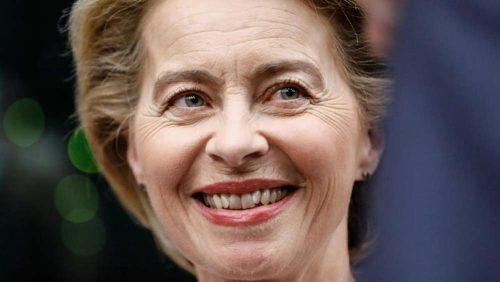
The EU has “tools” to respond if the political situation in Italy goes in a “difficult direction,” European Commission President Ursula von der Leyen said on Thursday. She hinted that the country could face punishments such as those recently leveled against Hungary and Poland if the upcoming election results in the predicted right-wing sweep.
“My approach is that whatever democratic government is willing to work with us, we’re working together,” she said in response to a question over whether she had “concerns” about Sunday’s Italian parliamentary vote, in which the conservative Fratelli d’Italia (Brothers of Italy) are projected to take first place.
“If things go in a difficult direction, I’ve spoken about Hungary and Poland, we have tools,” von der Leyen explained.
While EC spokesman Eric Mamer was quick to clarify that von der Leyen was merely “stressing the role of the Commission as guardian of the [European] treaties with regard to the rule of law,” not everyone interpreted her words that way.
Matteo Salvini, leader of the populist League party, denounced von der Leyen’s “shameful arrogance” and called on the EC to “respect the free, democratic and sovereign vote of the Italian people!” In the last round of polls earlier this month, the League was projected to take home 12% of the vote.
The EC earlier this month recommended suspending €7.5 billion ($7.5 billion) in funding to Hungary – a third of the money it receives from Brussels – over alleged “erosion of the rule of law.” Brussels leveled a similar punishment at Poland last year after the country’s constitutional tribunal found that some Polish laws override those of the EU.
Italy’s snap parliamentary election was triggered by the resignation of PM Mario Draghi in July after his partners in the ruling coalition abandoned him. As of September 9, when the blackout on publishing election polls took effect, the Fratelli d’Italia were estimated to take 25% of the vote. In addition to the League’s 12%, coalition partner Forza Italia is predicted to garner 8%, meaning a victory for the conservative bloc is easily within reach. Fratelli d’Italia barely won 4% of the vote in 2018.
Like the rest of the EU, Italy has been wrestling with a cost-of-living crisis exacerbated by bloc-wide sanctions on Russian oil and gas. A general election had previously been set for next year.
A Failed Globalist Experiment
By Eamon McKinney | Strategic Culture Foundation | September 22, 2022
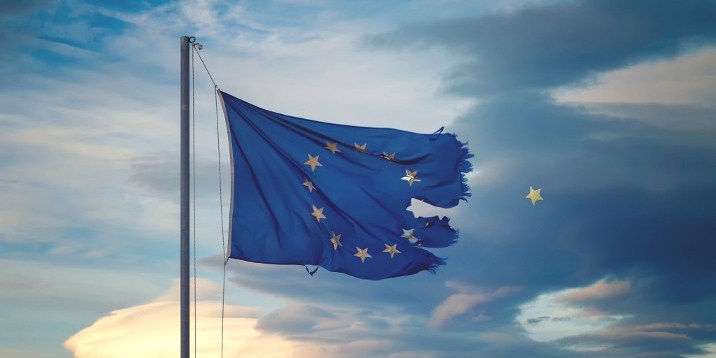
European unity was always a questionable concept between a collection of diverse countries who have historically distrusted and disliked each other. The strength of that always questionable unity is now being tested as the EU is facing its greatest challenge. The initial enthusiasm among EU leaders for the conflict with Russia has waned considerably in recent months as the reality of its ludicrous and self-destructive war on Russia continues to backfire spectacularly on them.
With the long hot European summer now behind them the citizens of Europe are rising up in protest against their governments in huge numbers. While national leaders continue to lecture their people on the necessary sacrifices they must make to support Ukraine, fewer and fewer agree with them. With rapidly rising costs of living and the prospect of a winter without heat, anger against national governments is rapidly reaching breaking point. Germany, France, The Czech Republic, Austria and Italy have witnessed immense angry demonstrations that are seriously panicking their governments. To the extent that many are now trying to backtrack and seek solutions outside of EU directives, Hungary and Serbia have refused to tow the party line and have secured their energy interests with Russia. While the EU has demanded an energy sharing scheme among its member states, only energy-starved Germany seems keen.
Germany was the main economic beneficiary of the EU and it used its considerable influence to impose harsh conditions on the weaker EU states, Greece, Ireland, Italy, Portugal and Spain in particular. Understandably these countries are reluctant to share their energy reserves with a country that showed little compassion for them following the 2008 financial crisis. German industries have benefited from low-cost energy from Russia for years which has greatly contributed to their global competitiveness. It was enthusiastically looking forward to the Nord Stream 2 pipeline until America intervened and forced its cancellation. Now German energy giants are seeking government bailouts to avoid bankruptcy, the once dominant manufacturing sector is facing complete destruction unless a rapid rapprochement with Russia is made. Even in that unlikely event, the damage to the German economy is done and any recovery could take years.
In a widely distributed talk, German foreign minister Annalena Baerbock (who no surprise is another WEF graduate) said that she will stand with Ukraine regardless of what the German voters think. A more honest translation would be that she stands with the WEF Globalists’ agenda and that the German people’s interests are not a consideration. If she gave a damn about the Ukrainian or the German people she would be trying to stop the war, but peace and the preservation of European lives are not the objectives. However repulsive her statement, it echoed exactly the sentiments of all the EU leaders, she represents her constituency perfectly, but that constituency is not the German people, it’s the Globalists.
An example of just how ridiculously inept and detached from reality the EU is can be found in their call for a price cap on Russian energy imports. Exactly how they think Russia will respond to that requires us to credit them with thinking at all, as several nations rightly pointed out, Russia will just stop all energy supplies. Many, among them France’s Macron has called for a price cap on all energy imports, not just the Russian ones. While America is fine with a European price cap on Russian energy, it strongly opposes it on U.S. energy imports. The destruction of its valued friend and ally Europe is just fine with America as long as there is a buck in it from them.
While increasingly angry citizens are demanding that their governments put national interests above those of Ukraine, they are largely missing the point. The interests of the Ukraine were never a consideration, the conflict was always about America’s obsession with the destruction of a rising Russia. The people of the Ukraine are just collateral damage in what is essentially just another bankers’ war for the interests of the Globalist financial powers. As Europeans are now belatedly beginning to understand, they are also just being considered more collateral damage in the furtherance of that Globalist agenda. None of the European leaders have any solutions to the crisis which they so enthusiastically led their countries into just a few months ago. Cold showers and Spartan energy rationing are not the solutions to the problem that the people want to hear. Preaching that they must sacrifice their futures for the Ukraine works better in the hot summer months than in the imminent cold, very cold European winter. Platitudes from Klaus Schwab’s puppet leaders are not going to placate cold hungry European people any longer. A brutal winter of discontent is inevitable for Europe, as temperatures drop the heat will rise against the politicians who sold out their countries’ interests to the Globalists. We can expect to see governments falling across Europe as public anger becomes uncontrollable.
The panic is not just being felt in European circles, The U.S. is also deeply concerned about the strength of European unity, or rather the lack of it. Biden has on more than one occasion called for Europeans to stay united in its proxy war against Russia. Biden is worried that any diversion from its sanctions against Russia will cause a split in the bloc. A rare moment of clarity from the senile U.S. President. The U.S. is very closely monitoring the unrest in Europe. While examining the results of its handiwork it might notice that while among the Western puppet leaders fractures are indeed increasing, unity among the peoples of the European nations is only growing stronger in common cause. The recent farmers’ protest in Holland was supported by farmers from all the European nations in a demonstration of true unity against the Globalist agenda. A unified cross border, anti-government movement is not the European unity Biden or the NATO warmongers had in mind. They will find that controlling corrupt Globalist European politicians is easier than controlling millions of angry, cold and hungry citizens.
Demonising Putin as the author of all Europe’s woes may have worked at the outset of the conflict, but no more. None of the many demonstrations being witnessed are aimed at Putin or Russia, the target of the ire is firmly against the governments that sold out their nations sovereignty to a globalist/U.S. elite. It is likely that Putin is more popular among Europeans in the know than the incompetent puppets running their own countries into the dirt. While Putin has now stopped the energy flow into Europe he has more cards yet to play. Uranium, fertilisers and foodstuffs among many other essentials are all still supplied to Europe, for now. The destruction of Europe is not in Russia’s interests, Putin doesn’t blame the people, he just hopes that they will wake up and recognise the true enemy.
The coming months will be a time of immense turmoil in Europe, great suffering is inevitable for millions of people sacrificed by their governments on the altar of globalisation. How long the EU can keep it together is the big question, few in Europe would be sad to see its demise. What many first considered a noble enterprise has now been exposed as an undemocratic institution that answers not to the people, but to a corporate oligarchy that owes no affiliation to any nation. In the tragedy that is the Ukrainian conflict some good may yet emerge. If European countries can restore their national sovereignty by exiting the widely despised EU they would be liberated from globalist control and be free to peacefully pursue their own legitimate national self-interest. The way it is supposed to be, the way the majority of European people want it to be. Strong “Exit” movements have existed in all of the member nations for years, Italy and Holland’s movement in particular had huge public support. The UK’s “Brexit” showed it can be done despite immense anti-Brexit propaganda, in a referendum, the people voted to leave. In light of more recent events, a referendum on exiting the EU would likely succeed in most countries.
The EU is a failed Globalist experiment, it never offered more than the pretence of a true democracy, at the unelected top, it was always a technocracy of hand-picked corporate frontmen. It has destroyed the economies of all its members through incompetence and corruption. It has caused chaos and social unrest in communities through forcing mass immigration on unwilling countries. It has interfered in the internal affairs of member states way beyond any powers granted them. It has presumed to write new laws which take primacy over a nation’s own justice system. It has created absurd new layers of bureaucracy and regulations which make European business’s largely uncompetitive globally. It is now dominated by the WEF and Klaus Schwab’s minions who are pushing the Great Reset and consider the Ukraine conflict as a step towards it. Statements made, such as that delivered by Annalena Baerbock on where her loyalties lie, should outrage all Europeans, it should also enlighten them.
Events this winter may well determine the future of Europe for the next century. Whether it is a Europe united with Russia as a peaceful trading partner, or a Globalist Third World hell hole, the European peoples’ actions in the coming months will decide which.
European Leaders Cling to Green Fantasy as Citizens Suffer
By Vijay Jayaraj | RealClear Energy | September 7, 2022
There is being caught between a rock and a hard place, and then there’s Europe. The continent’s squeeze between a severe energy shortage and a policy of phasing out fossil fuels — the world’s most widely available energy source — got tighter Sept. 2 when Russia’s Gazprom stopped its natural gas supply to Europe through the Nord Stream 1 pipeline due to “oil leakage.”
Experiencing astronomical power prices and anticipating an energy-starved winter, citizens are saddled with their leaders’ pursuit of a green utopia that has denied them access to adequate supplies of coal, natural gas and oil. Consumers are left largely at the mercy of expensive and unreliable solar and wind power.
For many of us, Europe’s self-imposed disaster is a warning of what’s to come should our leaders insist on pursuing a carbon-free nirvana — an absurdity that is not even possible. However, for those faced with eye-popping price hikes, the situation is life altering!
In the UK, many small businesses have no choice but to shut down this winter. James Allcock of Beverley, England, says that the electricity prices for his tiny 22-seat restaurant has risen from 2,928 pounds a year to 22,516 pounds. “Unsure what to actually do next but as a business that cost would now be more than I pay in rent and more than I take some months,” he laments. “I simply don’t have the money for this.”
For slightly bigger businesses, the situation is even worse. Premier Seafoods Ltd, award-winning fishmongers in Grimsby, England, tweeted, “I have two meters in my business. Jointly, currently, 21,000 pounds. Quoted to go to a combined 91,000 pounds. What on earth do I do?”
Edwards of Conwy, awarded the Best UK Butcher (2014-15), says, “Last year I spent 129,000 pounds on energy. I received this quote yesterday for 782,011 pounds — 2,500 pounds a week to 15,000 pounds a week! Any suggestions on how I move forward.” A small fish and chip shop in Oswestry, Shropshire, must pay an energy bill that has increased from 9,000 to 35,000 pounds.
UK’s Federation of Small Businesses reports, “Nearly 15 percent of small- and medium-sized firms polled fear they may have to close or downsize as a direct result of the spiraling energy bills.”
In Germany, high energy prices have caused manufacturers to stop production. The country’s finance minister says that the trend in the manufacturing sector is “alarming.” And there are dozens of other EU countries where small business owners have expressed their helpless situation on Twitter.
Even during this difficult situation, many so called experts seem to be out of touch with reality. Instead of seeking ways to improve energy production, they advise Europeans to reduce energy use. One expert says Europe must reduce energy demand — even as winter is approaching.
Last week, outgoing British Prime Minister Boris Johnson blamed previous governments for the crisis and lamented not having enough nuclear plants. However, like many EU leaders, he steered away from using coal to generate more electricity or increasing fracking to produce more domestic natural gas.
Since then, Liz Truss has been named to replace Mr. Johnson. She speaks of producing more energy while indicating support for the green’s net zero nonsense. Where this actually goes for the UK remains to be seen.
Nonetheless, for many Europeans the prescription for their pain is more pain: Reduced energy supplies, economic stagnation and cold homes.
Addressing the political nature of energy crisis, British journalist Julia Hartley-Brewer tweeted, “The fact that we’re talking about rationing energy, kids dying from the cold, thousands of businesses facing closure, millions unable to afford to keep warm this winter, should be a matter of national shame… None of this just ‘happened’… It’s the result of political choices.”
While political leaders — and their cheerleaders in academia and the bureaucracies — live comfortably on taxpayer-funded salaries, citizens suffer.
Vijay Jayaraj is a Research Associate at the CO2 Coalition, Arlington, VA. He holds a master’s degree in environmental sciences from the University of East Anglia, UK and resides in India.
Energy dwarfs sanctioning a giant
Free West Media | September 21, 2022
The EU is targeting Hungary again. Brussels has now cleared the way for massive financial sanctions against Budapest as a tit-for-tat for Hungarian foreign policy, which includes strict neutrality on the issue of Russia sanctions and continuous gas supply contracts with Gazprom.
The EU Commission agreed on Sunday to block EU payments amounting to around 7,5 billion euros since the money is not safe from “misuse” in Hungary, explained Budget Commissioner Hahn. Just recently, a resolution was passed in the European Parliament with a majority of left-wing and green MPs accusing Hungary of no longer being a “democracy”.
The Hungarian government under Viktor Orbán has not contested this move. Orbán instead again criticized Brussels’ course on energy. It is absurd that “dwarfs want to put sanctions under pressure on an energy giant,” said the Hungarian head of government during a visit to Serbia.
Hungary’s gas storage depots are full, Budapest has also negotiated additional supply guarantees with Gazprom, and the price of petrol for Hungarian citizens has been reduced to 1,18 euros per liter.
Against this background, Orbán declared during his visit to Serbia, during which he was awarded a medal by President Vučić: “The stronger impose sanctions on the weaker. But if you look at the energy realm, you see that we, as dwarfs, are now imposing sanctions on an energy giant,” which is a completely unusual phenomenon in history.
“These new sanctions hurt us a lot, so they are bad and painful for us, they cost us a lot of money, and they also threaten a significant part of the gains we have made over the past decade.”
The head of the German Institute for Economic Research (DIW), Marcel Fratzscher, came to a similar conclusion. He told the Reuters news agency that “the Ukraine war caused massive damage to the German economy”.
“Roughly speaking, we are talking about four to five percentage points of gross domestic product being lost over a three-year period,” said Fratzscher. “That’s 150 to 200 billion euros less economic output.”
He warned of “a significant decline in private consumption and thus in the standard of living of an unusually large number of people”. A Forsa survey showed recently that the majority of Germans were no longer willing to accept financial disadvantages because of the federal government’s sanctions against Russia.
Hungary ‘bored’ by EU resolutions
Orbán also commented on the EU Parliament’s latest resolution in Belgrade, saying: “The only reason we are not laughing at this report is that we are already bored […] It is the third or fourth time that this is happening, that a resolution is being passed in the European Parliament condemning Hungary.”
The European Christian Democrats were also moving further and further to the left. “The voting shares show exactly that: the right-wing parties voted for Hungary and the left-wing parties against,” Orbán pointed out.
Meanwhile, a Hungarian delegation led by the Mayor of Budapest Istvan Tarlos visited the city of Samarkand.
A Samarkand official welcomed the Hungarian delegation, and told them about the economic potential, tourism opportunities of the region. Prospects of expanding trade, economic, tourism and other cooperation between Samarkand and Budapest were discussed.
Guests from Hungary got acquainted with historical and cultural monuments, as well as the sights of Samarkand.
Putin: Sanctions Take Toll on Western States and Poorest Countries
Samizdat – 20.09.2022
Western countries slapped Russia with several new rounds of sanctions this year in response to the start of the special military operation in Ukraine. Since, these countries have faced surging inflation, electricity and fuel prices, partly prompted by their own sanctions.
The world is undergoing a transformation, transitioning toward a multipolar order, which becomes the dominating vector of development, Russian President Vladimir Putin has stated as he greeted new foreign ambassadors who had arrived in Russia.
The president noted that the only states which oppose this transition are the ones that want to preserve their hegemony and control the world.
“As for Russia, we will not deviate from our sovereign course. As a permanent member of the UN Security Council, we intend to further promote a unifying international agenda, contribute to the resolution of numerous challenges and threats of our time, and help with the settlement of acute regional conflicts. This will be Russia’s key talking point at the opening of the 77th session of the UN General Assembly,” Putin said.
Putin added that the poorest countries were hit the hardest by their hegemonic policies, as well as sanctions that the western countries impose. He noted that the obstacles for energy, grain and fertilizer shipments created by the West’s sanctions negatively affected “innocent” developing and poor countries.
“In this light, it’s highly cynical of the West to ignore our offer […] to transfer free of charge 300,000 [tons] of Russian fertilizers blocked in European ports due to sanctions to countries in need,” Putin said.
The West too was hit hard by its sanctions politics, the president noted.
The western countries experienced a surge in inflation, especially in fuel and energy prices, after they imposed sanctions against Russia over its special military operation in Ukraine. This surge added to the woes of western consumers, who had seen shop prices rise since the end of 2021.
India’s gaffe at Samarkand
BY M. K. BHADRAKUMAR | INDIAN PUNCHLINE | SEPTEMBER 20, 2022
Prime Minister Narendra Modi’s meeting with Russian President Vladimir Putin at Samarkand on September 16 after the SCO Summit turned into a media scandal. The Western media zeroed in on six words culled out of context in the PM’s opening remarks — “today’s era is not of war”— to triumphantly proclaim that India is finally distancing itself from Russia on Ukraine issue, as the US and European leaders have been incessantly demanding.
Of course, this motivated interpretation lacks empirical evidence and is, therefore, malicious. Besides, Modi also spoke with a rare interplay of emotions by underscoring the quintessence of the Indian-Russian relationship, and his two decade-long association with Putin.
The steamy part cooked up by the US media shows the desperation on the part of the “Collective West” to isolate Russia at a time when even western leaders have candidly admitted that the bulk of the non-western world does not identify with the western narrative on Ukraine and refuses to roll back their relationship with Russia.
Many countries are, in fact, stepping up their cooperation with Russia —Turkey, Saudi Arabia, Egypt, Iran, for example. Curiously, even western companies are loathe to leave the highly attractive Russian market where business returns are high. A report in the Atlantic Council magazine on September 18 highlights that although something like 1,000 multinational corporations had announced that they would be leaving Russia in the wake of the western sanctions, “the unfortunate reality is that… three-quarters of the most profitable foreign multinationals remain in Russia.” Thus, statistically, while 106 western companies exited the Russian market, over 1,149 internationals still remain and simply keep silent about it.
The giant Sakhalin-2 oil-and-natural-gas project in the Russian Far East is a celebrated case where two big energy Japanese investors Mitsui and Mitsublishi, with government support, simply refused to quit, as the Russian project supplies 9 percent of Japan’s energy needs. The G7 has no option but to exempt Japan from the purview of sanctions when it comes to Sakhalin-2!
Again, the West continues to import fertiliser from Russia and to that end, lifts the restrictions on shipping, insurance, etc. But the restrictions continue against Russia’s exports of food grain and fertiliser to the non-Western world. Russia has now offered to distribute the fertiliser held up in European ports free of charge to the poorest countries in Africa if only the restrictions for exports are waived, but Europe would rather use it for their own needs.
It has recently been exposed that the brouhaha about a “global food crisis” (which India too mouthed) was basically a cheap hoax perpetrated by the Biden Administration to get Russia to allow the sale of wheat held up in Ukrainian silos to the European market by American companies, who have apparently bought up Ukraine’s farm lands and control that country’s grain trade! Only a fraction of the grain shipments from Ukraine went to poor countries threatened by famine. Suffice to say, the US and the European Union pressure on India’s purchase of Russian oil was nothing but bullying.
That said, India should know that in a situation where Russia faces an existential threat to its security, it will not be deterred in firmly, decisively responding, no matter what anybody says. Will India be deterred if any foreign country gets agitated over state repression in Kashmir? Violence and bloodshed are abhorrent features of the contemporary world situation and is a painful reality all over the world.
That is why, PM Modi’s awkward reference to war and peace in his initial remarks to Putin at Samarkand was way out of place in what turned out to be a “wonderful” meeting otherwise. There was simply no need to have characterised, at PM’s level, the Ukraine conflict as a “war”. It betrayed ignorance, since the whole world knows that what is going on is a proxy war between the US and Russia that had been simmering through the past quarter century ever since NATO began its eastward enlargement with an agenda to encircle Russia. Moscow seriously erred by tolerating the US interference in Ukraine so long until NATO finally appeared on its doorstep. It is doubtful if India would have shown such strategic patience.
Against such a complex backdrop, the litmus test of India’s “neutrality” will, perhaps, lie in EAM Jaishankar at least speaking up on the NATO’s eastward expansion, the US stoking the fire of conflict by pumping tens of billions of dollars worth weaponry into Ukraine, and the Biden Administration’s diabolical role in undermining nascent peace moves between Moscow and Kiev.
If Turkey’s Recep Erdogan and Hungary’s Viktor Orban can speak up, although NATO leaders, why can’t India’s EAM? But, never mind, there is no question of Jaishankar even remotely embarrassing Biden.
From the Kremlin readout, Putin actually acknowledged right at the outset of the conversation with Modi that Russia and India are not on the same page on Ukraine. To be sure, Putin must be knowing that India’s behaviour is guided by its narrowly defined self-interests and conditioned by an itch to do cherrypicking. But Moscow has never been and will never be a demanding partner. Mutual interest and mutual respect are the hall marks of Russian diplomacy toward India. Despite own reservations over what India was doing by splitting Pakistan into two halves, when the crunch time came in 1971, Moscow not only stood by India but even despatched its warships and submarines to guard Indian waters from a potential US military intervention against India. It is, therefore, all the more reason for us to be discreet.
Ironically, India must be one of the few countries that benefits out of the Ukraine conflict. Aside oil, coal and what not at low prices, paradoxically, even the rupee has taken baby steps to commence its indeterminate journey to become a “world currency.” No patriotic Indian will criticise the Modi government for such sophistry. However, confusion arises when morality is injected into all this with a contrived attitude of indignation, when there is really no need for it.
The meeting in Samarkand took place in the context of the SCO’s annual summit. The summit was not about Ukraine but about the profound issues that have surfaced in its wake that will shape the contours of the world order. This SCO summit was special, as it took place amid large-scale geopolitical changes, triggering a rapid and irrevocable transformation of the entire complex of international ties, relations, policies, economy, when a new model based on the real multi-polarity and dialogue is being built.
Everyone understands that the SCO, which represents half the world’s population, will help forge the new world order. Unlike the case with NATO, where all decisions are made in Washington and imposed on America’s “allies”, there is no Pied Piper in the SCO tent. Modi could easily have played a meaningful role at the summit instead of meandering his way aimlessly through the pandemic, supply chains, et al, at a juncture when such profound issues were being discussed by his peer group in Samarkand.
The word “multipolarity,” which was on everyone’s mind in Samarkand, didn’t even figure in Modi’s speech at Samarkand. Whoever drafted the speech must have done it with an eye on Washington. Therefore, don’t blame the US media. They happened to notice all these aberrations and decided to cull out those six sharply-etched words to put India on the mat, mocking it for doublespeak and rank opportunism, and all that hand-wringing by the apologists of our government cannot wash away that stain.
Featured Video
Integrity Initiative: UK-funded network framed dissent as Russian disinformation for years
or go to
Aletho News Archives – Video-Images
From the Archives
Why Saudi Ties to 9/11 Mean U.S. Ties to 9/11
By Kevin Ryan | Dig Within | September 27, 2015
Media interest in Saudi Arabian connections to the crimes of 9/11 has centered on calls for the release of the 28 missing pages from the Joint Congressional Inquiry’s report. However, those calls focus on the question of hijacker financing and omit the most interesting links between the 9/11 attacks and Saudi Arabia—links that implicate powerful people in the United States. Here are twenty examples. … continue
Blog Roll
 Aletho News
- IAEA inspectors cannot return to Iran amid US threats: Russia
- Senate Rejects Iran War Powers Resolution Passed By House
- ‘We did not attack Pakistan with drones’: Afghan sources
- Iraqi Resistance faction links arms to sovereignty, questions US exit
- Cannon fodder no more… South Korea rejects Trump’s pressure to join his criminal war on Iran
- Neria Leiter Was A Legitimate Military Target
- Integrity Initiative: UK-funded network framed dissent as Russian disinformation for years
- ‘We don’t seek permission to defend our country’: Snippets from President Pezeshkian’s UNGA address
- NATO chief wants Europeans to fight American wars [for Israel]
- German chemicals giant reveals details of downsizing
- If Americans Knew
- Israel displaces hundreds of Palestinians amid wave of demolitions in West Bank
- Aid, reconstruction, and Israel’s history of obstruction in Gaza
- Trump administration digs an ever-deeper hole of complicity in genocide – Daily Update
- US-Israel $2.8 Billion Arms Deal, 40,000-Bomb Supply Faces New Gaza Complicity Accusations
- Caught on Tape: AIPAC CEO Boasted of Controlling Trump’s National Security Officials
- Why Hamas Attacked Israel in October 2023 – Israeli professor Ilan Pappé
- They see them, then kill them: Israeli quadcopters track, deliberately target civilians in Gaza
- Winter could turn Gaza’s treacherous, war-damaged buildings into deathtraps
- Majority of Democratic Voters Want to Prosecute Both Biden and Trump Administration Officials Over Gaza
- As Gaza languishes, world leaders gather at the UN – Daily Update
- No Tricks Zone
- New Study: Earth And Venus Surface Warmth Largely Explained By Convection And Lapse Rate, Not CO2 Or Radiation
- 2025 Nature Paper Claiming Worsening Global Drought Gets RETRACTED …Heavily Flawed
- New Study: ‘Global Drought Shows No Detectable Recent Acceleration Under Climate Warming’
- Economic Masterminds: German Socialists Suggest Taxing Productivity Gains Stemming From Using AI
- The South China Sea Has Not Been Cooperating With The Climate Change Narrative
- Energy Crisis: Germany Enters Heating Season With Historically Low Gas Reserve Fill Levels
- New Study: The Antarctic Ice Sheet Gained Mass From 2020-2024 Due To Staggering Snow And Ice Accumulation
- Study: Ocean Heating Rates From Thousands Of Years Ago ‘Dwarf’ Modern Ocean Heating Rates
- Climate Extremists Target, Attack Large-Scale Power Grid Infrastructure In Germany!
- New Study: Antarctic Ice Melt Has Contributed Less Than 1 Centimeter To Sea Level Rise In The Last 30 Years

