Poland destroys economy to strengthen NATO’s eastern border with Russia
Warsaw escalates tensions with Moscow by banning entry of Russian citizens

By Ahmed Adel | September 9, 2022
The statement by Poland that it needs to rearm its troops in preparation for a “war with Russia” in the next few years is intended to attract additional aid and weapons from NATO to strengthen its eastern borders and to modernise its arsenal after it supplied obsolete weapons to Ukraine. However, this comes at the price of destroying the economy and the quality of life of the average citizen.
Poland’s Deputy Defence Minister Marcin Ociepa said that Warsaw sees “the danger of war with Russia” in the next three to ten years and needs to use this time to rearm, “no matter the cost”.
With war waging in Ukraine, Poland wants to show that it is on the front lines in the fight against a supposedly “aggressive Russia” and position itself as a major player in Europe and NATO. Poland in this light is stressing that the EU and NATO need to strengthen its eastern borders.
The Poles freed up their stockpile of obsolete weapons by sending them to Ukraine and now expect new weapons and preferential treatment from Western countries, primarily the United States. The Poles are wanting air defence systems, missile defence systems, potentially new ground forces, and heavy equipment, such as tanks and self-propelled artillery.
This also comes as Poland and the three Baltic states said on September 8 that they would temporarily restrict access for Russian citizens holding EU visas from entering by September 19. Supposedly, this is to address “public policy and security threats.”
The prime ministers of Estonia, Latvia, Lithuania and Poland said in a statement they were concerned “about the substantial and growing influx of Russian citizens” into the EU, adding: “We believe that this is becoming a serious threat to our public security and to the overall shared Schengen area.”
The statement said they “agreed on a common regional approach and hereby express their political will and firm intention to introduce national temporary measures for Russian citizens holding visas”, with exceptions only made for “dissidents,” “humanitarian cases,” and family members and holders of residence permits in EU countries.
It is recalled that EU foreign ministers met in Prague last month and agreed to suspend a 2007 visa facilitation deal with Russia, stopping short of a wider visa ban. However, EU foreign policy chief Josep Borrell said that countries bordering Russia could “take measures at a national level to restrict entry into the European Union.”
Effectively, in a cowardly way, Borrell allowed the Baltic states and Poland to put roadblocks on Russians from entering the EU. He emphasised that any measures would have to conform with rules for the EU’s Schengen common travel zone and members of Russian civil society should be able to travel to the EU. But clearly this is not the case.
With Poland closing its borders to Russian citizens and demanding the strengthening of its military, it is evident that Warsaw is preparing for an escalation in its relations with Moscow, something that will be enthusiastically backed by the US.
Poland is not an exception to the energy crisis gripping Europe, which is bringing great fears of recession once the winter arrives. US-led sanctions were imposed following the Russian military operation in Ukraine, forcing Moscow to insist that all purchases of energy must be made in the rouble, a demand that Warsaw has rejected. With Moscow’s decision to slash oil and natural gas exports, energy prices in Europe have gone through the roof and sent the cost-of-living soaring.
To deal with this, Poland has turned to Nigeria, already one of its gas suppliers, to increase its LNG shipments. This prompted Poland’s President Andrzej Duda to become the first leader from the Eastern European country to ever visit Nigeria since diplomatic relations were established 60 years ago. However, many remain sceptical that Nigeria, whose economy is badly battered, can meet the European and Polish demand, especially as unprecedented crude oil thefts by militants in the Niger Delta are affecting exports.
More importantly, Poland’s economy is slowing down. A GDP drop to 2.7% is expected in Q3 2022, the Polish Economic Institute (PIE) reported on August 31. This followed from a drop of 8.5 to 5.3% in Q2. The state-owned think tank believes that inflation by the end of Q4 will be at 14.5% but could rise to 15.6% in February 2023 due to rising energy prices.
In this way, Poland is prioritising US interests in pressuring Moscow in the false belief that Russia is preparing to invade the country. This not only highlights that Poland still does not fully understand the reasons for Russia’s military operation in Ukraine, but that it is also willing to destroy the economy and quality of life of the average citizen for the sake of having new weapons and strengthening its military.
Ahmed Adel is a Cairo-based geopolitics and political economy researcher.
“The Regime of Censorship Being Imposed on the Internet is Dangerously Intensifying in Ways I Believe Are Not Adequately Understood”
BY WILL JONES | THE DAILY SCEPTIC | SEPTEMBER 7, 2022
U.S. journalist Glenn Greenwald has condemned the Government, media and Big Tech for coordinating to censor dissent. Writing on Twitter on Tuesday, the Intercept cofounder blasted those who have taken advantage of a series of ‘crises’ as a pretext to conspire to suppress their ideological opponents. The searing Twitter thread is reproduced in full below.
The regime of censorship being imposed on the internet – by a consortium of Washington D.C. Democrats, billionaire-funded ‘disinformation experts’, the U.S. Security State, and liberal employees of media corporations – is dangerously intensifying in ways I believe are not adequately understood.
A series of “crises” have been cynically and aggressively exploited to inexorably restrict the range of permitted views and expand pretexts for online silencing and deplatforming. Trump’s election, Russiagate, January 6th, Covid and war in Ukraine all fostered new methods of repression.
During the failed attempt in January to force Spotify to remove Joe Rogan, the country’s most popular podcaster – remember that? – I wrote that the current religion of Western liberals in politics and media is censorship: their prime weapon of activism.
But that Rogan failure only strengthened their repressive campaigns. Dems routinely abuse their majoritarian power in D.C. to explicitly coerce Big Tech silencing of their opponents and dissent. This is Government censorship disguised as corporate autonomy.
There’s now an entire new industry, aligned with Dems, to pressure Big Tech to censor. Think tanks and self-proclaimed ‘disinformation experts’ funded by Omidyar, Soros and the U.S./U.K. Security State use benign-sounding names to glorify ideological censorship as neutral expertise.
The worst, most vile arm of this regime are the censorship-mad liberal employees of big media corporations (@oneunderscore__, @BrandyZadrozny, @TaylorLorenz, NYT tech unit). Masquerading as ‘journalists’, they align with the scummiest Dem groups (@mmfa) to silence and deplatform.
It is astonishing to watch Dems and their allies in media corporations posture as opponents of ‘fascism’ – while their main goal is to unite state and corporate power to censor their critics and degrade the internet into an increasingly repressive weapon of information control.
A major myth that must be quickly dismantled: political censorship is not the byproduct of autonomous choices of Big Tech companies. This is happening because D.C. Dems and the U.S. Security State are threatening reprisals if they refuse. They’re explicit.
But the worst is watching people whose job title in corporate HR Departments is ‘journalist’ take the lead in agitating for censorship. They exploit the platforms of corporate giants to pioneer increasingly dangerous means of banning dissenters. These are the authoritarians.
This is the frog-in-boiling-water problem: the increase in censorship is gradual but continuous, preventing recognition of how severe it’s become. The EU now legally mandates censorship of Russian news. They’ve made it illegal for companies to air it.
So many new tactics of censorship repression have emerged in the West: Trudeau freezing bank accounts of trucker-protesters; Paypal partnering with ADL to ban dissidents from the financial system; Big Tech platforms openly colluding in unison to de-person people from the internet.
All of this stems from the classic mentality of all would-be tyrants: our enemies are so dangerous, their views so threatening, that everything we do – lying, repression, censorship – is noble. That’s what made the Sam Harris confession so vital: that’s how liberal elites think.
This is why I regard the Hunter Biden scandal as uniquely alarming. The media didn’t just ‘bury’ the archive. CIA concocted a lie about it (it’s ‘Russian disinformation’); media outlets spread that lie; Big Tech censured it – because lying and repression to them is justified.
The authoritarian mentality that led CIA, corporate media and Big Tech to lie about the Biden archive before the election is the same driving this new censorship craze. It’s the hallmark of all tyranny: “Our enemies are so evil and dangerous, anything is justified to stop them.”
How come not one media outlet that spread this CIA lie – the Hunter Biden archive was ‘Russian disinformation‘ – retracted or apologised? This is why: they believe they are so benevolent, their cause so just, that lying and censorship are benevolent.
The one encouraging aspect: as so often happens with despotic factions, they are triggering and fueling the backlash to their excesses. Sites devoted to free speech – led by Rumble, along with Substack, Callin, and others – are exploding in growth.
But as these free speech platforms grow and become a threat, the efforts to crush them also grow – exactly as Alexandria Ocasio-Cortez, other Dems and their corporate media allies successfully demanded Google, Apple and Amazon destroy Parler when it became the single most popular app in the country.
It is hard to overstate how much pressure is now brought to bear by liberal censors on these free speech platforms, especially Rumble. Their vendors are threatened. Their hosting companies targeted. They have accounts cancelled and firms refusing to deal with them. It’s a regime.
It’s not melodrama or hyperbole to say: what we have is a war in the West, a war over whether the internet will be free, over whether dissent will be allowed, over whether we will live in the closed propaganda system our elites claim the Bad Countries™ impose. It’s no different.
In even the most despotic nations, the banal, conformist citizen thinks they’re free. As Rosa Luxemburg said: “He who does not move, does not feel his chains.” Of course the Chris Hayeses and Don Lemons think this is all absurd: Good Liberals threaten nobody and thus flourish.
The measure of societal freedom is not how servants of power are treated: they’re always left alone or rewarded. The key metric is how dissidents are treated. Now, they are imprisoned (Assange), exiled (Snowden) and, above all, silenced by corporate/state power (dissidents).
For more than a month, I’ve removed myself from the news cycle and the Discourse because my only priority right now is my family, my kids and my husband’s health. But distance brings clarity. This censorship mania consuming Western liberals is deeply dangerous – and growing.
As I’ve often said, the media outlets screaming most loudly about ‘disinformation’ are the ones that spread it most frequently, casually and destructively (NBC/CNN/Washington Post, etc.). It’s equally true of those now claiming to fight ‘fascism’: real repression comes from them.
I’m going to remain detached until the health crisis in our family is resolved. But internet freedom and free speech are not ancillary causes. They are central. This was the core cause of the Snowden reporting. Without a free internet and free speech, dissent is an illusion.
Above all, stay focused on who your real enemies are. They’re not your neighbours who have been deceived into supporting the wrong party or wrong ideology. They are victims of the repression, which is all about maintaining a closed system of propaganda that can’t be challenged.
The worst of all – the most repugnant and despicable – are those calling themselves ‘journalists’ while doing the opposite of what that term implies: they serve rather than challenge power, they deceive rather than inform, they demand censorship rather than free and open inquiry.
Heap scorn on the corporate outlets and their deceitful, pro-censorship employees abusing the ‘journalist’ label. Read them with full scepticism, or just ignore them. Support outlets and platforms that want to protect free inquiry and the right of dissent, not rob you of it.
At the Daily Sceptic we would of course add climate alarmism and wokery to the list of current pretexts for censorship.
US imported $6 billion from Russia as it forces others to quit doing business with Moscow
America keeps importing essential commodities from Russia while pressuring others not to do so
By Drago Bosnic | September 8, 2022
After Russia launched its counteroffensive against NATO aggression in Europe, the US-led political West vowed to “isolate“ Russia and “cripple“ its economy. Yet, the Eurasian giant didn’t only weather the storm largely unscathed, but it even managed to profit while the sanctions boomerang started ravaging Western economies. Russia has been able to maintain its economic strength, powering through the sanctions and even establishing alternative payment systems with major global powers such as China and India. And yet, the US, as the leading Western power, the one which pushed its European and other vassals into an economic war with Russia, with devastating consequences for the EU and other economies, continues doing business with Moscow.
The US is currently importing over $1 billion per month in Russian wood, metals, food and other goods. More than 3,600 ships from Russia have arrived at American ports since February 24, according to statistics cited by the Associated Press. While that is nearly 50% less in shipments over the same period compared to last year, it still amounts to over $6 billion in imports. The sheer quantity of goods and commodities from Russia entering the US suggests the troubled Biden administration is directly involved in a failure to “isolate“ the Russian economy, as the US incumbent president promised in late February. Due to so-called “wind down“ periods that allow companies to complete previous deals, many of the products and commodities continue to be imported into the US long after the Biden administration imposed sanctions on those goods, including Russian oil and natural gas.
However, there are exceptions to this as well. The import of other crucial Russian commodities, such as fertilizer, came at the request of the Biden administration itself, which has urged US companies to make up for shortages. Although the US has ordered the seizure of luxury yachts owned by rich Russians with supposed “ties to Russian President Vladimir Putin“, the AP found that many companies from the US and EU are still importing millions of dollars in metal from a Russian firm that makes parts for VKS (Russian Aerospace Forces) fighter jets, highlighting yet another hypocritical discrepancy in Western sanctions campaign. And yet, Washington is trying to exert diplomatic pressure on others to stop doing business with Moscow. While many have followed the US diktat, others are not only keeping their economic ties with Russia, but are even expanding them. For instance, Turkey, a NATO member since 1952, has doubled its oil imports from Russia this year.
This hypocritical approach has made many other countries, including major global powers, such as India, frustrated, as they are being criticized for their ties with Russia, while the US gets to cherry pick which ties with Moscow it can keep in order to prevent disruptions to its economy. This has nearly nullified the US attempts to strengthen ties with India and get New Delhi into its fold, despite the fact that American troops are currently engaged in military exercises with their Indian counterparts. And yet, just like Turkey, New Delhi has similarly significantly increased energy imports from Russia, despite US pressure not to do so. In addition, the Indian rupee has become a major currency for the diamond trade, allowing buyers to bypass anti-Russian sanctions, pushing India even closer to Moscow in this regard.
Although the failed economic siege of Russia was also meant to diminish the Eurasian giant’s nearly unmatched military might (which only the US can compare to), it has so far been completely inconsequential. Worse yet, it even had an opposite effect, as Russia is now expanding and strengthening its military, including the increase in production of weapons such as the Su-57, which has proven itself in the special military operation against the Kiev-based Neo-Nazi junta. This resilience isn’t limited to the Russian military. With Russian energy exports far exceeding last year’s levels in recent months and the Russian ruble rallying against the US dollar, the Eurasian giant’s economy is also faring far better than those of the EU members.
Still, the question remains, what will the EU and other US vassals do when the winter comes? Will Washington send food, oil, gas and other essential commodities? How will the “moral highground“ of “sticking it to Putin“ help heat homes, feed hundreds of millions of hungry (and angry) citizens and power entire economies and countries? How will the EU and other governments explain to their voters that all this is “worth doing“ so that the “young, vibrant democracy in Kiev“ can survive the “unprovoked brutal Russian invasion“?
And what will Europe look like in 2023 after it goes through a complete political unraveling? Whatever happens to Europe and other US vassals, one thing is certain – America will keep importing essential commodities from Russia while pressuring others not to do it. However, this isn’t necessarily bad, as it will be a perfect litmus test of sovereignty for many around the globe and an excellent indicator of who will get the privilege of joining the new multipolar world of sovereign nations.
Drago Bosnic is an independent geopolitical and military analyst.
EU suggests price cap on US LNG
Samizdat – September 7, 2022
Brussels is examining the possibility of a price ceiling on all gas imported into the EU, including liquefied natural gas (LNG), European Commission President Ursula von der Leyen said on Wednesday.
“LNG is scarce and can be rerouted to different regions… We [want to] stay competitive for LNG suppliers but make sure that the prices we pay are not extraordinarily high but in a decent range,” she told reporters. EU countries mostly import the costly LNG from the US and Qatar, using it to diversify gas imports in light of shrinking supplies from Russia. However, some analysts warn that producers might not be eager to supply the fuel to European countries if their profits are capped.
Von der Leyen noted that enacting the proposal is not imminent and that they would be further discussed at a later date.
She did, however, unveil a number of other proposals aimed at tackling the EU’s worsening energy crisis, including a bloc-wide plan to reduce electricity consumption, a price cap on the excess revenues made by companies involved in renewable and nuclear energy, a mechanism to capture the profits that fossil-fuel companies make due to rising prices, a state aid program for utilities businesses, and a price cap on Russian pipeline gas imports.
Commenting on the last of these, she said the mechanism is necessary to “cut Russia’s revenues which Putin uses to finance this atrocious war against Ukraine.” She noted that since Russia launched its military operation in Ukraine, the share of Russian pipeline gas in the EU’s total imports has dropped from 40% to 9%, while Norway has replaced Russia as the bloc’s leading gas supplier.
Prague: 100,000 citizens protest against government’s energy policy
Free West Media | September 6, 2022
In the Czech capital of Prague up to 100,000 people demonstrated on Saturday against the government policy, which has been leading to skyrocketing energy prices and an impending energy emergency in the Czech Republic. Immediately prior to this, there had already been a motion of no confidence in the government under Prime Minister Fiala in the Czech parliament.
In Prague, as in many European capitals, the government refused to see the protests as a political warning signal, but tried to blame Russian “trolls” for the increasingly irritable mood among the population. Another indication of the development in the country is the fact that a broad alliance of conservatives, right-wingers and communists called for the large rally on Saturday.
In the Czech Republic, the very existence of industry is threatened due to the lack of Russian gas supplies. Despite this, the government fully supports the EU’s sanctions course – and, needless to say, is now feeling the consequences.
The government is pretending to see Russian machinations behind the protests: “It is clear that Russian propaganda and disinformation campaigns repeatedly appear on our territory, and some simply succumb to them,” Prime Minister Fiala declared. Interior Minister Rakušan also saw “Putin” behind the protest: “Dividing society is one of the goals of the hybrid warfare we are dealing with. We can’t let him do that. That is why we are working on solutions that will reduce people’s fears about the future.”
According to the ideas of the organizers of the rally, every Czech household should be entitled to three megawatt hours of free electricity. In addition, one of the demands of the alliance was that its representatives should be authorized to conclude energy supply contracts.
“We’re taking our country back,” they said at the beginning of the three-hour rally. The call for this also included military neutrality and the loss of sovereignty to supranational structures. “The Czech Republic must free itself from direct political subordination to the EU, the WHO and the UN,” it said.
But that’s not all: “If the government doesn’t resign by September 25,” the organizers say, “in accordance with the Czech Republic’s constitution, we will declare the right to protest at a nationwide demonstration and announce measures to force the resignation. We are already negotiating with unions, companies, farmers, mayors, transport companies and other organizations to declare a strike,” they warned.
The same scenario is also possible in Germany. It was not for nothing that Federal Foreign Minister Baerbock warned of “popular uprisings” in the autumn.
In Leipzig left and right unite
The “Hot Autumn” proclaimed by the Left Party was reflected at least in the temperatures as the thermometer rose to 25 degrees on Monday evening in Leipzig’s historic city center. Both left-wing and right-wing parties and alliances have called for rallies at this historic site, based on the Monday demonstrations of 1989/90.
A total of 10,000 participants were expected, but in the end, Augustusplatz was flooded with people. The federal government had presented its new relief package on Sunday to absorb the economic consequences of the sanctions policy against Russia – and to prevent protests like this Monday evening.
The Federal Chair of the Left Party, Janine Wissler, recently expressed doubts on Deutschlandfunk that measures like these could alleviate the displeasure of the population. And the politician defended herself against accusations that her party also offered a platform to “right-wing ideologues” during the Monday demonstrations.
Leipzig’s Greens, for example, recently complained that the Left Party was “damaging Leipzig’s historical heritage” and thwarting “the commitment of Leipzig’s city society for democracy and cosmopolitanism and against right-wing marches in the heart of the city”. Wissler countered that social protests were needed against the “dramatic injustice” in the country. “We will not let the right take the high road. Not on Mondays and not on any other day either.”
Thousands of Germans in Magdeburg also opposed Olaf Scholz’s irrational policy by shouting: “Nord Stream! Nord Stream!” EU sanctions were supposed to weaken Russia’s economy, instead they are destroying Europe’s economy.
Media blackout in France regarding anti-Macron protests
“I almost fell off my chair!” said Florian Philippot, leader of the political party Les Patriotes. Philippot commented on the fact that news outlet LCI fraudulently reported that the demonstration on Saturday in Paris against Macron’s harsh energy policy “did not take place”. LCI further claimed that they were only “fake images” of the protests and “hijacking by Russian television”.
Philippot accused the outlet of lying. “It did take place. There were people there. LCI was informed and invited.”
Macron’s energy repression is the fourth threat that comes on top of the jihadist threat, the police threat (which hovers over the Yellow Vests), and the health threat, said his critics.
“The ecologists who applaud this deindustrialization do not understand that the destructive neoliberalism of the Great Reset is advancing behind a green mask. Even if it is true that overfishing is destroying the seabed and fish stocks, the climate crisis is a sham. The programmed destruction of production in Europe by Schwab and his friends leads inexorably to mass unemployment, impoverishment of the middle class and the extinction of our countries,” noted a critic of the French administration.
“The parasitic system is ready to destroy the societies that host it in order to survive.”
Is Russia “weaponizing” natural gas against the EU?
By Drago Bosnic | September 6, 2022
For years, the political West has been accusing Russia of so-called “weaponization” of its natural resources, particularly gas and oil. Moscow is being blamed for using these essential resources to supposedly “blackmail” the European Union, while Brussels, partly pushed by US imperialist belligerence, partly by its own (neo)colonialist ambition, kept creeping up to Russia’s geopolitical backyard, creating ever-escalating tensions with the Eurasian giant. Moscow would never allow the repeat of the Nazi invasion which took tens of millions of Russian lives, in addition to the unprecedented devastation left in its wake. To make matters worse, “Barbarossa” was yet another on the long list of attempts by the political West to destroy Russia. For over a thousand years, many in Europe have tried to neutralize the Eurasian giant. Russia prevailed each and every time, but it had to do it with the force of arms.
However, in recent decades, Moscow has been trying hard to establish mutually beneficial cooperation with the political West, especially its European portion. This included making long-term deals with the EU, particularly those concerning the supply of essential commodities such as natural gas, oil, food and other raw materials which were helping fuel the growth of entire industries in Europe and elsewhere. Russia’s hope was to establish long-standing ties with the EU and make sure the strategic security on its western borders would be ensured through economic cooperation, not military might. However, Washington DC had other plans and the compliant elites in Brussels followed suit, making sure NATO military infrastructure (especially the strategically impactful US military facilities) kept expanding eastwards, getting ever closer to Russia’s heartland.
Even in this situation, Moscow tried de-escalating. Although it still kept working on ways to counter this crawling encroachment militarily, especially through the development and fielding of strategically unrivaled capabilities, Russia was hopeful that “cooler heads” would eventually prevail in Brussels and other major EU capitals, particularly Paris and Berlin. This hope still somewhat held on even after the disastrous 2014 Maidan coup which brought the Neo-Nazi junta to power in Kiev. For nearly a decade, Moscow kept trying to bring the political West to its senses. Unfortunately, to no avail, since this approach was seen as a weakness in Washington DC and Brussels. On February 24, Russia decided to put a stop to it all.
Now, after months of a failed economic siege of the Eurasian giant, especially after the sanctions boomerang started ravaging Western economies, the political West is trying to play a rather comical blame game, accusing Moscow of “weaponizing” its own natural resources. Faced with the prospect of a disastrous winter, the EU is now caught between its suicidal subservience to Washington DC and the need to simply survive. While the US keeps importing Russian commodities (at a volume of approximately $1 billion per month), it is forcing Brussels to effectively enforce a self-imposed embargo which is causing untold damage to the EU’s already dwindling production sector, causing a cascading effect of economic devastation on other seemingly unrelated industries.
Instead of trying to make a deal with Moscow, Brussels joined the economic war on Russia, prompting the Eurasian giant to respond. Now, when natural gas prices are upwards of 400% higher than just a year ago, EU powers, particularly Germany, are faced with the prospect of a near-complete industrial shutdown. And the burning issue isn’t only coming from soaring natural gas prices, but also the shortages. For months, high prices were bleeding the EU economies dry of cash, but after the Nord Stream stopped pumping natural gas altogether, the issue is exponentially worse, as entire industries are at risk of collapsing completely.
In addition to the production sector shutdown, many EU members are faced with soaring energy prices, which is putting a tremendous amount of pressure on households, which are faced with the prospect of not just bankruptcy, but also freezing, as the cold season in the EU is starting with natural gas storage facilities at their lowest level ever. Thus, the pressure on Brussels is both economic and social. With many EU member states’ governments collapsing, the political instability in the troubled bloc is bound to get much worse in the coming months. In addition to natural gas shortages, there is also the problem of soaring food prices, which also might turn into shortages soon, causing even more social and political instability across the EU.
The question is what will the EU do? Should it ask for help from its overlords in Washington DC? And will the US send food, oil, gas and other essential commodities? Does the US even have enough of those for itself? How will the “moral high ground of sticking it to Putin“ help heat homes, feed hundreds of millions of hungry (and angry) citizens and power entire economies and countries? How will the EU governments explain to their voters that all this is “worth doing“ so that the “young, vibrant democracy in Kiev“ can survive? What will Europe look like in 2023 after it goes through a complete political and social unraveling? Will the EU ever become sovereign enough to realize that whatever happens, the US will continue importing essential commodities from Russia while pressuring others not to do so? The coming winter will be a perfect litmus test of sovereignty and an excellent indicator of who will get the privilege of joining the new multipolar world of sovereign nations.
Drago Bosnic is an independent geopolitical and military analyst.
OPEC+ agrees on oil output cut
BY M. K. BHADRAKUMAR | INDIAN PUNCHLINE | SEPTEMBER 6, 2022
The OPEC+ meeting at Vienna on Monday came amidst two events affecting the oil market — the G7 finance ministers decision to endorse the US proposal regarding price cap on Russia’s oil exports with effect from December 5 and secondly, Gazprom’s announcement on cutting off all gas supplies to Europe indefinitely.
Although notionally these are unrelated events, the fact remains that the energy scene is increasingly fraught with uncertainties and there are many variables at work such as fears of a global recession, the continuing difficulty to conclude a US-Iran deal on JCPOA that would have lifted the sanctions against Iran’s oil exports.
The statement by the OPEC secretariat on Monday’s meeting in Vienna has sent out a powerful message that not only is there not going to be any increased oil production but a token cut of 100,000 bpd has been agreed upon in September to bolster prices that have slid on recession fears. Oil prices jumped after the announcement. US crude rose 3.3%, to $89.79 per barrel, while international benchmark Brent was up 3.7%, to $96.50, after the decision.
This is in the face of attempts by the Biden Administration to push through a decision on an additional increase in production so that oil prices would go down. Saudi Arabia and the UAE did not agree to the US suggestion, saying that it was outside the scope of the OPEC + agreement.
The cut in oil production by 100,000 bpd is largely symbolic because OPEC+ members are estimated to be some 2.9 million bpd behind the collective quotas allotted to them. But the point is, this is the first OPEC+ oil supply cut in more than a year and it shows that the OPEC+ will not hesitate to take preemptive action.
Russian Deputy Prime Minister Alexander Novak said on Monday that expectations of weaker global economic growth were behind the decision by Moscow and its OPEC allies to cut oil output. Novak said the global energy market is characterised by heightened uncertainty at the moment. “We are not talking about price formation, but about the adequacy of supply on the market, so that on the one hand there is no excess, and on the other there is no shortage.”
The Saudi Energy Minister Prince Abdulaziz bin Salman has been more forthright, saying, “This (OPEC+) decision is an expression of will that we will use all of the tools in our kit. The simple tweak shows that we will be attentive, preemptive and proactive in terms of supporting the stability and the efficient functioning of the market to the benefit of market participants and the industry.”
The Saudi Minister was implying that the OPEC+ also faces a market where concerns about the strength of demand have started to outweigh supply fears. In fact, crude futures have lost about 20% in the past three months on the threat of a global economic slowdown.
Besides, OPEC+ weighs in on the likelihood that the negotiations to revive a nuclear accord and remove US sanctions on Iran’s petroleum sales might result in a successful agreement in which case, more than 1 million barrels a day will enter world markets shortly, according to the International Energy Agency.
However, the latest indications are that the Biden Administration may find it politically expedient to postpone the future of the JCPOA (2015 Iran nuclear deal) to the post-midterm election period in the US beyond November 7. Of course, both the US and Iran (as well as the European Union) are interested in reaching an agreement and want to restore the JCPOA on favourable terms.
At any rate, the OPEC+ move on Monday can only be seen as a rebuke from Saudi Arabia, the leading member of OPEC, to the Biden administration’s call for its Middle Eastern ally to increase production at a time of rising inflation and western sanctions on Russia’s energy industry. The OPEC+ decision comes less than two months after US President Joe Biden’s visit to Saudi Arabia when he said he expected the kingdom to take “further steps” to increase the supply of oil in the “coming weeks”.
After the OPEC+ decision, the White House said Biden is committed to shoring up energy supplies and lowering prices. “The president has been clear that energy supply should meet demand to support economic growth and lower prices for American consumers and consumers around the world,” White House press secretary Karine Jean-Pierre said in a statement.
But beyond asking Gulf states to boost production and unleashing crude from emergency stockpiles, western countries have no leverage in the matter, since industry investment and new drilling have lagged behind demand and a significant increase in output is not to be expected.
The OPEC+ has scheduled its next meeting for October 5 but signalled it may hold talks even before that “to address market developments, if necessary.” According to Reuters, Saudi Energy Minister Prince Abdulaziz bin Salman, half-brother of Crown Prince Mohammad Bin Salman, has been empowered to intervene whenever necessary to stabilise crude markets by calling for a meeting at any time.
Quite obviously, things are moving in a direction where the G7 decision to impose a price cap on Russian oil is likely becoming the business of the OPEC+ as well, albeit indirectly. Russia has said it will stop supplying oil to countries that support the G7 idea. Signals from the physical market suggest that supply remains tight and many OPEC states are producing below targets even as fresh Western sanctions are threatening Russian exports following up on the G7 idea.
An unspoken factor is that the G7 move sets a precedent that is a cause of concern for all OPEC countries. Today, the G7 is cracking the whip on Russia over Ukraine, which has technically nothing to do with the oil market. Tomorrow, it could as well be on, for example, democracy deficit in the Gulf states. Simply put, the western powers are straying onto turf that OPEC has jealously guarded as its preserve for the past 62 years since the cartel was established — and it is doing so by politicising the core issue of oil prices by introducing extraneous geopolitical considerations.
At any rate, while speaking on the OPEC meeting’s outcome on Monday, Russian minister Novak said, “We shall examine how the market situation will evolve because there are many uncertainties” not least regarding “the declaration by G7 leaders regarding capping of the price of Russian oil” which will sow “uncertainty” on the global market. (Interestingly, Chinese Foreign Ministry has called on the G7 to reconsider its move: “Oil is a global commodity. Ensuring global energy supply security is vitally important. We hope relevant countries will make constructive efforts to help ease the situation through dialogue and consultation, instead of doing the opposite.”)
The bottom line is that the US entreaties to disband the OPEC+ are getting nowhere. The OPEC meeting in Vienna on Monday underscored in its final statement that “OPEC+ has the commitment, the flexibility, and the means within the existing mechanisms of the Declaration of Cooperation to deal with these challenges (higher volatility and increased uncertainties) and provide guidance to the market.”
The message is loud and clear: Saudi Arabia and Russia who form the axis of the OPEC+ are closely coordinating on shaping the world oil market even as they could be competing for market share.
China rejects West’s call for Russian oil price cap
Samizdat | September 5, 2022
Beijing opposes the decision made by the G7 nations to introduce a price cap on Russian oil, Chinese Foreign Ministry Spokesperson Mao Ning said on Monday.
“Oil is crucial for ensuring global energy security,” she told a briefing, adding: “we hope that the countries concerned… will make constructive efforts, and not the other way around.”
The spokesperson urged the G7 states to instead “fortify dialogue and advance negotiations.”
On Friday, the finance ministers of the G7 (the US, Canada, the UK, Germany, France, Italy, and Japan) agreed to impose a price ceiling on Russian oil, to limit the country’s revenues. The plan includes banning services such as insurance and financing to ships transporting Russian crude above an agreed price threshold.
On Saturday, the European Union urged China and India to join the G7’s price cap initiative. The EU claimed it’s unfair for countries to pay excess revenues to Moscow. China and India have ramped up their purchases of Russian oil lately, benefiting from discounted rates.
Moscow has warned it will suspend supplies of oil and petroleum products to states that decide to enforce a price cap.
American and NATO Disinformation and Lies Fuel Never Ending War In Ukraine
By Boyd Cathey | My Corner | September 4, 2022
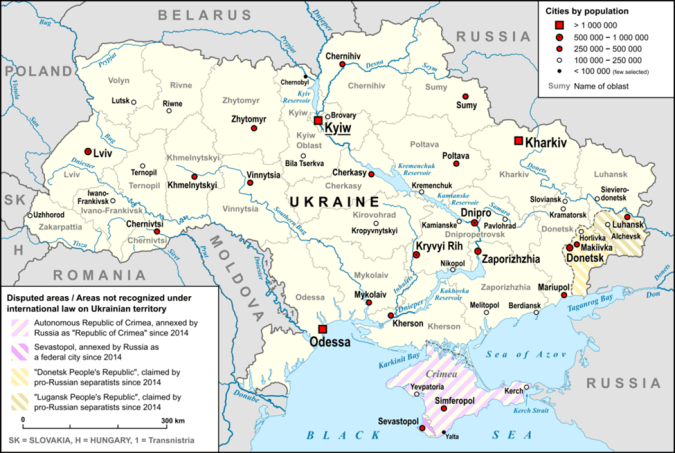
There is perhaps no better-informed military geostrategic authority on the war in Ukraine today than Swiss intelligence analyst, Jacques Baud (Colonel, Swiss Army, ret.). His long and exceptional experiences over the years in evaluating military intelligence and strategy for a variety of national and international agencies, in particular the geopolitics of Eastern Europe after the fall of Communism, have given him an enhanced and realistic insight into current events in that part of the world.
Recently, Amnesty International—of all sources!—came out with a critical report, largely ignored by the American and Western media, which documented the fact that Ukraine is actively engaged in terrorism and war crimes in its present conflict with Russia. One of the few Western media sources, Newsweek, quoted the report “that the Ukrainian military’s tactics ‘violate international humanitarian law and endanger civilians’ by operating weapons out of bases established in residential areas while civilians are present.” That is exactly what some of us have been saying and charging for some time, especially in reference to the accusation of Russian “war crimes” in Mariupol and Bucha, to mention but two prominent examples.
Now, an international agency, not known for its rightwing or pro-Russian bias, has come out and admitted the very same thing: it is the policy of the Ukrainian government to use civilians as human shields, to place potentially rich military target in the midst of unprotected civilians, many of whom become hostages to the Ukrainian military. The objective, of course, is to inflame Western and American media and political types: “See how evil and barbaric those Russians are!” goes the refrain. And that disinformation campaign has been fairly successful, if you watch most of Fox News (e.g., General Jack Keene, Brian Kilmeade, etc.) which is joined at the hip with the entirety of the hysterical (mostly leftwing) anti-Russian media, not to mention the Deep State cabal in Washington, which includes such deranged armchair warriors as Senators Lindsey Graham and Chuck Schumer.
Of course, Ukraine has attempted to push back against the report, employing it minions in the West and in the American media. But numerous analyses have surfaced, and, although ignored by our media, they confirm Amnesty International’s study.
In his most recent analysis, Colonel Baud examines the issue of terrorism as employed as a military tactic, and largely on the part of the Ukrainian military and its violent militia groups, in the current conflict with Russia. In an interview with the journal, The Postil, he explores in detail that question, as well as other critical issues—issues about which most Americans (and Western Europeans) have little reliable information.
There is a zealously pro-Ukrainian historical blackout framing Western media. It is openly admitted by Joe Biden and his Secretary of State Anthony Blinken and Secretary of Defense Lloyd Austin (since they visited Kiev back in late April, 2022) that the American strategy (and thus that of our NATO satraps) in Ukraine is “to bleed Russia dry, if it takes the death of every Ukrainian to do it.” In other words, Ukraine is a kind of “piege de mort,” a death trap for the Russians to facilitate a radical change in Kremlin leadership, to install by whatever means possible a pliant government which will essentially take orders from the globalist cabal which seeks to implement “the Great Reset.”
Colonel Baud’s interview is detailed, providing accurate and detailed information that most Westerners and Americans don’t see or hear in our controlled media. His wide-ranging interview is fairly long—9,000 words—but well worth reading and pondering. The goal of our elites in Eastern Europe has nothing at all to do with “protecting democracy”—Ukraine is the least democratic nation in all of Europe. It has everything to do with cementing globalist control, a unitary world where agencies like an empowered World Economic Forum (which Volodymyr Zelensky now pays homage to), the European Union, and a reconfigured and aggressive NATO, abroad, and an FBI and CIA, which have become our equivalents of the East German Stasi of Communist KGB secret police, domestically.
I pass on Colonel Baud’s interview below:
https://www.thepostil.com/our-latest-interview-with-jacques-baud/
Tens of Thousands Take to Prague’s Streets to Protest Against EU & NATO
Sputnik – 03.09.2022
Earlier in the week, Czech Prime Minister Petr Fiala’s government faced yet another vote of no-confidence in parliament, in what is the opposition’s second bid to oust the center-right coalition this year.
An estimated 70,000 people took to the streets of the Czech capital Prague on Saturday, protesting against the government, the European Union and NATO.
The leaders of the protests slammed the government’s inaction in dealing with record-high inflation in the country, including soaring gas and electricity prices, and demanded that Prague signs direct contracts with gas suppliers – Russia included – notwithstanding Brussels’ policies.
“The aim of our demonstration is to demand change, mainly in solving the issue of energy prices, especially electricity and gas, which will destroy our economy this autumn,” one of the demonstration’s organizers, Jiri Havel, stated.
Czech Prime Minister Petr Fiala dismissed the protesters’ demands, claiming that they did not hold “the interests of the Czech Republic” at their hearts and accused them of being “pro-Russian”. Fiala did not elaborate on how rapidly growing prices are in the country’s best interests.
Fiala’s government recently survived a parliamentary no-confidence vote called by the opposition in light of his cabinet’s inaction in the face of soaring inflation. Fiala won the vote, which was preceded by a 22-hour-long marathon debate. His coalition holds an eight-seat edge over the opposition in the 200-seat parliament.
US biggest winner in Ukraine crisis, which deserves world’s vigilance: Zhao Lijian
Global Times | September 2, 2022
As the initiator of the Ukraine crisis, the US has been its biggest winner, standing on the sidelines while reaping the benefits. This deserves consideration and vigilance from the world, a spokesperson of China’s Foreign Ministry said on Friday.
The remarks came in response to comments by some in the European media who have said that the US is masquerading as a savior while banking huge profits by selling gas to European countries, with the latter facing energy shortages due to sanctions targeting Russia that forced them to buy US natural gas at high prices.
The comments are very reasonable, Zhao Lijian, spokesperson from the Ministry of Foreign Affairs, said on Friday during a regular press briefing.
“The comprehensive escalation of the Ukraine crisis has continued for more than half a year. Facts have once again proved that unilateral sanctions by the US and the West cannot solve the problem. On the contrary, their spillover effects continue to snowball,” said Zhao.
“As the initiator of the Ukraine crisis, the US has now become the biggest winner, reaping the benefits. This is worthy of consideration and vigilance by the whole world,” Zhao warned.
Zhao said that he is aware of reports that the gap between gas prices in the European and US markets is now as much as 10 times, a record high.
Zhao cited George Galloway, former British parliamentarian, who said that the US “is ready to fight to the last drop of Ukrainian blood, in the end, it’s prepared to fight to the last drop of European blood.”
Galloway also said that the working classes of Europe and North America will pay the price of the NATO-crazed suicide-mission against Russia.
According to data published by Business Insider, an American financial and business news website, US companies are making more than $100 million per container ship of liquefied natural gas bound for Europe.
“Obviously, while US arms dealers and grain merchants have been cashing in on the Ukraine crisis, US energy companies have not been left behind. As a result, the public across Europe faces soaring electricity prices, lower heating temperatures and even prescheduled blackouts,” said Zhao.
According to industry statistics, the current import price of natural gas in Europe has increased by over 200 percent from a year earlier.
One of the examples is the Rose and Crown, an award-winning British pub, which on Sunday posted an energy bill on its Twitter account, showing that its annual electricity bill is 61,667.94 pounds ($71,243), or 97.05 pounds per kilowatt-hour. The price in May was 15 pounds per kilowatt-hour, which means an increase of 547 percent.
“Exorbitant Rise In Energy Prices” Forces Europe’s Top Steelmaker To Close Plants
By Tyler Durden | Zero Hedge | September 3, 2022
Even though European power and natural gas prices have subsided this week, Germany, the largest economy in the bloc, still faces historically high energy costs that have forced cuts in industrial output.
The latest example is the world’s largest steelmaker, ArcelorMittal, which released a statement Friday about shutting down two plants and idling one.
Europe’s top steelmaker said two plants in Germany (one in Bremen and the other in Hamburg) would be partially closed at the end of September. A plant in Asturias, Spain, will also be idled.
ArcelorMittal blamed the coming smelter shutdowns on “the exorbitant rise in energy prices,” which is devastatingly impacting the company’s “competitiveness of steel production.” The decision to reduce metal output was also based on “weak market demand and a negative economic outlook” as energy hyperinflation risks sending Europe into a deep recession.
“As an energy-intensive industry, we are extremely affected. With gas and electricity prices increasing tenfold within just a few months, we are no longer competitive in a market that is 25% supplied by imports,” explained Reiner Blaschek, CEO of ArcelorMittal Germany.
Blaschek asked lawmakers to address the historic energy crisis and get prices “under control immediately.” Elevated prices this summer have resulted in a series of smelter closures from other metal-producing companies because high energy costs made production uneconomical.
In Germany, one of every six industrial companies feels forced to reduce production due to high energy prices, a survey by the Association of German Chambers of Industry and Commerce, DIHK, showed at the end of July. Nearly a quarter of the companies forced to reduce production had already done so by end-July, and another one-quarter are in the process of scaling back production due to sky-high energy prices, according to the survey of 3,500 companies from all sectors and regions in Germany.
The energy-intensive industries and firms are particularly hit, as 32 percent of the companies plan to or have already started to reduce production and even halt entire production lines, the DIHK survey showed. — OilPrice.com’s Tsvetana Paraskova
Runaway energy costs were halted this week as German year-ahead electricity futures plunged by half since Monday’s peak above 1,000 euros a megawatt-hour as the EU considers market interventions. EU NatGas prices closed down about 33% from the highs reached on Aug. 25.
However, here’s where things get very dicey. After European markets closed, around the lunch hour in New York, news broke that Russian energy giant Gazprom won’t resume critical NatGas supplies to Europe via Nord Stream 1 tomorrow after an oil leak was detected. There’s no timeframe when NatGas supply will resume to the energy-stricken continent.
Europe’s energy crisis could materially worsen, which means higher NatGas and power prices that will only curb more industrial output. Germany could fall into recession this winter, bringing the rest of the bloc down with it.
Featured Video
Integrity Initiative: UK-funded network framed dissent as Russian disinformation for years
or go to
Aletho News Archives – Video-Images
From the Archives
Why Saudi Ties to 9/11 Mean U.S. Ties to 9/11
By Kevin Ryan | Dig Within | September 27, 2015
Media interest in Saudi Arabian connections to the crimes of 9/11 has centered on calls for the release of the 28 missing pages from the Joint Congressional Inquiry’s report. However, those calls focus on the question of hijacker financing and omit the most interesting links between the 9/11 attacks and Saudi Arabia—links that implicate powerful people in the United States. Here are twenty examples. … continue
Blog Roll
 Aletho News
- Big tech hands in its DSA censorship reports to the EU
- ‘A Big Victory’ – Palestine Chronicle Wins Two-Year Legal Battle
- IAEA inspectors cannot return to Iran amid US threats: Russia
- Senate Rejects Iran War Powers Resolution Passed By House
- ‘We did not attack Pakistan with drones’: Afghan sources
- Iraqi Resistance faction links arms to sovereignty, questions US exit
- Cannon fodder no more… South Korea rejects Trump’s pressure to join his criminal war on Iran
- Neria Leiter Was A Legitimate Military Target
- Integrity Initiative: UK-funded network framed dissent as Russian disinformation for years
- ‘We don’t seek permission to defend our country’: Snippets from President Pezeshkian’s UNGA address
- If Americans Knew
- ‘This is where I live now, the back of a truck’: a day in the life of a grandmother in Gaza
- In UN Speech, Iran’s President Displays Pictures of Children Killed by US, Brings Attention to Israel’s Nuclear Arsenal
- Israel displaces hundreds of Palestinians amid wave of demolitions in West Bank
- Aid, reconstruction, and Israel’s history of obstruction in Gaza
- Trump administration digs an ever-deeper hole of complicity in genocide – Daily Update
- US-Israel $2.8 Billion Arms Deal, 40,000-Bomb Supply Faces New Gaza Complicity Accusations
- Caught on Tape: AIPAC CEO Boasted of Controlling Trump’s National Security Officials
- Why Hamas Attacked Israel in October 2023 – Israeli professor Ilan Pappé
- They see them, then kill them: Israeli quadcopters track, deliberately target civilians in Gaza
- Winter could turn Gaza’s treacherous, war-damaged buildings into deathtraps
- No Tricks Zone
- New Study: Earth And Venus Surface Warmth Largely Explained By Convection And Lapse Rate, Not CO2 Or Radiation
- 2025 Nature Paper Claiming Worsening Global Drought Gets RETRACTED …Heavily Flawed
- New Study: ‘Global Drought Shows No Detectable Recent Acceleration Under Climate Warming’
- Economic Masterminds: German Socialists Suggest Taxing Productivity Gains Stemming From Using AI
- The South China Sea Has Not Been Cooperating With The Climate Change Narrative
- Energy Crisis: Germany Enters Heating Season With Historically Low Gas Reserve Fill Levels
- New Study: The Antarctic Ice Sheet Gained Mass From 2020-2024 Due To Staggering Snow And Ice Accumulation
- Study: Ocean Heating Rates From Thousands Of Years Ago ‘Dwarf’ Modern Ocean Heating Rates
- Climate Extremists Target, Attack Large-Scale Power Grid Infrastructure In Germany!
- New Study: Antarctic Ice Melt Has Contributed Less Than 1 Centimeter To Sea Level Rise In The Last 30 Years

