“Exorbitant Rise In Energy Prices” Forces Europe’s Top Steelmaker To Close Plants
By Tyler Durden | Zero Hedge | September 3, 2022
Even though European power and natural gas prices have subsided this week, Germany, the largest economy in the bloc, still faces historically high energy costs that have forced cuts in industrial output.
The latest example is the world’s largest steelmaker, ArcelorMittal, which released a statement Friday about shutting down two plants and idling one.
Europe’s top steelmaker said two plants in Germany (one in Bremen and the other in Hamburg) would be partially closed at the end of September. A plant in Asturias, Spain, will also be idled.
ArcelorMittal blamed the coming smelter shutdowns on “the exorbitant rise in energy prices,” which is devastatingly impacting the company’s “competitiveness of steel production.” The decision to reduce metal output was also based on “weak market demand and a negative economic outlook” as energy hyperinflation risks sending Europe into a deep recession.
“As an energy-intensive industry, we are extremely affected. With gas and electricity prices increasing tenfold within just a few months, we are no longer competitive in a market that is 25% supplied by imports,” explained Reiner Blaschek, CEO of ArcelorMittal Germany.
Blaschek asked lawmakers to address the historic energy crisis and get prices “under control immediately.” Elevated prices this summer have resulted in a series of smelter closures from other metal-producing companies because high energy costs made production uneconomical.
In Germany, one of every six industrial companies feels forced to reduce production due to high energy prices, a survey by the Association of German Chambers of Industry and Commerce, DIHK, showed at the end of July. Nearly a quarter of the companies forced to reduce production had already done so by end-July, and another one-quarter are in the process of scaling back production due to sky-high energy prices, according to the survey of 3,500 companies from all sectors and regions in Germany.
The energy-intensive industries and firms are particularly hit, as 32 percent of the companies plan to or have already started to reduce production and even halt entire production lines, the DIHK survey showed. — OilPrice.com’s Tsvetana Paraskova
Runaway energy costs were halted this week as German year-ahead electricity futures plunged by half since Monday’s peak above 1,000 euros a megawatt-hour as the EU considers market interventions. EU NatGas prices closed down about 33% from the highs reached on Aug. 25.
However, here’s where things get very dicey. After European markets closed, around the lunch hour in New York, news broke that Russian energy giant Gazprom won’t resume critical NatGas supplies to Europe via Nord Stream 1 tomorrow after an oil leak was detected. There’s no timeframe when NatGas supply will resume to the energy-stricken continent.
Europe’s energy crisis could materially worsen, which means higher NatGas and power prices that will only curb more industrial output. Germany could fall into recession this winter, bringing the rest of the bloc down with it.
EU wants to set price for Russian gas
Samizdat | September 2, 2022
The EU needs a price ceiling on imports of Russian pipeline gas, European Commission President Ursula von der Leyen announced on Friday, according to Reuters.
“I firmly believe that it is now time for a price cap on Russian pipeline gas to Europe,” she told reporters on the sidelines of a meeting of German conservative lawmakers in the town of Murnau.
The EU chief insists the measure would prevent what she called Russian President Vladimir Putin’s attempts to manipulate the European energy market.
EU energy ministers are expected to discuss the issue during an extraordinary meeting on September 9.
Meanwhile, former Russian president Dmitry Medvedev warned on Friday that in the event of the introduction of such a price cap, EU nations won’t get any Russian gas. “It will be like with oil. There will be no Russian gas in Europe,” Medvedev wrote on his Telegram channel.
His comments relate to a plan to limit prices on Russian oil currently being discussed by Group of Seven (G7) countries. Moscow has already warned it will embargo countries that support the Washington-proposed price cap on its crude exports.
Bank of Russia explains why country’s frozen reserves were kept abroad
Samizdat | September 2, 2022
The Central Bank of Russia (CBR) explained on Friday why half of the country’s foreign currency reserves were being held abroad, which enabled their seizure by Western governments.
Foreign exchange reserves were deliberately divided into two halves, one of which was dollar and euro assets, CBR’s first deputy chairman Dmitry Tulin told business daily RBK. Those assets were actively used in domestic money circulation, so the regulator had to play the role of a “wholesale warehouse,” he explained.
“The fact that, by the beginning of 2022, the international reserves were divided, as they say, into “two piles” – one for peacetime and the other for emergency situations, is a consequence of the work that has been systematically carried out since 2015,” Tulin said, noting that “there was no way not to keep part of the reserves in dollars and euros, because these currencies were most actively used … for settlements in foreign trade.”
According to Tulin, who oversees the supervision of the banking sector at the CBR, “if there’s constant capital turnover, there should be reserves.”
The deputy chairman drew an analogy with the retail sector, noting that a store, in order to operate smoothly and satisfy customer demand, needs to keep stocks. “There are small warehouses at shops and large warehouses at wholesale bases. The role of a wholesale warehouse for conducting operations in foreign currencies in our economy was performed by the Central Bank, which held the state foreign exchange reserves,” Tulin said.
In March, nearly half of Russia’s foreign reserves – worth $300 billion – were frozen as part of the sanctions imposed by the US, the EU, and their allies over the conflict in Ukraine.
The regulator then explained that keeping gold and foreign exchange reserves in the country would have been like having no reserves at all, as such assets protect the economy against external crises. Reserves in US dollars and euros help the country pay its debts and keep trade going, so nothing could have been done to prevent a freeze of its assets, the bank said. According to Russian Foreign Minister Sergey Lavrov, the asset freeze by the West essentially constitutes theft.
The West Claims Russia Is “Weaponizing Energy” By Slowing Exports, After Pledging to Isolate Moscow
By Kyle Anzalone | The Libertarian Institute | September 1, 2022
The White House accused Russia of weaponizing energy by reducing gas exports to Europe. On Wednesday, Moscow announced that Nord Stream 1 would close, citing sanctions and maintenance as the cause. While Washington’s European partners have attempted to reduce their dependence on Russian energy exports, the continent’s leaders are warning their people of coming hardships.
In response to Russia’s invasion of Ukraine, President Joe Biden announced a full-scale economic war designed to cripple Moscow’s economy. Yet the Russian currency has strengthened during the six months since the war started, and America’s European allies are experiencing spiking energy prices.
Biden’s sanctions regime was intended to isolate Russia and disable the country’s war machine. However, Moscow is now cutting exports to Europe, and Western officials are complaining about the impacts of Russia’s economic war.
The charge of “weaponized energy” was made by National Security Council coordination for strategic communications John Kirby. Markus Soeder, the premier of the German state of Bavaria, said, “Putin is playing a game with Nord Stream 1 and Nord Stream 2. I think it’s a kind of game. Our problem right now is that we are not in a position to adequately respond to this game.” But, Berlin elected to keep the Nord Stream 2 pipeline closed in February.
Maria Tadeo, the European correspondent for Bloomberg Television, says Putin believes he has gained the upper hand in the economic war and is now attempting sanctions Jiu Jitsu on the West. “By now it is no secret that Russia wants to force a volte-face on sanctions by weaponizing energy,” she wrote.
With the current gas price in Europe at ten times the average, David Stockman, Director of the Office of Management and Budget under President Ronald Reagan, concluded that the sanctions war was a failure. He writes, “The fact is, the Sanctions War has been an abysmal failure in terms of punishing the Russian economy and Putin’s ability to preserve in Ukraine.”
Stockman said things are unlikely to get better for Europeans this winter. “Moreover, in the midst of soaring heating and electric bills, consumers may face a double whammy of high electric bills plus blackouts too,” the former Congressman wrote.
Some European leaders agree with Stockman about the dismal winter ahead. In a speech, French President Emmanuel Macron warned about the coming of “the end of abundance.” He continued, “our freedom — the system of freedom, which we are used to living in — has a cost. And at times, if it needs to be defended, that could entail sacrifices to reach the end of certain battles we must carry out.”
Germany Foreign Minister Annalena Baerbock stated the policy will not change even if suffering Europeans demand relief. “If I give the promise to people in Ukraine – ‘We stand with you, as long as you need us’ – then I want to deliver.” She continued, “No matter what my German voters think, but I want to deliver to the people of Ukraine.”
While the US and its European allies have cut some imports from Moscow, over $6 billion in Russian goods entered American ports in the past six months. The White House is encouraging American importers to buy fertilizer from Russian sellers. The AP found that American and European companies are importing metal from a Russian firm that produces parts for Moscow’s fighter jets.
Energy crisis worsening in Finland
Government declares “war economy” due to consequences of unnecessary anti-Russian sanctions
By Lucas Leiroz – September 2, 2022
The side effects of anti-Russian sanctions are becoming increasingly unbearable for Western countries. Finland has activated maximum alert levels due to the energy crisis, initiating exceptional measures to manage supply difficulties. The head of government even stated that the country would be experiencing a “war economy”, despite the fact that Finland is obviously not at war with any other state. This scenario reveals the disastrous path that the West chose to follow by its own decision.
On 1 September, Finnish Prime Minister Sanna Marin described the economic situation in her country in the midst of the gas supply crisis as a “war economy”. Interestingly, in her speech, Marin blamed Russian President Vladimir Putin for the crisis, despite the fact that the decision to sanction Moscow was taken unilaterally by Western countries. According to her, the gas crisis is occurring because the Russian government is using energy as a weapon in the current conflict.
“We seem to be living in a war economy. This is not a normal economic situation”, she said during a press conference.
She also added that this is the third calamity her country has faced since she took power in 2019:
“The first [crisis] was the pandemic, the second was the tide of war coming in Europe, and the third is the energy crisis, which both Finland and all other European countries in the grip of, due to the war and the fact that Putin is using energy as a weapon against Europe”.
Marin did not explain exactly how the gas was being used as a weapon by the Russians. She just blamed Putin in a generic and unjustified way. In fact, her words sounded like a desperate attempt to make a kind of scapegoat for the impending crisis that will damage her country. Marin just tried to evade her responsibility as the Finland’s head of government, pointing to the president of a foreign country as the cause of the problems.
However, it is necessary to emphasize that there is no validity in Marin’s rhetoric. Russia initially had no intention of using energy as a strategic point in its international disputes. On the contrary, it was the West itself that imposed a series of sanctions to which Moscow was forced to respond with some measures, such as demanding payment in rubles, controlling prices and even banning sales in some more serious cases.
If the West had not taken the initiative to try to “punish” Russia for starting the special operation in Ukraine, Moscow would certainly have kept the European energy supply intact. All Russian actions arose in response to Western provocations. The problem is that European countries do not seem to have acted with prudence and strategy, they simply adhered to the American plan to sanction Russia even though they are dependent on Russia’s energy resources and lacking alternative sources of gas. Now, Marin tries to “blame” the Russians, but imposing sanctions and even asking for NATO membership was her government’s unilateral initiative.
The Finnish case is quite emblematic and sums up well the abyss that Europe has chosen for itself. Before the escalation of the Ukrainian conflict, the Nordic country depended on Moscow for the supply of 70% of its natural gas and 35% of its oil, in addition to 14% of its electricity. Without the partnership with Moscow, Helsinki would simply not have been able to meet the energy demands of the production chains and the population, but even so, the country chose to sanction Russia, ban imports and denied any form of dialogue. There is no way to analyze these facts and conclude that Russian President Vladimir Putin is the one “to blame” for the crisis. The responsibility undoubtedly lies with the Finnish government itself.
On the “war economy” situation, in fact, an unprecedented crisis threatens Helsinki. And the most curious thing is that the government takes measures that will only worsen the situation even more, instead of seeking improvement. Finland was one of the first states to impose restrictions on the entry of Russian tourists, halving the number of visas. Under the recently announced new rules, only 500 visas can be granted per day to Russian citizens, 100 of which are reserved for tourists and 400 for work, study and family trips. It is important to remember that more than 20% of all Finnish tourism income comes from Russian citizens. According to official sources, the country will lose more than 600 million euros with the new visa rules.
In addition, Finland remains firm in its application to join the Western military alliance. In fact, the more the country is affected by tensions with Russia, the more it seems to be willing to worsen these tensions. Moscow at no time showed any sign of threat to Helsinki, but the Nordic country appears to be absolutely influenced by the fallacious Western rhetoric that the operation in Ukraine will “expand” throughout Europe, so it prefers to go into recession and economic crisis instead of simply being diplomatic with Russia.
For now, Marin will certainly continue to try to make Putin the scapegoat for her administration’s mistakes. But that won’t convince the public for long. The PM has been heavily criticized for both mismanagement and scandals in her private life. Her popularity is likely to drop further as the country sinks into a “war economy” without being at war.
Lucas Leiroz is a researcher in Social Sciences at the Rural Federal University of Rio de Janeiro; geopolitical consultant.
Europe Has No Real Alternatives To Russian Gas: Ex-Aramco EVP
By Tyler Durden | Zero Hedge | September 1, 2022
Echoing what Zoltan Pozsar said in his latest must read note, the former executive vice president at Saudi Aramco, Sadad Al-Husseini, told CNBC on Monday that there’s not enough capacity in the world to replace Russia’s gas supply to the European Union, while Moscow has plenty of markets to sell its energy to.
“The US doesn’t have the LNG capacity to replace Russia’s exports to Europe,” he said, noting that power bills across the EU are set to soar this winter. He did not comment on China reselling Russian LNG to Europe although we expects others will soon.
According to Al-Husseini, the lack of freely available supply could lead to serious problems on the global energy market. “This situation is a new world, and it’s not a very good one for energy,” he warned.
“In any case, there isn’t enough LNG capacity in the world to make up for the Russian exports to Europe,” the former executive said, adding that, “It will take years for the EU to find resources to replace Russian supply.”
He also said that while Russia may lose Europe as an end-market, there are “plenty of alternative markets” for Russian energy, including China, Japan, or India, that eagerly flount Western sanction, realizing that the Biden admin is increasingly toothless in punishing sanctions violators.
Meanwhile, Europe does not have alternative energy sources, he said, “while the US is maxed out already, North Africa has got problems,” and OPEC is also running out of spare capacity.
“So, it’s a global problem,” he said.
The official suggested that, while the Russian economy may suffer under Western sanctions, the rest of the world will be suffering with them.
However, he stressed that “Russia may recover a lot sooner than Europe.”
Finnish Prime Minister Declares Transition to ‘War Economy’ Amid Energy Crunch
By Ilya Tsukanov – Samizdat – 01.09.2022
Finland has joined its European Union allies in shooting itself in the foot economically by unilaterally slashing energy purchases from Russia. Helsinki added to its troubles by restricting visas for Russians – who ordinarily make up a big chunk of the country’s income from tourism.
Finnish Prime Minister Sanna Marin has compared the exceptional energy crisis being faced by her country to a “war economy.”
“We seem to be living in a war economy. This is not a normal economic situation,” Marin said, adding that the current crunch is the third calamity faced by her government since she came into office in 2019.
Marin laid the blame for the crisis at Russian President Vladimir Putin’s feet.
“The first [crisis] was the pandemic, the second was the tide of war coming in Europe, and the third is the energy crisis, which both Finland and all other European countries in the grip of, due to the war and the fact that Putin is using energy as a weapon against Europe,” Marin said.
The Finnish prime minister did not elaborate on how the Russian president, who has repeatedly said that Moscow remains ready to sign new long-term gas contracts with European countries, is responsible for the energy crunch pummeling the Nordic nation.
Economists expect the Finnish economy to slide into a recession in 2023 amid a downturn caused in part by a spike in energy prices and the country’s rejection of low-priced and reliable Russian supplies after refusing to pay in rubles.
Before the escalation of the Ukrainian crisis, Finland depended on Russia for nearly 70 percent of its natural gas and 35 percent of its oil, as well as 14 percent of its electricity. Along with the halt in imports of Russian gas, Helsinki joined its EU partners in banning Russian oil.
Tourism Losses
Helsinki poured salt on its economic wounds by placing restrictions on Russian tourists by cutting visa applications in half from an average of 1,000 per day to 500 per day starting September 1, and setting quotas on tourism visas to about 100, with the rest reserved for family ties, work and study.
Finnish authorities sounded the alarm about the potential implications of the loss of Russian tourists at the beginning of the summer. Russians typically make up about 20 percent of the country’s tourism earnings and its 15 billion euros-a-year in revenue. Earlier this year, Travel/Visit Finland director Kristiina Hietasaari estimated that the sector could lose over 600 million euros without Russian travelers.
In addition to curbing Russian energy purchases and cutting access to Russian tourists, Finland has applied for NATO membership, and is expected to become a formal member of the bloc together with Sweden if and when all 30 of the alliance’s current members ratify the Nordic nations’ bids for entry. Russian officials have emphasized that Moscow has no qualms with either Finland or Sweden when it comes to security matters, but warned that if NATO infrastructure was deployed near Russia, Moscow would respond in kind to “create the same threats in the territories from which they threaten us.”
Russia warns G7 about oil supplies
Samizdat – September 1, 2022
Russia will embargo countries that support the Washington-proposed price cap on its oil, Deputy Prime Minister Alexander Novak said on Thursday.
“In my opinion, this is a complete absurdity… To those companies or countries that will impose restrictions, we will not supply our oil and oil products, because we are not going to work under non-market conditions,” he told reporters, commenting on a plan to limit prices on Russian oil currently being discussed by the Group of Seven (G7) countries.
Establishing a price ceiling on Russian oil is conceived as a means of slashing Moscow’s revenues from exporting the commodity while avoiding shutting the country’s crude out of the market. The proposal is due to be discussed at a meeting of G7 finance ministers on Friday.
According to Novak, such a plan would jeopardize the market mechanisms of “such an important industry as oil,” and could only lead to the destabilization of both the industry and the oil market.
“And European and American consumers will be the first to pay for it, while they are already paying high prices today because of the destabilizing measures [their governments] are implementing. In particular, the sanctions restrictions,” Novak said.
The official added that Russia is currently pumping as much oil as it has the ability to produce and sell at the moment, but if global market conditions stabilize and Russian producers could be confident in finding buyers, output could be raised. He noted that Russian oil producers are preparing for the upcoming EU oil embargo due to take effect in December, but they plan to maintain current levels of production regardless.
Suspension of visa agreement unnecessary sanction against Russian citizens
The decision harms the interests of European business sector
By Lucas Leiroz | September 1, 2022
The West continues to advance with its anti-Russian coercive measures, despite the opinion of several analysts to stop sanctions. In a recent meeting, European authorities agreed to suspend the visa facilitation agreement between Russians and Europeans, taking a new step towards the unrealistic objective of “isolating” Russia. The measure tends to harm Europeans themselves, as well as exacerbating global tensions amid the current security crisis.
In one of the main retaliations against Russian citizens due to the special operation in Ukraine, the EU decided on August 31 to restrict the access of tourists from Russia to visas to enter any country in the bloc. The measure, which although radical was already expected, suspends the validity of an international visa facilitation agreement between the EU and Russia, creating a scenario of international instability and diplomatic frictions.
Contrary to what happens between Americans and Europeans, who can travel mutually without a visa, Russians need this type of authorization to enter the EU. The bureaucracy and application costs were facilitated by an agreement between Brussels and Moscow, which made the process of obtaining a European visa for Russian citizens easier than the usual procedure for citizens of other regions of the planet. However, now it will be much more difficult and, above all, more expensive for a Russian citizen to cross the borders of the European bloc.
Commenting on the case, the head of the European Union foreign policy Josep Borrell emphasized that there was a political agreement between the European authorities on the need to review the visa policy and suspend the visa deal, but that the launch of new legal guidelines on the procedure is yet to be done. He further commented that the suspension of the agreement will allow the implementation of a system of individual analysis for the selection of eligible Russian citizens. In other words, Europeans will analyze all Russian individuals who are entering the bloc and will or will not authorize them to travel based on personal data, which will very likely result in a biased and ideological selection system, in which only Russian citizens who do not support the operation in Ukraine will be allowed.
“We agreed politically, this is not a legal text but it is a political agreement, we agreed that something has to be done and therefore let me try to summarize in concrete terms what we politically agreed on. Firstly the full suspension of the EU Russia visa facilitation agreement (…) This will significantly reduce the number of new visas issued by the EU member states. It’s going to be more difficult, it’s going to take longer (…) [but] This will [also] allow for visas to be granted on individual basis on a thorough statement on each individual case and especially for specific groups of people”, he said.
The European measure was not so well received among Western thinkers. Many analysts see this type of measure as unnecessary and ineffective, as well as anti-strategic, considering that it punishes innocent Russian citizens for decisions made by their government, having no real effect on the Ukrainian military scenario.
For example, Swiss politician and journalist Guy Mettan, former director of the Geneva Press Club, commented on the case saying: “This decision marks a new step in the European waves of sanctions against Russia as it strikes an entire people indiscriminately. Several countries and European leaders had expressed serious doubts about the moral and philosophical justification of a collective punishment that strikes both the innocent and the supposed guilty”.
In the same sense, Paolo Raffone, director of the Brussels-based geopolitical think tank CIPI Foundation, stated: “EU measures to unilaterally suspend the EU-Russia Visa Facilitation Agreement [speaks to] the lack of standing of EU foreign policy. Such a measure is insignificant on the strategic ground, as it mostly penalizes ordinary Russian citizens. Such EU anti-Russian hysteria [brings to mind] the Catholic kings against the Muslims (and the Jews) some centuries ago”.
It is also necessary to emphasize the strategic sense of facilitating the granting of visas to Russian citizens. Russia and Europe share the same continental landmass, which is why it is normal for there to be a large flow of travelers. The Russian consumer market is very strong, as Moscow is an emerging nation with a rising middle class. So, it is common for Russian consumers to travel to Europe and shop, which favors both sides in a strategic business relation.
However, European leaders seem no longer interested in mutually beneficial agreements, but in radical and Russophobic measures whose sole purpose is to unconditionally isolate Russia. Obviously, the European business community, which has an interest in the Russian consumer market, may not share this same opinion, which tends to generate conflicts of interest between businessmen and politicians on the European scenario in the near future.
Furthermore, it is unacceptable that Europeans want to monitor the opinions of Russian citizens, creating a system of individual selection of eligible travelers. In practice, the EU will be inciting political dissent and anti-government militancy in Russia, which is an affront to Moscow’s sovereignty, demanding measures in response.
Once again, Western leaders take truly irrational measures to achieve the goal of “canceling” Russia. Sooner or later, however, these leaders will realize that it is impossible to cancel the biggest country on the planet and will have to retreat in their measures.
Lucas Leiroz is a researcher in Social Sciences at the Rural Federal University of Rio de Janeiro; geopolitical consultant.
Latvian president Levits takes aim at Russian minority
By Ahmed Adel | August 31, 2022
Ethnic Russians residing permanently in Latvia should be “isolated” if they are deemed not to be loyal to the state, Latvian President Egils Levits said. Such a move demonstrates that the liberal experiment in the Baltics has failed and is quickly descending into fascism.
“We see that some of the Russian community is disloyal to our country… Our task is to deal with them, to isolate them… They should simply be isolated,” he said on Latvijas Radio.
The majority of Latvians, according to Levits, have become “more nationalist and patriotic” as a result of the war in Ukraine, which he believed was a positive thing.
The Latvian president’s statement is an expression of open and unacceptable discrimination without precedent, effectively a new type of fascism. When viewed in the context of Latvia openly glorifying and supporting Nazism by removing monuments to Soviet martyrs, as well as being ardent supporters of the fascist regime in Kiev, the non-condemnation from the European Union highlights that liberalism will always descend into fascism when non-Western powers challenge their hegemony.
During World War II, Latvians fought on the side of Hitler and served as guards at concentration camps. Just like what happened in Ukraine since 2014, Nazi collaborators are now being elevated as heroes in Latvia. Although defenders of anti-Russia policies point out that Levits could not be a fascist as he is Jewish, they also ignore Volodymyr Zelensky, also of Jewish heritage, is a gatekeeper of Far-Right ideology in Ukraine and describes the neo-Nazi Azov Battalion and Right Sector as heroes and patriots. In addition, Zelensky’s top financial backer, the Ukrainian Jewish energy oligarch Igor Kolomoisky, has been a key benefactor of the Azov Battalion and other Far-Right extremist militias.
21st century fascism is motivated by Russophobia rather than antisemitism, as was the case in the previous century. As pointed out by Toward Freedom: “In its bid to deflect from the influence of Nazism in contemporary Ukraine, U.S. media has found its most effective PR tool in the figure of Zelensky […] For a U.S. media engaged in an all-out information war against Russia, the president’s Jewish background has become an essential public relations tool.” Therefore, dismissing Levits’ anti-Russia racism because of his Jewish heritage does not hold and is a lazy effort to dismiss the emerging fascism in Latvia.
Since the three Baltic countries – Lithuania, Estonia and Latvia – achieved independence in the early 1990’s, they have worked towards a homogenisation that does not respect minorities. It is recalled that an “Estonianization” was carried out in Estonia in the 1930s, which forced Poles, Russians, Germans and Jews to adopt Estonian surnames. This is similar to the Ukraianization that was forced on Russian-speakers in Ukraine, as well as the Polish, Romanian and Hungarian minorities, since 2014.
It cannot be discounted that Russian people, supposedly living in liberal Europe, will find their language, culture and identity attacked, with individuals targeted for being proud of their ethnicity. Latvian authorities could take away the Russian minorities citizenship or even expel them from the country, with little to no recourse from Brussels.
Emboldened by the lack of condemnation from the West, Latvia’s actions could force Moscow to take its own retaliatory measures, such as terminating diplomatic relations and the transit of goods through these countries, from which they earn fees. Although initial reactions in the West might be celebratory, just as happened in Ukraine, it is remembered that Kiev is now the biggest loser as it is not earning full transit fees for the transportation of Russian energy.
Latvia recently declared Russia a sponsor of terrorism and suspended the issuance of tourist visas to Russian citizens. In addition, the Baltic countries are actively fighting against their Soviet legacy, among other things, by demolishing monuments to Soviet martyrs and soldiers who defeated Nazism in World War II.
Two million people live in Latvia, of which more than 220,000 are so-called non-citizens. These are permanent residents of the country, whose ancestors arrived after 1940 when Latvia became a part of the Soviet Union. Non-citizens, despite being in Latvia for multiple generations, have limited rights and cannot participate in elections and referendums. To obtain Latvian citizenship, they need to go through the naturalization procedure by passing an exam in Latvian language and history.
This procedure itself is a demonstration of fascist policies in supposedly liberal Europe.
None-the-less, calling for the “isolation” of Russians in Latvia is an othering resembling the policies of Nazi Germany against its Jewish and Roma citizens. Yet, as Russophobia has become a mainstream and acceptable form of racism and fascism in the liberal West, it will continue to receive little condemnation.
Ahmed Adel is a Cairo-based geopolitics and political economy researcher.
Hungary to Ask Europe to Stop Escalation of Ukrainian Crisis, Foreign Minister Says
Samizdat – 30.08.2022
BUDAPEST – Hungarian Foreign Minister Peter Szijjarto stated on Tuesday that he will ask Europe to stop any actions that escalate the crisis in Ukraine.
“A the meeting of the EU foreign ministers today I will ask that we finally reject the proposals that entail the threat of further escalation… and that we focus on establishing peace in Europe,” Szijjarto said ahead of the informal ministerial meeting in Prague.
According to the minister, if there is no peace in Ukraine in the near future, the consequences of this conflict will be even more tragic, with more people becoming refugees, and Europe facing an unprecedented crisis. The question of Europe’s energy supply will become even more serious, Szijjarto said.
Earlier, Russia sent a note to NATO countries over arms supplies to Ukraine. Russian Foreign Minister Sergei Lavrov stressed that any cargo that contains weapons for Ukraine will become a legitimate target for Russia. The Russian Foreign Ministry said that NATO countries were “playing with fire” by supplying weapons to Ukraine. Russian presidential spokesman Dmitry Peskov noted that pumping Ukraine with weapons from the West does not contribute to the success of Russian-Ukrainian negotiations and will only have a negative effect.
Europeans Paying for Brussels’ ‘Irrational and Absurd’ Energy Policy While US Profits: Kremlin
By Ilya Tsukanov – Samizdat– 30.08.2022
The European Union and individual bloc members have taken a series of measures in recent months to reduce reliance on Russian oil, gas and coal. These efforts sent energy prices skyrocketing, and are threatening to plunge the bloc into a cold winter. Russian President Vladimir Putin has characterized European policymakers’ actions as “suicidal.”
Ordinary Europeans are being made to pay for their leaders’ “irrational” policies in relation to Russia, while Brussels’ American allies get rich from an energy bonanza, presidential spokesman Dmitry Peskov has said.
“Step by step, unfortunately, both Brussels and individual European countries are demonstrating their absolute lack of reason,” Peskov told reporters on Tuesday.
“This is demonstrated in such anti-Russian impulses, outbursts of hatred for our country, through absolutely irrational and even absurd actions in the the energy field, for which the publics of European countries – the EU, Britain and so on, have to pay, but which make it possible for American companies to turn a profit, for example,” Peskov said.
Asked to comment on Brussels’ potential discussions of banning tourist visas for Russians, the Kremlin spokesman suggested that the possibility of even discussing such ideas at the EU level demonstrates the “set of irrational bordering on insanity” prevalent among the bloc’s political elites.
The United States and the European Union dramatically reduced purchases of Russian coal, oil and gas in the spring after Moscow launched a special operation to “demilitarize” Ukraine amid fears of an imminent push by Kiev to crush the fledgling Donbass republics. The measures have since been complemented by additional restrictions, including sanctions targeting equipment used by the Nord Stream 1 pipeline, and the closing down of overland pipelines running through Poland and Ukraine delivering energy to Europe. The Nord Stream 2 pipeline, which was completed late last year and prepared for operation, remains dormant.
The deficit in Russian energy has resulted in a dramatic spike in prices, with European consumers forced to pay through the nose for utilities, while countries scramble to find alternative sources to fill up underground gas reserves to prepare for winter.
President Putin has characterized Brussels’ policies as “suicidal,” saying the self-imposed energy crisis will undermine the EU’s competitiveness vis-a-vis the United States and China.
Featured Video
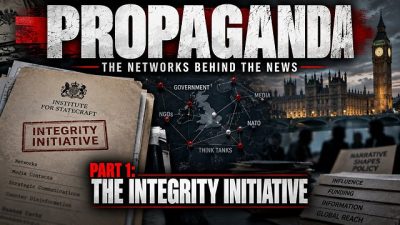
Integrity Initiative: UK-funded network framed dissent as Russian disinformation for years
or go to
Aletho News Archives – Video-Images
From the Archives
Why Saudi Ties to 9/11 Mean U.S. Ties to 9/11
By Kevin Ryan | Dig Within | September 27, 2015
Media interest in Saudi Arabian connections to the crimes of 9/11 has centered on calls for the release of the 28 missing pages from the Joint Congressional Inquiry’s report. However, those calls focus on the question of hijacker financing and omit the most interesting links between the 9/11 attacks and Saudi Arabia—links that implicate powerful people in the United States. Here are twenty examples. … continue
Blog Roll
 Aletho News
- Big tech hands in its DSA censorship reports to the EU
- ‘A Big Victory’ – Palestine Chronicle Wins Two-Year Legal Battle
- IAEA inspectors cannot return to Iran amid US threats: Russia
- Senate Rejects Iran War Powers Resolution Passed By House
- ‘We did not attack Pakistan with drones’: Afghan sources
- Iraqi Resistance faction links arms to sovereignty, questions US exit
- Cannon fodder no more… South Korea rejects Trump’s pressure to join his criminal war on Iran
- Neria Leiter Was A Legitimate Military Target
- Integrity Initiative: UK-funded network framed dissent as Russian disinformation for years
- ‘We don’t seek permission to defend our country’: Snippets from President Pezeshkian’s UNGA address
- If Americans Knew
- ‘This is where I live now, the back of a truck’: a day in the life of a grandmother in Gaza
- In UN Speech, Iran’s President Displays Pictures of Children Killed by US, Brings Attention to Israel’s Nuclear Arsenal
- Israel displaces hundreds of Palestinians amid wave of demolitions in West Bank
- Aid, reconstruction, and Israel’s history of obstruction in Gaza
- Trump administration digs an ever-deeper hole of complicity in genocide – Daily Update
- US-Israel $2.8 Billion Arms Deal, 40,000-Bomb Supply Faces New Gaza Complicity Accusations
- Caught on Tape: AIPAC CEO Boasted of Controlling Trump’s National Security Officials
- Why Hamas Attacked Israel in October 2023 – Israeli professor Ilan Pappé
- They see them, then kill them: Israeli quadcopters track, deliberately target civilians in Gaza
- Winter could turn Gaza’s treacherous, war-damaged buildings into deathtraps
- No Tricks Zone
- New Study: Earth And Venus Surface Warmth Largely Explained By Convection And Lapse Rate, Not CO2 Or Radiation
- 2025 Nature Paper Claiming Worsening Global Drought Gets RETRACTED …Heavily Flawed
- New Study: ‘Global Drought Shows No Detectable Recent Acceleration Under Climate Warming’
- Economic Masterminds: German Socialists Suggest Taxing Productivity Gains Stemming From Using AI
- The South China Sea Has Not Been Cooperating With The Climate Change Narrative
- Energy Crisis: Germany Enters Heating Season With Historically Low Gas Reserve Fill Levels
- New Study: The Antarctic Ice Sheet Gained Mass From 2020-2024 Due To Staggering Snow And Ice Accumulation
- Study: Ocean Heating Rates From Thousands Of Years Ago ‘Dwarf’ Modern Ocean Heating Rates
- Climate Extremists Target, Attack Large-Scale Power Grid Infrastructure In Germany!
- New Study: Antarctic Ice Melt Has Contributed Less Than 1 Centimeter To Sea Level Rise In The Last 30 Years

