Russia-Turkey reset eases regional tensions
BY M. K. BHADRAKUMAR | INDIAN PUNCHLINE | AUGUST 9, 2022
The 4-hour meeting on Friday at Sochi between President Vladimir Putin and President Recep Erdogan promises to be a defining moment in regional politics. The single biggest takeaway from the Sochi meet is, of course, the “win-win” economic partnership between Russia and Turkey that helps Russia, on the one hand, to continue to interact with the world market circumventing Western sanctions, while, on the other hand, is a boon for the Turkish economy.
Turkey is a member of the European Uinion’s Customs Union and it is no secret that there is a lot of Russian money floating around in the wake of the western sanctions. If that money can be turned into investments in Turkey to set up production units with western technology and market access, creating jobs and revving up the country’s economy, it is a “win-win”. This is one thing.
At Sochi, Putin and Erdogan agreed on phasing out the use of dollar in their transactions. Part of Turkey’s purchase of Russian gas will be settled in rubles, which will of course strengthen the Russian currency. Equally, the Sochi meeting tasked 5 Turkish banks to accept Russia’s Mir payment system, which Moscow developed following Russia’s exclusion from the SWIFT.
At its most obvious level, the Mir system enables Russian nationals, especially tourists, to freely visit Turkey. Indeed, the West’s prying eyes can also be kept out. A Bloomberg News report last week suggests that sensitive money transactions that are beyond western scrutiny may already be taking place. Basically, Turkey helps Russia to mitigate the effect of western sanctions while taking care that it won’t face any collateral sanctions either!
Quite obviously, all this is only possible within a matrix of political understanding. The 4-hour conversation in Sochi was almost entirely conducted in one-on-one mode. Erdogan cryptically remarked later that his talks with Putin would benefit the region. He did not elaborate.
Conceivably, there are three major areas where the matrix will be felt in immediate terms— Syria, Black Sea and Transcaucasia. Turkish and Russian interests crisscross here.
In the Black Sea, Turkey, as the custodian of the Montreux Convention Regarding the Regime of the Straits (1936), has a key role to play with regard to the passage of warships in times of war through the the Dardanelles strait, the Sea of Marmara, and the Bosporus strait. The current implications are self-evident.
Again, in Transcaucasia, Turkey can play a stabilising role, which Moscow expects, given Ankara’s influence in Baku. However, when it comes to Syria, a complex tapestry appears. The Turkish press has reported that Erdogan is planning to have a call with Syrian President Bashar al-Assad.
Putin has been encouraging Erdogan to think on these lines as the best way to address Turkey’s border security issues in northern Syria — by directly communicating with Assad instead of launching military incursions.
Putin’s vision is that the moribund Adana Agreement (1998) still has a lot of unused potential, where Damascus had guaranteed the containment of militant Syria-based Kurdish separatist groups. The “Adana spirit” evaporated once the Obama administration lured Erdogan into its regime change project in 2011 to overthrow Assad. Until that time, Erdogan and Assad, including their families, had enjoyed a warm friendship.
However, circumstances today are propitious for a rapprochement between Erdogan and Assad. First, Assad has successfully beaten back — thanks to Russian and Iranian backing — the US-led jihadi project in Syria. Damascus has liberated most of the regions from jihadi groups and the residual issue concerns the US occupation of a third of Syrian territory in the north and east.
Assad has consolidated the government’s staying power for years to come. Second, Assad is steadily gaining regional acceptance too among Syria’s Arab neighbours. Syria is seeking membership of the SCO alongside Egypt, Saudi Arabia, Bahrain and the UAE. Third, Turkish-American relations have soured in recent years since the CIA-backed military coup in 2016 to overthrow Erdogan.
One main factor today is the US’ politico-military alliance with the militant Syrian Kurds who are its foot soldiers and aspire to establish a Kurdish homeland in northern Syria bordering Turkey under American protection. Erdogan is deeply suspicious of US intentions.
Fourth, stemming from the above, Turkey sees eye to eye with Moscow and Tehran (and Damascus) in their demand for the vacation of US occupation of Syria (which is neither mandated by the UN nor is at Syrian invitation.) Fifth, Russia and Iran have contacts with Syrian Kurdish groups but a reconciliation between the Kurds and Damascus cannot gain traction so long as the US military presence continues.
Quite obviously, any endeavour to cut this Gordian knot will have to begin with the reconciliation between Erdogan and Assad. It is in Turkish interests to strengthen Damascus and promote a Syrian settlement, which will ultimately make the US occupation of Syria untenable and open the pathway for pacifying the Kurdish regions in northern Syria.
Meanwhile, in a development that has bearing on Syria’s security, Russia today launched an Iranian military satellite from its Baikanur Cosmodrome. It is a Russian-built Kanopus-V Earth-observation satellite that will boost Iran’s capability to conduct continuous surveillance on locations of its choosing, including military facilities in Israel.
Moscow negotiated the satellite deal in secret with Iran’s elite Islamic Revolutionary Guard Corps (which is involved in Syria) and experts from Moscow have trained IRGC’s ground crews in the satellite’s operation.
Russia’s ties with Israel have sharply deteriorated lately due to Israel’s involvement in Ukraine as a participant in Pentagon’s “coalition of the willing”. Moscow is probably expelling the hugely influential Jewish Agency, which has kept an office in Moscow since the Gorbachev era.
Moscow’s criticism of Israeli missile strikes against Syria has noticeably sharpened lately. Russian-Israeli relations will languish for the foreseeable future. Israel seems acutely conscious of its growing isolation. President Isaac Herzog reached out to Putin today but it turned out to be an inconclusive conversation. Moscow will be extra-vigilant, given the Biden Administration’s strong nexus with Israeli PM Lapid.
Suffice to say, together with Israel’s fraught ties with Moscow and Ankara and the deep antagonism toward Tehran, a Turkish-Russian-Iranian condominium in Syria is the last thing that Israel wants to see happening at the present juncture. Israel is the odd man out, what with the Abraham Accords losing its gravitas.
Putin’s initiatives to create axis with Turkey and Iran respectively mesh with the broader trend of the region reshaping itself through processes dominated by the countries within the region against the backdrop of the US retrenchment.
Ukraine halts Russian oil supply to EU
Samizdat | August 9, 2022
Ukraine’s state oil pipeline operator Ukrtransnafta has stopped pumping Russian crude through the southern branch of the Druzhba system to the EU, RIA Novosti news agency reported on Monday, citing Russia’s Transneft.
According to the report, transit supplies have been halted to Hungary, the Czech Republic and Slovakia.
Igor Demin, spokesperson for the president of Transneft, told the agency that transit through Belarus in the direction of Poland and Germany continues.
Demin explained that Russia cannot make payments for transit due to EU sanctions, although the Ukrainian company is insisting on 100% prepayment for its oil transportation services.
“When making a payment for transit through the territory of Ukraine, the funds were returned to the account of Transneft,” he said, adding, “Gazprombank, which services payments, notified us that the payment was returned in accordance with the EU regulations, that is, the seventh package of sanctions.”
Transneft stressed that it is working on alternative payment options for oil transit services via Ukraine, and has sent an appeal to Gazprombank.
Druzhba, which is one of the longest pipeline networks in the world, carries crude some 4,000 kilometers from the eastern part of European Russia to refineries in the Czech Republic, Germany, Hungary, Poland and Slovakia.
EU Robbing Global South of Cheap Gas in Quest to Replace Lost Russian Supplies
Samizdat – 08.08.2022
The European Union is in the throes of an unprecedented energy crisis after taking steps to reduce dependence on Russian oil, natural gas, and coal to “punish” Moscow for its military operation in Ukraine. Skyrocketing energy prices and falling availability have sparked growing concerns about bloc countries’ fate come winter.
European countries are resolving the energy shortfall at home by outbidding developing nations for gas contracts, “increasing the misery of millions of people,” and threatening to plunge entire countries into chaos, Handelsblatt reports.
“While Europe fears supply shortages in winter, the energy crisis has already hit other parts of the world with full force. In Bangladesh’s capital Dhaka, power supply is not guaranteed even in hospitals. Young mothers report on how they torment themselves with their newborns during hot summer nights because even fans cannot be switched on,” Handelsblatt contributor Mathias Peer wrote.
A similar situation is seen in Pakistan, which has experienced “one power blackout after another,” and “also as a consequence of Europe’s failed energy policy,” Peer indicated.
The observer explained that the EU’s headlong rush to reduce dependence on Russian gas has triggered “massive turbulence on global energy markets,” with fleets of liquefied natural gas (LNG) tankers which ordinarily carry cargoes to Asia diverted to Europe instead.
“In the bidding competition for deliveries, states like Bangladesh, whose per capita income is 95 percent below that of Germany, have what has become a hopeless mission,” losing out on contracts, resulting in the paralysis of gas-fueled power plants “and massive problems for hundreds of millions of people in the affected countries,” Peer noted.
The Handelsblatt contributor suggested that it was “all too understandable” for the EU to try to reduce its dependence on Russian energy in the wake of the Ukraine crisis, and suggested that Europe is not to blame for the energy crisis.
“But Europe’s attempt to find alternatives must not be at the expense of uninvolved third countries. It is the EU’s responsibility to ensure that by solving its supply shortages, not further aggravate the crisis in other countries. Reducing consumption must therefore take priority over diverting resources from other parts of the world, and in this regard the European gas contingency plan is far from being ambitious enough,” the observer suggested.
Peer emphasized that a more “considerate approach” is needed to stop Brussels from continuing to “play into [Vladimir] Putin’s hands.”
“His propaganda – which states that it is not Russia but the West and its sanctions that are responsible for the current crisis – is already affecting many more people in emerging countries than Europe would like,” the columnist concluded.
The crisis in Ukraine as well as US and EU moves to curb Russian energy and food exports to the West and other countries have served to exacerbate the inflation, energy price crunch, and global hunger crises which have accumulated over the past two years after the breakdown of the world economy thanks to COVID. President Vladimir Putin has characterized Brussels’ push to wean itself off Russian energy as “suicidal,” and warned that higher energy costs would collapse the bloc’s economic competitiveness.
The energy crisis has prompted European countries to begin a search for new sources of energy in Africa, including Algeria, Nigeria, and Tanzania. However, even before the escalation of the Ukraine crisis, some African leaders have resisted the new European energy “scramble for Africa,” with Algeria shutting off the taps to Spain over Madrid’s support for Morocco in the dispute over Western Sahara, and Nigerian Environment Minister Mohammad Mahmood Abubakar accusing developed nations of spending years starving Africa’s natural gas projects of funds on the grounds that they contribute to climate change.
CONNECTING THE DOTS & AN IMPORTANT MESSAGE
Computing Forever | August 4, 2022
Support my work on Subscribe Star: https://www.subscribestar.com/dave-cullen
Support my work via crypto: https://computingforever.com/donate/
Follow me on Bitchute: https://www.bitchute.com/channel/hybM74uIHJKg/
Sources:
https://www.dublinlive.ie/news/fears-fuel-limit-work-home-24656543
https://www.bbc.com/news/business-62382624
http://www.computingforever.com
KEEP UP ON SOCIAL MEDIA:
Gab: https://gab.ai/DaveCullen
Subscribe on Gab TV: https://tv.gab.com/channel/DaveCullen
Minds.com: https://www.minds.com/davecullen
Subscribe on Odysee: https://odysee.com/@TheDaveCullenShow:7
Telegram: https://t.me/ComputingForeverOfficial
This video contains images and videos sourced from pixabay.com:
https://pixabay.com/fr/videos/circulation-lumi%C3%A8res-ville-rue-1042/
https://pixabay.com/fr/videos/autoroute-pont-imeuble-air-62369/
https://pixabay.com/fr/videos/heure-de-pointe-rue-route-voitures-2293/
https://pixabay.com/fr/videos/ville-bokeh-rue-se-brouiller-flou-192/
https://pixabay.com/fr/videos/auto-route-conduite-brume-hiver-61117/
https://pixabay.com/fr/videos/autoroute-route-brouillard-conduite-86900/
https://pixabay.com/fr/photos/homard-insecte-sauterelle-la-nature-5054788/
https://pixabay.com/fr/videos/money-caisse-euro-argent-%C3%A9change-9728/
https://pixabay.com/fr/videos/terre-globe-indien-plan%C3%A8te-24072/
https://pixabay.com/fr/videos/terre-lune-espace-galaxie-plan%C3%A8te-55990/
https://pixabay.com/fr/photos/flore-agriculture-serre-nature-3208629/
https://pixabay.com/fr/photos/poivre-paprika-semis-atterrissage-7200198/
https://pixabay.com/fr/photos/carotte-produire-%c3%a9picerie-cultiver-2556382/
https://pixabay.com/fr/videos/carte-num%C3%A9rique-global-entreprise-45956/
US Should Withdraw All Nuclear Weapons From Europe: China’s UN Envoy
Samizdat – 02.08.2022
“The US should withdraw all its nuclear weapons from Europe and refrain from deploying nuclear weapons in any other region,” the director-general of the Chinese Foreign Ministry’s arms control department, Fu Cong, said during the 10th Review Conference on the Treaty on the Non-Proliferation of Nuclear Weapons at the United Nations.
He went on to say China is ready to cooperate with all countries to strengthen the Treaty on the Non-Proliferation of Nuclear Weapons (NPT).
“This April President Xi Jinping proposed a global security initiative … Guided by the initiative, China is ready to join hands with all countries to continuously strengthen the universality, authority and effectiveness of the NPT to inject stability and certainty into this era of turbulence and transformation and make a new contribution to world peace, stability and prosperity,” Fu said.
Notably, Fu further stressed that Beijing does not compete with other states in the quantity of nuclear weapons and is committed to the principle of no first use.
“China will under no circumstances be the first to use nuclear weapons,” he said.
The envoy added that China keeps its nuclear stockpile at a minimum level to ensure the protection of national security and does not compete with other countries in numbers and capabilities in this area.
Earlier, Russian President Vladimir Putin said in a greeting to the conference that Moscow always abides by the wording and spirit of the Treaty on the Non-Proliferation of Nuclear Weapons, noting that there could never be winners in a nuclear war and that it should never be started.
For his part, US President Joe Biden emphasized that Washington is now prepared to collaborate with Russia on talks to forge a new nuclear arms limitation agreement that would take the place of the Strategic Arms Reduction Treaty (also dubbed “New START”), which is scheduled to end in 2026.
However, the proposal was met with skepticism by Dmitry Medvedev, the deputy chairman of the Russian Security Council. The former president wondered in a Telegram post whether Russia “even need it,” since the world “has changed.”
Then, he claimed that although things are far worse now than they were during the Cold War, Russia is not to blame.
West behind Kosovo escalation – Russian envoy
Samizdat | August 2, 2022
The smoldering conflict between Serbia and the breakaway republic of Kosovo is beneficial for the West, Russia’s envoy in Belgrade Alexander Botsan-Kharchenko proclaimed on Tuesday.
Appearing on Russian TV, the ambassador suggested that Pristina was behind the recent escalation between Serbia and Kosovo but insisted that the incident was ultimately orchestrated by the US and the EU, who aim to stage a provocation in Kosovo that would put Serbia “on its knees” and pressure it into supporting anti-Russia sanctions.
“In this case, the EU, just like it was in the case of Ukraine and in the case of anti-Russian sanctions, is following instructions from Washington, contrary to its own interests. Washington benefits from a smoldering conflict. It benefits from keeping the situation on the brink of collapse,” said Botsan-Kharchenko.
The Russian ambassador’s comments come after tensions flared over the weekend on the border between Serbia and its breakaway province, officially called the Autonomous Province of Kosovo and Metohija in the Serbian constitution, which received recognition by several Western powers in 2008.
The government in Kosovo planned to ban the use of Serbian-issued license plates and ID papers starting from August 1, and was to use its police force to enforce the measure. On Sunday, Serbs in the north of the breakaway province set up roadblocks and rang alarm bells as heavily armed special police took control over two administrative crossings with Serbia, preparing to implement the order by Pristina.
The situation received a temporary resolution after Washington called on Kosovo officials to postpone the implementation of the controversial law until September 1. Pristina agreed, on condition that Serbia remove barricades from the de facto border.
Serbian President Aleksandar Vucic has said that he hopes for tensions to ease and promised that Belgrade would do everything within its power to preserve the peace through compromise.
NATO occupied Kosovo in 1999, after a 78-day air war against what was then Yugoslavia. The province declared independence in 2008, with Western support. While the US and most of its allies have recognized it, Serbia, Russia, China and the UN states in general have not.
EU goes from ‘Je suis Charlie’ to upholding ban on Russian state media
By Ramin Mazaheri | Press TV | July 29, 2022
Paris – The censorship of Russian media outlet, Russia Today, in Europe has been widely denounced as hypocritical. Despite that, the European Union’s General Court has denied an appeal by Russia’s RT France to uphold liberty of the press for all nations. Ramin Mazaheri reports from Paris.
In a major blow to freedom of the press, European Union’s second highest court has upheld the ban on Russian media outlet RT France for alleged “disinformation”.
Launched in 2017 with a €20 million budget and well over 100 employees, RT France burst on the scene with reporting that the billionaire-dominated French mainstream media refused to touch. Their coverage of the Yellow Vest social revolt won widespread praise, and – like PressTV – they rejected the total Western media blackout on the movement which began in June 2019.
It was no surprise that President Emmanuel Macron was the first leader to call for a Europe-wide ban on Russian state media. The French government then orchestrated the rapid implementation of the ban – less than a week after Russia started its military operation in Ukraine.
The fact that freedom of the press is granted to far-right media such as the Islamophobic Charlie Hebdo magazine but denied to the Russian people has already left its impression: the citizens of France and Europe have not been allowed to hear both sides of the long-running conflict in Ukraine.
This one-sided media domination has allowed European elite to whip up Russophobia and war hysteria unopposed, and provided them with the opportunity to impose unprecedented economic and diplomatic pressure on Moscow.
Upon relinquishing the EU’s rotating presidency in June, Macron was criticized for saying that the Ukraine war ‘accelerated’ the bloc’s collective agenda. Many said the EU was, once again, not relying on democratic means to achieve political ends.
A final appeal by RT France to the European Court of Justice is expected to fail as well.
In 2012, on the orders of the European Commission, Press TV was removed by top European satellite provider Eutelsat. Last year the Presstv.com domain was seized and shut down by the United States federal government.
Ukraine is Losing the War, and So is Europe
By Oscar Silva-Valladares | Ron Paul Institute | July 27, 2022
Beyond the damage in Ukraine, the war also has significant casualties in the rest of Europe as the continent is losing its most competitive energy supplies, compromising the region’s manufacturing edge and accelerating an inflation wave that through higher energy costs will severely affect the wellbeing of its population this coming winter.
Europe has been trying for years to diversify its energy sources but it did not have a comprehensive contingency plan to counteract the impact of abruptly severing access to Russia’s oil and gas since the beginning of the Ukraine war. European politicians have grossly exaggerated the substitution potential of other energy sources (like LNG) and are facing the need to accept alternatives that not too long ago were considered politically unpalatable, like the reopening of coal production in Germany.
How did this gross miscalculation take place? Clearly, the European leadership has been unable to foresee the true economic consequences in Europe and beyond of the economic war unleashed against Russia. One explanation for the boldness and self-confidence surrounding the European standing against Russia at the beginning of the war was a strong belief that the combination of anti-Russian sanctions and military support to Ukraine would cause a significant weakening of Russia’s political, social and military standing leading to its defeat. This explains for instance bold statements that the war would only be solved in the field as it was confidently said by the EU’s foreign affairs representative back in March.
It can be argued that the wrong assessment on the war outcome has its roots in faulty US-British intelligence which forecasted Russia’s defeat through economic warfare and, therefore, a limited impact of sanctions on Europe. This not being the case has now made European leadership to scramble for solutions. Meanwhile, the political fallout is already taking place, with Britain and Italy’s prime ministers being the most visible casualties as victims of domestic political events unleashed by their own Russian sanctions. More importantly, it doesn’t seem that the remaining European leadership (led by von der Leyen, Macron and Scholz) is willing to change course without losing significant credibility.
On the other hand, dissenting and unorthodox European political views are sounding louder, as Hungarian prime minister Orban’s recent speech where he boldly mentioned that Russian sanctions and arming Ukraine have failed, Ukraine can’t win the war, the more weapons go to Ukraine the more territory it will lose and that the West should stop arming Ukraine and focus on diplomacy.
At the heart of Europe’s current troubles is its inability to balance its economic and security interests with enough autonomy to be able to look after its own interests. European ambiguity is not new, it has roots in the post-World War II architecture and the aftermath of the collapse of the Soviet Union, and in relation to Ukraine it manifested in its ineptitude to enforce the Minsk agreements that clearly offered a Russo-Ukrainian peace path but were unable to be enforced by France and Germany due to relentless US and Ukrainian pressure.
It seems that only significant political alterations in the European countries that matter -namely France, Germany and Italy- will allow a meaningful change of course from the current path of confrontation with Russia and ultimately economic self-destruction. Otherwise, any political initiative towards solving the war will be left in the hands of Russia and the United States and, if that is the case, any lasting agreement will not have European interests at heart. It would be tragic that a core European problem like the Ukraine war is finally solved through the dealings of an Euro-Asian and an American power.
Oscar Silva-Valladares is a former investment banker that has lived and worked in North and Latin America, Western & Eastern Europe, Saudi Arabia, Japan, the Philippines and Western Africa. He currently chairs Davos International Advisory, an advisory firm focused on strategic consulting across emerging markets.
Copyright © 2022 by RonPaul Institute
New EU Tranche Allocated to Ukraine Brings Total Military Assistance to $2.5Bln
Samizdat – 25.07.2022
The European Union has agreed to disburse an additional 500 million euros ($512 million) under the European Peace Facility mechanism to fund the military needs of Ukraine, thus bringing the total amount of EU military aid to Kiev to 2.5 billion euros, EU foreign policy chief Josep Borrell said on Monday.
“EU Member States agreed to mobilise a 5th tranche of military assistance of €500 million, making this a total of €2.5 billion of military equipment to the Ukrainian Armed Forces,” Borrell said in a statement.
The new tranche is designed to help enhance the military capabilities of Ukrainian forces and will be split in two parts: 490 million euros in lethal military equipment and 10 million euros in protective gear, fuel and equipment, as requested by Kiev, the statement noted.
On February 24, Russia launched a military operation in Ukraine after the breakaway republics of Donetsk and Lugansk appealed for help in defending themselves against Ukrainian forces. In response, the West launched comprehensive sanctions against Russia and boosted military assistance for Ukraine, including lethal weapons.
Net Zero Policies Will Turn Europe Into a “Trivial and Incapable” Backwater
BY CHRIS MORRISON | THE DAILY SCEPTIC | JULY 24, 2022
The social and economic destructive power of the political Net Zero agenda across the European Union, and by extension the U.K., is laid bare in a damning new report from the Global Warming Policy Foundation. In a long and detailed presentation, energy writer John Constable warns that the European Green Deal seems all but certain to break Europe’s economic and socio-political power – “rendering it a trivial and incapable backwater, reliant on – and subservient to – superior powers”.
It is easy to read into the report that “superior powers” include countries that supply Europe with vital oil and gas and make the industrial goods required to enjoy current lifestyles. If they wish, European consumers and politicians can continue to indulge in monumental green virtue signalling, print money until kingdom come and even consider resurrecting old economic and social disasters like pointless Covid restrictions. The TalkTV host Julia Hartley-Brewer often notes that Net Zero is “borderline insanity”. The use of the word “borderline” seems superfluous.
The collapse in competitive manufacturing capacity is nowhere more evident than in the renewable sector itself, says Constable.
It is clear that renewable energy equipment manufacturing has no future in the EU, and indeed manufacturing of any kind exposed to international competition will struggle to survive, except in niche areas.
The all but total collapse of the Spanish solar industry within eight years is highlighted. Constable describes it as “extraordinary” and in large part explained by the curtailment of subsidies. Overall, he says, “subsidised deployment in Europe has failed to give European industries a secure position in the world markets for renewable energy equipment. The field is now dominated by China”.
Again, it might be noted that if you can’t even pay companies to produce hardware under local economic conditions, Boris Johnson’s promise – backed it seems by almost all politicians – to bring plentiful green jobs in the U.K. across the ‘Red Wall’ is just windy rhetoric.
News of an impending Net Zero calamity is rarely far from the headlines. Tata Steel has been trying to obtain subsidies approaching £1.5bn from the U.K. Government to pay decarbonising costs and keep Port Talbot steelworks operational. “The new Prime Minister is unlikely to be willing to hand over subsidies on this scale, not least because every other industry hit by demands for decarbonisation would insist on handouts too,” said Dr. Benny Peiser, Director of Net Zero Watch. “It is becoming more evident by the day that the Climate Change Committee misled Parliament over the true cost of Net Zero,” he added.
The lack of Net Zero discussion in the current Tory leadership battle is interesting. Savvy politicians are starting to become aware of the disaster that is hurtling towards society as it seeks to quickly remove the cheapest and most efficient fuel it has from the energy mix and replace it with intermittent sources – described by Constable as “thermodynamically incompetent”. On the other hand, large swathes of the population have become convinced that the climate is breaking down, as evidenced by the hysteria that surrounded the recent brief heatwave. The science is ‘settled’, although a more realistic interpretation is that green activists and financiers have pursued a ruthless 30-year campaign to outlaw the scientific method from atmospheric climate science.
Constable argues that a change of course is inevitable to undo the “deeply embedded” harm of nearly 30 years. Moving towards “fundamentally cheaper energy” will require substantial reductions in European living standards. “Explaining this to the European people will form the greatest political challenge of the next 50 years,” he says.
In his wider report, Constable attempts to demonstrate that the enthusiastic adoption of the green agenda in the 1990s and early 2000s “has effectively produced gradual industrial and economic disarmament”. The ‘”resultant enfeeblement” compared to Europe’s competitors will make arresting the decline difficult: “Recovering the situation entirely may be impossible.” The author lists numerous body blows to overall competitiveness. Electricity prices to industry in the EU between 2008-2018 have been about 30% above those in the G20, an organisation that includes China, India and Russia. Gas price were 20-30% higher. Electricity prices were 80% and 30% higher respectively for industry and households, and this would have hit competitiveness hard and placed heavy energy costs on some of those least able to afford them. Petrol prices were approximately 30-50% higher, and diesel 10-40%, figures again that were guaranteed to destroy competitiveness outside the EU’s protective internal single market.
Meanwhile, energy consumption in the EU has been falling and is now said to be at levels last seen in the early 1990s. Such a deep and sustained decline is said to be unprecedented in the modern era. In the U.K., electricity consumption is reported to have fallen back to levels not seen since 1970. Energy efficiency, of course, plays a part, but Constable notes the effect of “price rationing and demand destruction”. The report labels Europe’s “green experiment” as a “costly failure”, noting that “carbon dioxide abatement costs in the EU are on average several times greater than even high-end estimates of the social cost of carbon”. This is said to indicate that the economic harm of the EU’s mitigation policies “is greater than the climate change it aims to prevent”.
Politicians – and green activist commentators – often blame inflation, high energy prices and food shortages on recent events such as Russia’s war in Ukraine. But Constable argues that the Ukrainian war, while bringing the failures of climate policies into sharper focus, does not mean that the harm is of recent origin. “On the contrary,” he argues, “the environmental policies have been damaging to the EU’s interests, and advantageous to those of its rivals, from the very beginning.”
Orban: Sanctions Made No Change in Moscow’s Course, Europe Lost Four Governments
Samizdat – 23.07.2022
Russia-related sanctions have not shattered Moscow’s resolve, while Europe has already lost four governments amid economic and political crises, Hungarian Prime Minister Viktor Orban said on Saturday.
“The West’s strategy is like a car with flat tires on all four wheels… The sanctions did not destabilize Moscow. Europe is in trouble, economically and politically, and four governments have become victims: UK, Bulgarian, Italian and Estonian… People will face a sharp increase in prices. And the better part of the world deliberately did not support us as well — China, India, Brazil, South Africa, the Arab world, Africa — everybody is aloof from this conflict, they are interested in their own affairs,” Orban said, delivering a speech in the Romanian city of Baile Tusnad.
Orban further noted that the Ukrainian conflict is likely to “put an end to the Western hegemony, which could unite the world against someone,” and that a “multipolar global order will knock on the door.”
Hungarian Prime Minister Viktor Orban said on Saturday that Europe needs a new strategy aimed at peace in the Ukrainian conflict.
“Hungary should not be under the illusion that we can influence the strategy of the West. Nevertheless, it is a matter of honor and morality for us to state our position that a new strategy is needed, the goal of which would be peace and the formulation of a good proposal for peace. The task of the European Union is not to take sides, but to stand between Russia and Ukraine,” Orban said in the Romanian city of Baile Tusnad.
Orban noted that for the first time since World War II, Europe again has no say in important security issues as decisions are made by the United States and Russia.
Peace in Ukraine may be established only after the negotiations between Russia and the United States, and Europe has lost its chance at mediation since it failed to ensure the fulfillment of the Minsk agreements, Hungarian Prime Minister Viktor Orban said on Saturday.
“When we are talking about the war, it begs the question: what should we do? Peace talks between Russia and Ukraine will not take place. People who are waiting for them, they are waiting in vain. Russia wants security guarantees, that is why only the talks between Russia and the US can end this war. Until Russian-American negotiations take place, there will be no peace,” Orban said, delivering a speech in the Romanian city of Baile Tusnad.
Orban noted that Europeans cannot mediate the process anymore as Moscow is not willing to listen to the EU after the failure of the Minsk agreements.
“We lost it after 2014 when we could not ensure the fulfillment of the Minsk agreements containing the guarantees from France and Germany. And the Russians do not want to conduct talks with us anymore,” he added.
On February 24, Russia began a military operation in Ukraine responding to calls for help from the breakaway republics of Donetsk and Lugansk. The United States and its allies responded by imposing comprehensive sanctions against Russia while also ramping up their military support for Ukraine.
Featured Video
Weaponized Journalism: 2021 Sayer Ji Interview with NPR
or go to
Aletho News Archives – Video-Images
From the Archives
How Rothschild Banking Clan Uses Its Vast Wealth to Influence World Events and Control Governments
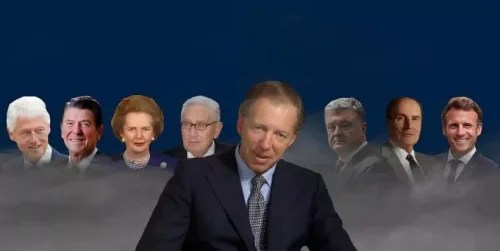
By Ilya Tsukanov – Sputnik – 15.09.2024
How powerful is the Rothschild banking family? How did they amass their fortune? Just how rich are they? Do they secretly control the world? Sputnik explores. … continue
Blog Roll
 Aletho News
- Europe facing gas price shock – Gazprom chief
- Ukraine continues recruiting people with disabilities
- Weaponized Journalism: 2021 Sayer Ji Interview with NPR
- Beyond Netanyahu: what Israel’s election means for Palestinians
- Lithuania plans universal conscription
- Lies, Damn Lies, and Ukraine News
- Financial Times rejects Nordic demands to correct Putin call story – media
- The Case for Less Unity in Europe
- Ukraine expands minority rights under EU pressure – but Russians remain excluded
- Albania takes anti-riot crackdown cue from France
- If Americans Knew
- An error has occurred; the feed is probably down. Try again later.
- No Tricks Zone
- Germany’s Green Energy Transition Becoming Increasingly Expensive…Another 6 Trillion Euros!
- Sudden Stratospheric Warming, Powerful El Niño Combination May Lead To Extreme Europe Cold, Energy Crisis!
- Two New Studies Find Thwaites Glacier Melt Cannot Be Driven By Human Activity Or A Warming Ocean
- E-Cars Reduce CO2 Emissions By Only 41% Compared To Internal Combustion Engine Vehicles
- Predictions Made By Renowned Climate Professor Over Past Decades Have Been Proven To Be Poor
- New Study Suggests Large Regions Of The Pacific Ocean Have Been Cooling For The Last 80 Years
- Germany’s Green Energy Debacle: High Energy Costs Force Kahla Porzellan to Close After 182 Years!
- New Study: 50 Years Of The Most Aggressive ‘Net Zero’ Policies Can Only Affect The Global Climate By 0.03°C
- US September “Heat” Was No Record…Many Records Set Decades Ago
- Latest European Green Energy Debacle; Portugal’s Largest Flagship Solar Park Insolvent!

