Controversy as New French Security Law Could Crack Down on Filming Police
Sputnik – 14.11.2020
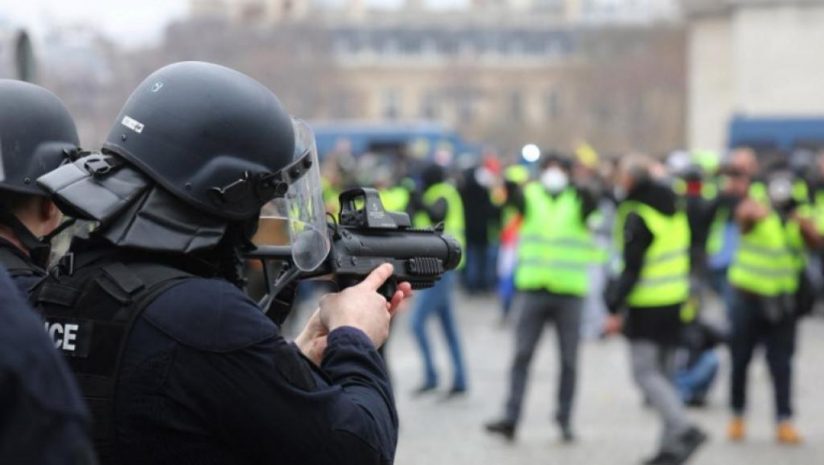
A proposed French law could see images of police officers restricted from circulation. While supporters claim it will only be used to crack down on cyberbullying of law enforcement, critics claim it could be a danger to freedom of the press.
Part of France’s new security bill would make it a criminal offense – under threat of punishment with one year in prison and a €45,000 fine – to spread images that harm “the physical or mental integrity” of law enforcement officers.
Stanislas Gaudon, who heads the police union ‘Alliance’, said on Friday that existing cyberbullying legislation does not currently provide effective protection for the police.
“The problem with those laws is that they can only be applied when the video is already online, but it’s too late, the damage is already done”, he said.
Gaudon said the new law should also make it “compulsory to blur police officers’ faces” in any videos distributed.
Article 24 of the law, which was first proposed La République En Marche (LREM) MP Jean-Michel Fauvergue, following lobbying pressure from Alliance.
Lawmakers supporting the bill stress that it is only intended to be used in response to “malicious” actions.
“The purpose is to forbid any calls for violence or reprisals against officers and their families in videos broadcast over social media” said LREM MP Alice Thourot while speaking to France Inter radio.
Critics of the legislation claim that it could be used to repress certain liberties. On November 8, around 30 members of France’s Society of Journalists issued an open letter denouncing the bill as a “threat to the freedom to report”.
Some 800 filmmakers and photographers sent their own letter, claiming that the proposed bill is equivalent to “censorship”. They cited that a prominent documentary on police violence, ‘Un pays qui se tient sage’ (A Wise Country) filmed amid the 2018-19 Yellow Vest demonstrations, would have been restricted from the airwaves.
Amnesty International has also said the French government would be in violation of the UN’s 1966 International Covenant on Civil and Political Rights, protecting freedom of expression, if the law were to pass.
“The bill is not precise enough,” said Cécile Coudriou, head of Amnesty France. “The notion of ‘malicious intentions’ is too broad. It doesn’t conform to the standards of international law”.
Those who oppose the law highlight examples where police brutality being broadcast through social media has aided in media and legal investigations into police violence.
On 5 January, Cédric Chouviat, a 42-year-old delivery driver in Paris died from a heart attack after being place in a chokehold by police. The event was seen in at least thirteen different videos from the victim, bystanders, and one of the officers involved.
Another example of social media footage bringing police violence to light is the filmed beating of Yellow Vest demonstrators by law enforcement in a Burger King in Paris in December 2018.
Entire social media is dominated by Zionists
By Kevin Barrett | Press TV | October 30, 2020
Instagram apparently has now unblocked the Supreme Leader of Iran’s account on Instagram after having blocked it due to the Supreme Leader speaking out about the censorship controversy in France.
It’s ironic, of course, that social media would be censoring people who speak out about a censorship controversy. But that’s where we are now in the Zionist-occupied West. You’re not even allowed to raise the topic of being censored. If you are censored and then you complain about being censored on a sensitive topic, they will censor your complaint, and nobody will ever even hear that you’ve been censored or what your argument is about it.
And this, in particular, seems to be the case with anybody who asks why it is that in a country like France, the leadership, namely Macron, seems to believe that it’s freedom of expression when you obscenely or pornographically incite violence by blaspheming and slandering and libeling a revered religious figure, in this case, the Prophet Muhammad, peace upon him. But it’s okay to imprison people and ruin their lives if they very calmly and compassionately and in a scholarly and academic manner question some of the victors’ history of World War Two.
Even raising this issue gets people censored. And it just happened to the Supreme Leader. And of course this is one reason that Press TV and other Iranian outlets, among many other world outlets, have been censored throughout social media. The entire social media is either owned or dominated by Zionists, as is the mainstream corporate media.
They don’t want anybody raising this gross contradiction in public. And the fact is that the reason that they won’t let you talk about this, just like the reason they won’t let you talk about World War Two victors’ history, is that the victors always write the history of every war and they always lie and they always exaggerate the crimes of their enemies and downplay their own crimes.
So the revisionists will probably win the argument. Those of us who’ve actually done some reading on the pros and cons of the World War II revisionist case—almost everybody who actually sits down and reads the books—ends up realizing that the revisionists are probably right about at least some of their claims. And that’s the reason we’re not allowed to talk about it. Because if this were debated freely and openly in a scholarly manner the revisionists would win, and the fundamentalist religion of Holocaust worship would disappear.
So, in France, we’ve got a censorship campaign censoring people who argue in a scholarly manner, but they protect “freedom of speech”—la liberté—of the people who blaspheme and use obscenity, pornography, libel, and incitement.
Now, this is exactly the opposite of the American First Amendment position. Here in the United States, we have a very well-developed jurisprudence of free speech under our First Amendment. And that jurisprudence has largely concluded that all serious arguments with social value are protected, but there are exceptions, including blasphemy, pornography, libel, and incitement.
The Zionists have managed to roll back some of that, and now some say that Zionist Supreme Court decisions have made pornography a protected category of speech. This is disgusting and insane. Blasphemy, obscenity, pornography, libel, and incitement are not protected speech and never will be. But apparently, in the Zionist world, those kinds of speech are the ones that you protect, while thoughtful academic scholarly speech investigating victors’ history and finding that it’s wrong deserves censorship. And the people, the scholars, and the historians who engage in that speech are routinely physically attacked, hospitalized, thrown in prison, their lives are ruined, all their books are suppressed. That’s freedom in the West today.
Dr. Kevin Barrett is an American author, journalist and radio host with a Ph.D. in Islamic and Arabic Studies. He has been studying the events of 9/11 since late 2003.
Cui bono from the situation in France
The Saker | October 29, 2020
I won’t even bother repeating it all here, those who are interested in my views of this entire Charlie Hebdo canard can read my article “I am NOT Charlie” here: https://thesaker.is/i-am-not-charlie/
No, what I want to do is to ask a simple question: do you think the French leaders are simply stupid, suicidal or naive? I submit that they neither stupid, nor suicidal nor naive. In fact, they are using a well practiced technique which goes with some variation of this:
- Infiltrate some pseudo-Islamic gang of cutthroats (literally!)
- Keep them under close scrutiny ostensibly for counter-terrorism purposes
- Inside the group, try to promote your confidential informers
- Have your analysts work on the following question: “how could we best provoke these nutcases into a bloody terrorist act?“
- Once the plan is decided, simply execute it, say by organizing the posting of fantastically offensive caricatures
- Once the cutthroats strike, blame Islam and double down
- By then, you have infuriated most of the immense Muslim world out there and you can rest assured that the process is launched and will continue on its own. You can now relax and get the pop-corn
- Have your propaganda machine declare that Islam is incompatible with western civilization (whatever that means in 2020, both Descartes and Conchita Wurst I suppose… )
- Shed some crocodile tears when the cutthroats murder some completely innocent Christian bystander
- And announce a new crusade against “Islamism” (also a vague and, frankly, meaningless term!) and crack down on true Muslim communities and ideas while continuing to lovingly arm, train, finance and direct the “good terrorists” who have now become your own, personal, cutthroats.
Cui bono?
Anybody who knows anything about the political realities in France will immediately know in whose interests this all is and who is behind that: the Zionist power structure in France (CRIF, UEJF, etc. and the Israelis). They have a total control over Macron and over the entire political class, very much including Marine LePen.
Who else could have concocted the “beautiful” term “Islamo-Fascisme“?!
This is a new phenomenon, a new ideology and a new strategy, which Alain Soral calls “National Zionism” which I discussed in some details here: https://thesaker.is/the-great-fraud-of-national-zionism/.
In its inception (from Ahad Ha’am, Theodor Herzl, Ze’ev Jabotinsky, etc) Zionism used to be a largely secular and nationalistic, then, later, after WWII, it became very leftist and still secular ( Ben-Gurion, Shlomo Lavi, Golda Meir). Modern Zionism, however, is both rabidly racist and religious – the perfect example would be US neocons. It is also a ruthless and genocidal ideology which has created something truly original: God-mandated racism, something which, as far as I know, no other religion professes (so much for the ignorant and, frankly, plain stupid notions of “Abrahamic religions” or, even worse, “Judeo-Christian values”!). National Zionism is the next phase of Zionism – it is rabidly “conservative” (in a Neocon sense only, of course!) and it parasitically feeds on whatever nationalist ideology the local patriotic goyim are inclined towards (the best example of that being the so-called “Christian Zionists” in the USA).
But here is the demonic “beauty” of it all: in a society like the French one, the Zionists don’t even need to micromanage their false flags: given enough uneducated and murderous pseudo-Muslim cutthroats and enough rabid secularists wanted to offend the faithful – some kind of violent explosion will *inevitably* happen!
Right now, between the embarrassing Yellow Vests movement, the crumbling economy, the massive influx, wave after wave, of unwanted and un-adaptable immigrants and the resulting social tensions, the French regime is in deep trouble. Add to this the COVID pandemic which just added to the chaos and anger and finish with a total lack of foreign policy successes and you will immediately see why this regime badly needed what could be called a “patriotic reaction”.
Finally, there is the time-proven method of scaring your own population into a state of catatonic acceptance of everything and anything in the name of “security”.
We see it all in France today, we saw it in the UK before, and also in Belgium. And, rest assured, we will see much more such massacres in the future. The only way to really stop these “terrorist” attacks is to show their sponsors that we know who they are and we understand what they are doing. Short of this, these attacks will continue.
Vaccines – Who Needs Them?
By David Macilwain | American Herald Tribune | October 28, 2020
It’s a serious question that few have asked, and there’s no clear answer. Up till this point in the Coronavirus play, discussion on vaccines has been limited to one perspective – how effective might they be, and how long before one is available. Thanks to the rigors of lock-downs and upending of society necessitated – we are told – by the need to avoid the virus and “save lives”, interest in a vaccine that might save us from this hell has been intense, not least amongst the shareholders of pharmaceutical companies vying for a share of the global market.
This massive financial interest, hardly denied even by those who claim philanthropic concerns are their real motivator, has nevertheless led to some perverse outcomes and corrupt manipulation. The suppression and distortion of the true worth of Hydroxychloroquine is the greatest crime amongst these, as its leading advocate – Professor Didier Raoult of Marseilles – continues to observe; a worth that has been demonstrated globally by those countries where it has been approved or prescribed.
It now appears almost beyond doubt that the campaign against the use of HCQ, driven by pharmaceutical companies and their agents in governments and institutions, is because of its efficacy in treating COVID 19 infections, and so taking away the market for both other drugs and for vaccines. Prof Raoult has made this claim – and allegation against the French government of serious negligence that has cost many lives – since April. But just last week the case has become a nationally significant conflict following the prohibition against Raoult’s Mediterranee Infection Institute on using Hydroxychloroquine/Azithromycin treatment for COVID patients.
Not only is this prohibition quite contrary to principles of care and the doctor-patient relationship, but Raoult’s record of success in treating patients with the protocol is undeniable, and proven by his results – out of nearly 9000 patients attending the Marseilles hospital, of which 5,800 were treated with the HCQ/AZM protocol, just 30 deaths were recorded. A regional health official and regional MP have now made official protests in support of Prof Raoult’s right to continue the treatment, as described in this interview as well as in a rather bad English translation.
Prof Raoult, who repeatedly notes that he cannot predict the future behaviour of the epidemic and the changes in the virus, but has unfailingly correctly forecast its progress and likely developments, has recently also made some highly pertinent observations on vaccines. Unlike many of those who are sceptical or opposed to vaccines, Prof Raoult’s reservations on a vaccine for SARS-CoV-2 are based on purely scientific observations of the behaviour of this virus and the particular characteristics of the infection it causes. Of these the most important feature is in the vastly different susceptibility of different age groups, which may be seen as a fatal weakness in the virus that can be exploited to defeat it.
The ability of younger people to “suffer” SARS-2 infection unscathed, and often without any symptoms – immunity effectively – forms the basis of the “Great Barrington Declaration” – a proposal for the safe development of natural immunity amongst the younger part of the population while older and more vulnerable people are isolated and protected. Although most sections of the health fraternity and mainstream media persist in wilfully ignoring this feature, instead emphasising all the cases of young and healthy people suffering serious illness or “long-Covid”, the statistics are unambiguous and unchanging since the start of the pandemic.
While sidestepping the claims in some quarters that no-one has actually died of COVID, because 99% of deaths are of people with some other serious illness, it is an incontrovertible fact that those who die from or with the Virus are overwhelmingly very old – and the majority in their eighties. The proportion of younger people developing serious illness or dying may be higher in some countries – notably in the US – where those age groups normally have greater morbidity from the diseases of affluence and indolence – diabetes, heart disease and obesity.
Importantly however, and regardless of these varying conditions, the apparent immunity of children to SARS-CoV-2 infection is most striking, and another “weakness” of the virus that may well play a part in limiting its dangers. This is yet another area on which Prof Raoult has focused in the past, when looking for an explanation for the relative immunity to the virus in adults under 50. He considers that children act as reservoirs or carriers of respiratory viruses and so may encourage generalised latent immunity in their parents to related Coronaviruses.
And it is the existence of this natural resistance to the novel Coronavirus which has important implications for the use of a vaccine, and whether its use will be justified or advantageous for some sections of the population, or even contra-indicated. The latter possibility, raised recently in a conversation with Prof Raoult, comes about because of the extremely low mortality from COVID 19 amongst younger people – rated at around 10,000 times lower than in those in their mid 80s – the predominant group of those dying with or from COVID.
Considering this feature of the epidemiology, he concluded that for a vaccine to be safe for younger people, it must be shown to cause lower mortality than the untreated viral infection. Clearly this applies to all age groups and all vaccines, if preventing deaths is their main function. And it is an ever more important consideration with many different types of vaccine now being developed and trialled, and with the possibility of unusual or unpredicted side effects.
Raoult concludes that if a vaccine is to be considered suitable for all, and including younger adults with a minimal chance of serious disease or death, then it must be safety tested on tens or hundreds of thousands of people, which is way beyond the limits currently imposed on potential vaccines thanks to the relative urgency and speed of their development. It is an exquisite irony that the prohibition of the literally life-saving drug Hydroxychloroquine has been based on claims of serious but extremely rare side-effects.
So what if the vaccine is only given to those at greater risk of death from SARS-2 infection, where the danger of vaccine side-effects is outweighed by the life-saving benefits? This may seem sensible, and is rather the practice with current flu vaccines, available free to the over 70s – but here a different factor comes into play. Vaccines mostly depend on the body to produce an immune response that will combat a subsequent viral infection, but this immune response gets weaker as you age. Consequently the benefits of vaccination are far less for older people, and marginal for those over 80 and with weakened systems – the very ones most likely to die following viral infection.
While this relative ineffectiveness of vaccines for the old gets little attention, it is often enough said that a vaccine may only be 50 – 60% effective, as if to avoid raising peoples’ expectations, but this is hardly a minor point. Who would drive a car whose brakes couldn’t always be relied upon, even if they knew it?
So I repeat the question – who actually needs a vaccine to protect them from contracting this not very dangerous respiratory virus? We can rule out anyone under the age of 30, whose chance of dying as a result of CV19 infection is less than 1 in 20,000. For those under 50 this chance may be around 1 in 5000, so a vaccine showing no deaths amongst 10,000 volunteers will have a marginal benefit for this group. In fact the only real benefit of vaccination against SARS-CoV-2 might be amongst those in their sixties and seventies, particularly if they have other serious health issues, or are more exposed to infection – as is the case for older health-care workers.
But there is another factor that comes into play here. In order to protect the most vulnerable sectors of the population from infection, a significant percentage of the whole population must be made immune, either from vaccination or from their natural immune reaction to infection. The current path being pursued is to prevent infection and natural immunity developing, so such levels of herd immunity can only be achieved by mass vaccination, subjecting half the population to unnecessary dangers from vaccine side effects.
It would seem hard to make a sound scientific case for such a policy, or an economic one – the cost of vaccinating millions or billions of people around the world is barely calculable. But what is a cost to governments and the taxpayers who support them is a benefit to the pharmaceutical industry and private health industry, and it appears as though they will be driving policy to suit their interests.
There is one last aspect to this question, which only further emphasises the point; the significantly lower death rate associated with the currently circulating strains of the virus. Whether the escalation in positive-testing case numbers is partly due to oversensitive tests, or previously unaccounted asymptomatic cases, associated deaths have barely risen, and remain below 1% of total infections – roughly one tenth of the mortality rate during the “first wave” in Europe.
If science were allowed to prevail, then it would follow the prescriptions of the Great Barrington Declaration, abandoning the great vaccination project and allowing “nature to take her course”. But clearly she will not be allowed to, in a way epitomised by the Indian Government’s announcement last week that all citizens will be vaccinated. This was accompanied by news that India’s rapidly climbing infection rate was levelling off – most probably because herd immunity levels are now being reached.
Insisting on insult, Macron opens floodgates for Muslim backlash
Press TV | October 26, 2020
Numerous Muslim states and peoples have denounced French President Emanuel Macron’s persisting support for blasphemy in his country against Prophet Muhammad (PBUH).
“We will not give in, ever,” Macron tweeted on Sunday. The tweet served to back up his earlier support for a French teacher’s displaying of cartoons insulting of the Prophet of Islam in his class under the pretext of “freedom of speech.”
“France will never renounce caricatures,” Macron had declared on Wednesday, defending the teacher for “promoting freedom.”
The teacher Samuel Paty was murdered by an 18-year-old Chechen assailant. Commenting on the attack, Macron described Islam as a religion “in crisis” worldwide, trying to suggest that the assailant had been motivated to kill the teacher by the faith rather than radicalism.
The comments have raised controversy and provoked a wave of criticism from the Muslim world.
On Sunday, the Persian Gulf Cooperation Council (GCC) described Macron’s position as “irresponsible,” and said it was aimed at spreading a culture of hatred among peoples.
Turkish President Recep Tayyip Erdogan, who had called on Macron to have his mental status examined for defending blasphemy, repeated the call on Sunday. Macron “is a case and therefore he really needs to have [mental] checks,” Erdogan said.
In a statement, Kuwait’s Foreign Ministry warned that attempts at linking Islam to terrorism “represents a falsification of reality, insults the teachings of Islam, and offends the feelings of Muslims around the world.”
Pakistani Prime Minister Imran Khan also hit out at Macron for “attacking Islam clearly without having any understanding of it.”
He urged the French president to rather address the marginalization and polarization that is being committed against minorities in France that “inevitably leads to radicalization.”
The Pakistani head of state also wrote to Facebook, asking the social media network to clamp down on Islamophobic content in the same way that it purges content aimed at skewing or denying the Holocaust.
He warned about a “growing” trend of Islamophobia throughout the platform among elsewhere, pleading with Facebook CEO Mark Zuckerberg, “I would ask you to place a similar ban on Islamophobia and hate against Islam for Facebook that you have put in place for the Holocaust.”
“One cannot send a message that while hate messages against some are unacceptable, these are acceptable against others,” Khan said, adding that this attitude was “reflective of prejudice and bias….”
Pakistan also summoned France’s ambassador and notified him about Islamabad’s protest at “systematic Islamophobic campaign under the garb of freedom of expression.”
Jordan’s Islamic Affairs Minister Mohammed al-Khalayleh said “insulting” prophets is “not an issue of personal freedom but a crime…,” and Morocco’s Ministry of Foreign Affairs said continuing publication of such “offensive” is an act of provocation.
Hamas and Hezbollah, respectively Palestinian and Lebanese resistance movements, have also condemned Macron’s position.
Hamas spokesman Sami Abu Zuhri said on Saturday that publishing the cartoons was “provocative to the feelings of the Islamic nation and an aggression on its religion and beliefs,” while Hezbollah said blasphemy did not categorize as “freedom of speech.”
Protests were, meanwhile, reported in the Gaza Strip, Syria, and Libya as well as elsewhere throughout the Muslim world.
Boycott spree
Many Muslim companies and associations, meanwhile, have stopped handling or serving French items in protest.
These have included the Al-Naeem Cooperative Society and the Dahiyat al-Thuhr association in Kuwait as well as the Wajbah Dairy firm and Al Meera Consumer Goods Company in Qatar. The Qatar University has also postponed a French cultural week.
Hashtags such as the #BoycottFrenchProducts in English and the Arabic #ExceptGodsMessenger trended across many countries, including Kuwait, Qatar, Palestine, Egypt, Algeria, Jordan, Saudi Arabia, and Turkey.
The French Foreign Ministry, however, reacted angrily to the bans.
“The calls for a boycott are groundless and must be stopped immediately, like all attacks against our country committed by a radical minority,” it alleged, trying to associate the protests with “radicalism.”
European hypocrisy: empty words for Palestine, deadly weapons for Israel
By Ramzy Baroud | MEMO | October 20, 2020
In theory, Europe and the United States stand on completely opposite sides when it comes to the Israeli occupation of Palestine. While the US government has fully embraced the tragic status quo created by 53 years of Israeli military occupation, the EU continues to advocate a negotiated settlement that is predicated on respect for international law.
In practice, however, despite the seeming rift between Washington and Brussels, the outcome is, essentially, the same. The US and Europe are Israel’s largest trade partners, weapon suppliers and political advocates.
One of the reasons that the illusion of an even-handed Europe has been maintained for so long lies partly in the Palestinian leadership itself. Politically and financially abandoned by Washington, the Palestinian Authority of Mahmoud Abbas has turned to the European Union as its only possible saviour.
“Europe believes in the two-state solution,” PA Prime Minister, Mohammad Ishtayeh, said during a video discussion with the European Parliament’s Committee on Foreign Affairs on October 12. Unlike the US, Europe’s continued advocacy of the defunct two-state solution qualifies it to fill the massive gap created by Washington’s absence.
Ishtayeh called on EU leaders to “recognize the State of Palestine in order for us, and you, to break the status quo.”
However, there are already 139 countries that recognise the State of Palestine. While that recognition is a clear indication that the world remains firmly pro-Palestinian, recognizing Palestine as a State changes little on the ground. What is needed are concerted efforts to hold Israel accountable for its violent occupation as well as real action to support the struggle of Palestinians.
Not only has the EU failed at this, it is, in fact, doing the exact opposite: funding Israel, arming its military and silencing its critics.
Listening to Ishtayeh’s words, one gets the impression that the top Palestinian official is addressing a conference of Arab, Muslim or socialist countries. “I call upon your Parliament and your distinguished Members of this Parliament, that Europe not wait for the American President to come up with ideas … We need a third party who can really remedy the imbalance in the relationship between an occupied people and an occupier country, that is Israel,” he said.
But is the EU qualified to be that ‘third party’? No. For decades, European governments have been an integral part of the US-Israel party. Just because the Donald Trump administration has, recently, taken a sharp turn in favour of Israel should not automatically transform Europe’s historical pro-Israel bias to be mistaken for pro-Palestinian solidarity.
Last June, more than 1,000 European parliamentarians representing various political parties issued a statement expressing “serious concerns” about Trump’s so-called Deal of the Century and opposing Israeli annexation of nearly a third of the West Bank. However, the pro-Israel US Democratic Party, including some traditionally staunch supporters of Israel, were equally critical of Israel’s plan because, in their minds, annexation means that a two-state solution would be made impossible.
While US Democrats made it clear that a Joe Biden administration would not reverse any of Trump’s actions should Biden be elected, European governments have also made it clear that they will not take a single action to dissuade – let alone punish – Israel for its repeated violations of international law.
Lip service is all that Palestinians have obtained from Europe, as well as much money, which was largely pocketed by loyalists of Abbas in the name of ‘State-building’ and other fantasies. Tellingly, much of the imaginary Palestinian State infrastructure that was subsidised by Europe in recent years has been blown up, demolished or construction ceased by the Israeli military during its various wars and raids. Yet, neither did the EU punish Israel, nor did the PA cease from asking for more money to continue funding a non-existent State.
Not only did the EU fail to hold Israel accountable for its ongoing occupation and human rights violations, it is practically financing Israel, as well. According to Defence News, a quarter of all of Israel’s military export contracts (totalling $7.2 billion in 2019 alone) is allocated to European countries.
Moreover, Europe is Israel’s largest trading partner, absorbing one-third of Israel’s total exports and shipping to Israel nearly 40% of its total import. These numbers also include products made in illegal Jewish settlements.
Additionally, the EU labours to incorporate Israel into the European way of life through cultural and music contests, sports competitions and in myriad other ways. While the EU possesses powerful tools that can be used to exact political concessions and enforce respect for international law, it opts to simply do very little.
Compare this with the recent ultimatum the EU has given the Palestinian leadership, linking EU aid to the PA’s financial ties with Israel. Last May, Abbas took the extraordinary step of considering all agreements with Israel and the US to be null and void. Effectively, this means that the PA would no longer be accountable for the stifling status quo that was created by the Oslo Accords, which was repeatedly violated by Tel Aviv and Washington. Severing ties with Israel also meant that the PA would refuse to accept nearly $150 million in tax revenues that Israel collects on behalf of the PA. This Palestinian step, while long overdue, was necessary.
Instead of supporting Abbas’ move, the EU criticized it, refusing to provide additional aid for Palestinians until Abbas restores ties with Israel and accepts the tax money. According to Axios news portal, Germany, France, the UK and even Norway are leading the charge.
Germany, in particular, has been relentless in its support for Israel. For months, it has advocated on behalf of Israel to spare Tel Aviv a war crimes investigation by the International Criminal Court (ICC). It has placed activists, who advocate the boycott of Israel, on trial. Recently, it has confirmed the shipment of missile boats and other military hardware to ensure the superiority of the Israeli navy in a potential war against Arab enemies. Germany is not alone. Israel and most European countries are closing ranks in terms of their unprecedented military cooperation and trade ties, including natural gas deals.
Continuing to make references to the unachievable two-state solution, while arming, funding and doing more business with Israel is the very definition of hypocrisy. The truth is that Europe should be held as accountable as the US in emboldening and sustaining the Israeli occupation of Palestine.
Yet, while Washington is openly pro-Israel, the EU has played a more clever game: selling Palestinians empty words while selling Israel lethal weapons.
Read also:
Zionist War on Palestinian Festival in Rome is Ominous Sign of Things to Come
US, Western intelligence services behind creation of Takfiri terrorist groups: Yemen leader
Press TV – October 19, 2020
The leader of Yemen’s Houthi Ansarullah movement has held the United States and Western intelligence services responsible for the creation of Takfiri terrorist groups, saying France’s external intelligence agency plays a significant role in this regard.
“Takfiris are supported by the US, France and Western countries. They are the parties that have stood by Takfiris to target Muslims as they massacre them. The United States and its allies in Syria, Yemen, and other countries are supporting Takfiris, because they are using the extremists to tarnish the image of Islam. Western intelligence agencies, including the one in France, are involved in monitoring and supporting them,” Abdul-Malik al-Houthi said at a televised speech broadcast live from the Yemeni capital of Sana’a on Monday evening.
Houthi also warned that distortion and misinterpretation of Islamic teachings have created a deep rift among Muslims and posed serious problems to them.
“Enemies have used such deviation to insult the Holy Qur’an and Islam. There is no mercy or sympathy whatsoever in the Western civilization. They trample on [the rights of] human societies, deprive people of their freedom, plunder their wealth and occupy their lands, and then lecture others on human rights,” he highlighted.
The Ansarullah chief then questioned Western states’ respect for human rights in Yemen, Palestine and other Arab and Muslim countries, saying US President Donald “Trump is proud that he is ready to give Arab lands to the [Israeli] enemy and expropriate them as he did in the Syrian Golan Heights. What sort of civilization is this?”
Houthi went on to say that insulting Islam is allowed while criticizing Zionists is prohibited in France and whoever does so will be brought to trial.
“In the West, on the other hand, you are allowed to insult Islam and prophets, become atheists and insult God. But you are not permitted to insult Zionists and stand up to them,” the Yemeni Ansarullah leader pointed out.
“In the world, there is a blatant and insulting attack on the Prophet [Muhammad (PBUH)], Islam and Muslims, and the campaign seeks to target our faith with the goal of cultural dominance,” Houthi noted.
The Ansarullah leader stressed that efforts are being made to turn Muslim nations into subordinates of the US, Western states and the Israeli regime.
“Plots aimed at enslaving and distancing us from our religious teachings and identity must not be accepted at all,” he said.
He then denounced French President Emmanuel Macron’s recent anti-Islam remarks as a form of hostility toward the Muslim world.
“France and the West are insulting Islam and the Prophet Muhammad (PBUH). At the same time, they are caring for Zionists and don’t stand any insults directed at them,” he said.
The Ansarullah leader finally held arrogant powers, led by the US and the Israeli regime, accountable for the sufferings of nations worldwide.
Macron’s Hypocrisy Is Typical of the Subservience to Israel By Most Western Leaders and Mainstream Media
By William Hanna | October 19, 2020
“The term does not necessarily signify mass killings . . . more often [genocide] refers to a coordinated plan aimed at destruction of the essential foundations of the life of national groups so that these groups wither and die like plants that have suffered a blight. The end may be accomplished by the forced disintegration of political and social institutions, of the culture of the people, of their language, their national feelings and their religion. It may be accomplished by wiping out all basis of personal security, liberty, health and dignity. When these means fail the machine gun can always be utilised as a last resort. Genocide is directed against a national group as an entity and the attack on individuals is only secondary to the annihilation of the national group to which they belong.”
Raphael Lemkin (1900-1959), Jewish Polish legal scholar who coined the term genocide
The decapitating in Paris of a French teacher who showed his pupils a caricature of the prophet Muhammad — from the satirical newspaper Charlie Hebdo — during a moral and civic education class discussion about freedom of speech, deserves to be unreservedly condemned by everyone. Extrajudicial executions are barbaric acts of extreme cruelty that violate international standards on human rights irrespective of where, or by whom, such heinous atrocities are committed.
While French President Emmanuel Macron was rightly justified in denouncing that barbaric attack, his comments about “ . . . freedom of expression, the freedom to believe or not believe,” was to say the least extremely hypocritical because in France, as in most other Western nations, freedom of expression — the freedom to hold opinions and to receive and impart information and ideas without interference by public authority and regardless of frontiers — is selective and has been criminalised when it involves criticism of Israel’s irrefutable crimes against humanity in the brutally and illegally Occupied Palestinian Territories.
While speaking at a dinner attended by Jewish leaders in February 2019, Macron claimed the surge in anti-Semitic attacks in France was unprecedented since World War Two and promised a crackdown including a new law to tackle hate speech on the internet; confirmed that France would be adopting the definition of anti-Semitism as set by the International Holocaust Remembrance Alliance (IHRA): and added that “anti-Zionism is one of the modern forms of anti-Semitism.” The World Jewish Congress welcomed Macron’s actions by asserting “this is just the beginning of a long road ahead. Adopting this definition of anti-Semitism must be followed by concrete steps to encode into law and ensure that this is enforced.”
Human rights activists consequently fear being unfairly branded as anti-Semitic because of their criticism of Israel for its occupation of territory internationally recognised as Palestinian; for its inhumane blockade of the Gaza Strip which has devastated the economy and caused unspeakable hardships in what is in effect the world’s largest prison; and for its perpetration of a genocide as defined by Raphael Lemkin who while managing to escape from the Nazis and save his own life, nonetheless lost 49 relatives in the Holocaust: a genocide which prompted the Jewish peoples’ commendable but sadly disregarded vow of “never again.”
Such disregard is the result of Zionism having hijacked and weaponised anti-Semitism and the Holocaust to silence any criticism of Israel’s crimes against humanity which spineless and unscrupulous Western leaders like Macron dismiss with the disingenuous soundbite of “Israel has a right to defend itself”: a right which apparently — according to the Western concept of impartial justice and equal rights for all humanity — is not applicable to the Palestinian people whom “God’s Chosen,” have frequently described as “animals” who have never actually existed as a people.
De-Arabizing the history of Palestine is another crucial element of the ethnic cleansing. 1500 years of Arab and Muslim rule and culture in Palestine are trivialised, evidence of its existence is being destroyed and all this is done to make the absurd connection between the ancient Hebrew civilisation and today’s Israel. The most glaring example of this today is in Silwan, (Wadi Hilwe) a town adjacent to the Old City of Jerusalem with some 50,000 residents. Israel is expelling families from Silwan and destroying their homes because it claims that King David built a city there some 3,000 years ago. Thousands of families will be made homeless so that Israel can build a park to commemorate a king that may or may not have lived 3,000 years ago. Not a shred of historical evidence exists that can prove King David ever lived yet Palestinian men, women, children and the elderly along with their schools and mosques, churches and ancient cemeteries and any evidence of their existence must be destroyed and then denied so that Zionist claims to exclusive rights to the land may be substantiated.
Miko Peled, Israeli peace activist and author
According to Miko Peled “Israel has been on a mission to destroy the Palestinian people for over six decades,” and he asked “why would anyone not give solidarity to the Palestinian people?” He also regarded Israel’s actions in the Six-Day War of 1967 as deliberate acts of aggression rather than a genuine response to a real threat; that “every single Israeli city is a settlement”; and that “expressing solidarity with Palestinians is the most important thing people can do.”
Expressing solidity with Palestinians, however, is a morally justifiable human right which Apartheid Israel has managed to suppress with the complicity of a US-led Western alliance of unprincipled bought and paid for political leaders like Macron aided by a mainstream media which while masquerading as the “the voice of the people,” actually consists of conglomerate-owned news outlets that have gutted newsrooms, abandoned the concept of investigative journalism, and replaced reporting of the true facts with shallow infotainment.
If President Macron and other spineless Western leaders of his ilk are genuinely concerned about the “surge in anti-Semitism,” they would do well to seriously consider the following warning by Yehoshafat Harkabi — Chief of Israeli Military Intelligence (1955-9) and subsequently a professor of International Relations and Middle East Studies at the Hebrew University of Jerusalem — who in his 1989 book, Israel’s Fateful Hour, called for Israel’s withdrawal from the occupied territories and warned that:
We Israelis must be careful lest we become not a source of pride for Jews but a distressing burden. Israel is the criterion according to which all Jews will tend to be judged. Israel as a Jewish state is an example of the Jewish character, which finds free and concentrated expression within it. Anti-Semitism has deep and historical roots. Nevertheless, any flaw in Israeli conduct, which initially is cited as anti-Israelism, is likely to be transformed into empirical proof of the validity of anti-Semitism. It would be a tragic irony if the Jewish state, which was intended to solve the problem of anti-Semitism, was to become a factor in the rise of anti-Semitism. Israelis must be aware that the price of their misconduct is paid not only by them but also Jews throughout the world. In the struggle against anti-Semitism, the frontline begins in Israel.
William Hanna is a London-based freelance writer on democracy and human rights and author of the recently published book, The Grim Reaper. Further information including book reviews, articles, sample chapters, videos, and contact details at: https://www.williamhannaauthor.com/
Popular protectionist policies in France could eventually lead to “Frexit”
By Paul Antonopoulos | October 15, 2020
The majority of French people say they are in favor of protectionism, according to the latest OpinionWay poll by Le Printemps de l’Économie and Inseec U. In fact, the figure has risen sharply since the beginning of the COVID-19 pandemic and the European Union’s weak response to external threats like Turkey. This is a fundamental trend that could lead to a referendum on France’s exit from the European Union.
According to OpinionWay polls, the share of French people in favor of protectionism has gone from 51% in March to 60% in September. The survey confirms the desire for protectionism in France, which has only been reinforced since the pandemic began. The survey shows that 60% of the French people questioned consider globalization as “a threat to France” and 65% believe that “France must protect itself more from the world today,” a level never observed since polling began
In the event of a major crisis, a country will first and foremost try to protect and supply its own population, even if it comes to the detriment of others. This was seen all across the European Union in the first months of the pandemic when most member states abandoned inter-European solidarity to the detriment of other member states. For example, in March, Germany banned the export of protective medical equipment at a time when France did not have enough.
As popularity for protectionism is increasing in France, according to the OpinionWay survey, support for free trade went down from 46% to 35%. Supporters of free trade try to pass off protectionism as authoritarianism and isolationism. However, during the Trente Glorieuses (The Glorious Thirty), which between 1945-1975 saw unprecedented economic growth and development in France, trade was carried out in a fair framework which limited distorted competition, unlike what happens with free trade.
The polls also show that the tide is turning for 18-24-year old’s, “traditionally known to be in favor of opening up to the world,” as Pierre-Pascal Boulanger, president and founder of Printemps, highlighted in the La Tribune article. “The gaps are narrowing sharply since now 44% of very young people are in favor of protectionism against 37% in March.”
Therefore, for all the rhetoric of European sovereignty by French President Emmanuel Macron, it means absolutely nothing as sovereignty can only be national. This year alone we saw Italy abandoned by its partners at the peak of the pandemic, while European Union member states still refuse to pass sanctions against Turkey despite its violations of Greek and Cypriot sovereignty, and constant threats of war.
Any European protectionist inclination is directly undermined by national interests. France is now beginning to prioritize its national interests over that of the European Union, especially with the Minister of the Economy, Bruno Le Maire, suggesting an implementation of a European carbon tax at its borders, something that Paris considers essential but which does not please Berlin.
The same thing could be seen concerning the taxation of GAFAM [Google, Amazon, Facebook, Apple and Microsoft]. The subject has been on the table for years but Germany is blocking taxes against GAFAM because the U.S. is its major trading partner and Berlin is afraid that Washington will retaliate by taxing imported vehicles which would hurt the German economy.
An Elabe poll released on February 12 showed that 80% of the French people questioned were opposed to a new duel between Macron and opposition leader Marine Le Pen in the 2022 elections. However, recent opinion polls show that the two candidates are indeed neck-to-neck and marginally ahead of other opponents. However, the European question encompasses all political and economic dimensions and must be put at the center of discussions. The European question goes beyond the left-right divide and a referendum on France’s exit from the European Union may be at the heart of the political debate. It will blur the ideological divides as people from different political positions would campaign for a “yes” or “no” vote, as we saw with Brexit.
Nigel Farage, leader of the Brexit Party and considered the great architect of the UK’s exit from the European Union, has never won the general elections. But he put such pressure to obtain a referendum and succeeded in creating a real debate on the question of sovereignty and protectionism.
The Brexit referendum has shown that it is possible. If a similar debate can get into the French spotlight, strong Frexit sentiment can build off the back of increasing popularity in protectionist policies. The French in 2005 voted against the treaty to establish a European constitution despite all predictions it would be unanimously passed. Although detached from the European Union, the French also withdrew from NATO for several decades, demonstrating there is a high sense of independence and sovereignty in France.
With Brussels unwilling to take a strong position against external threats like Turkey and/or showing a lack of solidarity when the pandemic was spreading across the continent, France’s possible exit from the European Union can build momentum and popularity.
Paul Antonopoulos is an independent geopolitical analyst.
More on the Anti-Semitism Scam: Jewish Students Get Protected Status
By Philip Giraldi | American Herald Tribune | October 10, 2020
In both the United States and Europe there has been an increase in the passage of laws that are intended to protect Jews. Indeed, one might say that one of the few growth industries in Donald Trump’s United States has been the protection of Jewish citizens and their property from a largely contrived wave of anti-Semitism that is allegedly sweeping the nation. Even while potentially catastrophic developments both in the Middle East and the United States continue to unfold, the threat of anti-Semitism continues to find its way into much of the news cycle in the mainstream media.
A survey conducted last month in all fifty states was released with the headline “First-Ever 50-State Survey On Holocaust Knowledge Of American Millennials And Gen Z Reveals Shocking Results. Disturbing Findings Reveal Significant Number Of Millennials And Gen Z Can’t Name A Single Concentration Camp Or Ghetto, Believe That Two Million Or Fewer Jews Were Killed And A Concerning Percentage Believe That Jews Caused The Holocaust.”
The survey is based on the premise that detailed knowledge of the so-called holocaust should be an essential part of everyone’s education. Currently, 12 states already require holocaust instruction in their public school curricula, though that includes five of the six biggest states, and recently passed federal legislation will eventually fund holocaust education everywhere in the U.S. But, of course, the real back story that one must not mention is that the standard holocaust narrative is at least as much fiction as fact and it is employed regularly to create special benefits and protections for both Jews in general and also for the State of Israel. That is why the usual sources in the media become outraged whenever it seems that the propaganda is not effective.
The ignorance of the holocaust story inevitably received wide play in the mainstream media but there are a number of things that all Americans should know about the anti-Semitism hysteria that drives the process. First of all, the extent to which there is actual anti-Semitism and the background to many of the incidents has been deliberately distorted or even ignored by the press and by the government at all levels. Anti-Semitism is hatred of Jews for either their religion or their ethnicity, but many of the so-called anti-Semitic incidents are actually related to the policies advanced by the state of Israel. Organizations like the Anti-Defamation League (ADL), which have a vested interest in keeping the number of anti-Semitic incidents high, deliberately conflate the two issues in their reports.
In its 2018 report, ADL reported “1,879 acts,” in the United States during the course of the year. It is not a particularly large number given the size and population of the U.S. and also with respect to what is included. There were certainly some physical attacks, including two shooting incidents at synagogues in Pittsburgh and Poway, but most of the incidents were much less kinetic, including shouting and name calling on university campuses between groups supportive of and opposed to Israel’s repression of the Palestinians.
Europe is way ahead of the game when it comes to punishing so-called holocaust denial or anti-Semitism, which now includes any criticism of Jews and/or of Israel. As one critic put it, Europeans generally can exercise something like free speech, but the speech is limited by certain rules that must be observed. Three weeks ago, the French nationalist writer and critic of Jewish power Hervé Ryssen was jailed for the fifth time for the crime of “hate speech.” He faces up to 17 months in prison for having been found guilty of “…insult, provocation, and public defamation due to origin, ethnicity, nationality, race, or religion.” In 2016 he was imprisoned for 5 months, in 2017 for 6 months and in 2018 for one year on similar charges. He also had to pay a 2000 Euros fine to the National Bureau of Vigilance Against Anti-Semitism. In January 2020, Ryssen was found guilty of “contesting the existence of crimes against humanity,” i.e. questioning the so-called holocaust which labels him as a négationniste, a “holocaust denier.”
Ryssen has written numerous books on Jewish power in Europe and on Israel. His scholarship has rarely been questioned, but his willingness to speak out sometimes boldly on issues that are forbidden has put him in prison more often than not. Curiously, the French law against vilifying ethnic groups and religions has de facto only rarely been applied to protecting either Christians or Muslims. Satirical magazine Charlie Hebdo continues to “blaspheme” against both religions without any intervention from the authorities, but it is careful not to make fun of Jews.
The United States is clearly moving in the direction of France, at least insofar as the Jewish community and Israel are concerned. But it is also refreshing to note that a revived progressive wing of the Democratic Party is engaging in a bit of pushback. Three weeks ago, 162 Democratic congressmen plus one Republican and one independent actually voted against an amendment intended to “Protect Jewish Students from Antisemitism at School.”
The vote took place on Sept. 16th, and was over a Republican proposed amendment to the Equity and Inclusion Enforcement Act (H.R.2574). The amendment designated anti-Semitism to be a form of discrimination included in the bill and would allow private citizens to file lawsuits claiming damages under the Civil Rights Act’s Title VI, focusing particularly on education programs. In spite of the considerable level of opposition, unfortunately the amendment still passed by a vote of 255 to 164.
According to the Concerned Women for America (CWA), a group that lobbied for the added language, “The amendment ensures that recipients of federal education funding act against anti-Semitism in our communities. The Boycott, Divestment, and Sanctions movement (BDS) on college campuses is one of the ways such discrimination is being displayed.” The bill allows suits directed against any program receiving federal money if it can be claimed that one is the victim of discriminatory practices that negatively affect a protected class more than another class. Previously, the protected classes were identified as “race, color, or national origin,” but Jews and, by extension, Israel are now also protected. The specific additional language that was inserted was: “In carrying out the responsibilities of the recipient under this title, the employee or employees designated under this section shall consider antisemitism to be discrimination on the basis of race, color, or national origin as prohibited by this title.”
In practice, the new legislation will mean that Jewish students or their families or proxies can use Civil Rights legislation to sue educational institutions if they are made uncomfortable by the presence of critics of Israel. The real targets are groups like BDS, which have obtained some traction on university campuses and have been targeted by both the Israeli government and domestic Israel Lobby organizations. But, of course, the real danger is that once protected status is granted to one chosen group that promotes the interests of a foreign government there is no control over how “hate speech” will be defined and the consequences for American fundamental liberties will be catastrophic, moving far closer to the European model of freedom limited by “rules.”
Featured Video

The American Retreat from Vietnam
or go to
Aletho News Archives – Video-Images
From the Archives
Iran UN ambassador calls for destruction of all nuclear weapons
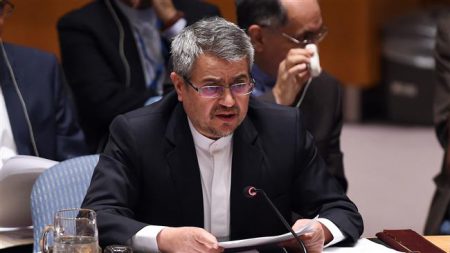
Iran’s ambassador to the UN Gholamali Khoshroo
Press TV – March 29, 2017
Iran’s ambassador to the UN Gholamali Khoshroo has called for the total eradication of nuclear weapons.
Khoshroo reiterated Iran’s call during a UN conference aimed at creating a nuclear weapons ban treaty in New York on Tuesday.
“Iran, as a victim of chemical weapons, strongly feels the danger posed by the existence of weapons of mass destruction and is determined to engage actively in international diplomatic efforts to save humanity from the menace of nuclear weapons,” he said.
Khoshroo stressed that Iran is committed to its Non-Proliferation Treaty (NPT) obligations, which include negotiations based on effective nuclear disarmament measures.
He added that several countries continue to ignore international calls and treaties for nuclear disarmament and even continue to increase their nuclear stockpiles. “They do not have political determination to abandon doctrines of nuclear deterrence and nuclear terror,” he went on to say.
Iran’s UN ambassador noted that boycotting the talks by many countries, including the US, shows that the world’s nuclear powers are by no means committed to the eradication of nuclear arms. Britain and France were also among the some 40 countries that did not join the talks.
“We note that prohibition of nuclear weapons must be accompanied by the elimination of such weapons. There can be no doubt that without complete abolition of nuclear weapons, there will be no absolute guarantee against the danger of nuclear war and the use of such weapons,” Khoshroo added.
Blog Roll
 Aletho News
- India signals rethink over West Asia
- Israeli Ex-Navy Chief admits massive damage from Iran missiles
- The strategic arsenal US lost in war against Iran – and why replenishment will take years
- Documents Suggest Fauci Knew COVID Was Created in Wuhan Lab, and mRNA Vaccines Wouldn’t Work
- No return to pre-war status for Strait of Hormuz – Iran’s top diplomat
- Ex-South Korean President sentenced for trying to provoke conflict with Pyongyang
- US publishes docs on ‘dangerous’ Ukrainian biolabs
- Trump’s ERAM cruise missiles for Ukraine blow up his peace overtures to Russia
- EU state lifts arms embargo on Israel after spy scandal
- French watchdog reveals Israeli propaganda firm meddled in New York, Scottish, African elections
- If Americans Knew
- US-Iran ceasefire may be imminent, but will Israel blow it up? – Daily Update
- The Issue of Israel Is Ending Democracy In Michigan
- Israel is stealing homes, livelihoods, and lives in West Bank
- Gaza is not an aberration – Israel planned this genocide decades ago
- Israel is changing the face of Lebanon, mainstream media is normalizing it – 3 articles
- Genocide lobby benefits from EU anti-racist fund
- Watching the World Cup from Gaza
- Israel to Blame for 56% of 22,600+ Civilians Killed by Explosive Weapons Globally Last Year
- Tucker Carlson and John Mearsheimer on Gaza, Ukraine, Iran, Russia & a Potential Nuclear Strike
- 88 attacks against Palestinian Christians recorded since start of year
- No Tricks Zone
- New Study: Significant CO2 Fluxes From Non-Volcanic Sources Are Largely Neglected In Carbon Budgets
- Women Climate Scientists Being Harassed, Insulted By Skeptics, Claims Berkeley Earth Researcher
- Germany’s Longterm Spring Climate Data Show “No Climate Trend”
- New Study: Solar Photovoltaic, Wind Power Fail To Meet Annual Energy Demands 62% Of The Time
- Germany’s Die Welt: “Too Much Is Too Much” … Green Energies Are Cannabalizing Each Other!
- Germany’s Ecological Holocaust… Once Fairy Tale Forests Getting Cleared For Wind Turbines
- A Grand Solar Minimum Has Arrived…Global Cooling Of At Least 1°C Is Expected By The 2030s, 2040s
- European “Expert Commission” Urges COVID-19-Like Global Climate State Of Energency!
- Real-World Observations Do Not Support The Position That Climate Change Is Human-Caused
- Germany’s AfD Party Calls Debunked Climate Scenarios “Greatest Fraud In Human History”
 Aletho News