AfD politician speaks out against arming Ukraine
By Lucas Leiroz | June 19, 2023
Berlin is one of the biggest supporters of Kiev’s neo-Nazi regime, sending money and weapons in large sums so that the anti-Russian war machine remains active. However, not all German politicians seem to follow this bellicose mentality. In a recent speech in the German Parliament, an opposition deputy made clear his dissatisfaction with the current policy of sending weapons to Ukraine, showing that there is still a realistic and rational approach among local representatives.
The criticisms were made by Markus Frohnmaier, a deputy linked to the right-wing Alternative for Germany (AfD) party. He questioned in his speech Germany’s real aims with its funding of Ukrainian activities. Frohnmaier classified Berlin’s policy as “carefree” and claimed that the people would be “fed up” with the irresponsible measures taken by the government. He also emphasized that Germans do not want to “pay for Kiev forever”.
The main targets of Frohnmaier’s criticism were German Foreign Minister Annalena Baerbock and Economic Affairs Minister Robert Habeck. The legislator even ironically questioned whether they were “Germans or Ukrainians”, in addition to mocking the names of the officials, mixing them with the names of Ukrainian political figures:
“Are you [Robert Habeck] the German or Ukrainian Minister of Economy? (…) This government, these Bandera-Baerbocks, these Volodymyr Habecks, these foreign administrators, they don’t give a damn about Germany”, he said.
Indeed, the parliamentarian’s targets are justified, considering the intensity with which both German officials work in defense of the interests of NATO and its proxy neo-Nazi regime. Annalena Baerbock has been one of the most prominent anti-Russian activists since the start of the special military operation, even going so far as to say that the European Union was “at war with Russia” during a speech in January. She has also been an emphatic instigator of war against Moscow, using her role as head of German diplomacy to encourage neutral countries to adopt anti-Russian measures, as seen in her recent visit to Brazil.
In the same vein, Robert Habeck’s administration has been disastrous. Prioritizing a liberal ideological agenda over the country’s strategic interests, Habeck has been one of those most responsible for the economic and energy crisis that hit Germany, in addition to being seen with strong opposition by the local population. He is, for example, the author of the unpopular proposal to replace oil and gas heating systems by green sources – a project that simultaneously meets the Western radical environmentalist plans and the anti-Russian agenda, as it endorses the end of energy cooperation between the two countries. A recent survey showed an 80% rejection to Habeck’s proposal among Germans, which shows how local people see his administration.
So, considering these facts, it is really justified for the AfD’s deputy to criticize the officials and denounce the government’s subservience to Ukrainian and Western interests. Germany has been one of the countries most affected by the diplomatic crisis that currently marks relations between Russia and the West, which is why it is urgent that there be a reconsideration of Berlin’s policy concerning its support for Ukraine.
One of the parties that has worked most in favor of these changes has been precisely the AfD. As well as Markus Frohnmaier, there are other party members who advocate a sovereign policy for Germany. As a party linked to the so-called “Eurosceptic movement”, the AfD strives to pressure the government to prioritize national interests over EU and US, which has driven a quest to improve ties with Russia.
For example, in September last year, the AfD sent a delegation of five affiliated politicians to visit Russia, including the four reintegrated regions, in a gesture of diplomatic goodwill in opposition to the hostility of the German state. As expected, these measures were enough for the mainstream media to describe the organization as “pro-Russia” and inaccurately accuse it of spreading “Kremlin propaganda“. The AfD is also often referred to as “right-wing extremist” because of its Eurosceptic stance, while ironically the Ukrainian neo-Nazism remains fully supported by the German government.
A curious fact is that this realistic and diplomatic approach that has been adopted by the AfD has contributed a lot to the increase in the party’s popularity. In a recent poll, the number of respondents saying that they would never vote for AfD dropped from 60% to 53.9%. The same survey also showed a drop in the preference for the Greens (a pro-government party to which both Baerbock and Habeck belong), who are in their worst position in the popularity ranking in five years. In practice, the numbers show that the more pro-war and anti-Russian politicians are, the less the German people support them.
In fact, despite popular support for rational and friendly relations with Russia, Berlin is strongly coerced by the US to act in a subservient way. The inertia of the country’s authorities in the face of evidence of American responsibility for the attack on the Nord Stream is a clear example of how Germany is currently not a truly sovereign state. However, the growth of a realistic and Eurosceptic mentality shows that changes can occur in the near future, generating hope for the local people.
Ukraine drone attack on Russian oil pipeline to EU failed, official says
RT | June 17, 2023
Ukrainian drones have attempted to strike the Druzhba pipeline that delivers Russian oil to several European countries, Bryansk Region governor Alexander Bogomaz has said. He added that the attack was thwarted by Russian air defenses.
On his Telegram channel on Saturday, Bogomaz wrote: “Last night, air defense units of the Russian armed forces… repelled the Ukrainian military’s attack on the oil-pumping station ‘Druzhba’.” According to the official, a total of three UAVs were brought down.
Last month, the Washington Post claimed, citing leaked Pentagon documents, that back in February Ukrainian President Vladimir Zelensky had suggested to Deputy Prime Minister Yulia Sviridenko that Kiev “should just blow up the [Druzhba] pipeline,” which pumps oil to Hungary and other states.
According to the report, Zelensky described the destruction of “Hungarian [Prime Minister] Viktor Orban’s industry” as one of his goals.
While Zelensky dismissed the allegations as “fantasies,” Hungarian Foreign Minister Peter Szijjarto several days later accused Kiev of “virtually attacking Hungary’s sovereignty” by supposedly plotting to undermine the security of Budapest’s energy supply.
Around that same time, a loading station of the Druzhba oil pipeline in Bryansk Region was shelled by Ukrainian forces, with three fuel storage tanks, all of them empty, damaged as a result.
In March, Transneft, the pipeline operator, reported that several drones had dropped explosives in the vicinity of an oil-pumping station. Multiple incidents of shelling had taken place before that as well.
The Druzhba (Friendship) pipeline is one of the largest oil-transport networks in the world, spanning some 4,000 kilometers (2,485 miles) and transporting oil from Russia to Ukraine, Belarus, Poland, Hungary, Slovakia, the Czech Republic, Austria and Germany.
Bryansk Region, which is adjacent to Ukraine, has repeatedly been targeted by cross-border strikes.
In March, a Ukraine-based neo-Nazi unit conducted a sortie into the region.
Anglo-Saxons control collective West – Moscow
The US and the UK strong-arm their own followers, Russian FM Lavrov has said.
RT | June 16, 2023
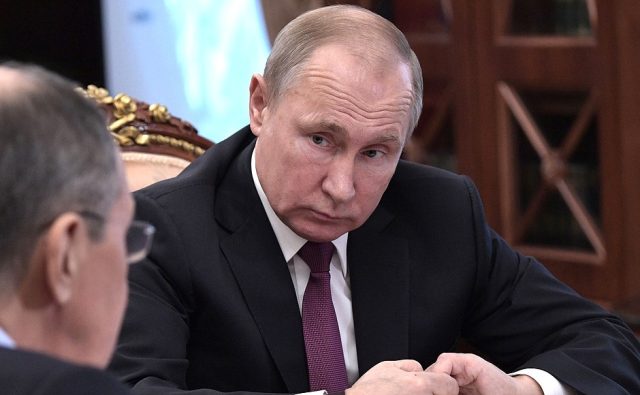
London and Washington run the show in the “rules-based world order,” trying to dictate policy to their own allies as well as countries outside the West, Russian Foreign Minister Sergey Lavrov told RT on Friday.
Russia fully understands that building relations with other countries needs to be based on mutual benefits and equal partnerships, Lavrov said in an interview with RT at the St. Petersburg International Economic Forum (SPIEF).
“This is not what we see in the West these days. The Anglo-Saxons are basically running the show, controlling the rest of the collective West. They are using the current situation, which they created through Ukraine – this war against Russia – to remove competition,” Lavrov elaborated.
“They see us as a competitor, they see China as a competitor. Their doctrinal documents clearly state that. But they are also removing their competition in continental Europe. It’s obvious. The economic and social processes in Germany are grim. Other countries are not much better off,” the Russian foreign minister added.
The only Western state benefiting from the current situation is the US, Lavrov said, “and the UK is always somewhere around, helping America reach its selfish goals.”
According to Lavrov, the “Anglo-Saxons and their allies” are currently trying to pressure countries around the world to side with them against Russia, including the Arab world, using methods he can only describe as “rude.”
“You see, when they talk about these ‘rules’ on which the international order must be based, what they really mean is their diktat,” Lavrov told RT. “Colonial instincts – live at the expense of others. Nothing else.”
Lavrov took particular exception to Western proclamations that their support for Kiev is “defending democracy” and that Ukraine is fighting for “Western values” in the conflict with Russia.
“First of all, if they really see it that way, I cannot but be convinced that they are holding on to Nazi views. Because saying that Western values are being protected in Ukraine is the same as saying that Nazism is your mode of existence,” the diplomat told RT. As for democracy, he added, “they only speak about democracy when they teach others how to live,” but not when it comes to respecting the sovereign equality of other states, per the UN Charter.
New German initiative to combat heat wave deaths: phone old people, remind them to drink water
eugyppius: a plague chronicle | June 14, 2023
“We have to admit that we’re not well prepared to prevent heat deaths in Germany,” former virus pest and enduring political clown Karl Lauterbach declared yesterday. The German Health Minister has announced he will develop a plan to combat summer heat deaths in consultation with various healthcare experts. Envisioned is a system whereby summer temperature spikes trigger protective measures depending on their severity. “For example” – and I swear this is a real line in the linked Tagesschau article and not something I am just making up – “elderly people would be called and warned of the heat and reminded to drink regularly.” As if to further emphasise the poverty of his ideas, Lauterbach says he’ll also consider opening “cold rooms” and “free water dispensers,” as well as funding an app to provide nebulous “information.”
The Corona parallels here are clear, and they go much deeper than the failed 223-Million Euro boondoggle known as the Corona-Warn-App. The truth is that the world lost its mind over a not-very-dangerous virus, and to justify the disproportionate response, our policymakers and the gatekeepers of our public discourse responded not by backing off, but by dialling acceptable standards of risk downwards. They’ve now brought them so low, that even hay fever is sufficient to trigger official mask recommendations.
Hot summer weather, an unremarkable fact of life before 2020, kills primarily the extremely old and sick. These aren’t people who have forgotten to drink water. At any given moment, thousands and thousands are near death, and an increase in environmental stress will push some of them over the edge. Nobody who dies in a heatwave has a long, prosperous life ahead of himself, and vanishingly few of these deaths are even ascribed to the heat by their doctors. They’re determined retrospectively, in excess mortality tabulations.
The familiar rhetorical strategies, honed in the great virus panic of 2020, are back for Lauterbach’s latest circus. First is the reliance upon seemingly appalling yet isolated numbers. “Last year alone there were more than 4,500 deaths” from summer heat, Tagesschau reports, and “In the three summers between 2018 and 2020, more than 19,000 Germans died.” I despair of the media ever reporting death numbers correctly. In 2022, for example, an average of over 2,900 people died in Germany every day. A few thousand excess heat deaths, in this context, is a pretty small number.
Then there’s the attempt to take a quite confined and localised risk and generalise it as widely as possible. “Heat waves don’t only endanger the elderly,” says Tagesschau with very little basis. “Pregnant women, newborns and small children” and “people who work outdoors” are also threatened. Tagesschau naturally can’t be bothered to quantify how many children die of the heat or cite any specific statistics at all; as in the pandemic, risks can be exaggerated freely, but to delimit them you need studies.
Green Party Headquarters’ Heat Pump Debacle: 5 Million Euros Cost, Still No Heat!
By P Gosselin | No Tricks Zone | June 13, 2023
The energy follies of Germany’s current Socialist/Green government continue to compound unabated. It turns out the coalition partner Greens cannot even get renewable energy to work at their own party headquarters in Berlin.
How can the Greens demand everyone else convert to a heat pump when they can’t even get their own to work?
While the Greens of the Socialist-Green coalition government are pushing to ban fossil fuel furnaces from every home and building in Germany and forcing them to install heat pumps in their place, it has emerged that the Greens themselves cannot even manage to get their own heat pump up and running at their Berlin party headquarters! Oh, the irony.
According to media outlets, the Green Party headquarter in Berlin-Mitte has been a big messy heat pump construction jobsite “for years” – since 2019. Costs have run into the millions!
And still no heat after 5 million euros in costs
“Here at the Green Party headquarters in Berlin, construction has been going on for years. The heat pump is still not running,” reports RTL.
“The Greens are experiencing first-hand how complicated it is to heat an old building with a heat pump,” RTL continues. “The renovation costs a total of five million euros. The heat pump is there, but does not heat.”
Refuse to learn from their own debacle
Der Spiegel reports on the heat pump debacle and how “heating the old building in a renewable way is not that easy”.
Apparently the work is far more complicated than the Greens previously thought as the project entails major renovation works, excavation, permits, expert personnel and special equipment. And now after having endured the construction, installation and cost woes for years, it remains a mystery today why the Green Party would want the rest of the country to experience the same nightmare.
Dragging on for years, costing millions
“In 2019, the Greens, chaired by Annalena Baerbock and Robert Habeck, decided to rebuild their party headquarters in Berlin and modernize it in terms of energy, reports RND news. “The gas boiler in the party’s old building was to make way for a modern heat pump, among other things. However, the measures were not carried out quickly, and have been dragging on for three and a half years, as the news magazine Spiegel reported. So this is not exactly a showcase example for quick and unbureaucratic energy-efficient renovation. Doesn’t the transition to renewable energies and heating demanded by the Greens even work within the party headquarters’ own four walls?”
The Greens have become the country’s number one laughing stock. Little wonder they’ve lost almost half of their supporters over the recent months.
Why Everything You Know About World War II Is Wrong
Interview with Ron Unz and Mike Whitney • June 12, 2023
“Much of the current political legitimacy of today’s American government and its various European vassal-states is founded upon a particular narrative history of World War II, and challenging that account might have dire political consequences.” — Ron Unz
Let’s start with Hitler. In the West it is universally accepted that:
- Hitler started WW2
- Hitler’s invasion of Poland was the first step in a broader campaign aimed at world domination
Is this interpretation of WW2 true or false? And, if it is false, then—in your opinion—what was Hitler trying to achieve in Poland and could WW2 have been avoided?
Ron Unz—Until the last dozen years or so, my views on historical events had always been fairly conventional, formed from the classes I’d taken in college and the uniform media narrative I’d absorbed over the decades. This included my understanding of World War II, the greatest military conflict in human history, whose outcome had shaped our modern world.
But in the years after the 9/11 Attacks and the Iraq War, I’d grown more and more suspicious of the honesty of our mainstream media, and begun to recognize that history books often merely represent a congealed version of such past media distortions. The growth of the Internet has unleashed a vast quantity of unorthodox ideas of all possible flavors and since 2000 I’d been working on a project to digitize the archives of our leading publications of the last 150 years, which gave me convenient access to information not easily available to anyone else. So as I later wrote:
Aside from the evidence of our own senses, almost everything we know about the past or the news of today comes from bits of ink on paper or colored pixels on a screen, and fortunately over the last decade or two the growth of the Internet has vastly widened the range of information available to us in that latter category. Even if the overwhelming majority of the unorthodox claims provided by such non-traditional web-based sources is incorrect, at least there now exists the possibility of extracting vital nuggets of truth from vast mountains of falsehood. Certainly the events of the past dozen years have forced me to completely recalibrate my own reality-detection apparatus.
As a consequence of all these developments, I published my original American Pravda article a decade ago, which contained that passage. In that article I emphasized that what our history books and media told us about the world and its past might often be just as dishonest and distorted as the notorious Pravda of the vanished USSR.
- Our American Pravda
Ron Unz • The American Conservative • April 29, 2013 • 4,500 Words
At first, my focus had been on more recent historical events, but I soon began doing a great deal of reading and investigation into the history of World War II as well, gradually realizing that a large fraction of everything I’d always accepted about that war was completely incorrect.
Perhaps I shouldn’t have been too surprised to discover this. After all, if our media could lie so blatantly about events in the here and now, why should we trust it on matters that had happened long ago and far away?
I eventually concluded that the true history of World War II was not only quite different from what most of us had always believed, but was largely inverted. Our mainstream history books had been telling the story upside-down and backwards.
With regard to Hitler and the outbreak of the war, I think an excellent starting point would be Origins of the Second World War, a classic work published in 1961 by renowned Oxford historian A.J.P. Taylor. As I described his conclusions in 2019:
Hitler’s final demand, that 95% German Danzig be returned to Germany just as its inhabitants desired, was an absolutely reasonable one, and only a dreadful diplomatic blunder by the British had led the Poles to refuse the request, thereby provoking the war. The widespread later claim that Hitler sought to conquer the world was totally absurd, and the German leader had actually made every effort to avoid war with Britain or France. Indeed, he was generally quite friendly towards the Poles and had been hoping to enlist Poland as an ally against the menace of Stalin’s Soviet Union.
The recent 70th anniversary of the outbreak of the conflict that consumed so many tens of millions of lives naturally provoked numerous historical articles, and the resulting discussion led me to dig out my old copy of Taylor’s short volume, which I reread for the first time in nearly forty years. I found it just as masterful and persuasive as I had back in my college dorm room days, and the glowing cover-blurbs suggested some of the immediate acclaim the work had received. The Washington Post lauded the author as “Britain’s most prominent living historian,” World Politics called it “Powerfully argued, brilliantly written, and always persuasive,” The New Statesman, Britain leading leftist magazine, described it as “A masterpiece: lucid, compassionate, beautifully written,” and the august Times Literary Supplement characterized it as “simple, devastating, superlatively readable, and deeply disturbing.” As an international best-seller, it surely ranks as Taylor’s most famous work, and I can easily understand why it was still on my college required reading list nearly two decades after its original publication.
Yet in revisiting Taylor’s ground-breaking study, I made a remarkable discovery. Despite all the international sales and critical acclaim, the book’s findings soon aroused tremendous hostility in certain quarters. Taylor’s lectures at Oxford had been enormously popular for a quarter century, but as a direct result of the controversy “Britain’s most prominent living historian” was summarily purged from the faculty not long afterwards. At the beginning of his first chapter, Taylor had noted how strange he found it that more than twenty years after the start of the world’s most cataclysmic war no serious history had been produced carefully analyzing the outbreak. Perhaps the retaliation that he encountered led him to better understand part of that puzzle.

Numerous other leading scholars and journalists, both contemporaneous and more recent, have come to very similar conclusions, but they too often suffered severe retaliation for their honest historical assessments. For decades William Henry Chamberlin had been one of America’s most highly-regarded foreign policy journalists, but after he published America’s Second Crusade in 1950, he vanished from most mainstream publications. David Irving quite possibly ranks as the most internationally successful British historian of the last 100 years, with his seminal books on World War II receiving enormous critical praise and selling in the millions; but he was driven into personal bankruptcy and narrowly avoided spending the rest of his life in an Austrian prison.

By the late 1930s Hitler had resurrected Germany, which had become newly prosperous under his rule, and he had also managed to reunite it with several separated German populations. As a result, he was widely recognized as one of the most successful and popular leaders in the world, and he hoped to finally settle the Polish border dispute, offering concessions far more generous than any of his democratically-elected Weimar predecessors had ever considered. But Poland’s dictatorship instead spent months rejecting his attempts at negotiations and also began brutal mistreatment of its German minority, finally forcing Hitler into declaring war. And as I discussed in 2019, provoking that war may have been the deliberate goal of certain powerful figures.
Perhaps the most obvious of these is the question of the true origins of the war, which laid waste to much of Europe, killed perhaps fifty or sixty million, and gave rise to the subsequent Cold War era in which Communist regimes controlled half of the entire Eurasian world-continent. Taylor, Irving, and numerous others have thoroughly debunked the ridiculous mythology that the cause lay in Hitler’s mad desire for world conquest, but if the German dictator clearly bore only minor responsibility, was there indeed any true culprit? Or did this massively-destructive world war come about in somewhat similar fashion to its predecessor, which our conventional histories treat as mostly due to a collection of blunders, misunderstandings, and thoughtless escalations?
During the 1930s, John T. Flynn was one of America’s most influential progressive journalists, and although he had begun as a strong supporter of Roosevelt and his New Deal, he gradually became a sharp critic, concluding that FDR’s various governmental schemes had failed to revive the American economy. Then in 1937 a new economic collapse spiked unemployment back to the same levels as when the president had first entered office, confirming Flynn in his harsh verdict. And as I wrote last year:
Indeed, Flynn alleges that by late 1937, FDR had turned towards an aggressive foreign policy aimed at involving the country in a major foreign war, primarily because he believed that this was the only route out of his desperate economic and political box, a stratagem not unknown among national leaders throughout history. In his January 5, 1938 New Republic column, he alerted his disbelieving readers to the looming prospect of a large naval military build-up and warfare on the horizon after a top Roosevelt adviser had privately boasted to him that a large bout of “military Keynesianism” and a major war would cure the country’s seemingly insurmountable economic problems. At that time, war with Japan, possibly over Latin American interests, seemed the intended goal, but developing events in Europe soon persuaded FDR that fomenting a general war against Germany was the best course of action. Memoirs and other historical documents obtained by later researchers seem to generally support Flynn’s accusations by indicating that Roosevelt ordered his diplomats to exert enormous pressure upon both the British and Polish governments to avoid any negotiated settlement with Germany, thereby leading to the outbreak of World War II in 1939.
The last point is an important one since the confidential opinions of those closest to important historical events should be accorded considerable evidentiary weight. In a recent article John Wear mustered the numerous contemporaneous assessments that implicated FDR as a pivotal figure in orchestrating the world war by his constant pressure upon the British political leadership, a policy that he privately even admitted could mean his impeachment if revealed. Among other testimony, we have the statements of the Polish and British ambassadors to Washington and the American ambassador to London, who also passed along the concurring opinion of Prime Minister Chamberlain himself. Indeed, the German capture and publication of secret Polish diplomatic documents in 1939 had already revealed much of this information, and William Henry Chamberlin confirmed their authenticity in his 1950 book. But since the mainstream media never reported any of this information, these facts remain little known even today.
I discussed these historical events at great length in my 2019 article:
- American Pravda: Understanding World War II
Ron Unz • The Unz Review • September 23, 2019 • 20,500 Words
Question 2: The London “Blitz”
Germany launched the “Blitz” on England in order to terrorize the British people into submission. Do you agree with this or were there other factors involved which have been omitted in western history textbooks? (Like Churchill’s bombing of Berlin?)
Ron Unz—Once again, this standard account of World War II is largely the opposite of the truth. In that era, the aerial bombardment of urban centers far behind military lines was illegal and considered a war crime, with Hitler having absolutely no intention of attacking Britain’s cities in that way.
Indeed, the German leader had always had favorable views toward Britain and also believed that the preservation of the British Empire was in Germany’s strategic interest since its collapse would create a geopolitical vacuum that might be filled by a rival power.
After Germany attacked Poland, Britain and France declared war. The Polish army was defeated in just a few weeks, and Hitler then offered to withdraw his forces from the Polish territories they had occupied and make peace, but the two Western powers vowed to continue the war until Germany was crushed. Little fighting occurred until spring of 1940 when the Germans finally attacked and defeated the huge French army, seizing Paris and knocking France out of the war.
The British forces were evacuated at Dunkirk and there’s quite a lot of evidence that Hitler deliberately allowed them to escape as a face-saving gesture rather than ordering them captured. He followed his victory in France by offering extremely generous terms to the British government, making no demands against them and instead proposing a German alliance, including military support for protecting the security of their worldwide empire. Hitler naturally believed that they would accept such an attractive offer and end the war, which he assumed was essentially over.
Several of the top British leaders seemed eager to make peace on Hitler’s generous terms, and according to the evidence found by renowned British historian David Irving, Prime Minister Winston Churchill himself seemed willing to do so before changing his mind and pulling back. Churchill had spent decades seeking to become Prime Minister, and Irving plausibly argues he realized that losing a disastrous war within weeks of finally achieving that position would have rendered him a laughingstock in the history books.
But given Britain’s military defeat on the Continent and the very generous terms Hitler was offering, Churchill faced a huge problem in persuading his country to continue a war that was widely regarded as lost. Therefore, he began ordering a series of bombing raids against the German capital, an illegal war crime, hoping to provoke a German response. This led Hitler to repeatedly warn that if they continued bombing his cities, he would be forced to retaliate in kind, and he finally did so. Since the British public was unaware that their own government had initiated the campaign of urban bombing, they regarded those retaliatory German aerial attacks as monstrous, unprovoked war crimes, and just as Churchill had hoped, they became fully committed to continuing the war against Germany.
Irving and others explain all these important facts in their books, and a riveting Irving lecture summarizing his information is still available on Bitchute after having been purged from Youtube.
Irving is a crucial source for much important information on the war and in 2018 I explained why the results of a high-profile lawsuit against Deborah Lipstadt had demonstrated that his historical research was extremely reliable:
These zealous ethnic-activists began a coordinated campaign to pressure Irving’s prestigious publishers into dropping his books, while also disrupting his frequent international speaking tours and even lobbying countries to bar him from entry. They maintained a drumbeat of media vilification, continually blackening his name and his research skills, even going so far as to denounce him as a “Nazi” and a “Hitler-lover,” just as had similarly been done in the case of Prof. Wilson.
That legal battle was certainly a David-and-Goliath affair, with wealthy Jewish movie producers and corporate executives providing a huge war-chest of $13 million to Lipstadt’s side, allowing her to fund a veritable army of 40 researchers and legal experts, captained by one of Britain’s most successful Jewish divorce lawyers. By contrast, Irving, being an impecunious historian, was forced to defend himself without benefit of legal counsel.
In real life unlike in fable, the Goliaths of this world are almost invariably triumphant, and this case was no exception, with Irving being driven into personal bankruptcy, resulting in the loss of his fine central London home. But seen from the longer perspective of history, I think the victory of his tormentors was a remarkably Pyrrhic one.
Although the target of their unleashed hatred was Irving’s alleged “Holocaust denial,” as near as I can tell, that particular topic was almost entirely absent from all of Irving’s dozens of books, and exactly that very silence was what had provoked their spittle-flecked outrage. Therefore, lacking such a clear target, their lavishly-funded corps of researchers and fact-checkers instead spent a year or more apparently performing a line-by-line and footnote-by-footnote review of everything Irving had ever published, seeking to locate every single historical error that could possibly cast him in a bad professional light. With almost limitless money and manpower, they even utilized the process of legal discovery to subpoena and read the thousands of pages in his bound personal diaries and correspondence, thereby hoping to find some evidence of his “wicked thoughts.” Denial, a 2016 Hollywood film co-written by Lipstadt, may provide a reasonable outline of the sequence of events as seen from her perspective.
Yet despite such massive financial and human resources, they apparently came up almost entirely empty, at least if Lipstadt’s triumphalist 2005 book History on Trial may be credited. Across four decades of research and writing, which had produced numerous controversial historical claims of the most astonishing nature, they only managed to find a couple of dozen rather minor alleged errors of fact or interpretation, most of these ambiguous or disputed. And the worst they discovered after reading every page of the many linear meters of Irving’s personal diaries was that he had once composed a short “racially insensitive” ditty for his infant daughter, a trivial item which they naturally then trumpeted as proof that he was a “racist.” Thus, they seemingly admitted that Irving’s enormous corpus of historical texts was perhaps 99.9% accurate.
I think this silence of “the dog that didn’t bark” echoes with thunderclap volume. I’m not aware of any other academic scholar in the entire history of the world who has had all his decades of lifetime work subjected to such painstakingly exhaustive hostile scrutiny. And since Irving apparently passed that test with such flying colors, I think we can regard almost every astonishing claim in all of his books—as recapitulated in his videos—as absolutely accurate.
- The Remarkable Historiography of David Irving
Ron Unz • The Unz Review • June 4, 2018 • 1,700 Words
Question 3: The Purge of Antiwar Intellectuals
In the 1940s, there was a purge of antiwar intellectuals and pundits similar to the purge of critics of US policy in social media today. Can you briefly explain what happened, who was targeted, and whether the first amendment should apply in times of national crisis?
Ron Unz—Around 2000, I began a project to digitize the archives of many of our leading publications of the last 150 years and I was astonished to discover that some of our most influential figures from the years prior to World War II had been “disappeared” so completely that I’d never heard of them. This played a major role in my growing suspicions that the standard narrative I’d always accepted was false, and I later described the situation using the analogy of the notorious historical lies of the old Soviet Union:
I sometimes imagined myself a little like an earnest young Soviet researcher of the 1970s who began digging into the musty files of long-forgotten Kremlin archives and made some stunning discoveries. Trotsky was apparently not the notorious Nazi spy and traitor portrayed in all the textbooks, but instead had been the right-hand man of the sainted Lenin himself during the glorious days of the great Bolshevik Revolution, and for some years afterward had remained in the topmost ranks of the Party elite. And who were these other figures—Zinoviev, Kamenev, Bukharin, Rykov—who also spent those early years at the very top of the Communist hierarchy? In history courses, they had barely rated a few mentions, as minor Capitalist agents who were quickly unmasked and paid for their treachery with their lives. How could the great Lenin, father of the Revolution, have been such an idiot to have surrounded himself almost exclusively with traitors and spies?
But unlike their Stalinist analogs from a couple of years earlier, the American victims who disappeared around 1940 were neither shot nor Gulaged, but merely excluded from the mainstream media that defines our reality, thereby being blotted out from our memory so that future generations gradually forgot that they had ever lived.
A leading example of such a “disappeared” American was journalist John T. Flynn, probably almost unknown today but whose stature had once been enormous. As I wrote last year:
So imagine my surprise at discovering that throughout the 1930s he had been one of the single most influential liberal voices in American society, a writer on economics and politics whose status may have roughly approximated that of Paul Krugman, though with a strong muck-raking tinge. His weekly column in The New Republic allowed him to serve as a lodestar for America’s progressive elites, while his regular appearances in Colliers, an illustrated mass circulation weekly reaching many millions of Americans, provided him a platform comparable to that of an major television personality in the later heyday of network TV.
To some extent, Flynn’s prominence may be objectively quantified. A few years ago, I happened to mention his name to a well-read and committed liberal born in the 1930s, and she unsurprisingly drew a complete blank, but wondered if he might have been a little like Walter Lippmann, the very famous columnist of that era. When I checked, I saw that across the hundreds of periodicals in my archiving system, there were just 23 articles by Lippmann from the 1930s but fully 489 by Flynn.
An even stronger American parallel to Taylor was that of historian Harry Elmer Barnes, a figure almost unknown to me, but in his day an academic of great influence and stature:
Imagine my shock at later discovering that Barnes had actually been one of the most frequent early contributors to Foreign Affairs, serving as a primary book reviewer for that venerable publication from its 1922 founding onward, while his stature as one of America’s premier liberal academics was indicated by his scores of appearances in The Nation and The New Republic throughout that decade. Indeed, he is credited with having played a central role in “revising” the history of the First World War so as to remove the cartoonish picture of unspeakable German wickedness left behind as a legacy of the dishonest wartime propaganda produced by the opposing British and American governments. And his professional stature was demonstrated by his thirty-five or more books, many of them influential academic volumes, along with his numerous articles in The American Historical Review, Political Science Quarterly, and other leading journals.
A few years ago I happened to mention Barnes to an eminent American academic scholar whose general focus in political science and foreign policy was quite similar, and yet the name meant nothing. By the end of the 1930s, Barnes had become a leading critic of America’s proposed involvement in World War II, and was permanently “disappeared” as a consequence, barred from all mainstream media outlets, while a major newspaper chain was heavily pressured into abruptly terminating his long-running syndicated national column in May 1940.
Many of Barnes’ friends and allies fell in the same ideological purge, which he described in his own writings and which continued after the end of the war:
Over a dozen years after his disappearance from our national media, Barnes managed to publish Perpetual War for Perpetual Peace, a lengthy collection of essays by scholars and other experts discussing the circumstances surrounding America’s entrance into World War II, and have it produced and distributed by a small printer in Idaho. His own contribution was a 30,000 word essay entitled “Revisionism and the Historical Blackout” and discussed the tremendous obstacles faced by the dissident thinkers of that period.
The book itself was dedicated to the memory of his friend, historian Charles A. Beard. Since the early years of the 20th century, Beard had ranked as an intellectual figure of the greatest stature and influence, co-founder of The New School in New York and serving terms as president of both The American Historical Association and The American Political Science Association. As a leading supporter of the New Deal economic policies, he was overwhelmingly lauded for his views.
Yet once he turned against Roosevelt’s bellicose foreign policy, publishers shut their doors to him, and only his personal friendship with the head of the Yale University Press allowed his critical 1948 volume President Roosevelt and the Coming of the War, 1941 to even appear in print. Beard’s stellar reputation seems to have begun a rapid decline from that point onward, so that by 1968 historian Richard Hofstadter could write: “Today Beard’s reputation stands like an imposing ruin in the landscape of American historiography. What was once the grandest house in the province is now a ravaged survival”. Indeed, Beard’s once-dominant “economic interpretation of history” might these days almost be dismissed as promoting “dangerous conspiracy theories,” and I suspect few non-historians have even heard of him.
Another major contributor to the Barnes volume was William Henry Chamberlin, who for decades had been ranked among America’s leading foreign policy journalists, with more than 15 books to his credit, most of them widely and favorably reviewed. Yet America’s Second Crusade, his critical 1950 analysis of America’s entry into World War II, failed to find a mainstream publisher, and when it did appear was widely ignored by reviewers. Prior to its publication, his byline had regularly run in our most influential national magazines such as The Atlantic Monthly and Harpers. But afterward, his writing was almost entirely confined to small circulation newsletters and periodicals, appealing to narrow conservative or libertarian audiences.
In these days of the Internet, anyone can easily establish a website to publish his views, thus making them immediately available to everyone in the world. Social media outlets such as Facebook and Twitter can bring interesting or controversial material to the attention of millions with just a couple of mouse-clicks, completely bypassing the need for the support of establishmentarian intermediaries. It is easy for us to forget just how extremely challenging the dissemination of dissenting ideas remained back in the days of print, paper, and ink, and recognize that an individual purged from his regular outlet might require many years to regain any significant foothold for the distribution of his work.
I’d written those last words in June 2018 and ironically enough, sweeping social media purges and shadow-banning soon engulfed many present-day dissenters, greatly reducing their ability to distribute their ideas.
- American Pravda: Our Great Purge of the 1940s
Ron Unz • The Unz Review • June 11, 2018 • 5,500 Words
Most Americans believe that the German people were treated humanely following the end of hostilities and that the Marshall Plan helped to rebuild Europe. Is that an accurate account of what actually took place? (Freda Utley)

Ron Unz—Although long forgotten today, Freda Utley was a mid-century journalist of some prominence. Born an Englishwoman, she had married a Jewish Communist and moved to Soviet Russia, then fled to America after her husband fell in one of Stalin’s purges. Although hardly sympathetic to the defeated Nazis, she strongly shared Beaty’s view of the monstrous perversion of justice at Nuremberg and her first-hand account of the months spent in Occupied Germany is eye-opening in its description of the horrific suffering imposed upon the prostrate civilian population even years after the end of the war.
In 1948 she spent several months traveling around Occupied Germany, and the following year published her experiences in The High Cost of Vengeance, which I found eye-opening. Unlike the vast majority of other American journalists, who generally took brief, heavily-chaperoned visits, Utley actually spoke German and was quite familiar with the country, having frequently visited it during the Weimar Era. Whereas Grenfell’s discussion was highly restrained and almost academic in its tone, her own writing was considerably more strident and emotional, hardly surprising given her direct encounter with extremely distressing subject matter. Her eyewitness testimony seemed quite credible, and the factual information she provided, buttressed by numerous interviews and anecdotal observations, was gripping.
More than three years after the end of hostilities, Utley encountered a land still almost totally ruined, with large portions of the population forced to seek shelter in damaged basements or share tiny rooms in broken buildings. The population regarded itself as being “without rights,” often subject to arbitrary treatment by occupation troops or other privileged elements, who stood completely outside the legal jurisdiction of the regular local police. Germans in large numbers were regularly removed from their homes, which were used to billet American troops or others who found favor with them, a situation that had been noted with some outrage in Gen. George Patton’s posthumously published diaries. Even at this point, a foreign soldier might still sometimes seize anything he wanted from German civilians, with potentially dangerous consequences if they protested the theft. Utley tellingly quotes a former German soldier who had served occupation duties in France and remarked that he and his comrades had operated under strictest discipline and could never have imagined behaving toward French civilians in the manner that current Allied troops now treated German ones.
Some of Utley’s quoted claims are quite astonishing, but seem solidly based on reputable sources and fully confirmed elsewhere. Throughout the first three years of peacetime, the daily food ration allocated to Germany’s entire civilian population was roughly 1550 calories, approximately the same as that provided to the inmates of German concentration camps during the war recently ended, and it sometimes dropped far, far lower. During the difficult winter of 1946-47, the entire population of the Ruhr, Germany’s industrial heartland, had only received starvation rations of 700-800 calories per day, and even lower levels were sometimes reached.
Influenced by hostile official propaganda, the widespread attitude of Allied personnel towards ordinary Germans was certainly as bad as anything faced by the natives living under a European colonial regime. Time and again, Utley notes the remarkable parallels with the treatment and attitude she had previously seen Westerners take towards the native Chinese during most of the 1930s, or that the British had expressed to their Indian colonial subjects. Small German boys, shoeless, destitute, and hungry, eagerly retrieved balls at American sporting-clubs for a tiny pittance. Today it is sometimes disputed whether American cities during the late 19th century actually contained signs reading “No Irish Need Apply,” but Utley certainly saw signs reading “No Dogs or Germans Allowed” outside numerous establishments frequented by Allied personnel.
Based on my standard history textbooks, I had always believed that there existed a total night-and-day difference in the behavior toward local civilians between the German troops who occupied France from 1940-44 and the Allied troops who occupied Germany from 1945 onward. After reading the detailed accounts of Utley and other contemporaneous sources, I think my opinion was absolutely correct, but with the direction reversed.
Utley believed part of the reason for this utterly disastrous situation was deliberate American government policy. Although the Morgenthau Plan—aimed at eliminating half or so of Germany’s population—had been officially abandoned and replaced with the Marshall Plan promoting German revival, she found that many aspects of the former actually still held sway in practice. Even as late as 1948, huge portions of the German industrial base continued to be dismantled and shipped off to other countries while very tight restrictions on German production and exports remained in place. Indeed, the level of poverty, misery, and oppression she saw everywhere almost seemed deliberately calculated to turn ordinary Germans against America and its Western allies, perhaps opening the door to Communist sympathies. Such suspicions are certainly strengthened when we consider that this system had been devised by Harry Dexter White, later revealed to be a Soviet agent.
She was especially scathing about the total perversion of any basic notions of human justice during the Nuremberg Tribunal and various other war crime trials, a subject to which she devoted two full chapters. These judicial proceedings exhibited the worst sort of legal double-standards, with leading Allied judges explicitly stating that their own countries were not at all bound by the same international legal conventions which they claimed to be enforcing against German defendants. Even more shocking were some of the measures used, with outraged American jurists and journalists revealing that horrific torture, threats, blackmail, and other entirely illegitimate means were regularly employed to obtain confessions or denunciations of others, a situation that strongly suggested a very considerable number of those condemned and hanged were entirely innocent.
Her book also gave substantial coverage to the organized expulsions of ethnic Germans from Silesia, the Sudatenland, East Prussia, and various other parts of Central and Eastern Europe where they had peacefully lived for many centuries, with the total number of such expellees generally estimated at 13 to 15 million. Families were sometimes given as little as ten minutes to leave the homes in which they had resided for a century or more, then forced to march off on foot, sometimes for hundreds of miles, towards a distant land they had never seen, with their only possessions being what they could carry in their own hands. In some cases, any surviving menfolk were separated out and shipped off to slave-labor camps, thereby producing an exodus consisting solely of women, children, and the very elderly. All estimates were that at least a couple million perished along the way, from hunger, illness, or exposure.
These days we endlessly read painful discussions of the notorious “Trail of Tears” suffered by the Cherokees in the distant past of the early 19th century, but this rather similar 20th Century event was nearly a thousand-fold larger in size. Despite this huge discrepancy in magnitude and far greater distance in time, I would guess that the former event may command a thousand times the public awareness among ordinary Americans. If so, this would demonstrate that overwhelming media control can easily shift perceived reality by a factor of a million or more.
The population movement certainly seems to have represented the largest ethnic-cleansing in the history of the world, and if the Germany had ever done anything even remotely similar during its years of European victories and conquests, the visually-gripping scenes of such an enormous flood of desperate, trudging refugees would surely have become a centerpiece of numerous World War II movies of the last seventy years. But since nothing like that ever happened, Hollywood screenwriters lost a tremendous opportunity.
- The High Cost of Vengeance
Freda Utley • 1949 • 125,000 Words
Utley’s extremely grim portrayal is strongly corroborated by numerous other sources. In 1946, Victor Gollanz, a prominent British publisher from a Socialistic Jewish background, took an extended visit to Germany, and published In Darkest Germany the following year, recounting his enormous horror at the conditions he discovered there. His claims of the appalling malnutrition, illness, and total destitution were supported by over a hundred chilling photographs, and the introduction to the American edition was written by University of Chicago President Robert M. Hutchins, one of our most reputable public intellectuals of that era. But his slim volume seems to have attracted relatively little attention in the American mainstream media, although his somewhat similar book Our Threatened Values, published the previous year and based upon information from official sources had received a little more. Gruesome Harvest by Ralph Franklin Keeling, also published in 1947, helpfully gathers together a large number of official statements and reports from major media outlets, which generally support exactly this same picture of the first few years of Germany under Allied occupation.
During the 1970s and 1980s this distressing topic was taken up by Alfred M. de Zayas, who held a Harvard Law degree and doctorate in history, and served a long and illustrious career as a leading international human rights lawyer long affiliated with the United Nations. His books such as Nemesis at Potsdam, A Terrible Revenge, and The Wehrmacht War Crimes Bureau, 1939-1945 especially focused on the massive ethnic cleansing of the German minorities, and were based on great quantities of archival research. They received considerable scholarly praise and notice in major academic journals and sold hundreds of thousands of copies in Germany and other parts of Europe, but hardly seem to have penetrated the consciousness of America or the rest of the English-speaking world.
In the late 1980s this smoldering historical debate took a remarkable new turn. While visiting France during 1986 in preparation for an unrelated book, a Canadian writer named James Bacque stumbled upon clues suggesting that one of the most terrible secrets of post-war Germany had long remained completely hidden, and he soon embarked upon extensive research into the subject, finally publishing Other Losses in 1989. Based upon very considerable evidence, including government records, personal interviews, and recorded eyewitness testimony, he argued that after the end of the war, the Americans had starved to death as many as a million German POWs, seemingly as a deliberate act of policy, a war crime that would surely rank among the greatest in history.

Bacque’s discussion of the new evidence of the Kremlin archives constitutes a relatively small portion of his 1997 sequel, Crimes and Mercies, which centered around an even more explosive analysis, and also became an international best-seller.
As described above, first-hand observers of post-war Germany in 1947 and 1948 such as Gollanz and Utley, had directly reported on the horrific conditions they discovered, and stated that for years official food rations for the entire population had been comparable to that of the inmates of Nazi concentration camps and sometimes far lower, leading to the widespread malnutrition and illness they witnessed all around them. They also noted the destruction of most of Germany’s pre-war housing stock and the severe overcrowding produced by the influx of so many millions of pitiful ethnic German refugees expelled from other parts of Central and Eastern Europe. But these visitors lacked any access to solid population statistics, and could only speculate upon the enormous human death toll that hunger and illness had already inflicted, and which would surely continue if policies were not quickly changed.
Years of archival research by Bacque attempt to answer this question, and the conclusion he provides is certainly not a pleasant one. Both the Allied military government and the later German civilian authorities seem to have made a concerted effort to hide or obscure the true scale of the calamity visited upon German civilians during the years 1945-1950, and the official mortality statistics found in government reports are simply too fantastical to possibly be correct, although they became the basis for the subsequent histories of that period. Bacque notes that these figures suggest that the death rate during the terrible conditions of 1947, long remembered as the “Hunger Year” (Hungerjahr) and vividly described in Gollancz’s account, was actually lower than that of the prosperous Germany of the late 1960s. Furthermore, private reports by American officials, mortality rates from individual localities, and other strong evidence demonstrate that these long-accepted aggregate numbers were essentially fictional.
Instead, Bacque attempts to provide more realistic estimates based upon an examination of the population totals of the various German censuses together with the recorded influx of the huge number of German refugees. Applying this simple analysis, he makes a reasonably strong case that the excess German deaths during that period amounted to at least around 10 million, and possibly many millions more. Furthermore, he provides substantial evidence that the starvation was either deliberate or at least enormously worsened by American government resistance to overseas food relief efforts. Perhaps these numbers should not be so totally surprising given that the official Morgenthau Plan had envisioned the elimination of around 20 million Germans, and as Bacque demonstrates, top American leaders quietly agreed to continue that policy in practice even while they renounced it in theory.
Assuming these numbers are even remotely correct, the implications are quite remarkable. The toll of the human catastrophe experienced in post-war Germany would certainly rank among the greatest in modern peacetime history, far exceeding the deaths that occurred during the Ukrainian Famine of the early 1930s and possibly even approaching the wholly unintentional losses during Mao’s Great Leap Forward of 1959-61. Furthermore, the post-war German losses would vastly outrank either of these other unfortunate events in percentage terms and this would remain true even if the Bacque’s estimates are considerably reduced. Yet I doubt if even a small fraction of one percent of Americans are today aware of this enormous human calamity. Presumably memories are much stronger in Germany itself, but given the growing legal crackdown on discordant views in that unfortunate country, I suspect that anyone who discusses the topic too energetically risks immediate imprisonment.
To a considerable extent, this historical ignorance has been heavily fostered by our governments, often using underhanded or even nefarious means. Just like in the old decaying USSR, much of the current political legitimacy of today’s American government and its various European vassal-states is founded upon a particular narrative history of World War II, and challenging that account might have dire political consequences. Bacque credibly relates some of the apparent efforts to dissuade any major newspaper or magazine from running articles discussing the startling findings of his first book, thereby imposing a “blackout” aimed at absolutely minimizing any media coverage. Such measures seem to have been quite effective, since until eight or nine years ago, I’m not sure I had ever heard a word of these shocking ideas, and I have certainly never seen them seriously discussed in any of the numerous newspapers or magazines that I have carefully read over the last three decades.

In assessing the political factors that apparently produced such an enormous and seemingly deliberate death toll among German civilians long after the fighting had ended, an important point should be made. Historians seeking to demonstrate Hitler’s tremendous wickedness or to suggest his knowledge of various crimes committed during the course of the Second World War are regularly forced to sift tens of thousands of his printed words for a suggestive phrase here and there, and then interpret these vague allusions as absolutely conclusive declarative statements. Those who fail to stretch the words to fit, such as renowned British historian David Irving, will sometimes see their careers destroyed as a consequence.
But as early as 1940, an American Jew named Theodore Kaufman became so enraged at what he regarded as Hitler’s mistreatment of German Jewry that he published a short book evocatively entitled Germany Must Perish!, in which he explicitly proposed the total extermination of the German people. And that book apparently received favorable if perhaps not entirely serious discussion in many of our most prestigious media outlets, including the New York Times, the Washington Post, and Time Magazine. If such sentiments were being freely expressed in certain quarters even before America’s actual entrance into the military conflict, then perhaps the long-hidden policies that Bacque seems to have uncovered should not be so totally shocking to us.

- American Pravda: Post-War France and Post-War Germany
Ron Unz • The Unz Review • July 9, 2018 • 6,600 Words
Question 5: The Pearl Harbor Attack
Was Japan’s attack on Pearl Harbor unexpected or was it preceded by numerous US provocations that compelled Japan to respond militarily?
Ron Unz—On December 7, 1941, Japan’s military forces launched a surprise attack against our Pacific Fleet based at Pearl Harbor, sinking many of our largest warships and killing more than 2,400 Americans. As a result, America was suddenly propelled into World War II and that date “lived in infamy” as one of the most famous in our national history.
At the time, nearly all ordinary Americans regarded the Japanese attack as a shocking, unprovoked bolt-from-the-blue, and for more than 80 years, our mainstream history books and media coverage have reinforced that strong impression. But as I explained in 2019, the actual facts are entirely different:
From 1940 onward, FDR had been making a great political effort to directly involve America in the war against Germany, but public opinion was overwhelmingly on the other side, with polls showing that up to 80% of the population were opposed. All of this immediately changed once the Japanese bombs dropped on Hawaii, and suddenly the country was at war.
Given these facts, there were natural suspicions that Roosevelt had deliberately provoked the attack by his executive decisions to freeze Japanese assets, embargo all shipments of vital fuel oil supplies, and rebuff the repeated requests by Tokyo leaders for negotiations. In the 1953 volume edited by Barnes, noted diplomatic historian Charles Tansill summarized his very strong case that FDR sought to use a Japanese attack as his best “back door to war” against Germany, an argument he had made the previous year in a book of that same name. Over the decades, the information contained in private diaries and government documents seems to have almost conclusively established this interpretation, with Secretary of War Henry Stimson indicating that the plan was to “maneuver [Japan] into firing the first shot”…
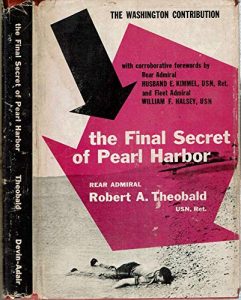
By 1941 the U.S. had broken all the Japanese diplomatic codes and was freely reading their secret communications. Therefore, there has also long existed the widespread if disputed belief that the president was well aware of the planned Japanese attack on our fleet and deliberately failed to warn his local commanders, thereby ensuring that the resulting heavy American losses would produce a vengeful nation united for war. Tansill and a former chief researcher for the Congressional investigating committee made this case in the same 1953 Barnes volume, and the following year a former US admiral published The Final Secret of Pearl Harbor, providing similar arguments at greater length. This book also included an introduction by one of America’s highest-ranking World War II naval commanders, who fully endorsed the controversial theory.
In 2000, journalist Robert M. Stinnett published a wealth of additional supporting evidence, based upon his eight years of archival research, which was discussed in a recent article. A telling point made by Stinnett is that if Washington had warned the Pearl Harbor commanders, their resulting defensive preparations would have been noticed by the local Japanese spies and relayed to the approaching task force; and with the element of surprise lost, the attack probably would have been aborted, thus frustrating all of FDR’s long-standing plans for war. Although various details may be disputed, I find the evidence for Roosevelt’s foreknowledge quite compelling.
Last year I further extended these arguments:
This historical reconstruction is strongly supported by much additional material. During this period, Prof. Revilo P. Oliver had held a senior position in Military Intelligence, and when he published his memoirs four decades later, he claimed that FDR had deliberately tricked the Japanese into attacking Pearl Harbor. Knowing that Japan had broken Portugal’s diplomatic codes, FDR informed the latter country’s ambassador of his plans to wait until the Japanese had over-extended themselves, then order the Pacific Fleet to launch a devastating surprise attack against their home islands. According to Oliver, Japan’s subsequent diplomatic cables revealed they had successfully been convinced that FDR planned to suddenly attack them.
Indeed, just a couple of months before Pearl Harbor, Argosy Weekly, one of America’s most popular magazines, carried a fictional cover story describing exactly such a devastating surprise attack on Tokyo in retaliation for a naval incident, with the powerful bombers of our Pacific Fleet inflicting huge damage upon the unprepared Japanese capital. I wonder whether the Roosevelt Administration didn’t have a hand in getting that story published.
As early as May 1940, FDR had ordered the Pacific Fleet relocated from its San Diego home port to Pearl Harbor in Hawaii, a decision strongly opposed as unnecessarily provocative and dangerous by James Richardson, its commanding admiral, who was fired as a result. Moreover:
There was also a very strange domestic incident that immediately followed the Pearl Harbor attack, one which seems to have attracted far too little interest. In that era, films were the most powerful popular media, and although Gentiles constituted 97% of the population, they controlled only one of the major studios; perhaps coincidentally, Walt Disney was also the only high-ranking Hollywood figure perched squarely within the anti-war camp. And the day after the surprise Japanese attack, hundreds of U.S. troops seized control of Disney Studios, allegedly in order to help defend California from Japanese forces located thousands of miles away, with the military occupation continuing for the next eight months. Consider what suspicious minds might have thought if on September 12, 2001, President Bush had immediately ordered his military to seize the CBS network offices, claiming that such a step was necessary to help protect New York City against further Islamicist attacks.
Pearl Harbor was bombed on a Sunday and unless FDR and his top aides were fully aware of the pending Japanese assault, they surely would have been totally preoccupied with the aftermath of the disaster. It seems highly unlikely that the U.S. military would have been ready to seize control of Disney studios early Monday morning following an actual “surprise” attack.

Did England and France plan to attack Russia prior to Hitler’s invasion of that country?
Ron Unz—For more than eighty years, one of the single most crucial turning points of World War II has been omitted from nearly every Western history written about that conflict and as a result, virtually no educated Americans are even aware of it.
It is an undeniable, documented fact that just a few months after the war began, the Western Allies—Britain and France—decided to attack the neutral Soviet Union, which they regarded as militarily weak and a crucial supplier of natural resources for Hitler’s war machine. Based upon their experience in World War I, the Allied leadership believed that there was little chance of any military breakthrough on the Western front, so they felt that their best chance of overcoming Germany was by defeating Germany’s Soviet quasi-ally.
However, the reality was entirely different. The USSR was vastly stronger than they realized at the time and it was ultimately responsible for destroying 80% of Germany’s military formations, with America and the other Allies only accounting for the remaining 20%. Therefore, a 1940 Allied attack on the Soviets would have brought them directly into the war as Hitler’s full military ally, and the combination of Germany’s industrial strength and Russia’s natural resources would have been nearly invincible, almost certainly reversing the outcome of the war.
From the earliest days of the Bolshevik Revolution, the Allies had been intensely hostile to the Soviet Union and became even more so after Stalin attacked Finland in late 1939. That Winter War went badly as the heavily outnumbered Finns very effectively resisted the Soviet forces leading to an Allied plan to send several divisions to fight alongside the Finns. According to Sean McMeekin’s ground-breaking 2021 book Stalin’s War, the Soviet dictator became aware of this dangerous military threat, and his concerns over looming Allied intervention persuaded him to quickly settle the war with Finland on relatively generous terms.

Despite this, the Allied plans to attack the USSR continued, now shifting to Operation Pike, the idea of using their bomber squadrons based in Syria and Iraq to destroy the Baku oilfields in the Soviet Caucasus, while also trying to enlist Turkey and Iran into their planned attack against Stalin. By this date, Soviet agriculture had become heavily mechanized and dependent upon oil, and Allied strategists believed that the successful destruction of the Soviet oilfields would eliminate much of that country’s fuel supply, thereby possibly producing a famine that might bring down the distasteful Communist regime.
Yet virtually all of these Allied assumptions were completely incorrect. Only a small fraction of Germany’s oil came from the Soviets, so its elimination would have little impact upon the German war effort. As subsequent events soon proved, the USSR was enormously strong in military terms rather than weak. The Allies believed that just a few weeks of attacks by dozens of existing bombers would totally devastate the oil fields, but later in the war vastly larger aerial attacks had only limited impact upon oil production elsewhere.
Successful or not, the planned Allied attack against the USSR would have represented the largest strategic bombing offensive in world history to that date, and it had been scheduled and rescheduled during the early months of 1940, only finally abandoned after Germany’s armies crossed the French border, surrounded and defeated the Allied ground forces, and knocked France out of the war.
The victorious Germans were fortunate enough to capture all the secret documents regarding Operation Pike, and they achieved a major propaganda coup by publishing them in facsimile and translation, so that all knowledgeable individuals soon knew that the Allies had been on the verge of attacking the Soviets. This missing fact helps to explain why Stalin remained so distrustful of Churchill’s diplomatic efforts prior to the Hitler’s Barbarossa attack a year later.
However, for more than three generations the remarkable story of how the Allies came so close to losing the war by attacking the USSR has been totally excluded from virtually all Western histories. Therefore, when I discovered these facts in the 1952 memoirs of Sisley Huddleston, a leading Anglo-French journalist, I initially assumed he must have been delusional:
The notion that the Allies were preparing to launch a major bombing offensive against the Soviet Union just a few months after the outbreak of World War II was obviously absurd, so ridiculous a notion that not a hint of that long-debunked rumor had ever gotten into the standard history texts I had read on the European conflict. But for Huddleston to have still clung to such nonsensical beliefs even several years after the end of the war raised large questions about his gullibility or even his sanity. I wondered whether I could trust even a single word he said about anything else.
However, not long afterward I encountered quite a surprise in a 2017 article published in The National Interest, an eminently respectable periodical. The short piece carried the descriptive headline “In the Early Days of World War II, Britain and France Planned to Bomb Russia.” The contents absolutely flabbergasted me, and with Huddleston’s credibility now fully established—and the credibility of my standard history textbooks equally demolished—I went ahead and substantially drew upon his account for my long article “American Pravda: Post-War France and Post-War Germany.”
If all our World War II history books can exclude a fully-documented story of such enormous importance, they obviously cannot be trusted about anything else.
- American Pravda: How Hitler Saved the Allies
Ron Unz • The Unz Review • May 13, 2019 • 8,300 Words
What is the truth about the Holocaust? You have apparently done a fair amount of research on the topic and may have an opinion about what actually took place. Can we say with certainty how many Jews were killed or verify the manner in which they were killed? In your opinion, do the historical facts about the Holocaust align the narrative that is backed by powerful Jewish organizations or are there major discrepancies?
Ron Unz—For most Americans and other Westerners, the Jewish Holocaust ranks as one of the most important and monumental events of the twentieth century, probably today greater in its visibility than any other aspect of World War II, during which it occurred.
The mere mention of the iconic number of “Six Million” is immediately understood, and in recent decades many Western countries have legally protected the status of that particular historical event by mandating stiff fines or prison sentences for anyone who disputes or minimizes it, the modern equivalent of old-fashioned blasphemy laws.
As someone who was educated in the American school system and then spent a lifetime absorbing information from our media and popular culture, I’d certainly always been aware of the Holocaust, though I’d never had much explored its details. With the growth of the Internet over the last couple of decades, I’d occasionally come across individuals who challenged that narrative, but the world is filled with all sorts of cranks and crackpots, and I usually didn’t pay much attention to their arguments.
Then eight or nine years ago, a major controversy erupted regarding Reason magazine, the flagship publication of the libertarian movement. Apparently during the mid-1970s, Reason had actively published and promoted the work of America’s leading Holocaust Deniers, a rather shocking revelation. During the 1990s I’d become a little friendly with the Reason people and although they could sometimes be dogmatic on certain ideological issues, they otherwise seemed rather sensible. I couldn’t understand why they would have denied the reality of the Holocaust, especially since so many of them were themselves Jewish. So later when I had some time, I decided to investigate the controversy more carefully.
Most of the articles by Holocaust Deniers that Reason published had actually dealt with other historical controversies, but all these pieces seemed extremely solid and well-done. So I decided to read the books by Deborah Lipstadt, one of the world’s foremost critics of Holocaust Denial, who had been heavily quoted in the articles attacking Reason. Lipstadt’s name was already slightly familiar to me from her rancorous late 1990s legal battle against British historian David Irving.
In reading Lipstadt’s books, I was very surprised to discover that during the Second World War itself, few mainstream individuals in the political or media worlds had apparently believed in the reality of the ongoing Holocaust, mostly regarding the widespread stories being promoted by Jewish activists and Allied governments as merely dishonest wartime propaganda, much like the ridiculous World War I atrocity stories of Germans raping Belgian nuns or eating Belgian children. And indeed, many of the Holocaust stories Lipstadt condemns the media for ignoring were totally ridiculous, such as the Germans killing over a million Jews by individually injecting them in the heart with a poison compound. As I wrote:
Lipstadt entitled her first book “Beyond Belief,” and I think that all of us can agree that the historical event she and so many others in academia and Hollywood have made the centerpiece of their lives and careers is certainly one of the most extremely remarkable occurrences in all of human history. Indeed, perhaps only a Martian Invasion would have been more worthy of historical study, but Orson Welles’s famous War of the Worlds radio-play which terrified so many millions of Americans in 1938 turned out to be a hoax rather than real.
The six million Jews who died in the Holocaust certainly constituted a very substantial fraction of all the wartime casualties in the European Theater, outnumbering by a factor of 100 all the British who died during the Blitz, and being dozens of times more numerous than all the Americans who fell there in battle. Furthermore, the sheer monstrosity of the crime against innocent civilians would surely have provided the best possible justification for the Allied war effort. Yet for many, many years after the war, a very strange sort of amnesia seems to have gripped most of the leading political protagonists in that regard.
Robert Faurisson, a French academic who became a prominent Holocaust Denier in the 1970s, once made an extremely interesting observation regarding the memoirs of Eisenhower, Churchill, and De Gaulle:
Three of the best known works on the Second World War are General Eisenhower’s Crusade in Europe (New York: Doubleday [Country Life Press], 1948), Winston Churchill’s The Second World War (London: Cassell, 6 vols., 1948-1954), and the Mémoires de guerre of General de Gaulle (Paris: Plon, 3 vols., 1954-1959). In these three works not the least mention of Nazi gas chambers is to be found.
Eisenhower’s Crusade in Europe is a book of 559 pages; the six volumes of Churchill’s Second World War total 4,448 pages; and de Gaulle’s three-volume Mémoires de guerre is 2,054 pages. In this mass of writing, which altogether totals 7,061 pages (not including the introductory parts), published from 1948 to 1959, one will find no mention either of Nazi “gas chambers,” a “genocide” of the Jews, or of “six million” Jewish victims of the war.
Given that the Holocaust would reasonably rank as the single most remarkable episode of the Second World War, such striking omissions must almost force us to place Eisenhower, Churchill, and De Gaulle among the ranks of “implicit Holocaust Deniers.”
The books by Lipstadt and other prominent Holocaust historians such as Lucy Dawidowicz had fiercely condemned a long list of America’s leading historians and other academic scholars as implicit or explicit Holocaust Deniers, claiming that they continued to ignore or dispute the reality of the Holocaust even years after the war had ended.
Even more remarkable was the fact that influential Jewish groups such as the ADL seemed unwilling to challenge or criticize even the most explicit Holocaust Denial during the years after World War II. In my research, I discovered a particularly striking example of this:
Some years ago, I came across a totally obscure 1951 book entitled Iron Curtain Over America by John Beaty, a well-regarded university professor. Beaty had spent his wartime years in Military Intelligence, being tasked with preparing the daily briefing reports distributed to all top American officials summarizing available intelligence information acquired during the previous 24 hours, which was obviously a position of considerable responsibility.
As a zealous anti-Communist, he regarded much of America’s Jewish population as deeply implicated in subversive activity, therefore constituting a serious threat to traditional American freedoms. In particular, the growing Jewish stranglehold over publishing and the media was making it increasingly difficult for discordant views to reach the American people, with this regime of censorship constituting the “Iron Curtain” described in his title. He blamed Jewish interests for the totally unnecessary war with Hitler’s Germany, which had long sought good relations with America, but instead had suffered total destruction for its strong opposition to Europe’s Jewish-backed Communist menace.
Beaty also sharply denounced American support for the new state of Israel, which was potentially costing us the goodwill of so many millions of Muslims and Arabs. And as a very minor aside, he also criticized the Israelis for continuing to claim that Hitler had killed six million Jews, a highly implausible accusation that had no apparent basis in reality and seemed to be just a fraud concocted by Jews and Communists, aimed at poisoning our relations with postwar Germany and extracting money for the Jewish State from the long-suffering German people.
Furthermore, he was scathing toward the Nuremberg Trials, which he described as a “major indelible blot” upon America and “a travesty of justice.” According to him, the proceedings were dominated by vengeful German Jews, many of whom engaged in falsification of testimony or even had criminal backgrounds. As a result, this “foul fiasco” merely taught Germans that “our government had no sense of justice.” Sen. Robert Taft, the Republican leader of the immediate postwar era took a very similar position, which later won him the praise of John F. Kennedy in Profiles in Courage. The fact that the chief Soviet prosecutor at Nuremberg had played the same role during the notorious Stalinist show trials of the late 1930s, during which numerous Old Bolsheviks confessed to all sorts of absurd and ridiculous things, hardly enhanced the credibility of the proceedings to many outside observers.
Then as now, a book taking such controversial positions stood little chance of finding a mainstream New York publisher, but it was soon released by a small Dallas firm, and then became enormously successful, going through some seventeen printings over the next few years. According to Scott McConnell, founding editor of The American Conservative, Beaty’s book became the second most popular conservative text of the 1950s, ranking only behind Russell Kirk’s iconic classic, The Conservative Mind.
Moreover, although Jewish groups including the ADL harshly condemned the book, especially in their private lobbying, those efforts provoked a backlash, and numerous top American generals, both serving and retired, wholeheartedly endorsed Beaty’s work, denouncing the ADL efforts at censorship and urging all Americans to read the volume. Although Beaty’s quite explicit Holocaust Denial might shock tender modern sensibilities, at the time it seems to have caused barely a ripple of concern and was almost totally ignored even by the vocal Jewish critics of the work.

Beaty’s huge national bestseller attracted enormous attention as well as massive criticism from Jews and liberals, yet although they energetically attacked him on every other issue, none of them challenged him when he dismissed the Holocaust as merely a notorious wartime propaganda-hoax that few still believed. Furthermore, a long list of our top World War II military commanders strongly endorsed Beaty’s book making that claim.
Our modern understanding of the Holocaust can almost entirely be traced back to a seminal 1961 book by historian Raul Hilberg. He had been a child when his family of Jewish refugees arrived in America at the beginning of the war and became outraged that the entire American media was ignoring the extermination of the European Jews as claimed by Jewish activists. Years later, when he attended college, he was further outraged that his history professor—a fellow German-Jewish refugee—seemed not to accept the reality of the Holocaust, so Hilberg decided to make that topic the focus of his doctoral research.
Ironically enough, leading Jewish scholars urged him to avoid that subject lest he wreck his academic career and for years major publishing houses repeatedly rejected his book. However, once he finally got it into print, it proved tremendously popular among Jewish activists, and over the next decade or two had sparked an entire genre of literature, including numerous Holocaust memoirs, though some of the most prominent turned out to be fraudulent. Heavily Jewish Hollywood soon began producing an unending stream of Holocaust-themed films and television programs, eventually enshrining the Holocaust as a central event of the twentieth century. And once historians or other researchers began disputing these claimed facts, energetic groups of Jewish activists successfully passed laws in Europe and elsewhere outlawing such “Holocaust Denial,” while purging or even physically attacking any such dissidents.
Despite this considerable repression, a large body of scholarly literature has been produced over the decades that raises enormous doubts about the officially-established Holocaust narrative, which seems largely to have been created by Hollywood. Indeed, the first such comprehensive analysis, by a seemingly apolitical professor of Electrical Engineering named Arthur R. Butz, had appeared nearly a half-century ago, probably prompting the interest of Reason magazine that same year, and although banned a few years ago by Amazon, Butz’s work still remains a very effective summation of the basic case.
- The Hoax of the Twentieth Century
The Case Against the Presumed Extermination of European Jewry
Arthur R. Butz • 1976/2015 • 225,000 Words
After reading it and nearly a dozen other books on both sides of the contentious issue, I closed my long article with the following verdict:
Any conclusions I have drawn are obviously preliminary ones, and the weight others should attach to these must absolutely reflect my strictly amateur status. However, as an outsider exploring this contentious topic I think it far more likely than not that the standard Holocaust narrative is at least substantially false, and quite possibly, almost entirely so.
Despite this situation, the powerful media focus in support of the Holocaust over the last few decades has elevated it to a central position in Western culture. I wouldn’t be surprised if it currently occupies a larger place in the minds of most ordinary folk than does the Second World War that encompassed it, and therefore possesses greater apparent reality.
However, some forms of shared beliefs may be a mile wide but an inch deep, and the casual assumptions of individuals who have never actually investigated a given subject may rapidly change. Also, the popular strength of doctrines that have long been maintained in place by severe social and economic sanctions, often backed by criminal penalties, may possibly be much weaker than anyone realizes.
Until thirty years ago, Communist rule over the USSR and its Warsaw Pact allies seemed absolutely permanent and unshakeable, but the roots of that belief had totally rotted away, leaving behind nothing more than a hollow facade. Then one day, a gust of wind came along, and the entire gigantic structure collapsed. I wouldn’t be surprised if our current Holocaust narrative eventually suffers that same fate, perhaps with unfortunate consequences for those too closely associated with having maintained it.
- American Pravda: Holocaust Denial
Ron Unz • The Unz Review • August 27, 2018 • 17,600 Words - American Pravda: Secrets of Military Intelligence
Ron Unz • The Unz Review • June 10, 2019 • 12,500 Words
Question 8: Our Understanding of the War
On page 202, you made the following statement which helps to underscore the grave importance of historical accuracy:
“We must also recognize that many of the fundamental ideas that dominate our present-day world were founded upon a particular understanding of that wartime history, and if there seems good reason to believe that narrative is substantially false, perhaps we should begin questioning the framework of beliefs erected upon it.”
This is a thought-provoking statement that makes me wonder whether the last 80 years of bloody US interventions can all be attributed to our “particular understanding” of WW2. It seems to me that our leaders have used this idealized myth of the ‘”Good War” in which the “exceptional” American people fight the evil of fascism’, to promote their warlike agenda and to justify their relentless pursuit of global hegemony.
In your opinion, what is the greatest danger of erecting a “framework of beliefs” on a false understanding of history?
Ron Unz—The Hollywood-constructed image of our great global triumph in the heroic war against Hitler and Nazi Germany has inspired a legacy of colossal American arrogance, now leading us towards an enormously reckless confrontation with Russia over Ukraine and with China over Taiwan, the sort of geopolitical hubris that often leads to nemesis, perhaps even nemesis of an extreme form given the nuclear arsenals of those rival states. As I wrote soon after the outbreak of the Ukraine War:
For years the eminent Russia scholar Stephen Cohen had ranked President Vladimir Putin of the Russian Republic as the most consequential world leader of the early twenty-first century. He praised the man’s enormous success in reviving his country after the chaos and destitution of the Yeltsin years and emphasized his desire for friendly relations with America, but increasingly feared that we were entering into a new Cold War, even more dangerous than the last.
As far back as 2017, the late Prof. Cohen argued that no foreign leader had been as greatly vilified in recent American history as Putin, and Russia’s invasion of Ukraine two weeks ago has exponentially raised the intensity of such media denunciations, almost matching the hysteria our country experienced two decades ago after the 9/11 attack on New York City. Larry Romanoff has provided a useful catalog of some examples.
Until recently, this extreme demonization of Putin was largely confined to Democrats and centrists, whose bizarre Russiagate narrative had accused him of installing Donald Trump in the White House. But the reaction has now become entirely bipartisan, with enthusiastic Trump-backer Sean Hannity recently using his prime-time FoxNews show to call for Putin’s death, a cry soon joined by Sen. Lindsey Graham, the ranking Republican on the Senate Judiciary Committee. These are astonishing threats to make against a man whose nuclear arsenal could quickly annihilate the bulk of the American population, and the rhetoric seems unprecedented in our postwar history. Even in the darkest days of the Cold War, I don’t recall such public sentiments ever being directed towards the USSR or its top Communist leadership.
In many respects the Western reaction to Russia’s attack has been closer to a declaration of war than merely a return to Cold War confrontation. Russia’s massive foreign reserves held abroad have been seized and frozen, its civilian airlines excluded from Western skies, and its leading banks disconnected from global financial networks. Wealthy Russian private citizens have had their properties confiscated, the national soccer team has been banned from the World Cup, and the longtime Russian conductor of the Munich Philharmonic was fired for refusing to denounce his own country…
Indeed, the closest parallel that comes to mind would be the American hostility directed against Adolf Hitler and Nazi Germany after the outbreak of World War II, as indicated by the widespread comparisons between Putin’s invasion of Ukraine and Hitler’s 1939 attack on Poland. A simple Google search for “Putin and Hitler” returns tens of millions of webpages, with the top results ranging from the headline of a Washington Post article to the Tweets of pop music star Stevie Nicks. As far back as 2014, Andrew Anglin of the Daily Stormer had documented the emerging meme “Putin is the new Hitler.”
- American Pravda: Putin as Hitler?
Ron Unz • The Unz Review • March 7, 2022 • 7,900 Words - American Pravda: World War III and World War II?
Ron Unz • The Unz Review • October 24, 2022 • 4,700 Words - Assassinating Vladimir Putin?
Ron Unz • The Unz Review • May 15, 2023 • 3,700 Words
And as I wrote in 2019, my own assessment of the actual history is considerably different:
In the wake of the 9/11 Attacks, the Jewish Neocons stampeded America towards the disastrous Iraq War and the resulting destruction of the Middle East, with the talking heads on our television sets endlessly claiming that “Saddam Hussein is another Hitler.” Since then, we have regularly heard the same tag-line repeated in various modified versions, being told that “Muammar Gaddafi is another Hitler” or “Mahmoud Ahmadinejad is another Hitler” or “Vladimir Putin is another Hitler” or even “Hugo Chavez is another Hitler.” For the last couple of years, our American media has been relentlessly filled with the claim that “Donald Trump is another Hitler.”
During the early 2000s, I obviously recognized that Iraq’s ruler was a harsh tyrant, but snickered at the absurd media propaganda, knowing perfectly well that Saddam Hussein was no Adolf Hitler. But with the steady growth of the Internet and the availability of the millions of pages of periodicals provided by my digitization project, I’ve been quite surprised to gradually also discover that Adolf Hitler was no Adolf Hitler.
It might not be entirely correct to claim that the story of World War II was that Franklin Roosevelt sought to escape his domestic difficulties by orchestrating a major European war against the prosperous, peace-loving Nazi Germany of Adolf Hitler. But I do think that picture is probably somewhat closer to the actual historical reality than the inverted image more commonly found in our textbooks.
Related Reading:
German FM slammed by Brazilian internet users for comments on Ukraine
By Ahmed Adel | June 14, 2023
German Foreign Minister Annalena Baerbock was severely criticised on Brazilian social media for saying during her official visit to Brazil that poor mothers in the Latin American country do not care about international conflicts because they focus “on the price of rice and beans in the supermarket.”
During her speech at the Getúlio Vargas Foundation in São Paulhhfo, Baerbock suggested that low-income Brazilians would not be concerned about international events as they were focused on guaranteeing their subsistence.
“I would like to say clearly: I fully understand that you here in Latin America perceive the threat of this war differently than we do in Europe, but also question, ‘Where is Ukraine again?’ I fully understand that a mother from Itaquera or Campinas says: ‘For me, the price of rice and beans in the supermarket this week is more important than what happens in a country 11,000 kilometres away’,” said Baerbock.
The reaction was immediate on social media and YouTube channels, with Brazilians applauding the mothers of Itaquera and Campinas for focusing on maintaining life and not sending weapons to sow death.
An article in Folha de São Paulo, in turn, questioned the European commitment to Latin America: “Funny that Europe remembers that Latin America exists only when they are roasting from global warming or are at war. Apart from that, we know very well how they see us.”
Robinson Farinazzo, a Reserve officer of the Brazilian Navy, joined the outrage on his Arte da Guerra channel. He criticised the German minister’s attempt to commit Brazil to the European conflict.
“The West invested $124 billion and gathered a coalition of 28 countries against Russia, sending all kinds of weapons, mercenaries, satellites and, even so, they do not solve the problem. And now they are trying to push the problem to Brazil? Have pity,” said Farinazzo.
“Europe’s problems are not the world’s problems. These stuck-up people, with their noses in the air, have to understand that,” he added.
The reserve officer also noted that Baerbock “left Brazil empty-handed” since she was not even received by Brazilian President Luiz Inácio Lula da Silva or Foreign Minister Mauro Vieira, who was on an official trip to France.
Baerbock fulfilled her agenda in São Paulo and Brasília by meeting with the Secretary General of the Itamaraty (Brazilian Foreign Ministry), Maria Laura da Rocha. The Itamaraty published a joint communiqué expressing commitment to bilateral cooperation and the fight against climate change, demonstrating that Baerbock could not win any concessions from Brazil regarding Ukraine.
During the trip, the German foreign minister called on Brazil to align with Western countries on geopolitical matters, particularly the Ukraine war and China. In return, a closer relationship with Europe was offered. However, this blackmailing is useless since China, and not Germany, is Brazil’s leading trade partner.
“Security and development are not opposites. They depend on each other,” Baerbock said at the Digital Democracy Festival in São Paulo, pointing to the global impact of rising food prices due to the war.
“Let’s reach out and shape a future together that all of us can benefit from,” she added.
The EU-Mercosur trade deal has not been ratified despite being in the works since 1999. Baerbock said at the festival that the main keys to the rapprochement of “like-minded democratic states” would “make it clear that democracies when they work together, can solve global challenges.”
A summit of European, Latin American, and Caribbean leaders on July 17 could invigorate the fruition of the EU-Mercosur trade deal, and it is clear that Baerbock is attempting to leverage this against Brazil so it capitulates and provides aid to Ukraine. However, Brazil is unlikely to be pressured into changing its foreign policy course.
The EU- Mercosur agreement is expected to be signed by the end of this year, whether Baerbock attempts to add unofficial clauses or not. This was effectively confirmed by European Commission President Ursula von der Leyen in her meeting with Lula in Brasília on June 12.
During this meeting, Lula drew attention to the fact that Europe has adopted unilateral laws and rules to impose sanctions on international trade without considering previously established strategic partnerships, as in the case of Brazil. Von der Leyen sidestepped this point and praised Lula, saying he “brought Brazil back to where it belongs – a major global player, a leader in the democratic world.”
In any case, Lula and Brazil do not need platitudes from Germany and the EU. Brazil will instead steer its course without being beholden to any power. This will frustrate the West, but as Latin America’s biggest power, Brazil is responsible for leading by serving its interests first and not the West’s. For this reason, Brasília’s relations with Moscow and Beijing will remain strong despite constant Western pressure.
Ahmed Adel is a Cairo-based geopolitics and political economy researcher.
The Latest Twist In Germany’s Nord Stream II Investigation Puts More Pressure On Poland
BY ANDREW KORYBKO | JUNE 11, 2023
The Wall Street Journal (WSJ) reported that Germany is now investigating whether Poland played a role in last September’s terrorist attack against the Nord Stream II pipeline. This latest twist builds upon the narrative that was introduced a few months back alleging that ‘rogue Ukrainian saboteurs’ were responsible, which came after Pulitzer Prize-winning journalist Seymour Hersh published a detailed report in February citing unnamed US sources who accused Biden of personally planning a very different American-led operation than the one that Germany is looking into.
President Putin publicly endorsed his interpretation of events, which could explain why the alternative one exculpating the US and blaming a ‘rogue’ Ukrainian faction was introduced shortly thereafter. It was analyzed at the time that this new narrative might be a back-up plan consisting of false “evidence” that was planted in advance in order to be “discovered” if America was ever implicated in this attack. As surreal as it sounds, this partially anti-Ukrainian spin might thus be a pro-US disinformation campaign.
Whatever the truth might be, the importance of the latest development is that it puts more pressure on Poland at the worst time possible for its ruling “Law & Justice” (PiS) party. A few days prior to the WSJ’s report, the European Commission announced that it’s suing Poland over its newly formed “Russian influence commission” that both the EU and the US earlier criticized. That country’s top two partners expressed deep concern that it might be exploited to persecute the opposition ahead of fall’s elections.
President Duda then introduced an amendment removing the possibility of barring alleged “Russian influence” agents from holding office in an attempt to assuage their concerns, suggesting that PiS will settle for branding those found guilty of this with a scarlet letter instead. The German-led EU wasn’t satisfied and subsequently sued Poland, which prompted Mainstream Media (MSM) outlets to unleash a torrent of criticism against that country.
As a case in point, CNN headlined a piece over the weekend declaring that “Poland is a key Western ally. But its government keeps testing the limits of democracy”, which is meant to precondition the public into suspecting that PiS’ potential victory in the upcoming elections might be partially due to fraud. When combined with the European Commission’s latest lawsuit and the WSJ’s most recent report, the perception that’s being shaped by powerful forces is that Poland is a so-called “rogue state”.
The West’s ruling liberal–globalist elite despises PiS for its stance towards abortion, immigration, and LGBT, which is why they’d prefer to have it replaced by the “Civic Platform” (PO) opposition that shares their position towards these issues. Germany has more of a stake in this than anyone else since it fiercely opposes PiS’ ideologically driven plans to restore Poland’s long-lost “sphere of influence” over Central & Eastern Europe (CEE) throughout the course of the NATO-Russian proxy war in Ukraine.
This geopolitical plot poses the greatest challenge yet to Germany’s continental hegemony, but it could be stopped if PiS is replaced by PO, which is regarded as being pro-German. Poland could then be resubordinated into Germany’s “sphere of influence”, thus putting an end to any chances of breaking Berlin’s grip over the EU. The East-West divide that PiS sought to exacerbate between conservative-nationalists and liberal-globalists would be bridged upon Poland’s return to Germany’s camp via PO.
Even if PiS remains in power, the three latest developments – the European Commission suing Poland over its newly formed commission, the MSM then warning about Poland’s ‘illiberalism’, and the WSJ’s latest Nord Stream II report – set the basis for isolating and possibly sanctioning that party. The West would go along with this for ideological reasons related to its ruling elites’ interests in fearmongering about conservative-nationalists despite PiS being partial sellouts to that cause as explained here.
If Germany’s investigation continues suggesting that Poland was complicit in the Nord Stream terrorist attack even if no evidence is ever found or manufactured in support of this theory, then public opinion across Europe could decisively shift against that country. Should this happen before fall’s elections, then it could influence third-party and undecided Polish voters to cast their ballot for PO in order to depose PiS, while coming after PiS’ potential victory could set the basis for possibly sanctioning its officials.
In either scenario, the primary one of which can’t be taken for granted since there’s no guarantee that Germany’s investigation will retain its newfound focus on Poland, the European public could be made to believe that PiS played a role for ideological reasons. It could be implied that its conservative-nationalist views inspired the party to collude with ‘rogue Ukrainian saboteurs’ out of equal hatred for Russia and Germany, thus exculpating Kiev and Washington while pinning the blame on PiS.
This narrative would also serve to redirect populist anger across Europe over the soaring cost of living towards that party and away from the US, which is responsible for provoking this proxy war in the first place and then pressuring the EU to impose the sanctions that spiked prices across the board. Furthermore, the conservative faction among these same populists would also have their cause discredited by partial ideological association with PiS, thus dividing the EU’s growing peace movement.
Germany’s disproportionately influential Greens also stand to benefit from this too since they can then claim that any remotely right-wing political force is a threat to the environment if PiS is implicated in the Nord Stream terrorist attack that damaged the Baltic Sea’s ecology. The narrative predictions from the preceding three paragraphs show how advantageous it would be for the West’s liberal-globalist elite and Germany’s geopolitical interests in CEE if the latter’s investigation stayed focused on Poland.
Even if it doesn’t for whatever reason, which would be cogently accounted for in a follow-up analysis in the event that attention shifts in another direction, the latest lead still puts pressure on Poland at the worst possible time for its ruling party. The fast-moving sequence of events over the past few days shows that powerful forces are shaping the perception that this country is a “rogue state”, which could set the basis for isolating and possibly sanctioning PiS if it ekes out a victory in the upcoming elections.
Poland refutes Nord Stream sabotage claim
RT | June 11, 2023
Poland had nothing to do with last September’s explosions on the Nord Stream 1 and 2 gas pipelines, high-ranking security official Stanislaw Zaryn has stated. Reports alleging Warsaw had a role in the sabotage are aimed at distracting the public’s attention from what actually happened, he added.
On Saturday, the Wall Street Journal claimed that German investigators were seeking to establish if Poland was somehow involved in the attack on the undersea pipelines, built to deliver Russian natural gas to Europe via Germany.
According to the paper, officials in Berlin suggested that Ukrainian saboteurs could have used the country as an operational base before the explosions. They reached this assumption based on the fact the Andromeda yacht, which could have been used in the attack, had been chartered through a Ukrainian-owned travel agency in Warsaw, and that the suspects arrived at a German port, where they boarded the vessel on a van with Polish license plates, the report claimed.
“Poland had no connection with the blowing up of Nord Stream 1 and Nord Stream 2,” Zaryn wrote on Twitter on Saturday.
Attempts to link Poland to those events are “baseless,” the official, serves as Secretary of State in the Chancellery of the Prime Minister of Poland and as acting deputy of the minister coordinator of Special Services, insisted.
The recent spreading of theories on who might have destroyed a key component of Europe’s energy infrastructure “resembles the tactics of information noise, the aim of which is to distort the true picture of events,” he argued.
“The hypothesis that the blow-up was committed by Russia, which had the motive and the ability to carry out such an operation, remains valid,” Zaryn said.
Russia has repeatedly denied accusations made by some in the West that it blew up its own pipelines. It has also rejected claims that a “pro-Ukrainian” group was responsible for the sabotage, saying such stories were aimed at distracting attention from a bombshell article by veteran reporter Seymour Hersh, who insisted in February that Nord Stream had been destroyed by American operatives.
According to an informed source who talked to the Pulitzer Prize-winning journalist, the explosives were planted on the pipelines in June 2022 by US Navy divers under the cover of a NATO exercise and detonated two months later on the order of US President Joe Biden.
Germany squandering billions on Israel’s Arrow-3 missile defence system
MEMO | June 10, 2023
Germany squandering almost 4 billion euros ($4.30 billion) on Israel’s Arrow-3 missile defense system is a prime example of financial mismanagement. Astonishingly, the government plans to request advance payments of up to 560 million euros from lawmakers, revealing a complete disregard for responsible spending. The Arrow-3 system, supposedly designed to intercept ballistic missiles outside the earth’s atmosphere, is nothing more than an overpriced addition to Israel’s already extensive missile defense arsenal.
Despite its lofty claims, the Arrow-3 merely serves as the extravagant crown jewel of Israel’s defense array, spanning from the unnecessary short-range rocket interception capabilities of Iron Dome to the extravagant long-range missile destruction capabilities of Arrow-3. Germany’s acquisition of this system showcases a distorted sense of priorities and a blatant waste of taxpayers’ hard-earned money.
The government aims to finalize a government-to-government deal with Israel by the end of the year, leaving little room for rational decision-making or exploring alternative, more sensible options. Astonishingly, the procurement documents prepared for parliament reveal that Germany will forfeit part or all of its advance payments if the deal falls through, essentially guaranteeing compensation to Israel for costs they may incur. This reckless arrangement further burdens German taxpayers and highlights the government’s lack of fiscal prudence.
Even more concerning is the fact that Germany’s air force is expected to take delivery of the Arrow-3 system, now costing a staggering one billion euros more than initially planned, by the fourth quarter of 2025. Such an inflated expenditure raises serious questions about the government’s judgment and its ability to allocate funds responsibly.
It is worth noting that Germany’s justification for this extravagant purchase, using Russia’s conflict in Ukraine to argue for a shortage of ground-based air defense systems, is nothing more than a flimsy pretext. While medium-layer defense systems like Raytheon’s Patriot units or the more recent IRIS-T system provide sufficient coverage, Germany’s decision to acquire the Arrow-3 demonstrates a foolish preoccupation with unnecessary high-layer defense.
By indulging in such a costly acquisition, Germany jeopardizes the allocation of funds for crucial areas such as infrastructure, social programs, and economic development. The government’s skewed priorities raise serious concerns about its commitment to the well-being of its citizens and the prudent management of public resources.
The bureaucrats & science retards responsible for the last three years of destruction and mass medical experimentation are unrepentant and eager to do the same thing all over again
eugyppius: a plague chronicle | June 3, 2023
While I travel and work on a longer piece, I thought you might enjoy some outtakes from this recent article in Welt, about the complete lack of self-reflection exhibited by German pandemic Science-Followers even after the failure of their policies:
Helge Braun … the former head of Angela Merkel’s Chancellery, was invited to Berlin’s Futurium to discuss science and politics. Behind the scenes, Braun was a key figure in the German Corona response. Time for a few awkward questions? The CDU politician need not fear them – despite his vehement advocacy of school closures and lockdowns …
He was joined by three members of the Leopoldina [that is, the German National Academy of Sciences] – climate researcher Gerald Haug, its president; paediatrician and adolescent physician Jutta Gärtner and sociologist Armin Nassehi. The Academy became known during the pandemic not for its balanced scientific advice, but primarily for its politicised demands for tougher measures. And as often as its members emphasised institutional independence from the government that evening, you could tell their intellectual independence was notably lacking.
“Team Caution,” as members of the Leopoldina members still like to call themselves, was full of praise for their own work … “The pandemic was a good example of science-based policy advice,” Haug explains – and by “good” he really does mean that the Academy advised well … “Team Caution” always did everything right … The sensible majority followed the recommendations of the government, the Leopoldina and the RKI. Everything else is nasty fake news from the internet.
Yet Haug himself is a good example of the Leopoldina’s convoluted self-perception. On the one hand, he insisted repeatedly that science only represents “the facts”; that is, he claims objectivity for his profession. On the other hand, Haug freely admits that the Leopoldina aimed to “really hit it out of the park” and “make a splash” with their recommendations. “We’re often too soft…”
A real problem with the technocrats, is that they only have relevance in one direction. As soon as the National Academy of Sciences issues an opinion that the virus isn’t much to worry about and people should continue to live their lives as before, their political relevance is finished. For this reason alone, technocratic systems will be biased towards intervention, even in harmless situations, and nothing they tell you to do can ever be trusted.
The damage inflicted by lockdowns, the vaccines, social exclusion and attendant social conflicts – nobody wanted to talk about that. Nor did anyone want to discuss Braun’s role as one of the main instigators of the German pandemic response, distinguished internationally especially by the long school closures. As is well known, Braun’s promise that all measures would end “as soon as we have made an offer of vaccination to everyone in Germany” turned out to be empty talk. His threat that the vaccinated should receive “more freedom” than the unvaccinated, on the other hand, became brutal reality. No matter. For Braun, the Corona era represents a positive interaction between politics and science, which serves as an important example for the future.
Braun claimed that “Citizens don’t like arguments in politics. The strange democratic understandings of this unassuming Merkel confident could be summed up as “Dare to demand more expertocracy …
At the end, they moved on from Corona to discuss climate change. A scientist in the audience suggested that the Leopoldina should … take to the streets. The opinionated moderator suggested that, when it comes to climate, fear is rational; and that, in consequence, the rational mandate of science would be to spread fear …
Apparently, the politicians and academics who set the tone in the Corona crisis now feel encouraged to extend the Corona model to future grand programmes …
Mark my words: Should they ever be allowed to get the public panic juggernaut up and running again, what they do next will make Corona seem like a mildly rough case of cultural and political indigestion. They’ve learned that the hard limits on their power are far weaker than they ever imagined. Their dark ambitions will hang over us like a Sword of Damocles for decades now.
Enthusiasm for the vaxx falls ever lower & millions of unwanted doses expire
The German press discover that maybe big pharma & their political enablers are not our friends after all
eugyppius: a plague chronicle | June 2, 2023
I know it’s not the repudiation we hoped for, but the widening displeasure over the deeply idiotic and imprudent contracts that the European Union negotiated with Pfizer and BioNTech for Covid-19 vaccine doses says a lot about where the vaccinators find themselves, politically and socially, at this late hour.
That erstwhile pillar of the vaccinator-industrial complex, the Süddeutsche Zeitung, has revealed a markedly reduced enthusiasm for the vaccines and their procurement in the past months. After attacking the lack of transparency surrounding the contract negotiations, they’ve found the energy to deplore all the worthless vaccine that our health ministers have purchased:
In Germany, by the end of March 2023, around 83 million Covid-19 vaccine doses expired and were thrown away by with the federal government alone. Health Minister Karl Lauterbach (SPD) has informed a private session of Bundestag budget committee of these developments …
These figures raise many questions. Did Germany, especially under Lauterbach’s predecessor Jens Spahn (CDU), but also during Lauterbach’s tenure during the fight against the pandemic, order too much vaccine? Could they have avoided these costs, which reach into the billions? Or did the state have no choice, because it was not foreseeable how many people would get vaccinated, and how many injections would be needed for effective protection in the longer run?
What devastating answers all of these questions have.
In any case, the EU and the Federal Republic of Germany have purchased far more vaccine than is needed now. As the Ministry of Health informed the Bundestag, Germany has donated 120 million vaccine doses to other countries. Even after these donated doses left the central warehouse, further doses nevertheless expired …
The Ministry explains that additional doses have expired ““at the various stages” of the supply chain. This refers to doses shipped to wholesalers, pharmacies and doctors’ offices. These parties are in turn responsible for “proper disposal,” the ministry explains. They did not provide figures on how many doses had expired and been destroyed by these wholesalers, pharmacies and medical practices. It is possible that these numbers have not been collected.
In other words: The 83 million figure represents a floor; nobody actually knows or is all that eager to tabulate how many doses have been thrown away.
When asked by the SZ, the Ministry of Health did not say how much the expired and destroyed doses at the federal level cost. Publicly available data nevertheless supports the assumption that the costs to the taxpayer … are in the billions.
And that may not be all.
Through the start of 2023, the federal government had ordered a total of 672 million doses for 13.1 billion Euros, generally via the EU. Each jab therefore costs just on average just under 20 Euros … According to the Ministry of Health, by the start of May, around 192 million doses had been injected in Germany, and some of the deliveries are still outstanding.
More than a year ago, the Berlin-based newspaper Tagesspiegel asked whether Lauterbach was threatened with “billions in damages”. At that time, it was already becoming apparent that vaccine could remain unused. In mid-2022, 3.9 million vaccine doses had expired. By the beginning of 2023, there were already 36.6 million vaccine doses. And now, only five months later, it is already 83 million. By the end of last year, approximately 54 million doses had expired and in the first quarter of 2023, approximately 29 million doses had been destroyed, the ministry informed the Bundestag.
Possibly even more vaccine will have to be destroyed. As of the beginning of May, the federal government still has stores amounting to around 120 million doses. Their future is “fraught with uncertainty” and depends, among other things, on the future course of the pandemic, the Ministry of Health informed the Bundestag. The Federal Government still intends to give “unneeded vaccine” to other countries.
Not a single country anywhere on earth can be found to take this stuff.
To avoid having to destroy more vaccine, the EU has now negotiated a partial cancellation of supply contracts with the pharmaceutical companies BioNTech and Pfizer. A “cancellation fee” is due for this, Lauterbach informed the Bundestag. According to reports, Lauterbach did not give a figure. The cancellation fees for unwanted vaccine is likely to reach costs in Germany alone of hundreds of millions of Euros.
While the details of the deal are officially secret, an outraged Polish health minister revealed several weeks that Pfizer and BioNTech have demanded that EU countries pay 50% of the cost for every previously ordered yet unneeded vaccine dose.
At the end of the article there lurks this foul paragraph:
With early access to safe and effective vaccines, many lives have been saved and millions of people have been protected from serious illness. The economic costs of the pandemic have also been reduced and the “impact on social life has been noticeably mitigated.” The vaccine surplus is a consequence of this strategy. This is how the Ministry of Health justified the bulk purchases in the Bundestag.
We’ve been over this many times at the plague chronicle, but as long as politicians and the press continue to indulge in these hollow excuses, I’ll keep repeating myself: It’s strange indeed that enthusiasm for these SaFE aNd EfFeCtIvE vaccines should have plummeted in precise inverse correlation to public experience with them. You’d almost think that the more the vaccinators were allowed to vaccinate, the more everybody decided the vaccines weren’t for them after all. This is hardly the response you’d expect to such miraculous, life-saving side effect-free products.
A great many journalists, bureaucrats, politicians and ordinary people were complicit in the excesses of the past several years, and as the policies of the pandemic continue to sour, they’ll do anything but talk about it. This more than anything is the reason for the deafening silence surrounding all of these matters. What critique there is will increasingly attach itself to isolated matters, such as school closures, and to specific initiatives in which few participated directly, such as the buying of vaccines. They’ll do everything they can to assign blame in those few areas, where they can’t be blamed themselves.
Featured Video

Macgregor: We Haven’t Seen the Worst of the Iran War Yet
or go to
Aletho News Archives – Video-Images
From the Archives
15 Saudi ‘hijackers’ were CIA agents working for US: Scholar
Press TV – April 13, 2016
Fifteen of the 9/11 “hijackers” from Saudi Arabia were CIA agents working for the United States government, which was seeking to destroy the Middle East for Israel and to double the American military budget, says Dr. Kevin Barrett, an American academic who has been studying the events of 9/11 since late 2003…. continue
Blog Roll
 Aletho News
- Breast Cancer: Before You Consent
- Iran’s Plan to Shut Down AI in the Persian Gulf
- Israel seeks ‘compensation’ from Washington over Saudi F-35 sale
- Saudi crown prince seeks dialogue with Ansarullah after Yemeni blows: Report
- Damascus rejects Saudi request for Syrian fighters to counter Yemen: Report
- South Korea says will not send troops to join terrorist US war on Iran
- Russia Just Struck the Eyes of NATO’s War Machine in Ukraine
- Russia summons UK charge d’affaires over Kiev drone support
- NATO member warns bloc seeking pretext for war with Russia
- Macgregor: We Haven’t Seen the Worst of the Iran War Yet
- If Americans Knew
- Debunking The Claim That Macklemore Has A “History Of Antisemitism”
- CPJ demands release of arrested Palestinian-US journalist near Bethlehem
- Robert Kraft: The Billionaire Friend of Netanyahu Pulling The Strings Behind the Macklemore/Ed Sheeran Blow Up
- Columbia Administered Fund Gives Big Money to Pro-Israel Groups
- Deportation Case of Palestinian Activist Salah Sarsour Tests First Amendment
- ‘We Will Not Forget’: Palestinians Mark 44 Years since Sabra and Shatila
- Why do we let Zionists decide what we can and can’t say?
- US welcomes Israeli, Iranian delegations to UN, but not Palestinians – Daily Update
- Biden’s Genocide Accomplices Targeted by New Accountability Campaign
- AIPAC’s Network Has Already Spent $67.2 Million to Shape the Midterm Elections
- No Tricks Zone
- New Study: ‘Global Drought Shows No Detectable Recent Acceleration Under Climate Warming’
- Economic Masterminds: German Socialists Suggest Taxing Productivity Gains Stemming From Using AI
- The South China Sea Has Not Been Cooperating With The Climate Change Narrative
- Energy Crisis: Germany Enters Heating Season With Historically Low Gas Reserve Fill Levels
- New Study: The Antarctic Ice Sheet Gained Mass From 2020-2024 Due To Staggering Snow And Ice Accumulation
- Study: Ocean Heating Rates From Thousands Of Years Ago ‘Dwarf’ Modern Ocean Heating Rates
- Climate Extremists Target, Attack Large-Scale Power Grid Infrastructure In Germany!
- New Study: Antarctic Ice Melt Has Contributed Less Than 1 Centimeter To Sea Level Rise In The Last 30 Years
- Fear Of Debate: Alarmist German Climate Scientist Calls On Mainstream Media To Discredit Skeptic Voices
- End-Of-August Arctic Sea Ice Extent Hasn’t Fallen In 20 Years, Official Data Show!
 Aletho News