Poland’s “Russian Influence Commission” Shows The Ruling Party’s Fear Of The Opposition
BY ANDREW KORYBKO | MAY 30, 2023
Polish President Andrzej Duda from the ruling “Law & Justice” (PiS) party just signed into a law a bill mandating the creation of a commission for investing alleged “Russian influence” in the country from 2007-2022 according to Reuters. Associated Press added that this newly formed body will have “powers to ban people from public positions and to reverse administrative and business decisions”, which the “Civic Platform” (PO) opposition believes will be used against them.
Former Prime Minister and European Council President Donald Tusk hopes to return to office during this fall’s elections, but he and leading figures in his erstwhile government could potentially be barred from doing so if they’re implicated in an alleged “Russian influence” plot by this commission. Considering that PiS only narrowly won re-election in summer 2020 by just around 2%, it’s possible that they might exploit this latest law to carry out a witch hunt against PO in order to ensure that they don’t lose power.
This development represents their latest pre-election spectacle after seizing a Russian Embassy-run school in Warsaw in late April in an attempt to pressure Moscow into breaking off ties first, renaming Kaliningrad in early May, then pleading for Zelensky to condemn Bandera’s genocide of Poles. Each of these moves was aimed at boosting PiS’ electoral prospects in the face of the anti-establishment Confederation party’s rising popularity since they don’t want to enter into a coalition with them.
These moves only ever had the chance of appealing to PiS’ conservative-nationalist base, however, and not PO’s liberal–globalist one. Both parties are anti-Russian, but the former is much more so when compared to the latter, whose embrace of Western socio-cultural causes like abortion and LGBT+ takes precedence over their followers’ hatred of Russia. Moreover, PO is considered to be a German proxy whose return to power could resubordinate their country to its western neighbor.
Foreign policy rarely plays a major role in American or European elections, with Poland being no exception in this regard, which is why PiS should have focused more on the home front than on the regional one. The ruling party overlooked this due to its ideologically driven obsession with restoring Poland’s long-lost commonwealth in a modern form through the merger of it and Ukraine into a de facto confederation in parallel with participating in the NATO-Russian proxy war and destabilizing Belarus.
Their pollsters presumably only just realized that these policies and their recent stunts haven’t succeeded in giving PiS a comfortable edge over PO, but there isn’t enough time left to try changing the socio-cultural views of the latter’s base, which has always been a long shot anyhow. Out of desperation to remain in power, the ruling party therefore decided to devise the pretext for possibly banning the opposition, including its leader Tusk.
The only possible way of deflecting Western criticism from this is to claim that it’s directed against Russia, but even that might not be sufficient since PO is much more popular among Poland’s partners than PiS is and their media are already skeptical of the official reason behind this move. Had the ruling party realized long ago that they might have to resort to this form of election meddling to win, then they could have cooked up a more plausible reason for investigating and possibly banning Tusk if need be.
Implying that the period of comparatively better Russian-Polish relations under his tenure was the result of a conspiratorial Kremlin influence campaign ignores the political reality of practically every EU country following Germany’s lead to improve ties with Moscow around that time. If anything, Tusk was either going along with the latest trend since he and his team calculated that it was in their country’s best interests to do so or they were operating under some degree of German influence.
Whichever of these two explanations was the case, neither of them extends any credence to PiS’ innuendo that “Russian influence” was responsible for the renaissance in bilateral relations back then. The ruling party knows that declaring an investigation into German influence would immediately prompt unprecedented condemnation from the EU’s de facto leader and likely result in it leveraging all agents of influence across the continent to do their utmost to ensure that PiS loses this fall’s elections.
Even if they win, they’d probably then be shunned by the entire bloc and possibly even sanctioned on whatever pretext Berlin concocts since it would regard PiS as an adversarial political force that threatens the EU’s unity at its most decisive moment since conception. Aware of how strategically disadvantageous it could be to directly challenge Germany for leadership of Central & Eastern European amidst their heated rivalry over this region, PiS decided to persecute PO on a ridiculous anti-Russian basis instead.
It’s too early to tell whether the “Russian influence commission” will ban Tusk and his allies from politics, but it’s difficult to imagine any other practical reason why the ruling party created this body, let alone at this particular time. At the very least, PiS’ investigation into PO appears aimed at manipulating on-the-fence voters’ perceptions of the opposition. This spectacle risks backfiring, however, if undecided voters turn against PiS to protest their tactics and/or the EU doesn’t recognize the election if Tusk is banned.
‘Climate’ activists, thinly veiled agents of the state, have received broad license to disrupt and vandalise
The question to ask of every leftist protest, is not why nobody is stopping it, but whose interests it serves.

eugyppius: a plague chronicle | May 29, 2023
It is hard not to laugh at the self-gluing climate lunatics of Letzte Generation.
Their members often make incredibly naive public statements and beclown themselves with stupid public actions, their environmental concerns are incoherent and unsupported, and their membership is larded with young middle-class women who quickly forget their apocalyptic obsessions when the school holidays roll around.
This makes it easy to overlook the fact that they are deeply embedded in the dense NGO climate-change network. Key activists receive salaries from a Berlin organisation called the Wandelbündnis (the ‘Alliance for Change’), which channels money from the Climate Emergency Fund. The latter, co-founded by American oil heiress Aileen Getty, funds similar activist organisations in other countries, like Renovate Switzerland and Just Stop Oil in the United Kingdom. It’s an international web of activist organisations funded from the very centre of empire – where, mysteriously, it seems that such protests rarely if ever occur.
It can’t be an accident that Letzte Generation have focused on blocking traffic in Berlin, precisely as Robert Habeck, the Green Minister for Economic Affairs, seeks to realise a series of long-planned and economically catastrophic energy transition measures for the Federal Republic. Their constant protests maintain an environment of disorder and hysteria in the German capital and ensure that climate change never leaves the headlines. It also can’t be an accident that the German state should work very hard to maintain a veneer of opposition to these obnoxious protesters, while never actually doing very much. Olaf Scholz used a public appearance to call the activists “crazy” and they responded by smearing Berlin SPD headquarters in orange paint. The most significant enforcement action to date unfolded several days later, as Munich prosecutors ordered broad-scale raids on the activists’ apartments, shut down their website and seized some of their assets. This provoked a bizarre condemnation from Amnesty International and even prompted the United Nations to demand the protection of climate activists. It did little stop Letzte Generation, however, who capitalised on the publicity and continued protesting as before.
In fact, as the Berliner Zeitung points out, the police and state prosecutors have adopted an overwhelmingly lenient approach to Letzte Generation, investigating and charging the traffic-blocking activists for the lesser offence of “coercion,” rather than the much more serious “deprivation of liberty,” which is what trapping thousands of motorists in their cars actually amounts to. And when they are tried even on these lesser offences, activists generally receive nothing but fines from a complicit judiciary and are rarely imprisoned. This is important, because there aren’t very many of them; if the state started systematically imprisoning Letzte Generation members, the traffic blocking would soon be over with.
Protests against authoritarian hygiene measures were systematically outlawed all across the West during the Corona pandemic. In Germany, protesters faced incredible police brutality and substantial sentences, and political police investigated their organisations as alleged “enemies of democracy.” While leftist protesters like Letzte Generation could far more easily be classified as anti-democratic, they’re not opponents of the state at all, but rather its loosely affiliated agents. Police and prosecutors could stop the blockades and the vandalism at any time, but they won’t. Letzte Generation and its sister organisations are actors in an elaborate charade, intended to lend a populist democratic aura to climate protection policies, which flow not from the people but from unaccountable out-of-sight think-tanks, NGOs and bureaucratic institutions. Their radical rhetoric also allows the truly crazy politicians managing the energy transition to appear reasonable and moderate. We’re seeing before us the emergence of a totally new kind of authoritarianism, one which clothes itself in the forms and orders of liberal democracy, while imposing top-down policies on a confused and disoriented citizenry. The authoritarianism of the DDR was far more direct and hence more easily opposed.
Government report claims pandemic as a precedent for ‘environmental’ policy
Lockdowns show behavioural restrictions are possible with the right messaging, a political disease we have yet to learn the extent of
eugyppius: a plague chronicle | May 22, 2023
The Advisory Council on the Environment is a body of experts convened by the Federal Republic of Germany to advise the state on matters of environmental policy. I’m grateful to @tomdabassman on Twitter for drawing attention to their recent and deeply creepy 200-page report on “The obligation of policymakers: Facilitating environmentally friendly behaviour.” It abounds in remarkable and revealing statements, and I’ve spent a good part of the day studying it for a longer post that I hope to write in the coming weeks.
For now, I want to draw your attention to the introduction, which is bad enough. Its authors depart from the premise that the state currently lacks “policy measures … targeting environmentally relevant behaviour,” and join others in affirming that it is the job of the state to nudge individual decisions in the right direction. Tellingly, both the pandemic and the sanctions-induced European energy crisis play a very large role in their thinking:
Although the key environmental crises, such as loss of biodiversity and climate change, are less directly visible and tangible than the energy crisis and the pandemic, environmental policymakers can learn from the sometimes painful but also important experiences of recent years: Behavioural changes in the population can be a part of the solution to crises such as these, and it is possible to adopt and implement policies aimed at changing behaviours.
For example, Germany introduced a series of measures in mid-2022 to alleviate the energy crisis … These measures targeted the behaviour of citizens. In addition to general calls to save energy, building owners were obliged to optimise their heating systems, employees had to accept lower room temperatures at work and it was forbidden to heat private swimming pools …. Earlier, Germany imposed far-reaching pandemic measures to contain the spread of Corona. For example, since 2020, the stated adopted and imposed various lockdowns and social contact limitations. Both highlight the contribution of behavioural changes, whether in energy consumption or social behaviour, to the project of combating a collective problem …
The aforementioned measures doubtless demanded a lot from people and in the specifics of the necessary extent of the restrictions, they proved controversial, as also in their unequal impact on different social groups. Nevertheless, the two crises show that political measures to carefully restrict the behaviour of citizens are possible if the threat is correspondingly great and the importance of the protected good – in these examples, health and energy – is recognised. The state has succeeded (even if not in every individual case) in devising measures such that they achieve their goal while maintaining proportionality. It is also clearly possible for these policies to be designed and communicated in such a way that the majority support them.
Emphasis mine. All of this speaks for itself, and I don’t have much to add, except to observe that the only way for restrictions to be “communicated” such that “the majority support them,” is by renewed forays into state media-fuelled mass panic and hysteria. Corona has taught our rulers that a great deal more is possible than they ever imagined, and they will spend the coming years exploring the limits.
Spiegel, after running multiple stories blaming the Nord Stream attack on “Russian ships”, reverses course
Points the finger once again at Ukraine
eugyppius: a plague chronicle | May 28, 2023
Der Spiegel, after running multiple stories peddling the canard that mysterious “Russian ships” were implicated in the Nord Stream attacks of 26 September 2022, has in a familiar pattern now totally reversed course and declared instead that there is increasing evidence pointing to Ukrainian attackers. They report that the theory of a Russian “false-flag operation,” to which they’ve given so much attention, is in fact “considered extremely unlikely” by “those familiar with the case.” The key evidence is unspecified “email metadata” from the mysterious parties who rented the Andromeda.
The investigators of the Public Prosecutor General Peter Frank … are now certain that the sailing yacht “Andromeda” was used for the attack. She sailed from Rostock-Warnemünde in early September 2022 and returned after the attacks. Forged identity documents were apparently used for her charter.
Remains of an underwater explosive were found across a large area of the cabin of the “Andromeda.” It is said to be octogen, an explosive widely used both in the West and in the former Eastern Bloc. …
Octogen is much lighter than TNT, capable of transport in a relatively small boat. Experienced combat divers could have placed it at the site of the attack on the bottom of the Baltic. The often-heard argument, that the weight of the explosives would have required a larger ship and perhaps a miniature submarine, is therefore no longer convincing.
The traces found by the Federal Criminal Police Office align with the assessments of several intelligence services, according to which the perpetrators hail from the Ukraine. Intelligence services have also asked whether the attack could have been carried out by an uncontrolled commando, or by Ukrainian intelligence services – and to what extent elements of the Ukrainian state apparatus may have been implicated. ,,,
Even before the attacks, the Federal Intelligence Service (BND) received a warning from the American CIA that were indications Ukrainian perpetrators were planning an attack on the pipelines. The BND did not, however, consider the reports to be very credible.
The story, picked up within hours by multiple German press outlets, follows slightly earlier reporting from the Süddeutsche Zeitung and German state media broadcasters WDR and NDR that likewise claims to have evidence of Ukrainian complicity, though the details of these earlier reports are so murky and unclear, I decided it was better to ignore them at the time. Allegedly, these news organisations discovered that the entity which rented the Andromeda is a shell company masquerading as a travel agency registered in Poland. The unnamed president of this unnamed company lives in Kiev; her name is also on the paperwork of various other companies, and so it seems likely she’s merely a frontman who has no specific involvement with the firm.
The same journalists also reported that, among the forged passports used to rent the Andromeda, was a Romanian document in the name of a certain “Stefan M.”
A person with this name and date of birth appears actually to exist, but according to the findings of the BKA [the German Federal Criminal Police Office], he was likely in Romania at the time of the explosions. But who was the man who presented the passport in the Baltic? According to research by WDR, NDR, the Süddeutsche Zeitung and their media partners, German investigators believe it could be a Ukrainian national – a man in his mid-20s from a town southeast of Kiev …
Social media photos show a young man, often smiling, sometimes in military uniform with a helmet – and with conspicuous tattoos. The young Ukrainian is said to have previously served in an infantry unit. Investigators are apparently following up on other names and clues. Only one of the young man’s relatives can be reached on the phone: she says he is currently serving in the military. … So far, official Ukrainian agencies have not responded to enquiries.
So, to sum up: One of the emails sent to rent the Andromeda came from Ukraine; the shell company that rented the Andromeda is registered under the name of an unrelated Polish woman living in Kiev; and one of the forged passports presented in this transaction carried a photo that might be of a Ukrainian soldier.
The duelling narratives here are clearly more significant than the specific facts (or, “facts”) which they relate. As I noted in my last Nord Stream update, the Russian-ships theory of the attack has been put about by some source within NATO and laundered through OSINT propagandists, and it looks for all the world like an implicit attack on Hersh’s story, for it centres on the alleged movements of the SS-750, a Russian ship outfitted with a miniature submarine designed for underwater rescue operations. The subtext is that the divers of Hersh’s scenario could never have done the job.
The Andromeda story, meanwhile, hails from intelligence services, specifically the CIA and (probably at second-hand) the German BND, whence it flowed to German criminal investigators and the press. This scenario is framed as an explicit attack on the Russian-ships theory, which the anonymous Spiegel informants go out of their way to discredit. The reason, as far as I can tell, is that the Russia-did-it line has overtly escalatory potential, for it posits a Russian attack in Swedish and Danish waters on energy infrastructure that, in the case of Nord Stream 1, is even partly owned by Germany. The Andromeda story generally strives to make room for a non-state actor, thus removing the immediate diplomatic significance of the attacks. This would explain the bizarre and thinly veiled suggestion of the Süddeutsche Zeitung, back in March, that former Ukrainian president Petro Poroshenko may have been involved in orchestrating the explosions, because they took place on his birthday.
Once again, it remains an enduring mystery, why none of the major published scenarios – not even Seymour Hersh’s detailed account of How America Took Out the Nord Stream Pipeline – accounts for the specifics of the sabotage, which featured two sets of explosions at two separate locations, exactly 17 hours apart. John Mearsheimer recently remarked that if he “had to bet,” he’d “bet that the United States destroyed Nord Stream,” because such an action would be “completely consistent with what America’s overall policy is towards Russia.” It’s very easy to imagine that the United States would have orchestrated the attack through proxies, and it’s at least worth asking whether Hersh’s source fed him an incomplete account for the purposes of obfuscating Ukrainian involvement. On the other hand, the Andromeda theory is very hard to believe; if it is an intelligence service “cover story,” as Hersh claims, we must ask why it is so implausible.
Ukraine to hike tariffs on Russian oil transit to EU
RT | May 24, 2023
Ukraine will significantly raise transit fees for Russian oil running through the Druzhba pipeline on its territory to the EU on June 1, TASS reported on Tuesday, citing data from Russian oil and gas transport company Transneft.
It is expected that Kiev will increase tariffs for transporting crude to Hungary and Slovakia by €3.4 per ton to €17 ($18), bringing the total hike to 25%.
The planned increase in transit costs will be the second this year, after Kiev raised the tariff by 18.3% in January. Prior to that, the tariff was hiked twice last year.
Ukraine has cited the destruction of the country’s energy infrastructure which resulted in “a significant shortage of electricity, an increase in its costs, a shortage of fuel, and spare parts” as the main reason behind the decision.
Russian business daily Kommersant reported last month that Kiev was planning to hike transit fees for Moscow by over 50%. According to the outlet, Ukrainian pipeline operator UkrTransNafta had applied for a two-step increase in transit prices, by 25% from the current $14.6 per ton to $18.3 on June 1, and by an additional 23.5% to €21 ($22.6) on August 1.
Ukraine continues to collect payments for fuel flowing through pipelines in the country, while urging EU countries to stop purchasing Russian oil and gas.
Kiev is currently negotiating the hike directly with buyers in Slovakia, Hungary, and the Czech Republic, according to media reports.
Druzhba, one of the longest pipeline networks in the world, carries oil around 4,000km from Russia to refineries in the Czech Republic, Germany, Hungary, Poland, and Slovakia.
German Greens In Crisis, Plummet 40% In Opinion Polls As Anger Mounts Over Bans, Scandals
By P Gosselin | No Tricks Zone | May 21, 2023
Being the media darlings has not prevented the German Greens from collapsing in the public opinion polls. 40% of green voters have taken their approval away since it peaked in popularity at 23%.
A series of unpopular, draconian policy proposals along with cronyism scandals have resulted in a body blow for Green Party popularity in Germany.
Accusations of cronyism have surfaced after a top advisor of Green Economics Minister Robert Habeck awarded state contracts to family members and other close associates.
Secretary for Climate Affairs Dr. Patrick Graichen is accused of having awarded government contracts to a research institute run by multiple members of his family. He also appointed his best man to head the German Energy Agency.
The woes for Graichen may also be compounding as “a suspicion of violations of citation rules” regarding his doctoral thesis has surfaced.
Today critical site Pleiteticker.de reports “German Greens are in crisis!”
“Thanks to the Graichen scandal and the dispute between the Socialist-Green government over the heat pump law, the party has recently plummeted in the polls to 14 percent, well behind the hard right AfD (17 percent) – ten months ago the Greens were still at 23 percent,” reports Pleiteticker. That means the party has lost 40% of its voter base.
This is the result of the most recent INSA survey by BILD am Sonntag.
“More than half of Germans (56 per cent) say Habeck is doing a bad job, only 25 per cent attest him good work – in June, 2022, 43 per cent of people still thought Habeck was a good minister. Forty-two per cent even think Habeck is damaging the reputation of the Greens, only 9 per cent think he is helping the party’s reputation,” comments Pleiteticker.
The future for the Greens will remain bleak, with no signs of a turnaround in sight. In fact chances are better than even that things are going to get a lot worse as the bills for energy and drastic green policies start coming due.
Ankara condemns arrest of Turkiye journalists by Germany, calls for immediate release
MEMO | May 17, 2023
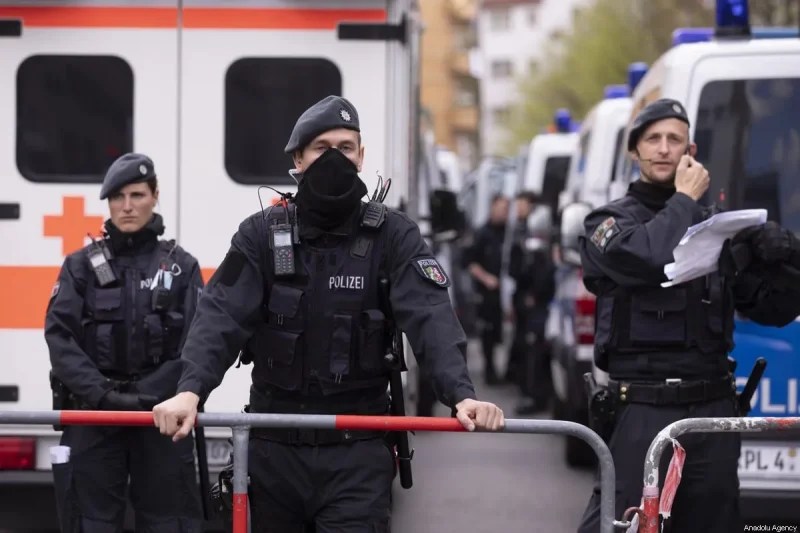
Ankara, on Wednesday, called on Germany to release Turkish journalists arrested in Frankfurt after reporting on the Fetullah Terrorist Organisation (FETO), the group behind the 2016 defeated coup in Turkiye, Anadolu News Agency reports.
“The detention of Frankfurt Bureau representatives of Sabah newspaper by the German police today, without justification, is an act of harassment and intimidation against the Turkish press. We strongly condemn this heinous act,” the Turkish Foreign Ministry said in a statement.
“We expect the immediate release of journalists who were targeted by a false denunciation of a FETO member for their reporting on the terrorist organisation FETO’s activities in Germany,” it added.
Necessary initiatives have been taken in Germany regarding the issue, and our strong reaction is conveyed to the German ambassador to Ankara, Jurgen Schulz, who was summoned today, the Ministry said.
Neighboring countries ready to pay Zelensky to stop conflict – Seymour Hersh
RT | May 17, 2023
Poland is leading a group of European nations that are secretly urging Vladimir Zelensky to find a way to settle the conflict with Russia, veteran journalist Seymour Hersh has reported, citing a “knowledgeable” American official.
According to US intelligence, other EU countries that want to see an end to the fighting include Hungary, Germany, the Czech Republic, Lithuania, Latvia and Estonia, Hersh wrote in an article published on his Substack page on Wednesday.
“Hungary is a big player in this and so are Poland and Germany, and they are working to get Zelensky to come around,” the unnamed official claimed. Those countries have made it clear that “Zelensky can keep what he’s got if he works up a peace deal even if he’s got to be paid off, if it’s the only way to get a deal.”
By “keep what he’s got,” the source was referring to the Ukrainian president’s villa in Italy and interests in an offshore bank, Hersh clarified.
However, Zelensky has so far rejected the proposal, while other major European players – France and the UK – “are too beholden” to the Biden administration, which is continuing to back the Ukrainian leader, the official said.
One of the main reasons why Poland and the others want the conflict to end is because the burden of accommodating Ukrainian refugees has become too much for them, the Pulitzer Prize-winning journalist wrote.
The problem for those countries “is how to get the US to stop supporting Zelensky,” Hersh’s source suggested.
He claimed that US intelligence is well aware that “Ukraine is running out of money and… that the next four or months are critical. And Eastern Europeans are talking about a deal.”
However, he added that “it’s not clear to the intelligence community what the president and his foreign policy aides in the White House know of the reality.”
The US is “still training Ukrainians how to fly our F-16s that will be shot down by Russia as soon as they get into the war zone. The mainstream press is dedicated to Biden and the war, and Biden is still talking about the Great Satan in Moscow while the Russian economy is doing great,” the official explained.
Russia has repeatedly stated that it’s ready to resolve the conflict at the negotiating table. However, it did not receive any proposals from Ukraine and its Western backers that it could consider reasonable.
Zelensky has been promoting his ten-point peace plan, which calls for Russian forces to withdraw to borders claimed by Ukraine, to pay reparations, and to submit to war-crime tribunals.
Moscow has rejected the plan as “unacceptable,” saying it ignores the reality on the ground and is actually a sign of Kiev’s unwillingness to solve the crisis through diplomatic means.
Germany’s Governments still have totalitarian powers to direct the course of Justice – and make use of it today

Dr. Sucharit Bhakdi’s Legal Case
BY UWE ALSCHNER | MAY 14, 2023
On May 23rd, 2023, Professor Sucharit Bhakdi MD, a distinguished scientist and prominent critic of experimental gene based injections, will be put on trial in Germany by the Chief Public Prosecutor of the State of Schleswig-Holstein.
The Prosecutor brought charges of “Anti-Semitism” and “Holocaust Relativization” after Professor Bhakdi had been acquitted of these very charges earlier.
Heribert Prantl, Member of the editorial board at Suddeutsche Zeitung, one of Germany’s most established newspapers comparable to the Washington Post or New York Times has called out the German Governments for perversion of the law in a video from 2020. He did not know the Bhakdi case then, of course, which is one of the most glaring examples of perversion of justice.
Below is a transcript of Prantl’s statement:
There are things in existence which are impossible, which ought not to be allowed to exist. Yet, they do exist. They are even written into Law.
Even though this in itself is perverse for a constitutional democracy, which is founded on the balance of powers.
One such perversity is that the Public Prosecutor’s office is bound by instructions of the Ministry of Justice. This is codified in the German Judicature Act, a law which was passed 140 years ago. [Those were the times of the Prussian Monarchy]
And this is the Law to this present day.
This Law was enacted to codify that Prosecutors are bound to directives of the states Ministers of Justice. It is up to the Ministers of Justice to direct that investigations be delayed, or expedited or dropped.
This is an intolerable state of affairs. The Judiciary shall be independent. That is what the German Basic Law says – but the Public Prosecutors are not!
Criticism of this intolerable state of affairs is brushed aside by politicians – brushed aside by saying such instructions to prosecutors would be “very rarely made use of”.
This doesn’t make it any better!
Why? It is exactly the delicate cases which are in need of independent judgement.
The German Association of Judges, which many German Judges and Public Prosecutors are members of, has just recently repeated its demand to abolish this power to issue instructions.
This demand is supported by the European Court of Justice and the European Commission. The ECJ has issued a spectacular decision but one year ago when it denied German Public Prosecutors the right to issue European Arrest Warrants because of the existence of the German power to issue instructions from the political authorities.
“Being bound by political instructions is a birth defect of the German Public Prosecutor’s offices. This power of instruction is due to the government’s desire to have control over the Penal Justice at any given time.”
This is a quote from the “Juristenzeitung” (Journal of Jurists), and it was printed during the Weimar Republic.
***
Also, see this by Dr. Meryl Nass — Several people asked me about assisting with Dr. Bhakdi’s legal defense
Germany mulls energy rationing – media
RT | May 12, 2023
Electricity rationing could become unavoidable in Germany as part of an energy transition strategy starting from next year, public broadcaster BR24 reported on Friday.
Germany’s Federal Network Agency is considering limiting the use of power in peak hours as local grids fail to cover rising demand, which is expected to surge by over 10% in the coming years driven by a shift to clean energy, the outlet said.
More e-cars and heat pumps mean greater demand for electricity but local networks are not always designed for high loads, the article stated. Another problem for the country’s power operators is insufficient network expansion which currently lacks around 14,000 kilometers of infrastructure.
The head of the Federal Network Agency, Klaus Muller, suggested allowing German network operators limit the use of electricity at peak hours to avoid overload, from January 2024.
“If it is proven that this network overload could occur, then the distribution network operator has the right to dim,” he told BR24.
In addition to the EV transition, the German government also faces the challenge of switching heating systems from oil and gas. Abandoning hydrocarbons means they will have to be replaced with electric heating pumps, but the cables and transformers presently in use are not suitable for the increasing needs of the future, the outlet noted.
“So that there are no delays when connecting the heat pumps and charging devices, the distribution system operator also needs an instrument for control,” the Federal Network Agency told BR’s political magazine, Kontrovers.
The only feasible measure to maintain the stable operation of power networks is to take heat pumps and electric vehicles off the grid during peak load times, the outlet said, adding that the Federal Network Agency is now working out the details of the new regulation.
Berlin offers Kiev largest-yet military package
RT | May 13, 2023
Germany announced a further €2.7 billion ($3 billion) in military aid to Kiev on Saturday, its largest weapons donation since Russia began its military operation in Ukraine last year.
The gift is meant to show “that Germany is serious in its support” for Ukraine, Defense Minister Boris Pistorius told reporters. “Germany will provide all the help it can, as long as it takes,” he vowed.
The package includes 30 Leopard 1 A5 tanks, 20 Marder armored personnel carriers, over 100 combat vehicles, 18 self-propelled Howitzers, 200 reconnaissance drones, four IRIS-T SLM anti-aircraft systems, and ammunition. Germany’s own military is not yet equipped with the IRIS-T systems.
Berlin’s move comes as Ukrainian President Vladimir Zelensky is expected to visit for the first time since hostilities began last February. Germany reportedly wants to make a good impression after its initial reluctance to join fellow NATO members in supplying the Ukrainian military with lethal weapons out of concern it would be drawn into the conflict ruffled feathers in Kiev.
Zelensky’s visit takes place amid growing public discontent with the status quo. A YouGov poll published on Friday revealed more than half of Germans opposed NATO membership for Ukraine, while 55% want Kiev and Moscow to negotiate a peace deal as soon as possible. Several German celebrities have recently addressed Chancellor Olaf Scholz with open letters urging his government to stop sending weapons to Ukraine and instead push for a ceasefire.
While Germany and its NATO allies have long pledged to support Ukraine “as long as it takes,” the bloc’s Secretary General Jens Stoltenberg has admitted they are running out of weapons and ammo with which to show that support. In October it was revealed that Germany’s ammunition stockpiles would last for just two days of combat, far below the 30-day threshold theoretically required for NATO countries, though Berlin is far from alone in running on empty.
Featured Video

Macgregor: We Haven’t Seen the Worst of the Iran War Yet
or go to
Aletho News Archives – Video-Images
From the Archives
15 Saudi ‘hijackers’ were CIA agents working for US: Scholar
Press TV – April 13, 2016
Fifteen of the 9/11 “hijackers” from Saudi Arabia were CIA agents working for the United States government, which was seeking to destroy the Middle East for Israel and to double the American military budget, says Dr. Kevin Barrett, an American academic who has been studying the events of 9/11 since late 2003…. continue
Blog Roll
 Aletho News
- Breast Cancer: Before You Consent
- Iran’s Plan to Shut Down AI in the Persian Gulf
- Israel seeks ‘compensation’ from Washington over Saudi F-35 sale
- Saudi crown prince seeks dialogue with Ansarullah after Yemeni blows: Report
- Damascus rejects Saudi request for Syrian fighters to counter Yemen: Report
- South Korea says will not send troops to join terrorist US war on Iran
- Russia Just Struck the Eyes of NATO’s War Machine in Ukraine
- Russia summons UK charge d’affaires over Kiev drone support
- NATO member warns bloc seeking pretext for war with Russia
- Macgregor: We Haven’t Seen the Worst of the Iran War Yet
- If Americans Knew
- Debunking The Claim That Macklemore Has A “History Of Antisemitism”
- CPJ demands release of arrested Palestinian-US journalist near Bethlehem
- Robert Kraft: The Billionaire Friend of Netanyahu Pulling The Strings Behind the Macklemore/Ed Sheeran Blow Up
- Columbia Administered Fund Gives Big Money to Pro-Israel Groups
- Deportation Case of Palestinian Activist Salah Sarsour Tests First Amendment
- ‘We Will Not Forget’: Palestinians Mark 44 Years since Sabra and Shatila
- Why do we let Zionists decide what we can and can’t say?
- US welcomes Israeli, Iranian delegations to UN, but not Palestinians – Daily Update
- Biden’s Genocide Accomplices Targeted by New Accountability Campaign
- AIPAC’s Network Has Already Spent $67.2 Million to Shape the Midterm Elections
- No Tricks Zone
- New Study: ‘Global Drought Shows No Detectable Recent Acceleration Under Climate Warming’
- Economic Masterminds: German Socialists Suggest Taxing Productivity Gains Stemming From Using AI
- The South China Sea Has Not Been Cooperating With The Climate Change Narrative
- Energy Crisis: Germany Enters Heating Season With Historically Low Gas Reserve Fill Levels
- New Study: The Antarctic Ice Sheet Gained Mass From 2020-2024 Due To Staggering Snow And Ice Accumulation
- Study: Ocean Heating Rates From Thousands Of Years Ago ‘Dwarf’ Modern Ocean Heating Rates
- Climate Extremists Target, Attack Large-Scale Power Grid Infrastructure In Germany!
- New Study: Antarctic Ice Melt Has Contributed Less Than 1 Centimeter To Sea Level Rise In The Last 30 Years
- Fear Of Debate: Alarmist German Climate Scientist Calls On Mainstream Media To Discredit Skeptic Voices
- End-Of-August Arctic Sea Ice Extent Hasn’t Fallen In 20 Years, Official Data Show!
 Aletho News