Germany ‘at war’ with Russia – FM
RT | January 25, 2023
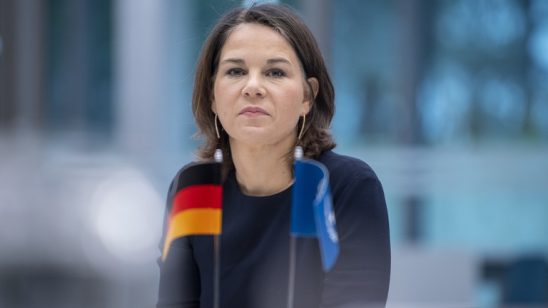
Arguing in favor of sending tanks to Kiev, German Foreign Minister Annalena Baerbock said EU countries were fighting a war against Russia. US and EU officials have previously gone out of their way to claim they were not a party to the conflict in Ukraine.
“And therefore I’ve said already in the last days – yes, we have to do more to defend Ukraine. Yes, we have to do more also on tanks,” Baerbock said during a debate at the Parliamentary Assembly of the Council of Europe (PACE) on Tuesday. “But the most important and the crucial part is that we do it together and that we do not do the blame game in Europe, because we are fighting a war against Russia and not against each other.”
While Chancellor Olaf Scholz has insisted that Germany ought to support Ukraine but avoid direct confrontation with Russia, his coalition partner Baerbock has taken a more hawkish position. According to German media, her Green Party has been in favor of sending Leopard 2 tanks to Kiev, and eventually managed to pressure Scholz into agreeing. Defense Minister Christine Lambrecht, who was reluctant to send tanks to Ukraine, was pushed to resign.
This is not the first time Baerbock has made waves with her position on the conflict. She told an EU gathering in Prague last August that she intends to deliver on her promises to Ukraine “no matter what my German voters think.”
Quoting Baerbock’s words on Wednesday, Russian Foreign Ministry spokeswoman Maria Zakharova said the West just keeps admitting that they had been planning the current conflict for years.
“If we add this to Merkel’s revelations that they were strengthening Ukraine and did not count on the Minsk agreements, then we are talking about a war against Russia that was planned in advance. Don’t say later that we didn’t warn you,” Zakharova said.
Former German chancellor Angela Merkel told German media in early December that the 2014 ceasefire brokered by Berlin and Paris was actually a ploy to “give Ukraine valuable time” for a military build-up. Former French president Francois Hollande has confirmed this, while Ukraine’s leader at that time, Pyotr Poroshenko, openly admitted it as well.
Russia’s operation in Ukraine was a “forced and last-resort response to preparations for aggression by the US and its satellites,” former Russian president Dmitry Medvedev said on Monday.
Germany years away from replacing Russian gas – official
RT | January 23, 2023
Germany is a long way from fully substituting Russian pipeline gas supplies with liquefied natural gas (LNG), estimates by the country’s Economy Ministry show.
According to a document published on the Bundestag website, Germany imported 55 billion cubic meters (bcm) of Russian natural gas in 2021. The document also shows that Germany’s new Floating Storage and Regasification Units (FSRUs), which are currently being installed in a number of ports to allow the import of LNG, may reach a similar capacity no sooner than in 2026.
By 2030, those capacities are projected to increase to 76.5 bcm, or about 80% of total German gas consumption in 2021. However, the ministry notes that even once the terminals go online, the global LNG market may not have enough capacity to cover additional demand, which could push these dates further.
The ministry notes that the country’s gas storage facilities are currently well-filled, and there is no immediate danger of gas shortages. However, it acknowledges that once the stores run dry later this year and the time comes to refill them for the next heating season, Germany may face shortages. According to calculations by the Oxford Institute for Energy Studies, Germany faces a supply gap of around 30 bcm of gas this year, and the FRSUs are projected to produce less than half of this volume by the end of 2023.
“The truth is, there won’t be enough in the next three to four years of LNG production capacity in the world to meet the growing demand. So the unspoken strategy is that Germany will continue to pay crazy prices and other, less rich countries go empty-handed,” Christian Leye, a Bundestag Left Party representative told Bloomberg.
Germany did manage to reduce its dependence on Russian energy last year by importing LNG through European neighbors and boosting pipeline gas flows from Norway and the Netherlands. However, its gas storages were filled over the summer, when Russian gas still flowed directly to the country. Another problem is the cost of LNG imports, which is estimated to be four times more expensive than Russian pipeline deliveries. Germany may also face supply constraints if the Netherlands goes through with recently announced plans to shut down the Groningen gas field, the region’s largest gas deposit.
Are demands that Scholz green-light export of Leopard 2 tanks more about hurting Germany than helping Ukraine?

eugyppius: a plague chronicle | January 22, 2023
In 1952, Hastings Ismay famously remarked that the purpose of NATO is “to keep the Russians out, the Americans in and the Germans down,” and the war in Ukraine has made it very hard to doubt that he was wrong.
From the Neue Zürcher Zeitung:
The Ukraine needs battle tanks to defend itself against the Russian onslaught. But Chancellor Olaf Scholz has hesitated to provide them. For this reason, he’s come under massive pressure from many allies. [German Defence Minister Boris] Pistorius explained why Germany is still hesitating with two sentences: There are good reasons for delivering the tanks, and good reasons against doing so. All arguments have to be weighed carefully …
When American Defence Secretary Lloyd Austin appeared before the press in Ramstein shortly after Pistorius, he was asked whether Germany was doing its part as a leading European power. Austin couldn’t help smiling, but then he replied that Germany was doing enough and that it was a “reliable ally”. He ought to know exactly what Pistorius meant, in speaking of good reasons for and good reasons against providing tanks to Ukraine. The reasons in favour are military in nature: Without tanks, the Ukraine cannot defend itself.
The German government has been rather more evasive about the reasons against. The German defence industry is concerned that the Americans will replace the [German-manufactured European] Leopards with their own tanks. The war in Ukraine offers the United States the opportunity to displace German competition and secure a foothold in the European defence market by supplying its own armoured vehicles, as it has already done with helicopters, fighter jets and missiles.
Years of peace in Europe, an ageing population and a corresponding focus on expensive social programmes have caused Germany to put its defence industry into near-hibernation. Only a little over 2,000 Leopard 2s have ever seen the light of day. Each one is a hand-built machine that takes two years to make. If Germany permits the export of the European supply of Leopard 2s to Ukraine, the Russians will grind them to nothing within months, and then Europe will have no tanks except the tanks that the Americans sell them:
Defence industry representatives, who wish to remain anonymous, report that the Americans are offering their own used tanks as replacements to [European] countries able to supply Leopard 2s to Ukraine, together with a long-term industrial partnership. Any country that accepts the American offer would be hard to win back for the German tank industry. Berlin’s influence in armament policy would decrease correspondingly.
Tanks are driven by men, who have to be trained in the operation of specific models. Their use moreover requires a whole supply chain of munitions and especially spare parts, which the Americans are eager to offer. The upshot is that, once Europe opts into American armour, it will never switch back, and Germany will be out of the game for good. Nor should we lend much credence to the idea that our very few tanks will make any difference either way for Ukraine’s prospects. The insistence that Scholz release the Leopard 2s is simply an attempt to edge Germany further out of the European arms industry and into a position of lesser political and economic influence in Europe, so that the United States can fill the gap.
Noah Carl, over at the Daily Sceptic, drew attention last week to remarks by the French intellectual Emmanuel Todd that “this war is about Germany”:
After the collapse of the Soviet Union, Zbigniew Brzezinski called Eurasia the new “great chessboard” of world politics … The Russian nationalists and ideologues like Alexander Dugin indeed dream of Eurasia. It is on this “chessboard” that America must defend its supremacy – this is Brzezinski’s doctrine. In other words, it must prevent the rapprochement of Russia and China. The financial crisis of 2008 made it clear that with reunification Germany had become the leading power in Europe and thus also a rival of the United States. Until 1989, it had been a political dwarf. Now Berlin let it be known that it was willing to engage with the Russians. The fight against this rapprochement became a priority of American strategy. The United States had always made it clear that they wanted to torpedo [Nord Stream 2]. The expansion of NATO in Eastern Europe was not primarily directed against Russia, but against Germany. Germany, which had entrusted its security to America, became the Americans’ target [in the destruction of the pipeline]. I feel a great deal of sympathy for Germany. It suffers from this trauma of betrayal by its protective friend – who was also a liberator in 1945.
After the anti-Russian sanctions regime and its clear deindustrialising effects on the German economy, followed by the attack on the Baltic Nord Stream pipelines, and even smaller things, such as the high-profile anti-industry protests by the American-funded activist group Letzte Generation, I am willing to believe many conspiratorial things about the Ukraine war.
Still, I think Todd’s thesis is overdrawn. This war is about Russia primarily, and about Germany only secondarily. It’s an attempt of the Global American Empire to hem in Russia via an extended proxy campaign. In the longer term, this effort will require that Europe remain an American outpost, as it was during the Cold War, and this means the economic and political influence of Germany must be sharply curtailed. America – and not Germany – must dominate the Continent. The Scholz government has gone very far in making concessions to the Americans, but he appears to have finally drawn a line of sorts, at giving the Americans a pretence to sell their tanks in Europe. It will be important to see whether he can hold out.
German electricity to be rationed as EVs and heat pumps threaten collapse of local power grids
Net Zero Watch | January 19, 2023
The Federal Network Agency is planning to ration the power supply to heat pumps and EV charging stations in order to protect the distribution grids from collapse. Charging times of three hours to charge electric cars will be allowed so that they can cover a distance of 50 kilometers.
Electric cars, heat pumps and private solar systems are booming. This is pushing the power grids in cities and communities to their limits.
An expert quoted by the “FAZ” warns that the local power grids are in danger of becoming the bottleneck for the energy transition. According to estimates, expanding it would cost a three-digit billion amount.
The Federal Network Agency wants to ration electricity for consumers to prevent a collapse in supply.
Electric cars are booming, as are heat pumps and private solar systems on roofs. This should only be the beginning of the energy transition in Germany. But the energy industry is already warning that the local power grids in cities and communities are reaching their performance limits. This has been reported by the “Frankfurter Allgemeine Zeitung” (FAZ). According to the report, the Federal Network Agency is planning to temporarily ration the power supply to heat pumps and charging stations in order to protect the distribution grids from overload.
A year ago, the network agency confirmed a “network development plan” in which up to seven million heat pumps in households are expected for 2035. So far there have been around one million heat pump systems.
Enormous growth is also expected in electric vehicles. For large network operators such as Eon, the current figures are a challenge. “The applications for the connection of new systems are going through the roof, and we assume that the growth rates will continue to grow,” said Eon board member Thomas König. According to the “FAZ”, the electricity supplier registered around 100,000 new charging stations for electric cars in 2021.
Local power grids threatened to become the bottleneck for the energy transition, Krzysztof Rudion, professor at the Institute for Energy Transmission and High Voltage Technology at the TU Stuttgart, told the newspaper. “The expansion of the distribution network simply cannot keep up with the boom in heat pumps, electric cars and solar systems.”
In order to arm the distribution grids, between 100 and 135 billion euros would have to be invested in Germany in the next decade and a half, the FAZ reports, citing a new study by the management consultancy Oliver Wyman.
Full story (in German)
Translation Net Zero Watch
Germany, “standing atop a billion-dollar mountain of masks,” begins to incinerate the rapidly expiring surplus
eugyppius: a plague chronicle | January 20, 2023
From Welt :
Authorities have come up with a term that sounds at least halfway sane. They’re calling it “thermal reprocessing.” Four federal states now claim to have thermally reprocessed – or, in plain language, to have incinerated – a total of 17.25 million expired Corona masks.
Baden-Württemberg has destroyed 6.1 million masks, Saxony 5.5 million, North Rhine-Westphalia 5 million, and Mecklenburg-Vorpommern 656,000 …
The Federal Ministry of Health (BMG) in Berlin has also “thermally recycled” masks in recent months. The number so far is “less than one million units,” a spokesperson said … The destroyed masks were purchased during the peak of the pandemic, and have exceeded their expiration date …
The federal and state governments are currently standing atop a billion-dollar mountain of masks. According to information provided by the Ministry of Health in September, there are a total of 3.7 billion masks in the federal inventory … The federal states have have an additional 180 million Corona masks at their disposal …
The states want to burn even more masks, but for the moment they’re not allowed, because much of the surplus in their possession is technically federal property. Thus they’ve begun begging the government to take the masks back:
“The Interior ministry of Hesse, together with many ministries of other states, have turned to the federal government with an urgent request to either take back their unusable masks … or grant permission for their destruction…” says a spokesperson. Unfortunately, the federal government has not yet agreed. “The Federal Ministry of Health has referenced uncertainties in customs law that the government has not yet been able to clarify.”
I’m going to go out on a limb here, and say the Scholz government is reluctant to write off the masks purely because of the negative publicity it’ll generate. I can’t imagine how customs regulations would prevent the Health Ministry from destroying its own expiring property.
Karsten Klein, chairman of the FDP faction in the Bundestag Budget Committee, has criticised the previous government’s over-procurement: “The coalition has inherited a hugely expensive mask mountain [Merkel health minister] Jens Spahn. As important as federal support for procuring masks was in 2020, under Spahn it led to literal frenzied buying that completely lost sight of actual demand” …
But we haven’t even gotten to the best part. The idiot pandemicists are still hoarding masks, even as they’re burning them:
… Additionally, the “National Health Protection Reserve is still stockpiling masks. The Reserve was established in mid-2020 by the Merkel government to prevent future shortages. According to the Ministry of Health, there are currently 245 million masks in the reserve, part of which will expire at the end of 2023.
Doubts about the usefulness of the Reserve are growing. In November, the Budget Committee called on the government to … examine “whether a federal physical stockpile for the health system is at all necessary or economical” …
For the taxpayer, mask procurement is very expensive. The costs at the federal level alone have totalled 5.8 billion Euros since the beginning of the pandemic.
It’s just so astounding, this entirely pointless and still ongoing mass delusion. Masks do nothing to stop infection, we have spent three years learning in excruciating detail that they do nothing to stop infection, we are now setting fire to millions of masks heedlessly purchased at the height of pandemic hysteria when there was every reason to expect that masks would do nothing to stop infection, and still we’re pouring millions of Euros into some kind of retarded national strategic mask reserve that will also surely be incinerated in the coming years because masks do nothing to stop infection. Even more unfathomable is this ridiculous fiction that useless products which do nothing can ever “expire.” What is the fear, that expired masks will do even more of nothing than new masks?
Everything about Corona is such a multifaceted ridiculous farce.
US and allies must address Russia’s security concerns and their past deceptions on Donbass, the Kremlin says
RT | January 20, 2023
US-Russia relations are at their lowest point ever amid the crisis in Ukraine, Kremlin spokesman Dmitry Peskov said on Friday. As the conflict deteriorates, the only way to reverse it is for Western nations to acknowledge their mistakes and change their policies, he added.
Despite initial hopes that under President Joe Biden the US would engage Russia diplomatically, the last two years “have been very bad for our bilateral relations,” the official told journalists. They are now “probably at their lowest point, historically” he added, and “there is no hope for improvement anytime soon.”
The Ukraine hostilities – the focus of the confrontation between Russia and Western nations – are in “an upward spiral” according to Peskov.
“We can see a growing indirect, and sometimes direct involvement of NATO nations in this conflict,” he stated. The nations that back Kiev are acting under “a delusion that Ukraine has any chance to win on the battlefield,” he explained.
Asked how the vicious circle could be broken, Peskov suggested that the US and its allies had to mentally turn the clock back to the end of 2021, “when Russia was suggesting a discussion of its concerns at the negotiations table” only to be dismissed.
Western repentance for its “cynicism” was also in order, he added.
“Germany, France and Ukraine were playing a swindle game with the Minsk agreements. Now is payback time,” he said, referring to the roadmap for Ukraine reconciliation, which the three nations signed with Russia in 2015.
Angela Merkel, Francois Hollande and Pyotr Poroshenko, the leaders at the time of Germany, France and Ukraine respectively, have since stated that the deal they negotiated with Russia was meant to give Kiev time to rebuild its military.
Moscow considers these admissions to be evidence that the negotiations were conducted in bad faith and that the Ukrainian government and its backers had always intended for the Minsk agreements to fail and for the Donbass standoff to be resolved by military means. Russia claimed that its military campaign in Ukraine launched last February preempted an offensive planned by Kiev with NATO’s help.
Ukraine, Germany, and France “lied to the people of Donbass, as they had a terrible fate planned for them, which Russia prevented,” Peskov explained.
Famous French Historian: “This War is About Germany”

BY NOAH CARL | THE DAILY SCEPTIC | JANUARY 18, 2023
Historian Emmanuel Todd is one of France’s leading public intellectuals. At the age of just 25, he predicted the collapse of the Soviet Union in his book The Final Fall: An Essay on the Decomposition of the Soviet Sphere. Later in his career, he carried out pioneering work on family structure and how it impacts societal development.
Now at the age of 71, Todd doesn’t seem to mind ruffling feathers – as his remarks in a recent interview with Swiss magazine Weltwoche make clear. “I’ll give you the first interview because you write in German,” he begins by saying. “This war is about Germany.”
About Germany? What does he mean? Todd explains:
The financial crisis of 2008 made it clear that with reunification Germany became the leading power in Europe and thus also a rival of the USA. Until 1989 it was politically a dwarf. Now Berlin showed its willingness to get involved with the Russians. Combating this rapprochement became a priority of American strategy. The United States had always made it clear that they wanted to torpedo the gas agreement. The expansion of NATO in Eastern Europe was not primarily directed against Russia, but against Germany.
Asked who sabotaged the Nord Stream pipelines, Todd replies, “Of course the Americans. But that is completely unimportant. It is normal.” The important question is, “How can a society believe that it could have been the Russians?”
“We are dealing here with an inversion of possible reality,” says Todd. “The newspapers tell us how the Russians are shooting at prisons they have occupied. That they shoot at nuclear power plants that they control locally. That they blow up pipelines that they built themselves.”
It’s clear, then, that Todd subscribes to the theory I first discussed back in August: that the U.S. deliberately provoked conflict between Russia and Ukraine to sabotage the Nord Stream 2 pipeline, thereby ending (or at least severely curtailing) Russo-European interdependence.
Unfortunately, Todd doesn’t provide any specific evidence to back up his provocative claims. So the theory remains speculative. Of course, this doesn’t mean we should accept the conventional narrative that America just really cares about democracy.
So what, in Todd’s view, should be done? “I wish the Germans would understand: The side of the good they want to be on this time is not that of the United States,” he says. “The good means: end this war.”
While Todd certainly represents a minority viewpoint among Western intellectuals, as he himself acknowledges, it’s still worth considering.
NATO’s Ominous Tank Orders for Ukraine… The Historic Spots of a Leopard
Strategic Culture Foundation | January 13, 2023
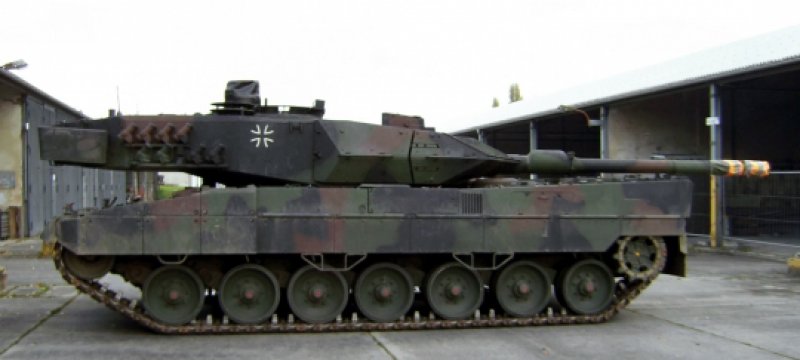
German-made tanks, the Panzer Leopard 2, are to be deployed in Ukraine in a war that is increasingly becoming an open confrontation between the U.S.-led NATO alliance and Russia.
Germany’s Vice Chancellor Robert Habeck has given approval for the move following the announcement on Wednesday by Polish President Andrzej Duda that a “company” of Leopards was being supplied from Poland to Ukraine.
There are a reported 2,000 German-made Leopards in service across 13 European countries. Officially, Berlin has to give its approval for countries to re-export the tank, which is seen as one of the world’s best in its class of main battlefield armored vehicles. That approval was swiftly forthcoming in Habeck’s affirmative response.
German Chancellor Olaf Scholz is now under intense pressure to authorize the additional supply of Leopards directly from Germany to Ukraine. For months, Scholz has been refusing to provide the heavy armor out of concern not to provoke Moscow which would perceive it as a definitive escalation. Figures within the Berlin government, especially Habeck’s Green Party, have been cajoling the chancellor to increase the supply of weapons. It is a foregone conclusion that Scholz will cave in and give the green light, as he has done on several previous occasions concerning prohibitions on other categories of weaponry.
What is abundantly clear is that the United States and its NATO allies are coordinating a larger-scale involvement in the war in Ukraine against Russia. They are marching in lockstep.
Last week, U.S. President Joe Biden announced an agreement with Germany to supply “light tanks” in the form of Bradley and Marder fighting vehicles. That move was coupled with an unprecedented decision by France to send AMX-10 RC light tanks to Ukraine. This week, Britain upped the ante by trumpeting that it was ready to supply Challenger 2 main battle tanks to Ukraine.
Polish President Duda was in the western Ukrainian city of Lviv on Wednesday accompanied by Lithuanian counterpart Gitanas Nauseda and Ukrainian leader Vladimir Zelensky. The day before, on Tuesday, the German Foreign Minister, Annalena Baerbock (another warmongering Green member), made a surprise visit to Ukraine’s eastern city of Kharkiv where she hinted that Leopard tanks would be forthcoming.
Speaking alongside Germany’s top diplomat, the Ukrainian Foreign Minister Dmytro Kuleba said cryptically: “I have no doubt Germany will send Leopard tanks to Ukraine… The German government somewhere deep down understands that the decision will be made and the tanks will be transferred to Ukraine.”
The implied fait accompli echoed the words of Joe Biden who warned just before the eruption of conflict in Ukraine in February last year that the Nord Stream 2 gas pipeline from Russia would never become operational regardless of Berlin’s position.
In Lviv, the Polish leader also spoke about the deployment of Leopard tanks as part of an “international coalition” for sending such weaponry.
“A company of Leopard tanks will be handed over as part of a coalition that is being built because, as you know, a large number of formal requirements, agreements, and so on must be met, but primarily we want this to be an international coalition,” said Duda.
What that means is the German-made tanks are going to be sent to Ukraine as part of a much larger, coordinated NATO effort. There is an air of inevitability that the Leopards will be joined by U.S.-made M1 Abrams as well as British Challengers.
The narrative that is being propounded is that the heavy weapons must be ramped up to Ukraine in order to prevent an alleged Russian offensive from taking the capital Kiev and also to consolidate supposed gains made by Ukrainian military. This narrative is obviously contradictory and belies the Western disinformation peddled by its news media and governments which swivels between imminent defeat or imminent victory for the Kiev regime.
The significant military victory by Russian forces this week in taking control of Soledar, the salt mining town in Donbass, is being cited by NATO figures as evidence that heavier weapons and tanks must be urgently supplied to Ukraine.
What is astounding is the dearth of public debate in the Western states about the relentless supply of weaponry to Ukraine. Hundreds of billions of dollars and euros are given away to a corrupt cabal in Kiev without the slightest oversight. Despite unprecedented economic and social hardships for their general populations, the ruling elites of Western states are pumping more and more weaponry into a conflict that has got nothing to do with alleged “freedom and democracy” in Ukraine.
Western nations are being dragged deeper into a war against Russia with no public knowledge let alone democratic consent about the real reasons for the war. Those reasons are to do with promoting U.S.-led Western imperialist interests, which are profoundly at odds with those of ordinary citizens.
The move to supply main battle tanks by NATO powers is typical of the stealth that has driven the build-up to this war. Typically, the decision has been made in secret and everything else is all about delivering on the decision. Shameless lies about “defending democracy and freedom” are spouted, even though the regime being supported in Kiev by Western taxpayers’ money is one infested with NeoNazis.
Nations are being swept towards an all-out war between the U.S./NATO and Russia by elite rulers in hock to corporate interests and unaccountable deep-state planners.
Despicably and criminally, there is no call among Western governments or media for diplomatic initiatives to end the conflict in Ukraine and to address the deeper geopolitical causes. All elite discourse is about the imperative of “defeating Russia” and “regime change” in Moscow as if it is a doctrinal ordinance.
The conflict in Ukraine was sown in 2014 by the U.S. and NATO-backed coup against democracy and the subsequent weaponizing of a NeoNazi regime. But the seeds for that were borne from a more evil fruit that goes all the way back to the Second World War and Nazi Germany’s failed conquest of the Soviet Union.
The imperial designs of the Third Reich and its expansionist “lebensraum” have been inherited by the U.S.-led NATO axis. The deployment of Leopard tanks – in place of Panzer Tigers – trundling towards Russia is a visceral sign of antecedent and of who stands on the right side of history.
Hungary in ‘culture shock’ from German policies – Orban
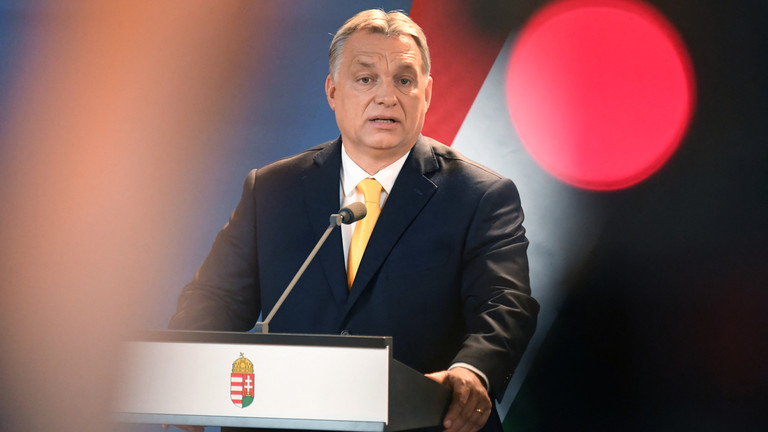
Hungarian Prime Minister Viktor Orban. © ATTILA KISBENEDEK / AFP
RT | January 13, 2023
Policies introduced by Germany and German politicians within the European Commission and the way they “miscalculated” the effects of anti-Russian sanctions has caused a “culture shock” in Hungary. The EU doesn’t have the courage to admit the fallacy of its sanctions policies, Hungarian Prime Minister Viktor Orban said in an interview on Friday.
“I grew up with the feeling that the Germans are precise, engineers, they calculate, take their time, they know what they are doing,” Orban told Kossuth Radio, adding that now that perspective has changed.
“Now we see what they are doing, because the European Commission has a German chairman,” Orban continued, referring to EU Commission President Ursula von der Leyen. “They failed with the sanctions, miscalculated and did not count to the end from a professional point of view,” he added.
According to the PM, the EU doesn’t have the courage to admit the fallacy of its sanctions policies against Russia amid the ongoing conflict in Ukraine. Orban noted, however, that Hungary lacked the strength to change the position of larger countries, meaning that sanctions on Moscow will likely continue despite their ineffectiveness.
Hungary, which relies heavily on Russian energy, has on several occasions criticized EU leaders for being responsible for the ongoing energy crisis by introducing “counterproductive” sanctions on Moscow. Budapest has repeatedly asked to scrap the “failed policy of Brussels” in order to stop Europe from “slowly bleeding.” Hungary has also been one of the few Western states that have so far refused to send any weapons to Ukraine or train its troops.
“If it were up to us, there would not be a sanctions policy,” Orban said last month. “It is not in our interest to permanently divide the European and Russian economies into two, so we are trying to save what can be saved from our economic cooperation with the Russians.”
Hungary’s relations with the EU have been particularly strenuous in recent months as Budapest has also clashed with several EU institutions on a number of issues, including LGBTQ rights and migration. Brussels, in turn, has accused Orban’s conservative government of eroding the rule of law while Western establishment media outlets have treated him like an authoritarian leader that is too sympathetic to Russian President Vladimir Putin.
Share prices of NATO weapons makers surge
RT | January 11, 2023
The largest military and defense corporations of NATO member states have seen a 21.5% boost in market value in 2022 amid the military operation in Ukraine and the rearmament in Europe, Vedomosti newspaper reported on Wednesday, citing data from Defense News and Tradingview analytics.
Their combined market capitalization increased from $579 billion in December 2021 to $703 billion in December 2022, according to the estimates.
The ranking included 25 companies with a capitalization of over $1 billion which are traded on the stock market and have military products dominating in their revenues, and are also actively involved in arms supplies to Ukraine.
Authors of the report name German arms manufacturer Rheinmetall as the top gainer over the last 12 months, with a 122% surge in share price. French drone and missile producer Thales saw its market value rise 54%. American defense contractor Northrop Grumman was up 44%, while stock in HIMARS rocket launchers maker Lockheed Martin gained 42%.
Other notable mentions in the report include BAE Systems (+40%), Kongsberg Gruppen (+37%), General Dynamics (+24%), and Raytheon Technologies (+19%).
The report pointed out that the value of NATO’s military giants was soaring while the overall Western corporate sector sank by 16% last year, according to the S&P 1200 index, suggesting that arms manufacturers were likely the main beneficiaries of the political crisis in Europe.
Featured Video

ARE PATIENTS BEING PROPERLY INFORMED ABOUT OZEMPIC?
or go to
Aletho News Archives – Video-Images
From the Archives
Trans ‘milk’ as good as the real thing – NHS
RT | February 18, 2024
The drug-induced nipple secretions of trans women are as good as mothers’ breast milk for babies, the University of Sussex Hospitals NHS Trust claimed in a letter to campaigners made public in a report by British think tank the Policy Exchange on Sunday.
The healthcare trust’s medical director, Rachel James, argued that the off-label prescription drug cocktail men transitioning to female take in order to produce milk was “similar to the natural hormones which encourage lactation to develop when the baby is newly born.”
“The evidence which is available demonstrates that the milk is comparable to that produced following the birth of a baby,” James wrote in the letter, sent to Children of Transitioners last August.
Biological men who wish to lactate must first take hormones to grow milk glands and then take high doses of either domperidone or metoclopramide to stimulate milk production. Neither drug is approved for this use, though they are occasionally prescribed off-label to biological women who have trouble lactating.
However, domperidone’s own manufacturer, Janssen, warns patients the drug “may cause unwanted side effects affecting the heart in a breastfed baby” and “should be used during breastfeeding only if your physician considers this clearly necessary.” … continue
Blog Roll
 Aletho News
- 2025 Nature Paper Claiming Worsening Global Drought Gets RETRACTED …Heavily Flawed
- Your Milk Is Not the Problem
- The Truth About the Trump Shootings with Ken Silva
- ARE PATIENTS BEING PROPERLY INFORMED ABOUT OZEMPIC?
- US lawmaker blocks $2.8 billion weapons sale to Israel: Report
- Yemeni army claims responsibility for strikes on sensitive sites in Saudi capital, Aramco facilities in Yanbu
- Iran Judiciary issues indictments against 159 US, Israeli officials for assassination of Leader, commanders
- Turkiye revokes Iranian bank license under US sanctions campaign
- US-Denmark Agreement on Greenland Is ‘PR Stunt’ Ahead of Midterms
- Araghchi: Military intervention cannot create security; coercion cannot bring peace
- If Americans Knew
- Salah Sarsour’s Legal Team Says DHS Has Not Met Its Burden to Prove He Is Deportable
- An analysis of tax forms by The Intercept show Kraft’s charity and LLC have donated to Friends of the IDF and AIPAC’s super PAC.
- Israeli attacks kill four Palestinians in Gaza – Daily Update
- Inside Gaza’s death trap of collapsing, bombed-out buildings
- The everyday items Israel bans from Gaza every day
- Inside the siege, the ruined buildings of Gaza – Daily Update
- Debunking The Claim That Macklemore Has A “History Of Antisemitism”
- CPJ demands release of arrested Palestinian-US journalist near Bethlehem
- Robert Kraft: The Billionaire Friend of Netanyahu Pulling The Strings Behind the Macklemore/Ed Sheeran Blow Up
- Columbia Administered Fund Gives Big Money to Pro-Israel Groups
- No Tricks Zone
- 2025 Nature Paper Claiming Worsening Global Drought Gets RETRACTED …Heavily Flawed
- New Study: ‘Global Drought Shows No Detectable Recent Acceleration Under Climate Warming’
- Economic Masterminds: German Socialists Suggest Taxing Productivity Gains Stemming From Using AI
- The South China Sea Has Not Been Cooperating With The Climate Change Narrative
- Energy Crisis: Germany Enters Heating Season With Historically Low Gas Reserve Fill Levels
- New Study: The Antarctic Ice Sheet Gained Mass From 2020-2024 Due To Staggering Snow And Ice Accumulation
- Study: Ocean Heating Rates From Thousands Of Years Ago ‘Dwarf’ Modern Ocean Heating Rates
- Climate Extremists Target, Attack Large-Scale Power Grid Infrastructure In Germany!
- New Study: Antarctic Ice Melt Has Contributed Less Than 1 Centimeter To Sea Level Rise In The Last 30 Years
- Fear Of Debate: Alarmist German Climate Scientist Calls On Mainstream Media To Discredit Skeptic Voices
 Aletho News