Britain’s Real Terror Apologists
By Finian Cunningham | Sputnik | June 11, 2017
Despite a vicious smear campaign to denigrate Britain’s Labour leader as a “terrorist sympathizer,” Jeremy Corbyn still pulled off an amazing achievement in the general election.
Hardly has a politician in any Western state been so vilified with character assassination, and yet he has proven to be most popular Labour leader in Britain since the Second World War.
After weeks of trailing his Conservative rival Theresa May in the polls, Corbyn’s socialist manifesto appealed to a record number of voters – closing the gap between the parties to only two percentage points behind the Tories.
This was in spite of a concerted media campaign to destroy Corbyn in the eyes of the British public as a “terrorist stooge.” The irony here is that the Conservative party is forming a governing coalition with a little-known Northern Ireland party whose history is steeped in British state terrorism. (More on that in a moment.)
For Corbyn, the election outcome was a stunning moral victory. For Prime Minister May it was a humiliating defeat. The Conservatives lost their overall majority in the British parliament and now they have to rely on this reactionary fringe party from Northern Ireland to form a government.
May called the snap election because she thought her party would increase its majority and also because she calculated that Corbyn’s socialist direction of Labour would be wiped out. Many Blairite naysayers in his own party thought so too.
The opposite happened. The British public largely rejected May and her neoliberal capitalist, pro-austerity, pro-NATO policies. They instead rallied behind Corbyn. Granted, the Tories still won the election – only narrowly – but the surge in support for Labour under Corbyn means that he has galvanized a party that stands a strong chance of winning if another election is called. And that could be soon, perhaps in the coming months owing May’s shaky ad hoc government collapsing.
Another riveting factor in all this is that Corbyn’s success came amid a torrential Tory and right-wing media campaign to denigrate him as a terrorist sympathizer. The propaganda onslaught was conducted for months since May called the election back in April. And it grew to a frenzy as election day approached last Thursday, especially when the opinion polls showed Labour steadily whittling away the earlier Conservative support.
The day before the public went to the polling booths, the Daily Mail ran the front page headline: “Apologist for terror,” with Jeremy Corbyn’s photo below. It looked like a “wanted poster” from the Wild West. The only thing missing was the subhead with the words: “Wanted dead or alive.”
The scurrilous allegation pounded over and over by the largely pro-Conservative British media that Corbyn is “soft on terrorism” stems from his otherwise principled history of campaigning on international justice and peace.
Over his 35 years as an MP, he has voiced consistent support for Palestinian rights under illegal Zionist occupation; he has supported Hezbollah resistance against Israeli and American aggression; and during the conflict in Northern Ireland, Corbyn gave a voice to Irish Republicans who were being assailed by British military violence.
Many other international causes could be mentioned, such as Corbyn opposing British government weapons dealing with the despotic Saudi regime which is propagating terrorism in Syria, Iraq and Yemen.
He has also campaigned to abandon nuclear weapons and is critical of NATO’s reckless expansion in Europe, which have earned him the jingoistic pillorying by the British establishment of “being soft on Russia.”
Corbyn has never condoned terrorism. Rather he has always sought to properly put it in a wider context of other parties also, unaccountably, using terrorism and thus fueling conflict.
This brings us to so-called Democratic Unionist Party (DUP) from Northern Ireland whose 10 MPs Theresa May’s Tories are now relying on to form a government. This party was formed in the early 1970s by the firebrand Protestant preacher Ian Paisley. While Paisley mellowed in later years before his death in 2014, he spent most of his career preaching vile hatred against Catholics and Irish Republicans, whom he saw as a threat to the political union between Northern Ireland and the rest of Britain. In British-run Northern Ireland, it wasn’t acceptable to have a democratic aspiration for an independent Ireland. You were either a pro-British unionist or a “threat.” So much for British democracy.
Senior members of Paisley’s pro-British party played a crucial role in smuggling massive caches of weapons into Northern Ireland during the 1980s to illegally arm unionist paramilitaries. These paramilitaries went on to murder hundreds of innocent people simply because they were Catholics, who tended to be Republican. A favored tactic of these paramilitaries was to storm into pubs and homes and indiscriminately mow people down with assault rifles.
One notorious pro-British killer was Gusty Spence who belonged to the Ulster Volunteer Force paramilitary. He later expressed remorse and deplored Ian Paisley, the DUP founder, as the person who incited him to murder innocent Catholics due to his sectarian hate speech.
The paramilitary murder gangs were not just supported covertly by members of the DUP. The British government of Margaret Thatcher – Theresa May’s predecessor and political heroine – orchestrated these same death squads in a covert policy of “dirty war.”
British military intelligence colluded with the pro-unionist militants to assassinate Republican politicians and ordinary Catholics alike in a covert policy of state-sponsored terrorism. The objective was to terrorize people in submitting to British rule over Northern Ireland, rather than allowing the island country to become united and independent.
The British government provided intelligence and cover for the death squads and the unionist politicians had helped supply the AK-47 assault rifles and Browning handguns smuggled from Apartheid South Africa.
This secret dirty war policy of the British government and their unionist proxies in Northern Ireland has been uncovered by investigative journalists such as Paul Larkin (see his groundbreaking book “A Very British Jihad: Collusion, Conspiracy and Cover-up in Northern Ireland”); as well as human rights campaign groups like Belfast-based Relatives for Justice and Pat Finucane Centre.
Not even the present government of Theresa May can deny this murderous legacy in Ireland, although there is a determined silence now as she fights for her political survival in the wake of the British election disaster.
It is a proven fact that May’s Conservative party and the unionist politicians whom she is now partnering with to govern Britain were complicit in terrorism.
Northern Ireland has since gained a peace settlement in which unionist and republican politicians have been able to work together to form a local governing administration. The Irish peace process was possible partly because of the courageous and principled intervention by British politicians like Jeremy Corbyn.
Corbyn has never apologized for terrorism. He has sought to overcome it by making politics work. The same cannot be said for Theresa May’s Conservative party. It was an accomplice and an apologist for a covert policy of state-sponsored terrorism during Northern Ireland’s recent 30-year conflict.
The very party whom she is now allied with for governing Britain – the DUP – were also apologists for paramilitaries who routinely smashed their way into family homes and slaughtered victims in cold blood in front of their loved ones.
The ongoing muted policy of May’s government and her unionist proxies about their murderous legacy in Ireland is a testimony to who the real apologists for terror are.
Russia warns US against attacks on Syrian forces
By M K Bhadrakumar | Indian Punchline | June 12, 2017
Diplomats dissimulate, journalists exaggerate, politicians waffle, but an army general has no reason to obfuscate the stark ground reality. Therefore, the rare remarks by the commander of Russian forces in Syria, General Sergey Surovikin, merit great attention. Excerpts are reproduced below:
- The US-led coalition lets militants of the Islamic State terrorist group leave Raqqa instead of killing them… The US-led coalition enters into collusion with ringleaders of the ISIS, who give up their settlements without fighting and head to the provinces where the Syrian government forces are active… The Russian force in Syria sees in the Raqqa area militants leaving the city and its suburbs unhindered. In early June, ISIS terrorists left the populated localities 19 kilometers southwest of Raqqa offering no resistance and headed toward Palmyra.
- The Americans are using ISIS to robustly block the movement of government troops… The aviation of the US-led coalition is impeding the struggle of Syrian government forces against terrorists… They have blocked the way of government forces, who are eliminating ISIS militants and setting up border posts along the border with Iraq to the north-east of Al-Tanf.
The long and short of Gen. Surovikin’s chilling account is that although President Donald Trump vows to fight the ISIS with tooth and nail, Pentagon guys may have other ideas. They continue to use the ISIS with a hidden agenda where the Syrian government (and Iran) is the number one enemy. The US objective appears to be two-fold in Syria: a) create a buffer zone in southern Syrian regions bordering Israel and Jordan, which will be dominated by “good terrorists”; and, b) take control of the entire Syrian-Iraqi border on a North-South gradient so that Iran’s logistical capability to render help to the beleaguered Syrian government forces is sharply reduced.
Indeed, a ‘frozen conflict’ would effectively balkanize Syria. The Washington Institute for Near East Policy, a think tank which is closely associated with the American-Israel Public Affairs Committee (a pro-Israel lobby group in Washington), featured a commentary recently, entitled Growing Risk of International Confrontation in the Syrian Desert. It implicitly warns Moscow of dire consequences if Russian forces intervene to disrupt the efforts by the US to prevent a Syrian government consolidation in the Al-Tanf / Deir Ezzur — Palmyra region.
However, no matter what the pro-Israeli think tankers in Washington pontificate, General Surovikin’s remarks underscored that Moscow is seized of the strategic importance of the Syrian government forces succeeding in re-establishing control over the country’s border with Iraq. Russia had earlier adopted a wary approach vis-a-vis the scramble for control of the Syrian desert regions bordering Iraq. But that seems to be changing — although Russian priority is to work with the Americans.
On Saturday, Russia has put the US on notice that the Syrian government forces intend to advance on Al-Tanf itself. The Russian Foreign Minister Sergey Lavrov told US Secretary of State Rex Tillerson that US air strikes on the Syrian government forces are unacceptable. He called for “concrete measures to prevent similar incidents in the future.”
A Syrian army statement went a step further to announce on Saturday their intent to advance to the Iraqi border north of Al-Tanf. It warned the western forces in the area against interfering — “The general command of the army and armed forces warn of the risks of repeated attacks of the so-called ‘international coalition’ and their efforts to block the advances of the Syrian Arab Army and its allies in their war on terror.”
The planned Syrian operations north of Al-Tanf will scuttle the US plans to stage a ground operation with “good terrorists”, aimed at reaching Deir Ezzur city ahead of the government forces who are advancing in easterly direction from Palmyra. The Iranian reports suggest that Russian jets are actively backing the Syrian government operations in the region to the northeast of Palmyra.
Simply put, Iran is creating new facts on the ground in southeastern Syria, which the US (and Israel) will have to learn to live with. An Iranian war dispatch says that “thousands of (Syrian) army men and Hezbollah combatants entered the countryside of Palmyra city to resume a fresh phase of one of the army’s greatest operation in Homs (province) in recent years.”
Congressman Praises ISIS Attack in Iran, Suggests US Should Support Terrorism
By Darius Shahtahmasebi – ANTIMEDIA – June 12, 2017
Following a recent ISIS attack in Iran in which at least 12 people were killed, a GOP lawmaker has suggested the attack could be a “good thing,” even indicating that the U.S. government should support ISIS in its attacks on other groups.
“As far as I’m concerned, I just want to make this point and see what you think; isn’t it a good thing for us to have the United States finally backing up Sunnis who will attack Hezbollah and the Shiite threat to us?”
“Isn’t that a good thing?” Rohrabacher said. “And if so, maybe this is a Trump — maybe it’s a Trump strategy of actually supporting one group against another, considering that you have two terrorist organizations.”
Thankfully, some sane voices emerged to express dissent. Matthew Levitt, the director of the Washington Institute’s Stein Program on Counterterrorism and Intelligence, stated the following in response:
“It’s never in our interest to support a terrorist group like the Islamic State… We should condemn the attacks in Tehran, as we would condemn any act of terrorism, even as we hold Iran accountable for its sponsorship of terrorism.”
“So that’s like Joe Stalin was a horrible guy, we must never associate with horrible guys like that, even against Hitler,” Rohrabacher replied. “And so maybe it’s a good idea to have radical Muslim terrorists fighting each other. I’ll leave it at that.”
The United States security apparatus has made it abundantly clear that even voicing support for a known terrorist outfit is a very serious criminal offense – but apparently not if you are one of the nation’s lawmakers.
If Rohrabacher’s words are to be adopted into official policy, then Western countries should seriously consider accepting ISIS-inspired attacks on their own soil considering the U.S. continues to support the terror group in numerous ways. For example, a Russian general just accused the U.S. of colluding with ISIS to allow their fighters safe passage out of Raqqa, something that seemed to be the case in the Iraqi city of Mosul, as well. The U.S. also routinely attacks Syrian government-aligned fighters currently — and effectively — battling the Islamic State. America is cozying up to Saudi Arabia, providing the radical nation with billions of dollars in arms even though Hillary Clinton’s leaked emails show Saudi Arabia is one of the direct sponsors of ISIS.
As the Trump administration pushes harder in its fight to confront Iran, expect ISIS to grow even more as a useful tool of American foreign policy strategy – and expect this to be welcomed even further by the establishment.
Bear in mind, though, that if you or I issued statements like Rohrabacher’s, we would be arrested (in some cases, the FBI might even give us weapons first, just to make our impending arrest that much more grandiose).
Syrian Army, Hezbollah reaches border with Iraq for the first time in years
By Chris Tomson | Al-Masdar News | 09/06/2017
DAMASCUS – Late on Friday afternoon, the Syrian Arab Army (SAA), Hezbollah and allied Iraqi paramilitary contingents dashed through southeastern Homs and reached an Iraqi border point, thus slicing adrift the frontline between rebel forces based in the Al-Tanf region and ISIS militants in the neighboring Deir Ezzor governorate.
Unopposed by the US Airforce and its vetted Syrian proxies, the SAA and its allies drove through over 40 kilometers of abandoned desert territory and managed to link up with an Iraqi garrison across the border.
The advance was confirmed by the Russian Ministry of Defense and an Hezbollah-linked outlet moments ago.
Effectively, the SAA is now able to reopen trade between Damascus and Baghdad. Government forces have not controlled any parts of the largely ISIS-controlled border with Iraq since 2014.
In addition, Hezbollah is now able to be supplied with weapons from Tehran via an all-important land route. Previously, the Lebanese group relied on complicated airlifts for new armaments.
Sheldon Adelson’s Crocodile Tears for Tillerson
Yet another round of Israeli political theater to perpetuate the victim mentality of Zionists

By Ali Salaam | American Herald Tribune | May 31, 2017
Due to a delay in the move of the US Embassy in the occupying Zionist entity from Tel Aviv to Jerusalem, Jewish Zionist billionaire Sheldon Adelson is reported to be angry with Secretary of State Rex Tillerson due to remarks he made in NBC’s “Meet the Press”suggesting President Donald Trump was deliberating the move in order to determine the cost/benefits it would have on the Israel/Palestine peace process.
Adelson donated tens of millions of dollars to Trump’s election campaign and another cool 5 mil to the Trump inauguration committee. Adelson’s friend, Jewish Zionist billionaire Haim Saban, donated heavily to the Hillary Clinton campaign. In 2016, the Zionists hedged their bets on both carefully groomed and predetermined major-party candidates, as usual.
A close look at the Trump administration’s policies towards the Zionist entity may deem Adelson’s fury egregious and unwarranted; a case of political theater to justify the perpetual victim complex needed to gain sympathy for the Zionist regime.
Let’s rewind to the Obama administration. Controversy after controversy surrounded the many times Obama ‘refused’ to meet with Netanyahu, officially due to scheduling conflicts. This political theater justified the neoconservative approach that Obama was ‘too weak’ on foreign policy.
The neocons knew their claims about Obama were false.
Before Obama’s election he was cozying up to the Zionist lobby. He had Rahm Israel Emmanuel, the son of a Zionist terrorist, as his Chief of Staff. Obama continued the Zionist wars in the Middle East, especially in Iraq, until the Iraqis forced Obama to leave, which was already in accordance with Bush’s time table. Obama helped the Israelis to coordinate the color revolution in Iran following the 2009 elections, otherwise known as the Green “Revolution,” which was revenge for Ahmadinejad’s role in securing the victory for Lebanon against Zionist aggression in the July 2006 invasion. Obama helped to kill Muammar Gaddaffi in 2011, a war which benefited the Zionists and the global central banking cartel, due to Gadaffi’s support for Palestine and for a gold-backed independent dinar that would have liberated Africa from the grips of crippling IMF debt. Obama turned a blind eye to the war crimes of Israel’s Operation Cast Lead in 2009, in which Israel used white phosphorous chemical weapons against civilians in Gaza. Additionally, the US provided military aid to Israel in 2009, making the US and the Obama administration directly complicit in the war crimes.
And that is just Obama’s first term, where he proved his Zionist credentials through actions. Obama’s facade of diplomacy and peace was just that: an illusion. The media can play all they like with it to fool the American people into thinking that the Democratic party is the party that is against war (most wars since JFK were waged by Democratic administrations) and that the two-party system is something that the people can still rely on for change. The Democrats serve as controlled opposition for American’s anger at Republican policies, when in reality both parties are two wings of the same vulture.
In his second term, Obama supported arming takfiri Wahabbi rebels in Syria to overthrow the legitimately elected government of Bashar al-Assad, also as revenge for the victory of Lebanon over Zionist invasion in 2006, as Syria supports the Lebanese and Palestinian resistance with arms and other resources. Leaked cables reveal that after the July 2006 war, Israel and the US started to lay the groundwork for plans to overthrow Assad in Syria, using artificially inflated sectarian strife to achieve it. Saudi Arabia, Qatar, and their sectarian media machine as well as financial support for terrorist networks served as the proxy army for the Israeli/American-backed coup attempt in Syria.
Obama and Clinton, along with their Republican doppelgangers John McCain and Joe Lieberman, armed and trained the Free Syrian Army, which had zero grassroots ties to the Syrian people and had many foreign fighters among their ranks. Many FSA generals expressed their alliances with the Al Nusra Front, Syria’s al-Qaeda affiliate. The Pentagon knew that they were arming al-Qaeda-linked terrorists, but that was part of their plan. Out of this toxic concoction, ISIS was born. After the 2013 chemical false flag in Ghouta, Syria, which UN inspector Carla Del Ponte correctly placed blame on the Syrian rebels, the American people were not willing to support overt US involvement in Syria, though many were not aware of the covert involvement in the arming of takfiri mercenaries and falsely dubbing it a “revolution” against “dictator” Bashar al-Assad. ISIS was the perfect pretext to sneak into Syria and to turn it from a war against ISIS to a war against Assad, Hezbollah, and Iran, a war that America has wanted since 2001, and a war that Israel has wanted since the 1980s with the Oded Yinon “Greater Israel” strategy of dividing neighboring Arab countries along ethnic/sectarian lines.
Obama’s creation of the takfiri proxy army that serves the Zionist and American imperialist agenda is the greatest gift to Israel as it has helped to tear apart the Middle East, widen sectarian gaps, and provide a path to weakening Hezbollah and the Islamic Republic of Iran. Though of course, due to the resilience of the Axis of Resistance (Syria, Palestine, Iran, Hezbollah, Iraq, Yemen) the destructive Zionist agenda hasn’t had much success. It has only increased what the leader of the Islamic Revolution Ayatollah Sayed Ali Khamenei refers to as the “Islamic awakening.”
Add to that the cherry on top: Obama fully supported and backed Israel’s Operation Protective Edge in 2014, one of the deadliest onslaughts against the besieged Gaza Strip, in which over 500 children were murdered in cold blood.
To further demonstrate the political theater around Israel, most of the prominent Democrats that boycotted Netanyahu’s speech at Congress in the following year voted to support giving Israel more weapons in the midst of their 2014 massacre of Gaza. When it counts, they fall in line to support the Zionist regime’s constant campaign of bloodshed. This includes seemingly pro-peace politicians like Senator Bernie Sanders.
Like Obama, Trump’s apparent quarrels with the Zionist regime are nothing but theater. While Obama’s $38 billion aid package to Israel was the largest at the time, Trump is already promising to increase that amount.
Trump has taken Israel’s side in the “Assad must go” bandwagon, being the first US president to directly strike the Syrian Arab Army, compared to the years of covert proxy war being carried out through al-Qaeda-linked proxies.
Trump has sided with Israel’s close ally Saudi Arabia, taking groups like the Al-Nusra Front off terrorist watch lists, yet declaring the Lebanese self-defense/resistance group Hezbollah a ‘terrorist’ organization.
While Obama laid the ground for the Oded Yinon strategy of sectarian division among Arab nations, specifically in Syria, Trump is starting to invest in the ethnic division of the Oded Yinon plan, supporting Kurdish factions, giving the potential rise to a future Kurd vs. Arab vs. Turk war and the bloodshed that will follow, in addition to a divided Syria, Iraq, and Iran being weaker in the face of global Zionism and American imperialism.
Trump’s close confidant is his Zionist Jewish son-in-law Jared Kushner, who is using his position to advance the Zionist cause in Iraq, Syria, and elsewhere.
Rex Tillerson himself is advancing the Zionist cause in Venezuela, using US-backed opposition to try and topple Chavismo, which has historically stood with the resistance axis of Palestine, Iran, Syria, and Hezbollah.
Also, Trump was supported greatly by the conservative news site Breitbart, which was founded by two Jews – Larry Solov and the late Andrew Breitbart – in Israel in 2007.
With all of Trump’s kowtowing to the altar of Zionism, why is Adelson crying about a slight delay in the downright messianic plans to move the embassy to Jerusalem?
In the eyes of the Zionists, no one is good enough when it comes to serving their blood-soaked agenda. Any ounce of timidity is used as an excuse to create political theater and make Israel out to be the victim, when it is in fact the opposite: it is the main aggressor and mischief maker.
“The media’s the most powerful entity on earth. They have the power to make the innocent guilty and to make the guilty innocent, and that’s power. Because they control the minds of the masses.” – Malcolm X
*(Sheldon Adelson, is chairman and CEO of the Las Vegas Sands Corporation. Image credit: DonkeyHotey/ flickr).
Only Iran, Syria helped Lebanon when it was occupied by Israel

Press TV – May 25, 2017
Secretary General of the Lebanese Hezbollah resistance movement, Sayyed Hassan Nasrallah, says when southern Lebanon was occupied by Israel, no country in the world except Iran and Syria helped the country to end occupation.
Nasrallah made the remarks while delivering a speech in commemoration of the 17th anniversary of the liberation of the southern Lebanon from the Israeli occupation.
Addressing the nation from the southern city of Hermel, Nasrallah said resistance has gotten strong enough not to wait for support from the rest of the world or from inside the country or outside.
Lambasting the world’s indifference toward the occupation of Lebanon by Israel, he said when Lebanon was occupied no country in the world, neither the Organization of Islamic Cooperation, nor the Arab League, nor the United Nations or America helped Lebanon.
“Only the Islamic Republic of Iran and Syria helped Lebanon against Israeli occupation,” the Hezbollah chief added.
He noted that the only time that resistance was helped against Israel was under former president, Émile Lahoud, parliament speaker, Nabih Berri, and former prime minister, Selim al-Hoss.
Sayyed Hassan Nasrallah described the close cooperation between Lebanese army troops and Hezbollah fighters as the main reason behind the 2000 victory over the Israeli regime’s aggression and winning back the occupied lands of southern Lebanon.
He stressed that during the occupation, Western countries stood by Tel Aviv throughout the 15 years in which the Lebanese territories were occupied by Israel’s military forces.
He also praised the steadfastness of the Lebanese nation in the face of Israel and foreign-sponsored Takfiri militant groups.
Riyadh meeting aimed to threaten Iran, resistance
Referring to a recent meeting among leaders of several Muslim countries in the Saudi capital, Riyadh, which was also attended by US President Donald Trump, the Hezbollah chief said anything that was said and decided during the Riyadh meeting would have no effect on the situation in Lebanon, because since the new president has come to office, good consensus has been reached inside the country over a host of issues.
Pointing to participation of an official Lebanese delegation in the Riyadh meeting and that the al-Mustaqbal party had hailed the final statement of the Riyadh summit, he said, “We have reached an understanding in Lebanon to differ over political matters, but follow the same line on economic and security matters.”
He added that the final statement of the Riyadh summit was not acceptable for the resistance movement and it would have no effect on the situation in Lebanon.
Nasrallah also noted that Muslim leaders attending the Riyadh summit had no information whatsoever about the meeting’s final statement, and had emphasized that they will not take heed of the statement.
The Riyadh summit was simply organized in order to glorify US President Donald Trump, the Hezbollah chief said, adding that the meeting sought to threaten the Islamic Republic of Iran as well as the resistance in Iraq and neighboring Syria.
‘Saudi Arabia is the center of world terrorism’
Taking Saudi rulers to task for inviting Trump to the Riyadh summit, Nasrallah described Trump as the US president, who has disrespected Islam as well as Arab nations the most during his presidential campaigning.
He added that Saudi Arabia simply invited Trump to get his support in the face of rising global criticism of Riyadh’s role in fostering terrorism.
“The entire world knows that Saudi Arabia is behind the spread of terrorist Takfiri ideology,” he said adding that the Saudi-backed terrorists were wreaking havoc across the world and that their damage was not limited to a single country or the Islamic world, but had spread to the Western countries as well.
“Saudi Arabia is the center of world terrorism. It is responsible for the creation and supplying arms and munitions to al-Qaeda, Taliban and Daesh terrorist groups. The kingdom’s Wahhabi ideology is fanning the flames of sectarianism and sedition in the Muslim world,” he said.
Nasrallah slams Bahrain’s “heinous assault” on peaceful protesters
Elsewhere in his remarks, the secretary general of Hezbollah censured Bahrain’s Al Khalifah regime for the brutal crackdown on peaceful pro-democracy protests in the tiny Persian Gulf kingdom.
He termed the assaults against supporters of the country’s prominent Shia cleric, Sheikh Isa Qassim in the northwestern village of Diraz as “heinous,” calling for the immediate release of the 77-year-old cleric, who is the spiritual leader of the country’s dissolved opposition bloc, the al-Wefaq National Islamic Society.
Riyadh trying to isolate Tehran due to is support for resistance
Turning to Saudi Arabia’s military onslaught against Yemen, Nasrallah hailed the Yemeni nation’s steadfastness, emphasizing that the Riyadh regime is perpetrating crimes against humanity in the impoverished country through starving and slaughtering ordinary people.
The Hezbollah leader underlined that Saudi Arabia was haplessly seeking to isolate Iran, because of its support for anti-Israel resistance movement, including in Yemen.
He added that Saudi officials had paid billions of dollars to US statesmen in this regard forgetting all about the plight of poor Muslims.
Noting that Saudi Arabia’s aggression of Yemen was a clear political and military failure, Nasrallah advised Saudi authorities to put hostility towards Iran aside and engage in negotiations with the Islamic Republic.
He also leveled strident criticism against Arab leaders for their disregard of the important role that Iran is playing against terrorism in the Middle East region.
Nasrallah also dismissed allegations against the Hezbollah resistance movement as “repetitive,” stressing that members of the group were unfazed by ongoing threats and were fully prepared to defend their land, nation and the future of their children.
The Hezbollah chief stressed that the resistance movement in the region was stronger than ever, adding that Daesh terrorists will soon be defeated in both Iraq and Syria.
Hezbollah: Qassem’s jail a ‘state crime’ by Bahrain regime
Press TV – May 22, 2017
Lebanese resistance movement Hezbollah has lambasted a suspended jail term given by a Bahraini regime court on Sunday to the country’s Shia majority leader Sheikh Isa Qassem.
The court convicted the spiritual leader of illegal collection of funds and money laundering and sentenced him to one year in jail suspended for three years. It also ordered him to pay $265,266 in fines.
“This sentence is a new crime added to a series of crimes against humanity perpetrated by the [Bahraini] regime,” a Hezbollah statement said.
The charges emanate from the collection of an Islamic donation called Khums, which in Shia Islam is collected and spent by a senior cleric in the interests of the needy.
Qassem also faces expulsion from the kingdom after authorities revoked his citizenship last year. His defense lawyers refused to attend the hearings, which they saw as an attack on the country’s Shia Muslims.
Since 2011, the kingdom has been the scene of peaceful anti-regime protests against the systematic abuse of the Shia population and discrimination against them.
The Bahraini regime has responded to the protests with excessive and lethal force, which has drawn international criticism.
Bahrain’s perennial rulers are allies of the West, including the US which has its Fifth naval fleet based in the tiny Persian Gulf country.
On Sunday, hundreds of protesters marched in the capital Manama after the verdict was issued against Sheikh Qassem.
Qassem’s residence in his native village of Diraz is under siege by regime forces in the face of a sit-in held outside the building ever since the regime revoked his citizenship.
Israel is Trying to Legitimize Airstrikes on Syria
By Firas Samuri | Inside Syria Media Center | April 27, 2017
According to Reuters, this morning Israeli jets carried out five strikes on depots belonging to Hezbollah close to Damascus International Airport. After the explosion, a fire broke out.
It should be mentioned, that it is not the first time that Israel has launched airstrikes on Syria. On April 21, Israeli aviation targeted Syrian Army positions in the area of Khan Arnabeh in the province of Quneitra. This attack was committed when the government forces were repulsing a large-scale militant offensive.
Israeli Intelligence Minister Israel Katz has already commented on this airstrike, stating that it corresponds completely with Israel’s policy to act to prevent Iran’s smuggling of advanced weapons via Syria to Hezbollah in Iran.
Under the pretext of fighting the Lebanese Islamist militant group, Israel supports Al-Qaeda and ISIS. Moreover, according to Yournewswire.com, Israeli Defense Minister Avigdor Lieberman stated that ISIS doesn’t pose any risk for Israel’s security.
In addition, the Defense Minister accused Bashar Assad of using chemical weapons in Khan Sheikhoun.
Israel also supported the recent U.S. missile strike on Al-Shayrat air base in Homs and Israeli President Reuven Rivlin called on other states to follow the U.S. example.
Apparently, Israel seems to be justifying the U.S. and its own illegal interventions in Syria, which are not aimed at fighting terrorism. Furthermore, the Israeli official discredits and demonizes Assad’s policy, without weighty arguments. Such Israeli actions also reduce the effectiveness of the government troops in the fight against terrorism.
It’s obvious that the current Israeli authorities have chosen the escalation of the Syrian conflict instead of political settlement. Sending new jets to bomb Syria, Israel negates diplomatic initiatives that advocate for the rights of Syrians in Astana and Geneva.
The Israeli attack on Syria has already caused vehement reactions in the international community. Chinese Foreign Ministry Spokesperson Geng Shuang stated that China opposes the use of military force. He also urged the world community to respect the territorial integrity and the sovereignty of Syria.
Featured Video
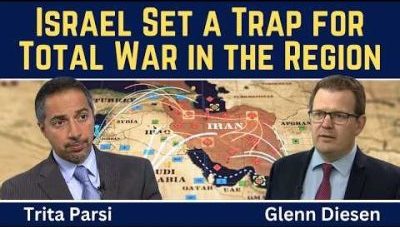
Trita Parsi: Israel Set a Trap for Total War in the Region
or go to
Aletho News Archives – Video-Images
From the Archive
Zionism’s Violent Legacy
By Donald Neff | Washington Report On Middle East Affairs | January 1996
On January 4, 1948, Jewish terrorists drove a truck loaded with explosives into the center of the all Arab city of Jaffa and detonated it, killing 26 and wounding around 100 Palestinian men, women and children.[1] The attack was the work of the Irgun Zvai Leumi – the “National Military Organization,” also known by the Hebrew letters Etzel – the largest Jewish terrorist group in Palestine. The Irgun was headed by Revisionist Zionist Menachem Begin and had been killing and maiming Arabs, Britons and even Jews for the previous ten years in its efforts to establish a Jewish state.
This terror campaign meant that at the core of Revisionist Zionism there existed a philosophical embrace of violence. … continue
Blog Roll
 Aletho News
- Trita Parsi: Israel Set a Trap for Total War in the Region
- Trump’s Iran war is on an Israeli leash
- Saudi oil boss issues global supply warning
- Riyadh Says Its Oil System Is Intact. The Numbers Say Otherwise.
- Trump and Netanyahu Want to “Finish the Job” on Iran
- US ‘one-sided dictation’ not Iran’s beliefs makes rational talks impossible: Baghaei
- Iran’s Next Strike May Not Explode. It Could Shut You Down /Col Doug Macgregor
- Iran: US political targets legitimate if assassinations return
- Iraq shuts key border crossing with Iran under US pressure: Report
- Undersea Internet cables could be targeted in retaliation for attacks on Iran: IRGC deputy chief
- If Americans Knew
- The Israel Lobby’s Changing Fortunes
- AIPAC has become such a political liability that it’s shifting to a more “nimble” approach to buying politicians
- At least 160 Israeli settler attacks in 2 weeks
- Will Gaza’s Ancient Christian Community Disappear Forever?
- Israel’s vision of regional security rests on keeping Arab states weak
- Heidi Levine recounts how Palestinian youths helped save her in settler attack
- DAILY UPDATE: Latest essential news on Palestine, Israel, & region
- Trump’s Intensifying Sabotage of the ICC, for Israel’s Sake
- Israeli military detain US and UK volunteers in West Bank including Democratic NY politician Brad Lander
- Americans at National Conservatism Conference held in Israel this year criticize Israel
- No Tricks Zone
- E-Cars Reduce CO2 Emissions By Only 41% Compared To Internal Combustion Engine Vehicles
- Predictions Made By Renowned Climate Professor Over Past Decades Have Been Proven To Be Poor
- New Study Suggests Large Regions Of The Pacific Ocean Have Been Cooling For The Last 80 Years
- Germany’s Green Energy Debacle: High Energy Costs Force Kahla Porzellan to Close After 182 Years!
- New Study: 50 Years Of The Most Aggressive ‘Net Zero’ Policies Can Only Affect The Global Climate By 0.03°C
- US September “Heat” Was No Record…Many Records Set Decades Ago
- Latest European Green Energy Debacle; Portugal’s Largest Flagship Solar Park Insolvent!
- Green Energy Debacle: German Expert Professor Fritz Vahrenholt Warns Of Severe Economic And Social Consequences
- Two More Paleo Reconstructions Affirm Meters-Higher Sea Levels Across Ireland, Brazil 7000-6000 Years Ago
- New Study: Earth And Venus Surface Warmth Largely Explained By Convection And Lapse Rate, Not CO2 Or Radiation

