‘Murder, torture, sexual assault’ – MI5 & informants authorized to commit crimes in UK, court hears
RT | October 5, 2018
MI5 informants have been granted legal cover to commit crimes within the UK that may include murder, a tribunal into British security services’ alleged criminality has heard.
The policy, allegedly in place since the early 1990s, would potentially allow the Security Service to authorize participation in “murder, torture, sexual assault or other grave criminality” if they believed it was in the public interest, claimed Ben Jaffey QC, representing an alliance of human rights groups.
Speaking to the Investigatory Powers Tribunal (IPT), Thursday, Jaffey, argued that the practice has enabled British security services to conceal widespread illegal activity from both agents and informants within the UK.
Known within intelligence circles as ‘the third direction,’ the policy was acknowledged for the first time in a British court when Jaffrey’s clients, including Privacy International and Reprieve, claimed that the practice was unlawful on human rights grounds.
It had earlier been revealed that British intelligence agents, namely MI6, were allowed to commit crime overseas. Thursday’s hearing was the first time authorized criminality from the security services within Britain had been claimed.
MI5’s policy would be illegal if it breaches human rights, such as the ban on the use of torture, Jaffey told the secretive IPT tribunal.
“This is a case where the agencies are able to self-grant themselves a practical immunity from the criminal law,” Jaffrey argued.
The policy would have been in place when MI5 agents were active in Northern Ireland, which in the early 90s was still witnessing The Troubles, a low-level sectarian war.
The UK government’s official guidelines state that there is no immunity from prosecution for agents who participate in criminality. Despite this, Jaffrey said that police and prosecutors were unaware of the details of the crime due to the secrecy of the policy.
The revelation is the latest embarrassment for the government during the IPT tribunal, a similar policy – the so-called ‘James Bond clause’ – was exposed earlier in the proceedings.
Following the hearing, Maya Foa, director of Reprieve, said: “We want to know if it’s government policy to let MI5 agents get away with serious crimes such as torture and murder.” She urged the government, if this is their policy, to “inform MPs and the public, and open the policy to legal and parliamentary scrutiny.”
Smear and Shekels
By Gilad Atzmon | October 4, 2018
Haaretz reveals today that Canary Mission a Hasbara defamation outlet that was established to “spread fear among undergraduate activists, posting more than a thousand political dossiers on student supporters of Palestinian rights,” is funded by one of the largest Jewish charities in the U.S.
According to Haaretz ; the Forward, an American Jewish outlet, “has definitively identified a major donor to Canary Mission. It is a foundation controlled by the Jewish Community Federation of San Francisco, a major Jewish charity with an annual budget of over $100 million.” We could have guessed the funding was from such an organisation. We somehow knew that it wasn’t the Iranian government or Hamas who sent shekels to the Zionist smear factory. Haaretz continues, “for three years, a website called Canary Mission has spread fear among undergraduate activists, posting more than a thousand political dossiers on student supporters of Palestinian rights. The dossiers are meant to harm students’ job prospects, and have been used in interrogations by Israeli security officials.”
Canary Mission is indeed a nasty operation and far from unique. We have seen similar efforts within the Jewish institutional universe for some time. It might be reasonable to opine that smear has become a new Jewish industry. Consistent with the rules of economics, many new Jewish bodies have entered the profitable business, and these outlets have competed mercilessly with each other for donations and funds.
This is precisely a variation on the battle we have seen in Britain in the last few years. Almost every British Jewish institution joined the ‘Corbyn defamation’ contest, competing over who could toss the most dirt on the Labour party and its leader. The outcome was magnificent. Last week at Labour’s annual conference, the party unanimously expressed its firm opposition to Israel and took the Palestinian’s side.
Badmouthing is not really a ‘Zionist symptom.’ Unfortunately, it is a Jewish political obsession. In between its fund raisers, it seems that Jewish Voice for Peace (JVP) invests a lot of energy in smearing some of the more dedicated truth tellers. Mondoweiss, another Jewish outlet, practices this game as well.
I, myself, have been subjected to hundreds of such smear campaigns by so called ‘anti’ Zionist Jews who were desperate to stop the circulation of my work on Jewish ID politics. But these frantic efforts only served to support my thesis that the issues to do with Israel and Palestine extend far beyond the Zionist/anti debate. We had better dig into the meaning of Jewishness and its contemporary political implications.
Once again the question is, why do self-identified Jewish activists use these ugly tactics? Why do they insist upon smearing and terrorising instead of engaging in a proper scholarly and/or political debate?
Choseness is one possible answer. People who are convinced of their own exceptional nature often lack an understanding of the ‘other.’ This deficiency may well interfere with the ability to evolve a code of universal ethics.
The other answer may have something to do with the battle for funds. As we learned from Haaretz, the Canary Mission is funded by one of the richest Jewish American funds. Badmouthing has value. ‘You defame, we send money.’ Unfortunately this holds for Zionists and ‘anti’ alike.
Crucially, in this battle, Jews often oppose each other. Haaretz writes that the Canary Mission “has been controversial since it appeared in mid-2015, drawing comparisons to a McCarthyite blacklist.” And it seems that some Zionist Jews eventually gathered that the Canary smear factory gives Jews a bad name.
Tilly Shames, who runs the campus Hillel at the University of Michigan, Ann Arbor, told the Forward that “the tactics of the organisation are troubling, both from a moral standpoint, but have also proven to be ineffective and counterproductive,”
Shames said that Canary Mission’s publication of dossiers on students on her campus had led to greater support for the targeted students and their beliefs, and had spread mistrust of pro-Israel students, who were suspected of spying for Canary Mission.
This dynamic can be explained. My study of Jewish controlled opposition postulates that self-identified Jewish activists always attempt to dominate both poles of any debate that is relevant to Jewish interests. Once it was accepted that Palestine was becoming a ‘Jewish problem,’ a number of Jewish bodies became increasingly involved in steering the Palestinian solidarity movement. We then saw that they diluted the call for the Palestinian Right of Return and replaced it with watery notions that, de facto, legitimise Israel.
When it was evident that the Neocon school was, in practice, a Ziocon war machine, we saw bodies on the Jewish Left steer the anti-war call. When some British Jews realised that the Jewish campaign against Corbyn might backfire, they were astonishingly quick to form Jews for Jeremy that rapidly evolved into Jewish Voice for Labour (JVL). The battle over the next British PM became an internal Jewish debate. The rule is simple: every public dispute that is somehow relevant to Jewish interests will quickly become an exclusive internal Jewish debate.
Hillel activists see that Canary Mission is starting to backfire. Together with Forward and Haaretz, they have quickly positioned themselves at the forefront of the opposition.
Jerusalem: Israel settlers occupy buildings near Al-Aqsa Mosque
MEMO | October 4, 2018
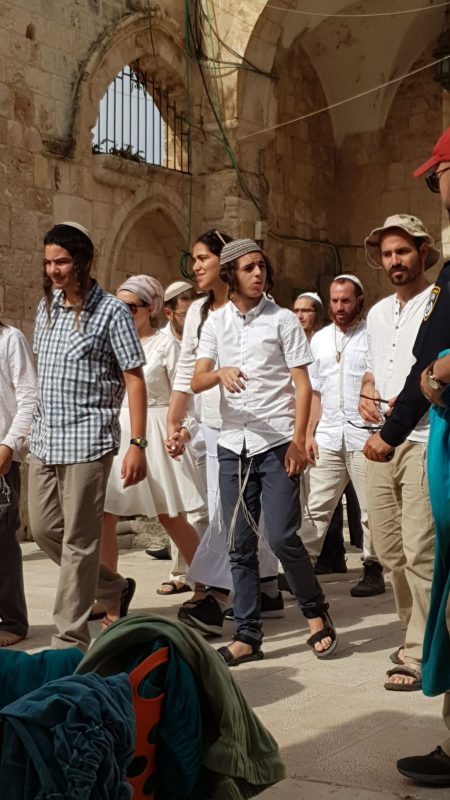 Israeli settlers have occupied two Palestinian buildings near Al-Aqsa Mosque in occupied East Jerusalem.
In the early hours of this morning, Israeli settlers stormed a building in the Muslim Quarter of the Old City. According to Wafa, the “settlers moved into the building owned by the Joudeh family, which was used as a clinic” in the Aqbat Darwish area, near Al-Aqsa Mosque.
This was the second building in Jerusalem to be taken over in the past two days. Yesterday settlers occupied a building in the Wadi Hilweh area of Silwan, situated just outside the walls of the Old City and below Al-Aqsa Mosque.
This is not the first time these areas have been targeted by illegal Israeli settlers, with Silwan in particular repeatedly facing attempts to drive Palestinian inhabitants from their homes. The “City of David” national park – a tourist site and archaeological dig run by right-wing settler group City of David Foundation (also known as Elad) – is situated in Batan Al-Hawa in Silwan and is frequently used as justification for such illegal activity.
In July, the Israeli Knesset advanced a new law that would allow residential construction in the “City of David” national park. According to a report by Haaretz, “the minutes of the [Elad] committee’s previous meeting in January made it clear that Elad and its leader, David Beeri, are behind the bill, which is designed to promote construction at the site.”
In August a “heritage centre” was opened in the park, with the inauguration attended by senior Israeli and US figures. A Palestinian resident of Silwan, Yakoub Al-Rajabi, explained that: “We know that this was a well-orchestrated plan to force us to leave […] And if we stay, it will paralyse us and isolate us in our homes”.
Since 2002, 700 Palestinians have been facing eviction from their land in Batan Al-Hawa. Their land was transferred to the Benvenisti Trust when Israel’s Justice Ministry issued title deeds to the organisation for the land in question. The trust is controlled by Ateret Cohanim, a right-wing organisation that encourages Jewish Israelis to settle illegally in Palestinian neighbourhoods of Jerusalem.
In June, Israel admitted that its decision to evict the Palestinians of Batan Al-Hawa was “flawed” and that it had not properly investigated the nature of the trust, or the Ottoman-era law that applies to the case. Despite the admission, a number of families have already been evicted from Batan Al-Hawa or are embroiled in court battles to save their homes.
Other areas of Jerusalem are also targeted for illegal Israeli settlement. According to statistics from the Jerusalem Institute, as of 2015 there were some 211,000 Jewish Israelis living in occupied East Jerusalem, amounting to 40 per cent of all inhabitants in these neighbourhoods. The statistics also demonstrate that the number of Israelis living in illegal Jerusalem settlements has grown consistently since the city was occupied in 1967.
READ ALSO: Israel settlers flood Khan Al-Ahmar with waste water
How the tentacles of the US military are strangling the planet
By Vijay Prashad | Asia Times | October 3, 2018
In June this year in Itoman, a city in Okinawa prefecture, Japan, a 14-year-old girl named Rinko Sagara read out of a poem based on her great-grandmother’s experience of World War II. Rinko’s great-grandmother reminded her of the cruelty of war. She had seen her friends shot in front of her. It was ugly.
Okinawa, a small island on the edge of southern Japan, saw its share of war from April to June 1945. “The blue skies were obscured by the iron rain,” wrote Rinko Sagara, channeling the memories of her great-grandmother. The roar of the bombs overpowered the haunting melody from the sanshin, Okinawa’s snakeskin-covered three-string guitar. “Cherish each day,” the poem goes, “for our future is just an extension of this moment. Now is our future.”
This week, the people of Okinawa elected Denny Tamaki of the Liberal Party as the governor of the prefecture. Tamaki’s mother is an Okinawan, while his father – whom he does not know – was a US soldier. Tamaki, like former governor Takeshi Onaga, opposes the US military bases on Okinawa. Onaga wanted the presence of the US military removed from the island, a position that Tamaki seems to endorse.
The United States has more than 50,000 troops in Japan as well as a very large contingent of ships and aircraft. Seventy percent of the US bases in Japan are on Okinawa island. Almost everyone in Okinawa wants the US military to go. Rape by American soldiers – including of young children – has long angered the Okinawans. Terrible environmental pollution – including the harsh noise from US military aircraft – rankles people. It was not difficult for Tamaki to run on an anti-US-base platform. It is the most basic demand of his constituents.
But the Japanese government does not accept the democratic views of the Okinawan people. Discrimination against the Okinawans plays a role here, but more fundamentally there is a lack of regard for the wishes of ordinary people when it comes to a US military base.
In 2009, Yukio Hatoyama led the Democratic Party to victory in national elections on a wide-ranging platform that included shifting Japanese foreign policy from its US orientation to a more balanced approach with the rest of Asia. As prime minister, Hatoyama called for the United States and Japan to have a “close and equal” relationship, which meant that Japan would no longer be ordered around by Washington.
The test case for Hatoyama was the relocation of the Futenma Marine Corps Air Base to a less populated section of Okinawa. His party wanted all the US bases to be removed from the island.
Pressure on the Japanese state from Washington was intense. Hatoyama could not deliver on his promise. He resigned his post. It was impossible to go against US military policy and to rebalance Japan’s relationship with the rest of Asia. Japan, but more properly Okinawa, is in effect a US aircraft carrier.
Japan’s prostituted daughter
Hatoyama could not move an agenda at the national level; likewise, local politicians and activists have struggled to move an agenda in Okinawa. Tamaki’s predecessor Takeshi Onaga – who died in August – could not get rid of the US bases in Okinawa.
Yamashiro Hiroji, head of the Okinawa Peace Action Center, and his comrades regularly protest against the bases and in particular the transfer of the Futenma base. In October 2016, Hiroji was arrested when he cut a barbed-wire fence at the base. He was held in prison for five months and not allowed to see his family. In June 2017, Hiroji went before the United Nations Human Rights Council to say, “The government of Japan dispatched a large police force in Okinawa to oppress and violently remove civilians.” Protest is illegal. The Japanese forces are acting here on behalf of the US government.
Suzuyo Takazato, head of the organization Okinawa Women Act Against Military Violence, has called Okinawa “Japan’s prostituted daughter.” This is a stark characterization. Takazato’s group was formed in 1995 as part of the protest against the rape of a 12-year-old girl by three US servicemen based in Okinawa.
For decades now, Okinawans have complained about the creation of enclaves of their island that operate as places for the recreation of American soldiers. Photographer Mao Ishikawa has portrayed these places, the segregated bars where only US soldiers are allowed to go and meet Okinawan women (her book Red Flower: The Women of Okinawa collects many of these pictures from the 1970s).
There have been at least 120 reported rapes since 1972, the “tip of the iceberg,” says Takazato. Every year there is at least one incident that captures the imagination of the people – a terrible act of violence, a rape or a murder.
What the people want is for the bases to close, since they see the bases as the reason for these acts of violence. It is not enough to call for justice after the incidents; it is necessary, they say, to remove the cause of the incidents.
The Futenma base is to be relocated to Henoko in Nago City, Okinawa. A referendum in 1997 allowed the residents of Nago to vote against a base. A massive demonstration in 2004 reiterated their view, and it was this demonstration that halted construction of the new base in 2005.
Susumu Inamine, former mayor of Nago, is opposed to the construction of any base in his city; he lost a re-election bid this year to Taketoyo Toguchi, who did not raise the base issue, by a slim margin. Everyone knows that if there were a new referendum in Nago over a base, it would be roundly defeated. But democracy is meaningless when it comes to the US military base.
Fort Trump
The US military has a staggering 883 military bases in 183 countries. In contrast, Russia has 10 such bases – eight of them in the former USSR. China has one overseas military base. There is no country with a military footprint that replicates that of the United States. The bases in Japan are only a small part of the massive infrastructure that allows the US military to be hours away from armed action against any part of the planet.
There is no proposal to downsize the US military footprint. In fact, there are only plans to increase it. The United States has long sought to build a base in Poland, whose government now courts the White House with the proposal that it be named “Fort Trump.”
Currently, there are US-NATO military bases in Germany, Hungary and Bulgaria, with US-NATO troops deployments in Estonia, Latvia and Lithuania. The United States has increased its military presence in the Black Sea and in the Baltic Sea.
Attempts to deny Russia access to its only two warm-water ports in Sevastopol, Crimea, and Latakia, Syria, pushed Moscow to defend them with military interventions. A US base in Poland, on the doorstep of Belarus, would rattle the Russians as much as they were rattled by Ukraine’s pledge to join the North Atlantic Treaty Organization and by the war in Syria.
These US-NATO bases provide instability and insecurity rather than peace. Tensions abound around them. Threats emanate from their presence.
A world without bases
In mid-November in Dublin, a coalition of organizations from around the world will hold the First International Conference Against US/NATO Military Bases. This conference is part of the newly formed Global Campaign Against US/NATO Military Bases.
The view of the organizers is that “none of us can stop this madness alone.” By “madness,” they refer to the belligerence of the bases and the wars that come as a result of them.
A decade ago, a US Central Intelligence Agency operative offered me the old chestnut, “If you have a hammer, then everything looks like a nail.” What this means is that the expansion of the US military – and its covert infrastructure – provides the incentive for the US political leadership to treat every conflict as a potential war. Diplomacy goes out of the window. Regional structures to manage conflict – such as the African Union and the Shanghai Cooperation Organization – are disregarded. The US hammer comes down hard on nails from one end of Asia to the other end of the Americas.
The poem by Rinko Sagara ends with an evocative line: “Now is our future.” But it is, sadly, not so. The future will need to be produced – a future that disentangles the massive global infrastructure of war erected by the United States and NATO.
It is to be hoped that the future will be made in Dublin and not in Warsaw; in Okinawa and not in Washington.
This article was produced by Globetrotter, a project of the Independent Media Institute, which provided it to Asia Times.
France Raids Anti-Zionist Islamic Center in North
Al-Manar | October 2, 2018
A so-called “counter-terror” operation, involving around 200 policemen, is underway on Tuesday in France, with the police forces raiding the headquarters of Islamic organization Centre Zahra France in the country’s north, France Info radio station reported, citing the prefecture of the department.
Centre Zahra France is a Shiite organization, known for its anti-Zionist rhetoric, namely, in social media.
Eleven people were detained in the raid in the commune of Grande-Synthe, a suburb of the port city of Dunkirk, local media reported on Tuesday.
“This morning, starting from 6 a.m. [local time, 04:00 GMT], the national police has been carrying out an operation in the Grande-Synthe commune, Nord department. The operation is being conducted within counter-terrorism efforts… Centre Zahra France’s activity has been followed up closely due to the fact that its leaders grant support to a number of terror organizations,” France Info radio station reported, citing the Nord prefecture’s statement.
The police have also raided 12 homes of the Centre Zahra France’s major leaders.
Israeli snipers continue to target unarmed Palestinians
Ma’an – October 1, 2018
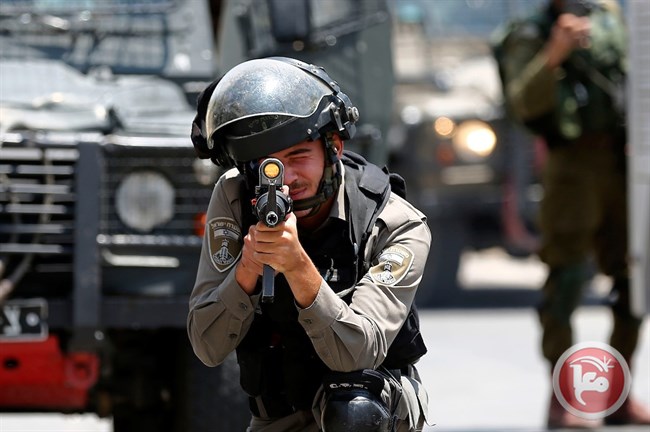
BETHLEHEM – The Israeli army continues killing unarmed Palestinian civilian protesters with snipers and live ammunition in the besieged Gaza Strip, with the approval of Israel’s Supreme Court, according to Adalah, the Legal Center for Arab Minority Rights in Israel.
More than 18 years since October 2000, when the Israeli police killed 13 unarmed Palestinian protesters in Israel and since the findings of the Or Commission of Inquiry, that was nominated by the Israeli government to investigate the events, concluded that “It should be unequivocally clear that live fire, including by snipers, is not a means for the police to disperse crowds.”
Adalah said that this past Friday, Israeli forces killed seven Palestinians, including two children aged 12 and 14, and injured at least 257 others in Gaza, of whom 163 were shot with Israeli live ammunition.
Adalah released a statement demanding Israel to immediately halt the shooting of civilian protesters with live ammunition and to allow Palestinians to exercise their right to protest and to freedom of political expression.
In October 2000, Israeli police and special sniper units killed 13 unarmed Palestinians, including 12 citizens of Israel and one Gaza resident, and wounded hundreds more when Palestinian citizens of Israel participated in mass demonstrations throughout the country to protest Israel’s oppressive policies against Palestinians in the Occupied Palestinian Territory (OPT) at the beginning of the Second Intifada.
However, 18 years later not a single Israeli police officer, commander or politician responsible for the October 2000 killings has been held responsible for their actions.
Adalah along with the families of the 13 killed civilians continue to demand that those responsible for the crimes of October 2000 be prosecuted.
Adalah said “Eighteen years have passed and despite the clear recommendations of the Or Commission, the Israeli armed forces have not changed their practices but continue to use excessive force and fire live ammunition at unarmed Palestinians in contradiction of both Israeli and international law, this time at protesters in Gaza.”
Since the start of “The Great March of Return” protests in Gaza on 30 March, “Israeli troops have killed 151 people – including 30 children, one woman, two journalists, three paramedics, and three persons with disabilities, according to figures from Al Mezan Center for Human Rights. Israeli troops also wounded 10,234 persons, including 5,814 – among them 939 children and 114 women – with live fire.”
Additionally, in April, Adalah and Al Mezan Center for Human Rights, petitioned the Israeli Supreme Court to order the Israeli military to immediately halt its use of snipers and other live weapons against unarmed protesters.
The petition emphasized the absolute ban on opening fire on demonstrators with live ammunition and noted that the norms applicable to confronting civilian demonstrations are based in international law governing “law enforcement and order.” These same norms have also been adopted into Israeli law, including via Or Commission report.
“These universal norms apply equally and without discrimination to citizens and non-citizens alike, regardless of the content of the protest, their slogans, their location, their organizational affiliation, and the ethnic and national affiliation of the participants.”
The Israeli Supreme Court rejected the petition by Adalah and Al Mezan, who responded by saying “This ruling, which justifies the shooting of protesters, contradicts the conclusions and preliminary results of international human rights organizations and United Nations bodies documenting and evaluating the events in Gaza. The Supreme Court’s ruling gives full legitimacy to the illegal actions of the Israeli military, which has led to the killing of more than 100 people and the wounding of thousands of protesters, including women, children, journalists, and paramedics. Of those killed, 94 percent were shot by Israeli troops in the upper body.”
The casualties figures mentioned above were from May 25th 2018.
Adalah added “Israeli armed forces backed up by the Supreme Court’s ruling, continue to target unarmed Palestinian demonstrators with snipers and live ammunition today in Gaza just as they killed Palestinian citizens of Israel protesting in October 2000.”
The statement added that the center “will continue to defend Palestinians’ right to protest, to support the struggle against racism and occupation, and to demand accountability for the victims of these gross human rights violations.”
Adalah also urged the international community to take strong measures to ensure respect for international law, to provide protection for demonstrators and all civilians in Gaza, and to support the work of the independent UN Commission of Inquiry into the 2018 Protests in the Occupied Palestinian Territory.
Israeli troops abduct 11 & 12 year old children from Nabi Saleh village
IMEMC News – September 29, 2018
On Friday afternoon, Israeli troops invaded the village of Nabi Saleh, known as one of the centers of non-violent resistance in the West Bank, and arrested three children – two of them age 11, and the other age 12.
 Samer Tamimi, 11 years old, the son of local non-violent activist Manal Tamimi, was kidnapped by Israeli soldiers along with two other children: Mohammad Abdul Lateef Tamimi, 11, and Ahmad Tamimi, 12, years old.
The children were abducted by the soldiers and taken to an unknown destination without any attempt by the soldiers to communicate with the parents of the three boys.
The abduction of children by Israeli soldiers is a common practice of the Israeli soldiers, with children as young as six years old grabbed and brutalized by the soldiers, taken to military bases, and interrogated for hours with no adult or advocate present.
According to the group Defense for Children International, around 500-700 Palestinian children are arrested, detained and prosecuted in the Israeli military court system each year. The majority of Palestinian child detainees are charged with throwing stones, and three out of four experience physical violence during arrest, transfer or interrogation. No Israeli child comes into contact with the military court system.
The majority of children are detained from their West Bank homes during the middle of the night by heavily armed Israeli soldiers. Several hours after their arrest, children arrive at an interrogation and detention center alone, sleep deprived and often bruised and scared. Interrogations tend to be coercive, including a variety of verbal abuse, threats and physical violence that ultimately result in a confession.
Unlike Israeli children living in illegal settlements in the West Bank, Palestinian children are not accompanied by a parent and are generally interrogated without the benefit of legal advice, or being informed of their right to silence. They are overwhelmingly accused of throwing stones, an offense that can lead to a potential maximum sentence of 10 to 20 years depending on a child’s age.
Samer has two older brothers, Mohammad, 19, and Osama, 22, who have been incarcerated for months in Israeli military prisons under so-called ‘administrative detention’, with no charges filed against them.
In a 2015 documentary by Al Jazeera, the mother of Samer, Manal Tamimi, told reporters, “I don’t want my children to be afraid – I try to hide my fear, as a mother, because I want them to be strong. Being afraid [while living] under occupation – you won’t be able to do anything. You will lose your life. But at the same time, I see how they are losing their childhood. I don’t want to have to talk to them about knowing their rights if they are arrested, about the tear gas – I want to talk with them about their future, about normal things. It’s kind of…. Refusing to die in silence…..My resistance is about life, about hope, about dreams, about a beautiful future.”
In the video, Manal also addresses those who would criticize her and other mothers in her village for allowing their children to participate in the non-violent weekly protests in their village. She says, “People who criticize us by saying that we are putting our children in danger – it’s not us who are putting our children in danger. It doesn’t matter what I do, they will be in danger all the time. There is a fear that the army will invade the house in the middle of the night, that they will shoot tear gas in the house, that my children will be abducted or even killed. This is life under occupation.”
72nd FARC Member Murdered in Colombia Since Peace Agreement

Colombians protest against the murder of social leaders in Bogota. | Photo: EFE
teleSUR | September 27, 2018
The systematic targeting of social leaders and former FARC guerrilla fighters has become one of the main obstacles to peace in Colombia.
In Colombia, two former combatants of the demobilized Revolutionary Armed Forces of Colombia (FARC) were attacked in the Cauca department. One of them, John Faber Gomez, who was also a member of the National Protection Unit, died as a result of the wounds he sustained.
The armed attack took place after the Colombian government authorized the new Temporary Hamlet Zone for Normalization in the municipality of Patia, to replace the abandoned hamlet zone in Policarpa, Nariño.
The Common Alternative Revolutionary Force (FARC) party condemned the attack and demanded security guarantees from the government.
“Peace is in mourning. In the Cauca department, a member of the National Protection Unit and our party @FARC_EPueblo was murdered, 72 former combatants have already been murdered. #WeDemandTheRighttoLife #ThatPeaceDoesNotCostUsOurLives #WeWorkForPeace #TheyAreKillingUs,” Pablo Catatumbo tweeted Monday.
The systematic targeting of social leaders, human rights defenders, and former FARC guerrilla fighters has become one of the main obstacles to peace, especially because the state has failed to guarantee control over the territories left by the demobilized FARC.
In the framework of the United Nations General Assembly, the U.N. Secretary-General, Antonio Guterres, met with Colombian President Ivan Duque to ratify his commitment to the Colombian peace process and stress the urgency of providing security and development to conflict zones.
Cauca, Nariño, and Antioquia are the departments that record the highest number of murders. Human rights organizations have denounced the country’s General Attorney’s Office for lacking an investigation strategy that takes into account the existence of paramilitary groups, and the systematic nature of the murders against former combatants and social leaders.
RELATED:
Colombia’s Peace Crumbles as Social Leaders Killed With Impunity
UK’s Snoopers’ Charter Ruled Unlawful: What Does Privacy Mean to You?
By Julian Vigo | Dissident Voice | September 27, 2018
Two weeks ago the European Court of Human Rights (ECHR) gave a landmark ruling against the UK government’s mass surveillance program, stating that it violated human rights and offered “no real safeguards” to the public. This surveillance programme, according to the Strasbourg court, allowed the British intelligence agencies’ to violate the right to a private and family life with “insufficient oversight” over which communications were chosen for examination. Of equal importance the ECHR found that the Investigatory Powers Act (IPA), also known as the Snoopers’ Charter, did not give enough protection to journalistic sources which would violate the rights to freedom of expression guaranteed in UK and EU laws and would discourage whistle-blowing. In its judgment of the case, Big Brother Watch and Others v. the United Kingdom (applications nos. 58170/13, 62322/14 and 24960/15), the court concluded that police and security services had breached citizens’ right to privacy by intercepting communications data in bulk, with little oversight of when these powers could be used, just as NSA whistleblower Edward Snowden had revealed.
In its judgment, the ECHR expressed concern that “intelligence services can search and examine ‘related communications data’ apparently without restriction’ – data that identifies senders and recipients of communications, their location, email headers, web browsing information, IP addresses, and more.” This means that Internet service providers must store details of everything we do online for twelve months and render it accessible to dozens of public bodies to include everything from browsing records to data on private citizens, search engine activity, to every phone call to text message and geographical location we have held in any of our electronic devices. The IPA also requires that tech companies hand over the data that they possess to intelligence agencies.
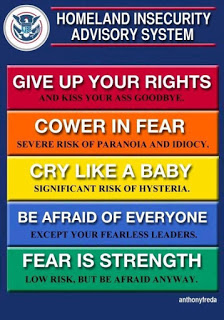 Yet, what does this mean for those of us who just use our computers for work and our mobiles for texting friends to meet up for drinks? Surely, this does not affect us, right? Wrong.
The catch is that we are all implicated, to include the simple text message to confirm dinner plans. Do you use a social media account? Do you have photos on your mobile and laptop that you have or have not posted online? Did you rate a restaurant on Google? All this information to include your list of Facebook friends are being mined by the government along with all the tracking information that your many apps provide, your bank, credit card and financial details, biographical information, your resume, your medical records, and all the information in the world that you store on these devices which you might even deem harmless. In this day and age there is no such thing as harmless information. At that, there is no such thing as privacy when the government believes it has already rewritten the IPA in measure with the previous court’s instruction.
As many are concerned with the interception of personal data and parents are reading online privacy and safety guide for kids, the government’s secret interception, processing and storing data of millions of people’s private communications, should alarm each and every one of us. The current form of the IPA means that any information that you have in the UK can be shared with secret intelligence agencies like the CIA, and well beyond. With which other countries does the US also share information under similar secret legal frameworks? Also important to consider here are the impediments to tech development that are under threat such as when then Prime Minister David Cameron threatened to ban Snapchat, WhatsApp, and any other encrypted messaging services unless these companies provided the government with backdoor access to user data. Such measures actually deter technology since most tech companies are aware that the minute they undermine their users’ privacy, their company will not last.
In short, by stripping away our privacy, the government is undermining everything that keeps us free: our expression, our right to protest and to fair trials, our legal and patient confidentiality, our free press. And one can argue our individuality is at stake whereby everything we do, consume, record, and say is potentially up for monitoring and scrutiny, as are those with whom we interact. As Edward Snowden stated, “Because privacy isn’t about something to hide. Privacy is about something to protect. That’s who you are.”
We need to prize our privacy and human right not to be spied upon in this day and age where governments are pulling out the “terrorism” card in order to goad its citizens into surrendering one of the qualities which makes us most human.
Julian Vigo is a scholar, film-maker and human rights consultant. Her latest book is Earthquake in Haiti: The Pornography of Poverty and the Politics of Development (2015). She can be reached at: julian.vigo@gmail.com.
Featured Video

The Search for Truth: Charlie Kirk’s Assassination One Year Later
or go to
Aletho News Archives – Video-Images
From the Archives
The 9/11 “Double-Cross” Conspiracy Theory
BY LAURENT GUYÉNOT • UNZ REVIEW • SEPTEMBER 6, 2022
Is it true that “9/11 was an inside job”? Yes, insofar as Israel is “inside” the U.S. But for the 9/11 truthers who have identified Israel as the main perpetrators, “9/11 was an inside job” is at best a half-truth, and at worst an integral part of the Zionist operation, like a secondary flag sewn as a lining under the false flag of Islamism. Victor Thorn (1963-2017) wrote in his book 9/11 made in Israel: The Plot Against America (2011): “In essence, the ‘9-11 truth movement’ was created prior to Sept. 11, 2001 as a means of suppressing news relating to Israeli complicity. . . . The slogan ‘9-11 was an inside job’ was quite possibly the greatest example of Israeli propaganda ever devised.” In milder terms, it is “controlled opposition”.
A genuine truth movement would have pointed to Israel as the prime suspect from the start. From day one, it was obvious who would benefit. … continue
Blog Roll
 Aletho News
- Europe’s mounting social chaos… chickens coming home to roost for proxy war against Russia
- US-Russia Diesel Deal Becomes Massive Defeat for Ukraine
- Hormuz and the Looming Economic Catastrophe
- Dhubab offensive, media blitz and the rapid unraveling of Saudi-backed coalition’s new gambit
- Putin Conveys to Trump Iran’s Vision on Possible Conflict Resolution – Kremlin
- The Search for Truth: Charlie Kirk’s Assassination One Year Later
- ‘Harsh reality’: Iran says France seeks monopoly on power and intimidation, not peace for all
- When Will This White House Madness End?
- Huckabee aide goes to ‘unusual lengths’ to portray ‘Israel’ positively
- Trump Announces Diesel Supply Deal With Putin Following Phone Call
- If Americans Knew
- Israeli forces kill another child in Gaza – Daily Update
- Gaza ceasefire exists in name only, say more than 100 organizations
- Nearly 2 Million in Gaza Need Urgent Shelter Assistance as Winter Looms: IOM Chief Warns
- Suppressing Palestinian resistance: US charity under fire for AI monitoring of Gaza classrooms
- Thousands Are Held in Israeli Torture Camps. This Is What Happens Inside
- Israel puts Gaza’s sick, injured, newborn in peril – Daily Update
- Report claimed Mark Levin used by Israeli government to influence Trump
- Over 2,000 Gazans have died awaiting medical evacuation amid Israel’s continued siege
- How a U.S. Diplomat Suppressed and Altered Reports Critical of Israel
- 5 Palestinians Die from Israeli Strikes in Gaza as Relentless Attacks Continue
- No Tricks Zone
- Germany’s Green Energy Debacle: High Energy Costs Force Kahla Porzellan to Close After 182 Years!
- New Study: 50 Years Of The Most Aggressive ‘Net Zero’ Policies Can Only Affect The Global Climate By 0.03°C
- US September “Heat” Was No Record…Many Records Set Decades Ago
- Latest European Green Energy Debacle; Portugal’s Largest Flagship Solar Park Insolvent!
- Green Energy Debacle: German Expert Professor Fritz Vahrenholt Warns Of Severe Economic And Social Consequences
- Two More Paleo Reconstructions Affirm Meters-Higher Sea Levels Across Ireland, Brazil 7000-6000 Years Ago
- New Study: Earth And Venus Surface Warmth Largely Explained By Convection And Lapse Rate, Not CO2 Or Radiation
- 2025 Nature Paper Claiming Worsening Global Drought Gets RETRACTED …Heavily Flawed
- New Study: ‘Global Drought Shows No Detectable Recent Acceleration Under Climate Warming’
- Economic Masterminds: German Socialists Suggest Taxing Productivity Gains Stemming From Using AI

