UN says Turkey should investigate reports of rescuers being shot
Press TV – February 1, 2016
The UN High Commissioner for Human Rights has called on Ankara to investigate reports that a number of unarmed people trying to attend to the injured victims of clashes in Turkey’s southeast in late January were themselves shot at.
Ten people were injured when their group, which included two opposition politicians, came under fire while trying to help people injured in earlier clashes in the southeastern town of Cizre in Turkey’s mainly Kurdish southeast on January 20.
Zeid Ra’ad Al Hussein described as “extremely shocking” footage filmed of the incident, which purportedly shows what appear to be a man and woman holding white flags and pushing a cart – possibly carrying bodies – across a street before being shot.
“As they reach the other side, they are apparently cut down in a hail of gunfire,” Zeid said in a statement.
He also expressed concern that the cameraman, who was injured in the shooting, may face arrest under a “clampdown on media.”
Turkey has been engaged in a large-scale campaign against the outlawed Kurdistan Workers’ Party in its southern border region in the past few months. The Turkish military has also been conducting offensives against the positions of the group in northern Iraq.
The operations began in the wake of a deadly July bombing in the southern Turkish town of Suruc. More than 30 people died in the attack, which the Turkish government blamed on Daesh Takfiri terrorist group.
After the bombing, the PKK militants, who accused the government in Ankara of supporting Daesh, engaged in a series of supposed reprisal attacks against Turkish police and security forces, in turn prompting the Turkish military operations.
Intimidation through nightly ‘settler-tour’

Israeli forces blocking the entrance to the Palestinian market
International Solidarity Movement | January 31, 2016
Hebron, Occupied Palestine – On Saturday, 30th January 2016, large groups of settlers, accompanied by heavily-armed soldiers, entered the Palestinian market at night and took it over for about an hour during night-time in occupied al-Khalil (Hebron).
Around 9:30 pm, Israeli settlers from the illegal settlements throughout al-Khalil gathered at Bab al-Baladiyya, from where they walked into the Palestinian souq, the market, surrounded by heavily-armed Israeli forces. The group of more than 50 settlers started a ‘tour’ of the Palestinian market, with Israeli forces ‘guarding’ them throughout the Palestinian market. Palestinian residents were not allowed to pass and forced to wait at a distance, with soldiers repeatedly pointing the lasers from their guns at them to indicate they have to stop. A walk home at night though, for some Palestinians took almost an hour, instead of the usual 10 minutes.
This kind of ‘settler tour’ through the Palestinian market used to take place regularly on Saturday afternoons. During the ‘tour’ Palestinians are often denied to pass, stopped, ID-checked and detained. In the recent months, no ‘settler tours’ took place, but last week they started again with a nightly-tour at 11pm. For the Palestinian residents of the souq, these tours have become a regular form of intimidation and harassment in the past.
Look who’s in charge of UK government cybersecurity
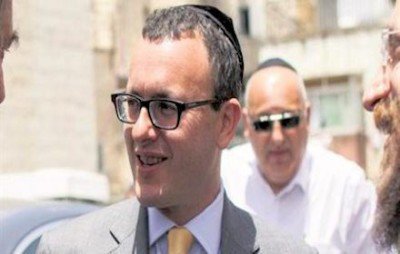
By Stuart Littlewood | My Catbird Seat | November 10, 2015
A chilling remark from a House of Lords debate just caught my eye.
Hansard 4 Nov 2015 : Column GC355
Lord Mendelsohn: We welcome the appointment of the former British ambassador to Israel, Matthew Gould, who will have a key role in cybersecurity inside the Cabinet Office — a very useful and important position.
Sure enough, the UK Government’s website confirms that Gould is now Director of Cyber Security and Information Assurance at the Cabinet Office. “He and his team are focussed on keeping Britain safe from cyber attack, through delivering the UK’s Cyber Security Strategy.”
They must think we have very short memories. Gould was the first Jew ever to hold the post of Britain’s ambassador to Israel. He describes himself as a “passionate” Zionist and whilst in Tel Aviv was instrumental in setting up the UK-Israel Tech Hub. In the words of MATIMOP (the Israeli Industry Center for R&D), the Hub was established “to promote partnerships in technology and innovation between Israel and the UK, and is the first initiative of its kind for the British Government and for an embassy in Israel. The Hub’s creation followed an agreement between Prime Ministers David Cameron and Benjamin Netanyahu to build a UK-Israel partnership in technology.”
Three years ago Cameron appointed venture capitalist Saul Klein as the UK Tech Envoy to Israel with the task of promoting the partnership, leading UK tech missions to Israel, bringing Israeli start-ups to Britain, and hosting tech events in both countries.
MATIMOP quotes Britain’s National Health Service as an example of successful UK-Israel tech collaboration. The NHS “has now formed strong collaborations with Israeli life sciences companies conducting clinical trials in the UK. The cooperation was made as part of the burgeoning partnership between Israel and Britain’s life sciences industries initiated by the UK-Israel Tech Hub.”
Four years ago Craig Murray, a former UK ambassador to Uzbekistan, argued that British policy was being driven in an underhanded fashion by the Israel lobby. He linked Gould with the Fox-Werritty scandal and raised questions about meetings between disgraced former Defence Minister Liam Fox and Fox’s friend/adviser Adam Werritty (who was backed financially by Israel lobbyists but had no security clearance and therefore no authorized role) and Gould.
Murray wrote to Gould asking when he first met Werritty, how many times he had met him, and how many communications of every kind had passed between them. He was told these questions would be answered in Cabinet Secretary O’Donnell’s investigation. “But Gus O’Donnell’s report answered none of these questions,” wrote Murray. “It only mentioned two meetings at which Fox, Gould and Werritty were all three present…”
This prompted Murray to dig further. “There were at least six Fox-Werritty-Gould meetings, not the two given by O’Donnell…. Matthew Gould was the only British Ambassador who Fox and Werrity met together. They met him six times. Why?”
Murray, with many useful sources from his days as an ambassador, claimed to have serious evidence connecting Gould with a secret plan to attack Iran, but the Foreign Office and the Cabinet Secretary blocked questions. Murray published his story ‘Matthew Gould and the plot to attack Iran’ here.
In it he pointed out that “Matthew Gould does not see his race or religion as irrelevant. He has chosen to give numerous interviews to both British and Israeli media on the subject of being a jewish ambassador, and has been at pains to be photographed by the Israeli media participating in jewish religious festivals. Israeli newspaper Haaretz described him as ‘Not just an ambassador who is jewish, but a jewish ambassador’. That rather peculiar phrase appears directly to indicate that the potential conflict of interest for a British ambassador in Israel has indeed arisen.”
He went on to say that Gould stood suspected of long term participation with Fox and Werritty “in a scheme to forward war with Iran, in cooperation with Israel”. The stonewalling by O’Donnell and the FCO led Murray to conclude that “something very important is being hidden right at the heart of government”.
Labour MP Paul Flynn remarked that no previous ambassadors to Israel had been Jewish so as to avoid conflict of interest and accusations of going native. He immediately came under intense flak. Flynn too asked about meetings between Werritty and Gould, as some reports suggested that Gould, Werritty and Fox discussed a potential military strike on Iran with Mossad. “I do not normally fall for conspiracy theories,” said Flynn, “but the ambassador has proclaimed himself to be a Zionist and he has previously served in Iran.”
Fox had earlier made the idiotic claim: “Israel’s enemies are our enemies” and “in the battle for the values that we stand for… Israel’s enemies are our enemies and this is a battle in which we all stand together”. The Jewish Chronicle hailed him as “a champion of Israel within the government”. Furthermore Fox continually rattled the sabre against Iran which, of course, was no threat to Britain but is regarded by Israel as a bitter enemy. Iraq too was Israel’s enemy, not ours. Yet Fox, according to the theyworkforyou.com, voted “very strongly” for the Iraq war. He was also an enthusiastic supporter of the war in Afghanistan.
Given that Fox so eagerly waved the flag of a foreign military power and was a man with dangerous beliefs and demonstrably weak judgement, how could those who appointed him not see that he was unemployable as a Minister of the British Crown – unless they were similarly tainted?
When the Werrity relationship came to light Fox jumped before being flung from the battlements. But the good people of North Somerset, in their wisdom, re-elected him at the general election last May. He’s already on the road to political rehabilitation among the Conservative high command.
Gould’s new job as head of The Office of Cyber Security & Information Assurance (OCSIA) involves giving strategic direction to cyber security and information assurance for the UK. This includes e-crime, working with private sector partners on exchanging information, and engaging with international partners in improving the security of cyberspace and information security. Does it seem right for such a person to be in charge of crucial security matters at the heart of our government? What was in fellow Zionist David Cameron’s mind when he appointed him?
Well, here’s a possible clue. In March of this year Francis Maude, the previous Cabinet Office minister responsible for cyber security, announced three UK-Israel academic collaboration ventures with cyber research funding, the partnerships being University of Bristol/Bar Ilan University, University College London/Bar Ilan University and University of Kent/University of Haifa. They’ll be working together on six specific areas of research:
- identity management
- governance: regulating cyber security
- privacy assurance and perceptions
- mobile and cloud security
- human aspects of security or usable security
- cryptography.
This builds on existing UK-Israel cooperation. Both parties signed a Memorandum of Understanding on digital co-operation in March 2014.
Still sitting comfortably? Only this week the Cameron government was lecturing us on threats to national security and announcing plans to trawl through our personal emails and web browsers in order to “keep us safe”.
Question is, who trawls Gould’s private emails?
Hamas welcomes Italian academics’ call for BDS
Ma’an – January 30, 2016
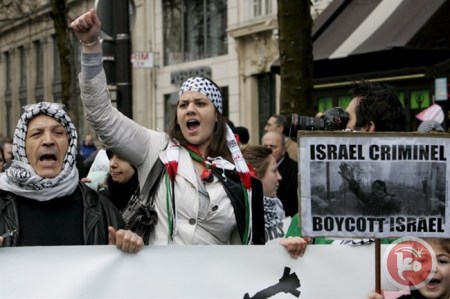 BETHLEHEM – The Hamas movement hailed on Saturday the announcement that academics from 50 Italian universities had signed a petition calling to boycott Israeli universities and research institutes.
According to prominent Italian publication L’Espresso, more than 160 Italian academics came out in support of the Palestinian boycott, divestment and sanctions (BDS) campaign.
The petition, reportedly the first large-scale BDS effort from Italian academia, said it was “a response to the known and well-documented complicity of Israeli academic institutions with Israeli state violence and the total lack of serious condemnation on their part since the foundation of the State of Israel.”
The BDS campaign specifically targeted Technion, the Israeli Institute of Technology in Haifa, for its prominent role in the Israeli military-industrial complex, and called on Italian universities to sever ties with the institution.
Hamas spokesman Sami Abu Zuhri welcomed the move on Saturday, saying the petition “illustrates the increasing state of isolation the occupation suffers as a result of its crimes.”
Israel has been struggling to tackle a growing Palestinian-led boycott campaign which has had a number of high-profile successes abroad in both academic and artistic fields.
The BDS movement aims to exert political and economic pressure over Israel’s occupation of the Palestinian territories in a bid to repeat the success of the campaign which ended apartheid in South Africa.
In recent years, some 1,200 academics in Spain, 343 British professors and lecturers and more than 200 South African academics have publicly come out in support of BDS.
Israeli forces seize Palestinian vehicles, equipment in Jordan Valley

Ma’an – January 30, 2016
TUBAS – Israeli forces late Friday confiscated trucks and equipment being used to build a new agricultural road in the Palestinian village of Khirbet al-Dir in the northern Jordan Valley.
The head of a local council in the occupied West Bank village, al-Maleh Arif Daraghmah, told Ma’an that military forces had seized the equipment, without citing a reason for its removal.
Daraghmah added that days before, Israeli forces had ruined dozens of acres of agricultural land and roads while carrying out military drills in the area.
A spokesperson for Israel’s Coordinator of Government Activities in the Territories (COGAT) told Ma’an: “Yesterday evening, two trucks, JCB and an excavator, were confiscated as they were used for illegal road building adjacent to Mehoula in Area C.”
The Jordan Valley — occupied with the rest of the West Bank in 1967 — is in Area C, under full Israeli military and administrative control, and residents of the area face a constant threat of destruction of structures and property.
Threats of displacement for the thousands of Bedouins living in the area have reportedly increased dramatically since 2012, notably the use of Israeli military training exercises as a means of forcible displacement.
Rights groups argue that Israel aims to fully annex the strategic area of land and is unlikely to return the occupied area to Palestinians.
Israeli media reported earlier this week that the Israeli government announced that it may revoke the closed military zone status of a number of land plots in the Jordan Valley, supposedly returning the land to their original Palestinian owners after decades of confiscation.
The news came several days after COGAT announced that plans to declare 1,500 dunams (370 acres) of land in the Jordan Valley as “state land” were in their “final stages.” The move will be the largest declaration of “state land” by Israel since August 2014.
Israeli Soldiers Shoot International Activist In Nabi Saleh Protest
IMEMC News | January 28, 2016
Israeli soldiers attacked, Friday, the weekly nonviolent protest in Nabi Saleh village, near Ramallah, and shot an international activist with a live round, while many protesters suffered the effects of tear gas inhalation.
Morad Eshteiwy, coordinator of the Popular Committee in Nabi Saleh village, northwest of Ramallah, said the activist was shot in the leg, and was moved to a local hospital for treatment. He added that many protesters suffered severe effects of tear gas inhalation, after the soldiers used excessive force.
The army surrounded the village, fired many gas bombs, live rounds and rubber-coated steel bullets.
Eshteiwy added that, for the second time in one week, the soldiers sealed the main entrance of the village, forcing hundreds of Palestinians from nearby villages and towns, to take longer, unpaved roads.
Also on Friday, dozens of protesters suffered the effects of tear gas inhalation, after Israeli soldiers attacked the weekly nonviolent protest in Bil’in village, near Ramallah.
‘Hares boys’ sentenced to 15 years after families pay fines
Ma’an – January 29, 2016
RAMALLAH – After a nearly three-year long battle in Israeli military courts, five Palestinian teens from the occupied West Bank village of Hares accused of manslaughter after reportedly throwing stones were on Thursday issued sentences of 15 years, a prisoners’ rights group said.
The case has been disputed in the past by relatives and rights groups, who say that insufficient evidence was provided to prove that the five had any involvement in the death of an Israeli toddler who passed away two years after the teens were accused of throwing stones at her mother’s vehicle, causing it to crash.
A lawyer from the Palestinian Prisoners’ Society, Iyad Mahamid, told Ma’an that the military court issued the sentences to Muhammad Suleiman, Tamer Souf, Ammar Souf, Ali Shamlawi, and Muhammad Kleib.
Relatives of the detainees told Ma’an following a court hearing in December 2015 that the teens would be sentenced to prison terms of 15 years on the grounds that their families pay fines of 30,000 shekels ($7,700) by Jan. 28.
“Hares Boys,” an activist blog dedicated to raising awareness of the teens’ case, posted on their Facebook page “Free the Hares Boys” on Thursday that the families were able to pay the fines in full with the assistance of outside donations.
Failure to pay the fines could have resulted in prolonged sentencing to at least 25 years in prison, according to the Hares Boys blog.
Thursday sentencing marks a poor end to a drawn-out court battle that began after the five were detained by Israeli forces on March 15, 2013. All were 16 and 17 years old at the time of their detention.
Their arrest followed the hospitalization of a three-year-old Israeli girl, Adele Biton, who suffered severe head injuries when her mother’s car collided with a truck near the Israeli mega-settlement of Ariel. The toddler died two years later after suffering complications from pneumonia.
The family believes that while the child died of pneumonia, the severity of her complications was due to injuries sustained after the vehicle accident, according to Israeli media.
The Israeli vehicle had reportedly lost control after being hit by a stone, and the five teens were later accused of throwing stones that day at vehicles driving on Route 5, a highway leading to several nearby Israeli settlements.
Twenty Israeli drivers afterwards filed insurance claims stating that stones hit their cars, but the incidents lacked eyewitness testimony and the police received no calls at the time the teens were throwing stones.
All five denied the allegations, but later signed confessions “after being repeatedly abused in prison and during interrogations,” according to the Hares Boys blog.
The mother of the toddler told Israeli media following Thursday’s sentencing: “It is not much consolation, we would have preferred [the] death [penalty] or life-sentencing. The state did not properly tend to the matter and it didn’t fully enforce the punishment to the fullest.”
The British Parliament on Thursday in response to an online public forum inquiry said an official from the British Embassy in Tel Aviv had met with Chief Military Prosecutor Maurice Hirsch in November to express its concern over the case of the Hares boys, adding that the government would continue to raise the case to Israeli authorities.
The teens’ families as well as rights groups have repeatedly argued over the past three years that the youth were being held without evidence and unjustly prosecuted in a military court system that convicts over 99 percent of Palestinians.
The Hares Boys blog wrote in their defense in 2013: “If the boys are convicted, this case would set a legal precedent which would allow the Israeli military to convict any Palestinian child or youngster for attempted murder in cases of stone-throwing.”
Israeli Prime Minister Benjamin Netanyahu in September declared a “war on stone throwing,” establishing a minimum prison sentence for adults who throw stones as well as allowing Israeli forces to use sniper fire against stone throwers in circumstances that pose mortal danger.
The PM said at the time that there would be “significant fines” for minors who commit such offences, as well as for their parents.
The Knesset had already passed a law in July making penalties for stone-throwing more severe. The new law allowed for stone-throwers to receive a 20-year prison sentence where intent to harm could be proven, and 10 years where it could not.
At the time the bill was passed, Palestinian MK Jamal Zahalka said: “Who will the judge send to prison? He who demolished the home, seized the land, killed the brother, or the boy who threw a stone?”
Israeli forces storm al-Quds University, seize documents
Ma’an – January 29, 2016
JERUSALEM – Hundreds of Israeli soldiers stormed Abu Dis’ al-Quds Open University early Friday and confiscated equipment and documents belonging to its student union, staff members told Ma’an.
Hassan Dweik, the university’s deputy head, said that up to 300 soldiers stormed the campus, holding six security guards in a room and preventing them from leaving for two and a half hours.
He said the soldiers raided the university’s Islamic studies department, as well as its student union offices after smashing their way through their doors.
 Dweik said the soldiers confiscated at least one computer as well as boxes filled with students’ documents.
He said the soldiers fired stun grenades during the raid, and took pictures and measurements of a number of buildings inside the university campus.
He condemned the raid as a dangerous violation against education, and called on international human rights and education rights groups to decry the army’s actions.
An Israeli army spokesperson said she was looking into the reports.
Since a wave of unrest swept the occupied Palestinian territory in October last year, Abu Dis’ Al-Quds University has found itself a focal point of violent clashes between Palestinian students and Israeli soldiers.
A number of Palestinians who allegedly carried out stabbing attacks on Israelis were students there.
These include 19-year-old law student Muhannad Shafiq Halabi, who was shot dead at the beginning of the month after he stabbed to death two Israelis in Jerusalem’s Old City — an act that served to trigger much of the subsequent popular unrest.
Several days before the attack, Israeli media reported that Halabi posted a photograph on Facebook of Diya Talahmeh, another Palestinian studying at al-Quds University who died in unclear circumstances during an encounter with Israeli forces in the West Bank village of Khursa in September.
Israeli forces have regularly stormed university campuses across the occupied Palestinian territory in recent months.
Earlier this month, Birzeit University in Ramallah condemned an Israeli army raid into its campus, during which Israeli forces confiscated and damaged university equipment.
“Birzeit University condemns this attack and the direct violation of the sanctity of the university campus,” the university said. “This is a belligerent military attack on the university and our right to education and all the principles involved in the freedom of education.”
#Justice4Rasmea: Palestinian activist’s supporters light up social media
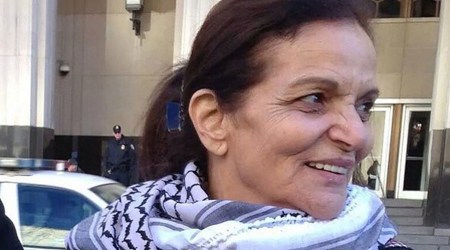
Palestinian activist Rasmea Odeh. @all_exclusive123 / Instagram
RT | January 29, 2016
Palestinian activist Rasmea Odeh was trending on social media after her supporters started a campaign calling for justice as she awaits a decision on her appeal.
Odeh was arrested in the US in 2014, where she worked as an attorney in Chicago, and faced trial for falsifying immigration documents.
In 2004, after living in the US for 20 years, Odeh failed disclose her 1969 imprisonment in Israel when filling out her naturalization papers. Odeh says she didn’t mention it as she thought the question referred to US arrests and did not think of her imprisonment in Israel due to PTSD.
Odeh was imprisoned in Israel for allegedly bombing a supermarket in 1969. She says she confessed to the crime under torture by Israeli soldiers, who she claims raped and threatened her.
The judge in the original immigration trial refused to hear evidence on the torture claims or her PTSD, but heard evidence by the Israeli military court who had convicted her.
According to Odeh, she was subjected to beatings, electric shocks and witnessing a male prisoner being tortured to death. She also claims the Israelis said they would force her father to rape her, which led to her agreeing to confess.
The current appeal challenges the decision to jail Odeh for 18 months and then to deport her to Jordan, arguing the trial was unfair.
The trial has been called a ‘witch hunt’ by those who believe Odeh’s case is part of an FBI clampdown on anti-war activists that began in 2010.
“Rasmea is under attack because she is Palestinian, Arab and Muslim, because U.S. law enforcement is going after our successful Boycott, Divestment, Sanctions movement against Israeli apartheid, and because she embodies the proud and steadfast Palestinian struggle for self-determination, liberation, and the right of return,” Hatem Abudayyeh, a member of Odeh’s defense said in late 2014.
Some social media users used the campaign to share their views against Odeh.
Odeh was released from Israeli prison in 1979 as part of a prisoner swap. She spoke at the UN that year, detailing her treatment in Israel. She then lived in Jordan and Lebanon before moving to the US in 1995 to care for her father. She became involved in the Arab American Action Network and works with many Arab women who come to the US.
Nonviolent Resistance in the South Hebron Hills
By Cassandra Dixon | Dissident Voice | January 28, 2016
The worst worries of a child’s school day should be homework. Maybe a lost book, or an argument with a friend. No child’s walk to school should routinely involve armed soldiers and fear of sometimes being chased and assaulted by angry adults. But for the Palestinian children who live with their families in the small rural villages that make up the South Hebron Hills, this is how the school day begins. Illegal settlements and outposts isolate and separate their villages and soldiers are a constant in their lives.
Once, the trip from the tiny hamlet of Tuba to the school in the village of Tuwani was a calm and beautiful walk along a quiet road connecting the two villages. During the 1980s Israeli settlers built a settlement on privately owned Palestinian land, which had been used to graze sheep and goats. Following construction of the settlement, the settlers established an illegal outpost. Now, industrial chicken barns sit astride the road that once served children walking to school, farmers taking livestock to town, and families traveling to Tuwani, or the larger town of Yatta for health care, shopping, and higher education.
Between the settlement and the outpost, what remains of the road is closed to Palestinians. With one exception – children walk behind an Israeli military jeep to reach their school. Their parents are not allowed to walk with them.
 Photo by Cassandra Dixon (See *note below)

The twenty or so children who make this trip start their school day in an unprotected field, anxiously waiting for the Israeli soldiers who will oversee their walk to school. Villagers had built shelters in which the children could await the soldiers, but Israeli authorities have dismantled every shelter. If it is raining, the children get soaked. Some days the soldiers are the same soldiers who chased or arrested shepherds the day before – shepherds who may be the brothers or fathers of these children. Some days the soldiers are late, leaving the group of children waiting, vulnerable to attack and within easy reach of the outpost. Some days the military escort does not arrive at all, and the children make the trip to school with international volunteers along a longer path, which also lies alongside the settlement.
About 1,000 people live in the neighboring villages, an estimated half of whom are children. Nevertheless, because the villages lie inside of Israeli Firing Zone 918, the military uses the land for military training.
Amazingly, despite all of this, it is almost unheard of for children to miss a day of school. Parents are determined that their children will be educated. When I began volunteering in Tuwani, the school reached only to third grade. Now thanks to the community’s determination to provide their children with education, students can complete high school in the village, and although facing a continued threat of demolition by Israeli military bulldozers, villagers have built and staffed primary schools for children who live in 8 nearby villages.
This is what nonviolent resistance to military occupation looks like.
I’m grateful that I can spend a portion of this year in Palestine. For many years children in these villages have taught me about nonviolence. Sometimes, the presence of international human rights workers holding cameras has some small positive effect on their days.
U.S. people bear some responsibility for the interruption of their childhoods. The U. S. subsidizes about 25% of Israel’s military budget, at a cost to U.S. taxpayers conservatively estimated at $3.1 billion a year.
I’m working with the Italian organization Operation Dove.
They support Palestinians who resist the Israeli occupation, standing with families in their commitment to remain on their land. This includes accompanying school children and farm families as they walk to school, graze their animals and tend their crops. Operation Dove helps document the harassment, intimidation, arrests, detentions, home demolitions, checkpoints, road closures, military training exercises, and settler attacks. Villagers also report to Operation Dove when they endure theft and when their crops and property are destroyed.
Protective presence provided by activists is not a large-scale solution to the violence that intrudes into childrens’ lives in Palestine. But many years of visits with these families persuades me that it’s important and necessary to support and participate in the villagers’ nonviolent efforts. Families that confront militarism and occupation help us move beyond our addiction to militarism and violence.
The children I met early on are grown now. Some have gone on to college, and some have families of their own. These young people have every reason to be angry. Their childhoods included fear, intimidation, demolitions, arrests and isolation. But they have also grown up witnessing their community’s steadfast commitment to nonviolently resist injustice. Their families have supported them well, including them in the community’s struggle for dignity. Against all odds they are growing up with humor and tenacity instead of anger and bitterness. They are living proof to the rest of us that love wins.
*Author’s Note: This little girl was injured by two masked settlers who attacked her with stones as she gathered herbs with a friend on the path between Tuba and Tuwani. She and her siblings make the same trip on foot each school day. She is an amazingly smart and tough young girl — insistent that the many odd volunteers that pass through her life should learn her name and visit her family’s home. She needed four stitches in a head wound after the attack.
Thousands Demand Freedom for Argentine Leader Milagro Sala

teleSUR | January 27, 2016
Milagro Sala was jailed 11 days ago for speaking out against President Mauricio Macri, sparking a wave of protests against criminalization of dissent.
Thousands of Argentines gathered in Buenos Aires’ central Plaza de Mayo Wednesday to protest the criminalization of social protest and demand freedom for Milagro Sala, a dissident lawmaker and Indigenous leader jailed for speaking out against President Mauricio Macri.
The protests come as Sala has been in prison for 11 days after being arrested in Argentina’s Jujuy province at the orders of Governor Gerardo Morales for criticizing the policies of Macri’s government. Outraged social movements have slammed the arrest as illegitimate and have vowed to continue protesting until the prolific social leader is free.
“For me personally she is an example of struggle, of life, of continuity of the defence of territories, defense of the people, defense of those who have less, building social inclusion—that’s what Milagro Sala is to me,” a demonstrator told teleSUR at the rally. “I demand freedom for Milagro Sala now!”
According to teleSUR correspondent Leo Poblete Codutti in Buenos Aires, the protest was a show of rage over the increase in criminalization of social protest in Argentina in recent weeks since Macri came to power.
During the demonstration, a documentary telling the story of Sala’s life and social struggles was shown in a tent set up in the middle of the protest.
Sala founded the Tupac Amaru organization based on the ideology of three important historical figures in Argentina: South American Indigenous liberator Tupac Amaru, revolutionary Che Guevara, and former First Lady Eva Peron. The 70,000 member-strong organization works on a number of political issues and with Indigenous communities.
Prior to her arrest, Sala had been participating in a sit-in, camping outside local government offices for over a month in support of various social organizations at risk of losing their legal status and social benefits after Governor Morales threatened to suspend them via decree.
According to Carolina Gairard, Argentine lawmaker with the Front for Victory, Sala’s arrest was illegitimate and illegal.
“She is the first political prisoner of Mauricio Macri,” Gairard told teleSUR during the CELAC Summit in Quito, Ecuador, on Tuesday. “And we hope she will be the last.”
The silent increase in London’s mass surveillance network, one year on…

Image by No CCTV
NO CCTV – 27/1/2016
On 27th January 2015 the Mayor of London, Boris Johnson, signed an order that increased the data collected by the police’s network of Automatic Number Plate Recognition (ANPR) cameras in the capital by 300% [1]. At the time no-one seems to have noticed. One year on the sound of silence is still deafening.
Johnson achieved this massive increase of blanket surveillance in London without erecting a single new camera. Instead he allowed the police to share Transport for London’s (TfL) network of around 1400 ANPR cameras used for the London Congestion Charge, the Low Emission Zone and other traffic monitoring. This was a policy tucked away in Johnson’s 2012 mayoral crime manifesto [2].
Since 2007 the Metropolitan Police Service has controversially been allowed limited access to TfL’s congestion charge cameras for “national security” purposes only. The new camera sharing arrangement allows the police “general access” to an expanded raft of number plate cameras.
The mayor used powers given to him by the Greater London Authority Act [3] whereby he can do anything that he considers will further one or more of the Authority’s principle purposes. In the case of expanding police use of automatic checkpoint cameras he decided that it will “further the promotion of social development in Greater London”. Quite how Johnson came to this conclusion is a mystery, as is the way in which he was so easily able to trade the freedoms of so many car drivers in London by simply issuing a mayoral decison.
In his 1929 book ‘The New Despotism’ [4] then Lord Chief Justice of England, Lord Hewart coined the phrase “Administrative Lawlessness” to describe a worrying trend in English politics at that time – the exercise of arbitrary power, where decisions are made in the shadows, not based on evidence and without proper debate. Hewart wrote:
Arbitrary power is certain in the long run to become despotism, and there is danger, if the so-called method of administrative “law”, which is essentially lawlessness, is greatly extended, of the loss of those hardly won liberties which it has taken centuries to establish.
Johnson and the police claim that the people of London were consulted, via an 8 week “consultation”. However there were just 2,315 responses to the online survey out of an estimated population in Greater London of over 8 million people [5].
Meanwhile the Metropolitan police responded to what they described as “concerns about the level of surveillance in the capital, data security and misuse” by stating that they are convinced that [6]:
the majority of the public will remain satisfied that this does not represent undue or unnecessary surveillance.
The important thing to the police, then, is not whether the policy is an illiberal assault on individual freedoms and liberties, but rather that most people will not understand or know what is going on, .
No CCTV has repeatedly warned that the UK police’s ANPR camera network is the biggest mass surveillance network that no-one’s ever heard of. We have laid out many of our concerns in our report ‘What’s wrong with ANPR?’ [7]. Police store the details of all cars that pass ANPR cameras in a central database for a minimum of two years. There are currently discussions within the police to extend this to seven years [8].
Whilst the mainstream media have all but ignored this massive expansion of the surveillance state it is worth pointing out that writer and artist James Bridle made a series of Freedom of Information requests in 2013/14 that reveal much of the disturbing progression of this policy [9].
Endnotes:
- [ 1] Mayoral Decision MD1439 and supporting documents https://www.london.gov.uk/decisions/md1439-delegation-transport-london-tfl-grant-metropolitan-police-service-mps-direct-access
- [ 2] 2012 Crime Manifesto p14 http://www.london.gov.uk/sites/default/files/Boris-Johnson-2012-Crime-Manifesto.pdf
- [ 3] The Greater London Authority Act 1999 http://www.legislation.gov.uk/ukpga/1999/29/contents
- [ 4] ‘The New Despotism’, Lord Hewart, 1929, page 52 https://archive.org/details/LordHewart-TheNewDespotism1929
- [ 5] 2001 census statistics for Greater London http://www.ons.gov.uk/ons/rel/census/census-2001-key-statistics/urban-areas-in-england-and-wales/urban-areas-in-england-and-wales-ks01-usual-resident-population.xls
- [ 6] Letter from Cressida Dick, Met Police https://www.london.gov.uk/sites/default/files/gla_migrate_files_destination/Appendix%20C%20-%20Letter%20of%20Response%20from%20Cressida%20Dick.pdf
- [ 7] What’s Wrong With ANPR? http://www.no-cctv.org.uk/whats_wrong_with_anpr.asp
- [ 8] ANPR National User Group Minutes 3rd June 2015 https://www.whatdotheyknow.com/request/289438/response/730763/attach/6/03%20ANPR%20NUG%20Minutes%2003062015.pdf
- [ 9] James Bridle’s Freedom of Information Requests – https://anon.to/5TtSr3
James Bridle also has an article about London and the congestion charge cameras, ‘ All Cameras Are Police Cameras’ at: http://shorttermmemoryloss.com/nor/2014/11/07/all-cameras-are-police-cameras/
Read more NO CCTV articles on our news/articles page
Featured Video

John Mearsheimer Talking Iran with Iran
or go to
Aletho News Archives – Video-Images
New Book
The silver that medicine dropped — four thousand years of clinical use, four decades to erase.
Colloidal Silver — First Edition, 2026, Paperback
Lies are Unbekoming | October 16, 2026
Silver was medicine. Not alternative medicine. Not folk medicine. Medicine. In surgery. In obstetrics. In the burn ward. In water treatment. In the household medicine chest. Every physician before 1938 knew this.
By the 1870s, silver nitrate was standard in surgical wound care across the leading hospitals of Britain, Germany, and the United States. Colloidal silver preparations — Collargol, Argyrol, Protargol — entered European and American practice through the 1890s and early 1900s and became standard antiseptics in military field medicine. By the time Fleming grew his first penicillin mould in 1928, silver was the first-line antimicrobial of the Western pharmacopoeia. The Lancet and the British Medical Journal carried the clinical reports in volume. The practice ran continuously through the Victorian era, the Edwardian era, the First World War, the interwar period. By 1980, almost all of it was gone.
What has not been treated at book length, until now, is how a four-thousand-year clinical record disappeared from mainstream medicine within four decades of the Flexner Report — and what the honest account of silver looks like once that record is reassembled.
Colloidal Silver reconstructs the pre-1938 record from The Lancet, the British Medical Journal, and the primary literature of the era; recovers Robert Becker’s bioelectric framework from the regeneration research the pharmaceutical model buried; and places silver inside a practical terrain-paradigm guide to its current place — in water, on the body, inside the body, and in the chronic conditions where antibiotics have failed. … continue
Blog Roll
 Aletho News
- Pharma- and Gates-Funded GAVI Seeks to Assure Parents
- John Mearsheimer Talking Iran with Iran
- Inside Bill C-22, Canada’s Patriot Act.
- China’s FM: Palestinian cause is ‘greatest injustice of the century’
- US sympathy for Palestinians surpasses support for Israelis
- Israeli rabbi permits occupiers to steal Palestinian olive harvest in West Bank
- Spanish firm sells Latvia vehicles equipped with Israeli tech despite arms embargo
- Saudi Arabia under fire… Yemen is burning down the House of Saud
- Israeli Spy Pollard stole the files, today’s it’s delivered through official channels
- Why Iran Didn’t Walk Away
- If Americans Knew
- NPR investigation finds evidence of widespread fraud at mall kiosks tied to Israeli skincare brand
- Tucker Carlson exposes Israeli Lies about the Oct 7th attack, Charlie Kirk, and the U.S.
- Israel has detained thousands of Palestinian children since Oct 7th – over half spent time in solitary, many uncharged
- Israeli Analysis: Is Netanyahu Planning an ‘October Surprise’ Attack Before Israel’s Election?
- Israeli settlers brutally attack Palestinians and Washington Post female photographer, 65
- Words Have Changed, Occupation Continues: The Reality of the Gaza Ceasefire
- Gaza’s child amputees are growing faster than their prosthetics allow
- Israel keeps Palestinians struggling just to survive–Daily Update
- Israeli firm used online ads to run vast spy operation, researchers say
- No, the world zionist movement is not an antisemitic conspiracy theory
- No Tricks Zone
- New Study Suggests Large Regions Of The Pacific Ocean Have Been Cooling For The Last 80 Years
- Germany’s Green Energy Debacle: High Energy Costs Force Kahla Porzellan to Close After 182 Years!
- New Study: 50 Years Of The Most Aggressive ‘Net Zero’ Policies Can Only Affect The Global Climate By 0.03°C
- US September “Heat” Was No Record…Many Records Set Decades Ago
- Latest European Green Energy Debacle; Portugal’s Largest Flagship Solar Park Insolvent!
- Green Energy Debacle: German Expert Professor Fritz Vahrenholt Warns Of Severe Economic And Social Consequences
- Two More Paleo Reconstructions Affirm Meters-Higher Sea Levels Across Ireland, Brazil 7000-6000 Years Ago
- New Study: Earth And Venus Surface Warmth Largely Explained By Convection And Lapse Rate, Not CO2 Or Radiation
- 2025 Nature Paper Claiming Worsening Global Drought Gets RETRACTED …Heavily Flawed
- New Study: ‘Global Drought Shows No Detectable Recent Acceleration Under Climate Warming’

