An Interview With the FARC-EP Peace Delegation
The Colombian Negotiations
By HERNANDO CALVO OSPINA | August 7, 2013
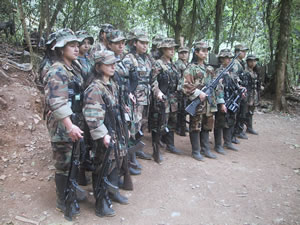 Havana, Cuba.
Even in Havana they get up early. “We get up at 4:30 to wake up the roosters so that they can start singing,” grins Ricardo Tellez, better known as “Rodrigo Granda.”I have an appointment at 7am to interview three members of the Secretariat, the highest authority of the FARC. They are at the forefront of the dialogues between the insurgent organization with the delegation of the Colombian government in Havana. In a great hall of a house in “El Laguito” (1), where they live, “Ivan Marquez” and “Pablo Catatumbo” arrive, too. Granda lights a cigarette and drinks his second cup of coffee. Marquez has a big Cuban cigar in his hand, which he`ll start “after breakfast”. Catatumbo is sipping coffee and says to me: “If the three of us are going to say almost the same, why would you interview me?”
It is the first time a journalist has the opportunity to talk to these three guerrilla leaders together.
Hernando Calvo Ospina: Commanders, you have been talking for seven months, negotiating with the government’s commission in this peace process. Are you still optimistic?
Ivan Marquez: The optimism of the FARC is determined by our willpower to find a political solution to this confrontation, which has lasted for almost fifty years. Because they haven´t been able to defeat us militarily, nor have we, we must seek an alternative. In addition, the circumstances, today’s realities, both in Colombia and on the continent, indicate that it is time to find a pacific solution. Wars are not eternal. And that´s why we make any necessary effort to come to an understanding with the government.
HCO: How does it feel to be so close to your enemy?
IM: In spite of sitting at the same table two groups with very different views, almost antagonistic, we have to tolerate and understand each other. At a negotiating table one should respect the other party, and I think that respect should be mutual. There are moments of algid, strong discussions, but soon things turn back to normal because we know that we must come to an understanding.
HCO: Negotiations in war move between two opponents. It seems to me that you put more emotion on it.
IM: You’re right. The government has always had a tendency to seek the subjugation of the guerrillas as a synonym for peace, not peace through structural changes. The oligarchy wants peace for free. We are making great efforts for them to understand that you need to generate an atmosphere for peace, and that it can be achieved through institutional and political transformations. We are sure that the most important thing for Colombia is to ensure real democracy, where the sovereign people can determine strategic policies, where the opinion of the people is taken into account without being stigmatized and murdered.
HCO: Maybe I’m wrong, but I think that at various times President Juan Manuel Santos has wanted to pull back.
Rodrigo Granda: I don´t think he wants to withdraw, but he does seem afraid. It’s as if he were afraid of former President Alvaro Uribe, of the cattle-breeders, of narco-paramilitary power and the obscure sector within the Armed Forces. Santos recoils despite having the support of a significant sector of industrialists, bankers and churches. For example, according to reports we have, Sarmiento Angulo (2), one of the most powerful men in Colombia, supports the dialogue process. Surveys say that 87% of Colombians also want peace. The correlation of forces in favor of peace is indisputable. Uribe aside, nobody speaks about war anymore. But it seems that Santos does not want to face those sectors led by Uribe, he wants to fight us militarily, and assumes intransigent positions that do not allow a correct development of the dialogues. We know that Uribe has prepared 13,000 paramilitaries, known unofficially as the “anti-land restitution army.” Is it that the Armed Forces and Santos don´t know about that? Of course they do! Is that what Santos is afraid of? Or is he taking it as part of a possible move against us?
HCO: Clearly Uribe tries to torpedo the negotiations. Do you think he wants to return to presidency?
RG: And he wants that to protect himself, because he’s afraid of being sent to Miami for drug trafficking, or to the International Criminal Court in The Hague for crimes against humanity. It would be favorable for him if the negotiations failed, so that he can appear before the country as the solution. Although he wasn´t able to resolve the “problem” of the guerrillas during the eight years he was in office. Pablo Catatumbo: Anyway, Santos and Uribe have the same idea about the negotiations: a peace process by submission. They are blind, deaf and quite wrong, but think they’re smart. And that is where we must continue with wisdom to prove that they are wrong, and that like this, the war will continue.
HCO: In statements you´ve made and documents I’ve read, you are asking for reforms in state institutions and the modernization of the State itself, which may be contradictory for a Marxist-Leninist communist guerrilla.
IM: At the table we are not proposing radical changes to the political or economic structures of the state. Over there, we don´t mention socialism or communism. We try to create conditions to reach an understanding with the government. A place where two different views can meet. We know that some leftist organizations, not only in Colombia, say that we became a reformist guerrilla.
We have made minimum proposals, for example the hundred proposals about the agrarian system, which as you´ve already said, are nothing more than a modernization of the Colombian countryside, but fact is that we are still living in feudalism there. Imagine that even this way, the government puts obstacles.
HCO: What has ever signed between the parties?
RG: We have signed some things, but they are not final signatures because nothing is agreed until everything is agreed. There are points on which we haven´t agreed yet, and we let them out to discuss them later on. Otherwise there won´t be any progress.
HCO: Dialogues in Havana, and strong military confrontations in Colombia …
RG: The government doesn’t want a ceasefire, so both parties have to dialogue under fire. We are having heavy confrontations every day, to an average of three per day. We have done large-scale military actions, which they hide to the nation. Now, both parties have decided that what happens in Colombia is not going to affect the Table.
We have made some gestures of peace, as was the unilateral truce for Christmas, although we had to defend ourselves against the attacks of the army. And what has been hidden is also in that same time span multinationals could increase their profits, they did not have our pressure. That’s why one of the major reasons for ending the guerrillas is that the transnationals can steal whatever they want without any problem.
HCO: So far, what has been the main government’s intransigence in negotiations?
IM: Without any doubt, the determination not to touch the property of the big land-owners, most of which has been obtained through violent dispossession. They`re afraid of that. Their representatives, when they talk to us, have said that that could “unleash the demons of paramilitarism.” They are afraid of cattle-breeders and landowners, to touch one third of the 30 million acres they own, although not even the cows occupy them.
But land reform without touching the big property isn’t reform. There must be set limits for land property. The government has not even thought about putting taxes as a punishment for unproductive land tenure. When we proposed taxing these big properties, the government responded that there is no reliable census; that nobody knows where they are or what their extension is. They suggest that first there should be a census, which can take up to 7 or 10 years. What they don’t say is that during this time the landowners can lease or sell the land to multinationals, which is their strategy.
HCO: If the Colombian government decided to negotiate with the FARC, it was because Washington agreed. You know that that is not an exaggeration of mine. What is the current political attitude?
IM: Recently, 62 U.S. congressmen, including two Republicans, led by Jim McGovern, signed a letter of support for the talks. This letter was sent to Secretary of State John Kerry. We welcomed this altruistic gesture. The White House and the State Department have also expressed their support. Of course, there are always different interests because the Colombian conflict produces money. The powerful arms industry doesn´t want to let loose of that business.
HCO: You are determined to stop the armed struggle. What should the government offer you for this to be achieved? And you, what would you become?
RG: President Santos, during the initial interchanges with us, said he wanted to open the floodgates to a real democracy in the country. That struck us because we have never said that the armed struggle is the only way to change the country. We got up in arms, and we still carry them, because violence has closed the doors to political participation. If the possibility of doing politics legally becomes real, without the constant threat of assassination, in equal conditions and with political reforms that could lead the country towards participatory democracy, we are there. Because there could be created a favorable correlation of forces for the revolutionary movement, which routs the necessary radical changes. We accept that challenge.
PC: You need to build a strong mass movement to impose changes, because the establishment doesn’t give away anything for free. That is a task for us, leftists and Democrats. It is important to create a power block of people who want a new Colombia. That is the challenge, and it´s not a small one.
But you see, as we talk about it at the conversation Table, the repression continues all around the country. The government hasn’t changed anything regarding the treatment of social protest: they are stigmatized, associated with the guerrillas to criminalize them and attack them with bullets. And if there is something we have very clear is that we are not willing to repeat the experience of the Patriotic Union, during which nearly 4000 members and leaders (3) were killed.
History, if it’s not manipulated, doesn´t lie: they have been the violent ones. When we remind the governmental team of these facts, they tell us that they are not here to talk about that. Why? What do they feel ashamed or afraid about? Without knowing the history of political violence in Colombia, how are we to know why we got to the current situation and how to resolve it?
IM: There are three items on the agenda to be discussed: guarantees to exercise political activity, political participation and bilateral and definitive ceasefire. The latter discusses the surrender of weapons and under what conditions. But let it be understood: that´s not handing over weapons. We cannot talk about these points until they are discussed in the table, and they will be the last ones on the agenda.
HCO: What will happen with the paramilitaries?
IM: They must definitively be eliminated; if not, there would be no certainty for an insurgent organization to incorporate into legal politics. That’s an insurmountable condition to reach a peace agreement. And it is the government who has to give the order to his generals to stop the state’s counterinsurgency strategy.
HCO: Are you determined to apologize for the suffering you have caused in this war?
PC: We have made mistakes, some serious, indeed. But whatever official propaganda says, aggression to the population has never been a strategy of the FARC. On the contrary, we have defended them against the army and its paramilitaries, mainly on the countryside.
I have no problem in saying to a woman or a family: “I feel sorry about the pain we have caused with the death of your loved one.” But this is much more complex. Are we going to apologize? Very well. Let´s also invite the economic associations that financed the war and paramilitaries; let´s invite all State institutions, because they guarantee repression and impunity; let´s invite the mass media, too, because they reproduced the stigmatization made by security agencies, which have led to the murders and massacres; the rightist political parties should also sit down and assume their great responsibilities; the former presidents of the republic who gave the orders. Not even the Catholic Church can deny its responsibility! And the governments of the United States, Israel, some European countries and others that have supported various criminal governments of Colombia cannot be left outside of this ceremony. All together, we can decide who the terrorists and murderers of the people are.
HCO: You point out, and rightly so, that the government, its armed forces and the mass media are responsible for psychological warfare and propaganda against the insurgency. But I think an important sector of the so-called intelligentsia have savaged the armed struggle they supported before.
PC: Most intellectuals in Colombia, and probably in the world, are suffering from cowardice, accommodations or both things. Almost all were put by the system in the matrix of lies, and are used to “theorize”, create and repeat falsehoods. Many of them spend time writing discourses against media manipulation, but when the system starts a campaign against someone or somebody, they start talking like parrots.
In Colombia, the system told them that the guerrillas are guilty of everything. Although many of them believed, or believe, they are from the left, they repeated in unison that we are responsible for violence, drug trafficking, kidnapping, poverty, rising gasoline and even the high price of the bananas. I assure you that if tomorrow the birds stop singing, these “intellectuals” repeat what the government and their media say: the guerrillas are to be blamed. They have fallen into such poverty regarding research and argumentation, that their analyses and theories don’t endure any discussion, at least with us. They think that if they discuss with us, we´ll kill them afterwards. They are not even capable of realizing that if that was true, in Colombia there would be very few “intellectuals” left right now. Their brain doesn’t have the capacity to see that those who safeguard their intellectual and political independence are those who are said by the government to be friends or accomplices of the subversion.
HCO: I must admit, and I´m about to end, that I’m not very optimistic about these dialogues. I believe that Colombia and Colombians deserve peace with social justice, but I know the Colombian State, I know the United States, who support that State and who ultimately decides. Hopefully the long night, imposed by State terrorism stops and finally dawns. I wish it with all my heart.
PC: Look, political conditions in Latin America have changed. Who could have imagined what happened in Venezuela and Bolivia with the arrival of Chávez and Evo? Who would have thought that other Latin American governments one day would demand respect for their sovereignty from the U.S.? There are unpredictable things, like the end of the Soviet Union for example.
In Colombia there is an accumulation of hunger, exclusion, injustice and repression. The time will come when people simply won´t take it anymore. There is an accumulation of ongoing processes that can make a leap any time. There is a boiling that could explode tomorrow.
Besides, Colombia is not an island. The neighboring countries are pressing the government because they are tired of the conflict that affects them. Venezuela received about 4 million displaced Colombians, Ecuador almost two million. We believe there are 13 to 15 million Colombians in neighboring countries, that is, the third part of the Colombian population. And these countries must provide housing, food and health. For how long? Apart from the budget they spend to protect their borders. Just because the Colombian government insists on not negotiating a conflict they will never win! We have asked the representatives of those nations to demand for peace, so that all our compatriots can return to their country.
We are optimistic. Revolutionaries must be optimistic, even in the worst situations. And we believe that peace will come to Colombia because we deserve it. The other possibility is total war. That´s why I say the moment has come, but that doesn’t mean it´s easy. This peace process is too complex, but we believe it is possible. We insist on striving for peace, so we will not fold our arms.
I do have hope, although I think the authorities and the Colombian oligarchy lack greatness and humility to start solving this conflict.
Hernando Calvo Ospina is a Colombian journalist. He can be reached through his website.
NOTES:
1. “El Laguito” is a residential complex in Havana. Their houses are separated by trees and gardens. In the center is a small lake. Since November 2012, the delegations of the FARC and the Colombian government are located in this peaceful scenery.
2. According to the magazine Forbes (edition 2012). Luis Carlos Sarmiento Angulo listed as the first billionaire in Colombia, and would rank 64 in the world.
3. The Patriotic Union was born in 1985, as a result of the talks between the government of Belisario Betancur and the FARC. According to the Colombian justice, there was a “political genocide” against the Patriotic Union.
Translation: http://en.firatnews.com/news/news/g…
The Murder of Tomas Garcia by the Honduran Military
School of the Americas Watch
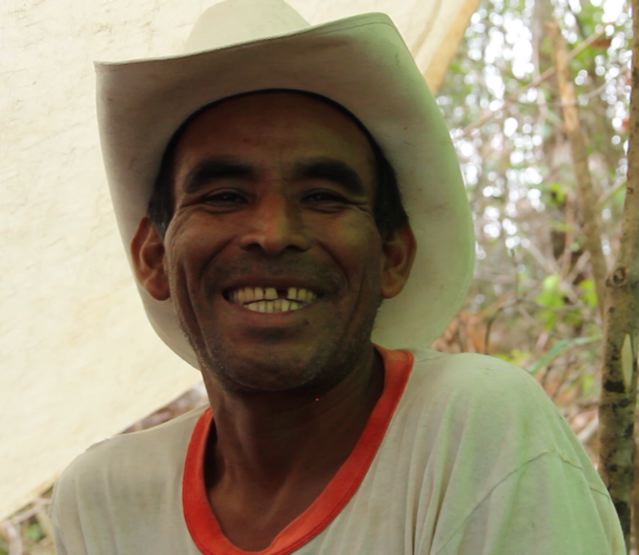 Tomas Garcia was a father of seven who would have turned 50 this December. He was a husband, father, brother, and community leader, serving as an auxiliar and on his community’s Indigenous Council. On Monday, July 15, his life was brutally taken away by the Honduran military when a soldier shot and killed him at close range in broad daylight in front of 200-300 people.He did not have a gun, he did not hurt anyone. His crime? Opposing the construction of a hydroelectric dam being constructed in his Indigenous Lenca community’s territory against their will, in violation of ILO Convention 169 and the Honduran government’s promises to consult Indigenous communities about projects in their territory.Why Tomas?He was one of the first to arrive, leading the delegation that had come to deliver a message to the companies constructing the dam at their installations in Rio Blanco. A soldier fired at him not once, not twice, at least three times from only 6 or so feet away, according to eyewitnesses.
Tomas had gone to the day’s activities with his 17-year old son who was also shot several times, receiving serious injuries in his back, chest, and arm and requiring hospitalization. Two others were also injured by the army’s bullets. According to eyewitnesses, a soldier who had been firing into the air lowered his M-16 and fired multiple shots directly at Tomas. Tomas had recently arrived at the company’s installations as one of those who was at the front of the delegation; the whole group had not even had time to arrive and many were still walking down the hill that leads to the offices. As one woman from the community explained, “We didn’t even have a conversation with them, they didn’t say anything to us. They didn’t even wait for us to say why we there, they didn’t wait for us to say what we had to say. We saw Tomas fall, he fell from shots, including to his head.”
The murder of Tomas Garcia by the Honduran armed forces is only the latest escalation in a systemic campaign of repression against the Rio Blanco Indigenous Lenca people to try to force them into accepting a hydroelectric dam being illegally constructed in their territory. Since April 1, the communities in the area, organized in the Indigenous Lenca organization COPINH, have been blocking the access road to the dam site. The access road, like the dam, is in their ancestral territory, surrounded by their fields of corn, beans, bananas, yucca, and lush forests that they have carefully stewarded for hundreds of years. At first, the Honduran National Police evicted them multiple times – despite them being on their own land. After each eviction, they simply returned to the site.Personnel of the companies building the dam — DESA and SINOHYDRO – threatened COPINH leaders. Community members started receiving death threats from employees of the company who live in the area. Armed men appeared at the site of the roadblock and lurked around at night.
Then on May 17, soldiers from the First Battalion of Engineers, commanded by SOA graduate Col. Milton Amaya, were deployed to the area and have stayed there ever since. They essentially serve as security guards for the dam companies, even driving company machinery to attempt to get it past the roadblock, and live, eat, and sleep at DESA/SINOHYDRO’s installations. Soldiers have repeatedly intimidated those who oppose the dam: they have harassed them, told them they were criminals, came into their yards, held an M-16 up to one of them, threatened women and children, and fired shots when community leaders walked by.i
 Having the police and military on their side only seems to have emboldened company employees to increase their threats and attacks on those who oppose the project. According to testimonies, employees of the company who live in the area attacked a man who had just come from the roadblock with machetes —cutting up his face and sending him to the hospital.They threw rocks at another, and threatened many in the community with death, including children. “I’m going to come to the Roble and you know how you’ll all end up. In pieces.” “I’m going to kill all of you.” ii Bullets passed above the site of the roadblock where people were sitting one Monday afternoon, people in ski masks appeared near the house of a family that is strongly against the dam, unknown figures lurked outside the house of the President of the Indigenous Council, and a known hit man arrived at the site of the roadblock.
In spite of all of this, the Indigenous Lenca people did not give up. Day after day, in the rain or in the heat, in spite of death threats and bullets that passed overhead, men, women, and children came to the roadblock to defend their land. After Tomas’ death, they continue to do so, now continuing forward in his honor, despite the intense accusations against them aimed at discrediting their struggle in the wake of Tomas’ murder.
To justify the death of Tomas Garica, DESA and the military launched a media campaign criminalizing COPINH and the Rio Blanco community. DESA issued a media release claiming that
“because of the violent intervention of the COPINH protestors, Mr. Tomas Garcia died and Mr. Alan Garcia Dominguez was injured. This morning, minor Cristian Anael Madrid Munoz also died, who is the grandson of one of the principal leaders of the zone and was doing agricultural work on his property when he was surprised by the protestors” and that “The actions which occurred today were deliberately premeditated by the principal leaders of COPINH.”
Reading DESA’s release and the corporate news accounts of what occurred, one would think that COPINH itself murdered Tomas Garcia instead of the Honduran military. Area residents who heard TV news accounts got the impression that COPINH was violent and threatening people, not that they were in fact the victims of threats and violence. DESA also accuses the protestors of a second death, which is said to have occurred in a separate location while community members were gathered around the body of Tomas Garcia at the company’s installations, in sight of the police and military. Community leaders report that the Police officer in charge even told them he was a witness that they were all still with him at DESA’s installations when gunshots were heard from up the hill, where Christian Madrid lives. But that doesn’t matter when DESA and Chinese owned SINOHYDRO – the world’s largest dam-building company — are losing money because the subsistence farmers of Rio Blanco refuse to let their river be privatized.
The attacks portraying the protestors as armed further contradict the reality one finds when one visits the zone. The dirt-poor Indigenous farmers of Rio Blanco have machetes and sticks, not guns.As one Indigenous Lenca woman and mother who is a leader in the struggle against the dam explained,
“We don’t have any guns. They do have guns because they are invading our land. They buy big guns to walk around threatening the lives of our compañeros, of all the members of Rio Blanco. They see us as an enemy and walk around with guns. Since they make money selling our land with that they can buy guns to take away the life of another person, another human life.We are all humans in this world… We have to respect each other’s faces. We are all the same.Regardless of how we look, we are children of God.”
The accusations of violence, murder, and possibly even terrorismiii against COPINH are a strategic escalation of the criminalization campaign aimed at destroying COPINH’s ability to resist the Agua Zarca Dam and numerous other projects planned for Indigenous Lenca territory. On May 24, soldiers from the First Battalion of Engineers detained Berta Caceres and Tomas Gomez of COPINH, claiming to have found a gun in their vehicle to try to criminalize them. It appears that soldiers themselves may have placed a gun in their vehicle to fabricate the charges. SOA graduate Milton Amaya, Commander of the First Battalion of Engineers, made accusations in the press. However, the soldiers couldn’t even keep their stories straight and the charges were provisionally dismissed on June 13th. Nevertheless, the state has appealed and is still trying to criminalize Berta. Now, COPINH and the Rio Blanco community have been criminalized and defamed in the press, in an effort to justify the murder of Tomas Garcia and potentially justify criminal charges against COPINH leaders or even more murders in the area. A similar tactic has been used in the Bajo Aguan, where SOA-graduate Col. Alfaro started a media campaign earlier this year accusing the campesinos (small farmers) of being armed and violent to justify the deaths in an area where over 100 small farmers have been murdered.
Why is the Honduran government so invested in breaking Indigenous Lenca resistance to the Agua Zarca Dam project in the remote western mountains of Honduras? The Agua Zarca Dam is not an isolated project but part of the overall scheme of privatization and looting of Honduras’ natural resources in the name of foreign investment. It is part of the “Honduras is open for business” scheme that was embarked upon following the 2009 military coup in Honduras to enrich the Honduran elite and multi-national corporations.Just months after the coup, the Honduran National Congress passed a General Water Law enabling the country’s water resources to be concession to third parties – enabling privatization of rivers.iv Then in 2010, the Congress approved a package of 41 hydroelectric dam projects throughout Honduras, including the Agua Zarca project and other dams in Indigenous territory.v They also passed a new mining law, which has yet to go into effect, and a law creating Special Development Regions, commonly known as model cities. And in July 2013, the Congress passed a law enabling the government to sell off “idle” resources, including natural resources, mining, energy, and more, in order to pay the internal debt.vi
All these laws passed by the post-coup governments are part of the drive to privatize and sell off natural resources – from water, to minerals, to the land itself– for exploitation and profit by corporations, especially foreign corporations. As Honduran President Porfirio Lobo explained at the signing of an agreement with SINOHYDRO to build three other dams on one of Honduras’ longest rivers, “I’m determined to promote these types of projects and make Honduras more open to all foreign investors.” While enriching business executives and investors around the world, this robs Honduran communities, especially Indigenous and campesino communities who live off the land, of the land and resources they depend on to survive.
And so the Honduran military has been dispatched to destroy the resistance of the Rio Blanco Indigenous people just as they have been dispatched to the Bajo Aguan where organized campesinos struggle for land.While Tomas Garcia lived with his wife and seven children in a small house with a dirt floor, the US was sending millions and millions into military aid in Honduras.Some of this aid probably found its way to the unit that used one of its M-16s to murder Tomas and terrorize the Lenca people for standing up for their rights. It is no accident that the military is used to enforce the turning over of Honduras’ natural resources to corporations; this is part of the US neoliberal agenda. US aid includes training, whether at the School of the Americas or by the US military on Honduran soil.For instance, Second Lt. Gonzalez, who was in charge of the soldiers stationed in Rio Blanco, reported he was trained in Special Operations by US military instructors. David Castillo, the Director of DESA, the company building the dam, attended West Point Military Academy and previously served as the Assistant to the Director of Intelligence of the Honduran Armed Forces.vii The military’s effort to criminalize the Rio Blanco community goes up to the highest levels – General Rene Osorio Canales, the Commander of the Honduran Armed Forces who was trained at the School of the Americas, spoke out to publicly justify the military’s murder of Tomas Garcia.viii
“When we heard the shots, we were humiliated.Because we don’t have guns. We have only machetes and wood.They are always accusing us of being armed, saying that we are guerrillas, that we are violent. That’s a lie. What we want is for them to withdraw and leave our territory and our rivers free.As Indigenous people we don’t want this dam to be built in our home.”
“We don’t want the dam built on our land because it affects us a lot. We like to harvest corn and beans, but we no longer could plant our crops. We don’t want the dam and we don’t want them to come violate our rights.”
“We are not criminals.We are people who grow corn.”
“Before the company came here we lived in peace.”
-Rio Blanco community members
[i] Interviews with Rio Blanco community members, May, June, July 2013.
[ii] Testimonies from community members who oppose the dam about threats from company employees who live in the area, June and July 2013.
[iii] http://copinhonduras.blogspot.com/2013/07/solidaridad-de-la-red-nacional-de.html#more
[iv]http://www.defensoresenlinea.com/cms/index.php?option=com_content&view=article&id=2523:comunidades-indigenas-lencas-en-rebelion-contra-depredacion-del-territorio&catid=58:amb&Itemid=181
[v] http://archivo.laprensa.hn/Negocios/Ediciones/2010/09/03/Noticias/Congreso-aprueba-41-proyectos-renovables
[vi] http://www.elheraldo.hn/Secciones-Principales/Pais/Ratificada-ley-para-vender-bienes
[vii] http://www.linkedin.com/pub/david-castillo/39/a55/6a2
[viii]http://www.defensoresenlinea.com/cms/index.php?option=com_content&view=article&id=2695:en-guerra-contra-el-pueblo&catid=42:seg-y-jus&Itemid=159
Photo of Tomas Garcia by Colectivo Ocote
Related article
Honduras: Expanding Palm Oil Empires In The Name Of ‘Green Energy’ And “Sustainable Development”
Written by Rights Action, Rainforest Rescue, Biofuelwatch, and Food First | August 6, 2013
From 6th-8th August, the Roundtable on Sustainable Palm Oil (RSPO) is holding its 4th Latin American Conference on so-called sustainable palm oil in Honduras [1]. Environmental and social campaigners have been shocked to learn that one event sponsor is the palm oil company Dinant Corporation, owned and controlled by Miguel Facusse, the largest landowner in Honduras. They are calling on World Wildlife Fund WWF and three other organisations to withdraw from and denounce the conference being held in Honduras due to the Dinant’s sponsorship of the event and the serious human rights implications [2].
Mr. Facusse was a key supporter and beneficiary of the June 2009 military coup in Honduras [3], has been associated with narco-trafficking [4], and, along with other large oil palm growers, has been linked to the targeted killing of more than 88 members and supporters of peasant organisations since June 2009 in the Aguan Valley [5], one of the main palm oil producing regions in Honduras.
Annie Bird from Rights Action states: “By holding its conference in Honduras and by allowing Dinant Corporation to sponsor the event and hold a stall, the RSPO is turning a blind eye to systemic and severe human rights abuses, including forced evictions of entire communities and over 88 killings for which palm oil companies, especially Dinant, are responsible. The RSPO Conference serves to reinforce the impunity with which the large-scale palm producers operate.”
RSPO is overwhelmingly dominated by the interests of large corporations like Nestlé, Rabobank and Unilever—all linked to cases of “land grabbing” in Asia, Latin America and Africa.” [6]
According to Tanya Kerssen, Research Coordinator for Food First, “The case of Dinant is emblematic of how large, elite-controlled companies use palm oil to expand their control over land and other resources. The RSPO is merely window dressing for this continued corporate expansion, which—whether classed as ‘sustainable’ or not—necessarily means the replacement of forests, biodiversity and food production with a large-scale monoculture crop for biofuel and unhealthy edible oils.” [7]
Guadalupe Rodriguez from Rainforest Rescue adds: “WWF and the three other organisations involved in this RSPO conference must pull out of and denounce this process. They must not, however indirectly, associate themselves with palm oil businessmen involved in repressing, evicting and killing peasants in Honduras’s Aguan Valley.”
The European Commission considers all biofuels from RSPO-certified palm oil to be sustainable and thus eligible for government support [8]. This is despite growing evidence by a large number of organisations, which shows that the RSPO has not been enforcing its own standards on its member companies and cannot guarantee environmental or social sustainability of palm oil [9].
Almuth Ernsting from Biofuelwatch states: “The RSPO Secretariat’s decision to hold a conference in Honduras and allow Dinant Corporation to contribute sponsorship and hold a stall further undermines any pretence that the RSPO’s aim is to make palm oil sustainable. Far from addressing any of the most serious impacts of palm oil production, the RSPO continues to serve as an instrument of greenwashing for the industry”.
NOTES
[1] The Roundtable on Sustainable Palm Oil is a stakeholder forum which provides voluntary certification for palm oil. The great majority of RSPO members represent industry interests. (Conference website: http://rspo2013.com/)
[2] See http://rightsaction.org/action-content/open-letter-world-wildlife-fund-solidaridad-network-snv-netherlands-development for an Open Letter to WWF, Solidaridad, SNV Netherlands Development Organisation and Forest Ethics on this issue.
[3] In June 2009, the democratically elected Honduran government of Manuel Zelaya was overthrown by a military coup. Manuel Zelaya’s government had begun listening to and acting on the demands of peasant organisations for land reform, including in the Aguan Valley region. The land reform process was ended by the military rulers after the coup. Since then, Dinant Corporation and their armed security forces have been collaborating with military forces and police forces in repressing local communities who have been trying to reclaim land controlled by Dinant. See for example: http://www.enca.org.uk/documents/ENCA56_Sep_2012.pdf .
[4] Published Wikileaks Cables revealed that the US embassy in Honduras has had evidence linking Miguel Facusse to drug trafficking since at least 2004 and that several aeroplanes with drugs have landed on his private property. See http://www.thenation.com/article/164120/wikileaks-honduras-us-linked-brutal-businessman#
[5] For a report by Rights Action about killings and other human rights abuses in the Aguan Valley, see http://rightsaction.org/sites/default/files/Rpt_130220_Aguan_Final.pdf .
[6] See, for example: “The bloody products of the house of Unilever” Rainforest Rescue, 2011. https://www.rainforest-rescue.org/mailalert/747/the-bloody-products-from-the-house-of-unilever
[7] For more on the link between palm oil expansion and corporate control, see Kerssen, Tanya. Grabbing Power: The New Struggles for Land, Food and Democracy in Northern Honduras. Food First Books, 2013.
[8] See http://www.rspo.org/news_details.php?nid=137
[9] Previously, over 250 organisations condemned the RSPO for ‘greenwashing’ of palm oil: http://www.biofuelwatch.org.uk/2008/rspo-declaration-english/ . More recently, the RSPO has been denounced for example by Greenpeace and Friends of the Earth; http://www.biofuelwatch.org.uk/2008/rspo-declaration-english/
TSA expands role beyond airports amid growing cases of misconduct
RT | August 7, 2013
Cases of misconduct among airport screeners employed by the Transportation Security Administration (TSA) increased by 26 per cent between 2010 and 2012, according to a new report. It comes as the agency expands its services beyond airport security gates.
The report, which was released last week by the US Government Accountability Office (GAO), found 9,622 cases of misconduct among TSA workers from 2010 through the 2012 fiscal year. It concluded that the agency had insufficient procedures for reviewing and recording the outcomes of misconduct cases.
At the same time, fresh attention has been cast on TSA’s expanding its roles into train terminals and even sporting events in the form of Visible Intermodal Prevention and Response squads, or VIPR teams, which have been assigned to counterterrorism security checks at transportation hubs in the US since 2005.
According to a profile published this week by The New York Times, TSA’s VIPR program now boasts a $100 million annual budget and is growing quickly. The scheme has grown since 2008, consisting of 37 teams in 2012.
Meanwhile, the agency’s records show that it has provided security for over 8,800 “unannounced checkpoints” and other search operations in conjunction with local law enforcement outside of airports. Such events have included the Indianapolis 500 race and both the Democratic and Republican national conventions.
VIPR teams usually comprise of federal air marshals, explosives experts, and baggage inspectors. The squads move through crowds at events and transportation hubs with bomb-sniffing dogs and perform random stops on individuals. Plainclothes members of VIPR teams monitor crowds for suspicious behavior.
“Our mandate is to provide security and counterterrorism operations for all high-risk transportation targets, not just airports and aviation,” TSA administrator John S. Pistole said. “The VIPR teams are a big part of that.”
However, members of Congress and officials at the Department of Homeland Security question whether the teams are properly trained while civil liberties groups wonder what the VIPR teams have to do with TSA’s original mandate to provide security at the nation’s airports.
“The problem with TSA stopping and searching people in public places outside the airport is that there are no real legal standards, or probable cause,” said Khaliah Barnes, administrative law counsel at the Electronic Privacy Information Center.
“It’s something that is easily abused because the reason that they are conducting the stops is shrouded in secrecy.”
Representative Bennie Thompson, a ranking member on the House Homeland Security Committee with oversight of TSA, supports the VIPR teams but remains concerned about warrantless searches and the process of detecting suspicious behavior.
“This is a gray area,” he said. “I haven’t seen any good science that says that is what a terrorist looks like. Profiling can easily be abused,” Thompson told The New York Times.
As for the rising number of offenses among TSA workers, the majority of those listed in the report include attendance and leave violations and excessive absences or tardiness. Only a small fraction represented instances of theft.
Specific violations of screening and security rules were outlined in 20 per cent of the cases profiled in the report. One of those offenses included sleeping while on duty.
Although the GAO report does not indicate high occurrences of issues such as theft, there have still been some high profile cases among the 56,000-strong staff which is spread out among 450 airports across the US.
For example, a TSA officer at Orlando International Airport pleaded guilty to embezzlement and theft after stealing 80 laptop computers and electronics from passenger luggage in 2011. The items were worth $80,000.
Another TSA employee was arrested after allegedly stealing some $50,000 worth of electronics at Fort Lauderdale-Hollywood International Airport the same year, although the GAO does not cite that incident.
It remains to be seen whether the occurrences of misconduct listed in the report will carry over into TSA’s growing role. For the most part, the presence of VIPR teams seems to mostly confuse and irritate the public.
A joint operation in 2012 involving VIPR, Houston police, and local transit officers led to complaints of stops and searches of bags. The deployment yielded a few arrests, mostly for passengers with existing warrants for prostitution and minor drug possession, according to The Times.
“It was an incredible waste of taxpayers’ money,” said Robert Fickman, a local defense lawyer who attended a subsequent meeting in the city packed with angry residents. “Did we need to have TSA in here for a couple of minor busts?”
Lebanese ‘tortured by Mossad agents in Nigeria’
Press TV – August 6, 2013
Two Lebanese nationals, who are on trial in Nigeria, have told a court that they were subjected to torture by Israeli Mossad agents after being arrested.
Mustapha Fawaz and Abdallah Thahini together with another Lebanese national Talal Ahmad Roda were arrested in May after an arms cache was discovered in a residence in the Nigerian city of Kano.
The three Lebanese men reportedly own a supermarket and an amusement park in Abuja, which have been closed since their arrests.
Fawaz told the court on Monday that after he was arrested in Abuja, a security official told him that some “European friends” wanted to ask him some questions.
“I was taken to an interrogation room where I met three Israeli Mossad agents,” he said.
Fawaz also said the interrogators handcuffed his hands behind his back for days, noting he “lost count because they did not allow me to sleep for several days.”
He went on saying, “During the 14 days of interrogation, I was interrogated by six Israeli Mossad agents and one masked white man.”
“I was interrogated in Arabic. I asked to be interrogated in English, but they refused. Most of them are weak in English. They are not Europeans, but Israelis,” he also said, adding no Nigerian official was present during the interrogations.
Thahini gave similar account to the court, saying he collapsed five days after the interrogators did not allow him to sleep.
Related article
- Israel Targets “Hezbollah Cells” in Nigeria (alethonews.wordpress.com)
Mercosur complains to Ban Ki-moon on US global espionage and EU affront towards Bolivia’s Evo Morales
MercoPress |August 5, 2013
Mercosur foreign ministers warned UN Secretary General Ban Ki-moon of the serious implications which the United States global espionage system represents for the international community, during a Monday midday meeting at the UN headquarters in New York.
“We have expressed our concern and warning over the serious implications that these illegal procedures displayed by the government of the US have on the political stability of countries and the necessary mutual trust of the international community members”, said Venezuelan minister Elias Jaua at a press conference following the meeting with Ban Ki-moon.
Jaua was the spokesperson of the Mercosur group of foreign ministers, Antonio Patriota, from Brazil; Hector Timerman from Argentina and Luis Almagro, Uruguay, as well as associate member Bolivia’s David Choquehuanca, because Venezuela since last July holds the rotating chair of the South American trade block.
The ministers thus complied with the formal request from the last presidential summit of Mercosur in Montevideo in mid July, when there was an official release condemning US world espionage, which was revealed by the former intelligence officer and whistle-blower Edward Snowden currently with one year political asylum in Moscow.
“This practice is absolutely in violation of international rights for the safeguard of countries sovereignty and independence, and even more, is in violation of fundamental human rights of the citizens of our countries”, underlined Jaua.
When asked about the reply of Ban Ki-moon to the Mercosur statement, Brazilian minister Patriota said that the top US official “shared the concern” of the block. “UN Secretary General reacted in a way that showed awareness towards the message we transmitted from our presidents”, added Patriota.
During the meeting the ministers also expressed Mercosur ‘deep concern’ because of ‘the abuse and affront’ to Bolivian leader Evo Morales presidential immunity “when he was impeded air space free passage over several European countries under suspicion that his aircraft could be transporting Mr. Snowden”, when he was still stranded in the Moscow airport and hoping to be granted political asylum by some country.
The decision adopted by Spain, France, Italy and Portugal last 2 July “seriously endangered not only the dignity of president Evo Morales, but also his own physical safety since he had to over-fly with limited fuel and was forced to land in Vienna”, explained Jaua.
Snowden who is wanted by Washington for having leaked the existence of a US secret program that operates domestically and internationally to spy on phone and internet communications, was finally granted temporary asylum (one year) in Russia given the difficulties to fly to Latinamerica where several countries had offered to help him.
Precisely asylum was another issue addressed with Ban Ki-moon following on the strong pressure exercised by the US on several Latam countries (Bolivia, Nicaragua and Venezuela) which offered an alternative to Snowden.
“For us Latinamericans the right to asylum is a right all citizens can exercise as well as the right of States to be respected when they extend such a benefit, and it is a principle we are not willing to negotiate” said the Mercosur spokesperson emphatically, who then recalled that ‘this very principle helped to save many lives during the hard years of the military dictatorships suffered by many countries of the region”.
Finally the foreign ministers reiterated their standing concern on two recurring issues: the US blockade on Cuba and Argentina’s claim over Falklands/Malvinas sovereignty.
There is a demand that these two issues “definitively find a solution since they are highly sensitive and of great concern for the Latam region”.
Argentine President Cristina Fernandez was scheduled to meet Ban Ki-moon later in the day in advance of her speech to the Security Council on Tuesday, taking advantage of the fact that Argentina will be holding the presidency of the council during the month of August. The president arrived in New York on Monday morning.
Related article
- S. American states to recall ambassadors from Europe over Bolivian plane incident (alethonews.wordpress.com)
LAWS TO PENALIZE DRUG LORDS BEING TURNED ON THE INNOCENT
By Sherwood Ross | August 6, 2013
State “civil-forfeiture”(CF) laws aimed at drug kingpins are being twisted to confiscate the property of people “never charged with a crime,” The New Yorker magazine (August 12) asserts.
Example: a Philadelphia couple fighting a home eviction after their son sold a small amount of marijuana to an informant.
What’s more, a high proportion of the victims appear to be African-Americans and Latinos, the magazine says.
Example: Tenaha, Texas, where victims of CF actions were motorists who had been pulled over for routine traffic stops, “and the targets were disproportionately black and Latino,” The New Yorker quotes one defense attorney as stating.
Under laws once enacted to penalize drug dealers and their ilk, the authorities using CF “are routinely targeting the workaday homes, cars, cash savings, and other belongings” of the innocent, writes magazine reporter Sarah Stillman.
“In general, you needn’t be found guilty to have your assets claimed by law enforcement; in some states, suspicion on par with ‘probable cause’ is sufficient. Nor must you be charged with a crime or even be accused of one,” Stillman adds.
“Unlike criminal forfeiture, which requires that a person be convicted of an offense before his or her property is confiscated, civil forfeiture is a lawsuit filed directly against a possession, regardless of its owner’s guilt or innocence.”
Owners who wish to contest CF often find that the cost of hiring a lawyer far exceeds the value of their seized goods, the magazine reports. “There’s this myth that they’re cracking down on drug cartels and kingpins,” says Lee McGrath, of the Institute for Justice, of Arlington, Va. In fact, the victims “aren’t entitled to a public defender and can’t afford a lawyer and the only rational response is to walk away from your property, because of the infeasibility of getting your money back.”
Since in many states law enforcement authorities can use CF revenue as they like, the temptation of easy money collides with ethical values. Reporter Stillman writes, in some Texas counties, more than 40 percent of law-enforcement budgets come from forfeiture” so that a system “that proved successful at wringing profits from drug cartels and white-collar fraudsters has given rise to corruption and violations of civil liberties.”
“What stands out to me is the nature of how pervasive and dependent police really are on civil-asset forfeiture—its their bread and butter—and, therefore, how difficult it is to engage in systemic reform,” says Vanita Gupta, a deputy legal director of the ACLU.
Jennifer Boatwright, one of the 140 CF plaintiffs in a suit against Tenaha, Tex., said the county district attorney threatened to put her in jail and her son into child protective services, if she did not sign over $6,000 in her car. “Where are we?” Stillman quotes her as saying. “Is this some kind of foreign country where they’re selling people’s kids off?”
(No, Ms. Boatwright: it’s worse than that. This is some kind of country where the president is ordering illegal drone strikes in foreign countries that are killing children by the score.)
Sherwood Ross can be reached at sherwood.ross@gmail.com
Colombia: Killings of Human Rights Activists Increase by 27%
By Alexandre Bachet | The Argentina Independent | August 5, 2013
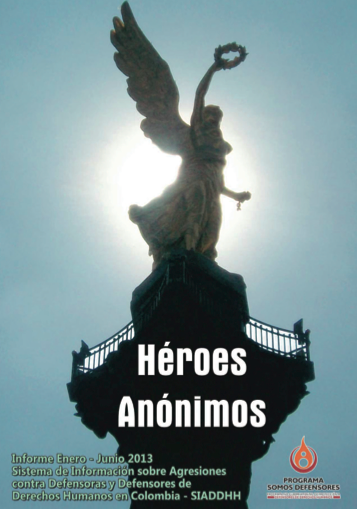 The non-governmental programme ‘Somos Defensores’ published a half-yearly report on Sunday showing a 27% increase in killings of human rights defenders and social leaders in Colombia.
Between January and June 2013, 37 human rights activists were murdered, according to the programme, which is supported by national and international NGOs. This represents a 27% increase compared with the same period of last year, when 29 activists were killed.
The report, called ‘Héroes Anónimos‘ (‘Anonymous Heroes’), states that most of the activists killed, 32 men and 5 women, were leaders of social and farmers’ organisations.
Diana Sánchez, spokeswoman for the programme, stated that “there is a lower number of aggressions [153 cases] compared to the same period last year [163 cases]” but “paradoxically, murders have increased, which is more serious.”
Sánchez explained that the first half of the year was marked by “a constant tension in political and human rights issues,” referring to the numerous protests that have taken place in Colombia this year. She also denounced that “there are armed groups and gangs (heirs to the paramilitary groups involved in drug trafficking) that when they feel that a [social] leader or an NGO threaten their mafias or their territories, they have no qualms about killing them.”
(photo courtesy of ‘Somos Defensores’)
Bahrain Watch organization says Manama regime tracks critics via Twitter
Press TV – August 5, 2013
The Bahrain Watch organization has revealed that the Manama regime uses fake Twitter accounts to track government critics online.
Since October 2012, the Bahraini regime has detained several citizens for posting anonymous tweets that refer to Bahrain’s King Hamad bin Isa Al Khalifa.
An eight-month investigation showed that the Bahraini regime identifies those anonymous online critics by sending them malicious IP (Internet Protocol) spy links from a network of Twitter and Facebook accounts impersonating well-known opposition figures or other seemingly friendly individuals.
When a person clicks on an IP spy link, the report said, the security forces reveal the IP address of the internet connection they clicked from.
The regime can then force the internet service provider of the IP address to disclose the real name and street address of that internet connection’s subscriber.
According to the report, an examination of court records for five related cases shows that the Public Prosecution’s case centers on linking the IP address of the defendant to the offending anonymous Twitter account.
The prosecution, however, declined to disclose how the IP addresses were acquired, citing information obtained through “private methods that cannot be disclosed.”
The Bahraini regime apparently uses these accounts in secret, and may target their followers, friends, or contacts through private messages.
The report also lists over 120 other accounts that were also targeted in Twitter with IP spy links traceable to the government over the past two years.
Bahrain Watch lead researcher Bill Marczak said, “It is outrageous enough that individuals have been arrested and jailed for mere tweets criticizing the government.”
“That these individuals are being tracked down and convicted based on such weak digital evidence only makes matters worse.”
Bahrain Watch has urged political and social activists in Bahrain, and around the world, to be vigilant about impersonation accounts and malicious links.
“Given the government’s track record, it comes as no surprise that it would resort to such measures to stifle free speech,” Marczak stated.
“However, our hope is that this report will spread awareness of the methods that governments around the world use to trap digital activists.”
Related articles
- Al-Khalifa regime blocks Al-Manar website in Bahrain (realisticbird.wordpress.com)
- Bahrain Declares War on the Opposition (lobelog.com)
Soldiers assault a twelve-year-old Palestinian while settlers invade family rooftop in Hebron
International Solidarity Movement | August 3, 2013
Hebron, Occupied Palestine – Saturday August 3rd was not a peaceful Saturday for the Palestinians in Hebron. At approximately 16.30 two settlers invaded the roof of the Abu Shamsiya family in Tel Rumeida, whilst three soldiers attacked a twelve year old boy in the street nearby.
When the settlers on the roof were approached by internationals and told that they were on private property and therefore had to leave, they refused and said they came there every week. The fact that they had entered a private home without consent of the family did not concern them, on the contrary they expressed that they felt it was their right. When asked to leave the settlers behaved aggressively by yelling and continuously refusing to do so. After having argued with internationals one of the settlers threatened to lie to the soldiers and say that they had been hit by the internationals. He argued that even though it was not true, the soldiers would believe him over the international activists.
As seen in the video below, in the meantime three Israeli soldiers assaulted three young boys just down the street. The soldiers started by harshly pushing one boy, afterwards they grabbed a second boy, Islam by the hair and kicked him. Thereafter a third boy ran to his house chased by the soldiers. When internationals asked why the military was chasing the boy, they lied and said the boys had been throwing stones. The boy said that he had simply ran because he was scared after having seen his twelve-year-old friend, Islam being brutally attacked by soldiers for no apparent reason.
These are not unusual events. The Abu Shamsiya family is often victim of settler and military harassment, the family’s roof is on street level and settlers often go there to throw stones, harass the family and break their property. Saturdays are particularly violent in Hebron, only last week both Abu Shamsiya and his son Muhammed were attacked by settlers whilst the military was watching, with Abu Shamsiya then being arrested on false charges while the settlers were freed without charges.
Hebron has large settlements in the middle of the city housing approximately 500 settlers some of whom are extremely aggressive and violent. Additionally there are 2500 Israeli occupation soldiers stationed in the city.
Related articles
“I will keep trying to see my daughter until the day I die”
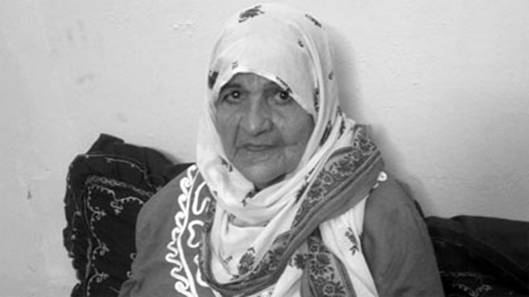
Fatma’s wrinkled face reveals the sorrow of a mother who has not seen her daughter for eleven years. Fatma Khalil Mubarak (78) lives in Rafah, in the south of the Gaza Strip. Her daughter, Lamees Ahmad Mubarak (44), has been living in Hebron in the West Bank since she got married in 1988. The last time Fatma saw her daughter was in 2002. Since then, Lamees has been trying to visit her family in Gaza, but she has been denied access every time she applied for a visitor permit to travel via Beit Hanoun (“Erez”) crossing. Beit Hanoun crossing is the only access point for people from Gaza to travel to the West Bank, including East Jerusalem, and/or Israel.
Fatma explains: “My daughter Lamees went to Hebron with her husband when she got married in the ‘80s. She used to visit me frequently, and I used to visit her as my health condition was much better and crossing to the West Bank was much easier. However, since the Second Intifada, we haven’t seen much of her. The last time she came was in 2002, but she has never been able to come back again since.”
Several attempts have been made by both Lamees and her family to reunite since 2002; however, Lamees’ applications for a visitor permit to the Gaza Strip have always been met with refusal. “This year, we have applied twice so far, but in vain. The permit was refused again. We have not given up yet. I will keep applying for a permit to see my daughter until the day I die.”
Fatma’s urge to see her daughter gets stronger every day, especially due to her deteriorating medical condition as she suffers from heart disease and hepatitis. “I do not know why I’m deprived of seeing my daughter,” she adds. “She is my daughter and she only wants to come and visit me as I am very ill. Why is she always refused entry? She is not a threat to their security. She only wants to come so I can see her.”
“We have tried everything. The last time we applied, we attached a copy of my medical report certified by the doctors to attest to how poor my condition is, but even that did not work. The Israeli authorities refused to give her a permit again. We all thought that it would work and that she would finally manage to come.”
“The last time I went to visit Lamees in Hebron was seventeen years ago. Since I became very ill, it is hard for me to travel on my own. I do not even leave this house. I know that I might get a permit if I applied for one, due to my age and my medical condition, but what would I do with a permit when I cannot move and cannot go anywhere alone? My health condition does not allow me to. What if I died on the way? The Israeli authorities won’t allow my children to accompany me to the West Bank.”
Israel imposes a policy of territorial fragmentation on the West Bank and the Gaza Strip. The separation of the territories has had grave consequences on the fabric of society. It has influenced every aspect of the social life of Palestinian people. Fatma explains how the Israeli closure of the Gaza Strip has further prevented her and her family from fulfilling her role as a mother and a grandmother. “Lamees got very sick recently. I could not go to visit her or look after her. None of her family could either. She is there on her own. Her father became very ill before he died in 2008. He wanted to see her, so we applied for a visitor permit, but the permit was refused. He died without seeing her, and she could not attend his funeral. Now, I have seven grandchildren whom I do not know. Two of my granddaughters got married, and I could not attend either of their weddings.”
The separation of the Gaza Strip and the West Bank has made the simplest family occasions very difficult. According to Fatma, Lamees was hoping to attend the wedding of her nephew in Gaza, which was planned for after Ramadan, in order to celebrate the happy occasion with her family. “We were getting ready to receive her at the wedding and we were expecting her. We were disappointed to hear that her permit had been refused again. No matter how many times she is denied permission to come, I am always hopeful that she will get the permit the next time and that I will see my daughter again. I cannot get used to the refusals. I will keep asking for permits again and again.”
Fatma recalls the days when Israeli restrictions on the movement of individual civilians via Beit Hanoun crossing were less strict: “In the past, when I applied for a permit, I would get it the next day. I would take a taxi from Gaza City to Hebron. We used to leave for Hebron in the morning and arrive before noon. It was only about an hour’s drive. Nowadays, it’s easier for me to see my daughter who lives in Norway than see my daughter who lives an hour away.”
Palestinians in the Gaza Strip remain denied of their right to freedom of movement, and suffer greatly due to the restraints imposed upon travel via Beit Hanoun crossing. The restrictions were first imposed in 1994 and have become increasingly strict since the al-Aqsa Intifada. Eventually, the crossing was completely closed on 16 February 2006. Since then, Palestinians have been prevented from travelling via the crossing unless they fall under certain specific categories.
As a result, civilians in the Gaza Strip have been denied access to holy places in Jerusalem and Bethlehem to perform religious rituals. Students have been prevented from travelling to attend universities in the West Bank. Families are prevented from visiting their relatives in the West Bank and vice versa. Since the Hamas takeover in June 2007, the Israeli authorities have only permitted limited categories of individuals to travel via the crossing: patients in a critical state; international journalists; employees of international organisations;. These groups are allowed to travel via the crossing under limited circumstances, via complicated procedures, and are often subjected to degrading treatment.
The closure of the Gaza Strip, which Israel has imposed for six consecutive years, constitutes a form of collective punishment, in violation of international humanitarian law. As a consequence of the continued closure, travelling between the Gaza Strip and the West Bank has been rendered virtually impossible for Palestinians, and entire families are now separated. The forced separation of families is in violation, inter alia, of Article 16 of the 1948 Universal Declaration of Human Rights (UDHR) and Article 23 of the 1966 International Covenant on Civil and Political Rights (ICCPR) which obliges States to protect the right to marry and found a family.
Featured Video
John Mearsheimer: Why Russia Gains By Hitting Ukraine Harder
or go to
Aletho News Archives – Video-Images
From the Archives
A Climate Scientist Who Engages Skeptics
By Judith Curry | November 27, 2009
An open letter to graduate students and young scientists in fields related to climate research:
Based upon feedback that I’ve received from graduate students at Georgia Tech, I suspect that you are confused, troubled, or worried by what you have been reading about ClimateGate After spending considerable time reading the hacked emails and other posts in the blogosphere, I wrote an essay that calls for greater transparency in climate data and other methods used in climate research. The essay is posted over at climateaudit.org.
What has been noticeably absent so far in the ClimateGate discussion is a public reaffirmation by climate researchers of our basic research values: the rigors of the scientific method (including reproducibility), research integrity and ethics, open minds, and critical thinking. Under no circumstances should we ever sacrifice any of these values; the CRU emails, however, appear to violate them. … continue
Blog Roll
 Aletho News
- USAID Files: The Trusted Flaggers Nobody Can Audit
- How Western media weaponizes unverified claims to justify military aggression
- Content control: USAID docs expose Biden admin’s grip on Ukraine coverage
- Ukraine destroying itself: every attack on the Crimean Bridge will come at a price
- NATO capital under protest siege, so NATO escalates war
- A Climate Scientist Who Engages Skeptics
- John Mearsheimer: Why Russia Gains By Hitting Ukraine Harder
- Argentina’s Perito Moreno Glacier Joins Antarctica and Arctic In Defying Doomsday Melt Claims
- ‘Chinagate’ Is Here
- Iran, four other countries condemn US plans to deploy weapons in outer space
- If Americans Knew
- An error has occurred; the feed is probably down. Try again later.
- No Tricks Zone
- Alarmist Climatologists In Shock! 2026 Atlantic Hurricane Season Sees Lowest Count In 101 Years
- New Study: Modern Temps Are Among The Coldest Of The Last 10,000 Years In East Central Europe
- Germany’s Renewable Energies Lead to 1.4 Billion Euro Electric Power Trade Deficit
- Argentina’s Perito Moreno Glacier Joins Antarctica and Arctic In Defying Doomsday Melt Claims
- New Study: Barents Sea Temperatures Were Warmer And Sea Ice Less Extensive In The 1700s Than Today
- German Authorities Start Initiative To Evaluate Public Register For Climate “Disinformation” Spreaders!
- Zonal Asymmetry of Temperature Change in the Antarctic Circumpolar Current
- New Study: The Net Fossil Fuel Contribution To Rising Atmospheric CO2 Has Been Zero For 500 Years
- Germany’s Green Energy Transition Becoming Increasingly Expensive…Another 6 Trillion Euros!
- Sudden Stratospheric Warming, Powerful El Niño Combination May Lead To Extreme Europe Cold, Energy Crisis!

