Russia doubles down on Hitler remarks, says Israel supports neo-Nazis
Press TV – May 3, 2022
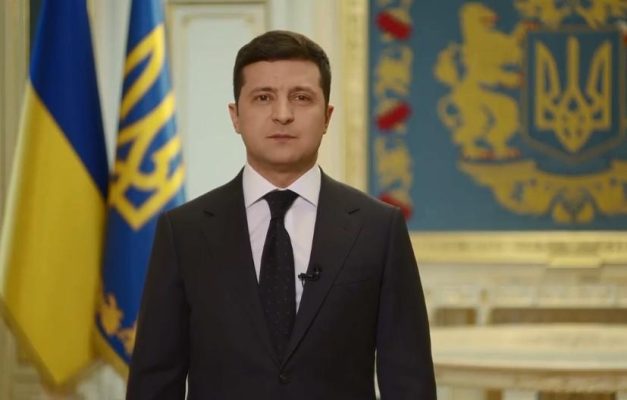
Russia says Israel is supporting “the neo-Nazi regime in Kiev”, raising the stakes in its tensions with Tel Aviv over the raging war in Ukraine.
The spat began after Russian Foreign Minister Sergei Lavrov, speaking to Italian outlet Mediaset’s Rete 4 channel in an interview released Sunday, said that Adolf Hitler had Jewish origins.
Israeli foreign minister Yair Lapid on Monday accused Lavrov of making an “unforgivable and outrageous statement as well as a terrible historical error” and summoned Moscow’s ambassador for “clarifications”.
“We have paid attention to Foreign Minister Yair Lapid’s anti-historical remarks, which largely explain the current government’s decision to support the neo-Nazi regime in Kiev,” said the Russian foreign ministry in a statement on Tuesday.
“History unfortunately knows tragic examples of cooperation between Jews and Nazis,” it said.
In his interview, Lavrov said Ukrainian President Volodymyr Zelensky “puts forward an argument of what kind of Nazism can they have if he himself is Jewish”.
Lavrov, according to a transcript posted on the Russian foreign ministry website, then added: “I could be wrong, but Hitler also had Jewish blood”.
Israeli prime minister Naftali Bennett characterized Lavrov’s remarks as “lies” that he said effectively “accuse the Jews themselves of the most awful crimes in history”, perpetrated against themselves.
On Tuesday, the Russian foreign ministry said “the Jewish origins of the president (Zelensky) is not a guarantee of protection against rampant neo-Nazism in the country”.
“Ukraine, may it be said in passing, is not the only one in this case,” the ministry said, citing Latvian President Egils Levits who “has also Jewish roots and he also gives cover… to the rehabilitation of the Waffen SS in his country”.
Israel has expressed solidarity with Ukraine but unlike its Western allies, it has refrained from enforcing formal sanctions on Russia over its military operation in the neighboring country.
Last month, Lapid accused Russia of committing war crimes in Ukraine. Moscow hit back, accusing Israel of using Ukraine to “distract” the world from its ongoing aggression against Palestinians.
IRGC chief: Resistance sole way to liberation of Palestine
Press TV – April 28, 2022
Chief Commander of Iran’s Islamic Revolution Guards Corps (IRGC) Major General Hossein Salami says negotiations and accords brokered by the United States only aim to buy time for Israel, and weaken the Palestinian resistance front.
The senior commander made the remarks in a televised address to a ceremony in Gaza City on Thursday, on the eve of International Quds Day.
“The so-called peace treaties like the Camp David Accords, the Oslo Accords, the Sharm El Sheikh Memorandum etc have never been and will never be able to result in the liberation of Palestine.
“All such accords, which former US presidents, [former Israeli prime ministers Ehud] Olmert, [Benjamin] Netanyahu, Yitzhak Shamir and Yitzhak Rabin tried to seal, as well as the deal of century are nothing but deception and a conspiracy to marginalize jihad, weaken the resistance front, buy time and obliterate the awareness of the nations,” he stated.
He underscored that Palestinian people have come to realize that they will not achieve their goals except through resistance and struggle in the path of God (jihad).
Salami described the recent developments in the occupied Palestinian territories as a sign of the Israeli regime’s brutality and the strength of resistance groups, stressing that Palestinian resistance fighters have reinforced the Muslim Ummah and changed the balance of power in the region.
The IRGC chief hailed International Quds Day as a gift from Imam Khomeini, the late founder of the Islamic Republic in Iran, stating that the designation of the last Friday of the holy month of Ramadan for the event made Palestine a top priority for the entire Muslim world.
“Palestinian people are close to victory as the Zionist enemy is growing weaker. Weakness inside the Zionist entity is evident in its politics, economy and security apparatus, he said.
“All Muslims around the world are united with Palestinians in the struggle against the Israeli regime. Al-Quds and al-Aqsa Mosque are symbols of unity among Muslims in support of Palestinians,” Salami pointed out.
IRGC: Events herald Israel’s imminent end
Earlier, the IRGC said current developments in the occupied Palestinian territories show that the demise of Israel is imminent and the regime is doomed to end very soon.
“Recent developments, particularly the fact that the flames of Intifada (uprising) have passed through the inner walls of the regime, suggest that the Tel Aviv regime’s days are numbered and occupiers of holy al-Quds are quickly nearing their end,” the force said in a statement released on the eve of International Quds Day.
It lauded the decision by Imam Khomeini to designate the last Friday of the holy month of Ramadan as International Quds Day, describing the prudent initiative and historic move as a novel phenomenon and a source of pride for the Iranian nation to play an effective role in supporting the oppressed Palestinian nation.
The IRGC underlined that free and justice-seeking nations have joined forces more than ever to support the oppressed Palestinians, the Palestinian cause and the liberation of al-Quds.
“Zionists thought they could consign the Palestinian issue and the cause of al-Quds to oblivion by following satanic schemes such as the so-called ‘Deal of the Century’ and normalization of ties with some Arab countries. They were, however, wrong and their dream of sustainable and permanent security has now been broken,” the statement read.
The statement further stressed that the discourse of resistance and support for Palestine states that an end to the Israeli occupation, expulsion of occupiers, return of Palestinian refugees and free elections are the only solution to the Palestinian issue.
The IRGC went on to term any concession, including normalization of ties with the child-killing regime of Israel as an act of treason, emphasizing such bids are doomed to failure.
Hamas official: Normalization with Israel a crime
Meanwhile, a high-ranking official from the Palestinian Hamas resistance movement said the Arab states that have normalized diplomatic ties with the Israeli regime have not only committed a grave crime against Palestinians but also their own peoples.
Khalil al-Hayya, a member of the Hamas political bureau and the deputy chief in the Gaza Strip, made the remarks in an exclusive interview with Iran’s English-language Press TV television news network on Thursday ahead of International Quds Day.
Hayya slammed normalization with Israel as the regime kills Palestinian civilians, including women and children, in cold blood.
He stressed that establishment of relations with Israel only serves the best interests of the United States and the Tel Aviv regime.
The senior Hamas official said Palestinians are a nation under occupation and reserve the right to defend themselves against Israeli occupiers.
Hayya also condemned Israeli forces’ attacks against Palestinian worshippers at the al-Aqsa Mosque compound in the occupied Old City of al-Quds.
He said Palestinians are always ready to defend the holy place, warning that Israeli officials are seeking to alter its true image by preventing Palestinians from entering the site.
Over 150 Palestinians injured as Israeli police storm Al-Aqsa

MEMO | April 15, 2022
More than 150 Palestinians were injured at dawn on Friday as the Israeli police stormed the courtyards of Al-Aqsa Mosque, Anadolu Agency reports.
The Palestinian Red Crescent said that 152 Palestinians were injured by Israeli police in the courtyards of the mosque.
The Palestinians were injured by rubber bullets, tear gas, and beaten by the Israeli police which also fired a barrage of stun grenades.
In a statement, the Islamic Endowment Department in Jerusalem, said that one of the mosque’s guards was hit in the eye by a rubber-coated metal bullet.
Eyewitnesses told Anadolu Agency that the Israeli police pursued the worshipers and beat them in the mosque’s courtyards.
For its part, the Israeli police announced in a statement that three of its members were slightly injured by stones thrown at them.
The police also noted in another statement that its forces removed the “rioters” in Al-Aqsa Mosque and arrested about 300 of them.
Thousands of worshipers were in the mosque where they were performing the morning prayer.
Leaked files expose Britain’s covert infiltration of Palestinian refugee camps
By Kit Klarenberg | The Cradle | April 13 2022
In February, Lebanese journalist Mohammed Shoaib was arrested on suspicion of collusion with Israel’s Mossad spy agency. The writer who worked for Al-Jaras, confessed that the notorious spy agency secretly paid him to author “dozens” of anti-Hezbollah articles, receiving a paltry $30 to $70 per article.
In particular, Shoaib was tasked with writing hit jobs on the “Iranian occupation” of Lebanon, and falsely linking Hezbollah with the August 2020 Beirut port blast, drug trafficking, and murder of political activists.
It is also alleged that Mossad specifically requested his work incite hostility towards Palestinian refugees in the country who number almost 300,000. In all, Lebanon hosts more than 1.7 million refugees and has the largest per capita population of refugees in the world.
Roughly half inhabit camps administered by the United Nations Relief and Works Agency (UNRWA), where they endure abysmal living conditions, overcrowding, poverty, unemployment, lack of access to justice, and other unspeakable hardships. The 11-year, foreign-backed crisis in neighboring Syria has also prompted Palestinian refugees there – and Syrian citizens – to seek sanctuary in Lebanon.
Given Israel’s track record of multifaceted crimes against the Palestinian people, that they are targeting an already vulnerable refugee population for propaganda purposes is hardly surprising. Nonetheless, Israel is not the only hostile foreign country resorting to these tactics.
Leaked files reviewed by The Cradle reveal the British Foreign Office has for many years secretly meddled in Lebanon’s refugee camps, courtesy of ARK, a shadowy intelligence cutout run by probable MI6 operative Alistair Harris. London’s agenda is rather different than Tel Aviv’s, however – it seeks to subtly stir up revolutionary fervor, and exploit them as unwitting foot soldiers in its ongoing clandestine war against Lebanon’s ruling elite.
‘Community Engagement’
The documents indicate ARK has been operating in all 12 camps since 2009, implementing British-funded “programming” of various kinds. This experience has granted the company “granular understanding” of their internal political, economic, ideological, religious and practical dynamics, and led to the establishment of a “diverse delivery team” and array of “local contacts” with “access throughout all camps and gatherings,” meaning community-level discussions and activities of residents can be spied upon and influenced.
This intimate, insidious insight is reinforced by “daily monitoring of neighborhood-level WhatsApp groups,” with “any new information, such as affiliation between a local group and a faction, or conflict between factions” documented by ARK’s in-house “stakeholder tracker.”
Typically, ARK has engaged in small-scale initiatives in the camps, including the restoration of streets and cemeteries, recycling initiatives, assisting in the launch of small businesses, providing income to disadvantaged and disabled residents, creating nurseries and daycare centers, and even launching a community hub, Sawa Coffeeshop. It serves to this day as “a popular place for youth to gather and promote civic engagement in their community and a shared Palestinian identity that bridges factional differences.”
In submissions to the Foreign Office dating to May 2019, ARK proposed ramping up these activities significantly. It pledged to create “Community Leadership Committees” in each camp, composed of hand-picked “stakeholders” – including NGOs, youth activists, women’s organizations, and representatives of neighborhood armed groups – to identify “quick impact projects” that could be implemented therein. These projects aim to “counter threats to social stability in the camps, create or improve livelihood opportunities, and provide better access to services.”
A social media platform created by ARK, Nastopia – which boasted 20,000 “highly invested” followers on Facebook at the time, a figure that has almost doubled since – was forecast to be fundamental to these efforts.
The page, run by a 24-strong team of ARK-trained “youth reporters”, would be used to recruit local participants, increase awareness and demand for “community engagement and improved conditions” among camp residents. Other activities include the promotion of Foreign Office-financed projects and to publicize “success stories” generated by them, while “promoting Palestinian culture and a sense of belonging, and tackling social injustice.”
Nastopia was “already [an] effective voice for connecting Palestinian communities, particularly youth” by that point. ARK cited a recent “Camps Films Festival” organized by the platform, covered by Al-Jazeera, which showcased “films portraying life in the camps and what it means to be Palestinian,” and in the process provided “positive examples of a shared identity.”
All along, the Nastopia page was to be monitored with “community feedback” on the assorted initiatives gauged to identify areas in which these activities “could be adapted to maximize impact.” Specialist training provided to its staff meant the platform could also serve “as a forum for online and offline discussion about social injustices [and] virtual space to talk about topics considered taboo in the camps,” allowing ARK to burrow even deeper inside the heads of refugees.
‘Active Citizenship’
If the obvious surveillance and manipulation dimensions of ARK’s project weren’t troubling enough, it takes on an acutely sinister character when one considers a key objective of “highlighting successful initiatives” in the camps was to “[enhance] the audience’s confidence in their own ability to contribute to social change.”
A Foreign Office-commissioned Target Audience Analysis conducted by ARK in March 2019 sought to pinpoint a segment of Lebanon’s population that could be mobilized to “affect positive social change,” and methods by which tensions between sectarian communities could be reduced, in order to unify them in opposition to the country’s ruling elite. Reading between the lines, it gives every appearance of a blueprint for the overthrow of the Lebanese government.
An ideal audience was duly identified, representing 12 percent of the population, who disavowed violence but did not reject “other forms of contentious politics,” and could be “influenced” to engage in “behaviors leading to positive social change,” such as protests and community initiatives.
The only questions for ARK were: “What might be done to enable other Lebanese to have similar confidence in their potential to contribute to positive social change?” and “how might this segment of the population … be grown to include a larger fraction of the public?”
The answer, ARK proposed, was to both covertly and overtly promote the message that “change is possible and ordinary citizens have a role to play in achieving change,” by way of propaganda campaigns and civil society initiatives “[highlighting] where change has been achieved or where threats to Lebanon’s stability have been countered.” This would demonstrate to the country’s diverse population that “barriers” to reform can be overcome, by taking matters into their own hands.
Providing evidence of “responsive government at local levels” was crucial for reinforcing “principles of active citizenship” among Lebanon’s population – and the analysis specifically cited Syrians and Palestinians, who are mostly Sunni Muslims, as representing an “important part” of the country’s demography, to be motivated in this manner.
In other words, Foreign Office activities in the refugee camps form just one fragment of a wider, clandestine, multi-channel assault on public perceptions in Lebanon that Britain has been waging against its democratically-elected government.
A mobilized force
One can judge these efforts by their fruits. In October 2019, seven months after ARK’s Target Audience Analysis was supplied to the Foreign Office, large-scale protests engulfed the streets of Beirut, which have ebbed and flowed ever since, and generated enormous amounts of western media coverage along the way.
The extent to which ARK’s Foreign Office-funded meddling in Lebanon influenced this incendiary unrest may never be fully quantifiable, but it may be significant that in July that year, thousands of refugees across several camps began demonstrating in unison, demanding the government immediately reform employment laws barring them as “foreign workers” from numerous professions.
This turmoil was arguably the spark that ignited the entire “October Revolution” – and in one of its Foreign Office submissions, ARK refers to how it “takes pride” in ensuring refugees recruited to its illicit schemes receive “annual leave, sick leave, and health insurance,” despite this not being “legally necessary” due to local legislation “discriminating against Palestinians.”
Who benefits?
The influence of ARK on Lebanon’s impending general election in May, the country’s first since the riots began, is even more unambiguous. Several news outlets have hailed the unprecedentedly high profusion of young candidates vying for office – 80 in total, many of them women.
A clandestine Foreign Office project influenced by the aforementioned Target Audience Analysis sought to enlist Lebanese youth as “agents of change”, fostering among them a culture of active political participation, in order that they could better “hold political institutions and individuals accountable,” and increase “electoral participation” in favor of opposition parties.
Under its auspices, ARK convened “boot camps” in “priority areas” of Lebanon, cultivated “a national group capable of pushing for greater change” composed of young women, and created social media assets and youth-focused websites featuring political interviews, question-and-answer sessions, coverage of boot camp meetings, “calls to action,” and “humorous messaging campaigns.” Activity on these assets was scheduled to ramp up ahead of the 2022 elections.
Clearly, irrespective of the outcome of the Lebanon May elections, the ultimate victors won’t be the parties and candidates that secure office, or the average Lebanese citizens who elected them, but Britain – for whatever form the next government takes, one way or another, it will serve London’s financial, ideological, military, and political interests.
Palestine’s widening geography of resistance: Why Israel cannot defeat the Palestinians
By Ramzy Baroud | MEMO | April 12, 2022
There is a reason why Israel is insistent on linking the series of attacks carried out by Palestinians recently to a specific location, namely the Jenin refugee camp in the northern West Bank. By doing so, the embattled Naftali Bennett’s government can simply order another deadly military operation in Jenin to reassure its citizens that the situation is under control.
Indeed, on 9 April, the Israeli army had stormed the Jenin refugee camp, killing a Palestinian and wounding ten others. However, Israel’s problem is much bigger than Jenin.
If we examine the events starting with the 22 March stabbing attack in the southern city of Beersheba (Bir Al Saba’) – which resulted in the death of four – and ending with the killing of three Israelis in Tel Aviv – including two army officers – we will reach an obvious conclusion: these attacks must have been, to some extent, coordinated.
Spontaneous Palestinian retaliation to the violence of the Israeli occupation rarely follows this pattern in terms of timing or style. All the attacks, with the exception of Beersheba, were carried out using firearms. The shooters, as indicated by the amateur videos of some of the events and statements by Israeli eyewitnesses, were well-trained and were acting with great composure.
An example was the 27 March Hadera event, carried out by two cousins, Ayman and Ibrahim Ighbariah, from the Arab town of Umm Al-Fahm, inside Israel. Israeli media reported of the unmistakable skills of the attackers, armed with weapons that, according to the Israeli news agency, Tazpit Press Service, cost more than $30,000.
Unlike Palestinian attacks carried out during the Second Palestinian Intifada (2000-05) in response to Israeli violence in the occupied territories, the latest attacks are generally more pinpointed, seek police and military personnel and clearly aimed at shaking Israel’s false sense of security and undermining the country’s intelligence services. In the Bnei Brak attack, on 29 March, for example, an Israeli woman who was at the scene told reporters that “the militant asked us to move away from the place because he did not want to target women or children.”
While Israeli intelligence reports have recently warned of a “wave of terrorism” ahead of the holy month of Ramadan, they clearly had little conception of what type of violence, or where and how Palestinians would strike.
Following the Beersheba attack, Israeli officials referred to Daesh’s responsibility, a convenient claim considering that Daesh had also claimed responsibility. This theory was quickly marginalised, as it became obvious that the other Palestinian attackers had other political affiliations or, as in the Bnei Brak case, no known affiliation at all.
The confusion and misinformation continued for days. Shortly after the Tel Aviv attack, Israeli media, citing official sources, spoke of two attackers, alleging that one was trapped in a nearby building. This was untrue as there was only one attacker and he was killed, though hours later in a different city.
A number of Palestinian workers were quickly rounded up in Tel Aviv on suspicion of being the attackers simply because they looked Arab, evidence of the chaotic Israeli approach. Indeed, following each event, total mayhem ensued, with large mobs of armed Israelis taking to the streets looking for anyone with Arab features to apprehend or to beat senseless.
Israeli officials contributed to the frenzy, with far-right politicians, such as the extremist, Itamar Ben Gvir, leading hordes of other extremists in rampages in occupied Jerusalem.
Instead of urging calm and displaying confidence, the country’s own Prime Minister called, on 30 March, on ordinary Israelis to arm themselves. “Whoever has a gun license, this is the time to carry it,” he said in a video statement. However, if Israel’s solution to any form of Palestinian resistance was more guns, Palestinians would have been pacified long ago.
To placate angry Israelis, the Israeli military raided the city and refugee camp of Jenin on many occasions, each time leaving several dead and wounded Palestinians behind, including many civilians. They include the child, Imad Hashash, 15, killed on 24 August while filming the invasion on his mobile phone. The exact same scenario played out on 9 April.
However, it was an exercise in futility, as it was Israeli violence in Jenin throughout the years that led to the armed resistance that continues to emanate from the camp. Palestinians, whether in Jenin or elsewhere, fight back because they are denied basic human rights, have no political horizon, live in extreme poverty, have no true leadership and feel abandoned by the so-called international community.
The Palestinian Authority of Mahmoud Abbas seems to be entirely removed from the masses. Statements by Abbas reflect his detachment from the reality of Israeli violence, military occupation and apartheid throughout Palestine. True to form, Abbas quickly condemned the Tel Aviv attack, as he did the previous ones, making the same reference every time regarding the need to maintain “stability” and to prevent “further deterioration of the situation”, according to the official Wafa news agency.
What stability is Abbas referring to, when Palestinian suffering has been compounded by growing settler violence, illegal settlement expansion, land theft, and, thanks to recent international events, food insecurity as well?
Israeli officials and media are, once again, conveniently placing the blame largely on Jenin, a tiny stretch of an overpopulated area. By doing so, Israel wants to give the impression that the new phenomenon of Palestinian retaliatory attacks is confined to a single place, one that is adjacent to the Israeli border and can be easily ‘dealt with’.
An Israeli military operation in the camp may serve Bennett’s political agenda, convey a sense of strength, and win back some in his disenchanted political constituency. But it is all a temporary fix. Attacking Jenin now will make no difference in the long run. After all, the camp rose from the ashes of its near-total destruction by the Israeli military in April 2002.
The renewed Palestinian attacks speak of a much wider geography: Naqab, Umm Al Fahm, the West Bank. The seeds of this territorial connectivity are linked to the Israeli war of last May and the subsequent Palestinian rebellion, which erupted in every part of Palestine, including Palestinian communities inside Israel.
Israel’s problem is its insistence on providing short-term military solutions to a long-term problem, itself resulting from these very ‘military solutions’. If Israel continues to subjugate the Palestinian people under the current system of military occupation and deepening apartheid, Palestinians will surely continue to respond until their oppressive reality is changed. No amount of Israeli violence can alter this truth.
Searching for War Criminals
They are nearer than you think

BY PHILIP GIRALDI • UNZ REVIEW • APRIL 12, 2022
The United States is now insisting that Russian President Vladimir Putin should be put on trial for “war crimes” committed in Ukraine. As Putin is still insisting that he will attend the upcoming G20 summit in November on the island of Bali, Indonesia, it will be a great opportunity to have US Marshalls snatch him from the stage and whisk him off to a federal courthouse in Virginia for justice to be served. Or a form of justice anyway, since the United States has no actual jurisdiction over where Putin’s alleged crimes might have taken place and it will be impossible to prove that he actually ordered anyone to carry out so-called “crimes against humanity.” We’ll see how it all works out.
Indeed, there is no other phrase that has been more misunderstood and generally abused of late than “war crimes” or “war criminals.” It belongs with several other labels, including “weapons of mass destruction” and “crimes against humanity” that are used to indicate an adversary has crossed a red line and is so deplorable that anything that is done to him either during actual fighting or in the aftermath is completely acceptable. Going back to Greek and Roman times it has always been understood that even in wartime there are certain activities that are unacceptable, but the attempted definition and codification of “war crimes” as a concept is largely a twentieth century creation used to inflict additional punishment on the losers after the fighting is over. The Treaty of Versailles that ended the First World War punished Germany far beyond what most would consider reasonable, largely because the victorious powers were able to do so without any consequences until the next war began. Likewise, the linked concepts of war crimes and crimes against humanity came largely out of the post-Second World War Nuremberg Trials, which shaped the legal arguments around alleged German behavior, not that of the allies.
The Second World War certainly included atrocities of various kinds on both sides, but the Anglo-American deliberate bombing of German cities has to stand out as particularly disproportionate. Forty-two thousand mostly civilians died in Hamburg in the 1943 firebombing and the bombing of Dresden in 1945, at a point when Germany was on the verge of defeat, was remarkable in that the city was not a military target and was full of refugees from the east. At least 200,000 civilians died. Judge Andrew Napolitano has suggested that the greatest war crime in history, if one makes a case based on unnecessary human suffering, was President Harry Truman’s nuclear bombing of Hiroshima and Nagasaki, which almost certainly killed more than 200,000 mostly civilians, when Japan was preparing to surrender. As Truman was on the side that won the war and controlled the prosecution process, there were no legal consequences or punishment relating to his decision, though critics since 1945 have sometimes decried the first use of nuclear weapons.
If killing civilians unnecessarily is the standard definition of a war crime, then America’s most recent five presidents have been war criminals. In other words, historically speaking, accusations of war crimes, which have no real meaning in law and are both infinitely elastic and subject to interpretation, have often depended on which side of the fence one is standing on when the war ends. And it gets more complicated than that, given the politics of what is sometimes referred to as the rules based international order, which in theory arose from the ashes of World War Two. The new world order was US-centric from the start, with the United Nations (UN) situated in New York City, the World Bank in Washington, and the dollar as the world’s reserve currency. At the UN, American primacy was reinforced through the creation of a Security Council, which alone has the power to authorize military action against a rogue state. The Security Council had five permanent members, each of whom was armed with a veto, meaning that no effective action against them could ever take place no matter what they had done. And so it has played out, with the US plus China, Russia, Britain and France being effectively immune from censure authorizing military action by the United Nations.
It is of particular interest to observe that the International Criminal Court (ICC) in the Hague was set up to deal with “war crimes and crimes against humanity” that were otherwise ignored. Neither the US, nor the Russians nor the Israelis recognize the authority of the court and the US has stated that no ICC investigator will be allowed entry into the United States. Given that, it becomes possible to witness how the whole farce of war crimes and other violations of the new world order have played out in practice.
Currently the US and its allies are waging economic warfare on Russia without an actual declaration of war, to include an avalanche of sanctions plus completely illegal confiscations of the property of Russian citizens. It is also blocking Moscow from the use of the international monetary conventions and systems that it has had access to. The clearly stated intention is to destroy the Russian economy due to Russia having been charged by the US government with the commission of what it is calling war crimes in its invasion of Ukraine. Vladimir Putin argues in turn that Ukraine’s apparent intention to join NATO, which is a hostile military alliance directed against Russia, is a direct threat to his country and is already manifesting itself in military action undertaken against breakaway parts of Ukraine which are largely inhabited by Russian speakers and ethnics.
There are other issues, but those are the most important. It should also be noted that the issues themselves were at least somewhat negotiable prior to the outbreak of fighting, which Putin sought to do but Joe Biden and NATO were not interested. So ultimately the war, from a third-party point of view, is pitting a Russian vital interest against what really amounts to no genuine interest at all for NATO and the US, apart from goading the Russian bear and removing its government as a way to prevent against any change in the international order.
Since objective reality has no place in United States foreign policy, it is interesting to look at how the US sees itself and how it regards other countries that are doing what Russia is doing or worse. When it comes to its own self-perception, America’s so-called leaders believe that their global leadership role is one by right and they can do no wrong by virtue of a quality referred to as “American exceptionalism.” That is of course a mythical attribute created to permit the United States to get away with mass murder and regime change without any consequences.
A principal beneficiary of American financial and political largesse is, of course, Israel, which consists not only of people “chosen” by Yahweh but also by the media, the United States Senate, House of Representatives and the White House. A comparison of what Russia is doing that is being condemned by Washington versus what both what the US and Israel have been able to get away with might be considered to be in order.
Russia has invaded Ukraine after months of warnings that the status quo was untenable in national security terms, largely due to intentionally fruitless negotiations with stonewalling United States representatives and NATO. Israel, widely acknowledged to be an apartheid state, is currently bombing Syria on an almost daily basis, unnoticed by the US media and the Biden Administration. It in the past has attacked all its neighbors, including the renowned Seven Days War in June 1967 which was a surprise attack staged against Egypt, Syria and Jordan. Subsequent to that war, Israel occupied nearly all of what had been Palestine. It also seized the Golan Heights belonging to Syria and has recently received consent from Washington to illegally annex Arab East Jerusalem as a part of Israel, making the whole of the city Israel’s capital. The Golan Heights have also recently been annexed with Washington’s approval and there are 700,000 heavily armed and violent Jewish settlers now sitting in 261 settlements on stolen Palestinian land on the West Bank.
And what has the United States and its allies done to dissuade Israel? Well, nothing. One rule for Israel and the US and another quite different Washington dictated “rules based” system for everyone else, most particularly if one is Russian. In fact, the more belligerently Israel behaves, the more it gets in terms of US taxpayer money and made-in-USA weapons. Israel has also been the favored destination for traveling congress-critters of late because it is an election year and Jewish donors are being hotly pursued. Recently, a large group of Democrats was departing just before former Vice President Mike Pence arrived in Tel Aviv on Miriam Adelson’s private jet so he could kiss Prime Minister Naftali Bennett’s ring and also spend some quality time with Benjamin Netanyahu.
Ironically, while Joe Biden was turning the screws on Russia, the Congress was showering gifts on Israel above and beyond the billions of dollars in “aid” that the wealthy Jewish state already receives. Alison Weir of IfAmericansKnew has examined the recently signed pork laden 2022 federal government spending bill and has identified numerous line-item instances of money going directly to Israel or in support of causes that benefit Israel in some fashion. She estimates that Israel’s economy, which is able to support both free medical care and higher education, now benefits to the tune of $22 million per day from the United States taxpayer, for a total of $8 billion per year, and the number might actually be much higher. And there are other sources of income indirectly funded by the US Treasury, most notably the ability of Israel-focused charities to contribute tax exempt money to Israeli foundations and groups. Many of the “charities” are essentially fraudulent, funding the illegal settlements, domestic terrorism and other anti-Palestinian activities. Every artifice is used by some Jewish groups and billionaire donors to keep the US dollars flowing to Israel while no one of any significance in the federal government complains about the double standard when one compares Israel to Russia. And the Zionist controlled media are completely silent.
The hypocrisy that pervades United States foreign policy is difficult to ignore, but Washington has successfully manipulated its financial instruments to keep its remaining friends and allies in line. Whether that will survive the inevitable pushback coming from Russia, China and a number of non-aligned nations remains to be seen. At a minimum, the Cold War alignment that was broken in 1991 and which seems to again be taking shape around the Ukraine issue appears to have exceeded its expiry date. Ukraine might indeed wind up doing severe damage to the Russian economy, but it seems plausible that it will also bring with it the long overdue demise of American hegemonistic fantasies and NATO.
Philip M. Giraldi, Ph.D., is Executive Director of the Council for the National Interest, a 501(c)3 tax deductible educational foundation (Federal ID Number #52-1739023) that seeks a more interests-based U.S. foreign policy in the Middle East. Website is councilforthenationalinterest.org, address is P.O. Box 2157, Purcellville VA 20134 and its email is inform@cnionline.org.
Iran: Zionist Entity’s Naked Terrorism Root Cause of Unrest in Palestine
Al-Manar | April 9, 2022
Iran decried the “apartheid Zionist regime’s naked acts of terrorism” as the root cause of unrest across the occupied Palestinian territories.
In a statement released on Friday night, Iranian Foreign Ministry Spokesman Saeed Khatibzadeh reacted to the recent developments in occupied Palestine.
“Racism, repression, carnage, incarceration, massive deprivation and daily humiliation of the oppressed Palestinian people and also the naked terror by the apartheid Zionist regime are the root causes of all tensions in the occupied territories,” the statement read, as cited by Tasnim news agency.
Khatibzadeh said the defenseless people of Palestine have a legitimate, clear and natural right to fight against the occupiers in response to the repeated Israeli crimes.
The Iranian spokesman also reaffirmed Islamic Republic’s support for the Palestinian cause and the Palestinian people’s fight for freedom.
Khatibzadeh, meanwhile, urged all nations, governments and international bodies to move toward providing the Palestinian people with security “in line with the principle of legitimate defense against occupation and terrorist activities by the apartheid Zionist regime and to prevent the aggression and brutal crimes of Zionists in Palestine.”
UN Human Rights Council adopts resolutions against Israel’s human rights violations in Syria’s Golan
Press TV – April 2, 2022
The United Nations Human Rights Council has adopted a resolution denouncing Israel’s human rights violations against the people in Syria’s occupied Golan Heights, calling on the Tel Aviv regime to stop its repressive measures.
The Geneva-based council endorsed the resolution at its 49th regular session on Friday,urging Israel to comply with the relevant UN resolutions.
In a separate resolution, the council renewed its condemnation of illegal Israeli settlements in the occupied Palestinian territories, including East al-Quds, and Syria’s Golan Heights.
The UN body also called for an immediate end to Israel’s continued occupation and illegal settlement activities in the occupied Arab territories.
In another resolution on the right of the Palestinian people to self-determination, the council “reaffirmed the Palestinian people’s right to live in freedom, justice, and dignity and the right to their independent State of Palestine.”
During the session, Hussam Edin Aala, Syria’s permanent envoy to the UN in Geneva, said Israel continues its violations of international law and human rights with the full support of the United States.
He further called on the Human Rights Council to hold Israel responsible for these violations.
In 1967, Israel waged a full-scale war against Arab territories, during which it occupied a large swathe of Golan and annexed it four years later – a move never recognized by the international community.
In 1973, another war broke out; and a year later a UN-brokered ceasefire came into force, according to which Tel Aviv and Damascus agreed to separate their troops and create a buffer zone in the Heights. However, Israel has over the past several decades built dozens of illegal settlements in Golan in defiance of international calls for the regime to stop its illegal construction activities.
In a unilateral move rejected by the international community in 2019, former US president Donald Trump signed a decree recognizing Israeli “sovereignty” over Golan.
Last December, Israel announced that it intends to double the number of its illegal settlements in the Golan, despite an earlier resolution adopted by the UN General Assembly demanding the regime’s full withdrawal from the occupied territory.
Nevertheless, Syria has repeatedly reaffirmed its sovereignty over Golan, saying the territory must be completely restored to its control.
The United Nations has also time and again emphasized Syria’s sovereignty over the territory.
Israel also occupied East al-Quds, the West Bank and the Gaza Strip during the Six-Day Arab-Israeli War in 1967. It later had to withdraw from Gaza.
Nearly 700,000 Israelis live in illegal settlements built since the 1967 occupation of the Palestinian territories of the West Bank and East al-Quds.
All the settlements are illegal under international law. The United Nations Security Council has condemned the settlement activities in several resolutions.
Palestinians want the West Bank as part of a future independent state with East al-Quds as its capital.
Israeli forces shoot, kill 16-year-old Palestinian boy in Jenin
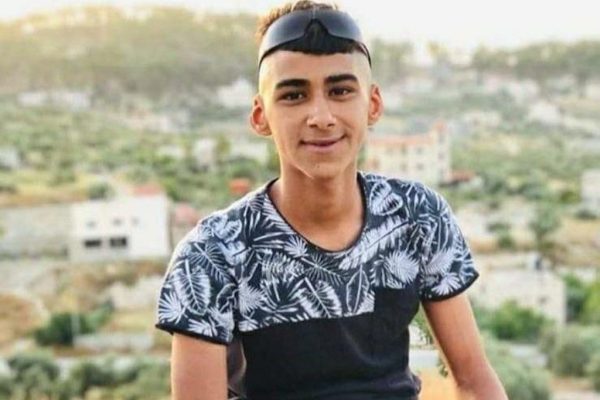
Sanad Mohammad Khalil Abu Atiya (Photo courtesy of the Abu Atiya family)
Defense for Children Palestine | March 31, 2022
Ramallah – Israeli forces shot and killed a 16-year-old boy with live ammunition in the northern occupied West Bank this morning.
Sanad Mohammad Khalil Abu Atiya, 16, was shot and killed with live ammunition by Israeli forces around 8:15 a.m. on March 31 in Jenin in the northern occupied West Bank, according to documentation collected by Defense for Children International – Palestine. An Israeli soldier shot Sanad as he approached Yazeed al-Saadi, 22, moments after al-Saadi was shot in the back of the head. The bullet struck Sanad in the right side of his chest and exited out his back, according to documentation collected by DCIP.
“Israeli forces frequently use live ammunition in unjustified circumstances, ignoring their obligation under international law to only resort to intentional lethal force when a direct, mortal threat to life or of serious injury exists,” said Ayed Abu Eqtaish, accountability program director at DCIP. “Systemic impunity has fostered an environment where Israeli forces know no bounds.”
Sanad was killed as Israeli forces were leaving the area after conducting a search and arrest operation in nearby Jenin refugee camp, Haaretz reported. Palestinian residents reportedly threw stones at the armored Israeli military vehicles as they withdrew from Jenin refugee camp towards Jenin’s Al-Zahra neighborhood, according to information gathered by DCIP.
An eyewitness reported that gunshots were fired from the refugee camp as the Israeli vehicles left the area. Palestinian residents who were throwing stones began to flee, as one of the armored Israeli military vehicles drove in reverse pursuing those who were fleeing, an eyewitness told DCIP.
An Israeli soldier exited the passenger side of the jeep, took a shooting position, and fired around 15 live ammunition rounds in quick succession, the eyewitness told DCIP. The soldier shot al-Saadi in the back of the head, and al-Saadi fell to the ground about two meters (six feet) from a car that Sanad and the eyewitness were hiding behind. Sanad was shot as he approached al-Saadi in an attempt to render aid, the eyewitness told DCIP.
Ambulances were able to reach Sanad a few minutes later, and he and al-Saadi were both transported to Ibn Sina hospital where they were pronounced dead, according to documentation collected by DCIP.
Under international law, intentional lethal force is only justified in circumstances where a direct threat to life or of serious injury is present. However, investigations and evidence collected by DCIP regularly suggest that Israeli forces use lethal force against Palestinian children in circumstances that may amount to extrajudicial or wilful killings.
Sanad is the fifth Palestinian child shot and killed by Israeli forces in 2022, according to documentation collected by DCIP. Nader Haitham Fathi Rayyan, 16, was killed by Israeli forces on March 15 outside the entrance of Balata refugee camp located southeast of Nablus on March 15. Israeli forces shot and killed Yamen Nafez Mahmoud Khanafseh in Abu Dis, east of Jerusalem on March 6. Israeli forces shot and killed 13-year-old Mohammad Rezq Shehadeh Salah on February 22 in Al-Khader, southwest of Bethlehem. An Israeli sniper shot and killed 16-year-old Mohammad Akram Ali Taher Abu Salah with live ammunition on February 13 while Israeli forces deployed in the village of Silat Al-Harithiya near Jenin in the northern occupied West Bank, according to documentation collected by DCIP.
2021 was the deadliest year for Palestinian children since 2014. Israeli forces and armed civilians killed 78 Palestinian children, according evidence collected by DCIP.
© 2022 Defense for Children Palestine
Red Alert: What seeing the war in Syria taught me about US/Western government and media propaganda
By Janice Kortkamp | Ron Paul Institute | March 29, 2022
The Syrian war was the first fully observed conflict on social-media and the ability to connect directly with Syrians real time as they were experiencing the crisis was unprecedented. This created a unique opportunity to get unfiltered information directly from all sides of the conflict to gain insights and understanding. The results have helped shake off the control by conventional news media over foreign events reporting and analysis. While this has created some chaos, valuable lessons have been (or should have been) learned.
I began researching Syria and the war there in late 2012, and have made seven extended journeys traveling around during the war from 2016 through 2019, meeting with hundreds of Syrians from different backgrounds, walks of life, and opinions as a 100 percent non-affiliated, unpaid, and self/crowd-funded, independent citizen-journalist.
It became clear that what’s been happening in Syria was not a spontaneous, organic, popular uprising against a tyrant, but a proxy regime-change attempt war in the works since the mid 2000’s against the quite popular Assad. This effort was spearheaded by the US, UK, France, and Israel, using Sunni violent fundamentalists and extremists (unpopular with the majority of Syria’s Sunni population as well as minority groups) armed and funded by the West and regional allies of Saudi Arabia, Turkey, and Qatar to start the violence and do the dirty work. The basic character of the rebel groups was apparent from the beginning: Syrian and non-Syrian fighters most Westerners would call terrorists and be screaming for their government to crush if the same heavily armed groups had taken over their cities, towns, and suburbs by massacring, beheading, torturing, kidnapping, and raping.
Syrians often remarked to me that before the war their country was “almost a paradise.” The middle class was the largest economic sector and growing. Religious harmony was the norm and Christians there were doing well. International investment was increasing as were the tourists. Women were equal or outnumbering men in the universities and present in leadership roles in nearly all aspects of society. Syria had made the “Top 5” list of the world’s most personally safe countries. President Assad had brought the Internet into the country and kept it open throughout the war and the people there knew all that was being said in the West about the crisis.
This doesn’t mean Syria was perfect and Assad beloved by all Syrians. There were and are many problems there which are directly attributed to the government with corruption always being number one on the list of grievances. These internal issues have been exacerbated by the war.
Now, after 11 years of war, 90 percent of Syrians are poor, many are starving; the economy is shattered. Between the fighting, US/Western sanctions, loss of production capability (though an impressive number of factories have been rebuilt), shortages of electricity and fuel, the black market and smuggling, dearth of employment opportunities, Covid-19, and the economic meltdown in Lebanon, the situation seems destined to remain desperate for the foreseeable future. The pressure by the US and most allies continues including increased sanctions, and three on-going illegal occupations: US has seized control over 1/3 of the country (the part with the richest oil fields); Turkey holds much of the north; and Israel is still occupying the Golan while making routine air strikes in Syria with no condemnation. There are numerous terrorist groups including ISIS cells and Hay’at Tahrir al-Sham (HTS, formerly Jabhat al-Nusra, the al Qaeda affiliate) to get rid of in the northeast and Idlib.
As for Russia’s role in Syria, I’ve watched it closely – including observing some Russian military operations personally in Deir Ezzor, Homs, and Palmyra. Russia and Iran are in Syria legally, asked to join in the fight against ISIS and al Nusra by the Syrian government.
From 2011 through 2015 the situation was dire. In 2012 the US resolution at the UN called for President Assad to step down and both Russia and China vetoed it. The US and UK responded with “fury” according to The Guardian, while Syrians were out in the streets cheering. When Russian troops came in September of 2015, the priority was to put a stop to ISIS operations in the northeast. Massive ISIS oil convoys were taking the stolen oil up to Turkey, bringing the terrorist army equally massive amounts of money to use for their rampages while, according to a leaked, verified audio tape of John Kerry speaking with the Syrian opposition, the US was “watching ISIS grow” hoping the pressure would get Assad to negotiate. Instead, an appeal was made to Putin and answered. Within a few months, the ISIS oil convoys had been reduced significantly, cutting that cash flow.
By the end of 2016 total chaos had been replaced with more established battle lines and though violence was still occurring everywhere, there was some order. Palmyra was liberated from ISIS in the spring of 2016, after which the Russians and Syrians put on an orchestra concert to rededicate the spectacular archaeological site to culture; Western governments and media were not enthusiastic. It fell again to ISIS and many of the most important buildings were destroyed by the terrorists. The battles for Palmyra would have been the perfect opportunity to actually use chemical weapons – to protect that prized site and with ISIS forces isolated in the desert, however the fighting raged with conventional weapons and casualties were very high. In December 2016, Aleppo was freed from the terrorist groups that had been holding the eastern half of the city for years by the Syrian Army and its allies – with the ones fighting the terrorists being treated as though they were worse than ISIS in western media. The terrorist groups backed by the US and allies included the likes of Nour al din al Zenki that grabbed the young boy, Abdullah Issa, out of hospital with the IV still in his arm and beheaded him in the back of a truck on video while laughing. Al Zenki had received advanced weapons and other support by the US.
By October of 2017 when I was in Palmyra, Deir Ezzor and al Mayadeen, most of that area was freshly liberated from ISIS by the combined Syrian, Russian, Iranian, Iraqi, and Hezbollah forces. ISIS was still all around but its backbone of cities down the Euphrates had been severed. In Homs, I observed the transportation of armed groups twice from the Al-Waer suburb, overseen by the Russians. In addition, Russian de-mining efforts have insured relative safety for civilians returning to their homes after areas have been liberated.
To summarize, in my experience the Russians have indeed been effective in the fight against ISIS and al Qaeda while displaying professionalism, precision, and minimizing civilian casualties. The US has been using ISIS as a pretext for its own completely illegal occupation of the entire northeast third of Syrian lands, and has often been helping or working directly on behalf of the al Qaeda affiliate and similar terrorist groups.
However, the US/Western media is still saying the same things they’ve said since 2012, if anything entrenching deeper in the assertions of the US and other western governments. All major articles and stories are still about “the tyrant Assad killing his own people”; and the great majority of the Syrian people who supported their leader and army were made invisible. That support ranged from total devotion to begrudging acceptance because the alternative, Syria falling to the terrorists promoted by the West, was unthinkable. Anyone offering evidence and opinion different from that of the accepted narratives isn’t just ignored – they’re treated as enemies and attacked by the media.
The Russian invasion of Ukraine is still in the early stages and although I’ve been tracking the situation since 2014, I certainly don’t to know all of what’s happening or will happen. To sort fact from fiction from all sides will be a painstakingly long process yet there is great urgency to avoid as much devastation as possible. War is painful, the most painful thing. It truly does hollow out souls as it lays waste to lands and lives and I hate it all, but I’ve seen the wall go up already which prohibits looking at the other side, hearing what their grievances and concerns are. That wall protects the easy to memorize, constantly repeated, approved talking points: “pre-meditated”, “unprovoked”, “unjustified” and that wall is already considerably taller, deeper, and wider than it’s been about Syria. For me, this is when the red light starts flashing, the alarm begins sounding, and I’m on full alert for more gross oversimplifications, exaggerations, unproven allegations, and outright falsehoods.
Copyright © 2022 by Ron Paul Institute
Israel to send military attache to Bahrain soon, says envoy after Negev summit with Arab states
Press TV – March 29, 2022
Israel will “soon” appoint a military attache to the US Navy’s Fifth Fleet headquarters in Bahrain, says the Israeli ambassador to Manama, as diplomats from the Persian Gulf country and three other Arab states attend a meeting in the Negev desert in occupied Palestine.
“This will happen soon – an attache to the fleet,” Eitan Naeh told Israel’s Army Radio. “It is in the midst of various bureaucratic processes. I reckon that, by the summer, we will have a fuller staff, along with other officials who will join the embassy.”
Last month, the Israeli minister of military affairs, Benny Gantz, visited the US fleet in Bahrain and met with its commander, Vice Admiral Brad Cooper, and Bahraini naval commanders.
Bahrain, a tiny island in the Persian Gulf and a former Iranian province, is some 300 kilometers to the south of the coastal Iranian province of Bushehr, which hosts a key nuclear power plant.
In Tehran, an Israeli presence so close to the Bushehr nuclear site is deemed a threat to the country’s national security, as the regime in Tel Aviv has in the past covertly carried out acts of sabotage against Iran’s nuclear facilities and assassinated Iranian scientists while overtly threatening to launch attacks on Iran’s nuclear program.
On Sunday, top diplomats from the United Arab Emirates (UAE), Morocco, Bahrain, Egypt, the United States, and Israel met in the Negev desert to press ahead with a US-brokered normalization of relations between the Arab states and the Israeli regime.
Egypt was the first Arab country to have diplomatic ties with Tel Aviv, while the UAE and Bahrain reached normalization agreements with Israel in 2020 through the mediation of former US President Donald Trump’s administration.
Morocco and Sudan later reached similar US-brokered deals, which have been roundly condemned by Palestinians as a brazen betrayal of their cause.
US, Israel launch naval exercise
Also on Sunday, the US Navy’s Fifth Fleet and the Israeli Navy launched a 10-day maritime exercise in the Red Sea.
The drill, dubbed Intrinsic Defender, focuses on maritime security operations, explosive ordnance disposal, health topics, and unmanned systems integration.
Over 300 American personnel as well as US Navy guided-missile destroyer USS Cole (DDG 67), dry cargo ship USNS Wally Schirra (T-AKE 8), and various unmanned vessels are also scheduled to participate in the exercise.
The drill comes amid Washington’s diminishing role in the region, including its withdrawal from Afghanistan and a change in its role in Iraq from military to advisory under the pressure of Iraqi resistance groups.
The US military is also expected to be expelled from Syria, where it has retained an illegal military presence throughout a foreign-sponsored conflict that began in 2011.
Observers believe Washington is scaling down its presence in the Middle East to focus on a large-scale confrontation with China, which is poised to soon overtake the US economically.
Featured Video

Houthis Don’t Have to Conquer Saudi Arabia to Make It Pay
or go to
Aletho News Archives – Video-Images
From the Archives
Newly Released FBI Docs Shed Light on Apparent Mossad Foreknowledge of 9/11 Attacks
By Whitney Webb | MintPress News | May 17, 2019
NEW YORK — For nearly two decades, one of the most overlooked and little known arrests made in the aftermath of the September 11 attacks was that of the so-called “High Fivers,” or the “Dancing Israelis.” However, new information released by the FBI on May 7 has brought fresh scrutiny to the possibility that the “Dancing Israelis,” at least two of whom were known Mossad operatives, had prior knowledge of the attacks on the World Trade Center. … continue
Blog Roll
 Aletho News
- MEP blasts ‘Euro-Gestapo’ for lecturing Russia on democracy
- Syria May Send Troops to Saudi Arabia Amid War with Ansar Allah
- UK whines about losing billions to ‘Putin tax’
- Baghaei to Rubio: Distorted narratives cannot erase US record of broken commitments
- Houthis Don’t Have to Conquer Saudi Arabia to Make It Pay
- MOE: Nearly 22,000 Students and Education Workers Killed
- Guterres in Islamabad: Genocide, cowardice, and the cage of Imran Khan
- Johnson, Marandi say Yemen holds upper hand over Saudi Arabia
- False flags won’t save aggressors, Iran FM spokesman says
- The Makkah Pact Enters Into Force: The End of American Dominance or Its New Form?
- If Americans Knew
- Report claimed Mark Levin used by Israeli government to influence Trump
- Over 2,000 Gazans have died awaiting medical evacuation amid Israel’s continued siege
- How a U.S. Diplomat Suppressed and Altered Reports Critical of Israel
- 5 Palestinians Die from Israeli Strikes in Gaza as Relentless Attacks Continue
- Report: Ceasefire Slows Killing but Leaves Devastation Intact
- Country Music Singer Zach Bryan Breaks Attendance Record at Robert Kraft’s Gillette Stadium While Wearing ‘Free Palestine’ Shirt for Second Night in a Row
- Three years of death and devastation: Israel’s war on Gaza in pictures
- Why Hamas believed the status quo was more dangerous than its 7 October gamble
- Debunking Israel’s latest list of ‘terrorist’ journalists in Gaza
- In Gaza, focus is on survival, “every step is a struggle” – Daily Update
- No Tricks Zone
- New Study: 50 Years Of The Most Aggressive ‘Net Zero’ Policies Can Only Affect The Global Climate By 0.03°C
- US September “Heat” Was No Record…Many Records Set Decades Ago
- Latest European Green Energy Debacle; Portugal’s Largest Flagship Solar Park Insolvent!
- Green Energy Debacle: German Expert Professor Fritz Vahrenholt Warns Of Severe Economic And Social Consequences
- Two More Paleo Reconstructions Affirm Meters-Higher Sea Levels Across Ireland, Brazil 7000-6000 Years Ago
- New Study: Earth And Venus Surface Warmth Largely Explained By Convection And Lapse Rate, Not CO2 Or Radiation
- 2025 Nature Paper Claiming Worsening Global Drought Gets RETRACTED …Heavily Flawed
- New Study: ‘Global Drought Shows No Detectable Recent Acceleration Under Climate Warming’
- Economic Masterminds: German Socialists Suggest Taxing Productivity Gains Stemming From Using AI
- The South China Sea Has Not Been Cooperating With The Climate Change Narrative

