Khamenei: US-Israeli System of Domination Has Been Defeated
By Kyle Anzalone | The Libertarian Institute | June 4, 2026
Iranian Supreme Leader Ayatollah Seyed Mojtaba Khamenei said that the US and Israel had suffered a humiliating defeat.
In a statement published on Thursday, Khamenei said the US and Israel’s “system of domination” has suffered a historic defeat. He explained that Washington and Tehran had shifted to targeting Iranian society through psychological warfare.
“The vile enemy, having suffered defeat at the hands of your brave sons in the armed forces, and having experienced a profound and meaningful humiliation — both on the military battlefield and in the streets.” The statement continued, “Which has visibly caused countries to drift away from it, has now focused its hybrid war on two points: breaking the people’s endurance and creating errors in the calculations of the country’s officials.”
Khamenei’s remarks came after President Donald Trump expressed that he wanted to meet with the Iranian leader. In an interview with the New York Times released on Wednesday, Trump said that he is “getting along quite well” with Khamenei. The President added, “I’d like to meet him. I’d love to meet everybody.”
It’s unclear whether Trump’s remarks are rooted in reality, as the US and Iran have not engaged in direct meetings but have instead exchanged messages through Lebanon. Additionally, Khamenei’s father was assassinated on the first day of the war.
Notably, Trump suggested that Khamenei is running Iran. The President told the New York Post that Khamenei has “absolutely” been involved in talks and other Iranian leaders have a lot of respect for him.” Trump continued, “They say he is approving, because that’s the way it has been for a long, long time. His father and then him, I guess it’s a succession. But we seem to be getting along quite well.”
US officials previously suggested that Khamenei was incapacitated, and the government was fractured. Trump claimed the Iranian leader was “not doing well” and “missing a lot of parts.”
The rare statement from Khamenei comes as the ceasefire appears on the brink of collapse.
Israeli war chief vows continued strikes on Lebanon as part of ‘conditional’ truce
The Cradle | June 4, 2026
Israeli War Minister Israel Katz vowed on 4 June that Tel Aviv will continue attacking Lebanon and that any truce is conditional on Hezbollah’s withdrawal from the south Litani area, after Beirut announced its acceptance of a framework allowing continued attacks on its country.
The war chief’s comments coincided with continued airstrikes on south Lebanon.
“Any ceasefire in Lebanon remains conditional on the prior removal of Hezbollah elements from the area south of the Litani River,” Katz’s statement read.
He emphasized that Israel “will not” withdraw its troops from south Lebanon, including from the Beaufort Castle, and said residents of the south “will not return at this stage.”
Katz said the Israeli army will remain in what he described as a “security zone” in Lebanon up to the ‘Yellow Line’ area or so-called ‘Forward Defense Line.’
He also claimed that the reality “imposed” by Israel in Lebanon will lead to an agreement that achieves security for the residents of the north “for the first time in 50 years.”
The war minister also stated that, with US backing, Israel reserves the right to carry out strikes, including in Beirut, in response to any rocket fire toward Israeli settlements.
His comments coincided with continued Israeli strikes on south Lebanon.
Israel’s Channel 12 reported that the Israeli army is continuing its operations in Lebanon and has not received any new instructions despite the announced ceasefire understandings.
A series of drone strikes was reported across southern Lebanon on Thursday morning.
An Israeli drone strike targeted a vehicle between the towns of Kfarwa and Zefta. Additional strikes were reported at the Kfar Rumman roundabout near the Al-Aytam station and the Nejda Hospital Road.
Drone strikes also targeted a vehicle near the Nmairiyeh junction, as well as the towns of Shhour and Bastat.
Hezbollah resistance fighters remain present across the areas of south Lebanon that Israel has occupied. Hezbollah said on Thursday that its fighters targeted Israeli troops at the Beaufort Castle at around midnight, and later announced rocket attacks on forces in Qantara and Al-Bayyada.
While speaking to journalists on Thursday, Lebanese President Joseph Aoun said that Wednesday’s negotiations were extremely difficult and resumed only after US Secretary of State Marco Rubio intervened, following their suspension by delegation head Simon Karam.
He added that he is awaiting responses from all concerned parties and compliance guarantees, and that implementation could begin within 24 hours of final approval.
Aoun warned that the agreement that has been reached represents the “last” opportunity.
On Wednesday, a new round of US-hosted direct talks between Lebanon and Israel – a violation of Lebanese law – concluded.
After the talks, the US, Israel, and Lebanon announced that they reached an agreement on the implementation of a conditional ceasefire.
According to the joint statement, the arrangement is “contingent” on a complete halt to Hezbollah fire and the withdrawal of all Hezbollah operatives from the area south of the Litani River.
The agreement calls for the creation of “pilot zones” in southern Lebanon where the Lebanese Armed Forces (LAF) would exercise exclusive control, excluding all non-state actors. The parties said these measures are intended to pave the way toward a broader security and political agreement between Lebanon and Israel.
The statement also outlined plans for continued direct negotiations under US sponsorship, including discussions on a security framework focused on strengthening Lebanese state control, preventing the re-emergence of “armed groups,” and advancing a comprehensive “peace and security” agreement between Israel and Lebanon.
The next round of talks is scheduled for the week of 22 June.
The three governments also condemned Iran’s regional activities, while Israel reiterated that its security requires the disarmament of Hezbollah and the dismantlement of its infrastructure across Lebanon.
Lebanon, for its part, pledged to strengthen the LAF with US support and reaffirmed its commitment to state “sovereignty” and the implementation of the cessation of hostilities.
The statement contains no explicit Israeli commitment to halt attacks on Lebanon. Instead, the proposed ceasefire is conditioned on a complete cessation of Hezbollah fire and the withdrawal of Hezbollah operatives from south of the Litani River.
The arrangement effectively requires Hezbollah to withdraw under continued Israeli fire.
The Lebanese resistance has repeatedly vowed that it will not return to the November 2024 deal or any agreement allowing Israel to attack at will and maintain an occupation in Lebanon. It has yet to officially comment on the deal announced by the US, Lebanon, and Israel.
UNIFIL peacekeeper killed after shells strike position near Marjayoun
Al Mayadeen | June 4, 2026
A UNIFIL peacekeeper died early Thursday from critical injuries sustained when mortar shells struck his position near Marjayoun in southeastern Lebanon.
The United Nations Interim Force in Lebanon (UNIFIL) said the peacekeeper succumbed to his wounds several hours after the attack, which also injured two other members of the peacekeeping force, who are receiving treatment at a medical facility within a UNIFIL base, according to the mission.
A series of systematic Israeli attacks
The attack comes against the backdrop of mounting evidence pointing to a pattern of Israeli attacks impacting UN positions in southern Lebanon. A UN inquiry conducted indicated that Israeli tank fire struck a UNIFIL site in early March, injuring peacekeepers, while repeated incidents over the past year have included drone-dropped explosives and machine-gun fire directed near or at UN locations.
Since then, several other attacks have been recorded against UN posts in South Lebanon, particularly amid the escalating Israeli aggression against South Lebanon.
In April alone, three Indonesian peacekeepers were killed, sparking intense backlash in Jakarta. Days later, UNIFIL reported escalating Israeli attacks against its positions, including ramming UN vehicles, firing near personnel, and obstructing operations.
UNIFIL further stated that Israeli troops have “continually blocked peacekeepers’ movements on this road,” alongside additional restrictions on freedom of movement recorded across multiple areas in southern Lebanon.
The force also reported deliberate damage to its infrastructure. Since early April, Israeli soldiers have “destroyed force protection cameras in UNIFIL’s Naqoura headquarters and five other positions on the Blue Line from Ras Naqoura to Maroun ar Ras,” undermining the mission’s ability to monitor developments along the sensitive frontier.
Hours after reiterating ‘ceasefire’, ‘Israel’ targets car in S.Lebanon
Al Mayadeen | June 4, 2026
An Israeli drone strike targeted a vehicle on the Nmeiriyeh road in the Nabatieh district, injuring three people, Al Mayadeen’s correspondent in southern Lebanon reported early Thursday.
According to Al Mayadeen’s correspondent, an Israeli airstrike targeted the towns of Deir al-Zahrani and Shoukin in the Nabatieh region. Israeli warplanes also targeted al-Mansouri in Tyre.
Another Israeli drone strike hit the Nabatieh–Kfar Reman road, and another targeted a roundabout in the town of Kfar Tebnit.
In Tyre, Al Mayadeen’s correspondent reported that an Israeli drone carried out a strike on the town of Shhour, alongside artillery shelling that targeted the towns of Hanine and Mansouri. Israeli occupation forces also carried out a large-scale detonation on the outskirts of the town of Zawtar al-Sharqiyah.
Two airstrikes targeted the towns of Shaqra and Burj Qalawiyah in southern Lebanon overnight as well.
Meanwhile, Israeli reconnaissance drones continue hovering over the coastal road in the Tyre area, the entirety of South Lebanon, reaching the capital, Beirut, and its southern suburbs.
US-Israeli-Lebanese statement reiterates ‘ceasefire’
The attacks come after the US State Department released a joint statement by the United States, the Lebanese government, and “Israel” outlining the outcome of US-mediated negotiations aimed at implementing a ceasefire in Lebanon. The agreement stipulates a “complete cessation of fire by Hezbollah” and the withdrawal of all its fighters from areas south of the Litani River.
Under the framework, the two sides also agreed to swiftly establish so-called “model zones” in which the Lebanese Army would exercise exclusive authority, with all non-state actors excluded from those areas.
The US State Department said the measures could facilitate progress toward “a comprehensive agreement for peace and security,” adding that all parties reaffirmed that the future of relations between Lebanon and “Israel” should be determined by their respective governments through US mediation rather than any parallel track.
The latest strike comes amid continued Israeli attacks across Lebanon despite the ceasefire announced by Washington in April. Since then, the Israeli occupation has carried out hundreds of airstrikes and attacks targeting civilians, towns, and areas in southern Lebanon, while the Islamic Resistance in Lebanon, continued to respond with operations against occupation forces and settlements in support of Lebanon and its people.
What is the Resistance’s position?
Speaking to Al Mayadeen, Hezbollah MP Hassan Fadlallah affirmed on Monday the Resistance’s support for a comprehensive ceasefire across all Lebanese territory, noting that only a full ceasefire would be accepted by the Resistance, as a prelude to the withdrawal of Israeli occupation forces from all Lebanese soil.
Fadlallah said that there was an attempt by the US Secretary of State on Sunday to promote a new deterrence equation, “the Southern Suburb for the North,” without a commitment to a comprehensive ceasefire, reiterating that this proposal was rejected. He noted that a development also occurred in light of the Iranian position regarding intervention.
He warned that Lebanon is facing a treacherous enemy, stressing that what matters is reaching what serves the country’s interests and safeguarding its sovereignty, and that they will not accept a return to what existed before March 2.
US says Lebanon, Israel reach new ceasefire deal, Hezbollah vows resistance, rejects disarmament
Press TV – June 4, 2026
The United States says Lebanon and Israel have agreed to implement a new ceasefire following Washington-mediated talks in the US capital, as Hezbollah stresses that neither Washington nor Tel Aviv has any authority to dictate the future of the Lebanese resistance movement.
Lebanon and Israel on Wednesday agreed to move forward with a ceasefire aimed at ending months of hostilities, the US State Department announced in a joint statement issued after US-led negotiations in Washington.
The agreement requires a “complete cessation” of fire by Hezbollah and the evacuation of all of the movement’s “operatives from the South Litani Sector.”
Hezbollah has not been a party to the talks and contends it will not abide by any agreement that would undermine Lebanese sovereignty and benefit the Israeli regime.
The agreement announced by the US also includes the establishment of “pilot zones” in southern Lebanon where the Lebanese army “will take exclusive control of the territory to the exclusion of all non-state actors.”
“Israel and Lebanon reaffirmed that they have no hostile intent toward one another and committed to continuing direct negotiations to build confidence, resolve all outstanding issues, and work toward a comprehensive agreement” between the two sides, it further read.
The latest understanding emerged despite continued violence on the ground, including Israeli attacks that reportedly killed at least nine people in southern Lebanon on Wednesday and cross-border operations claimed by Hezbollah.
The ceasefire effort follows several rounds of direct talks between Lebanese and Israeli officials, who do not maintain formal diplomatic relations.
Earlier this week, Iran warned that Israel’s military offensive in Lebanon could jeopardize ongoing talks with Washington.
Trump acknowledged growing frustration with the Israeli regime’s actions, claiming he had intervened to prevent an imminent Israeli strike on Beirut and had spoken with Israeli prime minister Benjamin Netanyahu and Hezbollah representatives who agreed that “all shooting will stop.”
Trump also confirmed reports that he had called Netanyahu “crazy,” explaining that he was “a little bit perturbed” by Israeli attacks on Lebanon that were undermining US diplomatic efforts.
Separately on Wednesday, Mahmoud Qomati, deputy head of Hezbollah’s Political Council, stressed that the resistance would neither retreat nor surrender its arms.
“The resistance continues and will prevail,” he told Al Jazeera.
“All US and Israeli efforts will fail. The confrontation continues, and the resistance against Israeli aggression remains steadfast,” he added.
Rejecting foreign demands regarding Hezbollah’s military capabilities, Qomati emphasized that “the United States and Israel have no right to speak about the weapons of the resistance, because this is an internal Lebanese matter on which we agree.”
Pointing to Hezbollah’s long history, the movement’s official also stressed, “We have been fighting for 50 years and are not among those who have weakened the Lebanese state. No one can force the Lebanese resistance to disarm.”
Qomati also noted that previous Lebanese governments had supported the resistance, unlike the current administration, emphasizing that while Iran supports Hezbollah as a resistance movement, “we are not a pawn in the hands of any country.”
Trump’s call to Bibi probably didn’t happen
By Martin Jay | Strategic Culture Foundation | June 4, 2026
Donald Trump’s explosive telephone call to Benjamin Netanyahu has taken the internet by storm. But can we really believe it’s true?
Can we believe what we have just witnessed with the explosive telephone conversation between Donald Trump and Benjamin Netanyahu? According to Washington insiders who provide no concrete evidence of the call, Trump exploded with rage over the telephone with Bibi shortly after Iran pulled out entirely from the so-called peace talks – after Israel continued its bombing and illegal invasion of Lebanon.
Indeed, it was reported that Israel had actually cancelled air strikes on Lebanon at the request of Trump, as he tries to bring Iran back to the negotiating table – or so the British pro-Israel broadsheet The Telegraph presents it.
According to The Telegraph, the U.S. president phoned Benjamin Netanyahu on the evening of June 1st after Iran walked away from peace talks and said it would return only if Israel ceased its attacks on Lebanon and Gaza.
Apparently, the call was so heated that a number of swear words were used by Trump, followed by threats – indicating, if we are to believe the call took place, that Trump is really desperate to get out of the Iran war, a war he started because he was talked into it by Israel’s intelligence chiefs.
One U.S. official told Axios that Mr Trump told Mr Netanyahu that following through on his plans to bomb Lebanon would further isolate Israel on the global stage, adding that he thought Netanyahu was “crazy”. Two sources went further and recalled how Trump claimed that he had helped keep the Israeli prime minister out of jail – a reference to Mr Netanyahu’s ongoing graft trial.
Summarising the U.S. president’s remarks, a Washington official said: “You’re f—ing crazy. You’d be in prison if it weren’t for me. I’m saving your a–. Everybody hates you now. Everybody hates Israel because of this.”
A second source briefed on the call said Trump was “p—-” and at one point yelled at Mr Netanyahu: “What the f— are you doing?”
Yet was any of what was reported the truth? Given that the outlets reporting on the call are Zionist, it begs the question: why would they report on something which is so damaging to the Israeli prime minister and hardly paints Trump in a good light either?
One answer might be that the whole call was staged and leaked to the press in a bid to regain the confidence of the Iranians, who lack motivation to move forward in the talks as they trust nothing that comes from the American side. Another possibility is that Western consumers of media are being prepared for a huge false flag attack, and the architects of such a plan believe that reasserting Trump over Netanyahu is a good move. Of course, a third scenario is that it really did happen, and it was a tactic for Trump to leak the essence of the call to the press in a desperate bid to claw back some credibility, given that he is looking so foolish and very much under the thumb of Netanyahu. In this last scenario, it doesn’t necessarily ring true that the dog and its tail have been restored to their correct positions, in terms of who tells whom what to do on the foreign stage.
However, we cannot ignore the fact that Israel has stopped bombing Lebanon for the moment, which would indicate that Trump is trying his best to get a deal with Iran. Lebanon for the time being seems to be playing a pivotal role in the entire Iran war, although it is likely that most of the information Trump is being given is tailored to what he wants to hear, rather than the truth. In the Oval Office, he announced that no ships are getting through the blockade when, on the same day, 24 ships got through escorted by the Iranians – as well as announcing that nearly all of Iran’s missile production had been taken out (which couldn’t be further from the truth). Given the amount of lies and fantasies being produced on Trump’s side, it’s not hard to not take the Bibi telephone call seriously. The only real test of whether Trump is really calling the shots now is whether Israel will continue to disrupt any deals that he tries to put together. Whether the call was genuine or not is less important than what those who presented it to the press are attempting to pull off: a recalibration of the working relationship between the U.S. and Israel.
For the moment, the internet has gone into overdrive with the creativity you might expect, even animating the call itself with AI. While it is true that Trump in many ways has saved Netanyahu, for the moment, from being netted by the judiciary on corruption charges, it seems far-fetched that Trump would tell him everyone hates him. If only that were true. If you struggle to doubt the authenticity of the call, then simply ask yourself: if Trump were to call Bibi and give him a real piece of his mind, how would you fantasize that call might go?
Former Israeli soldier: I left the Gaza war with shame and regret
Palestinian Information Center – June 3, 2026
GAZA – British magazine The Economist published an extensive testimony from a former Israeli soldier who took part in the war on Gaza, describing practices he says he witnessed firsthand during military operations and expressing deep feelings of shame and regret over what occurred in the territory.
The interview was conducted through the Israeli organization Breaking the Silence, which collects testimonies from soldiers who served in the Palestinian territories. The soldier was identified under the pseudonym “Jonathan.”
He said he joined the fighting following the October 7, 2023 events, believing he was participating in what he considered “the most just war in Israel’s history.” However, his experiences on the ground led him to completely reassess those beliefs after months of combat.
According to the soldier, his unit entered Gaza under what he described as vague combat directives. He said troops were not given clear rules of engagement regarding civilian protection and that the prevailing assumption was that anyone remaining in targeted areas after evacuation orders and bombardment could be treated as a legitimate target.
He added that Palestinian men of fighting age were often viewed as potential threats and noted that many of those killed during operations were unarmed. In many cases, soldiers were unable to verify the identities of those they targeted amid the chaos and destruction of war.
In one of the most significant parts of his testimony, the soldier alleged that the Israeli military used Palestinian detainees in field operations, forcing them to inspect buildings and move ahead of troops to check for explosives or ambushes. He said the practice was commonly referred to among soldiers as the “Mosquito Protocol.”
He further stated that discussions within military units focused less on the legality of using civilians as human shields and more on how to manage those compelled to carry out such tasks.
The soldier also described widespread destruction of homes and infrastructure across Gaza, saying that demolition gradually became the primary mission for many infantry units, even though soldiers often did not understand the broader strategic objectives behind the operations.
He said doubts increasingly emerged among soldiers as the war continued without achieving its stated goals, and that frustration grew within the military over the lack of a clear strategy and the prolonged nature of the conflict.
The former soldier accused Israeli media outlets of ignoring much of the suffering endured by Palestinians in Gaza, saying the gap between what he witnessed firsthand and what was presented to the public ultimately motivated him to speak out.
He concluded by saying that he no longer feels pride in his Israeli identity or his military service, adding that he is ashamed of what took place and can no longer imagine raising his country’s flag above his home as many citizens do elsewhere.
The UK Government Will Persecute Those Vocal about Israel, But Not War Criminals
By Robert Inlakesh | Palestine Chronicle | June 3, 2026
After Declassified-UK revealed that around 2,000 Britons have served in the Israeli military since the beginning of the Gaza Genocide on October 7, 2023, a campaign has now been launched to demand that London pursue justice. Instead of pursuing potential war criminals, the British authorities appear too busy cracking down on critics of Israel.
A major campaign has been launched by Declassified and the International Center of Justice for Palestinians (ICJP), demanding “in the interests of transparency, public safety, and justice”, the British government adhere to the following demands:
- “Track the movements of Brits who have served in the IDF (Israeli army – PC)”.
- “Subject them to secondary screening where necessary at ports of entry”.
- “Support robust war crimes investigations in line with domestic and international law”.
Producing a letter addressed to the British leadership, the campaign quickly attracted the signatures of 60 prominent individuals– including lawyers, military veterans, politicians and Genocide Scholars. The campaign was also grounded in the fact of the recent meeting of the Hague Group, where 40 States convened to demand the implementation of international law in order for Israel to be held accountable.
This is but one of various initiatives launched to achieve justice for the victims of the Gaza genocide, aligning alongside activist work, legal projects, political lobbying efforts, and even efforts through the world’s top legal bodies.
Notably, the International Criminal Court (ICC) arrest warrants issued for Israeli Prime Minister Benjamin Netanyahu and his former Defense Minister Yoav Gallant have so far failed to achieve their desired results. Similarly, South Africa’s case against Israel at the International Court of Justice (ICJ) is still pending. Having worked to discourage the usefulness of international law, these cases also highlight a clear reality: individual nations’ leaders must be forced to take action, not simply a court.
The Declassified-ICJP campaign seeks to push the UK government to implement the law, which is why so many are getting behind it, hoping that the pressure will finally make London do the right thing.
For its part, the British government has been doing precisely the opposite of what this new campaign demands. In fact, in a recent move, it decided to reject the entry of prominent Leftist commentators Cenk Uygur and Hasan Piker. Instead of admitting in a public statement why they had done this, they instead fed the information to The Times newspaper, informing them that comments critical of Israel were the reason for refusing them entry.
A range of personalities, from journalists to activists and former politicians, have also notably been detained at British ports of entry, under the Terrorism Act, all because of their outspoken stances on the issue of Palestine and criticism of the Israeli government. Palestine Action was even designated a terrorist organization for launching a campaign to directly confront weapons manufacturers in the UK that are affiliated with Israel’s biggest weapons manufacturer, Elbit Systems, or supply the Israeli military directly.
Journalists like Asa Winstanley of the Electronic Intifada and activists such as Sarah Wilkinson were even subjected to police raids on their personal homes. These are not isolated cases and there have been numerous others since the beginning of the genocide.
All of this begs the question: If the free speech rights of Britons and foreign visitors to the UK are nullified when it comes to criticizing and voicing discontent at Israeli war crimes, does the British government care for domestic legislation, let alone international law? Or, is there simply an exception to Israel that puts its officials and citizens outside of the law altogether?
Take, for example, the infamous case of Shemema Begum, a British national who was brainwashed by Daesh (IS) propaganda and headed to Syria in order to become part of the group as a bride to a fighter. Begum had made this decision at 15 years of age, and as a result, the British State revoked her citizenship, refusing her entry back into the country.
Keep in mind that Begum never committed any provable war crime, much less engaged in committing genocide; she was also a young teenager when she made this decision. The UK government, however, made the determination that she was unfit for her British passport and could no longer return to the nation of her birth.
A few years after this was all decided in court and the British Home Office fought its case – after presenting its arguments as both legally binding and moral principles – there are now some 2,000 Britons who were adults who made the decision to actively fight in a military, committing what the ICJ has ruled a plausible genocide.
Thousands of UK citizens who served in a military commanded by men who now have war crimes arrest warrants issued for them, yet not a single one has been stripped of their citizenship, there is no evidence that a single one of them has even been questioned at a port of entry, let alone investigated. All of this again points back to the question of double standards and whether the UK considers Israelis as above both domestic and international law.
If the answer is that Israel is simply above the law, then this sets a dangerous precedent and poses a major security threat inside the UK and outside its borders also. If London believes that the law doesn’t apply to Israel, then its legal system loses all legitimacy in the eyes of the public and downgrades the status of the nation in the international order.
– Robert Inlakesh is a journalist, writer, and documentary filmmaker. He focuses on the Middle East, specializing in Palestine.
From Evo Morales to Rodrigo Paz: Bolivia’s Dramatic Shift Toward Israel
Israel finds another South American country to prey on
José Niño Unfiltered | June 3, 2026
Bolivia is experiencing its deepest political and economic crisis in four decades, and the responses from Washington and Jerusalem have been striking in their similarity. Since early May 2026, a massive wave of protests led by Indigenous communities, miners, peasant unions, transport workers, teachers, and supporters of former leftist president Evo Morales has swept the country. Dozens of roadblocks have shut down highways, cutting off food, fuel, and medical supplies to cities. Protesters are demanding the resignation of President Rodrigo Paz, a center-right figure who took office on November 8, 2025, ending nearly 20 years of rule by the left-wing Movement for Socialism.
The protesters’ core grievances include fuel shortages, year-on-year inflation exceeding 20 percent at the time Paz took office, austerity cuts including the elimination of state fuel subsidies under Supreme Decree 5503—which practically doubled the consumer cost of fuel overnight—and a land classification law, Law 1720, seen as threatening Indigenous land rights by making farmland eligible for seizure as loan collateral. Although the government repealed Law 1720 on May 13, protests have continued to spread, with demands expanding to include wage increases, labor reform, and Paz’s resignation
The Paz government came to power on a platform of re-aligning Bolivia with the United States and Western financial institutions. Within weeks of taking office, Paz met with Secretary of State Marco Rubio and signed a deal restoring Bolivia’s full diplomatic relations with Israel, which had been severed in 2023 under the prior MAS government to protest the war in Gaza. He also secured a $3.1 billion loan from a Latin American development bank, invited the DEA back into Bolivia, and joined Trump’s “Shield of the Americas” security coalition alongside Argentina, El Salvador, and a dozen other right-leaning governments.
When the protests erupted in mid-May, both the United States and Israel issued statements that journalist Max Blumenthal flagged for their remarkable similarity. Blumenthal, editor at The Grayzone, tweeted that “The US and Israel have released strikingly similar statements on Bolivia. It’s almost like they’re one single consolidated regime mobilized in defense of global oligarchy, and against indigenous resistance.”
The Israel Foreign Ministry posted on May 17 that “The State of Israel expresses its support and solidarity with the government and people of Bolivia, as well as with President @Rodrigo_PazP, who was legitimately and democratically elected. We are following with concern the humanitarian situation caused by the riots and road blockades, which have led to shortages of food and essential supplies for the population. Israel supports the efforts of the Bolivian government to promote dialogue and preserve democratic stability in the country.”
Two days later, the State Department’s Bureau of Western Hemisphere Affairs tweeted that “In Bolivia, riots and blockades have created a humanitarian crisis, causing shortages of medicine, food and fuel. We condemn all actions aimed at destabilizing the democratically elected government of @Rodrigo_PazP and support it in its efforts to restore order for the peace, security, and stability of the Bolivian people.”
U.S. Deputy Secretary of State Christopher Landau called the protests a “coup d’état” and said “Make no mistake about it. This is a coup that’s being financed by this unholy alliance between politics and organized crime throughout the region.” Secretary of State Marco Rubio declared that “the United States stands squarely in support of Bolivia’s legitimate constitutional government. We will not allow criminals and drug traffickers to overthrow democratically elected leaders in our hemisphere.”
The coordinated messaging reflects a deeper history between Bolivia and Israel that has oscillated dramatically over eight decades.
Bolivia’s relationship with Israel began on a supportive note. On November 29, 1947, Bolivia voted yes on UN General Assembly Resolution 181, the Partition Plan that paved the way for Israel’s declaration of statehood. Bolivia formally recognized Israeli sovereignty in 1949, and the two countries established diplomatic relations in 1950. This support was not accidental. Bolivia had served as a sanctuary for thousands of Jewish refugees fleeing Europe throughout the 1930s and 1940s. German-Jewish mine owner Maurice Hochschild used his relationship with Bolivian President Germán Busch to facilitate visas for German and Austrian Jewish refugees, and founded the Sociedad de Protección a los Inmigrantes Israelitas (SOPRO) to support refugee integration. An estimated 7,000 Jewish immigrants had settled in Bolivia by the end of 1942, per the U.S. Holocaust Memorial Museum. The Jewish community established the Círculo Israelita de Bolivia in La Paz, which became the highest synagogue on earth at nearly 12,000 feet above sea level.
For the first five decades of their formal relationship, Bolivia and Israel maintained stable and cooperative ties. Israel’s development cooperation agency MASHAV, founded in 1958, extended its agricultural technology transfers, water management expertise, and capacity-building programs to countries across Latin America and Africa. A bilateral visa waiver established in 1972 allowed Israeli citizens to travel to Bolivia without a visa. Every year, some 20,000 IDF veterans discharged from compulsory military service headed to South America to decompress, and Bolivia—with its dramatic Andean landscapes, the Salar de Uyuni salt flats, the Amazon basin, and the Yungas jungle—became one of the most popular destinations on the circuit.
Everything changed with the election of Evo Morales in 2006. Morales, Bolivia’s first Indigenous president, built his foreign policy around a fierce anti-imperialist agenda that treated U.S. foreign policy and Israeli military actions as twin expressions of the same Jewish supremacist system of dominance engulfing most of the globe. He rapidly aligned Bolivia with the ALBA bloc, which included Cuba, Nicaragua, Ecuador, and Venezuela, with Iran as an outside partner.
The first direct rupture came on January 14, 2009, during Israel’s Operation Cast Lead. Morales announced Bolivia’s severing of diplomatic relations, calling Israel’s treatment of Palestinians “a genocide.” He demanded that Prime Minister Ehud Olmert face criminal charges and called for Israeli President Shimon Peres to be stripped of his Nobel Peace Prize.
The relationship deteriorated further during Israel’s 2014 Gaza War. Morales declared Israel a “terrorist state” and announced the cancellation of the 1972 visa waiver agreement. “We are declaring [Israel] a terrorist state,” Morales stated during a talk with a group of educators in the city of Cochabamba. Earlier that month, he had filed a request with the UN High Commissioner for Human Rights to prosecute Israel for crimes against humanity.
The Morales years also introduced a significant covert dimension to Bolivia’s estrangement from Israel. As Bolivia aligned with Iran, the country became what U.S. intelligence officials described as a “secondary node” for Iranian intelligence operations in the region. Morales’s disputed reelection in October 2019 triggered mass protests, and he resigned under pressure from the military on November 10, 2019, after Bolivia’s military commander publicly called on him to step down. The interim government led by Jeanine Áñez, who assumed the presidency on November 12, immediately began reversing Morales-era foreign policies. Within days, Foreign Minister Karen Longaric announced the expulsion of Venezuelan diplomatic staff and Bolivia’s withdrawal from ALBA, and the government joined the Lima Group. Bolivia severed ties with Cuba on January 24, 2020, becoming the only country in the Western Hemisphere without diplomatic relations with Havana. On November 27, 2019, just two weeks after Morales’s resignation, Bolivian Foreign Minister Karen Longaric announced the restoration of diplomatic relations with Israel.
Bolivia’s October 2020 elections brought the Movement for Socialism back to power under Luis Arce. The most provocative development of the Arce period came in July 2023 when Bolivia’s Defense Minister Edmundo Novillo traveled to Tehran and signed a security and defense memorandum of understanding with Iranian Defense Minister Mohammad Reza Ashtiani. The agreement included provisions for Iranian military drones to be deployed in Bolivia for ostensible border security and counternarcotics purposes.
Following Hamas’s October 7, 2023 attack on Israel and the subsequent Israeli military campaign in Gaza, the Arce government moved quickly. On October 31, 2023, Bolivia became the first Latin American country to sever diplomatic relations with Israel over the latest Gaza war. Deputy Foreign Minister Freddy Mamani announced the decision “in repudiation and condemnation of the aggressive and disproportionate Israeli military offensive taking place in the Gaza Strip.” Israel’s Foreign Ministry spokesman Lior Haiat called the move “a surrender to terrorism and the Ayatollah regime in Iran.”
In October 2024, Bolivia filed a Declaration of Intervention at the International Court of Justice, joining South Africa’s case alleging Israeli genocide in Gaza. Bolivia’s October 2025 presidential election produced a watershed result. Rodrigo Paz won with more than 54 percent of the vote, the first time in 20 years that no MAS candidate won the presidency. Paz, son of a former Bolivian president and educated in the United States, campaigned under the slogan “Capitalism for all.” Israeli Foreign Minister Gideon Sa’ar signaled Israel’s desire to mend bilateral relations with Paz in the days following his election.
On December 10, 2025, Sa’ar and Bolivian Foreign Minister Fernando Aramayo signed a joint declaration in Washington restoring full diplomatic ties. Bolivia’s Foreign Ministry stated that “Bolivia and Israel fully restore their diplomatic relations and open a new stage of strategic cooperation.” Prime Minister Benjamin Netanyahu called Paz directly on December 10, 2025. The two “agreed on the need to promote cooperation in various fields, with an emphasis on security, and to restore the vibrant tourism of many Israeli travelers” to Bolivia, per an Israeli government readout. Netanyahu personally invited Paz to visit Israel.
Israel’s most significant strategic interest in Bolivia is its lithium. Bolivia holds the world’s largest proven lithium reserves, an estimated 23 million metric tons representing approximately 20 percent of global reserves. Under Morales and Arce, Bolivia struck lithium deals primarily with China and Russia. Bolivia’s rapprochement with Israel places it within the orbit of the Isaac Accords, a framework modeled on the Abraham Accords and championed by Argentine President Javier Milei. The Genesis Prize Foundation celebrated Paz’s election as “a new opportunity for friendship and closer ties with Israel.” The unusually strong expression of solidarity with Paz’s government amid the May 2026 protests represents a level of public backing rarely extended to a foreign head of state.
As Bolivia is drawn into the web of the Isaac Accords, the pattern becomes unmistakable. Israel’s intervention in Bolivian politics is a calculated maneuver to secure lithium and dismantle indigenous resistance to naked forms of resource extraction. When we stop viewing Israel as just another nation and start recognizing it as an imperial entity, things become clearer. This is a transnational power structure that advances the interests of a Jewish supremacist elite at the expense of every nation in its path. Bolivia is simply the latest frontline in the expansion of this parasitic endeavor.
IRGC Navy strikes US-Israeli cargo ship MSC Sariska in retaliation for attack on Iranian vessel
Press TV – June 2, 2026
Iran’s Islamic Revolution Guards Corps (IRGC) Navy has struck the giant cargo ship MSC Sariska, affiliated with the American‑Zionist enemy, with a cruise missile in a reciprocal operation after a US attack on an Iranian commercial vessel in the Sea of Oman.
The IRGC Navy’s public relations department announced on Tuesday that the strike was a direct response to the “aggressive and treacherous attack” by the US military on the Iranian bulk carrier Lian Star.
“In response to the aggressive attack by the terrorist and child‑killing US army on the Iranian vessel Lian Star in the Sea of Oman, the IRGC Navy conducted a reciprocal operation and struck the MSC Sariska with a cruise missile,” the statement said, as carried by Sepah News.
The MSC Sariska, a Panamanian‑flagged vessel, was targeted near Iraqi waters and sustained a major explosion.
The IRGC Navy warned that any further aggression by the US army in the region will be met with a decisive response.
On Friday, a US aircraft fired an AGM‑114 Hellfire missile at the engine room of the bulk carrier Lian Star, disabling the vessel.
The Lian Star is a commercial vessel that was operating in international waters when it was targeted.
Iran has accused the United States of an act of state‑sponsored maritime terrorism.
The exchange comes amid heightened tensions in the strategic waters of the Sea of Oman and the Persian Gulf.
The United States and Israel launched a war of aggression against Iran on February 28, assassinating the Leader of the Islamic Revolution and striking civilian and military infrastructure.
A Pakistan‑brokered ceasefire has been in place since early April, but Washington has continued to enforce a naval blockade of Iranian ports.
Iran has repeatedly stated that it will not tolerate any violation of its sovereignty and that any act of aggression will be met with a proportionate and forceful response.
The IRGC Navy has maintained full control over the Strait of Hormuz and has warned that any interference by foreign military forces will be met with immediate retaliation.
Australian Sumud Flotilla activists file ICC war crimes case against Israel over torture, sexual violence
The Cradle | June 1, 2026
Australian activists who took part in the Global Sumud Flotilla for Gaza filed a formal submission with the International Criminal Court (ICC) on 30 May, accusing Israel of war crimes based on documented evidence of torture and sexual violence sustained during their abduction and imprisonment.
The legal filing, submitted by 11 Australian survivors of the Flotilla and their legal team, is supported by dozens of survivor testimonies, video evidence, medical records, and sworn statements.
This evidence details severe beatings and sexual abuse following the 18 May interception of an international aid mission carrying food and medicine to the besieged Gaza Strip in an attempt to break the Israeli blockade of the enclave.
One specific account included in the submission describes an Australian humanitarian worker being forcibly injected with an unidentified substance by Israeli captors.
The submission also incorporates video evidence, including footage posted to social media by Israeli National Security Minister Itamar Ben Gvir, who boasted of the ill treatment and showed handcuffed activists on their knees being taunted by Israeli soldiers.
The Global Sumud Flotilla reports that at least 67 participants suffered injuries during their imprisonment that required medical evaluation, with 12 individuals requiring hospitalization.
One survivor, Australian filmmaker Juliet Lamont, in an interview with Double Down News, recounted being dragged into a shipping container she called a “torture tunnel” where she was placed in a stress position, hands restrained behind her back, and ankles shackled in the dark before being “vaginally raped by one of the male soldiers,” while “other people had guns inserted inside them.”
She added that a 70-year-old woman’s ribs had been broken as “howls of torture and pain” would emit from the same chamber she had been tortured in.
This legal action follows the UN adding Israel to a 2026 blacklist for parties guilty of committing sexual violence in conflict zones. UN Secretary-General Antonio Guterres cited documented “patterns of sexual violence” against detainees, leading to the designation of the Israeli Prison Service on the blacklist.
While Israel’s ambassador to Australia and other Israeli officials have denied these claims, asserting that participants were treated according to established procedures, the Australian government previously sanctioned Minister Ben Gvir for his “shocking and unacceptable” treatment of the detainees.
Returning survivors have expressed outrage at the Australian federal government, noting that Prime Minister Anthony Albanese has declined multiple requests to meet with them.
Flotilla participant Isla Lamont highlighted the contrast of being granted a hearing at the ICC while being ignored by domestic leadership, stating that “If Australian survivors can be heard in The Hague but not in Canberra, something has gone badly wrong”.
The flotilla organizers are now calling for independent international investigations, arms embargoes, and the enforcement of arrest warrants for the officials responsible.
French activists are also pursuing their own separate legal complaint on the “humiliation, rape, and acts of torture” they endured, explicitly declining to cooperate with the French Foreign Ministry’s request for a criminal probe due to their government’s continued diplomatic support for Israel throughout the genocide in Gaza.
Featured Video
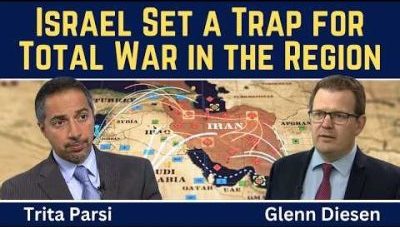
Trita Parsi: Israel Set a Trap for Total War in the Region
or go to
Aletho News Archives – Video-Images
From the Archive
Zionism’s Violent Legacy
By Donald Neff | Washington Report On Middle East Affairs | January 1996
On January 4, 1948, Jewish terrorists drove a truck loaded with explosives into the center of the all Arab city of Jaffa and detonated it, killing 26 and wounding around 100 Palestinian men, women and children.[1] The attack was the work of the Irgun Zvai Leumi – the “National Military Organization,” also known by the Hebrew letters Etzel – the largest Jewish terrorist group in Palestine. The Irgun was headed by Revisionist Zionist Menachem Begin and had been killing and maiming Arabs, Britons and even Jews for the previous ten years in its efforts to establish a Jewish state.
This terror campaign meant that at the core of Revisionist Zionism there existed a philosophical embrace of violence. … continue
Blog Roll
 Aletho News
- Trita Parsi: Israel Set a Trap for Total War in the Region
- Trump’s Iran war is on an Israeli leash
- Saudi oil boss issues global supply warning
- Riyadh Says Its Oil System Is Intact. The Numbers Say Otherwise.
- Trump and Netanyahu Want to “Finish the Job” on Iran
- US ‘one-sided dictation’ not Iran’s beliefs makes rational talks impossible: Baghaei
- Iran’s Next Strike May Not Explode. It Could Shut You Down /Col Doug Macgregor
- Iran: US political targets legitimate if assassinations return
- Iraq shuts key border crossing with Iran under US pressure: Report
- Undersea Internet cables could be targeted in retaliation for attacks on Iran: IRGC deputy chief
- If Americans Knew
- The Israel Lobby’s Changing Fortunes
- AIPAC has become such a political liability that it’s shifting to a more “nimble” approach to buying politicians
- At least 160 Israeli settler attacks in 2 weeks
- Will Gaza’s Ancient Christian Community Disappear Forever?
- Israel’s vision of regional security rests on keeping Arab states weak
- Heidi Levine recounts how Palestinian youths helped save her in settler attack
- DAILY UPDATE: Latest essential news on Palestine, Israel, & region
- Trump’s Intensifying Sabotage of the ICC, for Israel’s Sake
- Israeli military detain US and UK volunteers in West Bank including Democratic NY politician Brad Lander
- Americans at National Conservatism Conference held in Israel this year criticize Israel
- No Tricks Zone
- E-Cars Reduce CO2 Emissions By Only 41% Compared To Internal Combustion Engine Vehicles
- Predictions Made By Renowned Climate Professor Over Past Decades Have Been Proven To Be Poor
- New Study Suggests Large Regions Of The Pacific Ocean Have Been Cooling For The Last 80 Years
- Germany’s Green Energy Debacle: High Energy Costs Force Kahla Porzellan to Close After 182 Years!
- New Study: 50 Years Of The Most Aggressive ‘Net Zero’ Policies Can Only Affect The Global Climate By 0.03°C
- US September “Heat” Was No Record…Many Records Set Decades Ago
- Latest European Green Energy Debacle; Portugal’s Largest Flagship Solar Park Insolvent!
- Green Energy Debacle: German Expert Professor Fritz Vahrenholt Warns Of Severe Economic And Social Consequences
- Two More Paleo Reconstructions Affirm Meters-Higher Sea Levels Across Ireland, Brazil 7000-6000 Years Ago
- New Study: Earth And Venus Surface Warmth Largely Explained By Convection And Lapse Rate, Not CO2 Or Radiation

