AIPAC concealing support for candidates as its brand becomes ‘toxic’ in Democratic primaries: Report
Press TV – June 1, 2026
The pro-Israel lobbying group AIPAC has adopted fundraising methods that obscure its role in directing campaign contributions to political candidates, as support for the Israeli regime declines among Democratic voters in the United States, according to a report.
AIPAC has traditionally highlighted its success in helping elect candidates committed to supporting the regime, including backing billions of dollars in annual US military aid.
Reporting on Sunday, however, Israeli paper Ha’aretz said growing criticism of the regime among Democratic voters has made public association with the lobbying group a potential political liability.
“But as the Israel-boosting organization’s brand becomes toxic in many Democratic primaries, [AIPAC] has adopted a new fundraising method that hides its involvement in steering funds to favored contenders,” it wrote.
According to the report, AIPAC has encouraged donors to contribute through online portals it controls that direct funds straight to candidates’ campaigns, thereby “erasing AIPAC’s fingerprints in public data.”
The tactic was reportedly used in Michigan, where Congresswoman Haley Stevens is running for an open Senate seat against Abdul el-Sayed. During the campaign, el-Sayed criticized Stevens for accepting AIPAC-linked funding, saying the money had “bought” her support for continued US military aid for Tel Aviv.
The Detroit News reported that AIPAC raised several million dollars for Stevens through a fundraising page hosted on its website. Ha’aretz also said the group previously emailed donors directing them to candidate-specific donation pages on the “Pro-Israel Network” website rather than to AIPAC itself.
The report added that these portals allow AIPAC to gather donor information and share it with candidates, while working on their behalf and “shielding” the process from public view. According to Ha’aretz, the strategy helps candidates avoid criticism for accepting AIPAC support at a time when only 13 percent of Democratic voters reportedly view the regime favorably.
In March, Democratic Senator Ruben Gallego said, “I wouldn’t take AIPAC money because you have to basically be endorsing what’s happening right now, and it’s not good.”
Ha’aretz also reported that AIPAC has increasingly operated through political action committees whose names do not reference either the organization or the regime.
The issue has also surfaced among Republicans. Earlier this month, AIPAC spent $16 million in efforts to defeat Representative Thomas Massie, a prominent critic of Tel Aviv, in a Republican primary. Following his defeat, Massie said, “It’s turned into a referendum on whether Israel gets to buy seats in Congress.”
Iran halts talks with US – media
RT | June 1, 2026
Iran has halted negotiations with the US over the ongoing Israeli offensive in Lebanon, moving to block maritime traffic through the Strait of Hormuz, Tasnim news agency has reported, citing sources.
Israel has intensified its bombing campaign in Lebanon in recent days, against what it describes as sites used by the Hezbollah militant group. The Israeli military has pushed deeper into the country’s south, seizing Beaufort Castle, a 900-year-old Crusader fortress and a key vantage point in the region.
While Iran made an end to the war in Lebanon a condition for its Pakistani-mediated negotiations with the US, the hostilities between Israel and Hezbollah have continued despite a supposed ceasefire announced in mid-April.
In response to the escalation in Lebanon, Tehran is stopping the “negotiations and exchange of messages through a mediator,” according to Tasnim.
Iran has reportedly demanded an “immediate cessation of hostilities” in the country, as well as in the Palestinian enclave of Gaza, making it a condition for continuing the contacts with the US.
Tehran and its regional allied groups have also expressed readiness to seal off the Strait of Hormuz, as well as to “activate other fronts,” including disrupting maritime traffic in the Bab al-Mandab Strait, according to the agency.
Two US political commentators banned from UK for criticizing ‘Israel’
Al Mayadeen | June 1, 2026
The UK government has blocked two prominent left-wing US political commentators, Hasan Piker and Cenk Uygur, from entering the country, reportedly over remarks concerning “Israel”.
Piker, a political streamer with 1.9 million YouTube subscribers, and Uygur, co-founder of The Young Turks, said they had been denied entry to the UK. He said in a social media post that he was prevented from boarding a flight to London to attend SXSW London and deliver a speech at Oxford.
“I’ve been banned from the UK. I tried to get on a flight to London to attend SXSW London and give a speech at Oxford. I’ve been banned for criticizing “Israel”. Are we free anymore?” he wrote, adding: “This is oppression of Western citizens by our own governments on behalf of a different country.”
Uygur also commented publicly on the decision, saying the move reflected political pressure linked to criticism of “Israel”.
Labour government bans Hasan Piker and Cenk Uygur
The UK Home Secretary Shabana Mahmood reportedly decided to ban Uygur from entering the UK, citing concerns that his presence could “risk exacerbating antisemitism due to his rhetoric.”
Piker, who is known online as HasanAbi and previously worked with The Young Turks, said the UK had also revoked his visa “at the behest of Israel.” He wrote: “The West is betraying liberal values for a genocidal fascist foreign government. Soon we will all become Israel.”
During a video uploaded to YouTube, Piker said he had been scheduled to attend events with Jeremy Corbyn, Zack Polanski, and Yanis Varoufakis.
He also read from a letter sent by the UK government, which stated: “Your UK ETA has been cancelled. This means you cannot travel to the UK without a visa. This is because your presence in the UK is not considered to be conducive to the public good. You cannot appeal this decision.”
Western weaponization of censorship
“Israel” and its Western allies have repeatedly sought to silence journalists who expose Israeli occupation and war crimes by branding critical reporting as “terror propaganda” or anti‑Israeli incitement, rather than engaging with the documented violence on the ground.
Al Mayadeen’s experience is illustrative: Israeli authorities banned the channel’s broadcasts in occupied Palestine under emergency “security” regulations, seized its equipment, and accused its reporters of serving “enemy” interests and “pretending to be journalists”.
This aggressive censorship is reinforced in Western media ecosystems, where leaked testimonies describe unwritten rules against words like “genocide” and structural pressure on reporters and scholars to self‑censor criticism of “Israel” for fear of being smeared as “anti‑Semitic” or apologetic for “terror”, producing a climate in which speaking honestly about occupation is treated as a greater offense than the atrocities themselves.
Moreover, US and UK authorities have increasingly mirrored “Israel’s” own tactics by banning or criminalizing voices that challenge its actions, turning criticism of a foreign state into a de facto speech offense. In the UK, this has meant not only designating Palestine Action a “terrorist” organization but also arresting thousands of supporters and documenting nearly 1,000 cases where students, workers, and artists faced investigations, suspensions, or event cancellations for pro‑Palestine advocacy.
Across the Atlantic, US officials have backed or tolerated these crackdowns while pursuing their own arrests and visa actions against pro‑Palestine student leaders, signalling a transatlantic consensus that views solidarity with Palestinians and sharp scrutiny of the Israeli lobby and war crimes as a security problem to be contained rather than protected political speech
Israeli authorities refuse to return massive trove of Oct 7 video. What are they hiding?
By Michelle Witte | The Grayzone | May 31, 2026
The Israeli government is still holding a massive trove of video documentation of the Oct. 7 attack captured by individuals and communities caught up in the fighting. One bereaved parent even accuses Israeli authorities of deleting a video of her son’s last moments before returning his phone to her.
According to Israel’s Channel 13, “all the cameras, memory cards and films that documented the atrocities were collected, but two and a half years later, these materials have not been returned to the communities and bereaved families who are desperate for information, and even feel that someone is hiding it from them.”
Soon after Hamas and Palestinian Islamic Jihad’s attack on Israel on Oct. 7, 2023, special units from the IDF, the Israeli intelligence agency Shin Bet and Israel’s investigation unit Lahav 433 collected photo and video documentation of the violence, confiscating cell phones, individual cameras, kibbutz security cameras and more.
“They disconnected what was needed, took it and moved on – that was the last time we saw the materials,” said an Israeli army reservist who participated in the collection mission.
According to the head of the Kfar Aza kibbutz – the site of a number of a series of atrocity hoaxes spun out in the early days after the attack – community members cooperated with investigators at the time. Now, years after the events, these families are wondering why documentation of their loved ones’ fates has yet to be returned to them.
Even Sabine Taasa, who was made an emblem of Israeli victimhood after her husband and one of her sons were killed on Oct. 7, is now clashing with Israeli authorities over footage of that day.
Taasa’s 17-year-old son, Or, was killed on Zikim beach. According to Channel 13, Taasa says she saw a video her son filmed in the moments leading up to his death, but when authorities returned his phone to her, no such video remained. The outlet says this is not an isolated incident.
An IDF probe found that soldiers abandoned civilians hiding in a bathroom there and then left their bodies for a week.
Channel 13 reports that Israeli police claimed Lahav 433 is still investigating the events in kibbutz Kfar Aza and no indictments have yet been filed, so returning evidence at this stage could jeopardize their criminal case. Meanwhile, the IDF rejected all accusations that it is withholding documentation and says it is in the final stages of adopting policies for how this type of evidence will be returned to communities and families.
On October 7, the Israeli government issued Hannibal Directive orders which led Apache helicopter pilots and tank gunners to take aim at Israel’s own citizens in the Gaza envelope, supposedly to prevent them from being taken hostage. Israeli Brig. Gen. Barak Hiram personally ordered a tank crew to shell a home in Kibbutz Be’eri, knowing it was filled with Israeli citizens who had been taken captive by Hamas fighters seeking to negotiate a way out of the standoff. A dozen Israelis were killed in the strike, leaving behind “a house full of corpses,” according to the lone Israeli survivor. One Israeli tank gunner from an all-female unit similarly revealed that she was ordered to shell Israeli homes without knowing who was inside. An Israeli police investigation subsequently revealed that Israeli helicopters shelled the Nova Electronic Music festival on October 7.
Given Israel’s track record of targeting its own citizens on October 7 and misleading the public about it, the Israeli state might be holding on to as much video as possible to ensure no further evidence of the Israeli army massacring its own citizens is made public.
Israel has demonstrated a keen interest in collecting documentation of the events of October 7 and controlling narratives through careful curation and dissemination. At the same time, it has refused to participate in independent, international investigations of the attack, Israel’s response, or the widely distributed and now widely debunked claims of mass sexual violence by Hamas and other Palestinian militant groups. According to the Israeli state, Israel and Israel alone is justified in and capable of conducting such probes.
However, the state has strangely neglected to launch its own comprehensive special investigation into the apparent massive intelligence failure and military debacle. In fact, the Israeli government has had to be prodded by its own high court to establish a state commission of inquiry into the events, according to reporting by the Times of Israel. The Israeli government now has until July 1 to come up with a “suitable framework” to investigate the events, following years of pressure by the families of Israelis killed that day.
With the Israeli military-intelligence apparatus refusing to return possibly hundreds of hours of footage to its owners, some Israelis who lived through the October 7 attacks are beginning to wonder if they could be hiding something.
Ezra Klein Warns Israel’s Role in Iran War Will Fuel Antisemitism
By Jose Nino | Occidental Observer | May 30, 2026
For decades, prominent Jewish voices have wrestled privately with an uncomfortable question. Does aggressive Israeli government conduct expose diaspora Jewish communities to backlash they did not invite? In early March, Ezra Klein brought that question back into public view. Speaking with former Obama senior adviser Ben Rhodes on a podcast episode titled “The Great Lie of War”, the New York Times columnist warned that Israel’s central role in the joint U.S. assault on Iran could fuel a new wave of antisemitism.
The two men spent most of the interview discussing the strategic recklessness of the Iran operation where the United States and Israel launched an assault that killed Supreme Leader Ali Khamenei and much of his senior command. They examined the lack of congressional authorization, the absence of an endgame, the risk of a massive refugee crisis, and what they described as Israeli Prime Minister Netanyahu’s long-sought goal of drawing the United States into direct military confrontation with Iran.
The antisemitism remark came near the end of that segment, specifically as a follow-on to a discussion about Saudi ambivalence toward the war and the question of what Israel actually wants from the conflict. Klein’s exact words in the transcript were, “I’m not saying this is the biggest issue at this moment, but the centrality of Israel in the operation has raised some concerns for me about what this is going to mean for anti-Semitism. You see the amount of talk on the MAGA right, but elsewhere as well that, you know, Israel’s leverage over Donald Trump or that, you know, this is all just some kind of Israeli plot.”
Klein then noted that Netanyahu appeared to be gambling with Israel’s long term political standing in America and in the world at a time of “very, very sharply rising anti-Semitism,” expressing uncertainty about how it would all pan out. The New York Times columnist’s concern, stated plainly, was that Israel’s highly visible, central role in what many perceived as an unjustified war of aggression would fuel conspiracy theories rather than defuse them. His worry was that Netanyahu’s short-term tactical success, finally getting a U.S. president to strike Iran, risked long-term consequences for Jews, especially in the United States.
This dilemma is not new. Jewish billionaire George Soros articulated a similar concern over two decades ago. Soros has largely steered clear of public association with Jewish communal life and seldom appears at exclusively Jewish functions. That changed in 2003, when he took the stage at a New York City meeting hosted by the Jewish Funders Network. Questioned about the spread of antisemitism across Europe, Soros offered an unexpected diagnosis, laying blame at the feet of U.S. and Israeli policy. “There is a resurgence of anti-Semitism in Europe. The policies of the Bush administration and the Sharon administration contribute to that,” he stated. “If we change that direction, then anti-Semitism also will diminish. I can’t see how one could confront it directly.”
At the time, the reaction from Jewish leadership was furious. Elan Steinberg, who served as senior adviser to the World Jewish Congress after a stint as its executive director, fired back. “Let’s understand things clearly: Anti-Semitism is not caused by Jews; it’s caused by anti-Semites.” Abraham Foxman dismissed Soros’s words as “absolutely obscene.” The head of the ADL elaborated. “He buys into the stereotype. It’s a simplistic, counterproductive, biased and bigoted perception of what’s out there. It’s blaming the victim for all of Israel’s and the Jewish people’s ills.”
The Foxman and Steinberg responses reflected an orthodox position within Jewish communal leadership. Antisemitism, in this view, is a pathology of antisemites, and any attempt to link it to Israeli behavior constitutes victim blaming. Yet this position has always co-existed uneasily with a practical awareness that Israeli actions, particularly those perceived as disproportionate or aggressive, create public relations challenges for diaspora Jewish communities.
Klein’s 2026 remarks fall squarely within this tension. He was warning that Netanyahu’s gamble, making Israel so visibly central to an unpopular war, would hand ammunition to those who already believed such theories. Polling data suggests that Klein’s concerns about Israel’s political standing are well-founded. Gallup’s 2025 Annual World Affairs Survey documented a broader collapse in American sentiment toward Israel. Only 46% of Americans sympathized with Israelis, the lowest figure in 25 years of Gallup tracking. Among Democrats, 59% sympathized more with Palestinians—with only 21% sympathizing with Israelis—creating a nearly 3-to-1 ratio, the first time Palestinians had held such a commanding lead among members of a major U.S. party. A majority of Americans, and a record-high 76% of Democrats, supported an independent Palestinian state.
These trends predate the Iran strike and reflect cumulative damage from Israel’s conduct in Gaza. The joint United States and Israel operation against Iran, with Israel’s role so prominently featured, is unlikely to reverse this trajectory and will more than likely heighten Western populations’ hostility toward Israel. The polling numbers bear this out.
The Jewish People Policy Institute found that only 28% of strong liberal Jews support the war while 62% oppose it. Support climbs to 100% among strong conservative Jews. The partisan split is even more dramatic. Trump voters among American Jews back the war at 99%, while Harris voters divide 47% to 42%.
The picture among Americans generally looks very different. Pew Research found that 59% of Americans said the United States made the wrong decision in using military force and 61% disapprove of Trump’s handling of the conflict. An AP-NORC poll found that 59% of Americans believe U.S. military action has gone “too far,” while a Quinnipiac survey reported 74% oppose sending U.S. ground troops into Iran. The immediate unpopularity of the Iran war combined with Israel’s sullied image as a result of the Gaza genocide may explain why elements of American Jewry are embracing certain forms of controlled opposition to the Netanyahu regime, while stopping short of criticizing the entire Zionist project and its thoroughly Jewish nature.
It should be said that rational anti-Semitism is never about all Jews. Klein’s worry that “Jewish communities globally could be stained with guilt by association in the eyes of those who conflate the Israeli government with all Jews” should be seen as relying on the idea that anti-Semitism refers to complaints about “all Jews.” Most commonly complaints about Jews rely on understanding where the power of the Jewish community is directed, and in this case it’s obvious that the mainstream Jewish community in the U.S. and its powerful lobbying organizations (here and here) are entirely on board with the war. This is especially true in the Trump administration where the more conservative elements of the Jewish community, including Chabad Lubavitch, have increased their influence greatly.
It is simply that their vision [of conservative Jewish groups] for Jewish flourishing in America is radically at odds with the basic assumptions that have grounded American Jewish politics for much of the last century: chiefly, that Jewish interests are best served by the separation of religion and state; that American Jews are best protected through multiethnic, pluralistic coalitions rather than an alliance with the Christian majority; and that the invisibility of Jewish group interests is preferable to visible Jewish particularity.
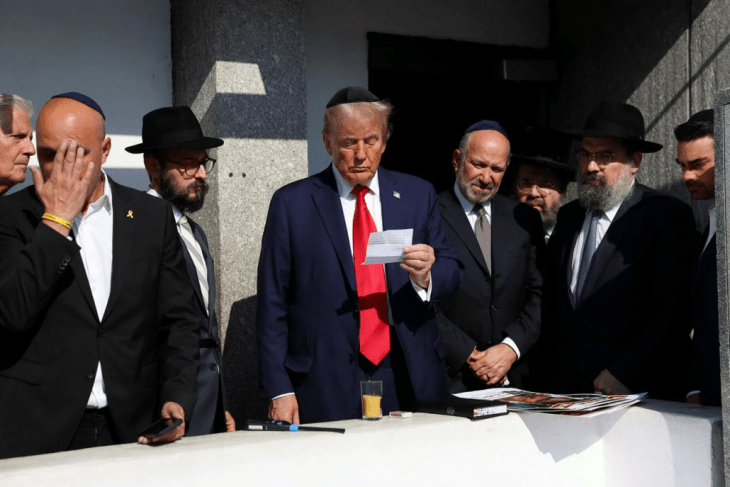
Ezra Klein’s warnings about the centrality of Israel in the Iran war are a tacit admission that the Jewish establishment has lost its ability to operate from behind a veil. By leveraging control over U.S. administrations to initiate wars of choice, this power structure has forced a public reckoning that no amount of image-polishing can reverse. History has repeatedly shown that Jewish overreach eventually triggers an immune response from the host population.
We are currently in the midst of that reaction, and the path forward lies in the unapologetic identification and systematic dismantling of the Jewish influence networks that have compromised the highest levels of our government and financial institutions.
Hamas: EU hits Gaza leaders with sanctions but ‘turns blind eye’ to Israel’s atrocities
Press TV – May 30, 2026
Hamas has condemned the European Union’s sanctions, slamming the bloc for “turning a blind eye” to Israel’s violations of international law while targeting Palestinian resistance groups and leaders.
“We condemn the decision by the European Union Council to broaden sanctions against the Hamas and Islamic Jihad movements and to include a number of their political leaders on its lists,” the Gaza-based resistance group said in a statement on Saturday.
Hamas added the sanctions are unjust and entirely biased in favor of the occupation’s narrative, reflecting a policy of double standards in dealing with the Palestinian cause.
“This decision comes as [Israel] continues to commit crimes of genocide, starvation, and forced displacement against our people and violates the ceasefire agreement, while the European Union turns a blind eye to these documented violations of international law and chooses to sanction political leaders who defend their people’s legitimate rights,” read the statement
“The attempt to criminalize the Palestinian resistance will not change the fact that our people are under occupation, their resistance is a legitimate right guaranteed by all laws and humanitarian norms,” the group highlighted.
Hamas noted that the targeting of political leaders confirms that these sanctions come as a response to pressure from the occupation and are not based on standards of justice.
The movement called on the EU to review its biased policies, cease providing political cover for Israel, and work to hold its leaders accountable instead of prosecuting the victims.
“We affirm that these measures will not undermine the will of our Palestinian people or their commitment to their legitimate national rights, especially freedom, self-determination, ending the occupation, and establishing the Palestinian state with Jerusalem as its capital,” the group stated.
The EU on Friday said that it had listed ten members of Hamas’ top political leadership body as subject to a travel ban and asset freeze, prohibiting making funds or economic resources available to those named, either directly or indirectly.
Since launching its genocidal assault on Gaza on October 7, 2023, Israel has killed more than 72,000 Palestinians and wounded at least 172,000 others, the majority of them women and children.
The Israeli war has also devastated Gaza’s civilian infrastructure, destroying hospitals, schools, sports facilities, power plants, water networks and residential neighborhoods across the besieged territory.
The widespread destruction and continuing blockade have displaced much of Gaza’s population, leaving Palestinians trapped in the besieged territory and heavily dependent on humanitarian aid that enters only in limited quantities.
“Balancing” Act at the New York Times
Nicholas Kristof Wrote About Israel’s Sexual Torture of Prisoners, the Next Day Isabel Kershner Penned More Unverified Rape Allegations Against Hamas
By Robin Andersen | ScheerPost | May 30, 2026
The New York Times attempted to ‘balance’ Nicholas Kristof’s documentation of the systematic rape of Palestinians by Israeli forces with yet another unverified rape ‘investigation’ claiming that Hamas had weaponized sexual violence on October 7. It was written by the paper’s pro-Israel Jerusalem-based reporter, Isabel Kershner.
Nicholas Kristof’s New York Times Op-ed piece titled The Silence That Meets the Rape of Palestinians, published on May 11, was based on documentation and grueling victim testimonies of rapes that Palestinians have experienced at the hands of Israeli security forces. Brutal and sadistic acts of sexual torture are described in a piece that triggered enormous attention even though human rights organizations have been documenting these same crimes for years now.
The Israeli human rights group B’Tselem has documented Israel’s sexual torture of Palestinian men, women and children calling the “Israeli prison system a network of torture camps.” Save the Children reported in July 2024 that Palestinian children in Israeli detention were facing “disease, increasing starvation, [and] abuse including sexual violence.” A Palestinian women’s rights organization warned that their documented 75 cases of rape and sexual violence against Palestinian women amounted to about 1% of what was actually happening in Israeli detention. Euro-Med Human Rights Monitor’s extensive report published on April 13, 2026, emphasized that the sexual torture was so bad it amounted to “another genocide behind walls.” They identified its purpose as a “systematic destruction of the body and identity.” The report emphasized the scope of “criminal responsibility,” by the collusion of state institutions that were creating impunity.
In a discussion about Kristof’s piece, Francesca Albanese, who has also documented brutal Israeli torture sites, told Al Jazeera’s UpFront that she had given a long interview about sexual torture to the New York Times as early as February 2024, but nothing came of it. Albanese went on to say she didn’t understand why the Times piece should have been “more important” than the extensive documentation of human rights monitors. But when Kristof finally acknowledged that Palestinians were being tortured and raped by trained dogs, (corroborated by a soldier) in Israeli prisons, it made headlines in the US and sent shock waves through Israel’s hasbara apparatus.
The agenda setting New York Times is a “paper of record,” with a journalism staff of 3000, about 7 percent of all journalists working in the US. The paper has also been a reliable source of pro-Israel messaging for years, especially after October 7, so when a well-respected human rights journalist wrote such an op-ed in its pages it was a public relations disaster for Israel and its propaganda machine went into high gear to counter the bad press. Zionists and genocide supporters protested in front of the Times building. Netanyahu was so outraged that he threatened to bring a defamation lawsuit against the paper. The Israel Foreign Ministry called the piece “blood liable” and accused Nicholas Kristof of writing “an endless stream of baseless lies and propaganda” that turned the “victims into the accused.”
It should come then, as no surprise that the paper attempted to “balance” Kristof’s essay by publishing a piece the very next day, on May 12, about another “two-year investigation” by Israel, that “concluded” that sexual violence by Hamas was widespread on October 7. Isabel Kirshner’s piece attempted to breathe new life into the thoroughly discredited and debunked original Times’ front-page ‘investigation’ titled Screams Without Words. Screams was first published on December 28, 2023, just as the South African legal case against Israel’s genocide was being presented to the International Court of Justice, and it served as a significant denial and justification for Israel’s genocidal violence at the time. Screams without Words can be described accurately (and has been) with the same words used by Israel’s Foreign Ministry to falsely describe Kristof’s piece; “an endless stream of baseless lies and propaganda.”
The timing of the now infamous rape story of 2023, along with its extravagant claims to evidence not found in the front-page article, had much to do with why, almost immediately, the piece drew critical attention from media analysts, independent investigative reporters, and human rights organizations. Withering criticisms of the story included an essay in Medium, calling it “crappy journalism,” saying it offered a “lesson on selection, slanting, and charged language, and why using words in these ways constitutes a poor substitute for solid evidence and reasoning.” An Egyptian feminist non-governmental organization (NGO) Speak Up, called the article a “disgraceful investigation,” and shamed the Times for claiming to provide readers with definitive evidence, while actually offering no evidence at all. Independent US investigators such as Electronic Intifada, The Grayzone, The Intercept, Mondoweiss and others, roundly debunked the fictionesque inventions continued within it. Sixty journalism professors wrote to the New York Times calling on the paper to commission an independent review of the article. It was “troubling to professors of journalism to see such a shoddy article be published without a retraction or an investigation,” Professor Deepa Kumar told Democracy Now!
The timing, the definitive assertions without evidence, the reliance on already discredited sources, the sensational writing replete with lurid content, the omissions, half-truths, misdirections, and the way the paper manipulated the family of a young Israeli female victim killed at the rave, all point to a case of journalism malpractice at the New York Times. “Screams Without Words” is an example, not of journalism, but of the power of persuasive myths and war propaganda.
The Complicit Lens: US Media Coverage of Israel’s Genocide in Gaza
The paper’s 2026 version of the Hamas rape story was penned by one of the Times’ most reliably pro-Israeli reporters, Isabel Kershner, and this new ‘investigation’ once again takes seriously, discredited Israeli sources that Kershner claims to be independent and reliable. At the center of the piece is Cochav Elkayam-Levy, a key Israeli source after October 7. Elkayam-Levy and her organization were central to Western media coverage after October 7, when she repeatedly presented the rape allegations against Hamas. However, as MintPress News reported, Israeli media later reported that “Elkayam-Levy and her commission had misled donors, exaggerated evidence collection efforts, and spread misinformation related to October 7 claims. The controversy surfaced shortly after she received the prestigious Israel Prize.” In Kersner’s new piece, extravagant claims are made about the thorough nature of the investigation, describing all the visual evidence now assembled. But Kershner isn’t allowed to publish the evidence. She writes; “The commission’s archive is closed to the public because of the graphic nature of much of the material, it said, and to protect the privacy of victims and their families.” The Times is asking its readers to trust the Israelis, Isabel Kershner, and the paper itself with its abysmal track record on this topic. Kershner does not mention the fact that early last year, Israel blocked a UN probe into possible Hamas sexual crimes of October 7, because according to Haaretz, they wanted to avoid an inquiry into the abuse of Palestinians in Israeli prisons.
Isabell Kershner at the New York Times
Kershner has been providing positive reporting for Israeli Security Force for years now. With Kirshner, polishing the image of the IDF is a family affair. The Jerusalem-based correspondent whose husband worked with the Israeli military complex says on her Times’ profile page, that says she “strives to be accurate, honest and fair.” Yet she failed to mention that her husband Hirsh Goodman, was working as a senior research associate at a national security think-tank, the Institute for National Security Studies (INSS). INSS’s website boasted about the group’s “strong association with the political and military establishment.” Goodman’s job, at least in part, entailed “shaping a positive image of Israel in the media.” An examination of articles that Kershner wrote or contributed to from 2009 to 2012 by FAIR revealed that she overwhelmingly relied “on the INSS for think tank analysis about events in the region.” The Times has not disclosed Kershner’s connections to INSS.
Reporting on INSS, Haaretz cited published papers that backed the “Dahiyah Doctrine,” an Israeli military doctrine that called for disproportionate force to be used on civilian infrastructure in Gaza and Lebanon during operations against Hamas and Hezbollah. Since Ovtober 7, this doctrine has been extensively followed. Writing for FAIR, Alex Kane reported that the Dahiyah Doctrine was applied in 2008–09 during Israel’s invasion of Gaza, and goes on to explain that “Goodman’s job within that context was spin.” Because disproportionate violence resulting in many civilian casualties could lead to charges of war crimes, Goodman understood that “Israel must devise a strategy to impact positively on international and Arab public opinion and overall disseminate its message more effectively.” INSS messaging was certainly disseminated effectively in the New York Times, “From 2009–12, Kershner wrote or contributed to 17 articles that quoted officials from the INSS, far more than other comparable think tanks.
Though Kershner never used her husband as a direct source, as a Society for Professional Journalism (SPJ) ethics expert Kevin Smith, told FAIR, this is basic ethics 101, these relationships are not healthy for unbiased news coverage. “You cannot expect trust or to maintain credibility from the public when, before they read a word of your copy, you have engaged in an act of deception by not disclosing your potential conflicts.”
In her post-October 7 coverage, Kershner’s hand in promoting the Israeli military can be easily detected in her writing. In an article from January 2024, well into Israel’s genocidal violence in Gaza, Kersner wrote; “Israeli Women Fight on Front Line in Gaza, a First.” Kershner continued, “After a long struggle for acceptance, Israel’s female combat soldiers are pushing new boundaries after rushing into battle on Oct. 7.” We learn that a woman now “commands a company of 83 soldiers, nearly half of them men. It is one of several mixed-gender units fighting in Gaza, where female combat soldiers and officers are serving on the front line for the first time since the war surrounding the establishment of Israel in 1948.” There are also two all-women tank crews on the ground in Gaza. Kershner calls women’s new role in the military, a progressive victory over “ultraconservative rabbis and religiously observant soldiers” by “feminists, secularists and critics of the country’s traditionally macho culture.”
Even as she writes the story, she seems to acknowledge that it serves a PR role for the military, by bolstering the new positive image of the IDF. She asserts that women “combat soldiers have become symbols of progress and equality, appearing on magazine covers and featured in television news profiles.”
Writing from a feminist peace perspective, Joyce Chediac notes that Palestinian women’s groups have called the genocide a feminist issue and are urging all those who value women’s rights to support a ceasefire. As Kershner lauded women in Israel’s army, Joyce Chediac questioned their role in the violence:
Are the two tanks operated by women among those involved in the storming of Al-Khair hospital in Khan Yunis, arresting their staff, and preventing ambulances from rescuing the wounded? Are the women in combat for the first time among the snipers shooting Palestinians dead as they search for food or water for their families? Are they guarding the bulldozers now flattening huge swarths of Khan Yunis, forcing pregnant women to give birth in freezing tents because their homes were destroyed and they are blocked from hospitals?
Chediac concludes that, “equal gender opportunity to commit genocide is a cruel and obscene mockery of women’s rights.” Providing cover for Israel’s military does not advance the rights of women, it sets them back. The concept that female military power is progressive has helped sugarcoat the genocidal violence and atrocities carried out by the Israeli military.
Testimony gathered by B’Tselem in 2024, confirms that female soldiers have been involved in mistreating detained prisoners in Israel’s system of torture camps. A 39-year-old mother of five from Gaza City told B’Tselem, “On December 31st we were taken out of the cage and dragged to a bus, like animals. The bus started driving and the whole way, the female soldiers guarding us wouldn’t let us lift our heads. They swore at us, hit us on our hands, and took pictures of us. After some time, the bus stopped. We were taken off of it… A female soldier grabbed us by the head and ordered us to kiss the Israeli flag. Another female soldier bashed my head against the side of the bus.”
Balancing legitimate reporting that includes reliable witness testimony confirmed by multiple human rights investigations over a period of years cannot be not done by publishing unverified allegations from discredited sources. Alan MacLeod noted a recuring media pattern here that applies to the New York Times’ reporting on Israel; “whenever scrutiny intensifies around Israeli abuses against Palestinians, major Western outlets redirect attention toward unverified claims against Hamas to justify Israel’s genocide in Gaza.”
Balancing Kristof’s rare acknowledgment of Israeli war crimes with reporting by a pro-Israel, biased journalist citing discredited sources repeating unverifiable allegations was a shameful, and failed, attempt to appease the state of Israeli as it expands its crimes of war and occupation into Lebanon for a Greater Isreal. The Times would do better to simply report the truth and stop catering to hasbara and the false narratives that facilitate Israel’s on-going genocidal violence.
Material in this piece was drawn from Chapter 4, “A Compromised Media Landscape,” and from Chapter 8, “The New York Times Rape Story: War Propaganda and Trauma Porn,” in The Complect Lens: US Media Coverage of Israel’s Genocide in Gaza, by Robin Andersen
Robin Andersen is professor emerita of media studies at Fordham University and an award-winning author of a dozen single- and co-authored books. Her work examines film, television, and media coverage of war, the environment, politics, and elections. She edits the Routledge Focus Book Series on Media and Humanitarian Action, serves as a Project Censored Judge, and contributes to the annual State of the Free Press. Andersen is on the Board of Directors of Fairness and Accuracy in Reporting (FAIR), where she also writes regularly, and is an Izzy Award Judge for the Park Center for Independent Media. Her writing has appeared in CounterPunch, LA Progressive, The Progressive, Salon, Common Dreams, and ScheerPost, among others.
The Strange Case of Ori Solomon
The dismissal of charges against Ori Solomon raises uncomfortable questions about how the US justice system handles Israeli nationals
José Niño Unfiltered | May 29, 2026
On January 31, 2026, FBI agents and Las Vegas Metropolitan Police officers executed a search warrant at a residence on Sugar Springs Drive in east Las Vegas, near Washington Avenue and Hollywood Boulevard. What they found inside triggered one of the strangest criminal cases in recent Nevada history. Authorities discovered what they described as an illegal biological laboratory concealed within the property, complete with a biosafety hood, a biosafety sticker, a centrifuge, multiple refrigerators containing vials of unidentified liquids, red and brown unknown liquids in gallon-sized containers, and over 1,000 containers with unknown substances.
FBI Special Agent in Charge Christopher Delzotto described the scene as containing “a bio-safety hood, a bio-safety sticker, a centrifuge, multiple refrigerators, red-brown unknown liquids in gallon-sized containers, and refrigerated vials with unknown liquids.” Clark County Sheriff Kevin McMahill confirmed investigators recovered “evidence of possible biological material, including refrigerators with vials containing unknown liquids” and said the items were “consistent in appearance” with those found in the 2023 Reedley, California case, per a report by ABC30.
A whistleblower reportedly told investigators that people who entered the garage became “deathly ill,” with at least one resident hospitalized for a respiratory illness. Testing of the materials was conducted at both the Southern Nevada Health District laboratory and the National Bioforensic Analysis Center in Maryland. Materials were later determined to be consistent with components for medical diagnostic test kits.
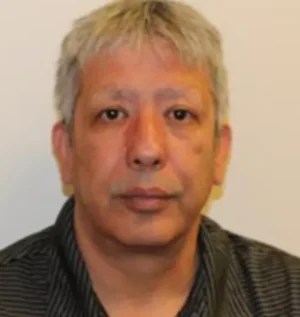
The man at the center of this investigation is Ori Solomon, a 55-year-old property manager who had been living in Las Vegas for over 20 years at the time of his arrest. Officers found an Israeli passport in the name “Ori Solomon” and a French passport in the name “Ori Salomon” at his residence. He was present in the United States on a non-immigrant visa. His primary occupation was managing short-term rental properties, and court records indicate he oversaw approximately 37 such properties in the Las Vegas area. He is not a trained biologist, and court documents note no publicly confirmed expertise in biological sciences. In a significant development, federal charges against Solomon were dropped in May 2026, with prosecutors stating “the Government has concluded that the interests of justice require dismissal of the complaint.”
Solomon managed properties for Chinese national Jia Bei Zhu, also known as David He and Jesse Zhu. Investigators described Solomon as an “agent and conspirator” with Zhu, noting that Zhu made 467 calls to Solomon in the weeks leading up to the raid. Zhu was already in federal custody in California linked to a 2023 illegal biolab in Reedley, California—a case that had attracted the attention of the House Select Committee on the Chinese Communist Party. That committee found the illegal California lab was run by a PRC citizen who was a wanted fugitive from Canada and had evaded a multi-million million Canadian court judgment for stealing American intellectual property.
U.S. Magistrate Judge Elayna Youchah, who is of Sephardic Jewish extraction, presided over the initial federal detention hearing on February 6, 2026. She ordered Solomon’s release on his own recognizance, finding that the allegations were concerning but not severe enough to require detention, noting Solomon had no prior criminal history. She imposed conditions including surrender of all passports, travel restricted to the continental United States, required notification before leaving Clark County, and prohibition on possessing any firearms or weapons.
The federal prosecution was led by the U.S. Attorney’s Office for the District of Nevada, then headed in practice by Sigal Chattah—an Israeli-born attorney who bore the title of First Assistant U.S. Attorney after a federal judge ruled her interim appointment had been made illegally. A criminal complaint charged Solomon with one count of being a prohibited person in possession of a firearm. Multiple firearms were recovered at his residence, including handguns and rifles.
Then came the twist that has fueled speculation. Chattah’s office filed a motion to dismiss without prejudice the federal firearms complaint against Solomon. The motion stated only: “After a careful review of the evidence and additional information provided by defendant, the Government has concluded that the interests of justice require dismissal of the complaint at this time.” A spokesperson declined to explain the rationale. The dismissal was without prejudice, meaning federal prosecutors retain the legal option to re-file.
Solomon still faces the Clark County felony charge for improper disposal of hazardous waste. With the federal case dismissed, there is public concern that Solomon could potentially regain his passports and leave the country before the state case is resolved.
This concern is not hypothetical. The Solomon case mirrors a separate, high-profile case involving an Israeli cybersecurity official charged with child sex crimes in the Las Vegas area in 2025. Tom Artiom Alexandrovich, 38, the Executive Director of the Cyber Defense Division at Israel’s National Cyber Security Authority, was arrested on August 6, 2025, in Henderson, Nevada, as part of a multi-week joint undercover sting operation targeting child sex predators. Alexandrovich was among eight men arrested. He allegedly used WhatsApp and the dating app Pure to communicate with an FBI decoy posing as a 15-year old girl, agreeing to meet for “sexual contact” and bringing a condom to the meeting location.
Alexandrovich was attending the annual Black Hat USA 2025 cybersecurity conference at Mandalay Bay in Las Vegas,which ran August 2-7, 2025, at the time of his arrest on August 6. He was booked at the Henderson Detention Center and charged with luring a child with a computer for sex acts, a Class B felony carrying 1 to 10 years in prison.
What happened next sparked immediate international controversy. Alexandrovich posted $10,000 standard bail, set without review by a judge at the time of booking, and flew back to Israel the following day, August 7, 2025. U.S. Attorney Sigal Chattah, publicly stated Alexandrovich “should have had his passport confiscated by state authorities” and must be brought back to face justice. The U.S. State Department denied any federal intervention, declaring Alexandrovich “did not claim diplomatic immunity and was released by a state judge pending a court date.”
Alexandrovich’s case proceeded through the Nevada courts. Judge Barbara Schifalacqua, ordered remote appearances after he skipped his initial arraignment. He appeared via Zoom before Judge Schifalacqua in September 2025 and was barred from contact with minors and dating apps. A grand jury indicted him on one count of luring children with technology for sexual conduct. He pleaded not guilty via video before District Judge Tina Talim and a trial was set for March 2026. Judge Talim denied a motion to dismiss in November 2025, ruling the prosecution had established probable cause.
Meanwhile, the man at the center of the original biolab investigation has faced his own reckoning. On May 5 and 6, 2026, Jia Bei Zhu was found guilty on all 12 counts for fraudulently selling COVID-19 tests and lying to the FDA. His sentencing was scheduled for August 24, 2026, with a potential sentence of up to 31 years in prison.
To say that strange things are taking place in Sin City would be an understatement. When the layers of the Las Vegas biolab investigation are peeled back, it becomes evident that the “interests of justice” cited by prosecutors are effectively code for the protection of Jewish interests under the current American regime. Solomon’s immediate release and subsequent dismissal are not aberrations but consistent features of a system that has long been captured by Jewish interests hostile to the Historic American Nation.
The ease with which Solomon, a foreign national holding multiple passports, has navigated federal jeopardy exposes the double standard inherent in our society. While common citizens and those who vehemently oppose the Judeo-American order are relentlessly pursued by the state, those embedded within the trans-national Jewish network enjoy a tacit, systemic immunity. This is the hallmark of Empire Judaica—a framework that treats the security of the American people as secondary to the preservation of a Jewish tribe that acts with the same impunity in Nevada as the state of Israel does on the global stage.
Beyond Gaza: The expanding geography of displacement
By Dr Oroub El-Abed | MEMO | May 29, 2026
The War on Gaza continues and has not stopped. It is even expanding to wider geography of displacement and has been unfolding across the Eastern Mediterranean. The Zionists are empowered to widen their gradual restructuring of the land: depopulating borderlands, fragmenting societies, erasing cultural landscapes, and normalising permanent instability across the whole of Palestine, southern Lebanon, and southern Syria.
This week, the Israeli military ordered the immediate evacuation of the ancient Lebanese city of Tyre. Tyre A city that carries thousands of years of Mediterranean history, Phoenician heritage, trade, memory, and civilization was suddenly reduced to a military target. Residents were ordered to move north of the Zahrani River as Israeli bombardment intensified across southern Lebanon despite the language of a “ceasefire.” Entire communities were once again placed on the road during Eid, carrying children, blankets, medicine, and fragments of home while others elsewhere exchanged sweets and celebratory visits.
The symbolism of Tyre matters. Cities like Tyre are archives of human civilization. Their ports, neighbourhoods, cemeteries, mosques, churches, markets, and coastal life embody centuries of coexistence and cultural production. When such places are emptied, bombed, or transformed into militarized zones, the damage extends beyond physical destruction. A civilization itself becomes vulnerable to erasure.
The same logic that devastated Gaza is now visibly extending outward. In Gaza, entire archaeological sites were destroyed. Urban landscapes have been flattened under the justification of war. Universities, hospitals, archives, schools, libraries, bakeries, agricultural lands, and refugee camps have been systematically destroyed. The assault has targeted the infrastructure of Palestinian life itself, it has dismantled the social, cultural, and demographic foundations necessary for collective survival.
In the occupied West Bank, Palestinians continue to face settler violence, military raids, land confiscation, and forced displacement. Villages are emptied through intimidation, checkpoints fragment movement, and economic suffocation deepens dependency and precarity. Yet the expansionist vision articulated through biblical and historical claims is now stretching beyond Palestine.
Now southern Lebanon and southern Syria are being pulled into the same spatial planning.
Reports and online campaigns promoting land acquisition in areas near Daraa and southern Syria reveal a deeply alarming trend: the normalization of territorial expansion beyond internationally recognized borders. References to ancient “Davidic routes” or biblical entitlement are increasingly integrated into public discourse, settlement imaginaries, and strategic military narratives. The danger lies in transforming expansion into something culturally acceptable and politically negotiable.
This is occurring at the very moment Syrian refugees are being pressured to return “home” after years of displacement with many Global North countries issuing deportation regulation letters against them. Governments and international actors increasingly speak of refugee return as though Syria has become stable enough for repatriation. But what does “return” mean if homes are destroyed, lands fragmented, economies collapsed, and territories themselves vulnerable to new forms of Zionist militarization and external control? Refugees are told to go back while the geography they once belonged to is simultaneously being reconfigured.
The contradiction
The publicised initiatives presented under the language of “peace” and “reconstruction” now stand exposed as hollow political theater. Donor fatigue deepens. Funding commitments evaporate. Humanitarian systems are collapsing under both political paralysis, Israeli persist with insolence to continue the attacks against Palestinians and deliberate underfunding. Gaza’s Peace Board, created by Trump remains largely unfunded while displacement spreads regionally. The promise of rebuilding has become another mechanism for managing headlines with peace illusions rather than protecting people.
Meanwhile, millions remain displaced across the region. In Lebanon alone, over a million people have reportedly fled their homes since the escalation intensified. Entire southern communities now live between temporary shelters, schools, relatives’ apartments, or overcrowded Beirut neighbourhoods.
Families displaced during Eid navigate trauma while attempting to preserve dignity amid uncertainty. The contrast is painful: festive tables offering ka’ek and chocolate exist alongside families searching for mattresses, medication, and safety.
This widening geography of displacement reveals a deeper transformation underway in the Middle East. Forced migration is becoming a governing logic of regional order. Populations are uprooted, contained, redistributed, or rendered permanently precarious while territorial realities are reshaped through military violence and demographic engineering.
Tyre should alarm the world not only because people were forced to flee, but because an ancient city carrying human civilization is being drawn into a broader architecture of destruction. Southern Syria should alarm the world not only because of geopolitical tensions, but because territorial expansion is increasingly discussed openly while refugees themselves remain disposable. Gaza should alarm the world not only because of death tolls, but because the destruction of an entire society is unfolding in front of global institutions that are unable or unwilling to stop it.
What is happening today exceeds the boundaries of a single conflict. It is the expansion of a political project that treats land as empty once people are displaced from it, culture as expendable, and civilian existence as negotiable. The fear is that this geography of displacement may continue and widen far beyond Gaza, unless confronted with nationalist power and regional unity.
Israel Is Arming ISIS Linked Gangs With Military Drones To Help Carry Out Further Ethnic Cleansing In Gaza
The Dissident | May 28, 2026
Israel is going forward with its plan to force Gaza’s Palestinian population to flee to make way for Israeli annexation.
Israel Katz, Israel’s defence minister, said last week, “the voluntary emigration plan from Gaza will be implemented” , “everything at the right timing and in the right manner”, “voluntary emigration” being a euphemism for the complete ethnic cleansing of Gaza.
Benjamin Netanyahu has since stated that he ordered IDF militants to occupy 70 percent of the Gaza Strip, in violation of the so-called “ceasefire”.
Benjamin Netanyahu said , “At this point, we are fully in control of 60% of the territory of the Gaza Strip… and my directive is to get to… 70%”.
Netanyahu implied the end Israeli goal is to occupy all of Gaza, saying, “First 70%. We’ll start with that” in response to calls from audience members to occupy “100 percent”.
To aid in this genocidal campaign of ethnic cleansing and annexation, Israel has again tasked its criminal proxies in Gaza.
The Times of Israel reported that:
In the remainder, some armed groups backed by Israel continue to challenge Hamas’s dominance as the territory’s governing power.
A militia led by Ashraf al-Mansi, which works against Hamas in northern Gaza with Israeli backing, published footage on Thursday showing one of its members operating a heavy military drone.
The footage appeared to be the first of its kind released by an anti-Hamas militia, which until now have primarily been seen using light weapons.
It added:
A statement published on al-Mansi’s Facebook page said that “the People’s Army led by Ashraf al-Mansi in northern Gaza announces the successful introduction of advanced drones into operational use.”
Brig. Gen. Ghassan Dehini, who is considered the commander of various militias in Gaza, announced that “several successful operations” had been carried out using the new drones.
Referring to the drones, the Times of Israel noted “given Israel’s military and logistical support for the militias, it is likely they were transferred from Israel”.
For context, the so-called “popular forces”, currently led by Ghassan Dehini and which Ashraf al-Mansi is a part of, is a group of ISIS-linked criminals who became Israeli proxies after the start of the Gaza genocide.
These criminal gangs during the Genocide in Gaza, looted humanitarian aid in Gaza with support from Israel.
This was carried out both to continue the genocidal blockade on Gaza, and as a false flag to falsely blame Hamas.
By tasking its proxy gangs to carry out false flag aid lootings, Israel falsely accused Hamas of being behind the aid lootings, in order to justify the “Gaza Humanitarian Foundation” sites, the U.S./Israeli backed fake aid sites used to lure and massacre starving Palestinians.
The former Israeli Defense Minister Avigdor Lieberman revealed in early 2025 that “Israel is providing weapons to a Jihadist group in the Gaza Strip affiliated with ISIS,” referring to the Israeli-backed criminal gangs behind the false flag aid lootings led by Yasser Abu Shabab, who the Financial Times described as “Gaza’s most notorious gangster”.
Soon after, the Israeli newspaper Haaretz reported that “The IDF and Shin Bet security service are using Gaza-based militias to carry out military operations in exchange for pay and control over territory in the enclave,” adding, “Each militia consists of dozens of armed men, most from prominent Gaza clans, including the Abu Shabab family.”
One IDF official told the paper, “They’re given more missions in densely populated zones. It’s no longer just the menial work we gave them in the beginning. Now they’re conducting major operations,” and another said, “They train for missions right in front of us, We’ve seen them in groups of five to ten armed men. Sometimes it even alarms our forces because no one bothers to update us.”
The so-called “popular forces” last year faced an internal coup, with militant members killing Yasser Abu Shabab and replacing him with Ghassan al-Duhaini, who similarly previously joined the Army of Islam, or Jaysh al-Islam, “a Gaza-based Salafi jihadist group with a similar ideology to al-Qaeda that declared its allegiance to ISIS in 2015”.
The Jerusalem Post noted that Ghassan al-Duhaini “was a commander in a terrorist group in Gaza that was associated with al-Qaeda”.
In an interview with the Middle East Forum, Ghassan al-Duhaini said he “adopted Salafi jihadism” and “affiliated with a faction that was close to Jabhat al-Nusra (the Syrian Al Qaeda branch) during the war in Syria” .
Now, Israel is yet again backing this ISIS-linked criminal network, even arming it with military drones to help carry out the “final solution”to the Gaza genocide.
Congress quietly moves to integrate US and Israeli militaries
By Ben Freeman | Responsible Statecraft | May 29, 2026
At a time when the American public is expressing unprecedented levels of distrust in the Israeli government, Congress just proposed tying the U.S. to the Israeli military more than ever before.
Buried in the House’s version of the 2027 National Defense Authorization Act (NDAA) released on Tuesday, is section 224, entitled “United States-Israel Defense Technology Cooperation Initiative.” The provision would arguably do more to intertwine the U.S. military with the Israeli military than the more than $200 billion (inflation adjusted) in military assistance Israel has received from the U.S. since its founding in 1948.
Section 224 lays the groundwork for bilateral research and development, co-production of weapons, joint ventures, licensing agreements, and seemingly every manner of U.S.-Israeli military-industrial complex cooperation. The U.S. and Israel already work together heavily on missile defense, but this provision would greatly expand coordination to seemingly every area of defense tech, including AI, quantum, autonomous systems, directed energy, cyber, biotech, and many more. It also proposes “network integration” and “data fusion.” In other words, the U.S. military’s data could soon be the Israeli military’s data.
If fully enacted, this proposal would provide a higher level of military-industrial integration than the U.S. has with any other country in the world. To be sure, the U.S. has worked closely with its NATO partners on co-production and shared supply chains, most notably via the Defence Production Action Plan. And, as the number one arms dealer in the world, the U.S. provides weapons to militaries across the globe. But that is mostly a one-way street, with the U.S. providing weapons to foreign buyers who only occasionally make parts for those weapons themselves, as in the case of the F-35’s global supply chain.
Section 224 would be a different beast entirely. It would fuse the U.S. and Israeli defense sectors in multiple areas vital to the battlefields of the future, like autonomous systems and cyber. It would also bring extraordinary Israeli influence to the U.S. beyond what it already has through the Israel lobby and its robust network of social media influencers. It would give the Israeli government the opportunity to greatly expand one of the most powerful levers of influence in U.S. politics: jobs in the U.S. By expanding or starting new co-production facilities like it already has in Mississippi and Arkansas, the Israeli government could boast of providing jobs on U.S. soil, thereby securing allies among members of Congress who represent the districts where those jobs lie.
The result could well be a U.S. political system even more susceptible to the whims of an Israeli government that seemingly has no qualms about drawing the U.S. into military conflicts in the Middle East.
This unprecedented level of U.S.-Israeli military integration stands in stark contrast to the traditional aid model of defense cooperation, in which Israel already stood out as the top recipient of U.S. military assistance. As laid out in a recent Quincy Institute brief, authored by Steven Simon, this shift from an aid model to a military integration model has troubling implications, namely:
The shift will strip away the political and diplomatic oversight mechanisms that make the relationship publicly accountable, moving it from a visible annual aid vote into the opaque machinery of defense acquisition, where oversight is limited and political accountability is minimal. The result would be a defense relationship that is simultaneously deeper and less transparent.
This all comes at a time when the Israeli military has repeatedly used U.S. weapons in strikes that have violated international humanitarian laws in Gaza, and as Israel has repeatedly violated ceasefires (as has the U.S. itself) in the Trump administration’s unnecessary war with Iran.
The enormous gulf between what most Americans want and what the president is doing when it comes to Israel and what Congress is proposing here should not be ignored. Just 30% of respondents to a New York Times/Sienna poll from mid-May believe Trump made “the right decision” to go to war with Iran, with 64% saying it was wrong. An Institute for Global Affairs poll released earlier this week dove even deeper into the American psyche when it comes to arming Israel, finding that “Just 16 percent say the United States should keep supplying Israel with weapons without new restrictions. Thirty-eight percent want to stop supplying weapons entirely, and another 24 percent want weapons conditioned on how they’re used.”
Yet, mainstream leadership in both parties remains largely pro-Israel and continues to shape the base legislative text before amendments and broader congressional debate open it to the full body, as is the case with this NDAA provision.
Though slowly, tides within both parties are shifting as more and more members speak out against the growing divide between Israel’s actions and America’s interests. For example, Sen. Chris Van Hollen (D-Md.) wrote in The New York Times on Tuesday that, “The Democratic Party has provided reflexive and unconditional support to Israeli governments, even as their actions have increasingly undermined American interests and values.” On the Republican side of the aisle, Rep. Thomas Massie (R-Ky.) and former Rep. Marjorie Taylor Green (R-Ga.) have openly decried the Israel lobby’s corrosive influence — a stance that may have, at least partially, cost both of them their seats in Congress.
What can other members of Congress who are concerned about Israel’s destabilizing actions do right now? Stop the Israeli-U.S. military-industrial merger in its tracks. Lawmakers should reject Section 224 from the NDAA to avoid deep integration with Israel’s military at a time when a growing number of Americans oppose Israel’s actions in the region.
Ben Freeman is Director of the Democratizing Foreign Policy program at the Quincy Institute and the author of “The Trillion Dollar War Machine: How Runaway Military Spending Drives America into Foreign Wars and Bankrupts Us at Home” (2025).
Israel Relaunches, Rebrands Online Propaganda Campaign
By Harrison Berger | The American Conservative | May 21, 2026
Israel has relaunched and rebranded Act.IL, an online campaign originally designed by Israeli intelligence officials at the Ministry of Strategic Affairs to harass and intimidate American critics of Israel. Such operations are generally referred to as “troll farming,” though the forces behind Act.IL use softer, more highfalutin language.
Rebranded as RiseApp, the program is operated by Israel’s Reichman University (IDC Herzliya) and, according to the project’s website, aims to mobilize Act.IL’s existing database of more than 40,000 pro-Israel online operatives to counter what it describes as “antisemitism” and “misinformation.”
The Reichman University website describes RiseApp as delivering “fact-checked, expert-led responses” for users to deploy in “social media debates and public forums,” in order to engage in “proactive advocacy” on behalf of Israel. A “dual purpose,” of the app, Reichman says, is that it allows users to flag and “identify emerging adversarial narratives” while “alerting partner organizations” to “develop tailored responses.”
A presentation for the forthcoming app’s interface, posted to the Reichman website, pitches the platform as “empowering and uniting the Jewish community” and includes tabs for “The Useful Idiots” and “Genocide Claims.” The latter would seem to provide users with arguments to combat the consensus of human rights organizations that Israel committed genocide against Palestinians in Gaza.
RiseApp’s predecessor Act.IL was launched in 2017 as a joint project of Reichman Institute and the Israeli-American Council (IAC)—the U.S.-based Israel lobby group founded by casino billionaire Sheldon Adelson and run by Adam Milstein (Tuvia Milsztein), who was convicted in 2008 for his involvement in the Spinka tax fraud ring involving Orthodox Jewish charity fronts—and was operated by Yarden Ben-Yosef alongside other current and former Israeli intelligence officials.
“We work with the Ministry of Foreign Affairs and the Ministry of Strategic Affairs, consult with them and manage joint projects.” Act.IL director Ben-Yosef said in a 2018 interview with Forbes Israel. In an interview with The Forward a year earlier, he said of Act.IL’s relationship with Israeli spy agencies: “We talk with each other. We work together.”
As The Forward described the app in 2017, Act.IL would gather “high school students and adult mentors” who complete “social media ‘missions’ assigned out of a headquarters in Herzliya, Israel,” including pressuring social media platforms to censor content supportive of the Boycott Divestment and Sanctions (BDS) movement and critical of Israel, with users getting “points” for each mission they complete.
That propaganda and troll campaign was part of a broader Israeli government operation orchestrated by Gilad Erdan’s Ministry of Strategic Affairs called Concert, whose purpose was to create third party-operated surveillance, censorship, and propaganda firms that could hide all Israeli government links to their operations, which at the time were directed against the BDS movement in North America.
“Ambiguity is part of our guidelines,” the Israeli intelligence officer and director-general of the Ministry of Strategic Affairs Sima Vaknin-Gil explained in a leaked 2016 video recording featured in the suppressed Al Jazeera documentary The Lobby, telling a private audience of Adelson’s IAC activists that Israel has established “a civil intelligence unit that collects, analyzes, and acts upon” Israel’s enemies, using data from “campuses… and labor unions, and churches,” calling the program “Israel Cyber Shield.”
Israel Cyber Shield was eventually expanded into a much larger Israeli propaganda program which cycled through the names Kela Shlomo (Solomon’s Sling), Concert, and finally Voices of Israel. It is now housed under Amichai Chikli’s Ministry of Diaspora Affairs.
The rebranding of controversial hasbara operations is a documented pattern of the Israeli government and its intelligence services. Before Act.IL launched, Israeli company Psy-Group , also staffed by former Israeli spies and affiliates of Reichman University, ran “Project Butterfly” to infiltrate and destabilize BDS chapters on college campuses using fake identities, later pitching their social media manipulation services to Trump’s 2016 presidential campaign. Psy-Group founder Joel Zamel met Donald Trump Jr. at Trump Tower in August 2016, along with the businessman Erik Prince and a man named George Nader who presented himself as an emissary of the UAE and Saudi Arabia, while a senior campaign aide, Rick Gates, had separately solicited proposals from the Israeli spy-staffed firm for a covert influence campaign targeting Republican convention delegates and Hillary Clinton. When special counsel Robert Mueller’s Russiagate investigators closed in on those meetings, Psy-Group simply shut down and relaunched as Percepto International, while the Israel Lobby insinuated that Mueller was antisemitic for looking into Psy-Group’s Israeli interference efforts.
The relaunch of Act.IL as RiseApp follows the Israeli Knesset’s approval of the country’s largest ever budget for foreign propaganda operations, or hasbara, quintupling funding from 2025 to a total of $730 million. That scaled-up expenditure comes amid surveys showing declining support for Israel across party lines in the United States, a trend Israel correctly perceives as an existential threat to the unconditional funding and diplomatic protection their country depends on.
Harrison Berger is a correspondent at The American Conservative. He has contributed to Drop Site News, The Nation, and Responsible Statecraft. Previously, he was a researcher and producer for System Update with Glenn Greenwald. His work focuses on civil liberties and U.S. foreign policy. He studied Political Science and Russian Studies at Union College (NY).
Featured Video

Trita Parsi: Israel Set a Trap for Total War in the Region
or go to
Aletho News Archives – Video-Images
From the Archive
Zionism’s Violent Legacy
By Donald Neff | Washington Report On Middle East Affairs | January 1996
On January 4, 1948, Jewish terrorists drove a truck loaded with explosives into the center of the all Arab city of Jaffa and detonated it, killing 26 and wounding around 100 Palestinian men, women and children.[1] The attack was the work of the Irgun Zvai Leumi – the “National Military Organization,” also known by the Hebrew letters Etzel – the largest Jewish terrorist group in Palestine. The Irgun was headed by Revisionist Zionist Menachem Begin and had been killing and maiming Arabs, Britons and even Jews for the previous ten years in its efforts to establish a Jewish state.
This terror campaign meant that at the core of Revisionist Zionism there existed a philosophical embrace of violence. … continue
Blog Roll
 Aletho News
- Trita Parsi: Israel Set a Trap for Total War in the Region
- Trump’s Iran war is on an Israeli leash
- Saudi oil boss issues global supply warning
- Riyadh Says Its Oil System Is Intact. The Numbers Say Otherwise.
- Trump and Netanyahu Want to “Finish the Job” on Iran
- US ‘one-sided dictation’ not Iran’s beliefs makes rational talks impossible: Baghaei
- Iran’s Next Strike May Not Explode. It Could Shut You Down /Col Doug Macgregor
- Iran: US political targets legitimate if assassinations return
- Iraq shuts key border crossing with Iran under US pressure: Report
- Undersea Internet cables could be targeted in retaliation for attacks on Iran: IRGC deputy chief
- If Americans Knew
- The Israel Lobby’s Changing Fortunes
- AIPAC has become such a political liability that it’s shifting to a more “nimble” approach to buying politicians
- At least 160 Israeli settler attacks in 2 weeks
- Will Gaza’s Ancient Christian Community Disappear Forever?
- Israel’s vision of regional security rests on keeping Arab states weak
- Heidi Levine recounts how Palestinian youths helped save her in settler attack
- DAILY UPDATE: Latest essential news on Palestine, Israel, & region
- Trump’s Intensifying Sabotage of the ICC, for Israel’s Sake
- Israeli military detain US and UK volunteers in West Bank including Democratic NY politician Brad Lander
- Americans at National Conservatism Conference held in Israel this year criticize Israel
- No Tricks Zone
- E-Cars Reduce CO2 Emissions By Only 41% Compared To Internal Combustion Engine Vehicles
- Predictions Made By Renowned Climate Professor Over Past Decades Have Been Proven To Be Poor
- New Study Suggests Large Regions Of The Pacific Ocean Have Been Cooling For The Last 80 Years
- Germany’s Green Energy Debacle: High Energy Costs Force Kahla Porzellan to Close After 182 Years!
- New Study: 50 Years Of The Most Aggressive ‘Net Zero’ Policies Can Only Affect The Global Climate By 0.03°C
- US September “Heat” Was No Record…Many Records Set Decades Ago
- Latest European Green Energy Debacle; Portugal’s Largest Flagship Solar Park Insolvent!
- Green Energy Debacle: German Expert Professor Fritz Vahrenholt Warns Of Severe Economic And Social Consequences
- Two More Paleo Reconstructions Affirm Meters-Higher Sea Levels Across Ireland, Brazil 7000-6000 Years Ago
- New Study: Earth And Venus Surface Warmth Largely Explained By Convection And Lapse Rate, Not CO2 Or Radiation

