UN official voices concern over Israel’s detention of rights defenders
WAFA | August 12, 2021
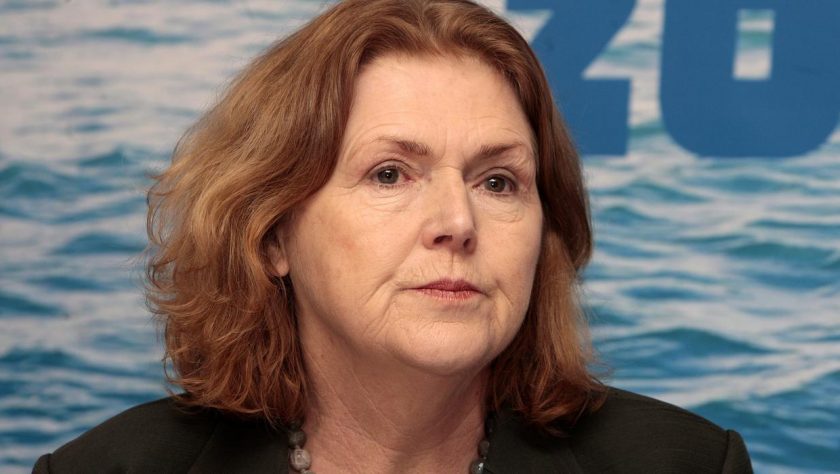
GENEVA – Mary Lawlor, the UN Special Rapporteur on the situation of human rights defenders, expressed concern yesterday over arrests, harassment, criminalization and threats targeting human rights defenders by the Israeli occupation forces.
“Arrests and raids on the homes of Palestinian human right defenders [by Israeli occupation forces] form part of a wider crackdown against those defending the human rights of Palestinians in the Occupied Palestinian Territory,” she said.
Lawlor was alarmed by the arbitrary arrest and detention of Farid Al-Atrash, a human rights defender and lawyer at the Independent Commission for Human Rights (ICHR).
Mr. Al-Atrash was detained by Israeli military forces after peacefully participating in a demonstration in Bethlehem on 15 June and released on bail eight days later.
The rights expert also voiced concern over the forcible transfer of Palestinians living in the Sheikh Jarrah and Silwan neighbourhoods in Jerusalem.
“Muna Al-Kurd, Mohammed Al-Kurd and Zuhair Al Rajabi, human rights defenders at the forefront of protecting their communities against forced displacement, have been arrested and interrogated,” she said.
Another activist, Salah Hammouri, a Palestinian-French human rights defender and lawyer, is also at risk of having his permanent residency permit in Jerusalem revoked.
“I am shocked that members of the Health Work Committee, who provide health services to Palestinians living in remote areas of the West Bank, were arrested, interrogated and may be criminalised because of their human rights work,” Ms. Lawlor added.
Three Committee personnel are currently in prison. Director Shatha Odeh and former project coordinator, Juana Ruiz Sánchez, are being held in one facility, while accountant Tayseer Abu Sharbak, is in another. They are being tried on charges of participating in what has been described as “an illegal organisation”, said Ms.
Lawlor called on Israeli occupation authorities to immediately release them, and to investigate allegations of ill treatment against the two women rights defenders.
“The deteriorating health of Odeh and the solitary confinement of Sánchez are extremely worrying,” the UN expert said, noting that the rights defender, who has chronic underlying health conditions, had initially been denied access to necessary medication and clean clothes.
Lawlor underlined the importance of safeguarding Palestinian human rights defenders in the Occupied Palestinian Territory, especially those who are protecting their communities’ rights to housing, healthcare and freedom of assembly and association.
“I call on the [Israeli] authorities to stop targeting these human rights defenders and allow them to carry out their legitimate and peaceful work free from any kind of restrictions,” she said.
The murder of the ‘menacing’ water technician: On the shadow wars in the West Bank
By Ramzy Baroud | MEMO | August 9, 2021
There is an ongoing, but hidden, Israeli war on the Palestinians which is rarely highlighted or even known. It is a water war, which has been in the making for decades.
On 26 and 27 July, two separate but intrinsically linked events took place in the Ein Al-Hilweh area in the occupied Jordan Valley, and near the town of Beita, south of Nablus.
In the first incident, Jewish settlers from the illegal settlement of Maskiyot began construction in the Ein Al-Hilweh Spring, which has been a source of freshwater for villages and hundreds of Palestinian families in that area. The seizure of the spring has been developing for months, all under the watchful eye of the Israeli occupation army.
Now, the Ein Al-Hilweh Spring, like most of the Jordan Valley’s land and water resources, is annexed by Israel.
Less than 24 hours later, Shadi Omar Salim, a Palestinian municipal employee, was killed by Israeli soldiers in the town of Beita. The Israeli army quickly issued a statement which, expectedly, blamed the Palestinian for his own death.
The Palestinian victim approached the soldiers in a “menacing manner”, while holding “what appeared to be an iron bar,” before he was gunned down, the Israeli army claimed.
If the “iron bar” claim was true, it might be related to the fact that Salim was a water technician. Indeed, the Palestinian worker was on his way to open the pipes that supply water to Beita and other adjacent areas.
Beita, which has witnessed much violence in recent weeks, is facing an existential threat. An illegal Jewish settlement, called Givat Eviatar, is being built atop the Palestinian Sabih Mountain, in Arabic, Jabal Sabih. As usual, whenever a Jewish settlement is constructed, Palestinian life and livelihood are threatened. Thus, the ongoing Palestinian protests in the area.
The struggle of Beita is a representation of the wider Palestinian struggle: unarmed civilians fighting against a settler-colonial state that ultimately wishes to replace a Palestinian village or town with a Jewish settlement.
There is another facet to what may see as a typical story, where the Israeli army and Jewish settlers work together to ethnically cleanse Palestinians: Mekorot. The latter is a state-owned Israeli water company that literally steals Palestinian water and sells it back to the Palestinians at an exorbitant price.
Unsurprisingly, Mekorot operates near Beita as well. The Palestinian worker, Salim, was killed because his job of supplying water to the people of Beita was a direct threat to Israeli colonial designs in this region.
Let us put this in a larger context. Israel does not just occupy Palestinian land, it also systematically usurps all of its resources, including water, in flagrant violation of international law which guarantees the fundamental rights of an occupied nation.
The occupied West Bank obtains most of its water from the Mountain Aquifer, which is divided into three smaller aquifers: the Western Aquifer, the Eastern Aquifer and the North-Eastern Aquifer. In theory, Palestinians have plenty of water, at least enough to meet the minimally-required water allotment of 102-120 litres per day, as recommended by the World Health Organisation (WHO). In practice, however, this is hardly the case. Sadly, most of the water in these aquifers is appropriated directly by Israel. Some call it “water capture”; Palestinians call it, more accurately, “theft”.
While in Israel the daily per capita water consumption is estimated at 300 litres, illegal Jewish settlers in the West Bank consume over 800 litres per day. The latter number becomes even more outrageous if compared to the meager amount enjoyed by a Palestinian, that of 70 litres per day.
This problem is accentuated in the so-called ‘Area C’ in the West Bank, for a reason. ‘Area C’ consists of nearly 60 per cent of the total size of the West Bank and, unlike ‘Areas A’ and ‘B’, it is the least populated. It is mostly fertile land and it includes the Jordan Valley, known as the ‘breadbasket of Palestine’.
Despite the fact that the Israeli government had, in 2020, decided to postpone its formal annexation of that area, a de facto annexation has been in effect for years. The illegal appropriation of the Ein Al-Hilweh Spring by illegal Jewish settlers is part of a larger stratagem that aims at appropriating the Jordan Valley, one dunum, one spring, and one mountain at a time.
Of the more than 150,000 Palestinians living in ‘Area C’, nearly 40 per cent – over 200 communities – suffer from “severe shortage of clean water”. That shortage can be remedied if Palestinians are allowed to drill new wells, expand current ones or to use modern technologies to allocate other sources of freshwater. Not only does the Israeli army prohibit them from doing so, even rainwater is off-limits to Palestinians.
“Israel even controls the collection of rainwater throughout most of the West Bank and rainwater harvesting cisterns owned by Palestinian communities are often destroyed by the Israeli army” an Amnesty International report, published in 2017, concluded.
Since then, the situation became even worse, especially since the idea of officially annexing a third of the West Bank obtained widespread support in the Israeli Knesset and society. Now, every move made by the Israeli army and Jewish settlers in the West Bank is directed towards that end, controlling the land and its resources, denying Palestinians access to their means of survival and, ultimately, ethnically cleansing them altogether.
The Beita protests continue, despite the heavy price being paid. Last June, a 15-year-old boy, Ahmad Bani Shamsa, was killed when an Israeli army bullet struck him in the head. At the time, Defense for Children International-Palestine issued a statement asserting that Bani-Shamsa did not pose any threat to the Israeli army.
The truth is, it is Beita that is under constant Israeli threat, as well as the Jordan Valley, ‘Area C’, the West Bank and the whole of Palestine. The protest in Beita is a protest for land rights, water rights and basic human rights. Bani Shamsa and, later, Salim, were killed in cold blood simply because their protests were mere irritants to the grand design of colonial Israel.
The irony of it all is that Israel seems to love everything about Palestine: the land, the resources, the food and even the fascinating history, but not the indigenous Palestinians themselves.
Pro-Israel group secures ‘stunning’ victory in US primary election
MEMO | August 5, 2021
![US Shontel Brown on 1 August 2021 [Michael M. Santiago/Getty Images]](https://i1.wp.com/www.middleeastmonitor.com/wp-content/uploads/2021/08/Shontel-Brown.jpg?resize=1200%2C800&quality=85&strip=all&zoom=1&ssl=1) The Democratic primary election in the US state of Ohio on Tuesday saw pro-Israel Shontel Brown defeat progressive Nina Turner in a hotly contested race that has left a bitter after taste. It’s alleged that votes were tipped in favour of Shontel with outside money poured in by the pro-Israel Political Action Committee (PAC) Democratic Majority for Israel (DMFI).
The Democratic primary election in the US state of Ohio on Tuesday saw pro-Israel Shontel Brown defeat progressive Nina Turner in a hotly contested race that has left a bitter after taste. It’s alleged that votes were tipped in favour of Shontel with outside money poured in by the pro-Israel Political Action Committee (PAC) Democratic Majority for Israel (DMFI).
According to research group tracking money in US politics, OpenSecrets, DMFI, one of many pro-Israel Super PAC, raised nearly $6.5 million in funds to back their preferred candidate.
It’s claimed that DMFI, which has multiple ties to the American Israel Public Affairs Committee (AIPAC), spent more than $1.9 million on TV ads, digital ads, and mailers that were either pro-Brown or anti-Turner. American news agency, Brick House publication reported that this sum is more than the $1.7 million than the Brown campaign had disclosed spending on the race as of its final spending filing, which covers through July.
In her concession speech, Turner blamed what she called “evil money”, which is thought to be a reference to the outside spending in the race from DMFI and other groups that secured her defeat in a close primary.
Ohio’s 11th congressional district is a safe Democrat seat which means that Brown, favoured by pro-Israel right-wing members of her party, is the likely candidate to become a member of Congress for Ohio. The election was triggered by the resignation of Marcia Fudge, who has been appointed to the position of housing secretary by President Joe Biden.
Turner is an outspoken progressive who came to national prominence as a Bernie Sanders surrogate. She was predicted to win the race. But her surprise defeat has left a bitter after taste. “I am going to work hard to ensure that something like this doesn’t happen to another progressive candidate again,” she said. “We didn’t lose this race, evil money manipulated and maligned this election.”
Like fellow progressives within the Democrat party, Turner has called for conditioning US aid to Israel to “align with significant advances in human rights,” while Brown has said she supports continuing to give Israel $3.8 billion annually in military aid without any strings under a $38 billion aid package approved by former US President Barack Obama in 2016.
Brown thanked her “Jewish brothers and sisters” during her victory remarks, according to a report in the Haaretz. She described how her 2018 trip to Israel gave her insight into the importance of the US-Israel relationship.
Following Brown’s victory, DMFI congratulated the councilwomen saying that it was a “stunning upset” and that the pro-Israel group was “proud to have supported her successful campaign.”
American Tax Dollars Financing Israeli Tourist Park Atop Historic Palestinian Neighborhood
 Illegal colonist throws eggs

By Jessica Buxbaum | MintPress News | July 12, 2021
Roughly 2.5 miles from Sheikh Jarrah — the Palestinian neighborhood that grabbed the world’s attention in May — lies Silwan. This neighborhood in Occupied East Jerusalem is perched atop the steep slopes just outside the Old City. Houses are tightly compacted and stacked on top of each other as they dip into the valley below. And here, Palestinian residents face the same fate as their brethren in Sheikh Jarrah.
Israeli forces raided the al-Bustan neighborhood in Silwan with bulldozers on June 29 — razing a butcher shop and dispersing Palestinian protesters defending their homes with tear gas, stun grenades, batons and rubber-coated steel bullets. At least 13 people were injured and six arrested including the owner of the butcher shop, Nidal al-Rajabi, and his sons and brothers.
In regard to the recent demolition, Norwegian Refugee Council’s Palestine country director, Caroline Ort, said in a press release, “Under the Fourth Geneva Convention, Israel has an obligation to protect civilians under its occupation and to refrain from destroying private property.”
Al-Rajabi’s store was destroyed on the pretext of lacking a building permit. Various human rights organizations involved in the issue state conflicting numbers, but according to Fakhri Abu Diab, spokesman for Silwan, 16 buildings in al-Bustan are also at immediate risk of being torn down. About 1,500 Palestinians live in more than a hundred houses in al-Bustan.
On June 7, two structures — including the butcher shop — received notices from the Municipality of Jerusalem to self-demolish their homes within 21 days or municipality authorities would do so and charge the residents the demolition fees, calculated at about $6,000.
Amy Cohen, director of International Relations and Advocacy at Ir Amim, a Jerusalem nonprofit, told MintPress News the second structure, a residential unit, has yet to receive a visit from municipality inspectors. Government officials typically come to a building with a pending demolition order to check whether it has already been demolished by the owners. If not, the inspectors then notify the residents that Israeli authorities will carry out the demolition within days, or even within 24 hours.
Discriminatory housing policies
According to Ir Amim, 68 homes in al-Bustan have pending demolition orders so as to execute the Jerusalem Municipality’s “King’s Garden” plan. The municipality outlined the initiative in 2010, stating:
The King’s Garden area [al-Bustan in Arabic] will be developed into a tourist and residential district. Commercial sections, restaurants, and art galleries will be built, turning it into a bustling tourist zone. For the first time, the local residents will have the legitimate right to live in this neighborhood.
The development plan has not moved forward since 2010, but the municipality’s recent objection to extending the demolition freeze suggests the plan could be reactivated.
In February, the Jerusalem Municipality filed an objection in the Local Affairs Court against al-Bustan residents’ request to extend the demolition freeze, arguing the proposed zoning plan for the area doesn’t follow proper guidelines and isn’t advancing quick enough. In March, the court ruled to extend the demolition freeze until August 15.
Negotiations have been ongoing between the municipality and the residents to develop a suitable zoning plan for al-Bustan since 2005. In 2009, the residents’ plan was rejected by the municipality in favor of the King’s Garden Plan.
According to Murad Abu Shafee, an al-Bustan resident who received a demolition order, the municipality told the residents, “This structure plan can’t happen in Israel. This might happen in Europe or any Arab country, but not here.”
“Our plan was very modern and it doesn’t fit with the Israeli government’s standards for East Jerusalem,” Abu Shafee explained. “[Israel] doesn’t want us to have a modern neighborhood. They want us always to be below the line.”
Despite the local court’s ruled extension, 20 demolition cases (including the butcher shop’s order) were excluded from the freeze due to the Israeli Kaminitiz Law — known as Amendment 116 to Israel’s Planning and Building Law — which was fully enacted in 2019. This legislation intensifies enforcement against unauthorized construction and allows for little legal intervention in preventing demolitions of structures built after 2017. The amendment has been partially frozen since 2020 amid ongoing discussions with Palestinian parliamentary members in the Israeli government.
In a statement to MintPress, the Jerusalem Municipality said:
There is no intention to build a ‘biblical garden’ in the area. This is a false claim. The area is designated for gardens and parks for the benefit of the local residents of Silwan.
The vast majority of demolition orders in Al-Bustan are suspended. There are a very few demolition orders that the court has recently decided to unfreeze. It should be emphasized that these orders are old. No new orders [were] issued whatsoever.
As to the execution [of] these orders, the municipality is obliged to act in accordance with the law and with the court rulings. We are still studying the latest ruling profoundly, and will decide on our next steps according to the situation on the ground.
The municipality noted that al-Bustan is designated as a green area because of its location near the Kidron River. Jeff Halper, director of the Israeli Committee Against House Demolitions, explained that when Israel annexed East Jerusalem in 1967 following the Six-Day War, it declared the entirety of East Jerusalem as open, green space, meaning the area is frozen for future building.
Halper pointed out the hypocrisy of this development policy in how Israel treats settlement building versus Palestinian building, explaining:
Today, more than a hundred thousand Israelis live in East Jerusalem in these big settlements. But if East Jerusalem was frozen 100 percent for building, then how did you get all that building for Israelis? The answer is Israel rezones for Jewish settlements. But when a Palestinian wants to build, [the government] says, ‘Sorry, this area isn’t zoned for residential development but for open, green space. So, it’s really the use of bureaucracy and law and planning as tools of control.”
Construction in al-Bustan was done primarily by Palestinian residents themselves on their own land, but often without the necessary building permits. Ir Amim’s Cohen explained this is mostly owing to a lack of viable zoning plans rather than the municipality’s flat-out rejection of building permits:
With the absence of an outline plan, residents are precluded from acquiring the permits. You either have a lack of a zoning plan or you have such outdated zoning plans, which are from say 30 to 40 years ago, that it’s impossible to then receive building permits. And this is a very acute way that the Israeli authorities have neglected their municipal responsibility to provide this service.”
“Since 1967, this has been a means to suppress Palestinian building and planning within Palestinian areas,” Cohen concluded.
American tax dollars financing settler activity
Silwan is located in the Holy Basin—an area coveted by religious settlers for its proximity to the Old City and alleged connections to King David. Ir David or Elad settler organization runs the City of David National Park in the al-Bustan area. Since the 1990s, Elad has sought to transform Silwan into a symbol of Jewish biblical past. Al-Bustan is specifically targeted because it stands as an obstacle to achieving Ir David’s vision of a biblical paradise.
Elad’s actions aren’t focused solely on building settlements but also on promoting archaeological excavations, tourist attractions and parks. According to the Foundation for Middle East Peace’s report on al-Bustan, the settlers’ goals became the official policy of the Israeli government in 2005 when then-Prime Minister Ariel Sharon’s government approved plans to develop the Holy Basin area.
“In essence, the DNA of Elad’s biblical ideology became the DNA of the Government of Israel in and around the Old City, with [the] Government outsourcing many of its authorities to Elad in order to pursue these objectives,” FMEP wrote in its report. “The lines between government and the settlers became so blurred that they almost disappeared.”
Quteibah Odeh — whose family faces displacement in al-Bustan and in Batan al-Hawa, another neighborhood in Silwan and settler target — described the deep interconnections between settlers and the Israeli government, citing as an example that Arieh King is Jerusalem’s deputy mayor but is also a notorious settler leader responsible for displacing Sheikh Jarrah residents. “These settler organizations are the people running the government,” Odeh said. “They receive full support from the military and any ministry and municipality.”
Ir David isn’t just supported by the Israeli government but also backed by American money. Ir David’s sister nonprofit in the U.S., Friends of Ir David, secures tax-exempt donations for the organization.
According to a January investigation by MintPress News, the Hertog Foundation, Irving I. Moskowitz Foundation, Adelson Family Foundation, Mindel Foundation, Samueli Foundation, Jay and Jeanie Schottenstein Foundation, and the Jewish Communal Fund have all donated to Friends of Ir David. The organization’s biggest contributors are the Irving I Moskowitz and Adelson Family Foundations. In 2018, the Irving I. Moskowitz Foundation gave Friends of Ir David $1.5 million and the Adelson Family Foundation contributed about $3 million.
The Ir David Foundation did not respond to a request for comment.
U.S. Congress members speak out
Israel’s forcible displacement of East Jerusalem Palestinians has caught the attention of the international community, including the U.S. government. On July 1, Illinois Representative Marie Newman delivered a speech on the House floor, urging President Joe Biden’s administration to intervene and stop the ongoing demolitions.
“Today I rise on behalf of the thousands of Palestinian families in the West Bank that face the prospect of eviction, demolition and displacement from their homes by the Israeli government,” the Democratic congresswoman said. “We have received word that demolition orders have already begun for homes in the al-Bustan neighborhood of Silwan in East Jerusalem.”
In the face of international condemnations, Silwan spokesman Abu Diab said the recent demolition in al-Bustan demonstrates Israel’s willingness to go against these objections. He elaborated in a statement:
People know members of Congress are speaking out about these issues, yet [the demolition of the butcher shop] proved to the community that Israel is prepared to defy the international community, including members of the U.S. Congress. They assert, yet again, that demolitions and forcible displacement, including Israeli court-ordered evictions, are against international law, are codified as war crimes, and that the occupying power, Israel, has a duty to protect those under its occupation.
The residents of Silwan therefore call on the international community to uphold their third state responsibility, to call on Israel to cease forthwith such illegal policies, with real accountability being the price for any further demolitions or evictions.
As in Sheikh Jarrah, Palestinians remain steadfast against Israel’s ongoing ethnic cleansing efforts. Demonstrations against the demolitions occur daily, Silwan resident Odeh said, adding:
These are our houses. Our parents, our grandparents and our great grandparents have lived here. We have memories, we have history and the people are the past, the present and the future.”
Israeli Firm Helped Governments Target Journalists, Activists with 0-Days and Spyware
By Ravie Lakshmanan | The Hacker News | July 16, 2021
Two of the zero-day Windows flaws rectified by Microsoft as part of its Patch Tuesday update earlier this week were weaponized by an Israel-based company called Candiru in a series of “precision attacks” to hack more than 100 journalists, academics, activists, and political dissidents globally.
The spyware vendor was also formally identified as the commercial surveillance company that Google’s Threat Analysis Group (TAG) revealed as exploiting multiple zero-day vulnerabilities in Chrome browser to target victims located in Armenia, according to a report published by the University of Toronto’s Citizen Lab.
“Candiru‘s apparent widespread presence, and the use of its surveillance technology against global civil society, is a potent reminder that the mercenary spyware industry contains many players and is prone to widespread abuse,” Citizen Lab researchers said. “This case demonstrates, yet again, that in the absence of any international safeguards or strong government export controls, spyware vendors will sell to government clients who will routinely abuse their services.”
Founded in 2014, the private-sector offensive actor (PSOA) — codenamed “Sourgum” by Microsoft — is said to be the developer of an espionage toolkit dubbed DevilsTongue that’s exclusively sold to governments and is capable of infecting and monitoring a broad range of devices across different platforms, including iPhones, Androids, Macs, PCs, and cloud accounts.
Citizen Lab said it was able to recover a copy of Candiru’s Windows spyware after obtaining a hard drive from “a politically active victim in Western Europe,” which was then reverse engineered to identify two never-before-seen Windows zero-day exploits for vulnerabilities tracked as CVE-2021-31979 and CVE-2021-33771 that were leveraged to install malware on victim boxes.
The infection chain relied on a mix of browser and Windows exploits, with the former served via single-use URLs sent to targets on messaging applications such as WhatsApp. Microsoft addressed both the privilege escalation flaws, which enable an adversary to escape browser sandboxes and gain kernel code execution, on July 13.
The intrusions culminated in the deployment of DevilsTongue, a modular C/C++-based backdoor equipped with a number of capabilities, including exfiltrating files, exporting messages saved in the encrypted messaging app Signal, and stealing cookies and passwords from Chrome, Internet Explorer, Firefox, Safari, and Opera browsers.
Microsoft’s analysis of the digital weapon also found that it could abuse the stolen cookies from logged-in email and social media accounts like Facebook, Twitter, Gmail, Yahoo, Mail.ru, Odnoklassniki, and Vkontakte to collect information, read the victim’s messages, retrieve photos, and even send messages on their behalf, thus allowing the threat actor to send malicious links directly from a compromised user’s computer.
Separately, the Citizen Lab report also tied the two Google Chrome vulnerabilities disclosed by the search giant on Wednesday — CVE-2021-21166 and CVE-2021-30551 — to the Tel Aviv company, noting overlaps in the websites that were used to distribute the exploits.
Furthermore, 764 domains linked to Candiru’s spyware infrastructure were uncovered, with many of the domains masquerading as advocacy organizations such as Amnesty International, the Black Lives Matter movement, as well as media companies, and other civil-society themed entities. Some of the systems under their control were operated from Saudi Arabia, Israel, U.A.E., Hungary, and Indonesia.
Over 100 victims of SOURGUM’s malware have been identified to date, with targets located in Palestine, Israel, Iran, Lebanon, Yemen, Spain (Catalonia), United Kingdom, Turkey, Armenia, and Singapore. “These attacks have largely targeted consumer accounts, indicating Sourgum’s customers were pursuing particular individuals,” Microsoft’s General Manager of Digital Security Unit, Cristin Goodwin, said.
The latest report arrives as TAG researchers Maddie Stone and Clement Lecigne noted a surge in attackers using more zero-day exploits in their cyber offensives, in part fueled by more commercial vendors selling access to zero-days than in the early 2010s.
“Private-sector offensive actors are private companies that manufacture and sell cyberweapons in hacking-as-a-service packages, often to government agencies around the world, to hack into their targets’ computers, phones, network infrastructure, and other devices,” Microsoft Threat Intelligence Center (MSTIC) said in a technical rundown.
“With these hacking packages, usually the government agencies choose the targets and run the actual operations themselves. The tools, tactics, and procedures used by these companies only adds to the complexity, scale, and sophistication of attacks,” MSTIC added.
Israel exploits case of Mexico official wanted for torture, murder for diplomatic gain
MEMO | July 15, 2021
The notorious case of former top Mexican official wanted in connection with the torture, abduction and murder of 43 students, and for embezzling $50 million of state funds, has become mired in a diplomatic tussle between Israel and Mexico over the occupation state’s treatment of Palestinians.
Tomás Zerón de Lucio, the former director of Mexico’s equivalent of the FBI, fled to Israel following the opening of an investigation into his role in the 2014 Iguala mass kidnapping, which continues to cause a storm in Mexico to this day. Zeron headed the criminal investigation, but his report was discredited after it was discovered that crucial testimony was obtained under torture, evidence was mishandled and promising leads ignored.
Zeron has dismissed the charges and has been seeking political asylum in Israel, where he has lived for nearly two years. Mexican officials say that Zeron has connections to powerful Israeli companies that helped him flee Mexico.
Allegations against the former official also include the embezzlement of $50 million worth of state funds. While in office, Zeron is said to have authorised the purchase of tens of millions of dollars in surveillance systems from private Israeli intelligence firms including the notorious Pegasus software developed by Israel’s NSO Group. The software has been used to target journalists, lawyers and activists in several countries around the globe. It’s claimed that in some cases the intelligence gear purchased by Zeron were never delivered.
Mexico has demanded the extradition of Zeron. Israel however has not acted on either the extradition request or the asylum claims and is said to be looking for ways to squeeze diplomatic concessions out of the highly sensitive case.
Senior Israeli officials were cited in the New York Times saying that Zeron’s extradition case was being slow-walked as “tit-for-tat diplomacy” against Mexico, which has supported United Nations inquiries into allegations of Israeli war crimes against Palestinians. “Why would we help Mexico?” the official said, speaking on condition of anonymity to offer a candid view of a diplomatic dispute.
The senior Israeli official said that the current Mexican government has repeatedly supported resolutions criticising Israel at the UN Human Rights Council in Geneva, including decisions to investigate Israel’s killing of Palestinian protesters in Gaza in 2018 and the killing of civilians in the besieged enclave during the occupation state’s latest onslaught.
Jews enlist US govt to intervene in Chile as Palestinian-descendant rises to presidential election frontrunner

By Eric Striker | National Justice | July 15, 2021
Jews in America are demanding the United States intervene in Chile’s internal politics in the run up to their presidential election next November.
Daniel Jadue, a descendant of Palestinian refugees and member of the Chilean Communist Party, is currently the frontrunner in polls. Jadue is an unapologetic anti-Zionist who has in the past directly confronted the Jewish power structure of his country.
Gerardo Gorodischer, president of Chilean Jewish lobby, has successfully recruited Democrats and Republicans in the US Congress to call on Secretary of State Antony Blinken — a Jew himself — to meddle in Chile’s internal affairs and prevent Jadue from becoming president.
Jadue has in the past called attention to Jewish control of the media in his country. Last year, he was listed as one of the top 10 anti-Semites in the world by the Simon Wiesenthal Center after he passed a strict Boycott, Divestment and Sanctions (BDS) law as mayor of the city of Recoleta. He is currently supporting a law in the parliament that would make Chile the first nation in the world to officially institute a total boycott of Israel.
With 400,000 descendants, Chile is home to the world’s largest Palestinian diaspora outside of the Middle East. Chilean-Palestinians are overwhelmingly Christians who were forced to flee their homeland after being ethnically cleansed by Israel. Chile’s Jewish population is much smaller, currently estimated at 150,000 people. Jews in the country have started immigrating to Israel in larger than usual numbers out of fear of Jadue potentially becoming the nation’s next leader.
So far, Jewish attempts at “Corbyning” Jadue have failed. Complaints from Zionist organizations in Latin America and the US to stop Jadue have largely been ignored by the local population. Their trump card appears to be using the United States to intimidate the Chilean government with threats of economic retaliation or more.
In her letter to Blinken, Democratic congresswoman Debbie Wasserman-Schultz made a collective racial attack on the entire Chilean Palestinian community for protesting against Israel’s attacks on Arabs last May:
“Militant leaders of the 400,000-strong Chilean Palestinian community, and their partners, from a variety of political parties, were quite aggressive during and after the Gaza crisis, burning Israeli and U.S. flags, brandishing Nazi symbols and accusing Israel of apartheid and Chilean Jews of controlling the media. This dangerous climate has been intensifying for many years and has already affected Chile’s social fabric despite alarms sounded by the local Jewish community and U.S. Jewish organizations like the American Jewish Committee.”
The billionaire neo-conservative president of Chile, Sebastián Piñera, also received the letter. His allies in the parliament have started grilling Jadue over his 1983 high school yearbook entry, where he declared himself an “anti-Semite” and vowed revenge against Jews for what they did to his family. Jadue, a 54-years-old man, responded by making fun of Chilean conservatives asking him to “clarify” comments he made as a teenager as the country suffers through an economic crisis.
Jews have been encountering resistance from all across the political spectrum and diverse countries in recent months. Earlier this month, Belarusian leader Alexander Lukashenko gave a speech suggesting that Jews use the “Holocaust” to intimidate and control people. Yesterday in Poland, local nationalists crashed a Jewish ceremony racially defaming Poles as genocidal killers.
Facebook removes Gaza-based Shehab News Agency from platform
MEMO | July 14, 2021
Facebook yesterday removed the page of the Palestinian Shehab News Agency from its platform.
News Director at Shehab, Hossam Al-Zayegh, described Facebook’s action as a new violation of freedom of opinion and expression guaranteed by international law.
“Deleting our page is a reprehensible and condemned action which aims to fight Palestinian content under the pretext of violating standards and inciting violence,” he added.
“Facebook overlooks incitement and violation of society’s standards by Israelis or Israeli political news sites or associations while preventing the publication of the Palestinian response to these provocations and incitement,” Al-Zayegh said, explaining that the agency had more than 7.5 million followers on Facebook.
The Palestinian Journalist Bloc condemned thew social media platform’s action, described it as “arbitrary and unjust”.
In 2020, the Echo Social Center documented 1,200 violations of Palestinian digital content on social media platforms.
Legal rights centre Adalah revealed in 2018 that social media giants are collaborating with Israeli authorities to censor user content.
In 2018, the Israeli Ministry of Justice said that Facebook has responded to about 85 percent of Israel’s requests to remove, block and provide data on Palestinian content on the site throughout 2017.
House committees pass $20 mill per day on behalf of Israel
By Alison Weir | Israel-Palestine News | July 12, 2021
Congressional committees recently passed two bills that contain provisions to disburse a total of over $7 billion on behalf of Israel in the year 2022. This works out to almost $20 million per day.
These provisions were included in the bills despite the fact that Israel just committed another onslaught against Gazan men, women, and children; despite Israel’s many actions that harm Americans; despite the fact that most Americans think the U.S. already gives Israel too much money; and despite the fact that aid to Israel is illegal under U.S. laws.
On June 30th, the House Appropriations Subcommittee on Defense approved a bill that gives Israel half a billion dollars, and on July 1st the House Appropriations Committee advanced a bill that disburses nearly $6.4 billion on behalf of Israel.
APPROPRIATIONS COMMITTEE BILL
The latter bill, currently called the “2022 State, Foreign Operations and Related Programs Appropriations” bill, includes a measure that would give Israel $3.3 billion in military aid. The Committee’s press release on the bill, however, does not mention the funding for Israel.
In addition to this $3.3 billion, the bill includes the following funding that benefits Israel:
• An additional $58 million on related programs for Israel, which AIPAC points out in a series of proud tweets that list them.
• The bill provides $1.65 billion to Jordan and $1.4 billion to Egypt stemming from previous agreements with their governments to desist from advocating for Palestinian rights.
• It also contains a section to provide $225 million for alleged assistance to Palestinians. In reality, such funding is largely intended to benefit Israel, and is often proposed and/or receives support from Israel partisans such as Nita Lowey.
Rationales given in the bill for this funding are that it would “advance Middle East peace” (i.e. lead Palestinians to accede to Israeli demands); “improve security in the region” (be used by the Palestinian Authority to continue to round up resistance fighters – the Palestinian Authority is known as Israel’s “day-to-day partner in governing the West Bank”); and to “address urgent humanitarian needs” (but doesn’t mention that these needs are caused by Israel’s ongoing military attacks and financial policies against Palestinians).
Portions of the aid are used as a combination threat and bribe; the money will not be provided if “the Palestinians obtain the same standing as member states or full membership as a state in the United Nations or any specialized agency thereof” or if “the Palestinians initiate an International Criminal Court (ICC) judicially authorized investigation, or actively support such an investigation, that subjects Israeli nationals to an investigation for alleged crimes against Palestinians.”
Such ‘humanitarian’ funding for Palestinians is considered important for Israel, as two prominent Israel advocates explain:
“Funding for Palestinian assistance programs has always flowed with bipartisan support because it was determined to reinforce Israel’s security and provide a measure of U.S. leverage and influence.
This logic was ratified by the support of the Israeli government for these programs. Israeli authorities understood that a breakdown in security, an economic collapse or a humanitarian crisis in the West Bank would place an enormous burden on Israel.”
These additional provisions bring the total amount of Americans’ tax money to be disbursed on behalf of Israel in the Appropriations Committee bill to at least $6.7 billion.
Added to that is the half billion in the defense subcommittee bill passed on June 30th, making the total amount of money to be disbursed on behalf of Israel approximately $7.2 billion.
These provisions were passed despite the fact that most voters would likely oppose them, since, as mentioned above, surveys indicate that the majority of Americans don’t support such large funding to Israel. However, very few Americans know about the proposed funding, since mainstream U.S. news companies almost never report on such legislation (unlike Israeli and Israel-focused U.S. media).
EVEN MORE MONEY FOR ISRAEL…
And there are numerous additional expenditures on behalf of Israel throughout the bill that are not included in the above tabulation.
Among these are funding for operations to dismantle the Arab League boycott of Israel; millions of dollars provided for Jews resettling in Israel; portions of the $20 billion to “Democracy Programs” and the $4.5 billion to the U.S. Commission on International Religious Freedom that are used to oppose support for Palestinian rights as allegedly ‘antisemitism’; funding to countries such as Bahrain, UAE, Morocco, and others resulting from enticements to procure their ‘normalization‘ policies with Israel, etc. A thorough examination of such additional programs could quite possibly add another billion dollars to be disbursed for Israel.
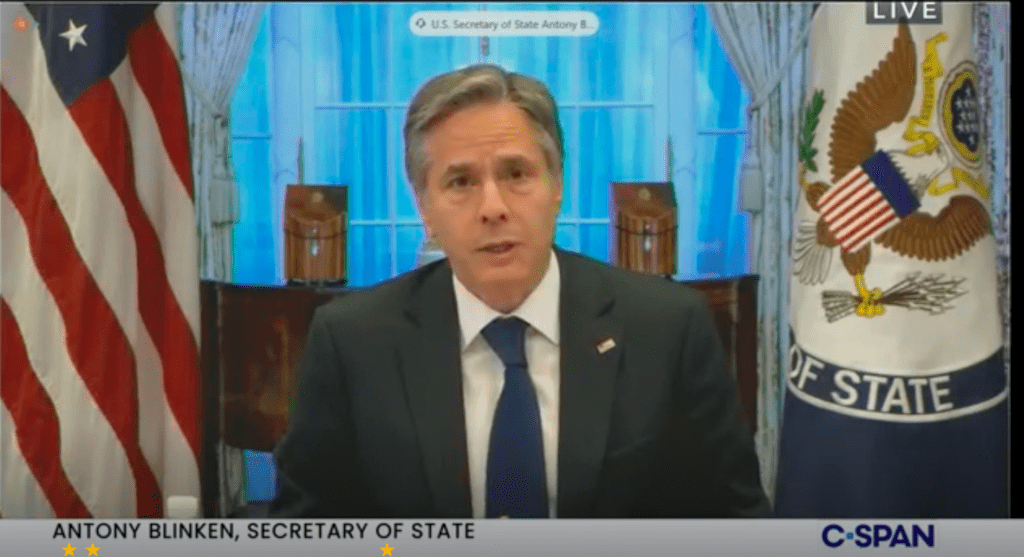
Secretary of State Antony Blinken testifies before House Appropriation Subcommittee hearing on 2022 State, Foreign Operations and Related Programs Appropriations bill on June 7, 2021. (Blinken had helped give Israel millions of additional dollars during its 2014 massacre of Gazans.) (C-Span)
AIPAC IS PLEASED
The American Israel Public Affairs Committee (AIPAC) – possibly the most famous of the hundreds of pro-Israel groups in the U.S. – applauded Congressional leaders for their action in passing the measures:

This money to and for Israel is not new. Over the years, Israel has received far more U.S. tax money than any other country on earth: on average over 7,000 times more per capita than anyone else.
And in addition to all of this are the lives destroyed and the multi-trillion dollar cost of the Iraq war, a tragic and disastrous quagmire promoted by Israel and its American partisans.
And on top of this are the costs, in both lives and treasure, of Israel-influenced policies regarding Syria, Iran, and others.
It’s time to end Israel’s strangle hold over American politicians. To tell your Congress members to vote against this massive funding for Israel, go here.
(And to tell them to enact legislation that protects Palestinian children, go here.)
Alison Weir is executive director of If Americans Knew, president of the Council for the National Interest, and author of Against Our Better Judgment: The Hidden History of How the U.S. Was Used to Create Israel.
The Fight to Save Lifta, the Last Remaining Palestinian Village
By Jessica Buxbaum | MintPress News | July 9, 2021
Yacoub Odeh is 81 years old but he can still remember his childhood in the Palestinian village of Lifta as if it were yesterday. Children playing together in the gardens, swimming in the pools and laying in the grass.
Today, Lifta remains as a frozen time capsule. While the residents were expelled during Israel’s 1948 ethnic cleansing campaign (Nakba), the ruins of their homes still stand. These ruins carved into the lush hillside are perceived as a symbol of the Palestinians’ right of return. This is the only town Israel did not demolish after the Nakba, but a government plan may soon change that.
In May, the Israel Lands Authority (ILA), the government agency in charge of managing public lands, issued a new tender for construction in Lifta. The development scheme, known as Plan 6036, seeks to build 259 housing units along with a commercial and business space and a luxury hotel on top of and around the existing houses. Daphna Golan-Agnon, a law professor at the Hebrew University of Jerusalem and part of the Save Lifta Coalition’s board, explained that while the homes may not be demolished, “the village will disappear behind walls of concrete needed to hold new construction.”
The bid was supposed to be held on July 4, but significant public opposition delayed it to July 29.

The ruins in Lifta, a Palestinian village ethnically cleased in 1948. Liebe Blekh | MintPress News
Attempts to demolish Lifta have been ongoing for years. The ILA first published a tender for Plan 6036 in 2010 after the Israeli state approved the construction plan for Lifta in 2006. A 2012 Jerusalem District Court ruling found Plan 6036 insufficient and requested amending it in accordance with a conservation survey on Lifta from the Israel Antiquities Authority (IAA).
The IAA survey was completed in 2017 and found that Plan 6036 could not be executed without making significant adjustments in order to preserve the ancient village. Plan 270b was drawn up to fit the survey’s findings but in 2017 the Local Planning and Building Committee of Jerusalem temporarily halted the initiative for further examination.
The recent ILA announcement was met with hundreds of letters to Jerusalem’s mayor rejecting the sale. When reached for comment, the Municipality of Jerusalem told MintPress News that it “wasn’t informed about the publication of this tender and didn’t approve it. The mayor of Jerusalem asked all the relevant authorities to reconsider the construction plan.” The Israel Lands Council, which operates the ILA, did not respond to a request for comment.
‘In one hour, we became refugees’
Lifta’s strategic location at the edge of Jerusalem has made it a prime target for land grabs. Acting as a suburb of Jerusalem, Lifta’s placement next to the Jerusalem-Jaffa Highway makes for an easy trip to the Mediterranean while still being tied to the city of Jerusalem.
Lifta, often referred to as the entrance to Jerusalem, was a wealthy, agricultural community supported by olive presses and flour mills and situated atop the Wadi al-Shami spring. Homes made of limestone were cut into the hillside and Lifta’s roads wended through the valley.
Prior to the 1948 Nakba, Zionist militias like the Haganah saw seizing Lifta as necessary to cement Jewish control over all of Palestine. According to the Haganah Historical Archives, “[s]ecuring the western exit of the city [of Jerusalem] entailed the eviction of Arabs.” Israeli historian Benny Morris said the Haganah fired the first shots in 1947, setting off the mass expulsion of Lifta’s 2,960 residents.
In December 1947, the Haganah killed a Palestinian business owner in Lifta. Later that month, one of Lifta’s two coffeehouses was ambushed with gunfire and grenades. The attack killed six and wounded seven. Two months into 1948, the Jewish Agency chairman and future first prime minister of Israel, David Ben-Gurion, boasted of the ethnic cleansing’s success, telling his political party members: “From your entry into Jerusalem through Lifta — Romema, through Mahane Yehuda, King George Street and Mea She’arim — there are no strangers. One hundred percent Jews.“
Odeh, head of the Lifta Cultural Heritage Protection Commission, was 8-years-old when Lifta came under siege by Zionist forces.
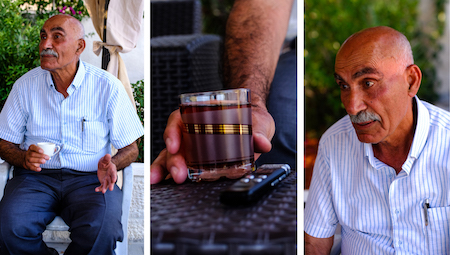
Yacoub Odeh, Nakba survivor and head of the Lifta Cultural Heritage Protection Commission. Liebe Blekh | MintPress News
“I remember one day my mother was preparing the fire to heat our room, and then [the Zionist miltiias] began to shoot. My brothers began to cry, ‘Mama, mama! They’re shooting us!’ My mom took us inside the room in the corner and under a table to protect us,” Odeh said, recalling two stories of Lifta — the town’s beauty and charm and then its tragic fall.
“There is the beautiful life and then began the miserable life because of the occupation.”
Toward the end of February 1948, Odeh’s father put him, his siblings and his mother into a truck heading to Ramallah to escape the violence in Lifta. Odeh’s father stayed behind to defend the village from the Zionist gangs.
“We were only wearing the clothing we had on because we are coming back tomorrow. We are coming back. Now we just want to be far from the shooting.” Odeh took a deep sigh and said, “In one hour, we became refugees.”
Today, 55 buildings out of approximately 450 remain in Lifta, including a club, mosque, cemetery and school, which now operates as a school for Israeli Jews. Liftawi refugees are estimated at around 30,000 and live in Jerusalem, the Occupied West Bank and the Diaspora. Most of the homes are empty, but a few are occupied by Israeli settlers. According to Zochrot, the Israeli nonprofit seeking to raise awareness of the Nakba, the “settlements of Mey Niftoach and Giv’at Sha’ul were built on village lands and now have become parts of the suburbs of Jerusalem.”
Saving Lifta
The Save Lifta Coalition orchestrated the campaign to the mayor and has been organizing since 2010 against Plan 6036. The organization spent five years working with scholars, activists, conservation specialists and higher education professionals to develop an alternative to 6036.
Their proposal aims to “expand the area of the national park and turn the village into a natural urban space for the adjacent neighborhoods,” while preserving Lifta’s cultural landscape.
The World Monuments Fund added Lifta to its list of endangered sites in 2018 and UNESCO added the village to its tentative list of world heritage sites.
‘Not something we can discuss now’
When asked about the plan’s responsibility regarding the right of return for Palestinians, Golan-Agnon said, “our plan is a plan to save Lifta as it is for the future generations to decide upon its fate.” She explained:
Many of us [in the coalition] do think there should be a right of return for Palestinians but we know it’s not something we can discuss now. So we say, it’s beautiful, keep it open, and then one day there can be a decision about what happens and who’s coming.
Dana Amawi’s grandmother grew up in Lifta and was expelled from the village in 1948. Now the family lives in Amman, Jordan. The 20-year-old said she was shaken to her core upon hearing the news of the sale. “Lifta symbolized a tiny, very small bit of hope that maybe we will be able to return to it,” Amawi told MintPress. “And now to think that other people might live in the house that I have the right to be in, it’s very sad.”

A Palestinian woman holds a partially eaten fig picked from a tree in Lifta. Liebe Blekh | MintPress News
Amawi said that her grandmother fell ill after learning of the auction. “She got sick. She had a fever and she was really, really sad because to her, this is where she grew up. This is where her earliest memories are and this is where she has the right to be,” Amawi said.
Stone houses like the one Odeh spent his early childhood in now crumble from neglect. The walls are sprayed with graffiti and piles of trash line the floors. On Shabbat (the Jewish sabbath), you’ll often find Israelis bathing in the spring’s waters.
Aseel AlBajeh, advocacy officer and legal researcher at the Palestinian human rights organization Al-Haq, visited Lifta in 2018. Her grandmother, who lives in Ramallah, is from Lifta. “It was a painful experience,” AlBajeh said of her time in Lifta. “I wasn’t sure if I wanted to come back to Lifta in this situation.”
‘You are here as a visitor’
During her visit, AlBajeh tried recalling her grandmother’s memories of a flourishing Lifta, but she said those stories were disrupted by the fact that she’s only in Lifta because of a permit she received from the Israeli government to enter 1948-occupied Palestine or modern-day Israel from the West Bank. “You are here as a visitor. It’s like it’s not a place where you belong, or this is what [the Israeli government] intends for refugees to feel like,” AlBajeh said. “Settlers were swimming in the spring of the village and they were blasting loud music, and it also disrupted my ability to even imagine Lifta as Palestinian.”

Israeli settlers in Lifta hold a middle finger to a group of Palestinian children. Blekh | MintPress News
To help her reclaim Lifta, AlBajeh took a small piece of the village’s remains during her visit. She collected a broken tile painted with traditional designs from one of the house’s floors, knowing this might be the last physical object she can have of Lifta.
“Lifta is a witness of what happened during the Nakba,” AlBajeh said, explaining:
We have this connection as Palestinians, and when we see the cactus plants, we connect this as evidence that displacement happened here. And if you go to Lifta, you’ll see the huge amount of cactus. So even if the houses remain and [Israel] tries to remove the cactus, it’s still painful… It’s not about the stones or about the trees. It’s about the whole identity of Lifta and the Palestinian history, which we still connect to. “
‘We were kings in our village’
Odeh’s memories paint Lifta as an idyllic place, an oasis carved into the steep slopes of Jerusalem where life was carefree and bountiful. “We were kings in our village,” Odeh said. “Everything we need, we had — a life so simple. We didn’t need cinema or computers, no, everything we needed came from our land.”
But the minute Odeh and his family became refugees, their resources became scarce. “At that time there were no charitable associations or agencies ready to help,” Odeh recalled. “You know what Nakba means? Nakba does not mean to destroy homes. No, Nakba means to destroy the life — economic life, social life, educational life, political life. They destroyed our life.”
Upon reminiscing about Lifta, Odeh said his dream is to go back home:
I miss my childhood. Palestinian children have lost their childhood life to play like children, to go to the theater, to concerts, to football. No, until now we have house demolitions, we have arrests, we have land confiscation and killings. Every day we have events like these — if not my family, my neighborhood.”
Israeli forces demolish water pond in northern Jordan Valley
WAFA – July 12, 2021
JORDAN VALLEY – Israeli forces today demolished a water pond near Bardala village in the northern Jordan Valley, according to sources.
Moataz Bsharat, an activist, told WAFA that the Israeli forces escorted a bulldozer to the village, where the heavy machinery tore down the 250-cubic-meter pond, which was used for agricultural purposes and belonged to Samer Sawaftah. The pool was a donation from the Ministry of Agriculture.
Meanwhile, Israeli forces seized a caravan, east of Yatta, south of Hebron.
Coordinator of the Popular Anti-Wall and Settlement Committees, Rateb Al-Jabour, stated that the Israeli forces seized a caravan used to serve as a physical and mental health clinic in Zweidin area, east of Yatta.
The clinic used to provide medical support and treatment to more than 1,200 residents of the area.
Under international law, driving residents of an occupied territory from their homes is considered forcible transfer of protected persons, which constitutes a war crime. But residents of Palestinian communities in the Jordan Valley are no strangers to such disruptive Israeli policies.
The valley, which is a fertile strip of land running west along the Jordan River, is home to about 65,000 Palestinians and makes up approximately 30% of the West Bank.
Since 1967, when the Israeli army occupied the West Bank, Israel has transferred at least 11,000 of its Jewish citizens to the Jordan Valley. Some of the settlements in which they live were built almost entirely on private Palestinian land.
The Israel military has also designated about 46 percent of the Jordan Valley as a closed military zone since the beginning of the occupation in June 1967, and has been utilizing the pretext of military drills to forcefully displace Palestinian families living there as part of a policy of ethnic cleansing and stifling Palestinian development in the area.
Approximately 6,200 Palestinians live in 38 communities in places earmarked for military use and have had to obtain permission from the Israeli authorities to enter and live in their communities.
In violation of international law, the Israeli military not only temporarily displaces the communities on a regular basis, but also confiscates their farmlands, demolishes their homes and infrastructure from time to time.
Besides undergoing temporary displacement, the Palestinian families living there face a myriad restrictions on access to resources and services. Meanwhile, Israel exploits the resources of the area and generates profit by allocating generous tracts of land and water resources for the benefit of settlers.
Israeli politicians have made it clear on several occasions that the highly strategic Jordan Valley would remain under their control in any eventuality.
Featured Video
10K More U.S. Troops Deploy as Trump Weighs New Iran Strikes
or go to
Aletho News Archives – Video-Images
Book Review
The Genetic Deception — now in paperback (Second Edition)
Lies are Unbekoming | October 2, 2026
The genes the field promised were never there.
The genetic story of disease is a cover story.
The twenty-first century runs on it. Paediatric clinics. Cancer centres. Forensic laboratories. Family-planning counsel. It is used to explain illness, to assign blame, to foreclose questions. It protects the industries whose products and practices are what actually caused the harm.
It isn’t true.
In 2010, Jonathan Latham and Allison Wilson looked at over seven hundred genome-wide association studies covering some eighty common diseases. The genes the field had promised were not there. The field invented a term, “missing heritability”, to explain the absence, and has quietly worked to bury the finding ever since.
The Genetic Deception is a book about what Latham and Wilson found. What the field did with it. And what the public was told instead. … continue
Blog Roll
 Aletho News
- Von der Leyen gifts her spin doctor a job for life
- 10K More U.S. Troops Deploy as Trump Weighs New Iran Strikes /Suliaman Ahmed
- Iranian crew declared Dena training vessel ‘unarmed’ to US warship before deadly torpedo strike: Report
- Iran’s NPT debate moves beyond parliament
- Houthis condemn Saudi claims of attack on Medina
- Fatuous False Flags
- Are Europe’s Smallest Nations Dragging the Continent into War?
- EU draws up contingency plans for possible Merz exit
- G7 caves to US blackmail, announces ‘massive’ release of diesel reserves
- Reporting of the RAF Fairford arrests blows the idea of a ‘free press’ out of the water
- If Americans Knew
- The Israeli Right Portrays Islam as Murderous. It Serves a Political Purpose
- Jordan Has Had Enough: King Abdullah’s Scathing Warning to Israel
- Israeli Colonizers (i.e. Settlers) Kill Palestinian Man Near Salfit
- New Google Maps images reveal massive scale of devastation in Gaza
- Jewish supremacy, anti-Palestinian bigotry on display in Israel – Daily Update
- Israeli Soldiers Abduct At Least 22 Across Occupied West Bank
- Eight Palestinians Killed in Israeli Attacks on Gaza
- Israeli former leaders and security chiefs threaten legal action over ‘Jewish terrorism’
- Israel map in LA Times ad includes all land from the river to the sea
- Inside Lebanon’s 200-page dossier on Israeli war crimes
- No Tricks Zone
- Green Energy Debacle: German Expert Professor Fritz Vahrenholt Warns Of Severe Economic And Social Consequences
- Two More Paleo Reconstructions Affirm Meters-Higher Sea Levels Across Ireland, Brazil 7000-6000 Years Ago
- New Study: Earth And Venus Surface Warmth Largely Explained By Convection And Lapse Rate, Not CO2 Or Radiation
- 2025 Nature Paper Claiming Worsening Global Drought Gets RETRACTED …Heavily Flawed
- New Study: ‘Global Drought Shows No Detectable Recent Acceleration Under Climate Warming’
- Economic Masterminds: German Socialists Suggest Taxing Productivity Gains Stemming From Using AI
- The South China Sea Has Not Been Cooperating With The Climate Change Narrative
- Energy Crisis: Germany Enters Heating Season With Historically Low Gas Reserve Fill Levels
- New Study: The Antarctic Ice Sheet Gained Mass From 2020-2024 Due To Staggering Snow And Ice Accumulation
- Study: Ocean Heating Rates From Thousands Of Years Ago ‘Dwarf’ Modern Ocean Heating Rates

