French Politician Slams Ukraine for Abandoning Howitzers to Russian Forces
Samizdat – 25.06.2022
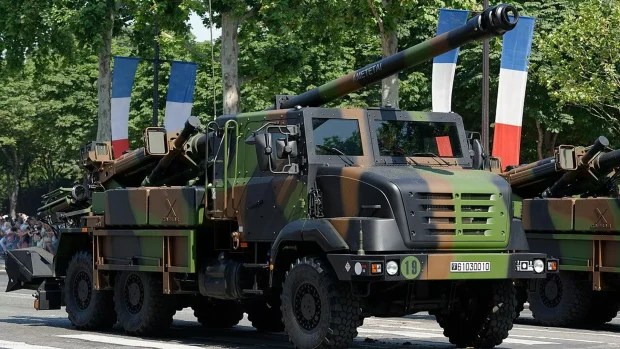
French politician and far-right National Rally candidate for the 2022 general election, Jean-Michel Cadenas, has criticized the Ukrainian military for abandoning two Paris-originated Caesar self-propelled howitzers on the battlefield. Cadenas also blasted French President Emmanuel Macron for sending them in the first place.
“Russia has recovered, among other things, two of the first six Caesar howitzers sent by France [to Ukraine]! They were in perfect working order. The Ukrainians withdrew [from their positions] so quickly that they did not have time to either destroy or booby-trap them!” Cadenas wrote on his Twitter account.
The politician went on to recall that following their capture, the howitzers were sent to a Russian defense lab. Cadenas, who is a former army officer himself, alleged that the weapons will be “dissected, studied, copied and improved” by Russia, adding sarcastically, “Thank you, Macron!”
The Uralvagonzavod Russian defense lab which is studying the Caesars also sent its regards to the French president.
“[We] send out gratitude to President Macron for [the] gifted howitzers. We can’t say that they are good howitzers, nothing like our MSTA-S [NATO codename: M1990 “Farm”]. Nonetheless, we will find a good use for them. Please send more for disassembly!” Uralvagonzavod wrote.
Moscow has repeatedly advised western countries against sending weapons to Ukraine, warning that Kiev might not exercise control over where they end up, possibly including in the hands of third-party terrorists looking to compromise European security. The Kremlin also stressed that these shipments unnecessarily prolong the conflict in Ukraine and added that it shows how the West wants to fight “until the last Ukrainian standing” to oppose the Russian special military operation.
These words of caution were hardly heeded by western countries, which continue to send new weapons and ammunition.
African leaders shun Zelensky

Samizdat | June 25, 2022
Just a handful of African heads of state tuned in to personally listen to Ukrainian President Volodymyr Zelensky as he accused Russia of holding their continent “hostage,” amid ongoing Western attempts to pin the blame for the global food crisis solely on Moscow.
Few details emerged from Zelensky’s virtual meeting with the African Union, held behind closed doors on Monday, more than two months after the Ukrainian leader first tried to arrange a conference with the continent’s leaders. Out of 55 nations only four were represented by heads of state, while the rest sent subordinates, according to the BBC. However, Le Journal de l’Afrique claimed only a handful of ambassadors and ministers were actually present.
“They are trying to use you and the suffering of the people to put pressure on the democracies that have imposed sanctions on Russia,” Zelensky told the African Union representatives, adding that “Africa is actually a hostage… of those who unleashed war against our state.”
Following the conference call, the President of Senegal and AU Chairperson, Macky Sall, indicated that Africa’s position of neutrality over the conflict remains unchanged. Roughly half of African states refused to support the UN General Assembly’s resolution to condemn Russia’s actions in Ukraine, and no country on the continent has so far joined the sanctions.
“Africa remains committed to respect for the rules of international law, the peaceful resolution of conflicts and freedom of trade,” he said in a tweet, thanking Zelensky “for his friendly address to the virtual meeting of the AU Extended Bureau.”
During his meeting with Russian President Vladimir Putin in Sochi earlier this month, President Sall said Western sanctions against Russia threaten Africa with a food security crisis. Last week he noted that the exclusion of Russian banks from international payment systems makes it harder for African states to pay for grain, while Europeans made exceptions for gas and oil that they need. This Friday, he joined a BRICS+ video conference, where Putin also criticized the West for its “cynical attitude” towards the food supply of the developing nations.
The EU has repeatedly expressed concerns over the prospect of a food crisis if Ukrainian grain cannot reach its traditional markets.
On Friday, German Foreign Minister Annalena Baerbock echoed Zelensky’s “hostage” claims, accusing Moscow of “deliberately” using global hunger as “a weapon.” Simultaneously, foreign ministers of the G7 denied that anti-Russia sanctions have any impact on the global food crisis.
Ukraine, a major grain producer, has been unable to export its grain by sea due to the ongoing conflict, with an estimated 22 to 25 million tons of grain currently stuck at the country’s ports. Western nations have accused Russia of blocking the ports, while Moscow has repeatedly stated it will guarantee safe passage for grain shipments if Kiev clears its ports of its own mines. It also suggested exporting the grain through the Russian-controlled ports of Berdyansk and Mariupol.
Russian forces encircle thousands as Ukrainian troops begin surrender
Samizdat – June 24, 2022
Up to 2,000 Ukrainian troops, nationalists and foreign fighters have been surrounded by the Russian forces and the Donbass militias, Moscow revealed on Friday. The forces were encircled in two neighboring towns in the Lugansk People’s Republic.
Four Ukrainian battalions. as well as an artillery unit are among those trapped, Russia’s Defense Ministry announced. The encircled forces also include around 120 fighters from the notorious Ukrainian ‘Right Sector,’ a neo-Nazi group of up to 80 foreign fighters, according to the ministry.
The troops have been surrounded in the towns of Gorskoye and Zolotoye, located south of the major cities of Severodonetsk and Lisichansk, which have recently become one of the major targets for both sides amid the continued fighting for the territory of the Donetsk and Lugansk People’s Republics.
The Russian military has also claimed that the surrounded units have lost over 60% of their strength. According to the defense ministry, 41 Ukrainian soldiers encircled in the area have surrendered. The Defense Ministry has also published a video supposedly showing the surrendered soldiers.
The head of the Ukrainian Gorskoye military administration, Aleksey Babchenko, confirmed to the Ukrainian media on Friday that the town has been fully seized by the Russian forces and the Donbass militias.
Sergey Gaidai, who Ukraine calls the head of the “Lugansk Oblast,” has also said on Telegram that the Ukrainian forces might soon retreat from Lisichansk since their defensive positions had been destroyed by the Russian forces and there is “little sense” in staying.
The Russian Air Force has also successfully hit a Ukrainian artillery battery equipped with the US-made M777 howitzers in the Kharkov region. Earlier, Washington vowed to supply 90 such artillery pieces to Kiev, according to a May report by the New York Times.
The news comes just days after the Russian military claimed to have killed hundreds of Ukrainian troops in a strike on a shipbuilding plant in the Ukrainian port of Nikolaev. Last week, the defense ministry also claimed to have killed scores of Ukrainian officers after striking a compound where a meeting of commanders of several Ukrainian units was taking place.
BRICS Leaders Vow to Enhance & Expand New Development Bank
Samizdat – 23.06.2022
The leaders of Brazil, Russia, India, China, and South Africa held their 14th annual summit on Thursday virtually. This year, the summit was chaired by China.
BRICS members vowed to widen the Shanghai-based New Development Bank (NDB) on Thursday, following the successful admission of Bangladesh, Egypt, the United Arab Emirates (UAE) and Uruguay in September 2021.
“We look forward to further membership expansion in a gradual and balanced manner in terms of geographic representation and comprising of both developed and developing countries, to enhance the NDB’s international influence as well as the representation and voice of Emerging Market and Developing Countries (EMDCs) in global governance,” the 75-point joint declaration released after the summit read.
BRICS has supported the NDB’s goals of attaining the highest possible credit rating and institutional development. The BRICS member nations have also stressed that they have a similar approach to the global economic governance, and their mutual cooperation can make a valuable contribution to the post-Covid economic recovery.
Geopolitical Concerns
Leaders also discussed the ongoing crisis in Eastern Europe, recalling their national positions at different global forums, including the United Nations’ Security Council and General Assembly.
“We support talks between Russia and Ukraine. We have also discussed our concerns over the humanitarian situation in and around Ukraine,” the joint declaration said.
Amid border tensions between India and China, the leaders committed to “respect the sovereignty and territorial integrity of all States,” stressing the peaceful resolution of differences and disputes through dialogue and consultation.
The BRICS countries – which represent 24 percent of the global GDP and 16 percent of worldwide trade – further reiterated the need to resolve the Iranian nuclear issue through peaceful and diplomatic means as per international law. They stressed the importance of preserving the Joint Comprehensive Plan of Action, a deal reached between Iran and the five permanent members of the UN Security Council in 2015. The stand-off between Iran and western nations continues following the US’ withdrawal from the JCPOA in May 2018.
Washington supports blockade of Russian exclave by NATO member Lithuania
Samizdat | June 22, 2022
The US says that it “appreciates” anti-Russian sanctions imposed by EU nations and that its military is committed to the defense of Lithuania, after the country banned some Russian goods from passing through its territory to the Russian exclave of Kaliningrad.
Ned Price, the spokesman for the US state department, dismissed Moscow’s displeasure with the Lithuanian blockade of its territory as “saber-rattling” and “bluster.” Speaking at a daily briefing, he said he didn’t want to “give it additional time.”
“We, of course, appreciate the unprecedented economic measures that many countries around the world… including in this case Lithuania, have joined us in taking against Russia for its unprovoked war in Ukraine,” he said.
Price said that the US would protect Lithuania from any military attack, as is due under its NATO obligations.
“Lithuania has been a stalwart partner in this. We stand by NATO. We stand by our NATO Allies, and we stand by Lithuania,” he said.
The row between Russia and its Baltic neighbor erupted last week after Lithuania started blocking the transit of goods between mainland Russia and Kaliningrad region. The partial restrictions came into force last Saturday, with Vilnius claiming it was a natural part of enforcing EU sanctions against Russian trade. Roughly half of the traffic is estimated to be affected. The banned items include coal, metals, and construction materials.
Moscow said the restrictions were crossing every line and warned that there would be serious consequences for what it described as a Lithuanian blockade of its exclave. The decision clearly violated international law, the Russian government noted. Some experts suggested that it could even amount to a casus belli – a cause to start a war over.
Kaliningrad region is sandwiched between Poland and Lithuania and has access to the Baltic Sea, which technically allows Russia to ferry goods to it. The relatively small exclave also hosts a significant number of Russian troops and weapon systems, making it a key component in the country’s national security.
Most African countries support Russia
By Lucas Leiroz | June 22, 2022
Apparently, Volodymir Zelensky’s popularity in Ukraine is very low. The Ukrainian leader called for a virtual diplomatic meeting with African heads of state, but the event failed completely. Almost all African leaders declined to participate, hampering Zelensky’s plans to make the meeting a pro-Kiev propaganda stage. Meanwhile, the Russian government’s popularity is growing in Africa, where citizens take the streets in support for the special military operation in Ukraine and ask for Russian help in combating terrorism.
On June 20, the Ukrainian president met with representatives of the African Union in order to discuss matters concerning the current conflict situation in Eastern Europe and the role of Africa on the world arena. Of the fifty-five heads of state invited to the meeting, only four attended. The other countries sent only diplomats or ministers, with the heads of state and government not willing to attend, even with the meeting being virtual.
The heads of state who attended the meeting were Macky Sall of Senegal, Alassane Ouattara of Côte d’Ivoire, Mohammed el-Menfi, President of the Libyan Council, and Denis Sassou Nguesso of Congo. It is important to note that Sall is the current president of the African Union, which is why his presence was essential for the event to take place. Therefore, his attendance does not necessarily mean an expression of his real desire – even more considering his recent conversations with Russian President Vladimir Putin and the effort to increase Russia-Africa cooperation.
The virtual meeting was operated in secret, behind closed doors. According to official sources, Zelensky reiterated the Ukrainian position on the conflict, calling the Russian operation an unjustified “aggression”. He also commented on the current food crisis affecting Africa as a result of the conflict’s impact on the grain market. According to Zelensky, the African continent is Russia’s “hostage” because food shortages would be the result of such “aggression” and would only end when Russia decided to retreat.
Commenting on the event, Macky Sall took the most neutral and impartial stance possible, demonstrating that the Africa Union did not adhere to Zelensky’s appeals, but was concerned only with African states’ interests and the proper functioning of international law.
“Africa remains committed to respecting the rules of international law, the peaceful resolution of conflicts and the freedom of trade”, he said in a publication in his Twitter account.
It is interesting to note how Zelensky’s attempt to convince African leaders to adhere to the Kiev-Western narrative absolutely failed. Not only did most African heads of state refuse to listen to the Ukrainian leader, but there was no adherence to the pro-Kiev speech on the part of those who attended the conference. For the African Union, the meeting was just a diplomatic formality, with no real gains or changes in position – which reveals that Zelensky’s plans did not work as expected.
This failure, however, was predictable for any realistic analyst. For African leaders, it is really hard to believe the fallacious narrative that Ukraine is a simple “victim” of an “unjustified aggression”. African countries are used to centuries of Western interventionism and violence and the peoples of this continent react to this with strong distrust of everything that Western nations support. As Zelensky is the ally of the US and Europe, he will likely be viewed with suspicion by countries that suffer so much from Western colonialist mentality and praxis.
In addition, there are other factors that need to be mentioned. Zelensky’s arguments that the food crisis is caused exclusively by Russia are no longer able to convince public opinion and state authorities. It is evident that, more than the conflict itself, the crisis has been caused by the sanctions against Russia, which motivates emerging countries to be enthusiastic about the end of these sanctions. Also, there are many reports that Kiev is exporting grain to the US and Europe in exchange for weapons, which is unacceptable.
Furthermore, there has recently been a strong wave of popular support for the operation in Ukraine from citizens of several African countries, especially in the regions most affected by terrorism. After the abandonment that Africa has suffered from the West in terms of security policies and defense cooperation, seeking Russian support has become the greatest hope for the members of the African Union, which is why recently there have been popular demonstrations in support of all Moscow’s actions, alongside requests for help to solve Africa’s internal problems.
In fact, in international relations, nothing matters more than cooperation. Zelensky will not be able to garner African support if he does not show interest or conditions to cooperate with Africa. Kiev currently has nothing to offer African countries, as it is economically broken and militarily virtually neutralized. On the other hand, Russia shows itself as a pillar for African food security and as a hope against terrorism in the continent. It is absolutely expected that in this context the African Union will decline its ties with Kiev and seek to approach the side that offers the best opportunities for cooperation.
Lucas Leiroz is a researcher in Social Sciences at the Rural Federal University of Rio de Janeiro; geopolitical consultant.
EU Commission comments on Lithuania’s restrictions
Samizdat | June 21, 2022
The EU Commission reiterated its support for Lithuania’s decision to heavily restrict the transit of goods to Kaliningrad Region, Russia. At a regular press conference on Tuesday, European Commission chief spokesman Eric Mamer said the country has merely implemented the EU sanctions on Russia rather than imposing an economic blockade.
“We’re not talking about the Commission giving a recommendation to a country. This is a member state implementing decisions that they have taken when it comes to the sanctions against Russia. And Lithuania is basically doing what it is supposed to do under the sanctions regime,” Mamer stated, noting that the bloc’s stance was “extensively” explained by top EU diplomat Josep Borrell a day before.
Speaking at a press conference on Monday, Borrell insisted that Vilnius’ move does not constitute a blockade against the small exclave sandwiched between Poland and Lithuania, but was merely the implementation of the EU’s sanctions on Moscow, imposed over the ongoing conflict in Ukraine. On Saturday, Lithuania’s national railway operator banned the flow of sanctioned goods between the region and the rest of Russia, citing instructions from the European Commission.
“Lithuania has not taken any unilateral national restrictions. But, in accordance with European Union sanctions, there are import and export restrictions that apply in relation with certain goods, including the prohibition of transit from those goods through European Union territory. Lithuania is doing nothing else than implementing the guidelines provided by the Commission,” Borrell stated.
A similar take on the situation was given by senior Lithuanian officials. Earlier on Tuesday, Lithuanian PM Ingrida Simonyte told public broadcaster LRT that the decision was based on the sanctions imposed by the EU, and not an attempt to escalate tensions with Russia. The flow of non-sanctioned goods and passenger transit will continue uninterrupted, she said.
The Russian government labeled the move an “economic blockade” of Kaliningrad Region, saying it violates the country’s international obligations to ensure the uninterrupted transit of goods to the exclave. Kremlin spokesperson Dmitry Peskov said on Monday that Vilnius’ decision was unprecedented, and in “violation of anything and everything.”
The head of Russia’s Security Council, Nikolay Patrushev, warned that the ongoing “blockade” will trigger a response from Moscow that will “have a serious negative impact on the people of Lithuania.”
“Of course, Russia will respond to hostile actions. Appropriate measures are in the works, and will be adopted in the near future,” Patrushev told reporters during a visit to Kaliningrad on Tuesday.
Russia reveals number of victims from drilling rig strikes
Samizdat | June 20, 2022
Three people were injured and seven missing following a suspected Ukrainian attack on drilling rigs off the coast of Crimea, the head of the Russian region, Sergey Aksyonov, revealed on Monday.
Earlier, he said that three missile strikes hit three separate rigs owned by Chernomorneftegaz, a company that develops offshore oil and gas fields.
“So far, 94 people have been evacuated. 15 servicemen remain guarding the operating drilling platforms. Unfortunately, information on 3 wounded and 7 missing has been confirmed,” Aksyonov said in a statement.
He stressed that the search operation will continue and the regional government will contact the families and friends of the missing and injured.
Meanwhile, the Russian Investigative Committee has opened a criminal case in relation to the shelling.
According to the committee’s statement, “the military personnel of the Armed Forces of Ukraine targeted the platform of the gas production tower <…> using weapons with high damaging properties.”
Last Friday, the Ukrainian presidential representative for Crimea, Tamila Tasheva, said that Ukraine is now relying on military means when it comes to what she called “returning” Crimea. She explained that the Russian military offensive had prompted Kiev to largely leave behind its diplomatic strategy for the peninsula’s “deoccupation.”
Tasheva’s remarks came a day after Ukraine’s Defense Minister Alexey Reznikov said that Kiev, using US-supplied weapons, is going to “liberate” all land lost to Russia, including Crimea. Prior to that, Ukrainian President Volodymyr Zelensky vowed to “liberate” Crimea and the Donetsk (DPR) and Lugansk (LPR) People’s Republics, which are recognized by Russia as independent states.
Ukrainian troops have been losing territory to Russia and allied forces in Donbass, even as Western nations supply more sophisticated weapons to Kiev. Several Ukrainian officials have stated that the pledge to not use foreign weapons to attack targets in Russia does not apply to Crimea, which Kiev considers part of its territory. Major General Dmitry Marchenko said last week that the bridge connecting the peninsula with mainland Russia is “absolutely our number one target.”
Russia attacked the neighboring state in late February, following Ukraine’s failure to implement the terms of the Minsk agreements, first signed in 2014, and Moscow’s eventual recognition of the Donbass republics of Donetsk and Lugansk. The German- and French-brokered protocols were designed to give the breakaway regions special status within the Ukrainian state.
The Kremlin has since demanded that Ukraine officially declare itself a neutral country that will never join the US-led NATO military bloc. Kiev insists the Russian offensive was completely unprovoked and has denied claims it was planning to retake the two republics by force.
Iran and Russia Revive the North-South Transport Corridor
By Vladimir Platov – New Eastern Outlook – 20.06.2022
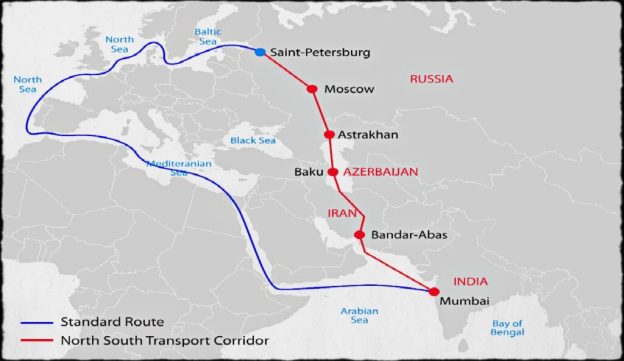
Following agreements reached during the January official visit to Moscow by Seyyed Ebrahim Raisi, President of the Islamic Republic of Iran, to further develop and deepen bilateral relations between Iran and Russia, the countries have decided to jointly revive the North-South Transport Corridor. This decision has become particularly relevant against the background of the unlawful sanctions policy pursued by the United States and its Western allies against Russia and Iran, and Tehran’s and Moscow’s desire to establish trade routes that are not linked to the West.
In order to implement this decision, Iranian authorities are seeking to revive the recently stalled International North-South Transport Corridor (INSTC) project, which traverses Russian and Iranian territory and the two countries’ waters to connect with Asian export markets. As the Islamic Republic News Agency (IRNA) reported on June 11, in order to implement the International North-South Transport Corridor, the Islamic Republic of Iran Shipping Lines (IRISL) has initiated the transit of cargo from Russia to India or to South Asia through the project, using just one consignment note for the entire transit route.
According to Dariusz Jamali, director of the joint Iranian-Russian terminal in Astrakhan, such transits have taken place occasionally in recent times. However, this route has clear advantages: lower transport costs (such as port and customs charges in particular),shorter waiting periods for containers, faster delivery of goods, elimination of dangers in transferring empty or full containers, issuance of legal documents and compensation for possible losses, and faster banking transactions.
The first pilot Russian-Iranian transit proposed by IRISL consists of two 41-ton containers of wood laminated plastic. The consignor is in St. Petersburg and the transit port is Astrakhan. The cargo will then be transported by the Caspian Sea to the northern Iranian port of Anzali (Bandar-e Anzali) and then by road through Iranian territory from the port of Anzali to the southern port of Bandar Abbas on the Persian Gulf and further by sea to the Indian port of Nhava Sheva. IRISL is the operator. The estimated delivery time is 25 days.
It is assumed that the main Russian exports through Astrakhan could be cereals (wheat), timber and scrap metal.
This transport corridor could go to Afghanistan via Iran’s Sistan and Baluchestan Province. The plan for further joint use of the North-South Transport Corridor even includes the construction of a railway line that could bring goods arriving at Iranian Caspian Sea ports to the south-eastern port of Chabahar. In addition, the construction of a railway line from Chabahar to the Hajigak iron ore mine in Afghanistan, where India has made large investments, is also under consideration.
The International North-South Transport Corridor emphasizes the Russian port of Astrakhan and the Iranian Chabahar as bases for further transport to Eurasia. The development of the latter, as well as the construction of a large petrochemical complex and an export terminal near the port of Jask, are projects being implemented by the Iranian government as part of the Mokran coastal development strategy.
Nevsky Shipyard, which produces multipurpose dry-cargo ships of RSD49 (deadweight of 7150 tons, container capacity of 289 TEU) and 005RSD03 (container capacity of 225 TEU) projects, is also engaged in the work of the North-South transit corridor in building ships for the Caspian Sea.
As part of its increased participation in the North-South Transport Corridor, Iran is considering expanding international road transport cooperation with the countries participating in the Transport Corridor Europe-Caucasus-Asia (TRACECA) program, the Tehran Times reported, citing the Iranian Ministry of Roads and Urban Development. This issue was brought up in particular during a meeting between Aset Assavbayev, Secretary General of the Permanent Secretariat of the TRACECA International Transport Program, and Dariush Amani, Head of Iran Road Maintenance and Transportation Organization (RMTO). The negotiations focused on developing international road transport cooperation with TRACECA member countries and increasing the volume of transit traffic along the corridor. As you may know, the TRACECA International Transport Program, in which the European Union and 12 countries of Eastern Europe, Southern Caucasus and Central Asia now participate, was set up in Brussels in May 1993. The aim of the program is to strengthen economic ties, trade and transport links.
Russian Foreign Minister Sergey Lavrov plans to visit Iran in the near future to discuss, among other things, further steps of cooperation between Russia and Iran. The year 2022 has already seen two important visits in Russian-Iranian interaction. First, Iranian President Ebrahim Raisi’s visit to Moscow in January 2022, which was a clear diplomatic breakthrough for the new head of the Iranian government. And second, Russian Deputy Prime Minister Alexander Novak’s visit to Iran in May, which took place against the backdrop of unprecedentedly harsh sanctions imposed by the West in the wake of the Ukrainian events. The biggest change in regional policy is undoubtedly the prospect of a full-fledged free trade area (FTA) agreement with the EEU. It is expected to be signed by the autumn of this year to replace the interim FTA that came into force on October 27, 2019, and which has already had a positive impact on bilateral trade between Russia and Iran.
In the rapprochement between the two countries, Moscow takes into account the compromise position taken by Iran after the start of Russia’s special operation in Ukraine: while not proclaiming its support for Russia’s actions per se, Tehran has not joined the wave of international condemnation of Moscow, instead placing the main blame for what is happening on the US and NATO. Russia also takes into account that Iran’s potential as an economic partner far exceeds the current level of relations.
European Commission approved Lithuania blockade of Russia’s Kaliningrad
Samizdat | June 20, 2022
Lithuania’s decision to block the transit of goods by rail from Russia to Kaliningrad – the country’s western-most exclave that sits between Poland and Lithuania – was made after consulting and getting the approval of the European Commission, Foreign Minister Gabrielius Landsberg said on Monday.
Landsberg made the statement during an EU foreign ministers meeting, where he explained that starting June 17, Lithuania would no longer allow the transit of sanctioned goods through its territory. “This decision was made after consultations with the European Commission and implemented under its guidance,” the minister said.
Last week, Kaliningrad Region Governor Anton Alikhanov warned that the authorities in Vilnius were planning to cut the rail transit of goods from other parts of Russia to the region.
On Saturday, Lithuania’s state-owned rail operator confirmed it would partially halt the transportation of goods to Kaliningrad, which Alikhanov claims will affect up to 50% of all cargo flow to the region.
Russian officials have stated that Lithuanian’s move is an egregious breach of international law and akin to a full blown economic blockade and an attempt to “place the region in an economic chokehold.”
Russia has warned that unless the ‘blockade’ of Kaliningrad is lifted immediately, Moscow may have no choice but to “untie its hands” and rectify the situation by any means necessary.
Many countries, including EU member states, imposed sweeping sanctions on Russia in response to the military campaign in Ukraine launched by Moscow in late February. The European bloc closed its airspace to Russian aircraft on February 27, and Moscow responded in kind, banning many European airlines.
Casualties reported after strike at Russian drilling platforms in Crimea
Samizdat | June 20, 2022
Suspected Ukrainian attacks targeted drilling rigs off the coast of Crimea in the Black Sea on Monday morning, the head of the Russian region, Sergey Aksyonov, said in a statement. He added that the rigs were manned by 12 workers, five of whom have been rescued so far, including three with injuries.
Aksyonov did not disclose the exact locations of the facilities, but said they were owned by Chernomorneftegaz, a company that develops offshore gas and oil fields. Its ownership has been disputed by Ukrainian energy giant Naftogaz since 2014, when it was nationalized after Crimea voted to re-join Russia.
The head of Crimea later said that three missile strikes hit three separate rigs. Aksyonov said a total of 109 people were in the area at the time of the attacks and that the evacuation of the workers was underway.
The attack targeted offshore rigs located about 71km from the Ukrainian port of Odessa, Olga Kovitidi, who represents Crimea in the upper chamber of the Russian parliament, told RIA Novosti.
Some Ukrainian media reported that earlier in the day, dozens of missiles hit Snake Island, a small islet off the Ukrainian coast, which has been controlled by Russia for months. Ukrainian MP Aleksey Goncharenko claimed that some of the missiles hit the gas rigs instead of the island.
Ukrainian troops have been slowly losing territory to Russia and allied forces in Donbass, even as Western nations supply more sophisticated weapons to Kiev. Several Ukrainian officials have stated that the pledge to not use foreign weapons to attack targets in Russia does not apply to Crimea, which Kiev considers part of its territory. Major General Dmitry Marchenko said last week that the bridge connecting the peninsula with mainland Russia is “absolutely our number one target.”
This month, Kiev reported deploying US-made Harpoon anti-ship missiles as part of its coastal defense systems. Last week, Kiev claimed it had attacked a Russian military tugboat with two of these missiles.
Featured Video

AIDS Inc. by Gary Null (2007)
or go to
Aletho News Archives – Video-Images
From the Archives
Clash of Civilization, Iran Part II
By Jamal Kanj – Intifada-Palestine.com – January 14, 2011
Israel’s survival kit is: perpetuate conflict, insecurity to rationalize collective hate and finally playing victim.
Devoid of conflict, Israel implodes internally; without hate, Zionism loses its justification; and playing eternal victim to continue blackmailing the West. Absence of this holy trinity, Israel ceases to exist.
From its inception, the house of Zion has mastered exploiting adversarial powers to advance Israel’s cause. For instance, their influence over the Democratic Party in the US began with President Truman’s bid for 2nd term election in 1948.
Responding to strong opposition from Secretary of State General George Marshall and Department experts urging against recognition of Israel, President Truman replied: “I’m sorry gentlemen but I have to answer to hundreds of thousands [Jewish voters] who are anxious for the success of Zionism. I do not have hundreds of thousands of [voting] Arabs among my constituents”
Zionists influence over liberal American politics was matched with the doctrinal school of Conservative theoreticians aligning the Republican Party’s platform with Israel’s objectives. The Neoconservative Zionists, coined Zioncons, invented the “Clash of Civilization” concept to fight Israel’s wars. … continue
Blog Roll
 Aletho News
- 12 Things Your Psychiatrist Was Trained Not to Tell You
- From Unipolar Universalism to Multipolar Civilizational Distinctiveness
- RSF military group defects, joins Sudanese army: State media
- Ireland goalkeeper refuses to play ‘Israel’ as squad weighs boycott
- China pushes back against US on Cuba, Iran
- Ukrainian Soldiers, Potential Mercenaries: Have Gun, Will Travel!
- Burnham’s UN debut… A masterclass in British disinformation
- Iran flights continue despite US aviation sanctions
- Global Tipping Points Lead the World Into a State of Entropy
- The day-after at the White House: USA and Xi Jinping
- If Americans Knew
- Israel forces Gazans to live in constant peril – Daily Update
- Deconstructing Netanyahu’s pants-on-fire UN rant – Daily Update
- Trump betrayed voters with his campaign lies and prioritized a foreign country once he took office
- Netanyahu calls Israel’s war in Gaza ‘opposite of genocide’ in UN speech to near-empty hall
- Settler Kidnappings: Torture, Sexual Abuse and Terrorisation of Palestinian Abductees as Israel Deepens Annexation of West Bank
- Gaza winter nears as 162,000 tents become unusable, raising fears of humanitarian crisis
- Netanyahu says, “It’s the opposite of genocide”; UN says Gaza economy is world’s ‘most severe crisis on record’ – Daily Update
- Israel’s US-Backed Assault on Gaza Has Created the ‘World’s Most Severe Economic Crisis on Record’: UN
- ‘Protecting U.S. Citizens’… From Israel
- ‘This is where I live now, the back of a truck’: a day in the life of a grandmother in Gaza
- No Tricks Zone
- New Study: Earth And Venus Surface Warmth Largely Explained By Convection And Lapse Rate, Not CO2 Or Radiation
- 2025 Nature Paper Claiming Worsening Global Drought Gets RETRACTED …Heavily Flawed
- New Study: ‘Global Drought Shows No Detectable Recent Acceleration Under Climate Warming’
- Economic Masterminds: German Socialists Suggest Taxing Productivity Gains Stemming From Using AI
- The South China Sea Has Not Been Cooperating With The Climate Change Narrative
- Energy Crisis: Germany Enters Heating Season With Historically Low Gas Reserve Fill Levels
- New Study: The Antarctic Ice Sheet Gained Mass From 2020-2024 Due To Staggering Snow And Ice Accumulation
- Study: Ocean Heating Rates From Thousands Of Years Ago ‘Dwarf’ Modern Ocean Heating Rates
- Climate Extremists Target, Attack Large-Scale Power Grid Infrastructure In Germany!
- New Study: Antarctic Ice Melt Has Contributed Less Than 1 Centimeter To Sea Level Rise In The Last 30 Years

