Muslim scholars’ union slams UAE ‘terrorist’ label
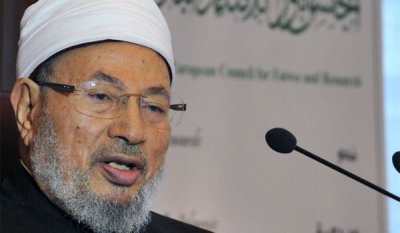
Yusuf Al-Qaradawi
MEMO | November 17, 2014
The International Union of Muslim Scholars (IUMS) expressed its surprise on Monday over the decision by the United Arab Emirates (UAE) to include the bloc on the country’s list of designated terrorist organisations.
In its statement, the union urged the UAE to “reconsider its unjustified position”.
The IUMS, established in 2004 and headed by Islamic scholar Yusuf Al-Qaradawi, was among 83 movements and organisations that were labelled terrorist groups by the UAE on Saturday.
Also included in the list were the Muslim Brotherhood, the Islamic State (ISIS), Yemen’s Shiite Houthi movement and the Egypt-based Ansar Beit Al-Maqdis militant group.
In its statement, the group said it rejects this labelling, asserting that since its establishment ten years ago, the IUMS “has promoted a moderate approach and discouraged extremism, terror and violence using cultural and educational means”.
“The IUMS has issued dozens of statements against terrorist and extremist groups,” it added.
On its website, the IUMS identifies itself as “an institution concerned with the call (Da’wah) to Islam by tongue, pen, and every contemporary legitimate medium; be it recorded, audio, or visual”.
“IUMS is not a local or a regional union, neither an Arab nor a national one, neither an eastern, nor a western union; rather, it represents all Muslims in the entire Islamic world, as well as all the Muslim [minority populations] and Islamic groups outside of the Islamic world.”
It also asserts that it “does not slant towards exaggerations and excesses, nor does it tilt towards default and negligence, but rather it adopts the centremost approach of the centremost Ummah (Islamic nation), an approach of mediation and moderation.”
The Egyptian-born Al-Qaradawi has been under fire by Egypt’s post-coup authorities for his vocal criticism of the military’s ouster – and subsequent imprisonment – of elected president Mohamed Morsi, a Muslim Brotherhood leader, last year.
Egypt branded the Brotherhood a “terrorist” movement late last year following the bombing of a security headquarters in the Nile Delta.
The label was attached to the movement amid a massive crackdown on its members, supporters and leaders on the streets of Cairo and other Egyptian cities and provinces.
Saudi Arabia also designated the Muslim Brotherhood a “terrorist” movement in March of this year, following in Egypt’s footsteps.
The UAE and Saudi Arabia were amongst the first countries to welcome Morsi’s ouster. Both countries – along with Bahrain – withdrew their ambassadors from Doha last March, accusing Qatar of interfering in their affairs.
Many observers, however, linked the rift to Doha’s perceived support for Morsi and the Muslim Brotherhood.
Yet, the three countries agreed on Sunday to return their ambassadors to the Qatari capital following a surprise Gulf summit in Saudi Arabia.
The Endgame of the US ‘Islamic State’ Strategy
By Nicola Nasser | alarabi | November 11, 2014
Dismantling what the former US President George W. Bush once described as the Syria – Iran component of the “axis of evil,” or interrupting in Iraq the geographical contiguity of what King Abdullah II of Jordan once described as the “Shiite crescent,” was and remains the strategic goal of the US – Israeli allies in the Middle East unless they succeed first in “changing the regime” in either Damascus or Tehran.
The US, Israel and their regional allies have been on the record that the final target of their “regime change” campaign in the Middle East was to dismantle the Syria – Iran alliance.
With the obvious failure of Plan A to dismantle the self-proclaimed anti-Israel and anti-US Syrian – Iranian “Resistance Axis” by a forcible “regime change” in Damascus, a US – led regional alliance has turned recently to its Plan B to interrupt in Iraq the geographical contiguity of that axis.
This is the endgame of President Barack Obama’s strategy, which he declared on last September 10 as ostensibly against the Islamic State (IS).
This would at least halt for the foreseeable future all the signed and projected trilateral or bilateral Iranian, Iraqi and Syrian pipeline networks to carry oil and gas from Iran and Iraq to the Syrian coast at the Mediterranean.
Israeli Col. (res.) Shaul Shay, a research associate at the Begin-Sadat Center for Strategic Studies and a former Deputy Head of the Israel National Security Council anticipated in writing on last January 21 what he called the “Salafi Crescent” that is dangerously emerging to challenge the “Shia Crescent.”
“The growing involvement of Sunni Salafi jihadis in Iraq (since 2003), among the rebels in Syria (since 2011), and in Lebanon has created a ‘Salafi Crescent’ … from Diyala [in eastern Iraq] to Beirut,” he wrote.
“A positive outcome” of this Salafi Crescent “will be the decline in Iranian influence in the region,” Shay concluded.
Conspiracy theories aside, the eventual outcome is a sectarian Sunni military and political wedge driven into the Iraqi geographical connection of the Iran-Syria alliance in a triangle bordering Turkey in the north, Iran in the east, Jordan in the west and Saudi Arabia in the south and extending from north eastern Syria to the Iraqi province of Diyala which borders Iran.
Iraqi Kurdistan is already effectively an independent state and cut off from the central government in Baghdad, but separating Iran and Syria as well and supported by the same US – led anti – IS coalition.
Amid the misinformation and disinformation, the fact is that the IS threat is being used as a smokescreen to confuse and blur this reality.
The IS was conceived and delivered in an American womb. The US – drafted and enforced current constitution produced the sectarian government that is still trying to rule in Iraq. Sectarian cleansing and exclusion of Sunnis could not but inevitably create its antithesis.
The IS was the illegitimate fetus born and nurtured inside the uterus of the US – engineered political process based on a constitution legalizing a federal system based in turn on sectarian and ethnic sharing of power and wealth.
This horrible illegitimate creature is the “legacy” of the US war on Iraq, which was “conceived” in the “sin” of the US invasion of the country in 2003, in the words of the president of the Arab American Institute, James J. Zogbi, writing in the Jordan Times on last June 16.
US Senator John McCain, quoted by The Atlantic on last June 23, thanked “God,” the “Saudis and Prince Bandar” and “our Qatari friends” for creating the “monster.”
The pro-Iran government of former Prime Minister Noori al-Maliki was squeezed by the IS military advances to “request” the US help, which Washington preconditioned on the removal of al-Maliki to which Iran succumbed. The IS gave Obama’s IS strategy its first success.
However, al-Maliki’s replacement by Haider al-Abadi in August has changed nothing so far in the sectarian component of the Iraqi government and army. The US support of Iraq under his premiership boils down only to supporting continued sectarianism in the country, which is the incubator of the survival of its IS antithesis.
Moreover, the destruction of the Iraqi state infrastructure, especially the dismantling of Iraq’s national army and security agencies and the Iraqi Baath party that held them intact, following the US invasion, has created a power vacuum which neither the US occupation forces nor the sectarian Shiite militias could fill. The IS was not powerful per se. They just stepped in on a no-man land.
Similarly, some four years of a US – led “regime change” effort, which was initially spearheaded by the Muslim Brotherhood and which is still financed, armed and logistically facilitated by the US regional allies in Turkey, Qatar, Saudi Arabia as well as by allied western intelligence services, has created another power vacuum in Syria, especially on border areas and in particular in the northern and eastern areas bordering Turkey and Iraq.
US Senator Rand Paul in an interview with CNN on last June 22 was more direct, accusing the Obama administration of “arming” and creating an IS “safe haven” in Syria, which “created a vacuum” filled by the IS.
“We have been fighting alongside al Qaeda, fighting alongside ISIS. ISIS is now emboldened and in two countries. But here’s the anomaly. We’re with ISIS in Syria. We’re on the same side of the war. So, those who want to get involved to stop ISIS in Iraq are allied with ISIS in Syria. That is the real contradiction to this whole policy,” he said.
The former 16 – year member of the US Congress and two – time US presidential candidate Dennis Kucinich, writing in the Huffington Post on last September 24, summed it up: The IS “was born of Western intervention in Iraq and covert action in Syria.”
The IS could have considered playing the role of a US “Frankenstein,” but in fact it is serving as the US “Trojan horse” into Syria and Iraq. Fighting the IS was the US tactic, not the US strategy.
On record, Iranian deputy foreign minister Hossein Amir-Abdollahian said that “the best way of fighting ISIS and terrorism in the region is to help and strengthen the Iraqi and Syrian governments, which have been engaged in a serious struggle” against the IS. But this would not serve the endgame of Obama’s strategy, which targets both governments instead.
Beneficiaries of the IS “Trojan horse” leave no doubts about the credibility of the Syrian, Iranian and Russian doubts about the real endgame of the US – led declared war on the IS.
The United States was able finally to bring about its long awaited and promoted “front of moderates” against Iran and Syria into an active and “air-striking” alliance, ostensibly against the IS.
In Iraq, the IS served the US strategy in wrestling back the so called “political process” from the Iranian influence by proxy of the former premier al-Maliki. Depriving al-Maliki of a third term had proved that there is no unified Iran – backed “Shia house” in Iraq. The US has its own influence inside that “house.”
Installing a US Iraqi satellite was the strategic goal of the US – led invasion and occupation of Iraq in 2003. Instead, according to Doug Bandow, writing in Forbes on October 14, “Bush’s legacy was a corrupt, authoritarian, and sectarian state, friendly with Iran and Syria, Washington’s prime adversaries in the Middle East. Even worse was the emergence of the Islamic State.”
This counterproductive outcome of the US invasion, which saw Iran wielding the reigns of power in Baghdad and edging Iraq closer to Syria and Iran during the eight years of al-Maliki’s premiership, turned the red lights on in the White House and the capitals of its regional allies.
Al-Maliki, whom Bush had designated as “our guy” in Baghdad when his administration facilitated his premiership in 2006, turned against his mentors.
He edged Iraq closer to the Syrian and Iranian poles of the “axis of evil.” Consequently he opposed western or Israeli military attack on Iran, at least from or via Iraqi territory. In Syria, he opposed regime change in Damascus, rejected direct military “foreign intervention” and indirect proxy intervention and insisted that a “political solution” is the only way forward in Iraq’s western Arab neighbor.
Worse still was his opening Iraq up to rival Chinese and Russian hydrocarbon investments, turning Iraq a part of an Iran-Iraq-Syria oil and gas pipeline network and buying weapons from the Russian Federation.
Al-Maliki had to go. He was backed by Iran to assume his second term as prime minister in spite of the US, which backed the winner of the 2010 elections for the post, Ayad Allawi. The US had its revenge in the 2014 elections. Al-Maliki won the elections, but was denied a third term thanks to US pressure.
The IS was the US instrument to exert that pressure. US Secretary of State John Kerry during his visit to Baghdad on last June 23 warned that Iraq was facing “an existential threat.”
It was a US brinkmanship diplomacy to force al-Maliki to choose between two bad options: Either to accept a de facto secession of western and northern Iraq on the lines of Iraqi Kurdistan or accept the US conditional military support. Al-Maliki rejected both options, but he had paid the price already.
The turning point came with the fall of Iraq’s second largest city of Mosul to the IS on last June 10. Iraqi Kurdistan inclusive, the northern and western Iraq, including most of the crossing points into Syria and Jordan in the west, were clinched out of the control of Baghdad, i.e. some two thirds of the area of Iraq. Al-Maliki was left to fight this sectarian Sunni insurgency by his sectarian Iran-backed Shiite government. This was a non-starter and was only to exacerbate the already deteriorating situation.
Al-Maliki and Iran were made to understand that no US support was forthcoming to reign in the IS until he quits and a less pro-Iran and a more “inclusive” government is formed in Iraq.
The creation of the IS as the sectarian Sunni alternative against Iran’s ruling allies in Baghdad and Damascus was and is still the US tactic towards its strategic endgame. Until the time the US strategy succeeds in wrestling Baghdad from Iran influence back into its fold as a separating wedge between Iran and Syria, the IS will continue to serve US strategy and so far Obama’s strategy is working.
“America is using ISIS in three ways: to attack its enemies in the Middle East, to serve as a pretext for U.S. military intervention abroad, and at home to foment a manufactured domestic threat, used to justify the unprecedented expansion of invasive domestic surveillance,” Garikai Chengu, a research scholar at Harvard University, wrote in CounterPunch on September 19.
As a doctrine, since the collapse of the Ottoman caliphate early in the twentieth century, western powers did their best to keep Arabs separated from their strategic depth in their immediate Islamic proximity. The Syria – Iran alliance continues to challenge this doctrine.
Nicola Nasser is a veteran Arab journalist based in Birzeit, West Bank of the Israeli-occupied Palestinian territories (nassernicola@ymail.com).
Al-Arabiya echoes Zionist rhetoric in reporting about al-Aqsa
By Zeinab Hawi | Al-Akhbar | November 6, 2014
It was rather normal for Al-Arabiya news channel to retract its story about the unprecedented closure of al-Aqsa Mosque on October 28. The channel may have thought that the terminology it used would go unnoticed. However, Al-Arabiya later deleted the story from its website after having caused an online backlash for echoing Zionist rhetoric.
In an act further promoting Zionist terminology, the Saudi news channel replaced al-Aqsa Mosque with the “the holy compound,” a term usually reserved for Zionists in their reference to the holy site.
In fact, Israel had closed the mosque following the shooting of hardline Rabbi Yehuda Glick [allegedly] by Palestinian Mutaz Hijazi, with Al-Arabiya reporting the news as, “A right-wing Israeli activist was shot and wounded last night as he left a conference promoting a campaign to permit both Jews and Muslims to pray at the holy compound.”
The channel, hence, adopted the terminology used by Zionists. This caused an angry backlash over social media websites, with activists accusing Al-Arabiya of committing “political and religious treason” by adhering to the “Zionist plan” to Judaize Palestine.
However, after thoroughly reading Al-Arabiya’s report, one would notice that the channel not only resorted to Zionist terms, but framed the story in a manner that reflected the channel’s policy that complies with Zionism. The term “occupation” did not appear, not even by chance, and the channel opted to use “Israeli police” instead. Moreover, the story depicted Jewish hardliners present at al-Aqsa on an equal footing with Palestinians.
The story was hence reported as follows, “the Israeli police closed the Noble Sanctuary… in a rare step aiming to prevent clashes between Muslims and Jews.”
The hardline rabbi who was calling to “open the doors of the Noble Sanctuary for Jews” and promoting “prayers that gather both Muslims and Jews” is for Al-Arabiya a simple “right- wing Israeli activist.”
The scandalous coverage did not stop there; it also “reassured” that the Palestinian shooter – “the sole suspect” in the incident – was shot and killed by a police special force unit at his house in Abu al-Thuri neighborhood in Jerusalem.
Al-Arabiya did not settle for such biased reporting, it also quoted the director of Shaare Zedek Medical Center as saying that the rabbi is in “critical but stable” condition and that he underwent surgery after being shot in the chest and abdomen.
The closure of the al-Aqsa Mosque apparently meant nothing for the Saudi channel. It was more interested in reassuring the public about the health of the injured Zionist and making sure that the shooter “got what he deserved.”
In the end, it is not merely about adopting the Zionist settlers’ policy to change the understanding of the issue and the terminology used to define it, but it is about adopting a process aimed at wiping out the cause of not just a people but an entire nation, which the Saudi channel and its affiliates are slowly paving the way for.
Erdogan’s expansionist dreams in Syria
Press TV – October 9, 2014
The policies of the Turkish government and President Recep Tayyip Erdogan are becoming more and more dangerous both in Syria and the whole Middle East.
Ankara has not only been promoting terrorist and extremist groups, alongside its sole ally in the region, Qatar, but it is now preparing an invasion of northern Syria.
Erdogan thinks that he has the right to invade and occupy territories of Turkey’s neighbors and ignore and violate the sovereignty of these Arab countries. He has supported terrorist organizations in Syria and allowed illegal oil trading by these groups, ignored Baghdad’s sovereignty over the Iraqi Kurdistan and its resources and insulted the Egyptian president in the United Nations.
The Erdogan government has long been a key supporter of ISIL, al-Nusra Front and some other terrorist organizations. However, Ankara is now trying to use ISIL advances towards its border as a pretext to illegally send troops to occupy a part of the northern Syrian territory without the authorization of the Syrian government. This is clearly a war act.
Turkish propaganda is invoking a false excuse, the humanitarian protection for Kurds fleeing the advance of ISIL, to promote the creation of a buffer zone and a no-fly zone in Syria.
The objective of this strategy is to weaken the Syrian state and give the Ankara-backed opposition armed groups a sanctuary from which they can launch attacks on the Syrian army and where the Turkish forces can train them.
On his return from New York, Erdogan unveiled some of the plans of the Turkish leadership, which explain the situation prevailing in northern Syria. “We must look to the events in Syria, not only from the angle of terrorism, but also from the angle of the Syrian regime”, he said.
He openly called for the creation of a buffer zone and a no-fly zone in northern Syria, while criticizing Germany’s decision to provide Peshmerga Kurdish forces fighting against ISIL in Iraq with arms, claiming that they could end up in the hands of terrorist organizations, according to the Turkish classification, such as PKK.
That is, from Erdogan’s point of view, the main enemy is not ISIL but the Syrian government and PKK, which are both fighting the ISIL terrorists.
It is noteworthy to point out that the Turkish foreign minister, Mevlut Cavusoglu, has also claimed that Turkey opposes supplying the Iraqi army with weapons, because “95 percent” of the soldiers are Shiites, according to him.
Recently, Abdulkadir Selvi, journalist in the newspaper Yeni Safak, which is considered a leading pro-Erdogan outlet, said that Turkey will not take part in any air war or ground war with the coalition against ISIL in order to press the US to establish a buffer zone in Syria or allow Turkey to do so with its own warplanes and troops.
Erdogan is now using the events in the Kurdish town of Kobani to increase this pressure: If you do not allow me to send troops to Syria, Kobani will fall. This is Erdogan’s new strategy.
According to several media, Syrian Kurds are denouncing Erdogan’s plans. One of them, Binici Ibrahim, member of the Popular Democratic Party (HDP), has blamed Ankara for the situation in northern Syria due to its support for ISIL “The Turkish authorities are partly responsible for this situation. They protect ISIL, which is a terrorist organization”, Binici said, “Today they prevent young Kurds from returning to Syria to defend their territory.” “The Turkish government does not want to defend our city”, accused Mehmet Eminakma, another young HDP activist. “It crazily supports ISIL and not the Syrian people.”
Therefore, Ankara is trying to prevent young Syrian Kurds living in Turkey from returning and fighting against ISIL in order to create a humanitarian crisis and press ahead with its plans.
Facing this blackmail, the strategy of the Obama Administration is not clear. US Secretary of State, John Kerry, has said that stopping ISIL terrorists in Kobani is not a priority because “the strategic objective of the US war is to attack ISIS infrastructure”.
This could mean that Washington understands the Turkish game and is unwilling to fall into the trap.
Nevertheless, on October 8, US Secretary of State John Kerry claimed that the UK and the US were “ready to examine the Turkish idea of setting up a buffer zone in Syria to protect refugees fleeing ISIL violence.” Kerry made the announcement in a joint press conference with British Foreign Secretary Philip Hammond in Washington DC.
“The buffer zone is an idea that is out there. It is worth examining. It is worth looking at very, very closely,” said Kerry. The US Secretary of State added that creating a buffer zone will be one of the issues General John Allen, President Barack Obama’s anti-ISIL envoy, will be discussing with Turkish officials during an upcoming meeting in Turkey.
Some months ago, Turkey sent some troops to protect the Tomb of Suleiman Shah, located 33 km from the border. According to Turkish media, the convoy entered the Syrian territory without asking permission of Damascus. The excuse was some alleged links between the site and the Ottoman history. If such an argument was acceptable, dozens of countries could use a similar pretext to invade other neighbouring states.
Obstacles for a Turkish intervention
However, there are some obstacles for a possible Turkish intervention. First of all, Syrian and Arab peoples remember the Ottoman occupation and they do not want to see the Turks return. Erdogan’s policies have outraged not only Syria and Iraq but also other states of the region. In fact, Jordan’s alleged decision to suspend its participation in the airstrikes in Syria has been linked by some Arab media to Turkish actions in this country.
Other countries, such as Egypt and United Arab Emirates, do not want a Turkish intervention in Syria either. They think that Turkish government, alongside with Qatar, is trying to mobilize its allies of the Muslim Brotherhood in northern Syria and this is a clear threat for these countries, which are battling this group in their territories.
Even Saudi Arabia, despite its hostility towards the Syrian government, will not likely be happy either, as the Saudi regime does not want a more powerful Brotherhood-supporting Turkey in the region.
Secondly, Syria and Iraq have rejected any military Turkish interference. Iraqi Prime Minister Haydar Abadi reiterated on October 7 to his Turkish counterpart, Ahmed Davutoglu, that Iraq rejects any ground intervention of foreign forces in his country under the pretext of fighting ISIL. Syria has also warned that any Turkish military deployment in its territory would be an “act of aggression”.
Thirdly, Iran and Russia have clearly stated that Syria is a red line and any aggression against Syria would violate their principles and interests. Russia will certainly block any project in the UN Security Council to create a buffer or a no-fly zone. Both countries would also respond to such a Turkish action. Russia has recently sent a new warship to the Mediterranean and has held military maneuvers in the Caspian Sea alongside with Iran in order to send a signal to Turkey.
In Turkey, a large part of the population strongly rejects Erdogan’s policies in the Middle East. Major Turkish opposition parties opposed a motion by AKP (Erdogan’s party) aimed at authorizing a military intervention in Syria and Iraq. The Republican People’s Party and Freedom and Democracy Party said that such a step would be “unacceptable”.
There have also been demonstrations in Istanbul and other cities against the government’s interference in Syria and its support for ISIL. On October 5th, 10,000 people marched in Istanbul behind banners proclaiming “ISIL killer; AKP accomplice”.
For the West, Erdogan’s Turkey is becoming a serious problem too. Turkey, a NATO member, is one of the main supporters of extremism in the Middle East, and its imperialist “neo-Otoman” dreams are endangering the whole region and feeding terrorism everywhere. Thus, it is not surprising that Erdogan has become the new hero of the extremist sites and forums in Internet.
However, a Turkish intervention in Syria would have dire consequences for both Erdogan and Turkey. He will soon discover everyone is against him and such a step would renew the fear of “the Otoman resurgence” among the Arab peoples. Therefore, it would become the last nail of the coffin of the Turkish leadership’s ambitions in the Middle East.
New Horizon Conference: Meeting of Minds in Tehran
By Eric Walberg | Dissident Voice | October 8, 2014
The 2nd conference “New Horizon: the International Conference of Independent Thinkers” was held in Tehran, September 29–October 1 2014, including over 30 journalists, writers and academics from around the world presenting papers and arguing issues of world geopolitics, with a focus on the Middle East. I came from Canada, along with University of Lethbridge Globalization Studies Professor Anthony Hall, author of Earth into Property: Colonization, Decolonization, and Capitalism (2010). It was greeted in western media by hysterical denunciations; firstly, by the American Jewish Committee which accused it of “promoting hatred of Jews and Israel”, and the Anti-Defamation League which accused it of “promoting anti-Semitic propaganda”. The conference almost didn’t take place at all, having been officially cancelled, supposedly as a gesture to the West, after the new Iranian President Hassan Rouhani was elected last year. But after a flood of criticism on Iranian websites sympathetic to the organizers, the Iranian Foreign Ministry reversed itself. Nader Talebzadeh, the principle organizer, had had to lobby hard to reinstate the conference, calling the cancellation of the conference “a major mistake on the part of our government”.
“Have our leaders given in so much to the world that they are even afraid of a conference that might hurt Mr Obama’s feelings?” asked one blogger sarcastically.
The 1st New Horizon Conference in September 2012 was denounced in the West when it was addressed by the previous president Mahmoud Ahmedinejad, probably best remembered in the West for his 2005 soundbyte that Israel should be “wiped off the map”, referring to Ayatollah Khomeini’s prediction that “the regime occupying Jerusalem must vanish from the page of time.” The translation of the Persian text was later corrected but this was ignored in the West, where Ahmedinejad was further accused of “holocaust denial” for suggesting the figure of six million as the number of Jews who died in the holocaust was exaggerated, and he was mocked for suggesting that 9/11 was a conspiracy.
Indeed, most Iranians see 9/11 as involving some degree of conspiracy by the US and/or Israel, but then so do, for instance, 55% of Egyptians. So, not surprisingly, prominent at the New Horizon Conference this year was the world’s leading 9/11 conspiracy theorist, France’s Theirry Meyssan, who in 2002 published what is still considered the classic work on the topic, 9/11: The Big Lie (L’Effroyable imposture), translated into 28 languages, arguing that the attacks were organized by a faction of “the US military industrial complex in order to impose a military regime.” Meyssan also argues that the attack against the Pentagon was not carried out by a commercial airliner but by a missile. Also present was American filmmaker Art Olivier, who produced the feature film Operation Terror (2012), whose scenario followed Meyssan’s.
In a YouGov poll last year, 60% of Americans rejected the official explanation as published in the 9/11 Commission Report (2004), so Meyssan’s call for a UN investigation of 9/11 and the recent petition signed by 100,000 New Yorkers for an investigation of the collapse of World Trade Center building 7 are surely legitimate, though they have been blocked by politicians as “absolutely ridiculous” and “wild fantasies”.
Iran’s current President Rouhani was not associated directly with this year’s conference. Instead he was embroiled in a controversy with UK Prime Minister David Cameron, who both extended his hand in friendship to Rouhani at the UN General Assembly in a “historic meeting”, and then slapped him in the face from the UN General Assembly podium, attacking Iran for its “support for terrorist organizations, its nuclear program, its treatment of its people”, calling it “part of the problem in the Middle East”.
“On the contrary,” said a peeved Rouhani in his address to the UN, blaming the West and Saudi Arabia for sowing the seeds of extremism in the Middle East with “strategic blunders” that have given rise to the Islamic State and other violent jihadist groups. He also criticized the West’s sanctions on Iran’s nuclear program and reiterated his government’s desire to resolve the dispute, stating that no cooperation with the West against ISIS is possible until the sanctions are lifted. He called Cameron’s comments at the UN “wrong and unacceptable.”
Appropriately, the New Horizon Conference opened with the book launch of the Persian edition of US journalist Gareth Porter’s Manufactured Crisis: The Untold Story of the Iran Nuclear Scare (2014). Porter told me:
Through painstaking checking with experts and an IAEA official, I discovered that the documents submitted to the IAEA, which supposed showed Iranian plans to put nuclear warheads on their missiles, were fabricated by the terrorist group People’s Mojahedin of Iran and were passed on the IAEA by Mossad. They were contradictory—clearly doctored blueprints for an obsolete missile system.
Porter was awarded the UK Gellhorn Prize for investigative journalism in 2012 for exposing official lies concerning US policies in Afghanistan and Pakistan. With this latest expose, Porter did for the Iranian nuclear dossier what he and others did after 2003 in exposing the lies that prompted the US invasion of Iraq.
The sessions were varied. “The Gaza War and the BDS Movement Strategies” was addressed by Code Pink activist Medea Benjamin, who has been arrested dozens of time for her plucky protests at Congressional hearings against the war in Iraq, and who famously interrupted a speech by President Barack Obama in May 2013 protesting his continued use of drones against civilians. (She is barred from entering Canada.) Benjamin suggested a new project to highlight illegal Israeli settlements: activists hope to target one of the largest US-based real estate firms, RE/MAX, which “operates in over 90 countries, including Israel, where it sells homes complete with swimming pools in the West Bank to Israeli settlers in defiance of international law.” Every Sunday tens of thousands of “open houses” are held by RE/MAX around the world. Benjamin hopes activists will picket these open houses to embarrass RE/MAX into ceasing their West Bank activities. A session on Islam and the West, “Postsecularism and its Discontents”, emphasized the importance of ethics in Islamic civilization which makes subservience to market diktat unacceptable, and is a major stumbling block to understanding between the West and the Muslim world. “There is no teleology in western society, no guiding morality, only an obsession with materialism, with logos,” argued organizer Arash Darya-Bandari. “We believe it is necessary to control the negative tendencies in culture, such as pornography, alcohol, drugs, prostitution, to strive towards a more moral and justice society.”
“The ‘Islamic’ State Meme, its Precursors, and the US-Israel-Saudi Triangle” heard frontline reports from Meyssan and others about the intentional destruction of the Iraqi and Syrian states by the invasion of Iraq and ongoing western and Israeli support for insurgents in Syria, directly resulting in ISIS’s phenomenal success. “The West has abetted Sunni-Shia differences in the process to keep Muslims divided and allow continued western penetration and control of the growing chaos there,” charged Meyssan. Rouhani’s comment at the UN—“Certain intelligence agencies [who] have put blades in the hands of madmen, who now spare no one,”—is hard to argue with.
In the session “The Israeli Lobby in England”, Stephen Sizer, Anglican vicar and author of Christian Zionism—Road Map to Armageddon? (2004), explained that the vast majority of Zionists are not Jewish, but Christian. This prompted him in 2006 to draft what became known as the Jerusalem Declaration on Christian Zionism, signed by four of the Heads of Churches, declaring Christian Zionism a heretical belief, both immoral and a contradiction of faith. The rector of the University of Middlesex was pressured to rescind Sizer’s PhD but the examination committee wouldn’t budge. Nor has Sizer been cowed by constant harassment, including a break-in and the theft of his computer. At the same time, on his visits to Tehran, Sizer lobbies on behalf of Iranian religious minorities and always brings Persian-language New Testaments as “gifts”. “My intent is to show the Iranians that genuine Christians are not a threat to anyone, but bring the message of peace and love.”
Contrary to the shrill cries in the western media that the conference was anti-Semitic, it was unique in my experience in addressing Zionism and US imperialism forthrightly and intelligently, without a hint of racism. The issue of anti-Semitism was addressed and dismissed, as “There is no issue with Jewish people or the Jewish religion,” explained Darya-Bandari, “but rather with Zionism, that secular distortion of Judaism that itself is racist, and has been used as a pretext to dispossess and kill Palestinians.”
The American Defense League loudly attacked the conference for focusing on Zionist control of western media and the outsize influence of the Zionist Lobby in the US and around the world. So what’s wrong with that? There is more than enough documented proof of this, as I discover when I researched Postmodern Imperialism. The ADL labelled several of the delegates as anti-Semitic, including ex-US Marine Ken O’Keefe, who has led several relief convoys to Gaza, has appeared several times on BBC’s Hardtalk in support of Gaza, and famously renounced his US citizenship in view of US crimes around the world. It should be remembered that the ADL was successfully sued in the 1990s for false accusations of anti-Semitism.
The conference issued a resolution condemning ISIS, Zionism, US unconditional support of Israel, Islamophobia, and calling for activism locally to boycott Israeli goods and to promote understanding between the West and the Muslim world, and to fight sectarianism. “This was a great opportunity to meet anti-imperialist activists from around the world, to bring Russians, Poles, western Europeans, North Americans together with Iranians and other Muslims, both Sunni and Shia, in a forum without sectarianism, truly supporting peace and understanding,” said delegate Mateusz Piskorski, director of the European Centre of Geopolitical Analysis in Warsaw and former MP in the Polish Sejm.
~
Biden shoots Washington in both feet
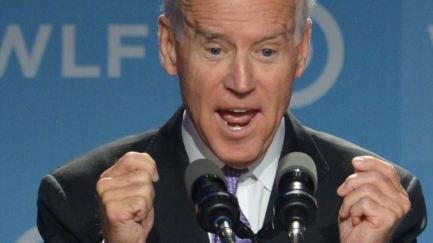
By Finian Cunningham | Press TV | October 6, 2014
“Bazooka Joe”, as the American vice president Joe Biden is affectionately nicknamed, has managed to shoot Washington in both feet, with a couple of startling admissions.
The first shot was his blunt assessment of the US-led anti-terror coalition currently bombing Iraq and Syria. While the second blast from Bazooka Joe was his candid remarks about how Western sanctions against Russia are all down to American bullying.
Biden was speaking at Harvard University at the end of last week, and in his apparently impromptu responses to public questions he revealed more about Washington than he perhaps intended. That’s why Biden is known as a loose cannon. He tends to shoot his mouth off before aiming his thoughts.
First of all, the vice president spoke about Syria, and he stated plainly that America’s regional allies are the sponsors behind the IS terror network. Biden named names. He accused Saudi Arabia, Turkey and the United Arab Emirates of pouring money and weapons into the creation of IS, al-Nusra Front and various other al-Qaeda-type terror groups.
“Our biggest problem is our allies – our allies in the region were our largest problem in Syria,” said Biden.
Referring to Saudi Arabia, Turkey and the UAE, Biden said: “They were so determined to take down [Syrian President] Assad and essentially have a proxy Sunni-Shia war, what did they do? They poured hundreds of millions of dollars and tens, thousands of tons of weapons into anyone who would fight against Assad, except that the people who were being supplied were al-Nusra and al-Qaeda and the extremist elements of jihadis coming from other parts of the world.”
Of course, many informed observers have known this terror background already. Certainly the Syrian and Iraqi governments have been accusing these same US regional allies of doing just that – sponsoring terrorism. Nevertheless, America’s second-in-command has, in his own words, made a damning assessment of the cause behind the rise of terrorism threatening the region. This anti-terror coalition that Washington has dragooned has therefore no credibility. Just ask Biden.
Since Biden made this stupendous admission, he has been forced over the weekend to make an apology to Turkey’s President Recep Tayyip Erdogan. The latter furiously denied his country’s involvement with terror groups in Syria. But many people won’t be convinced otherwise and they will rightly see Biden’s prior candid viewpoint as closer to the truth.
Also on Syria, Biden made a second injurious disclosure: namely, that there is no such thing as a “moderate opposition” fighting the Syrian government.
The American VP said “the idea of identifying a moderate middle has been a chase America has been engaged in for a long time… there was no moderate middle because the moderate middle are made up of shopkeepers, not soldiers”.
The notion of “moderate” Syrian rebels is central to US President Barack Obama’s strategy of supposedly defeating the IS network. Along with the US-led aerial bombing campaign – costing $10 million a day, according to the Pentagon – the next phase is to allegedly train “vetted rebels” who will displace the extremists and take up the fight against the Damascus government of Bashar al-Assad. These “moderates”, if we believe Washington, are to be trained in Saudi Arabia – the terror sponsor – with $500 million of American taxpayer money, approved by the US congress.
But thanks to Joe Biden’s big mouth, we have confirmation that the notion of “moderates” is a charade, as many observers have been saying all along. What’s more, Washington knows it too.
The second damaging disclosure from Bazooka Joe was in connection to the crisis over Ukraine. Relations between Washington and Europe on the one hand and Russia on the other have sunk to their worse level since the end of the Cold War more than two decades ago. A major reason for the tensions is the slapping of economic sanctions on Russia, which in turn has responded with bans on Western imports.
Moscow’s retaliatory sanctions on agricultural products are going to hit Europe very painfully – much more than the US – as will any moves by Russia to reduce crucial gas supplies to EU countries.
What Joe Biden revealed is that the EU countries were reluctant to apply trade sanctions on Russia in the first place. Biden said that they “were embarrassed” into adopting the aggressive American agenda because Obama personally hectored European leaders.
What Biden is saying is that the crisis between Russia and the rest of Europe has been greatly exacerbated by American bullying. If it weren’t for Washington’s hostile attitude, then the crisis over Ukraine would likely be resolved diplomatically, without the provocative backdrop of a damaging trade war.
As winter approaches and hard-pressed European citizens find that they are paying dearly for American intransigence towards Russia, Biden’s words will come back to haunt with a vengeance.
It is known that many of the EU 28 member states have already deep misgivings about following the US-led sanctions. As the crisis takes more and more of an economic and social toll on Europe, the Americans will incur bitter resentment from ordinary citizens across the EU, which will in turn fragment the apparent Washington-Brussels coalition against Russia.
All in all, we owe Joe Biden a measure of gratitude for his big mouth.
It spares us a lot of time-wasting from speculation and conjecture.
All we have to do is recall his words from last week when he spelled out the fallacy of the US-led war on terror in the Middle East and the US-led new Cold War against Russia.
Official Washington’s Syrian ‘Fantasy’
By Robert Parry | Consortium News | October 1, 2014
What does it say when the capital of the world’s most powerful nation anchors a major decision about war in what every thinking person acknowledges is a “fantasy” – even the principal policymaker and a top advocate for foreign interventions?
It might suggest that the U.S. government has completely lost its bearings or that political opportunism now so overwhelms rationality that shortsighted expediency determines life-or-death military strategies. Either way, it is hard to see how the current U.S. policy toward Iraq, Syria and the larger Middle East can serve American national interests or translate into anything but more misery for the people of the region.
Official Washington’s most treasured “fantasy” today is the notion that a viable “moderate opposition” exists in Syria or could somehow be created. That wish-upon-a-star belief was the centerpiece of congressional action last month on a $500 million plan by President Barack Obama to train and arm these “moderate” rebels to combat Islamic State terrorists who have been plundering large swaths of Syria and Iraq — and also take on the Syrian army.
Yet, as recently as August, President Barack Obama publicly declared that trust in these “moderates” was a “fantasy” that was “never in the cards” as a workable strategy. Then, on Wednesday, David Ignatius, national security columnist for the neoconservative Washington Post and a prominent booster of U.S. interventionism, reported from a rebel staging area in Reyhanli, Turkey, the same reality in nearly the same language.
“The problem is that the ‘moderate opposition’ that the United States is backing is still largely a fantasy,” Ignatius wrote, noting that the greatest challenge would be to coordinate “the ragtag brigades of the Free Syrian Army into a coherent force that can fill the vacuum once the extremists are driven out.”
Ignatius quoted Syrian rebel commander Hamza al-Shamali, a top recipient of American support including anti-tank missiles, as saying, “At some point, the Syrian street lost trust in the Free Syrian Army,” the U.S.-backed rebel force that was the armed wing of the supposedly “moderate opposition” to President Bashar al-Assad. Ignatius added:
“Shamali explains that many rebel commanders aren’t disciplined, their fighters aren’t well-trained and the loose umbrella organization of the FSA lacks command and control. The extremists of the Islamic State and Jabhat al-Nusra have filled the vacuum. Now, he says, ‘the question every Syrian has for the opposition is: Are you going to bring chaos or order?’”
According to Ignatius, Shamali said he rejected a proposal to merge the FSA’s disparate brigades because “we refuse to repeat failed experiments.” He argued that an entirely new “Syrian national army” would be needed to fight both the Islamist radicals and Assad’s military.
But even the sympathetic Ignatius recognized that “the FSA’s biggest problem has been internecine feuding. Over the past two years, I’ve interviewed various people who tried to become leaders, such as: Abdul-Jabbar Akaidi, Salim Idriss and Jamal Maarouf. They all talked about unifying the opposition but none succeeded.
“An Arab intelligence source explains: ‘Until now, the FSA is a kind of mafia. … People inside Syria are tired of this mafia. There is no structure. It’s nothing.’ And this from one of the people who have struggled the past three years to organize the resistance.”
In other words, the “moderate” rebels – to the degree that they do exist – are viewed by many Syrians as part of the problem, not part of any solution.
Favoring Al-Qaeda
Another flaw in Obama’s strategy is that the Syrian “moderates” are much more opposed to Assad’s harsh but secular regime than they are to the Sunni jihadists who have emerged as the most effective fighting force against him.
“If U.S. airstrikes and other support are seen to be hitting Muslim fighters only, and strengthening the despised Assad, this strategy for creating a ‘moderate opposition’ will likely fail,” Ignatius concluded.
That complaint has given new hope to Washington’s influential neoconservatives that they can ultimately redirect Obama’s intervention in Syria from bombing the Islamic State terrorists to a full-scale “regime change” war against Assad, much like the neocons helped convince President George W. Bush to invade Iraq in 2003. [See Consortiumnews.com’s “Neocons’ Noses Into the Syrian Tent.”]
In this regard, Obama appears to be the proverbial deer in the headlights. He’s afraid of being called “weak” if he doesn’t go after the Islamic State for its hyper-violent attacks inside Iraq and its brutal executions of American hostages in Syria. Yet, Obama also can’t escape his earlier tough talk that “Assad must go.”
Obama’s core contradiction has been that by providing “covert” assistance to Syrian rebels, he has indirectly strengthened the Sunni extremists who have seized the Free Syrian Army’s weapons depots and won converts from the “moderate” rebels, some of whom were trained, armed and financed by the CIA. Meanwhile, other U.S. allies, including Saudi Arabia and Turkey, have been helping more extreme Syrian rebels, including al-Qaeda’s Nusra Front.
A year ago, many of the “moderate” rebels publicly repudiated the Syrian political front that the Obama administration had put together and instead endorsed al-Nusra. According to one source with access to Western intelligence information, some “moderate” rebels – recruited from Muslim communities in Great Britain and other Western countries – have now taken their military skills (and passports) to the Islamic State.
Yet, instead of acknowledging that this strategy of relying on an unreliable “moderate opposition” is indeed a “fantasy,” President Obama and a majority in Congress have chosen to pursue this geopolitical unicorn with another $500 million and much political chest-thumping.
An Alternative Approach
At this late stage, the only practical strategy would be to press the non-extremist Sunni opposition to work out some form of unity government with Assad who retains strong support among Syria’s Alawite, Shiite and Christian minorities. By enlisting Russia and Iran, Obama might be able to secure concessions from Assad, including the possibility of a gradual transition to a post-Assad era.
With such a political settlement in hand, the focus could then be on defeating the Islamic State and al-Qaeda’s Nusra affiliate and restoring some order to Syria. But the problem is that Official Washington’s neocons and their “liberal interventionist” allies are so fixated on “regime change” in Syria and are so hostile to Russia and Iran that any pragmatic strategy is effectively ruled out.
Though Obama may be a closet “realist” who would favor such a compromise approach, he has consistently lacked the political courage or the geopolitical foresight to impose this kind of solution on the powers-that-be in Washington. Any suggestion of collaboration with Russia and Iran or acquiescence to continued rule by Assad would touch off a firestorm of outrage in Congress and the mainstream U.S. media.
So, Obama instead has charted a course into what he knows to be a fantasyland, a costly pursuit of the chimerical Syrian “moderates” who – once located – are supposed to defeat both the Sunni extremists and the army of the secularist Assad. This journey is not simply a march of folly but a meandering into illusion.
~
Investigative reporter Robert Parry broke many of the Iran-Contra stories for The Associated Press and Newsweek in the 1980s. You can buy his new book, America’s Stolen Narrative, either in print here or as an e-book (from Amazon and barnesandnoble.com).
Pentagon: US to Sell New Missiles and Rocket Launchers to Saudi Arabia, UAE
Al-Manar | October 2, 2014
US Defense Department will sell Patriot missile batteries of $1.57 billion to the Saudi Arabia and rocket launchers of $900 million to the United Arab Emirates, Pentagon said on Wednesday.
The initial details of the sale came public in April, and the Pentagon announcement informed Congress of the intention to follow through on the previously reported plans.
The Saudi government had requested the purchase of 202 Patriot Advanced Capability (PAC)-3 missiles — the most sophisticated version of the Patriot anti-missile weapons — as well as a flight test target, telemetry kits and other related equipment, the Defense Security Cooperation Agency said in a statement.
“The proposed sale will help replenish Saudi’s current Patriot missiles which are becoming obsolete and difficult to sustain due to age and the limited availability of repair parts,” the agency said.
“The program will contribute to the foreign policy and national security of the United States by helping to improve the security of a partner which has been, and continues to be, an important force for political stability and economic progress in the Middle East,” it added.
Both Kuwait and Qatar already have purchased the PAC-3 weapons, which are designed to knock out incoming ballistic missiles as well as enemy aircraft and cruise missiles using ground radar.
The system “will improve the UAE’s capability to meet current and future threats and provide greater security for its critical infrastructure,” the Defense Security Cooperation Agency said.
The weapons, which deliver precise and powerful artillery fire at a long range, would also bolster the UAE military’s ability to operate with US forces, it noted.
Congress has 30 days to raise objections to the potential arms sales. Without any move to block the deals, the US government can then negotiate contracts with the two countries.
ISIS and the USA: Expansion and Resistance by Decapitation
By James Petras :: 09.26.2014
Introduction
In order to overcome massive US and world public opposition to new wars in the Middle East, Obama relied on the horrific internet broadcasts of ISIS slaughtering two American hostages, the journalists James Foley and Steve Sotloff, by decapitation. These brutal murders were Obama’s main propaganda tool to set a new Middle East war agenda – his own casus belli bonanza!
This explains the US Administration’s threats of criminal prosecution against the families of Foley and Sotloff when they sought to ransom their captive sons from ISIS.
With the American mass media repeatedly showing the severed heads of these two helpless men, public indignation and disgust were aroused with calls for US military involvement to stop the terror. US and EU political leaders presented the decapitations of Western hostages by the so-called Islamic State (ISIS) as a direct and mortal threat to the safety of civilians in the US and Europe. The imagery evoked was of black-clad faceless terrorists, armed to the teeth, invading Europe and the US and executing innocent families as they begged for rescue and mercy.
The problem with this propaganda ploy is not the villainy and brutal crimes celebrated by ISIS, but the fact that Obama’s closest ally in his seventh war in six years is Saudi Arabia, a repugnant kingdom which routinely decapitates its prisoners in public without any judicial process recognizable as fair by civilized standards – unless tortured ‘confessions’ are now a Western norm. During August 2014, when ISIS decapitated two American captives, Riyadh beheaded fourteen prisoners. Since the beginning of the year the Saudi monarchy has decapitated more than 46 prisoners and chopped off the arms and limbs of many more. During Obama and Kerry’s recent visit to Saudi Arabia, horrendous decapitations were displayed in public. These atrocities did not dim the bright smile on Barak Obama’s face as he strolled with his genial royal Saudi executioners, in stark contrast to the US President’s stern and angry countenance as he presented the ISIS killing of two Americans as his pretext for bombing Syria.
The Western mass media are silent in the face of the Saudi Kingdom’s common practice of public decapitation. Not one among the major news corporations, the BBC, the Financial Times, the New York Times, the Washington Post, NBC, CBS and NPR, have questioned the moral authority of a US President who engages in selective condemnation of ISIS while ignoring the official Saudi state beheadings and the amputations.
Decapitation and Dismemberment: By Dagger and Drones
The ISIS internet videos showing gaunt, orange-suited Western prisoners and their lopped-off heads have evoked widespread dismay and fear. We are repeatedly told: ‘ISIS is coming to get us!’ But ISIS is open and public about their criminal acts against helpless hostages. We cannot say the same about the decapitations and dismemberment of the hundreds of victims of US drone attacks. When a drone fires its missiles on a home, a school, wedding party or vehicle, the bodies of living people are dismembered, macerated, decapitated and burned beyond recognition – all by remote control. The carnage is not videoed or displayed for mass consumption by Obama’s high command. Indeed, civilian deaths, if even acknowledged, are brushed off as ‘collateral damage’ while the vaporized remnants of men, women and children have been described by US troops as ‘pink foam’.
If the brutal decapitation and dismemberment of innocent civilians is a capital crime that should be punished, as I believe it is, then both ISIS and the Obama regime with his allied leaders should face a people’s war crimes tribunal in the countries where the crimes occurred.
There are good reasons to view Washington’s close relation with the Saudi royal beheaders as part of a much broader alliance with terror-evoking brutality. For decades, the US drug agencies and banks have worked closely with criminal drug cartels in Mexico while glossing over their notorious practice of decapitating, dismembering and displaying their victims, be they local civilians, courageous journalists, captured police or migrants fleeing the terror of Central America. The notorious Zetas and the Knights Templar have penetrated the highest reaches of the Mexican federal and local governments, turning state officials and institutions into submissive and obedient clients. Over 100,000 Mexicans have lost their lives because of this ‘state within a state’, an ‘ISIS’ in Mexico – just ‘South of the Border’. And just like ISIS in the Middle East, the cartels get their weapons from the US imported right across the Texas and Arizona borders. Despite this gruesome terror on the US southern flank, the nation’s principle banks, including Bank of America, CitiBank, Wells Fargo and many others have laundered billions of dollars of drug profits for the cartels. For example, the discovery of 49 decapitated bodies in one mass in May 2014 did not prompt Washington to form a world-wide coalition to bomb Mexico, nor was it moved to arrest the Wall Street bankers laundering the ‘beheaders bloody booty’.
Conclusion
Obama’s hysterical and very selective presentation of ISIS crimes forms the pretext for launching another war against a predominantly Muslim country, Syria, while shielding his close ally, the royal Saudi decapitator from US public outrage. ISIS crimes have become another excuse to launch a campaign of ‘mass decapitation by drones and bombers’. The mass propaganda campaign over one crime against humanity becomes the basis for perpetrating even worse crimes against humanity. Many hundreds of innocent civilians in Syria and Iraq will be dismembered by ‘anti-terrorist’ bombs and drones unleashed by another of Obama’s ‘coalition’.
The localized savagery of ISIS will be multiplied, amplified and spread by the US-directed ‘coalition of the willing decapitators’. The terror of hooded beheaders on the ground will be answered and expanded by their faceless counterparts in the air, while delicately hiding the heads rolling through the public squares of Riyadh or the headless bodies displayed along the highways of Mexico … and especially ignoring the hidden victims of US-Saudi aggression in the towns and villages of Syria.
US considers no-fly zone over northeastern Syria: Reports
Press TV – September 27, 2014
The US Department of Defense says it is considering the possibility of imposing a no-fly zone over northeastern Syria to deny the Syrian military the ability to launch airstrikes there, reports say.
Turkey has requested the US to establish a buffer zone along the Turkish-Syrian border to protect foreign-sponsored militants and civilians.
US Defense Secretary Chuck Hagel and Gen. Martin E. Dempsey, the chairman of the Joint Chiefs of Staff, said on Friday, “We’ve discussed all these possibilities and will continue to talk about what the Turks believe they will require.”
Dempsey added that “a buffer zone might at some point become a possibility.”
The US and its allies have been continuously bombing the ISIL terrorist group in northeastern Syria since Tuesday; but the Pentagon is indicating that it may decide to prevent the Syrian military from targeting anti-government militants in the same region.
Fighter aircraft from Saudi Arabia, Jordan, Qatar, Bahrain and the United Arab Emirates have taken part in the airstrikes in Syria.
The ISIL terrorists, who were initially trained by the CIA in Jordan in 2012 to destabilize the Syrian government, control large parts of Syria’s northern territory. ISIL sent its fighters into Iraq in June, quickly seizing vast expanse of land straddling the border between the two countries.
Syria has been gripped by deadly unrest since 2011. According to reports, the United States and its regional allies – especially Qatar, Saudi Arabia, and Turkey – are supporting the militants operating inside the country.
According to the United Nations, more than 190,000 people have been killed and millions displaced due to the turmoil that has gripped Syria for over three years.
Coalition of the Clueless
By Sharmine Narwani | RT | September 25, 2014
This US-engineered Coalition is in for some surprises. With few common goals, it has thrust itself into battle against the most determined players in the region and beyond.
The airwaves are still heaving with spin two days after US airstrikes against Syria.
Undoubtedly the attacks were timed to occur on the eve of the annual gathering of world leaders at the United Nations, so ‘Coalition’ partners could cluster behind the decision to bomb a sovereign state, uninvited.
The irony, of course, is that they are doing so at the UN – the global political body that pledges to uphold international law, peace and stability, and the sanctity of the nation-state unit.
The goal this week will be to keep the ‘momentum’ on a ‘narrative’ until it sinks in.
On day one, heads of state from Turkey, Jordan, Qatar, the UK and France were paraded onto the podium to drum in the urgency of American strikes against the Islamic State of Iraq and the Levant (ISIL), Jabhat al-Nusra and other militant groups inside Syria.
Every American official – past and present – in the White House rolodex was hooked up to a microphone to deliver canned sound bites and drive home those ‘messages.’ In between, video-game-quality footage of US strikes hitting their targets was aired on the hour; clips of sleek fighter jets refueling midair and the lone Arab female fighter pilot were dropped calculatingly into social media networks.
The global crew of journalists that descends annually on the UN for this star-studded political event, enthused over US President Barak Obama’s ability to forge a coalition that included five Arab Sunni states – Saudi Arabia, Qatar, Jordan, Bahrain and the UAE.
Few mentioned that these partners are a mere fig leaf for Obama, providing his Syria campaign with Arab and Muslim legitimacy where he otherwise would have none. Not that any of these five monarchies enjoy ‘legitimacy’ in their own kingdoms – kings and emirs aren’t elected after all – and two of these Wahhabi states are directly responsible for the growth and proliferation of the Wahhabi-style extremism targeted by US missiles.
Even fewer spent time dissecting the legality of US attacks on Syria or on details of the US ‘mission’ – as in, “what next?”
But with a mission this crippled at the outset, it didn’t take long for an alternative view to peek through the thick media fog.
On the ground in Syria, dead civilians – some of them children killed by US bombs – muddied the perfect script. Confused Syrian rebels – many who had called for foreign intervention to help crush the government of Syrian President Bashar al-Assad – demanded to know how these airstrikes were meant to help them.
Sunni Arabs would be radicalized by these strikes, they warned, as ideologically sympathetic citizens of the Arab coalition states took to their information channels and swore revenge for airstrikes against ISIL and al-Nusra.
The Syrian government, for the most part, remained mute – whether to save face or because they could ‘smell’ the gains coming. Contrary to Washington’s prevailing narrative, privately the story was that the US had informed the Assad government of both the timing and targets of the attacks in advance.
Sources say that the US even provided ‘guarantees’ that no Syrian military or government interests would be targeted. A Reuters exclusive claiming that the US went so far as to provide assurances to Iran, suggests this version is closer to the truth. When US airstrikes against Syria were on the table a year ago, the various parties went through a similar game of footsies. Last September, the Americans backed off – allegedly because of communications from their adversaries that even a single US missile would trigger a warfront against Israel. This time, Washington needed to know that scenario was not going to be activated, and this week they offered the necessary guarantees to ensure it.
Although the Russians and Iranians have publicly lashed out at the illegality of US strikes, they do not seem too worried. Both know – like the Syrian government – that these air attacks could be a net gain for their ‘Axis.’
Firstly, the United States is now doing some useful heavy-lifting for Assad, at no real cost to him. The Syrian armed forces have spent little time on the ISIL threat because their focus has traditionally been on protecting their interests in Aleppo, Damascus, Homs, Hama – and the countryside in these areas – as well as towns and cities around the Lebanese and Jordanian borders. That changed when ISIL staged successful attacks on Mosul and created new geopolitical urgency for Assad’s allies – which triggered some major Syrian strikes against ISIL targets.
But to continue along this path, the Syrians would have to divert energy and resources from key battles, and so the American strikes have provided a convenient solution for the time being.
Secondly, the Syrians have spent three years unsuccessfully pushing their narrative that the terrorism threat they face internally is going to become a regional and global problem. The US campaign is a Godsend in this respect – Obama has managed to get the whole world singing from the same hymn sheet in just two months, including, and this is important, the three states – Saudi Arabia, Qatar and Turkey – most instrumental in financing, weaponizing and assisting ISIL and other extremist militias inside Syria.
Syria, Iran, Russia, Hezbollah and a host of like-minded emerging powers are pleased about this new laser focus on jihadi terror and for the accompanying resource shift to address the problem.
Thirdly, the US has now been placed in the hot seat and will be expected to match words with action. For three years, Washington has overlooked and even encouraged illegal and dangerous behaviors from its regional Sunni allies – all in service of defeating Assad. With all eyes on America and expectations that Obama will fail in his War on Terror just like his predecessors, the US is going to have to pull some impressive tricks from its sleeves.
Ideally, these would include the shutting down of key border crossings (Turkey, Jordan, Lebanon); punishing financiers of terror and inhibiting the flow of funds and assistance from Washington’s regional allies; cutting off key revenue streams; tightening immigration policies to stem the flow of foreign fighters; disrupting communications networks of targeted terrorist groups; broader intelligence sharing with all regional players; and empowering existing armies and allied militias inside the ‘chaos zone’ to lead and execute ground operations.
Thus far, there are signs that some of these things are already happening, with possibly more to come.
Now for the fun part. The Syrians, Iranians and Russians do not fundamentally trust Washington or its intentions. The suspicion is that the US is on another one of its regime-change missions, displaying its usual rogue-state behavior by violating the territorial integrity of a sovereign state under false pretenses, and that it will shortly revert to targeting the Syrian government.
While they can see clear gains from the current level of US intervention – as distasteful as they find it – they are watching carefully as events unfold.
If there is the slightest deviation from the ‘guarantees’ provided by the US, this trio has plenty of room to maneuver. Iran, for one, has dallied with the Americans in both Iraq and Afghanistan and they know how to cause some pain where it counts. The Russians, for that matter, have many playgrounds in which to thwart US ambitions – most urgently in Ukraine and in Afghanistan, from which the US hopes to withdraw billions of dollars’ worth of military equipment by the end of 2014.
All understand that Washington has just assumed a risky public posture and that many, many things can go wrong. The Sunni Arab fig leaf can disappear in a nano-second if domestic pressures mount or revenge attacks take place internally. Information could leak about continued assistance to terrorist militias from one or more of its coalition partners – a huge embarrassment for Washington and its wobbly Coalition. ISIL will almost certainly act against coalition partner soft-targets, like carrying out further kidnappings and executions. Continued airstrikes will almost definitely result in a growing civilian casualty count, turning those ‘hearts and minds’ to stone. Syrian rebels could swiftly turn against the US intervention and radicalize further. Massive displacement caused by airstrikes could exacerbate the humanitarian crisis. And as in all other past US military War-on-Terror adventures, terrorism could thrive and proliferate in quantum leaps.
As Moscow-based political analyst Vladimir Frolov noted to the Washington Post : “The United States has underestimated the complexity of the situation before, so let’s just wait until they run into problems.”
The idea that US military engagement could continue for the long-term is unlikely given the myriad things that can go wrong fast. Obama is going to be reluctant to have his last two years in office defined by the hazardous Syrian conflict – after all, he was to be the president who extracted America from unessential wars.
But the most compelling reason that this Coalition will not pass the first hurdle is that its key members have entirely different ambitions and strategic targets.
Over a decade ago, these US-engineered coalitions were wealthier, less-burdened and shared common goals. Today, many of the coalition members face domestic economic and political uncertainties – and several states are directly responsible for giving rise to ISIL. How can the Coalition fight ISIL and support it, all at once?
What’s missing is a formula, a strategy, a unified worldview that can be equally as determined as the ideological adversary it faces.
Down the road, we will discover that the only coalition able and willing to fight extremism does indeed come from inside the region, but importantly, from within the conflict zone itself: Lebanon, Syria, Iraq and Iran. For starters, they are utterly vested in the outcome of their efforts – and would lead with political solutions alongside military ones. Those elusive boots-on-the-ground that everyone is seeking? They live it. Pit that group against Obama’s Coalition-of-the-Clueless any day and you know which side would win handily.
The question is, can this Coalition stomach a solution it is working so hard to avoid? Will it partner with vital regional players that were foes only a few months ago? It is doubtful. That would require a worldview shift that Washington is still too irrational to embrace.
Follow @snarwani on Twitter
Nasrallah: “America is the mother of terrorism”
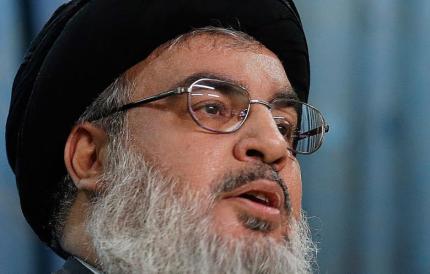
Nasrallah speaks on July 25, 2014, in the southern suburbs of Beirut. (Photo: Al-Akhbar – Haitham Moussawi)
Al-Akhbar | September 23, 2014
Hezbollah leader Hassan Nasrallah on Tuesday said his group could never be a part of an anti-ISIS coalition led by “the source” of all terrorism in the world, the United States.
The international coalition, which began illegal airstrikes in Syria for the first time Tuesday, was created to safeguard the interests of the United States, not to fight terrorism as it claims, Nasrallah said in a televised speech.
“In our opinion, America is the mother of terrorism, the source of terrorism. If there is terrorism anywhere in the world, look at America,” the secretary-general said.
“America provides complete support for the terrorism of the Zionist state. It supports Israel militarily, financially, legally, and even provides it veto in the United Nations Security Council.”
Nasrallah continued: “He who dropped the atomic bomb on the people of Japan, and who killed [relentlessly] in Vietnam and elsewhere, and who stood by [Israeli Prime Minister Benjamin] Netanyahu in the 50 day war on Gaza … is not qualified ethically or morally to present itself as a leader of a coalition to fight terrorism.”
The comments come as the United States and allied Arab dictatorships began launching unauthorized airstrikes against jihadi targets in Syria, drawing rebukes from Damascus’s allies Iran and Russia.
Nasrallah brushed off criticism that his opposition to the coalition translated into support for the Islamic State of Iraq and Syria (ISIS), noting that he has repeatedly denounced the extremists and called for their elimination.
The reality that many of those included in the anti-ISIS coalition have been financing the jihadi militants they are currently fighting in Iraq and Syria forces people of the region to question the motives of their actions, he added, referring to Saudi Arabia and Qatar.
Lebanon is one of 10 Arab countries that has pledged support to the coalition, a membership that Nasrallah said he opposed.
“Never did [US President Barack Obama] say we are coming to defend minorities or Muslims or Christians …,” Nasrallah said.
“So we will not fight in a coalition that serves US interests and not the interests of the people of the region.”
In Nasrallah’s last speech on August 15, he noted that the United States only decided to get involved in the fight against ISIS when the jihadis approached Iraq’s Kurdish region, which is strategically important to the West. … Full article
Featured Video

HE SAVED LIVES. NOW HE FACES PRISON.
or go to
Aletho News Archives – Video-Images
From the Archives
NATO Sanctions and the Coming Global Diesel Fuel Disaster
By F. William Engdahl – New Eastern Outlook – 11.04.2022
Amid the ongoing global inflation crisis, NATO heads of state and mainstream media repeat a mantra that high energy prices are a direct result of Putin’s actions in Ukraine since end of February. The reality is that it is the western sanctions that are responsible. Those sanctions including cutting SWIFT interbank access for key Russian banks and some of the most severe sanctions ever imposed, are hardly having an impact on the military actions in Ukraine. What many overlook is the fact that they are increasingly impacting the economies of the West, especially the EU and USA. A closer look at the state of the global supply of diesel fuel is alarming. But Western sanctions planners at the US Treasury and the EU know fully well what they are doing. And it bodes ill for the world economy.
While most of us rarely think about diesel fuel as anything other than a pollutant, in fact it is essential to the entire world economy in a way few energy sources are. The director general of Fuels Europe, part of the European Petroleum Refiners Association, stated recently, “… there is a clear link between diesel and GDP, because almost everything that goes into and out of a factory goes using diesel.” … continue
Blog Roll
 Aletho News
- Trita Parsi: Middle East Unraveling — Are We on the Path to World War?
- Iran FM meets with US envoy on UN meeting’s sidelines at American side’s insistence: Report
- Qatar PM calls for Gulf security framework with Iran, says war must be ‘wake-up call’
- China condemns US extortion of Iranian airlines, rejects Washington’s ‘illegal’ sanctions threats
- Italy to move military personnel from Taif base after missile strike
- Finland’s Stubb tells European leaders to calm down
- Defeating Russia on battlefield impossible – Fico
- Finland’s Gender Clinic Reversal
- Massachusetts Wants Mental Health Visits, Why Does Government Use ‘Health’ to Enter Our Homes & Families?
- US lawmaker admits American people footing bill for Trump’s failed aggression against Iran
- If Americans Knew
- Sanctions are collective punishment: immoral and self-defeating
- Phosphorus Munitions Fired by Israel Burn Groves, Orchards in Southern Lebanon
- Israel Carries Out New Ceasefire Violations Across Gaza
- AI – Emphasis on the ‘I’: Israel Is Funding AI Chatbot Propaganda
- Israel Blocking Hundreds of Wheelchairs for Injured Children From Entering Gaza
- Israel Is Expanding and Upgrading Compounds for Palestinian Militias in Gaza
- The Palestinian-American Residents of This West Bank Town Are Wondering: Where Is Trump?
- Gaza desperately needs tents, wheelchairs, fuel… and everything else (Israel blocks it all) – Daily Update
- Israeli Attacks in Gaza Kill at Least Seven Palestinians Over Three Days, including Woman and Child
- Trump’s militarization of Washington DC as he pursues Israel’s war against Iran
- No Tricks Zone
- 2025 Nature Paper Claiming Worsening Global Drought Gets RETRACTED …Heavily Flawed
- New Study: ‘Global Drought Shows No Detectable Recent Acceleration Under Climate Warming’
- Economic Masterminds: German Socialists Suggest Taxing Productivity Gains Stemming From Using AI
- The South China Sea Has Not Been Cooperating With The Climate Change Narrative
- Energy Crisis: Germany Enters Heating Season With Historically Low Gas Reserve Fill Levels
- New Study: The Antarctic Ice Sheet Gained Mass From 2020-2024 Due To Staggering Snow And Ice Accumulation
- Study: Ocean Heating Rates From Thousands Of Years Ago ‘Dwarf’ Modern Ocean Heating Rates
- Climate Extremists Target, Attack Large-Scale Power Grid Infrastructure In Germany!
- New Study: Antarctic Ice Melt Has Contributed Less Than 1 Centimeter To Sea Level Rise In The Last 30 Years
- Fear Of Debate: Alarmist German Climate Scientist Calls On Mainstream Media To Discredit Skeptic Voices

