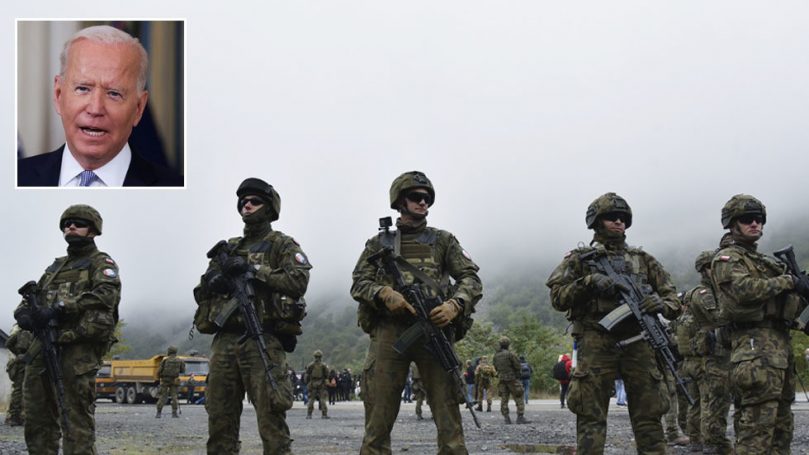
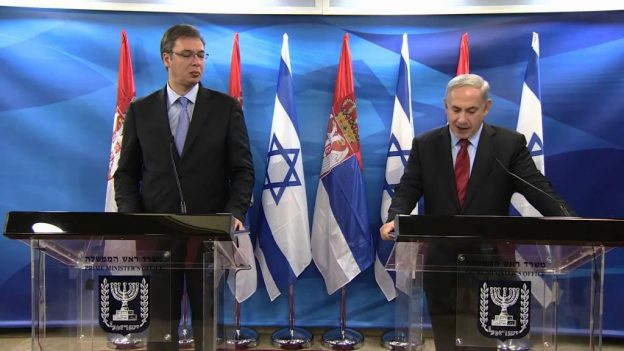
During the bombing of FR Yugoslavia, NATO also poisoned Europe, Dr Danica Grujičić told the Russian news agency RIA Novosti.
The director of the Institute of Oncology and Radiology of Serbia explained that chemical plants and various dangerous industries were bombed, which, as she says, created an ecological catastrophe and poisoned Europe.
According to Grujičić, the use of NATO bombs with depleted uranium and the destruction of environmentally dangerous facilities during air strikes have led to Serbia being now the leader in the number of cancer deaths in Europe, with almost 60.000 new cancer patients a year.
“The North Atlantic Alliance did not pay attention to civilian casualties. Everyone knows the famous conversation between former Yugoslav President Slobodan Milosevic and Finnish diplomat Martti Ahtisaari, who said that Belgrade would be levelled to the ground (if it does not accept the ultimatum),” Grujičić added.
“If we had a nuclear power plant, they would definitely hit it, because they attacked everything on the list of facilities dangerous for the environment. They knew that a local environmental catastrophe would be created in every oil refinery, chemical company. They did it on purpose”, she said.
Grujičić recalled that about 15 tons of depleted uranium were officially dumped on Serbia, but emphasized that “no one knows how much it really was, and it will never be known.”
“We have taken the initiative to determine with mathematical precision, not only medical, but also environmental consequences. The data we received show that the whole of Europe was polluted. Europeans who were looking forward to the bombs over Belgrade and Serbia are also endangered and do not know what they were breathing, eating, drinking,” she added.
To any Serb who has not lost his mind or has just become numb from three decades of relentless anti-Serbian propaganda and lies emanating from the “free and democratic” West’s power centers and media – the speed and totalitarian scope of anti-Russian measures and the intensity of anti-Russian propaganda censorship that has captured the West cannot come as a surprise. As Serbian president Aleksandar Vucic stated a few days before the beginning of Russia’s denazification and demilitarization campaign in the Ukraine, about 85% of Serbs are “always” on the side of Russia. Even as Serbia has, over the past several days, come under immense Western pressure as the lone independent enclave in Europe, a sort of a West Berlin of the new multipolar world in the making, surrounded by NATO and/or EU countries that have been, with varying degrees of voluntarity, sucked into the ongoing anti-Russian hysteria and the accompanying sanctions, closing of airspace to Russian planes, etc.
The reason is simple, even if one sets aside the centuries-old spiritual, ethnic and just plain fraternal ties between the two peoples. For the Serbs were, so to speak, the canaries in the coal mine in the years that followed George Bush Senior’s proclamation of a “new world order.” Early on after the fall of the Berlin Wall, at the beginning of the 1990s, while innocents and just plain people of good will were still enamored with the announced “end of history” and the glorious triumph of “liberal democracy,” in the Serbian parts of Yugoslavia, we were experiencing, firsthand, something completely different, dark and ominous. We were witnessing the gradual return of pure, cynical power politics, only this time couched in the clothing of politically correct, sugarcoated homilies invoking “human rights,” “democracy,” “European integration” and “peace,” which, as it soon enough turned out, served as a mere “liberal” fog of war, as a preparatory rhetorical, diplomatic and media artillery fire for legitimizing the West’s self-anointed right to define what is good and what is not and to, on the basis of the newly prescribed definitions, interfere and expand its purely pragmatic, base interests wherever it could. The world was the victorious West’s oyster, “democracy expansion” its new quasi-religion, putting a moral veneer on its newest geopolitical outreach, a modernized version of the “white man’s burden” couched in the newfangled terminology of a supposedly post-ideological era.
Thus, during the violent dismemberment of Yugoslavia, its chief external instigators and facilitators – led by Germany and Austria, with essential help from the U.S. ambassador to Yugoslavia – could, thanks to their vast domination of the media-informational space, present themselves as “peace brokers” and, even more sickening, as moral arbiters. The new-old expansionist West could portray itself to the uninformed and the gullible as some sort of force for good, while painting the enemy – the Serbs then, the Russians today – as evil incarnate. It was on the ashes of the Western-fomented destruction of Yugoslavia that the myth of “indispensable NATO”, “benevolent EU” and the “good West” received much of their subsequent affirmation and post-Cold War soft power. And therein lies much of the reason why Russia’s – and not only Russia’s – endless polite requests and pleas to halt the North Atlantic military pact’s steady expansion to the east, were not taken seriously, or at least seriously enough, by a critical mass of those who had no direct contact with the Western wolves in sheep’s clothing, like the Serbs (and the Syrians, Libyans, Iraqis, Afghans, Yemenis, Somalis, Venezuelans, etc.) did. Simply put, the West was only starting to spend the huge surplus moral value it had accrued as victor of a global struggle with an “evil empire,” the chinks in the (artificially manufactured) armor were still too microscopic for the ordinary, inexperienced, well-meaning eye to detect.
Even NATO’s illegal bombing of the Federal Republic of Yugoslavia in spring of 1999, in the name of “prevention of genocide” in Serbia’s historic and sacred Kosovo province – of which no evidence has ever been presented over the ensuing 23 years – did not awaken the critical mass of Western public opinion and decision-makers necessary to reexamine the wisdom and necessity of continuing on the path of, essentially, a new Drang nach Osten (however, seeing what happened with Trump, much later in the game, it’s beyond obvious that election outcomes and decision-making in the West have been captured by the military-industrial complex even then, just as Eisenhower had warned back in 1961) .
It did, however, finally awaken Moscow, opening the way to Vladimir Putin’s ascendance to Russia’s highest office on the last day of that fateful year. Like the Serbs, the Russians still remembered the true horrors of the last world war and could recognize the all-too-familiar patterns far more easily than most on the European continent. Unfortunately, Moscow could not do much about them initially, other than to ceaselessly warn, beginning with Munich in early 2007, ask for a general reassessment and renegotiation of common European security and – aware that its tactful warnings, suggestions and proposals were being blithely ignored in the key Western capitals – rearm and prepare itself for the inevitable. Which finally came with the collective West’s refusal to talk about Ukraine’s neutrality and the halting of NATO’s further expansion, in parallel with the Ukrainian puppet president’s raising of the threat of Ukraine becoming a nuclear state.
Why would Moscow agree to the very real possibility of nuclear missiles deployed at its borders, which could reach it in 7-8 minutes (and, in the case of future hypersonic missiles, in 5-6 minutes)? Why would it trust NATO’s (true) power centers, whose leading figures had assured it that not one further inch would be taken to the east as the Warsaw pact self-dissolved – and then proceeded to do precisely the opposite?
So, no, the endless verbal assurances and endless empty talk of the past three decades would no longer work, as all Russia had gotten out of it was a hostile, Axis-like alliance at its borders and a campaign of steadily rising demonization that had, of late, in many aspects exceeded that experienced by the U.S.S.R. at the height of the Cold War. When threatened with nuclear missiles under its nose in Cuba, the U.S. was willing to launch nuclear war to prevent it. Russia has threatened no such thing.
A day after the beginning of the Russian demilitarization and denazification campaign, Serbia’s president announced Serbia’s official position regarding the situation in Ukraine, as outlined in the conclusions of the Serbian National Security Council. In essence, Serbia’s position is that it respects Ukraine’s territorial integrity as it respects the territorial integrity of all states in accordance with the UN Charter and the Helsinki Act of 1975, that it considers the violation of the territorial integrity of any state, including Ukraine “very wrong,” but that it will not impose sanctions against the Russian Federation.
It is enough just to look at a current political map of Europe to see the significance, courage and difficulty of Serbia’s decision. Serbia and neighboring Bosnia and Herzegovina (BiH) are islands in the NATO sea that surrounds them – and BiH is not a NATO member only due to the opposition of the Serbs in that country, led by the Serbian member of the BiH Presidency, Milorad Dodik. In addition, all the surrounding states have joined the Western condemnations of Russia’s intervention in Ukraine and have joined or voiced support for the newest sanctions imposed on Russia, including the EU’s closure of air space to Russian planes.
As expected, over the past few days, as testified by Vucic himself, Serbia has been subjected to “intense” Western pressure to join the sanctions and condemnations front against Russia. The EU Parliament Rapporteur for Serbia, Vladimir Bilchik has already stated that Serbia’s decision not to join the EU’s sanctions against Russia is a “defining foreign policy decision for much broader relations between the EU and Serbia.” Former Swedish foreign and prime minister and the first High Representative for BiH Carl Bildt Tweeted that Serbia has “de facto disqualified itself from the EU accession process,” as new members are expected to share in the EU’s “fundamental values and interests.” European Commission spokespeople Ana Pisonero and Eric Mamer have also voiced expectations that Serbia would join the EU sanctions policy.
These are all rather ominous words – and not because anyone in Serbia, other than a handful of well-paid diehards and hopeless cases, truly believes that the country will ever be admitted to the self-proclaimed “most successful peace project in human history” (which expressly approved the sending of fighter jets to neo-Nazi “democrats” in Ukraine), but because the out-of-control Western elites’ “either you’re with us or against us” mentality is certain to find ways to make its displeasure known to all dissidents. Especially to an encircled, friendly-to-Russia enclave that stubbornly refuses to join the anti-Russian hysteria being fanned all over the Western “liberal” landscape. After all, Serbia was viciously and illegally bombed by NATO in 1999 for not voluntarily agreeing to its own occupation by the alliance of “democratic values.” Since then, the alliance has gained 11 more members and about a thousand kilometers to the east. So, we shall wait and see in the coming days and weeks what practical measures of punishment or censure will be applied by the EU (and NATO) against Serbia, which has been an official candidate for EU membership since 2012 and is, thus, obliged to gradually harmonize its policies, including foreign policy, with the “peace loving” union.
Russia has shown appreciation and understanding for Serbia’s position. In his reaction to Serbia’s official stance, the Russian ambassador in Belgrade stated that Russia “understands that Serbia is being pressured and does not ask anything of Serbia,” being well aware of the mutual respect and trust that exist between President Vucic and Russia’s President Putin, that Serbia “respects Russia’s national interest,” and that Russia is “at peace” with Serbia’s position and its foreign policy.
In addition, as stated in the National Security Council conclusions, Serbia was itself a victim of Western sanctions during the 1990s and, even more importantly, aggression on the part of 19 NATO states in 1999 precisely for defending its own territorial integrity. In other words, Serbia is not only refusing to join Western sanctions against a traditional friend and ally but also to be a part of traditional Western double standards, which it has felt on its own skin both in the past and in the present. Towards that end, the speaker of the Serbian parliament, Ivica Dacic, clearly stated that, unlike the rest of “democratic” Europe, Serbia would not join in the “totalitarian” methods and close or censor either Sputnik or RT. So, as things stand, Sputnik’s last non-Russian European outpost now sits in Belgrade, which is, nevertheless, still not sufficiently “democratic” to pass muster with the free-thinking bureaucrats in Brussels
On that same tangent, because you can never have too much trans-Atlantic hypocrisy, the U.S. embassy in Belgrade also reacted to Serbia’s position regarding the Russian intervention in Ukraine by Tweeting that the U.S. “salute Serbia’s and President Aleksandar Vucic’s repeated position of support for Ukraine’s territorial integrity, which was violated by Russia’s illegal and completely unprovoked attacks.”
Aside from the brazen twisting and pure invention in which the U.S. embassy engaged – as no Serbian official has used any remotely harsh words to describe Russia’s intervention – American diplomats are conveniently ignoring the fact that their own country has been consistently and aggressively violating Serbia’s own territorial integrity since February 2008, when the U.S. recognized the independence of Serbia’s historical and sacred province of Kosovo (Kosovo and Metohija is the full name of the province, in accordance with the Serbian constitution). And, of course, except for the 5 EU states that have refused to recognize the secession of so-called Kosovo from Serbia (Greece, Cyprus, Romania, Spain and Slovakia) – the rest of the EU, headed by its most powerful members (Germany, France, Italy and the Benelux countries), is also being its usual hypocritical self in expecting Serbia to condemn violations of other’s territories when the majority of its own member states have also recognized the violation of Serbia’s territorial integrity by recognizing “Kosovo” and, indeed, actively promoting its “independence” which, in practice, is non-existent, as the territory is a black hole of drug and human trafficking, whose politicians take orders from abroad, as well as home to a large U.S. military base built on land stolen from Serbs.
The Serbian leadership’s initial decision met with the support of the great majority of the Serbian public, which is, nevertheless, well aware of Serbia’s difficult position. However, on March 2, Serbia joined the majority in the UN General Assembly and condemned the Russian “aggression against Ukraine.” In a rather sorry display of public self-pity, Vucic tried to justify the vote at a press conference by explaining that Serbia still refused calls to join the anti-Russian sanctions, as well as resisting new Western pressures to nationalize Russian-owned property in Serbia. However, his popularity will suffer as a result, so it’s still a win-win for Western interests in Belgrade, because they always prefer weakened leaderships, as they are more pliable and, thus, sensitive to outside pressure.
Serbia’s current position is eerily reminiscent of the country’s position in the spring of 1941. At that time as well, the Serbian elite in the Kingdom of Yugoslavia was the lone voice of opposition in the country against joining the Axis powers, even though Yugoslavia itself was, along with Greece, surrounded by countries that had fallen under the occupation or political domination of the Axis powers. As a result of the coup of March 27, 1941, organized by Serbian officers opposed to a pact with the Axis, Yugoslavia was attacked by Germany and its allies on April 6, 1941, the country itself dismembered and occupied, and the Serbian population subjected to political repression and genocidal annihilation over the next four years. Although the Serbs organized two large guerilla liberation fronts, it was only with the aid of the Soviet Red Army that the territory of Yugoslavia was fully liberated in the fall of 1944. Alone among the former peoples that made up Yugoslavia (which also included Croats, Slovenes and Slavic Muslims, along with substantial Albanian and Hungarian minorities), the Serbs still remember this, just as many Russians remember that only the Serbs refused to join Nazi German troops on the Eastern Front against the U.S.S.R.
Reports of China building a military base in the Central Asian country of Tajikistan are causing unease in Washington. But it’s wrong to assume Beijing is embarking on the sort of empire-building we expect from the United States.
Earlier this week, reports from Radio Free Europe/Radio Liberty suggested that Tajikistan had approved the construction of a new Chinese military base on its soil. Separately, the same US government-controlled media outlet claims that the Tajik government offered full control to Beijing of what was said to be an already-in-use Chinese military base, and has pledged to waive future rent in exchange for Chinese military aid.
Neither China nor Tajikistan has officially confirmed this news, and there is good reason to believe the US may be exaggerating these claims in order to raise the alarm on some kind of renegade Chinese militarism.
Earlier this month, a report was leaked to the Financial Times from anonymous US government sources claiming that China had tested an orbital hypersonic missile capable of carrying a nuclear warhead, apparently able to travel around the world. Beijing denied this report, saying it had actually tested a reusable orbital space vehicle.
Chinese media were also quick to respond, with CGTN suggesting the US was trying to create a kind of ‘Sputnik moment’ to ramp up anti-China hysteria, referring to when the Soviet Union launched the world’s first artificial satellite in 1957, causing great concern in Washington and beginning the space race.
And indeed General Mark Milley, chairman of the US Joint Chiefs of Staff, went public with that very suggestion, saying on Bloomberg that this alleged weapon test was “close to” a Sputnik moment. Are US cold war tactics really so predictable?
The answer is yes, and the same can also be applied to this latest development in Tajikistan. Even if the news is true, it does not in any way suggest what the US government is insinuating – that China is becoming an overly ambitious, hostile power.
For one, Tajikistan, believed to have the weakest military in Central Asia, is worried about its security after the American-led retreat from Afghanistan and the return of the Taliban. If China was to increase its involvement this would not be surprising, since other powerful countries in the region, such as Russia, have also been called on by the Tajik government to assist on security matters.
The likelihood of a war between Tajikistan and Afghanistan is low, despite Tajik President Emomali Rahmon’s hardline stance against the Taliban and rumors that his government is interfering in Kabul’s internal affairs. He has repeatedly said that his government will not recognize Taliban rule in Afghanistan due to concerns over human rights.
While this may just be political posturing from Rahmon, evidenced by his strong invocation of Afghanistan’s Tajik minority, Chinese security involvement in Tajikistan could serve as a moderating influence between the two sides, since Beijing has high-level contact with the interim Afghan government.
China also has legitimate concerns for its own security and that of its Belt and Road Initiative (BRI) in relation to Afghanistan, since it shares a border with the country.
The latter two of these groups have also expressed support for Uighur extremist groups in China, like the Turkistan Islamic Party, which has drawn serious concern from Beijing as it seeks to cool down ethnic tensions in Xinjiang Uighur Autonomous Region.
These concerns are valid, and so what we are seeing is not some far-flung overextension of China’s military presence, as is the working definition of ‘security’ for the US. Discounting these unconfirmed reports in Tajikistan, China has only one foreign military base, in Djibouti, compared to upwards of 750 operated by the US – including some 400 in China’s neighborhood alone.
Washington commentators have consistently blasted out a message that China will end up the next empire to die in Afghanistan, suggesting that Beijing would actually make the same ridiculous mistakes that they did over the past 20 years in Afghanistan. This is nonsense. Unlike Washington, Beijing has pursued a multilateral framework with Afghanistan that welcomes input from every regional country, including high-level discussion through the Shanghai Cooperation Organisation, a Eurasian regional security pact, and the SCO-Afghanistan contact group.
China will also not bomb Afghanistan to the Stone Age and construct a foreign-dependent warlord economy, instead opting to include Afghanistan in the BRI, meaning Beijing will help plug Kabul into an interconnected future in Eurasia – all without political strings attached. That’s because it’s a win-win situation for China, Afghanistan, Central Asia, and the world.
And if this might sound hard to believe? Well, it’s not. You would be hard-pressed to find any example of a Chinese war of aggression in modern history, because such an example doesn’t exist. On the other hand, there are examples of China helping clean up messes created by the US and its allies, including in Europe.
For instance, look at China’s involvement in the Balkans – particularly in Serbia, where at least one US-sponsored think tank, the Center for Strategic and International Studies (CSIS), now accuses the country of being a puppet for Beijing. But here’s the reality: NATO tore Serbia apart during the Yugoslav wars and used so much depleted uranium in airstrikes against Serbia in 1999 – about 15 tons – that the country has the highest cancer mortality rate in Europe.
On the contrary, the report by the CSIS notes that 40 percent of Serbians think China gives the most aid to the country – in terms of dollars – even though the European Union actually does.
Instead of spending billions on “government and civil society” programs (foreign interference, in other words) like the US and EU, in 2019 in Serbia, Beijing focused 31 percent of its investments toward transportation, 20 percent to information and communications technology, 20 percent to manufacturing, 13 percent to energy, and nine percent to health and human services.
These are, as the CSIS notes, highly visible and consequential sectors – and, I would add, the ones that Serbia obviously needs the most after the devastation brought on by the NATO bombing. Belgrade’s Pupin Bridge, built by the Chinese – one of its two major bridges that cross the Danube – serves as a permanent reminder of how important China’s aid to Serbia has been.
So, when considering an extended Chinese influence in Central Asia, in whatever form that takes, there’s no reason to conflate this in any way with US imperialism and its deleterious effects.
Bradley Blankenship is a Prague-based American journalist, columnist and political commentator. He has a syndicated column at CGTN and is a freelance reporter for international news agencies including Xinhua News Agency.
With warnings that fresh tensions between Serbia and Kosovo could unravel the decades-old peace deal that put an end to bloody fighting in the Balkans after the breakup of Yugoslavia, the US is increasingly split on what to do.
Earlier this month, the SOHO forum in New York City hosted a debate between Scott Horton, long-time libertarian and anti-war radio host, and Bill Kristol, the neoconservative thinker and one of the ideological architects of America’s post-9/11 world order. The subject of the debate was US interventionism, its merits and historical record.
Predictably, Kristol offered vague niceties that attempt to recast America’s legacy as that of the “benevolent global hegemony”, a term which he himself coined in 1996 when describing the country’s role in the world. Reflecting on the wars in Iraq, Kristol simultaneously said that America “didn’t push democracy enough” and also “may have been too ambitious.” In short, he acknowledged mistakes were made, which is an admission that would have been unthinkable only a few years ago, and yet still falls short of accountability.
However, whereas American actions in the Middle East leave a lot to be desired for Kristol, he insists that the US intervention in the Yugoslav Wars during the 1990s was a success. As he put it, the Balkans was “one case of a war that was worth it and that I think had pretty good consequences.” As if on cue, the Balkan pot is beginning to boil once again.
An unresolved conflict
Kosovo has been a potential tinderbox in Southern Europe ever since the end of the war of 1998/1999. A recent row with Serbia, from which it unilaterally declared independence, has led to a new escalation in tensions.
Beginning in September 2021, Serbs living in Kosovo launched protests against authorities hassling travelers who enter the territory with Serbian-issued license plates, prompting a mobilization of armed Kosovo police forces, roadblocks, and traffic jams near the border. Two vehicle registration offices were vandalized.
The EU mediated a temporary fix in September that involves covering up national insignia on license plates with stickers, until a special working group in Brussels determines a more permanent solution sometime within the next six months. Whether this will be sufficient in bringing about immediate calm remains to be seen, however. Since then, further clashes have erupted between police and protesters near Mitrovica.
As the situation heated up, NATO quickly ramped up patrols throughout Kosovo, including the North. “KFOR [Kosovo Force] will maintain a temporary robust and agile presence in the area,” the US-led military bloc said in an official statement earlier this month, intended to support the implementation of the EU-brokered solution. Last week, Kosovo’s minister of defense, Armend Mehaj, flew to Washington to meet with Under Secretary of Defense for Policy Dr. Colin Kahl at the Pentagon. The subject of the discussions was “bilateral security cooperation priorities”.
These moves are only the latest instance of US-led posturing in Kosovo. It was with American support that Kosovo launched its campaign for international recognition in 2008. Many major countries, representing most of the world’s population — including Russia, China, and India — have not recognized it as a sovereign state. Kosovo’s persistent claim to independence is what makes an issue as seemingly benign as license plates a question of war and peace.
In the background is still the 1999 Kosovo War, which was the site of NATO’s infamous bombing campaign against Serbia that led to the deaths of at least 489 civilians, according to Human Rights Watch. In April of 1999, NATO deliberately targeted Serbia’s Radio Television station, killing 16 civilians, according to Amnesty International. At one point, the US “mistakenly” bombed the Chinese embassy in Belgrade, killing three and wounding some 20 more, in what turned out to be the only target picked by the CIA over the course of the war.
To this day, the US maintains a military base, Camp Bondsteel, near Urosevac, Kosovo, as part of the international Kosovo Force (KFOR).
Two states in one
To the west, Bosnia and Herzegovina (BiH) has also reappeared in international news coverage. Against the backdrop of the EU’s Western Balkan Summit in early October, the Bosnian Serb leader Milorad Dodik said last week that the parliament of the Serb Republic, one of two entities that together make up BiH, would soon vote to undo some of BiH’s state institutions. He included the military, the High Judicial and Prosecutorial Council (HJPC) and the tax administration. These and others were established after the signing of the 1995 Dayton Peace accords and are not enshrined in the constitution.
Dodik wants an independent Serb Republic without compromising the territorial integrity of BiH, and he claims he has the support of seven EU member states, though he has not said which ones.
Russia has maintained that this appointed position is outdated, with a statement from the Foreign Ministry saying it was high time to “scale down the institute of foreign oversight over Bosnia-Herzegovina, which only creates problems and undermines peace and stability in that country.” Moscow also remains critical of attempts to integrate the country into NATO, insisting there is no consensus among the people of Bosnia and Herzegovina when it comes to joining the US-led bloc.
Playing to a different tune, already last month Washington tried to reprimand Dodik for his “secessionist rhetoric”. In a meeting just a few weeks ago, US Deputy Assistant Secretary of State Gabriel Escobar warned of “nothing but isolation and economic despair” for the people of the Serb Republic. According to a transcript that Dodik shared with the press, he told Escobar that he doesn’t “give a damn about sanctions,” adding, “I’ve known that before. If you want to talk to me, don’t threaten me.”
In the US, various Balkan-American organizations have released a joint statement calling on Congress and the Biden administration “to immediately initiate steps to rebuff the attempts by the government of Serbia to unravel the region’s peace and security”. Citing both aforementioned developments in Kosovo and the Serb Republic of Bosnia and Herzegovina, the statement demands a reinvigoration of “NATO enlargement as a priority for the region.” It suggests that what’s at stake in the Balkans is America’s legacy: “America invested too much of its own resources into this region to allow revanchist actors to decimate nearly a quarter century of progress.”
However, what does America investing its resources actually look like? In early 1992, before the war that scarred Bosnia and Herzegovina, all parties involved had already come to an agreement, the Carrington–Cutileiro plan, to divide Bosnia and Herzegovina into cantons along Serb, Croat, and Bosniak lines.
At the last minute, however, the then-US ambassador to Yugoslavia, Warren Zimmermann, met with the leader of the Bosniak majority, Alija Izetbegovic, in Sarajevo, reportedly promising him full recognition of a single Bosnia and Herzegovina. Izetbegovic promptly withdrew his signature from the partition agreement, and shortly thereafter the US and its European allies recognized Izetbegovic’s state. War ensued a month later, in April 1992. The US eventually worked its way back to new partition negotiations that echoed the talks held prior.
As the New York Times reported in 1993, “tens of thousands of deaths later, the United States is urging the leaders of the three Bosnian factions to accept a partition agreement similar to the one Washington opposed in 1992.”
Zimmermann is quoted as saying at the time that “Our hope was the Serbs would hold off if it was clear Bosnia had the recognition of Western countries. It turned out we were wrong.”
Returning to the Horton-Kristol debate from earlier, Horton cited America’s underhanded opposition to the Carrington-Cutileiro plan, and the devastating consequences, as a case in point of US interventions impeding, rather than promoting, peace and stability.
President Joe Biden declared at the start of his administration that “America is back.” Taking a look at the history of US interventions, this could spell trouble for the Balkans.
Julian Fisher is a policy analyst at the Russian Public Affairs Committee (Ru-PAC). He writes about Russia-U.S. relations, American foreign policy, and national security
BELGRADE – The use of depleted uranium bombs by NATO in 1999 and the destruction of environmentally hazardous facilities during air strikes led to Serbia currently leading in cancer deaths across Europe, Danica Grujicic, director of the Institute for Oncology and Radiology of Serbia (IORS), told Sputnik.
“There are more and more children with oncological disorders, cancer appears in previously uncharacteristic age groups. In patients, including children, the growths react weaker to therapy. Despite all necessary tests, it is increasingly difficult to predict the behavior of tumors. Serbia is now first place in Europe in mortality from cancer,” Grujicic said.
She stressed that the consequences of the use of uranium and chemicals during the bombings of Yugoslavia by NATO will be felt for a long time, especially taking into account what the UN Environment Program described as an “ecocide” and a “regional environmental disaster in April 1999.”
The oncologist noted that the first results of the bombings, which may be called the “acute phase” in the medial field, are death, destruction of infrastructure, and pollution of the air, rivers and soil. The next stage, according to Grujicic, is the “chronic phase,” which was first noticed by veterinarians in the south of central Serbia after domestic animals began bearing abnormal offspring.
Medics then started observing more cases, as benign growths develop unpredictably and aggressively in humans, Grujicic noted.In 2018, there were almost 30,000 new cancer patients registered in central Serbia, without including the autonomous regions of Kosovo and Vojvodina, compared to 19,000 in 1999. The death toll in 2018 reached 15,500, as opposed 12,000 in 1999, despite better treatment available, the oncologist stated. Within the country there have been some 58,000 new cancer cases reported in one year, out of a population of seven million.
A group of some one hundred scientists and medical experts previously suggested that the Serbian government conduct a detailed study on the consequences of the 1999 NATO strikes. The half-life of uranium is about 4.5 billion years.
NATO airstrikes in Yugoslavia continued from March 24 to June 10, 1999. The exact number of victims of the airstrikes is unknown. Serbian authorities suggest that as many as 2,500 people, including 89 children, were killed and about 12,500 people were injured in the bombings. According to various sources, the material damage is assessed at between $30 billion and $100 billion.
The military operation was conducted without the approval of the UN Security Council and on the basis of Western countries’ allegations that Yugoslavian authorities had carried out ethnic cleansing in Kosovo and provoked a humanitarian catastrophe.
This essay goes to the matter of Kosovo; where the Western states (NATO & the EU) have determined Serbia is not fit to govern a minority (of ethnic Albanians) on their own (Serbian) territory but the now purported (by the West) independent Kosovo is fit to govern a minority (of ethnic Serbs.)
The EU position seems to embrace an attitude of ‘never mind the inconvenient fact’ that recent Kosovo ‘leaders’ are being arrested and delivered to international tribunal for crimes against ethnic Serbs (includes organ harvesting), also not to mention what amounts to mere ‘lip service’ (no concrete action or enforcement) concerning the repatriation of 250,000 Serbs driven from Kosovo in an ethnic Albanian engineered cleansing pogrom following the NATO bombing of Serbia.
Insofar as an EU repatriation precedent, Croatia’s ethnic cleansing of Srpska Krajina shows the dishonesty of the EU position; there is no realistic expectation (and never was) by the European Union that the 200,000 Serbs expelled from this (formerly) Serb majority region would be allowed to return to Croatia and their homes. Meanwhile Croatia had been admitted to the European Union.
So, in the context of Serbs are not trustworthy to govern an ethnic minority of Albanians but Albanians are trustworthy to govern a minority of Serbs, the EU de facto embraces (actual outcomes, not political postures) just the sort of ethnic cleansing the NATO bombing was supposed to stop?
NATO ‘just allowed’ another massive pogrom to happen when they’d gained control over Kosovo? Huh. Maybe that Albanian ‘majority’ wasn’t statistically big enough to justify an independent Kosovo (and secure a now ostensibly ‘independent’ Kosovo a ‘right’ to host Camp Bondsteel.)
Now, in these tangled pressures of arbitrary jurisdictions imposed on Serbia by the EU, NATO and the American military occupation of Serbia’s southern-most province of Kosovo (Camp Bondsteel), it should do to breakdown the logistics of the Western democracies dishonest game.
“Camp Bondsteel is the main base of the United States Army under KFOR command in Kosovo. Located near Ferizaj in the eastern part of Kosovo, the base serves as the NATO headquarters for KFOR’s Multinational Battle Group East”
The order is interesting, as well, the nomenclature. The American army figures first (“main base of the United States Army”) ‘under’ (watch how this deceit plays out) KFOR command … serves as NATO’s headquarters for KFOR’s Multinational Battlegroup …” or in the deciphered military ‘Orwellian-speak’ the American dominated NATO (every NATO “Supreme Allied Commander Europe” has been an American general throughout NATO’s history) keeps a “Battle Group” in Kosovo. This language is entirely inconsistent with ‘peace keeping.’ It is worth noting here, it had been when this occupying force had been 50,000 strong and deployed across Kosovo, Kosovo’s ethnic Albanians were ‘somehow’ allowed to push 250,000 Serbian civilians out of Kosovo in a pogrom that can only be defined as ethnic cleansing in violation of international human rights conventions.
In short other words, the KFOR mission established to bring an end to the fighting, between the Serbian army and the Kosovo Liberation Army, after the Serb army was withdrawn, KFOR clearly took the side of the Kosovo Liberation Army and ‘stood guard’ as the KLA (an insurgent army) was allowed to push 250,000 Serb residents out of homes in their own country, an event the Serb army had prevented prior to NATO establishing control.
Now, the preceding evolving into a NATO ‘authority’ had been extrapolated from UN Resolution 1244 which language is quite inconsistent with the historical reality…
“to resolve the grave humanitarian situation in Kosovo, Federal Republic of Yugoslavia, and to provide for the safe and free return of all refugees and displaced persons to their homes”
… while noting Kosovo is entered into the UN record as territory belonging to Serbia (Yugoslavia being a union of Serbia & Montenegro at this time.)
In short, on the pretext of ‘humanitarian intervention’ via a UN Resolution that NATO had never intended to honor (‘the proof is in the pudding’), an illegal insurgency had been morphed, via geopolitical chicanery, into a rouge ‘state’ governed by KLA war criminals secured by NATO.
“Transcendent Corruption” is the value I have assigned to the parties embracing ‘color of law’ (a veneer of legality masking corruption) wherein law is made to serve the interests of autocrats (e.g. Merkel), plutocrats (e.g. the Clinton & Biden families), & oligarchies (e.g. the European Union) and when taken together amount to rule by the most powerful corporate board personalities (the puppeteers) in the 21st Century model of feudalism manifesting as fascism but is labelled democracy to assuage the peasants (the citizens) sensibilities.
All of this follows on historical facts overlooked by the Western propaganda machine; Eastern Orthodoxy’s majority Serbian population in the region of Srpska Krajina recently (90s Balkan Wars) had been ethnically cleansed from Catholic Croatia by “Operation Storm” (never mind the Serbs have been made the boogeyman for everything that went wrong with the breakup of Yugoslavia), as well the fact unnatural ethnic borders have been enforced in relation to Republik Srpska, ensuring there will be ongoing tensions within Bosnia on the border of Serbia and not least, the remnant Serb majority region in the North of Kosovo is denied their right of self determination to join with Serbia, ensuring perpetual inter-ethnic conflict that serves only to weaken the institutions of state via ongoing radicalization of both populations, Orthodox Christian Serb and Muslim Albanian. And then, we have Metohija or the bona fide historical spiritual center of the Serbian people of the past 1,000 years.
It must be noted that, similar to the Sioux Indians had founded their culture upon a spiritual relationship to the Black Hills of South Dakota from which they had been expelled, Serbia’s relationship to “Old Serbia” (Kosovo) is little different; imperial ambition had seen the Serbs ethnically cleansed by the Albanians on multiple occasions, first under the ‘patronage’ of the Ottoman Turks favoring the Islamic population, then a minority, and after, the Albanians were backed in further pursuing pogroms against Serbs of Kosovo by the fascist Axis powers of World War II (similar to Croatian Ustasha persecution of Serbs during the war) pushing more of the Serb population out, wherein a coup de grace of sorts was delivered by communism under Tito, who forbade ethnic Serbs to return to their homes in Kosovo following 1945. This is a legacy NATO has furthered as ‘enforcers’ of wresting away Kosovo from Serbia. Kosovo is the original “Old Serbia” that continues to hold the center of Serbian cultural identity via the (ongoing) monastic tradition of Orthodoxy in the region of Metohija.
Then, steps into this mess the last people (if they had any sense of shame at all) who should mediate the current tensions, the Germans, Angela Merkel, particularly, and more recently, Ursula von der Leyen, whose family pedigree is a who’s who of empire personalities that cannot help perception in a Serbia whose memories of the NAZI occupation are still sharp.
‘Mediating’ the current controversy where Kosovo’s criminal administration (under the ‘protection’ of NATO) is allowing radical Wahhabism to proselytize the ethnic Albanian population away from the more moderate mainstream of Islam in the cradle of the Orthodox Serb civilization, Europe demanding Serbia recognize and do business with a cabal of criminals couldn’t do a better job of promoting a war of civilizations if it had actually tried; if one were to presume it is mere incompetence derived from ego-narcissism has birthed this circumstance into the present. But maybe it is more than that, a weakened Serbia with artificial borders is ‘low hanging fruit’ with possibility of consolidating control over a region culturally tied to Russia, as well, historically coveted by the Catholic headquarters at Rome.
In the many geopolitical machinations employed by Merkel, von der Leyen, Trump (and now Biden), not to mention the ‘rolling over’ to sound of a dog-whistle by Serbian sell-outs Vucic & Brnabic, there is a canine turd on the table no one dares mention: the Western Christianity’s animus towards Eastern Orthodoxy, particularly Slav Orthodoxy. The smell is in the air.
“… keeping in mind the fact that Bishop Grigorije has a very strong influence among the bishops, the regime has decided to do everything possible to reduce the chances that a man opposed to the government would be elected the new patriarch.
“That is why the confrontation with Grigorije, who has repeatedly said what he thinks about the “golden age of Serbia”, is becoming more and more acute and dangerous. Although the reason for this is his interview given almost a month ago, the fact remains that Grigorije is a threat the regime’s plans on two fronts which is more than enough reason to present this priest from Herzegovina as Serbia’s greatest enemy and a man who “divides the believers”.
“The matrix is always the same – the opponent is first dragged through the mud by the media, with the media, which broadcast on national frequencies, usually discovering “unknown facts”, i.e. false information, about him and his life.
“If this is not enough, they move on to the recording of videos in which “brave”, albeit unknown reporters, question the human characteristics of the victim of persecution, which is also an open invitation to lynch. Those who do not understand this, just think back of how Oliver Ivanović died”
Finally, something a little closer the real reasons behind the invitation to make the assassination manifest:
“… the instigators of the smear campaign against the bishop decided to take advantage of the fact that he does not share the vision of “progressive” Serbia and the Church and thus mark him as a traitor, while creating the impression that it would be a patriotic act to remove [assassinate] such a person” [1]
The lie of the Serbian state (Vucic oligarchy) concerning Bishop Gregorije being in opposition to the church is egregious; the Church position has always been Metohija is, and always will be, Serbia. Insofar as ‘progressive’, the ‘progress’ of the (German controlled) European Union has been little short of demanding an European monoculture derive from the social tensions born of multiculturalism. It is unnatural process, devoid of community spirit, temporally corrupt in the extreme and founded upon geopolitical propaganda lies, as has been the entire business of an independent Kosovo. Post 1945, the Reich is realizing its vision ‘over the long game.’ Recalling Rome’s embrace of Sainthood for the Catholic (Nazi collaborator) Alojzije Stepinac, it is perfectly clarified Slav Orthodoxy has no place in this ‘vision.’
If there were the slightest intention to preserve the integrity of Serb Orthodoxy in the machinations of Western Europe in the Balkans, Vucic would propose, Brnabic would initiate and the European Union would endorse an exclave of Serbian territory in that remaining portion of Metohija that is majority Serb populated. It would have more population than some United Nations states and there is precedence in Azerbaijan’s exclave Nakhchivan Autonomous Republic. But, no, this is not on the table, it is intended Slav Orthodoxy will be strangled and made extinct (replaced with ‘Eastern Rite’ Catholicism) in the Balkans.
Populism, and related nationalism, manifest in two forms, the healthy and the unhealthy, the benign and the malignant, the tranquil and the rage. The EU, NATO, and yes, the Church at Rome, all, have a hand in fostering the unhealthy, the malignant, and the rage. The epilogue of this would be the conversion of Serbia to “progressive” European monoculture at the point of a gun.
“There is not the smallest reason for confounding nationalism, which is the desire of a people to be itself, with imperialism, which is the desire of a people to prevent other peoples from being themselves” -Cicily Isabel Fairfield
A former Sergeant of Operations and Intelligence for Special Forces, Ronald Thomas West is a retired investigator (living in exile) whose work focus had been anti-corruption. Ronald had lived over thirty years in close association with Blackfeet Indians (those who still speak their language), and is published in international law as a layman: The Right of Self- Determination of Peoples and It’s Application to Indigenous People in The USA or The Mueller-Wilson Report, co-authored with Dr Mark D Cole. Ronald has been adjunct professor of American Constitutional Law at Johannes Gutenberg University, Mainz, Germany (for English credit, summer semester 2008.) Ronald’s formal educational background (no degree) is social psychology. His therapeutic device is satire.
After the Israeli recognition of the so-called independent state of Kosovo on Monday, Belgrade finds itself in a difficult position and will reconsider its decision to move the Serbian embassy from Tel Aviv to Jerusalem. Serbia committed itself to this step by signing the September 2020 Washington Agreement suspecting that Kosovo and Israel would recognize each other eventually. Serbian President Aleksandar Vučić now says that his country will “build relations with the Jewish state in accordance to the new circumstances,” suggesting the embassy move might not occur at all.
The Washington Agreement was always tailored to the interests of Israel and Kosovo and not Serbia, yet Vučić still signed it to the dismay of Serbs. The agreement signed by Kosovo’s so-called Prime Minister Avdullah Hoti and then U.S. President Donald Trump states that Kosovo and Israel agree to mutual recognition. The agreement signed between Vučić and Trump specifies that Belgrade has an obligation to move its embassy from Tel Aviv to Jerusalem by July 1, 2021.
As much as the move between Israel and Kosovo was expected, it was probably not anticipated that the last item from the Washington Agreement would actually become the first. This is especially painful for Serbia as Vučić agreed with Kosovo’s authorities that the two would not engage in efforts for countries to recognize or stop recognizing Kosovo. This will likely bring new consequences to Serbia’s engagement with Israel.
As Serbian Foreign Minister Nikola Selaković noted, it will be interesting to observe whether there will now be Muslim and Arab countries that will recognize Kosovo or stop recognizing the illegal entity after its normalization with Israel.
So what will Muslim countries do?
Last year, thanks in large to Trump’s efforts, the United Arab Emirates, Bahrain, Sudan and Morocco normalized their relations with Israel, while Saudi Arabia and the Jewish state have been cooperating for many years behind closed doors.
Turkey, despite being the first Muslim majority country to recognize Israel, has hypocritically reacted to the signing of the agreement between Pristina and Tel Aviv. Turkish President Recep Tayyip Erdoğan claims that it does “not serve the Palestinian issue” and undermines the vision of a two-state solution. Erdoğan’s outrage is despite his country having multi-billion-dollar trade exchanges with Israel that was increasing year-on-year before the COVID-19 pandemic.
The Turkish Ministry of Foreign Affairs also stated that by signing the agreement, Kosovo, which it also recognizes, “undertook to open its embassy in Jerusalem, which is contrary to international law.” Again, Turkey made another contradiction considering it violated United Nations Resolution 550 and 789 by partially reopening the town of Varosha in occupied northern Cyprus last year, and by violating the United Nations Charter Law of the Sea by illegally entering Greece’s maritime space for much of 2020.
The question of relocating the Serbian embassy also entails the question of the status of Jerusalem – while the Israelis consider it their capital, the Palestinians say it is an occupied city. Palestinian Ambassador to Serbia, Mohammed Nabhan, said immediately after the signing of the Washington Agreement that 57 countries from the Arab League and the Islamic Organization for Cooperation could withdraw their recognition of Kosovo due to their agreement with Israel. There have been no such announcements from these Islamic organizations or their members.
This is an empty threat by Nabhan as the position of Muslim and Arab states regarding Israel are no longer united, something the Palestinian Authority appears to be oblivious to. Islamic countries are extremely divided over the issue of Israel and Kosovo. Several Muslim states like Iran, Syria, Iraq and Morocco do not recognize the independence of the breakaway Serbian province. Self-proclaimed Kosovo has been recognized by leading Arab countries, including the United Arab Emirates, Bahrain, Saudi Arabia, Qatar, and Egypt. It is difficult to expect that there will be any changes, especially since the voice of the Palestinian Authority is no longer as important as it used to be. The Palestinian question, which was once a major global issue, is now reduced, especially in the Arab World as they are now mostly focused on containing Turkish expansionism and Iranian influence.
Immediately after the signing of the Washington Agreement, it was speculated that Serbia might not fulfill what it signed if Israel recognizes the self-proclaimed independence of Kosovo. The very act of recognition is only a consequence of what was already signed in Washington last year. The new American administration are most likely not against Trump’s September 2020 Agreement, meaning they will try and implement it, or at the minimum not stop it. Belgrade’s only trump card is that they can postpone or end the transfer of the Serbian embassy from Tel Aviv to Jerusalem.
Paul Antonopoulos is an independent geopolitical analyst.
Serbian Ambassador to Montenegro, Vladimir Božović, was declared a persona non grata last week and was asked to leave the country. The Montenegrin Foreign Ministry justified its reasoning because of Serbia’s alleged “long and continuous meddling in the internal affairs of Montenegro.” They also claimed that the Serbian ambassador “directly disrespected” their country by highlighting that the 1918 decision for Montenegro to join the Kingdom of Yugoslavia was “liberation” and occurred because of the “free will” of the Montenegrin people.
Montenegro is politically split between those wanting to maintain closer ties with traditional allies like Serbia and Russia, and those who want Montenegro to become a liberal democracy modelled on the West. However, for those hoping to turn Montenegro into a Western-style liberal democracy, they place their hope in President Milo Đukanović. The Montenegrin President since 1991 has held leadership positions in an authoritarian manner, either as prime minister or president. Đukanović is alleged to have strong links to the mafia, was described in 2010 as “mysteriously wealthy” for being one of the world’s richest leaders, and engages in corrupt practises like smuggling, organized crime, and privatizing state assets like the Prva Banka for the benefit of his family.
However, Đukanović’s stranglehold over Montenegro is weakening. The 2020 Parliamentary elections saw an opposition coalition comprising of pro-Serbian, left-wing and right-wing political parties, specifically For The Future Of Montenegro, Peace Is Our Nation, and the United Reform Action Party, win 41 of the 81 seats in the Montenegrin Parliament. The ruling Democratic Party of Socialists of Montenegro (DPS) and the Liberal Party won 30 seats, officially becoming the opposition after thirty years in power. On Wednesday the new government was elected by 41 out of 81 members of the Montenegrin Parliament.
With the scandalous decision to expel Božović, motivated by the weakening of Đukanović’s political power, the outgoing Montenegrin government unsuccessfully tried to profit politically by provoking artificial tensions with Serbia before the formation of a new government. They were counting on the re-grouping of nationalist forces to back Đukanović’s DPS, an unsuccessful gamble.
Decisionmakers in the Montenegrin capital of Podgorica also made a second gamble. They expected the EU not to interfere in their issue with Serbia and thought Brussels would only silently observe the instability. They were proven wrong as a minor spat between the EU and Montenegro occurred this week. Montenegrin media, which is strongly aligned with Đukanović, got into a polemic with European Commissioner Olivér Várhelyi. They criticized him for not supporting the expulsion of the Serbian ambassador. The EU has no interest in supporting unnecessary hostility towards Belgrade, especially at a time when Brussels is attempting to become the main player in Kosovo and when Serbian President Aleksandar Vučić is becoming increasingly friendly towards the EU and NATO.
Serbia’s Foreign Ministry immediately announced its response to the expulsion of Božović. Montenegrin Ambassador Tarzan Milošević was asked to leave Serbia within 72 hours. Although the ambassador was given 72 hours to leave, Várhelyi welcomed Belgrade’s near immediate decision change on expelling him. On Twitter he said:
“I welcome the Serbian Government’s decision to withdraw expelling the Montenegrin ambassador. I call on Montenegro to do the same. Respect for good neighbourly relations and regional cooperation are cornerstones of EU enlargement, and Association and Stabilisation Process.”
Although Belgrade withdrew its demand, European institutions no longer have an understanding for the policies of the Montenegrin authorities. It is extremely uncommon in diplomatic practice for a government that was defeated in recent elections to make such important state decisions during the transition period. At this moment, there is no logic for the EU to unreasonably support hostility against Serbia, especially from a country like Montenegro that is in an advanced stage of EU accession.
Brussels is likely aware that Serbia has the greatest potential out of all the former Yugoslav countries. Any quarrelsome tone directed against Belgrade, which is not related to the Kosovo issue, does not serve EU interests. This is especially important because Podgorica has already announced that they will ignore Várhelyi’s call to withdraw the decision to expel the Serbian ambassador.
Such a mindless action by Montenegrin authorities was accompanied by reactions from the political and media establishment in the country. All of them vehemently demanded that Várhelyi learn about historical events from the beginning of the last century, and that on the basis of such interpretations it can be understood why the Montenegrin kleptocracy makes extreme moves against Serbia.
European representatives do not want to engage in any interpretations of Montenegrin history. Instead, the EU sent an explicit message against the provocative actions by Montenegrin authorities – the interest of the EU in the Balkans is stability. Another important message was sent to Đukanović as well – his anti-Serbian policies have been overcome and he cannot seek his political survival through Serbophobia.
The formation of a new government dealt a major blow to Đukanović’s dominance over Montenegro, and could pave the way for his final ousting from Montenegrin politics in the next presidential election. Although he and his faction expected silence or acceptance from the EU for provoking Serbia in reaction to losing the parliamentary elections, it could be suggested that Brussels’ patience with Đukanović’s authoritarianism, corruption and regional provocations is beginning to end.
Paul Antonopoulos is an independent geopolitical analyst.
Serbian President Aleksandar Vucic revealed on Friday the content of an agreement on the self-proclaimed republic of Kosovo, signed with the United States at the White House.
Vucic stressed that the Serbian leadership and the Kosovars signed separate bilateral agreements with the United States and listed his country’s points.
“We signed today a bilateral agreement with the United States, this is not a trilateral agreement, which is very important. This is a bilateral agreement because the third party is not recognized in this agreement as a subject of international law”, Vucic said, as broadcast by national TV.
According to the president, the agreement is primarily focused on the economy and contains 16 clauses. Self-proclaimed Kosovo also signed a bilateral agreement with the United States.
“The Americans will be watching together with us the project to build a highway to Pristina, which will be important for Serbs living in Kosovo and Metohija”, the president said.
He added that the parties agreed on the construction of a railway to connect the Serbian regions of Kosovo and Pristina with Belgrade via the Merdare checkpoint.
“It [the agreement] also talks about how various financial corporations and the Export-Import Bank of the United States will finance these and other projects”, Vucic stressed.
According to the Serbian leader, representatives of Pristina persistently opposed the Balkan Mini Schengen Zone (cross-border trade and economic initiative).
Vucic also drew attention to the section of the agreement according to which the parties agreed together with the US Department of Energy and other government agencies on the division of energy resources of Gazivoda Lake in Kosovo.
This, according to the president, is about the energy produced by the hydroelectric power station and the water of the accumulation lake, which will be divided between Belgrade and Pristina.
Among the other points of the agreement is the mutual recognition of diplomas and professional certificates, launch of 5G networks from reliable suppliers, ensuring airport security controls for a future visa-free regime with the United States, protecting and supporting religious freedoms, which should ensure greater security for the clergy and facilities of the Serbian Orthodox Church. It also provides for a one-year moratorium on recognition of Kosovo independence from third countries, as well as on Serbian lobbying for the withdrawal of this recognition.
Belgrade’s announcement that it may purchase the Chinese FK-3 anti-aircraft missile system was enough for the U.S. to express concern about Serbia’s future, not only with Europe, but with the entire world.
The U.S. Embassy in Belgrade said that “procuring military and defense equipment is a sovereign decision. However, governments should understand the short- and long-term risks and costs involved in doing business with Chinese companies. Procurement choices should reflect Serbia’s stated policy goal of greater European integration. Alternative vendors which are not beholden to authoritarian regimes offer equipment that is both capable of meeting Serbia’s defense need and comparable in quality and cost.”
Serbian President Aleksandar Vučić hit back, saying “Whenever we decide to buy something, somebody has something against it,” and emphasized that the FK-3 system was not on the U.S. sanctions list against China.
The U.S. Embassy’s statement gives the impression that Washington has a deep concern about Serbia’s future strategic interests and alliances, so much so that it warned Belgrade on its path towards the European Union even though the U.S. has no influence over Brussels in this regard. Of course Washington has no concern for Serbia’s interests after it sustained crippling sanctions on the Balkan country, recognizes Kosovo as an independent state, ensured that the Republika Srpska is attached to Bosnia and Herzegovina without option to reunite with Serbia, and led a deadly bombing campaign that destroyed Serbian infrastructure and killed thousands of civilians in 1999.
Washington is afraid of cheaper and better-quality weapons that Serbia can procure from both China and Russia. The Americans are also frustrated that Serbia has not become a state dependent on U.S. patronage despite decades of aggression and pressure. Effectively, Washington is continuing a campaign to limit Serbia’s independent and strategic interests. It is recalled that Washington threatened Belgrade with sanctions and indirect threats when Serbia purchased the Russian Pantsir missile system and trained with the S-400 missile defense system.
A NATO official who spoke on condition of anonymity, according to Defense News, said that “defense procurement is a national decision. Serbia has the right to freely choose its political and security arrangements. NATO and Serbia are close partners and we are committed to strengthening our partnership with Serbia, while fully respecting its policy of neutrality.”
Although both NATO and the U.S. Embassy in Belgrade emphasized that they respect Serbia’s sovereign decision, Washington does not truly respect Serbia’s policy of neutrality, which is why it makes continuous threats of sanctions and indirect warnings that Belgrade is becoming too close to Moscow and Beijing. Serbian political scientist Aleksandar Pavić argues that Washington expects Serbia to buy weapons from countries that have recognized Kosovo’s independence, and that this is Belgrade’s fault as they have purchased weapons from France, and even expressed the possibility of buying some American bombers, despite both countries recognizing Kosovo’s independence.
Although Serbia is attempting to maintain a policy of neutrality, so much so that it even considers buying weapons from the U.S., the reality is that such a policy is impossible. The best Belgrade can hope for is to enact a policy of balancing the Great Powers by strengthening relations with those who support Serbia’s sovereignty and independence, and maintaining friendly posture but distance with those who still support an independent Kosovo. By Serbia buying French military equipment, despite its recognition of an independent Kosovo, and entertaining the idea of buying American bombers, Belgrade is sending mixed messages to its international partners that it can overlook the Kosovo issue. By maintaining such a policy, Belgrade is giving Washington enough leeway to comment and attempt to push Serbia away from China and Russia. Having a stronger policy against those who recognize Kosovo’s independence will give Belgrade a much clearer foreign policy and will force Washington to approach Serbia differently.
None-the-less, by discouraging Belgrade from the idea of buying Chinese weapons, Serbia will likely continue to buy Chinese weapons, and with even stronger intensity. Although Serbia will always prioritize its relations with China and Russia over those who weakened it and recognized Kosovo’s independence, Belgrade should now show this more strongly by ending its policy of neutrality as the West is not neutral towards Serbia.
As the Balkans is heating up again as a place of conflict, Serbia cannot be neutral as much as it attempts to do so. This does not mean that it should have openly hostile relations with the U.S. and other Western States, but because Serbia refuses to sever its deep relations with China and Russia, Serbian interests will always be sidelined when it comes to Western ambitions in the Balkans. Under these conditions, Belgrade should take a stronger position and be unafraid to highlight that their interests do not align with those that the West has for the Balkans.
Paul Antonopoulos is an independent geopolitical analyst.
Belgrade and Pristina have resumed dialogue in Brussels, but the recent delivery of American-made armored vehicles to Kosovo could make the talks difficult and signifies Washington is once again attempting to destabilize the Balkans. Serbia and Kosovo returned to the negotiating table on July 16 after a long hiatus; however the hopes of Josep Borrell, head of European diplomacy, to allow a constructive dialogue could now be in jeopardy. Washington’s delivery of Humvee armored vehicles to Pristina is a clear message to Belgrade that the U.S. will continue recognizing Kosovo’s independence. Washington purposefully sent the armored vehicles knowing it will create tensions in negotiations between Belgrade and Pristina.
The U.S. is putting pressure on Serbian President Aleksandar Vučić to recognize Kosovo’s independence. However, this is in detriment to international law and UN Security Council resolution 1244, which is still valid and specifies that Kosovo is a Serbian province despite Washington’s recognition of its illegal independence. Although the delivery of Humvee armored vehicles makes little impact on the military capabilities of Kosovo, it is a symbolic gesture by the Americans to show they still have significant influence over Kosovo. Hashim Thaçi, the President of Kosovo and alleged war criminal, has always said that Washington should be an important player in negotiations between Serbia and Kosovo.
Kosovo is recognized as an independent state by the majority of Western countries, with the exception of five EU members who still refuse to recognize its independence: Spain, Romania, Greece, Cyprus and Slovakia. Russia and China, permanent members of the UN Security Council, have not recognized this either and are de facto preventing Kosovo from joining the United Nations.
There is clear proof that tensions are still high between Belgrade and Pristine, especially after Vučić attacked with virulence Kosovo’s Prime Minister, Avdullah Hoti, after the last round of negotiations:
“Is it nice to sit at the other end of the table facing Hoti and listen to his gibberish, saying that they are the only victims and that we are the only bad guys? No.”
The fact that Kosovo recently received a new shipment of armored vehicles from the U.S. will not help normalize relations between the two parties, but this is not surprising considering the Albanians are key to Washington’s policy in controlling the Balkans. Therefore, Belgrade likely recognizes that it cannot trust Washington to bring a resolution to the Kosovo issue, especially since Serbia maintains strong relations with Moscow that it is not willing to sacrifice.
The special relationship between Belgrade and Moscow is viewed negatively by both Brussels and NATO. They would rather bring Serbia under its influence. This is further complicated by the fact that Beijing has an ever-increasing strong presence in Serbia and is investing a lot in the country. Beijing always supports the preservation of Serbia’s territorial integrity, especially regarding Kosovo, which could mean that the Balkan country might be a future flash point between the growing rivalry between China and the U.S.
In 2012, Belgrade highlighted that officials during the presidency of Bill Clinton, who were in charge at the time of the brutal NATO bombing campaign against Serbia in 1999, returned to Kosovo to invest – particularly General Wesley Clark and former U.S. Secretary of State, Madeleine Albright. Today Kosovo is a hub for drug trafficking, human trafficking and organ harvesting, something that Brussels and Washington are happy to turn a blind eye to.
Albanians are trying to unite in a Greater Albania that would serve the interests of U.S. foreign policy. The arming of Kosovo could be a consequence of this vision, especially since American arms deliveries to Kosovo contradict international law and could trigger a new armed conflict. This may be the hidden goal of the U.S. It is possible that Germany is also pushing in this direction, especially since Berlin was a key player in the dismemberment of the Federal Republic of Yugoslavia. The recognition of Kosovo’s independence opens the door to further destabilization, violence and potentially even a new Balkan war. With the U.S. delivering Humvee’s to Kosovo, it has signified that it has no interest in finding a lasting resolution between the rebel province and Serbia.
Paul Antonopoulos is an independent geopolitical analyst.
The American Empire faced downsizing in the 1990s after the Warsaw Pact disbanded and Soviets troops withdrew home. American politicians demanded a reduction in military spending and the closure of most military bases in Europe. The solution was to start a war in Europe. Serbia (which was called Yugoslavia before 2006) openly resisted demands to open its economy to western banks and corporations and refused to join the European Union. As a result, Serbia was demonized and targeted for destruction. An ongoing rebellion by some Albanian immigrants in Serbia’s province of Kosovo was chosen as a NATO cause. The American CIA began shipping arms to the Islamic Kosovo Liberation Army (KLA) and transported hundreds of al Qaeda mercenaries to Kosovo to attack Serbs. This was politically awkward since the KLA was on the U.S. State Department’s list of terrorist groups. Serbian soldiers were dispatched to their southernmost province to repel these Islamic invaders. This increased the level of violence and Serbia was blamed.
“Kosovo’s president, Hashim Thaci, indicted on war crimes charges ahead of planned White House meeting”‘; Michael Birnbaum; Washington Post ; June 24, 2020; https://www.washingtonpost.com/world/…
“Kosovo Indictment Proves Bill Clinton’s Serbian War Atrocities”; Jim Bovard; Libertarian Institute; June 25, 2020; https://libertarianinstitute.org/arti…
The twenty-first century runs on it. Paediatric clinics. Cancer centres. Forensic laboratories. Family-planning counsel. It is used to explain illness, to assign blame, to foreclose questions. It protects the industries whose products and practices are what actually caused the harm.
It isn’t true.
In 2010, Jonathan Latham and Allison Wilson looked at over seven hundred genome-wide association studies covering some eighty common diseases. The genes the field had promised were not there. The field invented a term, “missing heritability”, to explain the absence, and has quietly worked to bury the finding ever since.
The Genetic Deception is a book about what Latham and Wilson found. What the field did with it. And what the public was told instead. … continue
This site is provided as a research and reference tool. Although we make every reasonable effort to ensure that the information and data provided at this site are useful, accurate, and current, we cannot guarantee that the information and data provided here will be error-free. By using this site, you assume all responsibility for and risk arising from your use of and reliance upon the contents of this site.
This site and the information available through it do not, and are not intended to constitute legal advice. Should you require legal advice, you should consult your own attorney.
Nothing within this site or linked to by this site constitutes investment advice or medical advice.
Materials accessible from or added to this site by third parties, such as comments posted, are strictly the responsibility of the third party who added such materials or made them accessible and we neither endorse nor undertake to control, monitor, edit or assume responsibility for any such third-party material.
The posting of stories, commentaries, reports, documents and links (embedded or otherwise) on this site does not in any way, shape or form, implied or otherwise, necessarily express or suggest endorsement or support of any of such posted material or parts therein.
The word “alleged” is deemed to occur before the word “fraud.” Since the rule of law still applies. To peasants, at least.
Fair Use
This site contains copyrighted material the use of which has not always been specifically authorized by the copyright owner. We are making such material available in our efforts to advance understanding of environmental, political, human rights, economic, democracy, scientific, and social justice issues, etc. We believe this constitutes a ‘fair use’ of any such copyrighted material as provided for in section 107 of the US Copyright Law. In accordance with Title 17 U.S.C. Section 107, the material on this site is distributed without profit to those who have expressed a prior interest in receiving the included information for research and educational purposes. For more info go to: http://www.law.cornell.edu/uscode/17/107.shtml. If you wish to use copyrighted material from this site for purposes of your own that go beyond ‘fair use’, you must obtain permission from the copyright owner.
DMCA Contact
This is information for anyone that wishes to challenge our “fair use” of copyrighted material.
If you are a legal copyright holder or a designated agent for such and you believe that content residing on or accessible through our website infringes a copyright and falls outside the boundaries of “Fair Use”, please send a notice of infringement by contacting atheonews@gmail.com.
We will respond and take necessary action immediately.
If notice is given of an alleged copyright violation we will act expeditiously to remove or disable access to the material(s) in question.
All 3rd party material posted on this website is copyright the respective owners / authors. Aletho News makes no claim of copyright on such material.