The New York Times has been leading the charge against “fake news.” Yet its own reporting and editorial positions are often as one-sided, distorted, or downright mendacious as the worst of the pseudo-alternative websites. The Times’ coverage of wars, especially those of strategic import for the US and/or Israel (not necessarily in that order) is a particularly fertile field of fake news flummery.
Most of America’s armed conflicts and interventions have been driven by New York Times war propaganda, and the current conflagration in Syria is no exception. An especially egregious, over-the-top example of “damn the facts, full speed ahead” warmongering, every bit as bad as the Judith Miller version of Iraqi WMD, is last Wednesday’s op-ed by the Editorial Board, “Aleppo’s Destroyers: Assad, Putin, Iran.”
The headline, like the diatribe beneath it, conceals the identities of the worst of the “destroyers” of Aleppo and Syria: Turkey, Saudi Arabia, Qatar, the UAE, the US and Israel. These governments have created, armed, financed, advised, and otherwise enabled the various militias, mercenaries, and terrorist groups that overran Aleppo and dismembered Syria.
Assad is the elected President of Syria, and Russia and Iran have intervened at the request of Syria’s legitimate government. Naming these three the “destroyers” of Aleppo, while ignoring the aggressors responsible for the proxy war on Syria, is practicing “fake news” at its worst.
The NY Times Editorial Board writes:
“Mr. Putin’s bloody actions — the bombing of civilian neighborhoods, the destruction of hospitals, the refusal to allow noncombatants to receive food, fuel and medical supplies — are all in violation of international law.”
International law?! What about the non-aggression principle and the doctrine of national sovereignty, the twin foundations of international law as it pertains to war and peace? Are not all nations sovereign entities whose borders are inviolable? Are not the Americans, Israelis, Saudis, Qataris, Emiratis and Turks committing aggression by attempting to overthrow the government of a sovereign nation? And is not such aggression “the supreme war crime” according to international law as enshrined in the Nuremberg precedent?
We know who is committing the supreme war crime, aggression. And we know who is fighting in defense of national sovereignty.
What about the lesser war crimes, all of which are the fruits of the supreme crime, aggression?
It is difficult to separate the facts from the propaganda regarding allegations of particular war crimes in Syria, thanks in large part to the lies of the anti-Assad propaganda industry supported by the West and its regional proxies. We do know that the worst atrocity alleged to have been committed by Assad – the August 2013 chemical weapons massacre at al-Ghouta – has been exposed as a false flag whose real authors were Saudi and Turkish intelligence agents, aided and abetted by Americans and Israelis. (Veterans Today exposed how the sarin was manufactured in Georgia at a US-run factory and smuggled through Turkey into Syria, while Seymour Hersh had to find a non-US publisher to explain how the monumental false flag fail at al-Ghouta forced Obama to abort plans for a US aerial assault on Damascus.)
Wikipedia tells us that between 281 and 1,729 people died in the al-Ghouta sarin attack. Why is the New York Times not demanding war crimes trials for the American, Turkish, and Saudi perpetrators of this monstrous massacre, which was designed to be blamed on Assad in order to trigger a US bombing campaign? Why has al-Ghouta, the worst atrocity of the war, been consigned to the memory hole?
The New York Times falsely reported that Assad bombed his own people at al-Ghouta. No more outrageous, criminal example of “fake news” could possibly be imagined — except, perhaps, for the Times coverage of 9/11 … coverage whose monumental lies, concealments and coverups have directly led to the deaths of many millions of people worldwide, including those who have perished in the “civil war” in Syria as well as the violence in the other “seven countries in five years” whose destruction was the main purpose of the 9/11 false flag operation.
The New York Times is not just a purveyor of fake news, it is a purveyor of propaganda for the supreme war crime, aggression, and several lesser crimes including genocide. If we are going to start shutting down “fake news” outlets, perhaps we should begin with the Times and the other mainstream media war criminals.
Winner of the European Short Film Award at the European Film Awards.
In August 2012, Syrian photographer Issa Touma awoke to the dawn of the rebel uprising in the city of Aleppo. He spent the next nine days holed up in his apartment, filming the emerging civil war outside.
“It’s 8:15 AM”, says Touma, recording the morning sky and fading moon through his window, on a day that signalled a turning point for life in Syria’s largest city. “Strangers take position in my street.” he says, “they look unprepared, without any kind of war experience”. Young men in t-shirts, resembling students more than fighters, drag sandbags into a blockade below Touma’s window. A rebel appeals by loudspeaker to a regime soldier, “leave your post and come to us!”. He is answered by the sound of gunfire. Touma’s raw commentary and eye for photographic detail give an unprecedented glimpse into the beginnings of a war that rages to this day. …
The UN Security Council has unanimously passed a resolution requiring the monitoring of evacuations from Aleppo.
The resolution, initially drafted by France, was originally called a “disaster” by Russia’s UN envoy Vitaly Churkin.
However, Moscow and Paris came to an agreement on the text after more than three hours of closed-door consultations by the Council on Sunday.
The resolution asked UN Secretary-General Ban Ki-moon “to take urgent steps to make arrangements, including security arrangements in consultation with interested parties, to allow the observation by the United Nations and other relevant institutions of the well-being of civilians… inside the eastern districts of the city of Aleppo.”
It asked for “adequate, neutral monitoring and direct observation” of the evacuations to take place, as well as for all parties to provide monitors with “safe, immediate, and unimpeded access.”
The evacuations are part of a Russia- and Turkey-brokered deal between the Syrian government and opposition. It allows for the evacuations of militants and their families from eastern Aleppo, in exchange for the departure of civilians from the northern rebel-held villages of al-Foua and Kefraya, Idlib province.
Syria’s UN ambassador, Bashar Jaafari, said the final evacuations of militants are currently taking place in Aleppo, and the city will be “clean” by Monday evening.
“The last terrorists… are evacuating their strongholds and Aleppo this evening will be clean,” he said, as quoted by Reuters.
Over the past week, eastern Aleppo was completely brought back under control of the Syrian government. The population began to return to its homes, many of which were abandoned when al-Qaeda-linked rebels took over in 2012. As far as I know, the western mainstream media did not have a single reporter on the ground in Aleppo, but relied on “activists” to inform us that the Syrian army was massacring the civilian population. It hardly makes sense for an army to fight and defeat armed rebels just so it can go in and murder unarmed civilians, but then again not much mainstream reporting on the tragedy in Syria has made sense.
I spoke to one western journalist last week who actually did report from Aleppo and she painted a very different picture of what was going on there. She conducted video interviews with dozens of local residents and they told of being held hostage and starved by the “rebels,” many of whom were using US-supplied weapons supposed to go to “moderates.”
We cannot be sure what exactly is happening in Aleppo, but we do know a few things about what happened in Syria over the past five years. This was no popular uprising to overthrow a dictator and bring in democracy. From the moment President Obama declared “Assad must go” and approved sending in weapons, it was obvious this was a foreign-sponsored regime change operation that used foreign fighters against Syrian government forces. If the Syrian people really opposed Assad, there is no way he could have survived five years of attack from foreigners and his own people.
Recently we heard that the CIA and Hillary Clinton believe that the Russians are behind leaked Democratic National Committee documents, and that the leaks were meant to influence the US presidential election in Donald Trump’s favor. These are the same people who for the past five years have been behind the violent overthrow of the Syrian government, which has cost the lives of hundreds of thousands. Isn’t supporting violent overthrow to influence who runs a country even worse than leaking documents? Is it OK when we do it? Why? Because we are the most powerful country?
We are a country sitting on $20 trillion in debt, living far beyond our means. Power can oftentimes be an illusion, and in any case it doesn’t last forever. We can be sure that the example we set while we are the most powerful country will be followed by those who may one day take our place. The hypocrisy of our political leaders who say one thing and do another does not go unnoticed.
We should end that hypocrisy starting with Syria. That government, along with its allies, seems to be on track to take their country back from ISIS, al-Qaeda, and other terrorist groups. The only sensible Syria policy is for the US to stop trying to overthrow their government, to treat others as we wish to be treated ourselves. It is a rule that is always good to remember, but perhaps especially important to recall at this time of year.
A report published by The Century Foundation (TCF), a US-based policy think tank, helps shed light on the inner workings of the small northern city of Idlib, Syria.
Idlib is to US State Department-listed foreign terrorist organization Jabhat Al Nusra (also known as Jabhat Fateh al-Sham or Al Qaeda in Syria) as the eastern Syrian city of Al Raqqa is to the self-proclaimed “Islamic State” (IS).
It is also home to a wide range of other militant groups cooperating with the terrorist organization, as well as a myriad of nongovernmental organizations (NGOs) funded and directed by the US, Europe, Turkey and the Gulf states.
And while great hope resides within statements of US, European and Gulf state politicians, echoed across their respective media platforms for this city’s possible role as an alternative “capital” for an alternative “government,” opposed to the current Syrian nation-state, TCF’s report dumps a cold bucket of water on what was but a spark, not even a flame of hope.
The “Opposition” Exists Solely Through the Support of Foreign Interests
The report titled, “Keeping the Lights On in Rebel Idlib,” describes a city so dangerous and dysfunctional, the authors of the report could not even venture there to conduct their interviews, which were instead conducted remotely from the other side of the Turkish-Syrian border.
The report even admits that the “provincial council” meant to replace the Syrian government remained based in Turkey for years and still maintains an office there today.
The report states:
In Syria’s rebel-held Idlib province, residents have established local governance bodies that provide needed services and simultaneously pose a political challenge to the regime of Bashar al-Assad. No overarching authority has replaced the state after it was forced from Idlib. Islamist and jihadist armed groups hold power at the local level, and have developed relatively sophisticated service coordination bodies. Yet ultimate decision-making power has typically sat with donor organizations outside the country.
The report points out that armed groups compete not only for influence within Idlib, but also for access to the constant stream of resources foreign donor organizations provide. The report admits that this foreign aid (dominated by USAID) sustains Idlib’s occupiers, who themselves lack the ability to unify the city, fund any of their activities, let alone challenge the Syrian state.
The report also admits that initially the Syrian government was able to protect Idlib’s urban centers, and that they only fell after the Bab al-Hawa border crossing with Turkey was taken over. This suggests that an influx of weapons, supplies and fighters over the border from Turkey, with Turkish and other state-sponsors’ backing, helped turn the tide against Syrian forces, not the momentum of the “uprising” itself.
Idlib province is now one of the few regions in the country that still has an unsecured border with Turkey, making it no surprise that Idlib remains one of the few areas still left beyond the Syrian government’s control. The report also admits terrorist organizations (Ahrar al-Sham and Al Nusra) dominate this remaining region, contrary to US and European rhetoric.
Dysfunction in Idlib Mirrors Failed Intervention in Libya, Afghanistan
The TCF report explores the various facets of dysfunction plaguing Idlib including corruption, nepotism and interference from armed groups. The crippling dependency on foreign aid and the constant infighting is not only the shape of things to come nationwide should the Syrian government ever be toppled, but it is also a reflection of Libya post US-NATO intervention, or even US-occupied Afghanistan.
With contractors interested only in getting paid, and local groups being consumed with infighting, Idlib provides the latest example of failed US-European “nation building.”
Idlib a Failed City, Would Preside Over a Failed Nation
The report refers to Idlib as a “microcosm of the war.” It states:
Idlib’s governance and service sector has been, in many ways, a microcosm of the Syrian war and Idlib’s fractious rebel scene. As with the province’s armed opposition, an existing tendency towards localism and disparate, uncoordinated streams of external support have resulted in a service sector that is discombobulated and fractious.
Even if the US and its allies believed it was politically possible to announce Idlib as an alternative “capital” to Damascus, Idlib in reality could never serve such a role. Between its small size, the fact that it is transparently dominated by armed terrorists and completely dependent on foreign aid means that Idlib cannot even administer itself, nor the province it resides in, let alone the entire country. Any nation subjected to “rule” from the failed city of Idlib, would without doubt be a failed nation.
All Idlib could ever be used for is the illusion of viable opposition. The city and province’s administration is as artificial as the armed conflict its current state of dysfunction resulted from. Both city and provincial administration depends entirely on foreign support that is interested only in the overthrow of Damascus, not Idlib’s peace and prosperity.
Like Afghanistan, Iraq and Libya, once the war is over and regime change accomplished, contractors will seek to make as much money “nation building” as possible, interested more in returning home to spend their new fortunes than leaving behind a functioning and “free” nation state.
The report concludes with the question of whether or not the Syrian government could reassert itself in Idlib. The Syrian government possesses absolutely everything the current “administrators” of Idlib lack, namely unity, ability and resources. Just as is happening across Aleppo, when areas are finally returned back to Syrian control and the supply of foreign aid, weapons and support is removed, so too is the illusion of opposition.
A Canadian journalist who blasted the mainstream media’s coverage of the Syria crisis at the latest UN event, told RT how her own reports have been accused of being biased on the side of the Russian and Syrian governments.
Eva Bartlett, a freelance journalist and human rights activist who has her own blog on RT.com recently sparked debate by giving an emotional speech at the UN. During a press conference arranged by the Syrian mission to the UN, she blasted the Western mainstream media’s coverage of the Syrian war as “compromised,” saying that their local sources are “not credible” and, in the case of Aleppo, not even real. The journalist, who has been covering events in Syria during the years since the civil war first broke out there, noted that while there are “certainly honest journalists among the very compromised establishment media,” many respected media agencies simply seem to avoid fact checking. The harsh response she has drawn for her unforgiving criticism of fellow members of the media is quite baseless, however, Bartlett told RT.
“Some people have taken issue with the things I said because I was basically criticizing much of the corporate media reporting on Syria, and instead of actually digesting what I said and criticizing the details of what I said, people have gone to the usual tactic of trying to smear who I am and imply that I am an agent of either or both Syria and Russia,” Bartlett said, adding that it’s been openly implied she is on the payroll of the Syrian and Russian governments. The fact that she is an active contributor to RT’s op-edge section has also been jumped all over.
“The fact that I do contribute to the RT op-edge section apparently, in some people’s eyes, makes me compromised. I began contributing to the RT op-edge section when I lived in Gaza, and this was not an issue for people who then appreciated my writing,” she stated. Bartlett also denied the notion that the Syrian government paid her to speak at the UN.
“It was not the Syrian government which arranged for me to speak at the UN. It was my request, and I requested this because… I thought this was actually a good opportunity to share with a wider audience what I’ve seen on my independent visits to Syria.
“The only thing it had to do with the Syrian government was the Syrian ambassador… to the UN agreeing to facilitate this [opportunity],” she said.
According to Bartlett’s UN speech, the corporate media is effectively reporting information that is the “opposite” of what is actually happening on the ground, whereas her reporting comes from personal interaction with the Syrian people during her now six trips to the war-torn state.
“What I am writing, and what I’m reporting, and who I am citing are Syrian civilians whom I’ve encountered in Syria.
“If people do not wish to hear the voices of Syrian civilians and if they want to maintain their narrative which is in line with the NATO narrative – which is in line with destabilizing Syria and vilifying the government of Syria and ignoring the overwhelming wishes of the people of Syria – then they do this by accusing me of spreading propaganda,” the journalist stressed.
As the West sees RT as a propaganda media outlet for the Russian government, Bartlett’s connection to RT has been used as a basis for accusing her of fake reporting because it differs from the picture of the Syrian crisis being presented by the Western mainstream media, the journalist claimed.
“The fact that I’m writing about what I see in Syria when I am on the ground in Syria, when I talk with Syrian civilians – and I sometimes contribute to Russia Today – suddenly this is an issue.
“I am a freelance journalist, I write for whomever I want. I submit an article to Russia Today’s op-edge section and they decide whether or not they are going to run it – that’s how it works,” she explains, noting that the reason that her reports are in line with those in the Russian media might be because both are accurate.
“The fact that my writing is in line with the Syrian people… in some respect aligns with Russian media reports, does not mean that I’m reporting Russian propaganda, and it does not mean that what Russian media is reporting is propaganda. It happened to be that I report the truth as I see it on the ground, and some Russian media happen to report the truth as they see it on the ground.
“Why do we not see these accusations when a BBC journalist goes to Syria and reports what I often believe to be not the full story? Why are they not accused of working for the State of England? Why are Al Jazeera journalists not accused of working for Qatar?” Bartlett asked, adding that all of these “loaded accusations” are slung at her in order to discredit what she has to tell.
As Russian forces help liberate the Syrian city of Aleppo this week from a four-year terrorist siege, Washington and Europe step up threats of cyber war and economic aggression with sanctions. That’s no coincidence. It is the response of accomplices bitter in defeat.
Perverse isn’t it? Instead of celebrating with the people of Syria over the liberation of Aleppo from terrorists; instead of sending massive humanitarian aid to the tens of thousands of civilians freed after being held under siege for four years by terrorist gangs; instead of commending Russia for its decisive role in restoring peace to Syria’s second biggest city, the US and European Union turn reality on its head and further demonize Moscow.
The perverse behavior by Washington and its European satraps is simply a case of sour grapes. Very sour grapes.
They have been proven spectacularly wrong about Syria. The liberation of Aleppo this week exposes the Western governments and media in their unrelenting falsehoods and systematic complicity in the Syrian war. This was never a pro-democracy uprising. It was a Western-backed criminal regime-change operation that was unleashed in March 2011, and which is now staring at ignominious defeat.
The blood of up to half a million people and many more maimed is on the hands of American and European governments.
It is no coincidence that Barack Obama this week invoked his putative presidential authority to double down on US intelligence claims that Russia hacked into the American elections to get Donald Trump into the White House. The stakes were raised to new unwieldy heights with White House claims that Russian President Vladimir Putin personally sanctioned the alleged hacking of Hillary Clinton’s emails. And Obama is now recklessly warning that his country will respond with cyber-warfare «at a place and time of our choosing».
Meanwhile, European Union leaders this week decreed that economic and diplomatic sanctions on Russia would be extended for another six months. The official reason for the measures was the ongoing conflict in Ukraine, but it is obvious that the dramatic developments in Syria were the real motivating factor behind the EU’s decision to further penalize Russia.
Addressing the EU summit, German Chancellor Angela Merkel deplored atrocities allegedly committed in the northern city of Aleppo by Syrian state forces and their Russian and Iranian allies. European Council President Donald Tusk lamented that the EU was not «indifferent to the suffering of civilians in Aleppo».
But where is the evidence either from Obama on alleged Russian cyberattacks to subvert the American presidential election or from the EU on alleged Russian (and Syrian) atrocities in Aleppo. There is, glaringly, no evidence. Yet on the back of breathless assertions, Washington is threatening to «retaliate», and European leaders are slapping more damaging sanctions on Russia. This is an insane policy of unjustified aggression.
It is especially insane considering that present and former members of US intelligence agencies do not support the White House’s assertions about Russian cyberattacks. Indeed respected former US intelligence experts have cogently argued that Washington’s claims of Russian hacking are completely spurious. Moreover, two polls reported by the Washington Timesand Washington Postthis week also show that the majority of American people do not believe that Russia interfered in the US election.
As for the American and European claims about «massacres» in Aleppo, amplified by the dutiful mainstream media all week, there is neither evidence nor testimonies from the tens of thousands of civilians pouring out of the former terror enclaves. The reckless claims are merely propaganda rumors put out by terrorist apologists and recycled by Western media. Perversely unreported in the Western media are the real stories of civilians having lived under horror imposed by the Western-backed so-called «rebels». Largely unreported by the Western media is the dominant mood of celebration and relief among civilians for having been liberated by the combined efforts of the Syrian army and its Russian, Iranian and Lebanese allies.
Where are the «moderate rebels» now that the veil of secrecy has finally been lifted from eastern Aleppo? Where are the so-called neutral rescuers belonging to the White Helmets, who only a few weeks ago Western media were championing for a Nobel peace prize? They are all piling on to the same buses with the jihadi terrorists to be evacuated to nearby Idlib city as part of a surrender deal. In other words, the West has been all along backing terrorists, and now their terrorist proxies are seen by the whole world as being routed from Aleppo after four years of holding the eastern side of the city hostage.
Liberated civilians tell of a reign of terror, how their family members were threatened by the Western-backed jihadis with execution if any of them dared to escape from the captive terror enclaves. Buildings recovered by the Syrian army have shown humanitarian aid, medicines and food stockpiled by the terrorists which they used to extort the civilian population. None of this is broadcast by the Western news media of course. Instead, they indulged in gory fantasies about the Syrian army committing summary executions and other atrocities against women and children. Stories, it should be noted, which have since petered out because there is no evidence to back them up.
CNN’s self-important journalist Christiane Amanpour this week gave a platform to an alleged doctor, Hamza al-Khatib, who made unsubstantiated claims that children were being massacred in a basement by Syrian forces. Amanpour expressed horror as if the allegation was fact. The same «fact» was then reiterated by US ambassador to the UN Samantha Power. Turns out that Hamza al-Khatib is not even a doctor, according the Aleppo University records, where he once studied.
CNN’s alleged doctor Hamza Al Khatib with head-chopping jihadi friends
In the past, he has been photographed in the company of the jihadi terrorists who were were responsible for the beheading of a 12-year-old Palestinian refugee boy Abdullah Issa near Aleppo. Reliable sources dispute that Hamza al-Khatib is even residing in east Aleppo where he claims to be. It is believed he is hiding out in neighboring Turkey, from where he gives interviews to gullible hacks like Amanpour. (Notice his smirk in the linked interview video when Amanpour naively asks how he remains safe in Aleppo.)
Western lies and fake narratives about Syria were torn asunder this week. Sanctimonious Washington and European lackeys are exposed in their responsibility for fueling the war in Syria by giving cover to terrorist gangs as supposed «moderate rebels».
Western governments, UN diplomats and media organizations are shown to be complicit in a state-sponsored terrorist conspiracy against the Syrian nation.
Russia has played a vital and truly heroic role in saving Syria from a Western-imposed charnel house.
And so, with the bitter taste of defeat over the historic battle for Aleppo, Washington and Europe are lashing out irrationally to further demonize Russia. Cyber war threats and economic aggression through sanctions are the Western response to bitter defeat.
It is not difficult to understand the dynamics of the recent U.S. presidential election. These same dynamics played a part in Brexit, and continue to unfold throughout Europe: there has been little or no real “growth” since 2005 – for many Americans and Europeans. Good quality jobs for native-born Americans and Europeans are rare, and those employment increases that have occurred, are mostly in the minimum wage sector – and have been filled by recent immigrants.
Many native-born Americans and Europeans are feeling the economic pips squeezed to the limit, at the same time that zero or negative interest rates have eviscerated savings income, and are threatening their pensions.
This is the economic malaise. And on top of this has been the political malaise and widespread reaction against the center-leftist “values-based,” identity politics that stressed the rights and interests of a growing spectrum of “victims” in society: specifically defined in polar opposition to the mainstream American and European way-of-life.
The aggressiveness behind this polar oppositional positioning, intentionally demonizes and weakens the cultural mainstream: in effect, ordinary people who worked, had loving wives or husbands and children, and attended church, became the “deplorables,” bigots or racists. It was against this supposed cultural “tyranny” that identity victims needed to be supported.
Gender relations were twisted as new genders proliferated, the propaganda of gender diversity exploded, and parent-children relations eroded. Indeed, “white,” “male” and “Christian” are the only identities you may freely and gratuitously abuse in the U.S. and Europe today. Many ordinary Americans and Europeans find this intolerable. They are pushing-back.
Nothing About Russia
None of these dynamics have anything at all to do with Russia or President Vladimir Putin – except that many Russians express bewilderment that Europe has become so embroiled in this gender politics, and in a war against traditional cultural and moral values.
But today, certain Western intelligence services – the CIA and MI6 – want to suggest that Putin had his “thumb on the scales” of the U.S. election, and “may manipulate a series of key elections [to be held] in Europe next year” too. The narrative has evolved from one of Russian influence in U.S. elections, to that of a decisive influence.
As one former CIA officer and U.S. national intelligence co-ordinator, Graham Fuller puts it: “And now, in perhaps the most volatile delegitimization gambit ever, Trump is now whispered to be ‘Putin’s candidate,’ a Russian pawn who has infiltrated the White House itself …
“This is all very ugly stuff. Worse, it looks like questioning the electoral process and the legitimacy of the election itself may become a permanent feature of our domestic politics, inciting further divisiveness and bitterness on both sides of the political divide, rendering the country (even more) ungovernable.”
Indeed, it is ugly stuff. The politicization of intelligence has reached new heights. Russia is not responsible for the widespread opposition to globalization in the U.S. and Europe: simply, the original theory behind globalization (David Ricardo’s comparative advantage theory) no longer retains validity or meaning in the changed reality of today’s world (see here, for an explanation).
And economic growth is proving elusive for a number of reasons, which reflect deep-seated changes under way in the world today (aging demography, China’s stall, and more generally, the failure of debt-led growth policies to work any more, inter alia). For sure, the leadership of the CIA understands these longer-term dynamics at work in recent U.S. and European elections.
A recent Pew survey, for example, shows: “The Republican Party made deep inroads into America’s middle-class communities in 2016. Although many middle-class areas voted for Barack Obama in 2008, they overwhelmingly favored Donald Trump in 2016, a shift that was a key to his victory … In 2016, Trump successfully defended all 27 middle-class areas won by Republicans in 2008. In a dramatic shift, however, Hillary Clinton lost in 18 of the 30 middle-class areas won by Democrats in 2008 … Overall, Democrats experienced widespread erosion in support from 2008 to 2016. Their share of the vote fell in 196 of the 221 metropolitan areas examined. The loss in support was sufficiently large to move 37 areas from the Democratic column to the Republican column …”.
A Charge Lacking Evidence
And, so far, the American officials have stated explicitly that there is no evidence to sustain their claim of Russian involvement – and the National Security Agency, which, alone, might have such evidence – were it to exist – has not come forward to confirm the CIA “assessment.” Other American intelligence agencies have directly contested the leaked CIA “finding.”
In short, we are told that the CIA claims are based on “inference”: which is to say that the CIA officials are “confident,” based on their psychological profile of President Putin, that the latter would prefer Mr. Trump as President; that since it was the Democrats who experienced leaks – and not the Republicans – it may be inferred that a hostile power was behind the leaks; and since Putin lies at the apex of Russian power, it may “confidently” be inferred that he personally would have authorized and directed such leaks.
Of course, this is not intelligence. This is simply a given conceptual framework (or group think), which may be right or may be wrong, being played out. It is blatantly political – unless sustained by hard intelligence.
And it is pernicious. Regardless of what may be said officially, in due course, in respect to the CIA claims, a cloud of illegitimacy will hang over the Trump Administration, and, as Graham Fuller rightly observes, this supposed illegitimacy, derived from the decisive influence of Russia on the election, may not be ephemeral, but rather continue to haunt the President throughout his incumbency. (It is hard to lay to rest CIA inferences once made, beyond repeating that there is no definite evidence to support them.) Such a finding would hardly dissipate the smoldering antipathies.
The allegation of Russian malfeasance may also derail the confirmation of Rex Tillerson, official “friend of Russia,” as Secretary of State. It may thus hobble Trump’s ability to reach détente with Russia – and may taint any détente that subsequently may be reached with Russia.
It is likely too, to make President Putin more wary of reaching any accord with Tillerson – suspecting that any new détente with the U.S. will unleash a further torrent of abuse of Russia from a polarized America. Even were Putin personally to welcome a Trump political initiative, further abuse of Russia in America and Europe might not be judged by President Putin to be worth the candle. No people, and not least the Russian people, like to see their country traduced publicly, and at length, in the world press. The onslaught is already having its impact: Russians will be asking themselves can Trump command such a divided and soured country.
Delegitimizing a President
Can one conclude that this outcome (a delegitimized Presidency) was somehow other than that which the CIA intended? Pat Buchanan (himself a thrice-time U.S. Presidential candidate) has no doubts: “The [New York] Times editorial spoke of a ‘darkening cloud’ already over the Trump presidency, and warned that a failure to investigate and discover the full truth of Russia’s hacking could only ‘feed suspicion among millions of Americans that … (t)he election was indeed rigged.’
“Behind the effort to smear Tillerson and delegitimize Trump lies a larger motive. Trump has antagonists in both parties who are alarmed at his triumph, because it imperils the foreign policy agenda that is their raison d’être, their reason ‘for being.’
These people do not want to lift sanctions on Moscow. They do not want an end to the confrontation with Russia. As is seen by their bringing in tiny Montenegro, they want to enlarge NATO to encompass Sweden, Finland, Ukraine, Georgia and Moldova.
They have in mind the permanent U.S. encirclement of Russia … Their goal is to bring down Putin and bring about ‘regime change’ in Moscow.”
In short, the Russia “hype” is about blocking Trump from making his foreshadowed shift away from the new Cold War, pursued by the present U.S. establishment, and towards initiating détente instead, and perhaps the playing up of the Russian “threat” extends even to hoping to frighten enough presidential electors to change their vote on Dec. 19 (though that prospect seems improbable).
If there are indeed foreign intelligence services with their “thumb” in the American election, arguably it is those European services that are feeding the “profound” propaganda threat from Russia meme – and thereby helping in the delegitimization of the U.S. President-elect, and to keeping the new Cold War alive. (There are European states deeply opposed to any rapprochement between the U.S. and Russia).
But this politicization of intelligence is pernicious in another way – to which Graham Fuller also alludes. The allegations that Trump is a knowing or unknowing pawn of Russia is explosive emotional material thrown into an already enflamed, splintered and embittered American national psyche. The “not my President” meme may make it impossible for Trump to operationalize his policies – as polarized government departments turn upon each other (as is already occurring amongst the intelligence agencies). In short, it can paralyze the very operationality of government.
Buchanan states the obvious conclusion, when he writes: “early in his presidency, if not before, Trump is going to have to impose his foreign policy upon his own party and, indeed, upon his own government. Or his presidency will be broken, as was Lyndon Johnson’s.”
Profound Polarization
But let us be clear: de-legitimation can be a two-edged sword. Were, by some pretty unimaginable event, Hillary Clinton to be enacted as President vice Trump, she would find her ability to command the authority of the state as hobbled by the bitterness and anger – as would a delegitimized Trump.
Politicization of intelligence services is not new, nor are “black” (i.e. false-flagged) information operations conducted by Western services, but the scale of the present assault on a U.S. President-elect marks, perhaps, a different order of potential consequences.
How can this have happened? The war in Syria has had, it seems, a hugely corrosive effect on services such as CIA and MI6. Firstly, there was the tension of contradiction: the deceit to be maintained of ostensibly fighting terrorism, while secretly supporting such bloody forces (in order to weaken President Bashar al-Assad and subsequently Russia).
Secondly, that of pretending to be pursuing a “principled” policy of off-shored “identity politics” (Sunnis as victims), while quietly accepting – and becoming dependent on – the “off-balance sheet” subventions flowing from the very patrons of such forces (shades of Clinton Foundation pay-to-play ethos).
And thirdly, by becoming the echo chamber of claims, however improbable, however false, thrown up by sundry armed movements and their paymasters – with the intent to force the hand of Western military intervention. In short, these services cease to be observers; they became investors. They become lost in a maze of contorted realities, false propaganda, and of acquired hubris. Like Prometheus, they think to secretly steal from Zeus, the god of war: they aspire to dictate war and peace.
Into this heady world of “strategic communication” warfare, has intruded Mr. Trump, spoiling their Syria gambit – and promising détente with Russia. It must indeed seem intolerable.
Alastair Crooke is a former British diplomat who was a senior figure in British intelligence and in European Union diplomacy. He is the founder and director of the Conflicts Forum.
After a day of claiming up to 82 civilians were “shot on the spot” by Syrian forces battling to retake the northern city of Aleppo from armed terrorists who have occupied it since invading the city in 2012, no evidence or even the source of the claim has surfaced.
According to the BBC, the UN Human Rights office in Geneva received reports of the incident.
Despite Western journalists having been on the ground in Aleppo, along with UN staff, the reports were actually received in Geneva from unnamed sources alleged to be in Aleppo, not acquired – or verified – on the ground by either the Western media or UN staff.
“Yesterday evening, we received further deeply disturbing reports that numerous bodies were lying on the streets,” Mr Colville added, while admitting it was hard to verify the reports.
It should be noted that the BBC left the accusation on their website for hours before eventually adding that the reports were both unverified, and acquired by “sources,” not by UN staff firsthand in Aleppo.
The purpose of this was to maximize the initial impact of the shocking, easily “re-tweeted” headline without being burdened with providing evidence. Once the headline went “viral,” the BBC eventually filled in the details – which had they been included in the initial report – would have significantly blunted the impact of the headline.
With talk of “fake news” reaching hysterical levels, the BBC in collaboration with the UN itself prove that organizations and institutions of the West have long held a monopoly on generating “fake news” and leveraging it not just to manipulate politics and public perception, but to perpetuate war and the destruction of human life.
Other Lies Exposed
A day after the Western media’s coverage of Aleppo reached a fevered pitch, and with the fighting effectively over, other lies repeated ad nauseam just a day ago are now surfacing as obvious, malicious fabrications.
CNN in a report titled, “Estimated 100,000 civilians trapped in Aleppo,” admits that the supposed “rebels” only hold, “a few streets, a few blocks, maybe a neighborhood,” admits that it is “very difficult to verify any of these reports,” and repeatedly uses the term “might be” in reference to the supposed 100,000 civilians the Western media and the UN claim are still in “eastern Aleppo.”
Of course, with evacuations underway now, it is clear there were nowhere near 100,000 civilians left in the remaining territory occupied by armed militants, revealing yesterday’s news coverage of just the latest in a long line of politically motivated performances carried out by an otherwise unjournalistic Western media.
It is too dangerous for journalists to operate in rebel-held areas of Aleppo and Mosul. But there is a tremendous hunger for news from the Middle East, so the temptation is for the media give credence to information they get second hand.
He also states:
Unsurprisingly, foreign journalists covering developments in east Aleppo and rebel-held areas of Syria overwhelmingly do so from Lebanon or Turkey. A number of intrepid correspondents who tried to do eyewitness reporting from rebel-held areas swiftly found themselves tipped into the boots of cars or otherwise incarcerated.
Experience shows that foreign reporters are quite right not to trust their lives even to the most moderate of the armed opposition inside Syria. But, strangely enough, the same media organisations continue to put their trust in the veracity of information coming out of areas under the control of these same potential kidnappers and hostage takers. They would probably defend themselves by saying they rely on non-partisan activists, but all the evidence is that these can only operate in east Aleppo under license from the al-Qaeda-type groups.
Cockburn also notes that much of the overt bias and poor reporting coming from across the Western media is politically motivated. When the light of reality began showing through in reports from journalists, experts, and diplomats, leadership in Western capitals intentionally ignored it, fixated only on regime change.
Image: A lady making claims in a Skype call is not evidence. But CNN and others have no qualms reporting their claims as if it were real news. And while CNN defends this practice of repeating unverified claims by “activists” in Syria, they have intentionally ignored pro-government bloggers for years, proving it is an agenda that has skewed their reporting, not a lack of access to the conflict and its participants.
And while the Western media itself has attempted to use its inability to report from on the ground as an excuse for repeating verified lies told to them by their “sources” in Syria, it should be noted that an equal or greater number of pro-government bloggers have been covering the conflict since 2011 as well, only to be intentionally ignored, even attacked by the Western media.
This goes far in explaining why the Western media finds itself eagerly defending militants who by all accounts are dominated by Jabhat Al Nusra, a US State Department-designated foreign terrorist organization and repeating their propaganda no matter how absurd.
Those across the West listening to this coverage would be led to believe that the hospital to population ratio in eastern Aleppo was nearly 1:1, that every inhabitant of eastern Aleppo was either a doctor, a woman, or a child, and that the remaining neighborhood amid the battle for the city housed a population larger than the entire city of Idlib, the defacto terrorist capital of Jabhat Al Nusra in Syria.
It is important to expose these lies, because while the city of Aleppo has been fully liberated, Idlib, Al Raqqa, and now once again Palmyra remain battles yet to be fought.
The capacity of the West and its proxies to destroy peace and security for the people of Syria rests in their capacity to continue lying about the nature of Western involvement in Syria in the first place. Undermine this capacity, and undermine their ability to disrupt and destroy the future of Syrians any further.
If the western world cared for Syria as much as CNN and the BBC appear to, heaven would reign here on Earth. Every waking hour of every day the tears of British, American, and European media publishers cascade over us. Those “White Helmets”, the humanitarian saints, the word wielding White House spokespeople immerse us in their humanity. And their humanity is a sinful joke.
For nearly four years now I’ve watched this sardonic drama unfold. A Nobel Peace Prize laureate turns the dogs of war loose. Morals and ideals are upended like dancing bowling pins. Liars blame truthtellers for the chaos we see, and those of us who embrace a moderate stance get labeled as trolls, traitors, fakes or worse. Proven criminals and elitist warmongers roam everywhere, and somehow we’ve evolved to accept it all. Madness is the only word that comes close to describing American policy these days, but the most maddening thing is the hypocrisy and arrogance. BBC! Every time I see the letters under a headline I cringe.
According to CNN, the Syrian Army is executing the families of Free Syrian Army rebels. With western world leaders up in arms over so-called “Fake News”, the Cable News Network is sourcing an “activist” named Mohammad Basbous, and a suspect media network called the Aleppo Media Center. With its Twitter account suspended, its Facebook broadcasting clear jihadist propaganda, this writer wonders at how CNN even considered this source. The YouTube channel features videos from Aleppo with soundtrack elements reminiscent of the film The Last Samurai. Bleeding children filmed like method actors, distraught mothers whaling, the angelic White Helmets workers salvaging what they can, the AMC channel shows the Al Nusra side of things without apology. Embedded within this propaganda though, the reality of a lie is readily seen. Scant days before the Syrian Army takes over a neighborhood, brave captains of the rebel uprising proclaim one small victory after another in the face of demonic attacks by Assad and Russia. If the Syria coverage were seen in a carnival tent it would be more convincing.
Still some believe the battle for Aleppo, Palmyra, and all of Syria is somehow a noble quest for democracy! But who are these CNN and BBC sources really? On the AMC Facebook pages we find four people associated with the account. Yousef Seddik, Zein Al-Rifai, Hasan Kattan, and the aforementioned CNN source Mohammad Basbous. Maybe if we look at them one at a time we can discern how the most prolific media in the west validates them.
Yousef Seddik broadcasts White Helmets heroism via Twitter to his 329 followers. As an expert in social media I can glean much from this account established back in 2013. First follows are often telling of people not so aware of social media, and Seddik creating this account as a function of the AMC network is brutally clear. Among his initial Twitter pals we find none other than Rima Maktabi, who hosted for two years CNN‘s monthly program Inside the Middle East. She works for Saudi TV Al Arabiya. Seddik’s very first “follow” was in fact Zidane Zenglow, another Al Arabiya correspondent. I could go on but what’s more telling than who someone follows in social media, is who “is” following a subject. Saudis quoting the Koran and how paradise is won by the faithful are Seddik’s first admirers, along with Al Arabiya correspondents following back.
Zein Al-Rifai is the freelance photojournalist who works for AMC. He’s the man who films the dying, dead, destruction and riveting propaganda this network spews out. He follows people like the President of France and the US Secretary of State, along with Saudi ministers, the White Helmets, and first follows indicating his social media was always about the war versus Assad. One early Tweep tweets about all the factions coming together as one now that Aleppo has fallen. I could dig deeper, but let’s move on.
Hassan Kattan is from Aleppo according to his social profiles. This rebel sympathizer began his social media efforts by following France 24 and the Saudi TV stations, and Shaam News Network in Damascus. This AMC operative just tweeted “We want freedom, we want to topple Assad” 8 hours ago. Here is the rough translation of a Facebook posting by him from November 24th:
“I swear our hearts tired blessings of God A lot of pressure and reality hurts. We lost a lot in this period of our friendly and loved us. Personally I hate moments of weakness and hate across her. We still have great confidence that e revolution will win. If we live or we die and that if we meet our God will not be afraid to ask him about what we did with our lives and what we have provided to our cause.!
Finally, if you trace down the network of people behind these CNN and BBC “sources” you always arrive at a dark destination. On the surface of these people and their accounts we find the fake idealism embracing the dead and destroyed in Aleppo and elsewhere in Syria. Underneath, down the trail of collaborators and friends we find the AK 47s, the trenches and windows with snipers shooting at the real Syrian Army. There is no mistaking the “jihad” in the jihadist, in the revolutionary. I also find it ironic that Syria expert Vanessa Beeley talking with recently rescued citizens from East Aleppo revealed these White Helmet rescuers as phantoms, ghosts no trapped civilians there ever heard tell of.
Looking at the Twitter feed of an Aleppo named Fares Shehabi I find more credible news from freed Aleppo citizens. But CNN did not interview this Syrian official, unless I miss my guess. Shehabi, one of the most respected business and political figures in Syria, will probably end up being prime minister or president one day, so it’s puzzling nobody but Sputnik is talking with him since Reuters mentioned him in 2012.
On a final note, there is a common thread that runs through these “sources” histories. A man named Wadah Khanfar appears frequently. The President of Al Sharq Forum today was once the Director General of Al Jazeera Media Network. His presence in the social networks and media surrounding the AMC people brings to mind the scandal when WikiLeaks documents revealed Khanfar once unduly influencing Al Jazeera’s news coverage of the War in Iraq at the behest of U.S. embassy officials in Qatar. He subsequently resigned, but his role with elitists at the now notorious International Crisis Group as one of the Board of Trustees, is telling for me.
Khanfar is tweeting about executions to his 2.1 million followers too. Next I will follow the breadcrumbs from Aleppo to Kurdistan and the US interests there, as well as how the Davos elites tie in.
Phil Butler, is a policy investigator and analyst, a political scientist and expert on Eastern Europe.
NEW YORK – Syria’s Permanent Representative to the UN Bashar al-Jaafari stressed that the Syrian government is innocent of the U.S. and western accusations that it has committed crimes in Aleppo.
Addressing an emergency session of the UN Security Council on the situation in Aleppo on Tuesday, called for by France and Britain, al-Jaafari said some of the Security Council member states are used, since the beginning of the terrorist war against Syria, to call for urgent sessions based on misleading information and false reports and testimonies whenever the Syrian army and its allies achieve advance against the terrorist organizations.
al-Jaafari categorically dismissed all the “fabricated reports” used by the representatives of the US, France and Britain that the Syrian government has targeted citizens in Aleppo city, affirming that what the Syrian government, along with its allies, is doing in Aleppo city and other Syrian cities is “practicing the constitutional and legal duty of every government; that is to protect its citizens against terrorism.”
He made it clear that the Syrian government’s first and foremost aim of opening safe corridors (including for the militants), providing makeshift centers, issuing amnesty decisions and delivering food and medical aid in Aleppo is protecting civilians and keeping them safe.
Al-Jaafari criticized the UN Secretary General Ban Ki-Moon for being in a hurry to issue statements based on reports he could not verify just to the effect of “defaming the Syrian government and its allies that are fighting terrorism.”
He dismissed that some sides, in their attempts to help the terrorists, deny the Syrian government its duty to examine and verify the identity of some of those who are leaving neighborhoods in Aleppo along with the civilians, especially that many reports issued by the Security Council speak of tens of thousands of foreign terrorists from more than a 100 countries operating in Syria, noting that this examination aims at preventing those terrorists from infiltrating other areas, and probably the territories of other countries, and resuming their acts there.
He cited tens of photos which show terrorists, who had committed acts of “beheading innocent people and eating livers”, trying to escape from East Aleppo infiltrating among civilians in women’s clothes, but they were captured by the Syrian Army.
Al-Jaafari said it is utmost hypocrisy that the envoys of some countries insist on accusing the Syrian government of besieging its people and blocking access to food and medicine while they continue to deny the fact that tens of depots which were controlled by the terrorist organizations in Aleppo have been full of all kinds of medical and food supplies from which the civilians were deprived.
He stressed that it is not possible that tens of thousands of terrorists fighting the Syrian Army in Aleppo would have been able to survive and remain there for more than four years, was it not for some states at this Council continually providing them with all kinds of weapons and protection.
He categorically denied “as groundless” all “fabrications, allegations and hallucinations” issued by some member states’ representatives about the government allegedly committing acts of “reprisal, intimidation and field executions against civilians,” reaffirming that hunting and targeting terrorists is at the heart of the Syrian government’s constitutional powers “just like what u did in Nice, Paris, London, Boston, Oklahoma, North Carolina, Cairo, Sinai, Bombay, Tunisia, Nigeria, Kenya and Tanzania.”
For his part, Russia’s Representative to the UN Vitaly Churkin stressed that the Syrian Arab Army has reestablished control over the eastern neighborhoods of Aleppo, reiterating that the allegations that the Syrian Army has committed violations in Aleppo are baseless.
Meanwhile, China’s Representative to the UN Liu Jieyi said fighting terrorism is an integral part of finding a solution to the crisis in Syria, stressing that the international community should give top priority to fighting ISIS and other terrorist organizations.
President Obama’s announcement of a waiver for arming unspecified rebel groups in Syria came shortly before the terrorist group Islamic State launched a massive attack on Palmyra. Syrian President Bashar Assad believes it was no coincidence, he told RT.
“The announcement of the lifting of that embargo is related directly to the attack on Palmyra and to the support of other terrorists outside Aleppo, because when they are defeated in Aleppo, the United States and the West, they need to support their proxies somewhere else,” he said.
“The crux of that announcement is to create more chaos, because the United States creates chaos in order to manage this chaos,” Assad added.
He added that Islamic State (IS, formerly ISIS/ISIL) forces “came with different and huge manpower and firepower that ISIS never had before during this attack, and they attacked on a huge front, tens of kilometers that could be a front of armies. ISIS could only have done that with the support of states. Not state; states.”
In the interview, the Syrian leader explained how his approach to fighting terrorism differs from that of the US, why he believes the military success of his forces in Aleppo was taken so negatively in the West, and what he expects from US President-elect Donald Trump.
The full transcript of the interview is below.
RT: Mr. President, thank you very much for agreeing to speak with us.
President Bashar al-Assad: You’re most welcome in Damascus.
RT: We start with Aleppo, of course. Aleppo is now seeing what is perhaps the most fierce fighting since the war started almost six years ago here in Syria, but the Western politicians and Western media have been largely negative about your army’s advance. Why you think this is happening? Do they take it as their own defeat?
B.A.: Actually, after they failed in Damascus, because the whole narrative was about “liberating Damascus from the state” during the first three years. When they failed, they moved to Homs, when they failed in Homs, they moved to Aleppo, they focused on Aleppo during the last three years, and for them this is the last most important card they could have played on the Syrian battlefield. Of course, they still have terrorists in different areas in Syria, but it’s not like talking about Aleppo as the second largest city which has the political, military, economic, and even moral sense when their terrorists are defeated. So, for them the defeat of the terrorists is the defeating of their proxies, to talk bluntly. These are their proxies, and for them the defeat of these terrorists is the defeat of the countries that supervised them, whether regional countries or Western countries like United States, first of all United States, and France, and UK.
RT: So, you think they take it as their own defeat, right?
B.A.: Exactly, that’s what I mean. The defeat of the terrorists, this is their own defeat because these are their real army on the ground. They didn’t interfere in Syria, or intervened, directly; they have intervened through these proxies. So, that’s how we have to look at it if we want to be realistic, regardless of their statements, of course.
RT: Palmyra is another troubled region now, and it’s now taken by ISIS or ISIL, but we don’t hear a lot of condemnation about it. Is that because of the same reason?
B.A.: Exactly, because if it was captured by the government, they will be worried about the heritage. If we liberate Aleppo from the terrorists, they would be – I mean, the Western officials and the mainstream media – they’re going to be worried about the civilians. They’re not worried when the opposite happens, when the terrorists are killing those civilians or attacking Palmyra and started destroying the human heritage, not only the Syrian heritage. Exactly, you are right, because ISIS, if you look at the timing of the attack, it’s related to what’s happening in Aleppo. This is the response to what’s happening in Aleppo, the advancement of the Syrian Arab Army, and they wanted to make this… or let’s say, to undermine the victory in Aleppo, and at the same time to distract the Syrian Army from Aleppo, to make it move toward Palmyra and stop the advancement, but of course it didn’t work.
‘ISIS could only attack Palmyra the way it did with supervision of US alliance’
RT: We also hear reports that Palmyra siege was not only related to Aleppo battle, but also to what was happening in Iraq, and there are reports that the US-led coalition – which is almost 70 countries – allowed ISIL fighters in Mosul in Iraq to leave, and that strengthened ISIL here in Syria. Do you think it could be the case?
B.A.: It could be, but this is only to wash the hand of the American politicians from their responsibility on the attack, when they say “just because of Mosul, of course, the Iraqi army attacked Mosul, and ISIS left Mosul to Syria.” That’s not the case. Why? Because they came with different and huge manpower and firepower that ISIS never had before during this attack, and they attacked on a huge front, tens of kilometers that could be a front of armies. ISIS could only have done that with the support of states. Not state; states. They came with different machineguns, cannons, artillery, everything is different. So, it could only happen when they come in this desert with the supervision of the American alliance that’s supposed to attack them in al-Raqqa and Mosul and Deir Ezzor, but it didn’t happen; they either turned a blind eye on what ISIS is going to do, and, or – and that’s what I believe – they pushed toward Palmyra. So, it’s not about Mosul. We don’t have to fall in that trap. It’s about al-Raqqa and Deir Ezzor. They are very close, only a few hundred kilometers, they could come under the supervision of the American satellites and the American drones and the American support.
RT: How strong is ISIS today?
B.A.: As strong as the support that they get from the West and regional powers. Actually, they’re not strong for… if you talk isolated case, ISIS as isolated case, they’re not strong, because they don’t have the natural social incubator. Without it, terrorists cannot be strong enough. But the real support they have, the money, the oil field investment, the support of the American allies’ aircraft, that’s why they are strong. So, they are as strong as their supporters, or as their supervisors.
RT: In Aleppo, we heard that you allowed some of these terrorists to leave the battleground freely. Why would you do that? It’s clear that they can go back to, let’s say, Idleb, and get arms and get ready for further attacks, then maybe attack those liberating Aleppo.
B.A.: Exactly, exactly, that’s correct, and that’s been happening for the last few years, but you always have things to lose and things to gain, and when the gain is more than what you lose, you go for that gain. In that case, our priority is to protect the area from being destroyed because of the war, to protect the civilians who live there, to give the chance for those civilians to leave through the open gates, to leave that area to the areas under the control of the government, and to give the chance to those terrorists to change their minds, to join the government, to go back to their normal life, and to get amnesty. When they don’t, they can leave with their armaments, with the disadvantage that you mentioned, but this is not our priority, because if you fight them in any other area outside the city, you’re going to have less destruction and less civilian casualties, that’s why.
‘Fighting terrorists US-style cannot solve the problem’
RT: I feel that you call them terrorists, but at the same time you treat them as human beings, you tell them “you have a chance to go back to your normal life.”
B.A.: Exactly. They are terrorists because they are holding machineguns, they kill, they destroy, they commit vandalism, and so on, and that’s natural, everywhere in the world that’s called as terrorism. But at the same time, they are humans who committed terrorism. They could be something else. They joined the terrorists for different reasons, either out of fear, for the money, sometimes for the ideology. So, if you can bring them back to their normal life, to be natural citizens, that’s your job as a government. It’s not enough to say “we’re going to fight terrorists.” Fighting terrorists is like a videogame; you can destroy your enemy in the videogame, but the videogame will generate and regenerate thousands of enemies, so you cannot deal with it on the American way: just killing, just killing! This is not our goal; this is the last option you have. If you can change, this is a good option, and it succeeded. It succeeded because many of those terrorists, when you change their position, some of them living normal lives, and some of them joined the Syrian Army, they fought with the Syrian Army against the other terrorists. This is success, from our point of view.
RT: Mr. President, you just said that you gain and you lose. Do you feel you’ve done enough to minimize civilian casualties during this conflict?
B.A.: We do our utmost. What’s enough, this is subjective; each one could look at it in his own way. At the end, what’s enough is what you can do; my ability as a person, the ability of the government, the ability of Syria as a small country to face a war that’s been supported by tens of countries, mainstream media’s hundreds of channels, and other machines working against you. So, it depends on the definition of “enough,” so this is, as I said, very subjective, but I’m sure that we are doing our best. Nothing is enough at the end, and the human practice is always full of correct and flows, or mistakes, let’s say, and that’s the natural thing.
‘West’s cries for ceasefire meant to save terrorists’
RT: We hear Western powers asking Russia and Iran repeatedly to put pressure on you to, as they put it, “stop the violence,” and just recently, six Western nations, in an unprecedented message, asked Russia and Iran again to put pressure on you, asking for a ceasefire in Aleppo.
B.A.: Yes.
RT: Will you go for it? At the time when your army was progressing, they were asking for a ceasefire.
B.A.: Exactly. It’s always important in politics to read between the lines, not to be literal. It doesn’t matter what they ask; the translation of their statement is for Russia: “please stop the advancement of the Syrian Army against the terrorists.” That’s the meaning of that statement, forget about the rest. “You went too far in defeating the terrorists, that shouldn’t happen. You should tell the Syrians to stop this, we have to keep the terrorists and to save them.” This is in brief.
Second, Russia never – these days, I mean, during this war, before that war, during the Soviet Union – never tried to interfere in our decision. Whenever they had opinion or advice, doesn’t matter how we can look at it, they say at the end “this is your country, you know what the best decision you want to take; this is how we see it, but if you see it in a different way, you know, you are the Syrian.” They are realistic, and they respect our sovereignty, and they always defend the sovereignty that’s based on the international law and the Charter of the United Nations. So, it never happened that they made any pressure, and they will never do it. This is not their methodology.
RT: How strong is the Syrian Army today?
B.A.: It’s about the comparison, to two things: first of all, the war itself; second, to the size of Syria. Syria is not a great country, so it cannot have a great army in the numerical sense. The support of our allies was very important; mainly Russia, and Iran. After six years, or nearly six years of the war, which is longer than the first World War and the second World War, it’s definitely and self-evident that the Syrian Army is not to be as strong as it was before that. But what we have is determination to defend our country. This is the most important thing. We lost so many lives in our army, we have so many martyrs, so many disabled soldiers. Numerically, we lost a lot, but we still have this determination, and I can tell you this determination is much stronger than before the war. But of course, we cannot ignore the support from Russia, we cannot ignore the support from Iran, that make this determination more effective and efficient.
‘Stronger Russia, China make world a safer place’
RT: President Obama has lifted a ban on arming some Syrian rebels just recently. What impact do you think could it have on the situation on the ground, and could it directly or indirectly provide a boost to terrorists?
B.A.: We’re not sure that he lifted that embargo when he announced it. Maybe he lifted it before, but announced it later just to give it the political legitimacy, let’s say. This is first. The second point, which is very important: the timing of the announcement and the timing of attacking Palmyra. There’s a direct link between these two, so the question is to whom those armaments are going to? In the hands of who? In the hands of ISIS and al-Nusra, and there’s coordination between ISIS and al-Nusra. So, the announcement of this lifting of that embargo is related directly to the attack on Palmyra and to the support of other terrorists outside Aleppo, because when they are defeated in Aleppo, the United States and the West, they need to support their proxies somewhere else, because they don’t have any interest in solving the conflict in Syria. So, the crux of that announcement is to create more chaos, because the United States creates chaos in order to manage this chaos, and when they manage it, they want to use the different factors in that chaos in order to exploit the different parties of the conflict, whether they are internal parties or external parties.
RT: Mr. President, how do you feel about being a small country in the middle of this tornado of countries not interested in ending the war here?
B.A.: Exactly. It’s something we’ve always felt before this war, but we felt it more of course today, because small countries feel safer when there’s international balance, and we felt the same, what you just mentioned, after the collapse of the Soviet Union when there was only American hegemony, and they wanted to implement whatever they want and to dictate all their policies on everyone. Small countries suffer the most. So, we feel it today, but at the same time, today there’s more balance with the Russian role. That’s why I think we always believe the more Russia is stronger – I’m not only talking about Syria, I’m talking about every small country in the world – whenever the stronger Russia, more rising China, we feel more secure. It’s painful, I would say it’s very painful, this situation that we’ve been living, on every level; humanitarian level, the feeling, the loss, everything. But at the end, it’s not about losing and winning; it’s about either winning or losing your country. It’s existential threat for Syria. It’s not about government losing against other government or army against army; either the country will win, or the country will disappear. That’s how we look at it. That’s why you don’t have time to feel that pain; you only have time to fight and defend and do something on the ground.
‘Mainstream media lost credibility along with moral compass’
RT: Let’s talk about media’s role in this conflict.
B.A.: Yes
RT: All sides during this war have been accused of civilian casualties, but the Western media has been almost completely silent about the atrocities committed by the rebels… what role is the media playing here?
B.A.: First of all, the mainstream media with their fellow politicians, they are suffering during the last few decades from moral decay. So, they have no morals. Whatever they talk about, whatever they mention or they use as mask, human rights, civilians, children; they use all these just for their own political agenda in order to provoke the feelings of their public opinion to support them in their intervention in this region, whether militarily or politically. So, they don’t have any credibility regarding this. If you want to look at what’s happening in the United States is rebellion against the mainstream media, because they’ve been lying and they kept lying to their audiences. We can tell that, those, let’s say, the public opinion or the people in the West doesn’t know the real story in our region, but at least they know that the mainstream media and their politicians were lying to them for their own vested interests agenda and vested interests politicians. That’s why I don’t think the mainstream media could sell their stories anymore and that’s why they are fighting for their existence in the West, although they have huge experience and huge support and money and resources, but they don’t have something very important for them to survive, which is the credibility. They don’t have it, they lost it. They don’t have the transparency, that’s why they don’t have credibility. That’s why they are very coward today, they are afraid of your channel, of any statement that could tell the truth because it’s going to debunk their talks. That’s why.
RT: Reuters news agency have been quoting Amaq, ISIL’s mouthpiece, regarding the siege of Palmyra. Do you think they give legitimacy to extremists in such a way? They’re quoting their media.
B.A.: Even if they don’t mention their news agencies, they adopt their narrative anyway. But if you look at the technical side of the way ISIS presented itself from the very beginning through the videos and the news and the media in general and the PR, they use Western technique. Look at it, it’s very sophisticated. How could somebody who’s under siege, who’s despised all over the world, who’s under attack from the airplanes, who the whole world wants to liberate every city from him, could be that sophisticated unless he is not relaxed and has all the support? So, I don’t think it is about Amaq; it’s about the West adopting their stories, sometimes directly, sometimes indirectly.
RT: Donald Trump takes over as US President in a few weeks. You mentioned America many times today. What do you expect from America’s new administration?
B.A.: His rhetoric during the campaign was positive regarding the terrorism, which is our priority today. Anything else is not priority, so, I wouldn’t focus on anything else, the rest is American, let’s say, internal matters, I wouldn’t worry about. But the question whether Trump has the will or the ability to implement what he just mentioned. You know that most of the mainstream media and big corporate, the lobbies, the Congress, even some in his party were against him; they want to have more hegemony, more conflict with Russia, more interference in different countries, toppling governments, and so on. He said something in the other direction. Could he sustain against all those after he started next month? That’s the question. If he could, I think the world will be in a different place, because the most important thing is the relation between Russia and the Unites States. If he goes towards that relation, most of the tension around the world will be pacified. That’s very important for us in Syria, but I don’t think anyone has the answer to that. He wasn’t a politician, so, we don’t have any reference to judge him, first. Second, nobody can tell what kind of pattern is it going to be next month and after.
‘Western countries only sent aid to terrorists’
RT: The humanitarian situation in Syria is a disaster, and we hear from EU foreign policy chief, Madam Mogherini, that EU is the only entity to deliver humanitarian aid to Syria. Is that true?
B.A.: Actually, all the aid that any Western country sent was to the terrorists, to be very clear, blunt and very transparent. They never cared about a single Syrian human life. We have so many cities in Syria till today surrounded by and besieged by the terrorists; they prevented anything to reach them, food, water, anything, all the basic needs of life. Of course, they attack them on daily basis by mortars and try to kill them. What did the EU send to those? If they are worried about the human life, if they talk about the humanitarian aspect, because when you talk about the humanitarian aspect or issue, you don’t discriminate. All the Syrians are humans, all the people are humans. They don’t do that. So, this is the double standard, this is the lie that they keep telling, and it’s becoming a disgusting lie, no-one is selling their stories anymore. That’s not true, what she mentioned, not true.
RT: Some suggestions say that for Syria, the best solution would to split into separate countries governed by Sunni, Shi’a, Kurds. Is it in any way possible?
B.A.: This is the Western – with some regional countries’ – hope or dream, and this is not new, not related to this war; that was before the war, and you have maps for this division and disintegration. But actually, if you look at the society today, the Syrian society is more unified than before the war. This is reality. I’m not saying anything to raise the morale of anyone, I’m not talking to Syrian audience anyway now, I’m talking about the reality. Because of the lessons of the war, the society became more realistic and pragmatic and many Syrians knew that being fanatic doesn’t help, being extreme in any idea, I’m not only talking about extremism in the religious meaning; politically, socially, culturally, doesn’t help Syria. Only when we accept each other, when we respect each other, we can live with each other and we can have one country. So, regarding the disintegration of Syria, if you don’t have this real disintegration among the society and different shades and spectrum of the Syrian society, Syrian fabric, you cannot have division. It’s not a map you draw, I mean, even if you have one country while the people are divided, you have disintegration. Look at Iraq, it’s one country, but it is disintegrated in reality. So, no, I’m not worried about this. There’s no way that Syrians will accept that. I’m talking now about the vast majority of the Syrians, because this is not new, this is not the subject of the last few weeks or the last few months. This is the subject of this war. So, after nearly six years, I can tell you the majority of the Syrians wouldn’t accept anything related to disintegration, they are going to live as one Syria.
RT: As a mother, I feel the pain of all Syrian mothers. I’m speaking about children in Syria, what does the future hold for them?
B.A.: This is the most dangerous aspect of our problem, not only in Syria; wherever you talk about this dark Wahhabi ideology, because many of those children who became young during the last decade, or more than one decade, who joined the terrorists on ideological basis, not for the like of money or anything else, or hope, let’s say, they came from open-minded families, educated families, intellectual families. So, you can imagine how strong the terrorism is.
‘Being secular doesn’t protect a nation from terrorist ideology’
RT: So, that happened because of their propaganda?
B.A.: Exactly, because the ideology is very dangerous; it knows no borders, no political borders, and the network, the worldwide web has helped those terrorists using fast and inexpensive tools in order to promote their ideology, and they could infiltrate any family anywhere in the world, whether in Europe, in your country, in my country, anywhere. You have secular society, I have secular society, but it didn’t protect the society from being infiltrated.
RT: Do you have any counter ideology for this?
B.A.: Exactly, because they built their ideology on the Islam, you have to use the same ideology, using the real Islam, the real moderate Islam, in order to counter their ideology. This is the fast way. If we want to talk about the mid-term and long-term, it’s about how much can you upgrade the society, the way the people analyze and think, because this ideology can only work when you cannot analyze, when you don’t think properly. So, it’s about the algorithm of the mind, if you have natural or healthy operating system, if you want to draw an analogy to the IT, if you have good operating systems in our mind, they cannot infiltrate it like a virus. So, it’s about the education, media and policy because sometimes when you have a cause, a national cause, and people lose hope, you can push those people towards being extremists, and this is one of the influences in our region since the seventies, after the war between the Arabs and the Israelis, and the peace failed in every aspect to recapture the land, to give the land and the rights to its people, you have more desperation, and that played into the hand of the extremists, and this is where the Wahhabi find fertile soil to promote its ideology.
RT: Mr. President, thank you very much for your time, and I wish your country peace and prosperity, and as soon as possible.
B.A.: Thank you very much for coming.
RT: This time has been very tough for you, so I wish it’s going to end soon.
B.A.: Thank you very much for coming to Syria. I’m very glad to receive you.
The label for Humira, once the best-selling drug in the world, lists its risks in plain print. One of them, in the label’s own words, is new “autoimmune” disease.
A drug prescribed for a condition labelled autoimmune carries a warning that it can cause a condition labelled autoimmune. That contradiction sits in every box, on a folded paper almost nobody reads.
My new book starts there.
No Autoimmunity: The Body Doesn’t Attack Itself
For seventy years, “your body is attacking itself, and we don’t know why” has ended the conversation for people diagnosed with multiple sclerosis, lupus, rheumatoid arthritis, Hashimoto’s, Type 1 diabetes, Crohn’s and psoriasis. More than eighty conditions now carry the autoimmune label. The diagnosis comes with a prescription for life. It almost never comes with a question about cause.
This book asks the question and answers it from the framework’s own records: its drug labels, its journals, its regulatory filings, and its own experiments. … continue
This site is provided as a research and reference tool. Although we make every reasonable effort to ensure that the information and data provided at this site are useful, accurate, and current, we cannot guarantee that the information and data provided here will be error-free. By using this site, you assume all responsibility for and risk arising from your use of and reliance upon the contents of this site.
This site and the information available through it do not, and are not intended to constitute legal advice. Should you require legal advice, you should consult your own attorney.
Nothing within this site or linked to by this site constitutes investment advice or medical advice.
Materials accessible from or added to this site by third parties, such as comments posted, are strictly the responsibility of the third party who added such materials or made them accessible and we neither endorse nor undertake to control, monitor, edit or assume responsibility for any such third-party material.
The posting of stories, commentaries, reports, documents and links (embedded or otherwise) on this site does not in any way, shape or form, implied or otherwise, necessarily express or suggest endorsement or support of any of such posted material or parts therein.
The word “alleged” is deemed to occur before the word “fraud.” Since the rule of law still applies. To peasants, at least.
Fair Use
This site contains copyrighted material the use of which has not always been specifically authorized by the copyright owner. We are making such material available in our efforts to advance understanding of environmental, political, human rights, economic, democracy, scientific, and social justice issues, etc. We believe this constitutes a ‘fair use’ of any such copyrighted material as provided for in section 107 of the US Copyright Law. In accordance with Title 17 U.S.C. Section 107, the material on this site is distributed without profit to those who have expressed a prior interest in receiving the included information for research and educational purposes. For more info go to: http://www.law.cornell.edu/uscode/17/107.shtml. If you wish to use copyrighted material from this site for purposes of your own that go beyond ‘fair use’, you must obtain permission from the copyright owner.
DMCA Contact
This is information for anyone that wishes to challenge our “fair use” of copyrighted material.
If you are a legal copyright holder or a designated agent for such and you believe that content residing on or accessible through our website infringes a copyright and falls outside the boundaries of “Fair Use”, please send a notice of infringement by contacting atheonews@gmail.com.
We will respond and take necessary action immediately.
If notice is given of an alleged copyright violation we will act expeditiously to remove or disable access to the material(s) in question.
All 3rd party material posted on this website is copyright the respective owners / authors. Aletho News makes no claim of copyright on such material.

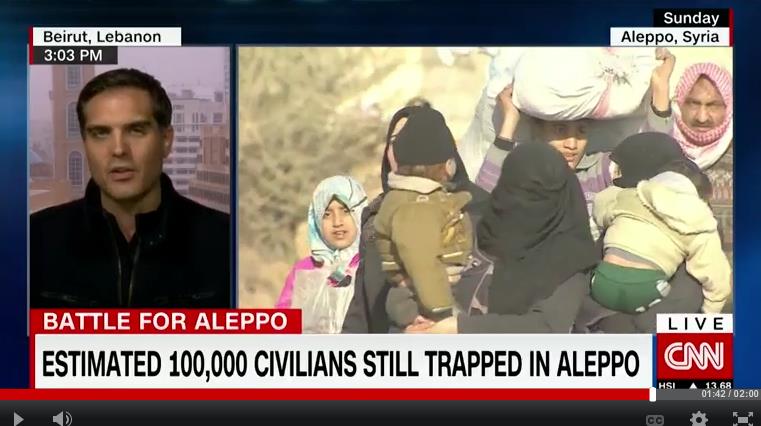
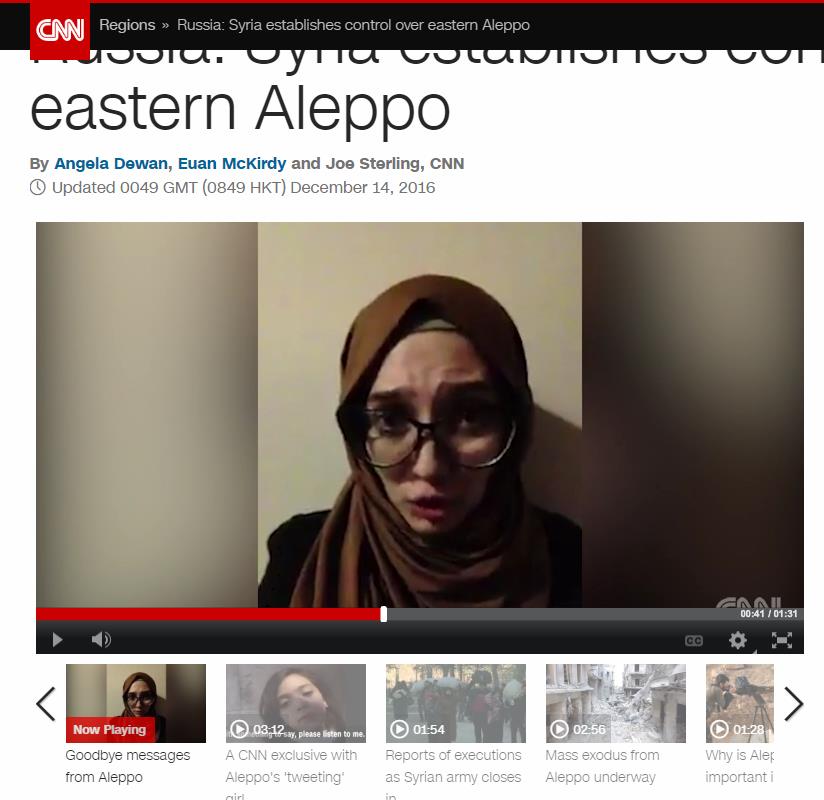
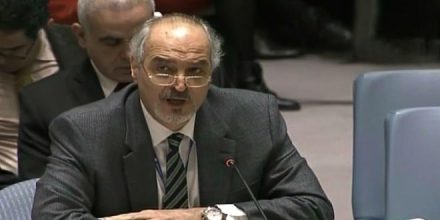
 The label for Humira, once the best-selling drug in the world, lists its risks in plain print. One of them, in the label’s own words, is new “autoimmune” disease.
 Aletho News
