Hypocrisy Inc: Washington’s Selective Sanctions
By Brian CLOUGHLEY | Strategic Culture Foundation | 08.04.2019
On April 3 US Vice President Pence told Germany and Turkey to stop dealing with Russia. In a speech in Washington marking the 70th Anniversary of the US-NATO military alliance he declared that “If Germany persists in building the Nord Stream 2 pipeline, as President Trump said, it could turn Germany’s economy into literally a captive of Russia,” while Turkey is being “reckless” and “must choose — does it want to remain a critical partner of the most successful military alliance in the history of the world, or does it want to risk the security of that partnership by making reckless decisions that undermine our alliance?”
(We’ll pass over the fact that “the most successful military alliance in the history of the world” bombed and rocketed Libya in a nine-month blitz in 2011 and claimed a “model intervention” in a country it reduced to anarchy, as reported on April 5.)
Radio Free Europe noted that Pence “voiced US opposition to Turkey’s purchase of a Russian air-defense system… which he said ‘poses great danger to NATO’.” He also threatened that “we will not stand idly by while NATO allies purchase weapons from our adversaries”.
The weapons system to which Washington so violently objects is the S-400 Triumf surface-to-air missile which Army Technology describes as “capable of firing three types of missiles to create a layered defence [and] engaging all types of aerial targets including aircraft, unmanned aerial vehicles, and ballistic and cruise missiles within the range of 400 km, at an altitude of up to 30 km. The system can simultaneously engage 36 targets.” In other words it’s a world-beater with a real punch, as is evidenced by the fact that so many other countries have either got it or want it.
The first sanctions Washington imposed against Turkey concern supply of the 100 Lockheed Martin F-35 combat aircraft ordered at a cost of 16 billion dollars. According to CNN a US spokesman said “Pending an unequivocal Turkish decision to forgo delivery of the S-400, deliveries and activities associated with the stand-up of Turkey’s F-35 operational capability have been suspended.” This is harsh action against a longtime partner and military ally, but it doesn’t stop there, because Washington objects to Russia providing military equipment to other nations.
China is an example. In September 2018 sanctions were imposed on China by Washington because it had engaged in “significant transactions” with Russia’s Rosoboronexport by purchasing SU-35 combat aircraft and S-400 systems.
A US official told reporters “The ultimate target of these sanctions is Russia… [sanctions are] aimed at imposing costs upon Russia in response to its malign activities.” This is effected by US Public Law 115-44, the ‘Countering America’s Adversaries Through Sanctions Act’ (CAATSA) which is intended to “provide congressional review and to counter aggression by the Governments of Iran, the Russian Federation, and North Korea, and for other purposes.”
“Other purposes” is quite a large sphere of implied threat, but the ruling of US legislators in this case is clear, in that any country that acquires S-400 air defence missile systems (for example) from Russia is going to be penalised because Washington is determined to continue “imposing costs upon Russia” for providing such equipment. And it is inevitable that the imposed penalties will impact on the country that has dared to engage with Russia. The Diplomat summed it up by observing that the policy “decrees the imposition of mandatory economic sanctions on countries importing Russian military hardware.”
Except when it doesn’t.
It is apparent that the anti-Russia “Countering Adversaries” legislation directed by Congress is being selectively ignored by Washington, because India is being provided with the S-400 system, and no sanctions have been imposed by America. An agreement for supply of S-400s was signed on October 5, 2018 in Delhi during an India-Russia summit meeting attended by Indian Prime Minister Modi and President Putin. The Economic Times reported that India and Russia “have formally inked the $ 5.2 billion deal for S-400 system. The air defence system is expected to be delivered by the year 2020.”
Following the summit, Outlook India noted approvingly that “Other areas of collaboration, which figured prominently in the joint statement between the two sides, are nuclear reactors, investments by Indian diamond companies in Russian Far East, and ‘joint collaboration in precious metals, minerals, natural resources and forest produce, including timber, through joint investments, production processing and skilled labour’. The review of priority investment projects in the spheres of mining, metallurgy, power, oil, and gas, railways, pharmaceuticals, information technology, chemicals, infrastructure, automobiles, space, shipbuilding and manufacturing of different equipment reflects a focus on the desire for diversification. PM Modi has invited Russian companies to set up industrial parks in India for defence manufacturing.”
It might be thought that such bilateral collaboration in defence matters, especially in regard to provision of the S-400 system, would attract instant action by Washington, designed to penalise India for flagrant contravention of US directives.
But no.
In some fashion, India is different from Turkey and China when it comes to acquiring S-400 missile systems, and an explanation of sorts was offered by the Pentagon’s Assistant Defence Secretary Randall Schriver in testimony to the House of Representatives Armed Forces Committee on March 27. He declared that the US-India “Major Defence Partnership” was prospering by “moving toward deeper security cooperation by increasing operational cooperation and availing key maritime security capabilities.” But then there was mention of the purchase for over five billon dollars by India from Russia of a world-beating air defence system, and Mr Schriver wasn’t comfortable with that.
He was asked by Congressman Seth Moulton how India’s purchase of S-400 systems and the lease of Russian nuclear submarines would impact India-US relations and avoided any reply concerning the submarine lease while stating that purchase of S-400s has “not gone to contract or completed”, which, like so many official statements in Washington, was only half true. Certainly, delivery of the S-400s has not been completed; but for Mr Schriver to claim that the matter “has not gone to contract” is a downright lie.
The effects of Washington’s sanctions on its adversaries have been wide as well as selective. In the case of Turkey, what Pence calls the “reckless decision” to acquire S-400s has shown Ankara that America is not an ally and cannot be trusted, while encouraging it to further examine the dubious benefits of belonging to the US-NATO military alliance. China reacted by saying “We strongly urge the US side to immediately correct the mistake and rescind the so-called sanctions, otherwise the US side will necessarily bear responsibility for the consequences,” while reinforcing China-Russia cooperation and strengthening resistance to US policy of global dominance.
In the case of India, US sanctions’ policy was highlighted on April 2 when the Pentagon announced that India would be provided with 24 US Seahawk maritime attack helicopters for use against China and Pakistan, at a cost of 2.6 billion dollars. India is content that it can do whatever it wants, and New Delhi will continue to benefit from Washington’s total lack of principles and ethical consistency. Selective sanctions are the name of the game.
Turkey Says US Failed to Report True Content of Pompeo Talk
Al-Manar | April 4, 2019
Turkey on Thursday accused the US State Department of making false claims after a meeting between top US and Turkish diplomats to discuss tense ties between the NATO allies.
Washington and Ankara are at odds over issues including US support for a Syrian Kurdish militia and Turkey’s purchase of a Russian missile system over US objections.
Turkish Foreign Minister Mevlut Cavusoglu and US Secretary of State Mike Pompeo held talks on Wednesday during the Turkish official’s visit to Washington as part of 70th anniversary celebrations of the NATO alliance.
The US State Department said Pompeo had warned Ankara of “devastating consequences” if Turkey launches an offensive in Syria and urged the “swift resolution” of legal cases involving US citizens and US mission employees under investigation in Turkey.
Pompeo also pressed Cavusoglu about Turkey’s plans to buy the S-400 missile defense system from Russia, which Washington has warned could put Ankara at risk of US sanctions, the State Department said in a statement.
But Turkish foreign ministry spokesman Hami Aksoy said on Thursday that the readout “not only fails to reflect the content of the meeting, but also contains matters that were not even raised during said meeting”.
It was not clear what “matters” Aksoy was referring to in his statement and foreign ministry officials were not immediately available for comment.
Aksoy said similar problems had arisen after previous talks, and urged statements to be prepared with “greater care”.
Venezuela FM takes Middle East tour, set to meet Nasrallah
Press TV – April 3, 2019
Venezuela’s foreign minister has embarked on a Middle East tour taking him through Turkey, Lebanon, and Syria, amid US measures to prop up the Latin American country’s opposition figure and self-proclaimed “interim president” Juan Guaido against President Nicolas Maduro.
Jorge Arreaza arrived in Turkey on Monday and was assured by his Turkish counterpart Mevlut Cavusoglu of Ankara’s support for the Latin American nation in the face of US pressure. “It should not be in a way that ‘I am a big country and I can determine entire rules,’” Cavusoglu said, referring to Washington’s sanctions against Venezuela and its efforts to oust Maduro, Turkish paper Hurriyet reported.
On Tuesday, the top Venezuelan diplomat traveled to Lebanon on a two-day visit. Lebanese President Michel Aoun received him at the presidential Baabda Palace in Beirut. Arreaza, who conveyed a message from Maduro to Aoun, also met with his Lebanese counterpart Gebran Bassil.
He was also slated to meet with Lebanese Prime Minister Sa’ad Hariri, Lebanese news portal Naharnet reported. According to Lebanese daily al-Joumhouria, he will also be holding a meeting with the Hezbollah resistance movement’s Secretary General Seyyed Hassan Nasrallah.
Back in January, Hezbollah conveyed its support for Maduro amid mounting US pressure for him to resign and hand over power to Washington-backed Guaido. Hezbollah-associated lawmaker Mohammad Raad was cited by Lebanese TV channel Al Manar as saying at the time that “Nasrallah stands with the Venezuelan people and with its free leadership.”
The Venezuelan foreign minister, meanwhile, expressed satisfaction with the visits to the countries in remarks to Prensa Latina. “They are two countries that respect international law and with which there are friendly and fraternal relations,” the Cuban news agency cited him as saying.
The visit to Lebanon “opens a new stage in bilateral ties with the possibility to expand economic cooperation, especially Venezuela’s advisory in the country’s energy sector,” the agency added, citing the top diplomat.
Also in January, the US took the lead in recognizing Guaido as Venezuela’s president after the head of the opposition-ruled Congress named himself the country’s interim chief executive. Washington has been pressuring other countries into following suit and has not ruled out using the military option to oust Maduro’s government.
Many countries, including Iran, Russia, China, and Cuba, however, back Maduro, spurning the subversive American efforts targeting Venezuela’s sovereignty.
Arreaza is next to travel to Syria, with which Caracas has similarly warm relations.
The US Idea the Russians Need Turkey to Figure Out How to Shoot Down a F-35 Is Beyond Silly
By Andrei Martyanov | Reminiscence of the Future | April 1, 2019
US halts deliveries of F-35 “equipment” to Turkey over S-400 contract. This is how F-35 soap saga is justified:
The United States and other NATO allies that own F-35s fear the radar on the Russian S-400 missile system will learn how to spot and track the jet, making it less able to evade Russian weapons in the future.
In an attempt to persuade Turkey to drop its plans to buy the S-400, the United States offered the pricier American-made Patriot anti-missile system in a discounted deal that expired at the end of March.
Turkey has shown interest in the Patriot system, but not at the expense of abandoning the S-400.
There is one problem, actually two, with this “justification”. I’ll start with a lesser one.
1. Patriot is not a peer to S-400. Nothing personal, but US air defense systems are not “quite there” despite massive propaganda campaigns extolling their combat virtues. Turkey knows this. Turks have a good idea about how its own Air Force was grounded after shooting down Russian Su-24 in November 2015, and who and what actually provided targeting to Syrian air defenses on April 13, 2018 against Trump’s “very smart missiles”. Plus, in general, Russian record in this field speaks for itself.
2. The most laughable in all that, however, is the fact that people still use this beaten to death argument about Turkey magically learning about how to shoot down allegedly super-pooper-duper invisible F-35 and then, of course, giving desperate Russians this information.
Well, I have some news for those people who still reside in this bubble–to shoot down F-35 one has to have two different bands radar, good sensor-fusion algorithms and decent signal processing protocols and voila’. S-300 PMU2 Favorit can do this, certainly S-400, and its inevitably coming iterations for which there is literally a line of customers, can.
In general, this whole BS about “stealth” should end at some point of time–it was a good propaganda while it lasted. Reality is, with modern processing power and radar design F-35 is not survivable against modern cutting edge air-defense and air-forces.
I can totally understand the irritation Washington feels about this whole situation, after all Turkey is a key NATO member with an actual army, and seeing a NATO member going for such a weapon systems from Washington’s prime time arch enemy–this is a no-no. But then comes this question: so, the United States will stop (will it?) F-35 and associated technology deliveries to Turkey, then what?
Do we really want to open this can of worms? Turks are not idiots, by far–they can calculate and while Erdogan might still do rapid 180 degrees maneuver, he also can not fail to consider the fact that instead of F-35 Turkey may get her hands on, say, some decent version of Su-35. Possible? Possible! How probable? I don’t know. But Obama should have thought twice when unleashing, or pretending that he didn’t know, a coup against Erdogan in 2016. Or, for that matter, a bloody overthrow of government in Ukraine in 2014. But current American elites have no concept of own actions having consequences.
Meanwhile India also signed $5 billion contact for S-400, also against the background of Washington’s pressure not to buy things from those pesky Russians. But behind all those maneuvers one fact remains unchanged and I was writing about this for years–Russian weapons systems are created to kill and do that very effectively. Unlike American military-industrial complex Russian military-industrial complex is not jobs program or corporate welfare system, it never was. Allow me to quote myself:
For a nation with such a military history as Russia’s the issue of military technology is an issue of survival. As such, weapons in Russia are sacralized because behind them are generations of Russians who shed blood to make those weapons what they are.
They have become a part of the culture to such a degree that commercial considerations take a very distant second place to a main purpose of these weapons—to actually defend the nation.
This is absolutely not the case in the United States, with some exception for its Navy, with Americans having no knowledge or recollection of what real war is and what instruments forfighting and winning it are needed. Those things cannot be paid for in money, they are paid for in blood.
I guess this should help explain why Russia is so successful on the international market with her weapons. They are simply good, in fact, the best and people know that.
Understanding Israel’s Role in The F-35 Dispute Between the US and Turkey
By Adam Garrie | EurasiaFuture | 2019-04-02
The United States has just cut off its nose to spite its face by announcing that Washington will halt delivery of equipment related to the F-35 fighter jet to Turkey. This makes life more difficult for both Turkey and the US as Turkey played a key role in the development of the F-35.
Is this about Russia or is it about Israel?
Throughout 2018, the US threatened to halt delivery of the F-35s to Turkey due to Ankara’s insistence that it will purchase the Russian made S-400 missile defence system. But while on the surface, the row between Turkey and the US appears to be one stemming from a reality in which Turkey has warm relations with Moscow whilst the US does not, there is an Israeli factor at hand that may be the overriding factor at play. The fact that Israel’s ally India has more or less received a green light from the US to purchase S-400s makes this reality all the more clear.
In May of last year, Russian media outlet Sputnik reporting the following:
“According to a top Israeli defence official, the Jewish state seeks to remain the only country in the region with F-35 jets to maintain its military’s qualitative edge. The discussions between Israel and the United States have also reportedly touched upon the jet’s performance-enhancing software; unnamed sources confirmed to Haaretz that the matter is ‘part of the negotiations,’ while Israel has denied having talks over the F-35 deal, under which Turkey is expected to obtain 100 stealth fighter jets”.
Whilst anti-Turkish forces do exist in the US owing to Turkey’s increasingly warm relations to countries as diverse as Russia, Iran and China, the fact that recent years and months have seen a dramatic decline in Turkey-Israel relations has clearly played a part in America’s move to effectively remove Turkey from the F-35 project that it had been a part of from the earliest stages of the jet’s development.
While the Pentagon had previously expressed its willingness to follow through with its pledged delivery of US made F-35 fighter jets to Turkey, Congressional opposition fuelled by a unique alliance of the US based Armenian, Hellenic and Jewish lobbies continues to oppose the US delivery of the jets to NATO member Turkey.
What one is witnessing in the United States is a perfect storm of geopolitical brinkmanship which has allied with domestic ethno-religious agitation groups in a malaise of open Turkophobia. From the perspective of many in Congress from both major US parties, delivering the F-35s to Turkey would violate the Countering America’s Adversaries Through Sanctions Act (CAATSA) which allows for US sanctions on otherwise neutral or even allied countries who purchase weapons from nations being directly sanctioned by Washington. The directly sanctioned nations in question are Russia, Iran and the DPRK (North Korea).
Because of Turkey’s agreement to purchase Russia’s S-400 missile defence systems, Ankara is now being targeted by members of the US Congress keen to exert what amounts to a blackmail clause in CAATSA which would threaten any nation with sanctions for the “offence” of purchasing Russian weapons.
From healthy relations to the ultimate strain
Turkey was the first Muslim majority nation to recognise Israel and prior to recent decades, Ankara and Tel Aviv have had a generally healthy relationship. This dramatically changed in 2010 when Israeli commandos illegally boarded the MV Mavi Marmara in international waters. The MV Mavi Marmara was a privately chartered Turkish flagged ship carrying mostly Turkish activists on their way to Gaza in order to deliver much needed humanitarian supplies to besieged Palestinians. The gruesome raid killed ten Turks and resulted in the lowest ebb in Ankara-Tel Aviv relations until now.
A new anti-Turkish alliance in the eastern Mediterranean and among US based pressure groups
For much of the 20th and 21st centuries, the large American based Hellenic and Armenian lobbies have agitated for a less friendly US approach to Turkey. For the Armenian lobby, the main goal is to convince the US Federal government to recognise the tragic events of 1915 as “The Armenian Genocide” while the Hellenic lobby has sought to persuade Washington to pressure Ankara into acknowledging the early 20th century conflict in western Anatolia as the “Pontic Genocide”. Additionally, the US Hellenic lobby has for years attempted to persuade NATO to take a tougher line on the status of Northern Cyprus. Thus far, none of these lobbying attempts have met with the desired success of the respective lobbies at a Federal level.
While the US based Jewish lobby is traditionally more powerful than either the Hellenic or Armenian lobbies, the US Jewish lobby has generally had little negative to say about Turkey in-line with the fact that of all of the Muslim majority governments in the region Tel Aviv had its best relations with Ankara, as well as the overriding reality that Turkey never passed any antisemitic legislation as most of the powers of Europe did prior to the mid-20th century.
But with Turkish President Erdoğan openly calling for a wider pan-Islamic movement for Palestine, all the while calling Israel a terrorist state, the US Jewish lobby like Israeli politicians, have joined traditional foes of Turkey in openly agitating for a more anti-Turkish position form the US government.
This has expressed itself both domestically in the US and geopolitically in terms of Israel’s new regional partnerships. Against this background, it is perhaps not surprising that Gilad Erdan, a member of Benjamin Netanyahu’s Likud faction has called for Tel Aviv to recognise the events of 1915 as an “Armenian Genocide”. If Israel were to officially to do this, it would represent a clear break between Tel Aviv and Ankara and quite possibly a point of no return. The more Turkey stands up for Palestine, the more voices like those of Erdan will become amplified in arguing for a move that is less about Armenia (a traditionally anti-Zionist nation) than about sending a clear message to Turkey that the partnership has run its course.
Israel and The Craiova Group
Formed in 2015, the fledgling Craiova Group is a partnership between Greece, Serbia, Bulgaria and Romania aimed at fostering deeper cooperation between the four south-eastern European nations. While the group has generally been far less notable in terms of its aims and accomplishments vis-a-vis the Three Seas Initiative linking Baltic eastern and central Europe with the European nations of south-east, this month the Craiova Group came into its own as the official organisation which will carry out Israel’s attempt to isolate Turkey in the wider eastern Mediterranean region.
On the 2nd of November, 2018, Israeli leader Benjamin Netanyahu took part in a Craiova Group summit in Varna, Bulgaria. There, Netanyahu said,
“I am here at the summit of four countries – Bulgaria, Greece, Serbia and Romania.This is the first time that they have invited a leader outside these four countries to participate in their summit. This is a great honor for Israel and reflects Israel’s rising status in the world.
Each one of the leaders has individually told me that they will try to improve their consideration of Israel in relevant votes both at the EU and the UN. They all want to promote the gas pipeline from Leviathan to Europe and the Balkans.They are also very interested in Israeli gas and Israeli technology, and they would very much like Israel’s friendship. This is a good sign”.
Netanyahu also discussed making the Craiova Group integral to Tel Aviv’s plans to construct the East Med Pipeline, a joint Israeli-Hellenic project that will see a gas pipeline travelling from disputed Israeli waters through to disputed Cypriot waters and finally into mainland Europe via The Hellenic Republic. But while Netanyahu’s speech talked about unity against the supposed threat of Islam which clearly played to the sentiments of many in Greece, Bulgaria, Serbia and Romania where the racist anti-Turkish/anti-Muslim hashtag “#nokebab” has become a cultural phenomenon, the pipeline alliance that Israel is trying to secure is clearly aimed at boxing Turkey into a corner in its own territorial waters.
At present, Ankara and Nicosia are in the midst of a heated row regarding rights to offshore gas fields in the waters off the island of Cyprus. At present, while there is no realistic plan for Nicosia to militarily enter the Turkish North of the divided island, Nicosia is opposed to Turkish plans to begin extracting gas in the waters off of the disputed territory of the Turkish Republic of Northern Cyprus (aka Northern Cyprus). To put it another way, in spite of rhetoric to the contrary, the government in Nicosia clearly cares about controlling the waters off of Cyprus more than it cares about controlling the island’s total landmass.
But far from being just a new chapter in the age old Hellenic-Turkish disputes of the region, this particular conflict is also being driven by Israel whose government is keen to see Tel Aviv, Nicosia and Athens work jointly on an East Med pipeline that excludes Turkey while at the same time impinging on offshore territory that Turkey claims it has an inalienable right to exploit. Now, Israel looks to bolster these plans which have already seen Egypt pivoting ever closer to Tel Aviv and Nicosia by also drawing Bulgaria, Serbia and Romania into the project.
When one remembers that during the ultimately brief Turkish-Israeli rapprochement of 2016, there were talks of a joint gas project between Tel Aviv and Ankara, the underpinnings of the present conflict become all the more clear.
To further understand the background of the severe downgrade in Turko-Israeli relations that has now become a rivalry for energy supremacy in the eastern Mediterranean, it is important to understand the following that was originally published in Eurasia Future in May of last year:
“The Turkish government has just announced the effective expulsion of Eitan Na’eh, Israel’s Ambassador to Ankara. According to the Daily Sabah,
‘Na’eh was asked to leave Turkey indefinitely by the Turkish ministry of foreign affairs following the Israeli bloodshed and his tweets’.
Pipeline politics no more
Against this background, erstwhile plans for a Turkey to Israel East Mediterranean pipeline have stalled. As a result, Tel Aviv has pivoted closer to Turkey’s regional rival Egypt (which has said next to nothing about Palestine in recent days), while most importantly there is now talk of an EU sponsored East Mediterranean pipeline between Israel, Cyprus, Greece and Italy.
According to a report from New Europe,
“The EastMed gas pipeline would circumvent Turkey, which has increased tensions with Cyprus, Greece and Israel recently, providing a way to transport newly discovered gas supplies from the East Mediterranean to Europe. The talks in Nicosia in May[2018] follow a memorandum of understanding regarding the EastMed pipeline, which was signed in December.
According to the Public Gas Corporation of Greece (DEPA), the EastMed will connect the recently discovered gas fields in the Levantine Basin, in the southeast Mediterranean, with mainland Greece and is projected to carry 8-14 billion cubic meters per year of natural gas to Greece and Europe.
According to DEPA, the approximately 1900 kilometer long pipeline (700 kilometers on-shore, 1200 off-shore) consists of the three following main sections, as well as compressor stations located in Cyprus and Crete: a pipeline from the fields to Cyprus, a pipeline connecting Cyprus to Crete, and a pipeline from Crete crossing mainland Greece up to the Ionian coast.
From there the EastMed can link up with the offshore Poseidon pipeline enabling the delivery of additional diversified sources from the Levantine to Italy and beyond. The EastMed pipeline is preliminarily designed to have exit points in Cyprus, Crete, and mainland Greece as well as the connection point with the Poseidon pipeline”.
The deal to create such a pipeline was sealed in December of 2017 while glowing reports from pro-EU media touted the deal as a means of allowing Europe to decrease its dependence on Russian gas while also offering Israel a chance to swap Turkey for EU partners. As Turkey’s long paralytic bid to join the EU is now de-facto over, both Europe and Israel’s cooperation over a new East Mediterranean gas pipeline has the effect of drawing Russia and Turkey into an even closer partnership than the one they are currently in.
At the moment the Turkstream pipeline designed to bring Russian gas into Europe via Turkey is a major joint project between Moscow and Ankara. Now, both the EU and Israel are looking to challenge this route with a pipeline of their own in a similar region. In reality, there is enough demand for gas in Europe and Israel to mean that both pipelines can coexist, but the geopolitical optics are clear enough. Tel Aviv has joined forces with the most anti-Ankara states in the EU in order to cut Turkey out of Israel’s future.
The importance of Turkey’s Soft Power in the Sunni Muslim world
President Erdoğan has already proved himself to be the ‘Sultan of Soft Power’ in the wider Sunni Muslim world. Without clear leadership from Egypt, Saudi Arabia or Qatar and with Saddam’s always controversial Iraqi government long out of power, Erdoğan has positioned himself as a champion for Palestine not only in Turkey and the Sunni Arab world but beyond. Because of this, one should never underestimate how far Turkey will take its support of Palestine vis-a-vis Tel Aviv, not least because the more Erdoğan voices his opinions in support of Palestine, the more he is respected and supported both in Turkey and far beyond.
Israel supporting Turkey’s main rivals
Because Israel has taken clear moves away from Turkey and towards its hated Hellenic rivals, officials in Ankara who in the past may have been hesitant to sever ties with Tel Aviv because of economic considerations may now be much closer to doing so. Israel’s intensifying military cooperation with both Greece and Cyprus are a further sign that when it comes to Turkey, Tel Aviv is doing everything in its power to replace its once healthy Turkish partnership with that of countries with notoriously poor and always heated relations with Ankara.
Then there is the issue of Kurdish ethno-nationalism in both Syria and Iraq. Uniquely in the world, the United States and Israel are supporters of Kurdish separatism both in northern Syria and northern Iraq. President Erdoğan has already made it clear that this is one of several red lines that Israel can cross in respect of maintaining even semi-normal relations. During the attempted illegal Kurdish succession from Iraq in the autumn of 2017, Erdoğan posed the following rhetorical statements to Kurdish secessionists in Iraq,
“Who will recognize your independence? Israel. The world is not about Israel?…
…“You should know that the waving of Israeli flags there will not save you!”
Conclusion
In order to connect these dots, one must ask some vital questions:
1. Why is the US treating its longstanding NATO partner Turkey much worse than it is treating its new Indian partner over the purchase of the same Russian made S-400 defensive weapons?
2. With Turkey and Israel competing for regional soft power influence, regional influence in respect of gas pipelines and competing in respect of building new diplomatic alliances in the Eastern Mediterranean, could Israel be preparing options to lead military assaults on Turkish assets (perhaps in Cyprus) and as such fears Turkey’s ownership of F-35 as well as S-400s?
3. As Russia is both an Israel and Turkish ally, is Tel Aviv attempting to use the US to pressure Turkey to choose between its Russian and American partners knowing that Moscow will not do so?
4. As Israel owns F-35s but not S-4000s, is Tel Aviv worried that if Turkey had both, it would be able to seriously counter possible Israeli aerial bombardments against Turkish assets in the wider region?
When one looks at the overall state of Turkey-Israel relations and what Israeli officials have themselves said about Turkey and the F-35s, it begins to become ever more apparent that the F-35/S-400 issue is as much if not more about Tel Aviv than it is about the neo-Cold War between Washington and Moscow.
US, Israel punish Turkey’s Erdogan
By M. K. BHADRAKUMAR | Indian Punchline | April 2, 2019
“Turkey is a global “swing state.” It has a large and growing economy, a strategic location, a democratic government, and mixed views about prevailing international arrangements. Like the other three global swing states — Brazil, India, and Indonesia — Turkey’s choices will influence whether today’s international order evolves and endures or fragments and fails.”
The above passage is reproduced from a policy brief titled Turkey: A Global Swing State by the German Marshall Fund of the United States, the American think tank. Indeed, from the US perspective, several fault lines in regional politics are affected by Turkish policies. At least half a dozen major templates can be readily identified: Syrian conflict, Kurdish autonomy, Palestinian problem and Israel’s security, US sanctions against Russia and Iran, Turkey’s entente with Russia, Qatar, Iran, etc., NATO presence in the Black Sea and Mediterranean and the alliance’s base in Incirlik and so on.
It is no big secret that the US and its European allies and Israel view Turkish President Recep Erdogan’s regional policies with growing disquiet. Erdogan’s independent foreign policies weaken western regional strategies and his support for Hamas (and his visceral dislike of Netanyahu) isolates Israel in the region.
On the other hand, the US’ containment strategies against Russia and Iran are undermined by Erdogan’s policies. The Turkish-Russian-Iranian troika created new facts on the ground in Syria and rendered untenable the US military presence in Syria. Turkey frontally challenges the US’ alliance with Syrian Kurds. The deepening Turkish-Russian partnership challenges the cohesion of NATO. The so-called Middle Eastern Entente between Turkey, Qatar and Iran creates much-needed strategic depth for Tehran.
Suffice to say, Erdogan has become a thorn in the flesh for the US and Israel. All this goes to explain the unusually high level of western interest in Turkey’s local elections, which concluded on Sunday. The big question is how far the election results affect Erdogan’s hold on power. Put differently, do the election results show any signs of this charismatic politician losing his grip?
The turnout of voters has been appreciably high — 84.67%. Overall, AK Party (Erdogan’s party) and its ultra-nationalist ally MHP (under the banner People’s Alliance) polled 51.62% votes as against the secular ‘Kemalist’ and liberal opposition (known as National Alliance) which secured 37.56% votes.
The AKP is leading the race securing 16 metropolitan municipalities (out of 30) and taken control of 24 cities, with the main opposition winning in 10 municipalities. But the opposition has wrested control of Ankara and may have scraped through in Istanbul, the country’s main centre of business and industry.
On the whole, there has been no significant shift in the established pattern of social and political polarisation — the southern (Mediterranean) and western (Aegean) provinces supporting the opposition parties with liberal, ‘westernist’, secular outlook, while the Islamist AK Party retains its vast power base in the deeply conservative Anatolian heartland.
Simply put, the AK Party emerges as the winner for the 15th consecutive election under Erdogan’s stewardship. Erdogan said in an address to the nation, “There will be no elections for four and a half years. What will we do? We will focus on national and international issues, and hopefully raise our country above the level of our contemporaries.” Erdogan prioritised the strengthening of the economy, development and job creation.
A pall of gloom would have descended on the western capitals as the realisation sinks in that Erdogan will be around as Turkey’s helmsman for the foreseeable future. Turkey’s presidential and parliamentary elections are due only in 2023.
It is a sign of the times that Russian President Vladimir Putin telephoned Erdogan on Monday to congratulate him. Erdogan is due to travel to Russia next week to co-chair with Putin the eighth meeting of the High-Level Russian-Turkish Cooperation Council scheduled for April 8 in Moscow.
Erdogan’s meeting with Putin will be crucial as both sides are conscious that stormy days lie ahead in Turkish-American relations. Turkish Foreign Minister Mevlut Cavusoglu is due to travel to the US even as Washington is ratcheting up pressure on Ankara to pull out of the S-400 missile deal with Russia and to comply with the US sanctions on Iran.
Things may come to a head between the two NATO allies in the coming weeks since Russia is due to deliver to Turkey in July the first batch of the missile system. Turkey is buying four batteries of the S-400 air defence system for $2.5 billion.
On Thursday, a bipartisan bill was introduced in the US senate to block the transfer of F-35 stealth fighter jets to Turkey unless Ankara scrapped the S-400 deal. The US is also reportedly considering removing Ankara from the joint production program on F-35s. But the Turkish Foreign Minister Cavusoglu reiterated on Friday that Ankara will go ahead with the missile deal with Russia. He scotched the rumours that Ankara might resell the missiles to a third country.
More importantly, last Tuesday, the US introduced sanctions on 25 individuals and firms on grounds of violation of sanctions on Iran, including firms and persons based in Turkey. On Wednesday, Sigal Mandelker, undersecretary for terrorism and financial intelligence in the US Treasury, called on Turkey to strictly observe the sanctions against Iran.
Without doubt, the Israeli lobby in Washington is pulling all stops to punish Erdogan. His support for Iran and Hamas infuriate Israel. Erdogan said last week that Turkey will never accept Israel’s illegal occupation of Golan Heights and intends to raise the issue in the UN. The US media which is heavily under Jewish influence has been harshly critical of Erdogan. Sunday’s election results are being displayed as ‘setback’ for Erdogan. Given the Jewish influence on Wall Street, the game plan would be to create difficulties for the Turkish economy so that mass discontent rises to threaten Erdogan’s popularity.
At such a sensitive juncture when an escalation of tension in ties between Ankara and Washington looks possible in the days ahead and Turkey is hard-pressed to strike a balance between the US and Moscow, the results of the local elections on Sunday would relieve the pressure on Erdogan. But the loss of control of Ankara and Istanbul creates new headaches.
The head of the Nationalist Movement Party (MHP) Devlet Bahçeli, ally and coalition partner of Erdogan, said on Monday that “external forces seeking to implement shady machinations over Turkey have failed” in the local elections. Bahceli said that the “economic hitmen, currency gangs, terrorist groups and intentions” lost hope thanks to the will of the nation and “got the answer they deserved.”
However, looking ahead, Bahceli added, “Elections are now past and Turkey has replenished its hope. It is of crucial importance to focus on worsening social and economic issues along with international challenges.”
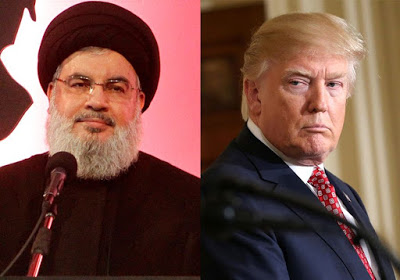
Nasrallah on the End of US Hegemony: Trump will Leave the Middle East, Region Already Reshaping – PART II
Interview of Sayed Hassan Nasrallah, Hezbollah Secretary General, with Ghassan Ben Jeddou, founder of the pan-Arab and anti-imperialist Al-Mayadeen channel, January 26, 2019.
Transcript:
Ghassan Ben Jeddou: (The US forces withdrawal from Syria announced by Trump) is therefore not a mere tactical maneuver. You say he is serious and sincere in his desire to withdraw, but this reflects a failure, if not a defeat, not for Trump especially but for the American (hegemony) project in general.
Hassan Nasrallah: Obviously this is all at once a failure, a dead end and a defeat. Currently, the cause of his hesitation is that (his advisers) tell him that the Kurds are their allies (and that they should not abandon them). I’ll explain why we saw these hesitations recently (as regards the US withdrawal from Syria).
When Trump said that US troops would withdraw and that there was only sand and death in Syria, he also said something even more important: “Does the USA want to be the Policeman of the Middle East? Do we want to be there forever?” With this statement, he hinted, and even more than hinted (this is an explicit indication), that all these US forces in the Middle East were not to stay, and that in time he would conduct (a full) withdrawal. What effect did this statement produce in the region, Professor Ghassan? Let us leave the question of Israel for later.
This statement caused, within the Saudi regime, in a number of Gulf countries enemies of Syria, and among all the allies of the United States in the region, – be they organizations, parties or personalities, not to mention the States – an immense feeling of fear and despair. And Trump knows them well (and he knew the effect that his statement would cause). When he says (to Saudi Arabia and the Gulf countries) that “You would not last two weeks (in power) without American (military) support”, or “Without us, your planes would get off the ground but couldn’t land”, “Without us, you Saudis would speak Persian.” He tells them all this, and adds “We will not remain the (Middle East’s) policeman, we will leave the region.” This caused a state of confusion, despair and fear in the region. That’s the first point.
That is why all the countries and groups (who rely on the US), starting with the Kurdish parties, came to Beirut and asked to meet with Hezbollah. We met them. Then they went…
Ghassan Ben Jeddou: Who are you talking about ?
Hassan Nasrallah: Kurdish parties, who are responsible for negotiating on behalf of the Kurdish units. They came to talk to us, and from there they went to Moscow and then to Iraq to request that Iraq serves as an intermediary with President Bashar al-Assad. Today, the Kurds and the Kurdish movements are (hopelessly) seeking…
Ghassan Ben Jeddou: Who are you talking about exactly? The Syrian Democratic Forces?
Hassan Nasrallah: Yes, the Syrian Democratic Forces, Kurd bodies and representatives in charge of negotiating. Very quickly, they rushed to Moscow, to Iraq, to Lebanon. Why? Because Trump has abandoned them, he forsake them, he betrayed them. This is regarding the East of the Euphrates.
Regarding the (US-aligned) countries, (they panicked at the idea of being abandoned), and they all began to think (intensely and reconsider their positions). They review their stances and try to strengthen their relations with Russia, they reconsider their relations with Iran. Even in Syria, the priorities of some countries are not the same anymore. And now we can talk about the issue (of the relations between) Arab (countries) and Syria. You want me to tell you this story now, or later?
Ghassan Ben Jeddou: Please, go ahead.
Hassan Nasrallah: According to my information, all that we saw in recent weeks, namely the Emirates reopening their embassy in Syria…
Ghassan Ben Jeddou: And before that, the President (of Sudan) al-Bashir (coming to Syria).
Hassan Nasrallah: Indeed. The President al-Bashir came to Syria. Did he come on his own?
Ghassan Ben Jeddou: What is your information?
Hassan Nasrallah: He got a green light from Saudi Arabia.
Ghassan Ben Jeddou: This is your information?
Hassan Nasrallah: Yes. A green light from Saudi Arabia and the Gulf countries.
At the end, lately, President al-Bashir rallied them. And the fact that (an Arab President) meets Bashar al-Assad is something of vital importance to (Saudi Arabia and the Emirates).
Ghassan Ben Jeddou: So this visit was not an arrangement of Russia that would have angered Saudi Arabia and the UAE (as some media have claimed)?
Hassan Nasrallah: No, under no circumstances. The current problem between President al-Bashir and Saudi Arabia has nothing to do with his visit to Syria. It concerns the fact that Saudi Arabia has not kept its promises and financial commitments made to President al-Bashir in return for his sending brigades of the Sudanese army to fight in Yemen – and Sudan’s involvement in this war is very unfortunate. This issue has nothing to do with Syria.
Anyway, the visit of President al-Bashir (to Syria), the reopening of the UAE embassy, the announcement of the Foreign Minister of Bahrain – and by the way, his statement was false, he was lying – who claimed that their embassy in Syria had always remained open, etc. But this is not true. Anyway, we started to see an Arab atmosphere (different with regard to Syria), we see Saudi advances, (Syrian) delegations visited Cairo, and there is talk about the coming of President al-Sissi and others to Damascus, etc. What is the reason ? And here I also speak basing myself on sound information that come from more than one (trustworthy) source.
In light of the decision of Trump to withdraw, and after the resignation of Mattis, who was seen as a guarantee by many, and because of the visible concern within the US administration, there was a great wave of panic in Saudi Arabia and the UAE – and with all their allies and instruments, but especially these two countries in particular. They met in Abu Dhabi to assess the situation – and their options – at a very high level. They assessed their situation in Syria and said:
“The battle against President Bashar al-Assad is over, and our groups have failed. All the movements we financed are now with Erdogan, isn’t it? All those who fought in Syria, in southern Syria, which were financed by Saudi Arabia, the UAE and Israel, have gradually retreated (following their consecutive defeats) and are now all in the North, that is to say (in the hands of) Erdogan. The battle against President Assad is over as regards the armed factions, groups and parties that we supported, as well as our various networks of influence: our whole project collapsed. Assad will certainly remain in office, the Syrian State won, the opposing Axis triumphed in Syria. There remains (only) one danger (that we can prevent): Erdogan –sorry, I mean Trump– made the decision to withdraw (his troops from Syria), and therefore, the only refuge of the Kurds is Assad and Damascus, (to avoid) the invasion of the East of the Euphrates by Turkey.”
Trump told Erdogan that Syria is his. If Syria is (abandoned to) Erdogan, if Turkey wants to invade Syria, it is a very dangerous project for Saudi Arabia and the Emirates. Imagine that their analysis reached this conclusion: the main danger in Syria is not Iran…
Ghassan Ben Jeddou: This is the conclusion reached by the UAE and Saudi Arabia?
Hassan Nasrallah: Yes. (The main danger in their eyes) is not Iran. The main danger (today) is Turkey. Iran comes in second position. President Assad, whose position is fully consolidated in Syria, is third, and (Saudi Arabia and the UAE) are even willing to have relations with him. They may also agree with Russia and get some guarantees from her, etc. Russia is less problematic in their eyes. They consider that the main danger is Turkey.
You know, (Saudi Arabia and the UAE) always think in sectarian terms. Ultimately, (in their eyes), Iran – and do not blame me for my frankness – is a Shiite country, and therefore may only have limited influence in Syria, etc. On the other hand, Turkey is a Sunni country, which has a certain presence in Syria, historical relations with that country, is a neighboring country and has a common border, so if Turkey enters (permanently) in Syria, it will be the end and no one will be able to get them out. (That’s how they see things).
Is it because their heart burns for Syria (that they fear a Turkish invasion)? Certainly not. Never. They couldn’t care less about the fate of Syria (and Syrians). But they believe that the advance of the Turkish project in Syria would be the advance of the (opponent) Axis, namely Turkey, Qatar and the Muslim Brotherhood. And that would revive this project, which targets, according to them, the Saudi regime, the UAE regime, the Egyptian regime, etc.
Ghassan Ben Jeddou: And this is the reason of their opening (towards the Syrian regime)?
Hassan Nasrallah: That is why they decided to get closer to Syria and to restore relations with President Assad and the Syrian State, while remaining in their hostility towards Iran, but trying to agree with Russia in order to put obstacles in the way of any progress of Erdogan’s (neo-Ottoman) project in Syria and therefore in the region.
Ghassan Ben Jeddou: But what happened to them so that they’d interrupt their rapprochement with Damascus?
Hassan Nasrallah: The opening (towards Syria) began, and they started talking about the return of Syria in the Arab League. President al-Bashir visited President Assad and told him about it. And Assad’s position did not surprise me.
Ghassan Ben Jeddou: What have they offered? What is your information?
Hassan Nasrallah: They asked Syria to submit a written request indicating that given the new circumstances in the region (end of the war in Syria, etc.) and their concern for the Arab States and Arab Unity & Cooperation, they wanted to regain their statute of member of the Arab League.
Ghassan Ben Jeddou: This is the message they gave him?
Hassan Nasrallah: Yes. Of course, I refer to the substance of their proposal, and I do not quote it by heart.
Ghassan Ben Jeddou: And then?
Hassan Nasrallah: (Assad’s) answer (was as follows): “Syria has never walked out of the Arab League (voluntarily), so we cannot request to come back to it. We never submitted a resignation that we should now withdraw. It is up to those who have kicked us out to ask us to come back.” And this is a noble and dignified position, and perfectly predictable. It is not a surprise. If Arab regimes think that they merely have to tell President Assad that their doors are open and that Syria can come back (to the Arab League), to see him feel a huge relief and run with joy in their arms, they are deluded. Syria will resume its place in the Arab world, and it is in its interest. But she will come back with all her dignity (and not slavishly).
What is new is that the US has made an assessment of Trump’s accomplishments, “But what have you done? Where are our allies?” So-and-so is (getting closer to) Russia, so-and-so is with President Bashar al-Assad, so-and-so considers that now, the main danger in Syria is Turkey (major NATO member) and not Iran, while the US want their (main) enemy to remain Iran. What to do (in this situation of dramatic decline of US influence in the Middle East)?
Allow me to say, about Lebanon and all the Lebanese political forces that were betting on the fall of the Syrian State and regime, that you can imagine in what state they found themselves when they heard Mr. Trump declare that he would withdraw from Syria.
Therefore, the US decided to ask Mr. Pompeo to tour the region to boost the morale of all States and groups who are devastated by the announcement of the US withdrawal from Syria (and the Middle East), and began to reconsider their choices, their relationships and their future and to grab on to their thrones (in a fit of panic). (This Pompeo visit aimed to) try to put them back on their feet, to boost their morale and to assure them that the US supports them and won’t give up on them, that they do not intend to leave the region, and as a proof, he invited them to participate with the United States to a conference in Warsaw meant to deal with Iran, its influence and its threat, (in an attempt) to put them back in confrontation with Iran, at least in terms of appearances.
(Pompeo) sent David Hill to Lebanon – for Pompeo (feels) too important to come himself to Lebanon – with the same message, to reassure those who felt frightened, demoralized, anxious and lost by the US policy in the Middle-East.
But since we have arrived at this point of our discussion, I want to conclude this presentation with this statement: the United States will not manage to do more than they have already done. I declare to the governments of the region, to their leaders, to their peoples, to their movements and to Israel – because we will finally come to Israel –, that the US are deserting our region. They will flee Syria – it may take several months, but the decision is taken.
O my brothers, they are fleeing from Afghanistan. And do you know who they leave (in charge of) Afghanistan? They leave the Taliban! Because in the agreement, Trump won the Taliban’s commitment not to allow Al Qaeda and ISIS (to settle) back in Afghanistan. Trump considers that the Taliban represent the government of tomorrow, who can (already) provide guarantees to the US government. Isn’t it a humiliating defeat for the US in Afghanistan? Especially since the Taliban are officially considered as a terrorist organization (by the US), and Washington claims to never negotiate with terrorists.
The United States will flee. There will be no more US forces waging war in our region. Trump won’t launch a war for the eyes of Mohammad Bin Salman (Crown Prince of Saudi Arabia), nor for the eyes of Mohammed bin Zayed (UAE Crown Prince), not even for Netanyahu’s eyes – and clearly, Netanyahu’s eyes are much more valuable to Trump. Not even for the eyes of Netanyahu! Trump, the US and the situation of the United States, either inside at the level of the economy, etc., etc., etc., do not allow them to launch a new war in our region. There will be no US war in the region.
What does Trump want then? (For him), it is from their own pocket that States, regimes and forces (allied to the US in the Middle East must fight), with their own money, their own media, their own blood… Trump wants to bring them together again to put them (alone) against Iran. And if, against Iran, for 40 years – we are at the 40th anniversary (of the Islamic Revolution) –, the United States and all the tyrants on Earth have been unable to do anything to bring down this regime and this blessed Islamic Republic, then (what could the Arab States do by themselves)?
Ghassan Ben Jeddou: But Eminent Sayed, relatively, (the United States), haven’t they won? You just revealed a very important information, namely that the Saudis and Emiratis gathered and concluded that the major strategic change that you just presented will occur (inevitably). But it seems that Trump still won. First, he slowed down the rush of Arab countries to Damascus, and secondly, today, we hear a new discourse from the Arab countries, namely that…
Hassan Nasrallah: The fact that he stopped the momentum of the Arab countries is natural. He can keep them in check easily. Do you think that these countries are courageous, independent, that they have an independent process of decision, and may rebel against their American master? Never. That is why…
Ghassan Ben Jeddou: What I mean is that the US managed to put all their allies –Saudi Arabia, the UAE and all others– into line.
Hassan Nasrallah: Yes, but this is not a success. Trump only prevented that everything collapses quickly. But (it is mere damage control and) the collapse process is still ongoing.
Ghassan Ben Jeddou: Has he stopped or only slowed down the process of opening the Arab countries towards Syria?
Hassan Nasrallah: What we have heard and what was reported to us is that they are undecided. There is no clear choice to maintain the absence (of relations with Damascus) or stay in a completely negative attitude (against Syria). I give you a proof of that. Two days ago, there was a meeting between a UAE economic delegation and a Syrian delegation. I do not remember if it was held in Damascus or in the Emirates. This means that at least, at an intermediate level, these relations will continue. (Sooner or later), it will be revealed that very important people in Arab countries secretly came to Damascus, although these meetings were not made public. But it is for the Syrian leadership (to reveal this issue). And I speak of meetings at the highest level.
 Ghassan Ben Jeddou: At the political or security level?
Hassan Nasrallah: At least at the security level.
Ghassan Ben Jeddou: For example heads of intelligence services?
Hassan Nasrallah: For example.
Ghassan Ben Jeddou: Policymakers?
Hassan Nasrallah: Yes.
Ghassan Ben Jeddou: From these (most) influential Gulf countries (Saudi Arabia and UAE)?
Hassan Nasrallah: Let’s just say from Arab countries, (don’t try to force me) to reveal more about their identity or titles – whether Sheikh or Sayed, Professor or Hajj, Doctor or Engineer, etc. What I have revealed is enough (I will say no more).
Ghassan Ben Jeddou: Influential and active Arab countries?
Hassan Nasrallah: Currently, the United States wants and strives to retain forcefully these Arab countries back (to prevent them from making a step towards Damascus, Moscow, etc.) But of course, so far, they haven’t brought anything substantial to convince them and reassure them (that this is the right choice), and that the United States have not abandoned Syria to Turkey. For this is what Saudi Arabia, the Emirates, President al-Sissi and Egypt, and all the others, want to hear clearly.
That is why we will perhaps see, on the Arab question, a slowdown or coldness in the momentum towards Syria, but I exclude that this movement can be completely stopped. Therefore I conclude this point by saying that the United States failed in Syria. Of course, after this fiasco, the one who loses the most and who is in the greatest distress is Netanyahu.
Ghassan Ben Jeddou: Yes. […]
Israel, Greece to Build Radar on Crete Amid Rapprochement– Reports
Sputnik – March 19, 2019
The Long Horizon marine radar system will be built by Israel and Greece in eastern Crete, the Greek newspaper Kathimerini reports. The enhanced coverage of the radar will allow both countries to monitor the Eastern Mediterranean basin. The daily has not disclosed the cost of the project, saying only that it is “not insignificant,” especially taking into account Greece’s reduced military budget.
According to the outlet, Athens and Tel Aviv have been drifting together recently, boosting their military ties among other things. Greece has recently agreed with Israel to share know-how for its navy, which has begun to develop. According to the outlet, 40 Israeli probationers will be carried by a Greek transporter from Haifa to Crete, without any stops in Cyprus, by the end of the month. The Israelis will join the Greek forces during upcoming drills and then return to Haifa after a stop in Milos and Rhodes.
On the other hand, Athens has been open to the possibility of bolstering its arms gaps with the help of Israel, as Kathimerini noted. Among other things, Greece has rented seven drones from Israel for search and rescue operations.
Israel’s Haaretz reports that Cyprus also shares the Israeli interests in the region. The list of common interests includes a stance on the situation in Syria and Lebanon as well as uneasy relations with Turkey.
Apart from military and political cooperation, which is to be confirmed during an upcoming trilateral Greek-Israeli-Cypriot summit with US Secretary of State Mike Pompeo, the three countries are developing a major economic project — the undersea East Med pipeline, designed to deliver natural gas from the Eastern Mediterranean to Europe via Greece and Cyprus. Greek Prime Minister Alexis Tsipras, Israeli PM Benjamin Netanyahu and Cyprus President Nicos Anastasiades are expected to sign the grand deal, agreed upon in 2018, within the month, as the Greek media earlier reported.
The 2,000-kilometre underwater pipeline is intended to have a capacity of 12 billion cubic metres of gas annually, delivering fuel from Israel’s Leviathan, named one of the largest young gas reserves in the world, and the Aphrodite offshore gas fields. Additionally, the venture was boosted in February when it was announced that large gas deposits had been discovered in Cyprus.
The line, which is almost twice as long as Russia’s Turk Stream pipeline, is estimated to cost $8 billion and is said to be the world’s deepest underwater gas pipeline. Egypt, the only Muslim nation besides Jordan that has a peace treaty with Israel, is also seeking to export its newly discovered gas reserves, and has expressed interest in joining the project.
Bolton blasts Turkey for maintaining ‘very bad’ relations with Israel
Press TV – March 18, 2019
US National Security Adviser John Bolton has not ruled out that Turkey is a “foe” of the United States, blasting Ankara for maintaining a “very bad” relationship with Washington’s close ally Israel.
When asked by AM 970 radio host John Catsimatidis on Sunday whether Turkey was a “friend or foe” to the US, Bolton refused to give a straight answer and instead cited several major stumbling blocks in ties.
“Well you know they’re still a NATO ally; we’re trying to work with them, but they’ve got a very bad relationship with our close friends in Israel. That’s something we need to look out on,” Bolton said.
A war of words began between Turkey and Israel recently, when Israeli Prime Minister Benjamin Netanyau said the occupied territories only belong to the Jewish people and not all citizens.
Turkish presidential spokesman Ibrahim Kalin strongly condemned Netanyahu’s “blatant racism and discrimination.”
In response, the Israeli premier called Turkey’s President Recep Tayyip Erdogan a “dictator” who jails journalists and judges.
Erdogan, however, called Netanyahu a “thief” and a “tyrant who massacred seven-year-old Palestinian children.”
The war of words continued Friday when the Turkish president rebuked Netanyahu’s son for suggesting the city of Istanbul was under “Turkish occupation”.
“You occupied the whole of Palestine!” Erdogan fired back at Netanyahu’s son, saying it is actually the Tel Aviv regime which has occupied the entire Palestinian land.
Elsewhere in his Sunday comments Bolton said that disagreements “with respect to the conflict in Syria” were another issue affecting bilateral ties between the US and Turkey.
He said US President Donald Trump “would like to have a good relationship with Turkey; he’d like to see US trade with Turkey increase, but we need them to help us out in some of these other problems in Syria and elsewhere in the region.”
US support for YPG militants, whom Ankara views as terrorists and their group an extension of the outlawed Kurdistan Workers’ Party (PKK), has angered Turkey.
The US has been arming and training Kurdish militants under the banner of helping them fight Daesh, but Syria and several other countries see ulterior motives behind the deployment.
President Trump’s decision last year to leave Syria has exposed the Kurdish group to possible Turkish attacks.
Fears of a Turkish assault have led the Kurds to strike an agreement with the Syrian government to leave Manbij in exchange for military support in case they come under attack from Turkey.
Turkey, a key US ally in the region, has repeatedly questioned Washington’s deployment of heavy weapons in Syria despite the defeat of Daesh in much of the Arab country.
Bolton slams Turkey over S-400 deal
In his talks to AM 970 radio, Bolton further blasted Turkey for refusing to abandon a deal to purchase S-400 air defense missile systems from Russia, a major obstacle to US-Turkish relations.
“We’re concerned about their purchase of the Russian air defense system called the S-400 – that’s a big problem,” Bolton said.
The United States has warned Turkey of “grave consequences” if Ankara goes ahead with the plan to purchase Russian S-400 missile systems.
Moscow and Ankara finalized an agreement on the delivery of the S-400 missile systems in December 2017.
Last April, Erdogan and his Russian counterpart Vladimir Putin said in Ankara that they had agreed to expedite the delivery which could be made between late 2019 and early 2020.
Washington has reportedly proposed to deliver one US-made Patriot missile battery by the end of 2019, on the condition that Ankara abandons the deal with Moscow.
The S-400 is an advanced Russian missile system designed to detect, track, and destroy planes, drones, or missiles as far as 402 kilometers away. It has previously been sold only to China and India.
Turkey is striving to boost its air defense, particularly after Washington decided in 2015 to withdraw its Patriot surface-to-air missile system from Turkey’s border with Syria, a move that weakened Turkey’s air defense.
Whose Interests Are Served by the US Occupation of East Syria: America’s or Israel’s?
By Mike Whitney • Unz Review • March 11, 2019
What is Israel’s stake in east Syria? Has Israel influenced Washington’s decision to maintain a long-term military presence in Syria? How does Israel benefit from the splintering of Syria into smaller statelets and from undermining the power of the central government in Damascus? Did Israel’s regional ambitions factor into Trump’s decision to shrug off Turkey’s national security concerns and create an independent Kurdish state on Syrian sovereign territory? What is the connection between the Kurdish independence movement and the state of Israel?
The Pentagon does everything in its power to conceal the number and location of US military bases in a war zone. That rule applies to east Syria as well, which means we cannot confirm with absolute certainty how many bases really exist. Even so, in 2017, a Turkish news agency, “Anadolu Agency published an infographic on Tuesday showing 10 locations in which US troops were stationed. Two airbases, eight military points in PKK/PYD-controlled areas.”
According to a report in Orient.Net : “The 8 military sites, according to the agency, host military personnel involved in coordinating the aerial and artillery bombardments of US forces, training Kurdish military personnel, planning special operations and participating in intensive combat operations.” (“AA’s map of US bases in Syria infuriates Pentagon”, orient.net )
The location of these bases is unimportant, what is important is that there has been no indication that Washington has any plan to close these bases down or to withdraw American troops. In fact, as the New York Times reported just weeks ago, the number of US troops has actually increased by roughly 1,000 since Trump made his withdrawal announcement in mid-December. We think that is especially significant in view of Trump’s surprising comments last week, that he now agrees “100%” with maintaining a military presence in Syria. His sudden reversal shows that the opponents of the “withdrawal plan” have prevailed and the US is not going to leave Syria after all. It’s also worth noting that Trump administration has made no effort to implement the “Manbij Roadmap” which requires the US to coordinate its withdrawal with the Turkish military in order to maintain security and avoid a vacuum that could be filled by hostile elements. Ankara and Washington agreed to this arrangement long ago in order to expel Kurdish militants (who Turkey identifies as “terrorists”) from the area along the border. It appears now that Trump will not honor that deal, mainly because Trump intends to be in Syria for the long-haul.
But, why? Why would Trump risk a confrontation with a critical NATO ally (Turkey) merely to hold a 20 mile-deep stretch of land that has no strategic value to the United States? It doesn’t make sense, does it?
Now in earlier articles we have argued that influential think tanks, like the Brookings Institute, have played a critical role in shaping Washington’s Syria policy, and that indeed is true. Just take a look at this short excerpt from a piece by Brookings Michael E. O’Hanlon titled “Deconstructing Syria: A new strategy for America’s most hopeless war”. Here’s an excerpt:
“… the only realistic path forward may be a plan that in effect deconstructs Syria…. the international community should work to create pockets with more viable security and governance within Syria over time… The idea would be to help moderate elements establish reliable safe zones within Syria once they were able…. Creation of these sanctuaries would produce autonomous zones that would never again have to face the prospect of rule by either Assad or ISIL….
The interim goal might be a confederal Syria, with several highly autonomous zones… The confederation would likely require support from an international peacekeeping force… to help provide relief for populations within them, and to train and equip more recruits so that the zones could be stabilized and then gradually expanded.” (“Deconstructing Syria: A new strategy for America’s most hopeless war”, Michael E. O’Hanlon, Brookings Institute)
Strategic planners and think-tank pundits have long sought to break up Syria, that’s old news. What’s new is the emergence of powerful neocons operating in the White House and State Department (John Bolton, Jared Kushner, Mike Pompeo) who, we suspect, are using their influence to shape policy in a way that is sympathetic to Israel’s regional ambitions. It’s worth noting, that Zionist plans to dismember surrounding Arab states to ensure Israeli superiority, date back more than 30 years. The so called Yinon plan was a fairly straightforward strategy to balkanize the Middle East’s geopolitical environment to enhance Israeli regional hegemony while “A Clean Break” was a more recent adaptation which emphasized “weakening, containing or even rolling back Syria” and “removing Saddam Hussein from power in Iraq.” In any event, many right-wing Israelis seem to think that chopping up sovereign Arab states into smaller bite-sized pieces, governed by tribal leaders or Washington’s puppets, will unavoidably boost Tel Aviv’s power across the Middle East.
But how does the US military occupation of east Syria fit in with all this?
Well, the US occupation effectively creates an independent Kurdish state in the heart of the Arab world which helps to weaken Israel’s rivals. That’s why some have referred to emerging Kurdistan as a “second Israel”. Here’s how Seth Frantzman, a research associate at the Rubin Center for Research in International Affairs in Herzliya, explains it:
“Israel would welcome another state in the region that shares its concerns about the rising power of Iran, including the threat of Iranian-backed Shia militias in Iraq,” says Frantzman. “Reports have also indicated that oil from Kurdistan is purchased by Israel.” (“Why Israel supports an independent Iraqi Kurdistan”, CNN)
While its true that Kurdish oil may provide an added incentive for long-term occupation, the real goal is to block a “land corridor” from opening (that would connect Beirut, to Damascus, to Baghdad to Tehran) and to further undermine Iran’s growing influence in the region. Those are the real objectives. In fact, US military operations in Syria are actually part of a broader campaign directed at Iran, a campaign that undoubtedly has the full support of neocons Pompeo and Bolton.
Check out this lengthy quote from a piece by Rauf Baker at The Begin-Sadat Center for Strategic Studies which helps to put the whole Israel-Kurdistan issue into perspective:
“Since declaring “Rojava” in northern and northeastern Syria in 2013, the Democratic Union Party (PYD) and its military arm, the People’s Protection Units (YPG), both of which are linked to the PKK, have built a uniquely viable entity amid the surrounding bedlam. (Note: The PKK, is on the State Departments list of terrorist organizations and has been conducting a war on Turkey for more than 3 decades.)
The ancient proverb “the enemy of my enemy is my friend” could be useful to Israel in this grim scenario. The Syrian regime continues to uphold its traditional anti-Israel stance, and is in any case largely dependent on Iran, Hezbollah, and the other Shiite militias, all of which want Israel destroyed….
The Syrian Kurdish parties opposing PYD are openly linked to Ankara, which is ruled by a president, Recep Tayyip Erdoğan, who is obsessed with power and whose ideology considers the entire State of Israel to be illegitimately occupied by Jews. Moreover, he has recently established a rapprochement with Tehran – a worrying development…
Iran is now closer than ever to securing a land corridor that will connect it to the Mediterranean through Iraq, Syria, and Lebanon. This corridor will expand its sphere of influence from the Strait of Hormuz in the east to the Mediterranean in the west, and will ensure that Israel is surrounded by land and sea…
Should Israel strengthen its relationship with the Syrian Kurds, its gains would extend beyond strategic, political, and security benefits. Rojava’s natural resources, especially its oil, can contribute to Israel’s energy supply and be invested in projects such as an oil pipeline through Jordan to Israel. US troops are stationed at several military bases in Rojava, which could offer an alternative to Incirlik Air Base in Turkey...
It appears abundantly clear that the Kurds are the most qualified, if not the only, candidate in Syria on which Israel can count for support… Israel should act swiftly to support the emerging Kurdish region in Syria...
It is very much in Israel’s interest to have a reliable and trustworthy friend in the new Syria. If Jerusalem hopes, together with its ally in Washington, to prevent Tehran from establishing its long-sought land corridor, it will need to strengthen its influence in the Syrian Kurdish region to serve as a wall blocking Iran’s ambitions.” (“The Syrian Kurds: Israel’s Forgotten Ally”, Rauf Baker, BESA Center)
So, the question is: Whose interests are really served by the US occupation of east Syria: America’s or Israel’s?
If US sanctions Turkey, can India be far behind?
By M. K. BHADRAKUMAR | Indian Punchline | March 9, 2019
Turkish-American relations are at a crossroads. Unlike the past history of their troubled relationship which saw hiccups but the two NATO allies moved on eventually, this time around, they are barreling toward a clash.
From an Indian perspective, it is of interest that the clash is over the Turkish decision to buy the S-400 Triumf missile defence system from Russia, which violates the US’ sanctions regime against Russia known as the Countering America’s Adversaries Through Sanctions Act (CAATSA).
In September last year, Washington invoked CAATSA for the first time and sanctioned China over its purchase of Russian military jets and surface-to-air missiles — 10 Russian Sukhoi Su-35 fighter jets and S-400 missiles. Will it be Turkey’s turn now? And if Turkey gets sanctioned, can India be far behind?
The US had explicitly warned India against going ahead with the S-400 Triumf deal with Russia. But India went ahead, nonetheless, last October. (The deal is estimated to be worth at least $5.4 billion.) But while Delhi went about its decision tactfully, Ankara is openly defiant. The Turkish President Recep Erdogan stated on Wednesday in a TV interview,
“We signed a deal with Russia for the purchase of S-400, and will start co-production. It’s done. There can never be a turning back. This would not be ethical, it would be immoral. Nobody should ask us to lick up what we spat. Later, we may perhaps go for the S-500s as well, after the S-400.”
The US probably never ever heard such spiteful words from a key NATO ally. Erdogan also warned that the U.S. should not try to “discipline” Turkey through trade measures. If it did, he emphasised, Turkey has its own measures prepared. One of the trade measures he alluded to is the US’ intention to exclude Turkey from the generalised system of preferences (GSP).
Interestingly, while notifying the US Congress last week regarding his intention to remove the GSP benefits to them in trade, President Trump bracketed India with Turkey. India downplayed Trump’s move, saying the GSP benefits are only marginally affecting India’s exports to the US. But Erdogan apparently plans to retaliate.
The Pentagon has sharply reacted to Erdogan’s remarks, warning Turkey of “grave consequence in terms of our military relationship.” Gen. Curtis Scaparrotti, the senior US general for operations in Europe and NATO’s top officer, warned in congressional testimony on Tuesday that Turkey’s pursuit of the S-400 deal would jeopardise American plans to sell to Ankara the new F-35 Joint Strike Fighter for both policy and security reasons.
“My best military advice would be that we don’t then follow through with the F-35, flying it or working with an ally that’s working with Russian systems,” Scaparrotti told the Senate Armed Services Committee in testimony. According to a Reuter report, he hinted at concerns that Turkey’s using both the S-400s and the F-35 could provide Russia with valuable information on how to defeat the tech-heavy jet slated to become a signature fighter for NATO countries and their partners.
However, Turkey is not backing down. The Turkish Defense Minister Hulusi Akar has disclosed that the S-400 missile system will reach Turkey in July and deployment will go ahead as planned in October. The space for diplomatic manoeuvring is shrinking and, clearly, the chances for imposition of US sanctions against Turkey under CAATSA are increasing.
Of course, if Washington imposes sanctions against its key NATO ally, it is going to be highly problematic to exempt India from similar punitive measures for committing the very same offence. Interestingly, like Erdogan, Modi is also getting a very bad press in the US lately. They are the kind of ultra-nationalists that the US regards as hindrances to its regional strategies.
The Turks harbour the suspicion that the failed coup in July 2016, which was masterminded by the Turkish Islamist preacher Fetullah Gulen living in Pennsylvania in exile for the past two decades, had covert American support.
Last week, incidentally, US First Lady Melania Trump visited a pre-kindergarten class in Oklahoma, which Ankara believes is linked to supporters of Gulen. Turks believe that the White House was taunting Erdogan.
President Trump’s detractors in the US and in Europe used to berate him for empathising with “strong men” like Erdogan or Vladimir Putin. But as it turns out, the US finds such world leaders irksome in their zeal to uphold strategic autonomy in their foreign and security policies. The US media has been highly critical of Modi too in the recent months.
But US attempts to undermine these nationalist leaderships have run into headwinds since leaders like Erdogan and Putin happen to enjoy mass support in their respective countries. For sure, Washington will be keenly watching the outcome of the upcoming parliamentary election in India in April-May where Modi is seeking a renewed mandate.
As for India, what emerges at the end of the 5-year term of the Modi government is that under his watch India’s relations with the US have been pragmatic and based on limited common interests — shared notions of countering the rise of China and Islamism — and that too, without undermining India’s strategic autonomy. The US seems disappointed that Modi failed to fulfil their high expectations of him as a strategic partner. A sense of frustration is palpable among the US’ lobbyists in India as well.
At any rate, the Modi government continues to negotiate big weapons deals with Russia, disregarding the CAATSA. Last week, PM Modi inaugurated a massive Russian-Indian joint venture, which will reportedly produce about 7,50,000 AK-203 rifles, the most recent version of the famous AK-47 rifles for the use of the Indian armed forces as the standard assault rifle for decades to come. Again, on Friday, Delhi inked a defence deal worth over $3 billion with Moscow for the lease of a nuclear-powered attack submarine from Russia. It cannot be lost on Washington that the Modi government expedited these mega deals with Russia even as its term in office is ending, while US arms vendors have been kept waiting.
All in all, the S-400 which is one of the world’s most advanced AMB systems, is fast acquiring the reputation of a Russian “geopolitical missile” targeted at the US. If the US proceeds with sanctions against Turkey on account of the S-400 deal, it will have deleterious downstream impact on many geo-strategic templates.
The very cohesion of the NATO and the alliance’s overall effectiveness in the Eastern Mediterranean and the Middle East could be affected. Similarly, the US also eyes India as a potentially big customer for American weaponry and will be shooting at its own feet if it were to sanction India. Suffice to say, paradoxically, any US sanctions may only increase Turkey or India’s dependence on Russia for sourcing advanced weaponry, which of course would defeat the very purpose of the CAATSA.
Mr Bolton’s Long Game Against Iran – Pakistan Becomes Saudi Arabia’s New Client State
By Alastair CROOKE | Strategic Culture Foundation | 25.02.2019
The Wall Street Journal has an article whose very title – Ambitions for an ‘Arab NATO’ Fade, Amid Discord – more or less, says it all. No surprise there at all. Even Antony Zinni, the retired Marine General who was to spearhead the project (but who has now resigned), said it was clear from early on that the idea of creating an “Arab NATO” was too ambitious. “There was no way that anybody was ready to jump into a NATO-type alliance,” he said. “One of the things I tried to do was kill that idea of a Gulf NATO or a Middle East NATO.” Instead, the planning has focused on ‘more realistic expectations’, the WSJ article concludes.
Apparently, “not all Middle Eastern nations working on the proposal, want to make Iran a central focus – a concern that has forced the US to frame the alliance as a broader coalition”, the WSJ recounts. No surprise there either: Gulf preoccupations have turned to a more direct anxiety – which is that Turkey intends to unloose (in association with Qatar) the Muslim Brotherhood – whose leadership is already gathering in Istanbul – against Turkey’s nemesis: Mohammad bin Zaid and the UAE (whom Turkish leadership believes, together with MbS, inspired the recent moves to surround the southern borders of Turkey with a cordon of hostile Kurdish statelets).
Even the Gulf leaders understand that if they want to ‘roll-back’ Turkish influence in the Levant, they cannot be explicitly anti-Iranian. It just not viable in the Levant.
So, Iran then is off the hook? Well, no. Absolutely not. MESA (Middle East Security Alliance) maybe the new bland vehicle for a seemingly gentler Arab NATO, but its covert sub-layer is, under Mr Bolton’s guidance, as fixated on Iran, as was ‘Arab NATO’ at the outset. How would it be otherwise (given Team Trump’s obsession with Iran)?
So, what do we see? Until just recently, Pakistan was ‘on the ropes’ economically. It seemed that it would have to resort to the IMF (yet again), and that it was clear that the proximate IMF experience – if approved – would be extremely painful (Secretary Pompeo, in mid-last year, was saying that the US probably would not support an IMF programme, as some of the IMF grant might be used to repay earlier Chinese loans to Pakistan). The US too had punished Pakistan by severely cutting US financial assistance to the Pakistani military for combatting terrorism. Pakistan, in short, was sliding inevitably towards debt default – with only the Chinese as a possible saviour.
And then, unexpectedly, up pops ‘goldilocks’ in the shape of a visiting MbS, promising a $20 billion investment plan as “first phase” of a profound programme to resuscitate the Pakistani economy. And that is on top of a $3 billion cash bailout, and another $3 billion deferred payment facility for supply of Saudi oil. Fairy godmothers don’t come much better than that. And this benevolence comes in the wake of the $6.2 billion, promised last month, by UAE, to address Pakistan’s balance of payments difficulties.
The US wants something badly – It wants Pakistan urgently to deliver a Taliban ‘peace agreement’ in Afghanistan with the US which allows for US troops to be permanently based there (something that the Taliban not only has consistently refused, but rather, has always put the withdrawal of foreign forces as its top priority).
But two telling events have occurred: The first was on 13 February when a suicide attacker drove an explosives-laden vehicle into a bus that was transporting IRGC troops in the Sistan-Baluchistan province of Iran. Iran’s parliamentary Speaker has said that the attack that killed 27 members of Iran’s elite Islamic Revolutionary Guards Corps (IRGC) was “planned and carried out, from inside Pakistan”. Of course, such a provocative disruption into Iran’s most ethnically sensitive province may mean ‘nothing’, but perhaps the renewed inflow of Gulf money, fertilizing a new crop of Wahhabi madrasa in Pakistan’s Baluch province, may be connected – as IRCG Commander, General Sulemani’s stark warning to Pakistan suggests.
In any event, reports suggest that Pakistan, indeed, is placing now intense pressure on the Afghan Taliban leaders to accede to Washington’s demand for permanent military bases in Afghanistan.
The US, it seems, after earlier chastising Pakistan (for not doing enough to curb the Taliban) has done a major U-turn: Washington is now embracing Pakistan (with Saudi Arabia and UAE writing the cheques). And Washington looks to Pakistan rather, not so much to contain and disrupt the Taliban, but to co-opt it through a ‘peace accord’ into accepting to be another US military ‘hub’ to match America’s revamped military ‘hub’ in Erbil (the Kurdish part of Iraq, which borders the Kurdish provinces of Iran). As a former Indian Ambassador, MK Bhadrakumar explains:
“What the Saudis and Emiratis are expecting as follow-up in the near future is a certain “rebooting” of the traditional Afghan-Islamist ideology of the Taliban and its quintessentially nationalistic “Afghan-centric” outlook with a significant dosage of Wahhabi indoctrination … [so as to] make it possible [to] integrate the Taliban into the global jihadi network and co-habitate it with extremist organisations such as the variants of Islamic State or al-Qaeda … so that geopolitical projects can be undertaken in regions such as Central Asia and the Caucasus or Iran from the Afghan soil, under a comprador Taliban leadership”.
General Votel, the head of Centcom told the US Senate Armed forces Committee on 11 February, “If Pakistan plays a positive role in achieving a settlement to the conflict in Afghanistan, the US will have opportunity and motive to help Pakistan fulfill that role, as peace in the region is the most important mutual priority for the US and Pakistan.” MESA is quietly proceeding, but under the table.
And what of that second, telling occurrence? It is that there are credible reports that ISIS fighters in the Deir a-Zoor area of Syria are being ‘facilitated’ to leave East Syria (reports suggest with significant qualities of gold and gemstones) in a move to Afghanistan.
Iran has long been vulnerable in its Sistan-Baluchistan province to ostensibly, secessionist factions (supported over the years by external states), but Iran is vulnerable, too, from neighbouring Afghanistan. Iran has relations with the Taliban, but it was Islamabad that firstly ‘invented’ (i.e. created) the Deobandi (an orientation of Wahhabism) Taliban, and which traditionally has exercised the primordial influence over this mainly Pashtoon grouping (whilst Iran’s influence rested more with the Tajiks of northern Afghanistan). Saudi Arabia of course, has had a decades long connection with the Pashtoon mujahidin of Afghanistan.
During the Afghan war of the 1980s and later, Afghanistan always was the path for Islamic fundamentalism to reach up into Central Asia. In other words, America’s anxiety to achieve a permanent presence in Afghanistan – plus the arrival of militants from Syria – may somehow link to suggest a second motive to US thinking: the potential to curb Russia and China’s evolution of a Central Asian trading sphere and supply corridor.
Putting this all together, what does this mean? Well, firstly, Mr Bolton was arguing for a US military ‘hub’ in Iraq – to put pressure on Iran – as early as 2003. Now, he has it. US Special Forces, (mostly) withdrawn from Syria, are deploying into this new Iraq military ‘hub’ in order, Trump said, to “watch Iran”. (Trump rather inadvertently ‘let the cat out of the bag’ with that comment).
The detail of the US ‘hub encirclement’ of Iran, however, rather gives the rest of Mr Bolton’s plan away: The ‘hubs’ are positioned precisely adjacent to Sunni, Kurdish, Baluch or other Iranian ethnic minorities (some with a history of insurgency). And why is it that US special forces are being assembled in the Iraqi hub? Well, these are the specialists of ‘train and assist’ programmes. These forces are attached to insurgent groups to ‘train and assist’ them to confront a sitting government. Eventually, such programmes end with safe-zone enclaves that protect American ‘companion forces’ (Bengahazi in Libya was one such example, al-Tanaf in Syria another).
The covert element to the MESA programme, targeting Iran, is ambitious, but it will be supplemented in the next months with new rounds of economic squeeze intended to sever Iran’s oil sales (as waivers expire), and with diplomatic action, aimed at disrupting Iran’s links in Syria, Lebanon and Iraq.
Will it succeed? It may not. The Taliban pointedly cancelled their last scheduled meeting with Pakistani officials at which renewed pressure was expected to be exerted on them to come to an agreement with Washington; the Taliban have a proud history of repulsing foreign occupiers; Iraq has no wish to become ‘pig-in-the middle’ of a new US-Iran struggle; the Iraqi government may withdraw ‘the invitation’ for American forces to remain in Iraq; and Russia (which has its own peace process with the Taliban), would not want to be forced into choosing sides in any escalating conflict between the US, Israel and Iran. Russia and China do not want to see this region disrupted.
More particularly, India will be disconcerted by the sight of the MESA ‘tipping’ toward Pakistan as its preferred ally – the more so as India, likely will view (rightly or wrongly), the 14 February, vehicle-borne, suicide attack in Jammu-Kashmir that resulted in the deaths of 40 Indian police, as signaling the Pakistan military recovering sufficient confidence to pursue their historic territorial dispute with India over Jammu-Kashmir (perhaps the world’s most militarised zone, and the locus of three earlier wars between India and Pakistan). It would make sense now, for India to join with Iran, to avoid its isolation.
But these real political constraints notwithstanding, this patterning of events does suggest a US ‘mood for confrontation’ with Iran is crystalizing in Washington.
Featured Video
Iran spent $1 million to wipe out $30 billion in data center plans, and take down Amazon in the ME
or go to
Aletho News Archives – Video-Images
From the Archives
Clash of Civilization, Iran Part II
By Jamal Kanj – Intifada-Palestine.com – January 14, 2011
Israel’s survival kit is: perpetuate conflict, insecurity to rationalize collective hate and finally playing victim.
Devoid of conflict, Israel implodes internally; without hate, Zionism loses its justification; and playing eternal victim to continue blackmailing the West. Absence of this holy trinity, Israel ceases to exist. … continue
Blog Roll
 Aletho News
- China Rejects Outside Pressure on Trade Ties After New US Russia Sanctions Bill
- Houthis Keep Advancing as the Red Sea Crisis Deepens
- Iran spent $1 million to wipe out $30 billion in data center plans, and take down Amazon in the ME
- Zionist billionaire pressure to silence Macklemore sparks exodus from Ed Sheeran tour
- House Votes to End Iran War for Third Time
- North Korea Slams US Plan for ‘AUKUS 2.0’ with South Korea and Japan
- Prolonging US-Iran Conflict Not Meeting Interests of Int’l Community – China’s Wang Yi
- EU bans former Zelensky aide from parliament
- NATO-backed Kosovo separatist ‘responsible for war crimes’
- US destroying international space law
- If Americans Knew
- Israeli Forces Detain Journalist Alaa al-Rimawi amid Widespread West Bank Raids
- Even a pro-Israel Congress member has put a hold on 40,000 one-ton bombs to Israel
- As Gaza crumbles, Israel preps new ground invasion – Daily Update
- ‘We are not like everyone else’ laws that bind other nations do not apply to Israel, says Likud lawmaker
- Trump’s govt makes ‘treasonous’ claim of weapons shortages
- Palestinian-American Journalist Naqaa Hamed Imprisoned by Israeli Forces After Settlers Targeted Her
- U.S. Makes, Israel Takes: The Real Story of U.S.-Israeli Military Cooperation
- Night raids rise in Palestine
- Tucker Carlson interviews Norman Finkelstein about Gaza
- Groups urge Americans to support Van Hollen legislation on Israel’s killing of Americans & Palestinians
- No Tricks Zone
- New Study: ‘Global Drought Shows No Detectable Recent Acceleration Under Climate Warming’
- Economic Masterminds: German Socialists Suggest Taxing Productivity Gains Stemming From Using AI
- The South China Sea Has Not Been Cooperating With The Climate Change Narrative
- Energy Crisis: Germany Enters Heating Season With Historically Low Gas Reserve Fill Levels
- New Study: The Antarctic Ice Sheet Gained Mass From 2020-2024 Due To Staggering Snow And Ice Accumulation
- Study: Ocean Heating Rates From Thousands Of Years Ago ‘Dwarf’ Modern Ocean Heating Rates
- Climate Extremists Target, Attack Large-Scale Power Grid Infrastructure In Germany!
- New Study: Antarctic Ice Melt Has Contributed Less Than 1 Centimeter To Sea Level Rise In The Last 30 Years
- Fear Of Debate: Alarmist German Climate Scientist Calls On Mainstream Media To Discredit Skeptic Voices
- End-Of-August Arctic Sea Ice Extent Hasn’t Fallen In 20 Years, Official Data Show!
 Aletho News