Western ‘theft’ will backfire, Russian tycoon warns
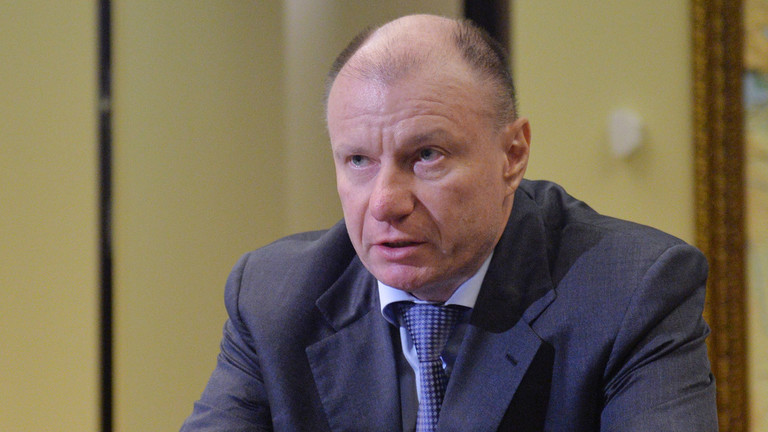
Vladimir Potanin. © Sputnik/Alexei Druzhinin
RT | January 23, 2023
Western countries are sawing off the branch they are sitting on by confiscating Russian assets, billionaire businessman Vladimir Potanin believes.
Following the launch of Russia’s military operation in Ukraine in February last year, multiple countries have frozen assets belonging both to the Russian state, and private companies and individuals to the tune of more than $300 billion.
In an interview with Russian media outlet RBK published on Monday, Potanin, the largest shareholder of mining giant Nornickel, said: “The confiscation [of assets] is a covert or overt form of theft,” and destroys “the investment climate of the jurisdiction where this is happening.”
Potanin noted that the countries comprising the ‘collective West’ had based their societies upon respect for private property.
The recent freezing of Russian assets “will backfire on them,” he said, adding that Russia should refrain from mirroring these measures.
He went on to suggest that by exercising respect for property rights, Moscow will be in a stronger moral position when it fights for its frozen assets in the West, and will send the right signals to entrepreneurs at home.
Potanin also warned against nationalizing property left behind in Russia by Western businesses – instead, the authorities need to “give the investment community the opportunity to solve this problem on its own.” He noted that the exodus of Western companies from Russia has allowed local investors to buy up assets at relatively low prices.
Potanin described the Western sanctions as “absolutely destructive and even, apparently, absolutely illegal,” and in his view, what we are seeing right now is the destruction of basic global rules.
The billionaire acknowledged that Western sanctions have put his plans for overseas business expansion on hold and have adversely affected his ability to travel the world, though he has now switched to exploring Russia instead, he added. Potanin nevertheless expressed confidence that the West “will come to their senses” sooner or later.
A top British think tank has revealed Russia’s cyberwarfare dominance over Ukraine
Why has Western media ignored its report?
By Felix Livshitz | RT | January 23, 2023
On November 30, the Royal United Services Institute (RUSI), an elite military think tank, and lobby group, with deep ties to the UK government, published a landmark report entitled ‘Preliminary Lessons in Conventional Warfighting from Russia’s Invasion of Ukraine: February–July 2022’. While desperate to portray the operation as a failure, even the normally Russophobic RUSI can’t ignore Moscow’s total cyberwarfare dominance over Kiev.
Complete superiority
Buried in the document is a long section on the electronic warfare aspect of the Russia-Ukraine conflict. It found that within weeks of February 24, Moscow’s forces quickly established total dominance in this sphere by deploying extensive jamming infrastructure. Once achieved, Kiev’s most sophisticated cyber systems were not only totally confused, but absolutely crippled.
Before the attack, Ukraine had for some years been receiving the best Western reconnaissance and strike drones – Unmanned Aerial Vehicles (UAVs) – IMF debt could buy.
These systems, RUSI states, were envisioned to be “critical to competitiveness” in a hypothetical future battlefield, by providing “situational awareness and target acquisition” second to none. However, as it turned out, the “attrition rates” of these high-tech drones were “extremely high” from February to July due to Russian electronic warfare prowess, and thy were destroyed completely at around 90%.
“The average life expectancy of a quadcopter remained around three flights. The average life expectancy of a fixed-wing UAV was around six flights … even when UAVs survived, this did not mean that they were successful in carrying out their missions,” the report records. “UAVs could fail to achieve their missions because the requirements to get them in place … prevented timely target acquisition before the enemy displaced. Many missions failed to find targets because there was no target at the specified location.”
A “more common” means of “mission failure” was “disruption of a UAV under control through electronic warfare, the dazzling of its sensors or the denial of its navigational systems from determining the accurate location of a target.”
“In other instances, the Russians successfully struck the ground control stations of the UAV. In aggregate, only around a third of UAV missions can be said to have been successful.”
Russia’s dominance in electronic warfare had further damaging implications for the precision weapons shipped to Ukraine from London, Washington, and other Western backers too. Moscow’s cyber divisions effectively “defeated” most of the precision weapons used by Kiev.
RUSI is a prominent and highly influential firm, and its publications typically generate enormous media interest – when these reports paint Russia in an overwhelmingly negative light, and talk up the need for Moscow to be countered through highly aggressive political, diplomatic, intelligence and military postures, that is.
Unheeded prophecies
Aside from a single article in America’s Forbes magazine, this assessment has remained unacknowledged by any mainstream journalist or pundit for well over a month. It is not the first time a RUSI report has mysteriously received no recognition in recent memory. In late January, the think tank published an assessment of the value of Western arms shipments to Kiev.
It concluded there was little point in sending vehicles or weaponry of any kind to Ukraine, in the event fighting broke out with Russia, due to Moscow’s “operational art,” military doctrine, and “strategic thinking.” These long-held philosophies mean that the Kremlin and its armed forces chiefs consider battle an extension of diplomacy, and therefore leverage “superiority in long-range fires to achieve decisive effects against an opponent, which could in turn achieve strategic results.”
Among the “strategic results” sought is a battlefield where “massed ground formations in direct confrontations” are not deployed. Instead, by “inflicting enough damage to alter an opponent’s course of action, or signal that Russia’s intent is genuine, Russian strategic goals can be achieved without conflict.”
This would be secured by using long-range missiles in a “non-contact” military engagement – “the minimum level of force necessary to promote Russia’s regional goals and limit the need to deploy ground forces.” In other words, exactly what has unfolded over the course of the past year.
“Armoured vehicles, short-range anti-tank weapons and air defence systems can only be useful in one scenario, one which is likely to be preceded by a harrowing and extensive period of non-contact warfare designed to prevent the Ukrainian armed forces from operating effectively at all,” RUSI forecast. “Their use will only be possible once all initiative has been lost and the situation is unlikely to be turning in Ukraine’s favour.”
The report’s conclusion was that the weaponry the West had sent and planned to send to Ukraine “does nothing to improve Ukraine’s odds of deterring Russia, or even defending against a Russian invasion once it has begun,” and any attempt to arm Kiev was “not likely” to defend “Ukraine’s sovereignty.”
Incentivizing Censorship: a Snitch in Every Skull
Traveling the nine circles of thought-police hell with TJ Coles, the cancelled University of Plymouth academic.
Helen of desTroy | January 22, 2023
An informational iron curtain is coming down across the West, and its architects are determined to make examples out of those who refuse to pick a side. Our Democracy™ has adopted a zero-tolerance policy for pollution of the information ecosystem, and the Thought Police are standing by to halt rogue infodemics in their tracks, lest the people lose trust in their institutions. Dr. Tim Coles, a freelance writer and postdoctoral researcher until recently at the University of Plymouth didn’t realize he was in their crosshairs until he found himself locked out of his university email account in October. Tech support was no help; department staff refused to talk to him, closing ranks and sending him a threatening email demanding he cease contact. Clearly, he had violated some unwritten law. But what?
The chain of emails that had culminated in his removal only raised further questions about why an apparent stranger whom Plymouth has refused to name – a university employee, he suspects – had complained about his writing for Australian magazine Nexus to his old PhD examiner. In a Kafkaesque turn, the complaint lacked a single concrete accusation of wrongdoing that Coles could defend himself against, instead equivocating around familiar “conspiracy theorist” tropes.
At any rate, no one had thought to consult Coles, perhaps believing him to be a disgruntled ex-student trading on his old university email rather than a researcher whose work at the university was funded by an outside trust and had nothing to do with his political writing. Rather than pause for clarification, his PhD examiner appeared to jump in with both feet, urging tech staff to help get Coles “off [the university’s] books.”
While a prolific writer on many controversial topics – US funding and training of neo-Nazis in Ukraine, the West’s neocolonial plunder of Africa under the guise of fighting terrorism, and Big Pharma’s giant power-grab under cover of Covid-19 unholy alliance of Big Pharma and Big Tech amid the coronavirus outbreak are just a few – Coles believes he ran afoul of the university censors with a series of articles about intelligence agencies blackmailing people with child sexual abuse that ran in Nexus not long before the cancellation effort began. That particular subject has a tendency to get journalists killed, and Coles wonders if his ejection from Plymouth might be a warning shot from groups displeased with his inquiries. He acknowledges, however, that the timing may be a coincidence – Hope Not Hate and other intelligence-controlled censorship advocates were apparently trying to have Nexus banned in the UK around the same time for its publication of unorthodox views on Covid-19.
While he believes the evidence in the email chain is enough to prove wrongdoing by the university, Coles couldn’t even file a complaint through the normal channels, as his inquisitors had roped the complaints department into their conspiracy by including them in the email chain. He has considered releasing the messages publicly as a last resort, but first plans to employ an outside arbitrator and give the System one last chance – more than he was given, at any rate.
Dr. Coles is far from the first to be booted from a British university campus for thoughtcrime. He sees parallels between his case and that of David Miller, the University of Bristol sociology professor who was subjected to a ferocious academic inquisition and ultimately drummed out of his post in late 2021 after the Board of Deputies of British Jews deliberately misinterpreted comments he had made about Israel weaponizing Jewish students abroad. The university’s Union of Jewish Students had been attacking him for years before seizing upon the supposedly discriminatory comment, which they only heard because they had sent in an activist ’spy’ to monitor one of his classes – ironically validating the professor’s claims better than his own arguments could have.
Like Coles, Miller was never directly confronted by his accuser, who opted for mealy-mouthed pseudo-accusations (“conspiracy theorist,” “inciting hatred”) over potentially-disprovable crimes. Like Plymouth, Bristol took the side of the accuser against its employee almost reflexively. Former Labour MP Chris Williamson, himself a victim of the Israeli lobby’s devastating smear machine, joined the Support David Miller campaign in warning that the university’s failure to stand up for the professor would only encourage “bad faith actors” to pursue further censorship.
Shortly before the lobby finally convinced Miller’s university to mount an investigation into his supposed bigotry, he observed that such pressure tactics were imported from the Israel lobby in the US and pointed out that if any other foreign lobby attempted to wage such total war on its critics, they would be “laughed out of the room.” But Coles’ experience suggests other groups have taken lessons from the Israelis – and that Williamson’s warning was prescient.
Academic “cancel culture” is a well-known scourge of American campuses, where careless tweeting costs lives and professors can be axed for using the wrong pronouns. But while most discussion of the phenomenon centers on the targeting of conservative professors, it has targeted left-wing heterodoxy with equal fury, as tenured New York University media studies professor Mark Crispin Miller discovered when a student demanded his firing via Twitter after taking offense to a discussion questioning the utility of masks in his 2020 class on Propaganda.
Like Coles and his fellow Miller across the pond, Miller was attacked by university colleagues with vague allegations of “attacks on students and others in our community,” “aggressions and microaggressions,” and “explicit hate speech” and an investigation was launched behind his back even in the absence of any specific forbidden act. Administrators went one step further and contacted all his students to remind them of the CDC’s mask guidance, lest their fragile minds have been corrupted by the conspiracy theorist in the classroom. They couldn’t fire him – he was tenured, after all – but they did their best to make his life so miserable that he would leave, forbidding him from teaching his beloved Propaganda class, and he has been on sabbatical since.
Even Kenneth Roth, the former executive director of Human Rights Watch, was recently denied a fellowship at the Carr Center for Human Rights, part of Harvard’s Kennedy School of Government, on the basis of wrongthink – what its dean described as his “anti-Israel bias.” Roth has toed the line on foreign policy groupthink elsewhere, dutifully demonizing Putin, Assad, Trump, and so on as the needs of Empire demanded. But his refusal to ignore Israel’s increasingly bold apartheid policies got him the David Miller treatment despite years of faithful service. If Roth isn’t safe, many academics have begun to wonder, what the hell are they going to do to me?!
While Dr. Coles questions if universities were ever really the freethinkers’ utopia so many academic misfits yearn for, there is no denying groupthink has tightened its hold in recent years. While an academic might once have been left alone to research controversial subjects on his own time so long as he didn’t embarrass his employer, this laissez-faire approach has been replaced by an administrative panopticon that is both hyper-responsive and reflexively condemnatory – a “cottage industry of shutting people down.” Censorship has been outsourced from the state and its corporate minions to “academics and think tanks who are given a well-funded government hammer so they see everything as a nail of disinformation,” Coles explains. Not simply salaried, they are financially incentivized to bag-and-tag as many pieces of “disinformation” as they can, essentially bounty hunters for inconvenient truths, enabling a much tighter, more granular control of information than was ever possible under a traditional totalitarian model.
These programs and campaigns – with names like Integrity Initiative, Center for Countering Digital Hate, Trusted News Initiative – initially appear to be independent nonprofits that just happen to share a common devotion to fighting fake news. However, their cooperation is more than superficial, with many of the same entities ultimately directing their actions as they work together to artificially muscle the discourse in the desired direction, choking off competing narratives while maintaining plausible deniability regarding their connections to the state.
In this model of soft totalitarianism, the dissident is not so much ordered to cease publishing objectionable ideas, or even threatened with execution or creative torture. He is merely subjected to mounting insults, ‘nudged’ in certain directions, and gradually stripped of resources, especially any public platform he may have had in accordance with his refusal to follow the rules. Amid this complex ballet of carrot and stick, he is constantly reminded that these are his decisions, making him (in his own mind, at least) a willing participant in his own spiritual suffocation.
Fact-checkers, once mere newsroom employees tasked with verifying the details of major stories, have been artificially elevated into a caste of gatekeepers, deemed impartial arbiters of truth even as their donor lists burst with conflicts of interest from Pierre Omidyar to Bill Gates to George Soros. This veneer of independence allows them much greater latitude than any equivalent government body, as the ignominious collapse of the US’ Disinformation Governance Board last year proved. This official Ministry of Truth, which would have operated out of the Department of Homeland Security, was a bridge too far even for the American media establishment, which had long since embraced its unofficial equivalent censoring tweets and Facebook posts to keep the world safe for democracy.

All it took to get English-speaking countries to accept the need for these newly-minted (the International Fact Checking Network was only launched in 2015) cognitive babysitters was for a few pathological liars to blame Trump’s 2016 electoral victory and Brexit on Russian disinformation. Never mind that neither hypothesis was ever substantiated, or that both have since been thoroughly discredited – unfiltered access to information has joined the lengthy list of threats to social harmony, and the fact-checkers, having tasted power, are unlikely to return to the newsroom. Given that a free press is integral to a functioning democracy, it goes without saying that any regime looking to dismantle the latter would want to get the former out of the way.
No sooner had Dr. Coles been chased out of his university for his writing in one Australian alt-media magazine then he was engulfed in a censorship firestorm over another. An article appeared earlier this month in New Zealand news outlet Stuff excoriating bookstore chain Whitcoulls for carrying the latest edition of New Dawn, a publication which proudly bills itself as a “forum for alternative, non-mainstream ideas that question consensus reality.” Stuff’s coverage berated the bookstore for exposing unsuspecting customers to the jungle of “conspiracy theories” barely restrained within its pages (full disclosure: I have also contributed writing to New Dawn), focusing its rage on Coles’ “The curious case of Brenton Tarrant,” about the Christchurch mosque shooter.
When Whitcoulls did not immediately capitulate, “disinformation expert” Kate Hannah was called in to warn Kiwis who picked up the magazine that they were enabling “dark agendas” seeking to “destabilize liberal democracy.” Reading Coles’ article wasn’t just engaging in wrongthink, but actually committing a crime, she explained, because the article included information on how to access the illegal-in-New-Zealand helmet-cam video Tarrant recorded while shooting his way through the mosque. Just reading about where to find the video might run afoul of hate speech laws, she mused in a radio interview.
Of course, the article includes no such instructions, nor does it – as Hannah claimed – claim Tarrant didn’t shoot anyone. Coles is baffled by the disinfo expert’s disinfo, but suspects the reason they didn’t include his name (standard practice in establishment hit-pieces) in the pressure campaign is that he could justifiably sue for libel. But the mere threat of legal repercussions was sufficient to keep 99.9% of Kiwis away from the forbidden magazine, and perhaps sensing no sales in its future, Whitcoulls finally pulled the issue from its shelves.
New Zealand’s size and isolation make it a perfect experimental laboratory, and the other Four Eyes haven’t hesitated to use it as such. Nor have the Israelis, whose operation was exposed during the 2011 Christchurch earthquake. The 2019 shooting that launched the current touchless torture regime was preceded as such events often are by a series of odd ‘coincidences’ and foreshadowings. Just a few months before the massacre, a group of American survivors of the Parkland, Florida high school shooting visited the city to discuss “living through a tragedy” with their Kiwi counterparts; two Parkland survivors and a Sandy Hook survivor allegedly committed suicide in the months following the mosque killings. A police drill just happened to be taking place near the fleeing gunman, allowing participants to “heroically” capture him in what media dutifully described as a “hell of a coincidence.”
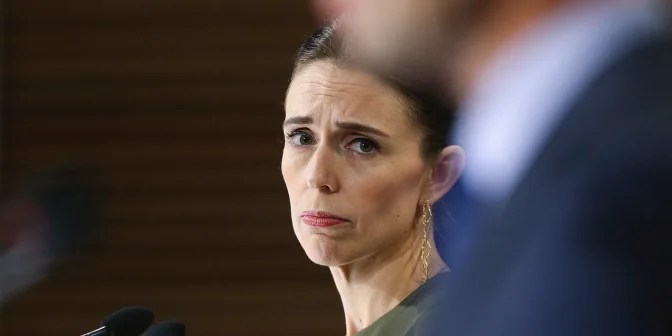
The speedy gun-grab that followed the tragedy left citizens helpless in the claws of Prime Minister Jacinda Ardern, and the subsequent clampdown on the internet was unprecedented in any other western “democracy,” with prison sentences meted out for merely sharing a link. Ostensibly to prevent anyone from reading Tarrant’s manifesto or watching the curiously videogame-like footage of the killings, the rules had the effect of banning access to entire video archives, international forums, and other information resources that might have helped the country’s residents make sense of what had just been done to them, and they were designed to be copied by the other four Eyes – or any other country that should want them.
While all five Eyes adopted unprecedented controls on social media during Covid-19, New Zealand went much further than its peers in controlling the actual publication of news. In March 2020, facing rumors that lockdown was imminent, Ardern warned upstanding citizens to avoid all unauthorized sources of information, urging them to stick with the government’s official site as “your single source of truth.” The message didn’t age well – New Zealand was locked down within the week – but her point had gotten across loud and clear. Arrested while protesting Auckland’s return to lockdown in 2021 over just three “cases,” popular radio host and pandemic dissident Vinny Eastwood was only released on the conditions that he remain under house arrest 24/7 and stay off the internet – draconian requirements for a man who made his living live-streaming. He was later permitted back online, but only on the condition that he not advocate against Covid-19 restrictions – a deliberately subjective line in the sand meant to encourage self-censorship above all.
While the media establishment overflowed with praise for Ardern over her iron-fisted suppression of the population – er, pandemic – no one has thought to ask why, if the West questions all Covid-19 stats coming out of China due to government control of all information sources, they believed the numbers coming out of New Zealand. Even news sites like Stuff, which describes itself as “fiercely independent,” are actually public-private partnerships – in this case funded by the New Zealand government and the Google News Initiative, powered by the bonanza of helicopter money that was dumped on the news media in 2020 to fight the “infodemic” of Covid-19 “disinformation.” That the campaign against New Dawn was no organic outrage was clear – Coles’ article is the last in the issue, and the likelihood of an indignant civilian pawing through 70 pages of conspiracy contraband just to find something they can claim is illegal approaches zero. Its favorable result means it will likely become the blueprint for future book-burning campaigns.
But why go after a couple of obscure Australian conspiracy magazines? Especially in New Zealand, but increasingly in the US and Europe, Big Tech no longer allows the average user to stumble upon the kind of content published by New Dawn or Nexus. Even non-Google search results from once-reliable alternatives like DuckDuckGo and Brave have been scrubbed clean of all deviations from the establishment line on topics like Covid-19 or the war in Ukraine, let alone the Christchurch shooting, and as Coles remarked, the censorship is even creeping through time into the Wayback Machine, the internet researcher’s go-to that once contained archives of much of the internet dating back decades – but now increasingly turns up error pages or sloppily retconned fact-checks. However, Kiwis browsing at Whitcoulls had at their fingertips a powderkeg of new information, rendered all the more volatile by three years spent in informational quarantine. Just as a person locked down for months will see her immune system suffer for lack of outside stimulation, any novel pathogens hitting her much harder when she finally goes outside, the Good Citizen who imbibed only Ardern-approved data for three years will likely be unable to muster even the slightest argument against whatever outrageous claims she finds in New Dawn and perhaps become lost to the weak grasp of establishment propaganda forever.

There’s an easy solution to this problem, should New Zealand want to solve it. Teach children to think critically, instead of the dumbed-down “media literacy” programs being promoted by every self-proclaimed “disinfo expert” this side of PropOrNot. Thought-stopping “information hygiene” techniques (Google it! Look it up on Wikipedia!) and reflexive appeals to authority (only a scientist can interpret that study for you!) do not help an individual resist persuasion. But a population armed with the ability to recognize an official lie and dismantle it would not allow themselves to be locked down over a few cases of a disease they were almost 100% certain to survive anyway – so of course New Dawn couldn’t be permitted to question Christchurch. It is the (shaky) foundation on which Ardern’s hastily-constructed police state was built. As rumors fly about her surprise resignation on Thursday and the media establishment rends its garments over how “unfairly” this “icon of many” was treated by “far-right extremists,” it seems clear her departure will be weaponized to further crack down on the increasingly nebulous specter of “hate speech.”
Americans who believe the New Dawn affair could only have happened in an unarmed, isolated nation like New Zealand should pay attention to what their Congress is up to. Rep. Sheila Jackson Lee (D-Texas) earlier this month introduced a bill that would criminalize the publication of “antagonism based on ‘replacement theory’” and “hate speech that vilifies or is otherwise directed against any non-White person or group” on social media if it can be said that the perpetrator of a “white supremacy inspired hate crime” had encountered the material before committing the crime – or that if they had encountered the material, it could conceivably have motivated them to take such actions.
Without bothering to define such critical terms as “hate speech” or even “replacement theory,” often trotted out for effect when the speaker needs to strike an emotional chord, the bill leapfrogs pre-crime to a total reversal of cause and effect. A content creator can be charged with conspiracy to commit a white supremacy motivated hate crime so long as the actual criminal can be shown to have engaged with their content before committing the crime. In fact, they don’t even need to engage with it – so long as the content could theoretically motivate a “person predisposed to engaging in a white supremacy inspired hate crime” to, well, you know. It’s completely subjective, based on what a “reasonable person” would do when no “reasonable person” would be caught dead in the same room as this bill. This means if someone reads the nursery rhyme “Baa baa black sheep” – declared ‘problematic’ nearly a decade ago for its racial overtones – then picks up an AR-15 and shoots a black family at church, the nursery rhyme writers could be charged with conspiracy to commit a white supremacy-motivated hate crime. Jackson Lee herself cited the example of “someone making a post online that catches the attention of someone who then drives to North Texas and kills 20 Mexican Americans” to make clear precisely how unhinged she is.
It’s doubtful that such a case would make it to court, or lead to a conviction if it did, but public opinion – a product of think tank fellows rather than crowds – can turn on a dime. What sorority girl getting sloshed on margaritas in an oversized Cinco de Mayo sombrero in 2012 would have thought she’d be sentenced to remedial readings of “White Fragility” in 2022? The aim is not to create more work for the official censors but to spook the target into silence with fear of what could happen. Leaving the definition of “white supremacy” open-ended allows an ever-larger spectrum of opinion to be cordoned off as toxic, banned from university campuses and social media, and finally memory-holed as unthinkable. At the same time, actual racists like Ukraine’s neo-Nazi Azov Battalion are invited with open arms to travel the US speaking on university campuses, swastika tattoos and all. While the Anti-Defamation League is quick to tar and feather any academic who points out Israeli war crimes, the censorship-loving Jewish organization has issued what amounts to an official indulgence for Ukraine’s biggest Third Reich fanboys.

I know what would look great with that swastika – another swastika!
Given the FBI’s penchant for crafting terrorism plots out of whole cloth, it would be a simple matter to take out all online wrongthinkers in one fell swoop under the white supremacy conspiracy law – just set up the usual militia honeypot for disaffected white boys, hand them the gear and point them at the minority in question, and make sure a manifesto is found nearby conspicuously listing the websites of every influential dissident in America. While last year’s Missouri v. Biden lawsuit proved – and the Twitter Files confirmed – that social media platforms were being used by a dozen or more government agencies to circumvent First Amendment prohibitions on state censorship, this new arrangement would eliminate even the need for that end-run, requiring only the fig leaf of Unacceptable White Supremacist Beliefs™ to justify the most egregious constitutional abuses.
“Replacement theory” – the idea that white Americans and/or Europeans are being deliberately supplanted in “their” nations by swarthy foreign hordes to suit nefarious ruling class purposes – first entered the mainstream discourse when Tarrant, who titled his manifesto “The Great Replacement,” supposedly set out to kill as many Muslims as possible because they were out-breeding Europeans. Tarrant’s manifesto would have gotten quite a few people in trouble as white-supremacy conspirators, many of them dead – it includes poems from Dylan Thomas and Rudyard Kipling, memes, Wikipedia articles, and an infamous passage explicitly citing black conservative commentator Candace Owens as his ideological inspiration. Tarrant and copycats like Payton Gendron (the Buffalo supermarket shooter and friend of the FBI whose manifesto borrowed liberally from Tarrant and others) have helped transform the epithet “conspiracy theory” from CIA-sponsored smear to precursor of violent extremism, though they couldn’t have done it without UNESCO, the World Jewish Congress, and the Council of Europe, who recently joined forces to remind humanity that “conspiracy theories cause real harm to people, to their health, and also to their physical safety.”
Europe has taken the legal lead in equating conspiracy theory to terrorism, banning author David Icke from the entire Schengen Area last year because his scheduled speech at a peace rally in the Netherlands posed a potential “threat to public order.” Rather than stand up to the police state, the media eagerly flew to its side, quoting “experts” who sagely opined that the “danger” posed by Icke’s “conspiracy ideology” was both clear and present and could inflict “lasting harm” upon the country. This is in keeping with the refrain the WHO has kept up all alongside Covid-19 – that a deadly “infodemic” is spreading through sharing unapproved information about the virus, and that good citizens refrain from posting conspiracy theories online because words are equivalent to violence. This is a central part of children’s “media literacy” classes, aimed at building the perfect content filter directly into the child – because Big Brother can’t be everywhere. The idea is to graduate a generation for whom privacy is alien, dissent is criminal, obedience is a competitive sport, and turning in your parents for wrongthink is second-nature, all justified by the vague nonspecific crisis that has been looming in the background since they were born.
The censorship of New Dawn, the university witch-hunts against Dr. Coles and both Millers, the absurd white supremacy conspiracy bill, are all symptoms of the same totalitarian virus gradually sucking the will to resist out of humanity. Just as viruses need host cells to multiply, so does this one require an army of facilitators – “fake news” bounty hunters, “disinformation experts,” and the like – to smooth out humanity’s rough edges into blissful obedience. A pandemic – even an artificially-inflated synthetic one like Covid-19 – has to end, but an infodemic is forever, and this one has proven 100% fatal to human rights.
GMC Blinks First: Regulator Declines to Investigate Dr Aseem Malhotra Over Vaccine Warnings in BBC Interview
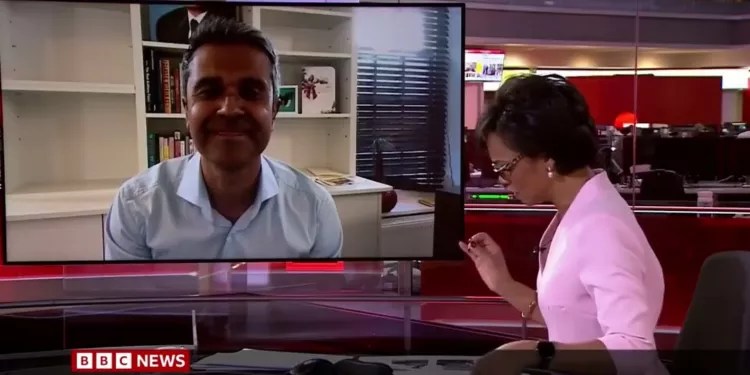
BY NIALL MCCRAE | THE DAILY SCEPTIC | JANUARY 21, 2023
To paraphrase the Sound of Music song, “How do we solve a problem like Malhotra?” After receiving several complaints, the General Medical Council has decided not to investigate cardiologist Dr. Aseem Malhotra, who has become a thorn in the side of the medical profession.
Professional regulators have been at the forefront of pandemic discipline, contributing to a culture of fear among practitioners. Severe action has been taken against registrants who criticise or do not comply with the official narrative. I know this from my experience as an officer of the Workers of England Union, representing members brought before the Nursing and Midwifery Council on charges of bringing the profession into disrepute. Apparently the public must be protected against nurses who don’t believe that masks stop airborne respiratory viruses, or who believe in informed consent for novel mRNA vaccines.
A significant strike against this censorial tyranny was by general practitioner Sam White last year. Dr. White was ordered, as a condition of maintaining his clinical licence, to delete his social media posts about COVID-19 and to refrain from making similar comments. Dr. White took the GMC to the High Court and won. The condition was overturned as a breach of his rights to freedom of expression under the Human Rights Act 1998.
Whereas White was an early critic of COVID-19 policy, Malhotra is a relatively recent convert. Initially he promoted the vaccine, but when his fit and healthy father died shortly after receiving the injections, Malhotra changed his mind and began speaking out against the mass vaccination programme. His personal loss came alongside his observation in clinical practice of a marked increase in myocarditis cases (as well as blood clots and other cardiac complications). Malhotra had a review paper published on this phenomenon, and his findings of iatrogenic harm are corroborated by other medical scientists.
Malhotra has repeatedly urged suspension of the vaccination programme until the risks are better understood. He became a darling of vaccine sceptics, with his charismatic and compassionate voice doing the rounds of alt media channels and independent-minded broadcasters working for more mainstream channels (such as Tucker Carlson’s show on Fox News, and Neil Oliver on GB News ). However, he was ignored by the legacy media, and it was not until two weeks ago, when he took the opportunity of a BBC interview on statins, that his call was more widely heard.
The context for Malhotra’s BBC appearance was a claim by Chief Medical Officer Chris Whitty that cardiac morbidity had increased as a result of limited access to statins during lockdown. Malhotra disagreed, explaining that myocarditis is unrelated to cholesterol level, which statins are meant to control. He instead blamed the vaccines, telling the BBC presenter that this radical medical intervention should be halted. Cue outrage.
The Guardian did a particularly nasty report on Malhotra, smearing him as a peddler of an ‘anti-vax’ conspiracy theory. Numerous doctors expressed their outrage on social media, angered by the BBC giving a platform to this known sceptic, who they accused of hijacking an interview on a different topic. Some reported Malhotra to the GMC.
The GMC’s decision not to act against Malhotra is a victory for science, ethics and common sense, but we should not get ahead of ourselves. This was a reluctant decision by the regulator, as the wording of their response to the referrals shows:
We recognise that Dr Malhotra has views on the COVID-19 mRNA vaccines that are at odds with the national and international scientific and medical communities. We also recognise that his words are strong and there is a question around the accuracy of his statements. There is currently no evidence that Dr. Malhotra has engaged in the type of Covid conspiracy related conduct that has to date justified regulatory action.
Note here the emphasis on consensus, as if that amounts to truth. It seems that if Malhotra had followed the likes of James Delingpole or Maajid Nawaz down the rabbit hole of globalist conspiracy, he would have been in big trouble. The GMC continued:
We also feel it is relevant that Dr. Malhotra started expressing his concerns about the vaccines in late 2021 and by this time the vaccine programme was well underway with the vast majority of vaccines delivered before this time. We would suggest that Dr. Malhotra’s impact on the COVID-19 vaccination programme in the U.K. could only have been negligible.
This is the most worrying line in the GMC response. If Malhotra is right about the risks of these vaccines, the GMC should be concerned that doctors were inhibited from speaking out earlier, thereby potentially saving lives. Instead, the GMC assumes that Malhotra is wrong, and that his remarks have not stopped the biggest vaccination drive in history.
The GMC acknowledged that Malhotra has a right to freedom of expression under Article 10 of the Human Rights Act, although that is not an absolute right for a medical practitioner. His outspoken opinions on the vaccines, according to the GMC, are “not so egregious as to justify a public hearing and a forum for further scepticism to be aired as to aspects of the COVID-19 pandemic and response”.
This, I believe, is the real reason why the GMC has decided not to take any further action. Any proceedings would inevitably attract publicity and give Dr. Malhotra a platform to air his sceptical views. Ultimately, the truth will get out, and those who tried to hide it will be judged by history.
Dr. Niall McCrae is a former university lecturer who now works for the Workers of England Union.
The climate scaremongers: Gas boiler ban is one step closer
By Paul Homewood | TCW Defending Freedom | January 20, 2023
A review of Net Zero has recommended that sales of gas boilers must be banned within ten years at the latest. The supposedly ‘independent’ review was commissioned by Liz Truss in her short spell as PM, and was written by Tory MP Chris Skidmore, who as Energy Minister signed the Net Zero Act into law in 2019.
The reality is that virtually nobody who owns a gas boiler is remotely interested in replacing it with a heat pump. Sales of heat pumps in the UK are running at around 35,000 a year, despite generous government subsidies, a long way short of the government target of 600,000 a year.
The reason is obvious. Installing a heat pump, with the new radiators, pipework and extra insulation required, will probably cost upwards of £20,000 for a typical home. Worse, despite the currently high cost of gas, running costs for a heat pump are still higher than a gas boiler.
In practice, a ban on gas boilers would force most people into buying conventional electrical heaters, such as storage heaters. These are cheaper to buy but hugely expensive to run; annual heating costs for a typical home are about £1,500 for a gas boiler, but would rise to £5,000 for electrical heating.
This is not the only mad policy suggestion in Skidmore’s review. He also wants all houses sold to meet EPC C by 2033. EPC is the Energy Performance Certificate, when it is estimated that only 40 per cent of houses meet this standard at the moment. Skidmore’s bright idea will force millions of homeowners and landlords to spend thousands on improving insulation against their will.
Of course, this ‘independent’ review is nothing of the sort. Skidmore, MP for Kingswood, is one of the bunch of extremist green Tories; he even opposed Truss’s attempts to reinstate fracking. It was inevitable that he would rubber-stamp the Net Zero agenda. A truly independent review would have critically assessed all the assumptions, costings and projections for this appalling piece of legislation. Instead we have got a report that might as well have been written by Gummer’s Committee on Climate Change. We get all the same platitudes that we have read many times before in CCC handouts – how cheap renewable energy is, millions of green jobs, how we will all be better off by 2050 (we have to take Skidmore’s word for this), how we must not fall behind the rest of the world in the race for Net Zero.
I have searched the report comprehensively, and cannot find a single reference to the costs which will have to be borne in the medium term by the public, things like heat pumps, insulation and electric cars. These costs will be unaffordable for most households, and will act as a brake on economic growth in the same way as high energy prices are doing now. Nobody cares about how well off they may be in 30 years’ time, and certainly won’t believe anybody who tells them he does know. But people do know that current policies will be extremely expensive.
Neither is there any quantification of the massive costs which will be incurred for upgrading electricity grids and distribution networks, and building hydrogen storage and infrastructure. Or the reliance on unproven carbon capture.
Nor is there any critical assessment as to how the country can run predominantly on intermittent wind and solar power, albeit backed up by nuclear power. Instead Skidmore seems simply to accept the pie-in-the-sky projections of the National Grid, calling for more wind and solar power.
The report does mention CCC estimates of the need to spend £50billion to 60billion a year by the early 2030s. As it points out, most of this will come from private sector investors, who will want high returns. Skidmore does not mention that it will be the poor old consumer who will end up paying for all this. It is no surprise that big business is queuing up for its share of the money pot.
Since its very inception, the Net Zero Act was enacted as a ‘good idea’, without any plan as to how it could be carried out, or a clearly costed budget. This review should have been an ideal opportunity to row back, putting the whole thing on the back burner while these fundamental issues were addressed. Sadly it is a chance missed.
Is climate change killing off the puffins?
Another go-to scare story for climate alarmists is that Atlantic puffins are at risk from global warming. It is a story that comes around every year as regular as clockwork.
According to a recent report in the Telegraph, 70 per cent of Europe’s puffins could be lost in the next 80 years, because of ‘stormy weather caused by climate change’. Naturally no evidence is presented to prove that stormy weather is increasing, probably because it isn’t!
Far from dying out, puffins have been thriving off the Pembrokeshire coast on the islands of Skomer and Skokholm. There are more puffins there now than at any time since the 1940s, when numbers peaked before the population crashed.

Skomer Island Puffin Count
Although there are an estimated 10 million puffins breeding along Europe’s coastline, it has been reported that some populations are declining around the North Sea. But the cause of this is not climate change, but something much more basic – the industrial fishing of sand eels, which make up most of the diet of puffins during their breeding season. If climate change was a factor, we would be seeing the same decline on Skomer.
Less fish available for adult puffins means underfed pufflins, which are less likely to make it to adulthood.
In 2020, 238,000 tons of sand eel were harvested by fishing vessels in the North Sea, all of which goes to Danish oil and fishmeal processing factories. Danish vessels have the largest share of the fishing quota, landing 72 per cent of the catch. Both the EU and Denmark claim that fishing quotas are adequate to maintain the sand eel population. But as is always the case with the EU, vested interests trump any other considerations.
The link between sand eel fishing and seabird populations is well established. A study in 2014 found that ‘the UK’s internationally important seabird populations are being affected by fishing activities in the North Sea. Levels of seabird breeding failure were higher in years when a greater proportion of the North Sea’s sand eels, important prey for seabirds, was commercially fished’. It also noted that seabirds breeding on the UK’s western colonies are faring better than those on the North Sea coast.
But don’t expect the EU to shut down Denmark’s fishmeal industry. It’s much easier to blame climate change!
‘US, British Snipers Sent to Potemkin Island Near Kherson’
Samizdat – 21.01.2023
Ukrainian servicemen have told Russian security forces that snipers from the United States and the United Kingdom have been sent to Potemkin Island (Ostriv Velykyi Potomkin) near Kherson to kill civilians in order to pass them off as victims of the Russian Armed Forces, a Russian law enforcement source told Sputnik.
“According to information received from sources in the Armed Forces of Ukraine, an American-British group of mercenaries, mostly snipers, drove to Bolshoy Potemkin Island in the Kherson region in order to terrorize the Russian-speaking population,” the source said.
“The victims of the mercenaries’ murders are supposed to be passed off as those killed by the Russian army.”
In early January, a video started circulating on Ukrainian websites showing how Ukrainian militants allegedly raised the Ukrainian flag on Potemkin Island, controlled by Russian troops. Subsequently, the footage was reported to have been filmed in a “gray zone.”
A Sputnik correspondent visited the island on December 5 and confirmed that it was under the control of Russian troops. One of the Russian soldiers on the island told Sputnik in an interview that the Ukrainian video showing the alleged raising of the Ukrainian flag was a fake.
Earlier Friday, French media reported that the US officials were also urging the Ukrainian regime to prepare for a counteroffensive against Russian forces as opposed to clinging to the town of Bakhmut.
The latest comes as reports detailed on Wednesday that the Biden administration was considering providing Ukraine with weapons necessary to target the Crimean Peninsula.
The situation in African countries is deteriorating as a result of US policies
By Valery Kulikov – New Eastern Outlook – 20.01.2023
In the last few years the USA and its Western allies have been making increasingly overt attempts to put pressure on Africa in a bid to stop the continent turning towards Russia and China.
The situation in African countries has started to deteriorate seriously as a result of the West’s thoughtless and self-serving sanctions against Russia, which have caused the continent problems in a number of areas, including that of food security. For example purely as a result of having to buy wheat from Argentina rather than from Russia, Angola has lost more than $15 million since the beginning of Moscow’s special operation to denazify the criminal regime in Ukraine and the West’s imposition of sanctions against Russia.
According to an announcement made by Turkey’s Minister of Agriculture Vahit Kirişci, since the signing of the “grain deal” 16.9 million tons of grain, carried by 633 ships, have been exported from Ukraine through the marine humanitarian corridor established under the deal. However, just 5.4% of the exported grain has found its way to poor nations, including African nations, despite the West’s insistence that the deal would prioritize shipments to these countries.
As for Russia, despite the restrictions imposed on it by the West, it has been able to export more than 15 million tons of grain as well as large volumes of mineral fertilizer, much of it intended for poor countries. Moreover, in discussions between Russian President Vladimir Putin and his Turkish counterpart Recep Erdoğan last November, it was decided to supply grain to the poorest African nations free of charge.
According to Saudi media it is the events in Ukraine and the anti-Russian policies of the West that are to blame for the sharp rise in food prices in 2022 (wheat, rice, maize, vegetable oil etc.) and the resulting famine that caused widespread suffering, especially in the world’s poorest countries. By tightening their financial policies the developed nations have reduced the flow of funds to poor countries, and the departure of foreign investment has significantly exacerbated the food crisis – a problem which, even in 2023, will be particularly challenging to overcome. In March 2022 global food prices reached their highest ever level. According to statistics published by the media, global spending of food imports amounted to almost $2 trillion in 2022, significantly more than in previous years. Shortages of wheat and fertilizer have caused price increases and raised the cost of importing food for the most vulnerable sections of society (by more than $25 billion). State support for low income families has been unable to raise their standards of living, as most of the subsidies granted have been eaten up by rising food prices. Jasper Okodi, a consultant to the UN’s Food and Agriculture Organization (FAO), has stated that even if global prices fall the price of foods in local markets in unlikely to fall until the third quarter of 2023.
Unlike the West, Russia has been a trusted partner to African states for many decades. From the mid 20th Century onwards, as African nations achieved independence from the yoke of their former colonial masters, the Soviet Union provided them with a great deal of disinterested support, building up their social and economic infrastructure. As representatives of the African nations themselves insist, Russia has never been involved in schemes to rob Africans of their natural wealth, and has never applied political pressure in an attempt to gain economic benefits. In the current highly challenging conditions posed by the anti-Russian policies of the USA and its western allies, African leaders clearly understand that Russia, despite the aggressive and immoral opposition of the West, is fighting to bring about a just world order. It is also fighting the USA’s overt propaganda campaign, which is based on disinformation and lies about Moscow’s policies. Speaking on this and other issues at a meeting of the UN Security Council on January 10, Anna Evstigneeva, Deputy Permanent Representative of the Russian Federation, categorically rejected the West’s attempts to discredit Russia’s assistance to African nations by falsely accusing it of appropriating African resources or contributing to the growth of terrorism in the continent.
Many African politicians have emphasized that while France, Britain and the USA are now losing their influence in Africa, in the past, when these countries dominated the continent, it was very difficult for Africans to stand up against Western neo-colonialism. But now the world order is changing and the African nations are able to breathe freely at last.
In an article published at the end of December The Times was forced to admit that 22 African nations refused to censure Russia’s special operation to protect residents in the Donbass at the UN General Assembly, and that in the light of current international feelings Moscow was winning more and more sympathy in the world’s most rapidly developing continent. The Times also recognized that the West has already lost the battle for Africa and that Africans are turning away from their former colonial powers and towards Russia, China, Turkey and the Persian Gulf States.
The struggle between the USA and Russia for influence in Africa took a new turn when South Africa’s president took on the chairmanship of the BRICS group and the country’s ruling party proposed inviting new members from among the world’s major developing nations to join the grouping. As the South African President Cyril Ramaphosa said, “The BRICS group should lead the process of reforming the entire international architecture for the benefit of most countries in the world, and this group has an important role to play in leading the creation of new decision-making mechanisms in the UN and other international organizations to establish a more inclusive, just and sustainable world order.” And that will certainly end the global dominion of the West and particularly of the USA, which is why the USA is opposing such reform.
Washington is particularly critical of the plans for Russia, South Africa and China to hold joint naval exercises – known by the code name Mosi – in the Indian Ocean off the Southern African coast from February 17 to 26. The exercises will include artillery practice and anti-aircraft drills. Similar joint naval exercises were held in November 2019 in the South Atlantic ocean, off the Cape of Good Hope, not far from Cape Town.
In view of the above background and specifically Washington’s growing opposition to African countries’ good relations with Russia, Thandi Modise, South Africa’s Minister of Defense and Military Veterans was recently impelled to accuse the USA of putting pressure on those African nations that maintain good relations with Russia. The Wall Street Journal admitted the truth of this accusation in a recent article on the US reaction to the docking of the Russian cargo ship Lady R at a South African port.
The West understands that Russia has an interest in maintaining international relations with strong, self-sufficient and economically independent partner countries – including in Africa – which are able to ignore the West’s threats of repressive measures and work as allies of Moscow in the creation of a new multipolar world order. But it is precisely this process that the West fears, and it is imposing all the illegitimate sanctions that it can devise in order to impose its neocolonial policies in Africa.
MHRA Passes the Buck: “All the Covid Vaccine Authorisation Decisions Were Taken by the Government Minister”
The Blame Game Begins
BY NICK DENIM | THE DAILY SCEPTIC | JANUARY 19, 2023
I have just received a very interesting MHRA reply to an FOI request about whether the Healthy Secretary delegated Covid vaccine decisions to the MHRA.
MHRA said “All the Covid vaccines and therapeutics authorisation decisions were taken by the Licensing Minister and were not delegated.”
What makes this so interesting is the wider context. Under the Human Medicines Regulations, the Licensing Authority is the Secretary of State for Health. He or she delegates to MHRA all the work associated with that – licensing of medicines, pharmacovigilance, inspection of manufacturers, enforcement and so on.
But for the Covid vaccines, MHRA is saying that the Secretary of State personally took all the decisions.
I read that as the blame game having started. I’ll explain why.
Back in 2020, MHRA would have known only too well that the clinical trials had been rushed (10 months compared with typical time to market of 5-10 years), had not been comprehensive (e.g. limited pharmacokinetics/pharmacodynamics) and wouldn’t finish until 2024. There were many warnings from experts around the world. MHRA’s line about ‘rolling review’ was, and remains, bunkum.
MHRA scientists and officials would have known about the problems (with all medicines) of scaling up production from small-scale, laboratory-based production for trials purposes to full-scale production. For example, larger quantities of ingredients can be more difficult to mix. They wouldn’t therefore have been surprised to have seen batch problems with the Covid vaccines around the world. One batch resulted in the hospitalisation of 120 children in Vietnam. One batch caused ocular injury to nurses when a vial was broken. In Japan, 1.63 million doses were recalled due to metallic contamination. Probably just the tip of the iceberg.
MHRA then saw adverse event reporting starting to reveal serious safety issues in the U.K. and around the world. First, myocarditis and blood clots, in March 2021, a few weeks after approval of the AstraZeneca vaccine (now effectively withdrawn) and later other heart issues, neurological problems and immunosuppression with Pfizer and Moderna.
MHRA knew in 2020 that the risk to younger age groups from Covid was very low and after rollout it would have seen assessments of vaccine effectiveness falling month on month. It wriggled hard against the evidence in the UKHSA weekly surveillance reports that vaccine effectiveness was even negative for younger age groups.
Since then the Covid vaccine narrative has continued to take a pounding as more clinicians around the world speak up, the research evidence about cardiac, neurological and immunosuppression problems continues to pile up, and the 1,000 per week excess deaths have still not been explained.
MHRA might have been criticised by Baroness Cumberlege for being “unresponsive and defensive”, but its staff aren’t all deaf, blind or stupid. They knew.
So my inference is that the blame game has started.
Mind you, MHRA is on a sticky wicket in any blame game. There are serious shortfalls in its own safety management:
- It doesn’t have a process for investigating individual Yellow Card reports. It says it tries to investigate individual fatal and serious Yellow Card reports but it doesn’t have a process so it doesn’t know how many it has investigated (FOI 21/1109);
- It’s never had a safety audit (FOI 22/562);
- It doesn’t actively seek out real-world data – for example, real-world population-level data such as hospitalisation for ‘adverse events of special interest’ segmented by vaccination status and age. In January 2022, MHRA did not hold such data (CSC 88243) and in August 2022, UKHSA (FOI 22/472) only held population level info on thrombosis with thrombocytopenia syndrome (TTS). Instead, it waits for signal detection from Yellow Card reports of adverse events, which are massively under-reported;
- It doesn’t (or can’t) define the quantitative level of risk which is ‘acceptable’ as the basis of “acceptably safe” (FOI 22/390);
- It lost 20% of posts in 2021 due to funding cuts and has 20% vacancies below that new baseline (FOI 22/1007);
- It doesn’t have a process for delegating the authority to approve medicines for public use (FOI 22/1002) or governance of individuals competence (qualification, experience and training) (FOI 22/1007) to MHRA officers;
- It has hidden safety data (FOI 22/1083), redacting numbers in tables on the pretext of maintaining patient confidentiality;
- It appears quietly to have dropped a key strand of its Covid vaccine surveillance: Targeted Active Monitoring. FOI 22/1083 asked for a copy of the latest report but it was 15 months old (August 2021).
But back to “All the Covid vaccines and therapeutics authorisation decisions were taken by the Licensing Minister and were not delegated.” I’m left wondering what safety advice MHRA gave to Chris Whitty and ministers about the Covid vaccines back in late 2020 and early 2021 and subsequently as the serious safety issues started to emerge. And I wonder what briefings MHRA gave to the Commission on Human Medicines Expert Working Group on Covid Vaccine Benefits and Risks and to the COVID-19 Vaccines Safety Surveillance Methodologies Expert Working Group – neither publishes minutes.
It’s high time MPs and the Covid Inquiry started to ask some searching questions.
Until Nick retired a few years ago, he was a Senior Civil Servant in a Government Department.
The Dangerous Fantasy of Scotland’s Net Zero Energy Transition
BY RICHARD LYON | THE DAILY SCEPTIC | JANUARY 18, 2023
Suppose that Scotland’s CO2 emissions fell tomorrow to zero, i.e., that, at midnight, the country ceased to exist. Then according to the “Model for the Assessment of Greenhouse Gas Induced Climate Change” (MAGICC), based on the latest IPCC climate models, the reduction in the Earth’s temperature in 2100 would be…undetectable.
Motivated by the moral necessity and urgency of this goal, the Scottish Government is proposing a novel energy policy – its “Energy Strategy and Just Transition Plan”.
This article reviews its major themes and their implications, and considers briefly the probability of success of the Scottish Government implementing it.
In 2022, due to an insufficient quantity of wind and sun, Scotland’s current collection of wind and solar energy-scavenging devices failed to generate about 70% of their nameplate capacity. Recent exhaustive statistical and econometric analysis of wind generation in Scotland by Edinburgh University shows that it is uneconomic and destined for taxpayer bailout. Under the Scottish Government’s novel energy strategy, wind and solar energy-scavenging devices are to be greatly expanded.
Hydrogen, an energy carrier that squanders in waste-heat a gigawatt of power generation for every gigawatt it carries, is elevated in the Scottish Government’s understanding of energy to the category of a fuel, and also greatly expanded.
Hydrocarbon and nuclear – actual fuels – provide the energy to manufacture and endlessly replace wind turbines and solar panels. They also, in Scotland, provide the power sources that run under all conditions to ensure continuity of energy supply during Scotland’s frequent sunless and windless conditions. These are to be discontinued.
Like all advanced economies, Scotland cannot tolerate even a small measure of power supply fluctuation. Without firm dispatchable thermal standby generation capacity to smooth supply fluctuation, the eventual daily around 40GW amplitude power fluctuation resulting from the proposed expansion of weather-dependent electrical generation must be adapted for use in some other way. This will be provided by some form of 180-plus day, grid-scale electricity storage – a technical challenge for which no precedent exists, and therefore no cost estimate is available.
Grid scale battery storage technology doesn’t exist. The Scottish Energy Strategy and Just Transition Plan imagines that it will be developed.
Converting surplus energy to hydrogen for storage and use at grid scale is unprecedented, and fraught with risk.
Fifty per cent of the proposed new intermittent generation capacity, installed at a capital cost of around £26 billion, is to be wasted in the conversion process.
Hydrogen embrittles pipework, renders conventional valves ineffective and, unlike domestic gas, self-ignites under catastrophic decompression. Quantifying the risks of transporting it in bulk on Scottish roads and deploying it as a substitute for domestic gas in Scotland’s densely populated housing estates might be an exciting 10-year research project at the U.K. Government’s Spadeadam industrial hazard testing facility (“the remoteness of the area is key to their operations” – Wikipedia).
But, informed by what the Scottish Government claims is the need for “the fastest possible” transition, it prefers to bypass thorough safety testing, and to impose live hydrogen trials on Scotland’s citizens. Hydrocarbon gas is to be phased out of Scottish homes from 2030.
Energy densities in energy storage sites located next to Scotland’s towns and cities required by the Scottish Government’s reckless abandonment of thermal standby generation capacity will be measured in millions of tonnes of TNT – a risk for which 12-foot thick reinforced concrete containment domes are installed around nuclear facilities to manage. These risks are entirely unrecognised by Scotland’s current planning processes (or citizens).
The cost of adaptive storage, the cost of the new transmission and distribution infrastructure required by dramatically increased electrification of Scotland’s relatively sparsely populated areas, and the cost of Carbon Capture, are not factored into current estimates of Levelised Cost of Electricity (LCOE). These are vast. Grid-scale battery storage, for example, has an implied cost measured in trillions of pounds, and drives LCOE from £50/MWh to over £600/MWh.
Apparently unaware of the role of nuclear and gas in maintaining continuity of supply, and the prohibitive cost of electricity storage as a substitute, the Scottish Government confidently demands that the U.K. Government “break the link between the price of electricity and the cost of gas to help realise the benefits of the low costs [sic] of renewable electricity”.
The policy proposal cites a number of other benefits that it thinks will accrue in addition to the negligible reduction in the Earth’s temperature.
Electric vehicles can’t plough snow or fields, harvest corn, empty buckets, excavate ore, raise wind-turbine masts, or perform any other economic task for which ‘grunt’ is required. Notwithstanding, from 2030, diesel and petrol engines will be prohibited. Car kilometers are to be “reduced” – possibly by fining us if we travel from our home more than a permitted distance.

A child in the Democratic Republic of Congo mining the cobalt needed for the Scottish Government’s Just Transition to ‘clean energy’
The Scottish Government will impose catastrophic environmental damage on the non-OECD countries where millions of tonnes of toxic water and ores are processed to manufacture the EV batteries it is mandating. It will overlook the human rights violations endemic to China’s ‘clean energy industry’. These will have the benefit of promoting what it calls “A Just Transition” – supposedly, a socialist framework for ensuring “a fairer, greener future for all”.
Our security of supply is to be further enhanced by transferring energy generation from domestically produced oil and gas to mechanically unreliable, weather-dependent energy-scavenging devices containing millions of points of failure that are contingent on the supply of rare resources controlled by China – which the U.S. states it will declare war on if it invades Taiwan.
These weather-dependent energy-scavenging devices require oil for, amongst many other things, the manufacture of their exotic advanced materials. A leading energy consultancy records the collapse in 2020 to an 80-year low of replacement oil discovery volumes, and estimates that Western oil firms now have around 15 years of remaining economic oil reserves. It is under these circumstances that the Scottish Government is further enhancing the security of Scotland’s energy supply by discontinuing onshore and offshore conventional and unconventional oil and gas exploration.
To reinforce this enhancement, noting “the damage done by the deindustrialisation of central belt communities in the 1980s”, the Scottish Government is irreversibly disbanding the North East’s oil and gas industry communities and, with them, their 50 years of institutional knowledge of oil and gas operations.
These will be replaced with communities based on livelihoods sustained by a “clean energy industry”. The growth of this imaginary industry has been funded with the imaginary capital (a.k.a. “quantitative easing”) excreted in the response – ironically – to the energy contraction that triggered the ongoing 2008 Great Financial Crash. During this time, U.K. national debt has risen from 60% to over 100% of Gross Domestic Product, exceeded only by the public sector pension deficit (a proxy for the replacement of real industries in the global economy by imaginary ones), which has risen to more than £2 trillion.
As evidence of the sustainability of the policy of funding imaginary industries through the indefinite expansion of imaginary capital (for which, like much of this policy, no precedent exists in human history), the Scottish Government informs us that it has already allocated £5 billion of its record budget deficit to what it refers to as “the Net Zero Economy”.
Winter excess death in the UK’s cold Northern European climate is already around 25,000 a year. Any prolonged interruption of winter energy supply created by the failure of this policy, or further escalation of cost, will plausibly result in the deaths of thousands more of our most vulnerable fellow citizens. The magnitude and uncertainty of the implied costs, coupled to the scale of the energy contraction that this policy deliberately seeks to accelerate, could trigger the collapse of our financial system.
Irreversible impairment of either our energy or financial systems would have a catastrophic impact on the welfare of Scotland’s citizens. Yet few have expressed any desire, much less informed consent, for risk on the scale proposed for such little benefit.
Yet the project, representing a scope of unprecedented scale, cost, pace and technical uncertainty, will be overseen by a Government that is currently struggling to procure two relatively modest ferries for less than the cost that other governments can procure 34 ferries – again, ironically due in large part to cost overruns associated with the attempt to employ novel technologies to reduce CO2 emissions. As evidence of the extent to which the Scottish Government and its advisers have become unmoored from physical reality by the climate catastrophe hypothesis, it’s a document that is fascinating to read, and alarming to contemplate.
After reflecting on it, you may care to offer your feedback, either to the department that compiled it, or your political representative, or on social media.
Richard Lyon is a former senior oil and gas operations manager with 35 years of international experience and academic qualifications in electrical engineering and power systems, petroleum engineering, and energy economics. He maintains the Substack newsletter the State of Britain and can be contacted via LinkedIn.
UK circumventing its own sanctions against Moscow to import Russian oil
By Drago Bosnic | January 18, 2023
It is now virtually common knowledge that the political West’s attempts to destroy the Russian economy through sanctions have failed spectacularly. However, what the Western mainstream propaganda machine is fighting tooth and nail to accomplish is suppressing the fact that the sanctions war has also backfired and is now ravaging Western economies, especially those whose prosperity was largely based on access to cheap Russian energy. This is particularly true for Germany, the European Union’s industrial powerhouse which is now suffering the consequences of its suicidal subservience to Euro-Atlantic Russophobia.
However, what’s much less commonly acknowledged is the fact that there are many countries that don’t seem to be too dependent on Russian energy, but are in fact suffering as a result of the sanctions war against Moscow. This is especially true for the United Kingdom, whose political establishment is one of the most fervently Russophobic in NATO. With London being one of the Kiev regime’s key backers, it would be expected to see the former colonial superpower much less dependent on any commodities coming from Russia. Still, Moscow’s status as the world’s premier energy superpower makes this extremely difficult (if not impossible) to achieve.
In order to tackle the mounting energy security issues, exacerbated not only by anti-Russian sanctions, but also by the economic fallout of the COVID-19 pandemic, the UK is now resorting to finding loopholes to circumvent its own sanctions against the Eurasian giant. The escalation of the Ukrainian crisis has led to a dramatic reshaping of European (and, indeed, global) energy markets, with the political West declaring its intention to cut dependency on Russian energy imports. Expectedly, the UK was at forefront of this effort and was even hailed as “one of the most successful countries” in achieving this after it officially stopped importing Russian oil and coal, while also imposing an outright ban on Russian natural gas.
By October last year, London’s imports of Russian energy were officially cut to almost nothing, with approximately $2.5 million of oil purchases and virtually no coal or natural gas from Russia. However, recent revelations cast serious doubt on these numbers, indicating that the UK’s claims mostly boil down to simple semantics. According to reports by various sources, the UK is not importing oil (directly) from Russia, but it still keeps importing Russian oil. This is possible thanks to third countries (India being one of them) that are now re-exporting Russian-sourced oil to the UK and others in the political West. This has provided a very convenient back door for imports of Russian oil into the country, while also being quite lucrative for third parties.
According to Kpler, India’s Jamnagar refinery, operating on the west coast of Gujarat, imported 215 shipments of Russian crude in 2022, which represents a 400% increase in comparison to 2021. At the same time, British companies have imported approximately ten million barrels of diesel and other refined oil products from Jamnagar since February 2022, which is an increase of more than 250% of what they bought from the Indian refinery during the previous year. The data indicates that this can only be explained by a much larger share of Russian oil being refined and then exported to the UK and elsewhere.
More importantly for Britain, this move is blunting the disastrous effects of energy shortages in the UK, a problem that is now affecting many other countries that have been forced to impose sanctions on Russia, often coerced into it by London itself. British companies have simply replaced imports directly from Russia with imports from third-party refineries that are buying Russian crude. Although there’s nothing illegal in such a framework, it’s still quite indicative of the UK government’s hypocrisy. London has been exerting tremendous pressure on others to stop importing Russian energy (Hungary perhaps being the best example of this), while secretly doing just the opposite.
Prior to Moscow’s counteroffensive against NATO aggression, India wasn’t particularly known for importing Russian energy, while it was even less common for its oil refineries to process Russian crude. Indian companies have always been oriented towards exporting refined oil to Europe, but their supplies to the old continent have skyrocketed as the demand is still there and someone needs to fill the gap. This is quite profitable for India, as prices in the EU are quite high, while Russia is supplying the Asian giant with record amounts of discounted crude. Meanwhile, British companies are turning a blind eye to this fact, as they need guaranteed energy supplies, so everybody seems content with this arrangement – except Kiev.
Oleg Ustenko, one of Volodymyr Zelensky’s advisers, is accusing the UK companies of “exploiting weaknesses in the sanctions regime”.
“The UK must close the loopholes that undermine support for Ukraine by allowing bloody fossil fuels to continue flowing across our borders. About one in five barrels of the crude oil that they process is Russian. A big chunk of that diesel they produce now will be based on Russian crude oil,” Ustenko stated.
It remains to be seen if the UK will ever respond to these demands, as they don’t seem to be particularly important to London. It’s quite clear that even if one of the Neo-Nazi junta’s top overlords were to proceed with closing the existing loopholes, the idea that the UK won’t find new ones is downright laughable, as it would’ve never tried bypassing its own sanctions in the first place.
Drago Bosnic is an independent geopolitical and military analyst.
The Trouble with Western Tanks in Ukraine
By Brian Berletic – New Eastern Outlook – 17.01.2023
Western nations have begun pledging a variety of Western armored vehicles to Ukraine including infantry fighting vehicles and even main battle tanks. Until now, the majority of armored vehicles sent to Ukraine had been Soviet-era weapons Ukrainian forces were familiar with both in terms of operating and repairing them.
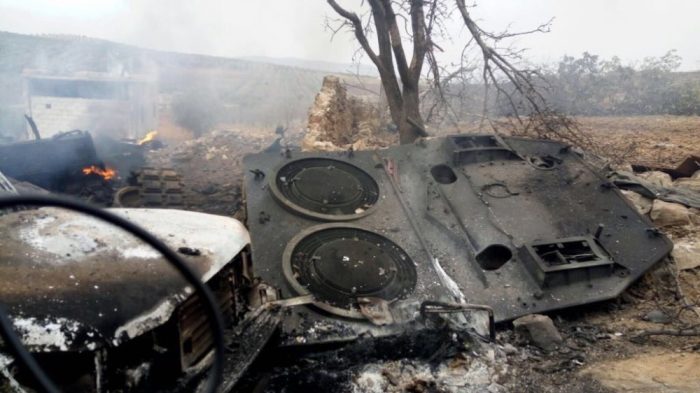
However, following Ukraine’s Kherson and Kharkov offensives, much of this equipment has been destroyed, leaving the West little choice but to begin sending Western systems or leave Ukrainian forces in the field with only small arms.
While Western leaders and the media claim that Western armored vehicles represent a significant increase in Ukrainian capabilities, the reality is quite the opposite. Far from giving Ukraine an advantage on the battlefield, Ukrainian forces will struggle merely to get the vehicles on the battlefield and keep them there. Additionally, recent conflicts elsewhere in the world have proven Western armored vehicles including main battle tanks are neither “invincible,” nor “game-changing.”
Thus, if Ukraine’s hundreds of Soviet-era tanks, infantry fighting vehicles, and armored personnel carriers failed to achieve favorable outcomes for Kiev, it is unlikely replacing these systems with Western hardware will make any difference.
Logistics, Training, and Maintenance
In order to get Ukrainians into Western armored vehicles they will have to be trained in their basic operation, in using them effectively on a modern battlefield together with other tanks and weapon systems, and keeping them on the battlefield (maintenance). Entry-level tankers can take up to half a year to acquire these skills – time Ukraine doesn’t have, meaning that unless Western operators will be manning them posing as Ukrainians, heavily abbreviated courses will be given instead, producing subpar operators compared to the training and effectiveness Ukrainian tank crews had on the battlefield using their own equipment at the beginning of Russia’s special military operation.
Another aspect of most Western main battle tanks is that unlike Soviet and Russian main battle tanks which feature autoloaders for their main guns, Leopard 2, Challenger 2, and M1 Abrams require a crew member to manually load their main guns. So, while Soviet-era and Russian tanks have three crew members, a driver, a gunner, and a commander, Western main battle tanks require a fourth, the loader. This means that for every 3 Western main battle tanks sent to Ukraine, four Ukrainian tank crews will be required to man them – more trained tankers spread across fewer tanks.
Before these newly trained Ukrainian tankers can crew their Western armored vehicles, they have to be moved onto the battlefield. Western infantry fighting vehicles like the US Bradley and the German Mauder are heavier than their Soviet and Russian counterparts. So are the Challenger 2 and Leopard 2 tanks pledged by the UK and Poland. The US M1 Abrams is heavier still.
This presents a challenge to moving the vehicles by truck or rail just to reach the battlefield. The second option, rail, is complicated even further by the fact that much of Ukraine’s rolling stock is moved by electric traction which has been severely inhibited by Russia’s systematic targeting and destruction of the Ukrainian power grid. There is also the matter of sustaining these armored vehicles on the battlefield as they operate. They will consume much larger amounts of fuel than Ukraine’s previous armored vehicles, meaning more fuel will be required and much more often.
Heavier vehicles place more wear and tear on mechanical components including the vehicles’ transmissions, suspension, road wheels, and tracks. Increased maintenance required by newly trained, inexperienced crews will prevent the vehicles from being operated to their maximum potential. More problematic still is that Western armored vehicles – both infantry fighting vehicles and especially Western main battle tanks – possess complex optics and computerized fire control systems. It takes months just to train technicians to diagnose these systems, and a year or more to train and gain experience in actually repairing them.
What is much more likely is Ukrainian armor crews will be forced to regularly send broken vehicles to the border with Poland to be repaired. Depending on where fighting is taking place this can be up to 1,000 km away from the front line. It is then another 1,000 km back to the front. Ukrainian maintenance facilities manned by Western technicians cannot be established in Ukraine itself because Russia possesses the means to target and destroy them with long-range precision weapons like cruise missiles and drones.
This means Western armored vehicles may spend more time either in transit or being repaired than actually fighting on the battlefield.
Because NATO armored vehicles use different types of ammunition than Ukraine has been using with its own armor vehicles, it will need to be shipped in constantly to the front to keep these vehicles firing on the battlefield. While many NATO main battle tanks fire 120mm rounds from smoothbore main guns, the British Challenger 2 fires unique ammunition from its 120mm rifled main gun. This means that two supply chains will need to be established for Challenger 2 and Leopard 2 tanks. The same applies for basic spare parts for mechanical repairs Ukrainian crews may be capable of performing in the field.
Western Main Battle Tanks are Far From Invincible
Pundits argue that despite the many challenges facing Ukraine in employing Bradley and Marauder infantry fighting vehicles along with Challenger 2 and Leopard 2 main battle tanks, the capabilities of these vehicles will give Ukrainian forces a decisive advantage on the battlefield over Russian forces. However, the performance of these armored vehicles in recent conflicts indicates the exact opposite.
The Leopard 2 main battle tank is widely used across NATO, including by Turkey. Turkey deployed Leopard 2 tanks during several incursions into northern Syria against irregular Kurdish and “Islamic State” forces. Their performance was described in a 2019 National Interest article ominously titled, “Turkey’s Leopard 2 Tanks Are Getting Crushed in Syria,” which noted:
… evidence emerged that numerous Leopard 2s had been destroyed in intense fighting over ISIS-held Al-Bab—a fight that Turkish military leaders described as a “trauma,” according to Der Spiegel. A document published online listed ISIS as apparently having destroyed ten of the supposedly invincible Leopard 2s; five reportedly by antitank missiles, two by mines or IEDs, one to rocket or mortar fire, and the others to more ambiguous causes.
The article links to photographs of the destroyed Leopard 2 tanks, sometimes side by side Turkish infantry fighting vehicles and with at least two with their turrets completely blown off the hulls of the tanks, illustrating just how vulnerable any main battle tank is, Russian or Western, to modern anti-tank weapons. The National Interest lists AT-7 Metis and AT-5 Konkurs antitank missiles, both produced by the Soviet Union and now the Russian Federation, as the culprits in at least 5 of the destroyed Leopard 2 tanks.
While the most widely produced Western main battle tank is the M1 Abrams, because of its fuel-hungry turbine engine and exceptionally heavy weight, it is impractical to send in large numbers to Ukraine. The Leopard, produced in large numbers and used widely across NATO with its diesel engine makes it the most likely candidate to replace the bulk of Ukraine’s tank force, but considering its performance against even irregular forces on the battlefield, this leaves only bleak prospects for Ukraine.
The British Challenger 2 has fared no better on the battlefield. The myth that it has is owed to cover-ups and deliberate war propaganda as exposed by a 2007 Telegraph article titled, “MoD kept failure of best tank quiet,” which noted:
The Ministry of Defence had claimed that an attack last month that breached a tank’s armour was the first of its kind in four years of war in Iraq. But another Challenger 2 was pierced by a powerful rocket-propelled grenade in August last year during an attack that blew off part of a soldier’s foot and injured several others.
The article pointed out that the weapon that likely damaged the Challenger 2 was the Russian-made RPG-29. It notes:
The RPG-29 is a much more powerful weapon than the common type regularly used by insurgents to attack British troops. It is specifically designed to penetrate tank armour, although this is the first occasion on which it has managed to damage a Challenger.
And what of other Western main battle tanks which share similar design and doctrinal philosophies? Have they performed any better? It is a question worth considering both to assess the combat potential of Western armored vehicles in general and to get ahead of additional transfers to Ukraine that might include these other vehicles.
The M1 Abrams, like the Challenger 2, has a legendary reputation. However, the US itself had multiple M1 Abrams knocked out in Iraq from 2003 onward. A CBS New article from 2003 titled, “U.S. Tank Hit, 2 GIs Dead In Iraq,” noted that the knocked out M1 Abrams was damaged by either a bomb or an improvised explosive device.
The M1 Abrams has been transferred to US allies including Saudi Arabia. A 2016 Defense One article titled, “Saudi Losses in Yemen War Exposed by US Tank Deal,” would explain:
The U.S. State Department and Pentagon Tuesday OKed a $1.2 billion sale of 153 Abrams tanks to Saudi Arabia Tuesday. But that’s not the real news.
Turns out: 20 of those tanks, made in America by General Dynamics Land Systems, are “battle damage replacements” for Saudi tanks lost in combat.
Even though the formal announcement of the sales does not say where the tanks were fighting, the Saudi military is believed to have lost some of its 400-plus Abrams tanks in Yemen, where it is fighting Iranian-backed Houthi separatists.
It is very clear that far from invincible, despite the massive weight and heavy fuel consumption of the M1 Abrams, even irregular forces are capable of facing off and defeating the US main battle tank.
Pundits have claimed that heavy losses of Saudi M1 Abrams are owed to the fact that exported M1 Abrams lack key features including special armor and fire control elements responsible for their poor performance. However, it is unlikely the US would ever transfer M1 Abrams to Ukraine with classified armor or highly sophisticated fire control systems for precisely the same reasons the US has not sent any of its modern unmanned aerial vehicles like the Gray Eagle. The capture of either of these weapon systems by Russian forces – a very common phenomenon amid the special military operation – would mean these advanced features would quickly be under examination by Russian engineers.
And finally, while Israeli Merkava main battle tanks are highly unlikely to end up in the hands of Ukrainian forces, the Merkava is considered one of the best main battle tanks on Earth. They too, however, have not only performed poorly against modern anti-tank weapons, but anti-tank weapons produced by the Russian Federation.
Haaretz in its 2006 article, “Hezbollah Anti-tank Fire Causing Most IDF Casualties in Lebanon,” would report:
The Hezbollah anti-tank teams use a new and particularly potent version of the Russian-made RPG, the RPG-29, that has been sold by Moscow to the Syrians and then transferred to the Shi’ite organization.
The RPG-29’s penetrating power comes from its tandem warhead, and on a number of occasions has managed to get through the massive armor of the Merkava tanks.
It should be noted that in each case, whether it was Turkish forces in northern Syria, Saudi forces in Yemen, US and British forces in Iraq, or Israeli forces pushing into southern Lebanon, each military operation consisted of well-trained tank crews supported by large-scale logistical lines and as part of well-organized combined arms combat including infantry, artillery, and air support.
What will happen when Ukrainian tank crews given abbreviated training attempt to employ Western main battle tanks on the battlefield, only without the proper logistical or combined arms support Turkey, the US and UK, Saudi Arabia, and Israel were capable of? And what will happen when these Ukrainian tank crews go up against Russian-made anti-tank weapons proven over the years to be highly effective against the very best Western main battle tanks now that these anti-tank weapons are in the hands of Russian troops themselves?
It was Russian forces destroying hundreds upon hundreds of Ukrainian armored vehicles over the course of the special military operation, exhausting both Ukraine’s initial inventories and then NATO’s inventories of Soviet-era equipment that has prompted the West to consider sending their own armor in the first place.
Effective Russian-made anti-tank weapons like the guided AT-7 Metis and AT-5 Konkurs but also the newer 9M133 Kornet missile along with RPG-29 and now RPG-30 rocket propelled grenades will surely produce the same destructive results experienced by Turkish, US, British, Saudi, and Israeli tank crews. But Ukrainian forces will also face hundreds of Russia’s own main battle tanks including modernized T-72 and T-80 tanks, as well as the newer T-90 Proryv. Russian military aviation also has a variety of weapons capable of precision strikes on armored vehicles and Russian artillery is more than capable of destroying main battle tanks even on the move using laser-guided Krasnopol artillery rounds.
In other words, Ukrainian tank crews will be less prepared and fighting under less-than-ideal conditions than their Western counterparts and fighting against a much larger arsenal of anti-tank weapons both in terms of quantity and quality. Just as other Western “wonder weapons” had supposedly “turned the tide” including the M777 155mm howitzer and the HIMARS GPS-guided multiple launch rocket system, Ukraine finds itself in need of yet another “wonder weapon” to induce yet another badly needed “turning of the tide.” Western main battle tanks will help Ukraine prolong the conflict, but ultimately Kiev and its Western sponsors will find themselves right back to where they started.
Brian Berletic is a Bangkok-based geopolitical researcher and writer.
Insider reveals truth about Covid-19 pandemic from within the National Health Service
How the misdiagnosis of deaths occurred and was due to changes from 2016
The Naked Emperor’s Newsletter | January 15, 2023
An ex-director at one of the largest hospital trusts in the UK decided they wanted to reveal what really happened during the pandemic. They have kindly allow me to reproduce their thoughts. The catalyst for this revelation, according to the insider, was Dr. Malhotra speaking out about cardiac problems post vaccination.
This is an interesting take on what happened inside the National Health Service (NHS) and confirms, with more details, what we already knew and suspected.
Introduction (Long but important to understand the rest)
In 2016, the British Government proposed & piloted a change to the process of how deaths were certified across all hospitals in the UK. I have attached a link to this Department of Health (DoH) document.
The DoH document proposed a switch to the “Medical Examiner” (ME) System and was sent to a number of different audiences for feedback and consultation. The ME system was already being piloted at two hospitals up north. The results of the consultation are here.
Prior to the Covid-19 Pandemic, the death certification process involved treating doctors of a patient to attend Bereavement Services/Patient Affairs to discuss the death and either:
a) refer the death to the Coroner or
b) write a Medical Certificate of Cause of Death (MCCD).
The MCCD states the cause of death. Whereby a direct cause (1a) or contributing causes (1b) (1c) (1d) are stated along with co-morbidities (not directly causing the death) being written in (2) on the MCCD. The MCCD is only ever a probable cause of death, it is not definitive.
The only definitive way of determining an accurate and plausible cause of death is to refer the deceased patient to HM Coroner (if certain criteria is met), for HM Coroner to accept and take on the case, resulting in a Post Mortem (PM) being conducted by a Histopathologist. When a death is seen as natural and there is nothing untoward, the MCCD is written by the treating doctor of a deceased patient. Usually this is an F1, F2, SHO or Registrar that attends. It is rare for a treating Consultant to attend, but they will finalise the cause of death.
A strict hospital hierarchy exists within the NHS for doctors. It is as follows – from lowest to highest rank: Foundation Year 1 (FY1), Foundation Year 2 (FY2), Senior House Officer (SHO), Registrar (Reg), Consultant, Clinical Lead, Medical Director. Junior doctors will very rarely speak up or challenge their seniors. A senior decision is seen as final and it will be carried out and executed without any hesitance or questioning. In my 5.5 years of experience in End of Life Care, I have only ever seen one junior doctor disagree with a proposed cause of death and challenge their consultant.
With the number of deaths that occur in a hospital, as you can imagine, there is a great deal of variation with regards to causes of death, as we have numerous different doctors writing an MCCD and coming up with various different potential diseases in different orders.
The proposed ME system would change this, as the government would now hire and pay one Medical Examiner, to sit in every hospital and write all MCCD’s for all deceased patients. This would effectively eliminate any variation in causes of death.
In 2016, when I heard of this proposal, I worked as a Bereavement Officer at a hospital in Central London. My mentor/line manager at the time was a former Chief Nurse who managed Bereavement Services and all hospital deaths would be controlled by her and the department.
We essentially carried a huge amount of power with regards to decision making, as we would go through all patient notes following the death of a patient, and essentially guide and advise doctors on what would need to be written with regards to an MCCD or Coroners Referral.
In my personal opinion, our role was to sit on the fence and act in the best interests of a deceased patient (and their families), but also protect the hospital and our doctors from any potential negligence. As you can imagine many battles were fought over decisions about a cause of death of a patient or a referral to the coroner with a vast amount of doctors over the years.
F2’s and SHO’s were particularly the worst with regards to carrying an arrogance of knowing what should be written on an MCCD or stating that a patient didn’t need to be referred to the Coroner (often stating that their Consultant had given them instructions). It is worth noting that Consultants are also only human and can be incorrect at times too. We have to remember that they are succeeded in hierarchy by a Clinical Lead and beyond that a Medical Director. Who have far more experience and knowledge.
When I asked my mentor in 2016, how the ME system would change things, I was told that Bereavement Services/Patient Affairs would become purely administrative and that the clinical judgement would fall to the Medical Examiner.
The power and decision making with regards to MCCD/Coroners Referrals was being taken away not only from treating doctors but also from Bereavement Services/Patient Affairs/Bereavement Officers/Bereavement Service Managers/Directors of End of Life Care.
This decision making power was being handed solely to the Medical Examiner, who has not been involved in the treatment of a patient during an admission. I took all this information in at the time and acquired as much knowledge as I could from my mentor/line manager.
In 2016, I also happened to make a move and take up an opportunity to manage my own Bereavement Services at one of the largest hospital trusts in the whole of the UK. On average, I would oversee MCCD/Coroner Referrals for approx 1750 deaths on an annual basis. I developed a very close working relationship and friendship with one of the Medical Directors (a doctor with the highest ranking in a hospital). This was especially helpful when having to challenge doctors with regards to MCCDs/Coroners Referrals.
Progressing to Director of End of Life Care, I became involved with the reporting of mortality rates, conducting mortality reviews and writing hospital policies. I had also developed an excellent working relationship with the HM Coroner who oversaw our Trust. HM Coroner holds the power to investigate any hospital or trust with regards to a death or a number of deaths. A slight problem may arise, in that HM Coroner has an allegiance to the Crown and the Government.
When a death is reported to the Coroner. This was previously reported via telephone call by the treating doctor. A discussion was had with the Coroners Office and a direct outcome and instruction would come from the Coroner’s Office, by way of HM Coroner (via a phone call).
There is a fundamental flaw to this system, as there is no documentation of the decision and instruction from the Coroner’s. It comes via word of mouth. There is always room for error without any electronic documentation. Every Hospital/Trust & HM Coroner will have a different system of reporting deaths. I personally made a decision to safeguard my hospital and the trust, by developing an electronic coroners referral form, which I proposed to our Coroner and developed after their agreement. We now had documentation of every death being reported and every outcome.
When reporting a death, the Coroner will look at a proposed cause of death and accept it, or reject the cause of death and take on the case (death of the patient), leading to an Inquest or a PM.
In 2019, our Medical Director, came into my office one morning and stated that the Board of Directors at the Hospital had made a decision to switch to the Medical Examiner System. Hearing the words ME system was a massive case of Déjà vu (conversation with my mentor in 2016). I knew exactly what the ME system was, but I chose instead, to play the fool and enquire what exactly the ME system was and what it meant for our service, my staff and our roles. Everything the Medical Director mentioned to me that day was a carbon copy of what I already knew
I knew that my time in End of Life Care had come to an end. I’d reached the top and there was no more progress for me. Losing all power and decision making to any ME coming into the hospital did not appeal to me. I’d already made up my mind that I needed to leave. Seeking a new challenge and experience, I made a move in 2019 to another major hospital in Central London, this time side tracking into operational management. I was in charge of the operational management of Nephrology, Rheumatology, Dermatology and Diabetes & Endocrinology.
2020 – Covid Arrives
In Jan 2020, I remember hearing about the first case of Covid-19 at our hospital, with a patient arriving from China and walking into our A&E. A&E was shutdown and steam cleaned that day, I recollect the moment I heard about this. In my mind, I saw the reporting of Covid-19 in the media as nothing more than Bird Flu or Ebola, which had caused panic but yet passed. I wasn’t worried in the slightest bit.
Things began to escalate around in Feb 2020, around the time I was going on holiday. Due to the reporting by the media, I bought N95 masks as a precaution for my trip and to give to my parents and younger sister. I was blessed to have had an opportunity to spend a few days in Sri Lanka for a wedding and then nearly a whole month in Australia (March 2020). I watched as the narrative of a deadly infectious disease continued to grow with every day that passed. I made a decision to cut my holiday short by a couple of days so that I could make sure I got back to my family and not end up being stranded in Australia.
Upon returning to the UK in late March 2020. One of the immediate things that struck me was the lack of any temperature monitoring or questioning at Heathrow Airport. This seemed odd for a potentially deadly infectious disease that was spreading around the world. This was especially odd, as Sri Lanka & Australia had questioned me/checked temperatures upon arrival, with even Singapore monitoring temperatures during transit.
My mother had just recovered from Cancer, my father was over 70 and my younger sister was born with Down’s Syndrome alongside having multiple other conditions. I had three high risk individuals to Covid-19 in my family and I was scared/fearful of giving them Covid-19. I asked my hospital to allow me to work from home. They refused. I wasn’t deemed high risk, although I lived with my parents at the time. I needed to help my mum and my sister. The hospital held no regard for the safety of it’s employees. They forced me to come into work. I spent two months isolating in my bedroom, I barely came out of my room, for fear of spreading an infectious disease. Never once did I think about the situation or my prior experience or knowledge, I was just reacting to the media frenzy. I was full of panic and stress.
The first irregularity I noticed, was the government and media stating that Covid-19 was an infectious disease. However just before the first lockdown was implemented, I noted that the government had downgraded the status of Covid-19 stating it was no longer infectious. This made no sense to me. Why would we need to isolate if they downgraded the status? My circle of friends contained many medics and dentists. They were all panicking at the time, saying they had inadequate surgical masks and that they needed N95 masks.
N95 masks were seen as the only way to prevent medical professionals from becoming infected with Covid-19. The public being asked to wear surgical masks made no sense to me. The virus would be able to go straight through. Something didn’t seem right.
I ended up meeting and dating an FY1 doctor (my ex gf) around October 2020. We clicked because she was different from every other doctor, I had previously spoken to about Covid-19. She also had her suspicions and believed it wasn’t as infectious as it was made out to be. We both started to slowly realise that Covid-19 was a real disease (as it was showing up on X-rays in patients) but that it wasn’t infectious at all [NE – I have since confirmed with them that they mean not as infectious as was being made out], despite all the reporting in the media.
I needed to experience working in a Covid-19 hotspot and see all the action for myself. In March 2021, I quit my job at the hospital in Central London and took up an opportunity to manage A&E and AMU (Acute Medical Unit) at a hospital in South London. The 6 months that I spent working in A&E/AMU confirmed all my suspicions and culminated in my decision to end my career in the NHS.
The entire 6 months, I was not tested once with a PCR Test, despite walking into wards full of Covid-19 Positive patients on a daily basis. Yet we were required to test multiple times when visiting another country.
The PCR Test that the NHS was using to test patients, is known to have false-positive results. This is shown in numerous studies which can be found online, an example of which is:

Are you infectious if you have a positive PCR test result for COVID-19? – The Centre for Evidence-Based Medicine.
If a patient tests positive for Covid-19 with a PCR Test, this doesn’t mean they are infected. If tested again, they may well turn out with a negative test. However in the NHS, patients are only tested once and this stays on their record throughout their admission. Hospital policies were changed alongside the implementation of the Medical Examiner System, to ensure that any patient who died within 30 days of positive test, would have to have Covid-19 as their primary cause of death. This was regulated by the Medical Examiner.
The highest cause of death at every hospital per annum pre Covid-19 is Pneumonia. Pneumonia is a Respiratory Disease like Covid-19. Pneumonia can be broken down into 4 different causes of death: Bronchopneumonia, Aspiration Pneumonia, Community Acquired Pneumonia & Hospital Acquired Pneumonia.
These four causes when added together kill the largest number of people on an annual basis prior to the pandemic.
The Medical Examiner (one individual in each hospital), was certifying all these Pneumonia deaths as Covid-19 deaths. When 4 different diseases being grouped and now being called Covid-19, you will inevitably see Covid-19 with a huge death rate.
The mainstream media was reporting on this huge increase in Covid-19 deaths due to the Medical Examiner system being in place. Patients being admitted and dying with very common conditions such as Old Age, Myocardial Infarctions, End Stage Kidney Failure, Haemorrhages, Strokes, COPD & Cancer etc were all now being certified as Covid-19 via the Medical Examiner System.
Hospitals were switching to and from the Medical Examiner system and the Pre Pandemic System as when they pleased. When Covid-19 deaths needed to be increased, the hospital would switch to the Medical Examiner System. Doctors were one week being told they needed to complete an MCCD, to then be told the following week that they weren’t required to fill out an MCCD, as the Medical Examiner was handling this.
Hospitals were incentivised to report Covid-19 deaths over normal deaths, as the government was paying hospitals additional money for every Covid-19 death that was being reported. The Medical Examiner system ensured that Covid-19 was being put down as the cause of death. The government sends out the annual NHS budget to Primary Care Trusts. This is split to fund Hospitals and GP Surgeries. A clinical coding team at each hospital will assign codes to each treatment or death, so that money is paid out to the hospitals.
Any doctor who argued against Covid-19 as a cause of death was bullied and vilified. The General Medical Council maintains a register of all doctors within the UK. This ensures that there is a fear of being struck off for speaking out against an agenda. The GMC effectively controls all doctors in the UK. Even if a doctor realises what is going on and wants to speak out. They will think twice about talking, as they would be risking their entire career and everything that they’ve worked so hard for.
Doctors essentially have their hands tied, many have families, kids, mortgages and mouths to feed. If I was in their situation, I would think twice about speaking out, for fear of being struck off by the GMC and losing everything.
The NHS Track & Trace App, which was introduced to try and control the spread of the virus, did not apply to medical professionals. We were all asked to turn this off, as Doctors and staff isolating for 14 days disrupted patient flow, beds and the discharge of patients.
Any doctor that I spoke to regarding taking the Covid-19 vaccine, were insistent that they were going to wait for a period of time, before taking it themselves, to ensure that it was safe. How is it ethical to give a vaccine to your patients, but not want to take it yourself? In my 12 years of NHS service, never has a doctor pushed or influenced the public to take a vaccine. Yet on social media, I was seeing close friends who were doctors, starting to post on social media that they have taken the vaccine and that the public should. I wouldn’t be surprised if doctors were being forced to promote the vaccine by their superiors or if they were receiving monetary gain in doing so.
I have no doubt in my mind, that the Government has planned the entire pandemic since 2016, when they first proposed the change to medical death certification. Stress leads to disease and illness. Panic leads to people following whatever orders and instructions that are given to them by authority, such as prolonged mask use, which leads to an increase in admissions in to the NHS system due to hypoxia and bacterial pneumonia.
The NHS treatment pathway involved patients being placed onto ventilators. There is a 50% chance of death from this clinical decision alone. How many innocent people have died from the clinical decision to place them onto a ventilator.
During boardrounds (where every admitted patient is discussed), we were seeing patients on a daily basis being admitted due to suffering from adverse affects of taking the vaccine. Patients were blacking out after taking the vaccine or suffering from clots or strokes.
The NHS is all about money and making money. The safety of a patient didn’t seem like the most important thing. It was more about how do we make more beds available so that another patient can be treated. Patients with no next of kin are discharged to nursing homes with care packages. I can’t comment on what happened to these patients in nursing homes, during the pandemic, as I have no experience of their inner workings.
Patients are seen as money, even upon death, hospitals receive money for each death. Is there an actual concern for patient health and safety? I know numerous doctors who are driven primarily by money and monetary gain.
THE REASON WHY I LEFT THE NHS in 2021
56 yr old male, admitted into A&E with end stage kidney failure, has a previous history of regular dialysis treatment for this. No respiratory symptoms on admission and no temperature. However when tested with a PCR Test he unfortunately tests positive. This stays on his record throughout his admission. Our hospital is relatively small in comparison to others I have worked at, we have no dialysis machine as a result. We urgently need to transfer this patient to another hospital otherwise this patient will die. Our treating doctor calls up larger hospitals with a dialysis machine to organise his transfer. All doctors pick up the phone and request the Covid-19 status of the patient. A transfer is declined due to a Covid-19 infection protocol. Our doctors again reiterate the point that this patient will die without dialysis. We are told there is nothing that can be done and that the patient cannot be accepted for transfer.
This gentleman ended up dying without dialysis. Now please tell me what goes on the MCCD….
1a) Covid-19
2) End Stage Kidney Failure
Not written by the treating doctor who disagreed with this cause of death, but by a medical examiner, put in place by the government and the hospital.
When innocent people are being killed by a corrupt organisation and system, for pure monetary gain, I can’t stand by and be part of this anymore. My conscience was clear and I no longer wanted to be a part of this anymore. I am very blessed and lucky that I was in a position to walk away. I’ve been able to speak out, because my hands are not tied and I am not regulated by any organisation or governing body. I believe in speaking the truth and in doing so, I am only just an instrument for God.
I joined the NHS, 12 years ago because I had a desire to help those in need, but the moment I realised that I was not doing this anymore was the time for me to walk away. I apologise to you all if the above thread is confusing with regards to terminology or you cannot understand it’s contents. I’m hoping that at the very least, it can be understood by my fellow medical professionals or by journalists who would like to report the truth.
Featured Video

The Truth About the Trump Shootings with Ken Silva
or go to
Aletho News Archives – Video-Images
From the Archives
Trans ‘milk’ as good as the real thing – NHS
RT | February 18, 2024
The drug-induced nipple secretions of trans women are as good as mothers’ breast milk for babies, the University of Sussex Hospitals NHS Trust claimed in a letter to campaigners made public in a report by British think tank the Policy Exchange on Sunday.
The healthcare trust’s medical director, Rachel James, argued that the off-label prescription drug cocktail men transitioning to female take in order to produce milk was “similar to the natural hormones which encourage lactation to develop when the baby is newly born.”
“The evidence which is available demonstrates that the milk is comparable to that produced following the birth of a baby,” James wrote in the letter, sent to Children of Transitioners last August.
Biological men who wish to lactate must first take hormones to grow milk glands and then take high doses of either domperidone or metoclopramide to stimulate milk production. Neither drug is approved for this use, though they are occasionally prescribed off-label to biological women who have trouble lactating.
However, domperidone’s own manufacturer, Janssen, warns patients the drug “may cause unwanted side effects affecting the heart in a breastfed baby” and “should be used during breastfeeding only if your physician considers this clearly necessary.” … continue
Blog Roll
 Aletho News
- Seyed M. Marandi: U.S. Strike Imminent – Toward Total War in the Middle East
- Russia Voted Under Fire. Washington Is Loading the Tankers.
- 12 Things Your Oncologist Was Trained Not to Tell You
- Anthrax Attacks Paved Way for COVID-Era ‘Junk Drugs and Vaccines’
- How Real Is the Impact of Western Sanctions on Israel?
- France, You Are Guilty: How Paris Turned Western Sahara into the Maghreb’s Powder Keg
- 2025 Nature Paper Claiming Worsening Global Drought Gets RETRACTED …Heavily Flawed
- Your Milk Is Not the Problem
- The Truth About the Trump Shootings with Ken Silva
- ARE PATIENTS BEING PROPERLY INFORMED ABOUT OZEMPIC?
- If Americans Knew
- Salah Sarsour’s Legal Team Says DHS Has Not Met Its Burden to Prove He Is Deportable
- An analysis of tax forms by The Intercept show Kraft’s charity and LLC have donated to Friends of the IDF and AIPAC’s super PAC.
- Israeli attacks kill four Palestinians in Gaza – Daily Update
- Inside Gaza’s death trap of collapsing, bombed-out buildings
- The everyday items Israel bans from Gaza every day
- Inside the siege, the ruined buildings of Gaza – Daily Update
- Debunking The Claim That Macklemore Has A “History Of Antisemitism”
- CPJ demands release of arrested Palestinian-US journalist near Bethlehem
- Robert Kraft: The Billionaire Friend of Netanyahu Pulling The Strings Behind the Macklemore/Ed Sheeran Blow Up
- Columbia Administered Fund Gives Big Money to Pro-Israel Groups
- No Tricks Zone
- 2025 Nature Paper Claiming Worsening Global Drought Gets RETRACTED …Heavily Flawed
- New Study: ‘Global Drought Shows No Detectable Recent Acceleration Under Climate Warming’
- Economic Masterminds: German Socialists Suggest Taxing Productivity Gains Stemming From Using AI
- The South China Sea Has Not Been Cooperating With The Climate Change Narrative
- Energy Crisis: Germany Enters Heating Season With Historically Low Gas Reserve Fill Levels
- New Study: The Antarctic Ice Sheet Gained Mass From 2020-2024 Due To Staggering Snow And Ice Accumulation
- Study: Ocean Heating Rates From Thousands Of Years Ago ‘Dwarf’ Modern Ocean Heating Rates
- Climate Extremists Target, Attack Large-Scale Power Grid Infrastructure In Germany!
- New Study: Antarctic Ice Melt Has Contributed Less Than 1 Centimeter To Sea Level Rise In The Last 30 Years
- Fear Of Debate: Alarmist German Climate Scientist Calls On Mainstream Media To Discredit Skeptic Voices
 Aletho News