UK Gov’t Whistleblower Reveals Massive Spike in Excess Deaths Since COVID Jab Rollout, More Than 1000 a Week
By Jamie White | InfoWars | January 7, 2023
A UK government whistleblower has come forward to reveal there’s been a massive spike of excess deaths since the rollout of the COVID-19 “vaccines.”
James Wells, a former European Parliament MEP and senior member of the UK Office for National Statistics, joined Nigel Farage on GB News this week to explain how the COVID mortality data is being suppressed by the government.
“These excess deaths have been going on since May, the average is at about 1,000 a week,” Wells said on Monday.
“The reason we can’t ignore it, is it’s across all age groups and particularly in the young. We’re seeing 10 to 15 percent excess deaths in the age group between 24 and 59,” he said, adding that “heart attacks, heart conditions” that are behind these deaths.
Wells went on to say that the UK government has been trying to blame the excess deaths on “ambulance delays” and diagnoses going unchecked from missed checkups.
“You can explain maybe a little bit of movement on the dial, but you can’t explain 1,000 a week from that. It’s ridiculous. To be honest, it’s an insult to our intelligence. And there’s no evidence to back it up,” Wells said.
Wells called for “an independent public inquiry” into the excess deaths, saying that he’s “posing the question” that the COVID jabs may be responsible.
“These are young, healthy people that are dying. And at the moment it seems that the government- all they’re doing is scrabbling around and saying, ‘it might be this, it might be that,’” he said.
“If you account for all of this, there is data emerging across the world now which is showing a link between the vaccines, particularly the mRNA vaccines, and heart issues,” he added.
Wells also added he no longer trusts the UK government, citing their quiet withdrawal of the harmful Astra Zeneca vaccine.
Top insurance research analyst Josh Stirling echoed Wells’ concerns last month, noting that all-cause mortality rose in 2022 from 2021 by about 15%.
Bitchute
Medicine – the third-biggest killer in the world
By Serena Wylde | TCW Defending Freedom | January 7, 2023
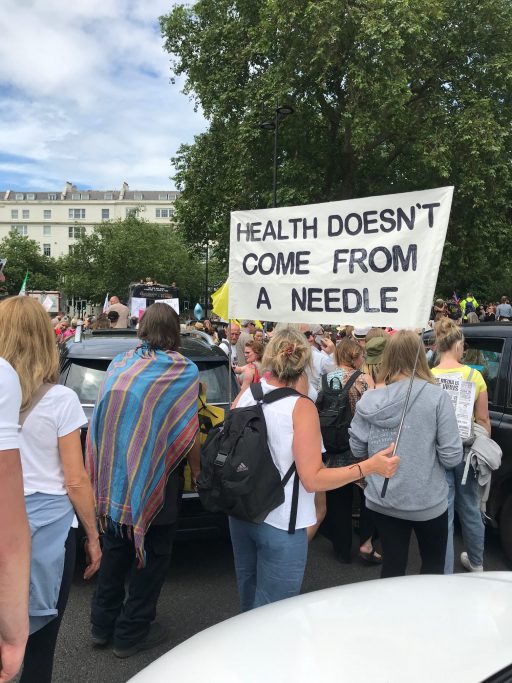
Disease caused by prescribed drugs and medical errors, known as iatrogenesis, has been well documented as the third leading cause of death in the developed world, after cardio-vascular disease and cancer. How many people think about the broader implications of that information and apply it as a filter through which to scrutinise medical advice and recommendations?
Some time back, before the plandemic, I heard a radio advertisement for prescription services which stated that 52 per cent of people in this country were on permanent medication. I do not know if this astounding statistic is accurate, but if it is anywhere near that figure, it is deeply disturbing. It indicates that illness is considered the norm, and good health the out-of-the-ordinary, particularly in the over-65 age group. What must now be the percentage of people on permanent medication following the multi-billion-pound campaign to render populations drug-dependent?
A great part of that campaign, as we know, has been psychological and mental manipulation, and one of the tools in the arsenal is the distortion of language, designed to remove rational thought.
The Oxford English Dictionary defines the word therapy as ‘the treatment of physical or mental disorders, other than by surgery’. Therefore, so-called prophylactic interventions such as vaccines should not be described as therapy, or therapeutics, as they target healthy people who, by definition, do not have disorders and so do not need therapy. Combined with the word gene, as in ‘gene therapy’, it suggests that our genes are somehow defective and consequently in need of therapy, which most people would agree is an abomination. This is why language matters, and why we need to choose our own words to express ourselves rather than those chosen for us.
Another part of the brain-washing campaign has been to convince people they are born fundamentally flawed and cannot survive without continuous pharmacological interventions from the cradle onwards. This, of course, is the perfect business model for the supply chain of these infinite interventions.
‘The poor die from a lack of medical attention, and the rich from an excess of medical intervention’ is the view of Spanish doctor Juan Gervás who co-authored a book with Mercedes Pérez in 2013 entitled Sano y Salvo – Safe and Sound. The book challenges the public health model of wealthy, developed countries which, he contends, is driven by an insatiable quest for preventive medicine that risks becoming the undoing of good health.
Several explanations have been offered as to why doctors and scientists have been willing participants in this fraud, or are so obtuse they are unable to recognise it. These range from fear of loss of livelihood and prestige if they go the ethical route, to having received a training so deeply indoctrinating of the superiority of pharmacology that their ability to perceive inconvenient truths is all but obliterated.
When this system crumbles, as it is doing under its own weight, and the renaissance begins, doctors will have to retrain and learn instead about health. Meanwhile, we must continue to challenge the fact-resistant institutions, from the Medical and Healthcare products Regulatory Agency (MHRA) to Parliament, to respond to the multitude of different sources of data corroborating the damage caused by mRNA ‘vaccines’.
In summary:
1. We have Pfizer clinical trial data indicating serious harm, prised out of the FDA (the US Food and Drug Administration) by court order following the legal challenge made by Public Health and Medical Professionals for Transparency.
2. We have national and international pharmacovigilance data (such as the Yellow Card Reporting System in the UK) showing extraordinarily high levels of reports of serious harm and fatalities following Covid-19 vaccination.
3. We have clinical observational data of previously healthy people presenting in A&E and to their GPs with illness and injury following vaccination.
4. We have national and international statistical data showing high levels of excess deaths in the months and years following the mass vaccine roll-out.
5. We have data from life insurance companies showing high increases in payouts for death and disability following the vaccine rollout, as well as data from funeral homes showing no increase in deaths in 2020, but a massive surge following the vaccine roll-out in 2021/22.
6. We have medical-scientific data on the mechanisms of the experimental ‘vaccines’ which can cause harm to all the body’s systems, as well as on the damaging effects of some of the adjuvants in the ‘vaccines’.
7. We have autopsy data from fatalities over a broad range of ages following ‘vaccination’.
Any one of these sources of data on their own is alarming enough. Collectively they show a composite picture of iatrogenesis on a mass scale.
Masks – again
Despite the absence of evidence, governments want us to mask up again. Why?

By Tom Jefferson and Carl Heneghan | Trust the Evidence | January 3, 2023
Those who thought they had seen the last mask mandates were badly mistaken.
It starts with the message on masking, and let’s see how the public reacts. It won’t be long before governments resort to reintroducing compulsory mask use to address the “winter crisis”. They say masks will decrease the number of respiratory infections that are the major cause of the recurring winter crisis.
Readers will recall that in early December, we challenged the evidence base cited by Lord Markham as proof that masks work. We wrote:
‘According to the UKHSA, the official scientific rationale for mask mandates in the community is based on a review last updated in the summer of 2021 of 28 studies, two of which are trials and the rest studies of abysmal quality. The review, identified through a Parliamentary Question, is in two parts: the main body and supplementary tables reporting the data. The problem is that the review is full of errors: the two parts do not match and appear to have been written separately and not even proofread.’
Most of the studies in the review are observational, making claims such as an 80 per cent reduction in cases after mask introduction – making masks use a miracle, not a human intervention. If that were the case, SARS-CoV-2 had been sent packing years ago, and with it, all the other respiratory viruses.
We also cited the co-author of Mr Hancock’s pandemic memoir, revealing that Johnson, Whitty and Hancock knew from the start that masks do not do the job, and yet they went ahead and coerced Britons to wear them.
The reality is different. Clinical trials in various settings – across vastly different ranges of circulation rates – from low influenza-like illness to pandemics have failed to show any effect. Which tallies with everyone’s personal experience of mask “protection”. So, why the sudden reintroduction?
Something odd is happening. We live in a world with more information and reactive media that fails to grasp the reality of the problem. Managing the message becomes more important than fixing the problem, particularly when you know you won’t be in your job much longer. Masks are a distraction.
The reality is a merry-go-round as new ministers, advisors, and experts pop up. They look to a simple solution to gloss over rather than fixing the long-term structural problems in the NHS.
We learnt this painful lesson with Tamiflu in the Swine flu Pandemic. Ministers reiterated, as did public health officials, that what mattered is they needed to be seen to be doing something. Whether it was evidence-based or not was immaterial. A complex problem requires a simple fix – a highly visible one: masking fits the bill perfectly.
Part of the problem is officials go unchallenged, no one asks for the evidence, and if they do, they feel intimidated – as an anonymous BBC reporter disclosed. You can virtually state anything in this modern era. By tomorrow the media will have moved on.
However, for now, let’s follow the jungle cry: do something! What? It does not matter; we have to be seen to be doing something!!!!
Prince Harry reveals how many people he killed in Afghanistan
“It’s a joy for me because I’m one of those people who loves playing PlayStation and Xbox, so with my thumbs I like to think that I’m probably quite useful”
Press TV – January 6, 2023
The UK’s Prince Harry says he killed 25 people in Afghanistan when he was acting as an Apache helicopter pilot during the invasion of Afghanistan, noting that these killings do not “embarrass” him.
The Duke of Sussex acknowledged this in an autobiography that is set to be published in the UK on January 10. The Telegraph quoted extracts from the Spanish version of the autobiography it obtained after the book was mistakenly put on sale in bookshops on Thursday before being withdrawn.
Harry served as a forward air controller in Afghanistan’s Helmand province in 2007-8 and then as an Apache helicopter pilot in the British Army Air Corps deployed to Camp Bastion in the south of the country in 2012-13.
According to the soon-to-be-published book Spare, Harry undertook six missions as a pilot that led to him “taking human lives”.
The 38-year-old described killing the targets as removing “chess pieces”, noting that he was not ashamed of doing so.
“My number is 25. It’s not a number that fills me with satisfaction, but nor does it embarrass me,” he wrote.
He said he counted the number of people he killed by reviewing videos taken from the nose of his Apache helicopter.
The prince writes that he did not see the Taliban militants “as a person” because such a view would have made it impossible to kill them. The British Army, he writes, had “trained me to ‘other’ them, and they had trained me well.”
The prince also named his fondness for video games as one of the reasons behind his claimed effectiveness as an Apache gunner. “It’s a joy for me because I’m one of those people who loves playing PlayStation and Xbox, so with my thumbs I like to think that I’m probably quite useful,” he said.
Harry also named the 9/11 attacks as one of the main reasons that he did not feel guilt over his killings. He had the thought that those responsible and their sympathizers were “enemies of humanity”.
The US-led foreign forces invaded Afghanistan in 2001 with the claim of confronting Al-Qaeda. The military campaign killed at least 70,000 Afghan and Pakistani civilians, living Afghanistan in a state of turmoil ever since.
There have been security concerns because of Harry’s military service, which are likely to increase after he revealed the number of people he has killed during that time.
Elsewhere in the book, Harry accused his brother William of knocking him to the floor during a 2019 argument about Harry’s wife Meghan.
William “grabbed me by the collar, ripping my necklace, and… knocked me to the floor,” he writes, according to a report in the Guardian.
A deal with the devil of Moderna
By Edward Fitzgibbon | TCW Defending Freedom | January 4, 2023
A press release slipped out just before Christmas on the government website outlines, in the banal bureaucratese of such documents, a truly dreadful lurch towards medical totalitarianism.
A ten-year ‘partnership’ has been ‘cemented between Moderna and the UK government’ to produce up to 250million doses of mRNA vaccine in a purpose-built plant to start construction this year. There has been no discussion whatever in Parliament about the wisdom of such a step.
Announcing it on December 22, Secretary of State for Health and Social Care Steve Barclay said: ‘This time two years ago, the UK was the first country in the world to administer a Covid vaccine outside of a clinical trial. Since then, countless lives have been saved across the world and more than 150million doses have been given in the UK alone.
‘It is vital we invest in fighting future variants of this disease as well as other deadly viruses that are circulating, such as seasonal flu and RSV, and this partnership with Moderna will also strengthen our ability to respond to any future pandemics.’
Richard Torbett, Chief Executive, Association of the British Pharmaceutical Industry (ABPI) said: ‘This partnership is fantastic news for British manufacturing and UK-based science and research.’
The deal will include running clinical trials in the UK and Moderna will fund grants for UK universities, including PhD places and research programmes.
It was initialled last June, when then Prime Minister Boris Johnson said: ‘We are bringing supercharged, homegrown vaccines right to our shores . . . Our investment will guarantee jabs in arms against some of the toughest viruses out there, bringing us to the forefront of the fight against future threats. We’ve all seen what vaccines can do, and today’s partnership brings us one step closer to finding cures for some of the most devastating diseases.’
On the same occasion the then Health and Social Care Secretary Sajid Javid said: ‘mRNA is a truly transformational technology and we have seen its life-saving power during the pandemic.’
The aim, replicating with terrible predictability the hugely profitable Covid playbook, is to ‘go from variant to vaccine in 100 days’. The usual gagging orders on details of this deal-with-the-devil are in place ‘for reasons of commercially sensitivity’. After all, they wouldn’t want us to find out who is in line to profit. A veritable money-tsunami is on the way.
Readers may recall a 2020 article in the Guardian in which Rishi Sunak, then Chancellor of the Exchequer, ‘refused to say if he’d profit from a Moderna partnership’. This, in spite of the fact that he was a founding partner of the Theleme group, registered in the tax haven of the Caymans, which at that time had a £500million investment in Moderna. Sunak left the firm in 2013, and it is not known whether he retained any investment in the Theleme fund.
The Net Zero death cult taking over ‘our’ NHS
By Stephen McMurray | TCW Defending Freedom | January 3, 2023
The climate change cult is insidious in every government department or institution it infiltrates. However, it is at its most dangerous when those people it infects are members of the medical community. When their apocalyptic hysteria starts affecting their decisions regarding patient care, urgent action is needed.
A disturbing document was recently published in the Lancet, entitled The Report of the Lancet Commission on the Value of Death: bringing death back into life. It was written by numerous medical professionals in the palliative care sector. It is nothing less than a propaganda piece promoting the idea that people who are suffering from possible life-shortening illness should not be given any potential life-saving treatments but, to help reduce our carbon footprint, should be allowed to die and actively encouraged to do so.
The authors make their feelings clear when they say: ‘The commission believes it is healthy to die . . . We are embodied creatures who are ultimately no more important than lizards or potatoes.’
It soon becomes obvious that their Net Zero zeal is driving this agenda when they state: ‘Treatment at the end of life will be an important contribution to the carbon footprint of health care . . . Everything, and especially death, must be thought of in the context of the climate crisis . . . In the report we explore the many values of death.’
The article is replete with climate change apocalyptic rhetoric, saying humanity is near extinction, one of the reasons being overpopulation, so we had better change our ways and stop trying to cure patients with potentially fatal illnesses and let them die.
As is common with the climate change cult, the document is replete with extreme left-wing ideology, promulgating the idea that expecting to be treated in hospital with life-prolonging drugs is a concept founded in racism. As only rich Westerners can afford proper health care, it is an example of a colonialist mindset and to achieve equity we should abandon this idea and die willingly like poor people in less developed countries.
Throughout the report they state how important it is to die at home surrounded by friends and family rather than in a hospital bed. This is not out of compassion but out of their desire to reduce the carbon footprint of end-of-life medication. The same medical profession that ardently supported the closure of hospitals to relatives of dying patients during Covid now pretend to advocate for having loved ones at the dying patient’s bedside. Their hypocrisy is breathtaking.
The authors also have the temerity to infuse the document with references to religious practices and spirituality to convince the reader that death is nothing to fear and that, by medicalising it, we are not having our spiritual and emotional needs met. If this was coming from the head of a religious institution it would possibly be understandable, but this is from a medical establishment who vehemently adhere to the reductionist view that our bodies are mere machines of flesh and bone.
When extolling the virtues of other religions’ treatment of the dying, the report cites a ritual practised by some Indian sects, which ‘entails a person coming to the realisation that they have no responsibilities or desires left. With the consent of religious elders, the person enters a slow process of fasting, where they give up one item of food a time, so that hunger pangs are tolerable. Over a few weeks or months, the person dies, often amid chants’.
Here the commission are implying that once you have supposedly nothing left to offer society, it is perfectly reasonable to want to die. Moreover, they don’t object to the cruel method of causing death by slow starvation. One can only assume that the relatives of those who have starved to death in our own NHS hospitals would be outraged by this callousness.
The document encourages carers to implant a sense of hopelessness in their patients so they more readily accept the idea of dying. ‘There is evidence that the will to live can keep people alive. But the tyranny of “positive thinking” can lead to ambivalence, guilt, and bad decisions . . . Hope increases the likelihood that people will believe that their illness is less serious than objective data might support, allowing patients to hold on to a low possibility of a favourable outcome and disregard the much greater probability of an unfavourable outcome.’ Clinicians sometimes ‘recommend additional treatments as a way for the patient to maintain hope, despite the clinical futility’.
What if treatment is not futile? Cases where patients are wrongly diagnosed with a terminal illness do occur. If we have learned one thing from the Covid era, it is that medical experts are far from infallible.
Their obsession with Net Zero and their disdain for human life is even focused on the patient after death: ‘While the dead consume no carbon, the disposal of bodies does. About three quarters of people in Britain are cremated after death, releasing carbon into the air. Alkaline hydrolysis, in which the body is dissolved, has about a seventh of the carbon footprint of cremation, and the resulting fluid can be used as fertiliser.’
The writers try to justify withholding treatments from patients who are potentially dying by saying the money could be better spent on treating others. This is totally disingenuous. Given vast sums of money for patient care, the NHS chose to spend it instead on pursuing the climate cult’s agenda of Net Zero.
They are going to spend £492million on changing all NHS light bulbs into LED ones. To put that into perspective, take the current outbreak of Streptococcus A infections spreading amongst children. We are being told there is not enough penicillin to go around. The cost of a 14-day course of amoxicillin is £0.18. There are approximately 12.7million under-16s in the UK. Therefore, it would cost under £2.5million to make sure there is enough antibiotics available to protect the entire childhood population.
It will come as no surprise that the report is in favour of legalising ‘assisted dying’. One of its main authors, Richard Smith, chairs the UK Health Alliance on Climate Change. In 2017 he wrote an article in the British Medical Journal which began: ‘We should accept that humanity is dying and switch from cure to palliation – just as wise patients do at the end of their lives.’ Smith agrees with another palliative care physician who finds ‘acceptance of our mortality, unimportance, ephemeral nature, infinite ignorance, and futility to be very liberating’. Do we really want people who suffer from existential nihilism and think human life is unimportant and futile, treating anyone, let alone people who may be dying?
The fact that the climate hysteria with its accompanying left-wing, extremist ideology has infected the NHS could have serious consequences for people with potentially life-shortening illnesses. What criteria would the doctors use to decide which patients, if any, are worthy of receiving treatment? Would their decision be based solely on medical grounds or their ideology?
Most people who are diagnosed as being near the end of life are the older generation. It is exactly this demographic that the eco-zealots blame for the so-called climate crisis. What if the doctor or nurse was so indoctrinated by the climate crisis propaganda that their decision to withdraw treatment was based on their radical views rather than purely medical reasons?
Last April, an Extinction Rebellion activist called for the baby boomer generation to be euthanised. A sick joke, maybe, but the UK Health Alliance for Climate Change which is promoting this agenda acknowledges it works with Doctors for Extinction Rebellion.
The Lancet report highlights how deeply the Net Zero cult has infiltrated our health system. The obsession with reducing our carbon footprint is now such an integral part of many medical professionals’ mindset that they openly promote death as a healthy outcome. Do we really want anyone who thinks human life is unimportant and futile, least of all doctors in whom we are meant to put our trust, treating anyone, let alone those who may be dying? Surely such declared inhumane intent, running directly counter to the Hippocratic Oath, should automatically be grounds for being struck off by the General Medical Council.
Spies and More Lies Add Confusion to the Ukraine Conflict
BY PHILIP GIRALDI • UNZ REVIEW • JANUARY 3, 2023
As has frequently been the case in America’s recent wars, in Ukraine a largely hidden clandestine conflict is paralleling the actual fighting on the ground. One should assume that a variety of western spies using various kinds of cover are operating at all levels as well as in adjacent areas in Poland and the Baltic states. The Russians certainly have their own informants inside the Ukrainian government itself and Kiev has proven itself capable of carrying out so-called covert actions in Moscow, to include the car bombing assassination of Darya Dugin on August 20th. At the same time, the Central Intelligence Agency (CIA) and Britain’s MI-6 are known to be working assiduously to collect information that suggest vulnerabilities in the Russian offensive capabilities while also seeking to identify those potentially recruitable individuals who do not support President Vladimir Putin’s intervention to liberate Donbas. The activities of spies and the agents that they direct should be considered a major part of the overall war effort by both sides.
Recently there have been some interesting articles revealing what some of the spies and their political masters have been up to over the past six months. Bear in mind, however, that the business of spying is 50% dissimulation to conceal what is actually taking place, so what the various intelligence services have been revealing is more than likely to include at least some deliberate misdirection. One recalls how in February 1981 Bill Casey, the new CIA Director appointed by President Ronald Reagan, famously quipped “We’ll know our Disinformation Program is complete when everything the American public believes is false.”
If the quote is accurate, Casey would probably be delighted to see the massive propaganda effort carried out by the Joe Biden White House to initiate and sustain a proxy war against Russia that was completely avoidable and serves no national interest beyond testing how one can restart the Cold War complete with threats of nuclear annihilation. And one should observe that Casey might well have been delivering a subtler message within his apparently off-the-cuff comment. He might have been suggesting that no one should trust anything coming out of the mouth of a high government official, particularly if that official is an intelligence officer.
With that in mind, it was interesting to read an account of some recent remarks delivered in London by the head of MI-5, Ken McCallum. McCallum is no fool and his comments clearly were intended on one level to reinforce the message that the British government is taking good care of national security. In other words, he intended to spin a narrative that would reassure a public that has become increasingly concerned over the course of the Ukraine war and the possible painful consequences derived from British direct involvement in it.
What McCallum is selling is a suggestion that the Ukraine war is actually good for national security because it has enabled the expulsion of hundreds of Russian intelligence officers all over Europe. CNN’s story on MI-5’s annual assessment of the state of Britain’s security describes how the Kremlin’s “… ability to spy in Europe has been dealt the ‘most significant strategic blow’ in recent history after coordinated expulsions of [Russian] diplomats since the invasion of Ukraine, with a hundred diplomatic visa requests refused in the UK alone in recent years.”
McCallum stated that in this year alone 600 Russians officials had been expelled from Europe, 400 of whom were considered to be intelligence officers under cover. He expanded on the details in additional comments after his speech how “We’ve continued to work intensively to make the UK the hardest possible operating environment for Russian covert action. In the UK’s case, since our removal for 23 Russian spies posing as diplomats, we have refused on national security grounds over 100 diplomatic visa applications … the serious point is that the UK must be ready for Russian aggression for years to come.”
What does it all mean? McCallum explained how there has been “a very, very large dent in [Russian intelligence capabilities] across Europe. Since counter-intelligence information is shared throughout NATO it’s not easy for the Russians to cross post [one officer] expelled from country A to Country D… I hope what will continue to be true is that a very large volume of trained, experienced Russian intelligence talent, if I can use that term, will be of far less utility [in] the world for many years to come.”
McCallum concluded his address with some obligatory comments on the threats coming from adversaries like Iran and China. The MI5 tale presumably warmed the hearts of each and every American neocon hoping for some good news for Hanukkah, but there is something big that is missing from the Russia story. That would be that mass expulsions of Russian diplomats and “spies” clearly began long before the Ukraine war was a twinkle in Volodymyr Zelensky’s eye, so it would seem that MI-5 and NATO were planning something well in advance, which is certainly interesting. But more important, is the fact that expulsion of diplomats is reciprocal, meaning that what is being done to the Russians is served up in return by Moscow, which has also been expelling suspected foreign intelligence officers and refusing to accept the credentials of many individuals submitted to the Foreign Ministry as replacements. That means that reducing Russia’s ability to spy through its diplomatic and trade missions also results in reducing your own capabilities.
I do not know if western intelligence has penetrated the Kremlin by recruiting one or more Russian officials within the inner circle of Vladimir Putin’s government, but I would assume that to be the case. Spies at that level are routinely given secure electronic means of communicating with their American or British intelligence handlers, but every case officer knows that the ability to meet personally, even fleetingly in Moscow, produces vastly more directed intelligence than exchanging texts electronically. The Russians are surely aware of that just as they more-or-less know who the diplomat-spies in their midst are. Kick them all out and what do you have left? Which is why the boasting by McCallum reflects something of a Pyrrhic victory at best.
There are other indications that western intelligence is seeking new sources of information, and it is being reported on by the Russians themselves. To be sure, there have been numerous stories in the western media regarding discontent among ordinary Russians over the war, to include suggestions that some senior Putin advisers and military officers have also become highly critical of developments. These stories, leaked from western governments hostile to Russia, may or may not be true, though domestic Russian opinion polls indicate that Putin’s favorability rating continues to be over 70%.
Russia Today (RT), the state-owned media outlet, reports that the CIA is stepping up its efforts to recruit the presumably disgruntled Russians. Relying on coverage of a recent “CIA at 75” event held at George Mason University in Virginia, RT quotes the Agency’s Deputy Director for Operations David Marlowe, who told a “select audience” that CIA officers abroad have recently been engaged in a major effort to exploit “fertile ground” to recruit Russian agents from “among disgruntled military officers, oligarchs who have seen their fortunes thinned by sanctions, and businesspeople and others who have fled the country.”
Marlowe elaborated how it works, saying “We’re looking around the world for Russians who are as disgusted with [the conflict in Ukraine] as we are. Because we’re open for business.” Marlowe did not explain how dissident Russians who have fled the country will be able to provide useful intelligence information on decision making in the Kremlin, but perhaps he is being optimistic. Russia has in fact denounced several overt attempts to recruit its remaining diplomats and military attaches in Europe and the US using what are referred to as “cold pitches,” where someone approaches a target on the street or in a social setting and offers money or other inducements in return for information. Russian reports indicate that American officers have been hanging around Russian Embassies passing out to those leaving or entering the building cards with phone numbers to contact the FBI and CIA. Inevitably, cold pitches very rarely work because even if the target were so inclined, he or she would have to consider the possibility that his or her own loyalty was being tested by the agency that he or she works for.
So, there is a certain inconsistency in McCallum and Marlowe, representing MI-5 and CIA respectively, claiming that they are winning the secret war against Russia by expelling their potential targets to make them go back home to Moscow while at the same time increasing their own efforts to recruit those very people that they just kicked out. Well, espionage is a profession like no other, and what is playing out now in and around and regarding Ukraine tends to prove that axiom. But bear in mind that the CIA is now “open for business.”
Philip M. Giraldi, Ph.D., is Executive Director of the Council for the National Interest, a 501(c)3 tax deductible educational foundation (Federal ID Number #52-1739023) that seeks a more interests-based U.S. foreign policy in the Middle East. Website is councilforthenationalinterest.org, address is P.O. Box 2157, Purcellville VA 20134 and its email is inform@cnionline.org.
Mauritius & Britain Launch Talks Over Chagos Islands
By Muhammad Osman – Samizdat – 02.01.2023
Since Mauritius got its independence from the United Kingdom in 1968, the African country has long called for the full return of the Chagos islands, where the UK set up a joint military base with the United States in 1966. In 2019, the International Court of Justice ruled that London’s administration of the Indian Ocean territory is “unlawful.”
Mauritius and the United Kingdom have finally opened negotiations on the exercise of sovereignty over the disputed Chagos archipelago in the Indian Ocean, where the UK has a joint military base with the United States, Mauritian Prime Minister Pravind Jugnauth announced on Sunday.
“The latest developments on the Chagos issue are very encouraging. Negotiations between Mauritius and Britain have begun,” Jugnauth said.
Occupied by Britain since 1814, the Chagos archipelago was not fully returned to Mauritius when it won independence from the UK in 1968, as the European kingdom had established a joint military base with the US two years earlier on Diego Garcia, the largest of the 60 small islands of the Chagos archipelago.
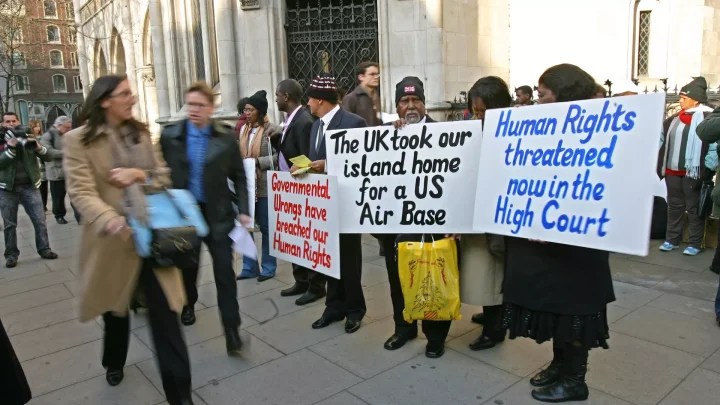
The government of Port Louis and the Chagossians, the indigenous population of the archipelago that was forced to leave the island upon the establishment of the UK-US base, have long fought in British courts to get the occupied territory back.
However, in 2019, Mauritius’ efforts were crowned with success after the International Court of Justice ruled that London must end its “unlawful” administration of the Indian Ocean territory. The UN’s highest court’s decision was followed by a General Assembly resolution that stressed, “The Chagos Archipelago forms an integral part of the territory of Mauritius,” calling on the UK to withdraw within six months.
In November 2022, UK Foreign Secretary James Cleverly announced that London and Port Louis had agreed to launch “constructive negotiations” on the disputed territory, highlighting that the joint UK-US military base on Diego Garcia will continue to operate regardless of the outcome of negotiations.
“Taking into account relevant legal proceedings, it is our intention to secure an agreement on the basis of international law to resolve all outstanding issues, including those relating to the former inhabitants of the Chagos Archipelago,” Cleverly said.
Gross distortion of facts on Mahsa Amini’s death in Western media
By Damian Lenard | Press TV | December 30, 2022
In his recent article Seven people with British links arrested in Iran over protests, freelance journalist for The Guardian, Nadeem Badshah, relates to the audience an interesting and all-too-familiar Western media version of the death of Mahsa Amini in Iran.
It is educational to dissect the article because it is representative of the propagandistic way in which foreign media have covered the tragic event for the past few months:
The 22-year-old Kurdish Iranian had been arrested for wearing “inappropriate attire” under Iran’s Islamic dress code for women.
Witnesses said Amini was beaten while inside a police van when she was picked up in Tehran. Police have denied the allegations, saying she “suddenly suffered a heart problem”.
I would refer to these short paragraphs as contextual snippets, repeated ad nauseam in media reports to drill propaganda points into the unprepared minds of the audience (yes, and we claim to abhor the widely misquoted “If you tell a lie big enough and keep repeating it, people will eventually come to believe it,” as if our own media was not an active part of that very machinery).
Let’s dig into this illustrative contextual snippet used by Badshah. I am by no means attempting to shame him, as it probably is a snippet offered by his employer/editor to make his job easier and — more importantly in this specific case — to make sure that key state propaganda is duly reinforced:
- Iran’s Islamic dress code for women
Iran’s Islamic dress code, like Western and Eastern secularist dress codes, exists not only for women but for all people in society.
Such dress codes are indeed applied differently for men and women not just in Iran, but everywhere around the world. The exception being the one or two countries on the face of the planet where public nudity or female toplessness is indiscriminately allowed in the majority of the territory.
This first part of the Guardian’s contextual snippet used by Badshah aims to brainwash readers by repetition with the notion that Iran is the only country in the globe with a dress code or the only one which enforces it. Worse, it is exclusively so for women in Iran. And that this “abhorrence” is the result of religion (and even worse, Islam) applied to politics.
The well is poisoned for the acceptance of the central part which follows:
- Witnesses said
Since no evidence whatsoever exists to support the hypothesis of Mahsa Amini having been brutally beaten to death, Western media is forced to rely exclusively on “witnesses/family said” assertions as their top proof to attempt to causally link Amini’s brief detention with her death.
The reader might already be willing to accept such a weak hearsay kind of proof (which would be disregarded or even mocked as poor journalism should it apply to an event in their own countries) because, after all, Iran is exceptionally evil as “proven” in point 1.
- Police have denied the allegations
This segment is typically dedicated to the antithesis of the previous premises, supposedly for balance and to pretend journalistic honesty. What does the other side have to defend itself? In this case, what does it have? Claims by the police. Pretty weak, isn’t it? Is that all you’ve got Iran? So it’s the word of noble witnesses (do we care how it was established that they even exist?) against that of the evil Iranian police.
The claim that “police have denied the allegations” implies the denial of the hypothesis (brutally beaten to death) is only supported by a police statement (the directly involved party and, we must remember, any authority in Iran is evil). Combined with them saying she “suddenly suffered a heart problem,” (note the cherry-picking of a quote with an inaccurate medical description to further undermine the credibility of the party) while totally omitting:
(a) The existence of a clear CCTV camera video recording at the police station in which Amini collapses on her own without the aid of any external agent and,
(b) The “leaked” hospital photographs of Amini showing no sign of trauma or blood consistent with a fatal beating (or debatable signs if one possesses a powerful imagination), expose the utter disregard for journalistic integrity, and full commitment to pedaling state propaganda regardless of the damage it causes.
The reason why I find this rather fascinating is because of the vicious circle that is built around these structures of reporting about a country like Iran:
The premises of point 1. (the exceptional evilness of religion applied in politics, the exceptional evilness of Iran’s dress code, the exceptional oppression Iran crushes women with) bias the evaluation of the following points, and at the same time tend to be “proven” with non-facts analogous — in terms of objective weakness — to those of points 2. and 3.
Thanks to meticulously-crafted reality distortion of this sort, the Western public, which believes itself to be professionally informed and impervious to manipulation, unsuspectingly swallows dogma after dogma of misrepresented reality.
The result is the installation of moral shock and the reaffirmation of solid prejudices useful to rally sufficient public support for the foreign policy of the day: usually the collective punishment of entire nations by war or economic sanctions.
Iraq has weapons of mass destruction, so getting half a million Iraqi children killed by sanctions and millions more by war can be deemed “worth it” or at least as just an honest mistake, as opposed to punishable war crimes and crimes against humanity.
If only there was a way to poll the staunch defenders of freedom and democracy (a noble utopia that could only separate itself from tyranny with a perfectly well-informed public), asking how many of them were offered to watch the CCTV footage and “leaked” hospital photos of Mahsa Amini (as opposed to handed only hearsay rumors) that would have otherwise allowed them to decide for themselves.
Goethe was certainly on to something big when he wrote in his Elective Affinities: None are more hopelessly enslaved than those who falsely believe they are free.
Damian Lenard, Ph.D., is a political commentator with focus on Eurasian politics. He speaks fluent Persian and occasionally writes for Iranian publications.
‘Russia warned NATO leaders about expansion in 2001’

RT | December 30, 2022
NATO leaders have known since 2001 that Russia would “take appropriate steps” against further expansion of the alliance, according to documents recently declassified by the UK and reported by The Times.
A year into Putin’s presidency, then-Defense Minister Igor Sergeyev told his NATO counterparts that the alliance’s continued expansion into the territory of the former Warsaw Pact would be a major political error, the newspaper stated on Friday. Sergeyev warned that Moscow would “take appropriate steps” to respond to this enlargement, the article continued.
The largest expansion of the alliance to date would take place three years later, with Bulgaria, Romania, Slovakia, Slovenia, Estonia, Latvia and Lithuania joining the US-led military bloc.
In his speech at the Munich Security Conference in 2007, Putin described this expansion as “a serious provocation that reduces the level of mutual trust,” although the leaders of NATO insisted that their alliance was defensive in nature. After Ukraine refused to abandon its aspirations of joining – which Moscow viewed as an unacceptable security threat – and NATO insisted that Kiev would one day become a member, Russia sent troops into Ukraine in February.
During the dying days of the USSR, Western leaders promised their Soviet counterparts that NATO would not expand into Eastern and Central Europe. As recently as this year, the US denied that this promise was ever made, and insisted that NATO’s membership books must remain open – even for states bordering Russia.
The UK also dismissed Russia’s warnings up until the start of the Ukraine conflict. “Russia has expressed concerns about potential NATO aggression, but we have been clear that those concerns are fundamentally unfounded as NATO is a defensive alliance at its heart,” a spokesman for then-Prime Minister Boris Johnson declared in January.
NATO has since accepted membership applications from Finland and Sweden, and Ukraine formally submitted its own application in September.
Featured Video

The Truth About the Trump Shootings with Ken Silva
or go to
Aletho News Archives – Video-Images
From the Archives
Trans ‘milk’ as good as the real thing – NHS
RT | February 18, 2024
The drug-induced nipple secretions of trans women are as good as mothers’ breast milk for babies, the University of Sussex Hospitals NHS Trust claimed in a letter to campaigners made public in a report by British think tank the Policy Exchange on Sunday.
The healthcare trust’s medical director, Rachel James, argued that the off-label prescription drug cocktail men transitioning to female take in order to produce milk was “similar to the natural hormones which encourage lactation to develop when the baby is newly born.”
“The evidence which is available demonstrates that the milk is comparable to that produced following the birth of a baby,” James wrote in the letter, sent to Children of Transitioners last August.
Biological men who wish to lactate must first take hormones to grow milk glands and then take high doses of either domperidone or metoclopramide to stimulate milk production. Neither drug is approved for this use, though they are occasionally prescribed off-label to biological women who have trouble lactating.
However, domperidone’s own manufacturer, Janssen, warns patients the drug “may cause unwanted side effects affecting the heart in a breastfed baby” and “should be used during breastfeeding only if your physician considers this clearly necessary.” … continue
Blog Roll
 Aletho News
- Seyed M. Marandi: U.S. Strike Imminent – Toward Total War in the Middle East
- Russia Voted Under Fire. Washington Is Loading the Tankers.
- 12 Things Your Oncologist Was Trained Not to Tell You
- Anthrax Attacks Paved Way for COVID-Era ‘Junk Drugs and Vaccines’
- How Real Is the Impact of Western Sanctions on Israel?
- France, You Are Guilty: How Paris Turned Western Sahara into the Maghreb’s Powder Keg
- 2025 Nature Paper Claiming Worsening Global Drought Gets RETRACTED …Heavily Flawed
- Your Milk Is Not the Problem
- The Truth About the Trump Shootings with Ken Silva
- ARE PATIENTS BEING PROPERLY INFORMED ABOUT OZEMPIC?
- If Americans Knew
- Salah Sarsour’s Legal Team Says DHS Has Not Met Its Burden to Prove He Is Deportable
- An analysis of tax forms by The Intercept show Kraft’s charity and LLC have donated to Friends of the IDF and AIPAC’s super PAC.
- Israeli attacks kill four Palestinians in Gaza – Daily Update
- Inside Gaza’s death trap of collapsing, bombed-out buildings
- The everyday items Israel bans from Gaza every day
- Inside the siege, the ruined buildings of Gaza – Daily Update
- Debunking The Claim That Macklemore Has A “History Of Antisemitism”
- CPJ demands release of arrested Palestinian-US journalist near Bethlehem
- Robert Kraft: The Billionaire Friend of Netanyahu Pulling The Strings Behind the Macklemore/Ed Sheeran Blow Up
- Columbia Administered Fund Gives Big Money to Pro-Israel Groups
- No Tricks Zone
- 2025 Nature Paper Claiming Worsening Global Drought Gets RETRACTED …Heavily Flawed
- New Study: ‘Global Drought Shows No Detectable Recent Acceleration Under Climate Warming’
- Economic Masterminds: German Socialists Suggest Taxing Productivity Gains Stemming From Using AI
- The South China Sea Has Not Been Cooperating With The Climate Change Narrative
- Energy Crisis: Germany Enters Heating Season With Historically Low Gas Reserve Fill Levels
- New Study: The Antarctic Ice Sheet Gained Mass From 2020-2024 Due To Staggering Snow And Ice Accumulation
- Study: Ocean Heating Rates From Thousands Of Years Ago ‘Dwarf’ Modern Ocean Heating Rates
- Climate Extremists Target, Attack Large-Scale Power Grid Infrastructure In Germany!
- New Study: Antarctic Ice Melt Has Contributed Less Than 1 Centimeter To Sea Level Rise In The Last 30 Years
- Fear Of Debate: Alarmist German Climate Scientist Calls On Mainstream Media To Discredit Skeptic Voices
 Aletho News