CrossTalk: Reinventing NATO?
RT | September 8, 2014
A military alliance in search of an identity: For over two decades NATO has had branding issues. To justify its existence, it absolutely needs an enemy. In the wake of the Ukraine crisis, Russia now fits that bill.
CrossTalking with Mark Sleboda, Alexander Mercouris and Brian Becker.
Minsk ceasefire protocol: Ukraine to be decentralized, special status for Lugansk, Donetsk
RT | September 7, 2014
The OSCE has revealed the 12-point roadmap behind the September 5 truce signed in Minsk. It says that Ukraine must adopt a new law, allowing for a special status for Lugansk and Donetsk regions, and hold early elections there.
The document, titled ‘Protocol on the results of consultations of the Trilateral Contact Group’ and signed in Minsk on September 5, outlines what needs to be done for the ceasefire to stay in place.
“To decentralize power, including through the adoption by Ukraine of law ‘on provisional procedure for local government in parts of Donetsk and Lugansk regions (law on special status),’” states one of the provisions in the document.
Another point emphasizes that “early local elections” are to be held in light of the special status of both regions. The early elections must be held in accordance with the same proposed law, it says.
Kiev must then continue an “inclusive nationwide dialogue,” the document stresses.
The roadmap also implies an amnesty for anti-government forces in Donbass: “To adopt a law, prohibiting prosecution or punishment of people in relation to the events that took place in individual areas of Donetsk and Lugansk regions of Ukraine.”
At the same time, it notes that all “illegal military formations, military equipment, as well as militants and mercenaries” have to be withdrawn from Ukraine.
The Organization for Security and Co-operation in Europe (OSCE) published a copy of the protocol early on Sunday, with only a PDF document in Russian available so far.
During the meeting on September 5, Kiev officials and representatives of the two self-proclaimed republics in southeastern Ukraine have agreed to a ceasefire.
Some of the other provisions of the truce include monitoring of the ceasefire inside Ukraine and on the Russia-Ukraine border by international OSCE observers, the freeing of all prisoners of war, and the opening of humanitarian corridors.
A “safety zone” is to be created with the participation of the OSCE on the Russia-Ukraine border, the document says.
It also calls for measures to improve the dire humanitarian situation in eastern Ukraine, and urges in a separate point that a program for Donbass’ economic development is to be adopted.
Since the conflict significantly deteriorated in mid-April, 2,593 people have died in fighting in the east of the country, according to the UN’s latest data. More than 6,033 others have been wounded in the turmoil.
The number of internally displaced Ukrainians has reached 260,000, with another 814,000 finding refuge in Russia.
READ MORE: Kiev, E. Ukraine militia agree on ceasefire starting 1500 GMT Friday
US to supply arms to Ukraine, hold joint military drills in Black Sea
RT | September 7, 2014
The Ukrainian and US navies will take part in a joint exercise called “Sea Breeze 2014” on September 8-10 in the northwestern part of the Black Sea, Ukraine’s Ministry of Defense said.
Around 280 US servicemen will participate in the drills, according to a statement by US European Command spokesman Navy Capt. Greg Hicks, director of Communication and Engagement.
The exercises will include representatives from five countries – including Georgia, Romania and Turkey – as well as the Standing NATO Maritime Group TWO Task Unit 02 (including Canadian, Spanish, and Romanian ships).
The planned military exercises are said to be focused on how interdiction operations could enhance maritime security.
Also, the US – along with France, Italy, Poland and Norway – will supply modern weapons to Ukraine, according to President Petro Poroshenko’s aide, Yury Lutsenko. The agreements were reached at the NATO summit in Wales, he wrote on Sunday on Facebook. The West will also send military advisers to Ukraine, he added.
Meanwhile, NATO is in the midst of its seven-day military exercises in Latvia. The organization says the drills are aimed at showing its commitment to Baltic member states in the face of an “assertive” Russia.
Exercise Steadfast Javelin 2 kicked off on September 2. It simulates the deployment of NATO soldiers and equipment during a crisis situation. A total of around 2,000 soldiers from nine different countries are taking part in the maneuvers, which will carry on until Monday.
The exercises in Latvia will be followed by other drills in Germany, Norway, Ukraine, and Poland later this autumn.
Moreover, following the NATO summit in Wales, a plan to create a new rapid reaction force in Eastern Europe was announced, likely numbering at least 4,000 and ready to be deployed within 48 hours.
The Baltic states and Romania have already offered to host the force.
Russia’s Gazprom to fall under new EU capital ban – sources
RT | September 6, 2014
Russia’s Gazprom Bank and oil producer Gazprom Neft will fall under new sanctions approved by the European Union on Friday, Reuters cited an EU diplomat as saying. The sanctions reportedly include a new ban on raising capital in the 28-nation bloc.
The sanctions were agreed against Russia for its alleged role in the Ukrainian crisis, the diplomatic source said.
According to The Financial Times, which managed to obtain a document outlining the sanctions, all Russian state-controlled companies with assets of more than one trillion rubles (US$27 billion) that receive more than half their revenue from “the sale or transportation of crude oil or petroleum products” will be hit by the ban.
In addition to Gazprom Neft, the oil subsidiary of Russian gas giant Gazprom, Russia’s largest oil group – Rosneft and Transneft pipeline company – would be potentially blacklisted. However, the sanctions will not apply to privately owned Russian oil groups such as Lukoil and Surgutneftegas, the Times said.
The sanctions will also include an expansion of the EU travel ban list against certain individuals, as well as asset freezes, credit restrictions against Russian companies, and export bans on dual use goods, the EU diplomat told the agency.
Chiefs of Russian companies will be added to the list, along with oligarchs and local authorities of Donbass and Crimea.
Moscow has already promised it will respond to the new round of sanctions if they are approved and imposed, according to a press release issued by the Russian Foreign Ministry on Saturday
“Instead of feverishly looking for ways of hitting harder the economies of its member-states and Russia, the EU would do better to start supporting the economic revival of the Donbass region and restoring normal life there,” the press release reads.
The EU’s implementation of the new sanctions was delayed until Monday, Itar-Tass quoted an EU source as saying. Although the sanctions are ready, “some touch up work will be completed during the weekend.”
European Council President Herman Van Rompuy and European Commission President Jose Manuel Barroso confirmed that the new sanctions will be revealed on Monday.
US President Barack Obama said on Friday that Washington and the European Union were prepared to impose sanctions against Russia if the crisis in Ukraine continues to escalate following the signing of a ceasefire agreement.
Obama said the ceasefire in eastern Ukraine – agreed upon only hours earlier – was a result of “both the sanctions that have already been applied and the threat of further sanctions, which are having a real impact on the Russian economy and have isolated Russia in a way we have not seen in a very long time.”
Kiev officials and representatives of the two self-proclaimed republics in southeastern Ukraine agreed to a ceasefire after the contact group met behind closed doors in Belarus.
READ MORE:
US, EU preparing new round of economic sanctions against Russia
Kiev, E. Ukraine militia agree on ceasefire starting 1500 GMT Friday
Obama: We are readying new sanctions on Russia despite peace agreement in Ukraine
Kiev, E. Ukraine militia agree on ceasefire starting 1500 GMT Friday
RT | September 5, 2014
Kiev officials and representatives of the two self-proclaimed republics in southeastern Ukraine have agreed to a ceasefire, as the contact group met behind closed doors in Belarus.
Ukrainian President Petro Poroshenko has confirmed the ceasefire agreement on his Twitter account.
The truce agreement comes into force starting 6 pm local time (15:00 GMT).
The president has ordered to cease fire starting at the time stated in the protocol.
“I give the order to the chief of the General staff of the Ukrainian Armed Forces to cease fire, starting from 18.00 [local time] on September 5,” Poroshenko’s statement says.
Poroshenko then called on both the Ukrainian Foreign Ministry and the OSCE to provide international monitoring of compliance with the bilateral ceasefire.
“We must do everything possible and impossible to stop bloodshed and put an end to people’s suffering,” the president said in a statement posted on his official website.
Poroshenko expressed hope that both sides would comply with the ceasefire agreement.
The self-proclaimed Donetsk People’s Republic earlier confirmed the ceasefire agreement on its official Twitter account.
Both Donetsk and Lugansk have said they are ready to lay down arms starting from 15:00GMT.
Representatives of the rebel forces have said they will obey the ceasefire if Kiev follows suit.
“Most of the points of the protocol correspond with our demands,” Lugansk’s leader Igor Plotnitsky said.
“However, the ceasefire does not mean a shift from our course of breaking away from Ukraine. This is a compulsory measure,” he said.
With military action continuing throughout southeastern Ukraine, the region is risking facing an imminent humanitarian catastrophe. Water and electricity supplies have been disrupted, leaving dozens of people without basic essentials. In Lugansk only one hospital appeared to be operational, the OSCE’s Special Monitoring Mission reported earlier this week.
Since the conflict significantly deteriorated in mid-April, 2,593 people have died in fighting in the east of the country, the UN reported last week. More than 6,033 have been wounded in the turmoil.

The number of internally displaced Ukrainians has reached 260,000, with another 814,000 finding refuge in Russia, the UN said.
The OSCE’s Heidi Tagliavini has welcomed the agreement saying “it is good news.”
She has revealed that the protocol consists of 12 points, and “the ceasefire is the chief one.”
The participants in the talks will prepare another document – a memorandum on settling the situation in Ukraine, a Donetsk representative said.
The two sides accompanied by representatives of Russia and the OSCE were meeting in the Belorussian capital, Minsk, in an attempt to end the bloodshed in eastern Ukraine.
In their recent phone call on September 3, the presidents of Russia and Ukraine, Vladimir Putin and Petro Poroshenko, showed a willingness to find an agreement to resolve the months-long conflict in the southeastern Ukraine.
Following the conversation with his counterpart, President Putin laid out a seven-point plan that could help find a solution.
READ MORE: Putin lays out 7-step plan to stop hostilities in E. Ukraine
EU admits Putin’s comment on ‘storming Kiev’ taken out of context
RT | September 5, 2014
The EU has admitted that Vladimir Putin’s words about “taking Kiev in two weeks” had been “made public out of context,” said a spokeswoman for the European Commission President in a written response to The Wall Street Journal.
José Manuel Barroso’s spokesperson Pia Ahrenkilde-Hansen said on Thursday the EU is going to address the issue “through diplomatic channels, not in the press.”
“I can only add that the president of the Commission informed his colleagues in the European Council in a restricted session of the conversations he had with President Putin. Unfortunately part of his intervention was made public out of context,” Ahrenkilde-Hansen wrote to the WSJ.
Last week Barroso gave a briefing on his phone conversation with President Vladimir Putin, describing the conversation as “very frank.” During the talk, the EU functionary alleged the Russian president had said that if necessary military occupation of the Ukrainian capital would take just a matter of weeks.
Italia’s La Repubblica was among the very first to overblow the scandal, saying that José Manuel Barroso had told European leaders who attended Saturday’s EU summit in Brussels that replying to Barroso’s accusations about regular Russian troop operating in Ukraine, President Putin had said that “If I wanted to, I could take Kiev in two weeks.”
An EU official has confirmed to the WSJ that Putin’s note about Russian forces being able to take Kiev within two weeks did take place during last week’s telephone call, but the context of the comment was not clear.
The unexpected divulgement by the top EU official immediately sparked a political scandal involving Russia’s high ranking officials and diplomats, who accused Barroso of both intentionally wrenching Russian leader’s remarks out of context as well as breaching diplomatic protocol.
According to Russia’s permanent representative to the EU, Vladimir Chizhov, Putin’s words were “clearly taken out of context.”
On Tuesday, September 2, Moscow threatened to reveal the full recording of the controversial phone call “to remove all misunderstandings” if European Commission President Jose Manual Barroso doesn’t object in the next two days, Chizhov said.
Russia’s presidential aide Yury Ushakov lashed at the EU Commission president’s behavior, stressing it is “incorrect and goes beyond the bounds of diplomatic practices.”
“If that was really done, it is not worthy of a serious political figure,” Ushakov added.
As the EU official acknowledged on Thursday, September 4, President Putin possibly made the comment to strengthen Russia’s position of not and never being involved militarily in Ukrainian crisis.
READ MORE:
Moscow ready to expose ‘Kiev in two weeks’ spin with Barroso call transcript
‘Did he mean Alaska?’ Obama wrongly blames Russia for ‘trying to reclaim lands lost in 19th century’
European businesses call for no more sanctions
RT | September 4, 2014
The Association of European Businesses has urged the governments of the European Union and Russia to protect foreign investors from any “further retaliatory measures.”
The Moscow-based lobby group represents the interests of more than 600 European businesses in Russia, and has written a letter to all 28 heads of state and governments of the EU, as well to the Russian and Ukrainian leadership stressing that among its members “are global companies with businesses in sectors which would be directly affected by these measures.”
The group has requested a meeting with European Commission President Jose Manuel Barroso in Kiev next week.
“The introduction of such measures could lead to a serious decline in production and jobs, affecting not only manufacturers, but also suppliers and retailers working in these sectors,” the letter, published Thursday, reads.
The lobby group says it’s politically neutral, but is interested in keeping business between the two functional.
“All this would harm not only the business of the companies concerned, but also fiscal revenues through the loss of tax and duty payments,” the letter said.
Sanctions are putting a brake on business activity in Europe which is plugged into the Russian economy. Trade between Russia and the EU is $440 billion and thousands of companies do regular day-to-day business in Russia.
The EU has imposed three rounds of sanctions against Russian individuals and business, most recently expanding the blacklist to include sanctions against key industries- energy, banking, and weapons.
Russia retaliated with an embargo on agriculture products from the EU, which could cost $6.6 billion per year in lost exports.
EU ministers will meet on Friday to discuss new sanctions against Russia for its perceived role in the Ukraine conflict.
NATO to give Ukraine 15mn euros, lethal and non-lethal military supplies from members
RT | September 4, 2014
NATO has pledged some 15 million euros to Ukraine, with several of the bloc’s member states pledging separate bilateral support and military cooperation, involving medical supplies as well as lethal and nonlethal military equipment.
NATO Secretary General Anders Fogh Rasmussen announced a “comprehensive and tailored package of measures” including the donation of 15 million euros “through NATO” at a joint news conference with the Ukrainian president on Thursday on the first day of the NATO summit in Wales.
He said that this would be in addition to other measures such as advising Ukraine on defense reforms and further bilateral aid.
“This is about improvement of logistics, the improvement of command and control, the improvement of communications, and cyber defense,” Ukrainian President Petro Poroshenko said.
He added that bilateral aid would include the provision of “high precision weapons” as well as medical equipment.
Poroshenko made careful statements regarding Ukraine’s potential induction into NATO, saying that membership criteria need to be met first.
“The new parliamentary election will help us a lot to accelerate the reform process,” Poroshenko said, adding that the most significant reforms to be made would be to the economy, and ensuring the rule of law and anti-corruption.
He said that he had some optimism for Friday’s peace talks in Minsk, Belarus, after which a ceasefire is expected to commence.
Rasmussen expressed caution: “If recent statements from President Putin represent a genuine effort to find a political solution, I would welcome it,” Rasmussen told reporters. He said that recent offers had been a “smokescreen” for further destabilization on the ground.
New EU economic sanctions to hit Russian oil, defense investments – report
RT | September 4, 2014
The European Union is looking at introducing more economic sanctions against Russia over its alleged role in Ukrainian conflict, targeting the country’s oil and defense industries with investment bans, according to a new report.
EU diplomats have started drawing up new economic sanctions in Brussels, indicating that they could be passed as soon as Friday, The Telegraph reported, citing a three-page document.
The confidential document was reportedly handed over to ambassadors from several European countries this week.
It calls to “prohibit debt financing (through bonds, equities and syndicated loans) to defense companies and to all companies whose main activity is the exploration, production and transportation of oil and oil products and in which the Russian state is the majority shareholder.”
The new wave of sanctions could potentially ban state-controlled Russian oil and defense companies from raising funds in European capital markets, cutting off foreign investment.
“This extension would significantly increase the burden placed on the Russian state to finance its companies,” the document suggests.
The sanctions would affect Rosneft – Russia’s largest oil producer – in turn impacting British energy company BP, which has a 20 percent stake in the company.
Moreover, Russia’s oil prospectors could be blocked off from accessing exploration, production and refinery services.
“Measures could be extended… to provision of future associated services (such as seismic campaign-related services, drilling, well testing, logging and completion services, supply of floating vessels etc) for deep water, oil exploration and production, Arctic oil exploration and production or shale oil projects in Russia,” said the paper.
That may even include “prohibiting the provision of new additional technologies, for instance refining technologies needed to upgrade crude oil to EURO 4 standards.”
The banking sector will also be targeted further, making borrowing money from the EU even more difficult for Russian state-owned companies.
“Possible measures [include] prohibiting EU persons from participating in syndicated loans to major Russian State owned banks and other entities with a view to further restraining access to capital and closing a possible gap in the current regulation,” said the EU document. “[Also] lowering the maturity beyond which certain debt instruments are restricted bringing it form the current 90 days to 30 days.”
READ MORE: France says it cannot deliver Mistral warship to Russia over Ukraine
Some of the measures not being considered at this time, but reportedly being held in reserve, include bans on the purchase of newly issued Russian government bonds and a boycott of non-industrial diamonds.
Aside from the economic measures, other forms of sanctions are also being considered.
“Beside economic measures, thought could be given to taking coordinated action within the G7 and beyond to recommend suspension of Russian participation in high profile international cultural, economic or sports events (Formula One races, UEFA football competitions, 2018 World Cup etc),” according to the document.
AFP reported, citing a source, that the World Cup boycott idea is being considered as a “possibility for later on, not now.”
On Wednesday the president of FIFA, Sepp Blatter, said there was no chance of the 2018 World Cup being taken away from Russia.
“We are not placing any questions over the World Cup in Russia,” the head of world football’s governing body said at an event near Kitzbuehel, Austria, according to the DPA news agency. “We are in a situation in which we have expressed our trust to the organizers of the 2018 and 2022 World Cups.”
“[A boycott] has never achieved anything,” Blatter stressed.
Meanwhile, President Putin has outlined a seven-point plan to stabilize the situation in the crisis-torn region of eastern Ukraine.
Putin also expressed hope that final agreements between Kiev and the militia in southeastern Ukraine could be reached and secured at the coming meeting of the so-called contact group on September 5.
The military conflict has killed 2,593 people since mid-April and displaced over a million Ukrainians, most of whom sought refuge in Russia.
So far, attempts at temporary ceasefires between Kiev and self-defense forces in the past months have failed to improve the situation in southeastern Ukraine. The fighting has continued, with both sides blaming each other for breaking the truce.
Obama’s War on Ukraine
By Renee Parsons | CounterPunch | September 2, 2014
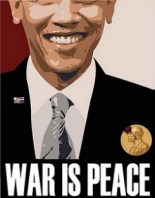 Amidst a slew of unverified allegations in recent weeks of Russian invasions, violations of Ukraine sovereignty and NATO’s current claim of Russian troops and Russian tanks fighting on the side of the federalist rebels, the upcoming annual NATO Heads of State Summit in Wales, threatens a widening violence and heightened military activity throughout eastern Europe.
Add to the equation that the tide of war appears to be turning against the US-imposed Kiev government as a successful offensive by the rebels captured the coastal town of Novoazovsk near Crimea opening a new front in the southeast and holding the line in Elenovka as rebel forces maintain their ground in Donetsk, the Kiev government needs to save face by claiming that Russian troops are aiding the out-manned, under-supplied rebels. Russia’s envoy to the EU Vladimir Chizhov added that the only Russian troops in Ukraine were the nine paratroopers who wandered across the border recently while on patrol.
NATO Summit
It is worth noting that the largest gathering of international leaders to ever assemble in the UK, will include non NATO member Ukraine President Petro Poroshenko as part of a ‘special NATO meeting’ on Ukraine but will exclude Russian President Vladimir Putin. While that omission may be a sure sign that negotiating a political settlement regarding the US-sponsored fiasco in Ukraine is not a NATO or US priority, the subject of Ukraine will be front and center on the agenda as the EU/NATO/US alliance already know their plans with regard to NATO expansion and the future of Ukraine.
President Obama will attend the Summit after visiting the Baltic states of Estonia, Latvia and Lithuania while ‘reaffirming’ the US commitment to the region. It did not used to be common for the US President to visit every little nickel and dime country (no offense intended) along the way but in this case such assurance along with a Presidential visit can mean only one thing: that those self-proclaimed ‘threatened’ strategically-located countries (with Estonia and Latvia on Russia’s border and Lithuania and Poland bordered by Russian-ally Belarus) need the President to personally shore them up for a new NATO missile defense system going further east than the former Iron Curtain, and in advance of any possible turbulence spillover within their borders.
On the eve of the Summit, outgoing Secretary General Anders Fogh Rasmussen offered the following:
“We are at a crucial point in history, our peace and security are once again being tested. NATO support for the sovereignty and total integrity of Ukraine is unwavering. Our partnership is long-standing. NATO is working even more closely with Ukraine to reform its armed forces and defense institutions. NATO stands ready to support Ukraine with advisors and assistance. We are advising Ukraine on defense planning and defense reform and are ready to intensify this cooperation. As a sign of strong support and solidarity, we have decided to hold a ‘special meeting’ with Ukraine at the upcoming NATO Summit in Wales. We will continue to improve the ability of NATO and Ukraine soldiers to work together. It is the right of every country to choose its own foreign policy without foreign interference. NATO fully respects that right but today Ukraine’s freedom and future are under attack.”
In addition, in a series of recent interviews with European newspapers, when asked whether there would be permanent international deployments under a NATO flag in east Europe, NATO Secretary General Anders Fogh Rasmussen said: “The brief answer is yes ….’for as long as necessary.’ In addition, Rasmussen promised a readiness action plan to provide rapid reinforcements with ‘a more visible NATO presence in the east.”
In accordance with the promise made in Bucharest in 2008 that both Georgia and Ukraine would become members, it is doubtful whether the Summit will formally act given NATO’s inability to accept new members with borders in dispute but would rather allow each to function as proxy states. As every NATO member fully understands, membership approval of any of the encirclement countries can be expected to trigger Russia’s long time vehement opposition to a missile presence on its borders.
NATO Accusations
None of this is reassuring especially that the recent accusations have yet to establish whether NATO’s images are date and time stamped, accurate and reliable. Nevertheless, just as the unfounded accusations regarding MH 17 flight continue to fuel enmity toward Putin, the latest ‘invasion’ charge will be provocative enough, as US-dominated NATO members congregate, to escalate a war effort that has already claimed over 2,600 fatalities, according to the UN. It was, of course, the ouster of the democratically elected President Yanukovych and the imposition of a pro-EU, pro-NATO and a pro-IMF government in Kiev that sparked the revolt in east Ukraine.
One immediate flaw in NATO’s latest assertion is that, given its total dependence on creating military conflict, reliance on their version of anything should be subject to intense scrutiny. With an estimated 50,000 plus Ukrainian troops in action (not counting CIA and US mercenaries), the question is whether sending 1,000 Russian troops into Ukraine is worth the risk to Putin who has consistently followed a diplomatic path while US diplomacy has been dominated by threats and bullying.
What makes more sense is that if the situation in Ukraine reached the critical point of no-return, that Putin would send in a sufficient force the size of a field army accompanied by an impressive number of tank battalions, support convoys and enough heavy artillery to finish the job – and presumably there would be no doubt about whether or not the Russians had moved into Ukraine to protect the civilian population from continued merciless attacks. The other option is that the Russian air force could easily put an end to Ukraine’s shelling and bombing of defenseless citizens.
Perhaps the best response to the latest ‘invasion’ disinformation has come from Alexandre Zakharchenko, Chair of the Council of Ministers of the Donetsk National Republic, given in a recent press briefing. When an English speaking reporter inquired whether Russian military units were fighting with the rebels, Zakharchenko replied that if ‘you think that Russia is sending its regular units here, then let me tell you something. If Russia was sending its regular troops here, ‘we would not be talking about the battle of Elenovka; we’d be talking about the battle of Kiev.” Zakharchenko, an attorney who made an impressive presentation, went on to remind the media that “A territory has the right of self-determination and separation after a referendum,” a referendum that was approved by Donbass voters in May.
What is not debatable is that for some weeks, a conservative estimate of 4,000 Russian volunteers (including some ‘off duty’ military and women) have crossed into Ukraine to fight on the side of the ‘rebels.’ That number may have also been augmented by volunteers sent by Chechen president Ramzan Kadyrov whose “statements in support of the illegal annexation of Crimea and support of the armed insurgency in Ukraine,” were cited as reasons for his inclusion in a recent round of sanctions.
Obama’s Unprovoked Attack on Russia
In reaction to NATO’s invasion charge, President Obama, whose State Department was intimately involved in the February coup, spoke at the White House voicing the usual provocations:
“Russia is responsible for the violence in eastern Ukraine. The violence is encouraged by Russia. The separatists are trained by Russia. They are armed by Russia. They are funded by Russia. Russia has deliberately and repeatedly violated the sovereignty and territorial integrity of Ukraine.”
“In Estonia, I will reaffirm our unwavering commitment to the defense of our NATO allies” and “At the NATO Summit in the United Kingdom, we’ll focus on the additional steps we can take to ensure the Alliance remains prepared for any challenge” and “There is no doubt that this is not a homegrown, indigenous uprising in eastern Ukraine.”
In a stunning denial of self-reflection, the president has consistently failed to mention his own Administration’s role as sole cause of the violence, the $1 billion of Congressional support for Kiev, the $5 billion of US aid revealed by Secretary of State Victoria Nuland last spring or the NATO build up in Poland, the Baltic states and elsewhere in eastern Europe. There is never serious mention of the humanitarian catastrophe on a civilian population, no mention of the fatalities, no mention of a ceasefire, no mention of the withdrawal of all non-Ukraine factions from meddling and no mention of requiring the Kiev government’s direct negotiations with the federalist rebels to determine the future of their own country.
Putin Redefines Russia’s National Interests
After the Gorbachev – Yeltsin years overseeing the dissolution of the USSR in which much of its national interests were imprudently relinquished to a market economy, Putin addressed the Munich Conference on Security Policy in 2007. During that speech, he redefined contemporary Russia’s national interests and its geopolitical concerns as he established himself as an independent, critical thinker with an international perspective – and, therefore, a threat to US dominion. The speech is worth reading in its entirety and here are several excerpts:
Decrying a “greater and greater disdain for the basic principles of international law. One state, first and foremost, the United States has overstepped its national borders in every way.”
In referring to “Russia’s peaceful transition to democracy. Why should we start bombing and shooting now at every available opportunity?”
In referring to an earlier speaker, “I understood that the use of force can only be legitimate when the decision is taken by NATO, the EU, or the UN. If he really does think so, then we have different points of view. The use of force can only be considered legitimate if the decision is sanctioned by the UN. And we do not need to substitute NATO or the EU for the UN.”
With regard to expanding NATO with missiles on Russia’s borders: “It turns out that NATO has put its frontline forces on our borders I think it is obvious that NATO expansion does not have any relation with the modernisation of the Alliance itself or with ensuring security in Europe. It represents a serious provocation that reduces the level of mutual trust. And we have the right to ask: against whom is this expansion intended? And what happened to the assurances our western partners made after the dissolution of the Warsaw Pact?”
And lastly, Putin quoted the “speech of NATO General Secretary Manfred Woerner in Brussels on 17 May 1990. He said at the time that: “the fact that we are ready not to place a NATO army outside of German territory gives the Soviet Union a firm security guarantee“.
Renee Parsons was a staffer in the U.S. House of Representatives and a lobbyist on nuclear energy issues with Friends of the Earth. in 2005, she was elected to the Durango City Council and served as Councilor and Mayor. Currently, she is a member of the Treasure Coast ACLU Board.
Russia proposes roadmap for peace in Ukraine
Press TV – September 3, 2014
Russian President Vladimir Putin says he hopes for Kiev and pro-Russian militias to reach a peace agreement on the spiraling crisis in east Ukraine on Friday.
Putin made the remark on Wednesday as he outlined a seven-point peace plan which calls for the end “of active offensive operations by the (Ukrainian) armed forces” and pro-Russia forces “in the southeast of Ukraine.”
“I believe that a final agreement between the authorities of Kiev and southeastern Ukraine can be reached and cemented during a meeting of the Contact Group on September 5,” said Putin.
He was referring to the European-mediated negotiations planned to be held in the Belarusian capital, Minsk, on Friday.
The blueprint calls for the Ukrainian forces to halt airstrikes on cities in the volatile east.
Putin also called for the deployment of international observers to monitor a ceasefire, the unconditional exchange of prisoners as well as the establishment of corridors for humanitarian aid supply to crisis-stricken cities of Donetsk and Lugansk.
The roadmap raises hopes of an end to months-long fighting which has left more than 2,600 people dead.
Earlier in the day, Kiev said Ukrainian President Petro Poroshenko and Putin had agreed to a “permanent ceasefire” in the volatile eastern Ukraine. Russia, however, said the leaders agreed on steps towards peace in eastern Ukraine but not a truce as Moscow is not a party to the crisis.
Ukraine’s mainly Russian-speaking regions in the east have witnessed deadly clashes between pro-Moscow forces and the Ukrainian army since Kiev launched military operations to silence the pro-Russians there in mid-April.
Violence intensified in May after the two flashpoint regions of Donetsk and Lugansk held local referendums, in which their residents voted overwhelmingly in favor of independence from Ukraine.
Western powers and the Kiev government accuse Moscow of having a hand in the crisis in eastern Ukraine. Russia denies the accusation.
Featured Video
No Vote, No Representation, No State: Democracy, Israeli Style
or go to
Aletho News Archives – Video-Images
From the Archives
Sanctions, War and the Policy of Dual Containment
By SASAN FAYAZMANESH | March 17, 2008
It is now nearly three decades since the Unites States adopted the policy of dual containment of Iran and Iraq. While much has been written about the containment of Iraq, there has been very little in-depth analysis of this policy when it comes to Iran. In a book that is going to be released on March 31, 2008, entitled The United States and Iran: Sanctions, Wars and the Policy of Dual Containment (Routledge), I attempt to address this shortcoming by investigating when and why the US policy of containment of Iran came about, how it evolved, and where it stands today.[1] To the extent that Israel has been involved in US policy making, the study will also include the role that Israel has played in the containment of Iran. Also, since the fate of Iran has been inextricably linked to that of Iraq, occasionally the investigation will overlap with the containment of Iraq.
The policy of dual containment of Iran and Iraq originated during the Carter Administration, but it was not until the Clinton Administration that the expression “dual containment” became popular. … continue
Blog Roll
 Aletho News
- No Vote, No Representation, No State: Democracy, Israeli Style
- Zionist Bought Senate Blocks Information About American Citizens Killed By Israel
- While Gaza dominates the UN, these are the people keeping it alive
- New Report: “Scholasticide and Genocide in Gaza: Assessment, Testimonies and Legal Analysis”
- ‘THAAD Delusion’: Iran war exposes US missile shield limits – The Atlantic
- Moscow issues warning to NATO over Russian exclave
- Yes, the Iran war has destroyed Trump’s presidency
- The fallacy of US delusions about Iran’s economic collapse
- Hezbollah denies Syria cell link, warns of Israeli plan to sow discord
- The legacy of US sanctions, war, and occupation in Iraq
- If Americans Knew
- Mamdani releases plan to combat antisemitism and hate crimes in New York City
- Iran’s Revolutionary Guards Publish Letter to the American People
- DMFI launches $1 million ad campaign supporting Virginia’s Elaine Luria
- US Senate blocks resolution seeking report on Americans killed by Israel
- Israeli Attacks Kill Ten Palestinians in Gaza
- Massacre at Minab: The School That Became a Grave
- Israeli media: The IDF Shows It Doesn’t Turn a Blind Eye; It Actively Emboldens Settler Havoc
- As settlers ravage West Bank, Israeli forces kill 10 in Gaza – Daily Update
- New Report: “Scholasticide and Genocide in Gaza: Assessment, Testimonies and Legal Analysis”
- Ex-Biden officials are desperate for a Gaza scapegoat
- No Tricks Zone
- Green Energy Debacle: German Expert Professor Fritz Vahrenholt Warns Of Severe Economic And Social Consequences
- Two More Paleo Reconstructions Affirm Meters-Higher Sea Levels Across Ireland, Brazil 7000-6000 Years Ago
- New Study: Earth And Venus Surface Warmth Largely Explained By Convection And Lapse Rate, Not CO2 Or Radiation
- 2025 Nature Paper Claiming Worsening Global Drought Gets RETRACTED …Heavily Flawed
- New Study: ‘Global Drought Shows No Detectable Recent Acceleration Under Climate Warming’
- Economic Masterminds: German Socialists Suggest Taxing Productivity Gains Stemming From Using AI
- The South China Sea Has Not Been Cooperating With The Climate Change Narrative
- Energy Crisis: Germany Enters Heating Season With Historically Low Gas Reserve Fill Levels
- New Study: The Antarctic Ice Sheet Gained Mass From 2020-2024 Due To Staggering Snow And Ice Accumulation
- Study: Ocean Heating Rates From Thousands Of Years Ago ‘Dwarf’ Modern Ocean Heating Rates

