Prince Peter Kropotkin and the Murder of the Liberator Tsar
By Martin Sieff | Strategic Culture Foundation | August 11, 2020
Why did London host a convention of anarchists in July 1881 less than three months after they had murdered the Liberator Tsar of Russia?
The International Anarchist Congress of London, from July 14 to July 20, 1881 was highly unusual in many ways, though it has almost totally been forgotten by history, save as a curiosity.
It was the last such gathering to be held for more than a quarter of a century until the International Anarchist Congress of Amsterdam in August 1907. During that time, there were four other unsuccessful attempts to call international congresses, in Geneva in 1882, in Paris in 1889, in Chicago in 1890 and once again in Paris in 1900.
Those interested in the procedural minutiae of the congress can easily enough find obscure academic articles discussing theoretical intellectual positions held and debated at the Congress.
But as far as I have been able to find, no historians have given any serious study to the possibility that the Congress may have been used to coordinate or plan any program of “Propaganda of the Deed” – the assassination of important political leaders across Europe and the Americas, which was central to the achievement of the anarcho-syndicalist movement’s goals.
 Nor is there any discussion anywhere – save in terms of abstruse and apparently harmless political theory – of the role that former Prince Peter Kropotkin, the most consistently high-profile and charismatic leader of the anarchist movement played in the convention.
Most striking of all, there appears never to have been any serious investigation conducted as to why the British government permitted its capital London, to be the host of the conference that on the surface stood for the destruction of everything that the British Empire, its traditions and institutions held dear.
The decision to permit the 1881 congress to gather in London was particularly striking – and from the Russian government’s point of view outrageous – because it opened only four months almost to the day after Tsar Alexander II, the Great Liberator who freed 24 million serfs from slavery and supported Abraham Lincoln and the Union through the U.S. Civil War, was assassinated by a specially designed shrapnel grenade thrown by Ignacy Hryniewiecki on Sunday, March 13, 1881.
That hideous crime was planned and committed by the Narodnaya Volya, “The People’s Will” itself a strange, tiny, conspiratorial group shrouded in mystery and unanswered questions to this day.
The name of the group suggests – as it was meant to – a mass popular movement, But the Narodnaya Volya was no such thing. The best estimates of Russian and Western historians alike put it at no more than 200 members. Almost none of these were from peasant backgrounds. They were almost all from favored, prosperous, professional middle class families and in some cases even from aristocratic backgrounds.
Interestingly, the followers of the late Osama Bin Laden in the first generation of al-Qaeda that carried out the destruction of the World Trade Towers in New York City on September 11, 2001 exhibit an almost identical set of profiles, as former Saudi intelligence chief Prince Turki bin Feisal bin Abdelaziz ibn Saud has pointed out.
The Narodnaya Volya was only founded in 1879. But it was totally crushed by 1884. Yet in the first two years of its existence, it operated with apparent impunity carrying out no less than eight attempts on the life of Tsar Alexander. No other tsar in Russian history including Alexander’s son and grandson after him was ever hunted so mercilessly and relentlessly by assassins.
The Narodnaya Volya never lacked for any of the financing it needed for its murderous schemes. The Russian internal security services, who proved extremely efficient and energetic in smashing the group after it carried out its bloody deed, seemed utterly helpless and inept against it until that point. This may in large part have been because the group was so tiny and so novel in its operational techniques.
Who led the Narodnaya Volya? Its documented leaders were Andrey Zhelyabov and Sofya Perovskaya. Perovskaya came from an aristocratic background but showed little capability beyond her own murderously intense fanaticism and strange obsession with murdering the tsar. Other members of the group when arrested openly commented on her merciless hatred for the ruler who had liberated the serfs.
But Perovskaya from 1872 was personally very closely associated with the then handsome, dashing and charismatic anarchist leader Prince Peter Kropotkin. It is likely they were lovers.
The carefully (British) constructed image of Kropotkin that endures to this day is a tubby, kindly, smiling old, bearded Father Christmas. In his youth, however, he was darkly satanically handsome and was obsessed with Goethe’s devil figure Mephistopheles in “Faust.”
For Perovskaya, Kropotkin would have been the dashing, aristocratic brilliant love of her life. For Kropotkin, the rather plain Perovskaya would have been a means to an end: The hunting and murder of the tsar.
Kropotkin came from one of the most aristocratic eminent families in Russia. He claimed descent from the House of Rurik, the original ruling family of Russia. He had actually been a personal page of Tsar Alexander II in his early years in power. He had been brutally bullied (or so he later claimed) when entering the Imperial corps of pages. For ever after, he maintained an intense personal hatred of the tsar, intensified by the years he spent as a prisoner for his subversive activities in the Peter and Paul Fortress in St. Petersburg starting in 1872. His escape was engineered by friends in 1876.
Kropotkin’s relationship with Perovskaya starting in 1872 in the Tchaikovsky (not the great musical composer) Circle is the key documented fact that links Kropotkin directly to the murder of the great tsar he so intensely personally hated. The group’s leader Nikolai Tchaikovsky, like Kropotkin found protection in Britain for most of his later life.
Kropotkin was a noted scientist in his day who contested Darwin and argued a version of evolution based on natural cooperation rather than natural selection. In fact it was superficial and crackpot but interestingly has recently been revived, along with his scientific reputation in British academic circles.
During the remainder of his own long life (he died in 1921 at the age of 79), Kropotkin was allowed to live in complete peace and security in Britain. Not coincidentally, Britain was the only major country in Europe not to suffer from the mysterious outbreak of assassinations that swept the continent and even the United States in the last quarter of the 19th century.
As Matthew Ehret has noted, the anarchist assassinations seemed to disproportionately target major leaders who rejected free trade and a global economic order dictated by British financial interests from the City of London. Its victims included U.S. presidents James Garfield (1881) and William McKinley (1901), French President Sadi Carnot (1894), Spanish Prime Minister Antonio Canovas (1897) and King Umberto I of Italy (1900).
In addition, in 1878 alone, anarchists attempted to kill Emperor Wilhelm I of Germany twice as well as the Kings of Spain and Italy. Kropotkin hailed all these efforts at “the Propaganda of the Deed.” Not coincidentally, all of these leaders, especially the old Kaiser, Bismarck’s patron and protector stood like Tsar Alexander II squarely opposed to British efforts at global financial domination.
 Yet despite all these outrages – or more likely because of them – Kropotkin, the guiding figure of anarcho-syndicalism and the great champion of the murder of national leaders continued to enjoy a charmed life protected by the British Empire.
To this day, British historians and other writers have unanimously continued to swallow the approved line that Kropotkin was a kindly, brilliant, pacifist saint – belonging to the company of Mohandas Gandhi and Dr. Martin Luther King rather than that of Sergei Nechayev and Dostoyevsky’s “Devils.”
The hyper-energetic, much loved and woefully idiotic American popular historian Barbara Tuchman spread this Disneyworld fairy tale image of Kropotkin in her enormously popular and influential history of the pre-World War I world “The Proud Tower” in 1966. Typically, she won the Pulitzer Prize twice for writing other histories that got their central facts and theses wrong.
A serious study of the role of Kropotkin and his “Anarchist International” in the assassinations of the late 19th century is well over 100 years overdue.
But even in that age of carefully selected and discriminating terror, the hunting and murder of the great liberator Tsar Alexander stands out for its relentless nature and obsessive cruelty.
That age of assassinations and the Anarchists Congress that the British so incongruously hosted in July 1881 is not just a matter of abstract curiosity about a long forgotten and irrelevant past. It offers disquieting parallels to the use of targeted assassinations and the methodical destabilization of great nations in the name of free trade, democracy and human rights that continues at a feverish pace in our own time.
As the great American novelist William Faulkner rightly wrote in “Requiem for a Nun,” “The past is never dead. It’s not even past.”
Russia wants neither ‘rethink’ nor ‘reset’ if it means restoring American supremacy & returning to Cold War diplomacy
By Scott Ritter | RT | August 12, 2020
Some 136 American “experts” on US-Russian relations recently debated the merits of “rethinking” US policy on Russia. What these specialists failed to consider is that Moscow may not be interested in their plans.
In the span of a week, Politico, a non-partisan global news and information company whose stated mission is “providing accurate, nonpartisan impactful information to the right people at the right time,” published two pieces that addressed the topic of US-Russian relations.
The first, which appeared on August 5, was an “open letter” written by Russia policy heavyweights Rose Gottemoeller, Thomas Graham, Fiona Hill, Jon Huntsman Jr., Robert Legvold and Thomas Pickering, and signed on by 97 other prominent policy makers and academics, including George Shultz, William Perry and Sam Nunn. Entitled “It’s Time to Rethink Our Russia Policy”, the letter opined that the current mix of sanctions and diplomacy put forward as policy by the US wasn’t working, and that it was time for Washington to take a new approach toward the “problem” of Vladimir Putin’s Russia.
Six days later, Politico published a response written by 33 other Russian policy specialists, academics and journalists who took umbrage at the letter’s notion. Entitled “No, Now Is Not the Time for Another Russia Reset”, the article instead postulated that a Putin-led Russia represented a threat to American “interests and values” that required “strong pushback” rather than renewed diplomacy. While the authors of this piece acknowledge that “America’s ability to bring about change in Russia might be very limited”, any failure on the part of the US to aggressively push back against “Russia’s repression, kleptocracy and aggression” would fail to incentivize President Putin to the kind of “change” needed before any betterment of relations could occur.
On the surface, the 136 “experts” on US-Russian affairs who either wrote or endorsed these competing opinion pieces appear to have the issue of a US-Russian policy “rethink” covered from all angles. The one thing the authors of both articles have in common, however, is a tendency to view the issue from a US-centric point of view, with little or no regard as to how Russia feels about the concept of any “rethinking”—especially along the lines suggested.
What the supporters of a US-Russian “rethink” and those who oppose it insist on is the idea that Russia would either willingly assume the kind of supine posture any such “rethink” would be predicated on, or that the policy tools used to compel change, built around enhanced economic sanctions, diplomatic isolation and regional push back, would be sufficient to complete the task.
What these so-called “experts” fail to recognize is that the days of an “inferior” Russia aspiring to join the ranks of the “superior” West are gone forever. The image of the “shining city on a hill” that American exceptionalism is built upon no longer inspires as it once did. America’s reputation around the world is on a downward trajectory—in 2016, some 64 percent of the populations of 33 countries surveyed by the Pew Research Center had a favorable impression of the US, in 2020, this had fallen to 53 percent (note: the Pew survey did not include many nations, such as those in the Middle East, where the perception of the US is much lower, and as such represents a upwardly skewed result). The idea that America is the most powerful, influential nation on earth is no longer universally held. Moreover, in Russia only 20 percent have a positive impression of the US—not exactly a vote of confidence.
The American-led “liberal world order” that has dominated the globe since the end of the Second World War is, from the Russian perspective, “obsolete”, and membership of the same is no longer viewed as attractive. Indeed, Russia has eschewed the notion of rejoining the G-8, noting that the G-7 is irrelevant without the presence of global economic powers such as Brazil, China, India and Turkey, and that the G-20 forum—which includes these nations, and more—is a far more suitable one for Russia.
It is not just the world that is rejecting American leadership—its own population has lost faith. A scant 52 percent of Americans embraced the vision of a “shining city on a hill” when President Ronald Reagan gave voice to it in his farewell address in 1989; today some 62 percent believe America no longer serves as an object of emulation for the other nations of the world. The Covid-19 pandemic has exacerbated a brewing socio-economic-political crisis of identity in the US, exposing a fundamentally flawed healthcare system, a labor market operating void of a safety net and race relations that appear to be getting worse, rather than better.
The fixation on the 2016 US Presidential election, and the notion that Russia somehow put its thumb on the electoral scale to enable an otherwise improbable President Donald Trump victory, represents the manifestation of this lack of confidence, as Americans desperately search for someone other than themselves to blame for the failures of its democratic institutions.
Robert Mueller, the Special Prosecutor responsible for the eponymously named report on Russian interference in the aforementioned election, alleged that Russian internet “troll farms” had, at their peak, a monthly budget of $1.25 million for targeted advertising on US social media. This figure was pure allegation, with Facebook stating it found that Russian-affiliated accounts spent a mere $100,000 on advertisements.
In any event, whatever the amount was, the notion that any amount of Russian-derived digital advertising helped sway an election where the major candidates spent in excess of $1 billion dollars on social media-based advertisements is laughable. By way of comparison, Mike Bloomberg spent over $500 million running the most sophisticated advertising campaign in the history of US electoral politics in a losing bid for the 2020 Democratic nomination. That the psyche of the average American voter can be swayed by what he or she reads online is insultingly simplistic; most voters are well informed on the issues of concern to them, know who they want to vote for and why. The last thing they need is online click-bait to tell them what to do.
This reality appears to be lost on those involved in the Russian “reset” debate, where both sides appear to be particularly sensitive to the fragility of American democracy, and desperate to allocate blame for this disturbing truth on a manufactured Russian threat rather than focus on a failing American society.
The foundation of the Russia “reset” debate, whether pro or con, is centered on the restoration of American supremacy, and has little to do with the actual improvement of diplomatic relations. Those who oppose the reset lay out a litany of issues where the US and Russia disagree. In every instance, the issues involved are not discussed on their merits, but rather a zero-sum analysis built around the concept that if it is good for Russia, it is bad for the US. Even the reset proponents seek to restore a Cold War approach toward diplomacy and détente, because this is safe ground built on the premise that the US will once again prevail.
The need to be seen as victorious is, of course, driven by the defensive stance taken by one-time policy professionals whose entire careers were predicated on either the defeat of the Soviet Union or, following its collapse in 1991, the containment of a much-diminished Russia. The notion of an ascendant Russia at a time when the US is on the decline both at home and abroad is simply unacceptable.
For the supporters of a Russian “rethink”, this situation is best accomplished by an engagement that resets US-Russian relations according to a Cold War-era road map. For the anti-reset crowd, the present reality must be avoided at all costs by seeking to compel Russian behavior through the application of Cold War-like pressure built around sanctions and a combination of military and diplomatic pressure.
Even if the American “experts” were able to come to an agreement on how best to proceed vis-à-vis Russia, there is virtually no chance Russia would play along. The main reason for this is that Russia has seen this game played before and is fully cognizant of the cost of doing business with the US in a post-Cold War reality. The debasement of Boris Yeltsin—and by extension, Russia—at the hands of Bill Clinton is a matter of public record, as is the role played by the US in writing Russia’s post-Soviet Constitution and securing Yeltsin’s reelection in 1996.
Russia knows that when the US uses terms like “reset” or “rethink” regarding Russia, it is with a mind to return US-Russian relations to such a status, where Russia lay prostrate at the feet of the US, and Putin did not hold the reins of power.
The former US Ambassador to Russia, Michael McFaul, embraced a vision of the “reset” undertaken by President Obama that was predicated on similar conditions, which is why it failed (McFaul did not sign either letter published by Politico). While the US can engage in an intramural debate about US-Russian policy, Russia will continue to do what it has for the past six years—proceed unencumbered by the baggage of American demands, and increasingly impervious to the threat—and reality—of US sanctions and diplomatic containment.
Scott Ritter is a former US Marine Corps intelligence officer and author of ‘SCORPION KING: America’s Suicidal Embrace of Nuclear Weapons from FDR to Trump.’ He served in the Soviet Union as an inspector implementing the INF Treaty, in General Schwarzkopf’s staff during the Gulf War, and from 1991-1998 as a UN weapons inspector. Follow him on Twitter @RealScottRitter
‘We Have Absolute Proof’ DNC Leaks Were Not Hacked, NSA Whistleblower Says
Sputnik – 12.08.2020
Because the National Security Agency is tapped into data transfer points throughout the United States, via its mass surveillance programmes, if there was any evidence that the DNC servers were hacked then they would have the evidence to prove it, a former technical director at the agency explains.
Documents published by WikiLeaks that belonged to the Democratic National Committee (DNC) could not have been hacked via the internet and must have been initially downloaded from within the US, according to an investigation by members of Veteran Intelligence Professionals for Sanity (VIPS).
Bill Binney, a cryptogropher and former technical director at the US National Security Agency (NSA), blew the whistle on the agency’s mass surveillance programmes after serving with them for 30 years. Mr Binney detailed for Sputnik why the forensic evidence proves that key claims of Russiagate (regarding Russian officials hacking the DNC servers) are a “farce”.

© Photo : Bill Binney
Sputnik: A recent investigation by you and some of your colleagues at Veteran Intelligence Professionals for Sanity determined that the Democratic National Committee documents published by WikiLeaks in 2016 could not have been hacked by actors outside the US and instead had to have been downloaded onto a USB or CD-ROM.
Bill Binney: Yes, that’s right. And we have forensic evidence to prove it.
Sputnik: Could you please break down, for the average layperson, exactly how you came to this conclusion?
Bill Binney: Well, we did it by looking at the published DNC emails by WikiLeaks. In other words, the original assertion was that the DNC data was hacked externally, from Russia or by the Russians in Europe or something, and then transferred to WikiLeaks to publish so they could influence the election.
We looked at the DNC emails that were documented by WikiLeaks on the web. And that came down in three groups. One came down on 23rd of May 2016 and the other 25th of May 2016 and then one on the 26th of August of 2016. All of those three batches of emails had last modified times ending in an even number and even second, rounding up to the second, not including milliseconds. So, that meant to us that that was the property of the FAT (file allocation table) format. It’s a programme that when you read data to a thumb drive or CD ROM, and the programme indexes stuff on the [CD] and the thumb drive, for example, it then also rounds off the last modified time to an even number. That tells us very simply that there is 35,813 emails, all with the same property FAT file formatting saying that hey this was read [ie downloaded] to a thumb drive or a CD ROM before WikiLeaks got it to publish. Which meant it was physically transported to WikiLeaks. So, for us, that meant it was not a hack. Period.
We also had [CEO of cyber security firm Crowdstrike] Shawn Henry give testimony, I think it was the 7th of January of 2017, the secret testimony that just came out, where he said ‘we had indications that the data was exfiltrated, but we didn’t see the data exfiltrated’. Well, the indications that it was [exfiltrated], is this a FAT file format, to my mind. I mean, Shawn Henry never said specifically why his people were saying that. So for us, the only thing he could be [basing] it on what was last modified time.
Sputnik: So, just to be clear, when information is downloaded onto a CD roam or thumb drive, you’re saying that there’s a particular process, which means that, the last modified time will be recorded in such a way onto those files that is different than if those files were hacked and taken from a server across international boundaries or across a very long distance.
Bill Binney: Right. And we had provided all this data to the courts. Also we’ve included the Podesta emails, which show how a hack could occur and what the last modified times looked like. And that’s a, that’s also published by WikiLeaks, I think on the 21st of September [2016], that’s the date for that, that they put it out there. And the modified times of those files… close to 10,000 of them I think, run through even and odd numbers and various times, including milliseconds, things of that nature. So all that stuff, all that data, we provided to several courts, and several sets of lawyers to introduce as evidence in court and we were prepared to testify to that in court.
Sputnik: And is it not possible for the last modified time to be changed somehow or modified itself?
Bill Binney: Sure, but I don’t know of a programme that does, other than FAT, I mean, keeping in mind, you’re talking about 35,813 files. If you want to change them, you can go in and do them individually one at a time. I don’t know of any other programme that does it automatically, which is what what’s happened here, because it’s just a straightforward consistency. Humans make errors. If they go in and do something like that, they’ll make errors somewhere in the files. We didn’t see any errors at all. So that’s a program doing [it].
Sputnik: How many people from VIPs would you say were involved in this investigation that you conducted?
Bill Binney: Probably about six and a couple of auxiliaries, as we call them, in the UK cooperating with us. And we had a couple other people from outside VIPS helping us because they were also interested in getting to it too. Also, people who retired from commercial companies, running fiber lines and things like that.
Sputnik: If you were still working at the NSA and you were tasked to investigate an alleged hack would you have additional technical resources if you worked for the government, then if you’re doing it independently?
Bill Binney: Yeah, absolutely. This is one of the reasons why I started in August of 2016 saying that this entire Russiagate story was a farce. And that basically came out by knowing the capacity of NSA. The capabilities of them being able to capture stuff on the web. I mean, [the NSA] have over almost a hundred tap points inside the United States, all loaded up with fiber optic lines… You know, it can take everything off those lines and capture it. [A]nd that was true across the US as well as all the external points exiting and entering where you exit and enter the US.
And you’ll notice that NSA never said they saw any of the data transferring anywhere on any line. And that’s because it didn’t, it went on a thumb drive, you know, that’s the difference. That was one of the main reasons I said that this was not a hack. Because if it was NSA would have it. Like they did when the Chinese hacked one of the places over here in the US about six years ago. The government said, the hack came from this building in Shanghai.
Sputnik: And is there any kind of a practical or legal consideration as to why the NSA can’t publish its findings regarding the DNC servers?
Bill Binney: Actually, there isn’t, if the president approves, I mean, he can declassify anything he wants.
Sputnik: So where do you go from here? Is there more to investigate in relation to this subject or is this the end of the matter for you?
Bill Binney: As far as I’m concerned, we have absolute proof that this whole thing […] Russiagate, is a fabrication. It was a fabrication of the FBI, CIA and the DOJ primarily, but also included the State Department and [Department for Homeland Security] and a number of other departments.
Sputnik: There are those that argue Julian Assange will have a fair trial in the US should he be extradited. What can you tell us about the U.S. District Court for the Eastern District of Virginia, where Mr Assange would be tried?
Bill Binney: That’s a court that’s pro CIA because it’s in that jurisdiction of CIA. This is why they picked that court because it’s pro CIA and whatever national security issues come up, they will always go with that national security. So, you have a prejudiced judge in a court to begin with.
Sputnik: Would there be a jury with 12 men and women?
Bill Binney: Pulled from the area and most of them work for the government. So, you know, you just look at it. I mean, that should be a disqualifier as a jury from my point of view. But also think of it this way: Julian Assange published data he was given. So has the New York Times, The Guardian, all the major publications, the Washington Post, they’ve all done that. So why aren’t they being charged also?
Sputnik: Well, the US government is claiming that the first amendment does not apply to foreign journalists.
Bill Binney: Well then why don’t they go after The Guardian ?
Sputnik: Maybe they’re next?
Bill Binney: [I]f you accept their premise – of the US government – that means that any journalist anywhere in the world, publishing any article that exposes crimes by the US government, the US government can charge them with conspiracy to violate national security. So, every reporter in the world is now liable based on that [premise].
This interview has been edited for concision and clarity
US concerned about Serbia’s intention to buy Chinese weapons
By Paul Antonopoulos | August 12, 2020
Belgrade’s announcement that it may purchase the Chinese FK-3 anti-aircraft missile system was enough for the U.S. to express concern about Serbia’s future, not only with Europe, but with the entire world.
The U.S. Embassy in Belgrade said that “procuring military and defense equipment is a sovereign decision. However, governments should understand the short- and long-term risks and costs involved in doing business with Chinese companies. Procurement choices should reflect Serbia’s stated policy goal of greater European integration. Alternative vendors which are not beholden to authoritarian regimes offer equipment that is both capable of meeting Serbia’s defense need and comparable in quality and cost.”
Serbian President Aleksandar Vučić hit back, saying “Whenever we decide to buy something, somebody has something against it,” and emphasized that the FK-3 system was not on the U.S. sanctions list against China.
The U.S. Embassy’s statement gives the impression that Washington has a deep concern about Serbia’s future strategic interests and alliances, so much so that it warned Belgrade on its path towards the European Union even though the U.S. has no influence over Brussels in this regard. Of course Washington has no concern for Serbia’s interests after it sustained crippling sanctions on the Balkan country, recognizes Kosovo as an independent state, ensured that the Republika Srpska is attached to Bosnia and Herzegovina without option to reunite with Serbia, and led a deadly bombing campaign that destroyed Serbian infrastructure and killed thousands of civilians in 1999.
Washington is afraid of cheaper and better-quality weapons that Serbia can procure from both China and Russia. The Americans are also frustrated that Serbia has not become a state dependent on U.S. patronage despite decades of aggression and pressure. Effectively, Washington is continuing a campaign to limit Serbia’s independent and strategic interests. It is recalled that Washington threatened Belgrade with sanctions and indirect threats when Serbia purchased the Russian Pantsir missile system and trained with the S-400 missile defense system.
A NATO official who spoke on condition of anonymity, according to Defense News, said that “defense procurement is a national decision. Serbia has the right to freely choose its political and security arrangements. NATO and Serbia are close partners and we are committed to strengthening our partnership with Serbia, while fully respecting its policy of neutrality.”
Although both NATO and the U.S. Embassy in Belgrade emphasized that they respect Serbia’s sovereign decision, Washington does not truly respect Serbia’s policy of neutrality, which is why it makes continuous threats of sanctions and indirect warnings that Belgrade is becoming too close to Moscow and Beijing. Serbian political scientist Aleksandar Pavić argues that Washington expects Serbia to buy weapons from countries that have recognized Kosovo’s independence, and that this is Belgrade’s fault as they have purchased weapons from France, and even expressed the possibility of buying some American bombers, despite both countries recognizing Kosovo’s independence.
Although Serbia is attempting to maintain a policy of neutrality, so much so that it even considers buying weapons from the U.S., the reality is that such a policy is impossible. The best Belgrade can hope for is to enact a policy of balancing the Great Powers by strengthening relations with those who support Serbia’s sovereignty and independence, and maintaining friendly posture but distance with those who still support an independent Kosovo. By Serbia buying French military equipment, despite its recognition of an independent Kosovo, and entertaining the idea of buying American bombers, Belgrade is sending mixed messages to its international partners that it can overlook the Kosovo issue. By maintaining such a policy, Belgrade is giving Washington enough leeway to comment and attempt to push Serbia away from China and Russia. Having a stronger policy against those who recognize Kosovo’s independence will give Belgrade a much clearer foreign policy and will force Washington to approach Serbia differently.
None-the-less, by discouraging Belgrade from the idea of buying Chinese weapons, Serbia will likely continue to buy Chinese weapons, and with even stronger intensity. Although Serbia will always prioritize its relations with China and Russia over those who weakened it and recognized Kosovo’s independence, Belgrade should now show this more strongly by ending its policy of neutrality as the West is not neutral towards Serbia.
As the Balkans is heating up again as a place of conflict, Serbia cannot be neutral as much as it attempts to do so. This does not mean that it should have openly hostile relations with the U.S. and other Western States, but because Serbia refuses to sever its deep relations with China and Russia, Serbian interests will always be sidelined when it comes to Western ambitions in the Balkans. Under these conditions, Belgrade should take a stronger position and be unafraid to highlight that their interests do not align with those that the West has for the Balkans.
Paul Antonopoulos is an independent geopolitical analyst.
Why Immunity for the CIA?
By Jacob G. Hornberger | FFF | August 11, 2020
Amidst the controversy over the doctrine of qualified immunity for cops, no one is talking about the full immunity accorded to the Central Intelligence Agency, an agency within the national-security establishment that wields omnipotent power.
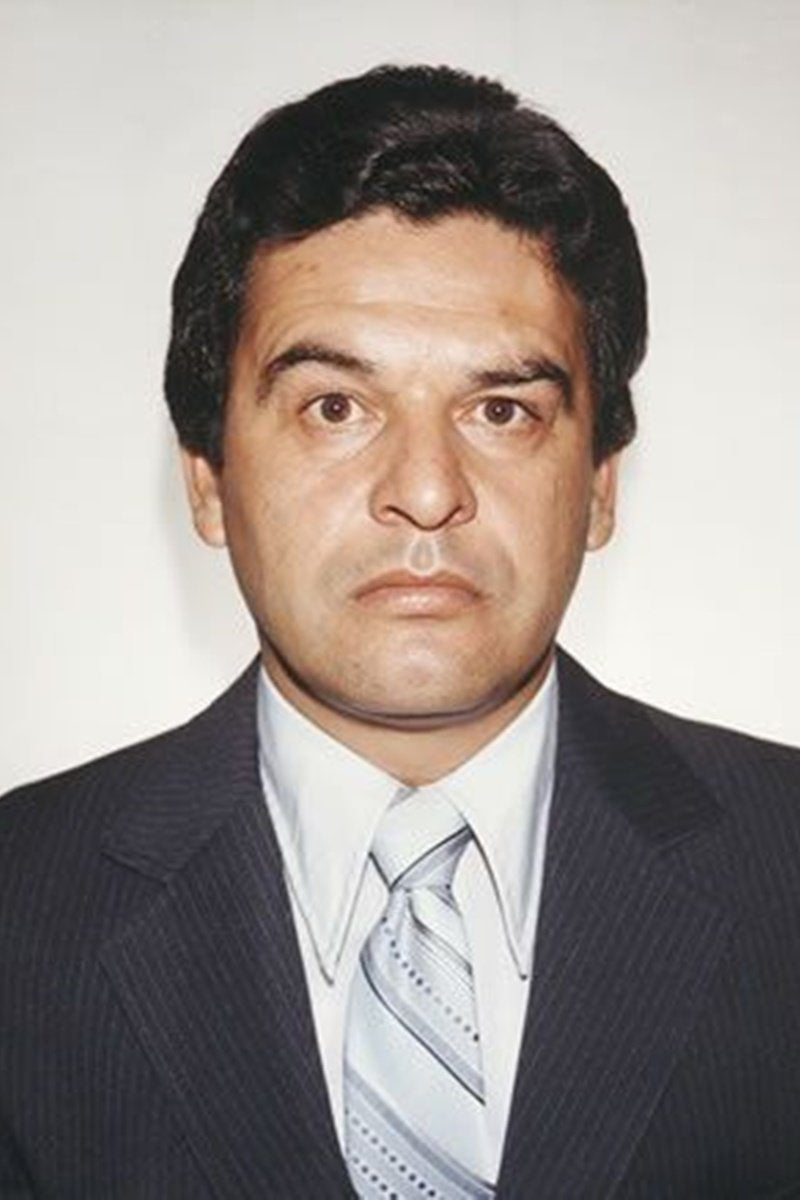 Among the most interesting lines in the new Amazon Prime series The Last Narc is what a CIA official says to DEA investigator Hector Berrellez, who was charged with leading the investigation into the kidnapping, torture, and murder of DEA agent Enrique “Kiki” Camarena. The official tells Berrellez that the CIA is not a law-enforcement agency and, therefore, doesn’t have to comply with the Constitution. Its mission, he said, is to protect the United States. Therefore, the implication is that the Constitution cannot be permitted to serve as a barrier to that end.
That’s the way it’s been since the beginning. The CIA has had omnipotent power to do whatever it deems necessary to protect “national security.” That includes, of course, the power of assassination, a power that the CIA assumed practically since its inception. In fact, as early as 1952, the CIA was developing a formal assassination manual for its assassins.
The CIA also wields the power of torture, the power to record its torture sessions, and the power to destroy such recordings to prevent Congress or the public from listening to them or viewing them.
The CIA also wields the power to lie, at least if it’s in the interest of “national security.”
No one jacks with the CIA. Not the Justice Department, including every U.S. Attorney in the land. Not the Congress. Not the president. Not the military. Who is going to mess with an organization that wields the omnipotent power to destroy or kill people and is more than willing to exercise that power in the name of protecting “national security”?
The kidnapping, torture, and execution of Kiki Camarena
A good example of this phenomenon is found in The Last Narc, which I wrote about in a blog post last week.
In 1985, 37-year-old DEA agent Enrique “Kiki” Camarena was kidnapped on the streets of Guadalajara, Mexico, and brutally tortured for 36 hours before finally being executed.
It was commonly believed that the crime had been committed by the Guadalajara drug cartel, which was headed by Rafael Caro Quintana, Ernesto Fonseca Carrillo, and Miguel Ángel Félix Gallardo, all of whom are featured in Netflix’s series Narcos: Mexico. But Mexican officials steadfastly refused to extradite the three drug lords to the United States for trial.
The DEA assigned Berrellez to take charge of the investigation. Berrellez, who felt as comfortable operating in Mexico as he did in the United States, found three former members of the Jalisco State Police who were willing to talk. They came to the United States and told Berrellez that back in 1985, they had been working double jobs — as state policemen and also as bodyguards for Caro, Fonseca, and Gallardo.
Berrellez interviewed them separately to ensure the integrity of their statements. They each pointed toward complicity of high Mexican officials with the cartel in the distribution of drugs into the United States, which I don’t think would surprise anyone.
The three former cops and bodyguards told Berrellez that they were in the room while Camarena was being tortured. Each of them stated that there were several high Mexican officials present in the house in which Camarena was being tortured while he was being tortured.
The heroism of Hector Berrellez
But then Berrellez discovered something else. According to the three former Mexican state policemen, a man named Max Gomez, also known as Felix Rodriguez, was inside the torture room and taking an active role in the brutal interrogation of Camarena. Berrellez investigated and determined that Rodriguez was a “retired” CIA agent.
Among the principal questions that was being addressed to Camarena was the extent to which he had discovered, in the course of his investigation, the nexus between the drug cartel, the CIA, and the Mexican government in the drug trade.
It was later learned that the interrogation was being recorded, which is something that one would not expect drug lords to do but that one would expect a CIA agent to do.
At that point, Berrellez was in trouble. It’s one thing to conduct an investigation that leads to the Mexican government’s involvement in Camarena’s torture and murder. It’s another thing to conduct an investigation that leads to the U.S. government’s involvement in the torture and murder of a DEA agent who is also an American citizen.
As Berrellez states in The Last Narc, he was warned to back off and let sleeping dogs lie. He was warned that if he didn’t, his life would be in jeopardy. If he didn’t back off, U.S. officials even threatened to forcibly return him to Mexico to face criminal charges that the Mexican government had leveled against him.
But Berrellez refused to back off, and so U.S. officials removed him from the investigation. Even though he could have remained silent, he instead decided to go public with his findings and cooperated in the making of The Last Narc. He comes across as a heroic figure in the series.
For his part, Rodriguez denies that he was in the torture room or that he has had anything to do with Guadalajara cartel and with drug dealing. The problem, however, is that CIA agents will lie if they believe that it is in the interest of “national security.” And they all know that they have immunity when it comes to lying and anything else that touches on “national security.”
Full immunity for the CIA
Here you have a prima facie case of U.S. governmental involvement in the torture and assassination of a U.S citizen, one who was an agent of the DEA. The alleged purpose of the torture was to determine if Camarena had uncovered evidence of CIA complicity with the Guadalajara Cartel and the Mexican government in the drug trade. Three witnesses, all giving their testimony separately, identified Rodriquez as one of Camarena’s interrogators.
That’s clearly enough evidence to launch a formal investigation into the matter. Perhaps it’s worth mentioning that Camarena’s murder took place during Iran Contra, when U.S. officials were breaking the law to raise the money to give to the Nicaraguan contras.
Has any of this caused any U.S. Attorney or the U.S. Congress to launch an aggressive investigation into the matter?
Don’t make me laugh. This is the CIA we are talking about. No one investigates the CIA, which makes the U.S. government as crooked and corrupt as the Mexican government. If you want to get a good sense of how both governments operate, I highly recommend watching The Last Narc.
Jacob G. Hornberger is founder and president of The Future of Freedom Foundation. He was born and raised in Laredo, Texas, and received his B.A. in economics from Virginia Military Institute and his law degree from the University of Texas. He was a trial attorney for twelve years in Texas. He also was an adjunct professor at the University of Dallas, where he taught law and economics.
Syria’s Arab Tribes Give Pro-American Forces and SDF One Month to Leave Eastern Syria
Sputnik – 11.08.2020
On 11 August, sheikhs and elders of the Arab Al-Uqaydat tribe met in the Syrian Deir ez-Zor province, agreeing that the US-led coalition is responsible for murdering tribal sheikhs in the province, and demanding that the region be cleared of SDF forces, local control returned to the Syrians, and stating: “leave the Arab region to the Arabs”.
Sputnik’s correspondent in al-Hasakah reported, citing civilian sources in Deir ez-Zor, that nearly 5,000 people attended a meeting of Al-Uqaydat sheikhs and elders. They agreed that the pro-American coalition and the SDF have one month to turn over all of those involved in murdering sheikhs in the Deir ez-Zor governorate, and demanded that the SDF and the coalition leave the province.
The tribal sheikhs condemned the security chaos caused by a series of murders of tribal elders and sheikhs, as well as condemning widespread corruption. These factors are reported to have forced the tribe to make the decision.
The most recent high-profile crime attributed to SDF fighters is the assassination of Sheikh Mutashar al-Hafil and his relative Dar Mihlef al-Khalaf, which has provoked a wave of protests and aggression by local tribes against both the armed SDF groups and the pro-American coalition.
“We are calling on the international coalition to transfer control over the province directly to its Arab population, respecting Syria’s territorial integrity, as well as the rights of Syrian citizens”, the trial elder’s statement said.
Al-Uqaydat tribal representatives also demand that the SDF release all prisoners and hostages: particularly and first, women and children.
Reportedly, the month given to the SDF and the coalition to meet the ultimatum starts today, August 11, 2020.
The Al-Uqaydat tribes have traditionally been situated in the eastern part of the Syrian Deir ez-Zor province. Popular protests hit these cities after pro-American SDF forces killed several sheikhs and tribal elders. In response, tribal representatives broke into SDF headquarters in several governorate cities and captured fighters.
Trump insists on a Putin visit to US
By M. K. BHADRAKUMAR | Indian Punchline | August 11, 2020
The US President Donald Trump’s remark on Monday that a G7 summit is no longer on the cards for the month of September leaves many questions unanswered. We do not know the circumstances in which Trump felt that he is “much more inclined to do it (G7 summit) sometime after the election”. Again, Trump was delightfully vague on giving a timeline, which is understandable since a G7 summit now hinges entirely on the outcome of the November election.
Trump didn’t explain, either, why a G7 summit hasn’t materialised in September, which would have given him some boost on the world stage — and given a much-needed fillip to his campaign. This is the second time Trump has been unable to host a G7 summit. In June, the allies, especially Germany, point blank refused — Angela Merkel regretted apparently due to preoccupations related to the pandemic.
If the postponement in September is also due to the European allies’ lukewarm attitude, it becomes a snub to Trump personally. All he’d say was “We haven’t sent out invitations. We’re talking to them.” If Trump falls by the wayside in the November election, the European allies may be even less inclined to troop to Washington before Joe Biden assumes office in January. Trump’s insistence on inviting Russian President Vladimir Putin to the G7 summit, which he repeated yesterday, has not gone down well in the European capitals.
In sum, Trump’s inability to hold a G7 summit highlights Europe’s overall disenchantment with him. Trump’s foreign policy legacy during his first term is ending on a dismal note, calling attention to the damage he has inflicted on the transatlantic partnership.
Perhaps, Trump gets one more chance to redeem his foreign policy record on this template if only the US-Russia arms control talks make headway. The first formal bilateral talks between the US and Russia on space security since 2013 took place in Vienna on July 27 alongside the second round of the nuclear arms control working group meetings. The renewal of new START, which is expiring in coming February, is a low-hanging fruit.
Meanwhile, the Vienna talks also touch on the erstwhile Intermediate-Range Nuclear Forces Treaty (INF Treaty), which is of utmost concern to the European countries. Russia has called for revival of discussions on extending the INF Treaty and Washington has held open the possibility that the negotiations in Vienna would include an INF Treaty extension. One way Trump could overcome the European resistance to inviting Putin to a G7 summit in the US could be by linking it to an event connected with arms control, especially the INF Treaty.
Russia sees arms control as a useful tool to manage its military competition with the US by making it less dangerous and costly. As for European countries, the INF Treaty has been historically the only operational bilateral instrument of nuclear arms control with Russia with focus on Europe’s security and stability. Moreover, the INF Treaty was the cornerstone of European security and its signing in 1987 by the US and the former Soviet Union was a harbinger of political “winds of change” in the East-West relationship.
Equally, Trump also appears to be serious in pursuing forms of cooperation with Russia that would accommodate both countries’ interests. Oil price and terrorism are two such issues; arms control could be another. On arms control, there is also a rare “bipartisan consensus” in the US as regards the renewal of the new START.
Having said that, Trump is unpredictable and the commencement of arms control talks cannot by itself persuade Moscow to lower its guard. Thus, on August 7, Russian Foreign Ministry reacted to the Pentagon announcement of July 29 regarding more US deployments to Poland. A statement in Moscow warned that “such actions escalate tensions in Europe. We have emphasised more than once that attempts to deter us by force and intimidate our country will receive a befitting and timely response.”
On July 29, at a press conference at the Pentagon, Defence Secretary Mark Esper had announced a “plan on rotating forward the lead element of the Army’s newly established V Corps headquarters to Poland, once Warsaw signs a Defense Cooperation Agreement and burden sharing deal, as previously pledged. There are or may be other opportunities as well to move additional forces into Poland and the Baltics.” Interestingly, a week later in an interview with Fox News, Esper added that the deployment to the east to (Poland and the Baltics) aimed to serve as a more effective ‘deterrent’ against Russia. He said moving troops eastward is only logical because “the border has shifted as the alliance has grown.”
On August 7, the official military newspaper Krasnaya Zvezda (Red Star) reacted strongly by issuing a stern warning to the US that Russia will perceive any ballistic missile launched at its territory as a nuclear attack that warrants a nuclear retaliation. This is in line with the revised Russian military doctrine enunciating the new nuclear deterrent policy allowing “first use”, which envisages the use nuclear weapons in response to a nuclear attack or an aggression involving conventional weapons that “threatens the very existence of the state.”
Moscow has ruled out Putin’s participation in a G7 summit that excludes China or has any anti-China orientation. Having said that, Trump would be betting that given the Kremlin’s keenness to make progress on arms control — extension of new START, in particular — Putin might be open to a visit to the US to formalise any agreements, once the hurly burly of the November election in America is done. Trump’s remarks yesterday hint at such a possibility when he said Putin is an “important factor”. Moscow has taken due note of it.
Trump’s calculus aims at animating the US-Russia-China triangle with a view to isolating China. Putin, on the other hand, will sequester the Russian-Chinese entente from collateral damage, if any. On August 9, Russian Foreign Ministry issued an unusual statement conveying solidarity with China “on the situation around the Tiktok social media app’s operation in the US”.
Beijing, meanwhile, is nonchalantly reiterating its position that “it is not yet the right timing” for China to join the nuclear disarmament talks in Vienna. And, Putin and Chinese President Xi Jinping were the first world leaders to congratulate Alexander Lukashenko on his re-election as Belarusian president.
Featured Video
What Does Russian Retaliation Look Like? | Col Doug Macgregor
or go to
Aletho News Archives – Video-Images
From the Archives
A Climate Scientist Who Engages Skeptics
By Judith Curry | November 27, 2009
An open letter to graduate students and young scientists in fields related to climate research:
Based upon feedback that I’ve received from graduate students at Georgia Tech, I suspect that you are confused, troubled, or worried by what you have been reading about ClimateGate After spending considerable time reading the hacked emails and other posts in the blogosphere, I wrote an essay that calls for greater transparency in climate data and other methods used in climate research. The essay is posted over at climateaudit.org.
What has been noticeably absent so far in the ClimateGate discussion is a public reaffirmation by climate researchers of our basic research values: the rigors of the scientific method (including reproducibility), research integrity and ethics, open minds, and critical thinking. Under no circumstances should we ever sacrifice any of these values; the CRU emails, however, appear to violate them. … continue
Blog Roll
 Aletho News
- Why Iran Hawks Are Now Hyping ‘Radical Shiite’ Threats
- What Does Russian Retaliation Look Like? | Col Doug Macgregor
- Araghchi: ‘Israel’ seeks to drag US into war on Iran
- NYT’s Iran dam-missile narrative crumbles under statistical scrutiny and engineering evidence
- USAID Files: The Trusted Flaggers Nobody Can Audit
- How Western media weaponizes unverified claims to justify military aggression
- Content control: USAID docs expose Biden admin’s grip on Ukraine coverage
- Ukraine destroying itself: every attack on the Crimean Bridge will come at a price
- NATO capital under protest siege, so NATO escalates war
- A Climate Scientist Who Engages Skeptics
- If Americans Knew
- An error has occurred; the feed is probably down. Try again later.
- No Tricks Zone
- Alarmist Climatologists In Shock! 2026 Atlantic Hurricane Season Sees Lowest Count In 101 Years
- New Study: Modern Temps Are Among The Coldest Of The Last 10,000 Years In East Central Europe
- Germany’s Renewable Energies Lead to 1.4 Billion Euro Electric Power Trade Deficit
- Argentina’s Perito Moreno Glacier Joins Antarctica and Arctic In Defying Doomsday Melt Claims
- New Study: Barents Sea Temperatures Were Warmer And Sea Ice Less Extensive In The 1700s Than Today
- German Authorities Start Initiative To Evaluate Public Register For Climate “Disinformation” Spreaders!
- Zonal Asymmetry of Temperature Change in the Antarctic Circumpolar Current
- New Study: The Net Fossil Fuel Contribution To Rising Atmospheric CO2 Has Been Zero For 500 Years
- Germany’s Green Energy Transition Becoming Increasingly Expensive…Another 6 Trillion Euros!
- Sudden Stratospheric Warming, Powerful El Niño Combination May Lead To Extreme Europe Cold, Energy Crisis!

