Saudi Arabia exempts Western arms purchases from austerity plan: FT
Press TV – June 7, 2020
Saudi Arabia is reportedly continuing to import weapons from Western countries, especially the United States, despite austerity measures taken recently to handle the kingdom’s worst financial crisis in decades.
Saudi Arabia posted a $9 billion budget deficit in the first quarter of 2020 due to plummeting oil prices and the novel coronavirus (COVID-19) pandemic.
Riyadh announced last month that it will suspend the cost of living allowance for state workers and raise the value added tax threefold in a bid to boost state finances.
However, the Financial Times reported on Sunday that the kingdom’s military expenditure emerged unscathed from the tough austerity measures, citing military contracts signed with American arms giants.
A Western arms industry executive based in the Persian Gulf quoted top Saudi officials as saying that there would be no military cuts.
“I was fully expecting there to be a cut, but the information from very senior levels and princes is ‘no, we’re not going to do it. In fact, don’t come and ask me if your program is going to slip, keep working hard at it, because we are just carrying ahead,’” the executive said.
“We’ve got a large number of requirements popping in through the door.”
The report cited the Pentagon’s contracts worth more than $2.6 billion for the delivery of more than 1,000 air-to-surface and anti-ship missiles to Saudi Arabia.
The US arms manufacturer Lockheed Martin, which supplies THAAD missiles to Riyadh, also told the Financial Times that it had “not seen a backing off of expenditures on defense” by any of its main Middle Eastern customers.
Robert Harward, chief executive of Lockheed’s Middle East unit, said although it was too early to judge, he expected that customers, including Saudi Arabia, “will continue with their procurement”.
“Regional threats are not receding and are more unpredictable than ever,” he said. “Countries will have to make choices on budgets, as countries always have to do.”
Another Persian Gulf-based military executive confirmed that his company had not witnessed “any shift in attitudes from the customers,” but suggested that it could still change, the FT added.
Meanwhile, the Saudi Finance Ministry stressed that the kingdom would “continue to support our military needs.”
The ministry said it had been working to rationalize spending to ensure the country got military equipment “for the right cost for the right quantity with the right specification”.
Saudi Arabia was the world’s largest weapons importer in 2015–19, according to the Stockholm International Peace Research Institute (SIPRI). The regime’s imports of major arms increased by 130 percent compared with the previous five-year period.
The kingdom is stuck in a costly war on Yemen it launched in March 2015 in a bid to reinstall the former Saudi-backed regime and crush the popular Houthi Ansarullah movement.
However, over five years into the Western-sponsored war, Saudi Arabia has achieved neither of its objectives and instead plunged Yemen into what the UN says is the world’s worst humanitarian crisis.
Riyadh is the largest buyer of American-made weaponry. US President Donald Trump signed an arms deal worth $110 billion with Saudi Arabia in May 2017 on his first foreign trip since becoming president.
Before his presidency, he had described the kingdom as “a milk cow” which would be slaughtered when its milk ran out.
FBI launches open attack on ‘foreign’ alternative media outlets challenging US foreign policy
By Gareth Porter | Grayzone Project | June 5, 2020
The FBI has publicly justified its suppression of dissenting online views about US foreign policy if a media outlet can be somehow linked to one of its adversaries. The Bureau’s justification followed a series of instances in which Google and other social media platforms banned accounts following consultations with the FBI.
In a particularly notable case in 2018, the FBI encouraged Facebook, Instagram and Google to ban the American Herald Tribune (AHT), an online journal that published critical opinion articles on US policy toward Iran and the Middle East. The bureau has never offered a clear rationale, however, despite its private discussions with Facebook on the ban.
The FBI’s first step toward intervening against dissenting views on social media took place in October 2017 with the creation of a Foreign Influence Task Force (FTIF) in the bureau’s Counterintelligence Division. Next, the FBI defined any effort by states designated by the Department of Defense as major adversaries (Russia, China, Iran and North Korea) to influence American public opinion as a threat to US national security.
In February 2020, the FBI defined that threat in much more specific terms and implied that it would act against any online media outlet that was found to fall within its ambit. At a conference on election security on February 24, David K. Porter, who identified himself as Assistant Section Chief of the Foreign Influence Task Force, defined what the FBI described as “malign foreign influence activity” as “actions by a foreign power to influence US policy, distort political sentiment and public discourse.”
Porter described “information confrontation” as a force “designed to undermine public confidence in the credibility of free and independent news media.” Those who practice this dark craft, he said, seek to “push consumers to alternative news sources,” where “it’s much easier to introduce false narratives” and thus “sow doubt and confusion about the true narratives by exploiting the media landscape to introduce conflicting story lines.”
“Information confrontation”, however, is simply the literal Russian translation of the term “information warfare.” Its use by the FTIF appears to be aimed merely at justifying an FBI role in seeking to suppress what it calls “alternative news sources” under any set of circumstances it can justify.
While expressing his intention to target alternative media, Porter simultaneously denied that the FBI was concerned about censoring media. The FITF, he said “doesn’t go around chasing content. We don’t focus on what the actors say.” Instead, he insisted that “attribution is key,” suggesting that the FTIF was only interested in finding hidden foreign government actors at work.
Thus the question of “attribution” has become the FBI’s key lever for censoring alternative media that publishes critical content on US foreign policy, or which attacks mainstream and corporate media narratives. If an outlet can be somehow linked to a foreign adversary, removing it from online platforms is fair game for the feds.
The strange disappearance of American Herald Tribune
In 2018, Facebook deleted the Facebook page of the American Herald Tribune, a website that publishes commentary from an array of notable authors who are harshly critical of US foreign policy. Gmail, which is run by Google, quickly followed suit, along with the Facebook-owned Instagram.
Tribune editor Anthony Hall reported at the time that the removals occurred at the end of August 2018, but there was no announcement of the move by Facebook. Nor was it reported by the corporate news media until January 2020, when CNN elicited a confirmation from a Facebook spokesman that it had indeed done so in 2018. Furthermore, the FBI was advising Facebook on both Iranian and Russian sites that were banned during that same period of a few days. As Facebook’s chief security officer Alex Stamos noted on July 21, 2018, “We have proactively reported our technical findings to US law enforcement, because they have much more information than we do, and may in time be in a position to provide public attribution.”
On August 2, a few days following the removal of AHT and two weeks after hundreds of Russian and Iranian Pages had been removed by Facebook, FBI Director Christopher Wray told reporters at a White House briefing that FBI officials had “met with top social media and technology companies several times” during the year, “providing actionable intelligence to better enable them to address abuse of their platforms by foreign actors.” He remarked that FBI officials had “shared specific threat indicators and account information so they can better monitor their own platforms.”
Cybersecurity firm FireEye, which boasts that it has contracts to support “nearly every department in the United States government,” and which has been used by Department of Homeland Security as a primary source of “threat intelligence,” also influenced Facebook’s crackdown on the Tribune. CNN cited an unnamed official of FireEye stating that the company had “assessed” with “moderate confidence” that the AHT’s website was founded in Iran and was “part of a larger influence operation.”
The CNN author was evidently unaware that in US intelligence parlance “moderate confidence” suggests a near-total absence of genuine conviction. As the 2011 official “consumer’s guide” to US intelligence explained, the term “moderate confidence” generally indicates that either there are still differences of view in the intelligence community on the issue or that the judgment ”is credible and plausible but not sufficiently corroborated to warrant higher level of confidence.”
CNN also quoted FireEye official Lee Foster’s claim that “indicators, both technical and behavioral” showed that American Herald Tribune was part of the larger influence operation. The CNN story linked to a study published by FireEye featuring a “map” showing how Iranian-related media were allegedly linked to one another, primarily by similarities in content. But CNN apparently hadn’t bothered to read the study, which did not once mention the American Herald Tribune.
Finally, the CNN piece cited a 2018 tweet by Daily Beast contributor Josh Russell which it said provided “further evidence supporting American Herald Tribune’s alleged links to Iran.” In fact, his tweet merely documented the AHT’s sharing of an internet hosting service with another pro-Iran site “at some point in time.” Investigators familiar with the problem know that two websites using the same hosting service, especially over a period of years, is not a reliable indicator of a coherent organizational connection.
CNN did find evidence of deception over the registration of the AHT. The outlet’s editor, Anthony Hall, continues to give the false impression that a large number of journalists and others (including this writer), are contributors, despite the fact that their articles have been republished from other sources without permission.
However, AHT has one characteristic that differentiates it from the others that have been kicked off Facebook: The American and European authors who have appeared in its pages are all real and are advancing their own authentic views. Some are sympathetic to the Islamic Republic, but others are simply angry about US policies: Some are Libertarian anti-interventionists; others are supporters of the 9/11 Truth movement or other conspiracy theories.
One notable independent contributor to AHT is Philip Giraldi, an 18-year veteran of the CIA’s Clandestine Service and and an articulate critic of US wars in the Middle East and of Israeli influence on American policy and politics. From its inception in 2015, the AHT has been edited by Anthony Hall, Professor Emeritus at University of Lethbridge in Alberta, Canada.
In announcing yet another takedown of Iranian Pages in October 2018, Facebook’s Gleicher declared that “coordinated inauthentic behavior” occurs when “people or organizations create networks of accounts to mislead others about who they are what they’re doing.” That certainly doesn’t apply to those who provided the content for the American Herald Tribune.
Thus the takedown of the publication by Facebook, with FBI and FireEye encouragement represents a disturbing precedent for future actions against individuals who criticize US foreign policy and outlets that attack corporate media narratives.
Shelby Pierson, the CIA official appointed by then director of national intelligence in July 2019 to chair the inter-agency “Election Executive and Leadership Board,” appeared to hint at differences in the criteria employed by his agency and the FBI on foreign and alternative media.
In an interview with former acting CIA Director Michael Morrell in February, Pierson said, “[P]articularly on the [foreign] influence side of the house, when you’re talking about blended content with First Amendment-protected speech… against the backdrop of a political paradigm and you’re involving yourself in those activities, I think that makes it more complicated” (emphasis added).
Further emphasizing the uncertainty surrounding the FBI’s methods of online media suppression, she added that the position in question “doesn’t have the same unanimity that we have in the counterterrorism context.”
Gareth Porter is an independent investigative journalist who has covered national security policy since 2005 and was the recipient of Gellhorn Prize for Journalism in 2012. His most recent book is The CIA Insider’s Guide to the Iran Crisis co-authored with John Kiriakou, just published in February.
MSNBC hires former FBI attorney Lisa Page as legal analyst
RT | June 6, 2020
Lisa Page, the FBI lawyer whose leaked anti-Trump text messages with another federal agent indicated deep-seated bias in the Russiagate probe, has been hired as an analyst at MSNBC, drawing jeers and praise alike.
Announcing the move on Friday, MSNBC said Page had been brought on as a national security and legal analyst after making her debut on the channel’s ‘Deadline: White House’ program. Wasting little time before weighing in on the decision, President Donald Trump deemed it a “total disgrace!”
Page rose to fame in 2017 after a series of text messages with FBI agent Peter Strzok – with whom she was then having an affair – were leaked, showing the two bureau employees disparaging Donald Trump, who had not yet won the Oval Office at the time. In one of the messages, Strzok told Page that “we can’t… risk” a Trump presidency, describing an “insurance policy” that was apparently meant either to guarantee he never got elected or to have a back-up plan in case he did. Due to his apparent bias, Strzok was removed from the special counsel probe into Trump’s alleged ties to Moscow following the leaks, while Page later left the bureau on her own accord.
Much like the president, critics online have also castigated MSNBC for the hiring decision, with some poking fun at her credentials as a “non-partisan” and “impartial” analyst.
Page is not the first MSNBC hiree to feature prominently in the Trump-Russia probe following the 2016 election, with jobs also handed to Obama-era CIA Director John Brennan and Andrew Weissmann – who the New York Times described as former special counsel Robert Mueller’s “pit bull.”
Rep. Ilhan Omar Surrenders to Israel Lobby

By Philip Giraldi | American Free Press | June 1, 2020
The nearly complete corruption of the U.S. republican form of government has largely come about due to the Citizens United decision by the Supreme Court in January 2010 that basically permitted unlimited donor-spending on political campaigns based on the principle that providing money, normally through a political action committee (PAC), is a form of free speech. The decision paved the way for agenda-driven plutocrats and corporations to largely seize control of the formulation process for certain policies being promoted by the two national parties.
No one has benefited from the new rules more than the state of Israel, whose hundreds of support organizations and principal billionaire funders euphemized as the “Israel Lobby” have entrenched pro-Israel donors as the principal financial resources of both major political parties. Las Vegas casino magnate Sheldon Adelson has become relatively well known as the major funder of the Republican Party, having contributed an estimated $100 million to the 2018 midterm election, while Haim Saban, a billionaire Israeli/ American movie producer has filled a similar role for the Democrats. Adelson, who once upon a time served as a draftee in the U.S. Army, has described how he wishes it had been the Israel Defense Force instead. He has also stated that he would be proud to have a son who is an Israeli Army sniper. Haim Saban in a somewhat similar vein has said that he is a one-issue guy, and his issue is Israel.
No one should be surprised that the Jewish donor and activist base is paying particular attention to certain congressional races in 2020, most particularly of the three of the four women comprising the so-called “squad,” namely Rashida Tlaib, Ilhan Omar, and Alexandria Ocasio- Cortez, who have been most critical of the U.S.- Israeli connection. Tlaib, a congresswoman representing Detroit who is of Palestinian descent, is already being targeted by fellow Democrat Brenda Jones, who is currently the Detroit City Council president.
Jones almost certainly has made her positive views of Israel known to Anti-Defamation League (ADL) inquisitors, and she will be showered with money and favorable press in a possibly successful bid to overthrow Tlaib. Prospective candidates for Congress and even state level offices are approached by supporters of Israel and are routinely asked to fill out a form explicitly detailing their view of Israel. It is frequently fatal in political terms to respond incorrectly. Play the game and one has money and press support. Do otherwise, and all that vanishes.
The highly controversial Alexandria Ocasio-Cortez, also no friend of the Israel Lobby, is likewise being challenged by her own party in the Bronx. She is being confronted by no fewer than five Democratic Party challengers but is well placed to prevail due to her popularity in her district.
The red lines established around the issue of Israel are something that every American politician understands. But perhaps the biggest surprise, and an indication of the reach of Jewish power in the United States, is the flip-flop recently performed by Ilhan Omar, the ethnic Somali congresswoman who represents Minneapolis.
Omar clearly would like to remain in Congress but, not surprisingly, a strong and well-funded Democratic primary candidate named Antone Melton-Meaux, an African-American lawyer, has surfaced. He has raised $500,000 for his campaign chest, much of it coming from outside sources. He has publicly stated that Omar is not connected to her district, has done nothing for Minnesota, and, perhaps the biggest sin of all, she “… has repeatedly made divisive statements that have been hurtful to members of our Jewish community. She creates distraction and drama, not results. Rep. Omar believes that sanctions are economic warfare and is a vocal advocate for abolishing them, particularly for Iran. Yet she supports sanctions on Israel. She has repeatedly refused to explain this inconsistency. That doesn’t work for us.”
Not surprisingly, Melton-Meaux has been described by the Jewish Insider as having the endorsement of “pro-Israel America.” Decisively progressive Muslim-American Omar is indeed a magnet for controversy. She is certainly not everyone’s cup of tea on specific issues, but she has up until now been one of the most powerful voices criticizing the lopsided relationship of the United States with the Jewish state. She was the one who coined the phrase “It’s the Benjamins” when linking Israel’s grip over Congress to hundred-dollar bills, implying very clearly that it is Jewish money that has bought America’s legislators as well as the White House. Omar also dared to condemn her fellow congressmen as having “dual loyalty” when they supported legislation abridging freedom of speech for anyone who criticizes Israel. For her pains, she was accused of being an anti-Semite by both President Trump and Nancy Pelosi as well as by numerous Republicans and other members of her own party in Congress. Under intense pressure, she apologized to Pelosi and expressed appreciation to her “Jewish allies and colleagues who are educating me on the painful history of anti-Semitic tropes.”
To her discredit, Omar has recently surrendered to force majeure, joining 389 of her colleagues in signing on to a House of Representatives letter supported by the American Israel Public Affairs Committee (AIPAC) that demands the continuation of the United Nations sanctions regime against Iran, a policy that essentially treats the Persians as if they were a country having no rights beyond what Washington will allow them. Secretary of State Mike Pompeo has called the overall policy one of “maximum pressure,” punishment of the Iranian people to compel them to rise up against their rulers.
Ironically, the continuation of the embargo on arms sales, which is what the letter deals with, would seem to be superfluous currently, as Iran has been suffering for some time due to U.S. pressure, a process that has been exacerbated by the arrival of the COVID virus. The U.S. has already effectively blocked Iranian oil sales, the country’s only major source of income, and the medical system is broken, with no money for medical equipment and pharmaceuticals as the virus continues to rage.
Omar’s reversal, for such it is, is particularly remarkable as she denounced on humanitarian grounds the U.S. use of sanctions to pressure other governments as recently as late April. After the story of the letter broke, Omar tried to justify her action by stating that she “has consistently, for a long time, supported arms embargoes against human rights abusers. . . . It was just a narrow ask that we couldn’t find anything wrong with.”
What is wrong with the narrow ask is that it is aimed at allowing the U.S. to intercede to block the sunset provision of the Joint Comprehensive Plan of Action (JCPOA) that kicks in this fall, which will again allow Iran to buy weapons. Ironically, of course, the U.S. withdrew from the agreement in 2017 but Secretary of State Mike Pompeo is now claiming that it is still part of the arrangement, allowing it to press a case against Iran for non-compliance. Even if the U.S. fails in its gambit to interfere directly, the JCPOA will likely come apart, leaving the sanctions in place. Either way AIPAC and Israel win.
Omar’s signature on the AIPAC letter was in reality little more than a surrender to the Israel Lobby by a congresswoman who is under siege and wants to get re-elected. She has undoubtedly done so against her better judgement, as do many of the congressmen who blindly support Israel, because she doesn’t want any problems. In this case, she is aiding the hawks in Congress and the administration who want unrelenting extreme pressure on the Iranian people until the government falls. Or alternatively, an Iran driven against the wall to the point where it does something foolish, enabling the United States and Israel to attack and destroy it. Either way, Ilhan Omar will almost certainly regret placing her signature on the AIPAC letter.
All Tom Cotton has to do to get back in the NYTimes’ good graces is call for the US military to bomb ANOTHER country’s civilians

The war comes home… literally © Reuters / Andy Sullivan
By Helen Buyniski | RT | June 6, 2020
Republican senator Tom Cotton’s controversial op-ed demanding US troops be deployed against American protesters would have been embraced by the New York Times if he’d just stuck to cheering on military actions abroad.
The Times has been consumed with angst over the backlash to the Arkansas senator’s piece, which called for the military to be turned loose in US cities as an “overwhelming show of force to disperse, detain and ultimately deter lawbreakers.” Hundreds of the outlet’s staffers have slammed management’s decision to publish, insisting Cotton’s words somehow put them in danger.
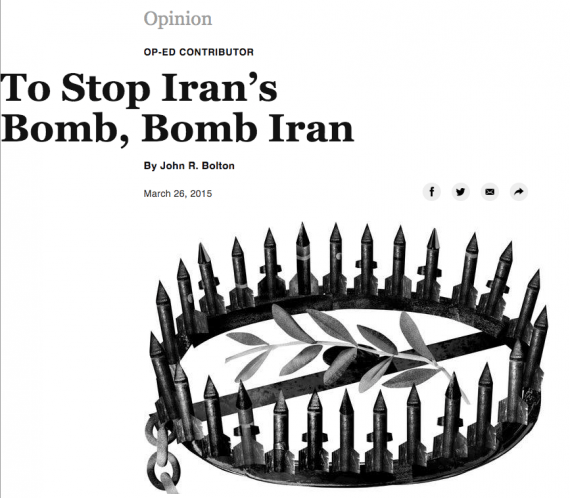
Yet the Paper of Record has a long, colorful history of publishing op-eds (and even news pieces) supporting the deployment of the US military against civilian populations. Sure, those populations generally live outside the US – maybe they’re in Iraq, or Venezuela, or Iran – but the Times can almost always be relied upon to support the idea that the US military is a force for good, bringing sweetness and light (and, of course, democracy) wherever it goes.
That the Times would then balk at Cotton’s call to send those same troops into American cities is a bit surprising. Are these writers suggesting military activity in civilian areas isn’t limited to building schools for needy children, or freeing kittens trapped up tall trees?
And if they are aware of the destruction that takes place when US troops invade a country – civilian casualties, terrorism, drug and human trafficking – what’s their excuse for declaring, again and again, that military intervention is the answer to any nation’s problems?
© New York Times
For the paper to cry fascism now – when its pages have been used to manufacture consent for war after war among the American people, facilitating the decimation of Afghanistan, Iraq, Libya, and Syria – is the pinnacle of hypocrisy. The time to speak up, morally, was long ago. Putting their foot down now is utter cowardice, motivated not by concern over a fascist takeover – that ship has sailed – but by a desire to keep Uncle Sam’s enforcers from stomping back home.
Michelle Goldberg, given the task of refuting Cotton’s ‘dangerous’ views on the op-ed page on Friday, cut to the heart of the matter when she pointed out that Cotton’s recommendations would “almost certainly amount to massive violence against his fellow citizens.” Massive violence, then, is only acceptable when it happens to civilians outside the US.
The rest of the world still has to deal with the fallout from the Times’ warmongering. If Cotton wants to make nice with the Times, all he has to do is write a piece explaining how the children of Hong Kong (or Pyongyang, or Tehran) are crying out for the kind of freedom that can only be delivered from the barrel of a made-in-USA M-16. All will be forgiven.
Helen Buyniski is an American journalist and political commentator at RT. Follow her on Twitter @velocirapture23
George Floyd’s Case Used to Destabilise Political Situation Ahead of 2020 Vote, UK Politician Says

Protesters in Washington DC on 3 June 2020 © Sputnik/Artur Gabdrahmanov
Sputnik – 05.06.2020
A lawyer acting on behalf of George Floyd and his family has stated that a pandemic of racism led to his death at the hands of the Minneapolis police last week.
James Dalton, Party Secretary of the 5 Star Direct Democracy Party, reflects on the nationwide protests in the US sparked by the murder of George Floyd in police custody.
Sputnik: How will the death of George Floyd impact the upcoming US presidential election?
James Dalton: I think that this is completely politically motivated through the press. What we have seen in the last week is a pre-determined propaganda exercise, as we see in all election cycles, and they have hooked it around this particularly terrible incident in Minneapolis when the chap appears to be have been treated particularly awfully by the police when he’s been arrested.
That’s a crime in the United States of America, and there are obviously around 50 to 52 homicides every day in the US, so what we are seeing is purely political hackery, and it all has to do with destabilising the political situation in the run-up to this years’ presidential election.
It’s obviously a very powerful fraud that is being played on the unsuspecting peoples throughout the world, and political actors are trying to pit people against each other based on, in this instance, the colour of people’s skins.
Sputnik: Is it fair to call the Minneapolis police force institutionally racist?
James Dalton: It’s rather sad, because when you take this incident in Minneapolis, the death of George Floyd, and when you look at what has happened; there has been an incident, a crime, and it has been recorded on video footage, and some seven days ago an individual was charged with third-degree homicide, so due process of the law is underway.
Subsequent to the arrest and charging of one of the officers involved, three of the other officers have been charged also, now people can freely go and look at the skin tone, if that is what floats their boat, of the officers involved, but they are not interested in that; they are interested in the skin tone of one of them.
They can go and look at for instance at Chief Medaria Arradondo, who is the Chief of Police in Minnesota, who is a black gentleman. He joined the force in the early 1980s, and he has managed to get promoted through the ranks to become chief of police.
If the police force in Minneapolis is structurally racist; then maybe we could have a word with this silent person as to why that might be?
Sputnik: Should Black Lives matter protesters be venting their anger at the Democrats as opposed to President Trump?
James Dalton: Maybe we could talk to the Democrat Mayor of Minneapolis Jacob Frey, who obviously has responsibility for law and order in the city of Minneapolis, or maybe we can go back all the way to 1979 because that is how long Minneapolis has had a Democratic Mayor making decisions on behalf of the people of Minneapolis.
People aren’t asking the questions of the responsible parties. You could ask about the Governors, and why they have not been heard of, and again; he is a Democratic Governor, and if you look at the list of Governors for the last eleven years, they have all been Democratic Governors.
You could look at the Senators; you’ve got Amy Klobuchar, who when she was in the Attorney General’s office in Minneapolis; failed to sack this particular police officer, who is obviously in the spotlight now when there was an incident where three people died in a police chase that he was involved in before.
Amy Klobuchar; who is obviously a Democratic Senator, wanted to be President of the United States, and was on the ticket in an attempt to become the Democratic nominee, she is the Senator of Minnesota, and who is talking to her about law and order there?
Is there an institutional racism problem within the Minnesota police department? Well if there is; it is clear who is running it for the last forty years, and I just find it bizarre that somebody would make that suggestion when you look at the Chief of Police, and he is a black gentleman, it just doesn’t make any sense.
George Floyd protest is ‘for the benefit’ of ‘democratic struggles’ abroad, says US group known for promoting regime change
RT | June 6, 2020
The National Endowment for Democracy, a soft-power group mostly known for splashing government dollars on pro-US influence campaigns overseas to enforce regime change, has endorsed protests against police brutality at home.
In a statement on Friday, the NED came out in support of the protests against the police killing of unarmed black man George Floyd, which, while originally peaceful, spiralled into violence, wrecking havoc across dozens of US cities. The group, which styles itself as a “private and nonprofit foundation dedicated to the growth and strengthening of democratic institutions around the world” but is notorious for being used as a vehicle of US foreign policy abroad, said that it hopes that the movement for racial justice in the US will inspire other “brave people” to challenge the status quo all around the globe.
“Such a movement is needed not just for the sake of our own country, but for the benefit of brave people on the frontlines of democratic struggles around the world.”
In its emphatic endorsement of the ongoing protests, marred by looting, arson and numerous instances of violence, the group equated its doing of Washington’s bidding abroad with the civil rights movement that brought the system of legal segregation in the US to its formal end, arguing that the NED’s mission is “based on the same values of freedom and human equality.”
In a not so thinly-veiled innuendo, the group, which is sponsored by the US Congress and is backed by both Republican and Democratic parties, expressed hope that the events in the US could ignite similar movements elsewhere.
“May the present crisis lead to the realization of the ideals that animate our democracy, and may this give hope to those in other countries who share our commitment to freedom and human dignity.”
The NED, founded in 1983, has courted controversy for using its US government allocated resources for encouraging regime change in countries that refuse to toe Washington’s line, like Russia and China. The group, along with other US-based “NGOs” supported the 2004 Orange Revolution in Ukraine and later funneled millions of freedom dollars to the country ahead of the 2014 anti-Russian coup that brought down Ukraine’s former President Viktor Yanukovych.
In 2015, Moscow designated the NED’s activities as “undesirable” after it was found to have sponsored political campaigns aimed at influencing the Russian government’s decisions, including discrediting the nation’s military forces and the results of elections.
The outlet has also been caught red-handed stirring anti-Beijing sentiment in Hong Kong, drawing fire from the Chinese government. In December 2019, Beijing sanctioned the NED along with several other US-affiliated organizations, accusing them of “horrible activities in the months-long turmoil in the city.”
“[There is] a great amount of evidence proving that these NGOs have supported anti-China forces to create chaos in Hong Kong, and made utmost efforts to encourage these forces to engage in extreme violent criminal acts,” the Chinese Foreign Ministry said at the time.
Why would Australia Want to Worsen its Relationship with China?
By Vladimir Terehov – New Eastern Outlook – 05.06.2020
The following explanation framed as a question could be added to the headline of this article to make it even more informative: “Why would a prosperous country, which has managed to stay above the fray during global political squabbles and to handle the current COVID-19 pandemic wreaking havoc worldwide much better than other nations, voluntarily look for trouble?”
It really has no reason to at present. Why is Canberra all of a sudden so concerned about the origins of the Coronavirus? And what practical value is there in finding out the answer? Once the battle against COVID-19 has been won in all parts of the globe, enough information will have been gathered in order to have a fruitful discussion on the aforementioned topic. At present, there is no reason to make any kind of allegations against China either openly or less directly.
So why would a country, such as Australia with its current standing, wish to get involved in a global conflict (and the COVID-19 pandemic is its focus at present), whose main participants are two world powers, and decide to support one of them? In fact, Canberra chose to back the nation whose actions, in response to the pandemic, are almost completely motivated by its worsening domestic problems. Recently, a possible answer to the aforementioned question was published in the New Eastern Outlook.
And in this report, the author simply wishes to point out that Australian Prime Minister’s very constructive telephone conversation with Mr Trump, followed by discussions with a number of European leaders towards the end of April all seemed to indicate Canberra’s support for the US stance. One of the key issues talked about had to do with an independent investigation into the origins of the Coronavirus and its subsequent spread. And although it would appear that China was not mentioned directly, other phrases, such as “unregulated wet markets”, pointing in the direction of the PRC were.
However, since the end of April, Australia’s stance on the issue has changed. The current view essentially avoids laying blame at China’s door a priori. And in the end, Canberra decided to support a draft resolution prepared by the EU and presented at the 73rd Session of the World Health Organization’s (WHO, a UN agency) World Health Assembly (WHA), held in Geneva from 18 to 21 May.
Over 120 WHO member states (out of the total of 194) backed the more neutrally worded motion, which does not mention China by name, calling for an investigation into the global response to the Coronavirus pandemic. None of the countries voted against the resolution, including the United States.
Still, the previous actions taken by the Australian government, headed by Scott Morrison, in connection with the issue of COVID-19 origins had, of course, not gone unnoticed in Beijing, which, at this stage, decided to apply a bit of pressure on Australia’s “weak spot”. In order to point out what it is, the author will once again need to describe the position Australia has found itself in, resembling a “split”, on the chess board of the Indo-Pacific region.
Overall, it seems quite natural that Australia is drawn to the United States and the Anglosphere in general when it comes to culture, politics and even the defense and security sector. However, its economy, which relies on exports of natural resources and agricultural products, is very much oriented towards China’s market.
Australia’s total export sales for 2019 (with figures typical for the entire decade) can be used to illustrate the aforementioned point. Sales to China accounted for 32.7% of all Australian exports in 2019. Japan ended up in second place, with a 24.7% share, and the United States in 5th position, with a 3.7% one. In addition, exports to China grew by 20 % during 2019. Since trade between Great Britain and Australia started from almost nothing, there was a record growth (of 192%) in sales to the UK that year. Fossil fuels and mineral resources accounted for two thirds of all the exports, while animal products and grains for 5.5%.
In 2019, about 85% “of Australia’s exports by value were delivered to Asian countries”. The figures mentioned thus far should have prompted Canberra to follow foreign policies that would, in general, encourage stability in the region and, in particular, foster good relations with the most powerful country in this part of the world, i.e. the PRC.
However, since 2013, when the center-right Coalition essentially headed by the Liberal Party of Australia won the regularly scheduled federal election and then did it again in 2016 and 2019 thus asserting its dominance, the importance of the role played by the extremity (forming the “split”) directed towards the United States has grown noticeably. As a result, there was an increased focus on opposing China (USA’s key rival) as part of Australia’s foreign policy.
Canberra has grown more and more concerned with territorial disputes in the South China Sea involving the PRC and a number of Southeast Asian nations. And although the United States is situated on the other side of the planet, it is becoming increasingly involved in these conflicts. In the most evident display of solidarity with Washington to date, a squadron of Australian naval ships sailed to the South China Sea (to clearly send a message to Beijing) in autumn of 2017. Australian media outlets gave the group of vessels a tongue-in-cheek name of “small armada”.
Still, during bilateral negotiations conducted at various levels, Canberra has always managed to convince the Chinese leadership that there is nothing better than Australian coal, iron ore, crude oil, liquefied natural gas, barley and beef on the global markets. A visit to Beijing by an unusually numerous delegation, headed by the Prime Minister at the time, Malcolm Turnbull, in spring 2016 proved to be a milestone for both nations.
Incidentally, the then Treasurer and now Prime Minister of Australia, Scott Morrison turned out to be the most “convincing” member of this delegation. And two months after he had taken on the current role in August 2018, Scott Morrison sent Foreign Minister Marise Payne to Beijing with an essentially conciliatory message.
Something tells the author that, after a while, once the current highly politicized Coronavirus crisis is (hopefully) somehow dealt with and as the next federal election (in spring 2022) draws near, we could expect a visit to Beijing (for “an edict from on high”) by a no less impressive delegation than the one in 2016 from the government, headed by the Liberal Party of Australia.
After all, farmers and miner have already started showing their discontent about the consequences of the (clearly poorly thought through) “fight for the truth”, which their own government has been a part of in recent months. During that period, seemingly coincidentally, China’s food safety inspectors began to identify “issues” with the quality of Australian meat and prices on coal, ore and barley imported by China from Australia noticeably decreased.
And even if one does not take into account the effect Scott Morrison’s efforts to find those responsible for the outbreak have had, the Coronavirus crisis has already resulted in the increase in Australia’s unemployment rate to over 6%, in addition, according to current estimates, the nation’s economy will need approximately 2 years to recover from all the COVID-19-related consequences. In fact, in his address to the nation, the Prime Minister said that the rise in unemployment had been “just the beginning of the economic fallout of COVID-19”.
Another important factor, which makes the overall situation in Australia even tougher, worth noting is the fact that the PRC leadership is clearly losing its patience (a quality China is famous for) with Canberra. Beijing is also fed up with listening to criticism about its supposed human rights violations in XUAR (the Xinjiang Uyghur Autonomous Region), Tibet and Hong Kong, directed at it by Canberra’s “big brother”.
Hence, tougher times are ahead for Australia, which for now is still prospering.
Vladimir Terekhov is an expert on the issues of the Asia-Pacific Region.
Does Germany blame Russia for cyberattacks to appease Washington?
By Paul Antonopoulos | June 5, 2020
Berlin is insistent on maintaining problematic relations with Moscow by making claims against Russia. Long-time German Chancellor Angela Merkel accused Russia in the Bundestag that she was the target of Russian hackers, adding that she had concrete proof of the “outrageous” spying attempts, without actually providing any evidence. She even went on to suggest that sanctions could be placed against Russia.
The German Foreign Ministry said in a statement on May 28 that “The Russian ambassador was informed that on the basis of an arrest warrant issued by the federal prosecutor’s office on May 5 against Russian national Dmitry Badin, that the German government will seek in Brussels to use the EU cyber sanctions regime against those responsible for the attack on the German Bundestag, including Mr Badin.”
The alleged cyberattack occurred in 2015 and brings to question why Berlin is now resurrecting a 5-year-old issue that Russian Foreign Minister Sergei Lavrov highlighted there was no evidence for Russian involvement. EU High Representative for Foreign and Security Policy, Josep Borrell, shared Lavrov’s sentiment and said he also did not have data on a cyberattack on the Bundestag and could not comment on this issue despite Berlin’s threat that it will use the EU to place sanctions on Russia.
“As for Russian hacker attacks, I don’t have any information that I can provide you at this stage,” said Borrel, answering a question from journalists about the possible imposition of sanctions on this case against Russians.
Perhaps as the U.S. continues to threaten companies involved in NordStream 2, Berlin is giving the appearance that it is still anti-Russia, despite being almost entirely reliant on Russia for its energy needs. Also, as Berlin has not provided evidence that Russia was behind the cyberattacks, why has it also not considered the U.S. could have orchestrated the attack?
In October 2013, Steffen Seibert, an official spokesman for the German government, reported that former CIA officer Edward Snowden had warned Germany that U.S. intelligence agencies could track Merkel’s mobile phone. Despite numerous demands from the public to conduct a full investigation and prosecute those responsible for this incident, in June 2015 the German Federal Prosecutor’s Office announced that the case was closed due to the inability to prove it in court.
Although the case allegedly could not be prosecuted, it does call to question why Merkel through a spokesperson told U.S. officials that they “view such practices [like spying] … as completely unacceptable.” White House spokesman Jay Carney said in response that “the United States is not monitoring and will not monitor the communications of the chancellor.”
In a statement, the German government said that “Among close friends and partners, as the Federal Republic of Germany and the U.S. have been for decades, there should be no such monitoring of the communications of a head of government.” The statement also said that Merkel had told Obama that “such practices must be prevented immediately.”
However, this is an incident that took place seven years ago and under a different U.S. administration and political party. None-the-less, in February 2019, a scandal erupted around Swiss company Crypto AG which was developing equipment used to encrypt sensitive information, and was working closely with the CIA and the BND (German intelligence). It was revealed that for more than half a century this practise was going on, demonstrating that U.S. spying on its own allies is not a new phenomenon.
Investigators from the German television station ZDF and The Washington Post found that the illegal actions by U.S. and German intelligence services affected more than 120 countries. The Swiss company supplied products as far back as the Second World War with encryption weaknesses so U.S. and German intelligence agencies could spy on many countries, including their own allies. Though the BND stopped participating in this Rubicon operation, as it came to be known, in 1993, the U.S. continued to spy until 2018.
After such cooperation with the U.S., information about the wiretap of the German Chancellor, which remained without a harsh reaction, is presented in a completely different light. Berlin probably had to quietly take the insult in order to avoid major and public problems because the NATO allies have likely gathered a lot of damaging information about each other over the years in their joint work in the Rubicon operation. It is worth to mention that Germany is not an ordinary European state, but the power engine of the European Union and an important member of NATO.
Now Germany decisively accuses Russia of cyberattacks and threatens sanctions, despite not providing any evidence for their claims. Although Russia, unlike the U.S., did not wiretap the German government, it is much safer to blame Russian citizens for cyberattacks. It does bring into question however why Germany is even possibly discussing sanctions while it fully supports the NordStream 2 pipeline project to secure its energy interests with Russia.
Paul Antonopoulos is an independent geopolitical analyst.
Featured Video
Weaponized Journalism: 2021 Sayer Ji Interview with NPR
or go to
Aletho News Archives – Video-Images
From the Archives
How Rothschild Banking Clan Uses Its Vast Wealth to Influence World Events and Control Governments
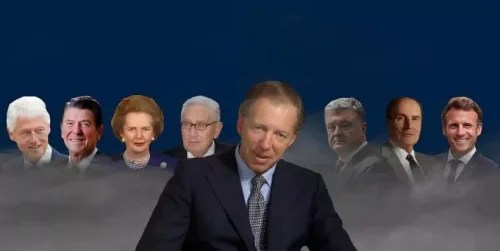
By Ilya Tsukanov – Sputnik – 15.09.2024
How powerful is the Rothschild banking family? How did they amass their fortune? Just how rich are they? Do they secretly control the world? Sputnik explores. … continue
Blog Roll
 Aletho News
- Europe facing gas price shock – Gazprom chief
- Ukraine continues recruiting people with disabilities
- Weaponized Journalism: 2021 Sayer Ji Interview with NPR
- Beyond Netanyahu: what Israel’s election means for Palestinians
- Lithuania plans universal conscription
- Lies, Damn Lies, and Ukraine News
- Financial Times rejects Nordic demands to correct Putin call story – media
- The Case for Less Unity in Europe
- Ukraine expands minority rights under EU pressure – but Russians remain excluded
- Albania takes anti-riot crackdown cue from France
- If Americans Knew
- An error has occurred; the feed is probably down. Try again later.
- No Tricks Zone
- Germany’s Green Energy Transition Becoming Increasingly Expensive…Another 6 Trillion Euros!
- Sudden Stratospheric Warming, Powerful El Niño Combination May Lead To Extreme Europe Cold, Energy Crisis!
- Two New Studies Find Thwaites Glacier Melt Cannot Be Driven By Human Activity Or A Warming Ocean
- E-Cars Reduce CO2 Emissions By Only 41% Compared To Internal Combustion Engine Vehicles
- Predictions Made By Renowned Climate Professor Over Past Decades Have Been Proven To Be Poor
- New Study Suggests Large Regions Of The Pacific Ocean Have Been Cooling For The Last 80 Years
- Germany’s Green Energy Debacle: High Energy Costs Force Kahla Porzellan to Close After 182 Years!
- New Study: 50 Years Of The Most Aggressive ‘Net Zero’ Policies Can Only Affect The Global Climate By 0.03°C
- US September “Heat” Was No Record…Many Records Set Decades Ago
- Latest European Green Energy Debacle; Portugal’s Largest Flagship Solar Park Insolvent!

