US return to JCPOA can end impasse over Iran
By M. K. BHADRAKUMAR | Indian Punchline | April 28, 2020
In business transactions and international diplomacy alike, there could be constant variables and dependent variables. Constant variable is where the value cannot be changed once it has been assigned a value. But it becomes a dependent variable if it is susceptible or open to the effect of an associated factor or phenomenon. Then, there is also a third independent variable, which is a factor or phenomenon whose value is given or set already that can cause or influence a dependent variable.
A big question for international security has arisen: What type of variable is at work as the US prepares a legal argument that it still remains a “participant” in the 2015 Iran nuclear accord known as JCPOA?
Both New York Times and Fox News, which reported on this development on Sunday maintained that the Trump administration’s ploy to reenter the JCPOA is riveted on a strategy to invoke the “snapback” clause, which would restore the comprehensive pre-2015 UN sanctions on Iran.
Much depends on the UN Security Council members. What if they come up with a dependent / independent variable that accedes to the US status as “participant”, provided Washington agrees to ‘X’, ‘Y’, ‘C’ factor or phenomenon? Trade-offs are more the rule than the exception in the UN SC; constant variable is a rare occurrence at the horseshoe table.
A Reuters report today, in fact, highlights that the Trump administration can expect “a tough, messy battle if it uses a threat to trigger a return of all United Nations sanctions on Iran as leverage to get the 15-member Security Council to extend and strengthen an arms embargo on Tehran.”
The report quoted a European diplomat: “It’s very difficult to present yourself as a compliance watcher of a resolution you decided to pull out of. Either you’re in or either you’re out.” This is the crux of the matter.
Tehran has already notified the European Union that any move to re-impose UN sanctions through the back door will trigger a vehement reaction — including, possibly, Iran exiting the Nuclear Non-Proliferation Treaty.
The EU and the three European signatories of the JCPOA (UK, France and Germany) are extremely wary of the JCPOA being abandoned. Their sincerity of purpose is self-evident in the IMPEX mechanism (which enables limited trade between European companies and Iran despite US sanctions.)
The EU’s foreign policy chief Josep Borrell recently expressed regret about the US’ opposition to the IMF lending money to Iran against the backdrop of the coronavirus pandemic. The German Foreign Minister Heiko Maas publicly shared Borrell’s view.
Having said that, it is an entirely different ball game if the US were to walk back as “participant” in the JCPOA as original signatory. If that happens, everything else becomes negotiable — including fresh talks to renegotiate the terms of JCPOA. Tehran has laid down Washington’s return to the JCPOA as the sole precondition for talks.
Today, Radio Farda, the Persian service of the US government-funded Radio Free Europe/Radio Liberty beamed to Iran, has carried a report US May Be Prepared To Rethink Stance On Sanctions, Nuclear Accord with Tehran which speculates precisely that on the “pretext” of extending the arms embargo against Iran, Washington could be principally “thinking of returning to the nuclear accord” and engaging with Iran in talks.
Radio Farda quoted a “usually well-informed Iran analyst in Scotland” to this effect. The report hinted that back channels are at work. Possibly, some kite-flying is going on here.
Indeed, Iranian media had reported recently that President Hassan Rouhani told a cabinet meeting in Tehran on March 25 that the “leader of a non-permanent member of the Security Council” had told him about the UN Security Council currently weighing plans for the removal of all sanctions against Iran.
Rouhani was quoted as saying at the cabinet meeting, “We are also trying to have our blocked money unfrozen.” (Rouhani was probably referring to a conversation with Kais Saied, President of Tunisia, which is a non-permanent member of the UN Security Council.)
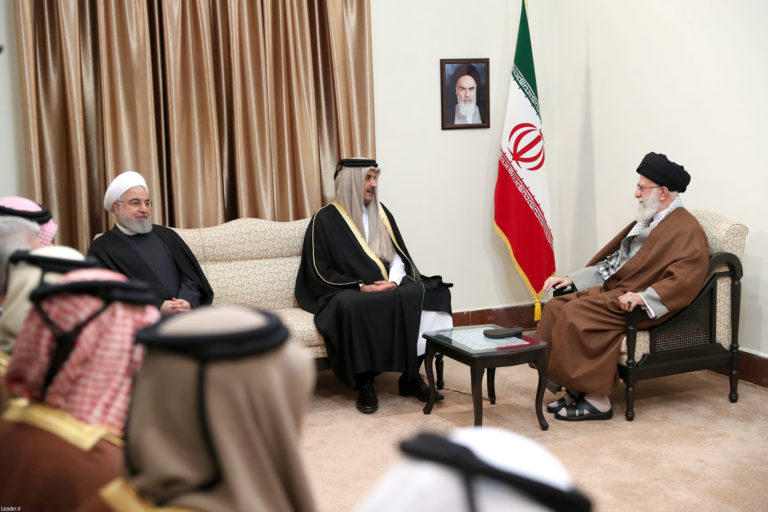
Iran hasn’t reacted to the New York Times and Fox News reports. Meanwhile, in what could well be a related development, Rouhani had a phone conversation on April 21 with the Emir of Qatar Sheikh Tamim bin Hamad Al Thani where the sanctions issue figured.
Interestingly, an Iranian Foreign Ministry statement later verbatim quoted from the conversation. Rouhani told Sheikh Tamim:
“The US pressure and sanctions against Iran are not only a violation of international law, but also they are violating human principles by intensifying their behaviour in these difficult circumstances, including preventing the International Monetary Fund from lending to Iran”.
“We believe that in this special situation, all countries in the world must stand together to fight coronavirus and clearly state their positions against the hostile actions of the United States”.
“Unfortunately, they are still reluctant to end their inhumane acts, but we have no doubt that sooner or later they will have to change course.”
The Emir responded,
“Today, the world is in a special situation and we believe that in this situation, the United States must lift its sanctions and all countries must move in line with the new conditions.”
Subsequently, there has also been a conversation between the two foreign ministers. Now, Qatar, which hosts the US Central Command Hqs, is a close ally of the US. Sheikh Tamim and Trump have a warm relationship.
During the emir’s visit to the White House last July, Trump remarked, “Tamim, you’ve been a friend of mine for a long time, before I did this presidential thing, and we feel very comfortable with each other.” No doubt, if ever Trump needed a back channel with the Iranian leadership, he wouldn’t need to look beyond Sheikh Tamim. (Significantly, Sheikh Tamim made a rare visit to Tehran in January this year.)
Curiously, the day after Sheikh Tamim spoke to Rouhani, he also held a phone conversation with Trump. The White House readout said, “The president and the (emir) discussed the coronavirus response… The president encouraged the emir to take steps toward resolving the Gulf rift in order to work together to defeat the virus, minimise its economic impact and focus on critical regional issues.”
The bottom line is that the UN arms embargo is not really a big ticket item but the sanctions is. Even if the ban gets lifted in October, it is only for small arms, whereas transfer of advanced technology such as missiles will have to wait another 3 years. Iran is largely self-reliant in defence. And its asymmetric capability to generate deterrence against US aggression is legion.
The Trump administration realises that its sanctions policy has failed. The murder of the charismatic Iranian general Qassem Soleimani only hardened Tehran’s resolve to press ahead with the “axis of resistance”. And the world opinion militates against continued US sanctions against Iran.
In this backdrop, the forthcoming summit of the founding members of the UN may address the issue of sanctions. From such a perspective, the Trump administration’s seemingly belligerent move to return as “participant” in the JCPOA may turn out to be a dependent variable open to influence from one or more independent variables.
US to face tough battle in pushing plan to extend UN Iran arms embargo: Diplomats
Press TV – April 28, 2020
Diplomatic sources at the United Nations say Washington has a tough challenge ahead at the Security Council (UNSC) if it pushes for an extension of the world body’s arms embargo against Iran through recourse to a process set out in a multilateral nuclear deal that the US controversially abandoned in 2018.
The agreement — officially called the Joint Comprehensive Plan of Action (JCPOA) — was signed in 2015 between Iran and six major world states and endorsed by UNSC Resolution 2231.
However, the US unilaterally withdrew from what President Donald Trump called “the worst deal ever” in May 2018 and re-imposed anti-Iran sanctions. It has also been coercing the remaining signatories to the JCPOA to follow suit.
Under UNSC Resolution 2231, the UN arms embargo on Iran — in place since 2006/2007 — will be lifted in October 2020. The US has repeatedly expressed its anger at the possible termination of restrictions on Iran’s import and export of arms.
On Tuesday, diplomats told Reuters that Washington is planning to use a threat to trigger a return of all UN sanctions against Iran as leverage to get the Security Council to prolong the arms embargo on Tehran.
A US official, who was speaking on condition of anonymity, said Washington has shared its strategy with Britain, France and Germany, who are permanent Security Council member states and parties to the Iran deal.
The diplomats said the scheme has not been shared with the remaining 11 council members, including veto-wielders Russia and China, the two other signatories to the JCPOA that are deemed certain to oppose the arms embargo on Iran.
Reports say if the Security Council refuses to revive the embargo, the US will try to trigger a so-called snapback of all UN sanctions on Iran by claiming that it is still a party to the JCPOA and that Iran is in significant violation of the nuclear pact.
The New York Times said on Sunday that US Secretary of State Mike Pompeo was laying the groundwork to present a legal argument to the UN that Washington remains a “participant state” in the JCPOA.
It is “part of an intricate strategy to pressure the United Nations Security Council to extend an arms embargo on Tehran,” the report said.
Reuters, however, cited the UN diplomats as saying that Washington’s plan will likely be challenged since the US is no longer a party to the deal.
“It will be dead on arrival,” a Security Council diplomat predicted. “It’s very difficult to present yourself as a compliance watcher of a resolution you decided to pull out of,” a European diplomat said. “Either you’re in or either you’re out.”
Another European official said, “It’s going to be messy from a Security Council standpoint because, regardless of what (Britain, Germany and France) think, Russia and China are not going to sign up to that legal interpretation.”
Iranian Foreign Minister Mohammad Javad Zarif has dismissed Pompeo’s reported scheme, saying the plan to return to the JCPOA is rooted in the failure of Washington’s “maximum pressure” campaign against the Iranian nation.
‘US cannot cherry-pick UN resolutions’
Meanwhile, a Western diplomat, speaking on condition of anonymity, told AFP, “You cannot cherry-pick a resolution saying you implement only parts of it but you won’t do it for the rest.”
Similarly, Kelsey Davenport, director for non-proliferation policy at the US-based Arms Control Association, said “if Pompeo goes through with this plan, snapping back sanctions on Iran collapses the JCPOA.”
Even more significant, she added, the US measure could lead Iran to make good on threats to exit the nuclear Non-Proliferation Treaty (NPT).
“This is just another step that would undermine US credibility, make future negotiations with Iran more difficult and increase the risk of a nuclear crisis in the region,” she said.
‘US placing world in Catch-22 situation’
Russia also slammed the US plan, with Permanent Representative to International Organizations in Vienna Mikhail Ulyanov tweeting, “The country which officially ceased its participation in the #IranDeal cannot remain its participant by definition.”
The Russian Mission Vienna also said in a post on Twitter, “May 8, 2018 the #US says it “ends” and “terminates” its participation in the #JCPOA. Now there are claims that it still considers itself a participant. Is this a “Catch-22” sort of situation for Iran, UNSC and the whole world?”
Netanyahu Is Back Yet Again
Israel will become much bigger
By Philip Giraldi • Unz Review • April 28, 2020
Rahm Emanuel, up until recently the mayor of Chicago and before that a top advisor to the president in the Bill Clinton and Barack Obama White Houses and still earlier a volunteer in the Israeli Army, famously once commented that a good crisis should never be allowed to go to waste. He meant, of course, that a crisis can be exploited to provide cover for other shenanigans involving politicians. It was an observation that was particularly true when one was working for a sexual predator like Bill, who once attacked a “terrorist” pharmaceutical factory in Sudan to divert attention away from the breaking Monica Lewinski scandal.
To be sure, the United States government is focusing its attention on the coronavirus while also using the cover afforded to heighten the pressure on “enemies” near and far. As the coronavirus continues to spread, the Trump White House and Secretary of State Mike Pompeo have increased the ferocity of their sabre rattling, apparently in part to deter Russia, China, Iran and Venezuela. Ironically, of course, none of the countries being intimidated are actually threatening the United States, but we Americans have long since learned that perceptions are more important than facts when it comes to the current occupant of the oval office and his two predecessors.
The latest bit of mendacity coming out of the White House was a presidential tweet targeting the usual punching bag, Iran. Based on an incident that occurred two weeks ago, Trump threatened “I have instructed the United States Navy to shoot down and destroy any and all Iranian gunboats if they harass our ships at sea.” The U.S. Navy ships in question are, one might also observe, in a body of water generally referred to as the Persian Gulf, where they are carrying out maneuvers right off of the Iranian coast. Meanwhile, Iranian flying gunboats have not yet been observed off of New Jersey, but they are probably waiting to be transported to the Eastern Seaboard by those huge trans-oceanic gliders that once upon a time were allegedly being constructed by Saddam Hussein.
Given the cover provided by the virus, it should surprise no one that Israel is also playing the same game. The Jewish state has been continuing its lethal bombings of Syria, with hardly any notice in the international media. In a recent missile attack, nine people were killed near the historic city of Palmyra. Three of the dead were Syrians while six others were presumed to be Lebanese Shi’ites supporting the Damascus government. Israel de facto regards any Shi’ite as an “Iranian” or an “Iranian proxy” and therefore a “terrorist” eligible to be killed on sight.
But the bigger coronavirus story has to do with Israel’s domestic politics. Benjamin Netanyahu and his principle opponent Benny Gantz have come to an agreement to form a national government, ostensibly to deal with the health crisis. The wily Netanyahu, who will continue to be prime minister in the deal, has thereby retained his power over the government while also putting a halt to bids from the judiciary to try and sentence him on corruption charges. As part of the deal with Gantz, Netanyahu will have veto power over the naming of the new government’s attorney general and state prosecutor, guaranteeing the appointment of individuals who will dismiss the charges.
And more will be coming, with the acquiescence of Washington. U.S. elections are little more than six months away and Donald Trump clearly believes that he needs the political support of Netanyahu to energize his rabid Christian Zionist supporters, as well as the cash coming from Jewish oligarchs Sheldon Adelson, Bernard Marcus and Paul Singer. So, it is time to establish a quid pro quo, which will be Israeli government behind the scenes approaches to powerful and wealthy American Jews on behalf of Trump while the White House will look the other way while Israel annexes most of the remaining Palestinian West Bank. Pompeo has welcomed the new Israeli government and has confirmed that the annexation of the Palestinian land will be “ultimately Israel’s decision to make,” which amounts to a green light for Netanyahu to go ahead.
A vote on West Bank annexation will reportedly be taken by the Knesset at the beginning of July followed immediately by steps to incorporate Jewish settlements into Israel proper. According to the Israeli liberal newspaper Haaretz, the planned annexation has raised some concerns among a few liberal American Jewish organizations because it will convince many progressives in the U.S. that Israel has truly become an apartheid state. J Street warned that annexation “would severely imperil Israel’s future as a democratic homeland for the Jewish people, along with the future of the U.S.-Israel relationship” and has even suggested cutting U.S. aid if that step is actually taken. Most other ostensibly liberal groups have adopted the usual Zionist two-step, i.e. condemning the move but not advocating any effective steps to prevent it. And it should also be noted that the largest and most powerful Jewish organizations like the American Israel Public Affairs Committee (AIPAC) and the Zionist Organization of America (ZOA) have not raised any objections at all.
Unaffiliated individual liberal Jews, to include those who consider themselves Zionists, have generally been concerned about the move, though their argument is quite hypocritical, based on their belief that annexation would pari passu destroy any possible two-state solution, damaging both Palestinian rights and “Jewish democracy.” Some have even welcomed the change, noting that it would create a single state de facto which eventually would have to evolve into a modern democracy with equal rights for all. Such thinking is, however, nonsense. Israel under Netanyahu and whichever fascist retread that eventually succeeds him regards itself as a Jewish state and will do whatever it takes to maintain that, even including dispossessing remaining Arabs of their land and possessions, stripping them of their legal status, and forcing them to leave as refugees. That is something that might be referred to as ethnic cleansing, or even genocide.
And those Americans of conscience who are hoping for some change if someone named Joe Biden defeats Trump can also forget about that option. Biden has told the New York Times that “I believe a two-state solution remains the only way to ensure Israel’s long-term security while sustaining its Jewish and democratic identity. It is also the only way to ensure Palestinian dignity and their legitimate interest in national self-determination. And it is a necessary condition to take full advantage of the opening that exists for greater cooperation between Israel and its Arab neighbors. For all these reasons, encouraging a two-state solution remains in the critical interest of the United States.”
Unfortunately, someone should tell Joe that that particular train has already left the station due to the expansion of the Jewish state’s settlements. Nice words from the man who would be president aside, Biden is bound to the Israel Lobby for its political support and the money it provides as tightly as can be and he will fold before AIPAC and company like a cheap suit. He has famously declared that “You don’t have to be a Jew to be a Zionist – I am a Zionist” and “My Name is Joe Biden, and Everybody Knows I Love Israel.” His vice-presidential candidates’ debate with Sarah Palin in 2008 turned embarrassing when he and Palin both engaged in long soliloquys about how much they cherish Israel. Indeed they do. Every politician on the make loves Israel.
Philip M. Giraldi, Ph.D., is Executive Director of the Council for the National Interest, a 501(c)3 tax deductible educational foundation (Federal ID Number #52-1739023) that seeks a more interests-based U.S. foreign policy in the Middle East. Website is councilforthenationalinterest.org, address is P.O. Box 2157, Purcellville VA 20134 and its email is inform@cnionline.org.
Ukraine’s Opposition Accuses US of Scrubbing Info About Biolabs’ Activities on Ukrainian Territory
Sputnik – 27.04.2020
The US Embassy in Kiev has been caught in the center of a brewing political scandal after denying allegations about US biological laboratories’ “unlawful activity” in Ukraine, while admitting that such labs do exist.
The US Embassy in Kiev has scrubbed information about the work of two of its biolabs in Ukraine from its website, Viktor Medvedchuk, co-leader of the Opposition Platform – For Life party, has alleged.
According to the lawmaker, in its April 22 statement responding to Rada lawmakers’ mid-April request for a government investigation into the 15 US biolabs operating on Ukrainian territory, the US Embassy provided a link to an explanation about the operation of its ‘Biological Threat Reduction Program’. There are two interesting facts associated with the document, Medvedchuk alleges – first, that the webpage was created on April 9, 2020, three days before lawmakers made their request for a government inquiry, and second, that there are discrepancies between the English and Ukrainian versions of the pages.
“The Ukrainian-language document appeared earlier, but in 2017 featured another version of the document, now deleted, including the text ‘Consolidation of particularly hazardous pathogens in modern biosafety level facilities (one level three biosafety lab for human pathogens and one level three biosafety lab for animal pathogens)’,” Medvedchuk explained in a statement Monday.
“In other words, in 2017, the US Embassy not only openly curated at least two level three biolabs, but openly stated this. This is not proof that there have not been other, more dangerous laboratories, or that these laboratories have not conducted experiments with pathogens presenting the maximum level of danger, but it does indicate a desire by the US Embassy to remove information that compromises them,” Medvedchuk claimed.
Well-known Ukrainian pundit wonders what 15 biolabs funded by the Pentagon are doing in Ukraine.
In response to MP’s request for info, the US embassy said this is a matter of safe storage and research.
FB post: https://t.co/zetsWPxeJI
News article: https://t.co/9AQKpbvCmn pic.twitter.com/Pssc49yPT7
— Nina ☦️ Byzantina (@NinaByzantina) April 24, 2020
Ukraine’s Opposition Platform – For Life requested a government probe into the operation of US biolabs in Ukraine on April 15, claiming that since these labs’ deployment, Ukraine has faced mysterious outbreaks of otherwise inexplicable dangerous diseases, such as the 2009 outbreak of hemorrhagic pneumonia, the 2011, 2014 and 2015 cholera outbreaks, and an outbreak of hepatitis A in 2017. In early 2016, at least 20 Ukrainian servicemen were reported to have died from a flu-like virus, with 364 more people succumbing to swine flu months later. “The Ukrainian people have the right to know about secret programs,” the opposition lawmakers’ appeal stressed.
In its April 22 reply, the US Embassy accused Opposition Platform MPs of spreading “disinformation,” while admitting that a Department of Defence Biological Threat Reduction Program is working “with the Ukrainian Government to consolidate and secure pathogens and toxins of security concern in Ukrainian government facilities.”
In his comments Monday, Medvedchuk suggested that the alleged creation of a separate level 3 lab for human pathogens may indicate experimentation on human beings. “This is the main reason for the creation of US biolabs in Ukraine, serving as an opportunity to carry out the most dangerous kinds of studies, including studies on human beings, which are prohibited under US laws, but allowed in Ukraine, due to problems in Ukrainian legislation, but to a greater extent, to Ukraine’s foreign control by the United States,” he claimed.
Shady US Labs Across Post-Soviet Space
The Ukrainian lawmakers’ allegations aren’t the first of their kind. In 2018, Georgia’s former minister of state security asked President Trump to investigate reports that personnel from the US’s Lugar Center biological lab outside Tbilisi had engaged in experimentation on live human test subjects.
In September 2018, the Russian Foreign Ministry said it had its suspicions about possible US testing of biological weapons in states near Russia’s borders, and warned Washington to halt such activities immediately.
In March, Iranian doctors penned a letter to the leaders of Afghanistan, Georgia, Iraq, Kazakhstan, Kyrgyzstan and Pakistan to destroy all US biololabs in their countries, claiming that the coronavirus pandemic may have been spread deliberately as a form of biological warfare.
Earlier this month, Russian Foreign Ministry spokeswoman Maria Zakharova warned Washington that Russia was apprised of US efforts to expand military research at the Lugar Lab, and said that the US has substantially expanded dual purpose biological research at labs across the former Soviet space under the pretext of combating bioterrorism.
Narrative Managers Argue China-Like Internet Censorship Is Needed
By Caitlin Johnstone | April 26, 2020
Neoconservative publication The Atlantic has published an article authored by two university professors titled “Internet Speech Will Never Go Back to Normal”, subtitled “In the debate over freedom versus control of the global network, China was largely correct, and the US was wrong.”
The article is actually worth reading in full, not just because it’s outrage porn for anyone who values human communication that is unregulated by oligarchs and government agencies, but because it’s actually packed full of extensively sourced information about the way Silicon Valley tech giants are collaborating with western governments to censor speech. The only difference between this article and something you might read on some libertarian website is that this article argues that all of these regulations on speech are a good thing.
Here’s an archive of the article if you don’t want to give clicks to The Atlantic, whose editor-in-chief Jeffrey Goldberg once assured the world that “the coming invasion of Iraq will be remembered as an act of profound morality.” Do give it a look if this interests you and you have time.
Fmr. Bush admin lawyer/current Harvard Law prof Jack Goldsmith goes full-Thomas Friedman, credits China’s enlightened authoritarian approach to information as “largely right” and laments the US’ provincial fealty to the First Amendment as “largely wrong.” https://t.co/1WyQtgE8bK pic.twitter.com/1M03ybxh0I
— Anthony L. Fisher (@anthonyLfisher) April 26, 2020
“In the great debate of the past two decades about freedom versus control of the network, China was largely right and the United States was largely wrong,” argue the article’s authors, one of whom is a former Bush administration lawyer. “Significant monitoring and speech control are inevitable components of a mature and flourishing internet, and governments must play a large role in these practices to ensure that the internet is compatible with a society’s norms and values.”
The article paints an accurate picture of the ways in which supposedly independent social media platforms have been collaborating with governments and with each other to regulate speech and have increased that collaboration during the Covid-19 pandemic, noting how “In March 2019, Zuckerberg invited the government to regulate ‘harmful content’ on his platform” and how “As in other contexts, Facebook relies on fact-checking organizations and ‘authorities’ (from the World Health Organization to the governments of US states) to ascertain which content to downgrade or remove.”
“These platforms have engaged in ‘strategic collaboration’ with the federal government, including by sharing information, to fight foreign electoral interference,” The Atlantic reports after outlining ways in which Facebook, Twitter and Youtube have been censoring speech in “aggressive but still imperfect steps to fend off foreign adversaries.”
“The harms from digital speech will also continue to grow, as will speech controls on these networks,” the article’s authors assert. “And invariably, government involvement will grow. At the moment, the private sector is making most of the important decisions, though often under government pressure. But as Zuckerberg has pleaded, the firms may not be able to regulate speech legitimately without heavier government guidance and involvement. It is also unclear whether, for example, the companies can adequately contain foreign misinformation and prevent digital tampering with voting mechanisms without more government surveillance.”
Last May, a govt org outlined an extremely Orwellian vision for what the US must to do to win “the tech war” against China in AI. It essentially called to remake the entire American economy and society. Now, thanks to Covid19,their vision is taking shape.https://t.co/fhWkyQR5n3
— Whitney Webb (@_whitneywebb) April 20, 2020
This article comes out days after journalist Whitney Webb published another article worth reading titled “Techno-Tyranny: How The US National Security State Is Using Coronavirus To Fulfill An Orwellian Vision”. Webb details how FOIA-obtained document by a US government organization called the National Security Commission on Artificial Intelligence (NSCAI) argues for the need to implement authoritarian measures like increased surveillance more in line with those used in China, in order to prevent the PRC from technologically surpassing the United States.
Webb notes for example how the document “cites the use of mass surveillance on China’s ‘huge population base’ is an example of how China’s ‘scale of consumer market’ advantage allowing ‘China to leap ahead’ in the fields of related technologies, like facial recognition.”
We’re also seeing an increase in surveillance being pushed for in a new report by the think tank Tony Blair Institute for Global Change, arguing that a drastic increase in tech surveillance is “a price worth paying” in order to fight Covid-19. Which is of course hilarious, because having the think tank of a Bush lapdog Prime Minister argue that more surveillance is a price worth paying to stop coronavirus is a lot like a bunch of muggers arguing that time saved by cutting through dark alleyways is worth the increased risk of mugging.
So that’s great. We’re seeing mainstream narrative managers shriek about the need for new cold war escalations against China’s bad, bad authoritarian government, while simultaneously arguing that western governments should espouse Beijing’s worst authoritarian impulses. This as we’ve discussed previously is because consent needs to be manufactured in order for the US-centralized empire to take drastic steps to prevent China from surpassing it and creating a multipolar world, and the freer people are to think and act and organize, the harder that’s going to be.
Oligarchs have no business controlling what we can and cannot say to each other. Governments have no business bringing more and more transparency to us while bringing more and more opacity to themselves. This is ugly, it is abusive, and it must end.
Freedom of speech is actually about freedom of thought. Speech is the carrying agent of thought; controlling human communication is actually about controlling the spread of ideas. Censorship is about controlling the thoughts that the public think in their heads. Speech control is mind control.
Why Outside Air is Safe and Park Closures Should End
Cliff Mass Weather Blog | April 18, 2020
During the past month, the fear of coronavirus had spurred political leaders to close parks and nature areas throughout the country.
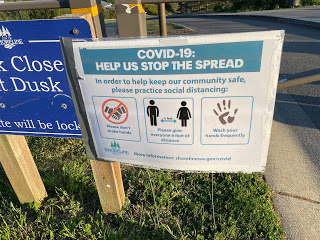
In Washington State, all state parks and state lands managed by the Department of Natural Resources are closed through at least May 4. Here in Seattle, all major city parks were closed last weekend and parking lots for city parks are still shuttered. Picnicking, barbecuing, and any sports are illegal in Seattle parks. In California, hundreds of state parks, including many major beach areas, have been closed, and parking has been blocked off for all state recreation facilities.

All of these closures are predicated upon the assumption that coronavirus infection is a serious threat in outside air and that virus spread is significant outdoors. As documented in this blog, such an assumption is not consistent with the best science. Furthermore, there is strong evidence that restriction of public access to parks and natural areas threatens both the physical and mental well being of the population and thus is counterproductive. Many politicians claim that parks must be closed to prevent large groups from gathering and spreading the virus. As we will see, such worries appear to have little basis in fact.

Torrey Pine Beach north of San Diego Is closed
Is Outside Air Safe?
After searching through the literature and talking to a number of doctors and researchers, I could not find a single paper suggesting significant outdoor transmission of COVID-19 or any coronavirus. But there is a huge literature and long historical experience suggesting that outside air is immensely safer than indoor air within constrained spaces. Here are a few examples and some quotes from medical experts on this point:
- Qian et al., 2020: Examined 1245 confirmed cases in 120 cities in China and identified only a single outbreak in an outdoor environment, which involved two cases.
- Nishiura et al., 2020: Transmission of COVID-19 in a closed environment was 18.7 times greater compared to an open-air environment (95% confidence interval).
- Lidia Morawska, professor and director of the International Laboratory for Air Quality and Health at Queensland University of Technology in Brisbane, Australia.”: Outdoors is safe, and there is certainly no cloud of virus-laden droplets hanging around… Firstly, any infectious droplets exhaled outside would be quickly diluted in outdoor air, so their concentrations would quickly become insignificant. “In addition, the stability of the virus outside is significantly shorter than inside. So outside is not really a problem… It is safe to go for a walk and jog and not to worry about the virus in the air”
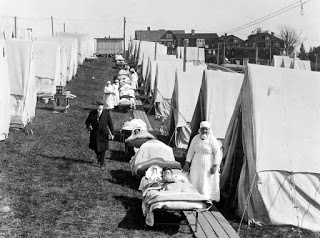
Influenza patients were moved into the sunny, outside air to promote recovery during the 1918-1919 pandemic.
- There is deep experience during other pandemics that placing patients outdoors greatly enhanced their recoveries and lessened spread to others. In fact, during some pandemics (like 1918-1919) open-air hospitals were built and patients were moved outside into the sun, with very positive impacts. To quote one paper on the subject (“The Open Air Treatment of Pandemic Influenza”, which documented the reduction of mortality and morbidity in the open air: “more might be gained by introducing high levels of natural ventilation or, indeed, by encouraging the public to spend as much time outdoors as possible.”
- There is an extensive literature that ultraviolet radiation from the sun can quickly degrade the viability of viruses in the air (e.g., Schuit et al. 2020: The Influence of Simulated Sunlight on the Inactivation of Influenza Virus in Aerosols). As noted by Lytle et al., 2005: “Sunlight or, more specifically, solar UV radiation (UV) acts as the principal natural virucide in the environment.” Duan et. al. 2003 found that “UV irradiation can efficiently eliminate the viral infectivity”
- A fascinating study of virus transmission in dorms at the University of Maryland compared students in rooms with poor ventilation, with those who kept their windows open all the time (Zhu et al., 2020). Those with open windows had one-fourth the rate of respiratory infections. Some did complain of being cold, though.
- Virus particles rapidly disperse in the open air as noted by Case Western Reserve University Hospitals infectious disease specialist Dr. Amy Edwards: “When someone coughs or sneezes, most of the virus drops to the ground within 6 feet pretty quickly. That’s why doctors recommend social distancing. If a few particles remained in the air, they would be killed off by UV light in the sun, or blown away by the wind”

I could quote a lot more literature and from additional specialists, but you get the point. Being in fresh, outside air, particularly when the sun is out, is clearly a good place to lessen one’s exposure to COVID-19.
The risk of transmission of COVID-19 is extraordinarily less in outside air compared to within buildings. There is essentially no background concentrations of the virus in outside air. Ultraviolet radiation from the sun is destructive to the virus. There is rapid dispersion of any source of virus (e.g., an infected coughing individual) by the wind in the vast outside volume of air. And there is a substantial literature that concentration matters: the more exposure to viral particles the greater the chance of infection. Viral concentrations will be very low outside, if they are measurable at all.
Another issue is humidity. Viral transmission is degraded by high humidities and enhanced by lower humidities (check out this excellent recent review article: Moriyama et al. 2020); several papers suggest that relative humidities above 40% degrade transmission. During the cool season, humidity inside building tends to be very low (check my earlier blog for an explanation), but outside humidities are generally much higher. For example, below is a plot of the relative humidity in Seattle over the past three years. Outside relative humidity only rarely drops below 40% around here. Inside RH is often below 40% during the cool season.

Recently, there has been a lot of media attention regarding a simulation of particle dispersion from a coughing runner, with recommendations not to run directly behind him/her and particularly in the wake region behind the runner. There was some dramatic imagery (see below), but the risk from sick runners is really quite small.
First, there are not many runners coughing and sneezing while running–when someone is sick with the virus they have great fatigue and if they were asymptomatic carriers they would not be coughing! (Note: there are some folks that cough after intense exercise). Furthermore, the large virus-laden droplets tend to fall quickly and the smaller particles/droplets tend to follow the streamflow around an obstacle (that’s you). Most importantly, the droplets ejected from a sick runner would rapidly disperse in the free atmosphere and the UV radiation would work to lessen the viability of a virus. Yes, there is a slipstream of air immediately behind a runner in which concentrations could be greater…. but how many people are running immediately behind a sick runner? Even in the video, little of the particles reach the face of the runner following immediately behind. Folks, this is a very small risk.

So let’s get back to the policy decision to ban folks from parks and why it is illogical and contrary to common sense.
Hopefully, you are convinced that outside air is immensely more healthful with far less COVID-19 risk than the air we breathe inside of buildings. You really want folks outside for that reason alone.
But what about social distancing? If that is good, you want folks to spread out as much as possible. Thus, they should be ENCOURAGED to get their fresh air in vast open public spaces and particularly ones with lots of air motion (i.e. wind).
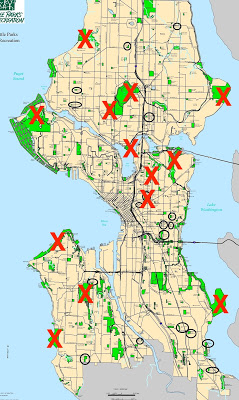
But yet that is exactly the opposite of what our political leadership is doing. Here in Seattle, the Parks Department closed the largest parks in the city (like Magnuson, Lincoln and Discovery) last weekend, parks that afford great opportunities for social distancing (see map). Many of these large parks (red X in the above figure) are near the water and experience stronger winds that are particularly favorable for virus dispersal. In contrast, the city left the smaller parks open, concentrating folks in small areas. Just as bad is the closing of park parking lots, which forced folks to leave their cars outside of parks and to walk in narrow corridors (less social distancing) to enter the parks.

Magnuson Park was closed and everyone is forced to walk on the crowded path to the left.
In California, vast beach areas are closed, again forcing folks to stay indoors or crowd onto limited walkways.
All these park closures are based on fears of transmission within groups enjoying the parks. But such closures do not make sense. First, there is little evidence of viral spread in outdoor spaces, even when crowded. Second, there is little evidence for such crowding in Washington State and California parks in other than the most isolated incidents. I have been to several Seattle parks during the past weeks– folks are generally careful and respectful, without large collections of folks in close proximity. Obviously, park officials can make it clear that closely packed large crowds are not appropriate and that there will be warnings and citations if such crowds occur. To put it succinctly, park closure is a solution in search of a problem that has never been shown to exist. And it hurts exactly the people it is meant to help.
More Issues
Going to parks is extraordinarily good for physical and mental health. Being outside exposes folks to the sun’s UV rays that facilitate production of vitamin D, which bolsters the immune system and reduces the chance of infection by COVID-19 and other pathogens. Recently, I got a call from a UW professor of medicine who is working on exactly this important relationship with COVID (he needed global UV/solar radiation data), confirming the above. Vigorous exercise and even walking enhance the immune system, reducing chances of infection. And exercise and fresh air have a very positive effect on mood, reducing stress and anxiety–both of which weaken the immune system,
And in a progressive city like Seattle, or in the progressive states of Washington or California, there are simple equity ideas that should be compelling. Closing parks or making entry difficult hurts low income people the most. Folks that live in small apartments or in crowded environments greatly enjoy the physical and emotional release of our wonderful large parks. They are the ones who are most deprived by the park closings, both mentally and physically, in comparison to those with large homes and extensive garden areas. And the closing of parking lots deprives the elderly and physically handicapped from the healthful conditions in our parks and the emotional salve of enjoying the outdoors. I have noted the demographic shift in the park when the parking lots were closed.
In some ways, this is all about risk. There is an extraordinarily small risk of catching COVID-19 while enjoying parks and natural areas. I mean really, really small. But park closures provide substantial risks that clearly threaten one’s physical and mental health. Our society is not particularly good in qualifying and acting upon risks, and the park closures are a prime example of this failure.

Sunset at Shoreline’s Richmond Beach Park.
Parking is closed and many cannot enjoy this view anymore.
Governors Inslee, Cuomo, and Newsom have all stated that in dealing with the COVID-19 crisis it is essential to “follow the science.” It is time that they follow their own advice, reopening all the parks and nature areas, including the restoration of all parking facilities and access.
__________________________________________________
Addendum: A few commenters (and some politicians) have said that the parks should be closed because a few individuals did not practice sufficient social distancing in their evaluation. So should everyone be punished and denied access to the parks because of a very small minority (the overwhelming number of park visitors are not gathering in groups)?
Such communal punishment seems something out of a non-democratic society. Plus, the dangers of isolated groups in the outside air is totally speculative and not based on any evidence. Consider the situation on the highways. Because some people are speeding and endangering others, do we stop EVERYONE from driving. Of course not. We warn them and give them tickets. We can do the same thing in parks.
PSS: There are reasonable measures that could be done in parks, like closing active playgrounds and perhaps the bathrooms. Places where many people are physically touching the same objects.
Israel may ask for double its usual $3.8 billion from the U.S this year
By Alison Weir | If Americans Knew | April 26, 2020
Breaking Defense, a digital magazine that covers military issues, reports that Israel may ask for its U.S. aid early, possibly in a lump sum that could be as high as $7.6 billion.
This would work out to almost $21 million per day from American taxpayers, even though the U.S. is approaching a $4 trillion deficit (the largest in the world), and Israel typically has a lower unemployment rate than the United states.
The report is by Breaking Defense Israel correspondent Arie Egozi, an Israeli citizen who served in the Israeli military and is close to the Israeli security establishment.
Egozi’s article states that because of the coronavirus pandemic, “Israel’s Ministry of Defense and high command have hammered out an emergency plan for an appeal to Washington.”
The article, which carries a Tel Aviv dateline, reports: “Sources here say the COVID-19 pandemic is forcing Israel to ask Washington to make major changes to the [aid] agreement, including a request to receive the annual allocation $3.8 billion earlier than planned.”
U.S. aid to Israel is normally disbursed in October, in a lump sum that is deposited to an interest-bearing Israeli account in the New York Federal Reserve Bank. (Since the U.S. has been operating at a deficit, this means that the U.S. government borrows the money and pays interest on it long after it has gone out.)
Potentially $14,000 per minute from American taxpayers
In addition to receiving the aid earlier than usual, a “senior source” quoted by Egozi suggests that Israel may request that the aid expected for 2024 also be disbursed this year.
If that happens, it would work out to nearly $21 million per day, or $14,460 per minute to Israel from American taxpayers suffering from a devastating hit to the U.S. economy.
Moreover, it is highly likely that when 2024 comes around, the advance would be forgiven, as have numerous U.S. “loans” to Israel, and Israel would get the aid again.
The current aid to Israel is based on a 2016 agreement by the Obama Administration to give Israel $3.8 billion annually for the next 10 years – a total of $38 billion, touted as the largest such aid package in U.S. history. Overall, Israel has received more U.S. aid than any other country, on average, 7,000 times more per capita than others.
While the Obama Memorandum of Understanding (MOU) is a non-binding agreement, Israel has received this sum every year since it was signed. Israel advocates in Congress are currently seeking to cement it into a law that would permit this amount to go even higher in the future.
A ‘wild idea’ that might not appeal to Americans
Egozi reports that the former president of Israel Aerospace Industries, Joseph Weiss, said asking for the money ahead of time is “a wild idea,” but said it “makes sense in the special conditions created [in Israel] by the pandemic.”
However, it’s unlikely that this would make equivalent sense to Americans, who have been at least as hard hit by the pandemic.
Over 26 million Americans so far have lost their jobs, and many U.S. companies are facing bankruptcy. A comment below Egozi’s article suggests how Americans would respond to a massive outlay to Israel this year:
“Why do Americans put up with all this money going to Israel when millions of them have no healthcare, no job, and are eating from food banks?”
To deflect such outrage, Israel partisans in the U.S. typically defend the aid by saying that it eventually goes to U.S. defense companies. However, they fail to mention that millions of the dollars go to Israeli companies that compete with American businesses, often leading to job losses in the U.S. No other country receiving U.S. military aid is allowed to do this.
In addition, many Americans feel that Israel should use its own money to purchase its weaponry, as the U.S. does. They point out that if Americans wished to subsidize weapons companies, the U.S. government could simply purchase items for American use.
Similarly, a growing number of Americans object to the uses Israel makes of U.S. weapons, regularly deploying them in violation of both international law and U.S. law (also this).
However, the pro-Israel lobby in the U.S. is extremely influential in both political parties, and U.S. media rarely report on aid to Israel, so the lump sum could slip through without notice.
An administration official recently said that Israel would not need to worry about money “even if there is a depression.”
Petition by Council for the National Interest
A critic of the aid, former CIA officer Philip Giraldi, points out that Israel is not an ally, and that it has often “done damage to the United States.” Giraldi, who is currently executive director of the Council for the National Interest (CNI), notes that Israel often spies on the U.S. and has stolen American technology. It also tried to sink a U.S. Navy ship, killing 34 Americans and injuring over 170.
Giraldi is asking people to sign a petition by CNI: “Stop the $3.8 Billion to Israel.”
The petition states: “… We need to take care of Americans and not send our tax money to a wealthy foreign country. Israel has already received billions of dollars from American taxpayers. It has received over $10 million per day, year after year. This year it’s time to keep our money home.”
Alison Weir is executive director of If Americans Knew, president of the Council for the National Interest, and author of Against Our Better Judgment: The Hidden History of How the U.S. Was Used to Create Israel.
US seeking to replace Iraq’s PMU in the western Anbar province bordering Syria: Analyst
Press TV – April 26, 2020
An Iraqi military advisor and analyst has said that the US is seeking to replace Iraq’s Popular Mobilization Units in the western Anbar province bordering Syria with its own forces.
Speaking to Iraq’s al-Maloumah news agency on Sunday, Safa al-A’ssam said that Washington seeks to force the PMU out of the province’s al-Qaim border region by fanning sectarian tensions.
“The plan is to redeploy American forces to the al-Qaim region on the pretext of countering Deash terrorist attacks and filling the security vacuum following a PMU withdrawal,” he added.
The PMU formed shortly after the emergence of the Daesh terrorist group in Iraq in mid-2014.
The group played a major role pushing back and ultimately defeating the terrorist forces which had taken control of a large swathes of the country.
The Iraqi parliament voted to integrate the PMU into the Iraqi military in 2016, effectively placing the force under the command of the prime minister and granting the group a standing similar to that of other branches of Iraqi security forces.
Fazel Jaber, an Iraqi lawmaker affiliated with the Fatah Alliance, has also warned of attempts by certain Iraqi groups to undermine the PMU’s presence in the province despite being deployed under the command of Iraq’s federal government.
He said the attempts to weaken the PMU were led by Washington, which fears the group’s presence.
The PMU has long rejected Washington’s military presence in the country as an obstacle impeding long-lasting security and stability in Iraq.
In January, Washington assassinated the group’s deputy commander, Abu Mahdi al-Muhandis, alongside Iran’s top anti-terror Lieutenant General Qassem Soleimani in the capital city Baghdad.
Iraqi resistance groups have vowed to take up arms against US forces if Washington fails to comply with a parliamentary order calling for the expulsion of US troops following the assassination.
Jacobin Magazine Is Funded by Zionist Money; Stiffs Authors
By Eric Striker • National Justice • April 25, 2020
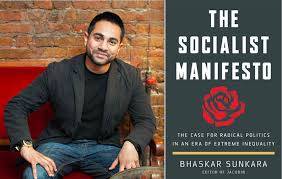 Jacobin Magazine is today the premier magazine of the “Bernie Left” and the Democratic Socialists of America.
Since 2017, they have come under attack for purging many of the original writers who captured the essence of left-wing populism — defending white working people, pushing back against identity politics — and trading them in for liberal interventionists, embrace of “antifa” and anarchist voices, open borders activists, and “sex worker” advocacy.
Research into the 990 forms of the Jacobin Foundation Ltd and some of the organizations giving them grants may provide clues explaining the abrupt change in Bhaskar Sunkara’s editorial line.
According to a 2017 990 form uncovered by National Justice, the Annenberg Foundation gave the Jacobin $100,000. The organization writes checks to numerous Jewish and Zionist causes, as well as a wide variety of pro-immigration and gay lobbies and legal groups.
Walter Annenberg, the foundation’s namesake, was a Wall Street speculator turned media mogul. He used his money to aid Israel’s war effort during the ’67 conflict and was known for backing various ethnocentric endeavors. A six figure check from the Annenbergs to an ostensibly socialist, anti-Zionist publication raises eyebrows, to say the least.
Another significant Jacobin donor, the Jewish Communal Fund, cut the magazine a $70,000 check alongside an infinite list of pro-Israel causes..
While Jacobin reported a total revenue of $1.5 million in 2018 mostly from program services, these two organizations provided a substantial amount of their grants and contributions. The Annenberg Foundation provided almost half of Jacobin’s grant money in 2016 ($219,861), while in 2017 the JCF’s money provided almost 70% of the free cash in this column ($107,301). Not bad!
According to sources who spoke to National Justice on condition of anonymity, the editor’s promise to pay them $50 dollars for their articles never materialized.
Political magazines are rarely profitable and not all can afford to pay their writers, but the Jacobin does not appear to have money problems. According to their latest IRS filings, they have set aside $576,019 in bonds, equities, and ETFs so that they can play the stock market.
In the same year, Jacobin’s Sunkara had the money to purchase the British Tribune, which George Orwell once worked for as an editor. Sunkara immediately fired all of its loyal employees with a pitiful severance package that compensated them for only 70% of their wages.
The prestige-purchase is a mirror image of Will Chamberlain’s costly take over of Ronald Reagan’s favorite magazine Human Events, which Chamberlain then proceeded to turn into a crappy gamergate blog.
Sunkara’s latest venture is to employ The Young Turks’ Ana Kasparian and Majority Report’s Michael Brooks for a weekend podcast. It’s unlikely either of these two liberal figures are cheap. The description for the show sounds like more “liberals vs conservatives” partisanship interchangeable with the crap on MSNBC.
Bhaskar’s pivot from anti-capitalist advocacy to profitable liberalism is as obvious as the Soviet flag is red.
The Covid-19 pandemic exposes deep flaws in America’s broken healthcare system
By Margaret Flowers | RT | April 26, 2020
The coronavirus crisis is demonstrating why it’s time we replaced a system that exists purely for profits with one that puts public health first.
When it comes to the number of Covid-19 cases and deaths, the United States is off the charts compared to other countries. Although the USA comprises five percent of the global population, 32 percent of Covid-19 cases and 25 percent of deaths worldwide are there. By contrast, China, where the novel coronavirus originated, has one-tenth of the number of cases and deaths, despite having a population that is four times larger.
A disaster scenario is playing out across the United States, particularly in New York City where scores of refrigerator trucks have been brought in to hold the dead, hundreds of people are dying in their homes without medical attention every day, mass graves are being used to store bodies while mortuaries are overwhelmed, and health professionals lack basic personal protective equipment (PPE), ventilators, and dialysis machines.
Dr Mike Pappas, a doctor there, has described the difficulties he and other health professionals are facing. The shortage of PPE means doctors and nurses are reusing masks and gowns and are sometimes working without them. They are wearing trash bags over their bodies to protect themselves and their patients from becoming infected. In an interview, Dr Pappas spoke about the stress of not having enough staff, having to clear hallways and the cafeteria to make bed space, and the reluctance of hospital administrators to buy more ventilators.
As people in America struggle to wrap their heads around the twin crises of the rampant pandemic and collapsing economy, it is easy to blame the Trump administration for its failures to take rapid and effective action to contain the spread of infection and provide financial support. In reality, the roots of the crises precede Trump. The US would have fared poorly during a pandemic under any president.
It’s the system, stupid
The current disaster exists in large part because the US healthcare system is the opposite of what is needed. It is fragmented, discriminatory and designed for corporate profits, not the wellbeing of the public. Even before the pandemic, the United States had the highest number of preventable deaths compared to other wealthy nations and a declining life expectancy.
Nearly every facet of the system, which is twice as expensive as other developed countries, is designed to extract profit whether it is the hundreds of private health insurers that compete for the healthiest enrollees while avoiding those with health conditions, or the pharmaceutical corporations that charge whatever the market will bear. Even hospitals are shutting down essential departments such as obstetrics and pediatrics to make space for more lucrative areas like cardiology and orthopedics.
Two-thirds of US bankruptcies are caused by medical bills
There are now more than 30 million people without health insurance. In the past five weeks, as more than 26 million people filed for unemployment benefits for the first time, five million of them lost their health insurance. The number of uninsured is expected to rise by more than 13 million by June. On top of that, tens of millions of people with health insurance can’t afford care because of the thousands of dollars in out-of-pocket costs they must pay before their insurance benefits begin.
Even if a person has health insurance, there may not be anywhere to go for care. Over the past 45 years, as the US population grew by over 100 million, the number of hospital beds shrunk by about 600,000. Hospitals closed in rural areas because they could not bring in enough revenue to keep their doors open. Another 453 rural hospitals are teetering on the edge of closure out of the 1,844 that remain. In cities, hospitals that served poor communities for over 100 years are being shuttered to make way for luxury housing or retail space in gentrifying areas.
Another flaw that has been exposed by Covid-19 is the supply chain for goods and equipment. In February and early March, when patients went to hospitals with symptoms of the virus, there were few to no tests for diagnosis because the US chose to create its own tests rather than purchasing them from the World Health Organization. There have been severe shortages of protective gear. States have been fighting with each other to get basic kits as suppliers raise prices by as much as 1,000 percent.
This situation has made the call for a national improved Medicare for All healthcare system grow louder. If the US already had Medicare for All, many of the problems being experienced would not exist. Under the Medicare for All system, as defined by the congressional bill in the House of Representatives, every person in the US would be covered from birth to death without requiring payment before care is given.
This would alleviate the real fear Americans experience of financial ruin. For example, in March a nurse sought care and testing for Covid-19 symptoms and subsequently received a bill for $35,000 even though she was never admitted to the hospital. Two thirds of personal bankruptcies in America are because of medical bills.
Put people before profits
There’s a more fundamental case for a more socialized approach: it works better. A look at healthcare systems around the world that have performed well during the pandemic finds universal coverage, central planning, and the principle of health over profit are essential features. Even countries that are suffering from economic sanctions are doing a better job of containing the spread of infection than the United States.
Under a national improved Medicare for All, hospitals would not be closing their doors or shutting down departments that don’t generate high revenues in favor of more lucrative ones. Every hospital and health facility would receive a budget to cover operating costs and capital expenses. The days of investment companies buying up hospitals, running them into bankruptcy and leaving them stranded would be over.
Another key feature would be that the federal government would purchase pharmaceuticals and medical supplies in bulk to lower the cost and ensure states have what they need. Bidding wars and price gouging would cease to exist.
The US is an outlier in this pandemic in terms of the number of Covid-19 cases and deaths, and an expert predicts the next winter will be even worse as the flu season begins. But the US has been an outlier for a long time for spending the most on healthcare and still having poor health outcomes. Around the world, the countries that have handled the pandemic well, such as China, South Korea, Cuba and Venezuela, share common features of their healthcare systems: central planning, universal coverage and a focus on public health.
Whether America finally adopts a similar system depends on what people do to demand it, but there certainly has not been a more opportune time to make that demand.
Margaret Flowers is co-director of Popular Resistance and is an adviser to the board of Physicians for a National Health Program. Follower her @MFlowers8
Featured Video
Weaponized Journalism: 2021 Sayer Ji Interview with NPR
or go to
Aletho News Archives – Video-Images
From the Archives
How Rothschild Banking Clan Uses Its Vast Wealth to Influence World Events and Control Governments
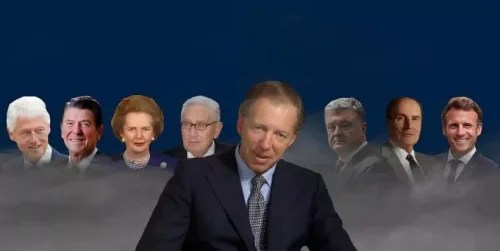
By Ilya Tsukanov – Sputnik – 15.09.2024
How powerful is the Rothschild banking family? How did they amass their fortune? Just how rich are they? Do they secretly control the world? Sputnik explores. … continue
Blog Roll
 Aletho News
- London tourism expo promotes Israeli agency linked to theft of Palestinian land
- Dockworkers launch global strike against Israeli and US military shipments
- Europe facing gas price shock – Gazprom chief
- Ukraine continues recruiting people with disabilities
- Weaponized Journalism: 2021 Sayer Ji Interview with NPR
- Beyond Netanyahu: what Israel’s election means for Palestinians
- Lithuania plans universal conscription
- Lies, Damn Lies, and Ukraine News
- Financial Times rejects Nordic demands to correct Putin call story – media
- The Case for Less Unity in Europe
- If Americans Knew
- An error has occurred; the feed is probably down. Try again later.
- No Tricks Zone
- Germany’s Green Energy Transition Becoming Increasingly Expensive…Another 6 Trillion Euros!
- Sudden Stratospheric Warming, Powerful El Niño Combination May Lead To Extreme Europe Cold, Energy Crisis!
- Two New Studies Find Thwaites Glacier Melt Cannot Be Driven By Human Activity Or A Warming Ocean
- E-Cars Reduce CO2 Emissions By Only 41% Compared To Internal Combustion Engine Vehicles
- Predictions Made By Renowned Climate Professor Over Past Decades Have Been Proven To Be Poor
- New Study Suggests Large Regions Of The Pacific Ocean Have Been Cooling For The Last 80 Years
- Germany’s Green Energy Debacle: High Energy Costs Force Kahla Porzellan to Close After 182 Years!
- New Study: 50 Years Of The Most Aggressive ‘Net Zero’ Policies Can Only Affect The Global Climate By 0.03°C
- US September “Heat” Was No Record…Many Records Set Decades Ago
- Latest European Green Energy Debacle; Portugal’s Largest Flagship Solar Park Insolvent!

