Coronavirus: Consequences of Staggering Magnitude
By Alain DeBenoist | Occidental Observer
Excerpts from the interview, April 2, 2020; translated by Tom Sunic.
… A few years ago I wrote that only in a state of emergency one can take full measure of somebody. Now we know where we are at. A statesman makes decisions, gives orders and requisitions. Macron, however, relies on the advice of “experts” who, as a rule, never agree with each other.
… There was a wish to include in the logic of the (free) market a sector which by definition lies outside the free market. Public services have been systematically weakened and destroyed. Now it is us who are paying the price. And this is just the beginning, because the confinement will last for weeks, if not for months. We are not at the end of the beginning, much less at the beginning of the end.
… At the start, as a rule, everyone stands together. However, as we arrive at “the day after” and when the time comes for accountability, the people’s judgment will show no mercy. If this matter ends up, as I suspect it will, in a social crisis of huge magnitude, then the Yellow Vests movement will look like, more than ever before, as a dress rehearsal. We can now clearly see that it will be most difficult for the working class and the middle class to put up with [coronavirus] confinement.
… [The European Union ] didn’t commit suicide for the simple reason that it had already been dead. One of the merits of the crisis has been to allow everybody to see its dead body. Faced with the epidemic the leaders of the European Commission are showing signs of shock. They are now going to release funds which will be distribute by “helicopter,” after ramping up the monetary printing press. But in real terms nothing comes of it. It was not Europe that came to the rescue of Italy, but China, Russia and Cuba. Fidel Castro’s posthumous revenge!
… [The economic crisis ] will last much longer than the current epidemic; it will do far more damage and kill far more people. If it goes hand in hand with a global financial crisis, we will be witnessing then a tsunami: an economic crisis and therefore a social crisis, financial crisis, health crisis, ecological crisis, migration crisis. In 2011 I published a book called Au bord du gouffre (On the Brink of the Abyss). It seems to me that we have arrived there now.
… We should also anticipate political and geopolitical consequences of staggering proportions. The unfolding of the epidemic in a country such as the United States, whose health system, organized of course in a liberal fashion, is one of the world’s least performing, will be challenged to play a decisive role. It must be followed very closely (the global epicenter of the epidemic today is New York). The United States will likely come out of it much weaker than Russia and China, its only two rivals for the time being. Again, we are only at the beginning…
Who’s Right: Donald Trump or the Media?
By Gregory Hood – American Renaissance – April 3, 2020
I’ve seen this posted everywhere; article after article in the mainstream media telling us to stop worrying about the coronavirus.

I checked them all, and every one is real.
- “We Should Deescalate the War on the Coronavirus,” by Robert Dingwall, Wired, January 29, 2020
- “As the coronavirus spreads, fear is fueling racism and xenophobia,” by Jessie Yeung, CNN, January 31, 2020
- “You’re Likely to Get the Coronavirus,” by James Hamblin, The Atlantic, February 24, 2020
- “Is the Coronavirus Worse Than The Flu? Here’s How the 2 Illnesses Compare,” by Leah Groth, Health, February 26, 2020. The subtitle is, “It depends on what you mean by ‘worse.’” A doctor quoted in the story says the flu is worse, but that the coronavirus spreads more easily.
- “The Fear of the Coronavirus, and the Reality of the Flu,” by Simon Murray, HCPLive, February 10, 2020. The final sentence says the outbreak “serves as a surrogate for a good deal of xenophobia and fear of the country [China] itself.”
- “Panic over coronavirus could be caused by flu numbers,” by Renae Skinner, KOAA, February 7, 2020
- “The Flu Is a Way Bigger Threat to Most People in The US Than Coronavirus. Here’s Why,” by Aylin Woodward, Business Insider, January 25, 2020
- “Heath official: You are more likely to catch flu in Oregon than deadly Wuhan coronavirus,” by Stephanie Rothman and KVAL.com staff, KVAL, January 22, 2020
- “Is the new virus more ‘deadly’ than flu? Not exactly,” Associated Press, February 18, 2020
- “Amid coronavirus panic, doctors remind public: Flu is deadlier, more widespread,” by Denis Dador, Eyewitness News 7, March 4, 2020
- “MD Flu Deaths Climb As Flu More Worrisome Than Coronavirus,” by Deb Belt, Patch, February 23, 2020
- “New coronavirus may be no more dangerous than the flu despite worldwide alarm: experts,” by Tom Blackwell, National Post, February 3, 2020
- “Experts warn flu is greater risk than coronavirus,” by WICS/WRSP staff, News Channel ABC 20, February 13, 2020
- “Want to Protect Yourself From Coronavirus. Do the Same Things You Do Every Winter,” by Jamie Ducharme, Time, January 31, 2020
- “Doctor suggests worrying about the common flu, not coronavirus,” by Michael Martin, Fox 17 West Michigan, January 31, 2020
- “New coronavirus is likely to go pandemic, but that’s no reason to panic or overreact,” by Bob England and Will Humble, AZCentral, February 25, 2020
- “Relax! Coronavirus is Less Dangerous Than the Flu, Says Epidemic Expert,” by Mark Emem, CCN, January 31, 2020
- “The Flu Is Still a Bigger Health in the U.S. than Novel Coronavirus,” by Lesley McClurg, KQED, January 29, 2020
- “Why are we panicked about coronavirus – and calm about the flu?” by Anthony DiFlorio, The Hill, February 4, 2020
- “Flu hitting Arizona more than usual this season, despite attention on coronavirus,” by Mike Pelton, ABC 15, February 6, 2020
- “New coronavirus spreads more like flu than SARS: Chinese study,” by Julie Steenhuysen, Reuters, February 19, 2020
- “Forget the Coronavirus: The Flu Pandemic of 1918 Killed More People in One Year than all of World War I,” by Sebastien Roblin, National Interest, February 15, 2020
- “The Virus Killing U.S. Kids Isn’t the One Dominating the Headlines,” by Michael Daly, Daily Beast, February 6, 2020. Hint: It’s a three-letter-word that begins with F.
- “Is Coronavirus Spreading Faster Than SARS, Ebola, and Swine Flu?” by Dan Evon, Snopes, February 26, 2020
- “Why we panic about coronavirus, but not the flu,” by Bob Herman, Axios, January 29, 2020
- “Coronavirus is deadly, but flu has claimed over 8,000 lives this season,” by Jasmine Vaughn-Hall, York Daily Record, January 31, 2020
Several articles reported that the flu had, at the time, killed more people than the virus. Today, journalists at many publications are slamming President Trump for having compared coronavirus to the flu, but their colleagues did the same thing. Vox didn’t just compare coronavirus to the flu, but said the new disease might “look more like the common cold than like SARS.”

Vox shamelessly deleted an article that assured readers we wouldn’t get “a deadly pandemic.”

This matters because many journalists now refuse to cover President Trump’s press conferences. They say the briefings are “falsehood-filled,” to use New York Magazine’s phrase. They want a monopoly on information, which is not reassuring when they are so reliably unreliable.
President Trump made the same mistake many journalists did, and he didn’t act strongly when he should have. However, he did ban travel from China and imposed a quarantine on returning travelers.
He was blasted for that:
- “Coronavirus quarantine, travel ban could backfire, experts fear,” by Alice Miranda Ollstein, Politico, February 4, 2020
- “The US coronavirus travel ban could backfire. Here’s how,” by Catherine Shoichet, CNN, February 7, 2020
- “Coronavirus: could the US government’s quarantine and travel ban backfire?,” by Sam Levin, The Guardian, February 4, 2020
On January 31, Joe Biden attacked President Trump’s “hysteria xenophobia [sic], hysterical xenophobia.” In March, Bernie Sanders said if the choice were his, he wouldn’t close the borders; he would listen to “scientists” instead.
This all seems ridiculous now that we are trapped in our own homes. It would have been better to have one large wall around the whole country rather than countless little ones inside it.
The press also heaped scorn on President Trump for offering “false hope” when he mentioned the anti-malarial drug hydroxychloroquine.
- “Coronavirus treatment: Dr. Donald Trump peddles snake oil and false hope,” USA Today Editorial Board, March 21, 2020
- “Trump’s claim that malaria drug can treat coronavirus gives hope, but little evidence it will work,” by Berkeley Lovelace Jr., CNBC, March 26, 2020
- “Trump touted hydroxychloroquine as a cure for Covid-19. Don’t believe the hype,” by Oliver Milman, The Guardian, March 28, 2020
Twitter removed a tweet from Laura Ingraham that claimed there were “very promising results.” Once again, a tech company decided what people should read.
President Trump didn’t say it was a cure. He said there was promising evidence, but the New York Times tried to blame him when a couple foolishly drank fish-tank cleaner. The husband died and his wife barely survived. “The drug, known as chloroquine phosphate or chloroquine,” wrote Neil Vigdor in The New York Times, “has been bandied about by President Trump during White House briefings on the coronavirus pandemic as a potential ‘game changer’.” But President Trump had not recommended that specific chemical — chloroquine phosphate — something the Axios news site admitted when it deleted a tweet blaming him.

On April 2, thousands of doctors reported in a poll that hydroxychloroquine actually is the most effective known treatment for coronavirus. A small study from China reported it is effective in treating patients with mild cases. A test of the drug’s preventive power is also underway. New York Gov. Andrew Cuomo, whom many Democrats want to be their presidential nominee, has already begun a larger clinical trial. It’s wrong to claim hydroxychloroquine works, but President Trump wasn’t just making things up. If he was selling “snake oil,” so is Andrew Cuomo.
President Trump should have done more to prevent this crisis. His claim that it could be over by Easter was stupid. Of course, had he done what was necessary, journalists would have said he was using Nazi tactics. Some do anyway.
- The Forward claimed that President Trump referring to a “foreign virus” is “as dangerous as coronavirus itself” and “straight out of the Nazi playbook.”
- “Trump Is Using Pandemic Panic to Ramp Up Attacks on Migrants,” said The Nation.
- “Be Careful,” warned The Guardian. “Trump may exploit the coronavirus for authoritarian ends.”
If only. Had he done so a few months ago, I could take my family out to dinner instead of being stuck in my house.
In an emergency, we need to know whom we can trust for accurate information. President Trump sometimes exaggerates, dissembles, or outright lies, but so do journalists, usually because they want to attack the president. Worse, many journalists believe they should decide what we should know.
Whoever is right, our economy has collapsed, millions are unemployed, thousands are dead, and people are wearing masks just to go to the grocery store. You can make a strong case that if President Trump had taken “racist” measures sooner, we would have avoided the worst. Of course, if Joe Biden thinks “hysterical xenophobia” was the problem, Democrats would have made a terrible hash of things.
Journalists have power — more than most politicians. Read their stories from the last few months, and see how they used that power.
Nationalism isn’t “as dangerous as coronavirus.” Nationalism could have stopped the virus. I’m frustrated with President Trump, but I’m furious with these journalists.
Europe: Over 520,000 coronavirus cases and almost 38,000 deaths
By Robert Stevens | WSWS | April 3, 2020
European countries, including Spain and the UK, announced record-high daily coronavirus death tolls Thursday. With the 4,199 new deaths yesterday, 37,864 have already perished in Europe. There have been more than 521,000 cases of COVID-19 infections on the continent including 33,661 new cases.
In Spain, 950 died—the third consecutive day of a record high.
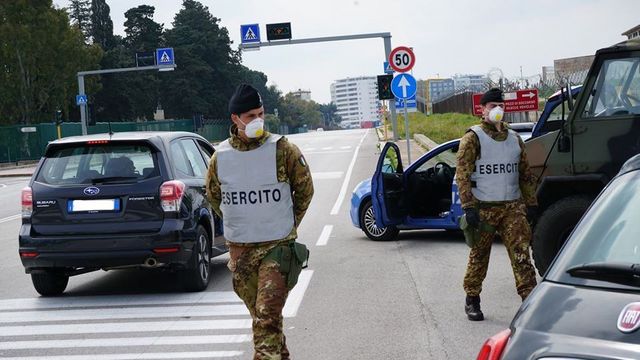
Italian Army soldiers monitoring cars and controlling the streets in Bari: (credit Twitter: Italian Army)
In the UK, the death rate has quadrupled in a week. In just four days since Monday, 1,693 coronavirus deaths have been announced—more than were recorded on all days up to March 29. The Department of Health and Social Care reported a record 569 deaths Thursday, taking the total to almost 3,000 (2,921). This was the second consecutive day Boris Johnson’s Conservative government announced over 500 deaths. Wednesday’s 563 fatalities were a 31 percent increase on the previous day.
With an age range of the latest deaths between 22 and 100 years old, nearly 8 percent (44 people) of yesterday’s victims had no known underlying health conditions.
Britain is now showing the terrible daily toll commonplace in Italy and Spain, with the pandemic taking over 13,000 and 10,000 lives in those countries.
The UK infection rate has also shot up, with 4,324 new cases announced Wednesday and 4,244 Thursday. Total infections in the UK stand at 33,718 but are in reality much higher. Hardly any tests were done when the outbreak began, despite months of warnings. Three weeks ago, Johnson announced—as part of attempting to enforce his “herd immunity” policy aimed at infecting everyone in the country with coronavirus—that no systematic testing would be done and that everyone who showed symptoms should self-isolate.
More than 1.7 million people in the UK have likely caught coronavirus over the past 15 days. Data from the NHS 111 online service revealed that web-based assessments flagged 1,496,651 people as potential carriers; a further 243,543 calls to 111 and the 999 emergency number concluded callers had signs of COVID-19.
It was only after widespread outrage at its social Darwinist policy that the government was forced to pledge that widespread testing would be done. Even now, just 163,194 tests have been completed with yet another promise yesterday of 100,000 a day for the end of April. Only 2,000 of 550,000 National Health Service frontline workers have been tested.
The BBC’s head of statistics, Robert Cuffe, commented Thursday, “if that [UK death rate] keeps up, we’d expect to see in the region of a thousand deaths a day by the weekend.” Sky News economist Ed Conway noted that “For the past week or so,” the UK’s death rate has “been doubling every three days” and “if the growth rate continued like that, in a week’s time there would be 10,000 people dead and the UK would be on a far worse trajectory than Italy.”
An explanation of this steeper curve emerged late yesterday, when NHS England reported that the earliest death in the UK had in fact occurred on February 28, one week earlier than previously reported. In total, six people had died in hospital prior to March 5.
In Italy, 760 died Thursday, taking the total to almost 13,915. Two new studies suggested the true death toll could be significantly higher than reported. The InTwig data analysis firm reveals that while there were 4,500 deaths in the hardest-hit city of Bergamo, the Civil Protection Agency only reported 2,060 deaths. The University of Bergamo, using historical data from the national statistics office compared to current hospital data, showed that deaths in the north of Italy doubled in the first three weeks of March, compared with the average number of deaths during the same period between 2015 and 2019. The uncounted deaths were mostly elderly victims who were not admitted to hospital and never tested for the virus.
The government welfare assistance website remains down, leaving Italy’s most vulnerable unable to receive any COVID-19 scheme for financial support. An estimated 3.3 million Italians work in the black economy and don’t qualify for welfare support schemes. Twenty thousand army soldiers are deployed in southern Campania, Puglia and Sicily to patrol the streets amid rising tensions as citizens run out of food and money.
Germany announced 168 new deaths, taking the total to 1,099. After Berlin approved its “coronavirus aid programme”—a bailout worth €600 billion for the banks, corporations and the super-rich—anger among workers is growing. In the past days, health employees in hospitals, nursing homes and workers in businesses vital to the supply of the population’s needs have criticised catastrophic and unsafe working conditions.
Truck drivers, airport workers, delivery workers and steelworkers are also voicing opposition. A worker at the Outokumpu stainless steel group in Krefeld, speaking anonymously to the WSWS, said, “We’re all angry, feeling betrayed. Even those in risk groups still have to work. An info sheet says they should talk to the company doctor. I did that. He advised me to wash my hands and disinfect myself. But we don’t have any disinfectant, or face masks. I use keyboards, telephones, etc.”
In a dramatic development, France’s death toll shot up by 1,355. Previously, Emmanuel Macron’s government had only released the deaths of those who had died in hospital of coronavirus. Yesterday, it announced that 884 people had also perished in retirement and care homes. On top of the 471 hospital fatalities, this takes total deaths to 5,387. Other countries, including until recently Britain, have also not included those who died outside hospital in their fatality announcements to play down the scale of the catastrophe they are responsible for.
Aware of explosive social anger in workplaces, the Stalinist General Confederation of Labour (CGT) has issued an authorization for public sector workers outside the hospitals to strike in April. The CGT is not calling for strike action or opposition to President Emmanuel Macron, but cynically authorizing isolated action by individual workers while the union bureaucracy keeps working with the government to slash wages and social benefits.
Workers have mounted strikes or walked off the job at Amazon, in supermarkets, in the auto industry and in aeronautics. One worker at an air conditioner manufacturing plant told the press, “This epidemic has woken up a lot of people…now the masks are falling. Usually management manages to calm them down, but today they are seeing that even when it is a matter of life and death, management has no concern for them.”
Lockdowns throughout the continent have led to staggering job losses. The Financial Times reported Wednesday, “Unemployment is growing much faster than in previous recessions because the measures taken to slow the spread of the virus are felt most severely in low-wage, labour-intensive sectors such as retail, hospitality and other consumer-facing services.”
In the UK, more than 1 million people have been forced onto the welfare rolls in just two weeks. Austria reported Wednesday that unemployment now stood at over 12 percent—the highest level since records began in 1946. In Spain, over 900,000 people have been made unemployed since the outbreak began there. In Norway, unemployment has risen from 2.3 percent to 10.4 percent in little over a month. The Financial Times noted the government’s Labour and Welfare Administration statement that a quarter of tourism and transport workers and almost a fifth of retail workers were now claiming unemployment insurance.
The newspaper reported that in Germany, “some 470,000 companies have applied for government wage subsidies through the ‘Kurzarbeit,’ or short-hours, programme—almost five times higher than the 100,000 people who used the scheme during the 2008-2009 recession.”
Another indication of the devastating impact of the coronavirus on the working class is seen in the map produced by the Catalan regional government in Spain, showing that the virus is six or seven times more prevalent in Barcelona’s poorer areas than in wealthier areas.
We need to cut around 10 mln barrels per day of oil production, Russia is ready to act with US on oil markets – Putin
RT | April 3, 2020
Russian President Vladimir Putin has said his country is ready to work with the Trump administration to halt the freefall of oil prices. His comments come after a phone call with President Trump earlier this week.
Putin also noted that the daily oil output should be cut by around 10 million barrels, as there is lower demand due to coronavirus. Oil prices started dwindling after OPEC+ countries disagreed on production cuts, with Saudi Arabia refusing to lower the output.
With an ongoing “price war” between Russia and Saudi Arabia driving prices even further down, US president Trump said on Thursday that “it would be great” if the two countries could make a deal to limit production.
Putin had already spoken to Trump by phone earlier this week, and on Friday announced that he is ready to cut production by 10 million barrels per day.
The Russian leader said that moving forward, Moscow would be comfortable with a price of $42 per barrel, roughly $10-15 higher than current levels.
Oil prices jumped prior to Putin’s Friday announcement, after Trump spoke of a pending deal.
No talks between Moscow and Riyadh have yet taken place, Kremlin spokesman Dmitry Peskov said on Friday. However, non-OPEC member Azerbaijan announced that the petroleum bloc and its allies will hold discussions on Monday aimed at restoring “balance to the oil market.”
Saudi Arabia, ramped up its production on Wednesday to a record high of more than 12 million barrels per day, after previous OPEC+ production cuts expired at the end of March.
During a televised meeting with Energy Minister Alexander Novak Putin said the Saudi crown is flooding the market to force competing shale oil producers out of business, among them the US and Russia.
Novak noted that he doesn’t know when the world’s plummeting demand for oil will finally bottom out.
US Sends Navy Ships to Caribbean in ‘Anti-Drug’ Mission Targeting Venezuela
By Ricardo Vaz and Lucas Koerner | Venezuelanalysis | April 2, 2020
Mérida – The Trump administration is dispatching US Navy warships to the Caribbean Sea in an effort to turn up the pressure on Venezuela.
The initiative was announced by President Donald Trump and other high ranking officials in a press conference Wednesday.
The move is allegedly part of a wider “anti-narcotics” operation in the region, which in addition to Navy destroyers will reportedly involve AWAC surveillance aircraft and on-ground special forces units. The Associated Press reported that the operation is one of the largest in the region since the 1989 invasion of Panama.
“We must not let malign actors exploit the [coronavirus] situation for their own gain,” Trump said.
The military deployment came on the heels of the Department of Justice (DoJ) levying “narco-terrorism” charges against top-ranking Venezuelan officials, as well as a “democratic transition” plan unveiled by the State Department.
On March 26, the DoJ accused President Nicolas Maduro, National Constituent Assembly Diosdado Cabello and several other officials of conspiring with FARC rebels to “flood” the US with cocaine.
Critics have pointed to the dearth of concrete evidence implicating top Venezuelan leaders and to the fact that data from US agencies shows that only a small fraction of drug routes pass through Venezuela, with most cocaine entering US territory via Central America and Mexico.
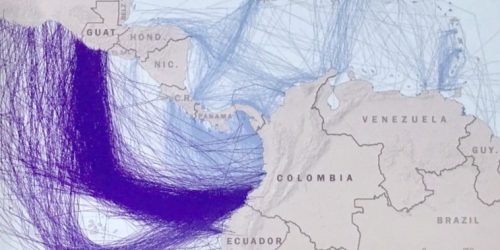
A map produced by the US Southern Command shows the main drug-smuggling routes connecting Colombia and Ecuador with Guatemala and Mexico via the Pacific Ocean.
On Tuesday, the State Department unveiled a “framework for a peaceful democratic transition in Venezuela,” calling for Maduro’s resignation and the establishment of a transition government headed by opposition and Chavista officials to oversee new elections.
The Trump administration pledged to lift sanctions against Venezuelan individuals and key economic sectors, but only after Maduro left office and all security agreements with Russia and Cuba were terminated.
The US has vowed to ramp up unilateral sanctions until the Maduro administration accepts the deal.
For its part, the Venezuelan government blasted the military deployment, with Communications Minister Jorge Rodriguez calling it “an attempt to attack Venezuela with lies and threats.”
Rodriguez added that Venezuela has “robust” anti-narcotics policies and would be ready to “coordinate” actions against drug trafficking in the region.
Washington’s naval operation comes days after the controversial sinking of a Venezuelan coast guard boat off the coast of the Caribbean island of La Tortuga.
According to the Venezuelan Ministry of Defense, the patrol ship “Naiguata” located a Portuguese cruise ship, the “RCGS Resolute,” in Venezuelan territorial waters and ordered the vessel to accompany it to port. The “Resolute” allegedly refused the instructions and proceeded to ram the “Naiguata,” which subsequently sank as a result of the impact.
The cruise ship owner, Columbia Cruise Services, has disputed this account, insisting that the “Resolute” was “subject to an act of aggression by the Venezuelan Navy in international waters,” while carrying no passengers.
On Wednesday, Venezuelan President Nicolas Maduro suggested the ship “was being used to transport mercenaries.” He also claimed that “someone from the north called” to prevent Dutch authorities from inspecting the “Resolute” at its current mooring in the Curacao port of Willemstad.
Portuguese Foreign Minister Augusto Santos Silva, for his part, has pledged to collaborate with Venezuela and Holland in the investigation of the “unfortunate” incident.
Crisis & Critique: US Ramps up Aggression amid Pandemic
By Ociel Alí López – Venezuelanalysis – April 1, 2020
Venezuela has been one of the countries least affected by the coronavirus pandemic in the region so far. Nevertheless, the US government is attempting to exploit the situation in order to force a violent outcome to the country’s political standoff, putting a price on the head of Maduro and other top functionaries as well as pushing a new “transition” plan to depose the government in exchange for sanctions relief. Meanwhile, Venezuela’s attorney general has summoned Guaido for questioning on April 2. Far from bringing about a truce, the coronavirus has raised tensions to new heights.
On the verge of a truce
The pandemic has caught Venezuela’s opposition in a rather uncomfortable position. Their strategy of not recognizing Maduro and the never ending simulacrum that is Guaido’s “interim presidency” is, fourteen months later, an abject failure in terms of concrete achievements. Guaido’s virtual staying power is owed almost exclusively to Donald Trump, who invited him to the White House at the close of his international tour in February.
But this strategy leaves a vacuum in the opposition. The existence of an “interim president” precludes that of an opposition leader who can channel requests, critiques, and demands toward the government. Guaido is instead forced to speak as a president but without any state resources at his disposal to confront the COVID-19 crisis. Some of Guaido’s spokespeople such as his foreign relations envoy, Julio Borges, issue statements that are woefully out of touch with the gravity of the international conjuncture: “The coronavirus is Maduro and there will be no cure until he leaves power.”
For his part, Maduro, comfortable and without internal resistance, rapidly implemented the World Health Organization’s guidelines, decreeing a national quarantine within days of the first case being reported on March 13. Maduro also managed to meet not only with the country’s principal chamber of commerce, FEDECAMARAS, but also with Colombia’s health authorities, a fact which Colombian President Ivan Duque publicly denied. He additionally secured aid from Cuba and China, which have emerged as global leaders in COVID-19 response. Meanwhile, the United States and Guaido’s other Western sponsors are mired in an unprecedented health crisis due to the number of dead and infected.
On March 23, the European Union publicly called for the International Monetary Fund to accept emergency loan requests from Venezuela and Iran and for relief from US sanctions, which according to EU foreign policy chief Josep Borrell, “block them from receiving income by selling oil.” UN Secretary General Antonio Guterres also urged the lifting of unilateral coercive measures in the face of the pandemic.
The situation seemed favorable for Maduro’s struggle against the US economic blockade.
In this context, the coronavirus was on the verge of bringing about the unthinkable: an agreement between the opposition and the government. Henry Ramos Allup, the president of Venezuela’s main opposition party, announced on March 10 that Democratic Action would abandon its prior abstentionism and compete in parliamentary elections scheduled for 2020. Amid the global COVID-19 hysteria, former presidential candidate Henrique Capriles opened the possibility for an agreement with Maduro when he stated on March 25:
This pandemic must create an opportunity to pursue some kind of agreement that looks after people’s wellbeing… Let’s work together: you have internal control, and I have international support. You are willing to come to an agreement to join hands. Could it be that difficult? I don’t think so.
That very night, there were two, almost parallel reactions. Maduro said, “I agree with Capriles’ proposal,” and asked the Vatican’s representative in the country to mediate and open its offices for a meeting with the different opposition factions as soon as possible.
Minutes later, Guaido stated, “we are willing to do everything we have to do,” implicitly recognizing the need for an agreement to address the health emergency. However, he did enumerate certain conditions regarding the distribution of humanitarian aid, which should be managed by multilateral organisms and not the Maduro government.
Venezuela’s dueling political factions appeared to be on the verge of engaging in substantive talks, but it was not to be.
Escalating US assault
The next day, on the morning of March 26, US Attorney General William Barr gave a press conference announcing “narco-terrorism” charges against Maduro and other senior government officials.
As expected, the charges were endorsed by Trump in the midst of the COVID-19 crisis, effectively torpedoing negotiation efforts and once again raising tensions to a boiling point.
This is hardly the first time that the US has blocked dialogue. When in early August 2019 rumors were circulating of something resembling an electoral pre-agreement emerging from Norway-brokered talks, the United States ramped up sanctions with an August 5 executive order banning all dealings with the Venezuelan state and freezing its assets in what some analysts have linked to the Cuba embargo. The next day, Maduro abandoned talks.
The government had also previously claimed in February 2018 that a last minute call by then US Secretary of State Rex Tillerson to the head of the opposition negotiating team, Julio Borges, led the opposition to walk out in lieu of signing a finalized electoral deal. This was the fruit of months of negotiations mediated by former Spanish President Jose Rodriguez Zapatero and the Dominican government, and the agreement concerned guarantees for the 2018 presidential elections, which the main opposition parties opted to boycott.
With this latest decision, Trump ups the ante. On top of punishing economic sanctions, the US now places a multi-million dollar bounty on the head of Maduro and other top officials, giving the green light to renewed violent actions aimed at killing or capturing them.
But the move also aborts the nascent negotiation efforts recently underway. Rather than paving the way for an invasion, indictments open the way for paramilitary operations of the sort one might find in a Hollywood movie. Recall that neighboring Colombia is a country littered with irregular armed outfits. Just a few days ago, following the seizure of an arms cache in northeastern Colombia, retired Major General Cliver Alcala confessed to a plot to overthrow Maduro in coordination with Guaido and US advisors. Paradoxically, the general confirmed the coup plan only after he was indicted by the US Justice Department, subsequently turning himself in to Drug Enforcement Agency officials and traveling from Colombia to the US.
Several days later, on March 31, US Secretary of State Mike Pompeo, in a more conciliatory but equally arrogant tone, unveiled a “transition” plan proposing the creation of a “council of state” comprised of opposition and Chavista representatives, with both Guaido and Maduro stepping aside and new elections called. The Venezuelan constitution contains no provisions permitting such an arrangement, which has already been rejected by Foreign Minister Jorge Arreaza.
The government did not delay in rolling out its response. The attorney general summoned Guaido to appear for questioning on April 2 and it is very possible that he could be taken into custody after Alcala publicly named him as responsible for terrorist actions to be carried out with the arms confiscated in Colombia. With Guaido behind bars, another scenario opens up, and all that is left is to await a more decisive response from the US.
Meanwhile, we must not forget the arena that has taken center stage at present: healthcare.
Coronavirus and the collapse of the health sector
This escalation of conflict comes not only in the context of coronavirus, but also at a moment of deep crisis in Venezuela’s healthcare system, which could be rapidly overwhelmed if Venezuela’s curve mirrors that of other countries.
In a November 2019 report, UN Under-Secretary-General for Humanitarian Affairs Mark Lowcock observed:
I have seen myself how the health system is on the verge of collapse, with many hospitals lacking the most basic water and electricity infrastructure. Hospital patients, many of whom are already critically ill, are at high risk of losing their lives from new infections they are acquiring while they are in hospital, because basic cleaning and disinfection cannot be done. This is exacerbated by a lack of medicines, and a shortage of doctors and nurses to administer them. Preventable diseases including malaria and diphtheria are back with a vengeance. People with chronic health conditions, pregnant and nursing women, infants and those living with disabilities are among the most vulnerable.
No matter how much the government emphasizes its strength in the health sector owing to the support of its allies, the reality is that the system has suffered severe deterioration. If we project an Italy or Spain-style curve in Venezuela, the result could be not just a health sector collapse, but a catastrophe in every arena of life.
For this very reason, Washington’s bellicose measures provoke widespread animosity among diverse national and international constituencies. On the one hand, Chavismo automatically closes ranks behind the government, which implements stronger security measures that block efforts to open up the political field. On the other, the opposition factions that were engaged in or calling for dialogue with the government are now shut out of the game because it will be very difficult for them to compete in parliamentary elections to be held later this year. And if the main opposition parties do not participate, like in the last few elections, they will lose the only real power they have left: the National Assembly. The majority of opposition political actors have reacted with caution and have not automatically supported the US’ actions.
Washington’s latest maneuvers also fly in the face of positions taken by US allies like the European Union, as well as other multilateral bodies, which have called for lifting sanctions on Venezuela and Iran. Washington’s “kick them while their down” approach may appear disproportionate in the face of the current crisis, but we must remember that the US presidential campaign looms large and the Venezuela issue is key to winning the critical state of Florida.
For his part, Guaido may try to dust off the “humanitarian aid” discourse that he had dropped from his political repertoire after the opposition’s US-backed effort to force food and other supplies across the Colombian border in February 2019 ended not only in failure but in a corruption scandal that has dogged the “interim president” ever since. The US, Colombia, and Guaido’s other allies could make a fresh attempt at “humanitarian intervention” amid the current situation of international panic. US Deputy Assistant Secretary of State for Cuba and Venezuela Carrie Filipetti recently prepared the ground for this possibility, stating that the COVID-19 contagion in Venezuela could pose a regional threat.
This discourse is illogical given that according to official figures Venezuela has far fewer cases than its neighbors, while the US is now the global epicenter of the coronavirus outbreak. But when it comes to US-Venezuela relations, official discourses have little concern for facts. Anything can happen, above all, if elections require putting a face on the “invisible enemy.”
Ociel Alí López is a Venezuelan researcher who has published numerous written and multimedia works. He is dedicated to analyzing Venezuelan society for several European and Latin American media outlets. He is a co-founder of alternative Venezuelan state television station Avila TV in 2006. He is the recipient of the CLACSO/ASDI researcher prize and the Britto Garcia literature award.
Despite US Sanctions, Iran’s Revolutionary Public Health System Curbing COVID-19 Outbreak
Sputnik – April 3, 2020
Iran has managed to contain its coronavirus outbreak even under crippling US trade sanctions that have limited the country’s access to medical equipment and other resources, Sayyed Mohammad Marandi, an American studies and postcolonial literature professor who teaches at the University of Tehran, told Sputnik’s Loud & Clear Thursday.
Marandi told Sputnik the situation in Iran is “significantly better than in the US,” despite Washington’s adamant refusal to lower economic sanctions frustrating trade with Iran, which have made buying medicine and equipment for hospitals difficult.
“It has been managed, and that’s largely because – despite all the sanctions in the last four decades – after the [1979] revolution, Iran established a primary health care network across the country,” Marandi told host Brian Becker.
“It exists in villages, in towns, in cities, it’s a huge network. This is the foundation upon which the resistance or the fight against the coronavirus was based,” Marandi said, noting that “Iran had much less time” to prepare for the outbreak than did European countries or the US, being one of the first hit after the virus broke out of China’s Hubei Province.
“But since Iran had less time, Iran was obviously less prepared. And because of the sanctions, because the US government was trying to prevent Iran from being able to fight the virus by preventing Iran from purchasing [test] kits, by preventing Iran from purchasing masks, ventilators – the US government was doing everything it could, basically through the sanctions, to turn the coronavirus into a biological weapon to use against Iran. And they still do,” Marandi said.
“But despite all of that, and despite the hardship that the Iranians went through initially, not being able to purchase their needs, because of this very powerful and very extensive primary health care network that exists in the country, they were able to contain the virus. And now the situation in Iran, despite being hit very hard and being the first to be hit without knowing clearly what it was and how to deal with it – the situation in Iran is remarkably better than what we are seeing sadly in Europe and unfortunately in the US,” Marandi told Sputnik.
The latest data reveals that there are more than 50,000 cases of the virus in Iran, and more than 3,000 people have died as a result. The US has become the epicenter of the pandemic, with more than 242,000 cases and almost 6,000 deaths from the disease.
In a recent statement, Iranian Foreign Minister Javad Zarif referred to the US sanctions against Iran as “economic terrorism.”
“We had always said the sanctions are unjust, but coronavirus revealed this injustice to the world,” Zarif added.
In a Saturday tweet, US Secretary of State Mike Pompeo claimed that Iran’s “concerted effort to lift US sanctions isn’t about fighting the pandemic” but is rather about Iran’s leaders “trying to avoid responsibility for their grossly incompetent and deadly governance.”
Even though the US claims that its sanctions don’t prevent the sale of medicine and medical devices, the secondary sanctions on financial institutions and businesses have prevented Iran from buying necessary items like ventilators that could save the lives of coronavirus patients, the New York Times reported.
Renewed Tensions With Iran in Iraq
In the midst of the pandemic, US President Donald Trump on Wednesday took to Twitter to warn Iran against attempting to attack US troops or assets in Iraq after claiming that Iran or its proxies “are planning a sneak attack on US troops and/or assets in Iraq.”
One day later, Zarif tweeted: “Don’t be misled by usual warmongers,” adding that the US “surreptitiously lies, cheats & assassinates,” while Iran “only acts in self-defense.”
“Iran starts no wars, but teaches lessons to those who do,” the minister added.
According to Marandi, Trump may be threatening Iran in an attempt to distract American citizens from the catastrophic mismanagement of the coronavirus within US borders.
“Iran is an extremely powerful country. If the US carries out an attack on the country, it will have devastating consequences for the Americans, and I think the Americans know that. The Americans had to leave Iraq about a decade ago when the small resistance with light weapons put up a fight against an American force with all its allies that were well over 150,000 troops. Now, the Americans in Iraq have 5-6,000 troops. They’re all alone, almost. Almost all of their allies have left, and the Popular Mobilization Forces of the Iraqi Armed Forces is itself well over 100,000. So, I can’t see a situation where Trump can win in Iraq, win in Iran,” Marandi added.
“Business as Usual” Isn’t Even a Choice
By Anatoly Karlin • Unz Review • April 1, 2020
A few days ago, I joked on Twitter:
The choice isn’t between boomer genocide and an economic collapse.
The choice is between boomer genocide and economic collapse, or producing millions of 5 cent masks and making people wear them.
Reality is, it is only boomer genocide that isn’t a choice.
74% of Americans support a national quarantine, and that even includes 72% of Republicans. In France, there is a near consensus on lockdown at 96%. In Italy it is 94%.
In Brazil, Jair Bolsonaro – the only President of a major democratic polity who continues to insist on treating coronavirus as a nothingburger – has been made into a lame duck, his commands ignored by 24 out of Brazil’s 27 governors and even by his own Health Minister.
Meanwhile, as predicted by Ron Unz, Trump has performed a volte face, extending federal social distancing guidelines past Easter up to April 30 and now touts 100,000 deaths as a “good scenario.”
Which is just as well, because as we know see, modern democracies are simply incapable of “powering through” even through what is a fairly low-mortality pandemic in historical terms.
Consequently, the only choices are:
- Nip it in the bud early on through mass testing-tracing-treatment, border controls, and limited lockdowns, resulting in limited economic damage. [for example]
- Wait until later, necessitating progressively more massive, longer, and economically ruinous lockdowns. [for example]
So the only correct move is to clamp down close to the start, and to clamp down hard. This is what was done in all the East Asian polities, be they chaotic democracies, city-state technocracies, or Communist single-party states.
Because in the latter scenario, there will eventually come a time when you are simply sidelined by your own underlings and by regional authorities, adding a political crisis on top of a healthcare and economic one.
In my post on Trump’s initial decision, I speculated:
Far out scenario: Blue states may outright defy Trump on abandoning containment measures, in which case they too would be doing starkly better than Red states (unless it also sparks a Constitutional crisis into the bargain).
Well, on that note, here’s a Tweet from California governor Gavin Newsom today. That’s some interesting wording there:
California is an enterprising, modernizing, nation-state. 40 million strong. Together, we will get through this. pic.twitter.com/PBTc7ukmak
— Gavin Newsom (@GavinNewsom) April 1, 2020
So again, good on Donald Trump to have come to terms with Corona reality and averting what could have become a very dangerous experiment.
This brings us to another interesting question: Will we get a “clean” experiment anywhere?
As per above, I don’t think it’s going to happen in any democracy. Britain backed away from its “herd immunity” idea two weeks ago, on realizing that their models didn’t include a term for ventilator shortages. The Dutch followed soon afterwards. With Sweden’s coronavirus mortality trajectory beginning to radically diverge from those of its Nordic cousins, I believe it is only a matter of time before they go into lockdown as well.
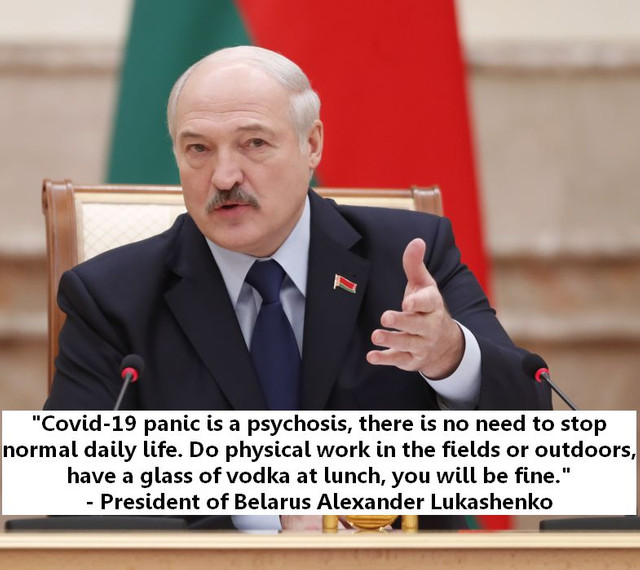
My guess is that our best “hope” – inappropriate as that expression may be – lies in Belarus, which is run by a decidedly non-coronapilled dictator.
West Trying to Take Advantage of Venezuela’s Coronavirus Woes to Topple Gov’t – Moscow
Sputnik – April 2, 2020
The West is trying to take advantage of Venezuela’s difficulties during the coronavirus outbreak to depose the Maduro government, Russian Foreign Minsitry said on Thursday.
“Unfortunately, we see that a number of countries are still guided by the desire to take advantage of the difficult situation in the world and the epidemiological situation in Venezuela in particular to achieve political goals”, spokeswoman for the Foreign Ministry Maria Zakharova said during a briefing on Thursday.
According to her, the idea of a coup that would lead to the ouster of the legitimately elected president of the country still remains in the minds of some political forces in the West.
“We object to the blocking of assistance to Caracas through the IMF. We condemn the US far-fetched drug-trafficking accusations against the head of a sovereign state”, she added.
Venezuela has so far registered 143 COVID-19 cases and three deaths. Last week, Russia delivered the first batch of 10,000 coronavirus test kits to the country and vowed to continue this assistance. China, in turn, sent a team to medical experts to help the sanctioned and the cash-strapped country. Both nations have called for lifting sanctions on Venezuela.
Amid these developments, Pompeo said on Tuesday that an interim government could be established in Venezuela, consisting of National Assembly members and accepted by both Caracas and the opposition, to serve until the next presidential and legislative elections. The US pledges to remove sanctions should the conditions of its plan, including “the departure of foreign security forces” and free elections, be met.
Venezuelan Foreign Minister Jorge Arreaza rejected firmly on Tuesday Washington’s crisis settlement plan, which envisions the creation of an interim government and elections within the next year.
Regime Change through the Drug War
By Jacob G. Hornberger | FFF | April 1, 2020
The Justice Department’s securing of a criminal indictment of Venezuela’s president Nicolás Maduro reminds us that when it comes to the U.S. government’s regime-change operations, coups, invasions, sanctions, embargoes, and state-sponsored assassinations are not the only ways to achieve regime change. Another way is through a criminal indictment issued by a federal grand jury that deferentially accedes to the wishes of federal prosecutors.
The best example of this regime change method involved the president of Panama, Manuel Noriega.
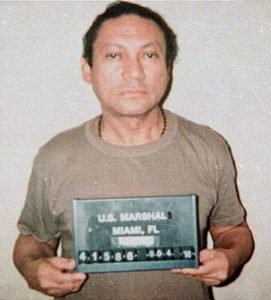 Like many corrupt and brutal dictators around the world, Noriega was a partner and ally of the U.S. government. In fact, he was actually trained at the Pentagon’s School of the Americas, which is referred to in Latin America as the School of Assassins. He later served as a paid asset of the CIA. He also served as a conduit for the U.S. government’s illegal war in Nicaragua, where U.S. officials were using the Contra rebels to effect a regime change in that country.
But like other loyal pro-U.S. dictators, Noriega fell out of favor with U.S. officials, who decided they wanted him out of office and replaced with someone more to their liking.
The big problem, of course, is the one that always afflicts U.S. regime-change aspirations: Noriega refused to go voluntarily.
U.S. officials knew that it would look bad to simply invade the country and effect a regime-change operation through force of arms. Undoubtedly, they considered a state-sponsored assassination through the CIA, which specialized in that form of regime change, but for whatever reason that regime-method wasn’t employed.
So, the regime-changers turned to the U.S. Justice Department, which secured a criminal indictment against Noriega for supposedly violating America’s drug laws. The U.S. rationale was that the U.S. government, as the world’s international policeman, has jurisdiction to enforce its drug laws against everyone in the world.
On December 20, 1989, the U.S. military invaded Panama to bring Noriega back to the United States to stand trial on the drug charges. One might consider the invasion to be one gigantic no-knock raid on an entire country as part of U.S. drug-war enforcement.
An estimated 23-60 U.S. soldiers were killed in the operation while some 300 were wounded. An estimated 300-800 Panamanian soldiers were killed. Estimates of civilian deaths ranged from 200 to 3,000. Property damage ranged in the billions of dollars.
But it was all considered worth it. By capturing Noriega and bringing him back for trial, U.S. officials felt that they had made big progress in finally winning the war on drugs. Equally important, they had secured the regime change that had been their original goal. At the same time, they sent a message to other rulers around the world: Leave office when we say or we’ll do this to you.
Noriega was convicted and received a 40-year jail sentence. When his lawyers tried to introduce evidence at trial of his close working relationship with the CIA and other elements of the U.S. national security state, not surprisingly federal prosecutors objected and the judge sustained their objections. Better to keep those types of things as secret as possible.
Alas, Noriega’s conviction and incarceration did not bring an end to the war on drugs, as this crooked, corrupt, failed, and racially bigoted government program continues to this day. Moreover, as Venezuelan strongman Nicolás Maduro might soon find out, the drug war continues to provide an effective way for U.S. officials to effect regime change.
Featured Video

John Mearsheimer: New World Order Arrived & Europe Is Left Behind
or go to
Aletho News Archives – Video-Images
Book Review
Sunset on Net Zero: A Heretic’s Guide to the Futile CO2 Target
By Ronald Paul Barmby (Author) – October 3, 2025
SUNSET ON NET ZERO describes in detail why Net Zero CO2 is pointless and unachievable. It explains in understandable terms the up-to- date thoughts of the greatest minds of today in physics, meteorology, economics, engineering, and the geosciences.
Net Zero CO2 is pointless because we have now confirmed by satellites that 90% of CO2 warming has already happened. CO2 is not an existential threat but clouds, El-Niño, and human habitation are significant drivers of global warming that are often ignored.
Net Zero CO2 is unachievable because the green technology alternatives are unreliable and unaffordable. Wind and solar power triple electricity costs, building fully electric vehicles produces at least one-half of CO2 emissions they are meant to avoid, and heat pumps will leave you dangerously cold in the winter. Green hydrogen, air capture CO2, and carbon capture and storage are prescriptions for national bankruptcy. The supply of key metals and minerals required to achieve Net Zero need to be at least doubled—some much more—and are often controlled by a very few. Net Zero comes with huge environmental and agricultural costs.
We have been through similar climatic temperature changes before, more recently than you think. Our efforts to control it are futile.
Blog Roll
 Aletho News
- Britain’s shadow security network expands into south Lebanon
- The ADL Has a Foreign Policy, and You Are Not Supposed to See It
- Former Qatari PM says ‘Israel’ has security ties with all Gulf states
- The Sound of Silence in the Strait of Hormuz
- Poland’s call for a no-fly zone in Ukraine means NATO direct war with Russia
- John Mearsheimer: New World Order Arrived & Europe Is Left Behind
- Naqab demolition notices top 1,000; settlers demolish Jaloud homes
- Israel is Using the ‘Gaza Ceasefire’ to Commit Ethnic Cleansing
- West’s ‘wrong expectations’ prolonged the Ukraine conflict – leader of top German party
- Israel kills three civilian officials in three days as Netanyahu widens Gaza assassination policy
- If Americans Knew
- An error has occurred; the feed is probably down. Try again later.
- No Tricks Zone
- Physicists: Doubling CO2 Has A Smaller Impact On Ocean ‘Acidification’ Than Existing Internal Variability
- Alarmist Climatologists In Shock! 2026 Atlantic Hurricane Season Sees Lowest Count In 101 Years
- New Study: Modern Temps Are Among The Coldest Of The Last 10,000 Years In East Central Europe
- Germany’s Renewable Energies Lead to 1.4 Billion Euro Electric Power Trade Deficit
- Argentina’s Perito Moreno Glacier Joins Antarctica and Arctic In Defying Doomsday Melt Claims
- New Study: Barents Sea Temperatures Were Warmer And Sea Ice Less Extensive In The 1700s Than Today
- German Authorities Start Initiative To Evaluate Public Register For Climate “Disinformation” Spreaders!
- Zonal Asymmetry of Temperature Change in the Antarctic Circumpolar Current
- New Study: The Net Fossil Fuel Contribution To Rising Atmospheric CO2 Has Been Zero For 500 Years
- Germany’s Green Energy Transition Becoming Increasingly Expensive…Another 6 Trillion Euros!

