Aletho News

ΑΛΗΘΩΣ

House Intelligence Committee releases whistleblower report on Trump-Zelensky call

RT | September 26, 2019

The whistleblower complaint that led to the impeachment inquiry against US President Donald Trump has been released. In it, the leaker admits he did not actually hear the phone call at the center of the scandal.

Released by the House Intelligence Committee on Thursday, the complaint details the circumstances surrounding Trump’s July phone call with Ukrainian President Volodymyr Zelensky. Democrats argue that Trump attempted to pressure Zelensky into reopening a corruption investigation into 2020 candidate Joe Biden’s son Hunter, and his business dealings in the country.

The complaint reveals little new about the call itself. In it, the whistleblower – believed to be a member of the intelligence community – admitted that they had not actually been privy to the call, but went on secondhand accounts from those who were. They also detailed a series of contacts between US and Ukrainian officials, some pertaining to the investigation into Hunter Biden’s business dealings.

Though Trump himself released a transcript of the call on Wednesday – which did not reveal a quid-pro-quo arrangement as Democrats alleged – the party has still pressed ahead with an impeachment inquiry. As the complaint was released, the committee prepared to interview Acting Director of National Intelligence Joseph Maguire about his handling of the complaint.

According to the whistleblower, Trump’s mention of the investigation in the phone call amounted to soliciting “interference from a foreign country in the 2020 US election.”

Accompanying the report was a letter from Maguire, who said the complaint “appears credible” and determined it to be an “urgent concern.”

President Trump responded angrily to the release, accusing Democrats of “trying to destroy the Republican party and all that it stands for.”

The complaint adds little of value to the Democrats’ case against Trump. Much of it is built on the concerns of anonymous officials who viewed the call as a “flagrant” abuse of office. The whistleblower also expressed concern that the White House apparently attempted to block the release of the call transcript. However, Trump’s release of the record on Wednesday rendered this concern moot.

Much of the whistleblower’s story surrounding the call is built on media reports. According to one of these reports, Ukrainian officials close to Zelensky claimed to have “evidence” that other officials in Kiev had “interfered” with the 2016 US election on behalf of the Democratic Party. Another report alleged that Trump’s lawyer, Rudy Giuliani, planned to travel to Kiev to pressure Zelensky to investigate this supposed “evidence.”

Giuliani’s trip never happened, and these reports, alongside the whistleblower’s “general understanding of the state of affairs” make up the bulk of the complaint.

Also cited as evidence against Trump is his statement to ABC’s George Stephanopoulos earlier this summer, in which he said that he would “listen” to dirt on his political rivals from a foreign country. The president later said: “They all do it, they always have, and that’s the way it is.”

Whether the transcript will be enough to sustain an impeachment inquiry against Trump remains to be seen. Unless House Intelligence Committee Chairman Adam Schiff (D-California) can solicit more damaging information from the whistleblower in a committee hearing, the call transcript itself remains the only piece of hard evidence against Trump, but doesn’t detail the level of abuse the whistleblower alleged.

Furthermore, while a majority of House members back impeaching Trump, the American public does not share their opinion. A Quinnipiac University poll released on Wednesday shows that only 37 percent of voters support impeachment, the vast majority of them Democrats.

Though many Democrats long to see Trump impeached and removed from office, more fear that impeachment would strengthen the president’s chances come 2020, and would give credence to his argument that the effort to remove him is “the single greatest witch hunt in American history.”

September 26, 2019 Posted by | Aletho News | | Leave a comment

Trump Frees Himself From Bolton – but Robert O’Brien Will Be Just as Bad

By Philip Giraldi | Strategic Culture Foundation | September 26, 2019

After months of rumors, John Bolton was finally fired from the White House but the post mortem on why it took so long to remove him continues, with the punditry and media trying to understand exactly what happened and why. Perhaps the most complete explanation for what occurred came from President Donald Trump himself shortly after the fact. He said, in some impromptu comments, that his national security advisor had “… made some very big mistakes when he talked about the Libyan model for Kim Jong Un. That was not a good statement to make. You just take a look at what happened with Gadhafi. That was not a good statement to make. And it set us back.”

Trump has a point in that Bolton was clearly suggesting that North Korea get rid of its nuclear weapons in exchange for economic benefits, but it was the wrong example to pick as Libyan leader Moammar Gadhafi gave up his weapons and was then ousted and brutally killed in a rebel uprising that was supported by Washington. The Bolton analogy, which may have been deliberate attempt to sabotage any rapprochement, made impossible any agreement between Kim and Trump as Kim received the message loud and clear that he might suffer the same fate.

More recently, Bolton might have been behind media leaks that scuttled Trump’s plan to meet with Taliban representatives and that also, acting on behalf of Israel, undercut a presidential suggestion that he might meet with Iranian President Hassan Rouhani. Trump summed up his disagreements with Bolton by saying that the National Security Advisor “wasn’t getting along” with other administration officials, adding that “Frankly he wanted to do things — not necessarily tougher than me. John’s known as a tough guy. He’s so tough he got us into Iraq. That’s tough. But he’s somebody that I actually had a very good relationship with, but he wasn’t getting along with people in the administration who I consider very important. And you know John wasn’t in line with what we were doing. And actually in some cases he thought it was too tough, what we were doing. Mr. Tough Guy.”

Trump’s final comment on Bolton was that “I’m sure he’ll do whatever he can do to spin it his way,” a throw-away line that could well set the stage for what comes next. Bolton has many supporters among hardliners in the GOP and the media and will no doubt be inclined to respond to the president in kind, but once the back and forth starts many other factors and relationships will come into play.

After the firing, it was widely believed that Donald Trump might have actually gotten rid of Bolton for all the right reasons, namely that as president he is disinclined to start any new wars and seeks negotiated solutions to existing conflicts, both of which concepts were no doubt regarded as anathema by the National Security Advisor. Unfortunately, that argument runs into problems where rhetoric and deeds disconnect if one considers actual actions undertaken by the president, to include the man that Trump has now named as Bolton’s replacement, Special Presidential Envoy for Hostage Affairs Robert O’Brien.

O’Brien might well have been ranked among the worst possible choices among the names floated in the media for the National Security Advisor position, mostly because he is almost completely lacking in actual experience related to the job. To be sure, he looks more presentable than the wild-eyed and walrus mustachioed Bolton, but Trump has repeatedly been overly deferential towards the bona fides of hardliners like O’Brien who boast of American Exceptionalism. The president will also likely appreciate that the sycophantic O’Brien’s lack of experience will mean that he will be completely deferential to the Chief Executive’s point of view at all times.

Trump’s cabinet choices have been so bad that they have led to musical chairs in nearly all senior positions. The president is to blame for having appointed Bolton, a man he disliked, though admittedly under orders from Israeli-American casino billionaire Sheldon Adelson, and he also did not have to elevate Mike Pompeo first as CIA Director and then as Secretary of State. There is no one around who outdoes Pompeo when it comes to avoiding diplomacy and negotiations while also threatening dire consequences for America’s “enemies.” O’Brien’s hardline credentials are largely indistinguishable from those of Pompeo and Bolton and it is widely believed that his appointment was due to advocacy by the Secretary of State, who is reportedly assembling his national security team.

And it should be observed that Trump’s claimed avoidance of war credentials are pretty thin. Far from fulfilling campaign promises to end the wars he inherited, Donald Trump has continued and even escalated those conflicts. He has withdrawn from agreements with Russia and Iran that enhanced US national security. Drone strikes under Trump have increased dramatically and have exceeded the number occurring during both of Obama’s terms, while new rules of engagement have led to a major increase in civilian casualties from US bombing directed against ISIS and the Taliban. Most recently in Afghanistan, 30 farm workers were killed in a drone strike. Trump is also doubling down on his support for the Saudi genocide against Yemen.

And the president has demonstrated that he is willing to attack countries that do not threaten the US and with which Washington is not at war. He has twice illegally bombed Syria based on phony intelligence and even when he decided at the last minute not to use force, as he did earlier this year with Iran, there was no serious evidence that he was truly seeking dialogue. He is waging “maximum pressure” economic warfare against both Iran and Venezuela, in both of which countries he has called for regime change. He has threatened Russia over Crimea and Ukraine and is in a trade war with China. Transparent regime change policies coupled with willy-nilly imposing of sanctions are destructive, hostile steps that kill people in the targeted countries and make enemies where none previously existed.

America’s new National Security Advisor Robert O’Brien recently featured in a taxpayer funded trip to Stockholm to obtain the release of rapper ASAP Rocky, who had been arrested after getting involved in a fist fight. O’Brien had orders to threaten unspecified retaliation against the Swedish government if it did not accede to White House demands. That exercise in international bullying means that O’Brien is quintessentially Trump’s kind of guy. He has written a book entitled While America Slept: Restoring American Leadership to a World in Crisis, calling on the United States to end any “appeasement and retreat,” and has described the nuclear agreement with Iran, in predictable neocon fashion, as a repeat of 1938, Hitler and Munich. He was Mitt Romney’s foreign policy adviser and is a Mormon, which means he basically lines up alongside the Christian Zionists when it comes to Israel.

The Israel Lobby has predictably welcomed O’Brien. Sandra Parker or Christians United for Israel (CUFI), enthused how “CUFI enjoys a close working relationship with many officials throughout the Trump Administration, and we look forward to working with Ambassador O’Brien on strengthening the US-Israel relationship, confronting the Iranian menace, and curtailing the threat posed by terrorist organizations such as Hamas and Hezbollah.”

Mort Klein President of the Zionist Organization of America observed how “Mr. O’Brien is a great friend of Israel, and is now the top-ranking Mormon in the pro-Israel Trump administration. He is also best friends with ardent Zionist US Ambassador to Germany [Richard] Grenell … And you can’t be a great friend of evangelical Christian Grenell unless you support Israel.”

So, does the firing of John Bolton and replacement by Robert O’Brien mean that there will be a change of direction in US foreign policy? The answer has to be no. Trump might well be maneuvering to avoid a new war as he will be in full 2020 campaign mode and wants to avoid falling into a quagmire, but the basic belligerency of the administration and its strong tilt towards supporting feckless allies like Israel and Saudi Arabia is certain to continue.

September 26, 2019 Posted by | Militarism | , , | Leave a comment

Iranian President’s multifaceted UNGA speech, directed at President Trump, falls on deaf ears

By Sarah Abed | September 26, 2019

All eyes this week are on the events taking place at the 74th annual UN General Assembly (UNGA) which kicked off on Monday at UN Headquarters in New York. Hundreds of meetings, speeches, and events are planned to take place with representatives and world leaders from around the world.

In an entirely predictable move to appease the US, a joint statement was issued on Monday, by France, Germany, and the U.K, parroting Washington’s position of blaming Iran for the September 14th missile and drone strikes on Saudi Oil infrastructure.

In the joint statement they wrote, “it is clear for us that Iran bears responsibility for this attack. There is no other plausible explanation.” They reiterated their commitment to the JCPOA but called for new talks on a more comprehensive long-term agreement that deals with nuclear, regional, and missile activities.

In response to the statement, Iran’s Foreign Minister Javad Zarif said that the three nations should muster the will to forge their own path rather than parroting absurd US claims and making requests which are inconsistent with established JCPOA terms. He also stated that there will be no new deal without compliance with the current one.

In reviewing a lot of the side conversations that have been taking place between President Rouhani and other world leaders from France, Germany, the U.K., Switzerland, Sweden, Pakistan, etc. it appears that in the US’s absence these nations seem supportive of Iran’s efforts to keep the JCPOA deal alive. However, threats from Washington to sanction countries that do business with Iran like China, are worrisome and causing them to peddle back.

In a speech given on Wednesday, Iran’s President Hassan Rouhani said, “The Middle East is burning in the flames of war, bloodshed, aggression, occupation and religious and sectarian fanaticism and extremism.” President Rouhani spoke about Iran’s desire to solve and not create problems. He stated the United States was openly violating its responsibilities under the JCPOA and invited the US to come back to the negotiating table if they are willing to end sanctions and threats which violate principles of ethics and international law.

President Rouhani stressed that his proposal is clear they are not interested in war, in threats, in bullying, and want everyone involved to act according to the law and fulfill their obligations. President Rouhani spoke about Iran’s decades-long fight against terrorism and how on the contrary the US has been supporting and arming terrorist groups for decades. He spoke about the US’s involvement in Syria, Yemen, and Israel’s crimes against Palestinians.

Iranian President spoke about the need for the US to pull its troops out of the Middle Eastern region, saying that the ultimate way to achieve peace, security and independence is for the neighboring countries to work things out without foreign interference, which is fueling insecurity rather than bringing peace.

President Rouhani spoke about his new initiative the Coalition of Hope or Hormuz Peace Endeavor (HOPE) which he is proposing at the UNGA and encouraging cooperation in providing collective energy security, freedom of navigations and free flow of oil and other energy resources from and to the countries off the Strait of Hormuz and beyond.

President Rouhani said that this initiative is based on a commitment to UN principles, objectives, mutual respect, mutual interests, dialog, understanding, respect for sovereignty and territorial integrity, peaceful resolution of conflicts and most importantly non-aggression and non-interference in the domestic affairs of each other.

“The issues of the region are too big and important for the United States to deal with. A country that has failed to resolve the issues of Afghanistan, Iraq and Syria, and has been the spearhead of extremism, Talibanism and Daeshism will never be able to resolve more sophisticated issues,” stated Iranian President Rouhani.

On Wednesday, a meeting chaired by the European Union’s top diplomat, Federica Mogherini took place with representatives of those same three European countries along with Russian and Chinese representatives and Iran’s Foreign Minister Mr. Zarif. It was agreed upon that all participants wanted to see the deal fully implemented and that they were determined to continue all efforts to preserve the agreement.  Participants were reminded that the agreement was endorsed by the U.N. Security council and that the pact “remains a key element of the global nuclear nonproliferation architecture, and a significant achievement of multilateral diplomacy.”

President Trump’s decision last year to not only unilaterally withdrawal from the JCPOA but also enforce a “maximum pressure campaign” is seen by the Iranian government as “economic terrorism”. Harsh sanctions not only target financial establishments and government officials but the most vulnerable Iranian civilians who as a result are having trouble accessing food and medicine.

Underneath all the grandstanding both nations are not genuinely interested in war. Iran understands Trump’s distaste with the JCPOA being that it was negotiated by former president Barak Obama’s regime. They are willing to make some modifications and give him his own deal even though the previous one took a decade of negotiations, but for that to happen they need relief from crippling sanctions. They need the United States to show a genuine interest in coming back to the negotiating table. We’ve all seen how in the course of a day or a tweet tensions can suddenly flare up.

President Rouhani’s speech was an invitation to President Trump to come to the negotiating table. He outlined what needs to be done and Iran’s willingness and desire to choose peace over war. Washington has expressed similar sentiments at times but has then quickly reverted to rebuking and enforcing stricter sanctions rather than alleviating them. It’s in everyone’s best interest that all parties involved keep a cool head and come to agreeable terms, for the sake of humanity.

Sarah Abed is a political analyst with BRICS.

September 26, 2019 Posted by | Aletho News | , , | Leave a comment

EU Assures US Brussels Will Not Act Toward Iran Without Washington’s Consent – Treasury

Sputnik – September 25, 2019

US Treasury Secretary Steve Mnuchin said Wednesday that the European Union has assured the United States that Brussels would not do anything – with regard to sanctions against Iran – without Washington’s consent.

The situation in the Persian Gulf region worsened after the United States walked out of the Joint Comprehensive Plan of Action (JCPOA), also known as the Iran nuclear deal, in May 2018 and reinstated harsh sanctions on Iran.

Exactly one year after the US withdrawal, Tehran announced that it would be gradually reducing its nuclear obligations every 60 days until EU signatories to the accord ensured Iran’s interests amid US sanctions. Earlier in September, Tehran embarked on the third stage of its rollback plan.

Iranian President Hassan Rouhani said during a speech at the UN General Assembly on Wednesday that the only way Tehran would enter negotiations with Washington is if it returns to the JCPOA and stops imposing sanctions against the country.

US Special Representative for Iran Brian Hook said earlier that Washington would like to see Brussels impose sanctions on those who support what he described as Iran’s missile and drone programs, adding that there must be an international effort to counter Iran’s activities in the Middle East.

The EU, meanwhile, has established the INSTEX (the Instrument in Support of Trade Exchanges) trade mechanism to ease non-dollar trade with Tehran in the wake of the US sanctions and in an effort to save the JCPOA.

Earlier this month, Brussels agreed to contribute $15 billion to the INSTEX fund. In September, Iranian Deputy Foreign Minister Abbas Araghchi said that the country would resume compliance with the Iran nuclear deal if it received the $15 billion tranche before the end of the year.

On 14 July 2015, Iran and six international mediators — China, France, Germany, Russia, the United Kingdom, and the United States — ratified the historic JCPOA, more commonly known as the Iran nuclear deal, aimed at preventing Iran from designing and manufacturing nuclear weapons.

The deal provides for the gradual lifting of economic and financial sanctions imposed on Iran by the United Nations Security Council, the United States, and the European Union in exchange for Tehran’s guarantees that the country’s nuclear program would remain peaceful.

US President Donald Trump announced on 8 May 2018 that the United States would withdraw from the JCPOA and restore its sanctions on Iran, lifted by Washington as part of the nuclear deal. The restrictions target not only Iran but also other countries that continue to do business with Iran.

The remaining JCPOA signatories slammed the United States’ move and reaffirmed their commitment to respect their obligation under the deal.

September 25, 2019 Posted by | Aletho News | , , | Leave a comment

Another Day, Another Scandal. What the ‘Trump-Ukraine Collusion’ Is Really About

By Daniel Lazare | Strategic Culture Foundation | September 25, 2019

This is soooooo boring.

For nearly a week, Washington has been consumed by reports that Donald Trump pressured Ukrainian President Volodymyr Zelensky to dig up dirt on Democratic frontrunner Joe Biden.

The furor began on Wednesday, Sept. 18, when the Washington Post disclosed that Trump had said something to an unknown foreign leader that “was so alarming that a US intelligence official who had worked at the White House went to the inspector general of the intelligence community.” Two days later, the Wall Street Journal reported that the foreign leader was Zelensky and that Trump had asked him “about eight times” in the course of a single phone conversation to look into allegations that then-Vice President Biden had pushed for the removal of a public prosecutor investigating a Ukrainian company that employed his son, Hunter. A day after that, Biden complained that Trump was trying to “smear me,” while on Sunday, Adam Schiff, Democratic chairman of the House intelligence committee, declared that Trump might be guilty of “the most profound violation of the presidential oath of office … during just about any presidency.”
From initial report to America’s greatest scandal ever in just four days – surely this was some sort of Washington speed record. Since the moment Trump was elected, Democrats have been searching for “the Big One,” as New York Times columnist Maureen Dowd put it, the scandal “that’s going to finally bring Donald Trump down” – and now at last they found it.

Of course, Democrats said the same about Russiagate, the scandal that dominated headlines for two and a half years but fizzled when special prosecutor Robert Mueller said he was unable to come up with evidence “that members of the Trump Campaign conspired or coordinated with the Russian government.” But now that Trump stood accused of conspiring or coordinating with the Ukrainian government – or at least trying to – surely the Big One was finally at hand.

But it’s not. One reason is that there’s no sign of a quid pro quo. The Washington Post suggested in its initial report that the purpose of the July 25 phone call was to “manipulate the Ukrainian government into helping Trump’s reelection campaign.” The means, supposedly, was $250 million in military aid that he was threatening to withhold if the Ukraine failed to cooperate. But the Wall Street Journal’s source specifically denied that Trump had threatened a cut-off while the New York Times reported that a decision to end military aid – subsequently revoked – had actually occurred weeks earlier.

Another reason for skepticism is that charges of a smear job are clearly misplaced. If anyone’s activities are suspicious, it’s Biden’s, and Trump can hardly be blamed for wanting to get to the bottom of them.

To briefly recap: in February 2014, a US-backed coup spearheaded by ultra-rightists sent Ukrainian President Viktor Yanukovych fleeing and installed billionaire Petro Poroshenko in his place. This was bad news for a wealthy Yanukovych supporter named Mykola Zlochevsky who was widely accused of corruption and was in danger of losing all or some of his holdings. In an attempt to smooth things over with the Americans, Zlochevsky appointed Hunter Biden to a lucrative post with Burisma Holdings, a natural-gas company he founded in 2002. Hunter had just been discharged from the US Navy after testing positive for cocaine. He had no experience in the natural-gas business and knew nothing about the Ukraine. But he got the job anyway along with a salary of $50,000 a month.

But when the Ukrainian prosecutor general launched an investigation into Burisma, the Obama administration demanded that Viktor Shokin, the man who took over the office a year later, be removed. Indeed, Biden bragged that he threatened to withhold $1 billion in loan guarantees during a visit to Kiev if Poroshenko didn’t do as he was told.

“I said, ‘We’re leaving in six hours,’” he said last year. “If the prosecutor’s not fired, you’re not getting the money. Well, son of a bitch, he got fired.”

If anyone’s guilty of a quid pro quo, it would seem to be Biden.

Questions remain. Washington says it wanted Shokin removed because he was impeding the Ukraine’s anti-corruption drive and that it pushed for someone more vigorous even though the results for Burisma might have been negative. But the New York Times says the company was pleased by Shokin’s dismissal, and that a year later it was able to reach an amicable settlement with his successor. Hunter Biden’s job was safe.

Still, profiting off a family connection in this manner is plainly corrupt, and Biden is obviously attempting to deflect attention from his own misdeeds by screaming about Trump. The upshot is yet another tedious pseudo-scandal in which Democrats will only succeed in embarrassing themselves.

September 25, 2019 Posted by | Corruption, Fake News, Mainstream Media, Warmongering | , | Leave a comment

Administer Justice’: What the Trump-Zelensky Call Transcript Does and Doesn’t Say

Sputnik – September 25, 2019

The White House has released a transcript of the controversial 25th July call between Donald Trump and Ukrainian leader Volodymyr Zelensky – meanwhile, US lawmakers have begun a formal impeachment inquiry into the content of their conversation.

Not long after the call ended, an intelligence community ‘whistleblower’ lodged a complaint about Trump’s conduct during the chat. The exact contents of the complaint haven’t been released, but ever since senior Democrats have claimed the President had been attempting to boost his reelection prospects by pressuring Zelensky to contact Attorney General William Barr and allege Joe Biden lobbied Kiev officials to benefit his son Hunter’s private-sector work in Ukraine.

Moreover, they suggest Trump threatening to withhold aid from the country – which he has admitted – was intended to force Zelensky’s hand on the issue.

For his part, Trump and members of his administration have alleged Biden dangled the prospect of US financial support to coerce the Ukrainian government into firing its top prosecutor Viktor Shokin in 2016, at a time he was investigating Ukrainian energy company Burisma, and allegedly Hunter.

​For his part, Trump claims it’s merely a matter of not wanting “our people”, like former Vice President Biden and his son, “creating the corruption already in the Ukraine”.

‘Sounds Horrible’

While the Wall Street Journal reported, based on anonymous briefings, that Trump asked Zelensky eight times to investigate Biden’s son and his work in Ukraine, in the transcript Trump mentions Biden thrice, as part of a wider discussion about the origins of the ‘Trump-Russia’ probe.

Noting the US does “a lot” for Ukraine, spending “a lot of effort and time” – “much more” than European countries, “who should be helping you more than they are”, are doing – the President asks for a favour.

“Our country has been through a lot and Ukraine knows a lot about it. I would like you to find out what happened with this whole situation with Ukraine, they say CrowdStrike… I guess you have one of your wealthy people… The server, they say Ukraine has it. There are a lot of things that went on, the whole situation… I think you’re surrounding yourself with some of the same people. I’d like to have the Attorney General call you or your people and I would like you to get to the bottom of it… That whole nonsense ended with a very poor performance by a man named Robert Mueller, an incompetent performance,  but they say a lot of it started with Ukraine,” Trump inquires.

​In other words, the President was referring to allegations the Democratic party colluded with Ukrainian officials to perpetuate smears alleging Trump had ties to the Russian state ahead of the November 2016 Presidential election.

He goes on to state he heard Ukraine had a prosecutor “who was very good” but was “shut down”, which was “really unfair”.

“A lot of people are talking about that, the way they shut your very good prosecutor down and you had some very bad people involved. [Rudy] Giuliani is a highly respected man. He was the mayor of New York City, a great mayor, and I would like him to call you. I will ask him to call you along with the Attorney General… The other thing, there’s a lot of talk about Biden’s son, that Biden stopped the prosecution and a lot of people want to find out about that so whatever you can do with the Attorney General would be great. Biden went around bragging he stopped the prosecution so if you can look into it… It sounds horrible to me,” Trump adds.

Missing the Point

While mainstream media outlets have almost universally presented Trump’s request as potentially suspicious, the actual contents of the conversation are a far cry from allegations that a “promise” was sought by Trump, with penalties for non-compliance. For one, no mention of US aid to Ukraine being reduced or stopped outright is made at any point, whether directly or indirectly – and in response to Trump’s requested “favour” Zelensky merely notes his country’s next prosecutor general will be his candidate, who will reopen the investigation of Burisma, and probe why it was closed in the first place.

​Furthermore, the Ukrainian President makes clear the question of whether the inquiry was nobbled, and by whom, is also an issue of intense interest to him, and forms part of a wider push to “drain the swamp” and “have a new format and a new type of government” in the country.

“The issue of the investigation is… actually the issue of making sure to restore honesty [in the country], so we will take care of that and will work on the investigation of the case. On top of that, I would kindly ask you if you have any additional information you can provide to us, it would be very helpful for the investigation to make sure we administer justice in our country,” he states.

The abject lack of a ‘smoking gun’ in the transcript – and indeed the content clearly contradicting pre-release speculation – may account for why Democrats have now demanded to see the full complaint that was lodged, and for the staffer who lodged it to testify before Congress about their concerns.

September 25, 2019 Posted by | Corruption, Russophobia | , , | Leave a comment

Who’s behind Hong Kong protests?

CGTN | August 22, 2019

The protests in Hong Kong have entered their third month amid increasing violence. How did we get here? What triggered the protests? And why are they turning chaotic?

September 25, 2019 Posted by | Timeless or most popular, Video | , | Leave a comment

New legislation in Congress puts Palestinians in a Catch-22

New legislation in Congress puts Palestinians in a Catch-22

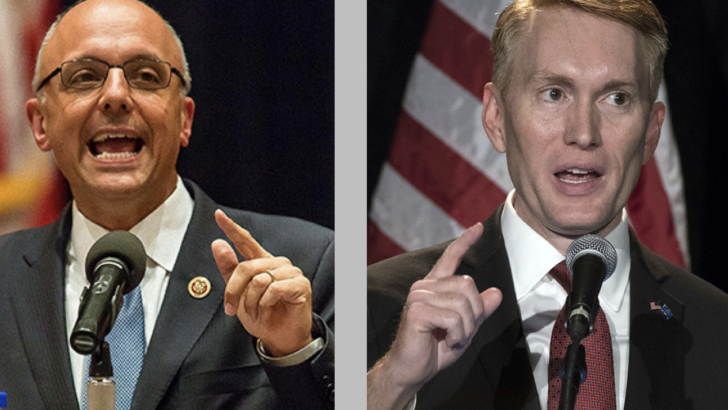
Rep. Ted Deutch (D-FL) and Sen. James Lankford (R-OK) recently introduced new pro-Israel legislation in Congress that would enable Americans to sue the Palestinian government.

New legislation introduced in Congress would potentially destroy the ability of the Palestinian leadership to engage in diplomatic and legal channels to support Palestinian national aspirations. The legislation would give Palestinian leaders two options: withdraw from international bodies that are integral to their pursuit of justice, or be held liable for actions they didn’t commit, potentially resulting in the government’s eventual bankruptcy and demise.

By Kathryn Shihadah | If Americans Knew | September 24, 2019

In addition to the roughly two dozen Israel-related bills in various stages currently before Congress, new legislation would open the Palestinian Authority (PA) to disastrous lawsuits and quash any hopes of a negotiated settlement with Israel. The PA has its share of corruption, as it attempts the impossible task of ruling while under the thumb of Israeli occupation. Nevertheless, analysts say that a dissolution of the Palestinian government through U.S. legislation could be catastrophic.

Current legislation promoted by segments of the Israel lobby would do just that.

The latest bipartisan legislation would enable American victims of political violence in Israel to work through the American court system to collect damages from the Palestinian government. (Notably, it would not afford American victims of Israeli violence, such as this 16-year-old, the same opportunity.)

The legislation is the latest in a string of attempts to extract huge sums of money from the Palestinian government for violence perpetrated by individuals acting alone. Previous rulings declared such lawsuits outside US jurisdiction. (Iran has also been targeted.)

Current legislation: “Promoting Security and Justice for Victims of Terrorism Act of 2019”

H.R.1837 (and its twin S.2132) is written in such a way that, in the words of human rights attorney Zaha Hassan, undermines “the ability of the Palestine Liberation Organization (PLO) to engage diplomatic and legal channels to support Palestinian national aspirations and to seek accountability through international mechanisms.”

She writes that this would result in “the end of a Palestinian negotiating partner for any future peace talks.”

In addition, Hassan points out, this would severely impact the international effort on behalf of justice for Palestinians.

She writes: “Many Palestinians and those in the solidarity community may not fully appreciate how the international delegitimization or bankrupting of the PLO – the body still recognized as the sole legitimate representative of the Palestinian people – could impact their human rights advocacy in the US and globally. Whatever one’s views about the PLO or PA, no longer having an address for the national aspirations of the Palestinian people will make international and US advocacy much more difficult.”

The legislation seeks to impose US court jurisdiction on Palestine so that American citizens (and their lawyers) can target the Palestine Liberation Organization (PLO) and the Palestinian Authority (PA) with lawsuits for suicide attacks in the early 2000s.

(Note that Palestinian suicide bombings killed far fewer civilians than Israeli bombings of Palestinians; see stats here and here. Additional info about suicide bombings is here, here, and here.)

Given the anti-Palestinian sentiment within some US courts (discussed below), it is likely that the PA would be found liable and face crippling fines – in spite of its lack of involvement in the incidents.

To escape certain bankruptcy, Palestine would need to resign from institutions that give it legitimacy in the world, such as its memberships in UNESCO and the International Criminal Court. (It has full membership in two additional international agencies, and observer status in six).

The loss of such memberships would be extremely damaging. For example, stepping down from membership in the International Criminal Court would bar Palestine from pursuing war crimes claims against Israel.

(That being said, many in the activist community believe that while the UN and ICC are vital components of justice for Palestinians, grassroots advocacy from American citizens is at least equally as important, as the US bankrolls and defends Israel’s actions.)

Under the new legislation, Palestine would be able to remain a member of the UN General Assembly (as a nonvoting observer) and maintain an office in the US for official UN business, but anything more would amount to “consent to jurisdiction,” and Palestine would be vulnerable to lawsuits.

There is already one court case in the US that could be devastating.

A past lawsuit against the PLO, was eventually decided in Palestine’s favor, but this would likely change if the new legislation goes through.

Initially, New York Judge George Daniels ordered the Palestinian government to pay over $650 million in damages for its alleged part in suicide attacks (more below), but an appeals court then dismissed the case.  Under the new legislation, the verdict would likely be reinstated.

Such lawsuits could cause the PA eventually to go bankrupt. In addition, the PA would officially be equated with a terrorist organization, even though it had no connection with the violence.

This punishing and unjust Catch-22 situation would be imposed on a people already dealing with illegal occupation and blockade.

Congress’ double standard

As pro-Israel lawmakers lay this trap for Palestine, US laws are already on the books – for example, the Leahy Laws – that require limiting aid to countries practicing Gross Human Rights Violations (GHRV). These laws, however, have never been applied to Israel – in spite of its well-documented history of human rights violations (for example, see this, this, and this).

Another legislative irony lies in the fact that the new law would seek to hold the Palestinian government responsible for rogue members of its community whose acts the leadership roundly condemned; meanwhile refusing to hold the government of Israel responsible for illegal and immoral acts that the Israeli government and military openly and officially perpetrate.

Human Rights Watch lists five main categories of human rights abuses by Israel, all of which have been chronicled for decades: unlawful killings; forced displacement; abusive detention; the closure of the Gaza Strip and other unjustified restrictions on movement; and the development of settlements, along with the accompanying discriminatory policies that disadvantage Palestinians.

Additionally, Congress is entertaining legislation that could potentially strip Americans of their First Amendment rights, in order to protect Israel from criticism and from economic ramifications for its policies that contravene international law.

US jurisprudence reveals yet another double standard in the issue of Americans who have been killed or injured by Israeli troops, and have been unable to find justice.

Rachel Corrie was one of several American citizens killed while peacefully protesting in Israel; after twelve years of litigation, Israel cleared itself of wrongdoing; a court case in the US was dismissed due to lack of jurisdiction. Emily Henoschowitz is an Israeli-American who lost an eye due to Israeli military violence. Israel never compensated her. US citizen Tariq Abu Khdeir’s severe beating by an Israeli officer was video taped; the officer was later sentenced to only 45 days of community service and a suspended prison term of four months.

The most dramatic example of Americans killed by Israel – and then denied justice – is the USS Liberty.

On June 8, 1967, 34 American servicemen were killed and 174 were wounded when Israeli warplanes and torpedo boats attacked the clearly-marked Navy ship, the USS Liberty. An independent commission led by four-star Admiral Thomas Moorer found that the Israeli attack constituted “an act of war” against the US, and stated: “There is compelling evidence that Israel’s attack was a deliberate attempt to destroy an American ship and kill her entire crew.” Yet, Israel has never been held to account for its lethal actions against American servicemen (and US media have largely buried the facts).

These are just a handful of the many wrongdoings on the part of Israel that have gone unacknowledged, excused, or unpunished by the US court system; meanwhile Congress seeks to castigate the government of Palestine for the actions of Palestinians operating outside its authority.

Billions to Israel, standard conditions waived

The House version of the bill currently under consideration contains some troubling assertions that deserve a close look.

• The section of the legislation entitled, “Security Assistance for Israel,” makes into law the US MOU to provide Israel $3.8 billion – an amount that the majority of Americans consider excessive.

• The bill also states that Israel is eligible for special treatment – specifically, a waiver of licensing requirements for weapons exports. The expressed reason for the waiver is Congress’ “findings” that “Israel has adopted high standards in the field of export controls” and that Israel is a signatory to “the Protocol for the Prohibition of the Use in War of Asphyxiating, Poisonous or Other Gases, and of Bacteriological Methods of Warfare.”

• It also waives the Arms Export Control Act whenever Israel informs the US that it is “under an existing or imminent threat of military attack.” At this point the President may grant “immediate transfer” of whatever Israel needs, in amounts “not subject to any limitation.” This waiver is spelled out in spite of Israel’s frequent violations – or perhaps because of them (see this and this).

These waivers are deeply problematic. In fact, as reported by Israeli newspaper Ha’aretz, Israel routinely sells weapons to human rights abusers, including South Sudan, Myanmar, and Sri Lanka (Israel also sold to South Africa during its Apartheid era). In addition, Human Rights Watch and Amnesty International revealed that Israel used white phosphorus in crowded civilian areas during its 2008-2009 incursion into Gaza – a charge which Israel at first denied, but later acknowledged.

Although Israel’s weapons sales and its use of chemical weapons are well-known, Congress insists that Israel deserves favored status in the sharing of US munitions.

About the sponsors of the bills

Rep. Ted Deutch (D-FL), who initiated the House version of the bill, has received $613,041 in campaign contributions from pro-Israel organizations during his ten years in office, and has taken five AIPAC-sponsored trips to Israel. In 2109 alone, he introduced H.R.1837, the US-Israel Cooperation Enhancement and Regional Security Act; denounced boycott of Israel; and criticized Gazan rockets but not Israeli sniper killings of unarmed demonstrators. Deutch serves as Chairman of Middle East, North Africa, Int’l Terrorism Subcommittee.

Sen. James Lankford (R-OK), has been an outspoken supporter of Israel before he introduced S.2132. In 2014, he condemned boycotts; in 2015 he spoke at the AIPAC policy conference, and when Israeli PM Netanyahu came to Capitol Hill without a presidential invitation, Lankford welcomed him warmly; he discouraged a change in EU labelling laws for “certain products made by Israeli companies”; in 2018 he supported Trump’s recognition of Jerusalem as Israel’s capital. On Lankford’s official website, he criticizes Obama’s occasional “inexplicable deference to the Palestinians.”

Palestine at the UN

Because the US and Israel – two critical entities in the quest for self-determination – insist that Palestine has no legitimacy, Palestine has for several years pursued legitimacy in the global arena.

The State of Palestine began pursuing membership in the UN and its agencies in 2011, after President Obama’s target date for a two-state solution had come and gone.

“The Quartet” (the US, the EU, Russia, and the UN) had not managed to negotiate a two-state solution. Abbas explained that Israel was responsible for the failure, noting that settlement building, the ongoing blockade of Gaza, and other policies

are unilateral actions and are not based on any earlier agreements. Indeed, what we witness is a selective application of the agreements aimed at perpetuating the occupation…the Israeli government refuses to commit to terms of reference for the negotiations that are based on international law and United Nations resolutions.

At that point, with no solution in sight, Palestinian leaders embarked on a different path to statehood: seeking recognition from individual countries. The effort met with relative success: the UN General Assembly voted 138-9 (with 41 abstentions) to grant Palestine non-Member Observer State status, a move that Israeli PM Netanyahu’s office called “a meaningless decision.”

138 countries recognize the state of Palestine

Still, this upgrade is widely considered “de facto recognition of the sovereign state of Palestine.” Since then, 138 out of the 193 UN member states and two non-member states have recognized the state of Palestine. In other words, 71.5 percent of the UN member countries officially consider Palestine a country.

In 2015, the State of Palestine became a member of the International Criminal Court (ICC), which gave the court jurisdiction over the Israel’s 2014 incursion into Gaza – in which 2,250 Palestinians and 73 Israelis were killed.

The US has not recognized the State of Palestine, but has referred to the “Palestinian territories” – until recently. The US State Department has removed Palestine from its list of countries and regions. It is unclear why this occurred or whether it will be changed. As of today, there is no mention of Palestine, Palestinian, Occupied Territories, West Bank, or Gaza in the State Department’s list of “Countries and Areas.”

Attacks against Palestine’s economy and legitimacy are nothing new.

First attempt to extort money from the PA

The US State Department explains that until the 20th century, immunity of a state from jurisdiction of another state was “an undisputed principle of customary international law [that] seemed to have no exceptions.” When governments began engaging in commerce, however, a more “restrictive theory” of immunity began to develop; the US officially enshrined this into law, gradually refining the legislation to make foreign states’ funds more accessible.

The 1976 Foreign Sovereign Immunities Act (FSIA) and the Antiterrorism and Effective Death Penalty Act of 1996 (AEDPA) defined protection for sovereign nations against lawsuits by US citizens. A “terrorism exception” enabled action against those states that were designated state sponsors of terrorism.

2015:  Israeli NGO v. PLO wins then loses

In 2015, an Israeli NGO represented ten Americans whose family members had been killed or injured during suicide bombings in 2002-2004 in Israel. The organization, Shurat HaDin (which has acted as a proxy for Mossad – Israel’s CIA), alleged in Sokolow et al v. Palestine Liberation Organization et al that the Palestinian Authority (PA) and the Palestine Liberation Organization (PLO) had participated in the plots.

Shurat HaDin won the suit, and the families were awarded over $650 million.

Michael Ratner, former president of the Center for Constitutional Rights, said at the time of the verdict, “the trial was a concrete demonstration of this country, the United States’ utter hypocrisy on the issue of who gets justice…The courts in our country, in the United States, will bend over backwards to hold Palestine liable.”

Ratner pointed to three cases he had tried – and lost – on behalf of Americans killed by Israel. In the Rachel Corrie case, he was up against a US president who could “authorize gross violations of human rights, especially by Israel, and a court will look the other way… [as Israel commits] war crimes.”

He continued,

And if they can’t, if for some reason the law says you can’t do that, then who will step in here? Our Congress will step in. And as they did here, it will pass laws and statutes that give the courts laws that allow people in the United States, citizens, to sue Palestinians. But those laws will exempt Israel.

In another case, Ratner’s organization represented a Turkish-American citizen who had been killed during a 2010 Israeli military raid on a humanitarian flotilla in international waters, as it headed to Gaza. The conclusion: Israel, as a state, has sovereign immunity. The case never went to court – although the International Criminal Court had determined that Israeli soldiers had committed war crimes.

A year after the Sokolow decision, in August 2016, a US appeals court dismissed the case and threw out the verdict, declaring that the lower court had erred in presuming the US had jurisdiction in the case. (Details about the case here.)

Shurat HaDin went to the U.S. Supreme Court, requesting a review of the appellate decision; the request was denied.

Judge George Daniels

The New York judge who had found in favor of Shurat HaDin and tried to take $650 million from the PA was George B. Daniels, who had a history of such rulings.

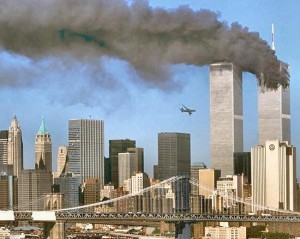
Daniels’ name has been prevalent in New York City court cases of this type. In 2016, he ruled, in the context of zero evidence, that Iran had been directly involved in 9/11. He ordered Tehran to pay $7.5 billion to victims of the September 11, 2001, attacks on the World Trade Center and the Pentagon — and $3 billion to insurers over related claims — after ruling that Iran had failed to prove that it did not help the bombers.

Upon Iran’s refusal to pay, in June 2017 Daniels ordered the seizure of a Manhattan building worth $500 million that was said to be owned by Iran.

In a separate suit against Iran, the same judge – George Daniels – ruled that Iran should pay 47 plaintiffs over $6 billion for its alleged part in training the 9/11 attackers. Iran refused to pay, having already been cleared of guilt on multiple fronts (as reported in non-US media only, for example here).

Philip Giraldi writes that New York courts – especially the Federal Court for the Southern District of Manhattan, where Sokolow was tried – is a great place for “suing the pants off of any number of foreign governments and individuals with virtually no requirement that the suit have any merit.” “Friendly” judges in this district (like Daniels) attract practitioners of “predatory capitalism.”

Giraldi summarizes:

America’s judiciary has been manipulated and politicized. If you are a foreigner of any kind but most particularly an Iranian or Palestinian or indeed an Arab or Muslim and you are being tried in a court in New York City you might just as well save your money and not seek to find a lawyer to defend yourself. If a slimy vulture fund owner wants your money chances are he will get it. And if an even completely ridiculous attempt to tie you into terrorism or terrorism support is made, you will be railroaded by the system.

Second Attempt: ATCA – the “Anti-Terrorism Clarification Act”

Since Sokolow in the end failed to bring the desired results, Congress sought other means to compensate the victims – and, especially, implicate Palestinian leadership. ATCA, the Anti-Terrorism Clarification Act, which became law in 2018, seemed to close the jurisdiction loophole.

In the words of Harry Graver and Scott Anderson of lawfareblog.com, ATCA “primarily intended to revive [the Sokolow v. PLO] plaintiffs’ cases by amending the underlying law,” by “[expanding] the personal jurisdiction of the federal courts.”

ATCA attached judicial authority to economic aid: the Palestinian government’s acceptance of financial assistance from the US became “consent to jurisdiction” – the PA and PLO found themselves under the purview of US courts.

When this change went into effect, Palestinian President Mahmoud Abbas informed Washington, “The government of Palestine respectfully informs the government of the United States that…it fully disclaims and no longer wishes to accept any form of assistance referenced in ATCA.”

Not an admission of guilt – Palestinian leadership has always denounced politically motivated violence – this move by Abbas shielded the PA from bankruptcy by removing its “consent” from the newly-minted jurisdiction.

Fast-forward to today: Congress’ latest iteration of the anti-Palestinian legislation seeks an insidious new form of collective punishment for the beleaguered Palestinian government and people.

At the same time, our legislators on Capitol Hill refuse to hold Israel accountable for its ongoing thoroughly documented and egregious human rights violations.


To contact your Congress members about the legislation, go here.


Kathryn Shihadah is staff writer for If Americans Knew.
September 24, 2019 Posted by | Ethnic Cleansing, Racism, Zionism | , , , | Leave a comment

Exposing the 9/11 Deception – Christopher Bollyn, #412

Christopher Bollyn in NYC on 9/11; companies hired to do ground zero “clean-up”; hot spots; analysis of nuclear footprint at ground zero; analysis of smoke and the particle effect that caused debilitating illnesses in NYC; the mysterious “final load” moved out of ground zero; same criminal network behind 9/11 and Jeffrey Epstein; Ronald Lauder; privatization programs; Ehud Barak; University of Alaska Fairbanks study on WTC 7; Commissioner of the Franklin Square and Munson Fire District calling for a new investigation; government officials conduct the cover-up; Khalid Sheikh Mohammed; surveillance state; dystopia created by 9/11 attacks; motivation of 9/11 to create the war on terror; Bollyn’s new book.

Aired: September 11, 2019

Visit Guns and Butter at: http://www.gunsandbutter.org
Subscribe to our newsletter at: eepurl.com/bmg4zf

September 24, 2019 Posted by | False Flag Terrorism, Timeless or most popular | , | Leave a comment

US refusal to issue visas to Russian UN General Assembly delegates is ‘political move’ – senator

RT | September 24, 2019

The chairman of the Russian Federation Council’s international affairs committee, Konstantin Kosachyov, has described the US’ refusal to issue entry visas to a number of Russian delegates to the UN General Assembly session as a political decision.

“The US deliberately took a move to delay the issuance of visas. This is obviously a political, not a technical decision,” he was quoted as saying. The Russian delegation had asked for visas 55 days ago, the senator noted. “Such actions by the American side require a ‘painful’ response from Russia,” Kosachyov told reporters.

Kremlin spokesman Dmitry Peskov said earlier that the US has broken international rules by failing to issue visas to Russian senators, adding that a tough response from both Moscow and the United Nations is needed.

September 24, 2019 Posted by | Aletho News | , , | Leave a comment

Never Forget, Never Again

By Assad Al-Liftawi – empirestrikesblack – September 23, 2019

You say ‘never forget’

But what is there to forget when you don’t know what indeed happened?

You bow down at the altar of jingoism

Renewing your religion

Every year, a minute’s silence

Singing the hymn of American exceptionalism

Uttering hollow clichés claiming to ‘never forget’

As you drag the names of the dead through the mud

Refusing to do justice to their sacrifice

Alas you will never forget because you haven’t known the truth to be remembered

Dov Zakheim flew those planes

Chertoff released the ‘Israeli’ spies

Silverstein took the lease and buried the evidence

The ‘Israelis’ danced in Manhattan

But you don’t even know, so how could you forget?

Never forget: ‘Israel’ did 9/11

Or perhaps not ‘Israel’?

The Mossad and her network of sayanim

Dug in to the States like ticks on a host

From D.C. to NYC and everywhere in between

Remember, remember the 11th of September

How dare you say ‘never forget’?

When you refuse to honour the dead with the truth

‘Never question’ would fit you more

As you toe the line you’re fed

Walk on, walk on

Two decades of slumber

Never forget

September 24, 2019 Posted by | False Flag Terrorism, Mainstream Media, Warmongering, Timeless or most popular | , | Leave a comment

Will ‘Ukraine-Gate’ Imperil Biden’s Bid?

By Pat Buchanan • Unz Review • September 24, 2019

With the revelation by an intel community “whistleblower” that President Donald Trump, in a congratulatory call to the new president of Ukraine, pushed him repeatedly to investigate the Joe Biden family connection to Ukrainian corruption, the cry “Impeach!” is being heard anew in the land.

But revisiting how this latest scandal came about, and how it has begun to unfold, it is a good bet that the principal casualty could be the former vice president. Consider:

In May 2016, Joe Biden, as Barack Obama’s designated point man on Ukraine, flew to Kiev to inform President Petro Poroshenko that a billion-dollar U.S. loan guarantee had been approved to enable Kiev to continue to service its mammoth debt.

But, said Biden, the aid was conditional. There was a quid pro quo.

If Poroshenko’s regime did not fire its chief prosecutor in six hours, Biden would fly home and Ukraine would get no loan guarantee. Ukraine capitulated instantly, said Joe, reveling in his pro-consul role.

Yet, left out of Biden’s drama about how he dropped the hammer on a corrupt Ukrainian prosecutor was this detail.

The prosecutor had been investigating Burisma Holdings, the biggest gas company in Ukraine. And right after the U.S.-backed coup that ousted the pro-Russian government in Kiev, and after Joe Biden had been given the lead on foreign aid for Ukraine, Burisma had installed on its board, at $50,000 a month, Hunter Biden, the son of the vice president.

Joe Biden claims that, though he was point man in the battle on corruption in Ukraine, he was unaware his son was raking in hundreds of thousands from one of the companies being investigated.

Said Joe on Saturday, “I have never spoken to my son about his various business dealings.”

Is this credible?

Trump and Rudy Giuliani suspect not, and in that July 25 phone call, Trump urged President Volodymyr Zelensky to reopen the investigation of Hunter Biden and Burisma.

The media insist there is no story here and the real scandal is that Trump pressed Zelensky to reopen the investigation to target his strongest 2020 rival. Worse, say Trump’s accusers, would be if the president conditioned the transfer of $250 million in approved military aid to Kiev on the new regime’s acceding to his demands.

The questions raised are several:

Is it wrong to make military aid to a friendly nation conditional on that nation’s compliance with legitimate requests or demands of the United States? Is it illegitimate to ask a friendly government to look into what may be corrupt conduct by the son of a U.S. vice president?

Joe Biden has an even bigger problem: This issue has begun to dominate the news at an especially vulnerable moment for his campaign.

Biden’s stumbles and gaffes have already raised alarms among his followers and been seized upon by rivals such as Cory Booker, who has publicly suggested that the 76-year-old former vice president is losing it.

Biden’s lead in the polls also appears shakier with each month. Sen. Elizabeth Warren has just taken a narrow lead in a Des Moines Register poll and crusading against Beltway corruption is central to her campaign.

“Too many politicians in both parties have convinced themselves that playing the money-for-influence game is the only way to get things done,” Warren told her massive rally in New York City: “No more business as usual. Let’s attack the corruption head on.”

Soon, it will not only be Trump and Giuliani asking Biden questions abut Ukraine, Burisma and Hunter, but Democrats, too. Calls are rising for Biden’s son to be called to testify before congressional committees.

With Trump airing new charges daily, Biden will be asked to respond by his traveling press. The charges and the countercharges will become what the presidential campaign is all about. Bad news for Joe Biden.

Can he afford to spend weeks, perhaps months, answering for his son’s past schemes to enrich himself through connections to foreign regimes that seem less related to Hunter’s talents than his being the son of a former vice president and possible future president?

“Ukraine-gate” is the latest battle in the death struggle between the “deep state” and a president empowered by Middle America to go to Washington and break that deep state’s grip on the national destiny.

Another issue is raised here — the matter of whistleblowers listening in to or receiving readouts of presidential conversations with foreign leaders and having the power to decide for themselves whether the president is violating his oath and needs to be reported to Congress.

Eisenhower discussed coups in Iran and Guatemala and the use of nuclear weapons in Korea and the Taiwan Strait. JFK, through brother Bobby, cut a secret deal with Khrushchev to move U.S. missiles out of Turkey six months after the Soviets removed their missiles from Cuba.

Who deputized bureaucratic whistleblowers to pass judgment on such conversations and tattle to Congress if they were offended?

Copyright 2019 Creators.com.

September 24, 2019 Posted by | Corruption | , | Leave a comment
