Who is Woods Hole Oceanographic Institution? Oceanographer or defense contractor?

R/V Neil Armstrong arrives at Woods Hole Oceanographic … collectspace.com
By Richard Hugus | August 28, 2019
WHOI is the acronym for the ‘Woods Hole Oceanographic Institution’, based on Cape Cod, Town of Falmouth, village of Woods Hole, Massachusettts. On August 2, 2019 WHOI applied to the town of Falmouth for the clearing of 2.7 acres of woodland and the construction of a 3 story, 50,000 square foot building on what it calls its Quissett Campus, about a mile north of Woods Hole village. Woods Hole residents, the town of Falmouth, and a regulating authority called the Cape Cod Commission are now in the position of having to evaluate the proposed project and decide on approving it. Documentation and promotion of the project provided by WHOI to the Falmouth Planning Department, and summarized by the Falmouth Enterprise, says its new building — the New Quissett Facility — “is proposed as a ‘technology accelerator . . . by creating this facility the NQF will become the epicenter of autonomous vehicle, sensor, and technology innovation at WHOI and around the world and could lead to a net increase in regional economic activity.”
Mention of “autonomous vehicle and sensor technology” brings up the question of military research into and use of underwater drone and warfare technology and WHOI’s role in developing that technology. Though operating for years in the midst of a pleasant residential and tourist area, few people are aware that WHOI is a defense contractor. The Institution was created in 1930 and was devoted solely to defense work during World War II. In all available documents submitted to the Cape Cod Commission for its recent building projects, and in all currently available representations of its activities to the public, WHOI describes itself as a scientific and educational institution dedicated solely to studying the ocean. In its documentation for the Quissett project, WHOI calls itself “the world’s largest non-profit dedicated to ocean research.” The omission by WHOI of its significant military research and development amounts to deception. WHOI receives major funding from the Office of Naval Research, which “coordinates, executes, and promotes the science and technology programs of the United States Navy and Marine Corps.” These programs are highly unlikely to be peaceful and benevolent. The US Navy and Marines are, afterall, in the business of war.
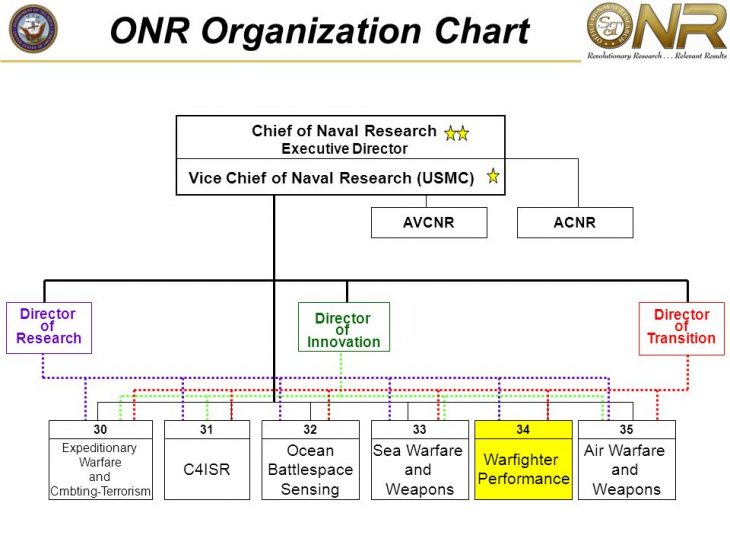
Source: slideplayer.com (C4ISR-Command, Control, Communications, Computers, Intelligence, Surveillance and Reconnaissance)
A July 20, 2018 Department of Defense listing of Navy/Office of Naval Research contracts states: “Woods Hole Oceanographic Institution, Woods Hole, Massachusetts, is awarded a $7,719,478 cost-plus-fixed-fee contract for development and demonstration of advanced ocean battlespace capabilities . . . This contract was competitively procured . . . for science and technology projects for advancement and improvement of Navy and Marine Corps operations, including Ocean Battlespace Sensing . . . The Office of Naval Research, Arlington, Virginia, is the contracting activity . . .”
Ocean Battlespace Sensing has to do with submarine and mine warfare. There is no information on WHOI’s web site about this nearly $8 million grant, or about what it is doing in the area of ocean battlespace sensing and submarine warfare. On April 7, 2016 when the new research vessel Neil Armstrong first arrived in Woods Hole, Dr. Frank Herr, head of the U.S. Navy’s Ocean Battlespace Sensing department (so-called “code 32” above), was among the notables addressing a gathered crowd. WHOI Director Mark Abbott also spoke, telling him and others, “We’re very proud to have been selected by the Office of Naval Research to operate the Neil Armstrong.” Navy-owned ships and advanced ocean battlespace work are not what we normally associate with a “non-profit organization dedicated to ocean research, exploration, and education” — WHOI’s stated activities. Defense-related activities are clearly a part of WHOI’s operations, but they are consistently edited out of the public image WHOI promotes.
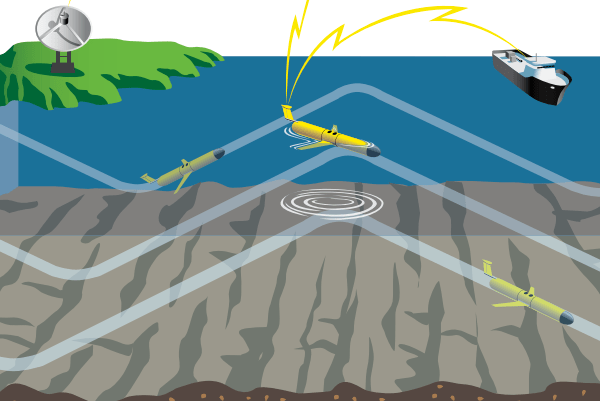
The Next Level – Drone Wars, breakfornews.com
As another example: according to an April 22, 2019 report by the DoD Defense Logistics Agency: “Woods Hole Oceanographic Institution, Woods Hole, Massachusetts, is awarded an $8,421,581 cost-plus-fixed-fee contract for the research effort entitled, “Project Sundance.” Except for the announcement of this contract, there is no information available anywhere on the web, or at WHOI’s own web site, about what Project Sundance is, leaving one to wonder if the project is classified — i.e., something the public is not entitled to know about.
Finally, in 1985, WHOI achieved fame when one of its scientists, Robert Ballard, discovered the wreckage of the Titanic. It wasn’t until years later that we got the full story. According to The National Geographic (November 21, 2017), the Titanic discovery only happened by the way in what was actually a top secret military operation to find two wrecked US Navy nuclear submarines. Remote sensing technology and an underwater submersible vehicle developed in Woods Hole and used aboard the WHOI research vessel, Knorr, was used in the discovery. National Geographic tells us the Knorr’s true mission: “the military wanted to know the fate of the nuclear reactors that powered the ships . . . this knowledge was to help determine the environmental safety of disposing of additional nuclear materials in the oceans.”
Ballard held the rank of Commander in the US Navy and was working as a liason to WHOI from the Office of Naval Research at the time of the discovery. Research on disposal of nuclear waste in the ocean is hardly in keeping with WHOI’s stated mission, “to advance knowledge about our planet, but also to ensure society’s long-term welfare and to help guide human stewardship of the environment.” Moreover, by making it look like this was just a fun adventure undertaken by WHOI to solve the mystery of the Titanic, a hoax was perpetrated on the public.
WHOI, the proponent of this new building project, is not being fully honest in the descriptions it gives of its mission and operations in Woods Hole. This calls WHOI’s credibility and full disclosure into question, and prompts further questions about the military-related role of the proposed new facility — “the epicenter of autonomous vehicle, sensor, and technology innovation.” The mentioned technology may well have uses in oceanographic research, but it may equally well have to do with “ocean battlespace sensing” — i.e., marine warfare. WHOI advertises itself as a humanitarian scientific institution without mentioning the clearly relevant fact that a significant part of its funding and research is from and for the US Department of Defense. It is not possible to fully evaluate a building proposal from an institution that is involved in secret projects because Cape Cod residents have no way of knowing if they are being given all the facts. Indeed, they have good reason to believe they are not being given all the facts,
The US military and its supporting contractors are the main source of wars of aggression and misery in the world today. It would be unethical to support expensive new facilities, paid for with our tax dollars and with what is left of our open space, for one of those contractors on Cape Cod. Yet war and militarization are so normalized in the American landscape, it is as if this is not even an issue.
India begins sending Russia money for S-400s despite pressure from US
RT | August 29, 2019
New Delhi started paying for the state-of-the-art Russian S-400 air defense missile systems it ordered, as Washington failed to pressure the country into scrapping the major arms deal with Moscow.
Moscow has received an advanced payment for the weapon systems, the spokesperson for the FSVTS, the government agency responsible for coordinating arms trades, confirmed on Thursday.Russia and India sealed the $5.4bn deal in October after lengthy talks. Moscow is now due to ship five batteries of the S-400s by 2023.
The contract is a headache for the US, which has tried to pressure India into scrapping the sale. Officials in New Delhi, however, maintain that the S-400 is essential for national defense and have decided to stick with the purchase, despite the risk of violating US sanctions on Russia.
Similarly, Washington tried to dissuade its NATO ally, Turkey from buying S-400s from Moscow. Ankara also refused to budge, insisting it is free to choose the countries it purchases weapons from. Turkey began receiving components of the S-400s last month.
India has also ordered 21 new MiG-29 jet fighters from Russia and, on Wednesday, signed an agreement to upgrade the MiGs it already has.
Offer from Biarritz not good enough for Iran
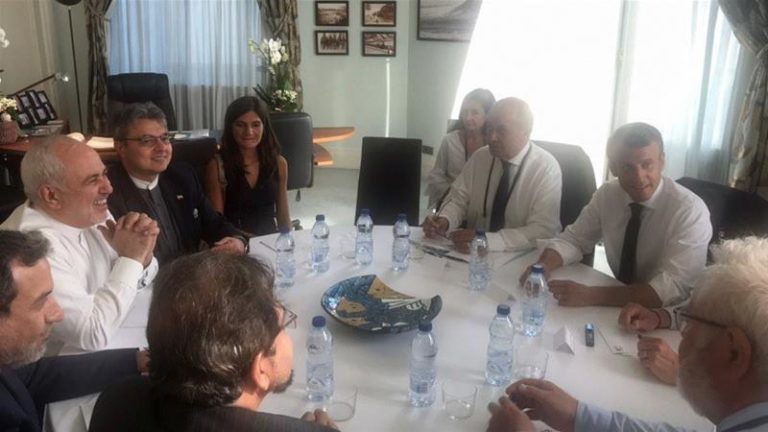
Iran’s Foreign Minister Javad Zarif (L) held talks in Biarritz on Sunday Aug. 25, 2019 with France’s President Macron (R) and Foreign Minister Jean-Yves Le Drian.
By M. K. BHADRAKUMAR | Indian Punchline | August 29, 2019
From all accounts, Tehran is struggling to cope with the startling news in the weekend from the G7 summit at Biarritz that a meeting between the presidents of the US and Iran is to be expected in the “coming weeks”.
The cautiously optimistic tone struck by the French President Emmanuel Macron and the conspicuously positive attitude adopted by President Trump along with the fact that the Iranian Foreign Minister Javad Zarif was actually present at Biarritz (with the prior knowledge and tacit concurrence of POTUS) — all these signalled that France’s back-to-back peace initiatives in the recent weeks with Washington and Tehran have come to a defining moment.
From Biarritz, Zarif took off for Tehran ostensibly to change planes for an onward journey to China as part of a previously scheduled Asian tour. Presumably, he briefed Rouhani on what transpired at Biarritz. Zarif is still on the Asian tour — China, Japan, Malaysia, etc., which are, interestingly, major buyers of Iranian oil.
If the Biarritz formula gains traction, these Asian countries have a key role to play in generating income for Iran out of oil sales, which apparently would incentivise Tehran to get into negotiations with the US.
En route to Beijing, Zarif tweeted, “Iran’s active diplomacy in pursuit of constructive engagement continues. Road ahead is difficult. But worth trying.” China’s foreign minister Wang Yi also spoke to Emmanuel Bonne, diplomatic adviser to French President Emmanuel Macron, by telephone on Monday. Bonne said France wanted to coordinate and cooperate with China to ease tensions over Iran and to maintain the 2015 nuclear deal, according to a report by official Chinese news agency Xinhua.
The initial reaction from Tehran at the level of Rouhani also suggested that he may be open to the idea of meeting Trump. Notably, Rouhani said on Monday, “I believe we should use any tool to protect our country’s national interests. If I think that meeting someone helps solve the people’s problems, I will not hesitate. The principle is our national interests.”
Two days later, however, Rouhani’s Chief of Staff and key aide Mahmoud Vaezi, who is an influential figure in the foreign policy establishment, conspicuously moderated what the president had said. Speaking to reporters in Tehran on Wednesday, Vaezi said any meeting with the US officials will solve no problem and the US must come back to the P5+1 negotiation table and respect its commitments to the Joint Comprehensive Plan of Action.
Vaezi didn’t altogether reject the idea of a Rouhani-Trump meeting, but added a template that the negotiations must also involve other guarantor states — E3, Russia and China. On the other hand, an Iranian economic delegation is proceeding to France next week. It could be that Tehran is strengthening its bargaining chip as well as insulating itself from the risk of engaging an interlocutor such as Trump who is fickle-minded, lacks consistency and has no coherent policies — and, above all, is surrounded by a team that includes notorious anti-Iran hawks, especially the National Security Advisor John Bolton.
Meanwhile, we see a significant hardening of Tehran’s stance in an interview with the state TV given by the Iranian Deputy Foreign Minister for Political Affairs Seyed Abbas Araqchi. Araqchi simply ruled out any negotiations with Washington so long as the sanctions remained in place.
In his words, “We are only talking with the European countries over our specific 11 demands (based on the JCPOA) and we will not negotiate with the US.” Vaezi’s remarks must be taken seriously, as he was one of the key negotiators of the 2015 nuclear deal and is an authoritative voice. Vaezi underlined that that no country would accept to enter negotiations while being under “maximum pressure” because doing so would mean “surrender”.
The offer held out in Biarritz appears to be simply not good enough for Tehran. Why should Tehran “surrender” after successfully countering the US’ regime change agenda and “maximum pressure” strategy and while the US has failed to reach the objectives behind its unilateral move to abandon the 2015 nuclear deal?
On Wednesday, Iran’s top military commander Chief of Staff of the Iranian Armed Forces Major General Mohammad Hossein Baqeri pointedly reminded everyone that it has been the country’s deterrence power that effectively stopped the US from going ahead with its plans to wage a war against Iran.
Quite obviously, a lot of churning has been going on within the top echelons of the Iranian establishment, which involve multiple agencies at an institutional level and even factions that would have congruent political interests or different priorities at any given time. The influential Majlis has not voiced an opinion. The bottom line is that all power centres would be waiting for the Supreme Leader Ayatollah Ali Khamenei to speak publicly.
Australia Furthers Its Cooperation With NATO
By Ramona Wadi | Strategic Culture Foundation | August 29, 2019
In 2001, Australia became involved in the US “war on terror”, coined by former US President George W Bush as the pretext for invading Afghanistan. The rationale behind Australia’s decision was the ANZUS Treaty – a non-binding security between Australia, New Zealand and the US purportedly in line with the principles of the UN Charter.
Despite the treaty relating to possible attacks on either party in the Pacific, former Australian Prime Minister John Howard invoked Article VI to justify Australia’s involvement in Afghanistan, which states, “This treaty does not affect and shall not be interpreted as affecting in any way the rights and obligations of the Parties under the Charter of the United Nations or the responsibility of the United Nations for the maintenance of international peace and security.”
Since 2001, Australia has maintained a presence in Afghanistan and Iraq. Adopting US rhetoric on security and terrorism, the Australian Defence Ministry described its presence in Afghanistan thus: “Our fundamental objective in Afghanistan is to combat a clear threat from international terrorism to both international security and our own national security. Australia cannot afford, and Australians cannot afford, to let Afghanistan once again become a safe haven and training ground for terrorist organisations.”
Needless to say, the war on terror accomplished a continuation of the terrorism fomented by the US in its plans to permanently destabilise the region. Following its involvement in Afghanistan and Iraq, Australia has also cooperated with the North Atlantic Treaty Organisation (NATO) since 2005, thus prioritising security discourse at a national level.
In 2012, the Australia-NATO Joint Political Declaration established the foundations for cooperation and strategy – in other words, the prolongation of intervention abroad upon pretexts of security. The document recognises Australia as “one of the leading contributors to the NATO-led ISA mission in Afghanistan, which works under a UN Security Council mandate.”
Additionally, the declaration whitewashes foreign intervention through security concerns: “We understand the need to manage effectively risks and threats to our mutual interest, such as political instability from failed states, terrorism, the proliferation of weapons of mass destruction and their means of delivery, and cyber-attacks.” This statement has been reflected in the recent partnership agreement signed by NATO and Australia earlier this month.
NATO Secretary General Jens Stoltenberg described Australia’s role as “helping us to prevent Afghanistan from becoming a safe haven for international terrorists.” Days later, US President Donald Trump spoke about US presence in Afghanistan as a purported deterrent to prevent the country from becoming “a laboratory for terror.”
Far from deterring terrorism, international involvement in Afghanistan has created networks of terror which cannot be dissociated from foreign intervention. Dismantling terrorism in a failed state created by foreign intervention is the pretext for prolonged international presence.
Australia’s involvement in Iraq and Afghanistan as a non-NATO member has been one of the most prominent and reportedly in relation to training missions, although it was also involved in capturing and detaining alleged terror suspects.
As early as 2003 while working in close cooperation with the US, Australia not only was knowledgeable about the torture and abuse meted out at Abu Ghraib in Iraq – it was also a participant. Documents reveal that Australia’s representative at Abu Ghraib, officer and military lawyer George O’Kane, blocked the International Committee of the Red Cross access to detainees undergoing torture sessions. The Australian Government’s response to the revelations refuted responsibility, stating that the techniques applied against detainees were in concordance with the Geneva Conventions.
Australia was also one of the countries, among them NATO members and allies, participating in the Central Intelligence Agency’s (CIA) extraordinary rendition program, which involved the transfer of individuals suspected of terrorism to secret US detention and torture centres.
Speaking about the recently agreed framework, Stoltenberg highlighted Australia’s cooperation with NATO as focusing on preventing terrorism. “Training local forces is the best thing we can do in fighting terrorism; helping countries to stabilise their own countries.”
False premises instigated the war on terror. Maintaining it requires the regurgitation of past, dangerous lies. The West’s appropriation of what constitutes “individual liberty, democracy, human rights and the rule of law” has fomented perpetual war and subjugation to imperialist powers.
In the words of Australian Defence Minister as to the level of involvement of Australia in the region, “what we’re doing at the moment is assessing the ask from the United States, assessing what other allies are doing and how they’re considering this.” A simple statement that shows the Australian government has no consideration for the countries invaded by NATO, the mutating violence, dispossession of people and permanent instability. Neither, for that matter, will Australia assess its own involvement in terms of the human rights violations it helped to propagate. Dropping bombs in Iraq? Australia seems to have no problem with furthering an oppressive legacy.
Lying for Israel: Why Nearly Everyone in Washington Does It
By Philip Giraldi | Strategic Culture Foundation | August 29, 2019
It is not often that one hears anything like the truth in today’s Washington, a city where the art of dissimulation has reached new heights among both Democrats and Republicans. Everyone who has not been asleep like Rip Van Winkle for the past twenty years knows that the most powerful foreign lobby operating in the United States is that of the state of Israel. Indeed, by some measures it just might be the most powerful lobby period, given the fact that it has now succeeded in extending its tentacles into state and local levels with its largely successful campaigns to punish criticism or boycotting of Israel while also infiltrating boards of education to require Holocaust education and textbooks that reflect favorably on the Jewish state.
Occasionally, however, the light does shine in darkness. The efforts by Congresswomen Rashida Tlaib and Ilhan Omar to challenge the power of the Israel Lobby are commendable and it is worth noting that the two women are being subjected to harassment by their own Democratic Party in an effort to make them be silent. President Donald Trump, meanwhile, has attempted to make them the face of the Democrats, calling them “Jew haters” and “anti-Semites” while also further claiming that they despise the United States just as they condemn Israel. This has developed into a Trump diatribe claiming that American Jews who vote for Democrats are “disloyal.” By disloyal he meant disloyal to Israel, in a sense ironically confirming that in the president’s mind Jews have dual loyalty, which, of course, at least some of them do.
And Trump has further exercised his claim to the Jewish vote by accepting the sobriquet “King of Israel” bestowed by a demented talk radio host. As Secretary of State Mike Pompeo has already asserted that Trump’s election victory was the result of divine intervention to “save Israel from Iran,” the kingship is presumably an inevitable progression. One can only imagine what will come next.
One Democratic congressman who has apparently become fatigued by all that bipartisan pandering to Israel is Ted Lieu of California. Last Thursday Lieu rebuked Trump’s US Ambassador to Israel David Friedman over his support of Prime Minister Benjamin Netanyahu’s refusal to allow Tlaib and Omar to visit the West Bank where Tlaib’s grandmother lives under Israeli occupation. Friedman had issued a statement saying that the United States “respects and supports” the Israeli action. He went on to elaborate “The Boycott, Divestment and Sanctions (BDS) movement against Israel is not free speech. Rather, it is no less than economic warfare designed to delegitimize and ultimately destroy the Jewish state. [Israel] has every right to protect its borders against those activists in the same manner as it would bar entrants with more conventional weapons.”
As Friedman was describing two thirty-something nonviolent first term congresswomen as nothing less than armed attackers about to be unleashed against the Jewish state because they support a peaceful boycott movement, Lieu apparently felt compelled to courageously respond to the ambassador, tweeting “Dear @USAmbIsrael: You are an American. Your allegiance should be to America, not to a foreign power. You should be defending the right of Americans to travel to other countries. If you don’t understand that, then you need to resign.”
Later that day, on CNN, Lieu explained his objection to Friedman’s actions, saying “Actually, I think he should resign because he doesn’t see to understand that his allegiance is to America, not to a foreign power. He should be defending the right of Americans to go abroad to other countries and to visit their relatives.”
The outrage from the mighty host of friends of Israel came immediately, with accusations that Lieu was accusing Friedman of “dual loyalty,” that greatly feared derogatory label that is somewhat akin to “anti-Semitism” or “Holocaust denial” in the battery of verbal munitions used to silence critics of the Jewish state. Indeed, Lieu was accused of employing nothing less than a “classic anti-Semitic” trope.
Under considerable pressure, Lieu deleted the tweet and then issued something of an apology, “It has been brought to my attention that my prior tweet to @USAmbIsrael raises dual loyalty allegations that have historically caused harm to the Jewish community. That is a legitimate concern. I am therefore deleting the tweet.”
But the reality is, of course, that Friedman does not have dual loyalty. He has real loyalty only to Israel, which he demonstrates repeatedly by uncritically supporting everything the kleptocratic Netanyahu regime does with nary a pause to consider actual American interests. He has supported the weekly slaughter of unarmed Gazan civilians by Israeli sharpshooters, praised the bombing of Syria, pushed for the move of the US Embassy to Jerusalem, applauded the recognition by Washington of Israeli sovereignty over the Golan Heights, and is an active supporter of and contributor to the illegal Israeli settlements on the West Bank. He has even pressured the State Department into ceasing its use of the word “occupation” when describing the situation on the West Bank. It is now “disputed.” So, it is no surprise that David Friedman, formerly a bankruptcy lawyer before he became ambassador, lines up with Netanyahu rather than with two American Congresswomen who, apart from anything else, have good reasons to travel to a country that is the largest US aid recipient in order to see conditions on the ground. To put it mildly, Friedman is a disgrace and a reflection of the character or lack thereof of the man who appointed him. If he had any decency, he would resign.
There is no benefit for the United States when an American Ambassador excuses the brutality of a foreign government, quite the contrary as it makes Washington an accomplice in what are often undeniably war crimes. Even though Congressman Lieu was clearly read the riot act and made to fly right by his own party’s leadership, it took considerable courage to speak up against both Israel and an American ambassador who clearly is more in love with the country he is posted to than the country he is supposed to represent. Of course, in never-any-accountability Washington a buffoon posing as an ambassador as Friedman does will get away with just about anything and, as the subject is Israel, there will hardly be a word of rebuke coming from anyone, to include the mainstream media. But the tweet by Lieu is nevertheless significant. Hopefully he will be among the first of many congressmen willing to put at risk their careers at times to speak the truth.
Alabama GOP Approve Resolution on Expulsion of Ilhan Omar From US Congress – Report
Sputnik – August 28, 2019
Ilhan Omar, one of two Muslim lawmakers in the US Congress, gained notoriety following a series of statements in which she alleged that Jewish organisations bribed US lawmakers for their support of Israel and downplayed the 9/11 terror attacks by describing them as “some people did something”.
Alabama Republicans supported the resolution calling for the exclusion of Rep. Ilhan Omar from the US Congress, over the weekend, according to AI.com.
The resolution was introduced by state Rep. Tommy Hanes and calls on Alabama’s congressional delegation to “proceed with the expulsion process in accordance to Article 1, Section 5 of the U.S. Constitution.”
The resolution condemned Omar’s “rhetoric that explicitly runs counter to American values and patriotism,” noting that she falsely accused “U.S. armed forces of committing war crimes while on mission to liberate her home country of Somalia.”
Another paragraph of the document states that “Omar has a disturbing record of using anti-Semitic language that includes alleging Jewish money is used to buy American influence regarding its policy toward Israel.”
The resolution also suggests that the Democratic Representative “dismissed the 9/11 terror attacks” and “sympathized with a convicted terrorist” by advocating for “sentencing leniency,” apparently referring to a private speech by Omar to the Council on American-Islamic Relations (CAIR) she delivered earlier this year.
In particular, Omar has called on US Muslims to “make people uncomfortable” and “raise hell” in protest over what she describes as the second-class treatment of Muslims in America.
Mainstream media cries foul over conservatives turning their smear-tactic culture war against them
By Helen Buyniski | RT | August 28, 2019
Conservatives are digging through reporters’ social media histories to find “potentially embarrassing” posts that could be used to discredit their employers, MSM has discovered to its horror – only they are allowed to do that!
“A loose network of conservative operatives” is sifting through journalists’ social media histories, looking for inflammatory nuggets that can be used to discredit the organizations they work for, the New York Times warned earlier this week, noting that this band of marauding internet sleuths has already exposed sensitive information about reporters from CNN, the Washington Post, and the Times itself.
Much of it, they claim, “has been professionally harmful to its targets.”
Who are these right-wing information terrorists, and why are they doing such a terrible thing? It’s a “response to reporting or commentary that the White House’s allies consider unfair to [US President Donald] Trump and his team or harmful to his re-election prospects,” of course.
That the New York Times is pearl-clutching about politically-motivated smear campaigns – Washington’s bread and butter since the dawn of time – is ridiculous on its face. But their feigned moral outrage becomes actively insulting when it becomes clear it isn’t the social media-mining smear campaigns the outlet has a problem with – it’s the “conservative” part of it.
The Trump supporters’ campaign is designed to highlight mainstream media’s hypocrisy in constantly calling the president a racist, sexist, homophobe, and other identity-politics mortal sins while being racist themselves, former Trump aide Sam Nunberg – a friend of campaign ringleader Arthur Schwartz – explained.
“Two can play at this game … The media has long targeted Republicans with deep dives into their social media, looking to caricature all conservatives and Trump voters as racists.”
Schwartz, a conservative political consultant, is described as a friend to Donald Trump Jr. and an erstwhile colleague of Steve Bannon. While the White House denies Schwartz’s operation receives government funding, the Times does its best to play up the connection between the muckraker and the Bad Orange Man, declaring that “the campaign is consistent with Mr. Trump’s long-running effort to delegitimize critical reporting and brand the news media as an ‘enemy of the people.’”
Schwartz is portrayed as a mustache-twirling menace, threatening to “expose a few of [the Times’ ] other bigots” in a tweet after dredging up a handful of racist tweets from politics section editor Tom Wright-Piersanti last week and “known for badgering and threatening reporters and others he believes have wronged the Trumps.”
But the Times turns a blind eye toward similar campaigns by mainstream media allies. CNN’s Oliver Darcy, for example, infamously trawled through a decade of Alex Jones’ tweets in order to produce evidence that he ought to be deplatformed from Twitter. And the Daily Beast’s Will Sommer dug through Google whistleblower Zach Vorhies’ tweets as soon as he went public, finding enough controversial material to scare most media outlets away from interviewing someone whose leaks they had been perfectly happy to report on before they knew who he was.
The #Resistance even has a big-budget smear operation of its own: former Clinton strategist David Brock’s infamous Media Matters, devoted to the same kind of social-media sleuthing (Rudy Giuliani retweeted a QAnon account!) and guilt-by-association smears (a Fox Sports clip was replayed on Infowars!) that the Times finds so odious in Schwartz’s group. Except Media Matters gets a pass from the Times, which praises the organization for pioneering the public records deep-dive and accuses conservative operatives like Schwartz and Project Veritas’ James O’Keeffe of “twisting” its business model to “undercut the credibility” of the supposedly liberal media.CNN warned that smear merchants who “threaten and retaliate against reporters as a means of suppression” represent “a clear abandonment of democracy for something very dangerous.” Is this the same CNN who threatened to dox a Reddit user for animating an image showing the CNN logo on the receiving end of a pro-wrestling smackdown?
Apparently such extortion is only bad for democracy if it’s done on behalf of Trump.
And none of the outlets clutching their pearls about Schwartz’s call-out operation seem to understand their part in creating the culture that made such things possible. Wright-Piersanti’s tweets, while racially insensitive, are not the sort of thing that would have warranted a second look 10 years ago, let alone imperiled one’s professional position. Liberals have only themselves to blame for creating the hyper-PC media bubble in which they ply their trade. None of the apology ballet Wright-Piersanti has performed after Breitbart republished his youthful tweets would have been necessary in a pre-identity politics era – and it wasn’t conservatives who stretched these rhetorical tripwires across every sensitive area of American life in the hope of ensnaring someone who could be pilloried for their insensitivity.
It’s no surprise that the New York Times and its mainstream media peers are not enjoying being on the receiving end of the public-history smear their peers pioneered so long ago. Perhaps they even regret giving their own “side’s” black-PR artists space to ply their trade, allowing the tactics to fall into enemy hands. But it’s too late to do anything about it now – mainstream journalists have spent the last three years disingenuously attacking Trump and his allies, and rarely for their genuine transgressions (wasn’t he supposed to end some wars, or something?). They’ve made their bed, and now they must lie in it. When you start a culture war, don’t expect to come out unscathed.
Helen Buyniski is an American journalist and political commentator.
In Search of a Russiagate Scalp: The Entrapment of Maria Butina
By John Kiriakou | Consortium News | August 28, 2019
Much has been written about Maria Butina, the Russian “spy” who was accused of seeking to infiltrate the National Rifle Association and other organizations to try to gain a foothold in the Trump campaign and, later, in the White House. Much of it turned out to be nonsense. Butina wasn’t a spy. She wasn’t charged with spying. She wasn’t accused of being a spy. But that’s how the media branded her. The important thing is that there actually were spies around her. And they weren’t who you might have thought.
In the Butina case, the FBI and the Justice Department needed a scalp in the midst of the frenzy about the ultimaely unproven collusion theory of “Russiagate,” and so Butina was charged and convicted of “conspiracy to fail to register as an agent of a foreign government.” Seriously. Let me explain what that means. The Foreign Agents Registration Act (FARA) was passed into law in 1938. It “requires persons acting as agents of foreign principals in a political or quasi-political capacity to make periodic public disclosure of their relationship with the foreign principal, as well as activities, receipts, and disbursements in support of those activities.” The law, the registration, and the database are meant to keep track of foreign lobbyists. Nothing more.
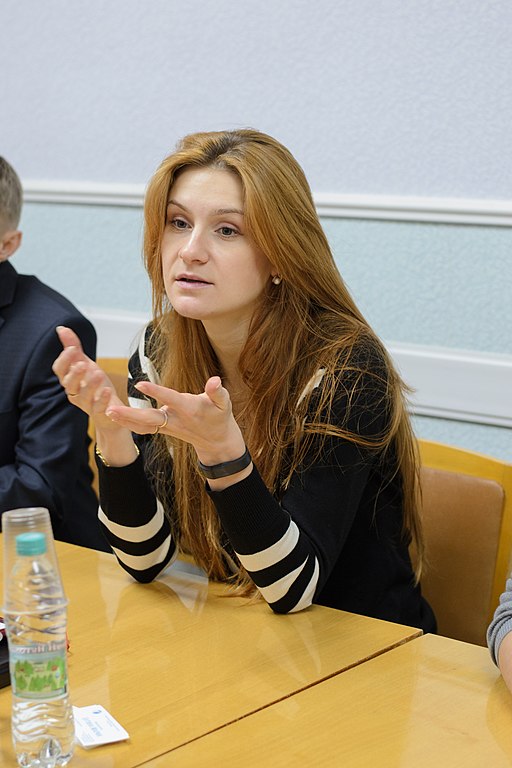
Butina: Unregistered agent falsely portrayed as a spy
In realistic terms it means this: In 2008, I was hired by the Abu Dhabi Chamber of Commerce to write a series of op-eds in support of doing business in the city. I wrote four op-eds and they paid me a fee. But I had to go to the Justice Department’s FARA website and register as a “foreign agent,” meaning that I was being paid by a foreign government. No problem. It didn’t mean that I was a “secret agent” for Abu Dhabi. It just meant that I was temporarily in the employ of a foreign government.
Washington attorneys and lobbyists do this kind of thing every day. And more often than not, they don’t register, either because they are too busy, they don’t realize that they have to, or they don’t believe, as in the current case of Washington super lawyer Greg Craig, that they have to. They are very rarely prosecuted.
Anybody can go to the FARA website and do a records search. I did one for the purpose of this article to search for people I know—attorneys, friends, acquaintances—and found many of them taking money from the governments of Libya, Chad, Jordan, Saudi Arabia (lots of them), Greece and other countries. It’s no big deal. It’s just a paperwork exercise.
In the case of Maria Butina, though, the paperwork was the hook to arrest her and to use her failure to register under FARA as leverage to get her to testify about her “work.” The problem, at least for the FBI, was that she wasn’t a spy. As things turned out, she really was just an overly-aggressive Russian grad student at American University who really, really loved guns and was trying to ingratiate herself with the NRA. But the Justice Department came down on her like a ton of bricks, forced her into taking a plea, and sentenced HER to 18 months in a federal prison: for conspiring to fail to fill out a form. The federal sentencing guidelines for a first-time offender violating this law is 0-6 months in a minimum-security work camp and a fine of up to $5,000. That, apparently, was never an option for Butina.
Forgive me if this is burying the lede, but I also want to talk about how Maria Butina got into this predicament in the first place. We know that she was very active in the gun rights movement in both Russia and the U.S. and that she sought to improve contact between gun groups in both countries. We also know that she met and began dating Patrick Byrne, the founder and CEO of Overstock.com. We learned recently, thanks to Byrne himself, that he was a longtime FBI source and that the FBI directed him to begin dating Butina. He did so. And he reported back to the FBI that she was simply a graduate student. That wasn’t good enough for the FBI, though and, according to Byrne, he was instructed to go back to Butina, to begin a sexual relationship with her, and to again report back to the FBI. He did that, too.
In the end, the Justice Department accused her publicly of “trading sexual favors” for access, an accusation that prosecutors had to withdraw. It was patently untrue. But that didn’t stop them from accusing her in the press of being a Russian spy, which she was not. And it didn’t stop the judge from giving her three times the maximum sentence called for by the sentencing guidelines.
I will ask your forgiveness again if I sound like a broken record. But this is how the FBI makes their cases. They entrap people. I’ve written extensively about how the FBI brazenly carried out a sting operation against me (unsuccessfully) that could have resulted in an espionage conviction and as much as 30 years in prison. They did the same thing to Butina.
Butina wasn’t committing a crime, so they just made something up, leaked it to the press, allowed it to influence the public and the judge, and hoped she would cave and take a plea. She did. Byrne went on CNN last week to say that two of the three people who instructed him to do all of this were James Comey, Peter Strzok, and another as-yet-unnamed individual. The operation was hatched at the top. The whole story sickens me.
With the deck stacked the way it was, there was probably nothing that Butina or her attorneys could have done to save her. The fix was in. I wish I had been able to convey to her something that one of my attorneys said to me on the day that I finally took a plea to a greatly reduced charge in 2012: “Do you know what your problem is? Your problem is that you think this is about justice. It’s not about justice. It’s about mitigating damage.” Nice system we have.
John Kiriakou is a former CIA counterterrorism officer and a former senior investigator with the Senate Foreign Relations Committee. John became the sixth whistleblower indicted by the Obama administration under the Espionage Act — a law designed to punish spies. He served 23 months in prison as a result of his attempts to oppose the Bush administration’s torture program.
The Mainstream Press’s Deference to Authority in the Death of Jeffrey Epstein
By Jacob G. Hornberger | FFF | August 28, 2019
One of the fascinating, albeit not too surprising, aspects of the Jeffrey Epstein death has been the reaction of the mainstream media. From the very first moment that the news hit that Epstein had died in prison from an apparent suicide, the mainstream media concluded that that is precisely what happened. Immediately, there was a spate of commentaries, op-eds, and editorials mocking and ridiculing any speculation about whether Epstein had been murdered or possibly even been secretly whisked out of the jail in which he was incarcerated. And all this took place even before an autopsy had been conducted on Epstein’s body!
Okay, I’m not saying that Epstein was in fact murdered or that someone else’s body was secretly substituted for his. He very well may have committed suicide, something that the autopsy ultimately said he had done. What I’m saying is that there was absolutely no skepticism among the investigative reporters, editorial writers, and op-ed writers in the mainstream press, not even before the autopsy was conducted.
Why? Wouldn’t we ordinarily expect the press to have skepticism when it comes to governmental conduct? Isn’t that one of the ideas behind freedom of the press — so that journalists will be free to keep a sharp and critical eye on what government is doing? If all that the press does is automatically accept whatever the government says, then what happens to the famous “watchdog” role that we have all been taught comes with a free press?
What is also interesting about this phenomenon is not only that the mainstream media automatically and immediately accepted the suicide version but also the way it immediately went on the attack against people on the Internet who were expressing skepticism about the official story. In fact, one almost got the impression, from the harsh nature of the attacks, that the mainstream press was actually playing an active role in trying to suppress any version of Epstein’s death different from the official one.
Before the autopsy was even conducted, the mainstream writers immediately began branding anyone who was expressing skepticism about the official account as a “conspiracy theorist.” That, of course, was the label that the CIA seized upon when people began questioning the official account of the Kennedy assassination back in the 1960s and 1970s. The CIA sent out a secret memo to its assets in the mainstream press advising them to label anyone who questioned the official account of the assassination a “conspiracy theorist,” which came to be a term of great opprobrium. The CIA’s strategy worked brilliantly, at least within the mainstream press, to such a point that today the biggest fear that mainstream journalists have is being labeled a “conspiracy theorist.”
Of course, back then the CIA actually had operatives, agents, and assets working within the mainstream press. No, that’s not a “conspiracy theory!” It is actually an established fact of a secret conspiracy between the CIA and mainstream journalists. The conspiracy was called Operation Mockingbird. Information about it can be found online. Under Operation Mockingbird, the CIA conspired to enlist mainstream journalists to serve as secret assets for the CIA who would expound the official CIA line in editorials and commentaries, but without disclosing their CIA connection.
That conspiracy, presumably, came to an end when it was uncovered and disclosed. But ironically, the end result seems to be the same as when Operation Mockingbird was in full effect. By automatically deferring to official accounts of deaths and other matters put out by U.S. officials, as well as by actively mocking people who express skepticism of official versions as “conspiracy theorists,” the CIA ended up with the same outcome as it was aiming for with Operation Mockingbird.
Another interesting aspect to this phenomenon is that the mainstream mindset applies only to governmental conduct, not private conduct. For example, suppose you were to ask the editorial writers, op-ed writers, and investigative journalists the following question: “Do you believe that drug cartels conspire to kill people?” All of them would respond: “Of course, they do. We see it all the time.” They would not have the remotest fear of being labeled a “conspiracy theorist.”
Apply the same question using the Mafia: “Do you believe the Mafia conspires to kill people”? The mainstream press answer would immediately be: “Of course it does. They’re still looking for Jimmy Hoffa’s body.” Again, no fear of being called a “conspiracy theorist.”
But then shift the question toward the federal government: “Do you believe that the CIA or other elements within the U.S. deep state conspire to kill people?” The answer is immediate: “Are you nuts? Are you some sort of conspiracy theorist? Our government would never do anything like that?”
Yet, soon after the CIA was formed in 1947, it secretly began preparing an assassination manual, which indicates that it was specializing in the art of assassination practically from the beginning. The manual, which the CIA kept secret for 40 years and which can be read online, detailed various ways that an assassination could be carried out. It also detailed ways to prevent people from discovering that the CIA was behind the killing. For example, the manual recommended throwing someone off a high building as a way to kill him because it would look like a suicide.
It is safe to assume that from the time that assassination manual began being developed, the CIA became increasingly more proficient in the art of assassination and cover-up. After all, that was more than 60 years ago. Specializing in something that long would ordinarily mean that they would get better and better at killing people as well as at covering up their role in the killings.
That means that when there is a death like that of Jeffrey Epstein, one would expect the mainstream press to want to examine it with a critical eye. This is especially true given various reports (on the Internet, not in the mainstream press) that Epstein might have had ties to some intelligence agency (see here) and also reports that he might have been running a blackmail operation involving sex with under-aged girls.
Again, I’m not saying that Epstein did not, in fact, commit suicide. He might well have committed suicide. So, please resist the impulse to send me an email calling me a “conspiracy theorist” (not that I care though). I’m just criticizing the dereliction of the mainstream press in fulfilling its journalist obligation to make certain that that really is what happened.
Behind Israel’s Bombing in Iraq’s Heartland
By Giorgio Cafiero – Consortium News – August 28, 2019
Iraq has felt the heat from escalating tensions between the U.S. and Iran this summer as the White House moves ahead with its “maximum pressure” campaign against the Islamic Republic. Also clear is that Israel and Iran’s proxy wars in the region have spilled into Iraq too. Last month, Israel carried out its first attacks on targets in Iraq since Operation Opera on June 7, 1981.
On July 19, Israel struck a target in the Salahuddin governorate, three days before another attack against Camp Ashraf, located within close proximity to Iran. According to al-Ain, the attack against Camp Ashraf killed 40 members of Iran’s Islamic Revolutionary Guard Corps (IRGC) and Iranian-sponsored Iraqi Shi’a militiamen. On Aug. 12, a blast occurred at a Popular Mobilization Units (PMU) arms depot in the Iraqi capital, allegedly carried out by an Israeli aircraft and resulting in one death and 29 injuries. Other Israeli attacks followed on the 19 and 25 of August. Several days ago, U.S. officials confirmed that Israelis were indeed behind the July 19 attack in Salahuddin governorate, which was suspected from the beginning.
Such actions highlight how Israel seeks to expand its theater of confrontation with the Iran to Iraq. Put simply, the Israelis are reacting with increasing aggression against the extent of Iranian-sponsored militias in Iraq and elsewhere in the Middle East that provide Tehran greater leverage vis-à-vis Israel.

Pompeo: Not against further Israeli strikes. (YouTube)
Important questions surround the U.S. role in these Israeli attacks against PMU targets in Iraq. It is difficult to imagine how the Trump administration could have not given Israel the green light to carry out these attacks. As Karim al-Alwei, an Iraqi parliamentarian, explained, “the U.S. controls Iraqi air space” thus “no planes, including Iraqi jets or helicopters, can overfly the area without U.S. knowledge or permission.” Only seven months ago, U.S. Secretary of State Mike Pompeo reportedly raised the topic of Iranian missiles in the hands of PMU forces in Iraq while meeting with Iraq’s Prime Minister Adel Abdul-Mahdi, stating that Washington would not be against any future Israeli military operations targeting such facilities.
Unclear is whether the Israelis used Syrian, Turkish, or Saudi airspace to reach their targets in Iraq. Regardless, it is a safe bet that the Saudi leadership, which maintains a tacit partnership with Israel largely based on a common perception of Tehran as a threat to its interests, welcomes such Israeli action in Iraq. As Saudi and Israeli officials see Iranian-sponsored Shi’a militia in Iraq, Syria, and Lebanon as a major threat, the Israeli strikes in Iraq will likely push the Israelis and Saudis even closer together.
Other Targets of Israel
Tel Aviv has dramatically increased the intensity and reach of its military campaign to weaken Tehran-backed militias in the region, waging attacks not only in Iraq, but also in Syria and Palestine too, as well as recently sending two drones into Lebanon. Into the chaos of Syria the Israelis have carried out many strikes against Iran-related targets since the civil war began in 2011. Yet by attacking targets in Iraq, Israel is showing its determination to expand the theater of its proxy war with Iran.
Although difficult to predict the long-term ramifications of these blasts in Iraq, their impact will likely be destabilizing, given Iraq’s fragile security. A major concern for officials in Baghdad is that in the days, weeks, and months ahead Iraq—as well as its airspace—could be the location of intensified violence as the U.S., Israel, and Iran challenge each other’s actions. Iraq will have a difficult time staying neutral between Washington and Tehran.
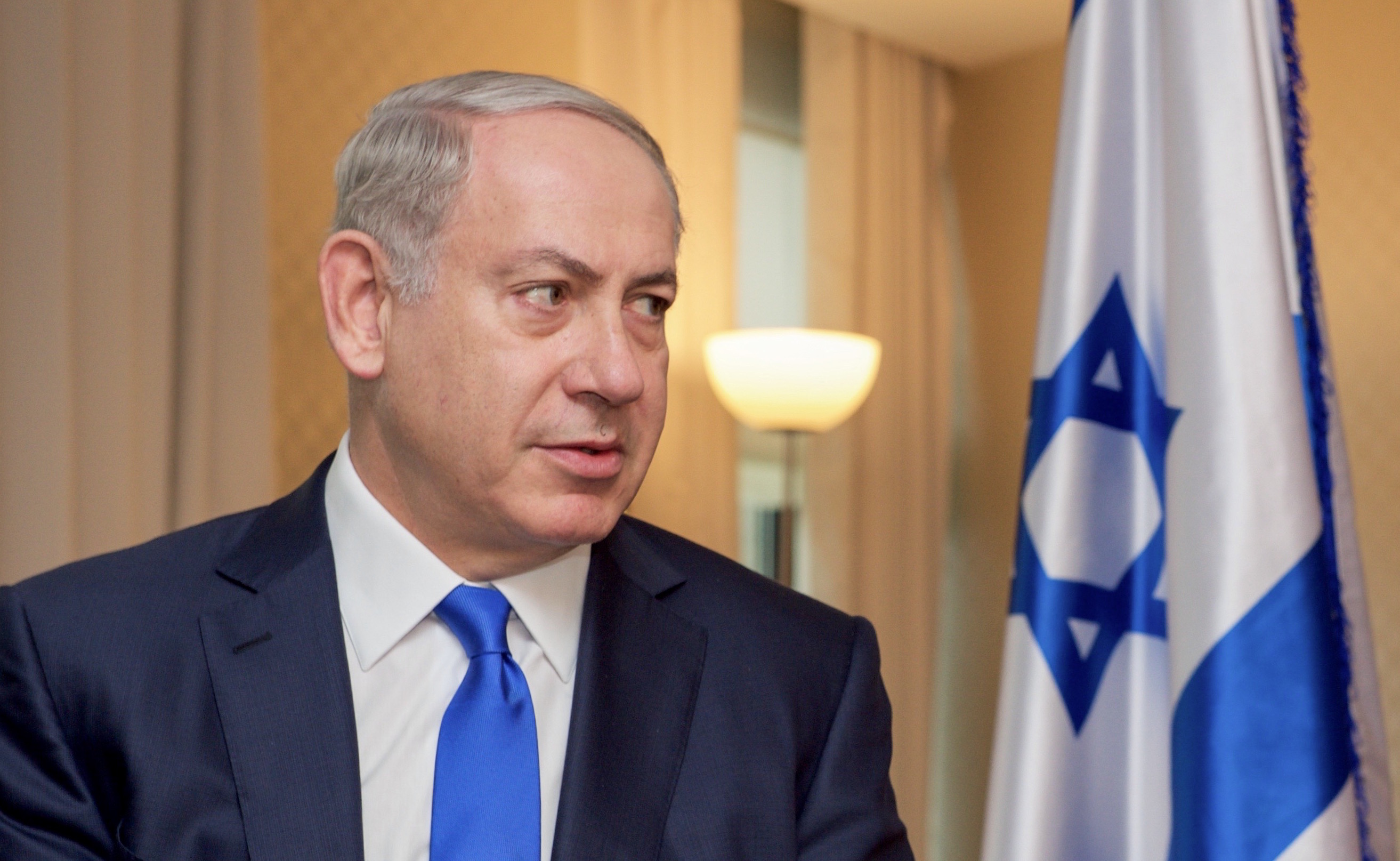
Netanyahu: More coming. (Wikimedia Commons)
Prime Minister Benjamin Netanyahu said Aug 19, “Iran has no immunity, anywhere… we will act and currently are acting against them, wherever it is necessary.” Three days later the Israeli leader went further, suggesting his country was perhaps involved in these attacks in Iraq, declaring, “We are operating in many areas against a state that wants to annihilate us.”
By making such bold moves, Israel is taking major risks. If such attacks continue in Iraq against Tehran-sponsored non-state actors near the Iranian border, Iran will likely respond. Perhaps the Iranians will put air defense capabilities in the hands of Iraqi Shi’a militias to enable such factions to fend off future Israeli attacks. Also possible is that Tehran would carry out limited strikes in retaliation at a time and place of the Iranian leadership’s choosing, perhaps targeting Israeli positions in the occupied Golan Heights of Syria.
Israeli strikes, which constitute a flagrant violation of Iraq’s sovereignty, may come with major costs for U.S. interests in Iraq. Given that an influential Iran-based Shi’a cleric, Grand Ayatollah Kazim al-Haeri, reacted to such Israeli attacks with a fatwa forbidding America’s military presence from continuing in Iraq, and the fact that many in Iraq and other Arab countries see the U.S. as responsible for Israeli actions against PMU targets, the roughly 5,000 American troops in the country could find themselves in the crosshairs of what has quickly become an escalating Israeli-Iranian proxy war waged in Iraq.
Israel’s bombing of Iraq will have major implications for the Washington-Baghdad relationship too, particularly given that the Iraqi government is attempting to bring the heavily armed Shi’a militias under its control. If the U.S. administration fails to prevent Israel from turning Iraq into more of a battleground in Tel Aviv’s proxy wars with Tehran, Iraq’s fragile stability will be further undermined. Under such circumstances, Iran could quickly capitalize on such conditions to bring Baghdad closer to Tehran at a time in which U.S. influence in Iraq—and the region at large—continues to wane.
Unquestionably, perceptions across Iraq that the U.S. is to blame for Israel’s actions will push more Iraqis to the conclusion that the White House’s “maximum pressure” agenda against Iran is directly undermining Iraq’s basic interests in upholding sovereignty and moving toward a more stable future in which the country is not implicated in greater regional crises involving multiple nations.
Giorgio Cafiero (@GiorgioCafiero) is the CEO of Gulf State Analytics (@GulfStateAnalyt), a Washington-based geopolitical risk consultancy.
Palestinian Harvard freshman barred from entering US over Facebook posts his FRIENDS made
RT | August 28, 2019
An incoming Palestinian Harvard freshman was refused entry to the US and deported after immigration officials searched his phone and found Facebook posts – from his friends – containing allegedly anti-US political statements.
Ismail Ajjawi was deemed “inadmissible” by US Customs and Border Protection and sent back to Lebanon on Friday night, after CBP officials at Boston’s Logan International Airport confronted him with Facebook posts from his friends list containing “political points of view that oppose the US.”
An immigration official questioned the 17-year-old scholarship recipient for hours about his friends’ social media activity, after ordering him to unlock his phone and computer and spending five hours searching the devices. Ajjawi’s protestations – “I have no single post on my timeline discussing politics,” he told the Harvard Crimson on Tuesday – reportedly fell on deaf ears as the agent “screamed” at him.
“She said that she found people posting political points of view that oppose the US on my friend list,” Ajjawi said. “I responded that I have no business with [political] posts and that I didn’t like, share or comment on them and told her that I shouldn’t be held responsible for what others post.”
Nevertheless, the officer cancelled his visa and told him he would be deported. He had been detained for eight hours – first questioned with a group of international students, then held for further questioning about his religious practices while the others were allowed to leave, and ultimately kicked out of the country over his friends’ Facebook posts.
A CBP spokesperson (ironically named McCarthy) explained “applicants must demonstrate they are admissible into the US by overcoming ALL grounds of inadmissibility including health-related grounds, criminality, security reasons, public charge, labor certification, illegal entrants and immigration violations, documentation requirements, and miscellaneous grounds” and claimed “information discovered during the CBP inspection” had rendered Ajjawi “inadmissible” to the US.
“Thoughtcrime by friends on social media” would presumably fall under “miscellaneous.”
This is not an isolated incident involving Harvard, which employs a team of immigration lawyers to resolve visa-related issues. Four Iranian graduate students in 2017 spent weeks or months tied up in red tape after President Donald Trump’s travel ban – an executive order barring travel from seven countries, including several majority-Muslim ones – prevented them from attending school.
Ajjawi is also receiving legal assistance from AMIDEAST, the organization which awarded him the scholarship to attend Harvard in the first place. He still hopes to attend Harvard, and university spokesperson Jonathan Swain said the school is “working closely with the student’s family and appropriate authorities to resolve this matter so that he can join his classmates in the coming days.”
Featured Video

Broke Princes: Saudi Arabia’s Powder Keg
or go to
Aletho News Archives – Video-Images
From the Archives
A sample of vaccine and injectable medication tragedies during my lifetime
This is what happens when you demand speedy production in an era of politicized regulation
By Meryl Nass, MD | February 12, 2022
All these tragedies have been due to failures of testing or failures in manufacturing processes. Most occurred before vaccine manufacturers were given virtually complete protection from liability in 1987.
With the duration of patent exclusivity determining how much new products earn, products are rushed to market as quickly as possible, most using a shortened path for FDA review. Recalls and market removals of approved products are much more common than they used to be. We can only expect more of these disasters in the future, especially if the products are mandated for everyone. … continue
Blog Roll
 Aletho News
- Broke Princes: Saudi Arabia’s Powder Keg
- Albania’s Crisis: Rama, Israeli Investments and the Demand for Accountability
- Hezbollah Categorically Denies Syrian Accusations: We Aim at Confronting Israeli Enemy, Not Undermining Syria’s Stability
- Trump claims funding to Israel ending in 2026 as merger of Israeli–US armies looms
- Iran Weathering The Storm, But Saudi Arabia Is Sinking
- Sunk Ships Don’t Sail Home: Why Peace Won’t Save the Oil Market and War Will Wreck It
- No Cossacks at the gates, fix Italy instead – opposition leader to Meloni
- The Pits: Zelensky’s torture chamber network in the public eye
- Moscow mocks Kiev’s language hypocrisy exposed by ‘torture chamber’ scandal
- Military ‘torture chamber’ triggers new scandal in Kiev
- If Americans Knew
- An error has occurred; the feed is probably down. Try again later.
- No Tricks Zone
- Germany’s Green Energy Transition Becoming Increasingly Expensive…Another 6 Trillion Euros!
- Sudden Stratospheric Warming, Powerful El Niño Combination May Lead To Extreme Europe Cold, Energy Crisis!
- Two New Studies Find Thwaites Glacier Melt Cannot Be Driven By Human Activity Or A Warming Ocean
- E-Cars Reduce CO2 Emissions By Only 41% Compared To Internal Combustion Engine Vehicles
- Predictions Made By Renowned Climate Professor Over Past Decades Have Been Proven To Be Poor
- New Study Suggests Large Regions Of The Pacific Ocean Have Been Cooling For The Last 80 Years
- Germany’s Green Energy Debacle: High Energy Costs Force Kahla Porzellan to Close After 182 Years!
- New Study: 50 Years Of The Most Aggressive ‘Net Zero’ Policies Can Only Affect The Global Climate By 0.03°C
- US September “Heat” Was No Record…Many Records Set Decades Ago
- Latest European Green Energy Debacle; Portugal’s Largest Flagship Solar Park Insolvent!

