Hate Crime Survey Reports
Puzzle for a retired scientist
By Franklin Stahl • Unz Review • July 21, 2019
The Office of Human Rights in Eugene, Oregon, my home town of the past 60 years, reported a peak in total hate crimes for 2017. The peak of events directed specifically against the Jewish community was statistically significant at the 5% level (4 in 2016, 15 in 2017, 7 in 2018).
Eugene’s peak of antisemitic hate-crimes mirrored the nationwide peak reported by the ADL in 2017. A conspicuous minority of that peak (163 of 754 total) were the anonymous threat calls made to Jewish Community Centers (JCCs) early in the year (none of which were in Eugene). This scientist found that interesting.
Scientists Solve Puzzles
Scientists’ ears go up when they identify significant coincidences. They get kicks from distinguishing those that are mere coincidences from those that have a common cause. Then, if they are interested in the puzzle and have the time and/or funding, they undertake research to identify the cause.
Were the coincidental spikes in the National and Eugenean antisemitic hate crimes merely a coincidence, or did they have a common cause? The many media reports on the JCC threat calls provide the primary set of publicly available information bearing on those questions.
The Irresponsible Youth
Most of the JCC-targeted calls originated from a computer in Ashkelon, Israel. The alleged perpetrator, who is un-named in Israel, was identified as Jewish and described as an autistic, irresponsible Israeli-American youth with a brain tumor, no formal education, no military experience, and no friends. If the threats were, in fact, made by this loose cannon, then it is unlikely that Eugene’s antisemitic hate crimes correlate in any meaningful way with the JCC threat calls. We could then write off the coincidence as meaningless. Well, did the youth make the calls?
We are told that, in a period of six months (roughly September 2016 – February 2017) this isolated, irresponsible, uneducated youth made about 2,000 threat calls (including those to the JCCs in 2017) from his room, keeping full records of the calls and their effects, all in complete secrecy even from his parents, who lived in the same apartment. These activities were reported to have earned him bitcoins (from customers?) worth, at that time, a quarter of a million dollars. I am disinclined to believe that tale.
The calls were delivered to the victims through SPOOF telephones in America, one of which belonged to a Chabad and another to a Scientology functionary. I don’t believe that an irresponsible youth would be entrusted with those phone numbers. What’s going on?
Is the irresponsible youth (IY) for real?
When a real person is described in the media, disagreement about salient facts and vital statistics rarely occur. For instance, we expect newspapers describing Donald Trump to agree that his birthplace was NYC, that he is married and that he has children. However, we would not be the least surprised if news media reporting on Sasquatch (the Abominable Snowman of the Pacific Northwest) disagreed with each other and even with themselves. So, how well did the media do with IY? Here are some samples: IY was 18 at the time of indictment in Israel (The Guardian) while, a month earlier, he was 19 (The Guardian). He was born in the USA (Jewish Telegraph Agency) and in Israel (New York Times), in both Tel Aviv (Times of Israel) and Ashkelon (Times of Israel). He spent his early years in New Jersey and California (Times of Israel) and has never lived in the United States (USA Today). He is a genius (Times of Israel) and has a low IQ (Jewish Telegraph Agency). IY, like Sasquatch, is a fiction.
Despite its implausibility, the IY-explanation for the threat calls has persisted, apparently because none of the Main-Stream Media has publicly questioned it.
A Kadar Cover-up?
On April 21, 2017, the DOJ filed criminal complaints against IY in Georgia and Florida, identifying him only as Michael Ron David Kadar — no age, no address. On April 26, the registered, and sole, occupant of the apartment from which the calls were made, a female, was identified by blogger Richard Silverstein (Tikun Olam ) as Tamar Kadar, chemical warfare scientist at the Mossad-operated Israeli Institute for Biological Research (IIBR). Within a day, Silverstein’s posting disappeared from the web without explanation (but survives in the Google cache). Photos of Tamar largely disappeared from the web, including her listing as an employee at IIBR and at the website of a research service company where she was a consultant.
The disappearance of data always suggests a cover-up. Is the IY fable actually a cover-up of a Mossad false-flag operation? As explained below, the “cover up” hypothesis offers an unexpected bonus: it explains a most perplexing feature in the time-line of events leading to IY’s arrest.
A perplexing feature
Shortly before March 9, 2017, the FBI notified the Israeli police that the threat calls originated from a single computer at a known location in Ashkelon. The calls promptly stopped, but days passed without an arrest and without any explanation from the Israelis. Trump sent a team of FBI agents to Israel to stir things up. Finally, on March 23, IY was apprehended and quickly indicted. His father, who was at the apartment with him, was taken into custody briefly. His mother was apparently not in the apartment when the raid was made. Why did it take two weeks for the Israeli police to make the arrest?
The search leads westward
With “Michael Ron David Kadar“ as the Google input, people-search websites pointed to court records in Illinois, about 13 hours west of Israel by air.
In 2004, 14-year old Michael R Kadar of 240 E. Circle Dr., New Lenox, Illinois, appeared in Will County Court for the first of 20 minor charges sprinkled over the next 12 years. In summer 2016 he was jailed for felonious drug possession, convicted on January 30, 2017, and imprisoned until he was released on March 18, 2017 (BINGO!) on two-year probation. The usual conditions, restricted travel and meetings with the probation officer, were explicitly suspended (DOUBLE BINGO) by the court for six months starting January 30.
Upon Michael’s release from prison on March 18, his Facebook page enjoyed a three-day burst of activity and then went totally silent for three months. Why silent? Where was he?
Michael broke his Facebook silence at the end of June, posting a photo of himself and his friend Amber in a setting with orange trees and high-rise apartments. Two weeks later, in mid-July, Amber posted a photo of herself with Michael at Chicago’s O’Hare airport, and the records of the Will County Court imply that Michael did, indeed, show up for the subsequent required visits with his probation officer. Soon thereafter, both Michael’s and Amber’s Facebook pages were butchered, removing all trace of their acquaintance, their travels, and of Kadar-family members. More cover-up.
A strong inference from the facts above is that, almost as soon as he was sprung on March 18, Michael and his father (Robert A. Kadar of 240 E. Circle Dr.) flew to Israel where, on March 23, Michael was presented to the public as the perpetrator, 18-year-old IY, who remains officially un-named in Israel. In the one published photo of IY that shows some face, the similarity to Facebook photos of Michael is notable. His physique, as well, appears to agree with the 6 ft, 160 lbs recorded by the Will County Court (since deleted).
The unavoidable interpretation of these facts is that 27-year old Michael R. Kadar (date of birth March 27, 1990) was rushed to Israel to play patsy for his Mossad mother, the presumptive threat- caller. The ploy of subtracting nine years from his age and describing him as autistic appears to have been inspired by a two-year-old news report of an autistic British youth who made threatening calls to American schools. Despite the seriousness of his crime, the British youth escaped incarceration on the basis of his youth and condition. The perplexing foot dragging by the Israeli police was apparently the result of committing to a plan of bringing Michael to Ashkelon to play patsy but then having to wait almost two weeks for Will County to turn him loose and for Michael to pack his bag and say his farewells.
Why the threat calls and other antisemitic hate crimes of 2017?
The picture laid out above is tenable only if at least one governmental motive for the crimes can be found. Events surrounding Trump’s 2016 campaign and 2017 inauguration provide one.
The Director of the Mossad, Prime Minister Netanyahu, had a motive for increasing the level of antisemitic threats early in Donald Trump’s presidency. During the 2016 campaign, Trump promised reductions in foreign aid, including Israel’s. Trump had to be stopped. A conspicuous increase in apparent antisemitic activity in America would license American Zionists to cite Trump as “Antisemite in-Chief”, personally responsible for the rise. The resulting outrage could invoke second thoughts about cutting aid to Israel.
In the event, on March 9, 2017, the threatening phone calls stopped. On March 16, Trump’s State Department announced a Foreign Aid budget that reduced all aid except Israel’s. On March 23, Michael, freshly out on probation from an Illinois prison, was presented in Ashkelon as a young, irresponsible perpetrator of the JCC threat calls.
On July 1, 2017 Times of Israel reported, “The director of Israeli human rights group B’Tselem told a conference at the UN in New York on Friday that Israel was sabotaging efforts to combat anti-Semitism in order to retain control of the West Bank…
‘The Israeli government is prepared to undermine the real fight against anti-Semitism in order to preserve the occupation with minimal repercussions from the international community,’ he charged.”
False-flag antisemitism, historically associated with the Zionist movement, apparently does achieve political gains but, while doing so, risks aggravating the scourge of prejudice against Jews at large.
Michael back home
Several months after his July return to Illinois, Michael flunked a urinalysis and skipped subsequent meetings with his probation officer. A warrant was issued, and he was recaptured and briefly jailed. Despite failing to fulfill the conditions of his parole, he was released early from custody of the Will County court on January 16, 2019 to enjoy an estimated one million dollars-worth of bitcoin compensation for his troubles.
Early in 2019, Michael R Kadar of Illinois changed his Facebook name to Sway Zee, and commercial people-finder sites began referring to him as Michael Robert Kadar. Jean Kadar (Robert’s current wife) put the patio furniture up for sale on Facebook, and it’s no longer certain that any of the Kadar family are living at 240 E. Circle Dr. The Google maps, which previously denied view of 240 E. Circle Drive, now allow full viewing, and real estate websites now show street views, which they previously declared unavailable.
A lesson learned
Pending further investigation, Eugeneans and others should face the possibility that, in 2017, they suffered a share of the nationwide, Mossad-directed false-flag hate crimes of which the JCC threat calls were a part. This possibility is strengthened by the revelation on June 12, 2019 (Haaretz, Times of Israel ) that the Mossad has been active in combatting BDS, which is perceived by many Zionists as threatening the nationalist vision of Israel.
Eugene’s Office of Human Rights, and other such offices, could better help their communities interpret changes in hate-crime levels by reporting just those crimes for which the perpetrator has been identified and does not belong to the victimized group. Those events are likely to be reliable indicators of trends in the hateful prejudices that are afflicting our communities. In the current political atmosphere, events for which the perpetrator has not been identified may well be false-flag events. In Eugene’s 2017 antisemitic hate-crime spike, none of the perpetrators has been identified.
Back Story
Shortly after we surmised that Michael R Kadar was the un-named (in Israel) IY in this article, we sent our view (anonymously via a lawyer) to the FBI and to DOJ lawyers. (Letter is attached as a pdf)
This view made the strong, testable prediction that Michael and his father flew from O’Hare to Ben Gurion on or about March 20, 2017. A few weeks later, the lawyer received a call from an FBI agent in Seattle, Instead of writing us off as kooks, as he would have done if he failed to find the predicted TSA evidence, the agent asked the lawyer to seek our permission to be identified.
We agreed to being identified if the FBI would tell us whether our prediction was verified. By phone, FBI assured us that the search had been thorough, but declined to reveal the outcome on the grounds that they could not comment on the travel of American citizens.
More recent discussion with an involved DOJ lawyer clearly indicated that the matter remains of interest to DOJ. We have no indication that any action is envisaged.
Help for Fact Checkers
A. Navigating the Will County Court records:
1. Google https://ipublic.il12th.org/Signoff.php
2. Press START button
3. Seek Michael Kadar. Observe arrest record.
4. Press link (on left) for the felony case number 2016CF001808
5. Click on EVENTS to get a running record of the case.
6. The central event is January 30, 2017, which imposes a confinement of 47 days, resulting in release on (about) March 18 under a two-year probation (starting January 30) monitored by TASC. The bottom half of the Probation Order is copied below. Item 13 is the license that lets Michael play patsy in Ashkelon for four months.
7. On January 16, 2019, Michael was released (a bit prematurely) from probation, and the drug-felony case was closed.
B. Here is a link to Tikun Olam’s cached ID of Tamar Kadar: https://www.richardsilverstein.com/2017/04/26/mother-israeli-teen-masterminded-terror-threat-campaign-chemical-weapons-researcher/ . It is a snapshot of the page as it appeared on 27 Äpr 2017 08:40:15 GMT.
C. Photos plus links to other references available on request.
Franklin Stahl, Ph.D., a member of the National Academy of Science, is a geneticist living in Eugene, Oregon. Lacking a lab, he finds puzzles to solve on the internet.
Iran’s seizes UK tanker in counter-escalation
By M. K. BHADRAKUMAR | Indian Punchline | July 21, 2019
The seizure of a British oil tanker by the Islamic Revolutionary Guards Corps on July 20 in the Strait of Hormuz has all the hallmarks of a retaliatory act in the downstream of the seizure of an Iranian tanker by the British Navy exactly two weeks ago on July 4 off Gibralter.
On July 16, Iran’s Supreme Leader Ali Khamenei had warned, “Iran will respond to the vicious Britain’s piracy. Iran’s response will come at the right time and the right place.” Four days alter, IRGC struck. An IRGC statement gave a detailed account of what happened. Footage of the incident has also been released — just as Britain did.
Iran is taunting Britain and making it look foolish. Britain is now left with no option but to negotiate. And the outcome of any negotiations can be easily foretold — Britain will have to unceremoniously set free the Iranian tanker.
Quite obviously, the seizure of the Iranian tanker by Britain was done in tandem with the hardliners in Washington and it is by now clear that the EU distanced itself from it. Britain’s dilemma now will be that all its ships in the Strait of Hormuz are in Iran’s crosshairs.
Yesterday’s incident was a calculated act by the IRGC, enacted right under the nose of a British warship, which was escorting the tanker. When the warship threatened to open fire, IRGC retorted that it would also retaliate with fire. Thereupon, an Iranian helicopter dropped masked men on the British tanker and took control of it. The intention is to make the Brits look impotent and stupid. (See the Press TV commentary The Royal Navy: From Piracy to Impotence.)
In a broader perspective, therefore, it appears that Iran may have underscored that its earlier threat must be taken very seriously — that if its oil exports ever got intercepted or blocked, then no one will be allowed to export oil via the Strait of Hormuz.
****
On July 17, Iran’s semi-official news agency Fars News had carried an interview with me (in Persian) on the seizure of the Iranian oil tanker by Britain and its likely consequences as well as the related issues of the Iran-EU cogitations over the mechanism known as INSTEX, which Brussels has put in place to circumvent US sanctions against Iran.
In the context of yesterday’s incident in the Straits of Hormuz, my interview with the Fars correspondent Mahdi Khodabakhsh may be of interest. The English translation of the interview follows:
‘Indian diplomat: British action against Iran on behalf of the United States.’
QUESTION: As you know, some days ago UK royal navy seized a Tanker containing Iranian crude oil off Gibraltar. UK claimed it was bound to Syria which is under sanctions. Do you think UK’s move was legal? What does the international law say about it?
ANSWER: As far as I can gather from media reports, the legality of the British action is highly questionable. Syria is not under any UN sanctions and under international law, there is no embargo on oil supplies to that country.
QUESTION: How do you see the development and what effect it can have on Iran relations with EU? (also considering recent JCPOA tensions)
ANSWER: This is an act of blatant provocation with a view to inciting an Iranian reaction that could in turn be used as an alibi for some other downstream action by the US. I cannot see how the EU can endorse the British action because the group has no such policy to enforce a naval blockade of Syria. At least, I have not seen any EU country endorsing the British action so far. There are also signs that UK is seeking some sort of a patch-up with Iran, while saving face, because the international opinion did not support the British action.
QUESTION: In your opinion would it be proper for Iran – in this tense situation – to react to the UK’s move and do something retaliatory? If No, why is that; and if Yes what could the response be?
ANSWER: I have no doubt that Iran views the British belligerence with utmost seriousness and there will be consequences. Having said that, in my opinion, it is only proper that Iran has refused to be provoked into any knee-jerk response but is taking its own time. There could be a range of responses that Iran could consider, but importantly, Iran should only give a measured response that does not provide excuses for the US for doing something reckless or aggressive. The US or the so-called B Team, to my mind, has most likely instigated the British action. This is a surcharged atmosphere and Iran has so far acted with restraint and dignity — and rationally.
QUESTION: As we know, Iran started taking a second step in reducing its obligations under JCPOA from yesterday due to Trump’s unilateral withdrawal from the deal and of course because Iran did not benefit from economic relief. So how do you think the EU and other remaining parties in JCPOA will react to these steps by Iran? Are they going to trigger the dispute mechanism and snap-back lifted UN sanctions?
ANSWER: The EU foreign ministers meeting in Brussels on Monday reportedly took the decision that the situation does not warrant any move to trigger the dispute mechanism or to demand snap-back sanctions.
QUESTION: Yesterday EU ministers held a meeting in Brussels with a focus on the Deal however many of the diplomats including French, Britain, German, Dutch, Finnish Foreign Ministers and even Mogherini called on Iran to stay committed unilaterally to the JCPOA but say nothing about US withdrawal. Do you think with this trend,the JCPOA will survive? Considering the European partners’ inaction against US sanctions on Iran and its unilateral withdrawal from the deal, despite the 14 month period Iran given to them for some efforts; do you think that the EU really wants the JCPOA? Are they sincere in what they say about the Iran deal? The UK, Britain and France tried to put together a mechanism to evade US sanctions for trading with Iran called INSTEX. However Tehran says it was not fruitful. How do you elaborate its effectiveness to benefit Iran from JCPOA economic relief? Is the US capable of sanctioning the whole INSTEX?
ANSWER: The EU is walking a fine line. It is unrealistic to expect the US’ European allies — make no mistake, there are still allies — to publicly condemn Washington even if they disagree fundamentally on the Trump administration’s decision to withdraw from the JCPOA. Clearly, the EU is keen that the JCPOA survives and there should be no doubt on that score. One can see that the EU is on the defensive, as it realises that the EU and the E3 have not been able to fulfil their obligations under the JCPOA. What they are trying to do, in my opinion, is to mitigate to some extent Iran’s losses. As of now, there is a visible shortfall. The issue is not about sincerity but about politics, which is the art of the possible.
The INSTEX has just become operational. The EU foreign policy chief Mogherini is on record that the mechanism is fleshing out some business proposals already. She also said that certain non-EU third parties have shown interest in the INSTEX. These are encouraging signs. To my mind, these are early days and it is difficult to pass final judgment. Mogherini claimed that the E3 are also discussing the feasibility of oil trade being included in the INSTEX mechanism.
As things stand, the US may see the INSTEX as contravening its sanctions and the ‘maximum pressure’ policy. But then, on the other hand, the US is also interested that the JCPOA survives (according to Mogherini.) Therefore, a pragmatic US attitude toward INSTEX cannot be ruled out, either. As I said earlier, this is an evolving situation.
Boycotting Israel a Constitutional Right and Personal Obligation
By Stephen Lendman | July 20, 2019
In NAACP v. Claiborne Hardware Co. (1982), a landmark civil rights case, the Supreme Court unanimously upheld the organization’s right to boycott white-owned businesses in Mississippi – protesting against segregation and racial injustice, its constitutional right.
The ruling stressed that states may not prohibit peaceful advocacy of a politically-motivated boycott, what First Amendment rights are all about.
Yet 28 states enacted legislation, restricting or banning individuals or entities doing business with the state if advocate boycotting Israel.
Their measures defy the Supreme Court’s ruling and fundamental First Amendment right of free expression — wanting the constitutionally protected right to boycott or otherwise publicly criticize Israel delegitimized, falsely equating it to anti-Semitism.
Only eight US states so far haven’t introduced or considered a measure in some form against boycotting the Jewish state.
Last May, the ACLU stressed the unconstitutionality of these laws, judicially struck down in Kansas, Arizona, and Texas by federal courts, the ACLU saying:
The rulings affirm “that the right to boycott is protected under the First Amendment… (They’re) stinging rebuke(s) of state legislators and members of Congress who have repeatedly attempted to strip the American people of that very right.”
Hardliners at the federal and state levels want anti-boycott laws enforced, no matter their unconstitutionality.
In January, on behalf of 13 constitutional scholars, Colombia University’s Knight First Amendment Institute filed am amicus brief in the Ninth Circuit Court of Appeals — “explaining that BDS boycotts are protected by the First Amendment in Jordahl v. Brnovich (Arizona).”
The constitutional scholars include:
William D. Araiza (Brooklyn Law School); Jack Balkin (Yale Law School); Erwin Chemerinsky (University of California, Berkeley, School of Law); Owen Fiss (Yale Law School); Katherine Franke (Columbia Law School); Jeremy Kessler (Columbia Law School); Seth F. Kreimer (University of Pennsylvania Law School); Genevieve Lakier (University of Chicago Law School); Burt Neuborne (New York University School of Law); Robert Post (Yale Law School); Amanda Shanor (University of Pennsylvania); Geoffrey R. Stone (University of Chicago Law School); Nadine Strossen (New York Law School).
Knight Institute staff attorney Ramya Krishnan said “(t)his is an easy First Amendment case.”
“Politically motivated consumer boycotts are a form of protected speech, as the Supreme Court held almost four decades ago.”
“The First Amendment forecloses a state (or federal government) from suppressing or burdening a political boycott simply because it disagrees with the boycott’s message.”
The Arizona law was struck down by a federal state district court.
In April, the Center for Constitutional Rights (CCR) Palestine Legal, and the Law Office of Matthew Strugar filed an amicus brief in the Eighth Circuit Court of Appeals in support of striking down an anti-BDS Arkansas law — calling it “part of a broader effort to suppress speech in support of Palestinian human rights.”
Days earlier, Rep. Ilhan Omar introduced HR 496: “Affirming that all Americans have the right to participate in boycotts in pursuit of civil and human rights at home and abroad, as protected by the First Amendment to the Constitution.”
The measure was referred to the House Judiciary Committee for further action. It’s co-sponsored by Rep. John Lewis and Palestinian-American Rep. Rashida Tlaib.
Omar said the following: “We are introducing a resolution… to really speak about the American values that support and believe in our ability to exercise our first amendment rights in regard to boycotting.”
The measure “affirms that all Americans have the right to participate in boycotts in pursuit of civil and human rights at home and abroad, as protected by the First Amendment to the Constitution.”
It “opposes unconstitutional legislative efforts to limit the use of boycotts to further civil rights at home and abroad.”
It “urges Congress, states, and civil rights leaders from all communities to endeavor to preserve the freedom of advocacy for all by opposing anti-boycott resolutions and legislation.”
The measure counters HR 246 (March 2019) — “Opposing efforts to delegitimize the State of Israel and the Global Boycott, Divestment, and Sanctions Movement targeting Israel” — co-sponsored by Rep. John Lewis, making it unclear what he supports.
It’s impossible to be for and against the same thing. Throughout his tenure in Congress since 1987, Lewis expressed strong support for Israel, ignoring its appalling human and civil rights abuses against Palestinians, along with its high crimes of war and against humanity.
On July 17, the Arab American Institute endorsed HR 496, urging its members and supporters to write or email their congressional representatives to support the measure, suggesting the following text:
“Subject: Affirm the 1st Amendment- Co-sponsor H.Res.496
I urge you to support H.Res.496, which affirms the First Amendment-protected right of all Americans to participate in boycotts in pursuit of civil and human rights at home and abroad.
The right to boycott is central to the political expression envisioned by the Founders when the First Amendment was added to the Constitution.
Americans have a long and proud history of boycotts, from the Boston Tea Party to opposing apartheid in South Africa, and that history includes the instrumental Civil Rights Era boycotts which were planned in part by original cosponsor Representative Lewis himself.”
The Global BDS Movement issued a statement, saying it “warmly welcomes the resolution introduced by Congress members Ilhan Omar, Rashida Tlaib and… John Lewis “Affirming that all Americans have the right to participate in boycotts in pursuit of civil and human rights.”
Palestinian Campaign for the Academic and Cultural Boycott of Israel (PACBI) member Hind Awway issued a statement, saying “(t)his groundbreaking resolution will inspire human rights defenders everywhere including BDS activists for Palestinian rights.”
“It affirms the right of all activists and people of conscience to advocate for human rights through boycotts against systems of oppression.”
“It reassures us that progressives, including in Congress, are defending freedom of expression and the rights of oppressed communities, including Palestinians to peacefully fight for their rights. The defense of those rights is more vital in light of the rise of far-right racism and white supremacy, including Israel’s decades-old apartheid regime.”
The measure is an important statement even though most congressional members strongly support Israel, while disdaining Palestinian rights.
It’s why HR 496 has virtually no chance of becoming the law of the land.
Stephen Lendman’s newest book as editor and contributor is titled Flashpoint in Ukraine: How the US Drive for Hegemony Risks WW III.
Contact at lendmanstephen@sbcglobal.net.
“US Causes Instability Anywhere It Sets Foot”
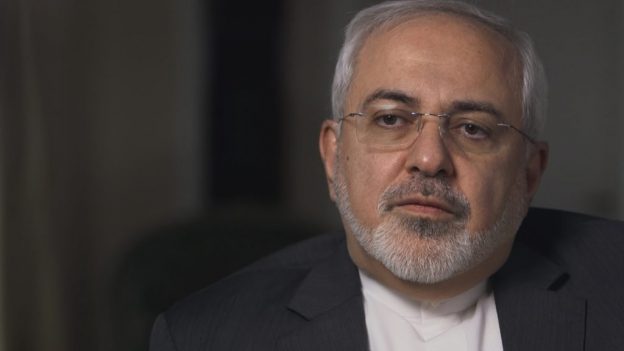
Al-Manar | July 20, 2019
Iranian Foreign Minister Mohammad Javad Zarif said Saturday that the United States causes instability and insecurity everywhere in the world it sets foot, including the Persian Gulf and South America.
Iranian Foreign Minister Mohammad Javad Zarif arrived in the Venezuelan capital early Saturday after a six-day stay in New York.
Speaking to reporters upon arriving in Caracas, Zarif said that “anywhere the United States sets foot in, it causes instability there.”
“At the moment, the US is causing insecurity with its presence in the Persian Gulf, the Middle East, and also the South American region,” said Zarif.
He went on to add that, “I don’t know any place in the world where the US’s presence has brought stability.”
“Anywhere the US has set foot on, it led to pressure on the people and caused extremism and terrorism,” stressed the Iranian top diplomat.
While in Caracas, Zarif is slated to take part in the Ministerial Meeting of the Non-Aligned Movement (NAM) Coordinating Bureau (CoB) on 20-21 July under the theme: “Promotion and Consolidation of Peace through Respect for International Law.” He will also meet with a host of Venezuelan officials before making a visit to Nicaragua and Bolivia.
Facebook’s Libra Can Become West’s New Tool for Political Pressure – Chainside Co-Founder
By Anastasia Levchenko | Sputnik | July 19, 2019
One month ago, Facebook shocked economists and politicians around the world by announcing its plan to launch a digital currency in 2020. Its ambitious goal is to enable people who “remain outside of the traditional financial system” and have no access to a traditional bank to use a “simple global currency”.
Libra, a cryptocurrency that Facebook seeks to launch as early as next year, could become another powerful tool of political pressure used by Western economies to adjust local markets in other countries as well as the global financial system as a whole to serve their own interests, according to Federico Tenga, a co-founder of Chainside, a company helping businesses to accept Bitcoin payments, and adviser on blockchain to the Italian Ministry of Economic Development.
POLITICISED CURRENCY
Libra is going to use permissioned blockchain technology, which means that all transactions will need to be monitored by some authority, tentatively set as the Libra Association Council. This idea contradicts the very notion of cryptocurrency and blockchain technology, which was invented as a free peer-to-peer network.
The council will comprise a group of the world’s top corporations, including Mastercard, PayPal, Visa Inc., eBay, Booking Holdings, Farfetch, Spotify, Uber, Vodafone and Facebook’s Calibra, a subsidiary set up to ensure separation between social and financial data. The association is open for membership in case a candidate entity meets certain financial requirements. However, these are the founding members who will serve as Libra’s initial validator nodes, which makes Libra more a private digital currency regulated by western corporations than a cryptocurrency.
“All the members of the Libra [association council] are mostly companies from the Western countries, which makes it very politicised. So, I think it will be hard for it to be adopted in, for example, East Asia, because the governments there will be reluctant to adopt something that is controlled by Western companies”, Tenga said.
According to the Chainside co-founder, Facebook seems to have “a certain political bias” since it is attempting to promote a political agenda to its own advantage.
“Libra is just another tool that they can use … Even to destabilise some countries. If Libra, let’s say, is adopted everywhere, and some country [does something against Libra], like Facebook is not allowed in China, this can be used as a tool to pressure the country to open the market and make concessions for Facebook and members of Libra”, Tenga argued.
If such an attempt is successful, then Libra could become another powerful tool to increase influence “on local politics and in general on the world economy,” he added.
“If Libra starts to be used in a country with which [the Western economies] have tension, like today Iran for example, then the political pressure on members of Libra federation can lead to applying sanctions. So this currency can be used as a political instrument to put pressure on local economies of other countries”, Tenga said.
BACKED BY US DOLLAR
Libra is due to be backed by a basket of government bonds and major fiat currencies, including the US dollar, euro, UK pound, and Japanese yen. If indeed launched in developing countries next year, Libra will be contributing to the global dominance of the US dollar, at least in the short term, before it itself becomes a competitor to the dollar.
“Instead of using local currencies, users will be using something that is backed by the US dollar, so they will be indirectly financing the US government”, Tenga said.
Moreover, the reserve basket of the most stable currencies of the world paradoxically makes Libra a coin that is stable everywhere and nowhere at the same time, Tenga noted.
“If I am in Europe, I am in an economy that is dominated by the euro, and, say, I start using this form of money, Libra. It will always have some minor fluctuations. I have one sum today, and maybe some 3 percent less tomorrow because there was some change in the US dollar to euro and so on. I used to have an equivalent of 5 euros, and now I have 4.9”, Tenga said.
PERMISSIONLESS BLOCKCHAIN HARDLY POSSIBLE
According to the Libra’s white paper, in five years, the cryptocurrency will try to move to a permissionless blockchain. However, the co-founder of Chainside did not believe this transition would ever take place.
“I do not think they will become permissionless for real, I think they are just saying it, but actually have no idea. If they are successful and they have control of this thing, why should they then give up this control?” Tenga said, adding that this process might be difficult from a technical point of view.
A natural concern that arises from here is users’ privacy and data collection. Facebook already has a questionable record on observing users’ privacy, and simply establishing a separate subsidiary to deal with financial issues — Facebook’s subsidiary Calibra, which is one of the members of the council — is unlikely to erase it.
“If you say something on Facebook, maybe you do not really mean it. But if you buy something, this is actually your money, so it is a much more relevant data on your profile. It can be a way for Facebook and other companies to get more data on users, including other users, also outside of the platform. That can be the issue. People are becoming more and more aware of the privacy problem”, Tenga said.
This is precisely one of the main reasons why the project is facing fierce opposition in the US Congress. During hearings on Tuesday and Wednesday, members of the House Financial Services Committee said they could not trust Facebook, citing the social networking giant’s record of privacy breaches and scandals.
They questioned David Marcus, the former president of PayPal, who now oversees the Libra project on Facebook, over data privacy, consumer protections and money laundering controls. It was proposed that Libra first be tested with a pilot program with one million users, under the supervision of US financial regulators. Marcus did not directly agree but said Libra would not be launched until regulatory concerns were addressed. In any case, the draft legislation to ban Facebook and other tech firms from entering the financial services sector has already been circulated.
BETTER FORM OF MONEY
Even with all its drawbacks, Libra has a chance to become a positive experiment in the monetary system in the current digital age, Tenga opined.
“I think in general the idea of private money competing with each other is good because it overcomes the idea of money as the monopoly of the government. So, more competition from private currency can eventually lead us to a better form of money”, he said.
According to the co-founder of Chainside, “apart from the fact that it is completely controlled by a few private corporations” it is still “an improvement” compared to the fiat paper money status quo.
Nevertheless, as long as this competition represents a fight for financial and political power between tech giants and governments within a single country, humanity is unlikely to see either a better form of money or billions of empowered people who are currently left outside of the traditional banking system.
Any military aggression against Iran will drag entire Mideast into chaos: Nasrallah
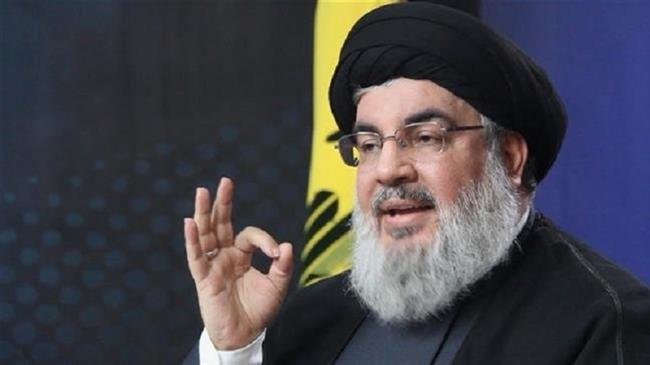
Press TV – July 19, 2019
The secretary general of the Lebanese Hezbollah resistance movement has warned the US that any military aggression against Iran will drag the entire Middle East into disarray, stressing that Washington will definitely not be the one who determines the end of such a scenario.
“As Leader of the Islamic Revolution (Ayatollah Seyyed Ali Khamenei) has said, the US is not capable of imposing a military war on Iran. The White House knows that if a war against Iran happens, the entire region will get entangled, and the US will not be the one who finishes it,” Sayyed Hassan Nasrallah said in a meeting with the visiting Iranian parliament speaker’s special advisor on international affairs, Hossein Amir-Abdollahian, in Beirut on Friday.
Tensions have been running high between Tehran and Washington since last year, when US President Donald Trump unilaterally withdrew the US from the 2015 multilateral nuclear deal, officially known as the Joint Comprehensive Plan of Action (JCPOA), and unleashed the “toughest ever” sanctions against the Islamic Republic.
Recently, the US has taken a quasi-warlike posture against Iran and stepped up its provocative military moves in the Middle East, among them the June 20 incursion of an American spy drone into the Iranian borders.
The Islamic Revolution Guards Corps (IRGC) shot down the advanced US-made RQ-4 Global Hawk over Iran’s territorial waters off the coastal province of Hormozgan after the unmanned aircraft breached the country’s airspace on a spying mission.
Nasrallah then described resistance as the sole and most efficient option in the face of the Israeli regime’s crimes, acts of aggression and excessive demands.
He also lauded Iran’s political and democratic plan for a referendum among all historic residents of Palestine, inclusive of Muslims, Christians and Jews, as realistic and logical.
“The occupying Zionists, however, are the most irrational creatures on the earth, and do not understand anything other than the discourse of resistance,” the Hezbollah chief noted.
He further termed Trump’s controversial proposal for “peace” between the Israeli regime and Palestinians, dubbed “the deal of the century,” as hollow, stating that the Zionists are the root cause of corruption and insecurity in the region.
Nasrallah also highlighted that Hezbollah bears no grudge against Jews, warning members of the religious community not to play in the hands of Zionists’ land grab policies.
The Hezbollah secretary general emphasized that the anti-Israel resistance front is now in its best form even though the US and the Israeli regime continue with their fiendish moves in the region.
“Americans are seeking to impede the purge of the last remnants of terrorists in Syria, and are prolonging the (Syrian) crisis through various means in a bid to prevent the return of Syrian refugees to their homeland. They will fail in their interventionist policies in the region though,” Nasrallah concluded.
Amir-Abdollahian, for his part, congratulated Hezbollah’s victory during the 33-day war in July 2006, and discussed latest regional and international developments besides bilateral political and parliamentary relations between Tehran and Beirut with the Hezbollah chief.
New US Pentagon Chief – Vested Interest in War & Conflict
Strategic Culture Foundation | July 19, 2019
Mark Esper is expected to be confirmed in coming days as the new US Secretary of Defense. His appointment is awaiting final Congressional approval after customary hearings this week before senators. The 55-year-old nominee put forward by President Trump was previously a decorated Lieutenant Colonel and has served in government office during the GW Bush administration.
But what stands out as his most conspicuous past occupation is working for seven years as a senior lobbyist for Raytheon, the US’ third biggest military manufacturing company. The firm specializes in missile-defense systems, including the Patriot, Iron Dome and the Aegis Ashore system (the latter in partnership with Lockheed Martin).
As Defense Secretary, Esper will be the most senior civilian executive member of the US government, next to the president, on overseeing military policy, including decisions about declaring war and deployment of American armed forces around the globe. His military counterpart at the Pentagon is Chairman of the Joint Chiefs of Staff, currently held by Marine General Joseph Dunford who is expected to be replaced soon by General Mark Milley (also in the process of senate hearings).
Esper’s confirmation hearings this week were pretty much a rubber-stamp procedure, receiving lame questioning from senators about his credentials and viewpoints. The only exception was Senator Elizabeth Warren, who slammed the potential “conflict of interest” due to his past lobbying service for Raytheon. She said it “smacks of corruption”. Other than her solitary objection, Esper was treated with kid gloves by other senators and his appointment is expected to be whistled through by next week. During hearings, the former lobbyist even pointedly refused to recuse himself of any matters involving Raytheon if he becomes the defense boss.
As Rolling Stone magazine quipped on Esper’s nomination, “it is as swampy as you’d expect”.
“President Trump’s Cabinet is already rife with corruption, stocked full of former lobbyists and other private industry power players who don’t seem to mind leveraging their government positions to enrich themselves personally. Esper should fit right in,” wrote Rolling Stone.
The linkage between officials in US government, the Pentagon and private manufacturers is a notorious example of “revolving door”. It is not unusual, or even remarkable, that individuals go from one sector to another and vice versa. That crony relationship is fundamental to the functioning of the “military-industrial complex” which dominates the entire American economy and the fiscal budget ($730 billion annually – half the total discretionary public spend by federal government).
Nevertheless, Esper is a particularly brazen embodiment of the revolving-door’s seamless connection.
Raytheon is a $25 billion company whose business is all about selling missile-defense systems. Its products have been deployed in dozens of countries, including in the Middle East, as well as Japan, Romania and, as of next year, Poland. It is in Raytheon’s vital vested interest to capitalize on alleged security threats from Iran, Russia, China and North Korea in order to sell “defense” systems to nations that then perceive a “threat” and need to be “protected”.
It is a certainty that Esper shares the same worldview, not just for engrained ideological reasons, but also because of his own personal motives for self-aggrandizement as a former employee of Raytheon and quite possibly as a future board member when he retires from the Pentagon. The issue is not just merely about corruption and ethics, huge that those concerns are. It is also about how US foreign policy and military decisions are formulated and executed, including decisions on matters of conflict and ultimately war. The insidiousness is almost farcical, if the implications weren’t so disturbing, worthy of satire from the genre of Dr Strangelove or Catch 22.
How is Esper’s advice to the president about tensions with Russia, Iran, China or North Korea, or any other alleged adversary, supposed to be independent, credible or objective? Esper is a de facto lobbyist for the military-industrial complex sitting in the Oval Office and Situation Room. Tensions, conflict and war are meat and potatoes to this person.
During senate hearings this week, Esper openly revealed his dubious quality of thinking and the kind of policies he will pursue as Pentagon chief. He told credulous senators that Russia was to blame for the collapse of the Intermediate-Range Nuclear Forces (INF) Treaty. That equates to more Raytheon profits from selling defense systems in Europe. Also, in a clumsy inadvertent admission he advised that the US needs to get out of the INF in order to develop medium-range missiles to “counter China”. The latter admission explains the cynical purpose for why the Trump administration unilaterally ditched the INF earlier this year. It is not about alleged Russian breaches of the treaty; the real reason is for the US to obtain a freer hand to confront China.
It is ludicrous how blatant a so-called democratic nation (the self-declared “leader of the free world”) is in actuality an oligarchic corporate state whose international relations are conducted on the basis of making obscene profits from conflict and war.
Little wonder then than bilateral relations between the US and Russia are in such dire condition. Trump’s soon-to-be top military advisor Mark Esper is not going to make bilateral relations any better, that’s for sure.
Also at a precarious time of possible war with Iran, the last person Trump should consult is someone whose corporate cronies are craving for more weapons sales.
Concentration of forces near Gulf risks ‘conflict outbreak,’ US policy ‘a mistake’ – Moscow
RT | July 19, 2019
Washington’s claim that it downed an Iranian drone is another sign that tensions in the Persian Gulf are at risk of spiraling into a bigger conflict, Russia’s Deputy Foreign Minister Sergey Ryabkov warned.
President Donald Trump had earlier claimed that the assault ship USS ‘Boxer’ shot down an Iranian drone that was approaching it in the Strait of Hormuz. Iran denied losing any aircraft that day.
“The concentration of forces of different countries in the Persian Gulf is so high that any incidents are possible there,” the Russian diplomat told reporters on Friday, adding that the main task now is to “prevent the escalation.”
“As we see once again, the situation… can lead to an outbreak of a conflict.”
Ryabkov said that, despite calls to show restraint, Washington “stubbornly continues to follow the path of stoking tensions and maximum pressure on Tehran.”
This path is a mistake, and prone to cause further complications and shocks.
Last month, the Iranian military shot down a US drone it said had violated the nation’s airspace. Washington said the drone was destroyed over international waters.
US Imposes Sanctions on Hezbollah Senior Leader Over 1994 Terror Attack in Argentina
Sputnik – July 19, 2019
Hezbollah’s top figure, Salman Raouf Salman, stands accused of the bombing of a Jewish centre perpetrated 25 years ago in Argentina’s capital Buenos Aires.
The United States has introduced sanctions on a senior Hezbollah leader, a Colombian-born Lebanese national Salman Raouf Salman, over his complicity in terrorist attacks, according to the US Treasury. The top Hezbollah operative is accused of coordinating the bombing of a Jewish community centre in Argentina’s capital, Buenos Aires in 1994.
The Treasury’s Office of Foreign Assets Control (OFAC) said it added Salman Raouf Salman to its specially designated nationals list.
Treasury undersecretary of terrorism and financial intelligence Sigal Mandelker stated that Salman has continued to orchestrate terrorist operations in the Western Hemisphere for Hezbollah since the attack in Buenos Aires.
On Thursday, Argentina’s authorities designated the Lebanese-based Hezbollah movement as a terrorist organisation and decreed a freeze of all financial assets belonging to the group.
The move coincided with the 25th anniversary of the violent attack on the Mutual Israelite Association of Argentina community centre in Buenos Aires in 1994 that left 85 people dead and hundreds injured. Hezbollah denied any role in the attack.
Unidentified drones attack Hashd al-Sha’abi base in Iraq’s Salahudin Province: Reports
Press TV – July 19, 2019
Unidentified drones have reportedly attacked a base belonging to Iraq’s Popular Mobilization Forces (PMU) in the Arab country’s Salahudin Province.
The attack killed one PMU member and injured another four, Iraq’s al-Ahad television network reported on Friday.
Footage later released by Iraqi media from the assault’s aftermath showed a large flame in what was reportedly a PMU base near the town of Amerli.
It is yet unclear who orchestrated the operation.
The PMU — better known as Hashd al-Sha’abi — was formed by popular volunteer forces in 2014 after the Daesh Takfiri terror group launched a campaign of bloodshed and destruction against the nation.
It joined forces with the national army and effectively contributed to its anti-terror operations. The combined push, which was reinforced by Iraq’s allies, including Iran, ultimately led to Daesh’s expulsion in late 2017.
The Iraqi parliament on November 26, 2016 approved a law giving full legal status to Hashd al-Sha’abi fighters. Last March, the then prime minister, Haider al-Abadi, to order the PMU’s formal inclusion in the Arab country’s army.
The order would grant the PMU many of the same rights as members of the military, but it is yet to be fully implemented.
Earlier this month, Abadi’s successor, Adil Abdul-Mahdi, issued a decree, calling for the PMU’s full integration in the Iraqi military.
The attack on the Hashd al-Sha’abi base comes as the United States has sought to pressure Baghdad against the PMU.
Washington has often labeled Iraqi units operating under the PMU organization as being “Iran-led terrorists groups,” a claim denied by the Iraqi officials.
Iraqis have sharply rejected Washington’s hostile stance against Hashd al-Sha’abi forces, describing it as a violation of the Arab country’s sovereignty.
Trump boasts that his ‘kept promises’ made Israel great… What about America?
By Helen Buyniski | RT | July 18, 2019
Donald Trump’s reelection campaign is already sounding like a victory lap, but some may find his choice list of accomplishments puzzling. What does recognizing occupied Israeli land have to do with MAGA – and what about Americans?
US President Trump’s campaign refrain is one of “promises kept,” but Americans not immersed in the communal rapture of a reelection rally are forced to confront uncomfortable truths about which vows the president has chosen to fulfill. Opening an American embassy in Jerusalem doesn’t put food on their table, and killing the Iran nuclear deal doesn’t pay their medical bills. Trump has kept a very specific set of promises and let the others go, declaring his mission accomplished.
Touting his accomplishments at a Wednesday rally in Greenville, North Carolina, Trump preened about moving the embassy despite formidable “opposition” and boasted that for 52 years, Israel had tried and failed to get international recognition for the Golan Heights. He then appeared to sink into reverie for a moment, murmuring “We’re doing good…” before bragging about recognizing the “legitimate” government of Venezuela.
But are “we” doing good? Trump boasts of rock-bottom unemployment rates, but nearly half of American families still can’t afford basic living expenses, according to a frightening United Way study published in May. Trump, meanwhile, has proposed redefining how the federal poverty line is calculated, a move that would kick millions of people off the welfare rolls, thus saving the poor from the perils of socialism. Homelessness is at record highs in cities all over the country – but at least more of us are working. Who are we to complain if our wages can no longer pay for shelter and food?
Israel, on the other hand, is doing great. In addition to the $3.1 billion the US already provided in foreign aid, Trump tacked on $75 million in 2017, even as he asked for a 28 percent cut in the State Department budget. This year will see an additional $200 million donated, no strings attached, to the already-wealthy country.
Perhaps trying to prove his department worthy of US funding, Secretary of State Mike Pompeo promised a roomful of Jewish leaders that if Jeremy Corbyn were to get too close to power in the UK, he’d “push back” against the pro-Palestinian socialist.
On the 2020 campaign trail, there’s no more talk from Trump about pulling out of Syria or Afghanistan, or ending Middle Eastern wars at all – a promise that attracted voters from outside the Republican Party turned off by his opponent’s warmongering. Instead, Trump boasts that the US is spending more than ever on its military for the last three years running – as if that was a source of pride when the US already spends more than the next 10 countries put together and still gets substandard equipment.
Trump superseded the promise he made to Americans to end the endless war with a promise to Israel to remain in Syria as long as the Iranians (who had been invited by the government) were there – and has kept that promise, despite declaring ISIS vanquished and with it the legal authorization for the US’ presence in the country.
“2016 Trump” promised to repeal Obamacare and replace it with something better, something that would – presumably – allow Americans to access medical care without bankrupting themselves. While the frankly unconstitutional individual mandate was struck down in 2017, the Affordable Care Act remains in place, now hemorrhaging cash as healthy but poor young people are no longer forced to buy unaffordable health insurance and instead opt for the longstanding American healthcare plan of “don’t get sick.” Medical bills remain the leading cause of bankruptcy.
The border wall was Trump’s signature issue in 2016 and remains perhaps his most significant unkept promise. But it’s not as if he hasn’t tried – his determination to secure funding despite Democratic opposition led to the longest government shutdown in US history, a political game of chicken that dragged on for more than a month before he was forced to give in and seek other funding routes for an initiative that most Democrats had supported just a few short years ago.
Trump’s unkept promises, then, are not entirely Trump’s fault. His tentative efforts to pull troops out of Syria were stonewalled not only by Republicans, but by Democrats who’d developed a baffling and sudden concern for the welfare of Kurds they’d never heard of three months before. In fact, it wasn’t until Trump bombed Syria in response to a gas attack he blamed on President Bashar Assad that Democrats – or their mouthpieces in the mainstream media – let up on their criticism for a moment. The man they’d just finished calling a Russian agent was suddenly looking presidential, gushed pundits on programs bookended by commercials for Boeing.
When Trump calls out the “four horsewomen of the Apocalypse” in curiously structured tweets that demand they apologize to Israel before asking that they make amends with the US, he is merely pointing out to party leadership that they might want to get the rogue congresswomen under control before they make the next election difficult. Rashida Tlaib and Ilhan Omar have introduced a resolution to affirm Americans’ right to participate in boycotts ahead of a House vote on an anti-BDS bill, a juxtaposition that will force Democrats to make a difficult decision about whom they truly serve.
Would Trump be able to make similarly tough decisions to serve ordinary Americans and the country that he’s promised to “Make Great”?
Featured Video

Broke Princes: Saudi Arabia’s Powder Keg
or go to
Aletho News Archives – Video-Images
From the Archives
A sample of vaccine and injectable medication tragedies during my lifetime
This is what happens when you demand speedy production in an era of politicized regulation
By Meryl Nass, MD | February 12, 2022
All these tragedies have been due to failures of testing or failures in manufacturing processes. Most occurred before vaccine manufacturers were given virtually complete protection from liability in 1987.
With the duration of patent exclusivity determining how much new products earn, products are rushed to market as quickly as possible, most using a shortened path for FDA review. Recalls and market removals of approved products are much more common than they used to be. We can only expect more of these disasters in the future, especially if the products are mandated for everyone. … continue
Blog Roll
 Aletho News
- Broke Princes: Saudi Arabia’s Powder Keg
- Albania’s Crisis: Rama, Israeli Investments and the Demand for Accountability
- Hezbollah Categorically Denies Syrian Accusations: We Aim at Confronting Israeli Enemy, Not Undermining Syria’s Stability
- Trump claims funding to Israel ending in 2026 as merger of Israeli–US armies looms
- Iran Weathering The Storm, But Saudi Arabia Is Sinking
- Sunk Ships Don’t Sail Home: Why Peace Won’t Save the Oil Market and War Will Wreck It
- No Cossacks at the gates, fix Italy instead – opposition leader to Meloni
- The Pits: Zelensky’s torture chamber network in the public eye
- Moscow mocks Kiev’s language hypocrisy exposed by ‘torture chamber’ scandal
- Military ‘torture chamber’ triggers new scandal in Kiev
- If Americans Knew
- An error has occurred; the feed is probably down. Try again later.
- No Tricks Zone
- New Study: The Net Fossil Fuel Contribution To Rising Atmospheric CO2 Has Been Zero For 500 Years
- Germany’s Green Energy Transition Becoming Increasingly Expensive…Another 6 Trillion Euros!
- Sudden Stratospheric Warming, Powerful El Niño Combination May Lead To Extreme Europe Cold, Energy Crisis!
- Two New Studies Find Thwaites Glacier Melt Cannot Be Driven By Human Activity Or A Warming Ocean
- E-Cars Reduce CO2 Emissions By Only 41% Compared To Internal Combustion Engine Vehicles
- Predictions Made By Renowned Climate Professor Over Past Decades Have Been Proven To Be Poor
- New Study Suggests Large Regions Of The Pacific Ocean Have Been Cooling For The Last 80 Years
- Germany’s Green Energy Debacle: High Energy Costs Force Kahla Porzellan to Close After 182 Years!
- New Study: 50 Years Of The Most Aggressive ‘Net Zero’ Policies Can Only Affect The Global Climate By 0.03°C
- US September “Heat” Was No Record…Many Records Set Decades Ago

