Dual Loyalty as Racism
By Eve Mykytyn | March 8, 2019
The US House of Representatives just passed a resolution that declared, “whether from the political right, center, or left, bigotry, discrimination, oppression, racism, and imputations of dual loyalty threaten American democracy and have no place in American political discourse.” The key words in this resolution are “dual loyalty” which make clear that this otherwise banal condemnation of racism was made in direct response to Representative Ilhan Omar’s controversial statement: “I want to talk about the political influence in this country that says that it is OK for people to push for allegiance to a foreign country.”
Apparently, the House resolution was a disappointment to some. The New York Times reports that this ‘all-inclusive’ approach was criticized for not “solely condemn[ing] anti-Semitism.” Representative Ted Deutch asked “Why are we unable to singularly condemn anti-Semitism? Why can’t we call it anti-Semitism and show we’ve learned the lessons of history?”
It is bizarre that Mr. Deutch seemingly objects to condemning racism per se. Would Mr. Deutch prefer that the House pass separate resolutions condemning prejudice against each of the ever growing list of identity groups? The House would be so busy debating these resolutions that they would accomplish nothing else, although admittedly, that might be a positive outcome.
Omar has not retracted her statements. In response to criticism from representative Nita Lowy, Omar tweeted, “I should not be expected to have allegiance/pledge support to a foreign country in order to serve my country in Congress or serve on committee.”
Omar’s point has been substantiated by the reaction it has provoked. Omar claimed that accusations of anti-Semitism tend to be used to silence critics of Israel. In response, she was called a “Jew hater.”
Representative Juan Vargas tweeted, “It is disturbing that Rep. Omar continues to perpetuate hurtful anti-Semitic stereotypes that misrepresent our Jewish community. Additionally, questioning support for the U.S.-Israel relationship is unacceptable.”
Omar is condemned for criticizing dual loyalty by those who insist upon loyalty to Israel. As journalist Jordan Weisman noted, “If Israel’s most devoted U.S. backers are really so concerned over dual loyalty smears, maybe they should think more carefully about how they’re encouraging them. “
Bolton’s Act of Sabotage
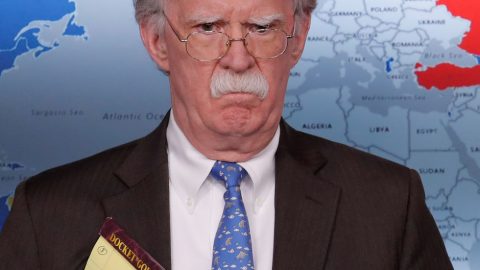
By David Macilwain | American Herald Tribune | March 8, 2019
Across the Western world, there has been discussion and argument and consternation over the apparent failure to make progress on disarmament at the recent talks in Hanoi. Examination of the reasons for that failure has been replaced by speculation about the DPRK’s next move and suspicions about its motives, without any similar skepticism or doubts about the US intent and strategy. But such speculation is entirely misguided, and only possible because of ignorance of one key detail in the discussions in Hanoi.
Thanks mostly to the efforts of Australia’s former ambassador to South Korea and Vietnam, Richard Broinowski, whose diplomatic contacts in Canberra relayed inside information about the discussions, the alarming truth on why the talks suddenly fell apart was revealed to the SBS TV network, and to its listeners in the evening news broadcast on March 1st.
While media around the world, apparently including those not allied to the US, broadcast the press briefing by Donald Trump and Mike Pompeo laying the blame on North Korea for demanding all the sanctions be lifted, only SBS listeners got to hear what really happened, and thenceforth to see things in an entirely different light. As Richard Broinowski explained several days later writing on John Menadue’s influential blog Pearls and Irritations :
… “a well-informed senior Asian diplomatic source in Canberra has added another reason for the Summit’s breakdown: that Trump’s national security adviser, John Bolton, persuaded Trump to add another demand, without notice, that led to North Korean refusal and a premature end to the summit even before negotiations had begun.”
“The Asian diplomat recalled that John Bolton had been scheduled to visit Canberra at the end of February. But the visit was cancelled when he suddenly went to Hanoi instead, whether at Trump’s directive or on his own initiative being unclear. The diplomat’s understanding is that Bolton suggested to Trump that as well as demanding a complete inventory of North Korea’s nuclear weapons and delivery systems, Trump should also request details of the country’s chemical and biological arsenal, a demand Kim found unexpected, and for which he was unprepared, and refused. Trump then broke off the meeting before substantive negotiations had even begun.”
We may all too easily forget the anticipation before these crucial talks between Trump and Kim Jong Un, where it at least looked possible that Trump might “do a deal” on a basis that the North Koreans could accept. The early signs were more than promising, with Kim Jong Un assuring that he would not have been there had he not sought progress on denuclearisation, and Trump prepared to take him at his word. While “substantive negotiations” had not begun, the North Koreans had already suggested they would make very significant concessions in return for the lifting of some sanctions and some other commitments by the US to reduce tensions – “security guarantees” in other words.
It’s worth noting in this context that Sergei Lavrov, speaking at a parallel meeting of the Valdai Club in Ho Chi Minh city had stated quite clearly that the US must make significant concessions, rather than demanding that the DPRK completely denuclearise before lifting sanctions. As always it’s worth reading Lavrov’s wide-ranging and straightforward remarks on the poor state of the world and the destabilizing and destructive role being played by the US.
The necessity for lifting some sanctions on the DPRK is further emphasized by the news that their food production this year is severely restricted by the worst climatic conditions for a decade, making food imports and relief urgent. Their demands for sanctions relief in Hanoi concerned this issue rather than anything connected with the nuclear program.
The truth of the story of Bolton’s demands, which look very much like a planned act of sabotage, is beyond doubt and endorsed in statements from South Korea’s former unification minister Chong Se-Hyun published in Korean newspapers and reported elsewhere. The Sydney Morning Herald and the Australian also covered the story on the following Monday, but this was a temporary blip on their normally unchallenging sympathy for the official US viewpoint. Australia’s other State broadcaster the ABC, however, made no mention of it, simply repeating Trump’s cover-up claim on the sanctions removal.
These media along with their Western partners in officially approved disinformation are now once again adding to the rumor mill on “North Korea’s ongoing nuclear threat” with suspect stories about the renewal of a missile launching site. Satellite photos taken only hours after the failure of the talks claim to show such activity. The Australian Strategic Policy Institute, which has close links to government, has meanwhile warned that moves to scale down the annual war games proposed belatedly as a “goodwill gesture” by the US, are “dangerous and will embolden the North”.
Putting things into a wider perspective, former Australian ambassador to the UN and nuclear disarmament negotiator Richard Butler added his weight to the subject the following day with this footnote on Broinowski’s article:
“This report has now been confirmed by a report published in the March 4th edition of The Bulletin of the Atomic Scientists, which cites a statement by the DPRK Foreign Minister, Ri Yong-Ho, in Hanoi, that “John Bolton disrupted the talks by demanding that North Korea disclose its chemical and biological arsenal as well as its nuclear arsenals”. This would seem to answer the question I posed in my article on whether or not a spanner had been thrown into the works and if so, by whom? Not unusually, there seems to have been no report of this highly salient fact by western mainstream media.”
What matters here however is not simply to expose the misinformed and fraudulent claims made about the failure of the Hanoi talks. Bolton and his allies – whoever they are – evidently sought to sabotage the talks and the possibility of agreement and détente, against the intention of Donald Trump. The last thing they want is to lose the pretext for maintaining and expanding missile systems in the region aimed at threatening or “countering” China. An informative report from the East Asia Forum think-tank also makes this suggestion:
For many in the US security community the ‘no deal’ comes as a relief. There were concerns that Trump would be eager to rush into a deal, no matter what the costs of the concessions, to claim the diplomatic achievement for his administration. This seemed an over-urgent goal due to the impending report by FBI special prosecutor Robert Mueller on the Trump campaign’s ties to Russia and possible obstruction of justice, as well as the heat on Trump from his former fixer Michael Cohen’s damning testimony last week to Congress.
So far from returning to the US with an extra feather in his golden cap, Donald Trump came home to face the music, and not just from the Russia-gate witch-hunt. Even though he had called off the talks with Kim Jong Un, he had already engaged in friendly exchanges and pleasantries that some found offensive, inviting media to repeat the tired nonsense about his dealings with President Putin – that “Trump takes the advice of “dictators” over that of his own intelligence community”. (perhaps not an unwise move under the circumstances!)
The story of his brief meeting with Kim then immediately focussed on how Trump had “taken Kim’s word” over the case of Otto Warmbier, the detained American student allegedly killed by mistreatment in a North Korean hospital. The grotesque demand of the DPRK for $500 million compensation for his death from a US court illustrates the problem that many in the US seem to have in relating to those with a different viewpoint and different attitude. If similar suits were brought against the US government by relatives of the millions of North Koreans who have died over the last sixty-five years as a direct or indirect result of US aggression and sanctions, the US would be bankrupted.
It’s hard not to conclude that the man who was considered “too extreme” to join the regime of George W Bush because of his preference for armed attacks and even nuclear strikes over diplomacy has now launched a soft coup against his own President. Immediately following the Vietnam venture, Bolton was making threats of military action against Venezuela’s President Maduro which had a strange resonance. The demand that Venezuela’s democratically elected President be replaced by an unknown and unelected puppet selected and launched like a missile into Caracas by the US and its European allies is now being copied by the self-selected “Interim President of the United States”, John Bolton.
And a world under this new de facto President with his choice of puppet might just make us look back on the Golden Age of Trump if we are lucky enough to survive it.
US Taxpayers On the Hook for Nearly $1 Billion in Saudi Arabia’s Recent Missile Defense Purchase
By Whitney Webb | MintPress News | March 8, 2019
WASHINGTON — On Monday, in an all-but-unreported news item, the Pentagon announced that it would be paying $946 million to Lockheed Martin toward the installation of a missile defense system that was purchased — not by the United States government — but by Saudi Arabia. In other words, the Pentagon is paying nearly $1 billion to subsidize a purchase made by a foreign power.
In its announcement, the Pentagon referred to the payment as an “undefinitized contract action” that would be used, in part, to prepare Saudi Arabia’s current missile defense system for the installation of the $15 billion Terminal High Altitude Area Defense (THAAD) system manufactured by Lockheed.
The Pentagon said the payment was intended to prevent major delays in the delivery and production of the THAAD system, suggesting it was likely a hedge against past Saudi interest in the THAAD’s main (and cheaper) competitor, the Russian-made S-400. However, the payment is also authorized for use by Lockheed to pay for materials, tools and engineering development.
The Saudi THAAD purchase was a major component of the “$110 billion” weapons deal much touted by the Trump administration in 2017. However, many of the key purchases within that massive deal were never finalized, an embarrassment for what the administration had advertised as a major foreign policy success that would create jobs in the United States, even though many Lockheed products are actually manufactured abroad.
A better deal for a better product down the block
One likely explanation for the Pentagon’s willingness to pay such a significant amount to subsidize the Saudi THAAD system is the fact that the Saudi government had intended to purchase the cheaper and more effective Russian-made S-400 instead of the THAAD. Indeed, as MintPress News reported last year, the Saudis let the deadline for the THAAD deal pass on September 30 of last year without signing, and instead expressed interest in the S-400. The Saudis also refused U.S. government requests to disavow its interest in the Russian-made system.
Just two days after the THAAD deadline passed, Saudi journalist Jamal Khashoggi disappeared. His disappearance and alleged murder caused international outrage, surprising many observers, as even the most outrage-prone U.S. politicians generally turn a blind eye to Saudi human-rights violations. Senator Lindsey Graham (R-SC), who became one of the most vocal critics of Saudi Crown Prince Mohammed bin Salman (MBS) after Khashoggi’s disappearance, is also heavily funded by Lockheed Martin, which is the largest contributor to his 2020 re-election campaign.
The furor over Khashoggi’s death — which appears to have been, in part, influenced by Saudi lack of interest in the THAAD system — eventually pressured the Saudi government enough to sign letters of offer and acceptance for their purchase of 44 THAAD launchers, missiles and related equipment in November.
However, in order to entice the Saudis to “buy American,” more than political pressure appears to have been needed and it is likely that U.S. officials offered to “sweeten the deal.” Given this context, the Pentagon’s $946 million payout to prevent installation delays appears to be one of these concessions, as the U.S. government continues to scramble to keep its allies from buying the THAAD’s top competitor, the Russian S-400. Unfortunately for them, it’s the U.S. taxpayers who are footing the bill.
Whitney Webb is a MintPress News journalist based in Chile. She has contributed to several independent media outlets including Global Research, EcoWatch, the Ron Paul Institute and 21st Century Wire, among others. She has made several radio and television appearances and is the 2019 winner of the Serena Shim Award for Uncompromised Integrity in Journalism
Government to Facebook Pipeline Reveals a Corrupt Mix of Social Media and the State
By Matt AGORIST | The Free Thought Project | February 2, 2019
As the Free Thought Project has previously reported, the phrase “Facebook is a private company” is not accurate as they have formed a partnership with an insidious neoconservative “think tank” known as the Atlantic Council which is directly funded and made up of groups tied to the pharmaceutical industry, the military industrial complex, and even government itself. The Atlantic Council dictates to Facebook who is allowed on the platform and who is purged.
Because the Atlantic Council is funded in part by the United States government—and they are making decisions for Facebook—this negates the claim that the company is private.
Since our six million followers and years of hard work were wiped off the platform during the October purge, TFTP has consistently reported on the Atlantic Council and their ties to the social media giant. This week, however, we’ve discovered something just as ominous—the government to Facebook pipeline and revolving door.
It is a telltale sign of a corrupt industry or company when they create a revolving door between themselves and the state. Just like Monsanto has former employees on the Supreme Court and Pharmaceutical industry insiders move back and fourth from the FDA to their companies, we found that Facebook is doing the same thing.
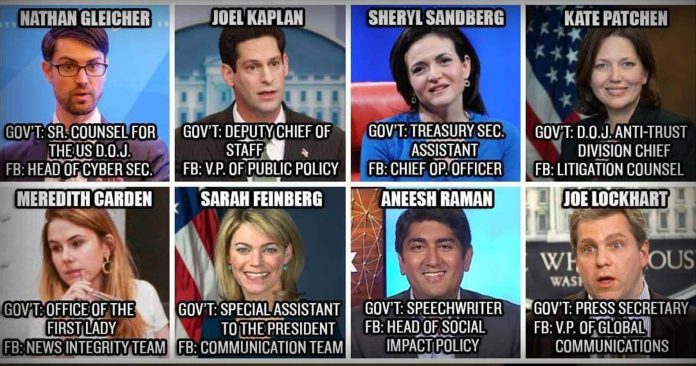
Below are just a few of corrupt connections we’ve discovered while digging through the list of current and former employees within Facebook.
Facebook’s Head of Cybersecurity Policy—aka, the man who doles out the ban hammer to anyone he wishes—is Nathaniel Gleicher. Before Gleicher was censoring people at Facebook, he prosecuted cybercrime at the U.S. Department of Justice, and served as Director for Cybersecurity Policy at the National Security Council (NSC) in the Obama White House.
While Facebook may have an interest in seeking out Gleicher’s expertise, this man is an outspoken advocate of tyranny.
After deleting the pages of hundreds of antiwar and pro-peace media and activist outlets in October, last month, Facebook made another giant move to silence. This time, they had no problem noting that they went after pages whose specific missions were “anti-corruption” or “protest” movements. And it was all headed up by Gleicher.
“Some of the Pages frequently posted about topics like anti-NATO sentiment, protest movements, and anti-corruption,” Gleicher wrote in a blog post. “We are constantly working to detect and stop this type of activity because we don’t want our services to be used to manipulate people.”
Seems totally legit, right?
The list goes on.
In 2017, as the Russian/Trump propaganda ramped up, Facebook hired Joel Benenson, a former top adviser to President Barack Obama and the chief strategist for Hillary Clinton’s failed 2016 presidential campaign, as a consultant.
While filling team Zuck with Obama and Clinton advisers, Facebook hired Aneesh Raman, a former Obama speechwriter who now heads up Facebook’s “economic impact programming.”
Highlighting the revolving door aspect of Facebook and the US government is Sarah Feinberg who left the Obama train in 2011 to join Facebook as the director of corporate and strategic communications. She then moved on after and went back to Obama in 2015 to act as the administrator of the Federal Railroad Administration (FRA).
David Recordon also highlights the revolving door between Facebook and the government. Recordon was the former Director of IT for Obama’s White House. He was also Engineering Director at Facebook prior to his role at the White House, and returned to the position after the 2016 election. He is currently Engineering Director for the Chan-Zuckerberg initiative.
Starting to see a pattern of political influence here? You should. But just in case you don’t, the list goes on.
Meredith Carden—who, you guessed, came from the Obama administration — joined the Facebook clan last year to be a part of Facebook’s “News Integrity Team.” Now, she’s battling fake news on the platform and as we’ve shown, there is a ridiculous amount of selective enforcement of these so-called “standards.”
In fact, there are dozens of former Obama staffers, advisers, and campaign associates who quite literally fill Facebook’s ranks. It is no wonder the platform has taken such a political shift over the past few years. David Ploufe, Josh W. Higgins, Lauryn Ogbechie, Danielle Cwirko-Godycki, Sarah Pollack, Ben Forer, Bonnie Calvin, and Juliane Sun, are just some of the many Facebook execs hailing out of the Obama era White House.
But fret not right wingers, Facebook likes their neocons too.
Jamie Fly, who was a top adviser to neocon Florida Senator Marco Rubio and who started his career in US political circles as an adviser to the George W. Bush administration, actually took credit for the massive purge of peaceful antiwar pages that took place last October.
“They can invent stories that get repeated and spread through different sites. So we are just starting to push back. Just this last week Facebook began starting to take down sites. So this is just the beginning,” Fly said in December.
Fly backs up his words with the fact that he works with Facebook’s arm of the Atlantic Council to ensure those dangerous antiwar folks don’t keep pushing their propaganda of peace and community.
And yes, this list goes on.
Joel David Kaplan is Facebook’s vice president of global public policy. Prior to his major role within Facebook, Kaplan took the place of neocon extraordinaire Karl Rove as the White House Deputy Chief of Staff for George W. Bush. Before that, from 2001 to 2003 he was Special Assistant to the President for Policy within the White House Chief of Staff’s office. Then he served as Deputy Director of the Office of Management And Budget (OMB).
Myriah Jordan was a special policy assistant in the Bush White House, who was hired on as a policy manager for Facebook’s congressional relations team—aka, a lobbyist. Jordan has moved back and forth between the private sector and the US government multiple times over his career as he’s made millions greasing the skids of the state for his corrupt employers.
So there you have it. Facebook, who claims to be a private entity, is quite literally made up of and advised by dozens of members of government. We’re ready for a change, are you?
Bernie Sanders blames climate change for Alabama tornado death toll
Climate Depot – March 7, 2019
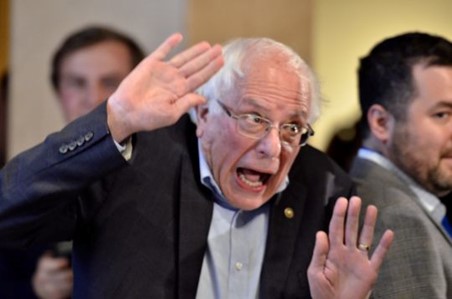 “The science is clear, climate change is making extreme weather events, including tornadoes, worse,” the independent Vermont senator said in a Facebook post linking to an EcoWatch article on the tornado.
“We must prepare for the impacts of climate change that we know are coming. The full resources of the federal government must be provided to these families. Our thoughts are with the people of Alabama and their families.”
Climate Depot Reality Check:
2018 sees record low death toll & no violent (EF4 or EF5) tornadoes for first time since records began in 1950 – With five days left in the year, The Weather Channel reported that the United States will finish with the fewest tornado deaths on record, should no tornadoes touch down and create fatalities before January 1.
And should no EF4/5 tornadoes hit the U.S. in the next five days, it would mark the first time that none have hit in a calendar year since that record began in 1950, according to the Washington Post.
Ex-Candidate Renois: Movement Demanding President Resignation to Repeat in Haiti
Sputnik – 07.03.2019
The US Embassy continues to support Haiti’s President Jovenel Moise despite an unprecedentedly large-scale protest movement and corruption charges against him. According to one of the opposition leaders, former presidential candidate Clarence Renois, US support is not enough to reassure the protesters.
Renois told Sputnik that if protests continue, the only option the US has to help President Moise retain power may be direct intervention. While Frantz Voltaire, director of the International Centre for Information and Documentation on Haiti, the Caribbean and the Afro-Canadian community noted that the incumbent president was elected with American support, while observers suspected the United States of manipulating the election.
Since the political crisis that broke out in Haiti on 7 February as a result of clashes between law enforcement and demonstrators, 26 people have died and 77 have been wounded in the country, according to the Inter-American Commission on Human Rights (IACHR).
Opponents of President Jovenel Moise have demanded his resignation and accused the president primarily of embezzlement of funds from Petrocaribe, a loan provided to Haiti by Venezuela.
“The Petrocaribe Foundation has launched an investigation. Venezuela has allocated several billion dollars in accordance with its assistance program to Haiti. These funds, unfortunately, were used for other purposes. The companies signed large contracts, but the projects were not implemented,” Frantz Voltaire told Sputnik.
“According to Haiti’s Superior Court of Auditors’ report, Jovenel Moise, who owns several companies, took advantage of these contracts. […] The president’s name appears on the list of suspects in this loud corruption scandal.”
Nevertheless, despite the unpopularity of President Moise, the American ambassador to Haiti, Michele Sison, expressed official support for the president, stressing that the United States recognises the legitimacy of Jovenel Moise’s government:
“We have always underscored, in our statements as well as our diplomatic conversations… our belief in the legitimacy of Haiti’s institutions and its elected officials,” Sison said in February.
According to opposition party leader Clarence Renois, it’s “opportunistic support”, since the non-recognition of the incumbent president could aggravate the crisis.
“If a major popular movement demanding the resignation of the president, like last week, will repeat, the US support will not change anything. The United States can’t decide on the current government.”
A similar situation occurred in 2004. “The US government supported the incumbent president [Jean-Bertrand Aristide — Sputnik] and the protest movement prevailed, overthrowing him. One-time support does not guarantee durable power,” Renois stressed.
“Youth groups and associations are dissatisfied with US policy in Haiti and often openly show their anger […] At such demonstrations, young people say that the US has too much influence.”
The Director of the International Centre for Information and Documentation on Haiti, the Caribbean and the Afro-Canadian Community, Frantz Voltaire, also noted an increase in anti-American sentiment.
“Fair or not, but the election of Jovenel Moise as the President of the Republic is attributed to the Americans. As in the case of his predecessor, Michel Martelly, it is believed that this president was imposed by the United States. And this is not only the opinion of society. Brazilian analyst Ricardo Seintenfus in his book, published two years ago, accused the United States of manipulating elections.”
According to Frantz Voltaire, in recent years, scandals associated with Western NGOs have badly damaged the reputation of the United States. The press spoke particularly negatively about the Clinton Foundation.
“There is a feeling of resentment towards American politicians. After the [2010] earthquake, it is not known where the international aid was directed. Bill Clinton has been accused of having promised a lot, but nothing has been done.”
“International aid was distributed by the US and NGOs, and, in both cases, it is not known where these funds went. There was no audit, no additional verification.”
According to data provided by the Associated Press, 33% of the $379 million collected for rebuilding Haiti was kept by the US government. According to CounterPunch magazine, of every dollar collected by the United States, only 42 cents was sent to NGOs to assist Haiti after the earthquake.
REFLECTIONS ON PUTIN AS A LEADER AND ON THE WORLD SITUATION IN WHICH HE WORKS
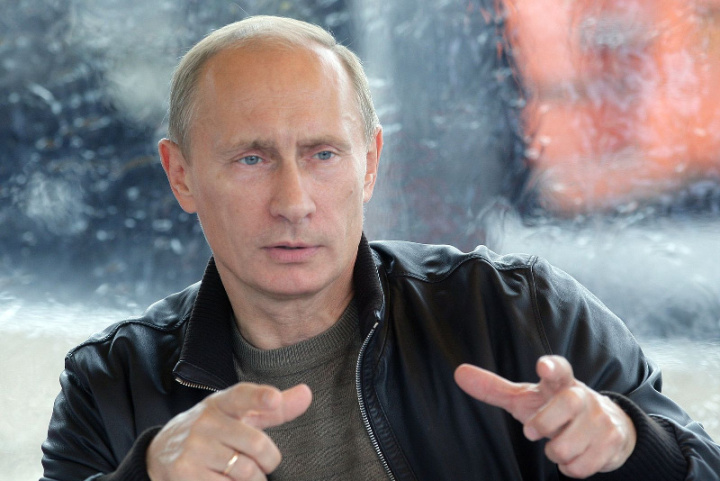
By John Chuckman | Aletho News | March 6, 2019
There is an immense amount of criticism of Putin, especially coming from America, most of it empty criticism which ignores realities and genuine analysis. For the more thoughtful, it represents only the stink and noise of propaganda, and not honest criticism in its true sense at all.
In politics, and especially in the direction of a country’s foreign affairs, there are certain behaviors, ideas, and attitudes which mark out a person as exceptional. I think there can be no doubt, Putin is just such a person, and I am very much inclined to say, the preeminent one of our time. Frankly, compared with Putin’s skills, Donald Trump comes off as a noisy circus act, a sideshow carnival barker, and not an appealing one. He has an outsized impact in the world only because he represents the most powerful country on earth and has embraced all the prejudices and desires of its power establishment, not because of the skillfulness of his actions or the insight of his mind. Obama made a better public impression, but if you analyze his actions, you see a man of immense and unwarranted ego, a very secretive and unethical man, and a man who held no worthy ideals he promoted. He was superficial in many things. And he was completely compliant to the power establishment, leaving no mark of his own to speak of.
Putin is a man who advocates cooperation among states, who argues against exceptionalism, who wants his country to have peace so that it can grow and advance, a man lacking any frightening or tyrannical ideologies, a man who invariably refers to other countries abroad, even when they are being uncooperative, in respectful terms as “our partners,” a man who knows how to prioritize, as in defense spending, a man with a keen eye for talent who has some other exceptional people assisting him – men of the caliber of Lavrov or Shoygu, a man who supports worthy international organizations like the UN, a man who only reluctantly uses force but uses it effectively when required, a highly restrained man in almost everything he does, a man who loves his country and culture but does not try foisting them off on everyone else as we see almost continuously from American presidents, a man with a keen eye for developing trends and patterns in the world, a man with an eye, too, for the main chance, a man whose decisions are made calmly and in light of lot of understanding. That’s quite a list.
The differences between recent American leaders, all truly mediocre, and Putin probably has something to do with the two counties’ relative situations over the last few decades. After all, if the support isn’t there for someone like Putin, you won’t get him. Russia’s huge Soviet empire collapsed in humiliation in 1991. The country was put through desperate straits, literally its own great depression with people begging or selling pathetic trinkets on the streets. And America made no real effort to assist. Indeed, quite the opposite, it kicked someone who was down and tried to shake all the loose change from his pockets. Out of Russia’s desperation came a man of remarkable skills, a rather obscure figure, but one who proved extremely popular and was obviously supported by enough powerful and important people to employ his skills for the county’s recovery and advance.
Putin showed no weakness or flinching when dealing with some of the extremely wealthy men who in fact became wealthy by stripping assets from the dying Soviet Union, men who then also used their wealth to challenge the country’s much-needed new leadership. He was, of course, excoriated by the United States, but to the best of my understanding, he did what was necessary for progress. The results are to be seen in a remarkably revitalized Russia. Everywhere, important projects are underway. New highways, new airports, major new bridges, new rail lines and subways, a new spaceport, new projects and cooperative efforts with a whole list of countries, new efforts in technology and science, and Russia has become the world’s largest exporter of wheat. Putin also has committed Russia to offering the world grain crops free of all GMOs and other contaminants, a very insightful effort to lock-in what have been growing premium markets for such products, even among Americans.
The military, which badly declined after the fall of the USSR, has been receiving new and remarkable weapons, the products of focused research efforts. New high-tech tanks, artillery, ships, and planes. In strategic weapons, Russia now produces several unprecedented ones, a great achievement which was done without spending unholy amounts of money, Russia’s military budget being less than a tenth that of the United States. Putin’s caution and pragmatism dictate that Russia’s first priority is to become as healthy as possibly, so it needs peace, for decades. Few Westerners appreciate the devastating impact of the USSR’s collapse, but even before that, the Soviet empire had its own slow debilitating impact. Russia’s economic system was not efficient and competitive. The effects of that accumulated over many years. The USSR always did maintain the ability to produce big engineering projects such as dams and space flight, but it was always sorely lacking in the small and refined things of life that an efficient economy automatically sees are provided.
The new strategic weapons are an unfortunate necessity, but the United States threatens Russia as perhaps never before with the expansion of NATO membership right to the Russian border, something breaking specific American promises of years back. And it has been running tanks all over Europe and then digging them in them right at the frontier just to make a point. It has deployed multiple-use covered missile launchers not far from the border which may as easily contain offensive intermediate-range ground-to-ground nuclear missiles as the defensive anti-missile missiles claimed to be their purpose. And it has torn up one of the most important nuclear-weapons treaties we had, the INF Treaty, pertaining to intermediate-range missiles. Intermediate-range nuclear missiles based in Europe give the United States the ability to strike Russia with little warning, their ten-minute flight path compares to a roughly thirty-minute flight path for an Intercontinental Ballistic Missile (ICBM) coming from America. These are extremely de-stabilizing, as are the counter-measures Russia felt it must take, Russian intermediate-range nuclear missile aimed at European centers. Everyone eventually recognized that, and that’s why the treaty was successfully completed. Europeans appreciated no longer becoming the immediate battlefield in a nuclear war.
But relations with the United States have now entered a new world, and it is not a brave one. America’s power establishment has assumed new goals and priorities, and in those, Russia is not viewed well, despite its new identity as a nation ready to participate and peacefully compete with everyone, a nation without the kind of extreme ideology communism was, a kind of secular religious faith. Despite its readiness to participate in all Western organizations, forums, and discussions, it is viewed with a new hostility by America. It is arbitrarily regarded as an opponent, as an ongoing threat. As I discuss below, America, too, has been kind of in a decline, and the response of its leadership to that fact involves flexing its muscles and extracting concessions and privileges and exerting a new dominance in the world, a response not based in economic competition and diplomatic leadership, a response carrying a great deal of danger.
And, very importantly, its response is one that involves not only bypassing international organizations, but, in many cases, working hard to bend them to its purposes. There are many examples, but America’s treatment of the UN has been foremost. It has in the recent past refused for considerable periods to pay its treaty-obliged dues until it saw changes it unilaterally demanded. It has dropped out of some important agencies completely, most notably UNESCO. In general, it has intimidated an international organization into better accommodating American priorities, including very much imperial ones opposed to what the UN is supposed to be about. And it has used this intimidation and non-cooperativeness to influence the nature of leadership at the UN, the last few Secretaries-General being timid on very important matters and ineffective in general. That’s just the way America likes them to be now. A harsh Neocon like Madeleine Albright won her government-service spurs at the UN by engineering the departure of an unwanted Secretary-General.
Promoting coups is not a new activity for the United States. There is a long postwar record, including Iran’s democratic government in the 1950s, Guatemala’s democratic government in the 1950s, and Chile’s democratic government in 1973. But the recent coup in Ukraine represented something rather new, a very provocative activity right on a major Russian border. It was also against an elected government and in a country which shares with Russia a history and culture going back more than a thousand years to the predecessor state of Kievan Rus. Yes, there are resentments in Ukraine from the Soviet era, and those are what the United States exploited, but the country was democratically governed. In any event, staging a coup in a large bordering country is a very serious provocation. You can just imagine the violent American reaction to one in Mexico or Canada.
The new, post-coup government in Ukraine also made many provocative and plainly untrue statements. The ineffective, and frequently ridiculous, President Poroshenko kept telling Europeans that Russian troops and armor were invading his country. Only his brave army was holding the hordes back. He was literally that silly at times. Of course, none of it was ever true. American spy satellites would quickly detect any Russian movement, and they never did. In an effort to put the wild claims into perspective, treating them with the contempt they deserved, Putin once said that if he wanted to, he could be in Kiev in two weeks. Undoubtedly true, too. Well, the statement was taken completely out of context, treated as a threat by America’s always-faithful-to-the-narrative press. Journalism in the service of government policy – all of it, from the most elevated newspapers and broadcasters to the humblest. And I think that nicely illustrates the absurdity of events in Ukraine and the way they have been used.
The United States paid for the coup in Ukraine. We even know how much money it spent, five billion dollars, thanks to the overheard words of one of America’s most unpleasant former diplomats, Victoria Nuland. The idea was to threaten Russia with the long Ukrainian border being put into genuinely hostile hands. Never mind that the government driven from office with gunfire in the streets from paid thugs was democratically elected. Never mind that many of the groups with which the United States cooperated in this effort were right-wing extremists, a few of them resembling outright Nazis, complete with armbands, symbols, and torchlight parades. And never mind that the government America installed was incompetent, not only sending Ukraine’s economy into a tailspin but promptly igniting a completely unnecessary civil war.
The large native, Russian-speaking population (roughly 30% of the country) is completely dominant in Eastern Ukraine and Crimea. Those two regions partly turned the tables by seceding from Ukraine with its government which early-on worked to suppress historic Russian-language rights and carried on a lot of activities to make those with any Russian associations feel very unwelcome. It’s a deliberately provocative environment, and, as we all know from our press, not a day goes by in Washington without anti-Russian rhetoric and unsupported charges. While Washington greatly failed in this effort, it nevertheless succeeded in generating instability and hostility along a major Russian border. It also gained talking points with which to pressure NATO into some new arrangements.
In the case of Crimea, it is important to remember that it has been Russian since the time of Catherine the Great. It only was in recent history that Crimea became part of Ukraine, and that happened with the stroke of a pen, an administrative adjustment during the days of the USSR, the very USSR the people now running Ukraine so despise, rejecting almost everything ever done, except for the administrative transfer of Crimea apparently. Just one of those little ironies of history. The people who live in Crimea speak Russian, and they did not welcome the new Ukrainian government’s heavy-handed, nationalist, anti-Russian drive around Ukrainian language and culture, necessarily a narrow, claustrophobic effort since the late USSR was a multi-national and multi-lingual state, and given Crimea’s much longer-term history as part of Russia. Even during Crimea’s recent past as part of Ukraine, Russia continued to maintain, under lease, its major naval base at Sevastopol on the Black Sea, so the connections with Russia have been continuous.
In virtually every newspaper story you read and in places like Wikipedia on the Internet, you will see the word “annexation” used to describe Crimea’s relationship with Russia. It simply is not an accurate description, but its constant use is a very good measure of America’s ability to saturate media with its desired version of events. The people of Crimea voted overwhelmingly to secede from an unfriendly new Ukraine, and they voted to petition Russia’s admitting them as part of the country. How can you call the results of free and open votes annexation? Well, only the same way you can tell the twice-elected President of Venezuela that he is not President and that another man, who did not even run in the election and administered the oath of office to himself, is the President. This is the kind of Alice-in-Wonderland stuff that comes as part of America’s new drive for dominance. It simply paints the roses red. What is claimed to have happened in Crimea provides the only support for charges of Russian aggression, the laying on of all kinds of sanctions, and running around all over Europe tearing up road surfaces with tanks. This is the atmosphere within which Putin must work, trying to maintain as many sound relationships with Europe as he can, and he actually has been quite successful. A number of prominent European politicians, especially retired ones who aren’t under the immediate pressures of politics and relations with America, have voiced support for Russia. Some have even visited Crimea by invitation and toured. And Russia’s major new gas pipeline into Europe, Nord Stream 2, proceeds despite constant American pressure against it. It is at this writing 70% complete. The Europeans cannot just abandon their long-term ally, the United States, even though I’m sure they understand the illusions and false claims of the current situation. The United States also retains considerable capacity to hurt Europe financially, so they rush into nothing, but I believe there can be no doubt that American words and actions have significantly weakened old and important relationships. No one likes being lied to, and they like even less having to pretend lies are truth.
Putin has been more cautious in the case of the secession of another Russian-speaking portion of Ukraine, an even larger one in population and in economic importance, the Eastern portion called Donbass. The people there declared two republics, Donetsk and Luhansk, and they petitioned to be admitted as part of Russia. But Russia does not officially recognize them although it has sent large volumes of aid as they were besieged by the new Ukrainian government. The government of Ukraine started a small civil war in the region. Russia supports the Minsk Accords, which it helped to write, accords to reunite the region with Ukraine but which require Ukraine to grant a degree of constitutional autonomy to the region. This is a reasonable approach to ending the conflict, but it is not easy to implement. It is not something looked favorably upon by Ukraine’s right-wing extremists who push the government hard, having even threatened it at times. The entire business has been mired in difficulties from the start. Ukraine displayed remarkable military incompetence in this civil war against a much smaller opponent. It tried to increase the size of its forces with conscription in the West of Ukraine, but the number of no-shows and run-aways grew embarrassingly large. And, of course, none of this even needed to happen had the new government’s policies been sensible and fair in the first place. But you got no pressure from the United States over fairness. It is merely content to have caused a lot of difficulties on Russia’s border. And there is the matter of the shoot-down of Malaysian Airlines’ Flight MH-17, which my study of the circumstances suggests unequivocally was an act by Ukraine, whether accidental or deliberate. The United States has pushed hard to have this blamed on Russia, so as to not discredit its installed Ukrainian government, but the facts, as we know them, simply do not support that conclusion. The United States has shamefully pressured a NATO member, Holland, not even a central party to the event, to conduct a long and tortoise-paced investigation of the crash. It has ignored key evidence, and all of its interim conclusions can readily be seen as couched in the kind of suggestive but inexact language criminal lawyers advise their clients to use in court. What we see in Ukraine, is government incompetence, almost uniformly in all its activities, and again there is no concern expressed by the United States about all the difficulties – economic, military, and social – its efforts have caused for the Ukrainian people.
Putin’s adroit handling of the coup in Ukraine, frustrating many of America’s aims without getting Russia involved in conflict, determined Washington to further stoke-up anti-Russian feeling in Europe. You must always remember that NATO does represent a vehicle for the peaceful American occupation of Europe, Europe being an important economic competitor and potentially a major world power. The obsolescence of the original arguments for NATO – the threat of the USSR and the massive Red Army, now both long passed into history – had the potential to see America eventually lose its occupying perch in Europe.
Russian-threat hype added force to recent efforts over the last decade and a half to have inconsequential new states admitted to NATO, some of them having the attraction of borders with Russia and lots of simmering old anti-Soviet hostilities. Certainly, countries like Estonia or Latvia bring neither military nor economic strength to the organization. Other small states, such as Slovenia or Slovakia or Montenegro just fill holes in the map of Europe, so NATO is a contiguous mass. The small states are in fact potentially a serious drag. But for America, they were attractive new members because they are so grateful about being asked “to play with the big boys.” Their votes as part of the organization effectively dilute the influence of the larger, older states, such as France or Germany, who sometimes disagree with the United States, and some of whom have been developing new relationships with modern Russia. The entire series of American activities in Europe after the disappearance of the USSR represents absolutely nothing constructive, indeed, quite the opposite.
As I mentioned, America, too, has been in a kind of decline, but absolutely nothing resembling what Russia experienced. America’s establishment has come to realize that over the last couple of decades it is in a relative decline. It went from producing, after WWII, about forty percent of what the world used to twenty-something percent, and all signs point to the trend continuing. America was waking-up from an extended fantasy – a period when fluffy notions like “the American Dream” were embraced as real, a period explained by the simple fact that, after the war, all of America’s serious competitors had been flattened. America was waking to a time when those competitors were coming back and a time when fierce new competitors were rising. The “Dream” part of the advertising slogan, “the American Dream,” became all too apparent.
During that period of unique prosperity and power following WWII, a good deal of America’s leadership became what people who have been given too much often tend to become, spoiled and corrupt, unable to make good decisions in many cases, indulging in god-like notions of the planet being run for their benefit, and always, steadily leaving behind their own people’s welfare for imperial concerns abroad. The entire ethic of the New Deal period evaporated, and by the 1990s, a Democratic President like Clinton could actually make a speech bragging about “ending welfare as we know it.”
The people who really run the country, its power establishment, fixed on a new strategy to address uncomfortable realities. That strategy involves using America’s still great military and financial power to dominate international affairs in a more obvious and palpable way than ever. Dominance became an openly-discussed theme, as it rarely was before, in the hope, over time, of squeezing concessions and advantages from others to regain or at least hold on to its global position. This is an openly aggressive posture that has been assumed. No more pretense of being a nice guy. And it was actively promoted by a new political faction in Washington, the Neocons, a group who share certain interests and see America’s use of power as serving those interests. They have been open advocates of using military force to get things you want, and they hold many important and influential posts. Perhaps their greatest common interest is the welfare of Israel, and they see an America perceived as aggressive best serving Israel’s security.
It is important to note that while Russia maintains excellent relations with Israel – Putin has been visited often by Israel’s Prime Minister – nevertheless, by virtue of its sheer size and geographical location and military power, Russia is seen as a barrier to America’s more unrestrained use of power. “Russia” is almost a dirty word for many of America’s Neocon faction and for many Israelis. Russia’s recent decisive assistance to Syria in fighting gangs of terrorists introduced and supported from outside was viewed about as negatively as is possible. That is a war Israel wanted President Assad to lose, and it secretly gave a great deal of assistance to the terrorists. It was hoping to secure a permanent hold on the Golan, grab even another slice of Syria as a buffer for its illegal residents in Golan, all while seeing one of the region’s leaders it most dislikes eliminated. It worked closely in the effort with Saudi Arabia’s murderous Crown Prince, and America oversaw and encouraged all aspects of a dirty war to topple a legitimate government which has remained fairly popular with its people despite years of agonizing conflict and endless dishonest American claims about such matters as chemical weapons. Assad is seen as a defender of the rights of Syria’s diverse religious groups, including its many Christians.
So, there is a built-in powerful negative towards Russia in Washington power circles for which there is no clear possible remedy or correction, and, indeed, no matter how reasonably Putin behaves, his country faces this opposition. For some American politicians, and very notably Hillary Clinton, this has proved a handy tool, Clinton long having been a close-to fanatical supporter of Israeli interests. The fact has earned her a great deal of campaign funding and other support over the years. Clinton’s ego also just could not take the fact that she lost the election to the leader of “the deplorables,” as she once called Trump’s supporters, so in dark claims of Russian interference, supported by absolutely no proof whatsoever, she protects her ego. And long before election day, Clinton had a hand in exploiting attitudes about Russia in another way. She is known to have paid, at least in part, for the fraudulent Steele Dossier commissioned from an ex-British spy. It was used to try to discredit Trump over Russian connections.
This dislike for Russia by the Neocons and other boosters of resurgent American power really is what is at the heart of America’s current Russophobia obsession, not any threatening actions by Russia. It becomes a kind of vicious circle with new accusations piled on all the time by various actors each with their own motives, and it is clearly quite dangerous.
So, these are the positions of the two countries today, Russia having risen quite impressively from the depths under a remarkably able leader, extremely popular and well-supported by powerful elements of its society, versus America, now in a much different kind of decline than what Russia experienced, led by an establishment group with rather less-than-honorable intentions and with a political system virtually designed to produce no real leaders who might interfere with establishment plans.
Putin is further supported from the outside by the rising colossus of China, one of the great miracle stories of our time. In the past, the two countries have not always been friends, and America, in the time of Nixon, actually worked at playing one off against the other. But that is no more. The American establishment’s intentions for China are too clear. It is virtually reneging on many old promises such as those around Taiwan being an integral part of China, it is treating China as an unwanted competitor, accusing it of every nefarious activity you can think of to impede its economic progress and demanding trade concessions as though China had been an unfair competitor rather than just a new, more successful one. America is now attacking in every way possible – from questioning motives and methods to trying to generate opposition by participants – China’s unprecedented and magnificent global enterprise, the Silk Road Project, a project dwarfing the great canals of the past and destined to bring new prosperity to all participants through trade. It hardly represents a positive attitude to oppose and impede it.
Putin is exactly the kind of man to quickly recognize and embrace a project like that. Russia is also rushing to help China greatly increase its supply of natural gas from Siberia’s immense reserves in order to decrease its dependence on coal. The first great new pipeline is almost finished.
So, Vladimir Putin and Xi Jinping, both highly intelligent leaders, have a great many weighty common interests in working together as never before. America’s new policies have been a driving force in bringing them together, and there is no reason to expect any diminution in that force. Recent American international behavior requires others to accept what Putin likes to call America’s “exceptionalism,” its position first and above all other nations, its self-granted privilege of not having to play by the same rules as everyone else – its status of “the indispensable nation” as one of America’s more arrogant diplomats put it not very long ago – and it requires that from two major, proud, and ancient societies which cannot possibly grant it.
America’s dependence on its gigantic military and security establishment represents a serious long-term weakness in many ways, even though it provides the very foundation of the American establishment’s new strategy for dominance. Empires, after all, while benefiting the privileged segments of a society, are a drag on most of their citizens, depriving them of many benefits, including the simple, important benefit of good and caring national government. America spends more than ten times as much as Russia on its military. China, compared to not many years ago, has increased its military spending greatly, but for a country with such a huge economy, second only to the United States and likely to overtake it before long, it still spends less than a quarter of what the United States does. And America does not even have the money to pay for its atrociously large military. It borrows the money, and who do you think pays the stream of interest payments for those massive borrowings? You’d be right if you said all of its ordinary, tax-paying citizens without privileges. They also are “on the hook” for the ultimate negative economic consequences of all this debt and borrowing.
Of course, from a world perspective, America’s military represents an ongoing threat to peace and security, much the opposite of what is claimed for it inside the United States. Great standing armies have always represented threats, and here is the greatest standing army in history. Many historical analyses hold them largely responsible for such terrible conflicts as WWI (a war whose outcome made WWII inevitable also). When such power is at hand, the temptation to use it is constant, and its very presence distorts all attitudes and decisions. Many of America’s own Founders understood that, but it has been forgotten by the contemporary American establishment in its relentless pursuit of empire and influence.
Security expenses are hard to compare, so much is secretive, but the United States with its 17 separate national security agencies and such a vast enterprise as the NSA’s new archipelago of facilities stuffed with hi-tech gear and supercomputers which spy on and record every American plus others would put any other country out of the competition. Again, the demands of the American establishment utterly compromise the interests of the country’s own citizens at large. Indeed, now in security matters, ordinary Americans have been pretty much reduced to a herd, each with an identifying tag stapled to his ear.
Russia’s democracy may be quite imperfect, but America’s – what it had of one, it never from the beginning identified itself actually as a democracy – has been transformed into plutocracy with an elaborate window-dressing simulation of democracy, an arrangement in which the state’s resources are committed to its privileged class and the advance of empire. And, as I’ve written many times, you can have a decent country or you can have an empire, but you cannot have both.
Former UN Arms Inspector: Europe as Much to Blame for Demise of INF Treaty as US
Sputnik – 06.03.2019
WASHINGTON – The European member nations of NATO are as much to blame for the destruction of the intermediate Nuclear-Forces (INF) Treaty as the Trump administration, former United Nations Chief Weapons Inspector on Iraq Scott Ritter told Sputnik on Tuesday.
“Europe is as much to blame for the demise of the INF Treaty as is the US,” Ritter said. “NATO’s slavish echoing of the US accusations void of any demonstrable proof that the US claims had any validity provided the diplomatic cover the US needed to proceed to withdraw from the treaty.”
On Monday, the Kremlin press service said that Russian President Vladimir Putin had signed a decree suspending Russia’s obligations under the INF Treaty until the United States resumes its compliance with the agreement. Putin’s decree came into effect on the day it was signed.
The United States formally suspended its obligations under the INF Treaty last month and gave Russia six months to comply with its demands, prompting Russia to do the same.
Putin said Moscow did not want a costly arms race but ruled out any new talks on arms controls, saying all earlier proposals remained on the table.
Ritter pointed out that the Trump administration had falsely accused Russia of being in violation of the INF Treaty.
“The US demands vis-à-vis the 9M729 missile were unreasonable. The missile had not been demonstrated to be in violation of the INF Treaty. US accusations were not backed up with any evidence that corroborated the claimed violations,” he said.
There were measures that could have been taken to ascertain whether the 9M729 was in compliance with the INF Treaty, such as a technical inspection of the missile itself, Ritter pointed out. However, the US government refused to pursue those options, he said.
Instead, the US government declared “the Russians to be non-compliant, and demanding that the 9M729 be destroyed. This was an unrealistic and unreasonable demand, purposefully designed to prompt a Russian refusal and as such trigger a US withdrawal — which was the goal all along,” he said.
The US already had the physical infrastructure in place to deploy INF systems in Europe. The Mk 41 Aegis Ashore sites in Poland and Romania could be modified to fire Tomahawk cruise missiles with little effort, Ritter pointed out.
“It seems NATO has little or no institutional memory … NATO doesn’t seem to have woken up to this reality, and the fact that these facilities are in two nations that welcome this kind of anti-Russian provocation means that local protests are unlikely,” he said.
If the US seeks to develop a new INF-type system along the lines of the former Pershing II missile, then the issue will become more complicated, Ritter cautioned.
“It is unlikely any European nation would allow a new INF system to be deployed on its soil, and the consensus-driven reality of NATO is such that getting unanimous consent for such deployment is unlikely,” he said.
Europe was given a reprieve from the reality of living under the threat of imminent nuclear destruction by the INF Treaty, but that era has now ended, Ritter warned.
“Now they will once again know what that nightmare is like. Europe will need to relearn the lessons from the 1980s. The INF Treaty was a unique agreement forged out of the reality of US-Soviet arms control talks during the height of the Cold War. This environment is not likely to be replicated,” he said.
It was unrealistic to think the INF Treaty could be brought back to life, Ritter explained.
“Any effort to create a new treaty vehicle involving China, India, Pakistan, etc. would have to be linked to US and Russian strategic weapons as well. This kind of broad-based multilateral approach to nuclear arms control is virtually impossible to consider under current global conditions,” he said.
In this Aug. 29, 2017, file photo, Japan Air Self-Defense Force demonstrates a training to utilize the PAC-3 surface to air interceptors at the U.S. Yokota Air Base on the outskirts of Tokyo
Moreover, without the INF Treaty, it is likely that the New START Treaty will be scrapped as well, Ritter pointed out.
“There is not the kind of diplomatic foundation for meaningful arms control talks between Russia and the US, and one is not likely to exist while Trump remains president,” he said.
Ritter was one of the first INF inspectors and was assigned to the Votkinsk Portal Monitoring Facility from June 1988-July 1990. He also carried out other INF inspections, as well as handled other treaty-related tasks.
See also:
Japan to Host US Missiles Despite Russian Claim That They Violate the INF Treaty
The merger of the US consulate and embassy in Jerusalem completes the humiliation of the Palestinians
By Motasem A Dalloul | MEMO | March 5, 2019
The US State Department announced on Tuesday that it is going to merge the American consulate general in East Jerusalem with the American embassy in West Jerusalem. A statement published on the embassy website in Israel said that, “We will continue to conduct all of the diplomatic and consular functions previously performed by the US Consulate in Jerusalem.”
This move was celebrated by the Israeli occupation authorities, although it has angered the Palestinians The Palestinian Authority suspended its relationship with the US administration when US President Donald Trump recognised Jerusalem as the capital of of Israel in December 2017 and relocated the US embassy from Tel Aviv to the holy city in May last year.
Saeb Erekat, the general secretary of the PLO’s Executive Committee, described the merger as “the final nail in the coffin” of the US administration as a sponsor of the peace process, which has in any case been moribund since 2014. According to a senior member of the PLO’s Central Committee, Hanan Ashrawi, “The Trump administration is intent on leaving no room for doubt about its hostility towards the Palestinian people and their inalienable rights, as well as its abject disregard for international law and its obligations under the law.”
Ashrawi insisted that the merger of the US consulate in Jerusalem with the US embassy to Israel, which is now located illegally in Jerusalem, is not an administrative decision. “It is a political assault on Palestinian rights and identity and a negation of the consulate’s historic status and function, dating back nearly 200 years.” She reiterated that this move “precludes any possible positive role for the current US administration in seeking peace and stability.”
State Department spokesman Robert Palladino, however, claimed that the decision was driven by Washington’s global efforts to increase the efficiency and effectiveness of its diplomatic engagements and operations. “It does not signal a change of US policy on Jerusalem, the West Bank, or the Gaza Strip.”
Speaking to MEMO, Professor of Political Sciences at Al-Najah University in the occupied West Bank Abdul Sattar Qasim described the merger as a “humiliation” for the Palestinians. “The US premise is that the Palestinian Authority did not accept the relocation of the US embassy to Jerusalem so that it decided to oblige the PA and the Palestinians to go to the embassy [for consular services] on their own two feet.”
“After this move, nothing remains hidden about the American intentions regarding the Palestinian cause,” added Dr Hanna Issa, an expert in diplomatic affairs. “The US has been undermining the Palestinians from penetrating any international body through its support for Israel, vetoes and stick. Now, it has cancelled any possible future recognition of a Palestinian state because it has cut its last diplomatic channel with the Palestinians by closing its consulate in East Jerusalem.”
The consulate-general in Jerusalem was established in 1844, Dr Issa pointed out. ”In moving it, the US has declared openly that there is no difference between East and West Jerusalem and both are parts of the same ‘Israeli’ city. In addition, the merger means that there is no need to have two separate representatives for the same country – Israel.”
Although Palladino stressed that Washington “remains fully committed to efforts to achieve a lasting and comprehensive peace that offers a brighter future to Israel and the Palestinians,” Prof. Qasim insists that this is not true. “The merger is not an innocent move. It is a fulfilment of Israeli promises [that Palestine is the Jewish State of Israel] and implementation of Israeli laws.” he said, “It is the prelude to US recognition of the illegal Jewish settlements in the occupied Palestinian territories.”
The US Ambassador to Israel, David Friedman, is a vociferous supporter of Israeli colonial-settlements, Qasim has no doubt that he will carry out this mission. The US consulate used to prepare reports about settlements for the US State Department; this will now be the mission of the embassy which is overseen by Friedman, so we can guess that they will be very favourable.
America’s moves on the ground give the lie to Palladino’s claim that the Trump administration is still committed to peace in the interests of both Israelis and Palestinians. It looks more like a brighter future for Israel and yet more gloom for the Palestinians. Not only has Washington doubled its support for Israel, but it has also cut more than $500 million from donations to the UN Relief and Works Agency for Palestine Refugees (UNRWA) and other aid programmes.
The Americans, explained Qasim, have been working hard to undermine the PA’s status as an autonomous entity which serves Palestinian interests. “The PA will lose its prestigious status after this move,” he said. “The Palestinian people will now see that the PA does not deserve any diplomatic representation from a long-standing ally which was regarded for decades as the country which would fulfil Palestinian dreams.”
In response, he suggested that the Palestinians should begin a popular protest campaign against the US and Israeli measures. Optimistically, Prof. Qasim added that this should not be stopped by the PA, although he does not expect the Ramallah-based authority to allow such a campaign to get off the ground.
Hanna Issa accused the Americans of “racial discrimination” against the Palestinians by closing the consulate. “What else does it mean given that the US has official representation offices for every nation, but the mission which was established 200 years ago in Palestine has been ended?” Nevertheless, he does not expect the PA or any Arab state to raise any complaints, because they have basically given the Israelis and Americans the green light to do what they want. The PA might be a loser in all of this, but it still does what it is told by the occupation authorities and their allies. “We have no hope in the PA or the Arab regimes,” Dr Issa concluded. “If the PA is serious about stopping the unilateral measures on the ground, it should unite the Palestinians, rearrange the Palestinian home and agree on a resistance programme.”
The merger of the US consulate and embassy in Jerusalem really does complete the abject humiliation of the people of Palestine. What will the Palestinian Authority do about it? Nothing whatsoever is my guess. And that is what is truly humiliating.
The Lobby USA – Abridged

If Americans Knew | Mar 4, 2019
1 hour, abridged version of censored Al Jazeera documentary exposing the Israel lobby in the U.S.
The documentary was never broadcast by Al Jazeera due to pressure from some Jewish groups and individuals. It was eventually leaked to a few groups, which posted some short clips. On November 2nd the first two parts finally became available to the public.
For more information see https://bit.ly/2PCKgF0
For information on pro-Israel influence on U.S. Congressional candidates see https://bit.ly/2Qiq2NN
For a full list of the Israel lobby in the U.S see https://bit.ly/2QhxskD
More information and additional documentaries on the Israel lobby can be seen at https://bit.ly/2SJgcGj
___________________________________________
This abridged version has been shortened to just over an hour.
View a playlist with the intros removed here: https://youtu.be/xcnSDsUkEVw
All four parts in one video here: https://youtu.be/MnzRsfMqOqI
And the original, unedited versions here: https://youtu.be/6CNspeQYplk
Featured Video

or go to
Aletho News Archives – Video-Images
From the Archives
How the CIA Spawned Google
By Svetlana Ekimenko – Sputnik – 05.02.2025
American tech giant Google has faced regulatory scrutiny on numerous occasions amid accusations of antitrust violations. Google’s relationship with the CIA, ranging from early financial support to collaborative efforts have been decried as undermining privacy rights and free speech in the digital landscape.
Google’s creation played a crucial role in the US intelligence community’s scheme to attain global dominance by controlling information. … continue
Blog Roll
 Aletho News
- Would President Vance really ditch Israel?
- LAPD Pilot Will Track Vehicles In San Fernando Valley
- Britain’s Online Censorship Law Now Comes With a Crisis Plan for Your Posts
- NATO’s “Nordic model” brings Arctic confrontation closer to Russia’s nuclear bases
- Using nuclear weapons, the US-Israeli alliance still can’t beat Iran
- Sunset on the Quality of Western Propaganda: Arrival of the Dr Strangelove Moment
- Ukrainian general accused of protecting crime bosses
- US-‘Israel’ alliance faces growing rupture after midterms
- GOP’s Crushing Midterm Loss Could Reshape US Political Landscape – Analyst
- Midterm loss gives Congress power to rein in US war on Iran
- If Americans Knew
- An error has occurred; the feed is probably down. Try again later.
- No Tricks Zone
- New Study: The Net Fossil Fuel Contribution To Rising Atmospheric CO2 Has Been Zero For 500 Years
- Germany’s Green Energy Transition Becoming Increasingly Expensive…Another 6 Trillion Euros!
- Sudden Stratospheric Warming, Powerful El Niño Combination May Lead To Extreme Europe Cold, Energy Crisis!
- Two New Studies Find Thwaites Glacier Melt Cannot Be Driven By Human Activity Or A Warming Ocean
- E-Cars Reduce CO2 Emissions By Only 41% Compared To Internal Combustion Engine Vehicles
- Predictions Made By Renowned Climate Professor Over Past Decades Have Been Proven To Be Poor
- New Study Suggests Large Regions Of The Pacific Ocean Have Been Cooling For The Last 80 Years
- Germany’s Green Energy Debacle: High Energy Costs Force Kahla Porzellan to Close After 182 Years!
- New Study: 50 Years Of The Most Aggressive ‘Net Zero’ Policies Can Only Affect The Global Climate By 0.03°C
- US September “Heat” Was No Record…Many Records Set Decades Ago

