The Ukraine’s goal has always been to internationalize the situation in the Azov Sea. President Poroshenko’s recent call for other countries’ involvement was immediately rejected by German Chancellor Angela Merkel but it found a receptive audience in the US. On Nov.30, the US Senate unanimously approved a non-binding resolution condemning what it calls “Russia’s recent attack on Ukrainian vessels in the Kerch Strait”. The document says nothing about the Ukrainian vessels violating Russia’s territorial waters and not responding to multiple warnings by its Coast Guard. No doubt the US Coast Guard would not hesitate to prevent a foreign vessel from crossing America’s sea borders.
Senator Ron Johnson (R-Wis.), a co-author of the bill and a member of the Senate Foreign Relations Committee, believes Russian President Vladimir Putin is “testing the West.” In his interview with CNN, he said “I would love to see a multinational freedom of navigation operations into the Kerch Strait – into the Sea of Azov. We need to have a presence there. We need to probably do more military exercises.” The US FY2018 defense policy bill authorized the administration to provide Ukraine with air and coastal defense systems as well as littoral-zone and coastal defense ships.
Hardly can anything be more provocative than the idea of international drills in the area. The Azov Sea is too shallow for warships to operate. The only vessel to do it is the US littoral combat ship (LCS) but its lacks firepower. The vessel is known to have too many flaws It is one of the projects to gobble up much money with little efficiency produced in return. Anyway, it cannot stay in the Black Sea for more than 21 days in accordance with the 1936 Montreux Convention.
The 2003 Agreement between the Russian Federation and the Ukraine on cooperation in the use of the sea of Azov and the Strait of Kerch states the Sea of Azov and the Strait of Kerch are the internal waters of Russia and Ukraine and specifies no precise borders. A naval vessel can cross the Kerch Strait to enter the Azov Sea only for a port call upon an invitation of one side and with the consent of the other. No military exercises are possible without Moscow’s approval. It’s not about taking measures to prevent other countries from coming to the Azov Sea, but rather making them comply with the international agreement in force.
The last thing the Black Sea region needs is another provocative exercise that could spark a fire there at any moment. Complying with the Incidents at Sea Agreement (INCSEA) is of crucial importance. It already prevented an armed conflict that was very likely during the 1973 Yom Kippur War.
The adoption of the resolution is part of a bigger picture. Just a few days ago the bill dubbed Stopping Russia Nuclear Aggression Act was introduced in Congress to endanger the future of arms control because it contains provisions unacceptable for Russia. The authors know well that signed into law it would kill any hope for maintaining restrictions on arms race. True, the US GDP is much larger but Russia’s defense programs are more efficient. Moscow gets a bigger bang for its buck. Unlike the US, Russia is not shouldering the heavy burden of the national debt exceeding the national gross domestic product.
One bill under consideration is aimed at erosion of arms control that has been considered to be the pillar of the country’s national security. The other is fraught with provoking the US Navy into a conflict that has no relation whatsoever to the country’s interests and would take place in the area situated far away from the continental United States. US lawmakers introduce one draft law after another to bring closer a conflict with the country that Henry Kissinger, a foreign policy veteran, views as «an essential element of any new global equilibrium». Hopefully, the members of US Congress will make a thorough assessment of consequences before they vote.
It appears that special counsel Robert Mueller withheld key information in its plea deal with Trump’s former attorney, Michael Cohen, which would exonerate Trump and undermine the entire purpose of the special counsel, according to Paul Sperry of RealClearInvestigations.
Cohen pleaded guilty last week to lying to the Senate intelligence committee in 2017 about the Trump Organization’s plans to build a Trump Tower in Moscow – telling them under oath that negotiations he was conducting ended five months sooner than they actually did.
Mueller, however, in his nine-page charging document filed with the court seen by Capitol Hill sources, failed to include the fact that Cohen had no direct contacts at the Kremlin – which undercuts any notion that the Trump campaign had a “backchannel” to Putin.
On page 7 of the statement of criminal information filed against Cohen, which is separate from but related to the plea agreement, Mueller mentions that Cohen tried to email Russian President Vladimir Putin’s office on Jan. 14, 2016, and again on Jan. 16, 2016. But Mueller, who personally signed the document, omitted the fact that Cohen did not have any direct points of contact at the Kremlin, and had resorted to sending the emails to a general press mailbox. Sources who have seen these additional emails point out that this omitted information undercuts the idea of a “back channel” and thus the special counsel’s collusion case. –RCI
Page 2 of the same charging document offers further evidence that there was no connection between the Trump campaign and the Kremlin; an August 2017 letter from Cohn to the Senate intelligence committee states that Trump “was never in contact with anyone about this [Moscow Project] proposal other than me,” an assertion which Mueller does not contest as false – which means that “prosecutors have tested its veracity through corroborating sources” and found it to be truthful, according to Sperry’s sources. Also unchallenged by Mueller is Cohen’s statement that he “ultimately determined that the proposal was not feasible and never agreed to make a trip to Russia.”
“Though Cohen may have lied to Congress about the dates,” one Hill investigator said, “it’s clear from personal messages he sent in 2015 and 2016 that the Trump Organization did not have formal lines of communication set up with Putin’s office or the Kremlin during the campaign. There was no secret ‘back channel.’”
“So as far as collusion goes,” the source added, “the project is actually more exculpatory than incriminating for Trump and his campaign.” –RCI
The Trump Tower Moscow meeting – spearheaded by New York real estate developer and longtime FBI and CIA asset, Felix Sater, bears a passing resemblance to the June 2016 Trump Tower meeting between members of the Trump campaign and a Russian attorney (who hated Trump), and which was set up by a British concert promotor tied to Fusion GPS – the firm Hillary Clinton’s campaign paid to write the salacious and unverified “Trump-Russia Dossier.”
British concert promotor and Fusion GPS associate Rob Goldstone
“Specifically, we have learned that the person who sought the meeting is associated with Fusion GPS, a firm which according to public reports, was retained by Democratic operatives to develop opposition research on the president and which commissioned the phony Steele dossier” –Washington Post
In both the Trump Tower meeting and the Trump Tower Moscow negotiations, it is clear that nobody in the Trump campaign had any sort of special access to the Kremlin, while Cohen’s emails and text messages reveal that he failed to establish contact with Putin’s spokesman. He did, however, reach a desk secretary in the spokesman’s office.
What’s more, it was Sater – a Russian immigrant with a dubious past who was representing the Bayrock Group (and not the Trump Organization), who cooked up the Moscow Trump Tower project in 2015 – suggesting that Trump would license his name to the project and share in the profits, but not actually commit capital or build the project.
Felix Sater, FBI and CIA asset, real estate developer, ex-con
Sater went from a “Wall Street wunderkind” working at Bear Stearns and Lehman Brothers, to getting barred from the securities industry over a barroom brawl which led to a year in prison, to facilitating a $40 million pump-and-dump stock scheme for the New York mafia, to working telecom deals in Russia – where the FBI and CIA tapped him as an undercover intelligence asset who was told by his handler “I want you to understand: If you’re caught, the USA is going to disavow you and, at best, you get a bullet in the head.”
The Moscow project, meanwhile, fizzled because Sater didn’t have the pull within the Russian government he said he had. At best, Sater had a third-hand connection to Putin which never panned out.
Sources say Sater, whom Cohen described as a “salesman,” testified to the House intelligence panel in late 2017 that his communications with Cohen about putting Trump and Putin on a stage for a “ribbon-cutting” for a Trump Tower in Moscow were “mere puffery” to try to promote the project and get it off the ground.
Also according to his still-undisclosed testimony, Sater swore none of those communications involved taking any action to influence the 2016 presidential election. None of the emails and texts between Sater and Cohen mention Russian plans or efforts to hack Democrats’ campaign emails or influence the election. –RCI
As Tom Fitton of Judicial Watch noted of Mueller’s strategy: “”Mueller seems desperate to confuse Americans by conflating the cancelled and legitimate Russia business venture with the Russia collusion theory he was actually hired to investigate,” said Fitton. “This is a transparent attempt to try to embarrass the president.”
The MSM took the ball and ran with it anyway
CNN, meanwhile, said that Cohen’s charging documents suggest Trump had a working relationship with Putin, who “had leverage over Trump” due to the project.
“Well into the 2016 campaign, one of the president’s closest associates was in touch with the Kremlin on this project, as we now know, and Michael Cohen says he was lying about it to protect the president,” said CNN‘s Wolf Blitzer.
Jeffrey Toobin – CNN‘s legal analyst, said the Cohen revelations were so “enormous” that Trump “might not finish his term,” while MSNBC pundits said that the court papers prove “Trump secretly interacted with Putin’s own office.”
“Now we have evidence that there was direct communication between the Trump Organization and Putin’s office on this. I mean, this is collusion,” said Mother Jones‘s David Corn.
Adam Schiff, the incoming Democratic chairman of the House intelligence committee, said Trump was dealing directly with Putin on real estate ventures, and Democrats will investigate whether Russians laundered money through the Trump Organization. –RCI
As Sperry of RealClearInvestigations points out, however, “former federal prosecutors said Mueller’s filing does not remotely incriminate the president in purported Russia collusion. It doesn’t even imply he directed Cohen to lie to Congress.”
“It doesn’t implicate President Trump in any way,” said former independent counsel Solomon L. Wisenberg. “The reality is, this is a nothing-burger.”
Given that we have all been born and raised under a regime that has the CIA, hardly anyone questions the power of the CIA to assassinate people. The CIA’s power of assassination has become a deeply established part of American life.
Yet, the Constitution, which called the federal government into existence and established its powers, does not authorize the federal government to assassinate people.
If the proponents of the Constitution had told the American people that the Constitution was bringing into existence a government that wielded the power to assassinate people, there is no way that Americans would have approved the deal, in which case they would have continued operating under the Articles of Confederation.
Under the Articles, the powers of the federal government were so weak, it didn’t even have the power to tax, much less the power to assassinate people. That’s because our American ancestors wanted it that way. The last thing they wanted was a federal government with vast powers.
In fact, the purpose of the Constitutional Convention was simply to amend the Articles of Confederation. During the 13 years of operating under the Articles, problems had arisen, such as trade wars between the states. The convention was intended to fix those problems with amendments to the Articles.
Instead, the delegates came out with an entirely different proposal, one that would call into existence a federal government that had more powers, including the power to tax.
Americans were leery. The last thing they wanted was a powerful central government. They had had enough of that type of government as British citizens under the British Empire. They believed that the biggest threat to people’s freedom and well-being lay with their own government. They believed that if they approved a federal government, it would become tyrannical and oppressive, like other governments had done throughout history.
They were especially concerned with the power of the government to murder people, including citizens. They knew that state-sponsored murder was the ultimate power in any tyrannical regime. When a government can kill anyone it wants with impunity, all other rights are effectively nullified. And our ancestors were sufficiently well-versed in history to know that tyrannical regimes were notorious for killing their own citizens, especially those people who challenge, criticize, or object to the tyranny.
The proponents of the Constitution told Americans that they had nothing to be concerned about. The Constitution wasn’t calling into existence a government with general powers to do anything it wanted. Instead, by the terms of the document that would be calling the federal government into existence, its powers would be limited to the few powers that were enumerated within the document. Thus, if a power wasn’t enumerated, it didn’t exist and, therefore, couldn’t be exercised. Since the Constitution wasn’t giving the federal government the power to murder people, it couldn’t exercise that power.
On that basis, our American ancestors approved the deal, but only on the condition that the Constitution would be immediately amended after approval with a Bill of Rights. To make sure that federal officials understood that they didn’t have the power to murder people, the Fifth Amendment was enacted. It prohibited the federal government from killing people without first according them due process of law. It’s worth noting that the protections of the Fifth Amendment are not limited to American citizens. The Amendment prohibits the federal government from murdering anyone, including people who are not U.S. citizens.
What is due process of law? It’s a phrase that stretches all the way back to Magna Carta in 1215, when the barons of England forced their king to acknowledge that his powers over them were limited. Magna Carta prohibited the king from killing British citizens in violation of the “law of the land,” a phrase that evolved over the centuries into “due process of law.”
Essentially, due process means notice and hearing. It says to the government: “You cannot kill anyone unless you first give him formal notice of the particular criminal offense that you are claiming warrants killing him.” Then, after notice, there has to be fair trial in which the accused has the right to be heard. The Sixth Amendment ensured that people would have the right of trial by jury because our ancestors didn’t trust judges or tribunals.
And so it was that the American people lived in a society for more than 150 years in which the federal government lacked the power to assassinate people, which is really just a fancy word for murder. A governmental assassination is the state-sponsored killing of a person without notice and trial — that is, without due process of law.
The situation changed after World War II, when the federal government, in a watershed event, was converted from a limited-government republic into what is known as a “national-security state,” a type of governmental system that is inherent to totalitarian regimes. U.S. officials maintained that the conversion was necessary in order to confront the Soviet Union, a communist state, which itself was a national-security state. The idea was that in order to defeat the Soviet Union in the Cold War, it would be necessary for the United States to adopt, temporarily, its same type of national-security state system.
In 1947, the CIA was called into existence as part of this new national-security state. President Truman, the president who was responsible for the federal government’s conversion to a national-security state, intended for the CIA to be strictly an intelligence-gathering agency. But someone slipped a bit of nebulous language into the law that called the CIA into existence, which the CIA seized upon to justify the adoption of omnipotent powers, including the power to assassinate people with impunity, so long as the assassination was to protect “national security.” Needless to say, the CIA had the omnipotent power to make that determination.
As monumental as the conversion to a national-security state was, it was not done through a constitutional amendment. The Constitution continued to be the supreme law that governed the operations of the federal government, including the CIA. Thus, since the Constitution did not give the federal government the power to assassinate people and since the Fifth Amendment expressly prohibited the federal government from assassinating people, the U.S. Supreme Court and the rest of the federal judiciary had the responsibility to declare the CIA’s power to assassinate people unconstitutional.
Unfortunately, however, in a national-security state power is everything and especially omnipotent power. Recognizing that as a practical matter, there would be no way that the federal judiciary could keep the CIA from assassinating people in the name of protecting “national security,” the federal courts went silent or even supportive.
In 1989 the Cold War ended. Yet, we still have a national-security state and we still have a CIA with the power to assassinate people, including Americans. Why is that?
Iran has voiced its objection to a US-drafted resolution condemning the Palestinian resistance movement Hamas, saying the Islamic Republic would do its utmost to prevent its ratification at the United Nations General Assembly.
In a telephone conversation with Head of Hamas Political Bureau Ismail Haniyeh on Monday, Iranian Foreign Minister Mohammad Javad Zarif reaffirmed the Islamic Republic’s full support for the Palestinian people’s rights.
The UN General Assembly plans to vote on Tuesday on the motion that would reportedly condemn the resistance movement “for repeatedly firing rockets into Israel and for inciting violence.”
“Iran will make its utmost efforts at the General Assembly in coordination with other Muslim and progressive countries to prevent the ratification of the resolution [which is] a violation of the United Nations Charter and runs counter to the Palestinian people’s resistance,” the top Iranian diplomat said.
He added that the policies of certain regional countries have emboldened the administration of US President Donald Trump not only to relocate its embassy in Israel from Tel Aviv to Jerusalem al-Quds in violation of the international law, but also to propose a resolution against the Palestinian people’s resistance at the General Assembly.
Earlier on Monday, Palestinian Authority President Mahmoud Abbas’s Fatah party vowed to support its rival Hamas at the General Assembly against the US-drafted resolution.
“We will stand against all hostile efforts to condemn Hamas at the United Nations,” Fatah spokesman Osama Qawassmeh said.
In a letter addressed to UN General Assembly President Maria Fernanda Espinosa late last month, the Hamas political bureau chief condemned “aggressive” attempts by the US to pass the resolution against the resistance movement, urging the world body to end Tel Aviv’s “abhorrent” occupation of the Palestinian territories.
Haniyeh highlighted the importance of international work to thwart Washington’s efforts meant to delegitimize the Palestinian resistance.
The letter came days after Israel’s UN Ambassador Danny Danon said that US diplomats had been in talks with their EU counterparts to win their backing for a draft resolution against Hamas.
The Palestinian leadership has been divided between Fatah and Hamas since 2006, when the latter scored a landslide victory in parliamentary elections in the Gaza Strip.
Ever since, Hamas has been running the coastal enclave, while Fatah has been based in the autonomous parts of the Israeli-occupied West Bank.
There has been another defenestration of a television-based political commentator for touching the only real electrified third rail remaining in reporting what passes for the news. Marc Lamont Hill, a Temple University professor of Media Studies and Urban Education, who is a regular political commentator on CNN, was fired for what he said in a speech at the International Day of Solidarity with the Palestinian People, which took place last Wednesday at the United Nations. Hill called for a “free Palestine from river to the sea,” which CNN considered grounds for terminating his contract.
As ever, the Israelis were quick to jump on the bandwagon with their New York Consul General Dani Dayan denouncing Hill as a “racist, a bigot, [and] an anti-Semite.” He noted that Hill is under contract both with Temple University and CNN, implying that he should be punished by being fired, and called the remarks “appalling.” To no avail, Hill responded “I support Palestinian freedom. I support Palestinian self-determination. I am deeply critical of Israeli policy and practice. I do not support anti-Semitism, killing Jewish people, or any of the other things attributed to my speech.”
Hill was fired by CNN within 24 hours. The message is clear. You can criticize Christianity, Muslims, white males, Donald Trump and the American government at will and you can even criticize blacks or sexual alphabet soups if you are clever in how you do it, but never, never go after Jews or Israel even indirectly if you want to keep your job. One recalls the fate of Rick Sanchez, a CNN anchor who was fired in September 2010 one day after he complained about how Jon Stewart and others in the Jewish mafia that runs the media treat Hispanics, saying “Yeah, very powerless people. He’s such a minority. I mean, you know, please. What—are you kidding? I’m telling you that everybody who runs CNN is a lot like Stewart, and a lot of people who run all the other networks are a lot like Stewart. And to imply that somehow they, the people in this country who are Jewish, are an oppressed minority?”
Sanchez was forced to publicly grovel for his “inartful” comments and even had to write a letter of apology to the monstrous Abe Foxman of the Anti-Defamation League (ADL). Far worse, he also had to endure two hours of counseling with “America’s rabbi” Shmuley Boteach. Sanchez subsequently drifted through low level jobs for a number of years, but he is now a news anchor with RT America.
Also in 2010, Octavia Nasr, a Lebanese-American journalist who had been CNN’s Senior Editor for Mideast Affairs for over 20 years was immediately fired after she tweeted “sad to hear of the passing” of Lebanese cleric Sayyed Mohammad Hussein Fadlalah. Fadlalah’s only crime was that he had been demonized by Israel and the neocons as a “spiritual mentor” of Hezbollah. Nasr’s only crime is that she granted the admittedly controversial dead man some respect.
To be sure, CNN is pro-Israeli in its reporting and, more important, in terms of choosing what not to report. Its lead political anchor is Wolf Blitzer, a former American Israeli Political Action Committee (AIPAC) employee, who speaks Hebrew and has lived in Israel. Like most major American mainstream media outlets, CNN has numerous Jewish employees working to select, edit and produce the news stories that actually air, well placed to manage what does finally go out to the public.
Reports critical of Israel or Jews are not welcome anywhere in the U.S. national media, which is why Israel gets away with slaughtering unarmed Gazans using army snipers. I note a recent bizarre though interesting story that appeared in the British media and was not picked up by the U.S. mainstream at all. The story detailed how the leadership of the European Jewish Congress is seeking the insertion of “warning messages” in both Christian and Muslim holy texts. In a document entitled “An End to Antisemitism,” which was released last week, it was recommended that “Translations of the New Testament, the Qur’an and other Christian or Muslim literatures need marginal glosses, and introductions that emphasize continuity with Jewish heritage of both Christianity and Islam and warn readers about antisemitic passages in them. While some efforts have been made in this direction in the case of Christianity, these efforts need to be extended and made consistent in both religions.” One wonders when the same body will be recommending that the nastier bits of the Torah and Talmud be “glossed” to deal with the numerous slaughters of conquered peoples as well as slurs on Jesus Christ and assertions that Jews have the right to treat non-Jews as no better than livestock?
Some in the media might argue that the same set of rules about not offending one’s religious beliefs would apply to all religions, not just to Judaism, but it is difficult to find evidence of any even handedness, particularly when Islam is being discussed by commentators who are completely ignorant of the tenets of the religion. Nor are there any apparent limits in making ridiculous statements on CNN if one is disparaging Arabs, most particularly if they are Palestinians. CNN paid commentator former Pennsylvania Senator Rick Santorum has claimed absurdly that Palestinians do not even exist, which many Israelis believe, without any admonishment. Consider the outrage if he were to say that Jewish Israelis do not exist, which may actually be much closer to the truth according to some geneticists.
And what about when a Jew is attacking Christians? Far from there being any consequences, there is a demonstrable double standard as Christian beliefs appear to be fair game in some circles. Dana Jacobson currently co-anchor for the weekend edition of CBS national morning news experienced an apparently alcohol driven meltdown at a sports roast that she was helping emcee in January 2008 when she was working for ESPN.
Belting down vodka and cursing “like a sailor,” Jacobson went after Catholics in particular and said “Fuck Notre Dame,” “Fuck touchdown Jesus” and “Fuck Jesus” a number of times before she was hauled off the stage. Her after-the-fact apology consisted of written concession that she had demonstrated a “poor lack of judgment.” And her punishment by ESPN also demonstrated a “lack of judgment” when the company spokesman Josh Krulewitz reported that “Her actions and comments were inappropriate and we’ve dealt with it.” Dealing with it apparently consisted of a one-week suspension.
Any company operating in the United States should be able to dismiss an employee for any reason or for no reason, but anything even mildly critical of Jewish collective behavior or Israel is severely punished immediately. Professor Marc Lamont Hill said nothing wrong. On the contrary, he said something badly needed and which should have been accepted by CNN if it were really a global communications network dedicated to the truth and, one might add, to justice. Instead it was more of the same old, same old. If you criticize Israel don’t let the door hit you in the ass as you leave the building.
If you’re one of the millions of human beings who, despite a preponderance of evidence to the contrary, still believe there is such a thing as “the truth,” you might not want to read this essay. Seriously, it can be extremely upsetting when you discover that there is no “truth” … or rather, that what we’re all conditioned to regard as “truth” from the time we are children is just the product of a technology of power, and not an empirical state of being. Humans, upon first encountering this fact, have been known to freak completely out and start jabbering about the “Word of God,” or “the immutable laws of quantum physics,” and run around burning other people at the stake or locking them up and injecting them with Thorazine. I don’t want to be responsible for anything like that, so consider this your trigger warning.
OK, now that that’s out of the way, let’s take a look at how “truth” is manufactured. It’s actually not that complicated. See, the “truth” is … well, it’s a story, essentially. It’s whatever story we are telling ourselves at any given point in history (“we” being the majority of people, those conforming to the rules of whatever system wields enough power to dictate the story it wants everyone to be telling themselves). Everyone understands this intuitively, but the majority of people pretend they don’t in order to be able to get by in the system, which punishes anyone who does not conform to its rules, or who contradicts its story. So, basically, to manufacture the truth, all you really need is (a) a story, and (b) enough power to coerce a majority of people in your society to pretend to believe it.
I’m not going to debunk the Guardian article here. It has been debunked by better debunkers than I (e.g., Jonathan Cook, Craig Murray, Glenn Greenwald, Moon of Alabama, and many others). The short version is, The Guardian‘s Luke Harding, a shameless hack who will affix his name to any propaganda an intelligence agency feeds him, alleged that Paul Manafort, Trump’s former campaign manager, secretly met with Julian Assange (and unnamed “Russians”) on numerous occasions from 2013 to 2016, presumably to conspire to collude to brainwash Americans into not voting for Clinton. Harding’s earth-shaking allegations, which The Guardian prominently featured and flogged, were based on … well, absolutely nothing, except the usual anonymous “intelligence sources.” After actual journalists pointed this out, The Guardian quietly revised the piece (employing the subjunctive mood rather liberally), buried it in the back pages of its website, and otherwise pretended like they had never published it.
By that time, of course, its purpose had been served. The story had been picked up and disseminated by other “respectable,” “authoritative” outlets, and it was making the rounds on social media. Nonetheless, out of an abundance of caution, in an attempt to counter the above-mentioned debunkers (and dispel the doubts of anyone else still capable of any kind of critical thinking), Politico posted this ass-covering piece speculating that, if it somehow turned out The Guardian‘s story was just propaganda designed to tarnish Assange and Trump … well, probably, it had been planted by the Russians to make Luke Harding look like a moron. This ass-covering piece of speculative fiction, which was written by a former CIA agent, was immediately disseminated by liberals and “leftists” who are eagerly looking forward to the arrest, rendition, and public crucifixion of Assange.
At this point, I imagine you’re probably wondering what this has to do with manufacturing “truth.” Because, clearly, this Guardian story was a lie … a lie The Guardian got caught telling. I wish the “truth” thing was as simple as that (i.e., exposing and debunking the ruling classes’ lies). Unfortunately, it isn’t. Here is why.
Much as most people would like there to be one (and behave and speak as if there were one), there is no Transcendental Arbiter of Truth. The truth is what whoever has the power to say it is says it is. If we do not agree that that “truth” is the truth, there is no higher court to appeal to. We can argue until we are blue in the face. It will not make the slightest difference. No evidence we produce will make the slightest difference. The truth will remain whatever those with the power to say it is say it is.
Nor are there many truths (i.e., your truth and my truth). There is only one truth … the official truth. The truth according to those in power. This is the whole purpose of the concept of truth. It is the reason the concept of “truth” was invented (i.e., to render any other “truths” lies). It is how those in power control reality and impose their ideology on the masses (or their employees, or their students, or their children). Yes, I know, we very badly want there to be some “objective truth” (i.e., what actually happened, when whatever happened, JFK, 9-11, the resurrection of Jesus Christ, Schrödinger’s dead cat, the Big Bang, or whatever). There isn’t. The truth is just a story … a story that is never our story.
The truth is a story that power gets to tell, and that the powerless do not get to tell, unless they tell the story of those in power, which is always someone else’s story. The powerless are either servants of power or they are heretics. There is no third alternative. They either parrot the truth of the ruling classes or they utter heresies of one type or another. Naturally, the powerless do not regard themselves as heretics. They do not regard their “truth” as heresy. They regard their “truth” as the truth, which is heresy. The truth of the powerless is always heresy.
For example, while it may be personally comforting for some of us to tell ourselves that we know the truth about certain subjects (e.g., Russiagate, 9-11, et cetera), and to share our knowledge with others who agree with us, and even to expose the lies of the corporate media on Twitter, Facebook, and our blogs, or in some leftist webzine (or “fearless adversarial” outlet bankrolled by a beneficent oligarch), the ruling classes do not give a shit, because ours is merely the raving of heretics, and does not warrant a serious response.
Or … all right, they give a bit of a shit, enough to try to cover their asses when a journalist of the stature of Glenn Greenwald (who won a Pulitzer and is frequently on television) very carefully and very respectfully almost directly accuses them of lying. But they give enough of a shit to do this because Greenwald has the power to hurt them, not because of any regard for the truth. This is also why Greenwald has to be so careful and respectful when directly confronting The Guardian, or any other corporate media outlet, and state that their blatantly fabricated stories could, theoretically, turn out to be true. He can’t afford to cross the line and end up getting branded a heretic and consigned to Outer Mainstream Darkness, like Robert Fisk, Sy Hersh, Jonathan Cook, John Pilger, Assange, and other such heretics.
Look, I’m not trying to argue that it isn’t important to expose the fabrications of the corporate media and the ruling classes. It is terribly important. It is mostly what I do (albeit usually in a more satirical fashion). At the same time, it is important to realize that “the truth” is not going to “rouse the masses from their slumber” and inspire them to throw off their chains. People are not going to suddenly “wake up,” “see the truth” and start “the revolution.” People already know the truth … the official truth, which is the only truth there is. Those who are conforming to it are doing so, not because they are deceived, but because it is safer and more rewarding to do so.
And this is why The Guardian will not be punished for publishing a blatantly fabricated story. Nor will Luke Harding be penalized for writing it. Luke Harding will be rewarded for writing it, as he has been handsomely rewarded throughout his career for loyally serving the ruling classes. Greenwald, on the other hand, is on thin ice. It will be instructive to see how far he pushes his confrontation with The Guardian regarding this story.
As for Julian Assange, I’m afraid he is done for. The ruling classes really have no choice but to go ahead and do him at this point. He hasn’t left them any other option. Much as they are loathe to create another martyr, they can’t have heretics of Assange’s notoriety running around punching holes in their “truth” and brazenly defying their authority. That kind of stuff unsettles the normals, and it sets a bad example for the rest of us heretics.
Last week, I came across something I didn’t think I would ever see. But in hindsight, it shouldn’t have surprised me: one of the country’s leading left publications, The Nation, rebuking New York art museums and galleries for showcasing critical perspectives on official narratives of major events — or what we’ve come to know as “conspiracy theories” ever since the media’s embrace of the CIA campaign in the 1960s to discredit critics of the Warren Commission.
Zachary Small, a young “arts journalist” and “theatremaker,” purports to be writing art criticism, but his overarching point is a purely political one: Art institutions should not legitimize, intentionally or unintentionally, anything considered by the mainstream to be “conspiracy theory.” Doing so, he argues, “mutes the destabilizing and degrading effects of conspiracy on democracy.”
Small is not entirely opposed to the idea of “Everything Is Connected.” His complaint, rather, is against the show’s combining of pieces that “take an investigative approach,” documenting things like “the very real existence of government-sanctioned torture and money laundering,” with works of “artistic interpretation” that “revel in the passion of discontent” or that “glorify the notion that the September 11 attacks were an inside job.” (The latter are the paintings of Sue Williams, one of which shows the Twin Towers with the word “nano-thermite,” somewhat smudged out, hovering almost playfully above them.) Small insists that this mix “helps mollify the viewer toward conspiracy.”
But who decides what is “very real” versus “conspiracy” toward which the viewermust not be mollified? Perhaps that line is not so sharply defined for curators Douglas Eklund and Ian Alteveer, who apparently want to nudge viewers to be more skeptical of official narratives. In the final moment of the show’s video preview, Eklund affirms: “I would like to bring back the idea of art as a way of jolting people to get rid of their preconceived notions and to hopefully question more.”
Instead of probing his own preconceived notions about the topics explored in the art, Small berates Eklund and Alteveer for believing “there is value in scavenging through the most contested chapters of American history to find plausible alternatives to today’s hard truths.” In Small’s view of the world, it seems, everything he believes is “hard truth.” Everything he doesn’t believe is “conspiracy theory.”
The blinding effect and harsh consequences of Small’s immovable boundary between truth and falsehood are on full display in the second part of his piece for The Nation, which turns into a diatribe against Fredric Riskin and his installation “9/11: The Collapse of Conscience.” The primary target of Small’s attack is Riskin’s contention that the World Trade Center’s Twin Towers and Building 7 collapsed not because of the airplane crashes, but from controlled demolition.
Partway into his assault, Small lays bare his extreme lack of knowledge about the science of the World Trade Center’s destruction when he alleges that Riskin “baldly ignores the available evidence, produced by MIT’s Civil Engineering Department less than a month after the attack.” Small goes on to call the omission of this evidence “purposefully irresponsible.”
In fact, the article by MIT professor Thomas Eagar and his research assistant, Christopher Musso, was positing a theory of the Twin Towers’ collapse that was in vogue in the first year after 9/11 but that official investigators would rule out by 2004. Eagar was hypothesizing that the “weak points . . . were the angle clips that held the floor joists between the columns on the perimeter wall and the core structure.” “As the joists . . . gave way and the outer box columns began to bow outward,” Eagar speculated, “the floors above them also fell.”
The government’s present-day explanation, though just as devoid of evidentiary support, is diametrically contrary to Eagar’s scenario. Today, the story goes that the angle clips connecting the floors and columns did not fail. Consequently, the floor trusses, sagging from the heat of the fires, pulled the perimeter columns inward — not outward — until they buckled. The failure of one wall of columns then caused the other columns to fail. The top section of each tower then fell straight down and completely destroyed the lower 60 and 90 stories of intact structure, respectively. (Never mind that the South Tower’s top section actually tips away from the rest of the structure before spontaneously disintegrating into a midair fireworks display of pulverized concrete and steel projectiles.)
Besides providing an outdated theory and a few corrections to some common misconceptions — indeed, jet fuel fires cannot burn hot enough to melt steel and steel doesn’t need to melt in order for structural failures to occur — Eagar’s article offers little substance compared with today’s large body of literature about the World Trade Center’s destruction. If Small had done any meaningful research on the subject, he surely would not have presented Eagar’s article as the totality of “available evidence.” Nor would he have implied that all of the available evidence, or even a sufficient amount of evidence to draw any conclusions, could be produced less than a month after the event. This notion flies in the face of forensic investigation principles.
Nevertheless, Small is unrestrained in his criticism of Riskin, accusing him of “pseudo-scientific observations” that devolve into “vengeful incoherence.” On the evidence of his scant research, Small is probably unaware (or he chooses to omit) that each of the statements included in Riskin’s three panels on the World Trade Center’s destruction — while delivered in Riskin’s own idiosyncratic, poetic style — echoes the arguments made by thousands of architects, engineers, and scientists.
“Building 7 . . . goes limp in a free-fall descent with pyroclastic flows of dust. Free-fall is impossible for a naturally collapsing building. It becomes the only steel structured skyscraper in the world to ever collapse due to fire.” Support for Riskin’s claims, most of which are undisputed factual observations, can be found in 9/11: Explosive Evidence — Experts Speak Out, World Trade Center 7, Part 5, and in several peer-reviewed papers, including “The collapse of WTC 7: A re-examination of the ‘simple analysis’ approach” in the Challenge Journal of Structural Mechanics. (Fredric Riskin, 9/11 The Collapse of Conscience, 20″ X 27”, Panel 24 of 43, Printed on kozo-backed Gampi using pigment inks. Courtesy the artist and Ronald Feldman Gallery, NY.)
“A structure collapsing upon itself, floor by floor, is not the path of least resistance. How is it the towers didn’t simply snap and fall like a tree struck by lightening? Instead, they pulverized.” Support for Riskin’s claims can be found in 9/11: Explosive Evidence — Experts Speak Out, World Trade Center Twin Towers, Part 3 and Part 5, and in several peer-reviewed papers, including “Some Misunderstandings Related to WTC Collapse Analysis” in the International Journal of Protective Structures. (Fredric Riskin, 9/11 The Collapse of Conscience, 20″ X 27”, Panel 23 of 43, Printed on kozo-backed Gampi using pigment inks. Courtesy the artist and Ronald Feldman Gallery, NY.)
When Small is not ineptly attempting to impugn the scientific validity of Riskin’s exposition, he is leveling gratuitous insults at so-called “conspiracy theorists,” a pejorative meant to degrade and dehumanize its target. As if artwork about 9/11 should not be shown on 9/11, Small blasts the Feldman Gallery for launching its show on the September 11th anniversary, likening the day to “Christmas for conspiracy theorists.” I would like to know what is Christmas-like about a father or a brother calling out for justice on the anniversary of their loved one’s murder.
Sadly for the state of our understanding of what actually took place on 9/11 — a day that almost any Nation reader will agree was used to launch a series of unjustified and disastrous wars that continue to this day — Small is not The Nation’s first writer to spew such vitriol at those who question the official narrative of that seminal event. In a 2006 diatribe, “The 9/11 Conspiracy Nuts,” the late Alexander Cockburn made several remarkable statements wholly negating “the available evidence.” The most notable of those was his certain declaration that “People inside who survived the collapse didn’t hear a series of explosions.”
Cockburn posed as being well-versed on the claims of the 9/11 Truth Movement. But evidently he did not read, or he chose to ignore, the paper published two weeks earlier by Graeme MacQueen, a retired professor of Religious Studies and Peace Studies at McMaster University in Canada, titled “118 Witnesses: The Firefighters’ Testimony to Explosions in the Twin Towers.”
Based on his methodical analysis of transcribed testimonies from 503 members of the New York Fire Department (FDNY), which were made public in 2005 after The New York Timessued the City of New York for their release (no, not all of the evidence could be produced in less than a month), MacQueen found that 118 out of the 503 FDNY personnel interviewed “perceived, or thought they perceived, explosions that brought down the Towers.” Still, it’s not difficult to imagine Cockburn reading these oral histories and proceeding to lecture first responders like Captain Karin DeShore on how the phenomena she witnessed were not explosions taking down the World Trade Center. DeShore recounted in her interview:
“Somewhere around the middle of the World Trade Center, there was this orange and red flash coming out. Initially it was just one flash. Then this flash just kept popping all the way around the building and that building had started to explode. The popping sound, and with each popping sound it was initially an orange and then red flash came out of the building and then it would just go all around the building on both sides as far as I could see. These popping sounds and the explosions were getting bigger, going both up and down and then all around the building.”
The irony is that Cockburn and now Small are guilty of the very thing they seem to be crusading against: people drawing conclusions about world-changing events based more on their biases than on careful evaluation of evidence — what amounts to the ultimate act of hypocrisy for journalists.
Of course, Cockburn and Small are far from the only journalists guilty of this ultimate act of hypocrisy. The New York Timespublished its review of “Everything Is Connected” one day after The Nation’s review was published. More measured and positive in his assessment, Times writer Jason Farago reserves his only stridently negative criticism for the aforementioned piece by Sue Williams. It comes as no surprise that he brandishes the same demeaning contempt:
“And sometimes the artists here edge too close to the nutcases’ side for comfort. Sue Williams has recently painted churning, color-saturated works evoking the destruction of the World Trade Center; I bridled at one canvas’s inclusion of the word ‘nanothermite,’ an explosive often mentioned by conspiracy theorists who doubt that planes felled the twin towers.”
It is telling that of all the topics covered in the exhibition, the word “nano-thermite” — an incendiary found in large quantities in the World Trade Center dust, as documented in a 2008 peer-reviewed academic paper and corroborated by the presence of previously molten iron spheres, by “Swiss cheese” steel members, by numerous eyewitness accounts of molten metal, and by liquid metal seen pouring out of the South Tower — is what causes Farago to bridle and resort to epithets like “nutcase” and “conspiracy theorist.” I would wager that Farago has not bothered to investigate why so-called “conspiracy theorists” believe that nano-thermite was used in the World Trade Center’s destruction.
To their immense credit, curators Douglas Eklund and Ian Alteveer refrain almost entirely from using the terms “conspiracy theorist” and even “conspiracy theory” throughout their exhibit. And herein lies the fundamental source of Small’s and Farago’s disgust: Sue Williams’ pieces about 9/11 are featured in a show whose subtitle is “Art and Conspiracy,” not “Art and Conspiracy Theory.” The exhibit’s introductory placard eschews the term “conspiracy theory” in favor of praiseful commentary. The curators write that even the “fantastical works” on display “unearth uncomfortable truths” and that “the exhibition reveals, not coincidentally, conspiracies that turned out not to be theories at all, but truths.”
Zachary Small asserts that the Met Breuer and the Feldman Gallery are “whetting their audience’s appetite for distrust, disdain, and disaffection,” thus feeding “conspiracy theories” that destabilize and degrade our democracy. I assert these developments that Small is concerned about are fed not by the actions of the Met Breuer and the Feldman Gallery, but by the cataclysmic political crimes of the past half century and the refusal of news outlets like The Nation to help expose them.
The United States attacked Iraq in the Gulf War in 1990, followed by years of US bombing of Iraq. Then, in 2003, the US invaded and conquered Iraq in the Iraq War. Since then, many US troops have been stationed in Iraq, along with a huge contingent of US government employees and contractors from a variety of agencies, seeking to mold the country to US wishes. Still, 28 years since all this began (and longer since the previous US assistance for the Iraq government it later overthrew), the US House of Representatives approved on Tuesday a bill titled the Preventing Destabilization of Iraq Act (HR 4591).
The only way this bill title would make sense given the long history of massive US intervention failing to improve the situation in Iraq is if the bill required the end of US intervention. Instead, the bill seeks more intervention.
In particular, the Preventing Destabilization of Iraq Act calls on the US president to impose sanctions on any foreign people he determines knowingly commit “a significant act of violence that has the direct purpose or effect of — (1) threatening the peace or stability of Iraq or the Government of Iraq; (2) undermining the democratic process in Iraq; or (3) undermining significantly efforts to promote economic reconstruction and political reform in Iraq or to provide humanitarian assistance to the Iraqi people.” Further, the bill charges the US Secretary of State to determine if listed individuals should be sanctioned and if people connected to certain organizations should be considered terrorists or sanctioned. In other words, the bill calls for ramping up proven destructive policies for reshaping Iraq.
Also included in the bill is a call for action that would help push for escalating the US government’s destabilization project in Iran. The bill says the Secretary of State “shall annually establish, maintain, and publish a list of armed groups, militias, or proxy forces in Iraq receiving logistical, military, or financial assistance from Iran’s Revolutionary Guard Corps or over which Iran’s Revolutionary Guard Corps exerts any form of control or influence.” Thus, claims of Iran’s intervention in its neighboring country can be used to build the case for massive intervention in Iran, up to invasion and conquest of Iran, by a nation thousands of miles away. Not to worry, 28 years from now, the US Congress can approve a Preventing Destabilization of Iran Act.
Palestinians have aborted US attempts to exclude Palestine from the Organisation for the Prohibition of Chemical Weapons (OPCW), the foreign minister said Saturday.
Riyad al-Malki said the Palestinian delegation to the OPCW’s Fourth Review Conference has rejected “US attempts to add an article in the final document to cast doubts on the membership of Palestine” in the watchdog.
“Most member states have defended Palestine’s right to equal representation with other states,” he added in a statement.
Palestine officially joined the world’s chemical weapons watchdog in June.
The top Palestinian diplomat went on to vow to pursue efforts to bring Israel to accountability for using chemical weapons against the Palestinians.
OPCW member nations have failed to agree on a final document at the conference, which was held in The Hague on November 21-30.
The OPCW, an international chemical weapons watchdog, has been servicing as the implementing body for the Chemical Weapons Convention since its entry into force in 1997.
Iran has rejected US Secretary of State Mike Pompeo’s claims against its missile capabilities, saying the program is defensive and does not violate the international agreement on Tehran’s nuclear program.
“Iran’s missile program has a defensive nature and is designed according to the needs of the country,” Foreign Ministry spokesman Bahram Qassemi said Sunday, responding to Pompeo’s claim that Tehran had tested a medium-range ballistic missile.
Pompeo claimed in a statement released on Twitter Saturday that Iran was increasing its “testing and proliferation” of missiles and called on the Islamic Republic to “cease these activities.”
The test, he said, “violates UNSCR 2231,” citing the United Nations Security Council’s endorsement of the international nuclear agreement which the United States abandoned in May.
“No resolution at the Security Council has banned Iran’s missile program or missile tests,” Qassemi said as he roasted Washington over its decision to pull out of the Joint Comprehensive Plan of Action (JCPOA).
“What is interesting and, of course, ridiculous is that you are citing a resolution which you have not only violated with your unilateral and illegal withdrawal from the JCPOA, but also are encouraging others to violate it or even threaten to punish and sanction those who implement it,” he added.
UN Security Council Resolution 2231 “calls on” Iran “not to undertake any activity related to ballistic missiles designed to be capable of delivering nuclear weapons, including launches using such ballistic missile technology.”
Tehran has always emphasized that it has no nuclear warheads and that none of its missiles have been designed to carry nuclear weapons.
The International Atomic Energy Agency (IAEA) has repeatedly confirmed Iran’s compliance with the accord.
Back in May, US President Donald Trump pulled his country out of the JCPOA despite objections from the other signatories to the nuclear deal.
Since then, Washington has imposed “toughest ever” sanctions against Iran. It has also warned of severe penalties for the companies that evade the bans and engage in business with Iran.
However, the European parties to the JCPOA have vowed all-out efforts to save the agreement and protect their firms in the face of American bans.
They are now working to set up the so-called Special Purpose Vehicle (SPV) in a bid to circumvent the US sanctions against Iran and facilitate non-dollar trade with Tehran.
At long last Charles Adams’s new book, Slavery, Secession, & Civil War: Views from the United Kingdom and Europe, 1856-1865, has been published. I’ve been anxiously waiting for this book for about five years. The book contains about 500 pages of excerpts from European (mostly British) magazines and journals on the events leading up to the war, the war itself, and the nature of the Lincoln regime. This is a most valuable effort since the mainstream Northern press was censored during the war. Foreign writers, however, “were not arrested and imprisoned,” as they were in the North, writes Adams. “They were not silenced by armed soldiers, mobs, or censorship of the mails,” and “their editors were not hauled off to prison,” to mention just a few of the more totalitarian acts of the Lincoln regime. Even today, writes Adams, the “gatekeepers” of “Civil War” history are “still making war on the South” by distorting history.
Although it is a very long book, I could not put it down. Nineteenth-century English commentators on the war were remarkably astute, well informed, and articulate in expressing their views—so astute as to make your typical mainstream “Lincoln scholar” of today sound like an uneducated boob. There were supporters of both North and South in the European press, although many Northern supporters switched sides once they began observing the behavior of Dishonest Abe and his regime. They all opposed slavery very strongly, but those who supported the Southern cause believed that the North’s invasion of the Southern states had nothing to do with freeing the slaves.
During the 1856-1860 period, writes Adams, quite a few British editors “saw the separation of the North and South as a good thing,” and believed that “slavery had no significant part in the conflict.” For example, Chamber’s Journal of Popular Literature, Science and Arts, one of the “workingman’s journals,” wrote on March 21, 1857, that a major source of conflict was that Northern business interests wanted the South to “consent to the high protective tariff,” and if they did, “anti-slavery agitation would stop.” “Antislavery agitation” meant opposition to the extension of slavery, not Southern slavery. Pretending to want to “check the progress of slavery” in this way “has been only a disguise under which to advance the interests of the [Republican] party.”
This publication also noted that the black population of the North was generally treated as inhuman. “In scarcely any of the large cities of the North did they [blacks] escape violence” at the hand of whites. It was hardly likely, therefore, that Northern whites would fight a war and die by the hundreds of thousands purely for the benefit of black strangers, as has been taught to generations of American school children.
The Edinburgh Review was a prominent British journal that observed in 1858 that “abolition was not a policy of the North,” and that secession would actually spell the end of slavery because it would no longer be propped up by the federal government’s Fugitive Slave Act. This view was echoed by other high-quality British publications such as Fraser’s Magazine and The Saturday Review, among others. Thus, the most prominent British journals agreed on the eve of the War with a statement that Alexander Stephens would make five or six years later, that slavery was actually “more secure” in the union than out of it.
A British publication called The Quarterly Review ran a long article in April 1857 on the New York State Disunion Convention. The stridently pro-North Westminster Review, founded by philosophers James Mill (father of John Stuart Mill) and Jeremy Bentham, also wrote that “Massachusetts was, we believe, the first State which organized Disunion Associations.”
Who has ever run across that fact in an American history book?! The magazine also wrote of a Massachusetts secession convention that was held around the same time in the town of Worcester.
Perhaps the most influential pro-South journal in England was All the Year Round, edited by Charles Dickens. Writing on “The American Disunion” on September 6,1861, Dickens recognized that the opposition to slavery extension in the territories was not based on moral, but political and economic grounds. It was “a question of political power between North and South” because of the Three-Fifths Clause of the Constitution, which added three persons to a state’s population count for every five slaves. This inflated the South’s representation in Congress, which in turn allowed the South to effectively oppose the North’s corporatist or mercantilist agenda of high tariffs, corporate welfare, and a government-ran central bank.
The Morrill Tariff was the main cause of the war as Dickens saw it. “Union means so many millions a year lost to the South [due to high protective tariffs on manufactured goods]; secession means the loss of the same millions to the North. The love of money is the root of this as of many, many other evils.” “The quarrel between the North and South,” Charles Dickens believed, “is … solely a fiscal quarrel.” (Dickens entertainingly wrote of how Lincoln “came across as a bit of a country bumpkin” to those Europeans who had met him.)
The Quarterly Review agreed wholeheartedly with Dickens, calling the protectionist tariff a “revolting tribute” paid to Northern businessmen by Southerners who “had been groaning for years under the crashing bondage of Northern protectionists.” This publication also noted that the Republican Party platform of 1860 supported the “inviolate rights of the states,” especially “the right of each State to order and control its own domestic institutions” (i.e., slavery); that Lincoln strongly supported his party’s platform; and that he also supported the notorious Corwin Amendment to the U.S. Constitution, which would have enshrined slavery in the Constitution explicitly. (The Amendment passed the House and Senate before Lincoln’s inauguration, with exclusively Northern votes.) These are all facts that few, if any, American school students are ever made aware of but which were well known all around the world in the 1860s.
The Athenaeum, a London journal that published such famous authors as T.S. Eliot, George Santayana, and Thomas Hardy, echoed Dickens’s views regarding the economic causes of the war, and excoriated Lincoln as a dictator and a tyrant. “President Lincoln … suspended the writ of habeas corpus. He has muzzled the press and abridged the freedom of speech…. He has, without authority of law and against the Constitution … plunged the country into war, murdered … citizens, burned … houses…. He has seized unoffending citizens [of the North], and, … has imprisoned them in loathsome dungeons.” Moreover, “under the tyrant’s plea, he is proceeding to do a great many acts and things which would more become the savage and the brute.”
Blackwood’s Magazine, which is still being published, argued in 1861 that “slavery had no significant part in the conflict.” The union, through the Fugitive Slave Act, protected slavery, said Blackwood’s, repeating the view of other British journals that secession would actually lead to the demise of slavery by nullifying that federal law. The tariff laws, on the other hand, were “ruinous to the South.” They were “the chief complaint of the South,” and “have been for thirty years oppressive and unjust.” As for Lincoln, “He may possibly be a good attorney,” the magazine wrote, “though we should never have selected him as a legal adviser.”
By 1862, Blackwood’s was denouncing the Lincoln regime as “[M]onstrous, reckless, devilish.” ‘The North seeks to make the South a desert—a wilderness of bloodshed and misery,” and all for money. “The North would league itself with Beelzebub, and seek to make a hell of half the continent.” Lincoln had “inaugurated dictatorship” and “abolished liberty” in the North. ‘Taxes had been imposed, debt incurred, and paper money issued, to the fullest amount possible.” All of this is what today’s court historians call “a new birth of freedom.”
The events of the War proved to Blackwood’s that the “Yankees” of New England “do not care a straw for the Constitution,” for “they have sacrificed both legality and liberty long ago.” Nor did the Yankees “care a cent for the abolition of slavery on the day when the South inaugurated the war by the attack on Fort Sumter.” “With Mr. Lincoln at their head,” they “would have rejoiced exceedingly if the whole race could be transported to their native Africa.”
The prestigious Economist magazine, which is still one of the preeminent publications in the world, editorialized in 1861 that what motivated the North was its obsession for empire. “They have dreamed of omnipotence and immortality; and they feel, with angry disappointment and bitter humiliation, that such a disruption as now seems almost consummated is a deplorable end to all these ambitious hopes and all this … self-glorification.” The magazine published both pro-North and pro-South articles during the course of the war, and its analysis was always very astute.
Fraser’s Magazine, a high-quality publication that won high praise from Charles Dickens, editorialized that “it appears impossible to sympathize with the North” because the North was motivated not by humanitarianism or constitutionalism, but “jealousy, fanaticism, and wounded national vanity.”
By 1865, some British journals, such as MacMillan’s magazine, were expressing fears that the U.S. government, having destroyed the Confederacy, would turn on England next. England had traded with the Confederates, and after the war the Republican Party regime did arrogantly demand “reparations” from Great Britain for this “sin.” Thus, MacMillan’s asked, “Will [the U.S. government] be tempted to employ these [military] forces in an attack upon any foreign country?—and if so, will England be the country attacked?”
Quite a few British publications understood the War as the final showdown between the true federalists (Jeffersonian states’ rights advocates) and the nationalists that animated the American government from its founding. The North British Review, for example, wrote in May of 1861 that “The whole South stand upon State rights, or a nearly sovereign exercise of power; and a majority in the North sustains Federalism, or the delegation of a portion of that power to the national Government.”
Summing up American events in 1862, the Review wrote that the essence of the War was that “twenty million say to the other ten millions, ‘You shall continue to live under a government you detest, you shall submit to laws you wish to change, you shall obey rulers you repudiate and abjure.’” Only a “‘nisi riius’ [trial] lawyer could deny the right of a state to secede,” the magazine wrote, in what appears to have been a slap at Dishonest Abe the old railroad industry’ trial lawyer.
The Review had nothing but seething contempt for the Lincoln regime. “Mr. Seward has been one of the most signal failures ever known,” it wrote in 1862. And “Mr. Stanton has made up for want of real vigour and talent, by a lawless, fitful, and ineffective violation of the civil rights of every [Northern] citizen whom he fancied he could oppress with impunity.” Furthermore, “looking over all the … chief Federal authorities … never was a country so miserably served.”
Nor was the Review fooled by the Emancipation Proclamation. It clearly understood that by applying only to “rebel territory,” the Proclamation freed no one. It was denounced as “perhaps the most grotesquely illogical and inconsistent decree ever issued by a government.” It catalogued numerous reasons why it believed the Proclamation was “a blunder and a crime.” The real cause of the War, the Review believed, was so that “a mighty conception of universal empire may be realized.”
The humorous journal Punch published hundreds of editorial cartoons related to the War. One particularly eye-catching one reproduced by Adams is entitled “The Federal Phoenix,” published in December of 1864. A giant Lincoln head is the head of a “phoenix,” a mythical bird of ancient Egypt which, according to Adams’s account, “was consumed voluntarily by fire and rose again from its own ashes to a youthful life.”
There is a blazing fire in the cartoon, and the crumbling logs in the fire represent the old Jeffersonian republic of the founders that was facing imminent destruction. Written on the logs are “low tariff and world trade”; “United States Constitution”; “states’ rights”; “habeas corpus”; and “free press.”
The Quarterly Review went so far as to say that “there was little difference … between the government of Mr. Lincoln and the Government of Napoleon III.” The reason given for this harsh condemnation was that in the Northern states “scarcely any dared to oppose” the party in power for fear of “a charge of treason”; there has been “the manipulation of elections”; “pitiless conscription”; and “disregard of personal liberty” (in the North, mind you). Moreover, “There is no Parliamentary authority whatever for what has been done. It has been done simply on Mr. Lincoln’s fiat.” He declared himself dictator, in other words, all in the name of promoting “freedom.”
This magazine was just getting started: “Mr. Lincoln is a poor plagiarist in the art of tyranny. There is nothing striking or original in his proceedings; his plan is just like that of any Old-world despot, to crush out adverse opinion by sheer force.” These awful precedents created a situation whereby “it is now the undisputed law of the United States that a President may suspend civil liberty whenever and for as long as he thinks fit.” Wilson, FDR, and George W. Bush, among others, have all proven this prediction to be prescient.
The prestigious Times (of London) turned against the North as the war proceeded, editorializing that the North was fighting for “nothing more than the old idea of Empire and national grandeur expressed in more specious language.” It harshly condemned the Republican Party for putting “empire above liberty” and having “resorted to political oppression and war rather than suffer any abatement of national power.”
Adams includes a few excerpts from French, Spanish, and Italian publications as well, but they seem quite feeble compared to the extraordinarily well-informed and incredibly well-written British essayists that he surveys.
The most striking thing to me about this collection of essays is how so many of them supported the Southern cause simply because the writers were aware of many of the essential facts about Lincoln, his regime, and the War—facts that most Americans seem completely unaware of. They all knew about his promise of everlasting support for Southern slavery, his eagerness to codify it in the Constitution, his dictatorial destruction of personal liberty in the North, and his waging of a barbaric war on the civilians of the South. They also knew that the Republican Party was the party of political plunder, and that it fully intended to plunder the South economically with protectionist tariffs and corporate welfare funded by a central bank, among other schemes.
These and many other facts have been swept under the rug by generations of American “gatekeepers” in academe and elsewhere. Most Americans today are so ignorant of this period of history that all they know about it is a few of Dishonest Abe’s political slogans and a little nineteenth century Republican Party propaganda. This propaganda is repeated over and over and over again in the public schools, by all the “Lincoln scholars,” and by (mostly) contemporary Republican Party politicians and their media mouthpieces.
The Lincoln Myth is the ideological cornerstone of the American empire and its sole claim to moral authority. Thanks to Charles Adams, we now know that during Lincoln’s time there were a great many highly educated and articulate Europeans who saw this spectacular bundle of lies for what it was.
This article was originally published in the Volume 26, Number 3 issue of Southern Partisan magazine.
In early fall of 1976, after a Chilean government assassin had killed a Chilean dissident and an American woman with a car bomb in Washington, D.C., George H.W. Bush’s CIA leaked a false report clearing Chile’s military dictatorship and pointing the FBI in the wrong direction.
The bogus CIA assessment, spread through Newsweek magazine and other U.S. media outlets, was planted despite CIA’s now admitted awareness at the time that Chile was participating in Operation Condor, a cross-border campaign targeting political dissidents, and the CIA’s own suspicions that the Chilean junta was behind the terrorist bombing in Washington.
In a 21-page report to Congress on Sept. 18, 2000, the CIA officially acknowledged for the first time that the mastermind of the terrorist attack, Chilean intelligence chief Manuel Contreras, was a paid asset of the CIA.
The CIA report was issued almost 24 years to the day after the murders of former Chilean diplomat Orlando Letelier and American co-worker Ronni Moffitt, who died on Sept. 21, 1976, when a remote-controlled bomb ripped apart Letelier’s car as they drove down Massachusetts Avenue, a stately section of Washington known as Embassy Row.
In the report, the CIA also acknowledged publicly for the first time that it consulted Contreras in October 1976 about the Letelier assassination. The report added that the CIA was aware of the alleged Chilean government role in the murders and included that suspicion in an internal cable the same month.
“CIA’s first intelligence report containing this allegation was dated 6 October 1976,” a little more than two weeks after the bombing, the CIA disclosed.
Chilean diplomat Orlando Letelier (Wikipedia)
Nevertheless, the CIA – then under CIA Director George H.W. Bush – leaked for public consumption an assessment clearing the Chilean government’s feared intelligence service, DINA, which was then run by Contreras.
Relying on the word of Bush’s CIA, Newsweek reported that “the Chilean secret police were not involved” in the Letelier assassination. “The [Central Intelligence] agency reached its decision because the bomb was too crude to be the work of experts and because the murder, coming while Chile’s rulers were wooing U.S. support, could only damage the Santiago regime.” [Newsweek, Oct. 11, 1976]
Bush, who later became the 41st president of the United States (and is the father of the 43rd president), has never explained his role in putting out the false cover story that diverted attention away from the real terrorists. Nor has Bush explained what he knew about the Chilean intelligence operation in the weeks before Letelier and Moffitt were killed.
Dodging Disclosure
As a Newsweek correspondent in 1988, a dozen years after the Letelier bombing, when the elder Bush was running for president, I prepared a detailed story about Bush’s handling of the Letelier case.
The draft story included the first account from U.S. intelligence sources that Contreras was a CIA asset in the mid-1970s. I also learned that the CIA had consulted Contreras about the Letelier assassination, information that the CIA then would not confirm.
The sources told me that the CIA sent its Santiago station chief, Wiley Gilstrap, to talk with Contreras after the bombing. Gilstrap then cabled back to CIA headquarters in Langley, Virginia, Contreras’s assurances that the Chilean government was not involved. Contreras told Gilstrap that the most likely killers were communists who wanted to make a martyr out of Letelier.
My story draft also described how Bush’s CIA had been forewarned in 1976 about DINA’s secret plans to send agents, including the assassin Michael Townley, into the United States on false passports.
Then-Vice President George H.W. Bush at the White House on Feb. 12, 1981. (Reagan Library)
Upon learning of this strange mission, the U.S. ambassador to Paraguay, George Landau, cabled Bush about Chile’s claim that Townley and another agent were traveling to CIA headquarters for a meeting with Bush’s deputy, Vernon Walters. Landau also forwarded copies of the false passports to the CIA.
Walters cabled back that he was unaware of any scheduled appointment with these Chilean agents. Landau immediately canceled the visas, but Townley simply altered his plans and continued on his way to the United States. After arriving, he enlisted some right-wing Cuban-Americans in the Letelier plot and went to Washington to plant the bomb under Letelier’s car.
The CIA has never explained what action it took, if any, after receiving Landau’s warning. A natural follow-up would have been to contact DINA and ask what was afoot or whether a message about the trip had been misdirected. The CIA report in 2000 made no mention of these aspects of the case.
After the assassination, Bush promised the CIA’s full cooperation in tracking down the Letelier-Moffitt killers. But instead the CIA took contrary actions, such as planting the false exoneration and withholding evidence that would have implicated the Chilean junta.
“Nothing the agency gave us helped us to break this case,” said federal prosecutor Eugene Propper in a 1988 interview for the story I was drafting for Newsweek. The CIA never volunteered Ambassador Landau’s cable about the suspicious DINA mission nor copies of the fake passports that included a photo of Townley, the chief assassin. Nor did Bush’s CIA divulge its knowledge of the existence of Operation Condor.
FBI agents in Washington and Latin America broke the case two years later. They discovered Operation Condor on their own and tracked the assassination back to Townley and his accomplices in the United States.
In 1988, as then-Vice President Bush was citing his CIA work as an important part of his government experience, I submitted questions to him asking about his actions in the days before and after the Letelier bombing. Bush’s chief of staff, Craig Fuller, wrote back, saying Bush “will have no comment on the specific issues raised in your letter.”
As it turned out, the Bush campaign had little to fear from my discoveries. When I submitted my story draft – with its exclusive account of Contreras’s role as a CIA asset – Newsweek’s editors refused to run the story. Washington bureau chief Evan Thomas told me that Editor Maynard Parker even had accused me of being “out to get Bush.”
The CIA’s Admission
Twenty-four years after the Letelier assassination and 12 years after Newsweek killed the first account of the Contreras-CIA relationship, the CIA admitted that it had paid Contreras as an intelligence asset and consulted with him about the Letelier assassination.
Still, in the sketchy report in 2000, the spy agency sought to portray itself as more victim than accomplice. According to the report, the CIA was internally critical of Contreras’s human rights abuses and skeptical about his credibility. The CIA said its skepticism predates the spy agency’s contact with him about the Letelier-Moffitt murders.
“The relationship, while correct, was not cordial and smooth, particularly as evidence of Contreras’ role in human rights abuses emerged,” the CIA reported. “In December 1974, the CIA concluded that Contreras was not going to improve his human rights performance. …
“By April 1975, intelligence reporting showed that Contreras was the principal obstacle to a reasonable human rights policy within the Junta, but an interagency committee [within the Ford administration] directed the CIA to continue its relationship with Contreras.”
The CIA report added that “a one-time payment was given to Contreras” in 1975, a time frame when the CIA was first hearing about Operation Condor, a cross-border program run by South America’s military dictatorships to hunt down dissidents living in other countries.
“CIA sought from Contreras information regarding evidence that emerged in 1975 of a formal Southern Cone cooperative intelligence effort – ‘Operation Condor’ – building on informal cooperation in tracking and, in at least a few cases, killing political opponents. By October 1976, there was sufficient information that the CIA decided to approach Contreras on the matter. Contreras confirmed Condor’s existence as an intelligence-sharing network but denied that it had a role in extra-judicial killings.”
Also, in October 1976, the CIA said it “worked out” how it would assist the FBI in its investigation of the Letelier assassination, which had occurred the previous month. The spy agency’s report offered no details of what it did, however. The report added only that Contreras was already a murder suspect by fall 1976.
“At that time, Contreras’ possible role in the Letelier assassination became an issue,” the CIA’s report said. “By the end of 1976, contacts with Contreras were very infrequent.”
Even though the CIA came to recognize the likelihood that DINA was behind the Letelier assassination, there never was any indication that Bush’s CIA sought to correct the false impression created by its leaks to the news media asserting DINA’s innocence.
Then-Vice President George H.W. Bush with CIA Director William Casey, Feb. 11, 1981. (Reagan Library)
After Bush left the CIA with Jimmy Carter’s inauguration in 1977, the spy agency distanced itself from Contreras, the new report said. “During 1977, CIA met with Contreras about half a dozen times; three of those contacts were to request information on the Letelier assassination,” the CIA report said.
“On 3 November 1977, Contreras was transferred to a function unrelated to intelligence so the CIA severed all contact with him,” the report added. “After a short struggle to retain power, Contreras resigned from the Army in 1978. In the interim, CIA gathered specific, detailed intelligence reporting concerning Contreras’ involvement in ordering the Letelier assassination.”
Remaining Mysteries
Though the CIA report in 2000 contained the first official admission of a relationship with Contreras, it shed no light on the actions of Bush and his deputy, Walters, in the days before and after the Letelier assassination. It also offered no explanation why Bush’s CIA planted false information in the American press clearing Chile’s military dictatorship.
While providing the 21-page summary on its relationship with Chile’s military dictatorship, the CIA refused to release documents from a quarter century earlier on the grounds that the disclosures might jeopardize the CIA’s “sources and methods.” The refusal came in the face of President Bill Clinton’s specific order to release as much information as possible.
Perhaps the CIA was playing for time. With CIA headquarters officially named the George Bush Center for Intelligence and with veterans of the Reagan-Bush years still dominating the CIA’s hierarchy, the spy agency might have hoped that the election of Texas Gov. George W. Bush would free it from demands to open up records to the American people.
For his part, former President George H.W. Bush declared his intent to take a more active role in campaigning for his son’s election. In Florida on Sept. 22, 2000, Bush said he was “absolutely convinced” that if his son is elected president, “we will restore the respect, honor and decency that the White House deserves.”
The late investigative reporter Robert Parry, the founding editor of Consortium News, broke many of the Iran-Contra stories for The Associated Press and Newsweek in the 1980s. His last book, America’s Stolen Narrative, can be obtained in print here or as an e-book (from Amazon and barnesandnoble.com).
Part One, The Record, treats the history of garlic as evidence. From the clay garlic bulb placed in an Egyptian grave nearly six thousand years ago, through the Ebers Papyrus, through Hippocrates, Dioscorides, Pliny and Galen, the Arab physicians under Avicenna, the medieval herbals, Culpeper, and the plague years, to the last era in which Western physicians prescribed garlic as a matter of course, which ran from 1850 to 1945. It closes with the living traditions that never stopped using it, and with the folklore of charms, vampires and the evil eye.
Part Two, The Chemistry and the Evidence, sets out what is known about why a clove has no smell until it is cut, and why the order of crush, rest and heat changes the medicine. It then reads the clinical evidence against the historical record — bacteria, blood and vessels, cancer epidemiology, metals and fatigue — and names the trials that went against garlic as directly as the trials that went for it, including the 2007 Stanford trial funded by the US National Institutes of Health which found that raw garlic, garlic powder and aged garlic extract moved LDL cholesterol no more than placebo did. It then turns to onion, garlic’s closest relative, and reads the newer evidence published since 2015, before closing with the whole of the record through the terrain lens.
Part Three, Why Medicine Set It Aside, asks the question directly. One chapter contrasts the pharmaceutical model of isolating a single active compound with the folk model of combining whole plants, and reports what the garlic evidence says about which model works better. One chapter examines the economics of research on a plant that cannot be patented. One chapter — Fire Cider — tells the story of a folk preparation whose name was taken into a United States trademark by a Massachusetts company in 2012, and won back by three herbalists in 2014 who documented forty years of prior use through Rosemary Gladstar and her students into the older tradition.
Part Four, Garlic in Practice, is the working manual — the kitchen pharmacy, traditional uses by body system, a full chapter on safety and interactions, and a complaint-by-complaint practical guide. The book closes with The Trial That Was Never Run — a one-chapter reading of the whole evidential architecture.
At the back: two appendices (a traditional list of uses, and a preparation quick-reference), a full bibliography, and a live index.
This site is provided as a research and reference tool. Although we make every reasonable effort to ensure that the information and data provided at this site are useful, accurate, and current, we cannot guarantee that the information and data provided here will be error-free. By using this site, you assume all responsibility for and risk arising from your use of and reliance upon the contents of this site.
This site and the information available through it do not, and are not intended to constitute legal advice. Should you require legal advice, you should consult your own attorney.
Nothing within this site or linked to by this site constitutes investment advice or medical advice.
Materials accessible from or added to this site by third parties, such as comments posted, are strictly the responsibility of the third party who added such materials or made them accessible and we neither endorse nor undertake to control, monitor, edit or assume responsibility for any such third-party material.
The posting of stories, commentaries, reports, documents and links (embedded or otherwise) on this site does not in any way, shape or form, implied or otherwise, necessarily express or suggest endorsement or support of any of such posted material or parts therein.
The word “alleged” is deemed to occur before the word “fraud.” Since the rule of law still applies. To peasants, at least.
Fair Use
This site contains copyrighted material the use of which has not always been specifically authorized by the copyright owner. We are making such material available in our efforts to advance understanding of environmental, political, human rights, economic, democracy, scientific, and social justice issues, etc. We believe this constitutes a ‘fair use’ of any such copyrighted material as provided for in section 107 of the US Copyright Law. In accordance with Title 17 U.S.C. Section 107, the material on this site is distributed without profit to those who have expressed a prior interest in receiving the included information for research and educational purposes. For more info go to: http://www.law.cornell.edu/uscode/17/107.shtml. If you wish to use copyrighted material from this site for purposes of your own that go beyond ‘fair use’, you must obtain permission from the copyright owner.
DMCA Contact
This is information for anyone that wishes to challenge our “fair use” of copyrighted material.
If you are a legal copyright holder or a designated agent for such and you believe that content residing on or accessible through our website infringes a copyright and falls outside the boundaries of “Fair Use”, please send a notice of infringement by contacting atheonews@gmail.com.
We will respond and take necessary action immediately.
If notice is given of an alleged copyright violation we will act expeditiously to remove or disable access to the material(s) in question.
All 3rd party material posted on this website is copyright the respective owners / authors. Aletho News makes no claim of copyright on such material.

 British concert promotor and Fusion GPS associate Rob Goldstone

 Felix Sater, FBI and CIA asset, real estate developer, ex-con

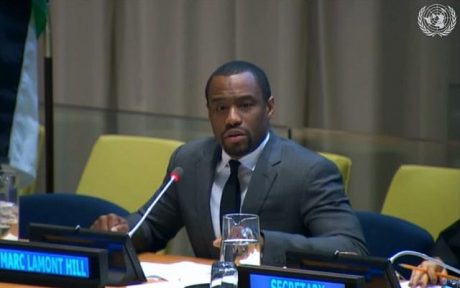
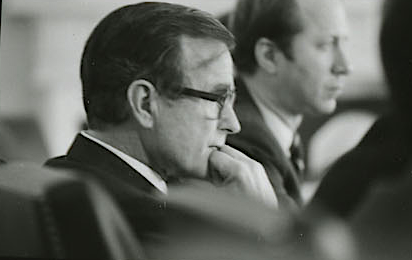
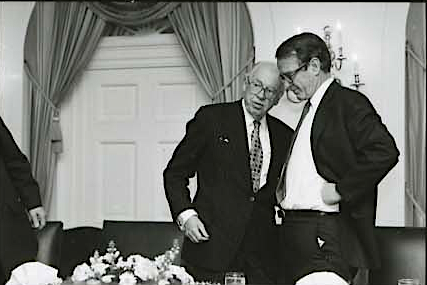

 Part One, The Record, treats the history of garlic as evidence. From the clay garlic bulb placed in an Egyptian grave nearly six thousand years ago, through the Ebers Papyrus, through Hippocrates, Dioscorides, Pliny and Galen, the Arab physicians under Avicenna, the medieval herbals, Culpeper, and the plague years, to the last era in which Western physicians prescribed garlic as a matter of course, which ran from 1850 to 1945. It closes with the living traditions that never stopped using it, and with the folklore of charms, vampires and the evil eye.
 Aletho News


