Zionism on the Upper East Side
By Patrick Lawrence | Consortium News | December 3, 2025
We watch in horror from afar as the Zionist terror state continues its genocide against the people of Gaza and escalates its slower-motion, lower-technology genocide against the 3 million Palestinians who reside in East Jerusalem and the West Bank, otherwise known as the Occupied Territories — illegally occupied, of course.
As a few Israeli commentators have pointed out — those few who guard their integrity— the operative principle here is the limitless impunity the Western powers have long granted “the Jewish state.”
This is the outcome, they say, when a people given to a culture of vengeance are told they will never suffer consequences however barbaric their conduct toward others, however many laws they break, however many their assassinations, however many their torture victims, however many exploding telephones they plant among civilian populations, etc.
Maybe we need no reminders, maybe we do, that this presumption of impunity is not bound by sovereign borders and is not limited to the cowardly, condemnable savagery of apartheid Israel in Gaza and the West Bank. But we had one last week, and it is well we consider it carefully.
Zohran Mamdani, the principled social democrat who is New York’s mayor-elect, is now under attack from Zionist Americans who insist Zionist Americans are above the law — American law and international law. You may look well on Mamdani and you may not, but as he is besieged by these objectionable people, so are we all.
This story begins on Wednesday, Nov. 19, at Park East Synagogue, a grand edifice that sits on East 67th Street between Third and Lexington Avenues in the Lenox Hill section of Manhattan.
Park East has been serving Modern Orthodox Jews since 1890. Its congregation, to be noted, is comprised of the great and good of the Upper East Side. These are observant but assimilated Jews, thoroughly plugged into, let’s say, secular public space.
Except.
Two Wednesdays back Park East hosted an organization dedicated to encouraging Jews to “make Aliyah,” the Hebrew term for emigrating to “the Promised Land.” O.K., you cannot find anything legally wrong in this, although it is unambiguously a moral wrong in that it expresses support for a genocidal state.
But let us set aside the moral question for now. The organization Park East sponsored, Nefesh B’Nefesh, also assists American Jews who wish to emigrate to Israeli settlements in the Occupied Territories. This is a legal matter and as such not inconsequential.
American Settlers
Statistics on the settler population in the West Bank and East Jerusalem are hard to nail down (and I can easily imagine why). The Times of Israel reported eight years ago that some 60,000 Americans were among the Jewish settlers in the West Bank.
That was roughly 15 percent of the settler population then — not counting the considerable number residing in East Jerusalem. We have no precise figures now, but these populations — settlers and Americans among the settlers — are both higher.
As has been well-reported, and well-recorded in several documentaries, the Americans among the West Bank settlers are frequently the most violent in their incessant attacks on Palestinians. They have also been at times the most readily inclined to murder.
There is the infamous case of Baruch Goldstein, a freakshow Zionist from Brooklyn who killed 29 Palestinians when he attacked the Ibrahimi Mosque (tomb of Abraham and other patriarchs) in Hebron in 1994. Goldstein was not singular: He was and remains exemplary — and a hero among some Zionists. National Security Minister Ben Givr had a picture of Goldstein on his living room wall until 2020.
I cannot name the precise statutes applicable here, but they must be several. Open and shut, just the facts, Ma’am, Nefesh B’Nefesh is an accomplice to the settler movement.
Most immediately significant in the Park East case, Nefesh B’Nefesh — this translates as “soul to soul,” and who knows what that is all about — is directly implicated in the settlers’ breach of international law given that all the settlements in the West Bank and East Jerusalem are illegal according to said law.
There was no claiming surprise that blustery Nov. 19th when a group of roughly 200 vociferous demonstrators gathered in front of Park East to protest the promotional seminar Nefesh B’Nefesh was running that day.
“Death to the IDF” was among the tamer of various chants; others encouraged violence against settlers. “It is our duty,” one leader of the demonstration said measuredly to those assembled, “to make them think twice before holding these events.”
Inside the Park East building, people indirectly but unmistakably promoting violence against Palestinians, land theft and all the rest. And on East 67th Street, righteous indignation, anger in behalf of a persecuted people, some violent rhetoric, but no violence.
It was obvious the mayor-elect would have to intervene. The event itself warranted this, and various Zionist constituencies, as well-reported before and since Mamdani’s election, have been attacking him as a radical jihadist, an anti–Semite and who knows what else, so attempting to poison his relations with New York’s Jewish community.
Here is the ever-poised Mamdani’s day-after statement, his first on the incident:
“The mayor-elect has discouraged the use of language used at last night’s protest and will continue to do so. He believes every New Yorker should be free to enter a house of worship without intimidation and that these sacred spaces should not be used to promote activities in violation of international law.”
A few days later, storms of protest from Zionist quarters having instantly erupted, Mamdani sent this statement to The New York Times:
“We will protect New Yorkers’ First Amendment rights while making clear that nothing can justify language calling for ‘death to’ anyone. It is unacceptable, full stop.”
I find these statements a little in the way of Solomon in their discernment, in Mamdani’s determination not to tilt his hand and to articulate the core truth of the matter:
The more extreme language out on East 67th Street was wrong so far as it intimidated synagogue goers, but the principle of free speech is nonetheless to be honored; those encouraging breaches of international law are wrong, and a synagogue should not be used to promote illegalities.
‘A Hateful Mob’
Maybe what has come back at Mamdani in the course of all this was predictable, more-of-the-same babble. “Mob” was the de rigueur term among those responding to the mayor-elect’s response.
The demonstrators were “a hateful mob of anti–Israel protesters,” the New York Post reported, and it got worse from there. Mamdani sided with “an anti–Semitic mob,” eJP, or eJewishphilanthropy.com, declared. “Last week,” this outfit continued, “Mayor-elect Zohran Mamdani failed the first test of his promise to protect all New Yorkers.”
And from William Daroff, the chief exec of the Conference of Presidents of Major American Jewish Organizations: “We are still judging him, and I’d say that at the moment he’s got a failing grade.”
They sitteth in judgment, you see.
O.K., we have heard all this before in one or another context, so has Mamdani. He is surely in for more of same once he assumes office Jan. 1. But we ought not miss the very much larger matters raised by the Park East incident.
There is the First Amendment question, as Mamdani correctly noted, and there are the legal questions as pencil-sketched above. These are related at the not-too-distant horizon.
People speaking for Nefesh B’Nefesh now deny they promote emigration to West Bank settlements — which, as the group’s website attests, is simply not true. It advertises Gush Etzion, an expanding sprawl of 22–and-counting settlements south of Jerusalem, Ma`ale Adumim, whose location makes it key to the Israelis final takeover of the West Bank, and various others.
“Teaching about Aliyah and Zionism belongs in that space”: This is the aforementioned William Daroff. And from eJP again: “Mamdani condemned the synagogue’s choice of programming.”
Choice of programming.
You see what is going on here. Park East and Nefesh B’Nefesh are encouraging Americans to breach international law. And absolutely to a one, those defending the synagogue and the event-organizer do so by pretending this is not what is most pithily at issue.
“We are deeply concerned by, and firmly condemn, the violent rhetoric and aggressive behavior that took place outside of the Park East Synagogue,” Nefesh B’Nefesh now declares on its website. Violent rhetoric and aggressive behavior on East 67th Street but not in the West Bank or in East Jerusalem.
To go straight to the point, this is another assertion of Zionist impunity. And we should understand what has lately transpired in New York as a very, very direct extension of the impunity that encourages and also protects the Israeli terror machine in Gaza and the West Bank. Impunity: It is a blight under which Palestinians suffer, and none of us is immune to it.
To put this another way, we witness an especially insidious case of chutzpah, the dangers of which I have considered elsewhere. You have your laws, the world has its, and we will ignore them before your eyes (and ostracize you as an anti–Semite if you object). This, in a sentence, is what Zionists now insist we must accept.
US rushes loitering drones built based on Iranian blueprint to West Asia
Press TV – December 3, 2025
The US has deployed “its first squadron” of one-way attack drones, developed following reverse-engineering of a much-sought-after and versatile Iranian unmanned aerial vehicle, to the West Asia region.
On Wednesday, US Central Command announced establishment of Task Force Scorpion Strike (TFSS) that will oversee the first of its kind operational deployment by the US military, various American outlets reported.
The aircraft in question was identified as the Iranian Shahed-136 long-range UAV.
The reports also cited CENTCOM as noting that Washington had additionally set up Task Force Scorpion Strike (TFSS) to oversee the drone’s so far unprecedented deployment.
Observers also pointed to the unique nature of the taskforce, saying its development signaled urgency in Washington’s approach towards the drones’ deployment.
“This new taskforce sets the conditions for using innovation as a deterrent,” said Adm. Brad Cooper, CENTCOM commander.
‘Cutting-edge drone capabilities’
“Equipping our skilled warfighters faster with cutting-edge drone capabilities showcases US military innovation and strength,” the official added.
According to one report, the system’s deployment was spurred in part by War Secretary Pete Hegseth’s “drone dominance” initiative that was deployed to accelerate delivery of low-cost and effective drones to US forces.
The Islamic Republic deployed the aircraft during the Israeli regime’s and the US’s unprovoked and illegal war against its soil in June.
The missing ‘If’ that could get us killed: How Western media distorted Putin’s words about war with Europe
The message was rather simple: Russia is ready to respond to aggression. But you wouldn’t know it if you read the headlines
By Timur Tarkhanov | RT | December 4, 2025
A depressing pattern has taken hold in the way parts of the Western press cover Russia: take a volatile subject, strip it of the conditional language that contains it, and then act surprised when the public grows more fearful, more hardline, and less able to distinguish deterrent rhetoric from an intent to attack.
The latest example is the frenzy around Vladimir Putin’s remark about Europe and war. In Russian, his meaning is not subtle: “We are not going to fight Europe, I’ve said it a hundred times already. But if Europe suddenly wants to fight and starts, we are ready right now.” A refusal paired with a threat of readiness if attacked. Many headlines flattened that into “Russia is ready for war with Europe.”
In news reporting, headlines aren’t neutral labels. They are the main event. They set the emotional temperature for millions who will never read beyond the first line, especially on mobile feeds where nuance is a luxury and outrage is a business model. So when a headline drops the words “we are not going to” and discards “if Europe starts,” it’s not just a shortening – it reverses the reader’s perception. The public walks away believing Putin signaled readiness to launch a war against Europe, not readiness in response to one. In a moment when misperception can harden policy and policy can harden into escalation, that is reckless.
Worse, this kind of framing does real political work. It amplifies the narrative long championed by certain European officials – that Russia is poised to attack the EU next, regardless of evidence. If you swallow the headline alone, those officials sound validated. If you read the quote, at minimum you have to admit the claim is not what was said. Maybe you’ll even start asking questions. That difference is the hinge between journalism and propaganda.
This pattern didn’t start this week. Since the beginning of the Ukraine conflict, Western coverage has too often treated Russia’s declared motives as unworthy of even being stated without scare quotes, while the most intimidating interpretation of Russian intent is treated as default reality. “Imperial ambition.” “War of conquest.” “Russia wants to reconstitute an empire.” The public is denied the basic reporting function of hearing why Russia is doing what it’s doing. Instead we get a morality play with prewritten roles: one side’s motives are analyzed in paragraphs; the other’s are assumed in headlines.
The same sloppiness shows up in claims that Putin “stalled” peace talks. Negotiations are not a TikTok trend; they are an exhausting grind of sequencing, verification, backchannels, domestic politics, and face-saving. Many major conflicts have required long, ugly diplomatic marathons before anything moved. The Vietnam peace talks, for example, dragged on for years. To declare “stalling” because a meeting ended without a breakthrough is to confuse diplomacy with customer service: “Where is my peace deal? I ordered it an hour ago.”
And if we’re going to talk about “stalling,” we should at least look honestly at which actors have been most allergic to acknowledging battlefield realities. The Russia-US channel – whatever one thinks of it – is the only vector that has shown any capacity to force trade-offs into the open, because it involves the parties with the leverage to make and enforce them. By contrast, the EU and the UK’s public posture has often resembled a maximalist wish list: demands unmoored from the war’s trajectory, presented as prerequisites rather than negotiating positions. It has hardened expectations so thoroughly that any compromise looks like betrayal, and any diplomacy looks like surrender. That is the worst kind of stalling – not merely delaying talks, but by making talks politically impossible.
It didn’t have to be like this, and it isn’t universal. Some outlets have demonstrated that integrity is still possible: they lead with the full quote and include the conditional. They are at least honest with the readers about what was said and what was implied, allowing them to distinguish threat from intent. Far from being “soft on Putin”, this is basic journalistic competence. In a climate where fear sells and escalation eats, and the Doomsday Clock is at 89 seconds to midnight, faithful quotation is a mandatory public safety measure.
Timur Tarkhanov is a journalist and media executive.
The Ukraine War Hawks Sabotaging America First
By Harrison Berger | The American Conservative | December 2, 2025
As the White House moves to negotiate an end to the yearslong Ukraine proxy war, establishment members of Congress, elements of the deep state, and their corporate media allies work overtime to sabotage the president’s efforts.
The aggressive establishment campaign seeks to derail a draft settlement, negotiated largely in Washington, that would bar Ukraine from NATO in exchange for U.S. security guarantees, grant Russia de facto control of Crimea and the Donbas, and limit the size of the Ukrainian armed forces, among other measures.
By pursuing a negotiated resolution to the Ukraine war, the Trump administration is doing exactly what it was democratically elected to do. Voters who wanted to continue the proxy war against Russia were told to—and overwhelmingly did—vote for the defeated candidate, Kamala Harris.
But even though President Donald Trump and voters may prefer restraint and diplomacy with nuclear powers like Russia, the Washington political establishment that drives U.S. foreign policy has long made clear that it does not—and that it will take aggressive measures to subvert democratically decided policies in favor of its own. With a peace deal possibly within reach, this remarkably bipartisan campaign has become increasingly overt.
A bipartisan group of lawmakers last week floated the rumor that the Trump administration’s 28-point peace plan was secretly a Russian-authored “wish list.” The claim has since fallen apart—and never made sense in the first place—because, as Steve Bannon has pointed out, the terms of the deal are, if anything, overly favorable to Kiev, not Moscow. Under the proposal, the Ukrainian military would be permitted to build a fighting force of up to 600,000 troops. “That’s unacceptable to the Russians,” says political scientist John Mearsheimer. And while the draft would formally rule out NATO membership for Ukraine, it nonetheless commits the United States to extending security guarantees, a provision that leaves the door open for future rounds of confrontation between Ukraine and Russia.
Nonetheless, bipartisan factions continue to argue that Trump’s proposal favors Moscow, branding the pursuit of peace as Neville Chamberlain-style appeasement. Joining them to do it has been former Trump official Mike Pompeo, who argued against the 28-point plan on X, saying that “any so-called peace deal that limits Ukraine’s ability to defend itself would look more like a surrender.”
The former CIA director has in recent weeks emerged as a regular guest on Fox News to sabotage Trump’s peace plan, while simultaneously serving on the advisory board of the Ukrainian defense company FirePoint. The Murdoch-owned news network, which previously partly fired Tucker Carlson over his opposition to the Ukraine war, does not disclose that the former CIA director stands to profit directly from the war he goes on air to promote.
The most brazen and revealing effort to derail the Trump administration’s diplomacy comes from anonymous leakers, likely from the U.S. security state, which, through their servants in corporate media, repeatedly leak classified information in what has so far been a failed attempt to embarrass and undermine the president’s lead negotiator, U.S. Special Envoy Steve Witkoff.
The campaign against Witkoff began when Reuters reported that unnamed “U.S. officials” were “increasingly concerned” by Witkoff’s discussions with Russian diplomats to end the war. Soon after, Bloomberg published a selective leak of a classified call transcript, claiming Witkoff had “advised Russia on how to pitch Ukraine plans to Trump,” framing his diplomacy as improper.
The bipartisan pro-war establishment took their cue and seized on the leak, deploying the same strategy wielded against Trump’s first National Security Adviser Michael Flynn in 2017, when classified surveillance material was leaked to derail détente with Moscow. Now in the case of Witkoff, routine diplomatic back-channeling has again been framed as sinister and improper, in a controversy likely manufactured by unelected elites in northern Virginia to sabotage the foreign policy agenda of the elected president.
Their efforts fell flat, however, when the next morning, Trump reassured the press that nothing improper had occurred with Witkoff’s diplomacy. “That’s a standard thing… he’s got to sell this to Ukraine. He’s got to sell Ukraine to Russia. That’s what a dealmaker does,” Trump told reporters aboard Air Force One.
While negotiations with Russia nonetheless continue to advance, the episode reveals an unsustainable tension for the Trump presidency: the figures actively sabotaging its foreign policy agenda are largely the same Republican establishment actors the president continues to defend and campaign for.
At the same time, Trump has now spent several months campaigning against the chief opponents of Ukraine war spending in the House of Representatives—retiring Congresswoman Marjorie Taylor Greene of Georgia and Congressman Thomas Massie of Kentucky—mainly because they dared to consistently apply America First principles. Yet the actual saboteurs in the GOP work hard to subvert Trump’s foreign policy agenda without any consequences.
With the administration’s disapproval ratings now approaching record highs, there has never been a better moment for Trump to cut loose those saboteurs from his coalition and rediscover the America First instincts that first carried him to the White House.
Why Rachel Maddow and Bill Kristol Attended Cheney’s Funeral
The neoconservative right has merged with the anti-Trump left
By Jack Hunter | The American Conservative | November 26, 2025
Twenty years ago, there was no greater villain to the left than Dick Cheney. The vice president was called a fascist. He was called a warmonger. He was called Hitler. He was the center and soul of left-wing derision and Democratic identity.
Their ire? The George W. Bush administration’s 2003 U.S. invasion of Iraq, for starters, considered today to be one of America’s greatest foreign policy mistakes. Even a majority of veterans believe it was not worth fighting. Then there was the torture, the rampant due process violations, and the fact that Cheney’s advocacy for extreme executive power made him an enemy of the Constitution.
Concerning Cheney and national depravity, there’s a lot to work with.
The progressive pundit Rachel Maddow was once all in on this left-wing hate. She built her early career on it.
Last week, Maddow attended Dick Cheney’s funeral.
Cheney never apologized for or even said he regretted Iraq. He was seemingly down to torture until the day he died.
Maddow was not at Cheney’s funeral to show grace to a once wayward man who had since repented. Independent journalist Glenn Greenwald noted of MSNBC’s biggest star, “Maddow’s career as a commentator began during Bush/Cheney, when she’d frequently compare Cheney to the worst monsters in history (I was on her programs when she said it).”
Greenwald added, “For so many liberals, Cheney is now rehabilitated despite regretting nothing: solely for opposing Trump.”
That’s it. Cheney was against Trump. In 2025, even for dead fascists, warmongers and Hitlers, that’s all it takes for the left to sing your praises.
If this sounds simplistically silly, it’s because it is.
Once Donald Trump finally replaced former villains Dick Cheney or George W. Bush as the Great Satan in leftist minds, there was virtually no self-awareness in Democrats’ drift into turning these neocon Republicans they once despised into heroes. Dubya gets the same love.
In their blind hatred for Trump, mainstream Democrats also ended up becoming something closer to 2003-era Republicans in their foreign policy. One X user commented on the service for Cheney, “Anyone that attended Cheney’s funeral is going to be upset with an end to war.”
Greenwald agreed, “Exactly: I bet if you were to survey the people in attendance at Dick Cheney’s funeral—from Rachel Maddow and Kamala Harris to Lindsey Graham and George W. Bush—opposition to ending the war in Ukraine would be close to 100%, if not unanimous.”
He has a point. After “Resistance” posters and Covid-era virtue signaling got stale for the left, pro-Ukrainian yard signs and social media flag icons became as popular with Democrats as they were with Lindsey Graham.
Democrats and neocon Republicans like Graham ended up with the same foreign policy. The former came to it as an emotional reaction to “America First” Trump. The latter just never changed, welcoming their reformed pro-war Democrats with open arms.
To be fair, mainstream Democrat attitudes toward Israel and Gaza have varied. On the United States’ proxy war with Russia in Ukraine, they have not.
The 2024 Democratic presidential nominee Kamala Harris not only received an endorsement from Cheney and his congresswoman daughter Liz; Cheney fille hit the campaign trail with Harris, seemingly signaling to the neoconservative foreign policy establishment that she was their gal.
When candidate Harris repeatedly accused Trump of admiring dictators—that is, engaging in diplomacy as an alternative to war—she sounded like every GOP hawk who ever criticized Pat Buchanan, Ron Paul, or any other antiwar Republican. “Putin’s puppet” became an institutionalized Democratic attack on Trump.
Maddow attending Cheney’s funeral wasn’t surprising or a departure for the current American left. It was, however, an indicator.
She and the “War on Terror” Republicans in attendance weren’t simply friendly adversaries paying their final respects. They’re not adversaries anymore.
This has been true for some time. J6 helped seal the deal.
The “insurrection” mythology surrounding the January 6, 2021 Capitol Hill riots has been as important to Never Trump neocon identity as it has been to Democratic identity. Dick Cheney was on the Never Trump and Democratic side of that event. Donald Trump was on the other side. That line has long been crystal clear, at least on the Never Trump–Dem side—that it was an organized attempt by MAGA forces to overthrow democracy—even if that view is not based in reality.
But the reality of J6 as an actual insurrection was always beside the point. Political identity, and reinforcing it—Never Trump/Democrats good, MAGA bad—was the entire point.
Hence, longtime Democrat Rachel Maddow accepted the invitation to “maestro of terror” Republican Dick Cheney’s funeral.
Bill Kristol was there too. Anyone who has followed politics for any amount of time would expect the neocon scion to be at the funeral service of the most impactful neoconservative of the 21st century. Kristol had wanted a U.S. war with Iraq since the 1990s, and 9/11 finally gave his small band of neocons an excuse to lie their way into it. Team Cheney ultimately delivered it.
Cheney is unquestionably their hero.
Kristol is a Democrat now. He appears to be pro-choice these days. He’s flipped on immigration. The former Weekly Standard editor recently endorsed New York City’s socialist mayor-elect. So Kristol has definitely changed some of his beliefs in joining his new party.
On foreign policy, Bill Kristol has never budged any more than Dick Cheney did. Both were always for all U.S. wars, anywhere, for any reason, by any means, no matter how much death or damage was wrought.
War is the goal. It is who they are. Their beef with Trump—in the most basic, concrete terms—is that he poses a threat to their mission at times.
Democrats hate Trump so much they now dismiss this evil, finding common cause with neocons in more ways than one.
President Donald Trump and Vice President J.D. Vance were not invited to the former vice president’s funeral. They wouldn’t have belonged, even if it is unusual for a sitting president and vice president to be excluded from such a service.
But Rachel Maddow belonged at Dick Cheney’s funeral. The left she represents belonged too.
US-led regime change in Venezuela angering MAGA
Al Mayadeen | December 3, 2025
United States President Donald Trump’s suggestion of an imminent land strike against Venezuela has jolted the America First movement he built on avoiding foreign entanglements, sparking divisions among his supporters and reviving debates reminiscent of the war on Iraq, part of what supporters describe as “forever wars”.
On Tuesday, Trump hinted not only at an intervention in Venezuela but also at possible attacks against other countries. The remarks rattled anti-interventionists, a core Make America Great Again (MAGA) constituency, who fear that toppling Venezuelan President Nicolas Maduro could mire the US in a years-long conflict, destabilize the region, and damage both Trump’s legacy and the movement’s political brand.
Republicans redraw the lines on intervention
Despite his long-standing criticism of US interventions, some Republican allies are now defending the possibility of military action. They argue that operations within the Western Hemisphere are more defensible than the West Asia wars they once denounced, and contend that the US is not seeking “regime change” but an adjustment in Venezuelan leadership without reshaping its political structure.
“He’s not trying to play God with what regime is in which country,” said Alex Gray, former National Security Council chief of staff.
Gray argued the move represents a refocusing of US strategy toward “core American interests,” describing Venezuela as central to hemispheric security.
Pressure mounts as US military presence grows
The administration insists it is not pursuing regime change; instead, it continues to level baseless accusations against the Venezuelan president, describing him as a leader of a “drug cartel”.
Still, the scale of US deployments, including a carrier strike group and roughly 15,000 troops, and Trump’s reported private ultimatum to Maduro last week, have amplified expectations of imminent action. Two people familiar with the call said Trump threatened Maduro, demanding he step down or face the “consequences.”
“No one is more bullish than the president on this,” another individual familiar with internal discussions told Politico, adding that the initiative “comes from the top.”
MAGA skeptics warn of Iraq-style pitfalls
For anti-interventionist MAGA figures, the moment represents a deep ideological test. Many had hoped for an administration focused exclusively on domestic priorities. Now they hope any action resembles the recent limited aggression on Iran, where the US bombed three Iranian nuclear facilities in June.
“Let’s not turn into George W. Bush and before you know it, we’re in charge of Venezuela,” said a former senior Trump advisor.
Boots on the ground and nation-building remain “red lines” for the America First movement.
Vice President JD Vance, once a fierce critic of foreign interventions, has shifted as well, defending limited strikes on Iran while framing any action in Venezuela as essential to combating “narco terrorists in our own hemisphere.”
Concerns over fallout, regional stability
Opponents of interference in Venezuela argue that Maduro’s removal could spark migration surges, empower criminal networks, or disrupt global energy markets, consequences that evoke the results of the US invasion of Iraq.
Ian Bremmer of the Eurasia Group noted Trump never campaigned on regime change, calling unilateral intervention “a NeoCon idea… discredited around the world.”
Still, some conservative realists believe Trump may ultimately avoid escalation. Curt Mills of The American Conservative said Trump may yet decide a full-scale conflict would be “a disaster in the making.”
At a Cabinet meeting, top officials emphasized a simple America First litmus test. As Secretary of State Marco Rubio, a staunch backer of military action in the Latin American country, stated, “Is it going to make us richer? Is it going to make us safer? If it is, he is for it.”
Scott Ritter: War Has Been Won & Russia Faces a Dilemma
Glenn Diesen | December 2, 2025
Scott Ritter is a former Major, Intelligence Officer, US Marine, and UN Weapons Inspector. Ritter argues Russia has defeated NATO and Ukraine, and now faces a dilemma about what kind of peace it wants.
Follow Prof. Glenn Diesen:
Substack: https://glenndiesen.substack.com/
X/Twitter: https://x.com/Glenn_Diesen
Patreon: https://www.patreon.com/glenndiesen
Support the research by Prof. Glenn Diesen:
PayPal: https://www.paypal.com/paypalme/glenndiesen
Buy me a Coffee: buymeacoffee.com/gdieseng
Go Fund Me: https://gofund.me/09ea012f
Books by Prof. Glenn Diesen
US tech giants to expand role in post-war Gaza strategy: Report
Press TV – December 2, 2025
A new report has revealed that US-based artificial intelligence firms Palantir and Dataminr are positioning themselves to take on a pivotal role in shaping the post-war security framework proposed for the Gaza Strip.
According to a report by the Israeli-Palestinian publication +972 Magazine on Tuesday, the companies have been integrated into the newly established Civil-Military Coordination Center (CMCC), a US-run operational hub in the southern part of the occupied territories where Washington and Israeli officials are coordinating the implementation of President Donald Trump’s 20-point plan for Gaza.
An official seating chart reviewed by +972 indicates that a “Maven Field Service Representative” from Palantir, referencing their battlefield analytics platform Project Maven, is assigned to the CMCC.
The hub, situated approximately 20 kilometers from the northern Gaza boundary, was opened in mid-October and currently accommodates around 200 US military personnel.
Project Maven, for which Palantir recently secured a $10 billion Pentagon contract to upgrade, gathers intelligence from various sources such as satellites, drones, spy planes, intercepted communications, and online platforms, reorganizing it into an “AI-powered battlefield platform” aimed at expediting military decision-making, including lethal airstrikes.
Palantir executives have described the system as “optimizing the kill chain,” and it has been previously utilized in US operations in Yemen, Syria, and Iraq.
Palantir has also strengthened its partnerships with Israeli forces during the current war, following a strategic agreement signed in January 2024 to support “war-related missions,” and has expanded its recruiting in Tel Aviv, doubling the size of its office over the past two years.
CEO Alex Karp has defended the collaboration amid international concerns over war crimes, saying that the company was the first to be “completely anti-woke.”
Documents reviewed by +972 also reveal the involvement of Dataminr, a US surveillance company, in internal CMCC presentations.
Dataminr, which utilizes AI to scan and analyze global social-media streams in real time, promotes its platform as providing “event, threat, and risk intelligence,” and has established partnerships with X to provide governments and law-enforcement agencies, including the FBI, with extensive access to public social-media data.
Both companies are expected to shape the “Alternative Safe Communities” model proposed under the Trump plan, which suggests relocating Palestinian civilians into fenced, heavily monitored compounds controlled by US and Israeli forces.
Within these zones, systems enabled by Palantir and Dataminr would be used to track mobile phones, monitor online activity, analyze movement, and flag individuals classified by AI as security risks.
Critics and analysts argue that this arrangement mirrors the predictive surveillance already deployed in Gaza over the past two years, including the AI-driven Lavender system used by Israel to create kill lists of suspected Hamas affiliates, which included public-sector employees such as police and medical workers.
Human-rights observers caution that such technologies have contributed to the extensive targeting of Palestinian families during an ongoing genocide.
The integration of US tech companies into the CMCC underscores a privatized model of occupation, one that sidelines Palestinian participation while expanding the role of AI-enabled policing, according to analysts.
For technology firms, the war presents an opportunity to access vast datasets and conduct real-world testing for new military systems.
Additionally, for Israel, it offers a way to outsource parts of the occupation while maintaining extensive control over Gaza’s population.
Hezbollah and Saudi Arabia’s uneasy détente
By Tamjid Kobaissy | The Cradle | December 2, 2025
In West Asia, where sectarian politics and external meddling collide with local power struggles, few rivalries have been as entrenched or as symbolically loaded as that between Hezbollah and Saudi Arabia.
For decades, it embodied the broader confrontation between Iran and the Persian Gulf kingdoms – a proxy war defined by ideology, oil, and shifting battlefronts. But today, under the weight of new regional calculations, rising Israeli belligerence, and the cracks in American hegemony, that once-intractable hostility is giving way to a more ambiguous and tactical coexistence.
What is developing is neither an alliance nor even reconciliation. But for the first time, Hezbollah and Riyadh are probing the edges of a relationship long defined by zero-sum enmity. A pragmatic detente is emerging, shaped less by goodwill than by the shared urgency to contain spiraling instability across the region.
Tehran, Riyadh, and the long shadow of history
The long arc of the Hezbollah–Saudi confrontation is impossible to separate from Iran’s post-revolutionary clash with Riyadh. When Ayatollah Ruhollah Khomeini toppled the Shah in 1979 and declared the House of Saud a reactionary tool of western imperialism, the rupture was both ideological and strategic.
The Saudis responded by bankrolling Saddam Hussein’s devastating war against Tehran, and in 1987, relations cratered after Saudi security forces massacred Iranian pilgrims in Mecca. Khomeini’s message was scathing:
“Let the Saudi government be certain that America has branded it with an eternal stain of shame that will not be erased or cleansed until the Day of Judgment, not even with the waters of Zamzam or the River of Paradise.”
Decades later, the so-called Arab Spring of 2011 reopened the wound. While Tehran stood by its state allies in Damascus and Baghdad, Riyadh threw its weight behind opposition movements and fanned the flames of sectarian conflict.
In Yemen, the kingdom launched a military campaign against the Ansarallah movement and allied forces, which Tehran backed politically and diplomatically. After Saudi Arabia executed outspoken Shia cleric Sheikh Nimr al-Nimr in 2016, Iranian protesters stormed the Saudi embassy in Tehran, prompting Riyadh to sever diplomatic ties. The two regional powers would only resume relations as part of Chinese-backed mediation in 2023.
From Hariri’s abduction to assassination plots
Within this regional maelstrom, Hezbollah became a prime Saudi target. When the Lebanese resistance captured two Israeli soldiers on 12 July 2006, to secure the release of prisoners, Riyadh dismissed it as “uncalculated adventures” and held Hezbollah responsible for the fallout.
In Syria, Hezbollah’s deployment alongside former Syrian president Bashar al-Assad’s army placed it in direct opposition to Saudi-backed militants. In Yemen, the movement’s vocal support for the Ansarallah–led government in Sanaa triggered Gulf Cooperation Council (GCC) sanctions and terrorist designations.
Matters escalated in 2017 when Saudi Arabia detained then-Lebanese prime minister Saad Hariri and coerced him into announcing his resignation on television from Riyadh. Late Hezbollah secretary-general Hassan Nasrallah slammed the move as an act of war against Lebanon. The situation de-escalated only after French mediation.
In a 2022 TV interview, Nasrallah revealed that Saudi Crown Prince Mohammed bin Salman (MbS) was ready to authorize an Israeli plot to assassinate him, pending US approval.
Quiet channels, Iranian cover
The Beijing-brokered rapprochement between Tehran and Riyadh changed the regional tone but did not yield immediate dividends for Hezbollah. On the contrary, Saudi Arabia intensified its efforts to roll back Hezbollah’s influence in Beirut, especially following Israel’s October assault on Gaza and southern Lebanon.
Riyadh pressured Lebanese Prime Minister Nawaf Salam to implement the so-called “Barrack Paper,” aimed at politically sidelining Hezbollah and stripping its arms. Speaking to The Cradle, a well-informed political source reveals that the kingdom informed the former Lebanese army commander – now the country’s president – Joseph Aoun, that it would proceed with its plans even if they triggered civil war or fractured the military. The source describes this as emblematic of Riyadh’s short-term crisis management, mirroring Washington’s reactive regional strategy.
Despite this, signs of a tactical shift began to emerge. In September, Nasrallah’s successor, Sheikh Naim Qassem, publicly called for opening a “new chapter” in ties with Riyadh – an unprecedented gesture from the movement’s leadership. According to the same source, this was not a spontaneous statement.
During a visit to Beirut, Iranian national security official Ali Larijani reportedly recieved a message from Hezbollah to Riyadh expressing its openness to reconciliation. In a subsequent trip to the kingdom, Larijani presented the message to MbS.
While initially dismissed, it was later revisited, leading to discreet backchannel coordination directly overseen by Larijani himself.
Tehran talks and guarded understandings
The Cradle’s source adds that since then, three indirect rounds of Hezbollah–Saudi talks have reportedly taken place in Tehran, each under Iranian facilitation. The first focused on political de-escalation, while the latter two addressed sensitive security files, signaling a mutual willingness to test limited cooperation.
One provisional understanding emerged: Saudi Arabia would ease pressure on Hezbollah in Lebanon and drop immediate demands to disarm the movement. In exchange, Riyadh asked Hezbollah to keep its weapons out of Syria – echoing a broader Gulf consensus – and assist Lebanese authorities in curbing drug smuggling networks.
In private, Riyadh reportedly acknowledges Hezbollah’s military resilience as a strategic buffer against Israel’s regional belligerence. The Persian Gulf states no longer trust Washington to shield them from Tel Aviv’s increasingly unilateral provocations – as was seen in the Israeli strikes on Doha in September. But Hezbollah’s dominance in Lebanon remains a challenge to Riyadh’s political influence.
Hezbollah, Saudi Arabia, and the Iranian umbrella
The Hezbollah–Saudi contacts are just one strand in a broader strategic dance between Riyadh and Tehran. According to The Cradle’s source, Saudi Arabia has assured Iran it will not join any Israeli or US-led war, nor allow its airspace to be used in such a scenario. In return, Tehran pledged not to target Saudi territory. These commitments are fragile, but significant.
The source also reveals that US President Donald Trump had authorized MbS to explore a direct channel with Iran, tasking him with brokering understandings on Yemen and beyond. Larijani conveyed Iran’s openness to dialogue, though not to nuclear concessions. MbS reportedly stressed to Trump that a working accord with Tehran was essential to regional stability.
In parallel, Lebanese MP Ali Hassan Khalil, a close advisor to Parliament Speaker Nabih Berri, is expected to visit Saudi Arabia soon following meetings in Tehran. This suggests continued shuttle diplomacy across resistance, Iranian, and Saudi nodes.
Strategic divergence, tactical convergence
Still, no one should confuse these developments with a realignment. Rather than a reset, this is merely a tactical repositioning. For Riyadh, the old boycott model – applied to Lebanon between 2019 and 2021 – failed to dislodge Hezbollah or bolster pro-Saudi factions. Now, the kingdom is shifting to flexible engagement, partly to enable economic investments in Lebanon that require minimal cooperation with the dominant political force.
The pivot also serves Saudi Arabia’s desire to project itself as a capable mediator rather than a crude enforcer. The 7 October 2023 Operation Al-Aqsa Flood has tilted regional equations, while Israeli expansionism has become a destabilizing liability. A Hezbollah–Israel war would not stay confined to the Blue Line. Gulf cities, energy infrastructure, and fragile normalization deals would all be at risk.
From Hezbollah’s side, the outreach reflects both constraint and calculation. The resistance faces growing pressure: an intensified Israeli campaign, a stagnating Lebanese economy, and the need to preserve internal cohesion. A tactical truce with Riyadh offers breathing space, and possibly, a check against Gulf-backed meddling in Syria.
When Sheikh Naim Qassem declared that Hezbollah’s arms are pointed solely at Israel, it was also a signal to the Gulf: we are not your enemy.
The real enemy, for both sides, is the unpredictable nature of Israeli escalation. Riyadh fears being dragged into an Israeli-led regional war that it cannot control. Hezbollah fears encirclement through economic, political, and military pressure. Their interests may never align, but for now, they are no longer mutually exclusive.
Featured Video
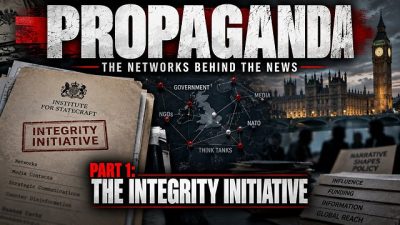
Integrity Initiative: UK-funded network framed dissent as Russian disinformation for years
or go to
Aletho News Archives – Video-Images
From the Archives
Why Saudi Ties to 9/11 Mean U.S. Ties to 9/11
By Kevin Ryan | Dig Within | September 27, 2015
Media interest in Saudi Arabian connections to the crimes of 9/11 has centered on calls for the release of the 28 missing pages from the Joint Congressional Inquiry’s report. However, those calls focus on the question of hijacker financing and omit the most interesting links between the 9/11 attacks and Saudi Arabia—links that implicate powerful people in the United States. Here are twenty examples. … continue
Blog Roll
 Aletho News
- IAEA inspectors cannot return to Iran amid US threats: Russia
- Senate Rejects Iran War Powers Resolution Passed By House
- ‘We did not attack Pakistan with drones’: Afghan sources
- Iraqi Resistance faction links arms to sovereignty, questions US exit
- Cannon fodder no more… South Korea rejects Trump’s pressure to join his criminal war on Iran
- Neria Leiter Was A Legitimate Military Target
- Integrity Initiative: UK-funded network framed dissent as Russian disinformation for years
- ‘We don’t seek permission to defend our country’: Snippets from President Pezeshkian’s UNGA address
- NATO chief wants Europeans to fight American wars [for Israel]
- German chemicals giant reveals details of downsizing
- If Americans Knew
- Israel displaces hundreds of Palestinians amid wave of demolitions in West Bank
- Aid, reconstruction, and Israel’s history of obstruction in Gaza
- Trump administration digs an ever-deeper hole of complicity in genocide – Daily Update
- US-Israel $2.8 Billion Arms Deal, 40,000-Bomb Supply Faces New Gaza Complicity Accusations
- Caught on Tape: AIPAC CEO Boasted of Controlling Trump’s National Security Officials
- Why Hamas Attacked Israel in October 2023 – Israeli professor Ilan Pappé
- They see them, then kill them: Israeli quadcopters track, deliberately target civilians in Gaza
- Winter could turn Gaza’s treacherous, war-damaged buildings into deathtraps
- Majority of Democratic Voters Want to Prosecute Both Biden and Trump Administration Officials Over Gaza
- As Gaza languishes, world leaders gather at the UN – Daily Update
- No Tricks Zone
- New Study: Earth And Venus Surface Warmth Largely Explained By Convection And Lapse Rate, Not CO2 Or Radiation
- 2025 Nature Paper Claiming Worsening Global Drought Gets RETRACTED …Heavily Flawed
- New Study: ‘Global Drought Shows No Detectable Recent Acceleration Under Climate Warming’
- Economic Masterminds: German Socialists Suggest Taxing Productivity Gains Stemming From Using AI
- The South China Sea Has Not Been Cooperating With The Climate Change Narrative
- Energy Crisis: Germany Enters Heating Season With Historically Low Gas Reserve Fill Levels
- New Study: The Antarctic Ice Sheet Gained Mass From 2020-2024 Due To Staggering Snow And Ice Accumulation
- Study: Ocean Heating Rates From Thousands Of Years Ago ‘Dwarf’ Modern Ocean Heating Rates
- Climate Extremists Target, Attack Large-Scale Power Grid Infrastructure In Germany!
- New Study: Antarctic Ice Melt Has Contributed Less Than 1 Centimeter To Sea Level Rise In The Last 30 Years

