The United States and other Western countries have blocked any attempt to launch an objective investigation into the chemical weapons incident in the Syrian province of Idlib, Syrian President Bashar Assad said in a recent interview with Sputnik.
“We formally sent a letter to the United Nations, we asked them in that letter to send a delegation in order to investigate what happened in Khan Shaykhun,” Assad said.
“Of course till this moment they haven’t sent anyone, because the West and the United States blocked any delegation from coming, because if they come, they will find that all their narratives about what happened in Khan Shaykhun and then the attack on Sha’irat airport was a false flag, was a lie,” he said.
Furthermore, Assad said that in the wake of the first attack in Aleppo carried out by terrorists against the army a few years ago, Damascus had asked the United Nations to send an investigation delegation “in order to prove what we said about the terrorists having used gas against our army.”
“And later many incidents happened in that way, and they didn’t send any delegation. It’s the same now,” Assad said.
Dmitry Egorchenkov, deputy head of the Institute for Strategic Studies and Prognosis at the People’s Friendship University of Russia, noted that the current situation proves that the West continues to apply double standards.
“Structures within the UN, first of all the Organization for the Prohibition of Chemical Weapons (OPCW), try to conduct some kind of a remote investigation. These organizations and structures have ignored other reports by Damascus about chemical weapons incidents in Syria. Our Western partners continue to follow the logic of double standards. Unfortunately, the UN is not independent and cannot have an impartial role in the investigation,” Egorchenkov told Radio Sputnik.
According to the expert, the West is blocking the probe for a number of reasons.
“These organizations (the UN and the OPCW) are controlled by Western states. They are afraid of an impartial investigation because it may turn out that the incident was organized by West-backed forces. And if it turns out that the attack was fake this would mean it was part of an information war and this would be clear,” Egorchenkov pointed out.
Meanwhile, earlier this week, the OPCW fact-checking mission investigating the alleged use of chemical weapons in Khan Sheikhun said it had found traces of sarin in the victims’ bodies.
“The results of these analyses from four OPCW designated laboratories indicate exposure to Sarin or a Sarin like substance. While further details of the laboratory analyses will follow, the analytical results already obtained are incontrovertible,” OPCW Director-General Ahmet Uzumcu said Wednesday.
The next day, the OPCW rejected the Russian and Iranian proposal to investigate the suspected chemical weapons incident in Syria’s Idlib.
According to ex-member of a UN commission on biological and chemical weapons Igor Nikulin, the OPCW probe cannot be considered objective in any way.
“Unfortunately, the hasty statements that they [OPCW officials] make without the commission’s visit [to Idlib], without taking analyses on the ground, are of course alarming as the footages we all saw don’t necessarily mean that exactly sarin had been used, although it cannot be excluded. If the commission arrived at the site and took trial tests, then it would be logical. But they made a diagnosis from The Hague. It reminds of a diagnosis of a doctor who did not see his patient,” he told Sputnik Radio.
Nikulin added that Damascus has been blamed for the alleged chemical attack that hadn’t been properly investigated.
On April 4, a chemical weapons incident in Syria’s Idlib Province claimed the lives of some 80 people and inflicted harm on an additional 200 civilians. The Syrian National Coalition of Revolutionary and Opposition Forces, as well as a number of Western states, accused the Syrian government troops of carrying out the attack, while Damascus refuted these allegations. The Syrian government has repeatedly said that the Syrian Army does not possess chemical weapons.
Russian President Vladimir Putin said on April 6 that groundless accusations related to the chemical weapons incident in Idlib Province were unacceptable before the investigation into the matter had been carried out.
However, the incident was used as pretext for the United States to conduct a missile strike against Ash Sha’irat Airbase on April 6. US President Donald Trump characterized the strike as a response to the alleged use of chemical weapons by Syrian government troops while Russian Foreign Minister Sergei Lavrov said it was a violation of international law. Iranian Supreme Leader Ayatollah Ali Khamenei described the US missile strike against the Syrian airfield as a strategic mistake.
April 23, 2017
Posted by aletho |
Deception, False Flag Terrorism, Militarism | Khan Shaykhun, OPCW, Russia, Syria, United States |
Leave a comment
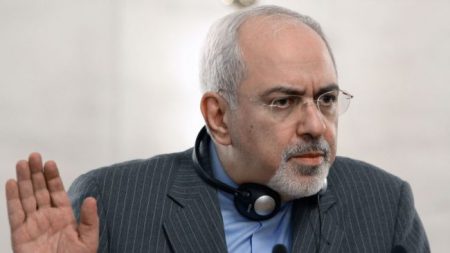
Instead of repeating accusations against Iran, the US should fulfil its obligations under the 2015 nuclear deal, Iranian Foreign Minister Mohammad Javad Zarif said in response to US Secretary of State Rex Tillerson’s comments on the review of the lifting of sanctions.
In his letter to the Congress on Wednesday, US Secretary of State Rex Tillerson, acknowledged that Iran was compliant to the accord, but blasted the country as “the world’s leading state sponsor of terrorism.”
Tillerson claimed that Tehran has been fueling various military conflicts in the Middle East, undermining US interests in countries such as Syria, Yemen, Iraq and Lebanon.
It was the first time that the Congress was informed on how Iran was fulfilling its obligations under the Joint Comprehensive Plan of Action (JCPOA), usually referred to as the Iran nuclear deal, under the Trump administration. The State Department must update US senators on the issue every 90 days.
Zarif took to Twitter to respond to Tillerson’s claims, stressing that Washington should “fulfill its own commitments” as part of the deal.
“Worn-out US accusations can’t mask its admission of Iran’s compliance w/ JCPOA,” the Foreign Minister added as cited by Reuters.
Moscow commented on Tillerson’s claim by saying that secretary of state should have separated the allegations of terrorism and the nuclear deal as they “have nothing in common,” according to Mikhail Ulyanov, the head of the Russian Foreign Ministry’s Department for Non-Proliferation and Arms Control.
“If the deal does not work, then specific complaints should be made regarding its functioning. The Americans can’t do this. The IAEA [International Atomic Energy Agency], an independent participant in this process, confirms that the Iranians are implementing everything. Therefore, any claims are irrelevant here, it seems to me,” Ulyanov said.
Washington blames Tehran for supporting various groups that it views as terrorist organizations, including Lebanese Hezbollah, Palestinian Hamas and the Houthis in Yemen.
Iran has also been backing the Syrian government of President Bashar Assad, also sending military advisers and fighters to Iraq to help fight Islamic State (IS, formerly ISIS/ISIL) there.
The Iranian nuclear deal, which took years to negotiate, restricted the nuclear ambitions of Tehran in exchange for lifting financial and oil sanctions.
The accord signed between Iran and the P5+1 (China, France, Russia, United Kingdom, the US, plus Germany) and the EU was touted as one of the main foreign policy achievements of the Obama administration.
However, Donald Trump called it “the worst deal ever negotiated” during his campaign for the White House.
A special inter-agency review of policy towards Iran will now look into if the lifting of sanctions against Tehran was in the interest of the US.
April 22, 2017
Posted by aletho |
Timeless or most popular, Wars for Israel | Iran, Russia, Sanctions against Iran, United States |
Leave a comment
There is an anomaly among the evidence that the Syrian chemical weapons attack at Khan Sheikhoun in Idlib province on April 4, 2017 was a “false flag” operation, designed to provoke a US attack on Syria. The evidence is otherwise quite strong, as put forth by former Pentagon consultant and MIT professor Theodore Postol in his three part analysis of the declassified White House Report on the Syrian chemical weapons attack of April 4, 2017. Postol’s analysis has been widely cited as disproving the White House contention that the Syrian Air Force bombed the “rebel” controlled village with chemical weapons.
Indeed, Dr. Postol’s analysis pokes quite a few gaping holes in the White House Report, concluding that the crushed gas canister and the “crater” shown in open source videos and photographs from the site demonstrate that it could not have been delivered by air. Postol also concludes that the report is, in fact, fraudulent and was produced by the National Security Agency without the input or review of impartial intelligence professionals.
Nevertheless, Postol begs a couple of questions, the most compelling of which is how the “false flag” imposters on the ground would have known how to time their operation with the Syrian air strike that everyone admits actually took place (the Syrians and Russians alleging that only conventional weapons were used, and the Americans alleging the use of chemical weapons). In order to do this, they would have had to have advance knowledge of the attack. How would they have gotten this information?
A clue to this comes from the suspension of the Russian-American “deconfliction” agreement. Under a September, 2015, memorandum of understanding, information about all military flights by forces in the area would be shared in order to prevent dangerous and unintended confrontations. In this case, Russia informed its US counterparts of the intended Syrian strike twenty-four hours in advance.
That would be plenty of time to prepare a “false flag” operation of the type shown in the videos and photographs and described in the Postol analysis. But in that case, the information would have to have been conveyed by US sources to operatives on the ground in Idlib, which is headquarters for al-Qaeda’s Syrian affiliates.
Russia seems to think that this is exactly what happened. Their unilateral suspension of the agreement has been widely interpreted as a reaction to the US attack on the al-Sha’yrat airstrip, but it may be more than that. Military actions are often calculated to appear to be a justifiable reaction to an earlier action from the other party. Thus, for example, the US chose to attack the Sha’yrat airstrip at least partly because that is where the aircraft that attacked Khan Sheikhoun had originated.
Similarly, Russia reacted to the US strike by authorizing increased anti-aircraft defenses in Syria and dispatching a frigate to its Mediterranean base in Tartus. These moves can be considered reactions to the fact that Russian anti-aircraft missile systems are known to be able to shoot down Tomahawk missiles of the type used in the US attack, and that the Tomahawks were fired from US vessels in the Mediterranean, off the coast of Syria.
But what about the suspension of the deconfliction agreement? How is that a specific response to the something done by the US? Perhaps Russia suspects that the information that they gave to the US in compliance with the agreement was leaked. Does Russia think that the US has al-Qaeda operatives at the highest and most secure levels of the U.S. government? That is a bit far-fetched, especially when there is a simpler and more plausible explanation.
The explanation is that al-Qaeda does not need operatives to get such information. The US has been strategically in bed with al-Qaeda, ISIS and their permutations for quite some time. US policy makers do not speak with a unified voice on this matter, but many – especially those of the neoconservative school of strategic policy – have cultivated the use of violent groups like al-Qaeda and ISIS as alternatives or supplements to the use of US forces on the ground.
Furthermore, many of the same policy makers were the ones who led the US into the disastrous wars in Iraq and Libya, and are committed to do the same in Syria. False flag operations and faulty intelligence are part of their stable, as they showed with their tall tales of WMD and Viagra-fueled black mercenaries. They have been influential in the US government since at least the Reagan administration, and groomed Hillary Clinton for the White House for decades.
Since the loss of their horse in the last presidential election, these policy makers have been trying to turn the Trump government against its campaign rhetoric of leaving Syria and letting Russia and the Syrian government put an end to ISIS and al-Qaeda in Syria. That is not part of their playbook. Their plan therefore uses false flag operations, false intelligence and working with terrorists, in order to control US foreign and military policy through subterfuge when they cannot control it directly.
But how can they do this? What sorts of connections make it possible for them to undermine the White House, State Department and intelligence services to achieve their ends? We don’t have to look far for examples.
An obvious one is the US attack on the Syrian army at Deir ez-Zour on September 17, 2016, killing scores of Syrian soldiers and wounding many more. Critically, this happened only five days into a trial ceasefire and only two days before the trial period was to end and the ceasefire to become permanent. Needless to say, this had the effect of scuttling the ceasefire, but interestingly, ISIS troops were apparently standing by to overrun Syrian army positions almost immediately after the US aircraft completed their bombing mission (and how would they have known when it was completed?).
US military officials said it was unintentional, but an excellent investigative report by Gareth Porter demonstrates that, in fact, this was a purposeful choice by high ranking US military officers to prevent the ceasefire from forcing them to cooperate with Russian counterparts on target coordination in Syria. These officers had allies in the administration, including Defense Secretary Ashton Carter, who effectively undermined the policies of President Barack Obama and Secretary of State John Kerry and their Russian counterparts, President Vladimir Putin and Foreign Minister Sergei Lavrov. As Kerry admitted to the Boston Globe, “…we had people in our government who were bitterly opposed to [the agreement].”
There is plenty of circumstantial evidence of US collusion with al-Qaeda, as well. Hillary Clinton’s foreign policy advisor Jake Sullivan even went so far as to admit that “AQ [al-Qaeda] is on our side in Syria.” Is it coincidence that most of the weapons delivered to “moderate rebels”, including TOW anti-tank guided missiles that turned the tide against the Syrian army in 2014-15 were almost immediately transferred or put under the control of al-Qaeda? Or that when US forces evacuated Falujah and other territories conquered by ISIS in the same period, it left behind huge quantities of arms, vehicles and other resources, contrary to standard military policy of destroying whatever could be of use to the enemy? Or that, more recently, when retaking Mosul, US forces left the way to Syria open for ISIS to flee to Syria and use its forces to retake Tadmur (Palmyra) from the Syrian army?
Typically, the US has created intermediaries such as the quasi-mythical “moderate rebels” between them and the most extreme terrorist organizations. However, the mythical quality of these emissaries is sometimes exposed, as when an audio recording was released of a conversation between John Kerry and twenty representatives from four “moderate” Syrian organizations in September, 2016, at the United Nations.
In the recording, a Syrian woman, Marcell Shehwaro, threatens Kerry that if the US doesn’t do more to help, they will join forces with al-Nusra (the al-Qaeda affiliate in Syria). Another man (unidentified) repeats the threat later in the recording. Shehwaro later argues that more support should go to al-Nusra; i.e., that “we are not arming the right people” and “there is not enough political and arms support to those who consider [al-Nusra] moderate. I wish we had these friends.”
Such admissions show that the veneer of “moderation” is very thin in these groups. They are, in fact, little more than a public relations front for al-Qaeda and ISIS, providing whatever the west needs – and especially news feeds – needed to keep support flowing.
The four groups represented at the meeting clearly have access to the highest levels of the US government and vice versa. It would be a simple matter for a US government official in the Pentagon, NSA or other agency to pass the information about Syrian aircraft movements to someone like White Helmets leader Raed Saleh, who was present at the Kerry meeting, with assurance that it would reach the al-Nusra leadership in Idlib. In effect, Kerry (and other government officials) are speaking directly to al-Qaeda.
Obama and Kerry learned their lesson. They understood the degree to which their decisions could be undermined, so to preserve their limited power, they sometimes went along with the powers that they could not control, and sometimes partly thwarted those powers. Obama was gifted with a Director of National Intelligence, James Clapper, who famously told him that the alleged 2013 Syrian army use of chemical weapons was “not a slam dunk,” which led the President to back off his plan to attack Syria.
Does Trump have such people? His replacement of noninterventionist Michael Flynn with war hawk H.R. McMaster is an ominous sign that neoconservative influence is reasserting itself. And the success of the Khan Sheikhoun false flag chemical weapons attack in inciting a US attack on Syria is a clear encouragement for more such false flag operations.
Paul Larudee is one of the founders of the Free Gaza and Free Palestine Movements and an organizer in the International Solidarity Movement.
April 22, 2017
Posted by aletho |
Deception, False Flag Terrorism | Khan Sheikhoun, Syria, United States |
Leave a comment
There’s a season for it–the thinkpieces, the brave suggestions, the crawling out to the edge of the limb and saying, yes, I have the answer, we should force America’s youth to come together and serve in some collective cause.
In spite of the right’s fondness for military service and such pageantry, it’s usually the left or the more accurately, the muddy, authoritarian center that suggest this kind of thing. Progressives worry over wars, but they don’t worry enough over the civilian casualties in other countries, or the blowback in America. Sometimes they become overly concerned, instead about how poor people join the military, and rich, privileged people don’t. Sometimes they even pull up an extra deep argument, dust the dirt off of it, and say, gee, maybe the draft can stop wars! Charlie Rangel spent decades in congress trying to bring back conscription for that very reason.
And then the thought leaders–the columnists who have to waste space in the New York Times or various blogs each week–they need to get in on this brainstorming. America is broken. America is fractured and overly politicised, and we could be on the brink of a God damned civil war. This is dangerous. Also dangerous is the fact that young people aged, say, 18-25, just keep on choosing their own paths in life. Sometimes they get married or do important things that contribute to society’s togetherness. But sometimes they just eat exotic food and become polyamorists or or Instagrammers. We have to do something.
Why not bring back the draft? What was once the weight on the back of every young man–the fear that he would have to kill or be killed for a broadly-defined goal of patriotism, nationalism, service, whether he wanted to or not–is now gone. Youths are not grinding themselves down under nationalist knapsacks nearly as much as they did before, in the days that were good.
Sometimes a writer, politician, thinker, considers bringing back a draft without any kind of spit shine on it. Just, make those damn kids join the military the ways their pappies did, so they stop playing video games! Plus, after 58,000 of those kids died in Vietnam–along with about two million Vietnamese–we stopped the war! The draft works!
Most advocates for this tepidly-argued collectivism, however, take a different tact. They want it to be “national service” instead of mean old conscription. They are happy to offer options and choices, provided that engaging in this service is a necessary part of graduation from high school or college. At best they are the movie theaters who said you were free to defy the Hays Code if you had your own theater, and weren’t run out of town by moralists, and didn’t want to hire any known American actors, etc. At worse, they are mini dictators who, even if they don’t realize it, are simply deeply offended by the fact that American young people are making their own choices and living their own lives. They are central planners not of cities, but of human action and motivation.
Bloomberg View’s Noah Smith is one person who has no self-awareness about how many stock writers from Thomas Friedman to David Brooks, to this guy who wrote a letter, and who used to be a columnist, have already suggested national service as a cure for the nation’s ills, both real and imagined. Yes, as Smith notes, people in South Korea and Israel and other places are made to join the army. There is also what amounts to mandatory reserves training in places like Switzerland. Though all of those coercive policies are bad, certainly it’s a little more of a moral quandary to serve in Israel and be a real, fighting soldier, than it is to be made to do basic training in Switzerland, then come home and go back to your normal life (unless and until Germany invades).
In America, the draft was put to rest in 1973. Men are still made to register with the Selective Service, however. Though the changes of the US bringing back a military draft are not high, thanks to the potential outcry, as well as the technical skills needed for most army recruits in 2017, that registration still hangs over the heads of every young male citizen. Your choices are on loan from the military, it says. You can have your life for now, but if we need it, you will know.
Smith and his ilk are terrified of a polarized nation. At its worst point, yes, screaming cable news divides could transform into real wars. But as scared as we all are of fighting with relatives on Facebook, or being trolled by Twitter Nazis, that kind of unpleasantness is as far from a real conflict as you can get, until it actually isn’t (and it currently is).
Furthermore, Smith happily suggests that his plan would lead to “national unity.” He gives a startlingly shallow nod to the libertarian argument against coercive national service by saying, uh, people could get out of it if they wanted to become high school drop-outs. He doesn’t actually counter the Milton Friedman quote he mentions, which dubs drafted soldiers “slaves.” Smith simply says, well, libertarians might object to this grand scheme, but they are wrong. Best of all, he pays not even a whisper of lip service to the fact that all of human history teaches us that “national unity” can have some deadly side effects.
More paragraphs could be devoted to flipping Smith’s logic over, and then prodding its insides. Unfortunately, he doesn’t have enough to bother with. He has the fact that the country is, it seems, at odds. Occasionally, being at odds leads to violence and even wars. And also young people don’t work that much, and Smith has a chart to prove that. Ergo, national service it is.
This is a bad piece. It’s a weak, lazy spasm towards collectivism to solve the nation’s problems (real, imagined, and exaggerated). The draft and national service are blessedly unpopular. Rangel retired from congress without his pet project of bringing it back ever coming close to fruition.
And yet, Smith’s piece deserves a response if only because it encapsulates a dangerous, monstrously huge idea–that the individual belongs to the state. More particularly, the young individual of a certain age belongs to the state. With all of our concern over being bogged down in wars, or filling our prisons coming into the public sphere, this notion that we have to suffer or struggle in order to grow up remains. Millennials are the worst, right? They’re lazy, and they’re entitled. And yet, they’re rarely the ones demanding that the younger generation be pressed into servitude.
This attitude has killed. It has killed thousands and thousands of people. It is Teddy Roosevelt worrying about a soft nation that had tamed the West. It is the fear that American manhood would atrophy without natives to shoot, so let’s go to the Philippines, to Cuba, anywhere where our young men can grow strong on righteous suffering and contrived acts of bravery. We mustn’t let them turn feminine and soft.
Political polarization is a concern. At its peak, it can destroy a country. But forcible national unity destroys individuals, and has hacked its way across the world in conquest and conflicts for centuries. Placing youth into the mouth of the nation for sacrifice is swapping the potential problem of polarization for the definite one of unification–and that’s a problem much more likely to lead to tyranny and war.
April 22, 2017
Posted by aletho |
Civil Liberties, Militarism, Progressive Hypocrite, Timeless or most popular | Human rights, United States |
Leave a comment
Nuclear power supporters like to say, “Nuclear waste disposal is a political, not a scientific problem.” Scientists refute this slogan every day.
A case in point is the Canadian Environment Minister’s second “do over” order issued to Ontario Power Generation regarding the company’s waste dump idea. The 15-page order, issued April 5, rejected the company’s sophomoric answers to a previous “not good enough” finding by Canada’s Minister of Environment and Climate Change, Catherine McKenna.
OPG wants to bury 7 million cubic feet of radioactive waste in a deep hole less than a mile from Lake Huron, on its own property on the Bruce Peninsula, northwest of Toronto. It’s there that OPG runs the world’s biggest rad’ waste production complex — the Bruce Nuclear Station — eight old power reactors in varying states of repair and disrepair.
The company proposes digging 2,231 feet down into part of its 2,300-acre compound on Lake Huron, and burying all sorts of radioactive material (everything except waste fuel rods), including a “significant amount” of carbon-14, a cancer agent with a deadly radioactive “life” of 57,300 years — i.e. ten 5,730-year radioactive half-lives. After two years of public hearings into the question of placing long-lasting poisons next to a major source of drinking water, a federal Joint Review Panel in 2015 recommended approval of the project to Minister McKenna.
McKenna was to make a decision by March 1, 2016, but instead demanded better work from OPG. On Feb. 18, 2016, the Minister ordered the company to produce details about alternate dump sites. OPG submitted shockingly shabby generalizations Dec. 28, 2016, and McKenna’s April 5 reply is an understated denunciation of OPG’s obfuscations and evasions. Beverly Fernandez, founder of Stop the Great Lakes Nuclear Dump, told Clinton, Michigan’s The Voice, “OPG has been given a failing grade on its most recent report regarding burying its radioactive nuclear waste less than a mile from the Great Lakes. OPG has now been issued a strong set of new challenges to answer.”
For example, the company has the nerve to [state] that, “All underground facilities (office, tunnel, emplacement room) will be constructed in accordance with the seismic requirements of the latest edition of the National Building Code at the time of the construction.” In fact, as the Minister’s rejection of OPG’s attempted snow-job pointed out, “There are no specific seismic requirements in the National Building Code for underground facilities…. Provide a revised version…”
A public servant doing her job
In requiring a study of alternate potential sites for deep disposal, Minister McKenna ordered OPG to make “specific reference to actual locations.” Instead, OPG tried to get away with citing two enormous geological regions that it said might be suitable. As Jennifer Wells and Matthew Cole reported in the Toronto Star, OPG’s “actual locations” covered an area of 726,052-square-kilometres — about 75% of the Province of Ontario. This blatant attempt at scamming the government didn’t fool McKenna, a public servant who is actually doing her job.
In one of OPG’s more garish displays of environmental racism, the company’s Dec. 2016 report failed to analyze or even acknowledge the land use Treaty Rights of Indigenous or First Nation peoples. Minister McKenna’s April 5 rebuke rightly demands that OPG provide “a description of the land and resource uses for the alternative locations that highlight the unique characteristics of these locations from the perspective of Indigenous peoples.
McKenna’s lengthy critique amounts to “strike two” against OPG, and the Minister’s refutation was praised by community leaders and watchdogs around the Great Lakes. So far, 187 cities, townships, counties, states and provinces in the Great Lakes Basin have passed resolutions opposing the dump. Columnist Jim Bloch in The Voice asked, “How many swings will the Canadian government give Ontario Power Generation before the firm strikes out in its request to build a nuclear waste dump on the shores of Lake Huron?” The answer may be “no more.”
As befits questions of persistent cancer agents and how to package and keep them out of drinking water for thousands of years, McKenna’s April 5 rebuke lists 23 complex and technically dumbfounding dilemmas that could doom the Lake Huron dump plan. Professor Erika Simpson at the University of Western Ontario reviewed McKenna’s critique and wrote April 7, “It will take OPG perhaps a decade to come up with all the information that is now required … given all the overwhelming problems identified.”
Beverly Fernandez summed up the opposition as well as anyone. “Given the overwhelming opposition to this plan and the potential for massive consequences to the Great Lakes, no responsible government would approve a plan that endangers the drinking water of 40 million people, and a $6 trillion Great Lakes economy.”
John LaForge is a Co-director of Nukewatch, a peace and environmental justice group in Wisconsin, and edits its newsletter.
April 21, 2017
Posted by aletho |
Deception, Environmentalism, Nuclear Power, Science and Pseudo-Science, Timeless or most popular | Canada, Human rights, United States |
Leave a comment
“We are fighting in Korea so we won’t have to fight in Wichita, or in Chicago, or in New Orleans, or in San Francisco Bay.”
— President Harry S Truman, 1952
Why has this tiny nation of 24 million people invested so much of its limited resources in acquiring nuclear weapons? North Korea is universally condemned as a bizarre and failed state, its nuclear posture denounced as irrational.
Yet North Korea’s stance cannot be separated out from its turbulent history during the 20th Century, especially its four decade long occupation by Japan, the forced division of the Korean peninsula after World War II, and, of course, the subsequent utterly devastating war with the United States from 1950-1953 that ended in an armistice in which a technical state of war still exists.
Korea is an ancient nation and culture, achieving national unity in 608 CE, and despite its near envelopment by gigantic China it has retained its own unique language and traditions throughout its recorded history. National independence came to an end in 1910 after five years of war when Japan, taking advantage of Chinese weakness, invaded and occupied Korea using impressed labor for the industries Japan created for the benefit of its own economy. As always the case for colonization the Japanese easily found collaborators among the Korean elite Koreans to manage their first colony.
Naturally a nationalist resistance movement emerged rapidly and, given the history of the early 20th Century, it was not long before communists began to play a significant role in Korea’s effort to regain its independence. The primary form of resistance came in the form of “peoples’ committees” which became deeply rooted throughout the entire peninsula, pointedly in the south as well. It was from these deeply political and nationalistic village and city committees that guerrilla groups engaged the Japanese throughout WWII. The parallels with similar organizations in Vietnam against the Japanese, and later against the French and Americans, are obvious. Another analogous similarity is that Franklin Roosevelt also wanted a Great Power trusteeship for Korea, as for Vietnam. Needless to say both Britain and France objected to this plan.
When Russia entered the war against Japanese in August of 1945 the end of Japanese rule was at hand regardless of the atomic bomb. As events turned out Japan surrendered on 15 August when Soviet troops had occupied much of the northern peninsula. It should be noted that American forces played no role in the liberation of Korea from Japanese rule. However, because the Soviets, as allies of the U.S., wished to remain on friendly terms they agreed to the division of Korea between Soviet and American forces. The young Dean Rusk, later to become Secretary of State under Kennedy and Johnson, arbitrarily drew a line of division across the 38th Parallel because, as he said, that would leave the capital city, Seoul, in the American zone.
Written reports at the time criticized Washington for “allowing” the Red Army into Korea but the fact was it was the other way around. The Soviets could easily have occupied the entirety of Korea but chose not to do so, instead opting for a negotiated settlement with the U.S. over the future of Korea. Theoretically the peninsula would be reunited after some agreement between the two victors at some future date.
However, the U.S. immediately began to favor those Koreans who had collaborated with the Japanese in the exploitation of their own country and its people, largely the landed elites, and Washington began to arm the provisional government it set up to root out the peoples’ committees. For their part the Soviets supported the communist nationalist leader, Kim Il-Sung who had led the guerrilla army against Japan at great cost in lives.
In 1947 the United Nations authorized elections in Korea, but the election monitors were all American allies so the Soviets and communist Koreans refused to participate. By then the Cold War was in full swing, the critical alliance between Washington and Moscow that had defeated Nazi Germany had already been sundered. As would later also occur in Vietnam in 1956, the U.S. oversaw elections only in the south of Korea and only those candidates approved by Washington. Syngman Rhee became South Korea’s first president protected by the new American armed and trained Army of the Republic of Korea. This ROK was commanded by officers who had served the Japanese occupation including one who had been decorated by Emperor Hirohito himself and who had tried to track down and kill Kim Il Sung for the Japanese.
With Korea thus seemingly divided permanently both Russian and American troops withdrew in 1948 though they left “advisers” behind. On both sides of the new artificial border pressures mounted for a forcible reunification. The fact remained that much of rural southern Korea was still loyal to the peoples committees. This did not necessarily mean that they were committed communists but they were virulent nationalists who recognized the role that Kim’s forces had played against the Japanese. Rhee’s forces then began to systematically root out Kim’s supporters. Meanwhile the American advisers had constantly to keep Rhee’s forces from crossing the border to invade the north.
In 1948 guerrilla war broke out against the Rhee regime on the southern island of Cheju, the population of which ultimately rose in wholesale revolt. The suppression of the rebellion was guided by many American agents soon to become part of the Central Intelligence Agency and by military advisers. Eventually the entire population was removed to the coast and kept in guarded compounds and between 20,000 and 30,000 villagers died. Simultaneously elements of the ROK army refused to participate in this war against their own people and this mutiny was brutally suppressed by those ROK soldiers who would obey such orders. Over one thousand of the mutineers escaped to join Kim’s guerrillas in the mountains.
Though Washington claimed that these rebellions were fomented by the communists no evidence surfaced that the Soviets provided anything other than moral support. Most of the rebels captured or killed had Japanese or American weapons.
In North Korea the political system had evolved in response to decades of foreign occupation and war. Though it was always assumed to be a Soviet satellite, North Korea more nearly bears comparison to Tito’s Yugoslavia. The North Koreans were always able to balance the tensions between the Soviets and the Chinese to their own advantage. During the period when the Comintern exercised most influence over national communist parties not a single Korean communist served in any capacity and the number of Soviet advisers in the north was never high.
Nineteen forty-nine marked a watershed year. The Chinese Communist Revolution, the Soviet Atomic Bomb, the massive reorganization of the National Security State in the U.S. all occurred that year. In 1950 Washington issued its famous National Security Paper-68 (NSC-68) which outlined the agenda for a global anti-communist campaign, requiring the tripling of the American defense budget. Congress balked at this all-encompassing blueprint when in the deathless words of Secretary of State Dean Acheson “Thank God! Korea came along.” Only months before Acheson had made a speech in which he pointedly omitted Korea from America’s “Defense perimeter.”
The Korean War seemed to vindicate everything written and said about “the international communist conspiracy”. In popular myth on June 25, 1950 the North Korean Army suddenly attacked without warning, overwhelming surprised ROK defenders. In fact the entire 38th Parallel had been progressively militarized and there had been numerous cross border incursions by both sides going back to 1949. On numerous occasions Syngman Rhee had to be restrained by American advisers from invading the north. The Korean civil war was all but inevitable. Given postwar American plans for access globally to resources, markets and cheaper labor power any form of national liberation, communist or liberal democratic, was to be opposed. Acheson and his second, Dean Rusk, told President Truman that “we must draw the line here!” Truman decided to request authorization for American intervention from the United Nations and bypassed Congress thereby leading to widespread opposition and, later, a return to Republican rule under Dwight Eisenhower.
Among the remaining mysteries of the UN decision to undertake the American led military effort to reject North Korea from the south was the USSR’s failure to make use of its veto in the Security Council. The Soviet ambassador was ostensibly boycotting the meetings in protest of the UN’s refusal to seat the Chinese communists as China’s official delegation. According to Bruce Cumings though, evidence exists that Stalin ordered the Soviet ambassador to abstain. Why? The UN resolution authorizing war could have been prevented. At that moment the Sino-Soviet split was already in evidence and Stalin may have wished to weaken China, something which actually happened as a result of that nation’s subsequent entry into the war. Or he may have wished that cloaking the UN mission under the U.S. flag would have revealed the UN to be largely under the control of the United States, which indeed it was. What is known is that Stalin refused to allow Soviet combat troops and reduced shipments of arms to Kim’s forces. Later, however Soviet pilots would engage Americans in the air. The Chinese were quick to condemn the UN action as “American imperialism” and warned of dire consequences if China itself were threatened.
The war went badly at first for the U.S. despite numerical advantages in forces. Rout after rout followed with the ROK in full retreat. Meanwhile tens of thousands of southern guerrillas who had originated in peoples’ committees fought the Americans and the ROK. At one point the North Koreans were in control of Seoul and seemed about to drive American forces into the sea. At that point the commander- in-chief of all UN forces, General Douglas MacArthur, announced that he saw unique opportunities for the deployment of atomic weapons. This call was taken up by many in Congress.
Truman was loathe to introduce nukes and instead authorized MacArthur to conduct the famous landings at Inchon in September 1950 with few losses by the Marine Corps vaunted 1st Division. This threw North Korean troops into disarray and MacArthur began pushing them back across the 38th Parallel, the mandate imposed by the UN resolution. But the State Department claimed that the border was not recognized under international law and therefore the UN mandate had no real legal bearing. It was this that MacArthur claimed gave him the right to take the war into the north. Though the North Koreans had suffered a resounding defeat in the south, they withdrew into northern mountain redoubts forcing the American forces that followed them into bloody and costly combat, leading Americans into a trap.
The Chinese had said from the beginning that any approach of foreign troops toward their border would result in “dire consequences.” Fearing an invasion of Manchuria to crush the nascent communist revolution the Chinese foreign minister, Zhou En-Lai declared that China “will not supinely tolerate seeing their neighbors invaded by the imperialists.” MacArthur sneered at this warning. “… They have no air force… if the Chinese tried to get down to Pyongyang there would be a great slaughter… we are the best.” He then ordered airstrikes to lay waste to thousands of square miles of northern Korea bordering China and ordered infantry divisions ever closer to its border.
It was the terrible devastation of this bombing campaign, worse than anything seen during World War II short of Hiroshima and Nagasaki that to this day dominates North Korea’s relations with the United States and drives its determination never to submit to any American diktat.
General Curtis Lemay directed this onslaught. It was he who had firebombed Tokyo in March 1945 saying it was “about time we stopped swatting at flies and gone after the manure pile.” It was he who later said that the US “ought to bomb North Vietnam back into the stone age.” Remarking about his desire to lay waste to North Korea he said “We burned down every town in North Korea and South Korea too.” Lemay was by no means exaggerating.
On November 27, 1950 hundreds of thousands of Chinese troops suddenly crossed the border into North Korea completely overwhelming US forces. Acheson said this was the “worst defeat of American forces since Bull Run.” One famous incident was the battle at the Chosin Reservoir, where 50,000 US marines were surrounded. As they escaped their enclosure they said they were “advancing to the rear” but in fact all American forces were being routed.
Panic took hold in Washington. Truman now said use of A-bombs was under “active consideration.” MacArthur demanded the bombs… As he put it in his memoirs:
I would have dropped between thirty and fifty atomic bombs… strung across the neck of Manchuria… and spread behind us – from the Sea of Japan to the Yellow Sea- a belt of radioactive cobalt. It has an active life of between 60 and 120 years.
Cobalt it should be noted is at least 100 times more radioactive than uranium.
He also expressed a desire for chemicals and gas.
It is well known that MacArthur was fired for insubordination for publically announcing his desire to use nukes. Actually, Truman himself put the nukes at ready and threatened to use them if China launched air raids against American forces. But he did not want to put them under MacArthur’s command because he feared MacArthur would conduct a preemptive strike against China anyway.
By June 1951, one year after the beginning of the war, the communists had pushed UN forces back across the 38th parallel. Chinese ground forces might have been able to push the entire UN force off the peninsula entirely but that would not have negated US naval and air forces, and would have probably resulted in nuclear strikes against the Chinese mainland and that brought the real risk of Soviet entry and all out nuclear exchanges. So from this point on the war became one of attrition, much like the trench warfare of World War I. casualties continued to be high on both sides for the duration of the war which lasted until 1953 when an armistice without reunification was signed.
Of course the victims suffering worst were the civilians. In 1951 the U.S. initiated “Operation Strangle” which officials estimated killed at least 3 million people on both sides of the 38th parallel, but the figure is probably closer to 4 million. We do not know how many Chinese died – either solders or civilians killed in cross border bombings.
The question of whether the U.S. carried out germ warfare has been raised but has never been fully proved or disproved. The North accused the U.S. of dropping bombs laden with cholera, anthrax, plague, and encephalitis and hemorrhagic fever, all of which turned up among soldiers and civilians in the north. Some American prisoners of war confessed to such war crimes but these were dismissed as evidence of torture by North Korea on Americans. However, none of the U.S. POWs who did confess and were later repatriated were allowed to meet the press. A number of investigations were carried out by scientists from friendly western countries. One of the most prominent concluded the charges were true. At this time the US was engaged in top secret germ-warfare research with captured Nazi and Japanese germ warfare experts, and also experimenting with Sarin, despite its ban by the Geneva Convention. Washington accused the communists of introducing germ warfare.
Napalm was used extensively, completely and utterly destroying the northern capital of Pyongyang. By 1953 American pilots were returning to carriers and bases claiming there were no longer any significant targets in all of North Korea to bomb. In fact a very large percentage of the northern population was by then living in tunnels dug by hand underground. A British journalist wrote that the northern population was living “a troglodyte existence.” In the Spring of 1953 US warplanes hit five of the largest dams along the Yalu river completely inundating and killing Pyongyang’s harvest of rice. Air Force documents reveal calculated premeditation saying that “Attacks in May will be most effective psychologically because it was the end of the rice-transplanting season before the roots could become completely embedded.” Flash floods scooped out hundreds of square miles of vital food producing valleys and killed untold numbers of farmers.
At Nuremberg after WWII, Nazi officers who carried out similar attacks on the dikes of Holland, creating a mass famine in 1944, were tried as criminals and some were executed for their crimes.
So after a horrific war Korea returned to the status quo ante bellum in terms of political boundaries but it was completely devastated, especially the north.
I submit that it is the collective memory of all of what I’ve described that animates North Korea’s policies toward the US today which has nuclear weapons on constant alert and stations almost 30,000 forces at the ready. Remember, a state of war still exists and has since 1953.
While South Korea received heavy American investment in the industries fleeing the United States in search of cheaper labor and new markets it was nevertheless ruled until quite recently by military dictatorships scarcely different than those of the north. For its part the north constructed its economy along five-year plans and collectivized its agriculture. While it never enjoyed the sort of consumer society that now characterizes some of South Korea, its GDP grew substantially until the collapse of communism globally brought about the withdrawal of all foreign aid to north Korea.
During the late 1980s and early 1990s, as some American policymakers took note of the north’s growing weakness Secretary of Defense Cheney and Paul Wolfowitz talked openly of using force finally to settle the question of Korean reunification and the claimed threat to international peace posed by North Korea.
In 1993 the Clinton Administration discovered that North Korea was constructing a nuclear processing plant and also developing medium range missiles. The Pentagon desired to destroy these facilities but that would mean wholesale war so the administration fostered an agreement whereby North Korea would stand down in return for the provision of oil and other economic aid. When in 2001, after the events of 9-11, the Bush II neo-conservatives militarized policy and declared North Korea to be an element of the “axis of evil.” All bets were now off. In that context North Korea withdrew from the Nuclear Non-Proliferation Treaty, reasoning that nuclear weapons were the only way possible to prevent a full scale attack by the US in the future. Given a stark choice between another war with the US and all that would entail this decision seems hardly surprising. Under no circumstances could any westerner reasonably expect, after all the history I’ve described, that the North Korean regime would simply submit to any ultimatums by the US, by far the worst enemy Korea ever had measured by the damage inflicted on the entirety of the Korean peninsula.
(Acknowledgement to Bruce Cumings and I.F. Stone)
April 21, 2017
Posted by aletho |
Deception, Mainstream Media, Warmongering, Militarism, Timeless or most popular, War Crimes | Dean Acheson, Harry S Truman, North Korea, United States |
Leave a comment
A series of moves by NATO’s Istanbul Cooperation Initiative (ICI) partner, the United Arab Emirates, has many observers in the Indian Ocean littoral nations wondering out loud whether the «North Atlantic» military pact is moving into the Indian Ocean and Arabian Peninsula, courtesy of an «outsourcing» deal with the Gulf Cooperation Council (GCC) nations.
On January 27, while the world’s eyes were on the one-week old Donald Trump administration in Washington and believing that NATO would become a shell given Trump’s belief that it was «obsolete,» NATO’s Secretary General Jens Stoltenberg helped open the NATO-Istanbul Cooperation Initiative (ICI) Regional Center in Kuwait. Gathered with Stoltenberg for the opening ceremony were the Secretary General of the GCC, representatives of the 28 members of the North Atlantic Council, and government officials from host Kuwait, as well as Bahrain, the UAE, Saudi Arabia, Qatar, and Oman. The opening of a NATO facility in the Persian Gulf represented an unprecedented leap by the bloc designed for the defense of the «North Atlantic» into far-off waters in Asia.
The Kuwait operation followed the signing of an Individual Partnership and Cooperation Program (IPCP) between NATO and the UAE last October. The agreement is designed to bolster existing links between NATO and the UAE on NATO-led operations and missions and enhanced interoperability. The de facto admission of the UAE into NATO follows several major military forays by the seven-member Gulf federation into the Indian Ocean and Horn of Africa. There is a belief that NATO is now using the UAE to extend its military and political influence around the Indian Ocean and associated waters, including the Persian Gulf, Gulf of Aden, and Red Sea.
NATO already has a sizeable military footprint in the Gulf region and Indian Ocean. The U.S. Fifth Fleet is homeported in the Bahrain capital of Manama. Al-Udeid airbase in Qatar remains one of America’s largest outposts in the Middle East. The base serves as the forward headquarters of United States Central Command, the United States Air Forces Central Command, No. 83 Expeditionary Air Group British Royal Air Force, and the 379th Air Expeditionary Wing of the U.S. Air Force. The UAE has its fair share of NATO and NATO partner military bases, including the Royal Australian Air Force facility at Al-Minhad airbase south of Dubai, a U.S. Air Force facility at the Al-Dhafra airbase near Abu Dhabi, the port of Jebel Ali in Dubai, and a naval base in Fujairah in the Arabian Sea.
There are also U.S. military bases at the Ali Al Salem Airbase, Camp Arifjan, Camp Buehring, and the Kuwait City naval base in Kuwait; the Masirah and Thumrait airbases in Oman; the Isa airbase in Bahrain; Camp Lemonnier in Djibouti; Eskan Village, outside of Riyadh, Saudi Arabia; Manda Bay, Kenya; Victoria International Airport on Mahé Island in the Seychelles; the Baledogle airbase in Somalia; and the large Naval Support Facility at Diego Garcia in the British Indian Ocean Territory. The U.S. has shown an interest in developing a maritime surveillance facility on the Australian-ruled Cocos Islands in the eastern Indian Ocean. U.S. Special Operations personnel have been spotted in Zanzibar, from which the U.S. military was ousted in 1964. A six-acre seaside site, said to be the new U.S. embassy complex in the Sri Lankan capital of Colombo, is believed by locals to also serve as a military base.
Under the guise of supporting the GCC coalition battling against Houthi-led rebels in Yemen’s bloody civil war, the UAE has been on a real estate buying spree in the region. Chief among the UAE’s prized acquisitions is the strategic island of Socotra in the Gulf of Aden. Long-sought by the United States as a naval and intelligence base since the end of the Cold War, there are reports that the exiled Yemeni president, Abd Rabbuh Mansur Hadi, leased the islands of Socotra and Abd al-Kuri to the UAE in 2014, before fleeing to Saudi Arabia. Abd al-Kuri is a sparsely-inhabited island located 65 miles southwest of Socotra. Since the beginning of the Yemeni civil war, the UAE has taken advantage of the absence of a stable government in Yemen to expand its influence in Socotra. The UAE deal on Socotra was allegedly in return for the UAE’s support for Hadi and his Saudi allies in their military quest to wrest control of north Yemen from Iranian-backed Houthi rebels who seized control of the Yemeni capital of Sana’a.
Formerly a part of the Yemeni province of Hadhramaut, Socotra became a separate province in 2013. Before the former nation of South Yemen was granted independence by Britain, Socotra was a possession of the Mahra Sultanate of Qishn in Hadhramaut in the Protectorate of South Arabia. Hadi’s removal of Socotra from Hadhramaut control and his reported lease of the island to the UAE is not recognized by the pretender to the throne of the former Mahra Sultanate, Abdullah bin Isa. U.S. military operations in Yemen in support of the Saudi-led coalition is reportedly targeting Al Qaeda in the Arabian Peninsula (AQAP), but increasingly it appears that the actual targets for American drones, missiles, and special operations forces are tribes loyal to former rulers like bin Isa, Houthi rebels, and South Yemen independence fighters.
A UAE airline, Rotana Jet, now provides direct air service between Abu Dhabi and Socotra. Air Yemenia provides direct service between Socotra and Dubai.
There is reason to believe that the UAE was fronting for the United States in acquiring the lease on Socotra and that it is only a matter of time before U.S. and NATO personnel arrive on the island, likely under the guise of the ICI-NATO partnership. Some reports claim the lease is for 99-years, which is noteworthy for being the same period of time that the U.S. leased the Guantanamo Bay naval base from a newly-independent Cuba. The U.S. has abrogated the Guantanamo lease terms by refusing to depart from the base upon the lease’s termination in 1999.
Abu Dhabi is the home to the private military company Reflex Responses (R2), which is run by Blackwater’s founder Erik Prince. Prince’s sister, Betsy DeVos, is the Secretary of Education in the Trump cabinet. Prince is reported to have provided consulting to the Trump transition team by sneaking into meetings through a back door at the Trump Tower in Manhattan.
Middle East observers see R2 as a CIA contrivance that farms out mercenaries from such countries as Colombia, South Africa, and Chile to fight as U.S. proxies in wars such as the civil war in Yemen. R2’s operational personnel are headquartered at the Zayed Military City UAE military base outside of Abu Dhabi. Prince and the Crown Prince of Abu Dhabi jointly command some 1400 Colombians at the base whose officers are mainly American and British ex-military personnel.
The UAE has been engaged in further military real estate grabs in the Indian Ocean region. It recently signed an agreement with the unrecognized Republic of Somaliland to establish a major naval base at the port of Berbera on the Gulf of Aden.
In October 2015, UAE forces took control of the Yemeni island of Perim in the strategic Bab al-Mandab Strait between the Red Sea and Gulf of Aden. The island had been under the control of Yemeni Houthi rebel forces battling the Saudi puppet government of Yemen. The UAE president has built a massive vacation palace on Mahé island in the Seychelles, at what was once a U.S. Air Force listening station.
Saudi Arabia is reportedly buying Faafu Atoll in the Maldives. The «mega project» planned for the atoll by the Saudis may be a joint commercial/naval base. The Maldivian government denies it is selling Faafu to the Saudis, but did admit to the Saudi $10 billion mega project. Atoll inhabitants are worried about the Saudi deal. A protest by Faafu islanders against the Saudi deal has taken place on the main island of Bilehdhoo.
The U.S. and NATO enjoy access to French military bases in Mayotte, near Madagascar; the French island of Reunion; and the Kerguelen archipelago in the southern Indian Ocean, near Antarctica. France also maintains facilities in Abu Dhabi at the Al-Dhafra airbase; the Mina Zayed naval base, and a French Foreign Legion base 50 miles from the city of Abu Dhabi.
The United States and NATO are militarizing the Indian Ocean region as much as they have the North Atlantic and Mediterranean. NATO and its masters in Washington, now allied with ICI partners in the Persian Gulf, are intent on pushing the «Atlantic Alliance» far beyond the Atlantic Ocean and into Indian and Pacific Ocean waters. The question remains. To what end?
April 21, 2017
Posted by aletho |
Illegal Occupation, Militarism, Timeless or most popular | CIA, GCC, Middle East, NATO, Qatar, Saudi Arabia, Socotra, UAE, United States, Yemen |
Leave a comment
American and Romanian military forces have taken part in a joint military exercise within the framework of the NATO.
The live-fire exercise, which involved US M1 Abrams tanks, was held at a combat training center in Smardan, Romania, about 260 kilometers from the capital, Bucharest, on Thursday.
The drill was part of the Justice Eagle 17 joint defense training exercises, being held until May 5.
The southeastern European country with 20 million people has been a NATO member since 2004 and has contributed troops to the wars in Iraq and Afghanistan.
It is currently Washington’s regional ally and hosts a US ballistic missile system.
The US missile system, called “Aegis Ashore,” was set up in 2015 in a declared mission against missile threats.
Romania now plans to buy Patriot missiles from the US.
“Romania has announced their intent to enhance their defensive capability by procuring Patriot,” media sources quoted a senior Romanian Defense Ministry official as saying on Thursday.
The Patriot missile system would be part of an integrated air defense system that involves six F-16 fighter jets Romania recently purchased.
The procurements could put Romania in compliance with the NATO defense spending standard of two percent of gross domestic product. Romania did not reach that standard in 2016.
Russia, however, has said that it viewed Romania as a NATO outpost and a threat due to its hosting of the US missile system.
NATO has expanded its military presence across Europe to unprecedented levels in decades since the Crimean Peninsula’s separation from Ukraine and adhesion to Russia in March 2014.
April 21, 2017
Posted by aletho |
Militarism | NATO, Romania, United States |
Leave a comment
The Western media deliberately exaggerate the number of people killed in the Syrian conflict to create a “humanitarian pretext” for a possible intervention in the war-torn country, Syrian President Bashar Assad told Sputnik in an exclusive interview.
The official death toll of the Syrian war is much lower than the numbers presented by the Western media and amounts to “tens of thousands, not… hundreds of thousands,” Assad told Sputnik.
He went on to say that the West adds the number of terrorists and foreign mercenaries killed to the official death toll, to make it higher and create an image of a humanitarian catastrophe of an unprecedented scale.
“So, the numbers that we’ve been hearing in the Western media during the last six years were not precise, [they were used] only to inflate the number just to show how horrible the situation is, to use it as humanitarian pretext to intervene in Syria,” the president said.
Speaking about chemical weapons allegedly possessed by terrorist groups, Assad said that he is “100 percent” sure that the extremists receive them “directly from Turkey.” He added that “there was evidence regarding this” and “many parties and parliament members in Turkey… questioned the government regarding those allegations.”
He went on to say that Turkey is in fact “the only route for the terrorists to get money, armaments, every logistic support, recruits, and this kind of material” as they “don’t have any other way to come from the north.”
He also reiterated his belief that Turkey’s actions in Syria, as well as those of the US, are an “invasion.” He said that such actions violate Syrian sovereignty, and that Damascus cannot simply tell them “they can stay” or “let’s negotiate” after they have entered Syria without official invitation.
“It is your land, you have to defend it, you have to go and fight,” Assad said, adding at the same time that “the priority now is to defeat the terrorists.”
He also emphasized the importance of Syria’s territorial integrity by saying that all issues regarding local self-government and “confederation” should be resolved within the framework of the Syrian legal system after the end of the conflict, and should be based on a broad social consensus.
“Syria is a melting pot of different cultures, different ethnicities, religions, sects, and so on. So, a single part of this social fabric cannot define the future of Syria; it needs consensus. So, … it’s better to wait and discuss the next constitution” together with all sections of Syrian society, he said.
April 21, 2017
Posted by aletho |
Deception, Fake News, Mainstream Media, Warmongering | Syria, Turkiye, United States |
Leave a comment
US Defense Secretary General James Mattis has arrived in Israel for talks expected to focus on Iran and Syria as well the strategic relations between Tel Aviv and Washington.
Mattis arrived in Tel Aviv Thursday afternoon from Cairo on the third leg of a week-long tour of the US allies in the Middle East.
Marking the first time he has visited Israel as the Pentagon chief, Mattis was greeted by an official honor guard at army headquarters in Tel Aviv on Friday morning.
He then met the Israeli minister for military affairs, Avigdor Lieberman, and is scheduled to hold talks with Prime Minister Benjamin Netanyahu and President Reuven Rivlin.
Mattis hopes to hear directly from Israeli leaders their concerns about regional issues, with Iran’s influence topping the list.
‘No doubt Syria has chemical weapons’
The conflict in Syria, where the US and Israel seek to remove President Bashar al-Assad from power, is also on the agenda, according to the prime minister’s office.
Israel was one of the first US allies to salute President Donald Trump for a recent missile strike on a Syrian airbase, where they alleged a suspected chemical attack originated.
Speaking during a press conference with Lieberman on Friday, Mattis said there can be “no doubt” that Syria has retained some chemical weapons and warned President Assad not to use them.
“There can be no doubt in the international community’s mind that Syria has retained chemical weapons in violation of its agreement and its statement that it had removed them all. There is no longer any doubt,” he said.
The US, Israel and Saudi Arabia have been pushing to overthrow the Syrian government through the use of proxy militant forces in the country.
Iran has been lending advisory support to Syria in its battle against the foreign-backed militants, but has avoided direct military involvement in the conflict.
Known as the “Mad Dog,” Mattis has famously said the three gravest threats to US national security were “Iran, Iran, Iran.”
While in Riyadh on Wednesday, the Pentagon chief reiterated the Trump administration’s position that Iran seeks to “destabilize” the region.
He told reporters after meeting with senior Saudi officials that “everywhere you look if there is trouble in the region, you find Iran.”
US-Israeli ties reached a low point over the 2015 nuclear agreement between Iran and world powers, including the United States.
Former President Barack Obama pushed for the agreement, to the dismay of Netanyahu who argued it would only strengthen Iran in the region.
Israeli leaders were emboldened by the election of Donald Trump, who has described the nuclear accord as “the worst deal ever negotiated” and threatened to “rip it up.”
In his latest criticism on Thursday, Trump blasted the deal as “a terrible agreement” that “shouldn’t have been signed,” and accused Iran of “not living up” to its spirit.
April 21, 2017
Posted by aletho |
Ethnic Cleansing, Racism, Zionism, Wars for Israel | Iran, Israel, Middle East, Sanctions against Iran, Syria, United States, Zionism |
Leave a comment
PARIS – The office of French far-right National Front presidential candidate Marine Le Pen is saddened that the United States appears to continue its interventionist policies under President Donald Trump and hopes that this will not stoke tensions around the world, the candidate’s campaign manager David Rachline told Sputnik.
“A hope for the end of the American interventionism after Trump’s victory seems to be weakened. It is deeply sad and damaging for peace and stability in the world, and we hope that what seems to be the considerations of the US domestic policy won’t be a factor of increased tensions in the world,” Rachline said commenting on the recent US strikes on an airfield in Syria.
On April 6, the United States launched 59 Tomahawk cruise missiles at the military airfield in Ash Sha’irat. Trump said that the attack was a response to the alleged chemical weapons use in Syria’s Idlib province on Tuesday, which resulted in the death of over 80 people. Damascus denied the government’s involvement, with Syrian President Bashar Assad telling Sputnik that the attack in Idlib may have been “a false flag play” to justify the airstrike.
Le Pen herself condemned April 6 strike the next day after it was carried out and three days later urged Trump to be cautious in Syria, as military intervention in both Iraq and Libya ended up bringing danger rather than peace to civilians.
April 21, 2017
Posted by aletho |
Illegal Occupation, Militarism | Syria, United States |
Leave a comment
WASHINGTON – US intelligence remains in a high-level of confusion about the capabilities of the Islamic State terror group (Daesh), including its chemical weapons arsenal, retired US Air Force Lt. Col. Karen Kwiatkowski told Sputnik.
“The level of confusion in the US intelligence community is extremely high,” Kwiatkowski said on Thursday. “The political product from the US intelligence community seems incomplete and inaccurate, and likely not the result of an honest consensus among the intelligence agencies.”
The White House has accused Syrian President Bashar Assad of being responsible for the April 4 chemical attack in the village of Khan Shaykun in Idlib province because it alleges that no one else could have done it.
However, Kwiatkowski dismissed this reasoning as superficial and false.
“The White House is clearly wrong with ‘no one else could have done it.’ While it is not completely clear what type of chemical exploded in Idlib last week, we have known about Islamic State and rebel group possession of chemical agents and production of them for several years,” she pointed out.
Daesh and other forces in the region certainly have the capabilities and resources to mount limited chemical weapons attacks such as the one carried out in Khan Shaykhun, Kwiatkowski observed.
“They, as well as other state players or intelligence operations of various states are also capable of ensuring a chemical release pretty much anywhere in the region,” she said.
President Donald Trump and his advisers were misguided in imagining that Assad could have had any motive to use chemical weapons at a time when his army and air force had established a clear ascendancy over Daesh forces and were rolling them back without need to use such weapons, Kwiatkowski pointed out.
“To suggest that Assad had a motive to use a chemical weapon against civilians at this stage of the win is beyond comprehension, and that logic alone should lead to a broad investigation of cui bono, and how it happened,” she remarked.
The US government remains handicapped because it does not have a consistent Syria or Iraq policy, nor does it have a consistent Daesh policy, Kwiatkowski explained.
“Airstrikes launched in the absence of an intelligence consensus and of an actual military and political strategy are pointless,” she stated.
Daesh could have received chemical weapons from several sources, Kwiatkowski also said.
“We know or suspect that various parts of the Islamic State are resourced by Saudi Arabia, Yemen, Qatar, Turkey, Kuwait, Israel and the United States. We know that the Islamic State had been selling Iraqi oil on a black market, and this activity could have included funds to buy chemical weapons and their precursors,” she noted.
The use of chemical weapons by Daesh could now be blamed on Iraqi forces or on Assad’s forces, Kwiatkowski concluded.
April 21, 2017
Posted by aletho |
Deception, False Flag Terrorism, Mainstream Media, Warmongering, Timeless or most popular | Israel, Saudi Arabia, Syria, Turkiye, United States |
Leave a comment

 Aletho News

