Syria’s HTS deploys foreign fighters to Lebanon border: Report
Press TV – November 13, 2025
Hayat Tahrir al-Sham (HTS) has reportedly deployed foreign Takfiri fighters from northern Syria to the border with Lebanon, sparking renewed concern over the group’s destabilizing activities and growing presence in the region.
According to sources cited by The Cradle, foreign militants affiliated with HTS were transferred in recent days from the Harem area in Idlib province to the city of al-Qusayr, near the Syrian–Lebanese border.
The movement reportedly coincided with the transfer of heavy military equipment, including armored vehicles and other hardware.
“At the same time, forces affiliated with the Ministry of Defense of the ‘Syrian Transitional Government’ attempted to advance and take positions inside Lebanese territory, specifically in the Wadi al-Thalajat area of Ras al-Maara, along the Syrian–Lebanese border in the Damascus countryside,” the sources said, referring to barren areas where the Lebanese army is not present.
These reports emerge shortly after Washington announced Syria’s participation in the US occupying coalition in the Arab country, as Abu Mohammed al-Jolani — once affiliated with al-Qaeda and Daesh — arrived in Washington on Sunday.
The HTS military remains deeply infiltrated by extremist elements. Many of its current commanders and officers are known former members of al-Qaeda and Daesh factions.
The reported buildup of HTS-linked forces near Lebanon coincides with renewed US threats that such militias could be deployed against Hezbollah.
On Friday, US envoy Tom Barrack said that “Damascus will now actively assist us in confronting and dismantling the remnants of ISIS, the IRGC (Islamic Revolution Guards Corps), Hamas, Hezbollah, and other terrorist networks, and will stand as a committed partner in the global effort to secure peace.”
Analysts warn that the alignment of US policy with extremist-leaning Syrian factions such as HTS risks reigniting cross-border violence and undermining the security achieved by Hezbollah and the Lebanese Armed Forces after expelling Daesh and al-Qaeda elements from Lebanon’s eastern border in 2017.
Jolani told the Washington Post in an interview that “good” progress has been made in direct talks to reach an agreement with Israel, while boasting about weakening the Axis of Resistance on behalf of Tel Aviv.
“Israel has always claimed that it has concerns about Syria because it is afraid of the threats that the Iranian militias and Hezbollah represent. We are the ones who expelled those forces out of Syria,” he said.
“The US is with us in these negotiations, and so many international parties support our perspective in this regard. Today, we found that Mr. Trump supports our perspective as well, and he will push as quickly as possible in order to reach a solution for this,” he added.
Jolani also met with US-based Syrian rabbi Yosef Hamra.
Hebrew reports have revealed that a main part of the agreement will likely involve HTS–Israeli intelligence sharing and cooperation against the Axis of Resistance, specifically Iran and Hezbollah – which helped the former government recapture large swathes of Syria from al-Qaeda and Deash.
Israel carried out heavy strikes in Damascus and elsewhere in southern Syria earlier this year, under the pretext of protecting the Druze minority from Jolani’s extremist forces.
Now, it continues to carry out incursions, seize territory, and expand the occupation it established after the fall of former Syrian president Bashar al-Assad’s government last year.
Yet Jolani and other HTS officials have repeatedly signaled that they pose no threat to Tel Aviv.
The deployment of Takfiri fighters along the Lebanese border serves as a pretext for confronting resistance groups and advancing Israeli interests, coming as Israel continues its repeated acts of aggression across Syrian territory following the collapse of former President Bashar al-Assad’s government late last year.
Analysts are asking why al-Jolani does not deploy any forces against Israel, which continues to attack and occupy parts of Syria almost daily.
The HTS-led regime will reportedly hand over the occupied Golan Heights to Israel as part of a looming normalization deal with the illegal entity.
Since taking power, HTS has committed widespread war crimes and brutal repression, particularly against minority communities such as the Alawites, who have faced targeted violence, as Syria has experienced waves of sectarian and regional unrest under the group’s control.
US envoy says Syria will ‘actively assist’ Washington in confronting Hezbollah
The Cradle | November 13, 2025
US envoy Tom Barrack said on 13 November that the extremist-led government in Damascus will “actively assist” Washington and Tel Aviv in confronting Hezbollah in Lebanon.
“I had the profound honor of accompanying Syrian President Ahmad al-Sharaa to the White House, where he became the first Syrian Head of State ever to visit since Syria gained its independence in 1946,” Barrack said on X.
He also hailed the former Al-Qaeda chief’s “commitment” to joining Washington’s ‘anti-ISIS’ coalition, “marking Syria’s transition from a source of terrorism to a counterterrorism partner – a commitment to rebuild, to cooperate, and to contribute to the stability of an entire region.”
“Damascus will now actively assist us in confronting and dismantling the remnants of ISIS, the IRGC, Hamas, Hezbollah, and other terrorist networks, and will stand as a committed partner in the global effort to secure peace,” the envoy added.
Barrack’s comments are the latest in a series of recent threats made by the envoy against Lebanon.
He had said just last month that Lebanon would soon face a broad Israeli campaign unless it moved to fully disarm Hezbollah immediately.
Since then, Israel has killed at least 44 Lebanese people.
Lebanon’s army has been dismantling Hezbollah infrastructure south of the Litani River since the start of this year, in line with the November 2024 ceasefire agreement, which Israel has violated every day for the past year.
But Tel Aviv claims Hezbollah is rearming and rebuilding its presence faster than the Lebanese army is dismantling, threatening escalation and vowing not to withdraw its forces occupying south Lebanon until the resistance surrenders all its arms.
Washington has publicly backed Tel Aviv’s position.
Barrack’s comments on Friday were not his first threats of Syrian military action against Lebanon. In July, he said Syria views Lebanon as its “beach resort” and would carry out an assault against the country unless Hezbollah disarmed.
Clashes broke out between the Lebanese army and Syrian troops earlier this year, after Damascus’s forces advanced against the border under the pretext of dealing with smuggling.
The fighting ended after talks between Beirut and Damascus.
The envoy’s new threat came just two days after former Al-Qaeda chief and self-appointed Syrian President Ahmad al-Sharaa boasted to the Washington Post about the help his extremist forces have given Israel.
“Israel has always claimed that it has concerns about Syria because it is afraid of the threats that the Iranian militias and [Lebanon’s] Hezbollah represent. We are the ones who expelled those forces out of Syria,” he said.
Hezbollah fought in Syria for years alongside the former government, and took part in the recapture of several parts of the country from groups including Al-Qaeda’s Nusra Front, Ahrar al-Sham, and others who were at the time considered the Syrian opposition. The Nusra Front was later rebranded into Hayat Tahrir al-Sham (HTS), the group that toppled former Syrian president Bashar al-Assad’s government in 2024 and now dominates Syria’s Defense Ministry.
The Nusra Front occupied large swathes of the northern and eastern Lebanese border region for years at the start of the Syrian war, and was eventually expelled by Hezbollah and the Lebanese Armed Forces (LAF) in 2017.
The Nusra Front, headed by Sharaa, was responsible for numerous bombings and killings inside Lebanon, including the capital, Beirut.
Direct negotiations have been taking place between Sharaa’s government and Israel over the past several months. In September, Barrack said a Syrian–Israeli security deal was nearly complete.
Hebrew reports have revealed that a main part of the agreement will likely involve Syrian–Israeli intelligence sharing and cooperation against the Axis of Resistance, specifically Iran and Hezbollah.
Trump’s and the Pentagon’s Illegal Killings in the Caribbean
By Jacob G. Hornberger | The Future of Freedom Foundation | November 13, 2025
In federal criminal cases, U.S. District Judges issue the following types of instruction to jurors:
“The indictment is not evidence of any kind. It is simply the formal method of accusing a person of a crime. It has no bearing on the defendant’s guilt or innocence, and you must not consider it in your deliberations except as an accusation. You must not assume the defendant is guilty just because he or she has been indicted. The defendant begins this trial with a clean slate.The burden is entirely on the government to prove guilt beyond a reasonable doubt.”
In other words, an indictment carries absolutely no evidentiary weight whatsoever. It is simply an accusation. It is not proof. It is not evidence. The jury is prohibited from considering it when deciding guilt or innocence.
This principle applies to any person accused of violating federal criminal statutes.
President Trump and the Pentagon have now attacked and killed more than 70 people on the high seas in the Caribbean and the Pacific Ocean near South America. They justify these killings by claiming that the victims are engaged in a violations of U.S. federal drug laws.
But the fact is that Trump’s and the Pentagon’s claims are nothing more than informal accusations. In fact, their informal accusations don’t even amount to a formal accusation set forth in a grand-jury indictment. That’s because a grand jury cannot issue an indictment unless it sees evidence that establishes that there is “probable cause” that the accused committed the crime. With Trump’s and the Pentagon’s informal accusation, no such burden of proof is required.
 Therefore, if a jury is prohibited from using an indictment to convict a person who the feds are accusing of having violated U.S. drug laws, it stands to reason that U.S. officials are prohibited from killing people based simply on their informal accusation that the person has violated the law.
In fact, with the Fifth Amendment to the Constitution, our American ancestors expressly prohibited the federal government from depriving any person of life without due process of law. It has been long established that due process in a criminal case means, at a minimum, two things: (1) being formally notified of the specific charges that the defendant is accused of violating; that’s what a grand-jury indictment is for; and (2) a trial where the government is required to prove beyond a reasonable doubt with relevant and competent evidence that the person actually did commit the crime. The accused, if he elects, can have a jury, not the judge, decide whether or not he is guilty.
There have always been some Americans who hate these provisions. They prefer how things are done in nations run by totalitarian regimes, where the government wields the omnipotent power to kill or punish anyone it suspects of having committed a crime — without having to go through the difficulty and expense of formally accusing people and according them a trial.
Nonetheless, like it or not, that is our system of government, and it remains so unless and until the Constitution is amended to end it.
What about the fact that it is the military that is carrying out these killings? No matter the exalted position that the national-security establishment has come to play in America’s federal governmental system, it doesn’t alter the constitutional principles at all. All it means is that the military is operating in the role of a policeman who is enforcing a federal criminal statute.
For example, suppose that Trump’s military troops that are occupying various U.S. cities begin enforcing federal drug laws by arresting people and then turning them over to the DEA for incarceration and prosecution. The military would simply be operating in a police capacity, not in a war situation.
It’s no different with those killings in the Caribbean. The military, which, by the way, is legally prohibited from enforcing drug laws inside the United States, is simply operating in a police capacity when it is enforcing U.S. drug laws on the high seas. It is essentially standing in the stead of the Drug Enforcement Administration.
What about Trump’s and the Pentagon’s claim that the U.S. is at war and, therefore, it’s okay for soldiers to kill the enemy in war. Clearly that claim is a ruse designed to justify their extra-judicial killings. The concept of war involves conflicts between nation-states, not enforcement of criminal statutes. There is no war between the United States and Venezuela, Columbia, Mexico, or any other Latin American country.
After all, if Trump’s and the Pentagon’s ruse was valid, it would entitle them to use the military to kill drug-war suspects here inside the United States under the claim that enemy drug forces have invaded and occupied the United States and are waging “war” against the United States. In fact, their ruse would enable them to use the military to kill anyone they wanted who they claimed had violated any federal criminal statute.
What about Trump’s and the Pentagon’s claim that the victims are also being accused of violating federal terrorism statutes and, therefore, that it is okay to summarily kill them? Again, it’s just another ruse to justify the extra-judicial killing of people who are accused of violating U.S. criminal laws. After all, terrorism itself is a federal criminal offense. That’s why there are criminal prosecutions for terrorism in federal district court. Trump and the Pentagon are bound by the same principles in federal criminal cases involving terrorism as they are with cases involving alleged federal drug offenses. They are required to secure federal criminal indictments and accord the people with trials, where they bear the burden of proving that the defendants really are guilty of terrorism (or drug offenses) before they can kill them or punish them.
One more point worth noting: The troops carrying out these killings are obviously loyally and blindly obeying orders to commit an illegal act. That’s because, as I have long pointed out, their loyalty is to their commander-in-chief, notwithstanding the oath they take to support and defend the Constitution.
Trump, the Pentagon, and the troops are clearly engaging in illegal conduct with their extra-judicial, unconstitutional drug-war killings. The problem is that given their omnipotent power within America’s federal governmental system, neither the Congress nor the Supreme Court or anyone else will — or can — do anything to stop them.
Israel wants broader security agreement with US – Axios
RT | November 13, 2025
Israel wants to strike a 20-year security agreement with the US, doubling the duration of the previous one and emphasizing “cooperation” between the two nations rather than one-sided reception of military aid, Axios has reported, citing officials familiar with the matter.
The current 10-year framework agreement for long-term security assistance to Israel is set to expire in 2028. The $38 billion deal was signed under the Obama administration, making it the third in a string of ever-growing security packages for Israel. The two previous deals were worth some $21 and $32 billion, respectively.
The US poured additional military aid into Israel during the conflict with the Palestinian militant group Hamas. According to recent estimates by the Costs of War project at Brown University’s Watson School of International and Public Affairs, the additional assistance amounted to nearly $22 billion. Moreover, the Pentagon spent up to $12 billion to prop up Israeli operations across the Middle East during the conflict.
West Jerusalem would like to sign the deal next year and has reportedly added unspecified ‘America First’ provisions to appease the Trump administration.
“This is out-of-the-box thinking. We want to change the way we handled past agreements and put more emphasis on US-Israel cooperation. The Americans like this idea,” an unnamed Israeli official told the outlet.
Israel reportedly proposed using some of the funds allocated under the pact for joint research and development, rather than funneling it all into direct military aid. The research areas could involve AI-related defense tech, as well as the Golden Dome missile defense initiative, an Israeli official told Axios.
US President Donald Trump announced his Golden Dome initiative, whose name is reminiscent of the Israeli Iron Dome anti-aircraft system, early this year. The system is envisioned as a space-integrated shield capable of intercepting missiles from anywhere in the world and is expected to involve space-based components and options for preemptive strikes. The Congressional Budget Office has projected the program’s cost could exceed $542 billion over two decades.
The Heritage Foundation Goes Woke
By James Rushmore | The Libertarian Institute | November 13, 2025
It’s been two weeks since Kevin Roberts found himself in the Israel lobby’s crosshairs, but you’d be forgiven for thinking that it’s been much longer. The controversy kicked off on October 30, when the Heritage Foundation’s president released a video defending Tucker Carlson’s interview with Nick Fuentes. But Roberts’ real crime was arguing that American Christians have a right to criticize Israel without being accused of anti-semitism. He said that conservatives “should feel no obligation to reflexively support any foreign government, no matter how loud the pressure becomes from the globalist class or from their mouthpieces in Washington.” What’s more, he condemned the “venomous coalition” attacking Carlson and seeking to “cancel” anti-semitic voices like Fuentes.
Roberts’ initial statement represented a precise articulation of the conservative movement’s traditional attitude towards identity politics and cancel culture. But because it sought to maintain some level of consistency and apply those principles to pro-Israeli grievance politics, it provoked a frenzy. The terminally shrill Ben Shapiro, who devoted an entire episode of his podcast to denouncing Carlson’s interview with Fuentes, said that Roberts’ statement constituted a “betrayal of the Heritage Foundation’s history and principles.” Bloated neoconservative John Podhoretz issued a tweet calling Roberts a “rancid wretch of an amoeba.” Sentient Halloween decoration Laura Loomer, responding to a clip from Roberts’ subsequent apology tour, called him a “total hypocrite” and a “liability for the GOP.”
Last Wednesday, footage leaked of Roberts addressing his peers at the Foundation. He opened his remarks with the following: “I made a mistake, and I let you down, and I let down this institution, and I am sorry for that. Period. Full stop.” What followed was a full-blown struggle session. A steady stream of Heritage employees rose to humiliate their superior. Roberts responded with a series of groveling apologies and increasingly masochistic attempts to atone for his wrongthink. But it was no use.
Senior Legal Fellow Amy Swearer, claiming that Roberts had “shown a stunning lack of both courage and judgment,” called on him to resign. IDF veteran Daniel Flesch, who serves as a senior policy analyst at the Foundation, bemoaned how difficult the past week had been for him. He demanded that Roberts issue a statement calling Carlson an anti-semite, citing the latter’s view that Americans who serve in the IDF should be stripped of their citizenship. Meanwhile, Roberts advisor Evan Myers was castigated by Victoria Coates, the co-chair of Heritage’s National Task Force to Combat Antisemitism, after expressing fears that the Foundation would use staff attendance at Shabbat dinners as an ideological litmus test. (Soon afterwards, the Task Force severed ties with Heritage.)
The following day, Roberts tweeted out a hostage video in which he expressed gratitude to his “amazing colleagues” for showing him the error of his ways. He also expressed regret for his use of the phrase “venomous coalition” and reaffirmed his commitment to combating anti-semitism, even when “[his] friend Tucker Carlson needs challenging.” Roberts stopped short of offering reparations to the Anti-Defamation League or attending a sensitivity training seminar with Rabbi Shmuley. But his desperate attempts to appease the mob call to mind the hundreds of videos in which perpetually aggrieved college students demand apologies from professors and administrators who express sentiments they deem offensive. Indeed, there are striking parallels between the mainstream right’s hysterical response to Roberts’ statement and the racial reckoning America bore witness to in 2020.
For more than a decade, the American right has coalesced around its opposition to woke identity politics, particularly in relation to race, sex, sexual orientation, and gender identity. The rise of Trumpism was, in large part, a product of the American public’s rejection of political correctness. But ever since Israel began its genocide in the Gaza Strip, the conservative movement has sought to carve out exceptions for pro-Israel, Jewish, and Zionist identity politics. Many on the mainstream right regard Israel as a bulwark against the barbarian forces that seek to destroy Western civilization. They rightfully view the woke left’s embrace of the Palestinian cause with suspicion. After all, the left’s insistence on viewing that issue through the prism of Black Lives Matter-style racial politics is solipsistic in the extreme. The same principle applies to the left’s insistence on fusing pro-Palestinian sentiment with pro-LGBT activism, a cause that few Palestinians support. But the right fails to hold proponents of Israeli identity politics to the same standard. Rather than reject both the intersectional logic that undergirds the left’s embrace of Palestine and the ethnonationalist logic that undergirds the Israeli project, they celebrate the latter and ignore the resulting cognitive dissonance.
The right-wing backlash against Roberts is instructive precisely because it illustrates how conservatives are willing to adopt woke tactics when they benefit Israel. Many on the right see through the left’s attempts to weaponize accusations of racism, sexism, and homophobia against their adversaries. But when it comes to anti-semitism, such individuals are more than happy to emulate the left. They’ll argue that Roberts and Carlson are endangering vulnerable populations by challenging the Israeli stranglehold on American discourse and “platforming” anti-semitic figures. By interviewing an anti-semite like Fuentes, Carlson is guilty of amplifying anti-semitic narratives, and Roberts’ defense of Carlson amounts to an endorsement of Fuentes’ pro-Hitler views. The only way for Roberts to atone for his sins is to beg forgiveness from the demographic he offended. But no matter how many struggle sessions Roberts takes part in, he can only hope to reduce the harm he’s caused. He can never achieve total purity.
The Heritage Foundation’s commitment to all things Israel, as well as its insistence on pandering to offended Jews and Zionists, mirrors the woke lunacy that’s become a defining feature of life on American college campuses. The heckler’s veto reigns supreme, and prostrating oneself before aggrieved victim groups is the default response to the raising of pitchforks. The existence of special committees to address the concerns of those groups isn’t even questioned. The fact that Heritage had a National Task Force to Combat Antisemitism should raise alarm bells. Conservatives rightly regard both the “anti-racism” and broader DEI industries with great scorn. So why don’t they recognize the deceit at the heart of the anti-anti-semitism racket? Indeed, the only thing such conservatives seem interested in conserving is wokethink.
Ironically, the Israeli project represents the culmination of intersectional logic. When a historically persecuted demographic is given free rein to do as it pleases, it should come as no surprise when it feels emboldened to brutalize its opponents. Nor should it strain credulity when it feels entitled to U.S. military and financial support. But much in the same way that the right seeks an Israel exception to its anti-identitarian doctrine, the left seeks to preserve the institutional architecture of wokethink, even as it seeks to deny Israel supporters the ability to capitalize on that framework. Look no further than Tel Aviv’s campaign to criminalize Hollywood boycotts of Israel, citing U.S. civil rights law as the appropriate predicate. The left may regard such efforts as a perversion of the underlying legislation, but nobody on the activist left would dare propose that the solution is to reform, let alone abolish, the prevailing civil rights bureaucracy. After all, that bureaucracy still benefits their preferred demographic cohorts.
The left refuses to question the many ways in which their preferred brand of woke activism parallels the hasbara tactics deployed by their pro-Israel counterparts. Case in point, over at The Nation, the Canadian writer Jeet Heer uses the Roberts controversy as an opportunity to tar Carlson as an anti-semite. He also takes issue with Roberts’ invocation of “globalism.” Heer feigns concern for the Palestinians, but his professed concern is outweighed by his pathological need to police other people’s language. Implicit to his piece is the assumption that the left should maintain something of a monopoly on Israel criticism. Sure, the left can tolerate certain conservative critiques of Our Greatest Ally™. But in Heer’s mind, any critiques that threaten to become unruly should invite a prolonged discourse on the dangers of “violent rhetoric.” Heer spends much of the piece arguing that genuine anti-semitism is a right-wing phenomenon, all while defending left-wing anti-Zionists from that spurious charge. Of course, he’s more than happy to deploy those same bogus charges against his opponents. It’s the fact that the left is finally getting a taste of its own medicine that bothers him. But what more do you expect from the man who earnestly defends art vandals?
The same week that Roberts embarked on his apology tour, Sydney Sweeney sat down for an interview with GQ’s Katherine Stoeffel. What followed was the conversation that launched a million memes. But putting aside the sheer entertainment value of the exchange, Sweeney’s refusal to apologize for her American Eagle ad campaign provides an object lesson in the value of standing one’s ground.
What does it say when a 51-year-old think tank president shows less courage under fire than a starlet nearly half his age? Roberts could learn a lot from Sweeney, who has spent the past few months being subjected to the dumbest attacks imaginable. One of those attacks came from Sweeney’s fellow White Lotus alum, Aimee Lou Wood, who responded to an Instagram post about the GQ interview with a vomiting emoji. Wood recently signed a petition vowing to boycott Israeli film institutions complicit in the Palestinian genocide. But her willingness to deviate from the politically correct script on that front is superseded by her compulsion to maintain the party line when it comes to “anti-racism.” Wood and her ideological bedfellows believe that the only problem with cancel culture is that it’s wielded against them. They’re more than content to weaponize it against those who make inoffensive pronouncements with which they take umbrage. In the same vein, conservative institutions like the Heritage Foundation are happy to abandon their commitment to free speech and employ cancel culture against those who question America’s Israel-centric foreign policy.
Fuentes is a hateful, charismatic moron who would gladly celebrate the election of a President Gavin Newsom. He ought to be ignored. But the Heritage Foundation seems more than content to give Fuentes the attention he so clearly craves. And in doing so, it is willing to embrace the very same logic that has animated wokethink for the past decade. None of this should come as a surprise. Woke activists may claim solidarity with Palestine, but at the end of the day, the collectivist spirit that drives Israel’s genocide is indistinguishable from the mob mentality that undergirds woke ideology. Roberts initially seemed to understand this point, but he lacked the fortitude to stand his ground. And so the Heritage Foundation will no doubt become the latest America First institution to be sacrificed at the Israeli altar.
Censored Lavrov interview with Italian media (FULL TEXT)
RT | November 13, 2025
Liberal Italian outlet Corriere della Sera has refused to publish an exclusive interview with Russian Foreign Minister Sergey Lavrov. The move comes a week after an Italian journalist was fired by his news agency for questioning EU double-standards on Russia and Israel respectively.
In the interview, Lavrov, Russia’s vastly experienced top diplomat, cited a “Russophobia frenzy” in EU media. Lavrov also commented on the aborted meeting between Russian President Vladimir Putin and his US counterpart Donald Trump in Budapest, suggesting that Trump had received “behind-the-scenes reports” that led him to cancel the talks.
Below is the full text of Lavrov’s interview, as published on the Russian MFA website:
Question: It has been reported that Vladimir Putin’s next meeting with Donald Trump in Budapest did not happen because even the US Administration realised that you are not ready for talks on Ukraine. What went wrong after the Anchorage summit that inspired hope for the launch of a genuine peace process? Why does Russia remain adherent to the demands that Vladimir Putin put forward in June 2024 and on what issues сould you make a compromise?
Sergey Lavrov: The understandings reached in Anchorage were an important milestone in the search for a long-term peace in Ukraine through overcoming the consequences of the violent anti-constitutional state coup in Kiev organised by the Obama administration in February 2014. The understandings are based on the existing reality and closely bound to the conditions of a just and lasting resolution of the Ukrainian crisis proposed by President Putin in June 2024. As far as we know, those conditions were heard and received, including publicly, by the Trump administration – mainly the condition that it is unacceptable to drag Ukraine into NATO to create strategic military threats to Russia directly on its borders. Washington also openly admitted that it will not be able to ignore the territorial issue following the referendums in Russia’s five historical regions whose residents unambiguously chose self-determination apart from the Kiev regime that labelled them as “sub-humans,” “creatures,” and “terrorists,” and chose reunification with Russia.
The American concept that, at the US President’s instruction, his Special Envoy Steve Witkoff brought to Moscow the week before the Alaska summit was also built around the issues of security and territorial reality. President Putin told Donald Trump in Anchorage that we agreed to use this concept as a basis while proposing a specific step that opens a way for its practical implementation.
The US leader said that he should consult with his allies; however, after the meeting with his allies that took place in Washington the next day, we did not receive a reaction to our positive response to the proposals that Steve Witkoff delivered to Moscow before Alaska. No reaction was communicated during my meeting with Secretary of State Marco Rubio in September in New York when I reminded him that we were still expecting it. To help our American colleagues decide on their own concept, we set forth the Alaska understandings in a non-paper and delivered it to Washington. Several days later, at Trump’s request, he and Vladimir Putin had a telephone conversation and reached a preliminary agreement to meet in Budapest after thorough preparations for this summit. There was no doubt that they would discuss the understandings in Anchorage. After a few days, I spoke with Marco Rubio over the phone. Washington described the conversation as constructive (it was indeed constructive and useful) and announced that, after that telephone conversation, an in-person meeting between the Secretary of State and the Russian Foreign Minister in preparation for the top-level meeting was unnecessary. Who and how submitted covert reports to the American leader after which he either postponed or cancelled the Budapest summit, I do not know. But I have described the general timeline strictly based on the facts for which I am responsible. I am not going to take responsibility for bluntly fake news about Russia’s lack of readiness for talks or sabotaging the outcomes of the Anchorage meeting. Please speak to The Financial Times that, as far as I know, planted this misleading version of what happened, distorting the sequence of events, to put the blame on Moscow and lead Donald Trump off the road he suggested – a road to a lasting steady peace rather than the immediate ceasefire where Zelensky’s European masters are pulling him, due to their own obsessive intention to get a repose and inject the Nazi regime with more weapons to continue the war against Russia. If even the BBC produced a fake video that featured Trump calling for assaulting the Capitol, The Financial Times is capable of something similar. In Russia, we say, “they would not scruple to tell a lie.” We are still ready to hold another Russia-US summit in Budapest if it is genuinely based on the well-elaborated outcomes of the Alaska summit. The date is not set yet. Russia-US contacts continue.
Question: Units of the Russian Armed Forces are currently controlling less territory than in 2022, several weeks into what you call a special military operation. If you are truly prevailing why can’t you deliver a decisive strike? Could you also explain why you are not publicising official losses?
Sergey Lavrov: The special military operation is not a war for territories but an operation to save lives of millions of people who have lived on those territories for centuries and whom the Kiev junta seeks to eradicate – legally, by prohibiting their history, language and culture, and physically, by using Western weapons. Another important goal of the special military operation is to ensure Russia’s security and to undermine the plans of NATO and the EU to create a hostile puppet state at our western borders that, by law and in reality, relies on Nazi ideology. It is not the first time we have stopped fascist and Nazi aggressors. That happened during World War II and it will happen again.
Unlike Westerners who have wiped out entire neighbourhoods, we are sparing people – both civilians and military personnel. Our armed forces are acting extremely responsibly and delivering high-precision strikes exclusively at military targets and associated transport and energy infrastructure.
It is not customary to publicise battlefield losses. I can only say that this year, Russia has transferred over 9,000 bodies of Ukrainian personnel in repatriation. We have received 143 bodies of our fighters from Ukraine. You can come to your own conclusions.
Question: Your appearance at the Anchorage summit in a sweatshirt saying “USSR” raised many questions. Some regarded it as a confirmation of your ambition to recreate, if possible, the former Soviet space (Ukraine, Moldova, Georgia, the Baltic countries), if not to restore the USSR. Was that a coded message or just a joke?
Sergey Lavrov: I am proud of my country where I was born and raised, got a decent education, started and continued my diplomatic career. As is well known, Russia is the successor to the USSR, and in general, our country and civilisation dates back a thousand years. The Novgorod Veche emerged long before the West started playing democracy. By the way, I also have a T-shirt with the national coat of arms of the Russian Empire but it does not mean that we want to restore it. One of our greatest assets, of which we are rightly proud, is the continuity of developing and strengthening our state throughout its great history of uniting and consolidating Russian and all other peoples of the country. President Putin recently highlighted that in his remarks on National Unity Day. So, please do not look for any political signals in this. Maybe the feeling of patriotism and loyalty to one’s Motherland is fading away in the West but to us, it is part of our genetic code.
Question: If one of the goals of the special military operation was to return Ukraine under Russian influence, as, for example, it may seem based on your demand to be able to determine the number of its armaments, don’t you think that the current armed conflict, whatever the outcome, gives Kiev a very specific international role and identity that is increasingly distant from Moscow?
Sergey Lavrov: The goals of the special military operation were determined by President Putin in 2022 and remain relevant to this day. It is not about spheres of influence but about Ukraine’s return to a neutral, non-aligned and non-nuclear status, and strict observance of the human rights and all the rights of the Russian and other national minorities – this is how these obligations were stipulated by Ukraine’s Declaration of Independence of 1990 and in its Constitution, and it was precisely in view of these declared obligations that Russia recognised the independence of the Ukrainian state. We are seeking and we will achieve the return of Ukraine to the healthy and stable origins of its statehood, which implies that Ukraine will no longer subserviently offer its territory to NATO for military development (as well as to the European Union, which is quickly turning into a similarly aggressive military bloc), sweep out the Nazi ideology prohibited in Nuremberg, return of all their rights to the Russians, Hungarians and other national minorities. It is indicative that, while dragging the Kiev regime into the EU, the Brussels elites remain silent about the outrageous discrimination of “non-indigenous ethnicities” (as Kiev contemptuously calls Russians who have lived in Ukraine for centuries) and praise Zelensky’s junta for defending “European values.” This is just another proof that Nazism is re-surging in Europe. It is something to think about, especially after Germany and Italy together with Japan recently began to vote against the General Assembly’s annual resolution on the unacceptability of glorifying Nazism.
Western governments do not hide the fact that in reality, they are waging a proxy war against Russia through Ukraine and this war will not be finished even “after the current crisis.” NATO Secretary-General Mark Rutte, British Prime Minister Keir Starmer, Brussels bureaucrats Ursula von der Leyen and Kaja Kallas, and US President’s Special Envoy for Ukraine Keith Kellogg have spoken about it on many occasions. It is evident that Russia’s determination to protect itself from the threats created by the West using the regime under its control, is legitimate and reasonable.
Question: The US also supplies weapons to Ukraine, and there was a recent discussion on the possibility of delivering Tomahawk cruise missiles to Kiev. Why do you hold different views and assessments of the US’ and Europe’s policy?
Sergey Lavrov: Most of the European capitals currently make up the core of the so called “coalition of the willing” whose sole desire is to keep hostilities in Ukraine running for as long as possible. Apparently, they have no other way of distracting their voters from sharply deteriorating domestic socioeconomic problems. They sponsor the terrorist regime in Kiev using European taxpayers’ money and supply weapons which are used as part of a consistent effort to kill civilians in Russian regions and Ukrainians who are trying to flee the war and the Nazi henchmen. They undermine any peace efforts and refuse to have direct contacts with Moscow; they impose more and more sanctions that have a boomerang effect on their economies; they are openly preparing Europe for a new big war against Russia and are trying to talk Washington into rejecting an honest and fair settlement.
Their key objective is to compromise the position of the current US administration that has from the outset advocated dialogue, looked into Russia’s position and showed willingness to seek a lasting peace. Donald Trump repeatedly said in public that one of the reasons for Russia’s action was NATO’s expansion and the advancement of the alliance’s infrastructure to our country’s borders. That is what President Putin and Russia have been warning against for the past twenty years. We hope that common sense prevails in Washington, that it will hold onto its principled position, and will refrain from actions which can propel the conflict to the next level of escalation.
With all that in view, whether the weapons are coming from Europe or the US makes no difference for our military, and they immediately destroy all military targets.
Question: You were the one who pressed the “reset” button together with Hillary Clinton, even if the events then took a different turn. Can relations with Europe be reset? Can common security serve as a platform for improving the current relations?
Sergey Lavrov: The confrontation which has arisen from the European elites’ thoughtless and stillborn policy is not Russia’s choice. The present situation does not meet our people’s interests. We would like to see the awareness of such a disastrous policy sink in with European governments most of whom are pursuing a rabid anti-Russia agenda. Europe already waged wars [against us] under Napoleon’s flags, and last century also under the Hitler’s Nazi banners and colours. Some European leaders have a very short memory. When this Russophobic obsession – I am at a loss for a better phrase for that – fades away, we will be open for contacts, ready to hear if our former partners are going to do business with us further. And then we will decide if there are prospects for building fair and honest ties.
The West’s efforts have totally discredited and dismantled the Euro-Atlantic security system in its pre-2022 form. In that regard, President Putin came up with an initiative to set up a new architecture of equal and indivisible security in Eurasia. It is open for all the nations of the continent including its European part, but it requires polite behaviour devoid of neo-colonial arrogance, on the basis of equality, mutual respect and balance of interests.
Question: The armed conflict in Ukraine and the subsequent international isolation of Russia might have made it impossible for you to act more effectively in other crisis areas, such as the Middle East. Is that so?
Sergey Lavrov: If the “historical West” decided to fence itself off from someone, it is called self-isolation. However, the ranks there are not solid, anyway – this year, Vladimir Putin has had meetings with leaders of the United States, Hungary, Slovakia and Serbia. Clearly, today’s world cannot be reduced to the Western minority. That is an age gone by since multipolarity emerged. Our relations with the Global South and Global East nations – which make up 85 percent of the Earth’s population – keep progressing. In September, the Russian President paid a state visit to China. In the past few months alone, Vladimir Putin took part in the SCO, BRICS, CIS, and Russia-Central Asia summits, whereas our high-level government delegations attended the APEC and ASEAN summits and are now preparing for the G20 summit. Summits and ministerial meetings in the Russia – Africa and Russia – Gulf Cooperation Council formats are held regularly. The Global Majority countries are guided by their core national interests rather than instructions from their former colonial powers.
Our Arab friends appreciate Russia’s constructive participation in settling regional conflicts in the Middle East. Ongoing discussions at the UN on the Palestine problem confirm that capabilities of all influential external actors must be pooled together, otherwise nothing lasting will come out save for colourful ceremonies. We also share close or convergent positions with our Middle East friends which facilitates our interaction at the UN and within other multilateral platforms.
Question: Do you not think that in the new multipolar world order that you promote and support, Russia has become more dependent on China economically and militarily, which created an imbalance in your historical alliance with Beijing?
Sergey Lavrov: We do not “promote” a multipolar world order as its emergence results from an objective process. Instead of conquest, enslavement, subjugation or exploitation, which was how the colonial powers built their order and went on to bring about capitalism, this process implies cooperation, taking into account each other’s interests, and ensuring the smart division of labour based on the comparative competitive advantages of the participating countries and integration structures.
As for Russia-China relations, this is not an alliance in the traditional sense of the word, but rather an effective and advanced form of interaction. Our cooperation does not imply creating any blocs and does not target any third countries. It is quite common for Cold War-era alliances to consist of those who lead and those who are led, but these categories are irrelevant in our case. Therefore, speculating about any kind of imbalance would be inappropriate.
Moscow and Beijing have built their ties on an equal footing and made them self-sufficient. They did so based on their mutual trust and support, which are rooted in many centuries of neighbourly relations. Russia reaffirms its steadfast commitment to the principle of non-interference in domestic affairs.
Russia-China cooperation in trade, investment, and technology has benefited both countries and fosters steady and sustainable economic growth, while also improving the wellbeing of our people. As for the close military-to-military ties, they ensure that we complement each other, enabling our countries to assert their national interests in terms of global security and strategic stability while also effectively countering conventional and new challenges and threats.
Question: Italy carries the label of an unfriendly country, as you have said so many times, including in November 2024. You made a special point about it. However, in recent months the Italian government has been demonstrating its solidarity with the US administration, even on the Ukraine topic, while Vladimir Putin used the word partner to refer to the United States, even if he did not go as far as call it an ally. Considering the appointment of a new ambassador to Moscow, there are reasons to believe that Rome is seeking some kind of a rapprochement. How would you assess the level of our bilateral relations?
Sergey Lavrov: For Russia, there are no unfriendly nations or people, but there are countries with unfriendly governments. And since this is the case for Rome, the relations between Russia and Italy are going through the most serious crisis in post-war history. We were not the ones who got the ball rolling. The ease and swiftness with which Italy joined those who placed their bets on inflicting what they called a strategic defeat on Russia, and the fact that Italy’s actions run counter to its national interests, really surprised us. So far, we have not seen any meaningful moves to change this aggressive approach. Rome persists in providing its all-round support to the neo-Nazis in Kiev. Its resolute effort to sever all cultural ties and civil society contacts is equally perplexing. The Italian authorities have been cancelling performances by outstanding Russian orchestra conductors and opera singers, and have been refusing to authorise the Verona Dialogue on Eurasian cooperation for several years now, despite the fact that it was established in Italy. Italians have a reputation of art lovers who are open to promoting people-to-people ties, but these actions seem quite unnatural for them.
At the same time, there are quite a few people in Italy who are seeking to get to the bottom of what caused the Ukrainian tragedy. For example, Eliseo Bertolasi, a prominent Italian civil activist, presented documentary evidence of the way in which the authorities in Kiev have been violating international law in his book The Conflict in Ukraine Through the Eyes of an Italian Journalist. I would like to recommend you that you read this book. In fact, finding truth about Ukraine in Europe has been quite a daunting task these days.
The people of both Russia and Italy stand to benefit from equal and mutually beneficial cooperation between our two countries. If Rome is ready to move towards restoring dialogue based on mutual trust and taking into consideration each other’s interests, they must send us a signal since we are always ready to hear what you have to say, including your ambassador.
Ukraine’s ‘Busification’ — forced conscription — is tip of the iceberg
Western media is largely ignoring that Kyiv has to rip young men off the streets amid recruitment shortages and desertions
By Ian Proud | Responsible Statecraft | November 4, 2025
“Busification” is a well-understood term in Ukraine and refers to the process in which young men are detained against their will, often involving a violent struggle, and bundled into a vehicle — often a minibus — for onward transit to an army recruitment center.
Until recently, Ukraine’s army recruiters picked easy targets. Yet, on October 26, the British Sun newspaper’s defense editor, Jerome Starkey, wrote a harrowing report about a recent trip to the front line in Ukraine, during which he claimed his Ukrainian colleague was “forcibly press-ganged into his country’s armed services.”
This case was striking for two reasons; first, that the forced mobilization of troops is rarely reported by Western mainstream media outlets. And second, that unlike most forced conscriptions, this event took place following the alleged commandeering of the Western journalists’ vehicle by three armed men, who insisted they drive to a recruitment center.
There, Starkey reported, “I saw at least [a] dozen glum men — mostly in their 40s and 50s — clutching sheafs of papers. They were called in and out of side rooms for rubber-stamp medicals to prove they were fit to fight.”
The process has drawn criticism after high-profile incidents where men have died even before they donned military uniforms. On October 23, Ukrainian Roman Sopin died from heavy blunt trauma to the head after he had been forcibly recruited. Ukrainian authorities claim that he fell, but his family is taking legal action. In August, a conscripted man, 36, died suddenly at a recruitment center in Rivne, although the authorities claim he died of natural causes. In June, 45-year-old Ukrainian-Hungarian Jozsef Sebestyen died after he was beaten with iron bars following his forced conscription; the Ukrainian military denies this version of events. In August, a conscript died from injuries sustained after he jumped out of a moving vehicle that was transporting him to the recruitment center.
Look online and you’ll find a trove of thousands of incidents, with most of them filmed this year alone. You can find videos of a recruitment officer chasing a man and shooting at him, a man being choked to death on the street with a recruiter’s knee on his neck. Many include family members or friends fighting desperately to prevent their loved one being taken against his will.
If videos of this nature, on this systemic scale, were shared in the United States or the United Kingdom, I believe that members of the public would express serious concerns. Yet the Western media remains largely silent, and I find it difficult to understand why.
In November 2024, Ukraine’s defense minister Rustem Umerov claimed that he would put an end to busification. It is true that Ukraine has been taking steps to modernize its army recruitment and make enlistment more appealing to men under the age of 25. Yet, there is little evidence that those efforts are having the desired effect. And after a year, busification only appears to be getting worse, yet remains widely ignored by the Western press.
The Washington-based Institute for the Study of War often reports on Russian force mobilization efforts but not on the dark and desperate aspects that lead to busification. You won’t find reports on this in the New York Times, as it conflicts with the narrative that with support from the West, Ukraine can turn the war around. It leans in instead on stories like Ukraine’s points for drone-kills game or the designer who cut the all-black suit that Zelensky now wears. Meanwhile, the Washington Post is softly banging the drum to recruit 18-year-old Ukrainians, despite this being a toxic political issue in Ukraine.
This is because busification is the tip of the iceberg. If the Ukrainians are finding it difficult to encourage young men to join the army voluntarily, then it is proving even harder to make them stay without deserting.
In January 2025, it was reported that around 1,700 troops of the Anna of Kyiv 155th mechanized brigade, trained in France and equipped with French self-propelled howitzers, had gone AWOL — 50 of them while still in France. In June 2024, a Ukrainian deserter was shot dead by a border guard while trying to cross into Moldova.
In the first half of 2025, over 110,000 desertion cases were reported in Ukraine. In 2024, Ukrainian prosecutors initiated over 89,000 proceedings related to desertion and unauthorized abandonment of units, a figure three-and-a-half times greater than in 2023. More than 20% of Ukraine’s one million-strong army have jumped the fence in the past four years, and the numbers are rising all the time.
Desertions appear in part driven by ever-greater shortages of infantry troops at the front line, which means soldiers rarely get rest and recuperation breaks. A lack of sufficient equipment is often blamed. And of course, the widespread and rising desertion rates from Ukraine’s armed forces only seem to provoke more violent recruitment practices and then civilian protests. On October 30 in Odessa, a group of demonstrators against a man’s forced detention overturned the recruitment minibus.
The growth of busification and rising desertions also track with a growth in support among ordinary Ukrainians for the war to end. Support for a negotiated end to the war has risen from 27% in 2023 to 69% in 2025. Likewise, support for Ukraine to “keep fighting until it wins the war” — a wholly deluded proposition — has dropped from 63% to 24% over the same period, according to Gallup poll results.
President Zelensky often claims that Ukraine’s military predicament is linked to a lack of guns, not a lack of people. Hoping to secure Western support to fight on for another 2-3 years, he’s quiet on whether he will have the troops or the political support to do so. For now, the message seems to be, “Don’t mention the press-gangs, in-detention killings, deserters and waning public support: just give me more money.”
Further evidence emerges of Israel’s Mossad links to sex offender Jeffrey Epstein
MEMO | November 12, 2025
In what many view as further evidence of links between convicted sex offender Jeffrey Epstein and Mossad, leaked emails show Israeli spy stayed in his Manhattan home. Newly leaked emails reveal that a senior Israeli intelligence officer with ties to the Israeli military and Mossad stayed at Epstein’s Manhattan residence on multiple occasions between 2013 and 2016.
The documents, reported by Drop Site News, add to growing evidence that Epstein was a key facilitator of sexual exploitation, elite political access and international espionage on behalf of Israeli intelligence interests.
According to the investigation, Yoni Koren—a long-time aide to former Israeli Prime Minister and Defence Minister Ehud Barak and a figure with deep ties to Israeli military intelligence—was hosted by Epstein for weeks at a time.
Koren, who remained active in Israeli intelligence networks long after his formal retirement, was engaged in brokering cybersecurity ventures and coordinating high-level meetings involving former CIA Director Leon Panetta and US defence officials.
Among the documents released are emails showing Barak instructing Epstein to wire funds to Koren’s personal bank account and later coordinating an unusual hand-off of a package involving a bank card. Koren also arranged private access to the Pentagon and White House for Barak’s family, allegedly via his contacts with former CIA and Department of Defence officials.
The revelations form the fourth instalment in a series published by Drop Site News, which has previously reported on Epstein’s alleged involvement in brokering security agreements between Israel and Mongolia, Russia and Côte d’Ivoire. These reports challenge the long-maintained narrative that Epstein’s vast network was confined to financial elites and celebrities, instead pointing toward his role as an informal operator for Israeli intelligence interests.
While speculation around Epstein’s connections to intelligence services has long circulated, including earlier claims that he was protected due to those affiliations, the new material offers a rare glimpse into how deeply embedded he may have been in Israeli intelligence circles. The emails include direct communication between Barak and Epstein, discussions of bank transfers, and requests for covert operational assistance. They also show that Barak used Koren as an intermediary to share information with AMAN, Israel’s military intelligence directorate.
Notably, the US Congress has so far failed to release the full Epstein files. Republican Rep Anna Paulina Luna, who has led efforts to declassify these documents, has accused House Speaker Mike Johnson of deliberately delaying a vote under pressure from President Donald Trump. The files are believed to contain material implicating powerful figures across governments, financial institutions and intelligence networks.
Koren, who passed away from cancer in 2023, was described by Barak in a eulogy as a “talented intelligence officer… with endless loyalty to the state.” Barak has refused to comment on the latest allegations, as has Jeremy Bash, former CIA Chief of Staff and frequent point of contact in Koren’s email correspondence.
Washington’s pro-Israeli think tanks drumming up excuses for new Iran war
By Robert Inlakesh | Al Mayadeen | November 12, 2025
Since the conclusion of the Iranian-Israeli war this June, pro-war think tanks responsible for influencing US government policy have been signalling the need for a second round of attacks against Iran and its nuclear program. Now they are picking up the heat.
Despite the boisterous and triumphant remarks coming from officials within the Trump administration, confidently claiming the complete destruction of Iranian nuclear facilities, behind the scenes Washington’s key think tanks appear to uphold a consensus view that the job is not done.
Think tank panels, analysis, and policy recommendations for the US government’s next steps towards Iran have centred around the understanding that, short of an agreement which spells Iran’s declaration of regional defeat, another round of direct warfare will eventually be necessary. Yet, they often caveat this with the disclaimer that the next round must close the conflict for a long time and not drag things out until another round occurs.
In the interim period between wars, the role of these think tanks is crucial to shaping Washington’s understanding of the tasks at hand. Although by nature, what they are saying is always going to be propagandistic and pursuing a specific agenda; segments of their analyses and certain statements from conference panelists are far more useful than most stories published about Iran in the corporate media. If you pay attention to these think tanks, reading between the lines, it makes the logic behind US and Israeli policy make more sense.
On November 5, Kenneth M. Pollack and Reuel Marc Gerecht recently spoke at a panel hosted by the Washington-based pro-“Israel” Foundation for the Defense of Democracies (FDD) think tank, where they addressed the issue of linking US lessons from Iraq, in the post-Gulf War setting, to Iran after the 12-day war.
A few takeaways here were that while regime change should be a target, they also commented on the differences in confronting Iran, drawing key distinctions between Iranian leader Ayatollah Khamenei and former Iraqi President Saddam Hussein. Gerecht, a resident FDD scholar, makes it clear that Khamenei’s strategic thinking is much more complex, intelligent, and hence difficult to deal with.
Instead of advocating a repeat of the invasion of Iraq, they focus on strategies to weaken and isolate the Islamic Republic, including the aggressive pursuit of disarming Hezbollah in Lebanon and getting heavily involved in Iraq through the upcoming election cycle.
A policy brief published by the FDD on November 7 specifically looks at the potential opportunities for the United States inside Iraq, framing the election as an influence battle between Tehran and Washington. It is clear that the ultimate goal is to pursue the disarmament of the Hashd al-Shaabi.
Interestingly, despite the propaganda often produced for think tanks like the Heritage Foundation, depicting the Islamic Republic as being at the brink of collapse and that the Iranian public will play a key role in this, the FDD’s Gerecht paints a starkly different picture. It appears as if his calculation is built on the assumption that the anti-government Iranian diaspora are not to be relied upon to achieve regime change.
Gerecht also labels the son of the deposed Iranian dictator, Shah Reza Pahlavi, “Baby Shah”, as neither of the panelists appear to put great faith in the pro-regime change Iranian opposition, expressing the frustrations that often come along with working with them.
Meanwhile, the Washington Institute for Near East Policy (WINEP) has argued that Iran must be confronted over its growing confidence following the June war with “Israel”. The policy analysis entitled “Iran’s Self-Confidence Returns?” lays out the argument that Tehran’s ballistic missile program appears to be the backbone of its defense strategy over that of using its allies.
This article centres around the public statements of Khamenei and the post-war assessments offered by senior Iranian officials, in addition to factoring in the strength and rebuilding process of Tehran’s ballistic missile program.
Without openly stating it, the WINEP piece appears to be getting at the idea that Iran must again be militarily punished due to its growing confidence and that a political deal, which Donald Trump voices interest in, is not a possibility. Overall, the piece makes a number of mistakes in its framing of Iranian confidence over the months, but also is a sober enough analysis to admit that Iran managed to land significant and damaging blows against the Israelis.
It is clear that the Israelis are currently in a difficult spot when it comes to carrying out a new series of attacks against Iran, and this comes down to the number of potential cards that Tehran has to play. This is especially the case in the event that the conflict expands and becomes regional.
Therefore, at least outwardly, the Israelis themselves appeared poised to target Lebanon next, an attempt to weaken the Lebanese Resistance significantly and thus isolate Iran in the event of a future prolonged confrontation.
Meanwhile, think tanks based in Washington are busy forging arguments as to why the United States must get involved in any future Israeli-Iranian war, understanding that this is necessary for “Tel Aviv” to achieve any kind of victory against an enemy that is too powerful for it to deal with alone.
The Summit That Wasn’t
By Konstantin Asmolov – New Eastern Outlook – November 12, 2025
On October 29-30, 2025, US President Donald Trump visited the Republic of Korea as part of his tour of Asia and limited participation in the APEC summit. Several significant meetings took place during this event, but we shall discuss the one that did not happen.
Possible meeting between Trump and Kim?
When it became clear that Trump was going to South Korea, some Western and especially South Korean experts began actively promoting the idea that it would be good if Trump met with Kim Jong Un during the visit. Such reflections were based both on Kim’s statement that “If the United States abandons its empty obsession with denuclearization and hopes for sincere peaceful coexistence with North Korea based on the acceptance of reality, we have no reason not to sit down at the negotiating table with the United States” and on the experience of 2019, when during Trump’s visit to the Republic of Korea, he met Kim at the Demilitarized Zone (DMZ). In addition, as early as September 30, 2025, the White House announced that Donald Trump remains open to talks with North Korean leader Kim Jong Un “without any preconditions”.
The US president himself occasionally hints at this. On October 27, Donald Trump stated: “I’d love to meet with him. If he’d like to meet,” although on the same day a Rodong Sinmun editorial pointed out that “it is equivalent to self-destruction to try to move forward or progress with the help of others”.
The South Korean side was the most active in this matter. A Trump-Kim summit held on South Korean territory could at least be counted as the merit of South Korea, which “organized the platform.” Although on October 20 the South Korean presidential administration claimed that it did not know anything about preparations for a US-North Korean summit, a number of its representatives, especially Minister of Reunification Chung Dong-young, repeatedly urged the leaders of North Korea and the United States not to miss a great opportunity for dialogue. Conservatives and their media expressed concern about the same issue: “Trump’s visit to Korea must not mean recognition of North Korea’s nuclear status”.
On October 23, South Korean President Lee Jae Myung personally expressed hope that during his upcoming trip to Asia, Donald Trump would act as a peacemaker and that the leaders of the United States and South Korea would be able to engage in dialogue.
Even then, North Korean Foreign Minister Choe Son-hui defiantly departed for a visit to Russia and Belarus, during which she was received by President Putin. Some South Korean experts and officials, including Minister Chung, continued to speculate about the possibility of a meeting. “I sincerely hope that the negotiations left unfinished during the meeting between the leaders of the United States and North Korea can resume,” stated Chung. National Security Adviser Wi Sung Lac also emphasized readiness for any scenarios.
On October 27, deputy head of the South Korean Office of National Security Oh Hyun-joo said that although a meeting between Trump and Kim was “extremely unlikely,” Seoul is ready to organize a venue.
Nevertheless, on October 29, 2025, Trump did make a statement that this time he could not agree on a schedule with Kim Jong Un for a meeting but could soon return to Asia to meet with the North Korean leader. After that, Wi Sung Lac stated that the conditions for DPRK-US negotiations had not yet matured, and a South Korean national intelligence representative noted that the US-North Korean summit would be possible after South Korea and the US hold joint exercises in March next year.
No, they can’t! (Yet)
It is very interesting when politicians or experts first form an image of an event in their head and then begin to express disappointment that it did not happen in reality. Therefore, the author will have to repeat some ideas about why—if such a meeting ever takes place (the probability is low)—it will be more ceremonial in nature. Both Trump and Kim are pragmatists, and they have no desire to meet purely for the opportunity to stand next to one another and smile for the journalists.
To begin with, negotiations should have an agenda. Kim Jong Un noted at the session of the Supreme People’s Assembly that the DPRK is not against negotiations with the United States if they move away from the topic of denuclearization. Meanwhile, the entire agenda of the American side still boils down to the question of whether it is possible to somehow arrange the nuclear disarmament of the DPRK, despite the fact that its nuclear status is included in its constitution. Thus, disarmament as seen by the Americans is possible only after regime change, or rather the loss of Pyongyang’s sovereignty, something Pyongyang, Beijing, and Moscow will not allow.
Thus, the United States lacks leverage over Pyongyang, and this applies to both the “carrot” and the “stick.” The DPRK’s military potential has grown significantly, and the comprehensive strategic partnership agreement with Russia has eliminated the possibility of using force to put pressure on the DPRK. It will also not be possible to increase sanctions pressure, because an attempt to impose UN sanctions that are mandatory for all countries will be blocked by Moscow and, perhaps, Beijing, and an increase in Russian and Chinese aid may be the answer to unilateral sanctions. Finally, in 2020-2023, when the DPRK went into “self-isolation,” for three years the country existed in conditions indistinguishable from a complete economic blockade, which showed that the DPRK has the opportunity to survive for a while even without external assistance in the event of an embargo.
As for the “carrot,” options such as various forms of assistance will not work, because everything that the United States could give to North Korea, the latter could receive from Russia or China. Therefore, in order to really involve the North in the dialogue, serious concessions will have to be made, e.g., easing the sanctions regime or replacing the denuclearization agenda with an arms control agenda, which in itself means the de facto recognition of the DPRK as a nuclear power. However, Trump will not be able to take such decisive steps for domestic political and reputational reasons. Western public opinion will perceive this as unacceptable concessions to a tyrannical regime, and even if Trump decides to do something similar, his entourage and the notorious “deep state” will not allow such a policy to fully materialize.
Lastly, there are issues related to Seoul. According to the modern North Korean doctrine, there are two hostile states on the Korean Peninsula, and although the South is no longer perceived as the territory of the DPRK temporarily occupied by American puppets, but as a separate Republic of Korea, Pyongyang does not want to have any dealings with it. Firstly, from the point of view of the North Korean leadership, the South is devoid of subjectivity and therefore cannot be negotiated with, and, secondly, since the Republic of Korea still considers the entire peninsula to be its territory—and this is written into the constitution—its goal is to absorb the DPRK, and the democrats or conservatives in power differ only in their methods to achieve this. Therefore, any attempt by the South Korean leadership to interfere in the US-North Korean negotiations in order to present itself as a mediator and score political points is more likely to reduce the likelihood of a US-North Korean summit than to increase it. Had the decision to organize a meeting between the leaders been made, they would have faced the very serious question of how to host a summit without the participation of the South Korean leader while in South Korea.
Therefore, from the very beginning, the author pointed out the extremely low probability of a summit between the leaders of the United States and the DPRK in South Korea, despite the fact that there is still a small chance of this meeting in the foreseeable future. One of the elements of US strategy in the confrontation with China is to try to weaken ties between China and its allies and ideally make the allies neutral or drag them into its camp. With regard to the DPRK, this is, of course, a difficult task, but a number of US experts admit this possibility, exaggerating North Korean-Chinese contradictions and recalling how the DPRK maneuvered between Moscow and Beijing during the Cold War era. The Americans will keep trying, and we shall see what this will lead to over the next year.
Konstantin Asmolov, PhD in History, leading research fellow at the Centre for Korean Studies of the Institute of China and Modern Asia at the Russian Academy of Sciences
Nuclear Reduction in the New Age
By Bill Buppert | The Libertarian Institute | November 12, 2025
Responsible Statecraft tends to have a more common sense approach to the profligate spending on the part of the American defense establishment.
The retirement of the entire ICBM arm and cancellation of the Sentinel successor would save enormous amounts of money wasted on very vulnerable strategic assets.
It’s time to consider a complete reappraisal of the three arms of the nuclear response in IRBMs and ICBMs and reduce them over time to zero and then to decide on the disposition of the bomber launched gravity bombs and nuclear-tipped cruise missiles. The drone technology emerging now and the concomitant stasis of the aforementioned weapons systems makes them incredibly vulnerable left of bang.
A complete reappraisal is in order to rely completely on the much more secure Submarine Launched Ballistic Missile (SLBM) fleet option.
Given that its budget is soaring towards $1 trillion per year, and that it wastes untold billions on overpriced components and excess bureaucracy, there’s no question that the Pentagon can find money to reinvest in other priorities. But a better approach would be to apply a good portion of the savings to reducing the department’s top line.
Cuts in overall spending could come from the reduction or elimination of dysfunctional, overpriced, or dangerous weapon systems like F-35 combat aircraft, the Sentinel intercontinental ballistic missile, or heavy, vulnerable fighting ships like a new generation of aircraft carriers. It could save billions. It could also clear the way for the development of more reliable, effective replacements that are simpler to operate, easier to repair, and more relevant to the most likely conflicts of the future.
Eliminating ICBMs from America’s nuclear arsenal would be a particularly smart move. Not only is the cost of the new system growing at an alarming rate – an 81% increase in projected costs in just a few years time – but independent experts like former Clinton administration defense secretary William Perry have pointed out that they are among the most dangerous weapons possessed by the U.S. military.
The time is now to consider retirement and reduction of nuclear assets in the US inventory.
Read the rest:
https://responsiblestatecraft.org/pentagon-budget-200-billion/
Featured Video
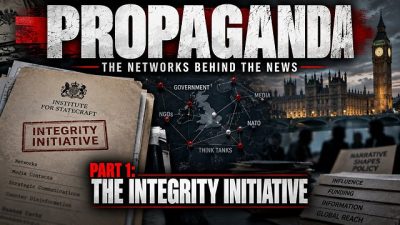
Integrity Initiative: UK-funded network framed dissent as Russian disinformation for years
or go to
Aletho News Archives – Video-Images
From the Archives
Why Saudi Ties to 9/11 Mean U.S. Ties to 9/11
By Kevin Ryan | Dig Within | September 27, 2015
Media interest in Saudi Arabian connections to the crimes of 9/11 has centered on calls for the release of the 28 missing pages from the Joint Congressional Inquiry’s report. However, those calls focus on the question of hijacker financing and omit the most interesting links between the 9/11 attacks and Saudi Arabia—links that implicate powerful people in the United States. Here are twenty examples. … continue
Blog Roll
 Aletho News
- ‘A Big Victory’ – Palestine Chronicle Wins Two-Year Legal Battle
- IAEA inspectors cannot return to Iran amid US threats: Russia
- Senate Rejects Iran War Powers Resolution Passed By House
- ‘We did not attack Pakistan with drones’: Afghan sources
- Iraqi Resistance faction links arms to sovereignty, questions US exit
- Cannon fodder no more… South Korea rejects Trump’s pressure to join his criminal war on Iran
- Neria Leiter Was A Legitimate Military Target
- Integrity Initiative: UK-funded network framed dissent as Russian disinformation for years
- ‘We don’t seek permission to defend our country’: Snippets from President Pezeshkian’s UNGA address
- NATO chief wants Europeans to fight American wars [for Israel]
- If Americans Knew
- In UN Speech, Iran’s President Displays Pictures of Children Killed by US, Brings Attention to Israel’s Nuclear Arsenal
- Israel displaces hundreds of Palestinians amid wave of demolitions in West Bank
- Aid, reconstruction, and Israel’s history of obstruction in Gaza
- Trump administration digs an ever-deeper hole of complicity in genocide – Daily Update
- US-Israel $2.8 Billion Arms Deal, 40,000-Bomb Supply Faces New Gaza Complicity Accusations
- Caught on Tape: AIPAC CEO Boasted of Controlling Trump’s National Security Officials
- Why Hamas Attacked Israel in October 2023 – Israeli professor Ilan Pappé
- They see them, then kill them: Israeli quadcopters track, deliberately target civilians in Gaza
- Winter could turn Gaza’s treacherous, war-damaged buildings into deathtraps
- Majority of Democratic Voters Want to Prosecute Both Biden and Trump Administration Officials Over Gaza
- No Tricks Zone
- New Study: Earth And Venus Surface Warmth Largely Explained By Convection And Lapse Rate, Not CO2 Or Radiation
- 2025 Nature Paper Claiming Worsening Global Drought Gets RETRACTED …Heavily Flawed
- New Study: ‘Global Drought Shows No Detectable Recent Acceleration Under Climate Warming’
- Economic Masterminds: German Socialists Suggest Taxing Productivity Gains Stemming From Using AI
- The South China Sea Has Not Been Cooperating With The Climate Change Narrative
- Energy Crisis: Germany Enters Heating Season With Historically Low Gas Reserve Fill Levels
- New Study: The Antarctic Ice Sheet Gained Mass From 2020-2024 Due To Staggering Snow And Ice Accumulation
- Study: Ocean Heating Rates From Thousands Of Years Ago ‘Dwarf’ Modern Ocean Heating Rates
- Climate Extremists Target, Attack Large-Scale Power Grid Infrastructure In Germany!
- New Study: Antarctic Ice Melt Has Contributed Less Than 1 Centimeter To Sea Level Rise In The Last 30 Years

