Feminists weigh in on draft registration for women
By Claire Schaeffer-Duffy | National catholic Reporter | June 28, 2016
Recent legislative efforts to extend draft registration to young women have raised an old conundrum for some feminists. Does pursuit of gender equality include support for universal conscription?
While not all feminists are anti-militarists, opposition to war and militarism has been a strong current within the women’s movement. Prominent suffragists like Quaker Alice Paul, and Barbara Deming, a feminist activist and thinker of the 1960s and ’70s, were ardent pacifists. Moreover, feminist critique has often regarded the military as a hierarchical, male-dominated institution promoting destructive forms of power.
In late April, the House Armed Services Committee voted for an amendment to the national defense bill that would extend draft registration — already a requirement for men — to women ages 18-26. The amendment was later dropped, but in mid-June, the Senate approved a similar provision in its version of the national defense bill.
Among the amendment’s staunchest defenders was Armed Services Committee member Rep. Jackie Speier (D-Calif.).
“If we want equality in this country, if we want women to be treated precisely like men are treated and that they should not be discriminated against, then we should support a universal conscription,” Speier told the political website The Hill in April.
Not all feminists agree with Speier’s path to equality. Days after the House Armed Services Committee approved the amendment, 24-year-old Julie Mastrine, an activist and media professional, authored an online petition calling on Congress not to force women to register and instead dump the draft entirely.
Mastrine, a self-described feminist libertarian, argues that draft registration violates individual choice.
“I can’t imagine a more tragic loss of liberty than forcing a citizen, whether male or female, to fight in a war with which they may disagree. Equality is a moot point if personal choice and bodily autonomy must first be eliminated to achieve it,” Mastrine said in a statement.
In an online editorial for Playboy, Lucy Steigerwald, a contributing editor to Antiwar.com, acknowledged that excluding women from draft registration was “unfair” and “sexist.”
“But the solution to the decrepit notion that the young of the country are communal property is not to remove the sexism, it’s to remove the draft,” she wrote.
Like Mastrine, Steigerwald supports equal access to the military for women, but opposes conscription. She does not believe, as some have argued, that the return of the draft would make the U.S. more cautious about engaging in conflicts.
“You don’t stop the runaway truck of U.S. foreign policy by throwing a man in front of it, and you definitely don’t stop it by throwing a man and a woman, just to make things equal,” Steigerwald wrote.
The linking of women’s equality to universal conscription dates back to the early 1980s. Draft registration had ended in 1975 with the conclusion of the Vietnam War. In 1980, a nervous President Jimmy Carter, alarmed over the Soviet Union’s invasion of Afghanistan, reinstated registration to demonstrate U.S. war readiness. Carter actually wanted universal draft registration, but Congress limited the mandate to men.
The male-only system was quickly challenged as sex discrimination. In 1981, a group of men brought a case before the Supreme Court that argued being singled out for compulsory registration violated their right to equal protection. A number of women’s groups, including the National Organization for Women (NOW), filed briefs contending that exclusion from the draft violated the constitutional rights of women.
“Compulsory universal military service is central to the concept of citizenship in a democracy,” the NOW brief asserted. It predicted “devastating long-term psychological and political repercussions” would result if women were excluded from “the compulsory involvement in the community’s survival that is perceived as entitling people to lead it and to derive from it the full rights and privileges of citizenship.”
A similar brief filed by 12 other women’s organizations, including the League of Women Voters, argued that exempting women from draft registration echoed “the stereotypic notions about women’s proper place in society that in the past promoted ‘protective’ labor laws and the exclusion of women from juries.”
NOW had previously opposed the draft, and its apparent about-face infuriated its members at the grassroots level, according to Cynthia Enloe, a research professor of political science and women’s studies at Clark University in Worcester, Mass.
Enloe, who has written extensively on women and the military, said she was just starting her research at the time, but as she recalls, “The local chapters were really angry. They were full of women activists who disagreed, who saw the draft as something to oppose.”
So why the switch? Enloe thinks it had more to do with NOW’s then-recent defeat in getting the Equal Rights Amendment passed than it did zeal for military service. The amendment, which pacifist Alice Paul originally penned in 1923, simply states, “Equality under the law shall not be denied or abridged by the United States or by any State on account of sex.” After Congress passed it in 1972, NOW led the unsuccessful fight for its ratification at the state level during the 1970s and early 1980s.
Eleanor Smeal, at the time president of NOW, “had just gone through a terrible defeat,” Enloe noted. “When the next thing comes up, you tend to see it through the lens of what you were defeated by. The people in the Washington office were terribly affected by the anti-ERA battle.”
Speaking in defense of the NOW brief back in 1981, Smeal told The New York Times that wherever she lobbied for the Equal Rights Amendment, male legislators frequently said to her, “When you women fight in a war, then we’ll talk about equal rights.”
That “argument of entitlement,” Smeal said, helped persuade her that exclusion from the draft hurt the interests of women. Ever since ancient Egypt, “the secondary class has not been given the right to serve in the military,” she told the newspaper.
Lory Manning, a retired U.S. Navy captain, echoes that thought today, noting, “Except for taxes, women have had to fight for the right to the assumption of the duties of citizenship, including jury duty.”
A senior researcher at Service Women’s Action Network (SWAN), Manning said she remembers well the anti-war feminism of the Vietnam War era, and agrees with its critique of the military.
“It is hierarchical,” she said. “It is also very powerful. People think that an organization with that kind of power should not be left to men. Having women on the ground as peacekeepers has shown to improve the fate of women on the other side.”
Like many feminists, Enloe thinks it is risky to frame any military issue around just equality. “A lot of feminists were not sure how to articulate their support for gays in the military,” she said. “Those against the ban found themselves having to promote gay men and lesbians as the perfect soldier.”
It’s a dilemma Enloe said her European counterparts do not face.
“While there are many societies which are more militarized than the U.S., militarism has sunk its roots down so deep in U.S. popular culture, it’s made a conundrum of how you carve out a space of equality without embracing military ideals of citizenship,” she said.
“The acuteness of this political, cultural dilemma is much sharper in the U.S. than in Europe,” she said. “European feminists have been surprised at the prevalence of the military’s footprint in our civilian settings. Most soccer games in Europe don’t start with fighter jet flyovers.”
In 1981, the U.S. Supreme Court upheld a male-only system for draft registration, arguing that since women were “excluded from combat service” they were not “similarly situated” as men for the draft or draft registration. In this instance, the court said, Congress had the authority to consider “military need” over “equity.”
With the removal of combat restrictions for women last December, that argument no longer applies. Maria Santelli, at the Washington, D.C.-based Center on Conscience and War, said it is quite likely the courts could soon strike down the current male-only system of draft registration on grounds of discrimination. “Before Congress lets that happen, they might vote for universal conscription,” she said.
Santelli thinks improvement in equity and justice within the military is a good thing, but these improvements are overridden by the “other justice issue, which is our reliance on war as a means for conflict resolution,” she said.
She pointed out that men who oppose draft registration for reasons of conscience face numerous penalties. Under what is commonly known as “the Solomon Amendment,” these penalties include denial of federal student loans, federal job training, and employment with federal executive agencies, and denial of citizenship to immigrants. According to the Center on Conscience and War, there are Solomon-like penalties in 44 states, with some denying state employment, state student loans, a driver’s license, or photo ID to non-registrants.
“These laws penalize men for the rest of their lives,” Santelli said. “Do we want to put women in that same position?”
How soon women who oppose the draft will face the registration dilemma remains to be seen. Meanwhile, the ERA has yet to be ratified.
Russian diplomats harassed by US, not other way around – Moscow on Wash Post article
RT | June 29, 2016
It’s the Russian diplomats who are being pressured, not the other way around, the Foreign Ministry said, blasting a Washington Post article that claimed Russia harasses US diplomatic staff at home and all across Europe.
“The Washington Post has published an article on alleged harassment of US diplomats in Russia and in other countries. But, on the contrary, the pressure is increasing on Russian diplomats,” Maria Zakharova, Russia’s Foreign Ministry spokeswoman, said Tuesday.
According to the spokeswoman, Washington is “constantly coming up with new restrictions against our diplomats, who constantly face provocations from the FBI and the CIA.”
She stressed that “unacceptable measures” are being applied against them, including “psychological pressure in the presence of their families.”
“There even had been cases when such actions were carried out in the presence of pregnant wives of our diplomats,” she added.
“Instead of receiving our signal, identifying the problem and creating conditions to improve our relations, they (the US) flip everything upside down” by releasing the publication, she added.
On Monday, the Washington Post published an article, entitled, “Russia is harassing US diplomats all over Europe.”
The author of the piece claimed that instances of Russian pressure included breaking into the homes of American embassy staff, rearranging furniture there and even killing a family dog.
Zakharova slammed the article by the US paper as a perfect example of “propaganda,” adding that it was “obviously played up.”
“This publication is shallow, this publication does not reflect the real picture, it was prepared hastily, it was prepared by hearsay,” she stressed.
The main expert in the article is the former US ambassador to Moscow Michael McFaul, who Zakharova called “unfit for [his] profession” who now talks about the hardships of working in Moscow after failing on the job.
“McFaul failed [in] his diplomatic mission in Moscow, and possibly it was his efforts that contributed to the worsening of bilateral relations,” she said.
Zakharova said that despite the pressure Moscow is ready to work with Washington to improve relations.
“Our counterparts should make up their mind as to what is it they want in reality: to develop relations, or at least, not to make them worse, or cook [up] more such publications,” she said.
In May, the US Senate Intelligence Committee passed The 2017 Intelligence Authorization Bill, which among other measures, proposes restrictions on travel by Russian diplomats in the US.
The legislation would require the FBI to investigate all requests by US-based Russian diplomats to travel outside his or her official post, in order to ensure the diplomats have properly notified the US government of their travel plans.
The Senate is to vote on the proposal later in summer, with Moscow saying that it will respond with mirror-like measures to restrictions on its diplomatic staff.
“As it worsens relations with Russia, Washington makes the working conditions for its diplomats worse, too,” Zakharova said.
“We do hope that we will achieve constructive relations with the United States. We are prepared for that,” she added.
READ MORE:
Reviving the Cold War? Senate intelligence bill ‘targets Russian spies, diplomats’
Trumping Hillary: The Same Old Pol-Mil Game
Will the 2016 Election Change America’s Militarized Foreign Policy?
By Chuck Spinney | The Blaster | June 27, 2016
Pro-Israel Neocons have said they will jump off the Republican ship and vote for Hillary Clinton, because she will continue business as usual with regard to our militarized foreign policy. Apologists for Donald Trump argue that he will pursue a more restrained and less warlike foreign policy, including a more balanced policy toward Israel.
But recent report by Stuart Winer in the Times of Israel suggests Trump’s bombastic ‘art of the deal,’ at least when applied to pol-mil policy, will turn out to be yet another politician’s distinction without a difference — to wit:
A senior adviser to Donald Trump said Wednesday that Prime Minister Benjamin Netanyahu should wait for the presumptive Republican presidential nominee to win the White House before signing a military aid deal with Washington, because Trump would offer a better deal than the Obama administration.
In an interview with Channel 2 television David Friedman said that a Trump administration would maintain Israel’s military advantage over its neighbors. He said Trump would not reduce defense aid to Israel but “in all likelihood will increase it significantly.”
“The aid package will certainly not go down in all likelihood it will go up in a material amount because Israel must maintain a technological and military superiority within the region,” Freidman said. “I can’t give advice how Israel should bargain and develop its own strategy.”
Friedman’s suggestion that Trump would increase aid to Israel apparently ran contrary to the GOP candidate’s call to make Israel pay back foreign aid. In March, Trump said he believed Israel should pay for defense aid it receives from the US.
Could it be that the choice for President in 2016 will have no effect on America’s militarized foreign policy, and if so, would this be something new and different?
As with most political questions in Versailles on the Potomac, the pathway to answering this question is less one of Ivory-tower policy analysis than a gritty one of following the money — in this case the money flowing through the triangular relations of the Military – Industrial – Congressional Complex. It is a question that goes to the heart of President Eisenhower’s prophetic warning, “In the councils of government, we must guard against the acquisition of unwarranted influence, whether sought or unsought, by the military-industrial complex.”
More on this question later.
The Show Must Go On
A Night at the Theater
By Jonathan Revusky • Unz Review • June 27, 2016
One evening a gentleman decides to go to the theater. There is a play showing that is reputed to be a very funny comedy. It’s hilarious, people are raving about it.
At various points in the middle of the performance, hecklers disrupt the play, shouting disparaging insults at the actors on stage. At first, the actors on stage ignore this and carry on in their roles, but then, at some point, some of them lose patience with this, and respond to the hecklers. Let’s say it begins when an actress on the stage, who is portraying a very prim, proper lady in the play, goes completely out of character and responds to the hecklers with salty language worthy of a sailor. The audience bursts out laughing. Then other actors go out of character as well and there is hilarious repartee between actors on stage and the hecklers in the audience insulting one another.
Truth told, the whole thing is actually very entertaining, but our upstanding gentleman is kind of annoyed. He would very much like to the see the play as it is intended to be seen. But also, the whole thing is rather strange. He wonders: what is going on here? Why are these hecklers allowed to do this? Why aren’t they kicked out of the theater?
Well, this is known to be a very fine theatrical production with some superb actors and he would very much like to see it properly without any interruptions from hecklers. So, at a later date, he goes back to the theater. He buys his ticket, finds his seat…. Amazingly, at the same key moments in the play, the very same hecklers disrupt the performance, just like the first time. And there is the very same repartee between the actors and the hecklers in the audience.
Now, this man is completely perplexed. He cannot understand why the theater continually allows these hecklers to disrupt the performance. He is utterly confused. At this point, the lady sitting in the seat next to him leans over to him, smiles, and whispers: “I love this. It’s my favorite part of the show.”
The man smiles back sheepishly. He is feeling a little bit embarrassed that he was so slow to figure it out. But, of course it now dawns on him what is really going on. By jove, he’s got it!
This “Night at the Theater” story that I have outlined provides some framework for thinking about the pervasive propaganda matrix and we shall return to it. However, first, we need to go over some basics.
Shit happens. Organic versus synthetic events.
When you turn on the television and watch the news, there are, very broadly speaking, two types of news being reported: organic and synthetic events.
The concept of an organic event was perhaps best characterized by Forrest Gump, when he said: “Shit happens.” Indeed it does, a neverending flow of it. Just offhand, on the national and international levels, there is usually some sort of ongoing natural disaster somewhere: an earthquake, a hurricane, floods, forest fires… In these cases we get all the typical news reporting on the devastation and the ongoing humanitarian relief efforts… In the more local news, there are random accidents. In particular, traffic accidents happen continually. A truck collides with a bus and there are a number of fatalities. They dispatch a reporter to the scene who interviews various witnesses…
Such things make up your basic “shit happens” news. We could make the following two observations about organic events:
- It is not unreasonable to assume that the reporting of an organic event is broadly honest.
- The level of attention that an organic event receives is about commensurate with its scale.
I actually worded these points a bit carefully. For example, regarding point 1, I am quite aware that mainstream news reporting is pretty unreliable. They certainly get all kinds of things wrong continually. Still, one’s reasonable baseline assumption is that what they are telling you happened is pretty similar to what really happened. Or, in other words, the things they get wrong tend to be within the range of honest error — that is, in the case of an organic event.
As for point 2 above, just consider the fact that, on a typical day in the United States alone, about a hundred people die in traffic accidents, more or less. As such, unless it is something pretty spectacular or somebody famous is involved, a traffic accident will only be news locally. Moreover, it will only receive media attention for a short period of time. Soon, some other shit happens and then the focus shifts over to that.
Now, obviously, when it comes to understanding the propaganda matrix, it is not the organic events that we are interested in. It’s the other kind, the synthetic event. However, on occasion, it is easier to define things negatively, not by what they are, but rather, by what they are not. With a non-organic, or synthetic event, the above two observations do not apply. It is quite the opposite. Thus:
When it comes to synthetic events, the baseline assumption is that everything they are telling you and showing you is fake, at least in the absence of strong evidence. Moreover, it is utterly naive to assume that the reporting on a synthetic event is honest.
In other words, point 1 above definitely does not apply! Nor does point 2. Very typically, the first strong clue that something is a synthetic event will be that it receives a level of attention that is not at all in proportion to what one would expect. I suspect that this is an analytical tool that has been valid for a good while. For example, consider the break-in at the Watergate Hotel on 6/17/1972. This crime (though more the subsequent cover-up admittedly) is the event that led to the Watergate scandal that caused Richard Nixon to resign the presidency in disgrace. Look at the scale of the crime. Did it not receive an outrageous level of attention when compared to so many other cases of high-level criminality? Hmm…. Now, this actually works both ways. Sometimes an event receives far more attention than one would expect, but other times far less. For example, the perfectly symmetrical implosion of WTC Building 7 never being mentioned in the mainstream media is a perfect example of a key event that receives suspiciously little attention.
Let us now examine a more recent narrative that should elicit warning bells precisely due to how much attention it has received.
Is this shit for real? The case of Pastor Terry Jones
Consider the following video, a news segment from the year 2010.
I suppose most readers will remember this, at least vaguely. It is part of a saga that received an immense amount of attention over a number of years. The central character, one Terry Jones, was purportedly the spiritual leader of some 50 people in Gainesville, Florida — a dozen families more or less. (I suspect that this was a high-ball estimate of his following, since they have every reason to exaggerate this man’s importance. But certainly, he did not have more than 50 followers, most likely fewer. Like, zero maybe?) In any case, Mr. Jones would not figure in a Who’s Who of the Christian religion. He is not the Pope and he ain’t the Archbishop of Canterbury neither. As far as I can tell, the “evangelical” church that he was leading at the time is not a part of, nor is it recognized by, any major Christian denomination.
Nonetheless, as we see in the video, this man gained national and international attention via his threats to burn a Koran. Or Korans in the plural. Yes, the President of the United States was imploring this man not to burn any Korans. Hillary Clinton as well. Apparently, the Pope in Rome also pleaded with him not to do this. (I assume His Holiness did not call collect…)
The whole thing is really quite extraordinary. General David Petraeus later appears in this news segment claiming that this man’s burning of a Koran in Florida will “make his job very difficult” and will “endanger the lives of American servicemen”. It is hard to know even where to begin deconstructing the lunacy of this whole narrative. Just for starters, why does nobody ask the most obvious question about this?
How would the people in Afghanistan even know that this old geezer in Florida is burning any Korans?
Now, I have never been to Aghanistan and have no plans to visit. However, I think it is a very safe bet that the people in Afghanistan do not know about Pastor Terry Jones and his Burn-A-Koran day. I would venture the guess that you could travel the entire length and breadth of that country and ask people if they knew about this and none would. Of course not. This whole synthetic event is entirely constructed for a Western audience! The people in far off Afghanistan would know nothing about it.
Actually, I was intrigued to learn, a few years back, that the majority of people in Afghanistan do not even know about the attacks of 9/11. Consider this report or this one. Apparently, around 92% of the Afghan people have no idea about 9/11! You show them a photograph of the twin towers burning and they have no idea where or when this occurred. And they certainly make no connection between that and the U.S. invasion of their country. I found the whole thing really quite intriguing. What this really goes to show is that the whole purpose of the 9/11 synthetic event was to establish a narrative for a Western audience. The population of Afghanistan does not, by and large, even know the official pretext for the invasion of their country. No, nobody ever bothered to tell them! I have absolutely no idea how many Iraqis know what the official reason for the invasion of their country was. (Remember that? Saddam’s non-existent WMD?) I would not be surprised if it was similar to the Afghan case, where the majority of the people in Iraq do not know what the reasons for the invasion were. Or, more precisely, they may have no idea what reasons were given to the American people to justify the war.
In any case, if fewer than 10% of the Afghans even know about the towers going down on 9/11, then what percentage would know about Terry Jones burning a Koran in Gainesville, Florida? So what on earth is David Petraeus talking about? It’s as if he lives in a mental universe in which the people in Afghanistan all have cable and watch CNN and FOX News. Maybe some underling should inform him. Like so:
“Sir, these are very culturally deprived people we’re talking about, General Petraeus, Sir.”
“How bad is it? Tell me the worst.”
“Sir, this here is the veritable Heart of Darkness, Sir. Sir, most of them have never even seen Kim Kardashian’s ass, Sir.”
“My God! The Horror! The Horror…”
“Sir, yes, Sir.”
Now, to be clear, I do not believe that Petraeus really is such a fool. He knows this whole story is bullshit but is playing along. He pretends to be so concerned that the Florida pastor burning a Koran will put American troops in Afghanistan in extra danger. He understands that he is supposed to go along with this narrative. It is what is expected of him.
The way the story then developed was that Mr. Jones first relented and did not burn any Korans as planned, on 9/11/2010, but then he did burn a Koran (or maybe more than one Koran) on 3/20/2011. As we see, General Petraeus had warned of dire consequences if Pastor Jones went ahead and burned a Koran and it turns out he was right! We are then told in the various mainstream news sources that this led to riots in Afghanistan, in particular in the northern city of Mazar-i-Sharif. There, on 4/1/2011 (is the April 1 date a coincidence?) the New York Times, America’s “newspaper of record” reports:
MAZAR-I-SHARIF, Afghanistan — Stirred up by three angry mullahs who urged them to avenge the burning of a Koran at a Florida church, thousands of protesters on Friday overran the compound of the United Nations in this northern Afghan city, killing at least 12 people, Afghan and United Nations officials said.
The version of events in Wikipedia is:
A riot erupted in Mazar-i-Sharif on 1 April 2011 during the protest over the burning of the Qur’an in the US.[8] Estimates of the number of protesters ranged from “hundreds” to as many as 2,000.[8][9] The protest began near the city’s Blue Mosque shortly after Friday prayer,[9]with protesters chanting “Death to the USA, death to Israel.”[10] During the sermon, which is part of the Friday prayer, worshipers were told by three mullahs to begin protesting in favor of the arrest of Pastor Terry Jones, who led the Qur’an burning.[11]
So we are told that this riot in Mazar-i-Sharif, Afghanistan took place because Terry Jones finally burned a Koran. The Afghans are not rioting because their country has been invaded and occupied by foreign troops but rather, because some utterly insignificant individual on the other side of the world burned a Koran.
The saga does not end here. Over a year later, on 9/12/2012, the Chairman of the U.S. Joint Chiefs of Staff, General Martin Dempsey, called Pastor Terry Jones on the phone and asked him to withdraw his support for a film “whose portrayal of the Prophet Muhammad has sparked violent protests.” Now the focus of the narrative had shifted over to Libya. The Libyans are not angry, apparently, that their country has been “bombed back into the Stone Age” and tens of thousands of their people are dead and their country in a state of anarchy. No, they are angry about a film that “portrays Muhammad unfavorably”. And now, of course, the Koran-burning pastor who caused a deadly riot on the other side of the world the previous year is brought back into the story….
If a tree falls in the forest…
We could have a field day analyzing and ridiculing all of this synthetic narrative. Surely you understand the overall point. This whole Koran-burning saga already stands out as a synthetic news story simply by virtue of how much attention is devoted to this insignificant personage, Terry Jones. Unless you happen to be a very famous person reading these lines, I think it is safe to say that if you or I threatened to burn a Koran, it would not be an international news story, we would not receive phone calls from the President or the Pope. No, we would be ignored. In fact, in that video it is mentioned that various people sent Korans to Jones for him to burn. Think about that. The people who send him Korans to burn know perfectly well that if they themselves burn a Koran, it has no transcendence because nobody is paying any attention. So they send the Korans to him to burn. At least that’s what is claimed, that various people sent him Korans to burn, 200 of them…
The other funny thing about the whole story is that the entire media circus that they create around this individual pretty much obliges him to finally burn a Koran or two. After all, a sword swallower must eventually swallow a sword. He cannot just continually announce that he is going to do it, though he may wait until a sufficient crowd has gathered.
So, just as Evel Knievel must eventually do his announced motorcycle stunt, so the Koran-burning pastor must eventually burn a Koran. This man’s entire protracted “fifteen minutes of fame” is based on him burning the Koran, so he eventually does so. When you think about this whole story a bit, something occurs to you: if they really, really did not want this man to burn a Koran, wouldn’t they just stop devoting all this attention to him? If you did not want Evel Knievel to do his motorcycle stunt, you would just turn off the cameras and not film him and, presumably, he wouldn’t bother. The whole point of the stunt is to attract publicity so if you don’t give him the publicity…
Roger Rabbit Redux
In an earlier essay, I coined the term Roger Rabbit Narrative to refer to these kinds of synthetic news stories that have cartoonish elements. This is an allusion to the movie “Who Framed Roger Rabbit” in which human (i.e. real, organic) actors share the screen with cartoons, i.e. synthetic elements. So, an RRN is not a total fiction or a cartoon. Some of the elements in the story are perfectly real.
So, in this particular RRN, Mr. Jones finally burns a Koran, and 12 days later, there is a riot in northern Afghanistan in which a number of people are killed. Now, I have to assume that the riot in Mazar-i-Sharif, Afghanistan really took place. It was, I suppose, an organic event that happened for whatever local reasons and had no more to do with Pastor Jones burning a Koran than with the price of tea in China. However, news sources that so many people treat as reliable, such as the New York Times or Wikipedia, attribute this event to the Koran burning in Florida. In other words, they incorporate a real, organic event into an overall synthetic narrative. So, you see, not all the events in a synthetic story are fake. Not necessarily. However, the explanation for the event is frequently absurd, laughable. Cartoonish really. This happens because the organic event gets subsumed into the framework of the synthetic narrative. This is bound to have various glitches, which I have called RRA‘s, Roger Rabbit Artifacts.
The whole Terry Jones Koran-burning saga dates back six years and I was significantly less aware at that time. I looked at the whole thing again recently, and one of the first things I wondered was whether this Pastor Terry Jones is even a real person. It occurred to me that he might just be an actor playing the role, especially after it dawned on me that “Terry Jones” was also the name of one of the founding members of the Monty Python comedy troupe. That the Koran-burning pastor would have the same name as the director of The Life of Brian struck me as so exquisitely ironic that, initially, I thought this could not be a coincidence. Surely, I thought, this must be some kind of a little knowing wink from the people who created this narrative. Now, I am not so sure. I tend to think that it is a coincidence but, to be honest, I am hardly certain. (If another Koran-burning pastor shows up and his name “just happens to be” John Cleese or Eric Idle, then….)
Finally, what it comes down to is that, even if Pastor Terry Jones is not a completely fictitious personage played by an actor, he might as well be! I have no doubt that he was, somehow or other, recruited to play a role in a sort of Deep State Roger Rabbit production. The Koran-burning pastor doubtless has some cartoonish aspects, but the people most ludicrously caricatured in the story are surely the Muslims who run amok and kill people because they have heard that some insignificant person on the other side of the world is burning a Koran. It is as if one were to claim that Germans in 1945 were upset, not because their country had been bombed into rubble or that foreign armies were occupying their country, but rather, because somebody in Florida had burnt a copy of Mein Kampf! I don’t think that would fly. This led me to conclude that Muslims have, by now, been caricatured far more than even the Nazis have been. And that really is saying something!
So, of course the dominant narrative motif running through the story is just how batshit crazy Muslims supposedly are. Here it is their murderous reaction to the burning of a Koran. In another set of RRNs, mostly taking place in Europe, it is their reaction to offensive cartoons, culminating in the Charlie Hebdo false flag of 7/1/2015. The basic idea of the Muslims as being so irrational provides a general cover for all sorts of RRAs (Roger Rabbit Artifacts) that are visible. If the behavior of a character in the story is utterly implausible, the explanation is basically: “Waddya expect? We know dem Ay-Rabs are freakin’ crazy, so…” So, for example, in the event in San Bernardino of 12/2/2015, one of the alleged suicide attackers is a young wife with a newborn baby. This narrative is so extremely psychologically implausible that I have speculated that it must have been improvisational in nature. Probably they had planned a different story, but couldn’t use it and this was the best they could come up with under time pressure. In any case, all of these absurd plot lines are rendered plausible in the public’s mind if they can be convinced that Arabs, and Muslims generally, are just completely irrational lunatics. So, one could say that the whole “Dem Ay-Rabs are crazy” meme is sort of a general purpose prefiguration for a whole set of narratives.
All the world is a stage…
My suspicions about Pastor Jones being an actor may seem paranoid to some readers, but then again, once you study more of these synthetic events, you will come to see that such suspicions are actually well founded. You will see that, in many cases, indisputably actors really have been involved. Let us consider the case of Ms. Ginnie Watson, who was, it is claimed, present in the Bataclan Theater in Paris on 11/13/2015 when “Islamist terrorists” came in and murdered 89 people. This young lady is definitely an aspiring actress. Here is her IMDB page. Her acting career has not been terribly distinguished. For example, she had the role of “Bretonne #2″ in a French children’s film based on the popular Astérix comic book character. Consider this pastiche of some of Ms. Watson’s acting career:
Now, I would encourage everybody to watch this video and draw their own conclusions. In my view, it is an extreme understatement to say that Ms. Watson is a poor actress. It goes beyond that. When she was interviewed in the above video, she had supposedly witnessed very many people being brutally murdered only a short time before. I mean to say, it is not that she plays her part poorly; it is more like she does not even understand the role she is supposed to be playing, that of a poor girl who has just witnessed a horrific mass murder and just narrowly escaped herself. She should be completely traumatized, a total nervous wreck. No wonder her acting career never went anywhere.
If this is the first such case you have examined, you might think that Ms. Watson’s performance here is uniquely terrible. That, however, is not the case. These sorts of synthetic events are full of notorious cases of unconvincing crisis acting. In that same event in Paris, there was a girl from Australia, one Emma Parkinson, who supposedly received a bullet or two in the ass, who also gave an amazingly bizarre interview detailing her alleged experience. Just as in the case of Ginnie Watson, being trapped in a concert hall where 89 people were murdered, and herself being shot, did not seem to have much effect on her sunny disposition.
Terrible, unconvincing acting is par for the course. Consider these young people, whose mother was — so they say — gunned down by the racist white boy Dylann Roof about a year ago:
It’s part of the show!
I began this essay by telling a story about a man’s visit to the theater. For the life of him, he cannot figure out what is going on. Why are these “hecklers” allowed to disrupt the show?
In that story, the protagonist is definitely a bit on the slow side. He has to go back to the theater and see the show again to figure out what is going on. Surely most people catch on the first time round. Even so, we can be sure that people will vary quite a bit. Some will figure out that the “hecklers” are part of the show almost instantly, and the rest will take varying amounts of time.
You see, the show I described does break the normal model of how things work. Normally, there is a very clear-cut separation between two groups of people in the theater: the actors who are up there on the stage performing and the spectators who are in the audience watching the performance. Actually, there is a technical term for this in drama critique, the Fourth Wall. In this theater show, when an actor on stage directly responds to a heckler, the “fourth wall” has been breached. To realize fully what is really going on, however, the spectator must realize that this is deliberate, scripted; it’s part of the show! Until one makes that conceptual shift, one cannot really understand what is going on!
And, yes, some people will make that conceptual shift faster than others. Still, it is hard to imagine somebody going back to the theater again and again and simply never figuring it out. Yet, strangely, this is precisely what happens with Deep State theatrical productions. Most people simply never see through the various hoaxes and false narratives they are presented. In the terminology I introduced in an earlier essay, they never have their LPM, their Ludek Pachman moment.
Once you begin to perceive the propaganda matrix and perceive synthetic events and narratives, certain things that were incomprehensible become painfully obvious. For example, are you still wondering why Pastor Terry Jones receives such an inordinate level of attention over his pathetic Koran-burning stunt? Well, broadly speaking, it’s for the same reason that the “hecklers” are never thrown out of the theater in the above story. They are part of the show. If you or I go to that show and start heckling loudly, we likely will be thrown out of the theater, because we’re not part of the show!
Likewise, you or I can burn a stack of Korans and throw in some Talmuds and Bhagavad Gita’s to boot, and, most likely nobody will pay us any attention! We are not part of the show. That’s also why we can march down the street screaming “God hates fags!” at the top of our lungs and we will never receive any of the media attention that the Westboro Baptist Church does.
There are some notorious mosques in Britain that are reputed to be hotbeds of radical Islamism. One such place is the Finsbury Park Mosque in North London. Another is the Al Manaar Mosque in West London. There are in-depth journalistic exposés about this and they always ponder the question of why the imam who is preaching violent Jihad against the West is not shipped back to Saudi Arabia or wherever he came from. Well, surely it’s for the same reason that the “hecklers” aren’t thrown out of the theater. It’s all part of the show!
Exeunt Stage Right
Speaking of being part of the show, it looks like Pastor Terry Jones is no longer part of it. I did a bit of last-minute googling because I was wondering what that guy was up to, whether he was still at the church in Gainesville, whether he was still burning Korans. It turns out that, as of early 2015, Mr. Jones was running a fast-food concession in the food court of a shopping center in Bradenton, which is about 170 miles from the church in Gainesville. Yep, he leveraged his experience burning Korans to become one of the “Fry Guys” making “Gourmet Fries”.

The story was picked up by the Washington Post, which also reported that some Jihadist group had earlier put a 2.2 million dollar reward on Mr. Jones’s head. However, there was no mention of the shopping mall food court having any special security dispositions. (Maybe the reward was in Zimbabwe dollars.) The WP article actually has some fascinating tidbits. For example:
Notoriety has its benefits, he has learned, especially compared with obscurity, which he experienced in late summer when he set fire to hundreds of Korans at a protest rally and was largely ignored.
So, apparently, Jones, as recently as the summer of 2014, did set fire to a bunch of Korans. Hundreds of them. But he was ignored. (Poor fella, reminds me of when I invited everybody over for an orgy but nobody came…. Dontcha just hate that!?) Surprisingly (NOT) the article does not pose the obvious question: how come this person could merely threaten to burn a Koran in 2010 and receive national and international attention, yet four years later, in 2014, he actually does set fire to hundreds of Korans, and nobody bats an eyelid? He is kind of like a one-trick magician whose magic spell ceases to work. He sets fire to the books and thinks that he is going to get more phone calls from the President and the Pope. And then…. nothing happens… Did he just lose his mojo?
They don’t ask this question but I think there is a fairly simple answer: he is no longer part of the show! The Koran-burning schtick was getting old and the man had outlived his usefulness. (The “Muslims are nut-jobs” rhetoric is still going strong, but the “they really hate it when you burn a Koran” sub-plot seems to have given way to the “Muslims really, really hate homos” meme.) Anyway, the WP does not tell us that Pastor Jones is no longer in the show, because that would mean admitting that there is a show! The entire pretense of the mainstream media is that the show does not exist. The show is just a figment of the imagination of silly “conspiracy theorists” like myself.
Another fascinating thing was that the article casually mentions that Terry Jones does not himself eat any of the food items that he sells at “Fry Guys”. No, he himself apparently only eats organic food, does not drink soft drinks, but water and fresh fruit juice, though he does enjoy a glass of nice red wine now and then. This made me immediately wonder: if he does not himself eat the food he is selling at Fry Guys, maybe he also had no particular taste for the Islamophobic nonsense he was “selling” from his church back when he was part of the show. (Hey, I’m selling this shit to make a living, but I don’t eat the shit myself!)
“Show? What show?” The first rule of Fight Club is: You do not talk about Fight Club.
I mentioned above the concept of the Fourth Wall in drama theory, this notion of an invisible wall that separates the actors on stage from the audience. In a conventional, straight-laced dramatic production, the fourth wall always remains intact. Thus, in a John Wayne western, John Wayne never turns to the audience and says sarcastically: “Now, moviegoers, to your great surprise (knowing wink) I’m gonna git on that horse and go chase the bad guys.” Of course not. No matter how cliché-ridden the script is, it is well understood that the actors must not betray any consciousness that the whole thing is pretend. However corny your lines are, you must take your role seriously (or pretend to…) and stay in character — whether you’re the star of the show or have a very small bit part.
The mainstream media coverage of synthetic events follows the same approximate principle. In a live performance, all the performers must stay “in character”. That means that, even if somebody else in the show is screwing up, you still stay in character. For example, I linked above the video of Ms. Ginnie Watson. Ms. Watson is an actress pretending that she just survived a mass shooting. What I declined to mention was that the person interviewing her is also an actor basically; he is an actor pretending to be a journalist. Ginnie is flubbing her lines and giving a very poor performance. The interviewer does not call her out. He simply continues in his allotted role.
You see, anybody who is part of this mainstream media world, or aspires to be part of it, absolutely must maintain the pretense that these synthetic events are real. To admit that the people in the above-linked videos are just actors is essentially tantamount to admitting that these events are synthetic. A real, organic event does not have crisis actors on the scene.
Guarding the Gates
In a previous essay, I coined the term Taboo Induced Tortuous Thinking, or TITT for short. Taboo Induced Tortuous Thinking leads to Taboo Induced Tortuous Theories, i.e. TITTs, which are far-fetched explanations of events that are necessary because the correct explanation is taboo. The biggest overarching taboo in the mainstream media propaganda matrix is that the propaganda matrix even exists. This is basically equivalent, in the terminology of this essay, to claiming that all events reported in the media are organic. Synthetic events do not exist. And that is largely what the whole weaponized “conspiracy theory” construct is about.
I referred to the “blowback theory of terrorism” as a TITT. The overall purpose of this TITT is to maintain the pretense that a series of synthetic events, such as 9/11 or 7/7 in London or the more recent things in Paris and Brussels, are real, organic events. Hey, they must be, since synthetic events, except in the minds of crazed “conspiracy theorists”, do not exist, right? Now, if you want to claim that something does not exist when it does, what you have to do is ignore, suppress, or somehow explain away all the evidence that this phenomenon really does exist. I wrote extensively about this, in the section which goes over a lot of the tactics they use — TMT‘s, TITT Monger Tactics.
The people whom I have called TITT mongers are more typically referred to, in the Truth community, as “controlled opposition” or “intellectual gatekeepers”. The term “gatekeeper” actually contains an interesting metaphor. Now, starting with first principles, somebody who guards a gate is there to keep you from going somewhere, right? In this case, they are very intent on preventing you from, as I put it earlier, escaping the Roger Rabbit Mental World.
Now, any metaphor or analogy is always imperfect. Still, even a very flawed analogy can be useful, because analyzing its flaws can be illuminating in itself. So let’s see…
If you really are in a prison and there is a front gate with one or more armed guards, you know you are in the prison and you know that you cannot leave — like, on account of the pesky little problem that the guards have guns and you don’t…. that kind of thing… In short, unlike the intellectual gatekeeper, these guys will prevent you from leaving the prison by physical force.
But also, the goals of the regular prison gatekeeper and the intellectual gatekeeper differ. Yes, both kinds of “gatekeeper” want to prevent you from leaving the prison. However, the intellectual gatekeeper has an additional goal: he wants you to believe that you are not imprisoned!
Or, in other words, he must, unlike an actual prison guard, maintain the pretense that the prison is not a prison. You know, I think this is more than a slight detail. It’s a very important difference here, where the analogy breaks down.
Finally, I was thinking about a different metaphor. Suppose you book a trip to an all-inclusive resort in some exotic foreign country, a Club Med sort of deal.
It’s a beautiful place with its own private beach, restaurants, bars, and all sorts of sports and recreational activities. Nonetheless, after a few days there, you are getting pretty bored. It’s starting to feel like a gilded cage. You think you will go out and experience the real country a bit. So you think you are going to go outside the resort complex and explore a bit. When you are about to go out the front gate, somebody engages you in conversation. They ask you what you want, what you need… It turns out that the whole point of the conversation is to tell you that you have everything you could conceivably want within the resort complex and have no reason to wander outside the gate. The person is also likely to tell you that there is nothing of any interest to see outside the resort anyway. Also, the world outside the resort is dangerous and crime-ridden. You suspect that he is exaggerating quite a bit, though you don’t know absolutely for sure.
It strikes me that this is much more like the intellectual gatekeeper than the prison guard. For starters, though they want you to stay in the complex, you actually are free to leave the place whenever you want. They have no legal means to stop you. There are really basically two ways they can get you to stay:
- They convince you that you have everything you need within the complex and there is no conceivable reason to leave.
- They convince you that something terrible will happen to you if you do leave. Only a silly, foolhardy person would ever want to walk outside the gate. In that vein, they work on you psychologically, insinuating that your interest in exploring the world outside the resort means there is something wrong with you.
As regards point 1, the intellectual gatekeepers must try to convince you that all the intellectual inquiry, debate, and critique that you need, or that is needed, is within the gates that they are “guarding”. Outside of that is just “crazy conspiracy theories”. And, yes, there is what seems to be an anti-Establishment discourse. Some of these gatekeepers mount a fierce critique of U.S. foreign policy, for example. However, what you should notice, eventually, is that the critique has very well defined limits. For example, you can question the entire “War on Terror” narrative, but you cannot question the synthetic events that make up the narrative! In fact, it is presumed that synthetic events do not exist. Things like 9/11 and 7/7 are organic events, and thus, the reporting on the events themselves is assumed to be broadly honest. This is ultimately quite self-defeating: how can you really oppose these synthetic narratives while assuming that their version of all these synthetic events is truthful?!
As for point 2 above, there is an acronym (not of my invention!) for this. FUD. Fear, Uncertainty, Doubt… You know, it’s a kind of emotional manipulation, where they try to create a sort of mental fog. For example, if you conclude that Ms. Ginnie Watson (speaking of TITTs…) is a false witness, it must be because you are a terrible, unfeeling person. This kind of thing. Well, the hell with that. Are you really going to let a bunch of neocon warmongers tell you that you are an unfeeling person?
Anyway, as I said, all metaphors are imperfect. I prefer this one, the Club Med gilded cage, because, unlike an actual prison, it is perfectly clear that you can walk out whenever you want to. So I say to you: just do it. Walk out the gate. There is a world out there to explore.
Oh, and I might add, though it is entirely optional… if you run into any “gatekeepers” on your way out, tell them to go f*** themselves!
Fan mail (as well as hate mail) can be directed to revusky at gmail.
Europeans Contest US Anti-Russian Hype
By Joe Lauria | Consortium News | June 27, 2016
A significant crack has been unexpectedly opened in the wall of Europe’s disciplined obedience to the United States. I’m not only referring to the possible long-term consequences for U.S.-European relations in the wake of Britain’s decision to leave the European Union, but the unlikely blow against Washington’s information war on Moscow delivered by Germany’s foreign minister, Frank-Walter Steinmeier, who a week ago shockingly accused the North Atlantic Treaty Organization of “war-mongering” against Russia.
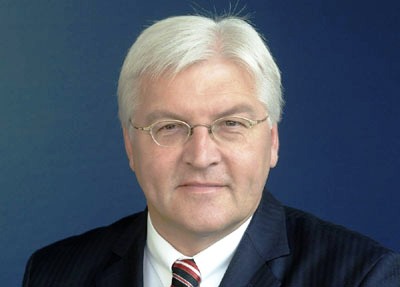
German FM Frank-Walter Steinmeier
Since the Bush administration’s twisting of events in the 2008 Russia-Georgia war, which the E.U. blamed on Georgia, Western populations have been subjected to the steady message that Russia is a “threat” to the West and is guilty of “aggression.” This reached a peak with the false narrative of events in Ukraine, in which blatant evidence of the West’s complicity in a violent coups d’état was omitted from corporate media accounts, while Russia’s assistance to eastern Ukrainians resisting the coup has been framed as a Russian “invasion.”
The disinformation campaign has reached the depths of popular culture, including the EuroVision song contest and sports doping scandals, to ensure widespread popular support for U.S. hostile intentions against Russia.
The Russian “aggression” narrative, based largely on lies of omission, has prepared the way for the U.S. to install a missile-shield in Romania with offensive capabilities and to stage significant NATO war games with 31,000 troops on Russia’s borders. For the first time in 75 years, German troops retraced the steps of the Nazi invasion of the Soviet Union.
U.S. Designs on Russia
The U.S. is eyeing a post-Putin Russia in which a Wall Street-friendly leader like Boris Yeltsin can be restored to reopen the country to Western exploitation. But Vladimir Putin is no Yeltsin and has proven a tough nut for the U.S. to crack. Washington’s modus operandi is to continually provoke and blame an opponent until it stands up for itself, as Putin’s Russia has done, then accuse it of “aggression” and attack in “self-defense.”
In this way, Washington builds popular support for its own version of events and resistance to the other side of the story. Unfortunately it is not a new trick in the U.S. playbook.
“The statesmen will invent cheap lies, putting the blame upon the nation that is attacked, and every man will be glad of those conscience-soothing falsities, and will diligently study them, and refuse to examine any refutations of them; and thus he will by and by convince himself the war is just, and will thank God for the better sleep he enjoys after this process of grotesque self-deception,” wrote Mark Twain.
So suddenly, after many years of an air-tight, anti-Russia campaign believed unquestioningly by hundreds of millions of Westerners, comes Steinmeier last week blurting out the most significant truth about Russia uttered by a Western official perhaps in decades.
“What we shouldn’t do now is inflame the situation further through saber-rattling and warmongering,” Steinmeier stunningly told Bild am Sontag newspaper. “Whoever believes that a symbolic tank parade on the alliance’s eastern border will bring security is mistaken.”
Instead Steinmeier called for dialogue with Moscow. “We are well-advised to not create pretexts to renew an old confrontation,” he said, saying it would be “fatal to search only for military solutions and a policy of deterrence.”
In keeping with the U.S. propaganda strategy, the U.S. corporate media virtually ignored the remarks, which should have been front-page news. The New York Times did not report Steinmeier’s statement, but two days later ran a Reuter’s story only online leading with the U.S. military’s rejection of his remarks.
NATO General: Russia is No Threat
Just a day after Steinmeier was quoted in Bild, General Petr Pavel, chairman of NATO’s military committee, dropped another bombshell. Pavel told a Brussels press conference flat out that Russia was not at a threat to the West.
“It is not the aim of NATO to create a military barrier against broad-scale Russian aggression, because such aggression is not on the agenda and no intelligence assessment suggests such a thing,” he said.
What? What happened to Russian “aggression” and the Russian “threat?” What is the meaning then of the fear of Russia pounded every day into the heads of Western citizens? Is it all a lie? Two extraordinary on-the-record admissions by two men, Steinmeier, the foreign minister of Europe’s most powerful nation, and an active NATO general in charge of the military committee, both revealing that what Western officials repeat every day is indeed a lie, a lie that may be acknowledged in private but would never before be mentioned in public.
Two years ago I was in a background briefing with a senior European ambassador at his country’s U.N. mission in New York and could hardly believe my ears when he said talk about Russia’s threat to Eastern Europe was “all hype” designed to give NATO “a reason to exist.” Yet this same ambassador in public Security Council meetings would viciously attack Russia.
But the hype is about more than just saving NATO. The fear campaign feeds the American and European military industries and most importantly puts pressure on the Russian government, which the U.S. wants overthrown.
Were these remarks made out of the exasperation of knowing all along that the Russian threat is hype? Were they made out of genuine concern that things could get out of hand under reckless and delusional leaders in Washington leading to a hot war with Russia?
Neither man has been disciplined for speaking out. Does this signal a change in official German thinking? Will German businessmen who deal with Russia and have opposed sanctions against Moscow over Ukraine, which were forced on Germany by the U.S., be listened to?
Were Steinmeier’s remarks a one-off act of rebellion, or is Germany indeed considering defying Washington on sanctions and regime change in Moscow? Is the German government finally going to act in Germany’s own interests? Such a move would spark a European defiance of the United States not seen since the days when Charles de Gaulle pulled France out of NATO in 1966 to preserve French independence.
The last time European governments broke with Washington on a major issue was the 2003 U.S.-led invasion of Iraq. Then France and Germany joined Russia on the U.N. Security Council in blocking the war’s authorization (although Britain supported it). But France and Germany then voted for a resolution several months later that essentially condoned the invasion.
It’s Up to the European Public
One has to ask whether a conditioned German public is ready to see through the lies about Russia. Last November, I flew from St. Petersburg to Berlin and discussed this very question with a number of well-educated Germans.
I had visited Russia for the first time since 1995, 20 years before to the month. Those were the days of the Yeltsin-Jeffery Sachs Russia, of the unbridled neoliberal capitalism of the Wall Street-oligarch alliance that plundered the country leaving millions of Russians destitute. Outside train stations I saw homeless encampments replete with campfires. Policemen were stopping motorists for bribes. I ran from two men intent on robbing me until I lost them in a Metro station. That’s the Russia the neocons in Washington and the knaves and buccaneers on Wall Street want to see again.
The Russia I saw in St. Petersburg and Moscow, 20 years later, was orderly and prosperous, as modern as any European city. It is a testament to Russia’s resistance to American attempts to restore its political and financial control. Russia is a capitalist country. But on its own terms. It is fully aware of American machinations to undermine it.
In Berlin I met several Germans, educated, liberal and completely aware, unlike most Americans, of how the United Sates has abused its post-World War II power. And yet when I asked them all why there are still U.S. military bases in Germany 70 years after the war and 25 years after the Cold War ended, and who the Americans were protecting them from, the universal answer was: Russia.
History shows European fears of Russia to be completely overblown. Germany and other Western powers have invaded Russia three times in the last two centuries: France in 1812, U.S., Britain and France in the 1918 Russian Civil War, and Germany again in 1941. Except for Imperial Russia’s incursion into East Prussia after war was declared on it in 1914, the reverse has never been true.
In his memoirs Harry Truman admitted that false fear of Russia was the “tragedy and shame of our time” during the Cold War that he had much to do with in part to revive the U.S. post-war economy with military spending. George Kennan, the State Department official who advised a non-military containment of the Soviet Union, conceded as early as 1947 that Soviet moves in Eastern Europe were defensive and constituted no threat. In the 1990s, Kennan also decried NATO’s expansion towards Russia’s borders.
With its vast natural resources, Russia has been the big prize for the West for centuries, and is still today in neocon-driven Washington. But Germany, especially, has benefited from trade with Russia and has no need to join the U.S. imperial project.
The British voters’ decision, days after Steinmeier’s extraordinary remark, could herald significant change in Europe, which may be approaching an historical junction in its relationship with the United States. Growing anti-E.U. sentiment has spread across the continent, including calls for similar referenda in several countries.
British voters evidently saw through the hype about the Russian “threat,” as a majority did not buy British Prime Minister David Cameron’s scare tactic ahead of the vote that Brexit would make it harder to “combat Russian aggression.”
Britain has been called Washington’s Trojan horse in the E.U. The thinking is that without Britain, the E.U. would be freer to chart its own course. But as Alexander Mercouris explained here, Obama bypasses London to call Merkel directly with his demands. Still, removing Britain’s voice from the E.U., though more crucially not from NATO, opens space for more independent voices in Europe to emerge.
“I worry that we will have less clout on our own,” former British Ambassador to the United States Peter Westmacott told The New York Times. “In the future, we won’t have as much influence on Europe’s response to Putin’s transgressions, Iran’s nuclear ambitions, or the E.U.’s foreign and security policy. … And we will be less able to ensure it is U.S.-friendly.”
But that could be a good thing. If German leaders conclude the United States is pushing Europe into a disastrous war with Russia, could we see a Charles de Gaulle moment in Berlin? Merkel doesn’t seem to have it in her. Three days after Steinmeier’s remarks, she told a news conference she favored increased German spending for NATO to counter Russian “threats.”
Instead it will require a revolt by an awakened citizenry against the E.U. and elected European governments that refuse to stand up to Washington, mostly because it benefits their own class interests, to the detriment of the majority.
The Future of the EU
European social democracy had been probably the best social and political system ever devised on earth, maybe the best that is humanly possible. Europe could have been a model for the world as a neutral power committed to social justice. As late as 1988, Jacques Delors, then president of the European Commission, promised the British Trades Union Congress that the E.U. would be a “social market.”
Instead the E.U. allowed itself to be sold out to unelected and unaccountable neoliberal technocrats now in charge in Brussels. European voters, perhaps not fully understanding the consequences, elected neoliberal national governments slavishly taking Washington’s foreign policy orders. But Brexit shows those voters are getting educated. Unity is a great ideal but E.U. leaders have refused to accept that it has to benefit all Europeans.
The E.U.’s Lisbon Treaty is the only constitution in the world that has neoliberal policies written into it. If it won’t reform — and the arrogance of the E.U.’s leaders tells us it won’t — it will be up to the people of Europe to diminish or dismantle the E.U. through additional referenda. That would give liberated European nations the chance to elect anti-neoliberal national governments, accountable to the voters, which can also chart foreign policies independent of Washington.
The danger is that the right-wing sentiment that has driven a large part of the anti-Establishment movements in Europe (and the U.S.) may elect governments that grow even closer to Washington and impose even harsher neoliberal policies.
That is a risk that may need to be taken in the hope that the anti-Establishment left and right can coalesce around shared interests to put an end to the elitist European project.
Joe Lauria is a veteran foreign-affairs journalist based at the U.N. since 1990. He has written for the Boston Globe, the London Daily Telegraph, the Johannesburg Star, the Montreal Gazette, the Wall Street Journal and other newspapers. He can be reached atjoelauria@gmail.com and followed on Twitter at @unjoe.
US destroyer gets dangerously close to Russian patrol boat in Mediterranean
RT | June 28, 2016
The US guided-missile destroyer Gravely breached international navigation safety rules by coming within dangerous proximity of the Yaroslav Mudry, a Russian frigate, in the eastern Mediterranean, the Russian Defense Ministry has said.
The USS Gravely approached the Yaroslav Mudry, a Russian frigate, on June 17, passing across her course at a “dangerous” distance of 180 meters (550ft), the Defense Ministry said in a statement on Tuesday.
The encounter occurred in international waters. The Yaroslav Mudry did not deviate from her course and refrained from engaging in dangerous maneuvering with the US warship, the ministry added.
According to the statement, the warship’s captain and crew violated the International Regulations for Preventing Collisions at Sea (COLREGS), which govern the conduct of two or more vessels when they meet at sea in order to prevent dangerous situations.
“The US sailors, in particular, neglected Rule 13, which stipulates that an overtaking vessel must keep out of the way of the vessel being overtaken,” the Defense Ministry said. It added that the USS Gravely had also violated Rule 15, which says that a vessel that has another vessel on the starboard side must yield and avoid crossing ahead of her.
The ministry also said the Pentagon should take note of such incidents rather than accuse the Russian Air Force and Navy of unprofessional conduct. “US sailors allow themselves to neglect key foundations of navigation safety without thinking of the consequences that dangerous maneuvering in a heavily trafficked maritime area might involve.”
The USS Gravely is an Arleigh Burke-class guided missile destroyer capable of carrying an Aegis missile defense system. She was commissioned in 2010 and sent to her first overseas deployment in the eastern Mediterranean three years later.
Yaroslav Mudry, a Russian-made Neustrashimy-class frigate, has seen service with the Russian Navy’s Baltic Fleet. She was spotted near Malta Earlier in June, reportedly heading to the eastern part of the Mediterranean to join Russia’s maritime task force off Syrian shores.
US to deploy Israeli missile system on Russian borders: General
Press TV – June 28, 2016
The US military has tested an Israeli short-range missile for possible use in its European network of missile systems to deter Russia, says a US Army general.
Major General Glenn Bramhall of the US Army’s Air and Missile Defense Command made the comments on Monday, as he visited the occupied Palestinian territories.
Bramhall said his units needed a reliable system to counter less powerful missile threats as a third tier beside the Army’s array of midrange Patriot and THAAD missile systems.
“Patriot and THAAD are great systems that do what they were designed to do. But I don’t think we would want to waste a Patriot or a THAAD missile on something that can be affected by something that’s lower cost and is actually designed for that job itself,” the general told Reuters.
For that purpose, he said the US military has test-launched a variant of the Israeli “Tamir” rocket which is incorporated to the Tel Aviv regime’s so-called Iron Dome missile system.
Jointly manufactured by American and Israeli firms, each Tamir battery, consisting of a radar unit, missile control unit, and several launchers, is worth $50 million, with each missile costing about $100,000.
“I think we are looking at something that is similar to Iron Dome. We have looked at the Tamir as a possible missile,” Bramhall said. He was due to inspect an Iron Dome unit on Tuesday.
Russian deterrence
Elsewhere in his remarks, the American general noted that the Israeli missile system is being considered mainly as a deterrent against what he called Russia’s military buildup in Europe.
“With all that is happening in Europe, especially the fact that Russia has really awakened itself and has really decided to rebuild its military and is really posing a threat, we are looking at how we can do the multi-tiered defense,” Bramhall said.
Military tensions between Russia and the US further heightened in May, when American and NATO officials activated a land-based missile system in Romania, despite Russia’s warning against US-led arms deployments near its borders.
The missiles’ activation marked the penultimate step in the completion of a missile shield, which Washington proposed nearly a decade ago.
Russian President Vladimir Putin strongly criticized the system’s deployment, vowing to neutralize any threats against his country’s security.
Featured Video
Piers Corbyn on religion of climate change
or go to
Aletho News Archives – Video-Images
New Documentary
“Inside Gaza” wins best documentary at Montreal’s Cinemania film festival
Palestine Information Center – November 16, 2026
MONTREAL – The documentary “Inside Gaza,” which chronicles the experiences of Palestinian journalists working with Agence France-Presse (AFP) while covering the Israeli war on the Gaza Strip, won the Best Documentary Award at the 32nd Cinemania International Francophone Film Festival held in Montreal, Canada.
Directed by Helene Lam Trong, the 72-minute film follows the daily lives of four AFP journalists who bear witness to the difficulties of reporting in a war-torn territory largely closed off to international media.
The film is compiled from material produced by the team on the ground, as well as from interviews conducted after they left.
The film also won the People’s Choice Award at the festival on Saturday. … continue
Blog Roll
 Aletho News
- “Inside Gaza” wins best documentary at Montreal’s Cinemania film festival
- Activists block German munitions plant over arms exports to ‘Israel’
- The Nasser Hospital attack and Israel’s relentless lies
- Could it be satan? No, Huckabee, just the Americans you work for
- AIPAC and more: Network of pro-Israel influence in US Congress
- Putin aide reveals Moscow’s stance on Europe at peace talks
- Imran Khan warns Pakistani judges he may die in prison
- IOF used Amazon facial recognition to track millions of Palestinians
- More EU Citizens Face Sanctions For Criticizing The Ukraine Proxy War
- In Mexico, the CIA Is Playing a Dangerous Game
- If Americans Knew
- An error has occurred; the feed is probably down. Try again later.
- No Tricks Zone
- Argentina’s Perito Moreno Glacier Joins Antarctica and Arctic In Defying Doomsday Melt Claims
- New Study: Barents Sea Temperatures Were Warmer And Sea Ice Less Extensive In The 1700s Than Today
- German Authorities Start Initiative To Evaluate Public Register For Climate “Disinformation” Spreaders!
- Zonal Asymmetry of Temperature Change in the Antarctic Circumpolar Current
- New Study: The Net Fossil Fuel Contribution To Rising Atmospheric CO2 Has Been Zero For 500 Years
- Germany’s Green Energy Transition Becoming Increasingly Expensive…Another 6 Trillion Euros!
- Sudden Stratospheric Warming, Powerful El Niño Combination May Lead To Extreme Europe Cold, Energy Crisis!
- Two New Studies Find Thwaites Glacier Melt Cannot Be Driven By Human Activity Or A Warming Ocean
- E-Cars Reduce CO2 Emissions By Only 41% Compared To Internal Combustion Engine Vehicles
- Predictions Made By Renowned Climate Professor Over Past Decades Have Been Proven To Be Poor

