Occurrence of Convulsions and Death After DTP Childhood Vaccination
Data Published Over 20 Years Ago Signaled Concern
By Peter A. McCullough, MD, MPH | Courageous Discourse | May 27, 2023
When the CDC ACIP Panel added the unsafe, ineffective, mRNA COVID-19 vaccines to the routine pediatric childhood schedule without full FDA licensure and with no assurances on long-term safety, the entire schedule was called into question from the perspectives of clinical indication, medical necessity, safety, and efficacy. Is it possible since the release of older vaccines that the medical community and CDC ACIP panel ignored solid data and safety concerns with established vaccines? I was participating in the Novel Coronavirus Southwestern Intergovernmental Committee deliberations in the Arizona Senate building, when a paper published over 20 years ago was presented on the diphtheria, tetanus, and pertussis vaccines. The results were astonishing.
Geier and Geier published a massive study and one of the first of its kind at the time using the CDC Vaccine Adverse Events Reporting System. The hypothesis was that febrile convulsions were more likely to occur with combined vaccine products that in some cases it would lead to death. Here is what they did: “The incidence rates calculated in this study are based on the estimates by the CDC of the number of doses administered during the study period: 121,954,137 doses of whole-cell DTP; 54,611,651 doses of acellular DTP (DTaP); and 9,335,142 doses of DT were administered. The background rate of development of convulsions by children is based on the estimates of the 1991 report by the Institute of Medicine of 0.2 per million children per day.”
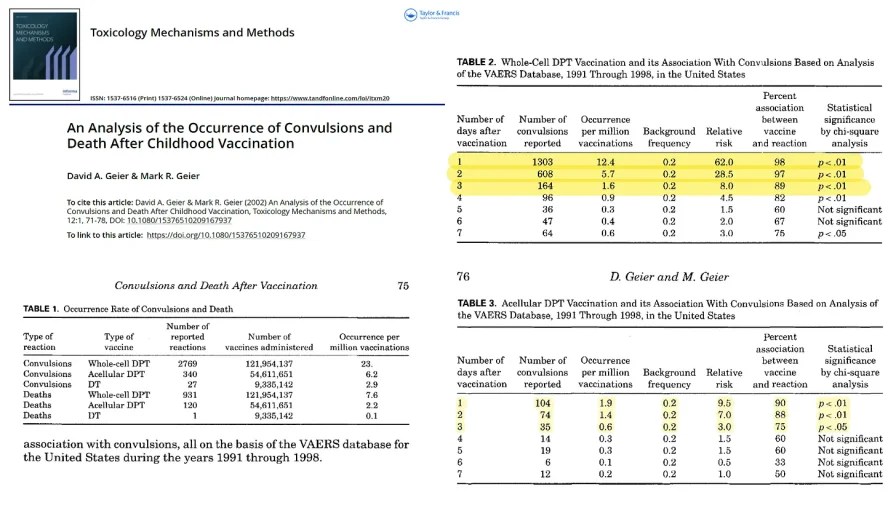
Geier DA, Geier MR. An analysis of the occurrence of convulsions and death after childhood vaccination. Toxicol Mech Methods. 2002;12(1):71-8. doi: 10.1080/15376510209167937. PMID: 20597817.
They found more cases (occurrence/million) of febrile seizures and death after whole-cell DTP, DTaP, DT alone, in a descending, nonlinear graded fashion, and the risks were in a tight temporal relationship. This is concerning because of the associations between post-vaccine febrile seizures and childhood/adult epilepsy requiring medications and with the development of neuropsychiatric conditions including autism.
In summary, no vaccine is perfectly safe. Combining multiple products into single shots increases the reactogenicity and the risk of a catastrophic outcome. As parents and doctors begin to make more discerning choices they may consider going to less complex products, spreading them out, and giving them at later ages.
Alternatively, some parents and doctors may choose for a child to “go natural” or completely unvaccinated, which has the best overall outcomes in contemporary studies at this time. Diphtheria and pertussis are easily treated with antibiotics, so prompt recognition and treatment if such a rare infection occurs is always an option for parents. Tetanus is avoided with good wound care and antibiotics for deep tissue lacerations and puncture wounds.
THE DURHAM REPORT, THE SPYGATE AND THE INEXTRICABLE TIE WITH THE ITALIAN DEEP STATE
By Cesare Sacchetti | The Eye Of The Needle | June 2, 2023
Fraud and treason. These are the first two words that come up to our mind when we read the Durham report.
In the report written by the special prosecutor appointed in 2019 by the then AG William Barr is narrated the plot to overthrow the Trump presidency.
When President Trump claims that this was the most subversive plot in the history of America, he’s certainly right.
An institution like the FBI, which was supposed to guard the regularity of the election, was the one who instead conspired to frame one of the candidates.
After the publication of the Durham report, the image of the FBI is definitely tainted.
And the most outrageous thing that shows how the FBI is a politicized institution is the fact that the latter acted on the orders of Hillary Clinton.
At page 98 of the report, we find the beginning of this conspiracy against Donald Trump.
Everything dates back to April 2016 when a legal firm that was working for the Clinton campaign was assigned a specific task.
Find, or better cook up, dirt to discredit Donald Trump. The legal firm hired Perkins Coie, a Washington based investigative agency.
Perkins Coie was tasked to find compromising information about Donald Trump in order to show that the Republican candidate was a sort of “Putin’s agent”.
This is the birth of the infamous Steele’s dossier named after his creator, Christopher Steele. Christopher Steele was a former agent of the British secret services, which apparently did not want to do anything with him.
Steel wrote a bogus dossier where he claims that Trump had intercourse in a Moscow hotel with Russian prostitutes whom were asked also to pee on the bed where Obama had supposedly slept years before.
This is the kind of outlandish garbage that was put into the dossier and this shows us, once again, the stunning proportions of this farce.
However, this “material” was the basis that allowed the FBI to launch the infamous Crossfire Hurricane probe.
Crossfire Hurricane is the beginning of the investigation where Trump was suspected of “Russian collusion”.
After the probe started, the FBI illegally wiretapped Carter Page, Trump’s former foreign consultant, and Paul Manafort, former director of Trump’s campaign.
And the Special Prosecutor is very clear in pointing out how their surveillance would have not been authorized without the Steele report.
The FBI and the intelligence community failed to do the proper due diligence of this information and the report, at page 96 of his report, points out this as well.
Durham writes that “neither U.S. law enforcement nor the Intelligence Community appears to have possessed any actual evidence of collusion in their holdings at the commencement of the Crossfire Hurricane investigation.”
Evidence against Trump could not be founded because it was simply not there. And the institutions that were supposed to check Steele’s claims basically took his allegations at face value.
However, Crossfire Hurricane was launched also through the involvement of a foreign actor, which is Italy in this case.
In May 2016, George Papadopoulos, a former Trump consultant made some incautious revelations to Alexander Downer, an Australian diplomat close to the Clintons.
Papadopoulos said to Downer that he had received some compromising information about Hillary Clinton from Joseph Mifsud when he had met him in Italy two months before.
Joseph Mifsud is an enigmatic character. He is a Maltese professor at the Link Campus University in Rome, which is a university known to be quite close to the Anglosphere environment.
Actually, Papadopoulos took the bait of Mifsud who is close to the American Democratic party as well.
The Maltese professor has disappeared ever since. Some sources claim that the Italian secret service are hiding him because of his crucial role in the conspiracy against Trump.
However, we will come back later on the role played by the Italian deep state.
Now we must go back to Crossfire Hurricane.
Obama green lighted Spygate
Once the investigation against Trump was launched, President Obama was immediately informed about it.
In the summer of 2016 the word was spread in the intelligence community about the “Clinton Intelligence plan”.
Obama was briefed by then CIA director, Joseph Brennan, who said to the President how the Clinton campaign was working to frame Trump by falsely associating him with the Russian government.
Obama did not stop the plot nor he tried to halt the illegal FBI investigation. On the contrary, he gave a green light to it.
The conspiracy against Donald Trump had the blessing of Barack Obama who chose to help Hillary Clinton in her plan.
Some months later after this summit, in October, former Italian PM, Matteo Renzi, paid a visit to Obama in the White House.
In that period, Renzi was busy in supporting his failed Yes referendum campaign to reform the Italian constitution and he was also seeking endorsements from international relevant figures, like Obama.
Obama backed Renzi’s constitutional reform with a public statement that it clearly looked a meddling into Italy’s political affairs.
However, according to Papadopoulos, when Obama hosted Renzi at the White House asked him to play a part in the conspiracy against Donald Trump.
And here we have to meet new characters, who are the Occhioneros siblings, Giulio and Francesca Maria.
In that period, the Occhioneros were accused of illegal espionage against Italian institutional figures. The probe launched by the DA of Rome is called “EyePyramid” and it floods the pages of the Italian media.
The two were arrested and they later started denouncing a plot against them.
Giulio Occhionero is a nuclear engineer with advanced IT skills. He wrote to the then US Ambassador, Lewis Eisenberg, and to the US Congress.
Mr. Occhionero in his letters reveals the plot of the Italian authorities against him. According to him, his servers were hacked by the Italian postal police along with their respective IT division, the CNPAIC.
The goal of this operation was to plant some of Clinton’s email on the servers of his firm in the United States and then trying to associate these emails to Trump because of Occhionero’s relations with the Republican party.
So Occhionero in this story played the role of the classical patsy, chosen to frame someone else.
If his version is correct, the plot against Trump proceeded on two parallel ways: on the one hand, there was the American side of the FBI that was illegally spying on Trump campaign; on the other, there were the Italian authorities that were acting jointly with the US institutions to associate Trump with the Russian government.
In the first months of the conspiracy, we find tangible trace of this collaboration between the US and Italian authorities.
In April 2016, Kieran Ramsey, former legal attaché of the US embassy, wrote a letter to Nunzia Ciardi, director of the Italian postal police.

Ramsey’s letter to the Italian postal police
Ciardi is an interesting character because her name surfaced in the Italian mainstream media in 2021 when she was interviewed about the surveillance of the “no vax” activists.
It is still not clear to this day what was the extent of this surveillance and who authorized it considering the fact that the “no vax” activists were not committing any crime.
However, Ramsey wrote to Ciardi and he thanked her for the collaboration of her office in identifying the location of Occhionero’s emails.
It was April and Occhionero was still not investigated by the DA of Rome. Nevertheless, his name was in an official letter signed by the legal attaché of the American embassy and addressed to the Italian authorities.
The Italian engineer thinks that the kind of cybernetic attack that was enforced against his servers could not be operated without an ISP, Internet Service Provider, TIM, in this case.
And only a government could force to participate an ISP in this kind of hacking operation.
This also explains the visit paid by William Barr in Rome. Barr came to Italy to investigate Italy’s role in the Spygate case.
And here we can see once again the deep tie between the American and the Italian deep state. A “special relationship” that dates back to 1945 when after the loss of WW2, Italy has been living in a condition of limited sovereignity.
Italy has not been enjoying an autonomous foreign policy like the other countries who joined NATO. Italy’s foreign policy was mostly dictated by Washington and when Rome did not want to comply was threatened and harassed like what happened to former Italy’s PM, Aldo Moro, who was warned by Henry Kissinger to halt his policy.
Therefore, the Italian deep state finds itself in a condition of subordination to Washington. US governments used Italy as a strategic platform to keep up the old unipolar order of the past century.
This probably explains why Washington chose Italy to carry out its subversive plans against Trump. The Italian deep state is a sort of rogue agent, or just muscle for the US side to use in these kinds of “tricky” situations.
This also explains why Italy, once again, played a fundamental role in another subversive plot against Trump whose name is “Italygate”, which we exposed in this blog in December 2020.
After all, the Italian establishment can rule Italy only with the protection of the Washington guarantor and it must execute the orders of the latter.
When Trump stepped into the political arena, both sides saw a lethal treat. Trump had no interest in pursuing that relationship with the Italian establishment.
His mission was to free America from the rule of the Washington lobbies, which had been controlling Italy for decades.
Trump ended this axis. He severed the umbilical cord that tied the Italian deep state to the American one.
This is why the Durham report closed a cycle. A cycle where the walls were closed in on those who committed treason against the President of the United States.
Although the report does not explicitly mention Italy’s role, Trump has probably the proof about the involvement of everyone in this coup d’état. And this not only haunts the nights of the several people in Washington.
It haunts the nights of several people in Rome too.
Western weapons used in Ukrainian raid inside Russia – WaPo
Moscow earlier published photos of destroyed Western hardware on Russia’s territory as Washington struggled to explain them

RT | June 3, 2023
Military equipment and small arms provided by several NATO nations, including the US, ended up in the hands of militants who launched a cross-border raid into Russia’s Belgorod region in May, the Washington Post reported on Saturday, citing sources linked to US intelligence.
At least four tactical vehicles initially supplied to the Ukrainian military by the US and Poland were employed in the May raid, raising concerns about Kiev’s commitment to fulfilling the demands of its Western supporters, the sources told WaPo.
The US and its Western allies have consistently expressed opposition to the use of Western arms by Ukraine in attacks on Russian territory. They also urged Kiev to “carefully track the billions of dollars’ worth of weapons that have flowed into the country,” WaPo reported.
The attack in question occurred in late May, and in response, the Russian Defense Ministry announced that “over 70 Ukrainian terrorists, four armored combat vehicles, and five pickup trucks” had been destroyed in the clash in Belgorod. The remaining militants were subsequently forced back into Ukraine and targeted by Russian artillery. The incursion resulted in one civilian death and 12 injuries, according to Russian authorities.
The Russian military shared a series of photographs showing what appeared to be destroyed Western equipment abandoned by the militants. Some of the images depicted two M1151A1 Humvee armored cars stuck in bomb craters, while others displayed two M1224 MaxxPro armored vehicles. An AMZ Dzik-2 armored car, manufactured in Poland, was also visible in the images.
Kiev attempted to distance itself from the raid by claiming it was carried out by the “Freedom of Russia Legion” and the “Russian Volunteer Corps (RDK),” the neo-Nazi units responsible for a similar attack in the Bryansk Region in March. The Pentagon and the US State Department expressed doubts regarding the authenticity of the images.
The State Department also said that the US “does not encourage or enable attacks inside of Russia.” Washington also does not “support the use of US-made equipment … for attacks inside of Russia,” it added.
According to the Washington Post, videos published by the “Freedom of Russia Legion” and the RDK militants themselves showed fighters using the Czech-made CZ Bren and Belgium’s FN SCAR assault rifles. Both types of weapons were provided to Ukraine by the respective nations, the paper said, adding that “Bren and SCAR rifles are commonly distributed to Ukraine’s soldiers” and foreign fighters who travel to Ukraine to combat Russian forces.
A spokesperson from the Belgian Defense Ministry informed the Washington Post that they only provided weapons to “official authorities and the regular army” in Ukraine, placing responsibility on Kiev for their usage. Poland and the Czech Republic declined to comment on the findings presented by the Washington Post.
The use of Western military supplies in an attack on Russian territory raises the issue of Kiev’s accountability, Mark Cancian, a senior adviser at the Center for Strategic and International Studies (CSIS), a Washington-based think-tank, told WaPo. The Ukrainians “are clearly complicit here,” Cancian, a retired US Marine Corps officer, added.
G7 leaders scaremonger over Iran’s nuclear programme, but WMDs aren’t their real concern
By Robert Inlakesh | RT | June 1, 2023
The G7’s concern over Iran’s nuclear programme parrots a decades-old WMD conspiracy theory, aimed at drumming up public support for anti-Iranian action that is really aimed at curtailing Tehran’s conventional weapons programme, regional alliances and the development of stronger ties with Moscow.
After the meeting between the Group of Seven (G7) leaders in May, a number of announcements were made on the trajectory of the alliance. Germany, France, the UK, the US, Japan, Canada, and the European Commission all agreed to take measures to reduce trade reliance on China. They also agreed to advance their commitment to Ukraine’s war budget, while pledging to combat Iran’s influence in the Middle East. The agenda platform, set out from the Japanese city of Hiroshima, seeks to further exacerbate the schisms between major world and regional actors in the emerging multipolar order.
Tehran has long been the target of Western ire and sanctions, and until recently was locked in a rivalry with its Persian Gulf neighbor Saudi Arabia. However, as the US and its allies focus their efforts on combating Russia and China, this has presented opportunities for the less powerful Iran to survive under sanctions.
On May 17, Russian President Vladimir Putin and his Iranian counterpart Ebrahim Raisi signed a deal to finance the construction of an Iranian rail route that aims to supplement the international North-South Transport Corridor. It also emerged this month that 28 Russian energy companies plan to visit Iran, seeking to increase cooperation with and potentially help in advancing Iran’s oil and gas industry. These two developments add to the growing cooperation between the world’s two most sanctioned nations, both of which have proven themselves capable of finding alternatives to the West and circumventing the intended effects of its sanctions.
It is in this context that the conspiracy theories about Iran’s alleged pursuit of a nuclear weapon have emerged again in Western discourse. The G7’s draft communique on the issue expressed the nations’ concerns “about Iran’s unabated escalation of its nuclear programme,” while reiterating the “clear determination that Iran must never develop a nuclear weapon.” However, the assertions about Iran’s nuclear programme were also accompanied by the following sentence:
“We express our grave concern regarding Iran’s continued destabilising activities, including the transfer of missiles, unmanned aerial vehicles (UAVS) and related technologies to state and non-state actors.”
Western officials have a long track record of wrongly predicting Iran’s development of an atomic bomb, offering false speculation about when Iran will have one whenever a separate major issue pops up. Now that Russia-Iran ties are developing, Tehran-Riyadh rapprochement has been brokered by Beijing, and the sanctions have failed to bring about regime change, it seems there is a build-up to another push to condemn the Iranian government on an issue which the Western world can unite over.
Earlier in May, UK foreign secretary James Cleverly told Fox News that “preventing Iran from developing a nuclear weapon remains an absolute priority in UK foreign policy,” going on to say that Britain continues to work “very, very closely” with Germany, France and the US to impose sanctions on Iran. And no talk of Iranian nuclear weapons would be complete without an Israeli official chiming in. Israel’s Defense Minister Yoav Gallant claimed that Tehran now has enough uranium for five nuclear weapons.
Since 1992, Israeli officials have been constantly making false claims and predictions on how long it will take for Iran to build a nuclear bomb, with former Israeli President Shimon Peres first warning the international community “that Iran would be armed with a nuclear bomb by 1999.” Back in January of 2021, former IDF chief Aviv Kochavi even made the claim that the nukes could be developed in “months, maybe even weeks.”
In reality, there is no proof that Iran has a secret nuclear weapons program, nor is there any evidence to suggest Tehran is seeking to develop the bomb, let alone use it. At this point, after the deadlines set by the countless predictions have passed, the current talk amounts to little more than a fact-free conspiracy theory. Thinking rationally about it, it would make no sense for Iran to use a nuclear weapon either, in the event that it actually is seeking one, especially not against Israel, as this could end up destroying the third-holiest site in the Islamic faith.
There are, however, a number of ways that Iran presents a clear and present threat to the West’s agenda in the Middle East. The first and most immediate threat comes through its defense industry. Iran now produces sophisticated drones and missiles that are capable of doing significant damage to NATO and Israeli forces in the Middle East, if need be. Additionally, Tehran has allies like Hezbollah in Lebanon, Hamas in Palestine, Ansarallah (the Houthis) in Yemen, Kataeb Hezbollah in Iraq, and many others, who remain powerful in their own given arenas.
Lastly, it is clear that Iran is now on track for a brighter future economically. It has managed to end its hostility with Saudi Arabia, and this has meant that their competition inside a range of Middle East nations has eased. These strides toward regional stability have been coupled with developing relations between Tehran and Moscow. Iran also agreed on a potential $400 billion deal with China, announced back in 2021, which at the very least opened the door for further cooperation and investment.
At a time when the US and its European allies are focusing heavily on combating both China and Russia, it is a great frustration to witness Iran, their top Middle East foe, come together with their enemies. This is why the issue of nuclear weapons has come up again. Not that Western nations, armed to the teeth with nuclear weapons themselves, are in any position to tell others what to do – but it is clear that the question of an imminent Iranian WMD is not a serious one.
Robert Inlakesh is a political analyst, journalist and documentary filmmaker currently based in London, UK. He has reported from and lived in the Palestinian territories and currently works with Quds News. Director of ‘Steal of the Century: Trump’s Palestine-Israel Catastrophe’.
Biden Regime Unveils Historic Plan to Crush Criticism of Influential Jews
By Eric Striker | National Justice Party | May 25, 2023
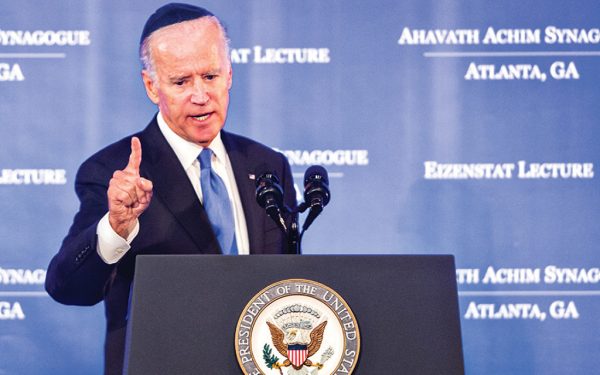
Yesterday, President Joe Biden announced a plan to use virtually every branch of the federal government, big business and civil society to ruthlessly suppress First Amendment protected criticism of Jewish political power and Zionism in the homeland.
The 60-page document, titled the “US National Strategy To Combat Anti-Semitism,” was created in part by Doug Emhoff, the Jewish husband of Vice President Kamala Harris. The goal of the project is to consolidate every power at Washington’s fingertips to engage in a political campaign to quell the American people’s rising awareness of the radically disproportionate influence Jewish people wield over the country.
On the law enforcement front, Washington appears to be de-emphasizing the FBI, which has suffered several reputational blows that have discredited its campaign against “white supremacy,” while continuing to expand the power of the Department of Homeland Security (DHS) — originally founded after 9/11 to combat Al Qaeda — in its place.
The DHS is being directed to to produce research equating concern with how Jews use political and financial power with acts of violence, host more regular workshops for all branches of law enforcement on using the law to persecute those engaging in “anti-Semitism,” increase security resources earmarked for Jewish institutions, give Jewish organizations more say over how intelligence and police resources are directed, and instruct private social media and internet companies to find and eliminate “anti-Semitic” content from their platforms.
The document, without qualification, is marbled with an egregious lack of respect for fundamental civil liberties. In one instance, there is an executive command to the Department of Treasury to convene a forum of Money Services Businesses (MSB) institutions, along with those outside of the network, to prevent online crowdfunding for what it labels “hate groups.” What constitutes a hate group — a term that is alien under traditional American jurisprudence — is not specifically defined. The project promises to reach all nations in the trans-national American sphere of influence.
The White House is also ushering in a myriad of new programs seeking to indoctrinate students on the Holocaust story and the numerous ways one could be practicing “anti-Semitism,” largely but not exclusively through the Department of Education. The Biden administration plan also expands the footprint of the US Holocaust Memorial Museum (USHMM).
No agency will be immune to this politicization. The Department of Labor (DOL) will be pressuring labor unions to identify “anti-Semites” in their midst, while the US Department of Agriculture (USDA) will be expanding access to Jews engaging in the controversial practice of Kosher slaughter. USDA will also be approaching rural religious leaders and universities to impose Washington’s strategy in even the most remote small towns.
Under this plan, the National Endowment of the Arts (NEA) is given the deadline of September 2023 to create political propaganda projects that “incorporate themes of countering antisemitism and other forms of hate in their artistic practice.”
The Department of the Interior (DOI), The Small Business Administration (SBA), and even the Institute of Museum and Library Services (IMLS) will all be given special tasks to train small business owners, park rangers, and guides in identifying and fighting “anti-Semitism.” Special attention is being given to rural libraries, which Washington will be transforming into outlets for promoting pro-Jewish narratives.
So far, only Representative Lauren Boebert has publicly come out against this runaway weaponization of the federal government. Jewish groups backing Ron DeSantis and Donald Trump have also criticized the move, but their concern is that it does not go far enough in targeting critics of the state of Israel.
The implementation of this plan coincides with the beginning of Biden’s 2024 re-election campaign. A massively lopsided percentage of the president’s major donors are Jewish, and his administration is one of the most heavily Jewish in US history.
Zionist Circles: Threats against Iran Disregard Mistaken US Withdrawal from Nuclear Deal
Al-Manar – June 2, 2023
The Zionist circles commented on the threats issued by some Israeli officials against Iran, stressing that they disregard the mistaken withdrawal of Trump’s administration from the deal.
It is worth noting that the Israeli threats came in light of the reports that indicate the rapid progress of the Iranian nuclear program and Washington’s endeavor to conclude a new deal with Tehran.
Israeli Channel 12 correspondent Nir Devori considered that intensifying threats is caused by the US tendency to strike a new nuclear deal with Iran away from the Zionist will.
The former Zionist prime minister Ehud Olmert noted that the Israeli failure occurred when Tel Aviv convinced Washington to withdraw from the deal, adding that reports confirmed Iran did not violate the pact.
Israeli circles also warned against an imminent rift between ‘Israel’ and the international community amid deep local crises.
US, UK disrupt peace efforts in Yemen
The Cradle | June 2, 2023
Washington and the UK have been continually disrupting peace negotiations in Yemen, informed sources in Sanaa were cited as saying in a report by Lebanese daily Al-Akhbar on 2 June.
“Washington and London are actively disrupting the Yemeni-Saudi political negotiations,” the newspaper wrote.
According to Al-Akhbar, the US and UK are trying to “obstruct all efforts that could lead to peace, and put among their first considerations the Israeli interest.”
This “Israeli interest” is the reason that Saudi Arabia has been “procrastinating” in the agreements it made with Sanaa, which include lifting all blockades and paying government employee salaries, Al-Akhbar said.
This, along with US and UK involvement, aim to keep Yemen in “a state of no war but no peace.”
Al-Akhbar’s sources were quoted as saying: “The political leadership in Yemen knows from the outset that … Riyadh is unable to abide by the terms of the agreement and … end the repercussions of the war due to the divergent regional interests.”
“The [coalition], as much as they agree on undermining Yemeni independence and sovereignty, they are in conflict with each other,” the sources added.
They went on to say that the Ansarallah resistance movement and the Sanaa government do not regret the political flexibility they showed during recent Omani-mediated talks with the kingdom. They warned, however, that time is not on the coalition’s side and that their military power has grown significantly.
The report goes on to explain how Saudi interests diverge from those of the UAE, the west, and Israel.
According to the Al-Akhbar report, Saudi Arabia has realized – despite its procrastination as a result of external pressure – that its interest lies in ending the war and withdrawing from “the Yemeni quagmire.”
However, the UAE wishes to maintain its occupation of Yemen’s ports and oilfields, as well as its occupation of the country’s waterways and particularly its islands, including the Socotra archipelago, which Abu Dhabi has been working in collaboration with Israel to transform into joint military and intelligence hubs. There have also been recent concerns over UAE-backed separatist ambitions in the south.
This also falls in line with the US and Israeli interest to maintain and bolster influence in the Red Sea.
The report adds that Israel is also particularly interested in the Bab al-Mandab Strait, which it considers a “vital artery” for trade with the east, and a key factor in strengthening influence in the Horn of Africa.
It concludes that the Israeli security establishment has significant concerns over Ansarallah’s capability to strike Israel with missiles.
Iran, Saudi Arabia, UAE, Oman to form joint naval force under China auspices: Report
Press TV – June 2, 2023
A Qatari website has reported that Iran, Saudi Arabia, the United Arab Emirates, and Oman are to form a joint naval force under China’s auspices towards enhancing maritime security in the Persian Gulf.
Al-Jadid carried the report on Friday, saying China had already begun mediating negotiations among Tehran, Riyadh, and Abu Dhabi aimed at reinforcing maritime navigation’s safety in the strategic body of water.
Back in March, Beijing successfully mediated talks between Tehran and Riyadh that led to the Persian Gulf littoral states’ signing of a deal enabling the restoration of their diplomatic ties.
According to observers, the Persian Gulf states’ consent to Beijing’s mediation in such sensitive matters serves to indicate China’s growing influence in the region as opposed to Washington’s waning clout.
Since the 1979 victory of Iran’s Islamic Revolution, the Islamic Republic has invariably opposed foreign meddling and presence in the region, asserting that the regional issues have to be addressed by the regional players themselves.
The latest instance of the opposition came last Friday when the commander of the Islamic Revolution Guards Corps (IRGC) Navy categorically dismissed the US military’s presence in the Persian Gulf under the pretext of securing the maritime region.
Rear Admiral Alireza Tangsiri said only Iran and other regional countries would ensure the security of the Persian Gulf and there was no need for the US and other countries to be present in the waterway. “If we back down against the enemy, it will definitely dominate us and we have no choice but to stand and resist, which is the path to the victory of our nation,” he said.
UAE quits US-led naval force
The UAE has, meanwhile, announced quitting a United States-led naval force.
On Wednesday, the website of the Emirati foreign ministry said Abu Dhabi had withdrawn from the Joint Maritime Forces that operate in the Red Sea and the Persian Gulf.
The ministry said the Emirates had decided to ditch the naval coalition following an extensive evaluation of its security needs.
Analysts say Abu Dhabi has chosen the withdrawal in line with its ambition to diversify its security relationships.
Federal Government Funds $4.7 Million Grant — Led by Merck Consultant — to Increase HPV Vaccine Uptake…
… By Improving How Providers ‘Announce’ the Vaccine
By Brenda Baletti, Ph.D. | The Defender | June 1, 2023
This is the first in a two-part series examining federal funding for behavior modification approaches to increase uptake among teens of the human papillomavirus vaccine.
The U.S. Department of Health and Human Services (HHS) is funding a scientist who also is a paid consultant for Merck to conduct research on how to increase teen uptake of the human papillomavirus (HPV) vaccine, documents obtained by Children’s Health Defense (CHD) via a Freedom of Information Act (FOIA) request revealed.
Merck manufactures Gardasil, the only HPV vaccine available in the U.S.
Documents show that the National Cancer Institute (NCI) at the HHS in 2021 awarded a $4.7 million, five-year grant to the University of North Carolina (UNC) at Chapel Hill.
The grant’s principal investigator, Noel Brewer, Ph.D., a psychologist and professor in the Department of Health Behavior at the UNC Gillings School of Public Health, consults for Merck and is also the recipient of commercial research grants from Merck, Pfizer and GlaxoSmithKline (GSK).
The HHS grant builds on Brewer’s previous industry and HHS-funded research investigating different “research-tested interventions” intended to reshape the behavior of physicians and patients by “improving” the ways providers “announce” the vaccine to potential recipients, in order to get more teens to take the HPV vaccine.
The grant is focused on further developing “Announcement Approach Training,” which involves having providers skip the step of discussing with families in “open-ended conversation” whether or not they want their child vaccinated for HPV and instead “presume” the family wants the vaccine and announce the child will receive it as if it were a routine part of the office visit.
Brewer and others’ previous research has shown this method reduces the time a provider needs to spend talking with their patients and increases vaccine uptake.
Other projects funded by the grant consist of conducting randomized controlled trials to see how best to get clinics and clinicians to implement this approach to increase HPV vaccine uptake, according to the FOIA documents obtained by CHD.
One trial investigates how clinics can rework their “standing orders” — the protocols for all practitioners — to standardize how clinicians talk to their patients, for example, using the announcement approach, or to otherwise change the nature of doctor-patient interactions.
Another trial investigates how financial incentives affect providers’ willingness to strongly recommend the shots. A third trial tests whether training by “trusted messengers” works to better alter provider behavior.
The overall project will compare the effectiveness and cost of the different methods and model them in rural areas, which typically have lower HPV rates.
U.S. government awarded more than 50 grants worth $40 million to increase HPV vaccine uptake
The $4.7 million grant to UNC was by far the largest awarded by the HHS to increase HPV vaccine uptake, however, it was not the only one.
CHD’s search of USAspending.gov identified more than 50 grants totaling more than $40 million awarded by the HHS to universities, healthcare systems and departments of public health to increase HPV vaccine uptake.
Two of the smaller grants came from the U.S. Department of Defense rather than HHS.
All of the grants — awarded since 2009, with most awarded since 2016 — fund projects either to test or to implement different methods to change people’s behaviors at the community, provider and patient level with the goal of getting more young people to take the shot.
Some of the more recent grants also focused on increasing HPV uptake by combating “misinformation” on social media.
This approach to vaccine uptake is part of a larger turn in American healthcare toward applying lessons from behavioral economics, like “nudging” to healthcare.
“Nudging” figured prominently during the COVID-19 pandemic and was heavily utilized by governments and public health officials throughout the world to implement restrictions and countermeasures.
Economist Richard H. Thaler and legal scholar Cass R. Sunstein defined the concept in their bestselling 2008 book — “Nudge: Improving Decisions About Health, Wealth, and Happiness” — as a method that “alters people’s behavior in a predictable way without forbidding any options or significantly changing their economic incentives.”
Thaler and Sunstein presented nudging as a technocratic solution for tricky policy issues involving a perceived need to encourage, in a “voluntary manner,” policies or measures that would otherwise be unpopular.
The strategy made its way into public health long before COVID-19, with Big Pharma, regulatory agencies and doctors applying this behavioral approach to the clinic, trying to “nudge” patients toward desired choices by changing the “choice architecture” they are operating in so that they would choose differently.
Providers directed to ‘presume’ families want the vaccine
Over the past several years, much research has been dedicated to studying how “nudge” strategies can be applied to vaccine uptake, particularly the COVID-19 vaccine.
A study posted in BMJ Global Health in 2021 called for further research into whether methods such as the “Announcement Approach” could effectively “nudge” people to take vaccines.
The documents related to the $4.7 million HHS grant obtained by CHD include detailed proposals for the randomized controlled trials in the “Improving Provider Announcement Communication Training” project, which investigates this approach.
The university webpage shows a total grant of $11.7 million, which appears to include administrative overhead costs.
The broader project is divided into four sub-projects, each led by a different faculty member with Brewer as the lead investigator.
Much of Brewer’s professional work is dedicated to increasing HPV vaccination uptake. He chairs the National HPV Roundtable, which brings together medical associations, nonprofits, health insurance providers and pharmaceutical companies, with funding from the Centers for Disease Control and Prevention (CDC) to raise HPV vaccination rates.
He also advises the World Health Organization, the CDC and other organizations on “vaccine communication.”
Brewer is also a consultant who has served on different paid Merck HPV advisory boards since 2011 and has been a general consultant for the company since 2019.
According to his curriculum vitae, he has given numerous talks at Merck events on how to increase HPV vaccine uptake.
Merck awarded Brewer more than $500,000 in grant funding to study HPV vaccine uptake and he received more than $400,000 from Pfizer to study how trainings might improve physician perceptions and recommendations of the HPV vaccine. He has also received funding from GSK.
He is a member of HHS’s National Vaccine Advisory Committee working group on the HPV vaccine and his website says he was a paid advisor to the U.S. Food and Drug Administration (FDA).
The FOIA documents included support letters from Brewer’s colleagues celebrating how Brewer had “already changed the national landscape for increasing HPV vaccination.”
Brewer and his colleague Melissa Gilkey, Ph.D., associate professor of Health Behavior, developed “Announcement Approach” training specifically for the HPV vaccine and in this project are conducting randomized controlled trials to determine how best to put the approach into practice.
The research premise is that provider recommendations are key to increasing uptake of the HPV vaccine, but that providers either don’t recommend the vaccine — in part because they know parents have doubts about it — or don’t use the most effective method, “presumptive recommendation,” rebranded here as Announcement Approach, to make their recommendation.
A “presumptive recommendation” is made when the provider does not offer the option of not taking the vaccine to the family, thereby limiting the landscape of available choices.
This method directs the provider to act as if the family has already decided to vaccinate their child — to “presume” they want to be vaccinated — rather than opening space for dialogue or conversation around the vaccine.
Brewer et al.’s previous research that found training doctors to give announcements rather than have conversations with their patients, where they might raise more questions, led to higher rates of vaccine uptake.
Brewer’s team found clinics that used the presumptive or announcement approach had a 5.4% increase in uptake and physicians had to spend 40% less time discussing the vaccine with families.
The grant documents provide an example of the announcement approach:
“Announcements should indicate that HPV vaccination is part of routine care …
“We recommend that announcements 1) note the child’s age to establish what follows as part of routine care; 2) say the child is due for several vaccinations (noting the diseases prevented, not the vaccine names); and 3) say that the child will receive vaccines today.
“An example of a presumptive announcement is, ‘Now that Sophia is 12, she is due for 3 vaccines. Today, she’ll get vaccines to prevent meningitis, HPV cancers, and whooping cough.’”
For “hesitant parents” who don’t submit to the HPV vaccination with the initial approach, the provider should “connect and counsel.”
To do this the provider:
“1) connects with the parent by showing empathy and confirming the parent’s main question without reinforcing misinformation; and
“2) counsels the parent using a research-tested message and encourages them to vaccinate today.”
According to the grant proposal, “Messages in the counsel step increase parents’ intentions to vaccinate in our prior randomized experiments (e.g, ‘This vaccine is one of the most studied medications on the market. The HPV vaccine is safe, just like the other vaccines given at this age.’)”
If parents decline same-day vaccination, the team member makes a note in the patient’s chart and addresses HPV vaccination at the next visit.
In an observational study, the “announcement” or presumptive method was associated with an increase in parental vaccine acceptance but also with reduced satisfaction in the clinical experience.
The participatory or conversational format — where providers offer the full range of options to patients and dialogue with them about it —showed the opposite pattern.
HPV vaccine generates profits for Merck and HHS, which funds the grant
Brewer receives research funding from both Merck and HHS/NCI, both of which stand to gain financially from increased HPV vaccine uptake.
Merck — the only producer of HPV vaccines in the U.S. since GSK pulled Cervarix from the U.S. market in 2016 — generates billions annually from Gardasil sales. It reported sales of $4 billion in 2020, despite the challenges of the pandemic.
Sales jumped to $5.7 billion in 2021. And with expanded production and global uptake, Merck anticipates “very strong sequential and year-over-year growth for Gardasil.”
The National Cancer Institute at the NIH developed the technology for the HPV vaccine and licensed it to Merck, which formulated its Gardasil vaccine and ran the clinical trials. The FDA granted Fast Track approval for Gardasil after only a six-month review process and it was licensed to Merck in 2006.
From 2007 through 2019, the HPV vaccine was among the NIH’s top four most commercially successful inventions, an assessment based on the royalties a product produces for the NIH.
The National Cancer Institute, which is housed in the HHS, receives the royalties from the Gardasil vaccine and is the agency funding the UNC study.
The inventors, who work for the NIH, also individually receive up to $150,000 per year for their patentable inventions, depending on how much the NIH receives in royalties.
It is unclear how much NIH receives from the HPV vaccine. A 2020 Government Accountability Office report found that the NIH had generated $2 billion in profits from 34 licensed drugs — with three drugs generating more than $100 million — it created since 1991 and recommended that NIH ought to increase transparency around this process.
HPV vaccination, which requires multiple doses, was first recommended by the CDC for girls in 2006 and for boys in 2011. The CDC routinely recommends vaccination at ages 11-12 and says it can be started at age 9.
HPV infections may lead to the development of cervical cancer. However, most infections are benign and resolve on their own.
The UNC grant description states the HPV vaccine could prevent 32,100 cancers per year if it were administered at the target rate of 80% of the population.
But the efficacy of the vaccine is disputed.
Studying HPV vaccine efficacy for eliminating cervical cancer is challenging due to the long amount of time between infection and the development of cancer (mean time 23.5 years), lack of adequate informed consent, complexity between HPV infection and cervical cancer and the negative impact of girls’ sexual behavior, which may worsen the risks of cervical cancer.
In 2020, the CDC reported that about 75% of U.S. teens had gotten at least one dose in the two or three-dose HPV series, and about 59% had gotten the whole series — a rate that falls short of its goal of 80% coverage. That number dropped nearly 5% during the pandemic.
It also reported that uptake of the HPV vaccine is lower than that of other routinely recommended vaccines. A new study published May 23 in Pediatrics investigated why parents decide against the HPV vaccine for their children.
The study found that although uptake increased overall between 2010 and 2020, during that time, the number of parents citing “safety or side effects” as a reason for vaccine hesitancy increased by nearly 16% annually.
Since the Gardasil vaccine was introduced in 2006, numerous studies have linked it to debilitating autoimmune disorders, neurological side effects and other complications, prompting many families of injured children to file lawsuits alleging the company knew the vaccine could cause serious side effects, The Defender reported.
Until the COVID-19 vaccine became available, the FDA had received more adverse reaction reports related to Gardasil than any other vaccine in history.
The National Vaccine Injury Compensation Program has paid out over $70 million to people making claims regarding Gardasil. Merck now faces more than 80 complaints in federal court alleging that the HPV vaccine caused debilitating autoimmune complications. A judge consolidated 31 of these cases into a single bellwether pool, against Merck’s protest.
But Merck continues to work with national agencies to increase gardasil uptake. Merck’s researchers in March published a study in Pediatrics suggesting evidence shows that moving routine HPV vaccination to ages 9 to 10 may improve vaccination coverage rates.
Brenda Baletti Ph.D. is a reporter for The Defender. She wrote and taught about capitalism and politics for 10 years in the writing program at Duke University. She holds a Ph.D. in human geography from the University of North Carolina at Chapel Hill and a master’s from the University of Texas at Austin.
This article was originally published by The Defender — Children’s Health Defense’s News & Views Website under Creative Commons license CC BY-NC-ND 4.0. Please consider subscribing to The Defender or donating to Children’s Health Defense.
YouTube reverses ban on questioning 2020 US election
RT | June 2, 2023
Video platform YouTube has reversed its controversial ban on questioning the validity of the 2020 and other US election results, acknowledging in a Friday blog post that the policy could silence legitimate political speech.
Effective immediately, the platform said, “content that advances false claims that widespread fraud, errors, or glitches occurred in the 2020 and other past US presidential elections” will no longer be removed.
Citing “today’s changed landscape,” the Alphabet subsidiary explained that “in the current environment, we find that while removing this content does curb some misinformation, it could also have the unintended effect curtailing political speech without meaningfully reducing the risk of violence or other real-world harm.”
YouTube explained its policies were aimed at two goals – “protecting our community, and providing a home for open discussion and debate” – and that those goals were not always aligned, admitting open debate was “core to a functioning democratic society.”
While the scrapped policy supposedly covered all past US elections, YouTube had appeared to focus its censorship on content questioning the 2020 results, ignoring or even promoting content that suggested the 2016 outcome was the result of Russian interference, especially if it came from establishment media outlets.
The platform acknowledged removing “tens of thousands” of videos due to the now-repealed ban on electoral fraud discussion. However, the blog post did not indicate if any of those videos would be restored or re-evaluated. While YouTube offers users whose content has been removed a chance to appeal the decision, critics claim the process is only for show and rarely if ever results in content being reinstated.
The platform also reminded users that the rest of its “election misinformation” policies still applied, meaning users could not post content designed to mislead voters about when, where, or how to vote or anything that might either discourage someone from voting or encourage someone to interfere with elections.
Freedom of speech has become a critical issue in the 2024 elections, with both Republican frontrunner Donald Trump and leading Republican challenger Ron DeSantis, as well as Democratic contender Robert F. Kennedy Jr., promising to take on Big Tech’s far-reaching censorship powers.
Featured Video
The Failed Air War Over Vietnam
or go to
Aletho News Archives – Video-Images
From the Archives
USS Liberty Massacre: A Pivotal Moment in the Hostile Takeover of America
By Kevin Barrett | Crescent | Dhu al-Qa’dah 24, 1445
In corporate America, hostile takeovers are commonplace. They occur when an aggressor—a larger corporation or rich individuals—seizes control of a smaller corporation without asking permission.
What few recognize is that the United States itself has been subjected to a hostile takeover. Since the aggressor, the illegitimate settler colony known as “Israel,” is much smaller than the US, the takeover has necessarily been surreptitious.
As of June, 2024, Israel’s gradual takeover of the US has become obvious and undeniable—a proverbial “elephant in the living room.” … continue
Blog Roll
 Aletho News
- Leaders Condemn Ansarallah Attack on Saudi Arabia While Ignoring Illegal War Against Yemen
- Leaked: Britain’s Covert Iraqi Psyops Network
- Yemeni Armed Forces Warn Airlines Against Using Saudi Airports, Exempt Mecca and Medina
- Iran security chief says powers greater than US tried to conquer Iran but ended in ‘dustbin of history’
- Europe’s mounting social chaos… chickens coming home to roost for proxy war against Russia
- US-Russia Diesel Deal Becomes Massive Defeat for Ukraine
- Hormuz and the Looming Economic Catastrophe
- Dhubab offensive, media blitz and the rapid unraveling of Saudi-backed coalition’s new gambit
- Putin Conveys to Trump Iran’s Vision on Possible Conflict Resolution – Kremlin
- The Search for Truth: Charlie Kirk’s Assassination One Year Later
- If Americans Knew
- The American Conservative: Mike Huckabee Should Resign
- A C-Section in Shackles: A Palestinian Woman’s Harrowing Birth in Israeli Detention
- ‘He’s Desperate’: AIPAC Begins Spending Against Abdul El-Sayed to Boost Mike Rogers:
- Trump, Hormuz, and the Looming Economic Catastrophe
- For three years, Israel has killed a child in Gaza every 71 minutes – Daily Update
- Israeli forces kill another child in Gaza – Daily Update
- Gaza ceasefire exists in name only, say more than 100 organizations
- Nearly 2 Million in Gaza Need Urgent Shelter Assistance as Winter Looms: IOM Chief Warns
- Suppressing Palestinian resistance: US charity under fire for AI monitoring of Gaza classrooms
- Thousands Are Held in Israeli Torture Camps. This Is What Happens Inside
- No Tricks Zone
- Germany’s Green Energy Debacle: High Energy Costs Force Kahla Porzellan to Close After 182 Years!
- New Study: 50 Years Of The Most Aggressive ‘Net Zero’ Policies Can Only Affect The Global Climate By 0.03°C
- US September “Heat” Was No Record…Many Records Set Decades Ago
- Latest European Green Energy Debacle; Portugal’s Largest Flagship Solar Park Insolvent!
- Green Energy Debacle: German Expert Professor Fritz Vahrenholt Warns Of Severe Economic And Social Consequences
- Two More Paleo Reconstructions Affirm Meters-Higher Sea Levels Across Ireland, Brazil 7000-6000 Years Ago
- New Study: Earth And Venus Surface Warmth Largely Explained By Convection And Lapse Rate, Not CO2 Or Radiation
- 2025 Nature Paper Claiming Worsening Global Drought Gets RETRACTED …Heavily Flawed
- New Study: ‘Global Drought Shows No Detectable Recent Acceleration Under Climate Warming’
- Economic Masterminds: German Socialists Suggest Taxing Productivity Gains Stemming From Using AI

