Turkiye’s Proposal For A Kakhovka Dam Investigation Committee Is A Genius Soft Power Move
BY ANDREW KORYBKO | JUNE 7, 2023
Turkish President Erdogan proposed the creation of a multilateral committee for investigating the Kakhovka Dam explosion during a call with President Putin on Wednesday. He suggested that it could comprise the two conflicting parties, the UN, and members of the international community such as his country, which has experience mediating between Moscow and Kiev during their grain deal talks. This was a genius soft power move that’ll powerfully shape global perceptions about this incident.
Russia and Ukraine blame one another for this terrorist attack, and while many might have predicted that the US would take its proxy’s side, National Security Council spokesman John Kirby said on Tuesday that “we cannot say conclusively what happened at this point.” This stance is almost certainly attributable to the fact that Ukrainian Major General Andrey Kovalchuk boasted to the Washington Post in December about how Kiev tested blowing up the dam with US-supplied HIMARS missiles late last year.
Russian Foreign Ministry spokeswoman Maria Zakharova made sure that the entire world knew about this too by bringing it up during a press briefing the day after.
She rhetorically asked US officials “Were you aware of how American weapons, the weapons that are being supplied to Ukraine, are used? That trial tests of a terrorist attack against civilian infrastructure in third countries are being made? These are the questions that we directly pose in the public space before the White House; you must answer them.”
Considering that the US officially regards the dam’s destruction as a war crime, which its Alternative Representative to the UN for Special Political Affairs Robert Wood emphasized during Tuesday’s Security Council meeting about this, it has every reason to support the investigation that Turkiye just proposed. As for Kiev, it insists that Russia was to blame, so refusing to participate in a truly neutral multilateral investigation would come off as incredibly suspicious by suggesting that it has something to hide.
The US and Ukraine, which are the principal antagonists in the NATO-Russian proxy war, are therefore pressured to go along with this initiative from their mutual Turkish partner lest they risk stoking speculation that they’re afraid of a dark truth emerging. Neither can credibly imply that Ankara has any ulterior motives in proposing this investigation either since it’s a NATO ally that’s consistently voted against Russia at the UNGA and has even armed Kiev with drones for use against Moscow’s troops.
Therein lies the reason why President Erdogan’s proposal was such a genius soft power move since it puts those two in a dilemma. Going along with the investigation risks revealing incontrovertible evidence that Kiev blew up the Kakhovka Dam while declining to participate makes them look guilty in the court of public opinion. Regardless of whatever they choose to do, Turkiye comes off as responsible member of the international community, which boosts its global prestige and especially that of its multipolar leader.
China’s criticism of America’s ‘piecemeal crisis management’ in Palestine is based on international law
By Ramzy Baroud | MEMO | June 6, 2023
Remarks on 24 May by China’s Ambassador to the UN on the situation in Occupied Palestine were impeccable in terms of their consistency with international law. Compared with the position of the US, which perceives the UN and the Security Council in particular as a vehicle to defend Israeli interests, the Chinese political discourse reflects a legal stance based on a deep understanding of the realities on the ground.
Articulating Beijing’s thinking during a Security Council “Briefing on the Situation in the Middle East, including the Palestine Question”, Ambassador Geng Shuang did not mince his words. He spoke forcefully about the “irreplaceable” need for a “comprehensive and just solution” that is based on ending Israel’s “provocations” in Jerusalem and respect for the right of “Muslim worshippers” as well as the “custodianship of Jordan” in the occupied city’s holy sites.
Widening the context of the reasons behind the latest violence in Palestine, and the 9 May Israeli attack on Gaza, Geng went on to state a position that both Tel Aviv and Washington find totally objectionable. He condemned unapologetically the “illegal expansion of [Israeli Jewish] settlements” in Occupied Palestine and Israel’s “unilateral action”, urging Tel Aviv to “immediately halt” all of its illegal activities. The Chinese ambassador then proceeded to discuss issues that have been relatively ignored, including “the plight of the Palestinian refugees”.
In doing so, Geng has enunciated his country’s political vision regarding a just solution in Palestine, one that is predicated on ending the Israeli occupation, halting Tel Aviv’s expansionist policies, and respecting the rights of the Palestinian people.
Is this a new position, though?
While it is true that China’s policies on Palestine and Israel have historically been consistent with international law, in recent years it has attempted to tailor a more “balanced” position, one that does not impede growing trade with Israel, particularly in the area of advanced microchip technology.
However, Chinese-Israeli affinity was motivated by more than trade. Since its official launch, China’s Belt and Road Initiative (BRI) has served as the cornerstone of Beijing’s global outlook. The massive project involves nearly 150 countries and aims to connect Asia with Europe and Africa via land and maritime networks. Due to its location on the Mediterranean Sea, Israel’s strategic importance to China which, for years, has been keen on gaining access to Israeli ports, has thus doubled. Predictably, such ambitions have been of great concern to Washington, whose naval vessels often dock in the port city of Haifa.
Washington has repeatedly cautioned Tel Aviv against its growing close relationship with Beijing. The then US Secretary of State Mike Pompeo went as far as warning Israel in March 2019 that, until Tel Aviv re-evaluates its cooperation with China, America could reduce “intelligence sharing and co-location of security facilities.”
Appreciating fully China’s current and potential global power, Israel has laboured to find a balance that would allow it to maintain its “special relationship” with the US, while financially and strategically benefiting from its closeness to Beijing. Israel’s balancing act has encouraged China to translate its growing economic relationship with the Middle East into a political and diplomatic investment as well.
For example, in 2017, China put into motion a peace plan — formulated initially in 2013 — called the Four-Point Proposal. The plan offered Chinese mediation as a substitute for US bias and, ultimately, the failed “peace process”. The Palestinian leadership welcomed China’s involvement, while Israel refused to engage, causing embarrassment to a government that insists on respect and recognition of its rising importance in every arena.
If balancing acts in geopolitics were possible back then, the Russia-Ukraine war has brought it all to a sudden end. The new geopolitical reality can be expressed in the words of former Italian diplomat Stefano Stefanini. The former ambassador to NATO wrote in an article in La Stampa that the “international balancing act is over” and “there are no safety nets.” Ironically, Stefanini made this point in reference to Italy’s need to choose between the West and China. The same logic can also be applied to Israel and China.
Soon after China succeeded in brokering a landmark deal between Saudi Arabia and Iran on 6 April, it again floated the idea of mediating between Palestine and Israel. China’s new Foreign Minister, Qin Gang, reportedly consulted with both sides on “steps to resume peace talks”. Yet again, the Palestinians accepted while Israel ignored the subject.
This partly explains China’s frustration with Israel, and also with the US. As China’s former ambassador to Washington (2021-23), Qin must be familiar with the inherent US bias towards Israel. This was expressed succinctly by Chinese Foreign Ministry spokesman Hua Chunying during the latest Israeli war on Gaza: “The United States should realise that the lives of Palestinian Muslims are equally precious,” he said on 14 May.
A simple analysis of China’s language regarding the situation in Palestine clarifies that Beijing sees a direct link between the US and the continued conflict; or at the very least the failure to find a just solution. This assertion can also be gleaned from Ambassador Geng’s most recent Security Council remarks, where he criticised “piecemeal crisis management”, a direct reference to US diplomacy in the Middle East, while offering a Chinese alternative based on a “comprehensive and just solution”.
Equally important is that the Chinese position seems to be linked intrinsically to that of Arab countries. The more that Palestine takes centre stage in Arab political discourse, the greater emphasis the issue receives in China’s foreign policy agenda.
In the recent Arab Summit held in Jeddah, Arab governments agreed to prioritise Palestine as the central Arab cause. Allies with great and growing economic interests in the region, such as China, took notice immediately.
All of this must not suggest that China will be severing its ties with Israel. However, it certainly indicates that Beijing remains committed to its principled stance on Palestine, as it has been over the decades.
The relationship between China and Israel will soon face the litmus test of US pressure and ultimatums. Considering Washington’s unparalleled importance to Israel on the one hand, and the Arab-Muslim world’s significance to China on the other, the future is easy to foresee. Nevertheless, judging by China’s political discourse on Palestine — situated solidly within international and humanitarian law — it seems that Beijing has already decided what to do.
Is a Change of Course at State Department Coming?
Some senior officers are retiring but who and what will replace them?
BY PHILIP GIRALDI • UNZ REVIEW • JUNE 6, 2023
There are a lot of anonymous bureaucrats that man the offices in the nation’s capital. If one were to mention the name Wendy Sherman at a Washington DC cocktail gathering it is likely that few in the room will have ever heard of her, but she has long been one of the most important players in Democratic Party administrations when it comes to foreign policy in key parts of the world. Sherman, the Deputy Secretary of State, will be retiring this summer after more than thirty years with the Foreign Service. She has been a fixture in often controversial top level policy making since Bill Clinton was in the White House, where she served as a top adviser to Secretary of State Madeleine Albright, also taking on the role of lead negotiator in the ultimately unsuccessful talks to stop North Korea’s ballistic missile program in the late 1990s. With a return to power of the Democrats in 2008, she served as Under Secretary of State for Political Affairs under Obama. To her credit, she was a lead negotiator with Iran on the 2015 nuclear agreement (JCPOA), which Donald Trump acting on bad advice subsequently withdrew from.
More recently, Sherman has been a key part of the Biden administration’s efforts to develop strategies to confront China in the Indo-Pacific and elsewhere whenever Beijing has sought to develop trade relationships with key suppliers of essential raw materials. This has included putting pressure on allies like Australia and New Zealand in the Pacific to reject Chinese commercial initiatives, elevating what began as competitive trade policies into a perception that China was becoming a threat to American national security. Sherman also played a significant role in encouraging international diplomatic and military support for Ukraine after Russia’s invasion.
Sherman’s current position as State Department number two was bestowed on her by President Joe Biden. Her comments relating to her retirement reveal something of her own philosophy as well as the views of the current administration. She said “The arc of history will only bend toward justice if people of conscience steer it in the right direction. That it is our job to have courage, to collaborate with others and seek out common ground, to persist against the odds, to use our voice and our power for good—to keep faith with the promise of our democracy and to never, ever lose hope. Diplomacy is not for the faint of heart…”
Secretary of State Antony Blinken not surprisingly praised Sherman’s career, saying that “President Biden asked Wendy to serve in this role because he knew he could count on her to help revitalize America’s alliances and partnerships and manage our complex relationships with competitors.” Blinken described Sherman’s lengthy career as a diplomat in a statement after her resignation was announced, saying she has “helped lead our engagement in the Indo-Pacific, the region where the history of the 21st century will be written. She has deepened our bonds with our friends around the world, especially with the Republic of Korea, Japan, and the European Union. She has overseen our efforts to strengthen the Department’s capabilities to manage our relationship with the People’s Republic of China, and built greater convergence with allies and partners… Her remarkable career – which spans more than three decades, three presidents, and five secretaries of state – addressed some of the toughest foreign policy challenges of our time. Our nation is safer and more secure, and our partnerships more robust, due to her leadership.”
One can expect kind words wrapped around positive government-speak both from Blinken and from Sherman herself after her admittedly long years of service, but there is something manifestly false about the euphoria over a US foreign policy that has during the Biden time in office eschewed diplomacy in favor of military threats and thousands of punitive Treasury Department sanctions. If anything, contradicting Blinken, the United States is in no way “safer and more secure” thanks to his and Wendy Sherman’s efforts, quite the contrary. It has, inter alia, converted major powers Russia and China, who were actively seeking normalized relations, into de facto enemies with all that implies, a result that, even if it does not turn into World War 3, might well mean the end of the dollar as the world’s reserve currency as the world moves towards increased financial and banking system multipolarity.
If Sherman and Blinken, acting on behalf of Joe Biden, have had a success it would consist of getting the allegedly defensive alliance NATO on board the China-phobia train, with Beijing joining Russia as one of the two great autocratic “threats to democracy.” At the end of June 2022, Jens Stoltenberg, the NATO Secretary General, declared that China does represent “serious challenges” to the alliance, which, for the first time agreed to include “threats posed by Beijing” into plans for its “future strategy” concept (PDF), joining Russia as a threat to “NATO’s interests, security and values.” Stoltenberg explained how “We now face an era of strategic competition … China is substantially building up its forces, including in nuclear weapons, bullying its neighbors, including Taiwan. China is not [yet] our adversary but we must be clear-eyed about the serious challenges it represents.”
Antony Blinken also climbed on to the horse that Stoltenberg was riding, commenting in familiar terms how “One of the things that [China’s] doing is seeking to undermine the rules-based international order that we adhere to, that we believe in, that we helped build. And if China’s challenging it in one way or another, we will stand up to that.” That the rules-based order is little more than a contrivance to maintain political and military dominance by Washington and its friends is by now clear to everyone except the people sitting in and around the White House, most particularly to include Blinken and Sherman.
So what comes next as the featured act post Wendy Sherman? It should be noted that the State Department top level is completely staffed by Jewish Americans who are politically-speaking neocons with close ties to Israel who also believe that the maintenance of total military dominance by the United State is good both for them and good for the Jewish state. All of them are Russo-phobes for various reasons often related to the history of Jews in Russia. Sherman recently participated in discussions in Washington with her Israeli counterpart intended to “…further deepen and expand the US-Israel relationship.” Someone should tell her that it is already far deeper than it should be if one were to go by American interests.
The current third in line at State is the notorious Under Secretary of State for Political Affairs Victoria Nuland who started the problems in Eastern Europe when she worked with her colleagues to overthrow and replace the existing government in Ukraine in 2014. Nuland, who recently spilled the beans about direct US involvement in the Ukraine war, is married to leading neocon Robert Kagan. It has often been observed that neocon foreign policy, which originated with the Republican Party and is based on maintaining a US government monopoly on forms of international violence, has now come to dominate both parties.
If Biden chooses to pull a rabbit out of his hat and comes up with a replacement for Wendy Sherman who is actually in favor of active diplomacy as a mechanism to avoid war, I and many others will be pleasantly surprised and even astonished. More likely it will be Nuland or a Nuland clone or possibly someone having all the Democratic Party boxes checked, i.e. black, Jewish and a transexual who uses the right pronouns and pretends to be a woman. The fundamental problem is that the United States government is no longer run by people capable of acting in rational self-interest, which would mean doing things for the good of the country. The system is in reality broken and it is now clear that something has gone terribly wrong. The sad truth is that the United States is in decline, wallowing in debt and corruption, and Joe Biden and company have lost control, lying and misrepresenting nearly everything. So good bye Wendy! It was great having you at State where you and your friends turned competitors into enemies. It will be interesting to see what happens next!
Philip M. Giraldi, Ph.D., is Executive Director of the Council for the National Interest, a 501(c)3 tax deductible educational foundation (Federal ID Number #52-1739023) that seeks a more interests-based U.S. foreign policy in the Middle East. Website is councilforthenationalinterest.org, address is P.O. Box 2157, Purcellville VA 20134 and its email is inform@cnionline.org.
FDA’s ‘Rumor Control’ Hub Encourages Public to ‘Snitch’ on ‘Misinformation Spreaders’
By Brenda Baletti, Ph.D. | The Defender | June 6, 2023
The U.S. Food and Drug Administration (FDA) launched an updated “Rumor Control” hub aimed at enlisting the public to help stop the spread of “misinformation.”
The updated webpage, first launched in August 2022, includes a new video that defines misinformation as information that is “false, inaccurate, or misleading … spreading intentionally and unintentionally.”
The agency said its Rumor Control hub provides the public with tools to identify and report on “misinformation.”
“Some individuals and organizations promote opinions online disguised as fact,” the FDA site says, adding that misinformation spreads “six times faster than facts.”
The video warns that people may be misled by headlines or out-of-context statements, particularly when they are shared by a trusted person.
But, according to the video, people can determine whether something is actually true by getting the information from three types of “authoritative” sources that can be trusted to provide real facts: medical journals, a nonprofit “fact checker” or a government website.
“The FDA is concerned ‘health misinformation’ is negatively impacting the public’s health,” the agency said. The FDA tweeted the video to promote the hub.
The Rumor Control site includes links for reporting misinformation on all major social media sites. By following the links, users can find instructions to mark posts as “false news,” “false information” or “inappropriate content,” depending on the website.
“Bernie’s Tweets” on Twitter called the website the FDA’s “‘snitch’ page.”
https://twitter.com/BernieSpofforth/status/1664917637455855617
“The federal government continues to try and fool the public into thinking misinformation is a dire problem and a crime,” Dr. Meryl Nass wrote on her Substack. “Misinformation is whatever the government does not want you to know.”
Nass added, “Clearly, the feds are getting nervous that their cons on the people are being recognized.”
The hub provides a poster that explains what misinformation is and how to address it “in language even a third grader can understand,” Nass wrote.
It explains that trusted authorities’ recommendations may change because science changes, but people should always “trust science.”
The site includes FDA-approved facts about COVID-19, sunscreen and supplements.
FDA’s project to ‘save lives’ by policing online content
Since FDA Commissioner Robert Califf began his second tenure as the agency’s head in February 2022, he has made combating “misinformation” one of his top priorities, arguing it is “a leading cause of preventable death in America now” — though “this cannot be proved,” he said.
In an Aug. 22, 2022, article published in the Journal of the American Medical Association, Califf wrote that “the global information environment has been contaminated by misinformation and disinformation.” He added:
“The FDA must be more proactive in preempting and countering misinformation [but there is a need for] collaboration across sectors to create an information environment in which decisions [by] consumers, patients, and clinicians are more likely to be informed by reliable information based on high-quality evidence from trustworthy sources.”
The Rumor Control initiative is one of several such initiatives launched during Califf’s tenure.
For example, the FDA also created a series of fact-checking YouTube videos — “Just a Minute” — that features Dr. Peter Marks, director of the FDA’s Center for Biologics Evaluation and Research, addressing COVID-19 “myths.”
The FDA also uses Twitter to tweet about misinformation, and Instagram to post memes encouraging vaccination.
Califf said that he believes “in the power of social media being used for good,” Fierce Pharma reported.
According to The Associated Press (AP), the FDA also can use a tactic known as “prebunking,” by which the agency defines something as “misinformation” before readers have an opportunity to encounter it elsewhere as possibly true.
The FDA has the ability to do this because Google “prioritizes credible websites” like the FDA’s in its searches.
Rumor Control works as a prebunking strategy that “debunks a long list of false claims about vaccines” and presents them first in people’s Google searches, according to the AP.
Califf previously worked at Verily, a life sciences company owned by Google’s parent company, Alphabet Inc.
Fact-checking the FDA
The most current version of the FDA’s fact check on COVID-19, linked from the Rumor Control hub, assures readers, for example, that vaccination does not make people more susceptible to the latest variants of COVID-19 and that the vaccine is safe for pregnant and breastfeeding women.
But just last week, the Cleveland Clinic published a peer-reviewed study that found the more doses of COVID-19 vaccines a person receives, the higher the risk of getting the virus.
A number of recent studies revealed striking risks to pregnant women who get the COVID-19 vaccine and identified serious flaws in the methods government agencies used to conclude they are safe.
Government health officials knew about several of those studies, including Pfizer’s own clinical trial studies, before they recommended the shots for pregnant women.
The FDA also came under fire for granting Emergency Use Authorization for the COVID-19 vaccine for children ages 12-15 despite having identified that “safety signals” existed for myocarditis in young males following COVID-19 jabs.
The FDA, along with the Centers for Disease Control and Prevention, withheld this information from the public.
In the last two years, the FDA also was widely criticized for granting approval to an unproven Alzheimer’s drug, for its delayed response to a contaminated baby formula plant and for approving the respiratory syncytial virus vaccine for pregnant women despite concerns about premature births identified in clinical trials, among many other issues.
Nass wrote that in 1992, Congress passed the Prescription Drug User Fee Act, which allowed the FDA to charge manufacturers to regulate their products, compromising its integrity to such an extent that the FDA has become “a rogue agency for hire.”
Most funding the FDA uses to evaluate whether drugs are safe and effective comes from industry, she wrote, and most drugs seeking approval get fast-tracked and evaluated in just six months.
Manufacturers of drugs that are dangerous can often avoid liability by working with the FDA to write the label in such a way that meets disclosure requirements.
“So if you are looking to avoid misinformation, the FDA is the last place you might go to for truth, honesty, ethics and consideration of the public’s welfare,” Nass wrote.
This article was originally published by The Defender — Children’s Health Defense’s News & Views Website under Creative Commons license CC BY-NC-ND 4.0. Please consider subscribing to The Defender or donating to Children’s Health Defense.
Rule by Decree: The Emergency State’s Plot to Override the Constitution
By John & Nisha Whitehead | The Rutherford Institute | June 6, 2023
We have become a nation in a permanent state of emergency.
Power-hungry and lawless, the government has weaponized one national crisis after another in order to expand its powers and justify all manner of government tyranny in the so-called name of national security.
COVID-19, for example, served as the driving force behind what Supreme Court Justice Neil Gorsuch characterized as “the greatest intrusions on civil liberties in the peacetime history of this country.”
In a statement attached to the Supreme Court’s ruling in Arizona v. Mayorkas, a case that challenged whether the government could continue to use it pandemic powers even after declaring the public health emergency over, Gorsuch provided a catalog of the many ways in which the government used COVID-19 to massively overreach its authority and suppress civil liberties.
Yet while the government’s (federal and state) handling of the COVID-19 pandemic delivered a knockout blow to our civil liberties, empowering the police state to flex its powers by way of a bevy of lockdowns, mandates, restrictions, contact tracing programs, heightened surveillance, censorship, overcriminalization, etc., it was merely one crisis in a long series of crises that the government has shamelessly exploited in order to justify its power grabs and acclimate the citizenry to a state of martial law disguised as emergency powers.
These attempts to use various crises to override the Constitution are still happening.
It doesn’t even matter what the nature of the crisis might be: civil unrest, the national emergencies, “unforeseen economic collapse, loss of functioning political and legal order, purposeful domestic resistance or insurgency, pervasive public health emergencies, and catastrophic natural and human disasters.”
They have all become fair game to a government that continues to quietly assemble, test and deploy emergency powers a long laundry list of terrifying powers that override the Constitution and can be activated at a moment’s notice.
We’re talking about lockdown powers (at both the federal and state level): the ability to suspend the Constitution, indefinitely detain American citizens, bypass the courts, quarantine whole communities or segments of the population, override the First Amendment by outlawing religious gatherings and assemblies of more than a few people, shut down entire industries and manipulate the economy, muzzle dissidents, “stop and seize any plane, train or automobile to stymie the spread of contagious disease,” reshape financial markets, create a digital currency (and thus further restrict the use of cash), determine who should live or die.
While these are powers the police state has been working to make permanent, they barely scratch the surface of the far-reaching powers the government has unilaterally claimed for itself without any pretense of being reined in or restricted in its power grabs by Congress, the courts or the citizenry.
As David C. Unger, observes in The Emergency State: America’s Pursuit of Absolute Security at All Costs, “Life, liberty, and the pursuit of happiness have given way to permanent crisis management.”
The seeds of this ongoing madness were sown several decades ago when George W. Bush stealthily issued two presidential directives that granted the president the power to unilaterally declare a national emergency, which is loosely defined as “any incident, regardless of location, that results in extraordinary levels of mass casualties, damage, or disruption severely affecting the U.S. population, infrastructure, environment, economy, or government functions.“
Comprising the country’s Continuity of Government (COG) plan, these directives (National Security Presidential Directive 51 and Homeland Security Presidential Directive 20), which do not need congressional approval, provide a skeletal outline of the actions the president will take in the event of a “national emergency.”
Just what sort of actions the president will take once he declares a national emergency can barely be discerned from the barebones directives. However, one thing is clear: in the event of a national emergency, the COG directives give unchecked executive, legislative and judicial power to the president.
The country would then be subjected to martial law by default, and the Constitution and the Bill of Rights would be suspended.
Essentially, the president would become a dictator for life.
It has happened already.
As we have witnessed in recent years, that national emergency can take any form, can be manipulated for any purpose and can be used to justify any end goal—all on the say so of the president.
The emergency powers that we know about which presidents might claim during such states of emergency are vast, ranging from imposing martial law and suspending habeas corpus to shutting down all forms of communications, including implementing an internet kill switch, and restricting travel.
Yet according to documents obtained by the Brennan Center, there may be many more secret powers that presidents may institute in times of so-called crisis without oversight from Congress, the courts, or the public.
Remember, these powers do not expire at the end of a president’s term. They remain on the books, just waiting to be used or abused by the next political demagogue.
So, too, every action taken by the current occupant of the White House and his predecessors to weaken the system of checks and balances, sidestep the rule of law, and expand the power of the executive branch of government makes us that much more vulnerable to those who would abuse those powers in the future.
These presidential powers—acquired through the use of executive orders, decrees, memorandums, proclamations, national security directives and legislative signing statements and which can be activated by any sitting president—enable past, president and future presidents to operate above the law and beyond the reach of the Constitution.
This is what you might call a stealthy, creeping, silent, slow-motion coup d’état.
If we continue down this road, there can be no surprise about what awaits us at the end.
We must recalibrate the balance of power.
For starters, Congress should put an end to the use of presidential executive orders, decrees, memorandums, proclamations, national security directives and legislative signing statements as a means of getting around Congress and the courts.
At a minimum, as The Washington Post suggests, “all emergency declarations [s]hould expire automatically after three or six months, whereupon Congress would need to vote upon any proposed extension.”
We’ve got to start making both the president and the police state play by the rules of the Constitution.
As I point out in my book Battlefield America: The War on the American People and in its fictional counterpart The Erik Blair Diaries, it must start with “we the people.”
Constitutional attorney and author John W. Whitehead is founder and president of The Rutherford Institute. His most recent books are the best-selling Battlefield America: The War on the American People, the award-winning A Government of Wolves: The Emerging American Police State, and a debut dystopian fiction novel, The Erik Blair Diaries. Whitehead can be contacted at staff@rutherford.org.
Nisha Whitehead is the Executive Director of The Rutherford Institute.
Information about The Rutherford Institute is available at www.rutherford.org.
YouTube Deletes Years-Old Mike Tyson Interview With RFK Jr.
By Cindy Harper | Reclaim The Net | June 5, 2023
In another censorship move, YouTube has deleted several high-profile interviews with US Presidential candidate Robert F. Kennedy Jr.
Among the videos removed from the platform was an hour-and-a-half-long podcast featuring Kennedy in conversation with boxing legend Mike Tyson, as noticed by video journalist Matt Orfalea. This takedown occurred just ten days ago, following the disappearance of another RFK Jr. interview – this time with comedian Theo Von – from the video-sharing platform.
The two deleted interviews, both dating back to 2020, had garnered significant popularity among YouTube’s vast user base. The interview conducted by Von had received almost a quarter of a million views, while Tyson’s podcast with Kennedy had been viewed almost half a million times. This popularity underscores the wide reach these videos had and the potential impact of their removal.
YouTube’s justification for this sudden takedown remains unclear, particularly as Kennedy is currently running for President and the videos were safely on the platform for almost three years.
The only explanation provided to viewers was a vague notification stating, “This video has been removed for violating YouTube’s Community Guidelines.” However, this statement offers no concrete details about which specific guidelines were violated, leaving users to speculate about the exact reasons behind the removal.
Some observers are questioning whether the takedown could be related to YouTube’s policy on COVID-19 misinformation. However, if this was indeed the case, the timing of the removal raises additional questions. Both interviews were initially posted during the height of the COVID-19 pandemic and remained online throughout the period, Orfalea reported. It’s only now, in the wake of Kennedy’s escalating 2024 Presidential campaign, that the videos have been removed.
The timing is curious and might suggest that the removal is politically motivated, though this is purely speculation. If the deletion was due to violations of YouTube’s COVID-19 misinformation policy, why would it take effect long after the pandemic peak and just as Kennedy’s presidential campaign is gaining momentum?
In the video, Kennedy also says he believes the CIA was involved in the assassination of his father, Robert F. Kennedy.
While we await further clarification from YouTube on its actions, these events underscore the ongoing debate around digital content censorship and the power held by tech giants. It raises questions about the transparency of their content regulation processes and the potential for the exertion of political influence.
“Your Speech is Violence”: How the Mob is Using a New Mantra to Justify Campus Violence
By Jonathan Turley | The Hill | June 4, 2023
“Silence is violence.” When those words became a popular mantra years ago on college campuses, I wrote that the anti-free speech movement was moving toward compelled speech while declaring dissenting views to be harmful.
Today, it isn’t just silence that is considered violence on college campuses. It is also speech, as both faculty and students are actively shutting down opposing views on subjects ranging from abortion to climate change to transgender issues.
Recently, many people were shocked by a videotape of Hunter College professor Shellyne Rodríguez trashing a pro-life student display in New York. Most were focused on her profanity and vandalism, but there were familiar phrases that appeared in her diatribe to the clearly shocked students.
Before trashing the table, she told the students, “You’re not educating s–t […] This is f–king propaganda. What are you going to do, like, anti-trans next? This is bulls–t. This is violent. You’re triggering my students.”
The videotape revealed one other thing. At Hunter College, and at other colleges, it seems that trashing a pro-life student display and abusing pro-life students is not considered a firing offense. Hunter College refused to fire Rodríguez.
The PSC Graduate Center, the labor organization of graduate and professional schools at the City University of New York, supported that decision and said Rodríguez was “justified” in trashing the display, which the organization described as “dangerously false propaganda” and “disinformation.”
Rodríguez later put a machete to the neck of a reporter, threatened to chop him up and then chased a news crew down a street with the machete in hand. Somewhere between the machete to the neck and chasing the reporters down the street, Hunter College finally decided that Rodríguez had to go.
Rodríguez denounced the school for having “capitulated” to “racists, white nationalists, and misogynists.” She explained that her firing was just a continuation of “attacks on women, trans people, black people, Latinx people, migrants, and beyond.”
The redefinition of opposing views as “violence” is a favorite excuse for violent groups like antifa, which continue to physically assault speakers with pro-life and other disfavored views. As explained by Rutgers Professor Mark Bray in his “Antifa: The Anti-Fascist Handbook,” the group believes that “‘free speech’ as such is merely a bourgeois fantasy unworthy of consideration.”
As one antifa member explained, free speech is a “nonargument… you have the right to speak but you also have the right to be shut up.”
When people criticized antifa for its violent philosophy, MSNBC’s Joy Reid responded to the critics that “you might be the fascist.”
Faculty members have followed this sense of license to silence others. Former CUNY law dean Mary Lu Bilek even insisted that disrupting a speech on free speech was free speech. (Hunter is part of the CUNY system.)
The same week as the Rodríguez attack at the State University of New York at Albany, sociology professor Renee Overdyke shut down a pro-life display and then allegedly resisted arrest.
Just last week, the Pride Office website at the University of Colorado (Boulder) declared that misgendering people can be considered an “act of violence.”
This week, University of Michigan economics professor Justin Wolfers declared that some of those boycotting the store Target over its line of Pride Month clothing were engaging in “literal terrorism.” (He insists that he was referring to those confronting Target employees.)
Faculty have also justified attacks on pro-life figures. At the University of California, Santa Barbara, feminist studies associate professor Mireille Miller-Young physically assaulted pro-life advocates and tore down their display.
She pleaded guilty to criminal assault, but the university refused to fire her. Instead, some faculty and students defended her, including claiming that pro-life displays constitute terrorism. The University of Oregon later honored Miller-Young as a model for women advocates.
Likewise, at Fresno State University, public health professor Dr. Gregory Thatcher recruited students to destroy pro-life messages.
Other faculty have called for or countenanced violence against Republicans and conservatives. Professors have shouted down speakers, destroyed property, participated in riots and verbally attacked students.
University of Rhode Island professor Erik Loomis defended the murder of a conservative protester and said he saw “nothing wrong” with such acts of violence. He was later elevated to the position of director of graduate studies of history.
As faculty commit or support violence, students are assured that others are the violent ones. Recently, at the University of Texas at Austin, Professor Kirsten Bradbury tested her students on psychology by asking them “which sociodemographic group is most likely to repeatedly violate the rights of others in a pattern of behavior that includes violence, deceit, irresponsibility, and a lack of remorse?” Of course, the answer was wealthy white men.
The lesson took with students. A recent poll shows that 41 percent of college students now believe violence is justified to fight hate speech. At Cornell, a conservative speaker was shouted down, met with the common mantra that “your words are violence.” At Case Western, the student newspaper editorialized against university recognition of a pro-life group because its pro-life views are “inherently violent” and “a danger to the student body.” At Wellesley, student editors declared that it was time to shut down conservative speakers and that “hostility may be warranted.” They added, “The spirit of free speech is to protect the suppressed, not to protect a free-for-all where anything is acceptable, no matter how hateful and damaging.”
Those views did not spontaneously appear in the minds of these students. At one time, tolerance for free speech was the very touchstone of higher education and a common article of faith for students. These students are the product of years of being told that free speech is dangerous and harmful if left unregulated. From elementary school to college, they were taught that they did not have to be “triggered” by the speech of others.
We are still (thankfully) drawing the line at machete attacks. But it is the underlying views of Rodríguez that are the true threat, and they are being replicated throughout the country. We are raising a generation of censors and speech-phobics.
If we want to stop or reverse this trend, Congress must act. I have proposed legislation that would deny federal funding to schools that do not protect core free speech principles. We are funding schools that are taking a machete to the defining right of our democracy.
It is akin to the recent resolution of the case of an antifa member who took an axe to Sen. John Hoeven’s (R-N.D.) office in Fargo. Thomas “Tas” Alexander Starks, 31, was given probation… and his axe back.
We may not be able to deter people from speaking through machetes and axes, but we can at least stop subsidizing the hardware.
Featured Video
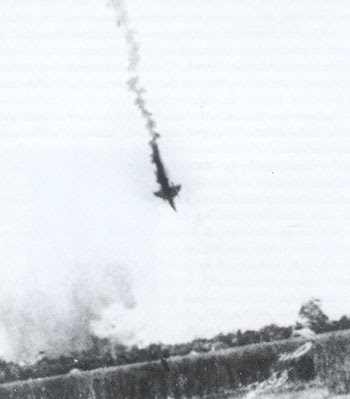
The Failed Air War Over Vietnam
or go to
Aletho News Archives – Video-Images
From the Archives
USS Liberty Massacre: A Pivotal Moment in the Hostile Takeover of America
By Kevin Barrett | Crescent | Dhu al-Qa’dah 24, 1445
In corporate America, hostile takeovers are commonplace. They occur when an aggressor—a larger corporation or rich individuals—seizes control of a smaller corporation without asking permission.
What few recognize is that the United States itself has been subjected to a hostile takeover. Since the aggressor, the illegitimate settler colony known as “Israel,” is much smaller than the US, the takeover has necessarily been surreptitious.
As of June, 2024, Israel’s gradual takeover of the US has become obvious and undeniable—a proverbial “elephant in the living room.” … continue
Blog Roll
 Aletho News
- Leaders Condemn Ansarallah Attack on Saudi Arabia While Ignoring Illegal War Against Yemen
- Leaked: Britain’s Covert Iraqi Psyops Network
- Yemeni Armed Forces Warn Airlines Against Using Saudi Airports, Exempt Mecca and Medina
- Iran security chief says powers greater than US tried to conquer Iran but ended in ‘dustbin of history’
- Europe’s mounting social chaos… chickens coming home to roost for proxy war against Russia
- US-Russia Diesel Deal Becomes Massive Defeat for Ukraine
- Hormuz and the Looming Economic Catastrophe
- Dhubab offensive, media blitz and the rapid unraveling of Saudi-backed coalition’s new gambit
- Putin Conveys to Trump Iran’s Vision on Possible Conflict Resolution – Kremlin
- The Search for Truth: Charlie Kirk’s Assassination One Year Later
- If Americans Knew
- ‘He’s Desperate’: AIPAC Begins Spending Against Abdul El-Sayed to Boost Mike Rogers:
- Trump, Hormuz, and the Looming Economic Catastrophe
- For three years, Israel has killed a child in Gaza every 71 minutes – Daily Update
- Israeli forces kill another child in Gaza – Daily Update
- Gaza ceasefire exists in name only, say more than 100 organizations
- Nearly 2 Million in Gaza Need Urgent Shelter Assistance as Winter Looms: IOM Chief Warns
- Suppressing Palestinian resistance: US charity under fire for AI monitoring of Gaza classrooms
- Thousands Are Held in Israeli Torture Camps. This Is What Happens Inside
- Israel puts Gaza’s sick, injured, newborn in peril – Daily Update
- Report claimed Mark Levin used by Israeli government to influence Trump
- No Tricks Zone
- Germany’s Green Energy Debacle: High Energy Costs Force Kahla Porzellan to Close After 182 Years!
- New Study: 50 Years Of The Most Aggressive ‘Net Zero’ Policies Can Only Affect The Global Climate By 0.03°C
- US September “Heat” Was No Record…Many Records Set Decades Ago
- Latest European Green Energy Debacle; Portugal’s Largest Flagship Solar Park Insolvent!
- Green Energy Debacle: German Expert Professor Fritz Vahrenholt Warns Of Severe Economic And Social Consequences
- Two More Paleo Reconstructions Affirm Meters-Higher Sea Levels Across Ireland, Brazil 7000-6000 Years Ago
- New Study: Earth And Venus Surface Warmth Largely Explained By Convection And Lapse Rate, Not CO2 Or Radiation
- 2025 Nature Paper Claiming Worsening Global Drought Gets RETRACTED …Heavily Flawed
- New Study: ‘Global Drought Shows No Detectable Recent Acceleration Under Climate Warming’
- Economic Masterminds: German Socialists Suggest Taxing Productivity Gains Stemming From Using AI

