President Raeisi: West’s culture of domination hinders growth, progress across globe
Press TV – September 20, 2022
Iranian President Ebrahim Raeisi says Western powers have impeded the growth and progress of other countries through their culture of domination and by exploiting international entities to their own benefit.
President Raeisi made the remarks on Monday on the closing day of the three-day Transforming Education Summit at UN Headquarters in New York.
“Unfortunately, the culture of hegemony has defined [West’s] interests in holding back other countries,” he said. “They have impeded other countries’ growth and progress by creating an unfair world order, abusing international organizations, and drawing up schemes to impose their own cultural and intellectual views.”
“Cultural domination and confinement of knowledge are the worst kinds of oppression and injustice,” he added.
Raeisi also urged international entities to respect countries’ cultural and educational sovereignty, noting that it is impossible to transform the education system without taking into account values such as family, equality, and spirituality.
“International organizations are expected to respect countries’ educational and cultural sovereignty and protect them against cultural invasion,” he said.
“The history of Iran’s civilization began with science and knowledge; the Islamic culture elevated it and established its pillars on heavenly reflections,” he said.
Raeisi added that Islam invites humanity to acquire knowledge with the aim of achieving equality, spreading spirituality, and bringing prosperity and development.
“Making progress is a matter of significance for almost all countries, and while governments have implemented international recommendations in this regard, serious challenges have been imposed on national and indigenous cultures simultaneously,” he said.
A development that lacks spirituality and morality won’t last long and will result in societal collapse, the president argued.
Moral values such as respecting the family, protecting the environment, establishing equality, denouncing violence and extremism, promoting internet safety, and encouraging healthy online habits must be among the priorities for transforming education, he said.
The president also took a swipe at the United Nations’ 2030 Agenda for Sustainable Development, criticizing its approaches as “one-dimensional” and “secular,” and saying that the Islamic Republic has drawn up its own educational agenda based on Iranian-Islamic principles.
Iran’s newly set-up educational system is now shifting from rote learning to a system relying on research, creativity, skill-training, and commitments to cultural and religious values, he concluded.
Raeisi left Tehran for New York on Monday morning to take part in the UN General Assembly.
The Transforming Education Summit was convened in response to a global crisis in education. The crisis, which is often slow and unseen, is said to have a devastating impact on the future of children and youth worldwide.
US reveals plan for seized Russian funds
Samizdat | September 20, 2022
The US Department of Justice would like Congress to amend laws governing asset forfeiture, so money confiscated from Russian “kleptocrats” can be given to Ukraine, the head of the interagency sanctions task force Andrew Adams told the Senate on Tuesday while testifying at a hearing called “Tightening the Screws on Russia.”
Adams, formerly a federal prosecutor in the Southern District of New York (SDNY), is the head of the interagency Task Force KleptoCapture, a sanctions enforcement outfit created in February. The “scope, intended impact, and international alignment” of the anti-Russia sanctions are “without precedent,” he told senators.
Among the proposals he listed at the hearing was a pitch for Congress to amend the existing US asset forfeiture laws, in order to allow the government to “remediate harms caused to Ukraine by Russia’s war of aggression,” as Adams put it.
The departments of justice, treasury and state would like the ability to give the funds seized from Russia and Russians to the government in Kiev, but doing so “requires amendments to multiple statutes governing the use of forfeited funds,” he said.
Earlier in his testimony, Adams mentioned that the measures implemented by the US and its allies “have included immobilizing the Russian Central Bank’s assets, held in coffers around the world.” It was not clear, however, whether these funds would fall under the scheme to transfer money to Ukraine – something the government in Kiev has demanded for months, both of the US and of the EU.
Asset forfeiture is a controversial practice in US law, which proponents have defended as a “key tool” for weakening organized crime and funding law enforcement. Critics, such as the American Civil Liberties Union (ACLU), have called it “policing for profit” and described it as “egregiously at odds with our due process rights.”
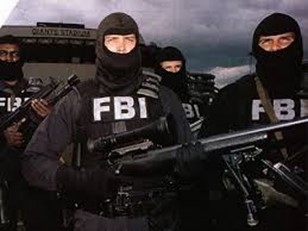
A Danger of Giving FBI Agents Quotas on Domestic Terrorism and White Supremacy Related Crime
By Adam Dick | Ron Paul Institute | September 15, 2022
Sometimes police will be given quotas for ticketing drivers. Results of the pressure put on cops to meet their ticket targets tend to include that many drivers are pulled over and ticketed for minor infractions that would be better overlooked or based on dubious or fabricated grounds. Is a similar quota system, with expectable similar results, developing now in regard to “domestic terrorism” and “white supremacy” related crime at the Federal Bureau of Investigation (FBI)?
A Wednesday Washington Times article by Kerry Picket and Joseph Clark, referencing information provided by current and former FBI agents, suggests that is the case. Picket and Clark write:
Current and former FBI agents tell The Washington Times that the perceived threat has become overblown under the administration. They say bureau analysts and top officials are pressuring FBI agents to create domestic terrorist cases and tag people as White supremacists to meet internal metrics.
“The demand for White supremacy” coming from FBI headquarters “vastly outstrips the supply of White supremacy,” said one agent, who spoke on the condition of anonymity. “We have more people assigned to investigate White supremacists than we can actually find.”
The agent said those driving bureau policies “have already determined that White supremacy is a problem” and set agencywide policy to elevate racially motivated domestic extremism cases as priorities.
“We are sort of the lapdogs as the actual agents doing these sorts of investigations, trying to find a crime to fit otherwise First Amendment-protected activities,” he said. “If they have a Gadsden flag and they own guns and they are mean at school board meetings, that’s probably a domestic terrorist.”
The Gadsden flag is a historical American flag with a yellow field showing a timber rattlesnake and the words: “Don’t Tread on Me.” It is often used as a symbol of liberty.
Read the complete article here.
Bombshell court filing suggests the FBI knew ‘Russiagate’ was a fraud in January of 2017, but it kept up its pressure on Trump
Igor Danchenko’s confession appears to reveal the bureau’s true intentions
By Felix Livshitz | Samizdat | September 20, 2022
Lawyers for Igor Danchenko, the primary source of the notorious and utterly discredited “Trump-Russia|” dossier compiled by former British spy Christopher Steele, have filed a motion to dismiss the charges brought against their client by special counsel John Durham.
In the process, they have revealed another startling and potentially criminal dimension to the FBI’s probe of potential collusion between the campaign of former President Donald Trump and the Kremlin.
Danchenko’s case
Durham charged Danchenko in November 2021 with five counts of lying to the bureau. Four of those relate to statements he made in a February 2017 interview, in which he repeatedly claimed to have met and had conversations with Sergey Millian, a Belarusian-born businessman who claimed ties with the Trump campaign.
Danchenko, and thus Steele, claimed Millian was a key source of the dossier’s most explosive allegations – namely, that there was a “well-developed conspiracy of cooperation” between Trump and the Kremlin, that Russia’s GRU had hacked the Democratic National Convention email server and provided the content for WikiLeaks for the purposes of “plausible deniability,” and the then-Presidential candidate had received a “golden shower” from prostitutes while in Moscow years earlier, which was filmed by Russian intelligence and could be used as “kompromat.”
In his FBI interview, conducted between February 9 and 12, 2017, Danchenko claimed to have received this incendiary intelligence through telephone conversations and email exchanges with Millian, who also suggested they discuss matters further in person in New York City. However, Durham charges that Danchenko fabricated these calls, repeatedly emailed Millian without response, and was never invited to any meeting anywhere.
The new court filing shows that to buttress these claims, Danchenko provided the Bureau with a synopsis of a mid-August email he sent to Millian, a month prior to his sit-down interview series. Yet, as the filing notes, the communication makes no mention of the phonecalls they’d purportedly engaged in previously, or the prospect of meeting in person.
Danchenko’s lawyers now argue that this email in fact proves he wasn’t lying about having had direct contact with Millian, and made clear they’d never spoken to his interviewers. Problematically for all involved, though, Danchenko, and as a result Steele, both attributed wild charges against the Trump campaign to Millian before this email.
FBI vs the truth
In turn too, this means the FBI had concrete reasons to believe at least some of the Steele dossier was bogus on January 25, 2017 at the very latest. But the Bureau, undeterred, continued to not only “assess” the dossier’s veracity, but to use it as a justification for further surveillance of Trump 2016 presidential campaign adviser Carter Page, and intensifying its investigation of the campaign.
The FBI’s questionable use of the dossier in court submissions to secure FISA warrants against Page is well-known, and was a key criticism of a December 2019 Justice Department Inspector General review, which determined the Bureau made 17 errors or omissions in its FISA applications.
Even more damningly though, just two days after Danchenko presented the discrediting email to the FBI, Trump privately met with then-FBI director James Comey, and the President specifically raised the Steele dossier.
According to Comey’s account of the dinner, as retold in the Mueller report: “the President… stated that he was thinking about ordering the FBI to investigate the [Steele] allegations to prove they were false. Comey responded that the President should think carefully about issuing such an order because it could create a narrative that the FBI was investigating him personally, which was incorrect.”
In other words, Comey played Trump, appealing to his ego and feigning concern for his reputation, when he knew better than anyone bar Steele and Danchenko themselves that the FBI was already investigating the former MI6 operative’s “allegations” and knew them to be meritless. Had he told the truth, perhaps the entire Russiagate fraud would’ve collapsed before it had even properly erupted publicly.
If he’d known, the President may not have been successfully pressured into demonstrating his anti-Russian credentials with an increasingly hostile and belligerent stance towards Moscow, which saw Trump go to dangerous lengths the previous administration had deliberately avoided, such as arming and legitimizing the Neo-Nazi Azov Battalion, and shredding vital Cold War arms control treaties, brinksmanship that brought us to where we are today.
Hate of Bureau
In any event, while the filing is in many ways useful confirmation of top-level FBI knowledge of the dossier’s inherent worthlessness at an early stage, it could pose problems for Danchenko’s prosecution.
His conviction hangs on the ability of Durham’s team to prove his lies to the FBI materially influenced its investigation, and it can be easily argued that the Bureau’s evident determination to investigate Trump’s non-existent Russia ties meant no disclosure, true or false, would’ve convinced the agency to stop.
That the FBI was utterly determined irrespective of facts to damage Trump, first as a candidate, then as leader, has long-been clear, yet it has largely faded from public memory. One might argue it’s quite incredible that even the former president’s supporters have not invoked this dubious history in the wake of the Bureau’s raid on Mar-a-Lago, which bears clear hallmarks of being likewise politically motivated.
Evidence of the FBI’s anti-Trump agenda is amply available in black and white – so too the agency’s surging Russophobia. Two of the key Bureau figures central to the Trump-Russia probe, one-time lovers Peter Strzok and Lisa Page, spelled this out both in public testimony and private text messages.
On the latter front, Strzok texted Page in July 2016 – right when the Trump-Russia probe was launched – to declare, “f*** the cheating motherf***ing Russians… bastards… I hate them… I think they’re probably the worst. F***ing conniving cheating savages.” He also pledged that the pair would together “stop” Trump from winning. Page was only slightly less foul-mouthed when she testified to Congress in July 2018:
“It is my opinion that with respect to Western ideals and who it is and what it is we stand for as Americans, Russia poses the most dangerous threat to that way of life.”
Quite why Strzok and Page, along with many other Bureau operatives, haven’t been prosecuted for their role in arguably the biggest US national security scam since the Iraq War isn’t clear.
Hospital Runs Myocarditis In Kids Awareness Commercial As If It’s A Common Illness
“Suri had a bad stomach ache that turned out to be myocarditis”
By Steve Watson | Summit News | September 16, 2022
The New York-Presbyterian Hospital is running a commercial in an effort to raise awareness of myocarditis in children, seemingly suggesting that inflammation of the heart in children is a common condition.
The video, titled “Pediatric Patient Story – Suri” tells the story of a child who “had a bad stomach ache that turned out to be myocarditis, a serious inflammation of the heart.”
The video caption states that “Our multidisciplinary pediatric critical care team worked to regulate her heartbeat – and got her back to feeling like herself.”
Watch:
Myocarditis cases in children are rare, with studies indicating that in children there are 1 to 2 per 100,000, usually stemming from cold viruses. The majority of those cases resolve on their own or with treatment.
So why the sudden need to raise awareness?
Likely because data from the Vaccine Adverse Event Reporting System (VAERS) shows how reports of myocarditis and pericarditis related to vaccines exploded in 2021 and 2022.
Report: Pentagon Orders Review of US Clandestine Ops After Social Media Takedowns of Fake Accounts
Samizdat – 19.09.2022
Internet researchers Graphika and the Stanford Internet Observatory revealed in late August that over 150 false personas and media websites formed in the United States had been removed in recent years by Twitter and Facebook.
Major social media firms discovered and removed phony accounts believed to be operated by the US military in violation of the platforms’ policies, prompting the Pentagon to request a thorough examination of how it conducts clandestine information warfare, the Washington Post reported on Monday.
According to the report, after the White House and some federal agencies expressed growing concerns over the Defense Department’s attempted manipulation of audiences abroad, Colin Kahl, the undersecretary of defense for policy, reportedly instructed the military commands that engage in psychological operations online last week to provide a complete accounting of their activities by next month.
The US Central Command (CENTCOM) is one of the agencies whose operations are under investigation, the undisclosed sources claimed, despite the fact that the researchers from Graphika and Stanford did not link the phony accounts to the military.
The takedowns of bogus accounts happened during the last two or three years, per the report. The researchers did not specify when the takedowns happened. They claimed several were recent and involved articles from the summer that promoted anti-Russian narratives by referencing the Kremlin’s “imperialist war” in Ukraine and announcing the conflict’s direct effects on Central Asian nations.
Importantly, they discovered that overt accounts actually drew more followers, and that false personas, which used strategies allegedly popular in nations like Russia and China, did not acquire much traction. With its headquarters in Tampa, CENTCOM oversees military operations in 21 Middle Eastern, North African, Central Asian and South Asian nations.
At a virtual meeting called by the National Security Council, Kahl reportedly announced his review and said he wanted to know what operations had been conducted, who they were targeting, what tools were being used, why military commanders had chosen those tactics, and how successful they had been, according to the report.
One defense official reportedly stated that essentially the message was: “You have to justify to me why you’re doing these types of things.”
However, the Pentagon’s press secretary, Air Force Brig. Gen. Patrick Ryder is quoted in the report as saying that the military’s information operations “support our national security priorities,” and that they must be carried out in accordance with applicable laws and procedures.
“We are committed to enforcing those safeguards,” he added.
Inflammatory Posts From Fake Accounts That Violate Rules
The accounts that were deleted, per the report, included one for a fictitious Persian-language media outlet that disseminated posts that were copied from Radio Free Europe and Voice of America Farsi, which are supported by the US government. Another, it alleged, was connected to a Twitter account that previously claimed to operate from CENTCOM.
According to the article, one bogus account tweeted an emotional message saying relatives of deceased Afghan refugees had informed them that bodies had been returned from Iran with missing organs. The tweet reportedly contained a link to a video included in an article published on a website with ties to the US military.
While CENTCOM has not confirmed or denied the existence of such accounts under its control, according to a defense official, it would “absolutely be a violation of doctrine and training practices” if the tweet about organ harvesting is proven to be connected to the military.
Officials familiar with the situation indicated that Facebook disabled in 2020 fictitious personas purportedly developed by CENTCOM to combat “misinformation” spread by China that the coronavirus responsible for COVID-19 was developed at a US Army lab in Fort Detrick, Maryland.
The fake profiles were reportedly used to spread “truthful” information from the US Centers for Disease Control and Prevention regarding the virus’ origin in China, according to the officials. They were active in Facebook groups where people conversed in Arabic, Farsi and Urdu.
Despite being permitted by law and policy, the US government’s use of fictitious social media accounts has reportedly caused controversy inside the Biden administration, with the White House urging the Pentagon to explain and defend its procedures.
Several US officials quoted in the report revealed that the White House and officials within the State and Defense departments are worried policies are too open-ended, and could allow for strategies that, even if they are used to spread accurate information, run the risk of undermining American credibility.
“Our adversaries are absolutely operating in the information domain,” one of the sources said. “There are some who think we shouldn’t do anything clandestine in that space. Ceding an entire domain to an adversary would be unwise. But we need stronger policy guardrails.”
‘You Got Caught, That’s the Problem’
Pentagon doctrine and policy forbid the military from spreading lies, but there are purportedly no regulations requiring the use of accurate information in psychological operations. For instance, the military occasionally uses fiction and humor to persuade people, but normally communications are expected to stick to the facts, according to officials.
Officers from Facebook and Twitter contacted the Pentagon in 2020 to voice their concerns about the fake accounts they were being forced to delete because they appeared to be connected to the military. That summer, Christopher Miller, the assistant director for Special Operations/Low Intensity Conflict, who is in charge of overseeing influence operations policy, had a conversation with David Agranovich, Facebook’s director for global threat disruption, in which the latter cautioned him that if Facebook could detect them, so could US adversaries.
“His point was ‘Guys, you got caught. That’s a problem,'” one of the sources said.
According to the report, Miller failed to take adequate action due to the fact that the Trump administration’s term was already approaching its end.
Kahl requested a study of Military Information Support Operations, or MISO — the Pentagon’s term for psychological operations — in response to concerns from the Biden White House. According to the report, a draft detailed that communication with other agencies, like the State Department and the CIA, needed to be strengthened, and that regulations, training, and monitoring all needed to be tightened.
The unnamed officials claimed that while there have been instances when the military has promoted false information, these were due to insufficient control over contractors and staff training rather than systemic issues. The same officials stated the Pentagon leadership did not do anything with the review before Graphika and Stanford released their findings on August 24.
Covert Psy Ops to Counter Washington’s Rivals
Military leaders have long sought to counter – including online – the rise of Russia and China as their strategic rivals. Congress has also agreed with that goal; in fact, congressional lawmakers passed legislation in late 2019 confirming the military could conduct operations in the “information environment” to defend the US and combat foreign disinformation aimed at undermining its interests.
This was done in response to frustration with what was perceived as legal barriers preventing the Defense Department from carrying out covert activities in cyberspace. The law, known as Section 1631, reduces some of the friction that previously prevented such operations by allowing the military to conduct covert psychologic operations without infringing on what the CIA claims to be their covert power.
“Combatant commanders got really excited,” one of the defense sources stated. “They were very eager to utilize these new authorities. The defense contractors were equally eager to land lucrative classified contracts to enable clandestine influence operations.”
The insider added that military officers lacked necessary skills to supervise “technically complex operations conducted by contractors” or coordinate such endeavors with other interested parties within the US government.
Moreover, an unnamed US diplomat told the Washington Post that the US “shouldn’t be employing the same kind of tactics that our adversaries are using because the bottom line is we have the moral high ground.”
“We are a society that is built on a certain set of values,” they asserted. “We promote those values around the world and when we use tactics like those, it just undermines our argument about who we are.”
Military psychological operations to advance American narratives abroad are surely nothing new, but the widespread use of Western social media has led to an expansion of strategies, including the employment of manufactured personalities and images often known as “deep fakes.”
According to the argument, opinions given by someone who looks like, for example, an Afghan woman or an Iranian student, may be more convincing than if the US government were overtly promoting them.
However, the majority of the military’s influence activities are open, supporting American policies in the Middle East, Asia, and other regions under its own name. Officials have noted there are legitimate reasons to employ covert methods, such as attempting to eavesdrop on a closed terrorist discussion group.
Is It Even Worth It?
Currently, determining whether the military’s clandestine influence efforts are producing outcomes is a critical concern for senior politicians.
“Is the juice worth the squeeze? one person reportedly said. “Does our approach really have the potential for the return on investment we hoped or is it just causing more challenges?”
According to the report by Graphika and Stanford, the covert operation had little effect. It stated that only 19% of the fabricated accounts had more than 1,000 followers, and that the “vast majority of posts and tweets” examined got “no more than a handful of likes or retweets.” The two most-followed assets in the data provided by Twitter were accounts that openly declared a connection to the US military, according to the report.
Austrian citizens dissatisfied with anti-Russian measures
Protests against sanctions and gas prices are likely to increase in the entire European continent
By Lucas Leiroz | September 19, 2022
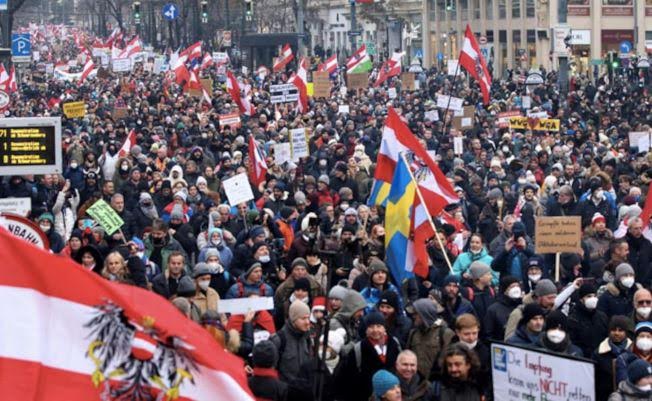
Protests against gas prices are rising in Europe. European citizens are increasingly dissatisfied with the directions taken by their countries and organize demonstrations to express their opinions against the EU and its sanctions. In Austria, tens of thousands of people took to the streets to demand political changes. However, the western media continues to ignore the protests.
On September 17th, the streets of Vienna and eight other major Austrian cities were taken over by tens of thousands of protesters furious at the uncontrolled rise in gas prices and living costs. Although local police declined to reveal their official estimates, sources claim that around 20,000 people attended the protests in Vienna, with around 10,000 others in the cities of Linz, Bruck an der Mur, Salzburg, Innsbruck, Klagenfurt St. Polten, Eisenstadt and Bregenz.
The protests were organized by several different political groups, but the biggest one was the trade union federation OeGB. As seen recently in other parts of Europe, individuals of different political ideologies came together for a common cause: the improvement of people’s living conditions and the end of the disastrous economic policy that is currently being conducted. Austrian political leaders reported that the main objective of the protests is to put pressure on the governing alliance – formed by a conservative-green coalition -, which the OeGB considers guilty of “watching idly as life becomes unaffordable”.
In Vienna, where the protests were concentrated, a large rally was held by trade unionists. Many criticisms against the government, big companies, and the EU were made during the speeches. Such was the popular mobilization that the Austrian president himself expressed solidarity with the situation and communicated with his voters through his social networks in order to ease popular anger. He stated that he is in solidarity with the people at this time of economic difficulty but was not able to promise any real solution to the problem.
“This solidarity should not only be felt in the heart but, above all, in the wallet of those who are wondering how to pay for their shopping at the end of the month”, Alexander Van der Bellen emphasized when commenting on the protests in a social media publication.
Other local officials also made statements in the face of the protests. The mayor of Vienna, Michael Ludwig, for example, said that the recent growth in prices is a real challenge for a large part of the population and declared support for the demand of trade unionists for changes in economic policy and salary rises. However, like the president, Ludwig failed to criticize the real root of the problem, which is the adhesion of the European bloc to anti-Russian sanctions, which are generating the current energy crisis.
Most of the western media simply ignored the protests, refusing to report on the events. Another portion, however, reported it “softly”, declining to show the real demands of the Austrian workers. This has been a recurrent tactic on the part of the Western media when reporting the protests against anti-Russian sanctions in Europe: to show that workers are asking for a drop in gas prices, but avoid mentioning that they are aware that this increase is related to the irresponsible European policy of implementing coercive measures against Moscow.
A few days before the protests, in a survey carried out by the Austrian sociological institute Institut fur Demoskopie und Datenanalyse (IFDD) it was revealed that almost 80% of Austrian citizens feel affected by the sanctions on Russia. In the survey, 78% of the interviewees said they had suffered side effects from the sanctions. More than that, 31% of respondents even said they believe that the measures were actually directed against Austria itself rather than Russia, given the impact the country is suffering. In some recent surveys in other European countries, it is also possible to see that local citizens are seeing the sanctions in a similar way, believing that their countries are the real targets of the measures – which reveals how much the European population feels harmed by the attitudes of their own rulers.
Indeed, European citizens are not wrong in their perception. Sanctions in fact affect Europe much more than Russia itself. More than that, they benefit the US, which has finally managed to destroy Russian-European energy cooperation. It is not by chance that it is Washington that plans and proposes such sanctions, which European leaders have subserviently adhered to, affecting their own interests. So, indeed, these sanctions are designed against Europe. And, knowing this, European governments need to immediately reverse these measures before winter comes and the crisis becomes a real social catastrophe.
Lucas Leiroz is a researcher in Social Sciences at the Rural Federal University of Rio de Janeiro, geopolitical consultant.
Russia Presents Evidence of US Ukraine-Based Military-Biological Activity to Geneva Convention
Samizdat – 19.09.2022
The Russian Defense Ministry has presented evidence of US military-biological activity in Ukraine to member states of the Biological Weapons Convention in Geneva, head of the Radiation, Chemical and Biological Defense of the Russian Armed Forces, Lt. Gen. Igor Kirillov, said.
The ministry’s representative said that member states’ delegations did not question the authenticity of the documents they were presented as proof of the US’ and Ukraine’s violation of articles I and IV of the Convention.
“The participants of the meeting received copies of real documents previously mentioned by the Ministry of Defense of Russia, as well as material evidence confirming the implementation of work on military-biological programs in Ukraine, for consideration,” Kirillov said.
The head of the RCBD of the Russian Armed Forces further pointed out that the US and Ukraine failed to present convincing evidence to the Convention’s members that would prove that the Pentagon’s cooperation with the Ukrainian laboratories benefited the epidemiological situation in the country. Kirillov said that the US Department of Defense only came up with a few photos of renovated laboratories, while the said epidemiological situation in Ukraine has been deteriorating for the past 15 years.
The Russian Defense Ministry’s representative further stated that the US admitted the fact that Ukraine exported biological pathogens and materials, as well as engaging in ethically questionable experiments – namely on the military and socially vulnerable groups of the Ukrainian population such as psychiatric ward patients. Kirillov slammed the US attempts to tone down the problem by using claims that it did not occur “often”.
Russia raised 20 questions regarding the illegal activities of Kiev and Washington that violate the provisions of the Convention with the BWC member states, Kirillov said. Among them are questions regarding the choice of pathogens for studies, which often included ones that have never been discovered in Ukraine.
The ministry’s representative also reiterated Russia’s previous statements regarding Ukraine seeking to procure drones from Turkey fit to disperse aerosols. The Turkish defense company refused to deliver the UAVs, which could have been used to spread harmful and potentially deadly pathogens.
New Fakes about Russia-DPRK Military Cooperation
By Konstantin Asmolov – New Eastern Outlook – 19.09.2022
More recently, the author analyzed misinformation that North Korean special forces were about to appear in the Donbass, but the global media soon encountered another misinformation launched from the West: it turned out that North Korea was preparing to supply Russia with shells and possibly military equipment on a massive scale. Or it is already supplying, but that is not certain.
It all started on September 5 with a New York Times article quoting “declassified intelligence reports” that “Russia is buying millions of artillery shells and rockets from North Korea, … a sign that global sanctions have severely restricted its supply chains and forced Moscow to turn to pariah states for military supplies.”
However, the newspaper immediately noted that there were few details about the exact weaponry, timing or size of the shipment, and generally, “there is no way yet to independently verify the sale”, but immediately went on to theorize as to why this was the case. It turns out that the Russian Federation now allegedly has no ability to buy advanced weapons or the electronics to produce them, as international sanctions on Moscow disrupt its supply chains, stocks of shells and missiles are running out and Russia is forced to look for suppliers. This, in particular, was stated by the quoted expert with the Ukrainian-speaking surname Kagan.
A little later, AP Agency gave some details and quotes, which, however, still did not clarify the situation. Brigadier General Pat Ryder, a Pentagon Press Secretary, said “the information that we have is that Russia has specifically asked for ammunition” but had no other details, including whether money changed hands and whether any deliveries were continuing.
Asked why this information was declassified, Ryder said it was important to illustrate the state of Russia’s ongoing military campaign in Ukraine. And, the author would add, against the backdrop of Ukraine’s attempted counter-offensive.
National Security Council spokesman John Kirby also said there was no indication yet that the arms purchase had actually taken place or that any North Korean munitions had entered the battlefield in Ukraine. Nevertheless, the talks themselves are “just further evidence of how desperate Putin is becoming”, with US intelligence suggesting that Russia is buying millions of rounds of ammunition from the DPRK.
After that, the news spread around the world media and even reached South Korea, but discussion on the relatively objectivist website NKNews showed that assessments are directly dependent on both their bias and their distance from the Russian context.
For example, Jack Watling, Senior Research Fellow at the Royal United Services Institute, confidently stated that since February 2022 Moscow had been buying up stocks of 152mm and 122mm shells “in any way they can. And that includes North Korea.” All this is said to be common knowledge in intelligence circles, but the source of this information is not in the public domain, and he is personally unaware of specific deliveries from North Korea to Russia. However, Watlig’s level of knowledge is better described by another quote: “Moscow had for some time pushed for Pyongyang to support its war effort,” which, he said, was not limited to supplying ammunitions.
For his part, Joost Oliemans, a specialist focused on DPRK military capabilities, expressed more restraint – Pyongyang certainly has a huge amount of old ammunition, and can produce new weapons for export, but “if this story is really true, we could expect to see video evidence of North Korean ammunition in Ukraine in the coming months.” In other words, he is not prepared to discuss the subject without evidence.
By the very next day on September 6, both Ryder and Kirby had already given up somewhat. The former said in a press briefing that “we do have indications that Russia has approached North Korea to request ammunition”, he could not provide more details, but in any case “it is indicative of the situation that Russia finds itself in, in terms of its logistics and sustainment capabilities.” And also that Moscow is asking for help precisely from those countries that the US has defined as “rogue”.
Kirby also conceded that the US doesn’t “have any indication that the purchase has actually occurred yet so it’s difficult to say what it’s actually going to end up looking like”, much less evidence that these weapons are being used in Ukraine.
The Russian side has also spoken out. According to Russia’s Permanent Representative to the UN Security Council, Vasily Nebenzya, “I have not heard about it and I think it’s just another spreading fake news.”
On September 7, 2022, NKNews specifically updated its piece to clarify that “there is no evidence in the public domain of Russian efforts to procure North Korean arms since February 2022”. By this time, both Russian and unbiased Western experts had formulated a set of theses indicating that the hype news was nothing more than misinformation.
- The DPRK’s arms exports to Russia are a violation of UN Security Council resolutions, which prohibit that country from exporting or importing arms from other countries. Moreover, back in the day Vladimir Putin banned the supply of small arms and light weapons to North Korea as part of the implementation of UN Security Council Resolution 2270 of March 2, 2016. An overt violation of this kind undermines Russia’s status as a permanent member of the UNSC, and from the author’s perspective even the hypothetical arrival of North Korean construction workers in the DLPR (a far less overt violation) is at best discussed. Perhaps this disregard for sanctions will happen later on the backdrop of a further breakdown of the old world order, but that time has not yet come.
- It is not at all clear how sending such a volume of cargo is compatible with “emergency anti-epidemic measures” and border closures. Especially considering that there is only one railroad bridge between the Russian Federation and the DPRK, which has limited capacity. How exactly Moscow will pay is also a good question in view of the sanctions.
- A comparison of Russia’s and DPRK’s weapons production capabilities also leads to the question of whether Russia does not have its own military and industrial complex at all, and whether the start of the SMO has not affected the rate of ammunition production. And also regarding the volume of Russian military stockpiles: as even Oliemans pointed out, Moscow must have a huge amount of old Soviet ammunition, which is unlikely to run out anytime soon.
- All right, let’s say that “the Russians don’t want to go below a certain level of reserves in case they face other threats”, but the same logic is all the more applicable to the DPRK, which is constantly on alert against a superior enemy. By that logic, Pyongyang needs the shells and missiles itself.
- Most importantly, there is no idea how exactly US intelligence could have obtained such data. But misinformation fits in well with the West’s propaganda mindset that the successes of Russian SMO in Ukraine are about to come to an end. It is known that these successes are largely due to technical rather than numerical superiority, and therefore the argument “we’ll talk when the Russians run out of shells” is very popular in the pro-Ukrainian environment.
Of course, if one considers this misinformation as a kind of “mental exercise”, North Korean military equipment and ammunition might well come in handy. Russian military expert Vladimir Khrustalyov lists a whole range of DPRK military equipment capable of showing off in Donbass – the arsenal turns out to be quite impressive.
But talk of “what would have been” is beyond the scope of the article, and the author is far more interested in how the US intelligence community knew about the ominous “signs”. The author has two options and the first one is that this information is not intelligence but military-psychological. In other words, the news was simply made up for propaganda purposes to cradle the “desperate Putin is trying to find a million missiles” picture, which will leave a certain residue even after the falsity of the data comes to light.
The second option is more amusing and, alas, more realistic: the source of the sensational information could be such an anonymous and specific medium as Russian politicized Telegram channels, in which the SMO is constantly discussed. However, Telegram’s anonymity often makes it impossible to identify the channel’s real author. This means that any high-school student with a glib tongue can easily portray himself as an “expert from those very structures” involved in the “secrets of the Kremlin court”, even if the information has no real basis in fact.
For the author, the validity of such anonymous channels amounts to reports of “secret informants in the DPRK” who “know the local life” and “report the truth”, but non-core or engaged experts easily cite such sources in case they fit their point of view. In addition, even a broken clock is right twice a day. On this basis, it can be assumed that a Russian-speaking US military intelligence official subscribed to a similar channel that discussed the notion that Russia would soon run out of bombs and missiles and need to buy them somewhere, probably even from North Korea.
Perhaps the scout did not distinguish the ironic context from the dramatic one. It is even more likely that he did not realize that the alleged foreign intelligence general or presidential administration official describing the secret talks was typing on his smartphone in algebra class. But the information has gone up the chain of command and in one way or another has “come in handy”.
To conclude the conversation, it is worth noting how the propaganda image of the DPRK has changed: before the SMO, the Western media presented North Korea as a starving third-world country, but now it is a superpower providing Putin with builders, soldiers and now also ammunition. Therefore, the fake about millions of missiles is clearly not the latest fake about the “Jucheans in the Donbass”.
Konstantin Asmolov, PhD in History, leading research fellow at the Center for Korean Studies of the Institute of China and Modern Asia, and the Russian Academy of Sciences.
Biden claims US forces will defend Taiwan
Samizdat | September 19, 2022
President Joe Biden once again said that Washington is willing to use military force to defend Taiwan from Beijing, if necessary, while insisting that the US still adheres to ‘One China’ policy and is “not encouraging” the island’s independence.
During a ‘60 Minutes’ CBS News interview aired Sunday night, Biden was asked if the US would become directly involved to “defend the island” in a potential conflict between Beijing and Taiwan, including through the use of military force.
“Yes, if in fact there was an unprecedented attack…” Biden replied, before the broadcaster cut away to clarify the controversial statement. A White House official apparently explained to CBS, before the interview was aired, that US policy “has not changed” and that officially the US would still neither confirm nor deny whether American forces would defend Taiwan.
“So unlike Ukraine, to be clear, sir, US forces, US men and women would defend Taiwan in the event of a Chinese invasion?” the interviewer Scott Pelley asked again.
“Yes,” reiterated Biden.
The US leader however also said Washington respects the ‘One China’ policy, by which it recognizes that there is only one China led by Beijing. “We agree with what we signed onto a long time ago. And that there’s One China policy, and Taiwan makes their own judgments about their independence. We are not moving – we’re not encouraging their being independent. That’s their decision.”
Biden previously made a similar statement in May, calling it America’s “commitment” to protect Taiwan. At the time, amid an outcry from Beijing, the White House was also forced to “clarify” the US leader’s words, saying it did not constitute any changes in Washington’s policy towards Taiwan or China.
Swiss leaders shrug off referendum on F-35 deal
Samizdat | September 18, 2022
Swiss legislators have given final approval for the country’s controversial purchase of F-35 fighter jets from the US, ignoring a successful petition drive that was supposed to force a public vote on the issue.
Switzerland’s lower house National Council voted to approve the $6 billion deal with US defense contractor Lockheed Martin on Thursday. The upper house, the Council of States, had previously approved the purchase of 36 F-35s.
The Swiss government, which received voter approval in 2020 to modernize the country’s fleet of fighter jets at a cost of up to $6.3 billion, reached a preliminary agreement with Lockheed Martin last year after choosing the F-35 over France’s Rafale, Boeing’s F/A-18 Super Hornet and the multinational Eurofighter Typhoon.
Opponents have argued that although voters narrowly approved the fleet’s modernization, they didn’t agree to the F-35, which has been branded too expensive and not a good fit for militarily neutral Switzerland’s defense-focused air force.
Last month, the government confirmed that the “Stop F-35” opposition group had gathered the necessary 100,000 valid petition signatures to force a referendum.
The Swiss defense department argued that there wasn’t enough time to hold the vote before Lockheed Martin’s offer expired. The government has a March 2023 deadline to sign the contract or risk higher costs and a longer wait for the jets. Other countries, such as Germany, Finland and Canada, are queuing up to buy F-35s amid the Russia-Ukraine conflict.
Featured Video

Matt Bracken: US Plans Massive MOAB Strike on Iran?
or go to
Aletho News Archives – Video-Images
From the Archives
Confronting the Threat of Ethnic Bioweapons
By Tony Cartalucci – New Eastern Outlook – 29.11.2017
The United States Air Force’s 59th Medical Wing’s molecular biology branch recently was revealed to have been collecting specifically Russian RNA and synovial (connective) tissue samples, prompting fears in Russia of a possible US directed ethnic-specific bioweapons program. … continue
Blog Roll
 Aletho News
- The Downfall of a Manufactured Icon
- Matt Bracken: US Plans Massive MOAB Strike on Iran?
- Russia accuses France of ‘piracy’ over tanker seizure
- Why Yemen Is Bombing Saudi Arabia’s Airports: The War Behind the Headlines
- Sally Rooney’s books pulled from UK over support for Palestine Action
- Bombs for Tel Aviv, Promises for Riyadh
- Israeli ad agency conducted vast global espionage campaign using online ads: Report
- Oct. 7 Forever Marks The Big Reveal: ‘We See You, Israel, We Revile You, We Reject You!’
- Meet the US generals and admirals advancing Israeli policy
- Israel’s Straw Widow Protocol: The Kill Zones Where Civilians Were Labelled ‘Terrorists’
- If Americans Knew
- Israeli firm used online ads to run vast spy operation, researchers say
- No, the world zionist movement is not an antisemitic conspiracy theory
- Hundreds of IDF investigations into killings still have no public outcome, BBC Verify finds
- After Ashley Moody Epstein Probe, Donors Linked to Him Poured Money Into her Senate Campaign
- Worried about Russian meddling in UK politics? Wait till you see what Israel is up to
- Israeli settlers attack West Bank center for disabled children, church leader calls for int’l action
- Pulling Out Teeth Just to Live: How Israel Has Devastated Dental Care in Gaza
- Gaza’s “ceasefire” death toll passes 1,500 – Daily Update
- Activists Abused By Israel Return to New Freedom Flotilla Mission
- 60 Minutes won’t tell the full truth about Israeli settler violence
- No Tricks Zone
- New Study Suggests Large Regions Of The Pacific Ocean Have Been Cooling For The Last 80 Years
- Germany’s Green Energy Debacle: High Energy Costs Force Kahla Porzellan to Close After 182 Years!
- New Study: 50 Years Of The Most Aggressive ‘Net Zero’ Policies Can Only Affect The Global Climate By 0.03°C
- US September “Heat” Was No Record…Many Records Set Decades Ago
- Latest European Green Energy Debacle; Portugal’s Largest Flagship Solar Park Insolvent!
- Green Energy Debacle: German Expert Professor Fritz Vahrenholt Warns Of Severe Economic And Social Consequences
- Two More Paleo Reconstructions Affirm Meters-Higher Sea Levels Across Ireland, Brazil 7000-6000 Years Ago
- New Study: Earth And Venus Surface Warmth Largely Explained By Convection And Lapse Rate, Not CO2 Or Radiation
- 2025 Nature Paper Claiming Worsening Global Drought Gets RETRACTED …Heavily Flawed
- New Study: ‘Global Drought Shows No Detectable Recent Acceleration Under Climate Warming’

