Col Douglas Macgregor: War to the Last Missile in Iran
Daniel Davis / Deep Dive

Palestinian Information Center – July 8, 2026
OCCUPIED JERUSALEM – Israeli occupation forces demolished a residential building in Sur Baher, southeast of occupied Jerusalem, on Wednesday, while carrying out demolition operations west of al-Khalil.
The Wadi Hilweh Information Center said Israeli forces, accompanied by bulldozers, stormed Sur Baher and demolished a residential building made up of four apartments belonging to Fuad Awadallah.
In al-Khalil, Israeli forces raided the Al-Ras area in the town of Idhna to carry out demolition operations.
The demolitions came as Israeli authorities gave Al-Rifa’iya School near Yatta, south of al-Khalil, 14 days before implementing a demolition order after an Israeli court rejected the final appeal against the decision.
Local and official sources said the school, located south of Al-Deirat village east of Yatta and affiliated with Khallet Al-Maiya municipality, serves 150 students from first to seventh grade. It was established in 2016.
The sources said the demolition could be carried out at any time during the 14-day period.
They stressed that education would continue even if the school is demolished, whether on the rubble, in caves, in tents or in the open air, to ensure students continue receiving their education.
Ten schools in the area, serving around 1,000 students, face the threat of demolition or could receive demolition notices at any time, according to the sources.
Al-Rifa’iya School is part of the “challenge schools” supervised by the Palestinian Ministry of Education and supported by international institutions in Area C, which is under full Israeli military control.
Israeli authorities justify such demolitions by citing construction without permits, a policy rights groups say is nearly impossible for Palestinians to overcome because Israel almost entirely refuses to grant building permits in these areas, serving settlement expansion.
Rights advocates say the demolition of schools in Masafer Yatta and southern al-Khalil is part of a policy aimed at undermining the right to education and pushing Palestinians to leave their land by depriving them of basic living conditions, in what they describe as a policy of silent displacement.
Press TV – July 8, 2026
Iran has issued a firm warning that it will not back down from its management of the Strait of Hormuz and is prepared to fight to maintain control over the strategic waterway, an informed security source told Press TV on Wednesday.
The source revealed that developments over the past 48 hours have solidified Tehran’s resolve, with a new military and strategic doctrine now in place.
According to the source, Iran’s updated strategy dictates that in the event of any fresh attack on Iranian soil or interests, the Islamic Republic will respond with overwhelming force.
The source elaborated on Iran’s new retaliatory framework, stating that following any strike against Iran, two immediate actions will be taken: first, the Strait of Hormuz will be completely closed to all maritime traffic; and second, Iran will strike enemy targets at a ratio of at least two to one, meaning that for every Iranian target hit, at least two enemy targets will be struck in return.
“The memorandum of understanding signed on this matter clearly states that Iran will reopen the Strait in accordance with its own arrangements. Therefore, Iran will not permit the establishment of any new route outside the framework of its own arrangements,” the source said.
The source also addressed recent threats made by US President Donald Trump, delivering a blunt message to Washington.
“Any threat will receive a powerful response. Iran does not distinguish between the United States and its partners in the region,” the source told Press TV.
“Trump will gain nothing from these recent threats, but he will certainly lose both the Strait of Hormuz and the negotiations over a final agreement. The choice is now his.”
The warning comes amid rising tensions in the Persian Gulf region, after the US military carried out a fresh round of illegal and unprovoked strikes against Iran’s coastal areas early on Wednesday.
US launched military strikes on a number of coastal bases and non-military stations in Iran’s southern Hormozgan province and Mahshahr, which openly violates the ceasefire.
In response, the Islamic Revolution Guards Corps (IRGC) struck 85 US military targets in Bahrain and Kuwait with missiles and drones in an initial response to the American aggression.
The IRGC said the strikes hit facilities at Port Salman, the US Fifth Fleet’s area in Bahrain, and Ali Al Salem Air Base in Kuwait. It also announced the downing of an MQ-9 drone, saying the aircraft attempted to interfere with the operation before it was shot down.
In a statement earlier on Wednesday, Iran’s Khatam al-Anbiya Central Headquarters said any source of support for the “aggressor US army” will be considered a legitimate target for Iranian armed forces.
“The source of any support for the aggressor US army to violate the sovereignty and territory of Islamic Iran will be a legitimate target for the armed forces,” the top military command center warned.
It said that the only safe route for commercial ships and oil tankers in the Strait of Hormuz is the path designated by Iran, and that Tehran will not allow any interference in the management of the Strait.
Iranian parliament speaker and lead negotiator Mohammad Baqer Qalibaf also slammed the US for committing major violations of the Iran-US memorandum of understanding (MoU), stressing that Washington’s “era of bullying and extortion” is over.
“Major MoU violations by the US: [1.] Violating Iranian adjustments in the Strait, [2.] Reinstating oil sanctions, [3.] Attacks on southern Iran, [4.] Continued Zionist aggression on Lebanon,” he said.
“The era of bullying and extortion is over. It leads nowhere. We don’t fold.”
By Justin K.P. | The Dissident | July 7, 2026
Laura Loomer, the unhinged Zionist commentator with the Trump White House’s ear, continues her attempt to use lawfare to silence reporters and commentators opposed to the American/Zionist war on Iran.
Anti-War journalist Max Blumenthal, the editor of The Grayzone, is currently on the ground reporting on the funeral for slain Iranian supreme leader Ali Khamenei.
For daring to report on this important historical moment, the unhinged Zionist commentator, Laura Loomer called for Blumenthal- an American citizen- to lose his citizenship and be raided by the FBI for the crime of doing journalism.
On X, Loomer disturbingly wrote :
Max Blumenthal You’re a shill for Islam and communism and I hope you’re raided in a heavily armed raid by the FBI at 5 am and that SecRubio strips you of your passport for aiding the Iranian regime as they chant Death to America.
I hope SecScottBessent investigates how you paid for your trip to Iran, or if it was given to you by Iran and IRGC supporters so you are charged and prosecuted for possible sanctions violations.
Loomer tagged the FBI, Marco Rubio, and Scott Bessent in the post, in an obvious attempt to get a bogus lawfare investigation launched against Max Blumenthal because he gave a voice to the millions of Iranians who came out in defiance of the U.S/Israeli war of aggression.
This is far from the first time Loomer has attempted to get the Trump White House to crack down on critics of the war in Iran.
Previously, Loomer spearheaded a campaign to get the co-founder of the anti-war, realist think tank Quincy Institute for Responsible Statecraft, Trita Parsi, deported from the country for his opposition to the war in Iran.
Loomer, on X, made similar threats against Parsi, saying he “should be deported next” and directly telling him that “your days in our country are numbered”.
On X, Loomer wrote :
Secretary Rubio
Just so you know, Trita Parsi is also a Green Card holder.
He holds citizenship in Iran and Sweden.
Trita Parsi is a mouthpiece for the Iranian Regime and has used NIAC and the Quincy Institute to push out pro-Iranian regime talking points.
He should be deported next.
He is truly a threat to US National Security.
After the Israel lobby successfully primaried the anti-war Kentucky representative Thomas Massie, Loomer posted a picture with him next to Trita Parsi and wrote:
Hey Trita Parsi ,
Your boy Thomas Massie is about to be removed from Congress, and then…you’re probably going to be deported back to Iran.
Tick tock.
Your days in our country are numbered.
Loomer’s disturbing threats were following by an article from the Zionist propaganda blog, The Free Press, which falsely claimed that “In the eyes of some inside the Trump administration, Parsi isn’t just another Washington pundit eager to share his point of view. The State Department has launched an investigation of Parsi and could try to deport him, according to U.S. officials and documents reviewed by The Free Press.”
The State Department later clarified that “The State Department has no plans to revoke the green card of Mr. Parsi at this time”, but Trita Parsi said he believed that “some elements within the State Department wanted to start one and thought external pressure could help move things forward” following the threats from Loomer.
Before her attempt to deport Trita Parsi, Laura Loomer successfully got two Iranian women opposed to the U.S/Israeli war on Iran detained by ICE over false claims that they were related to the late Iranian general Qasem Soleimani.
Loomer boasted on social media , “Following my report and follow up with the US State Department in which I exposed the fact that Qasem Soleimani’s Niece Hamideh Soleimani Afshar has been living in the United States (Los Angeles, California) where she posts pro-Iranian regime and pro-IRGC content on her social media while she lives a life of luxury, the US State Department and SecRubio have just revoked her green card and she has been picked up by ICE. She has been arrested and will be deported back to Iran.”
ICE also detained her daughter, Sarina Hosseiny.
But as journalists Ryan Grim and Murtaza Hussain revealed , the two women had no connection to Qasem Soleimani.
They documented:
A review of personal documentation undercuts the allegation of a personal connection to Soleimani. Birth certificates from Iran, collected by the family, lay out a documented family tree spanning multiple generations with no connection to Qassem Soleimani, or even to relatives of the late general. Drop Site also reviewed other personal identification documents, including passports, family photographs, and work documentation from both Iran and the U.S. that strongly contradict the allegations that the two women were connected to the late Iranian military commander, or living lavishly from any connection to the Iranian government.
In order for Qasem Soleimani to be Hamideh’s uncle, based on her last name, he would need to be the brother of Hamideh’s father, Ali Soleimani-Afshar, who was born in Tehran in 1947. Yet according to the documents, Soleimani-Afshar had no brothers at all and his father died in the early 50s. Gen. Soleimani was born years later—in 1957—in a small village in the southern province of Kerman. Ali Soleimani-Afshar’s parents died in his childhood. Historical passport documents also show that Soleimani-Afshar’s family origins go back generations to the city of Yazd in central Iran, a province away from the roots of Gen. Soleimani.
The late general is also known to have two brothers, Sohrab and Hossein, who have previously given interviews about their upbringing in rural Kerman that identify themselves as his only brothers and make no mention of a connection to Ali Soleimani-Afshar.
Qassem Soleimani’s own family in Iran issued numerous strident denials that they had any relation to the late general. Soleimani’s youngest daughter, Zeinab Soleimani, a well-known political figure inside Iran, said in Iranian media that the State Department’s allegations were ‘false’ and that ‘the individuals arrested in the United States have no connection whatsoever to our family.’ Another daughter, Narjes Soleimani, went further in a separate statement, adding that, ‘To this day, no member of the Soleimani family, nor any relative of General Soleimani, has resided in the United States
Emboldened after having the state department use her false claims to detain and deport critics of the Iran war, Loomer is now trying to use her connections to the U.S. state department to have critics of the Iran war- even U.S. citizens like Max Blumenthal- stripped of their citizenship.
By Jose Nino | Occidental Review | July 7, 2026
The hawks who pushed the United States into its most expensive military operation in decades are already planning the next one. Ben Shapiro and Mark Levin, two of the most listened-to Jewish voices in conservative media, have made clear in the immediate aftermath of the U.S.-Iran Memorandum of Understanding that they view the current peace not as a resolution but as an intermission, one they intend to use to rebuild the political and military conditions for a return to war.
Ben Shapiro published a Daily Wire piece titled “Why Trump Signed The Agreement With Iran,” explaining the MOU while making clear his deep reservations. In the same Fox News appearance hours after the text was released, he simultaneously called the war “the signal act of political bravery, perhaps, of my lifetime” and labeled the Memorandum of Understanding “a disaster that does not achieve any of the actual signal goals that were set by the administration at the beginning.” Shapiro laid out five specific objectives he said the administration had named —ending all nuclear enrichment, dismantling ballistic missiles, ending support for so-called terrorist proxies, permanently reopening the Strait of Hormuz toll-free, and conditioning sanctions relief on Iranian compliance—and argued the MOU met none of them. Despite his public condemnation of the deal, he nonetheless stopped short of urging Trump to reject it, thus revealing something more significant than mere disagreement. It exposed a proposed recalibration among hawkish commentators who now appear to be laying the groundwork for a resumption of hostilities after the November midterm elections.
While commentators debated the terms of the deal, the war itself had already delivered its verdict in blood. The war they championed exacted a staggering price. Operation Epic Fury, which began on February 28, 2026, killed between 7,144 and 9,676 people across multiple countries while wounding approximately 46,965 more. Iran’s Foundation of Martyrs confirmed 3,468 Iranian deaths while independent monitors documented higher figures. Among the dead were 240 women and 212 children. One American strike on the Shajareh Tayyebeh Primary School in Minab, Hormozgan province on February 28 killed approximately 175 to 180 people—the majority of them schoolchildren—a strike investigated by the New York Times, BBC Verify, Reuters, NPR, and CBC all of which concluded the United States was likely responsible. Over 4,000 people were killed in Lebanon according to its Health Ministry.
The economic devastation proved equally severe. The Pentagon reported spending $29 billion by May 12, though this figure excluded damage to American military bases from Iranian retaliation and the costs of munitions expended. By June, the Pentagon sought an additional $87.6 billion supplemental from Congress to cover the full costs of the campaign. Harvard economist Linda Bilmes projected that total costs could reach $1 trillion when accounting for long-term ripple effects including veteran care, replenishment of depleted weapons stockpiles, and regional economic disruption. Iran estimated its losses at $270 billion and demanded compensation as a condition of broader peace negotiations. CSIS independently assessed the total U.S. military campaign cost at approximately $34 to $42 billion—a figure that excluded base damage, munitions replacement costs, and long-term obligations.
This catastrophic toll apparently failed to satisfy those who pushed hardest for the conflict. Mark Levin emerged as the most explicit voice calling for a strategic pause followed by renewed military action. On June 18, the same day CNN reported that Israeli Prime Minister Netanyahu was actively using pro-Israel media figures to influence the deal, Levin posted on X/Twitter his prescription for the path forward. “Time for a change in strategy. We should consider slow walking the enemy, building up our munitions, our oil reserves, get the price of gasoline down, get through the midterms, then knock them out. Instead of rushing to a deal, building up their oil industry, transferring billions to them, etc.”
Levin had advocated for military action against Iran long before the war began. He reportedly lobbied Trump directly at a private White House lunch in early June, falsely warning that Iran was “days away from a nuclear weapon”—a claim the U.S. intelligence community did not support. On his show in May he had argued that “The mass-murdering death cult that is the Iranian regime is not going to commit suicide” and that “they cannot” abide by any deal “because as a matter of religious and political ideology and doctrine, they will not in the end bend to the demands of the great Satan.”
Shapiro adopted a position less explicit but functionally identical. After the MOU was signed at Versailles on June 18, he declared the agreement a disaster and hoped that Trump would return to bombing Iran after November’s midterms. He had previously called the war “the single bravest foreign policy move of my lifetime,” telling Lara Trump on Fox News that what Trump was doing in Iran “has the potential to be a true game changer for America’s role in the world,
The broader hawk faction echoed the same framework for restarting the conflict. Hugh Hewitt called the MOU “halftime” and predicted a return to war after the election. Fox and Friends co-host Brian Kilmeade added that “After the midterms, the gloves come off.” Media Matters described this as the hawks’ new “cope” strategy—a way to avoid criticizing Trump directly while keeping the door open for future military escalation.
These commentators built their case for war over several years. Shapiro praised Trump’s 2020 killing of IRGC commander Qassem Soleimani as “utterly righteous,” calling Soleimani “one of the worst human beings on the planet,” and he consistently argued that Iran required direct confrontation rather than the appeasement he accused the Obama administration of pursuing. When Israel launched preemptive strikes on Iran’s nuclear program in June 2025, Shapiro published a syndicated column declaring that “two lies die: the lie that only negotiations can end the threat of a rogue state seeking nuclear weapons, and the lie that every conflict must necessarily become Iraq.” Levin appeared on Hannity right before the 2026 conflict to argue that “If this Islamic Nazi terrorist mass killing regime gets a nuclear weapon, will they use it? The answer is yes” and that “We don’t need to put up with their crap. It’s time to put it to an end.”
Despite the memorandum of understanding being signed on June 17, the conflict remains far from resolved. The deal lifted the U.S. naval blockade, reopened the Strait of Hormuz, created a 60-day window to negotiate permanent terms, and proposed a $300 billion reconstruction fund. Critics noted that despite the war’s enormous costs, Iran’s government remained intact, its ballistic missile program is still functional, and its support for regional resistance organizations like Hezbollah is still unwavering. The statements from Shapiro and Levin give the game away. They have already begun conditioning their audiences for a second round of bellicosity against the Islamic Republic.
For the likes of Shapiro and Levin, conservatism is merely a skinsuit they don, carefully tailored to win trust and influence within the American Right. But the substance beneath it has nothing to do with American national interests. Every war they cheer, every deal they oppose, every argument they make is calibrated toward using American blood and treasure as a battering ram for the interests of World Jewry. The consequences for the United States, the American people, and the families who bear the cost of their wars are simply not part of their calculation. It is time to stop mistaking their fluency in conservative language for loyalty to this country.
Glenn Diesen | July 7, 2026
Prof. Seyed Mohammad Marandi is a former advisor to Iran’s nuclear negotiation team. Prof. Marandi discusses the continued attacks on Lebanon and Gaza, the US efforts to renegotiate the MoU, the possibility of improved ties between Iran, the Arab States, and Turkey.
Follow Prof. Glenn Diesen:
Support the research by Prof. Glenn Diesen:
By Kurt Nimmo | Another Day in the Empire | July 7, 2026
If there is anything positive about the war criminal Bibi Netanyahu, it is that his propaganda is remarkably transparent and easily debunked. For instance:
I’m sure Bibi is aware of Team Jorge, even if many Americans are not. Netanyahu hopes you’re unaware of the Team Jorge units of Israeli contractors engaged in malicious cyber activities, such as hacking, sabotage, and bot farm-run social media disinformation campaigns, with the intent of manipulating election outcomes.
It was outed in 2023 following an operation by journalists from France and Israel coordinated by Forbidden Stories. “The Israeli disinformation company ‘Team Jorge’ claims to control 39 000 ‘avatars’ online, without the platforms being able to detect them,” Le Monde reported.
“A team of Israeli contractors who claim to have manipulated more than 30 elections around the world using hacking, sabotage and automated disinformation on social media has been exposed in a new investigation,” The Guardian reported in 2023.
The unit is run by Tal Hanan, a 50-year-old former Israeli special forces operative who now works privately using the pseudonym “Jorge”, and appears to have been working under the radar in elections in various countries for more than two decades.
Hanan, who was covertly recorded, told journalists his black op service was available to intelligence agencies, political campaigns, and private companies “that wanted to secretly manipulate public opinion.” A software package, Advanced Impact Media Solutions, or Aims,
controls a vast army of thousands of fake social media profiles on Twitter, LinkedIn, Facebook, Telegram, Gmail, Instagram and YouTube. Some avatars even have Amazon accounts with credit cards, bitcoin wallets and Airbnb accounts.
Hasbara, Israel’s “public diplomacy,” is well known. The term was created in the early days of Zionism and translates as “explanation” in Hebrew. It is described as a multifaceted effort to explain actions, “whether or not they are justified,” by the Zionist state. “Hasbara links information warfare to the strategic efforts of the state to bolster the unity of the home front,” according to Middle East Policy.
[and] ensure the support of allies; disrupt efforts to organize hostile coalitions; determine the way issues are defined by the media, the intelligentsia, and social networks; establish the parameters of politically correct discourse; delegitimize both critics and their arguments; and shape the common understanding and interpretation of the results of international negotiations.
Bibi is worried about the public relations fallout from his genocide campaign in Gaza, ethnic cleansing in Lebanon, and psychotic behavior ordering the murder of religious leaders, negotiators, and children from explosives hidden in pagers, to name but a few. In response to Israel’s manifest crimes against humanity, countries are denouncing and beginning to sanction the Zionist state and its ministers.
Team Jorge and the wider Hasbara network is doing all it can, short of murdering critics of Israel, to undermine and cancel the outrage and activism growing against Zionism and the settler state. Social media is rife with Zionist “avatars” and fake accounts, many no doubt generated by AI, to counter arguments that Israel is a genocidal monster that needs to be tamed.
Al Mayadeen | July 7, 2026
The United Nations’ special rapporteur for the occupied Palestinian territories, Francesca Albanese, has sharply denounced the BBC after the broadcaster aired Israeli regime claims against detained Palestinian paediatrician Dr. Hussam Abu Safiya without challenge.
Reacting to a Monday segment in which BBC News relayed Israeli allegations that Abu Safiya was held over “suspected involvement in Hamas activities,” Albanese called the coverage “scandalous”, pointing to 18 months of arbitrary detention without charge, evidence, or trial and to torture documented by his lawyer, with injuries visible on his body.
She accused the network of amplifying unsubstantiated Israeli accusations against a detained doctor rather than reporting on his condition, describing it as characteristic of BBC journalism “in the time of genocide.”
Karishma Patel, who resigned from the BBC last October over its Gaza coverage, echoed the criticism, saying the broadcaster must stop repeating Israeli claims without flagging the absence of supporting evidence given how precarious Abu Safiya’s life remains.
Edinburgh University’s Nicola Perugini went further, arguing that the segment presented the Israeli military’s framing that razing hospitals and abusing doctors is justified because medical facilities supposedly shielded fighters, without any pushback from the reporter reading it.
Abu Safiya’s deteriorating condition
Abu Safiya, former director of Kamal Adwan Hospital, has been detained since Israeli occupation forces stormed the facility on December 27, 2024, forcing it out of operation despite it being the last functioning hospital in northern Gaza at the time, a raid that came after his son Ibrahim was killed in a strike on the hospital grounds.
More than 555 days into his detention, rights groups confirm that his situation is critical. Amnesty International issued an urgent appeal on July 5, warning that his life is in grave danger and noting that he has been held in solitary confinement since June 3 and denied adequate care for chronic conditions.
Detention upheld despite no charges
“Israel’s” Supreme Court upheld his latest detention order on June 16, extending his imprisonment under the “unlawful combatant” designation until at least October.
A July 2 visit by his lawyer, Nasser Odeh, documented fresh bruising around his head, eyes, and neck, difficulty breathing, and episodes of lost consciousness; Abu Safiya reportedly told Odeh he believes prison authorities intend to kill him.
His son Elyas said in a video message that his father can barely speak and that his face has been disfigured.
Physicians for Human Rights Israel called it among the most disturbing testimonies it has received since the war began.
Abu Safiya is one of at least 737 Palestinian medical workers detained since October 2023, a period in which more than 1,722 health workers have been martyred and nearly all of Gaza’s hospitals damaged or destroyed.
A pattern of bias
The episode fits a broader record of scrutiny facing the BBC over its coverage of the genocide in Gaza. A Centre for Media Monitoring study reviewing over 35,000 pieces of BBC content found Israeli deaths received 33 times more coverage per fatality than Palestinian deaths, with the word “massacre” applied 18 times more often to Israeli casualties and “murder” used 220 times for Israelis against a single instance for Palestinians.
More than 100 BBC staff signed a letter last year accusing the corporation of functioning as a government “mouthpiece”, citing insufficient scrutiny of Israeli statements and content they said resembled military public relations.
The broadcaster also shelved the documentary “Gaza: Doctors Under Attack” after initially approving it, a decision critics called emblematic of editorial self-censorship under political pressure, part of what commentators have termed the BBC’s deepening credibility crisis over its Gaza coverage.
MEMO | July 7, 2026
A report published by the French newspaper Le Monde says satellite image analysis indicates the gradual construction of a military base in the city of Berbera in the self-declared region of Somaliland.
According to the report, the project is being supported by the United Arab Emirates and is intended to serve the interests of the United States and Israel.
Le Monde said satellite images reviewed by the newspaper showed continued expansion of Berbera Airport since October 2025, including infrastructure development. The newspaper said the work suggests a new military facility is being built at a strategically important location near the southern entrance to the Red Sea.
The report said Berbera has attracted growing interest from regional and international powers because of its location on the Gulf of Aden, close to the Bab el-Mandeb Strait, one of the world’s most important maritime routes.
It linked the reported developments to increasing competition for influence in the Horn of Africa and the Red Sea, amid regional security tensions and efforts to protect international shipping lanes.
According to the newspaper, the report included no official comment from the UAE, the United States or Israel. There has also been no official response from the authorities in Somaliland or the Somali federal government to the claims.
Berbera occupies a strategic position on the Gulf of Aden near the Bab el-Mandeb Strait, through which a significant share of global trade and energy supplies passes between Asia and Europe. Its location has made the area a focus of military and economic competition among regional and international powers.
The UAE has invested in Berbera Port for several years through DP World, which is responsible for developing and operating the port. The UAE previously used facilities in Berbera for logistical and military purposes during its operations in Yemen before announcing a reduction in its military presence there.
Press TV – July 7, 2026
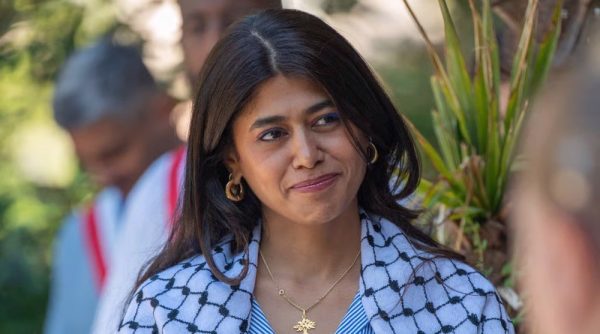
Ahead of her trial on charges of “apology for terrorism,” French Member of the European Parliament Rima Hassan says French authorities have subjected her to sweeping surveillance measures and political pressure in an effort to silence her criticism of Israel’s genocide in Gaza.
Hassan, a vocal pro-Palestinian lawmaker, appeared in court on Tuesday over the French offense of “apology for terrorism,” a legal provision that criminalises certain forms of expression deemed to support or glorify acts of terrorism.
“This is a political case,” Hassan said in an interview ahead of her court date. “It’s a way of putting the Palestinian cause on trial.”
Hassan added that the prosecution is part of a broader campaign targeting her for speaking out in support of Palestine.
The European Parliament member said she has faced intense judicial and political pressure in recent months.
She described disproportionate investigative measures, including the lifting of her parliamentary immunity, retroactive surveillance, and the dissemination of false information following her detention in April.
On April 2, Hassan was taken into police custody after posting on X a quote by Kozo Okamoto, a former member of the now-defunct Japanese Red Army.
The quote read: “As long as there is oppression, resistance will not only be a right, but a duty.”
Hassan said that while in police custody in April, she was subjected to particularly intrusive questioning about her identity, origins and religion, despite those issues having “no connection whatsoever to the alleged facts.”
“This way of proceeding is part of a political climate in which Palestinians, or people perceived as such, are too often regarded as suspects before they are regarded as citizens,” she said.
“This reflex, fuelled by Islamophobia and anti-Palestinian racism, constructs the dangerous figure of the ‘enemy within’,” she added.
In a press release issued ahead of the trial, Hassan’s team said the quote she shared on X was “referring to a principle that lies at the heart of international law: the right of peoples to resist colonization and the occupation of their territory by a foreign army.”
According to the statement, Hassan later deleted the post to avoid any possible misunderstanding.
The post was reported to the prosecutor’s office by far-right National Rally MP Matthias Renault, the French interior minister, the European Jewish Organisation (OJE), and the League Against Racism and Anti-Semitism (Licra).
The prosecution was initiated by the public prosecutor’s office, which operates under the authority of the executive branch.
Hassan said the “judicial harassment” she has faced demonstrates “how far some are willing to go to silence voices that denounce the suffering of the Palestinian people.”
The trial marks the latest legal challenge brought against Hassan over her criticism of Israel’s occupation and its genocide in Gaza. Over the past two years, 16 legal proceedings have been initiated against her, 13 of which have already been dismissed without further action.
Palestinian Information Center – July 6, 2026
BEIRUT – The recent Israeli escalation in southern Lebanon has brought the Ali al-Tahir heights back to the forefront of the military scene, after the occupation forces intensified their raids on the area amid indicators that observers see as a prelude to a potential ground move. While estimates speak of an Israeli attempt to impose a new field equation, military experts warn that any incursion into these strategic hills could open up a wide confrontation with Hezbollah, given their military importance and the nature of their defenses.
Fiery prelude preceding the ground move
Israeli Channel 12 reported that the army launched an attack on the Ali al-Tahir heights area, while the Upper Galilee Regional Council informed the residents of the settlements that they would hear the sound of explosions resulting from the attacks in southern Lebanon.
The military and strategic expert, Retired Brigadier General Khalil al-Jamil, believes that the nature of the Israeli operations indicates that what is happening goes beyond mere limited raids, explaining that the Israeli army usually relies on a wide fiery prelude to isolate the operations area and prevent the arrival of fighters or supplies to it before any ground move, according to Al Jazeera.
He added that the shelling targeting the villages and towns surrounding the Ali al-Tahir heights falls within this framework, expecting the strikes to continue for hours before moving to a new stage with the onset of night, which is the timing during which Israel is accustomed to executing its ground operations.
He pointed out that the scale of the airstrikes is disproportionate to a limited targeting operation, as it was possible to execute such missions using drones, which reinforces, according to his estimation, the hypothesis of preparing for a ground incursion into parts of the heights.
He noted that the Ali al-Tahir heights extend for about three kilometers, and any incursion at its beginning may be limited to specific parts of them, but the nature of the current movements is consistent with the military method followed by the Israeli army before any field advance.
Hezbollah’s readiness and field complexities
Al-Jamil confirmed that Hezbollah will be ready to defend the area, expecting that the fire support units deployed in Iqlim al-Tuffah and neighboring areas will begin executing support operations to prevent Israeli forces from establishing any presence inside the hills.
He added that Israel tried during previous stages to advance in the area, but faced great field difficulties due to the rugged geographical nature and defensive readiness, making any new attempt more complex and costly.
He explained that the Ali al-Tahir heights constitute the main line of defense for southern Lebanon and the Nabatieh district, suggesting that violent confrontations would break out if the escalation develops into a direct ground operation.
He also pointed out that any advance inside the network of tunnels scattered in the area would place Israeli forces before complex fighting conditions, unless a collapse occurs in Hezbollah’s defensive system, a scenario he said is not supported by any field indicators so far.
Despite Israel possessing military capabilities that qualify it to reach the heights if it makes a decision to do so, al-Jamil stressed that achieving this goal would have a high military and human cost.
The policy of “nibbling” and the possibilities of expanding the confrontation
Al-Jamil considered that Israel relies on a policy of gradual “nibbling” of the heights, by combining airstrikes, fire pressure, and limited ground advance, instead of executing a broad operation all at once.
He explained that the Ali al-Tahir heights grant whoever controls them a great field advantage, as they overlook wide areas of southern Lebanon and the vicinity of Nabatieh, making them a controlling point in managing military operations.
He added that Israel views these hills as being within the areas it believes it had previously controlled, and sees that any military operation in them does not conflict, from its point of view, with existing arrangements, although actual control over them has not been achieved on the ground.
He believed that any ground incursion could push Hezbollah to expand the circle of response by targeting Israeli settlements with rockets, in an attempt to pressure the internal front and impose a new deterrence equation, a matter that could reignite the entire southern front.
This escalation comes at a time when the Lebanese Ministry of Health announced that the toll of victims of the Israeli aggression since the second of March has risen to 4,303 dead and 12,203 wounded, amid the continuation of military tension despite efforts aimed at stabilizing the calm on the border.
or go to
Aletho News Archives – Video-Images
By Donald Neff | Washington Report On Middle East Affairs | January 1996
On January 4, 1948, Jewish terrorists drove a truck loaded with explosives into the center of the all Arab city of Jaffa and detonated it, killing 26 and wounding around 100 Palestinian men, women and children.[1] The attack was the work of the Irgun Zvai Leumi – the “National Military Organization,” also known by the Hebrew letters Etzel – the largest Jewish terrorist group in Palestine. The Irgun was headed by Revisionist Zionist Menachem Begin and had been killing and maiming Arabs, Britons and even Jews for the previous ten years in its efforts to establish a Jewish state.
This terror campaign meant that at the core of Revisionist Zionism there existed a philosophical embrace of violence. … continue
 Aletho News If Americans Knew No Tricks Zone
