Aleppo airport again bombed by Israel as multi-front war heats up
The Cradle | October 25, 2023
Israeli jets bombed Aleppo International Airport in northern Syria on 25 October, leading to material damage and putting the civilian airstrip out of service.
“The Israeli enemy carried out an air attack from the direction of the Mediterranean Sea, west of Latakia,” military sources told Syrian state media.
This is the second Israeli attack on Syria in less than 24 hours. Earlier, at around 1:45 a.m. local time, Israel attacked Syrian military sites in Deraa, near the Jordanian border, which killed and injured several military personnel.
Local sources say that the Israeli attack was targeting the Syrian Army’s 12th Brigade in Izra and a military headquarters in the Qarfa area.
These attacks by Israel come after Syria launched rockets against settlements in the occupied Golan Heights, targeting military and mortar launching sites, according to the Israeli Army.
Three days ago, the Israeli air force had targeted Aleppo and Damascus international airports, placing both out of service.
A brewing multi-front war has been worrying Israel and the US as they increase their attacks on bordering Lebanon and Syria.
Syria has launched missiles and mortars against targets in Israel multiple times throughout the past 19 days. As the skirmishes with Hezbollah on the Lebanon-Israel border continue to heat up, the Israelis are working overtime trying to control its advance against Palestine as well as keeping borders in check.
In Iraq, multiple US military bases have been targeted in what the Islamic Resistance of Iraq is claiming as an act of solidarity with the Palestinians. Ansarallah in Yemen has also been targeting Israel from the Red Sea coast.
Prisoners under attack amid genocide in Gaza
Assassinating Hamas official in prison exposes extent of savagery of Israeli regime: Islamic Jihad warns
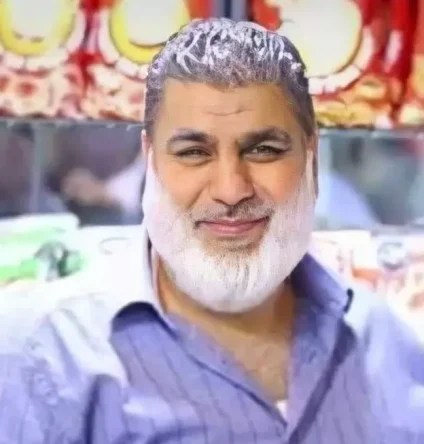
Deceased senior Hamas official Omar Daraghmeh
Press TV – October 24, 2023
The Palestinian Islamic Jihad resistance movement has lamented the death of senior Hamas official Omar Daraghmeh in an Israeli prison, saying the tragic event exposes the extent of the brutality of the occupying regime against Palestinian inmates.
“The Israel Prison Service (IPS ) and [Israel’s so-called internal security service] Shin Bet are waging an open war against Palestinian prisoners being kept behind bars inside the occupying regime’s detention centers,” the movement said in a statement on Monday evening, according to the al-Mayadeen news network.
The Islamic Jihad made clear that it regards what happened to the 58-year-old and his unexpected death as “premeditated murder.”
It also noted that the crime was perpetrated under the support of certain members of the international community, which have encouraged the Tel Aviv regime and its various institutions to commit more atrocities.
Earlier in the day, the Palestinian Prisoners’ Society (PPS) said Israel killed Daraghmeh, who was arrested on October 9 and placed under administrative detention.
The PPS said in a statement that the Israeli narrative about the circumstances of the Hamas member’s death “remains subject to doubt,” particularly since he had appeared at a court hearing hours earlier and seemed to be in good health.
An Israeli statement claimed his death was due to a heart attack.
Hamas mourned the death of Daraghmeh, describing it as an “assassination” by the Israeli regime.
The Gaza-based resistance movement further said that the deceased senior member was tortured to death while being held in the Israeli Megiddo prison.
According to Palestinian sources, Daraghmeh was arrested alongside his son at the start of Operation Al-Aqsa Storm as part of a wide detention campaign led by Israeli forces across the West Bank.
Israeli forces have arrested more than 1,215 Palestinians across the West Bank since fighting broke out between Palestinian resistance groups and Israel on October 7.
Earlier this month, head of the Palestinian Prisoners’ Club, Qadura Fares, warned against the rising brutal Israeli practices against Palestinian prisoners and underscored the need for exposition of the atrocities being committed against them.
Fares said in a statement that “many prisoners had their limbs, legs, and arms broken by Israeli forces,” adding that other inmates “could not recognize them” following the vicious physical assaults.
He added that the Negev prison “has become like Abu Ghraib prison, as it is a center of brutality and brutal behavior against our heroic prisoners,” emphasizing that “Israel is taking revenge on Palestinian prisoners for its defeat [in Gaza].”
Fares finally called upon Western powers to act in support of the principles they preach to others, as failure to do so would reveal their return to the era of colonialism.
International Community Faces Acid Test on Gaza

By Stuart Littlewood | Dissident Voice | October 23, 2023
I never thought I’d live to see a British prime minister warmly embracing a war criminal and genocidal thug like Netanyahu, go swanning around a hotel (the King David) which was used as the Jerusalem headquarters of the British Mandate aúthority and blown up by Jewish terrorists in 1946, killing 91 and wounding 45, then tell Netanyahu: “We want you to win.”
Win what, exactly? And who’s “we”? Certainly not the man-in-the-street in Britain. No, it’ll be that band of brainwashed Ziofreaks in Westminster who have shamed us for over a century.
And they (the Ziofreaks, not “we”) want Israel to win its dirty 75-year campaign of terror, illegal military occupation, dispossession, annexation, ethnic cleansing and extreme cruelty against the harshly oppressed Palestinians who are trying to defend their homeland.
I was even more infuriated to see queues of lorries carrying desperately needed aid held up for days at Gaza’s Rafah crossing into Egypt by the Israelis’ refusal to let them enter the mangled hell-hole they’ve created in the packed enclave. I hear they even bombed the crossing to make sure nothing could move.
Bypass Israel if necessary and deliver aid by sea
If the UN and the high and mighty powers wanted to, they could bypass Israeli and Egyptian cruelty and bring aid to Gaza by sea. They should have done so as soon as Israel slapped its illegal blockade on Gaza in 2006 following Hamas’s inconvenient election win. As it is, unarmed privateers have been left to try to break the siege.
In February 2003 British surgeon David Halpin chartered a small Danish cargo vessel, MV Barbara, filled her with important humanitarian items and sailed from Torquay to Ashdod, a port on the Israeli coast close to Gaza where the cargo was transferred by road into Gaza without too much trouble.
In 2008 two humanitarian vessels actually got through to Gaza. Their success in breaking the siege, and their safe arrival and departure, was due to the intervention of the British Foreign Office. Before the peace activists set sail, they asked the British government “to ensure the freedom boats’ safe and uninterrupted passage to Gaza considering these are international waters and Palestinian territorial waters”. Any attempt to stop the boats would surely infringe the right to freedom of movement to and from Gaza, and seriously breach the International Covenant on Economic, Social and Cultural Rights, to which Israel is a party.
The minister in charge of Middle East affairs Kim Howells later admitted that “FCO officials spoke to Israeli officials in advance of the trip and Israel allowed the boats peacefully into Gaza.”
Nearly three years later, as Gaza Freedom Flotilla II prepared to sail, Israel was determined not to let the boats reach their destination because safe arrival would drive a coach and horses through Israel’s control-freakery. This prompted the following statement by flotilla organizers to the UN Human Rights Council:
“We are determined to sail to Gaza. Our cause is just and our means are transparent. To underline the fact that we do not present an imminent threat to Israel nor do we aim to contribute to a war effort against Israel, thus eliminating any claim by Israel to self-defense, we invite the HRC or any other UN or international agency to come on board and inspect our vessels at their point of departure, on the high seas, or on their arrival in the Gaza port. We will – and must – continue to sail until the illegal siege of Gaza is ended and Palestinians have the same human and national rights those of us sailing enjoy.” – Steering Committee of the International Coalition for Gaza Freedom Flotilla II.
In the end Flotilla II didn’t sail. In all, five shipments were reportedly allowed access prior to the 2008–09 Gaza War, but after that everything was blocked by Israel.
In May 2010 the Mavi Marmara took part in a flotilla of ships operated by activist groups from 37 countries with the intention of directly confronting the Israeli blockade. While en route and in international waters Israeli Naval Forces communicated to them that a naval blockade around the Gaza area was in force and ordered the ships to follow them to Ashdod port or be boarded. The ships declined and were boarded in international waters.
Reports from journalists on the Mavi Marmara and from the UN claimed that Israeli gunboats opened fire with live rounds before boarding the ship. Passengers tried to repell the boarding parties of Israeli commandos, and in the violent clash that followed nine were killed and a tenth died four years later of his wounds. Several dozen more were injured, some seriously. Israel claimed 10 of its troops were injured, one seriously.
The UN’s official report found Israel’s blockade of Gaza to be legal, but other UN experts, reporting to the Human Rights Council, disagreed and found it was a violation of international law.
A UN fact-finding mission, investigating the assault on the Mavi Marmara, declared that “no case can be made for the legality of the interception” and they therefore found that the interception was illegal and constituted collective punishment of the people living in the Gaza Strip and thus to be illegal and contrary to Article 33 of the Fourth Geneva Convention. It could not even be justified even under Article 51 of the Charter of the United Nations [the right of self-defence].
The Centre for Constitutional Rights also concluded that the Israeli blockade of the Gaza Strip was illegal under international law and amounted to collective punishment. “The flotilla did not seek to travel to Israel, let alone ‘attack’ Israel. Furthermore, the flotilla did not constitute an act which required an ‘urgent’ response, such that Israel had to launch a middle-of-the-night armed boarding… Israel could also have diplomatically engaged Turkey, arranged for a third party to verify there were no weapons onboard and then peacefully guided the vessel to Gaza.”
Craig Murray, an internationally recognized authority on these matters, was Head of the Maritime Section of the Foreign and Commonwealth Office and responsible for giving political and legal clearance to Royal Navy boarding operations in the Persian Gulf following the Iraqi invasion of Kuwait. He said that Israel had tried to justify previous fatal attacks on neutral civilian vessels on the High Seas in terms of enforcing an embargo under the legal cover given by the San Remo Manual of International Law Applicable to Armed Conflicts at Sea. “San Remo only applies to blockade in times of armed conflict. Israel is not currently engaged in an armed conflict, and presumably does not wish to be. San Remo does not confer any right to impose a permanent blockade outwith times of armed conflict, and in fact specifically excludes as illegal a general blockade on an entire population.”
At the same time UN Security Council resolution 1860 (2009) emphasised “the need to ensure sustained and regular flow of goods and people through the Gaza crossings” and called for “the unimpeded provision and distribution throughout Gaza of humanitarian assistance, including of food, fuel and medical treatment”.
But when MEP Kyriacos Triantaphyllides put a question to the EU Commission this was their reply:
After the organisation of a flotilla heading to Gaza in May 2010, the Quartet, of which the EU is a member, stated that all those wishing to deliver goods to Gaza should do so through established channels, so that their cargo can be inspected and transferred via land crossings into Gaza. It also stated that there was no need for unnecessary confrontations and that all parties should act responsibly in meeting the needs of the people of Gaza….
The Commission stands by this line. A flotilla is not the appropriate response to the humanitarian situation in Gaza. At the same time, Israel must abide by international law when dealing with a possible flotilla. The EU continues to request the lifting of the blockade on Gaza, including the naval blockade.
It might have been scripted in Tel Aviv and not by anyone with Christian principles. The “established channel” for delivering goods to Gaza is of course the time-honoured route by sea, which is protected by maritime and international law and therefore entirely appropriate.
There’s nothing “provocative” about unarmed vessels with humanitarian cargoes using it. The organizers had offered their cargoes for inspection and verification by a trusted third party to allay Israel’s fears about weapon supplies. They should not have to deal with a belligerent regime that was (and still is) cruelly waging a starvation war on women and children. Anyone suggesting they must do so seeks to legitimize the blockade, which we all know to be illegal and a crime against humanity.
And where are the UN when a rogue nation – also a UN member – shows contempt for their maritime Convention?
By 2018 Her Majesty’s Government had abandoned all pretence of upholding the Law of the Seas or even pursuing its 2008 policy of intervening to obtain advance clearance from the Israeli authorities. The Foreign Office appeared to have joined the Zionist conspiracy to legitimise the Gaza blockade and support Israel’s control-freakery.
Lord Ahmad for the Government, answering a written question in the House of Lords, said: “Embassy officials discussed the travelling flotilla with the Israeli authorities on 6 June… the Foreign and Commonwealth Office advises against all travel to Gaza including the waters off Gaza.”
The waters off Gaza are international waters where neutral civilian vessels are entitled to free passage under the UN Conventional on the Law of the Seas. Why shouldn’t unarmed aid boats be able sail there unmolested? Is the Law of the Seas now dead? Is Britain no longer committed to keeping the sea lanes open to innocent shipping? And why is the UN not upholdings its own Convention?
In particular, what happened to the diplomacy of 2008? Why didn’t our Government arrange advance clearance as before? Or were they, by any chance, colluding to thwart this mercy mission?
In reply to a question from myself, Alister Burt, minister for the Middle East at that time, said: “Delivery of aid should be co-ordinated with the UN and Israeli and Egyptian Governments. We expect Israel to show restraint and fully respect international law. If wrongdoing has taken place we expect those responsible to be held to account…. We remain deeply concerned about restrictions on movement and access in Gaza, and the impact that this is having on the humanitarian situation. We have frequent discussions with the Israeli Government about the need to ease restrictions on Gaza. We call on Israel, the Palestinian Authority and Egypt to work together to ensure a durable solution for Gaza.”
As if Israel ever respected international law or had ever been held to account.
So here we have a horrific humanitarian crisis where the population of Gaza (nearly half of whom are children) are badly injured, starving and bombed out of their homes, with few if any public services still functioning and with aid waiting outside and prevented from entering by Israel.
This is an acid test for the United Nations and the international community who need to show their real worth and recover the respect they have carelessly lost over the years.
They are drinking in the Last Chance saloon and this is possibly their final opportunity to prove that the world has, after all, developed moral sensibilities and emerged from the caveman era. All it takes is a mercy flotilla of ships belonging to few UN member states, not privateers, to bring the Middle East issue to a head so the root causes can finally be dealt with in accordance with international law.
In short, the lives of 2.3 million innocent, incarcerated Gazan cannot be left in the hands of a psychopath like Netanyahu. Nor can the Israelis be allowed to dictate the wider future of the Holy Land they have defiled.
Biden sets condition for Gaza ceasefire

MEMO | October 24, 2023
US President Joe Biden has said that it is not possible to talk about a ceasefire in Gaza before the hostages held by the Palestinian resistance groups are released. “We should have those hostages released, and then we can talk,” Biden said in response to a reporter’s question.
Biden also commented on his phone call with Pope Francis in the Vatican, which was announced by the White House on Sunday. He claimed that he and the Roman Catholic Pontiff are on the same page about developments in Israel and Gaza.
“He was very, very interested in what we were doing to deal with some of the crises we’re facing, particularly in Israel this time around. And I laid out to him what the game plan was, how we thought we should be providing the kind of assistance to Israel they needed. And the Pope was across-the-board supportive of what we’re doing.”
Earlier, State Department spokesman Matthew Miller told a press conference that the US does not believe it is possible to implement a ceasefire in the Gaza Strip because “any ceasefire will give the ability to rest, to refit, and to get ready to continue launching terrorist attacks against Israel.”
Israel calls on UN chief to resign
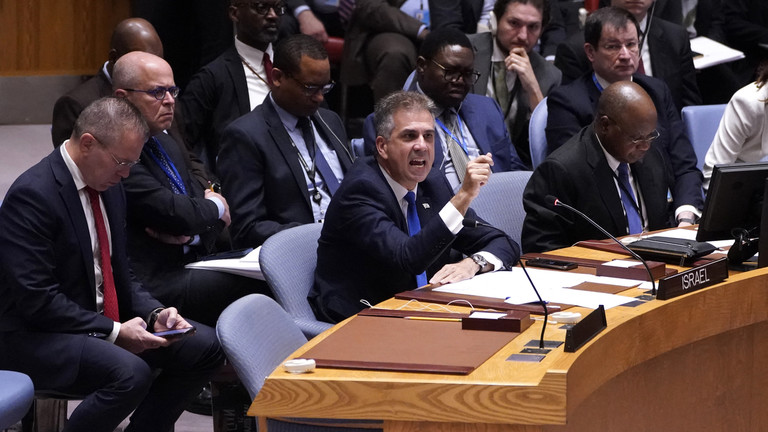
Israeli Foreign Minister Eli Cohen at a UN Security Council meeting on the conflict in Middle East, October 24, 2023. © TIMOTHY A. CLARY / AFP
RT | October 24, 2023
Israeli ambassador to the UN Gilad Erdan demanded Secretary-General Antonio Guterres step down on Tuesday, accusing him of showing “compassion” for terrorists and murderers in a speech to the Security Council.
“The UN Secretary-General, who shows understanding for the campaign of mass murder of children, women, and the elderly, is not fit to lead the UN. I call on him to resign immediately,” Erdan said on X, formerly Twitter. “There is no justification or point in talking to those who show compassion for the most terrible atrocities committed against the citizens of Israel and the Jewish people.”
The “shocking” speech by Guterres is evidence that the secretary-general “is completely disconnected from the reality in our region and that he views the massacre committed by Nazi Hamas terrorists in a distorted and immoral manner,” Erdan argued.
“His statement that, ‘the attacks by Hamas did not happen in a vacuum,’ expressed an understanding for terrorism and murder. It’s really unfathomable. It’s truly sad that the head of an organization that arose after the Holocaust holds such horrible views. A tragedy!” he posted.
Israeli Foreign Minister Eli Cohen reacted to Guterres’ speech in the Security Council by pointing his finger and yelling at the secretary-general. He then announced he would refuse to meet with him again.
“After October 7th there is no room for a balanced approach. Hamas must be wiped out from the world!” Cohen declared on X.
Guterres had condemned the “appalling” and inexcusable violence by Hamas, but noted that Gaza had been “subjected to 56 years of suffocating occupation” and that the Israeli response to October 7 attacks has amounted to collective punishment of Palestinians.
“I am deeply concerned about the clear violations of international humanitarian law that we are witnessing in Gaza. Let me be clear: No party to an armed conflict is above international humanitarian law,” Guterres told the Security Council. He also urged an “immediate humanitarian ceasefire” to facilitate the release of hostages held by Hamas, deliver aid to civilians and “ease epic suffering” in the Palestinian territory.
Speaking at the same meeting, US Secretary of State Antony Blinken insisted that the UN “must affirm the right of any nation to defend itself and to prevent such harm from repeating itself,” noting that no member of the Security Council “could or would tolerate the slaughter of its people.”
Blinken also questioned what he described as lack of international outrage, “revulsion” and explicit condemnation of the Hamas attacks.
‘Mask Off’ for US as it Opposes Chinese Peace Mission in the Middle East
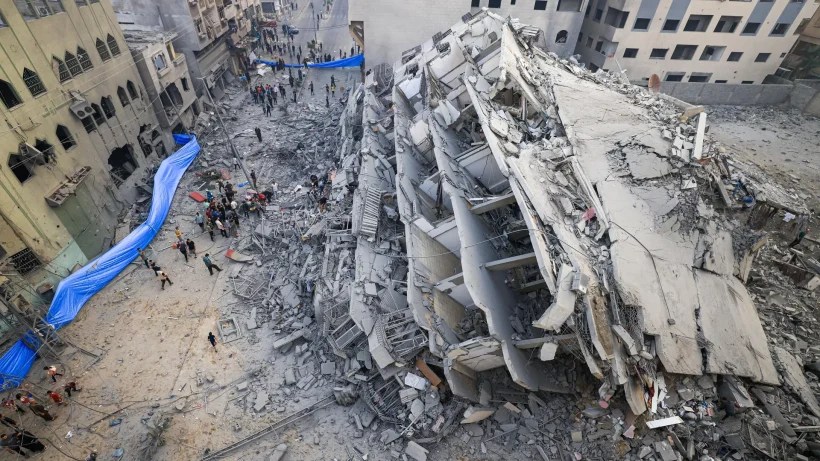
People inspect the ruins of a building destroyed in Israeli strikes in Gaza City on October 8, 2023
By James Tweedie – Sputnik – 24.10.2023
China has dispatched its special envoy to the Middle East in a bid to bring the latest escalation between Israel and Hamas to an end. Peace activist, writer and teacher KJ Noh said the US response exposed its warmongering nature.
The US has unmasked its true nature by blocking efforts by China and other nations to bring peace to the Middle East, says a peace activist.
Chinese special envoy to the Middle East Zhai Jun said on Monday he had already visited Qatar and Egypt and would now travel to the United Arab Emirates, Saudi Arabia, Jordan and other countries in the region “to further strengthen coordination with relevant parties to promote ceasefire, end violence and mitigate the situation.”
More than 5,000 civilians have been killed and 13,000 injured in the besieged Gaza Strip by Israeli Defence Forces bombing since the armed wing of the Hamas movement launched a surprise attack into southern Israel on October 7. The victims include more than 2,000 children and 1,000 women.
Last week the US blocked UN Security Council motions moved by Russia and Brazil calling for an immediate ceasefire between Israel and the Palestinian territories and for civilians to be protected. Washington has also sent two US Navy aircraft carrier strike groups and a seaborne assault flotilla to the region to back up Israel.
Peace campaigner KJ Noh told Sputnik that Washington was directly opposed to Beijing’s attempts to broker a peace deal between Israel, Hamas and other states and movements in the region.
“China is using its good offices, scrambling to do shuttle diplomacy to try and de-escalate and find a peaceful resolution,” Noh said. “And the United States is saying: ‘Don’t even dare talk about de-escalation. Nobody mention a ceasefire’.”
“It only wants to make sure that whatever Israel does, it does it with a minimum of PR blowback,” he added. “And so it’s trying to mitigate the PR damage rather than prevent the horrific war crimes and atrocities that are sure to happen and that are already happening.”
The writer said this was a “mask-off moment” when the West’s true nature was exposed to the nations of the global south.
“The US could plausibly mystify many countries by pretending to be something that it was not,” Noh argued. “But when it came out all in favor of Israel’s violence and was ignoring the ground realities as well as international law, then at that point you can’t keep up the pretence any more.”
“Even the quisling leaders of US allies have had to make a conscientious statement because the outrage on the street, the outrage globally is so extraordinary that they cannot but speak up against what the US and Israel are doing,” he stressed.
Western media has tried to dismiss China’s peace initiatives as an attempt to position itself as a geopolitical rival to the US — a narrative which Noh called “extraordinary”.
“The notion that somehow peace is nefarious, that China is being unprincipled in that it’s trying to work for peace — China is on the side of peace. That much is clear because that it stands to gain from peace,” he said.
“Everybody benefits from peace. It just is because China’s model is win-win cooperation,” Noh said. “On the other hand, the empire benefits from war. The US is built on more genocide, primitive accumulation and geopolitical oppression and bullying.”
What really happened on 7th October?
Evidence is now emerging that up to half the Israelis killed were combatants; that Israeli forces were responsible for some of their own civilian deaths; and that Tel Aviv disseminated false ‘Hamas atrocities’ stories to justify its devastating air assault on Palestinian civilians in Gaza.
By Robert Inlakesh | The Cradle | October 24, 2023
Two weeks after the Hamas breakout assault on Israel on 7 October, a clearer picture of what happened – who died, and who killed – is now beginning to emerge.
Instead of the wholescale massacre of civilians claimed by Israel, incomplete figures published by the Hebrew newspaper Haaretz show that almost half the Israelis killed that day were in fact combatants – soldiers or police.
In the interim, two weeks of blanket western media reporting that Hamas allegedly killed around 1,400 Israeli civilians during its 7 October military attack has served to inflame emotions and create the climate for Israel’s unconstrained destruction of the Gaza Strip and its civilian population.
Accounts of the Israeli death toll have been filtered and shaped to suggest that a wholesale civilian massacre occurred that day, with babies, children, and women the main targets of a terror attack.
Now, detailed statistics on the casualties released by the Israeli daily Haaretz paint a starkly different picture. As of 23 October, the news outlet has released information on 683 Israelis killed during the Hamas-led offensive, including their names and locations of their deaths on 7 October.
Of these, 331 casualties – or 48.4 percent – have been confirmed to be soldiers and police officers, many of them female. Another 13 are described as rescue service members, and the remaining 339 are ostensibly considered to be civilians.
While this list is not comprehensive and only accounts for roughly half of Israel’s stated death toll, almost half of those killed in the melee are clearly identified as Israeli combatants.
There are also so far no recorded deaths of children under the age of three, which throws into question the Israeli narrative that babies were targeted by Palestinian resistance fighters. Of the 683 total casualties reported thus far, seven were between the ages of 4 and 7, and nine between the ages of 10 and 17. The remaining 667 casualties appear to be adults.

Age distribution of the Israelis killed during Hamas’ October 7 operation (as of 23 October).
The numbers and proportion of Palestinian civilians and children among those killed by Israeli bombardment over the past two weeks – over 5,791 killed, including 2,360 children and 1,292 women, and more than 18,000 injured – are far higher than any of these Israeli figures from the events of 7 October.
Revisiting the scene
The daring Hamas-led military operation, codenamed Al-Aqsa Flood, unfolded with a dramatic dawn raid at approximately 6:30 AM (Palestine time) on 7 October. This was accompanied by a cacophony of sirens breaking the silence of occupied Jerusalem, signaling the start of what became an extraordinary event in the occupation state’s 75-year history.
As per the spokesperson of Hamas’ armed wing, the Al-Qassam Brigades, around 1,500 Palestinian fighters crossed the formidable Gaza-Israel separation barrier.
However, this breakout was not limited to Hamas forces alone; numerous armed fighters belonging to other factions such as Palestinian Islamic Jihad (PIJ) later breached the armistice line, along with some Palestinians unaffiliated with any organized militia.
As it became apparent this was no ordinary resistance operation, hundreds of videos quickly flooded social media, most of which have been viewed by The Cradle, depicting dead Israeli troops and settlers, fierce gunfire battles between various parties, and Israelis being taken captive into Gaza.
These videos were either taken on the phones of Israelis, or were released by Palestinian fighters filming their own operation. It wasn’t until hours later that more gruesome and downright dubious allegations began to surface.
Unsubstantiated allegations of ‘Hamas atrocities’
Aviva Klompas, a former speechwriter for the Israeli mission to the UN, was the first Israeli of note to spread the claim that there were reports of “Israeli girls being raped and their bodies dragged through the street.”
She posted this on X at 9:18 PM (Palestine time), on 7 October, although an op-ed Klompa published with Newsweek at 12:28 AM (Palestine time), on 8 October, made no mention of any sexual violence.
Klompas is also the co-founder of Boundless Israel, a “think-action tank” that works “to revitalize Israel education and take bold collective action to combat Jew-hatred.” An “unapologetically Zionist” charitable group that works to promote Israeli narratives on social media.
The one case touted as proof of rape was that of a young German-Israeli woman named Shani Louk, who was filmed face down in the back of a pickup truck and was widely assumed dead.
It was unclear whether the fighters filmed with Louk in the Gaza-bound vehicle were members of Hamas, as they do not sport the uniforms or insignia of the Al-Qassam troops identifiable in other Hamas videos – some even wore casual civilian clothing and sandals.
Later, her mother claimed to have evidence that her daughter was still alive, but had suffered a severe head wound. This rings true with information released by Hamas that indicated Louk was being treated for her injuries at an unspecified Gaza hospital.
Complicating matters further, on the day these rape allegations arose, Israelis would not have had access to this information. Their armed forces had not yet entered many, if not most, of the areas liberated by the resistance and were still engaged in armed clashes with them on multiple fronts.
Nevertheless, these rape claims took on a life of their own, with even US President Joe Biden alleging, during a speech days later, that Israeli women were “raped, assaulted, paraded as trophies” by Hamas fighters. It is important to note that The Forward’s article on 11 October reported that the Israeli military acknowledged they had no evidence of such allegations at that point.
When the army later made its own allegations of decapitations, foot amputations, and rape, Reuters pointed out that “the military personnel overseeing the identification process didn’t present any forensic evidence in the form of pictures or medical records.” To date, there is no credible evidence of these atrocities that has been presented.
Other outrageous allegations, such as the story of Hamas “beheading 40 babies‘ made headlines and the front pages of countless western news outlets. Even Biden claimed to have seen “confirmed photos of terrorists beheading babies.” The claims trace back to Israeli reserve settler and soldier David Ben Zion, who has previously incited violent riots against Palestinians and called for the West Bank town of Huwara to be wiped out. No evidence was ever produced to support these claims and the White House itself confirmed later that Joe Biden had never seen such photos.
The Hamas plan
There is little to no credible evidence that Palestinian fighters had a plan to – or deliberately sought to – kill or harm unarmed Israeli civilians on 7 October. From the available footage, we witness them engaging primarily with armed Israeli forces, accounting for the deaths of hundreds of occupation soldiers. As Qassam Brigades’ Spokesman Abu Obeida made clear on 12 October:
“Al-Aqsa Flood operation aimed to destroy the Gaza Division (an Israeli army unit on Gaza’s borders) which was attacked at 15 points, followed by attacking 10 further military intervention points. We attacked the Zikim site and several other settlements outside the Gaza Division headquarters.”
Abu Obeida and other resistance officials claim that the other key objective of their operation was to take Israeli prisoners that they could exchange for the approximately 5,300 Palestinian prisoners held in Israeli detention centers, many of whom are women and children.
Hamas Deputy Head of the Political Bureau of Saleh Al-Arouri, in an interview after the operation, stressed: “We have a large and qualitative number and senior officers. All we can say now is that the freedom of our prisoners is at the doorstep.”
Both sides play this game: Since the start of its military assault on Gaza, Israel has rounded up and imprisoned more than 1,200 Palestinians in the occupied West Bank. To date there have been 38 prisoner exchange deals between the resistance factions and Tel Aviv – deals that Israelis often resist to the very last minute.
While these kinds of testimonies trickle out, reports are emerging that Israeli authorities have dialed up the mistreatment, torture, and even killing of Palestinian prisoners in their custody – a violation of the Geneva Conventions, which ironically, a non-state actor like Hamas appears to have followed to the letter.
In relation to the events of 7 October, there are certainly some videos depicting possibly unarmed Israelis, killed in their vehicles or at entrances to facilities, so that Palestinian troops could gain access.
There are also videos which show the fighters engaging in shootouts with armed Israeli forces, where there were unarmed Israelis taking cover in between, in addition to videos of fighters shooting toward houses and throwing grenades into fortified areas. Eyewitness testimony also suggests grenades were thrown into bomb shelters, though by whom is unclear.
Even at the Israeli “peace rave”, which has been cited as the single deadliest attack committed by Palestinian fighters during their operation, videos emerged that appeared to show Israeli forces opening fire through a crowd of unarmed civilians, toward targets they believed to be Hamas members. ABC News also reported that an Israeli tank had headed to the site of the festival.
An Israeli massacre in Kibbutz Be’eri?
In its report on the events at Be’eri Kibbutz, ABC News photographed artillery pieces resembling Israeli munitions outside a bombed-out home. The reporter, David Muir, mentioned that Hamas fighters, covered in plastic bags, were found in the aftermath.
Additionally, videos of the scene show homes that appear to have been struck by munitions that Hamas fighters did not possess. Muir reported that about 14 people were held hostage in a building by Palestinian fighters.
A Hebrew-language Haaretz article published on 20 October, which only appears in English in a must-read Mondoweiss article, paints a very different story of what went down in Be’eri that day. A Kibbutz resident who had been away from his home – whose partner was killed in the melee – reveals stunning new details:
“His voice trembles when his partner, who was besieged in her home shelter at the time, comes to mind. According to him, only on Monday night (9 October) and only after the commanders in the field made difficult decisions — including shelling houses with all their occupants inside in order to eliminate the terrorists along with the hostages — did the IDF complete the takeover of the kibbutz. The price was terrible: at least 112 Be’eri people were killed. Others were kidnapped. Yesterday, 11 days after the massacre, the bodies of a mother and her son were discovered in one of the destroyed houses. It is believed that more bodies are still lying in the rubble.”
Photo evidence of the destruction in Be’eri corroborates his account. Only the heavy munitions of the Israeli army could have destroyed residential homes in this manner.

Aftermath or Be’eri Kibbutz after the fire power of the two sides ceased
Hamas behaviors: Evidence vs allegations
Yasmin Porat, a survivor from Kibbutz Be’eri, said in an interview for an Israeli radio-show, hosted by state-broadcaster Kan, that Israeli forces “eliminated everyone, including the hostages,” going on to state that “there was very, very heavy crossfire” and even noted tank shelling.
Porat had attended the Nova rave and testified to the humane treatment throughout different interviews she conducted with Israeli media. She explained that when she was held prisoner, the Hamas fighters “guarded us”, telling her in Hebrew to “Look at me well, we’re not going to kill you. We want to take you to Gaza. We are not going to kill you. So be calm, you’re not going to die.” She also added the following:
“They give us something to drink here and there. When they see we are nervous they calm us down. It was very frightening but no one treated us violently. Luckily nothing happened to me like what I heard in the media.”
Increasingly, and to the horror of some Israeli officials and news outlets, Israeli eyewitnesses and survivors of the bloodshed are testifying that they were treated well by Palestinian fighters. On 24 October, Israeli state broadcaster Kan bemoaned the fact that prisoner Yocheved Lifshitz, released by Hamas the day before, was allowed to make statements live on air.
As she was handed over to Red Cross intermediaries, the elderly Israeli female captive was caught on camera turning back to squeeze the hand of her Hamas captor in her last goodbyes. Lifshitz’s live broadcast, in which she spoke about her two-week ordeal, “humanized” her Hamas captors even further as she recounted her daily life with the fighters:
“They were very friendly toward us. They took care of us. We were given medicine and were treated. One of the men with us was badly injured in a motorbike accident. Their (Hamas) paramedics looked after his wounds, he was given medicine and antibiotics. The people were friendly. They kept the place very clean. They were very concerned about us.”
More questions than answers
It is essential to recognize that in many reports by western journalists on the ground, the majority of information regarding the actions of Hamas fighters comes from the Israeli army – an active participant in the conflict.
Emerging evidence now indicates that there is a high probability, especially due to the scale of the infrastructural damage, that Israeli military forces could have deliberately killed captives, fired on incorrect targets, or mistaken Israelis for Palestinians in their firefights. If the only source of information for a serious claim made is the Israeli army, then it has to be taken into account that they have reason to conceal cases of friendly fire.
Israeli friendly fire was rampant, even in the days that followed, from an army with very little actual combat experience. In the city of Ashkelon (Askalan) on 8 October, Israeli soldiers shot dead and shouted insults at the body of a man they believed to have been a Hamas fighter, yet later realized they had executed a fellow Israeli. This is just one of three such examples of friendly fire in one day, resulting in the killing of Israelis by their own troops.
Amid the fog of war, parties to the conflict have different perspectives on what occurred during the initial raid and its aftermath. It’s not disputed that Palestinian armed groups inflicted significant losses on the Israeli military, but there will be plenty of ongoing debate regarding everything else in the weeks and months to come.
An independent, impartial, international investigation is urgently needed, one that has access to information from all sides involved in the conflict. Neither the Israelis nor the Americans will agree to this, which itself suggests that Tel Aviv has much to conceal.
In the meantime, Palestinian civilians in Gaza endure ongoing, indiscriminate attacks with the most sophisticated heavy weapons in existence, living under the persistent threat of forced and potentially irreversible displacement. This Israeli air blitz was made possible only by the flood of unsubstantiated ‘Hamas atrocities’ stories that media began to circulate on and after 7 October.
Genocide Unfolding
By Craig Murray | October 23, 2023
Tonight has been the most violent bombardment of Gaza so far, notably concentrated on precisely the areas into which Israel ordered the population to evacuate. I find it almost impossible to believe that this genocide is under way with the active support of almost all western governments.
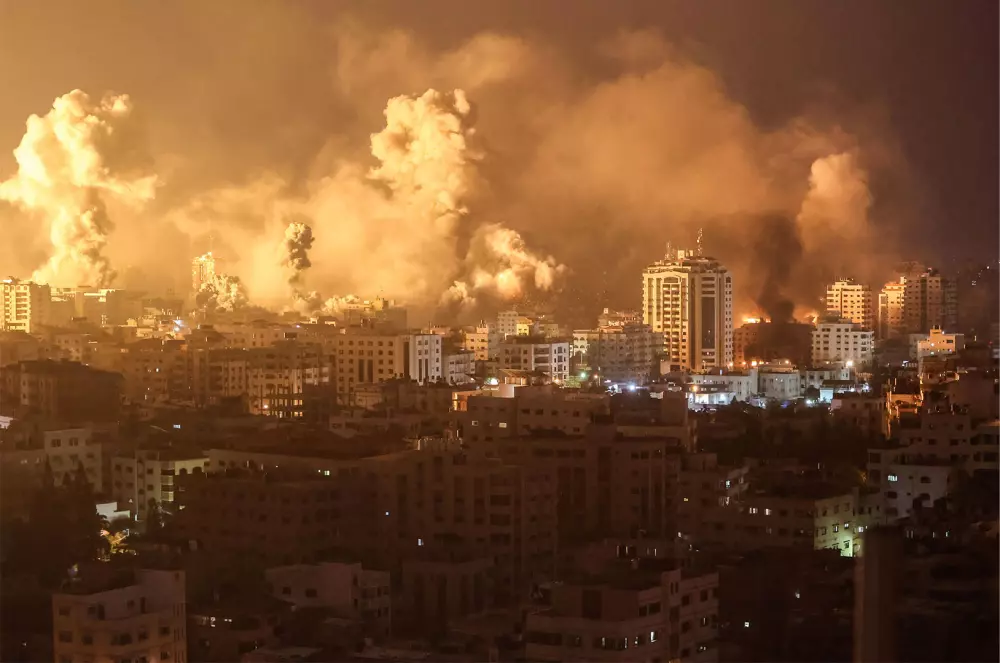
I want to look at two questions – what will happen internationally, and what is happening in western societies.
Israel plainly is on the course of further escalation and intends to kill many thousands more Palestinians. More than 2,000 Palestinian children alone have now been killed by Israeli aerial attack in the last fortnight.
Gaza has no defence from bombs and missiles, and there is no military reason why Israel cannot keep this up for months and simply rely upon aerial massacre. We are perhaps within a week of thirst, starvation and disease killing even more people per day than bombardment.
The population of Gaza are simply defenceless. Only international intervention can stop Israel from doing whatever it wishes, and those countries which have influence with Israel are actively abetting and encouraging the genocide.
The question is, what is Israel’s aim? Do they intend to reduce the Gaza Strip still further, annexing half or more of it? Will starvation and horror enable the international community to force Egypt to accept the expulsion of the population of Gaza into the Sinai Desert as a “humanitarian” move?
That appears to be the end game: expulsion of population and territorial expansion into Gaza. That would require a ground invasion, but probably not until after even more intense aerial bombardment to eliminate all resistance. This territorial ambition of course accords with the violent expansion of illegal settlement in the West Bank which is currently under way, with the world paying almost no attention. It is very hard indeed to comprehend the passivity of Fatah and Mahmoud Abbas at the moment.
Netanyahu’s political stock within Israel is so low, that the only way he can recover is by making a major step towards the complete genocide of the Palestinian people and the achievement of Greater Israel Netanyahu now knows that there is no violence against Palestinians so extreme that the western political elite will not support it under the mantra of “Israel’s right to self-defence”.
I do not see any salvation for Gaza coming from Hezbollah. If Hezbollah were to employ their vaunted missile strike capabilities, the moment to do it would be now when the Israeli armour is drawn up in massive parks outside Gaza, a perfect target even for longer range missiles of limited accuracy. Once dispersed into Gaza the armour would be far harder for Hezbollah to hit at range.
Hezbollah is even better equipped now to fight a defensive war in Lebanon than it was when it defeated the Israeli advance in 2006. But it is not configured or equipped to fight an aggressive ground war into Israel, which would be a disaster. It also has to worry about hostile militias in its rear. If Hezbollah can provoke an Israeli incursion into Southern Lebanon, that would enable it to inflict substantial casualties, but Israel is not going to do that in a way that detracts from its capabilities in Gaza.
Iran has greatly improved its diplomatic position in the last year. The Chinese-brokered lessening of hostility with Saudi Arabia has potential to revolutionise Middle Eastern politics, and the benefits of this will not lightly be laid aside by Tehran. Iran had also made real progress with the Biden administration in overcoming the blind hostility of the Trump years.
Iran has no desire to throw away these gains. That is why it seems to me extremely improbable that Iran had endorsed the 7 October attacks by Hamas. Iran is now restraining Hezbollah. But there are limits to the patience of Iran. The extraordinary truth is that Iran is probably the only state under discussion here with a genuine humanitarian concern for the lives of Palestinians. If the genocide unfolds as horribly as I anticipate, Iran can be pushed too far.
That said, I offer just a cautionary footnote that Saudi Arabia is not, under MBS, quite the reliable US/Israeli puppet it has historically been. I do not have much time for MBS, as you know, but his high opinion of the importance of the Al Saud and their leadership role among arabs, makes him a different proposition to his predecessor.
Saudi Arabia has leverage. The Biden administration has gone all in on regional domination, sending two aircraft carrier groups into a situation which should it escalate, could send oil prices to highest-ever levels, with Russia blocked from the market. Biden is risking a huge gas price hike in an election year.
Biden’s calculation, or that of his security services, is that nobody can or will intervene to save the Palestinians. They judge the genocide as containable. That is an extraordinary gamble.
There has been an extraordinary amount of vitriol aimed at Qatar by pro-Israel commentators, for hosting the Hamas office and leadership. This is extraordinarily ignorant.
Qatar hosts Hamas, just as Qatar hosted the Taliban Information Office, at the direct request of the United States. It provides a means of dialogue between the United States and Hamas (exactly as it did with the Taliban) both at deniable level, and through third parties, including of course the government of Qatar. Thus when Blinken arrived in Qatar one day and the Iranian foreign minister the next, these were in fact “proximity talks” involving Hamas.
How do I know? Well, at Julian’s request, I visited Qatar about five years ago to discuss whether Julian, and Wikileaks, might potentially relocate to Qatar, which Julian had described as “the new Switzerland” in terms of being a neutral diplomatic venue.
It was explained to me by the Qataris, at a very senior level, that Qatar hosted the Taliban Information Office and Hamas because the United States government had asked them to do so. Qatar hosted a major US military base and depended on US support against a Saudi takeover. If I could generate a request from then President Trump for Qatar to host Wikileaks, then they would do so. Otherwise, no.
So I know what I am talking about.
One tiny but good result of this brokering in Qatar was the release of two American national hostages. British diplomats have told me that discussions in Qatar have so far held back the Israeli ground offensive, but I am not convinced that Israel really wished to do this yet. They are having sadistic fun shooting children in a barrel.
Qatar has also been the origin of deals allowing in a tiny amount of aid to Gaza, but this is so small as to be almost irrelevant. It is performative humanitarianism by the West.
I have frequently praised China for the fact that their economic dominance has been unaccompanied by any aggressive desire for world hegemony, but this also has its downside. China sees no benefit in assisting the Palestinians in practice. Hopeful reports of China sending warships refer simply to pre-planned exercises, largely in the Gulf. That China is carrying out such joint exercises with Gulf states is indeed part of a long term increasing of influence, but is not relevant to the immediate reality.
Russia of course has its hands full in Ukraine. It is allowing its Syrian bases to be used as a conduit following increased Israeli bombing of Syrian airports, but there is not a great deal more that it can do. Erdoğan is genuinely furious at what is happening in Gaza, but Turkey is struggling to find any way to apply pressure, barring linkage to Ukraine shipping issues (which Erdoğan is considering).
That is a very rough and ready tour d’horizon, but the net effect is that I see no current hope for averting the atrocity which is unfolding before our horrified eyes.
Most of our eyes are indeed horrified. The gap between the western political and media elites and their people on this issue is simply enormous. Western leaders have not only failed to restrain Israel, they have almost unanimously egged Netanyahu on, with the continued repetition of the phrase “Israel’s right to self-defence” as justification for the mass bombing, removal and starvation of an entire civilian population.

The western leadership glee in vetoing every attempt at a ceasefire resolution at the UN is astonishing.
Massive demonstrations have been taking place across Europe against this unspeakable massacre, and the knee-jerk reaction of politicians at their isolation from public opinion has been to try to make such shows of dissent illegal. In the UK people have been arrested for displaying Palestinian flags. In Germany pro-Palestinian demonstrations have been entirely banned. Something similar has been attempted in France, with predictable failure.
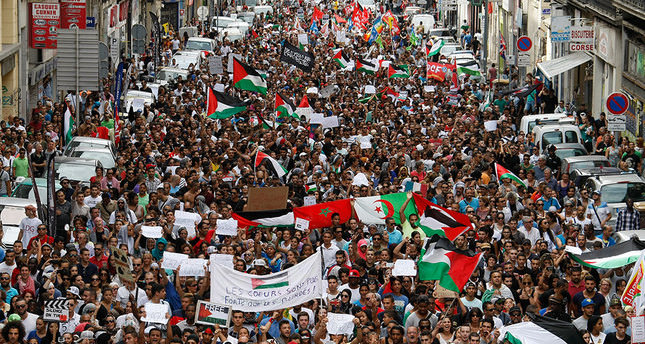
I have myself attended pro-Palestinian demonstrations in three different countries, and the most striking thing on each occasion was the strong support of passers-by, and the number of people spontaneously coming out to join the demo as it passed.
A wave of racism has been unleashed in the UK and elsewhere. I am astonished by the Islamophobia and racial hatred released online, with no apparent comeback. UK Ministers claim to be alarmed at the “terrorist sympathies” of pro-Palestinian demonstrators, yet it is perfectly legal to call for Palestinians to be exterminated, to compare them to different types of animal and vermin, and suggest they should be driven into the sea. That does not horrify ministers at all.
I am personally now subject to a police investigation for “terrorism” merely for suggesting that the Palestinians too have a right to self-defence and may offer armed resistance to genocide – a right they enjoy beyond doubt in international law. Remember, Israel has formally declared war. Is it the position in British law that the only belief it is legal to hold and express, is that in this war the Palestinians must simply line up quietly to be killed?
The step change in western authoritarianism is likely to be met by blowback.
After 20 years, we had finally come through the vicious cycle of the “War on Terror”, where terrorism, repression and institutionalised Islamophobia all boosted each other across the western world. Outrage at the appalling genocide in Gaza is very likely to result in isolated incidences of, also appalling, Islamist-inspired violence in Western countries, including the UK, particularly because of the UK’s military support of Israel.
That consequential terrorism in itself will be cited by the political elite as justifying their stance. And so the vicious cycle will restart. This will of course be welcome to the agents of the security state, whose power, budgets and prestige will be boosted. Once again we have to be on the lookout for radicalisation and real terrorism, but also for agent-provocateur-led terrorism and for false flag terrorism.
If we descend back into that nightmare again, the direct cause will be elite support for the genocide of the Palestinian people and the Islamophobic narrative. The major cause of terrorism here is Israel, the terrorist apartheid state.
Featured Video

Anthrax War – CBC The Passionate Eye
or go to
Aletho News Archives – Video-Images
Book Review
Shattered Dreams: The HPV Vaccine Exposed (2019)
By Christina England – 30 Q&As – Book Review & Summary
Lies are Unbekoming | September 4, 2026
… Gardasil received FDA fast-track approval in 2006, Cervarix followed in 2009, and Gardasil 9 was approved in December 2014 with more than double the aluminium adjuvant content of the original. The commercial context is specific. Merck was about to lose patent protection on Zocor and faced $18 billion in Vioxx injury claims from a cardiovascular drug the company had marketed while suppressing its own data showing a five-times increase in heart attacks. Analysts projected the global HPV vaccine market at $4 billion by 2011, contingent on government-funded national programs for teenage girls. The 1986 National Childhood Vaccine Injury Act had already granted manufacturers complete liability immunity. By 2013, Japan had withdrawn its HPV vaccine recommendation after cataloguing severe adverse reactions in hundreds of girls. No Western government followed. The establishment position across the UK, US, Australia, and most of Europe held, and still holds, that the vaccines are safe and effective, that reported injuries are coincidental, and that cervical cancer prevention justifies the program. The book was published into this position, not against a vacuum.
Shattered Dreams sits alongside Mary Holland’s The HPV Vaccine On Trial and Viera Scheibner’s foundational vaccination work as part of the documented record on what has been done to a generation of teenage girls under the banner of cancer prevention. The full summary unpacks three specific findings: that Merck used the aluminium adjuvant itself as the “placebo” control in 92.5% of trial subjects, making it structurally impossible to detect excess reactions from the adjuvant; that Dr. Sin Hang Lee found HPV DNA fragments bound to aluminium in every one of sixteen Gardasil samples tested, and in the blood and spleen of a New Zealand girl six months after her third dose; and that in every country with high vaccination coverage, including Australia, the UK, Norway, and Sweden, cervical cancer rates have stopped declining and started rising specifically in the vaccinated cohort. Martínez-Lavín’s 2017 calculation puts the number needed to seriously harm with Gardasil 9 at 140, and the number needed to vaccinate to prevent one case at 1,757. Thirteen young women are seriously harmed for every one who benefits. The vaccine was approved on the basis of trials that could not detect what the trials were supposed to detect, and it is still being given to twelve-year-olds today. … Read full review
Blog Roll
 Aletho News
- The Five-Year Fuel Crisis: Why the World Economy Is Paying for a War It Thinks Is Ending
- Trump’s Big Bluff on Iran
- Swiss scammed out of millions by Ukraine-linked call centers – media
- Germany facing potential ‘violent conflict’ with Russia – spy chief
- Ukraine’s EU neighbors reject new plea from Kiev – Politico
- British Transport Police Facial Recognition Trial Scanned 926,912 People With Zero Arrests
- House Bill Would Ban Federal Use of Flock ALPR Data
- Can a Spice Rival a Drug? 10 Head-to-Head Trials Put It to the Test.
- The oil routes around Hormuz face their own chokepoints
- The Saudi-Israeli war on Yemen’s resistance: Intelligence sharing, civilian targets & sectarian propaganda
- If Americans Knew
- Four Palestinians Killed in Israeli Attacks in Gaza
- Two Palestinian youths killed and village razed as Israeli attacks on West Bank continue
- Two more Christian women innocent victims of Gaza raids
- Cruelty, Deprivation, Indignity: A Journalist’s 22 Months in Israeli Prison
- New IDF Website Frames Slain Gaza Journalists as Terrorists
- Israeli media: After settlers beat him mercilessly, they stuffed dirt into his mouth
- Americans Are Paying the Price to Preserve Israel’s Nuclear Hegemony
- A U.S. Jewish Fund’s Ambitious Bid to Put a Settler Elite in Control of Israel’s Security
- As genocide drags on, “Zionism is racism” becomes official policy in one UK party – Daily Update
- Targeting the rescuers: Inside Israel’s war on paramedics in Lebanon
- No Tricks Zone
- Latest European Green Energy Debacle; Portugal’s Largest Flagship Solar Park Insolvent!
- Green Energy Debacle: German Expert Professor Fritz Vahrenholt Warns Of Severe Economic And Social Consequences
- Two More Paleo Reconstructions Affirm Meters-Higher Sea Levels Across Ireland, Brazil 7000-6000 Years Ago
- New Study: Earth And Venus Surface Warmth Largely Explained By Convection And Lapse Rate, Not CO2 Or Radiation
- 2025 Nature Paper Claiming Worsening Global Drought Gets RETRACTED …Heavily Flawed
- New Study: ‘Global Drought Shows No Detectable Recent Acceleration Under Climate Warming’
- Economic Masterminds: German Socialists Suggest Taxing Productivity Gains Stemming From Using AI
- The South China Sea Has Not Been Cooperating With The Climate Change Narrative
- Energy Crisis: Germany Enters Heating Season With Historically Low Gas Reserve Fill Levels
- New Study: The Antarctic Ice Sheet Gained Mass From 2020-2024 Due To Staggering Snow And Ice Accumulation

