Two Israeli settlers stormed the Orthodox Church complex in the Mount Zion area of occupied Jerusalem, laid blankets on the ground and announced that they would remain there.
A video shared on TikTok yesterday morning showed the two settlers sitting on the church grounds as they spread items they brought with them.
When a church official asked them to leave the settlers started shouting insults, obscene and racist slurs towards him, telling him to “get out” of the grounds, and claiming that “Mount Zion belongs to the Jewish people”, adding that every minute the church remains standing is considered “looting”.
The Orthodox Church has been battling settler associations supported by the Israeli government which claim the land the church is situated on belongs to Jews.
Staff at the church said the settlers were armed and had frightened personnel.
After hearing about the settler invasion, locals gathered outside the church to defend it.
The Israeli authorities and settlers have, in recent years, intensified their attacks against Christian churches and property in occupied Jerusalem in an effort to displace Christians, reduce their numbers and steal their property.
OCCUPIED JERUSALEM – The Hamas Movement has strongly denounced the US House of Representatives for passing a resolution claiming that the Israeli occupation state is “not a racist or apartheid state.”
In a statement on Wednesday, Hamas condemned the resolution as a flagrant US bias in favor of the occupation state and a step intended to encourage it to persist in its crimes and violations against the Palestinian people, especially its ethnic cleansing policy.
“This US resolution has ignored the black history of the Zionist occupation, which is filled with dozens of massacres, and turned a blind eye to the crimes that were committed recently by settler gangs under military protection in Huwara town and dozens of Palestinian villages, which were exposed to arson attacks and organized destruction of homes, vehicles and farms,” Hamas underscored.
Hamas described the recent settler crimes in the West Bank as “an example of the racist practices and the ethnic cleansing policy that are pursued by the occupation state against the Palestinian people.”
“Many Israeli officials have voiced fascist positions, such as the recent remarks of the criminal minister, Smotrich, in which he gave the Palestinians the choice between living in the so-called state of Israel as second-class citizens or being banished or killed,” the Movement said.
“Such a US resolution will not change the reality of the criminal and racist Zionist occupation entity, which relies on ethnic cleansing, displacing the rightful owners of the land and replacing them with intruders,” it added.
The US House of Representatives overwhelmingly passed a resolution calling Israel “not a racist or apartheid state,” on Tuesday
The measure passed, in a 412-to-nine vote, a few hours after president Joe Biden met with Israeli president Isaac Herzog at the White House.
The legislation comes in response to remarks last Saturday from Congresswoman Pramila Jayapal, chair of the Congressional Progressive Caucus, in which she called Israel a “racist state.”
Later, the congresswoman apologized following pressures, while stressing that Israel’s “extreme right-wing government has engaged in discriminatory and outright racist policies.”
Democratic presidential candidate Robert F. Kennedy, Jr. took his expression of support for the government of Israel to the maximum level in a Wednesday Twitter post. After criticizing the administration of President Joe Biden for “threatening Israel with the ending of the special relationship between” Israel and the United States, Kennedy declared, “As President, my support of Israel will be unconditional.”
Looking through the wave of negative comments and quote tweets that quickly appeared in response to Kennedy’s post, it looks like Kennedy took in the tweet a position that could be destructive to the base that has developed for his campaign over the last few months.
Many individuals took Kennedy’s criticism of US intervention related to Ukraine and Russia as suggesting that he would pursue consistently as president a noninterventionist foreign policy. That hope is being dashed.
Kennedy has also made a central focus of his campaign skepticism toward activities of the US government that Kennedy has argued in many instances have harmed the American people while advancing the wealth and power of special interests. Many supporters who share this skepticism will find it hard to accept that meanwhile it is appropriate to give support unconditionally to a foreign government.
Kennedy’s endorsement of the special relationship between the US and Israel, as well as his commitment to providing unconditional support to the Middle East nation as president, follows his discussion of his great admiration for Israel in an interview earlier this week.
In an interview with Schmuley Boteach this week, Democratic presidential candidate Robert F. Kennedy, Jr. addressed the absurd claim being thrown around that Kennedy is antisemitic because he discussed a differing susceptibility to coronavirus generally for people of several different ethnicities, including ashkenazi.
Welcome to the club, Kennedy. Antisemitism allegations are routinely launched against political commentators, candidates, and office holders, including Donald Trump , who are perceived as threatening the DC gravy train, Indeed, people looking for a politician who is a threat to the expanding power of the US government at the expense of liberty and peace, may look to the presence of such attacks on an individual as an indication that he may be doing some good.
Before that discussion, Kennedy addressed in the interview his views in regard to the nation of Israel, making clear that he is a major Israel booster. Kennedy started off his comments in the interview by stating, “There’s nobody who’s running for president right now in either party who will be a better friend to Israel than me as president, and nobody who will articulate the moral case for Israel with the same erudition, the same persuasive power as me, because I believe it in my heart, it’s core to the values that I was raised with.” Later in his opening comment of the interview, Kennedy declared, “That friendship with Israel and making the moral case for Israel will be a key part of my presidency.”
Kennedy also declared in his opening comment of the interview that he will try as a candidate “to bring the Democratic Party back to its traditional support of Israel and to explain to my children’s generation the historical context and the moral case for Israel.” At least among the top Democratic Congress leaders — and the top Republican Congress leaders as well, though, devotion to the Israel government seems to be running very high already.
Further argued Kennedy in his opening comment, Israel expends great effort at the risk of its own soldiers to “avoid civilian casualties” in dealing with threats from its adversaries and is not an apartheid state. Later in the interview, Kennedy further asserted that a Palestinian has “much more rights in Israel than in any of the neighboring countries” and that “the best place” and “the safest place” in the Middle East for a Palestinian dissident to criticize his government is in Israel.
Piling more praise upon the Israel government, Kennedy stated that “The huge difference between the way Israel conducts itself, the civilized and moral case for Israel, is the way it conducts itself in wartime: always targeting military targets when it’s surrounded by enemies who have pledged themselves and who consistently target civilian targets as civilians — just people who happen to be jewish — as legitimate military targets.”
“Israel has steadfastly preserved itself as this oasis of democracy, of compassion, in the midst of a sea of totalitarianism and tyranny,” asserted Kennedy before the interview proceeded to other matters. Then, in his concluding remarks of the interview, Kennedy returned to discussion of his views regarding Israel, stating that “anybody who sees the history of Israel, who understands what really happened, knows that Israel has done everything that it possibly can to bring peace to that region, to bring peace and justice to the Palestinian people who live in Israel and along its borders, and is an absolute oasis of freedom.”
Oil firms in the US are “reluctant” to unload a shipment of stolen Iranian oil sitting in a Greek tanker off the coast of Texas, saying they are “too worried about Iranian reprisal” to touch the cargo, sources familiar with the matter told the Wall Street Journal(WSJ).
“Companies with any exposure whatsoever in the Persian Gulf are literally afraid to do it,” a Houston-based energy executive told the US outlet, adding that companies fear “the Iranians would take retribution against them.”
“I don’t know if anybody’s going to touch it,” another executive at a shipping company told the WSJ.
Washington illegally seized the Marshall Islands-flagged Suez Rajan supertanker in April of this year in what was described by the Pentagon as “a sanctions-enforcement operation.” Washington also charged the ship’s owner with “sanctions evasion” and directed the stolen cargo to the waters 65 miles off Galveston’s coast in the US.
According to the WSJ, the Suez Rajan came under Washington’s radar after an anti-Iran organization – the New York-based United Against Nuclear Iran (UANI) – provided information about the ship’s cargo to government officials. Furthermore, lawyers representing the families of victims of the 11 September attacks, “whom US courts have given the right to claim compensation from [Tehran],” filed a lawsuit against one of the ship’s former owners.
But while the US coast guard has given the all-clear to unload the shipment, companies that manage those transfers do not want any involvement in what Tehran has described as “maritime piracy.”
“That vessel’s emblematic of a much bigger drama that’s playing out about how we deal with Iranian threats,” a former US official told the WSJ.
The “drama” playing out between Washington and Tehran has seen the former eagerly try to restart talks with the Islamic Republic to “deescalate tensions” and possibly reach a new nuclear deal. But despite these diplomatic overtures from the White House, in recent weeks, the Pentagon has significantly bolstered its military presence in the Persian Gulf to confront “Iranian threats.”
Washington accuses Tehran of attempting to “hijack” foreign-flagged vessels traveling through the Strait of Hormuz and the Gulf of Oman. At the same time, Iran says the US navy protects “fuel smugglers” and ships involved in hit-and-run incidents.
“We categorically reject [Washington’s] baseless allegations of hijacking foreign oil tankers by Iran,” a representative for Iran’s mission to the UN told the WSJ. “Iran insists on the security and stability of the Persian Gulf and Strait of Hormuz. However, if oil tankers violate harmless passage, pollute the environment, or smuggle Iranian fuel, Iran does not hesitate to address those irregularities and infringements based on its laws as well as relevant international obligations.”
Israel’s water company Mekorot has this month reduced the water supply to the occupied West Bank cities of Hebron and Bethlehem, causing severe shortages for Palestinians, Quds Press reported yesterday.
Mohammad Al-Jaabari, a Palestinian from Hebron, said he has to wait for days in queues until he gets his turn to get a tank load of water for his house.
“However,” he told Quds Press while looking at the illegal Israeli settlement of Kiryat Arba, “we see the settlers play with water, irrigate their trees and home gardens.”
Al-Jaabari said: “This is unfair, but who can deter the Israeli occupation in order to stop its unfair distribution of water?”
Hebron’s Deputy Mayor, Asmaa Al-Sharabati, said: “The Israeli occupation continues practicing its control of natural resources. This complicates the water problem.”
She said that the amount of water being provided to Hebron each day is “far less than the needs of residents,” adding that some areas that used to receive water once every 18 days are not sent supplies every 28 days. This too during the summer heat.
“We do not have any roles in the water supplies,” she told Quds Press. “All we have is to receive water from the Israeli company and ensure fair distribution among the Palestinian residents of the city.”
Al-Sharabati said everyone needs 100 litres of water a day, and 30 litres during emergencies. “A Palestinian in Hebron receives far less than 30 litres a day,” she said.
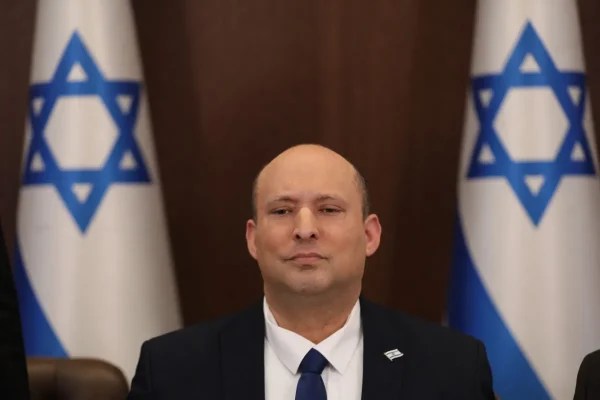
Early this month, during the Israeli occupation army’s offensive on the northern occupied West Bank city of Jenin and its refugee camp, BBC News anchor Anjana Gadgil interviewed former Israeli Prime Minister Naftali Bennett and asked him whether the occupation forces “are happy to kill children” in Jenin.
Gadgil’s questions during the interview were direct and clear to the degree that shocked Bennett, who refused to give her an answer and tried to persuade her that all the Palestinians being attacked, killed, wounded or displaced during the offensive were legitimate targets.
When Gadgil told him that four of the Palestinians killed in Jenin were minors, identified by the UN as children, Bennett argued that the Palestinian children killed in Jenin were terrorists.
He explains that a terrorist is identified as someone who holds a rifle and shoots and murders people, claiming that the people of Jenin were armed and attacking occupation forces who had stormed their city and homes.
If this is Bennett’s definition of what a terrorist is, is he willing to apply that to Israelis and Palestinians alike?
The founders of Bennett’s rogue state did exactly what he described: They held rifles, broke into Palestinian homes and killed men, women, children and even the disabled. They stabbed pregnant Palestinian women before killing them, killing their unborn children.
After the Israeli occupation of the West Bank, East Jerusalem, Golan Heights and Sinai in 1967, my mother told me, the Israeli occupation forces broke the doors of the Palestinian homes, rushed inside and took every male before gathering them in Gaza Square, executing them and burying them in mass graves without even telling their relatives that they had been killed.
Would Bennett apply his definition to those militias and soldiers? There are hundreds of such untold atrocities committed by the Israeli occupation forces that my relatives and neighbours witnessed. Will Bennett define those Israeli soldiers as terrorists?
During the First Palestinian Intifada, which started in 1987, the then-Israeli Defence Minister Yitzhak Rabin ordered the Israeli occupation forces to break the hands of Palestinian children in order to stop the intifada. Many witnessed the horrific scenes of Palestinian children dragged out of their homes, harshly beaten and having their hands broken by the Israeli occupation forces. Bennett, are these soldiers terrorists?
Then, during the Second Intifada, we all witnessed as Muhammad Al Durrah and his father were repeatedly shot until they were motionless while they were unarmed and trying to take shelter. Were these soldiers terrorists?
Israeli soldiers went on to strike Palestinian gatherings with missiles, killing and maiming civilians in every attack under the pretext of targeting terrorists. This occurred repeatedly during the Second Intifada and many of those killed were women and children.
The same happened when late Israeli Prime Minister Ariel Sharon supervised the assassination of quadriplegic Hamas founder Sheikh Ahmad Yassin as he returned from the dawn prayer at the mosque. Some ten civilians were killed in the strike. Are the soldiers who killed them terrorists?
Last month, an Israeli soldier who was holding his rifle shot Palestinian toddler, Muhammad Al-Tamimi, in the head while he was sitting in a car with his 40-year-old father in front of their home. Will Bennett define that killer as a terrorist?
Of course not, because he is an Israeli soldier.
There are many such examples, many within the public domain and many more which remain etched in Palestinian memory. Time and again, Palestinian victims are accused of being terrorists and blamed for their own deaths, while the occupation is not held to account for its murderous actions. This will not stop until action is taken against this barbarous aggressor, the world cannot continue to remain silent as thousands more lives are lost.
This is the perfect opportunity for Palestinian Authority President, Mahmoud Abbas, to exit the stage. But he will not.
Abbas’ brief visit to the devastated Jenin refugee camp in the northern Occupied West Bank on 12 July demonstrated the absurdity and danger of the PA and its 87-year-old leader.
As he walked, Abbas struggled to keep his balance, in what was promoted as a ‘solidarity’ visit to the camp.
Thousands of frustrated Jenin residents took to the streets, hardly chanting Abbas’ name. Some looked on with disappointment; others asked where the President’s forces were when Israel invaded the camp, killing 12, wounding and arresting hundreds more.
The BBCreported on a “huge armed deployment” to secure Abbas’ visit, where “PA security forces joined a thousand-strong unit of Mr. Abbas’ elite presidential guard”. Their only job was to “clear a path” for Abbas into the camp.
On the initial and most deadly first day of the Israeli invasion of Jenin, Israeli media, citing military sources, said that 1,000 Israeli soldiers were taking part in the military operation.
Yet, it took more Palestinian soldiers to secure Abbas’ brief visit to Jenin.
Indeed, where were those well-dressed and equipped PA soldiers when Jenin was fighting and dying alone? And why does Abbas need to be protected from his own people?
To address these questions, it is important to examine recent contexts, three significant dates in particular:
On 5 July, Israel ended its military operation in Jenin.
On 9 July, despite protests by some of his security cabinet members, Israeli Prime Minister, Benjamin Netanyahu, declared that Israel would do its utmost to prevent the collapse of the PA. He stated outright that the PA “works for us”.
And, finally, on 12 July, Abbas visited Jenin with a stern message to Palestinian Resistance groups.
These three dates are directly related: Israel’s failed raid on Jenin has heightened the significance of the PA in Israel’s eyes. Abbas visited Jenin to reassure Israel that his Authority is up for the task.
To live up to Israel’s expectations and to ensure its survival, the PA is willing to clash directly with Palestinians who refuse to toe the line.
“There will be one Authority and one security force,” Abbas declared angrily, only days following the burial of Jenin’s victims. “Anyone who seeks to undermine its unity and security will face the consequences,” he added, further promising that “Any hand that reaches out to harm the people and their stability shall be cut off.”
The hand in reference is not that of Israel, but any Palestinian who resists Israel.
Abbas knows that Palestinians outright despise him and his Authority. Just days earlier, Fatah party deputy Chairman, Mahmoud Aloul, was removed from Jenin by angry crowds.
The crowds chanted in unison, “get out”, to Aloul and two other PA officials.
They did, but Abbas returned to the same scene. He was flown in a Jordanian military helicopter. Waiting for him, below, was a small PA army that had taken over the streets and the high buildings – or whatever remained of them – in the destroyed camp.
All of this happened through logistical arrangements with the Israeli military.
But why is Netanyahu keen on the PA’s survival?
Netanyahu wants the PA to survive simply because he does not want the Israeli occupation administration and military to be fully responsible for the welfare of Palestinians in the West Bank and the security of the illegal settlers.
Despite its near complete failure, the Oslo Accords succeeded in one thing: it provided Israel with a Palestinian force whose main mission is to assist the Israeli occupation in its quest to maintain total control over the West Bank.
Abbas’ trip to Jenin was intended to reassure Tel Aviv that the PA is still committed to its obligations to Israel.
Another message was sent to US President Joe Biden, who has, in a recent interview, cast doubts on the PA’s ‘credibility’. “The PA is losing its credibility,” Biden told CNN, and that has “created a vacuum for extremism.”
The message to Washington was that the hands of the so-called ‘extremists’ will be “cut off”, and that there will be “consequences” for those who defy the PA’s will.
Abbas seemed to speak, not only on behalf of his Authority but that of Tel Aviv and Washington as well.
Even ordinary Palestinians understand this to be the case; in fact, they always have. The only difference now is that they feel strong and emboldened by a new generation of Resistance which has succeeded in reclaiming a degree of Palestinian unity, amid factional politics and PA corruption.
The PA is now seen by most Palestinians as the obstacle in the face of full unity. That position is fully fathomable. While Israel was ramping up its deadly operations in Jenin and Nablus, the PA police was arresting Palestinian activists, angering Resistance groups in the West Bank and Gaza.
If this continues, a civil war in the West Bank is a real possibility, especially as Abbas’ potential successors are equally distrusted, even by Fatah’s own rank and file. These men were also in Jenin, standing shoulder to shoulder behind Abbas as he was frantically trying to lay out the new rules.
This time around, Palestinians are unlikely to listen. For the Resistance, the stakes are too high to back down now. For the PA, losing the West Bank means losing billions of dollars of Western financial handouts.
A clash between the Resistance and their popular support, on the one hand, and the West-Israel-backed PA forces, on the other, will prove very costly for Palestinians.
Yet, for Tel Aviv, it is a win-win. This is why Netanyahu is anxious to help Abbas keep his job, at least long enough to ensure that the post-Abbas transition goes through efficiently.
Palestinians must find a way to block such designs, preserve Palestinian blood and restructure their leadership, so that it represents them, not the interests of the Israeli occupation.
The Israeli military’s deadly raid on the Jenin refugee camp in the northern occupied West Bank fits into the parameters of war crimes under the Geneva Conventions, legal experts argue.
Susan Akram, a clinical professor at Boston University’s School of Law, said the raid, which killed at least 12 Palestinians and wounded dozens more, clearly amounts to a war crime for a number of reasons, including intentionally attacking a civilian population and attacking medical units.
“The Geneva Conventions include as war crimes during occupation, willful killings, willfully causing great suffering to an occupied population and extensive destruction of property not justified by military necessity,” Akram said during a webinar hosted earlier this week by the Arab Center Washington, DC.
There’s no doubt, she declared, that what Israel carried out in Jenin constitutes a war crime.
Daniel Levy of the US/Middle East Project and journalist Dalia Hatuqa, the other panelists on the webinar, also agreed that Israel’s actions in the West Bank amount to a war crime.
Akram said the narrative used by Israel that the raids on Jenin and other Palestinian cities like Nablus are an attempt to root out resistance groups does not stop its actions from being illegal under international law.
Pointing out that the West Bank is an occupied territory, she said, “Israel’s attacks on an occupied population are criminal in and of themselves because occupation law forbids the occupier to use military attacks against civilian targets in the territory it occupies.”
According to the United Nations Relief and Works Agency for Palestine Refugees in the Near East (UNRWA), some 900 Palestinian houses were damaged and many of them became uninhabitable in the wake of the Israeli military’s raid on the Jenin refugee camp.
Adnan Abu Hasna, the spokesman for the UN agency, said on Tuesday that his fellow colleagues are still documenting the damage caused inside the camp during the onslaught.
The UNRWA’s priority is to help restore some sense of normality by resuming its services like education, healthcare and sanitation, he added.
“The other urgent priority is to provide cash assistance to families who were displaced from their homes, and help them pay for rent and rehabilitate their residences,” Abu Hasna noted.
Last week, a group of UN experts said Israel’s military raids targeting the Jenin refugee camp “may prima facie constitute a war crime.”
“Israeli forces’ operations in the occupied West Bank, killing and seriously injuring the occupied population, destroying their homes and infrastructure, and arbitrarily displacing thousands, amount to egregious violations of international law and standards on the use of force and may constitute a war crime,” the experts said in a statement.
Safi Ahmad Mohammad Jawabra, 11, was shot by Israeli forces in the head above his left eye with a rubber-coated metal bullet around 10 a.m. on May 29, 2022 at the entrance to Al-Arroub refugee camp, near Hebron in the southern occupied West Bank, according to documentation collected by Defense for Children International – Palestine. Safi was walking home from school after completing his final exam in math when an Israeli soldier shot him in the head unexpectedly and without warning. While running away, another group of Israeli soldiers around 50 meters (164 feet) away fired tear gas canisters in front of Safi.
The Hadash-Ta’al list’s Chairman, Ayman Odeh, was forced out of the Knesset plenary last week during a vote on the Counterterrorism Law after condemning the Israeli attack on the Palestinian refugee camp of Jenin.
He said: “People killed in Jenin. People wounded in Tel Aviv. A killed soldier. All of their blood is because of your damned occupation. Occupation blinds you. Power blinds you. You are not only acting like occupiers, you are acting like idiots.”
His speech came just days after Israel concluded its largest military operation in Jenin in more than 20 years. At least 12 Palestinians were killed, including four children, and more than 140 were injured in the offensive, according to the Palestinian Health Ministry.
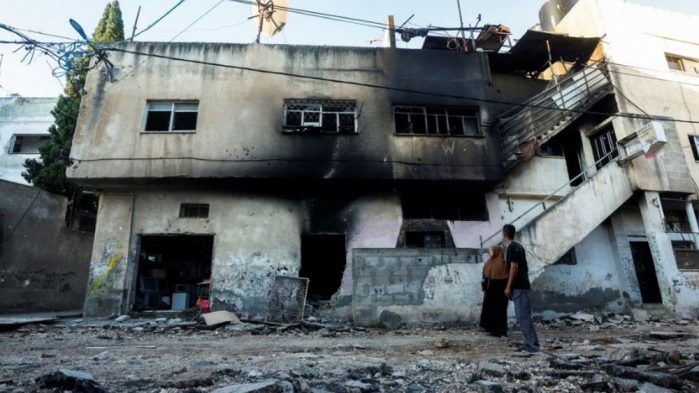
The raid also left a massive trail of destruction across the West Bank city, with dozens of homes, vehicles, shops and utility lines destroyed.
“Every action has a reaction. These are the rules of nature,” added Odeh. “There’s a reaction to the occupation, so there will be resistance. Resisting against occupation is legal. Occupation is illegal. Long live the Jenin! Long live the Palestinian people! Long live their resistance! Shame on you! Take me down! But the Palestinian people will continue to fight!”
In response, Almog Cohen from the far-right Otzma Yehudit Party, shouted: “The blood of those murdered is on your hands; go to Gaza. The more terrorists we kill, the better.”
It all came amidst the approval of the Counterterrorism Law, which specifies that anybody who expresses support for “terrorists” may face up to five years in prison.
Religious Zionist Party MK Zvi Sukkot introduced the bill “to stop the probability test that is required today due to the seriousness of expressing solidarity or sympathy for an act of terror or its perpetrators.”
Following MK Odeh’s criticism against the Israeli invasion of Jenin, Sukkot appealed to the Ethics Committee of the Knesset, Israel Police, and the Attorney General to open an investigation against the MK for expressing his support for the residents of Jenin.
Palestinian Authority (PA) forces arrested journalist Aqil Awawdeh on 13 July after he refuted a statement from PA officials claiming there are no political arrests in the occupied West Bank.
“There is no case of arrest on the basis of political affiliation in the West Bank, and all that is being circulated about its existence are baseless rumors,” the PA statement released on Thursday reads.
Moments later, Awawdeh took to social media to refute this claim, highlighting that students and journalists are arrested regularly for supporting the resistance.
Hours after posting this video, PA troops took Awawdeh from his workplace in Ramallah under charges of “insulting the security services and leaders of Fatah.” Officials have yet to issue a statement on his arrest.
At least 54 political prisoners are currently being held in PA prisons, as the PA regularly hands over detainees directly to the Israeli army, Resistance News Network reported via Telegram.
Two years ago, Awawdeh was severely beaten inside a police station after covering a protest against the PA.
As discontent with PA rule in the occupied West Bank continues to grow exponentially, officials have maintained their grip on power by violently silencing dissent and crushing popular mobilizations.
In June 2021, Palestinian activist Nizar Banat was beaten to death by PA troops for accusing the PA of corruption and criticizing Ramallah’s security cooperation with the Israeli military. Last December, Banat’s family took the case to the International Criminal Court, accusing the PA of alleged war crimes and torture.
Last month, the repressive tactics of the PA once again made headlines following the violent arrest of student leader Abdul Majeed Hassan from his home in Ramallah.
“From the scene of the arrest, we thought that the kidnappers were Israeli undercover units since they have arrested many university students in this brutal way. Beating, dragging, undressing, and screaming were all Israeli means of arrest, but unfortunately, they were mimicked by the Palestinian security services against Abdul Majeed,” Ibrahim Bani Odeh told Middle East Eye about Hassan’s arrest.
By Christina England – 30 Q&As – Book Review & Summary
Lies are Unbekoming | September 4, 2026
… Gardasil received FDA fast-track approval in 2006, Cervarix followed in 2009, and Gardasil 9 was approved in December 2014 with more than double the aluminium adjuvant content of the original. The commercial context is specific. Merck was about to lose patent protection on Zocor and faced $18 billion in Vioxx injury claims from a cardiovascular drug the company had marketed while suppressing its own data showing a five-times increase in heart attacks. Analysts projected the global HPV vaccine market at $4 billion by 2011, contingent on government-funded national programs for teenage girls. The 1986 National Childhood Vaccine Injury Act had already granted manufacturers complete liability immunity. By 2013, Japan had withdrawn its HPV vaccine recommendation after cataloguing severe adverse reactions in hundreds of girls. No Western government followed. The establishment position across the UK, US, Australia, and most of Europe held, and still holds, that the vaccines are safe and effective, that reported injuries are coincidental, and that cervical cancer prevention justifies the program. The book was published into this position, not against a vacuum.
Shattered Dreams sits alongside Mary Holland’s The HPV Vaccine On Trial and Viera Scheibner’s foundational vaccination work as part of the documented record on what has been done to a generation of teenage girls under the banner of cancer prevention. The full summary unpacks three specific findings: that Merck used the aluminium adjuvant itself as the “placebo” control in 92.5% of trial subjects, making it structurally impossible to detect excess reactions from the adjuvant; that Dr. Sin Hang Lee found HPV DNA fragments bound to aluminium in every one of sixteen Gardasil samples tested, and in the blood and spleen of a New Zealand girl six months after her third dose; and that in every country with high vaccination coverage, including Australia, the UK, Norway, and Sweden, cervical cancer rates have stopped declining and started rising specifically in the vaccinated cohort. Martínez-Lavín’s 2017 calculation puts the number needed to seriously harm with Gardasil 9 at 140, and the number needed to vaccinate to prevent one case at 1,757. Thirteen young women are seriously harmed for every one who benefits. The vaccine was approved on the basis of trials that could not detect what the trials were supposed to detect, and it is still being given to twelve-year-olds today. … Read full review
This site is provided as a research and reference tool. Although we make every reasonable effort to ensure that the information and data provided at this site are useful, accurate, and current, we cannot guarantee that the information and data provided here will be error-free. By using this site, you assume all responsibility for and risk arising from your use of and reliance upon the contents of this site.
This site and the information available through it do not, and are not intended to constitute legal advice. Should you require legal advice, you should consult your own attorney.
Nothing within this site or linked to by this site constitutes investment advice or medical advice.
Materials accessible from or added to this site by third parties, such as comments posted, are strictly the responsibility of the third party who added such materials or made them accessible and we neither endorse nor undertake to control, monitor, edit or assume responsibility for any such third-party material.
The posting of stories, commentaries, reports, documents and links (embedded or otherwise) on this site does not in any way, shape or form, implied or otherwise, necessarily express or suggest endorsement or support of any of such posted material or parts therein.
The word “alleged” is deemed to occur before the word “fraud.” Since the rule of law still applies. To peasants, at least.
Fair Use
This site contains copyrighted material the use of which has not always been specifically authorized by the copyright owner. We are making such material available in our efforts to advance understanding of environmental, political, human rights, economic, democracy, scientific, and social justice issues, etc. We believe this constitutes a ‘fair use’ of any such copyrighted material as provided for in section 107 of the US Copyright Law. In accordance with Title 17 U.S.C. Section 107, the material on this site is distributed without profit to those who have expressed a prior interest in receiving the included information for research and educational purposes. For more info go to: http://www.law.cornell.edu/uscode/17/107.shtml. If you wish to use copyrighted material from this site for purposes of your own that go beyond ‘fair use’, you must obtain permission from the copyright owner.
DMCA Contact
This is information for anyone that wishes to challenge our “fair use” of copyrighted material.
If you are a legal copyright holder or a designated agent for such and you believe that content residing on or accessible through our website infringes a copyright and falls outside the boundaries of “Fair Use”, please send a notice of infringement by contacting atheonews@gmail.com.
We will respond and take necessary action immediately.
If notice is given of an alleged copyright violation we will act expeditiously to remove or disable access to the material(s) in question.
All 3rd party material posted on this website is copyright the respective owners / authors. Aletho News makes no claim of copyright on such material.