Bombs Away or Walk Away in Iran /Lt Col Daniel Davis
Daniel Davis / Deep Dive – May 16, 2026
Sputnik – 18.05.2026
The US would need to deploy 7,800 satellites costing $743 billion over 20 years to intercept a limited raid of 10 simultaneous missiles as part of a space-based layer of the proposed Golden Dome system, Sputnik found based on analysis of the system by the US Congressional Budget Office (CBO).
The space-based interceptor layer represents the most expensive component of the Golden Dome system that CBO estimates would cost $1.2 trillion to develop, deploy, and operate for two decades. This space layer alone accounts for 60% of the total expenditure and 70% of the $1 trillion in acquisition costs. This total estimate significantly exceeds the $185 billion figure cited by the director of the Office of Golden Dome for America for the system’s objective architecture over the next decade.
Maintaining this coverage creates a significant financial burden due to atmospheric drag at altitudes between 300 and 500 kilometers. This drag causes orbits to decay, limiting the service life of each satellite to roughly five years. To maintain a constant presence of 7,800 satellites, the US would need to launch approximately 1,600 replacement satellites annually, totaling roughly 30,000 launches over 20 years. Despite assuming future launch costs of $500 per kilogram facilitated by next-generation heavy-lift rockets, the average cost per satellite remains $22 million.
According to the report, the massive size of the constellation is required because the satellites are designed to engage missiles during the boost phase, the brief window of three to five minutes while a missile’s rocket motor is still burning. Because satellites in low-Earth orbit move in bands and cannot remain fixed over specific launch sites, thousands of units are necessary to ensure that enough interceptors are always positioned close enough to a potential launch to reach the target before the boost phase ends.
Beyond the space-based layer, the remaining costs of the Golden Dome system include a combination of surface-based defenses and tracking infrastructure. CBO estimates that 35 regional sectors would cost $187 billion over 20 years to provide terminal defense against cruise and hypersonic missiles, while three upper wide-area surface sites and four lower wide-area surface sites would add $46 billion and $29 billion, respectively. Additionally, a separate satellite constellation for tracking targets would cost $90 billion over two decades, with another $92 billion allocated for general research, development, and system integration.
By Philip Giraldi • Unz Review • May 16, 2026
President Donald Trump is back from his business trip to China which had a lot of ambiguity over issues like Taiwan without having done either much discernible damage or benefit to American interests. The trip ended with the American participants dropping all the gifts that they had received from the Chinese into a large garbage bin on the tarmac before they boarded their plane. And while the president was gone Secretary of War Pete Hegseth to everyone’s surprised announced that he was canceling plans to deploy an additional 4,000 Texas-based US soldiers to Poland for a long-planned nine month rotation that includes training with NATO allies. The assignment was also originally intended to serve as a possible resource should the situation with Russia-Ukraine happen to spill over into adjacent NATO countries. The troops were already moving to establish themselves and their equipment in their new Polish bases when the surprise cancelation order was issued, possibly as a follow-up to Trump’s threats against NATO for failure to support the US war against Iran. As the situation in Eastern Europe stands, Russia has warned that an increasing level of NATO involvement in the conflict through its provision of weapons, intelligence and even some boots on the ground is already crossing several red lines which might quite plausibly be regarded as acts of war.
It might be possible to regard the decision not to add American soldiers to a region already awash with bellicosity as positive, but it could possibly be premature to regard it as so. The Trump Administration has been admittedly nearly always inclined to go for the most aggressive option whether it be in what adversaries regard as foreign policy “negotiations” or in terms of supporting even more violence prone allies like Israel. Indeed, two other foreign policy issues that are currently on the news front pages are renewed drives to send more soldiers to Greenland, presumably as another step forward to annexation, and the apparent desire to invade Cuba before too long and remove its Communist government.
Cuba is currently being blockaded by the US and has completely run out of fuel, leading to unrest which is being cynically exploited just as the White House manipulated the situation in Iran where riots among the public due to shortages were cited as sign that the government would easily fall. And the Trump administration is about to pull another rabbit out of its hat concerning Cuba, preparing to indict former Cuban President Raúl Castro on charges in connection with shooting down planes 30 years ago, a move similar to the indictment of now deposed Venezuelan leader Nicolás Maduro before his recent kidnapping by US Delta Force commandos.
Negotiations with Cuba were in fact launched after Trump suggested a “friendly takeover” of what he called a “failed nation,” while Secretary of State Marco Rubio, himself a Cuban refugee, said the country would need to change not just its economic policies but move away from the current regime, which he has called both “incompetent,” which admittedly sounds like the Trump Cabinet, as well as being Communist.
And as if that were not enough, there is even talk in Washington about making Venezuela the fifty-first state, though it should be observed that the Venezuelans, already on the receiving end of Yankee largesse when Maduro was kidnapped, have not been consulted on that possible development.
But the biggest issue confronting the returning Trump is what to do about the Iran War monster that has been confronting him since before he departed for Beijing, leading many observers to believe that he may have been looking for a way out of the situation with the help of China, which in the event only advised him to “end the war.” That the conflict was entered into by choice with considerable prodding and lying coming from his “best friends” the Israelis is, of course, the background to what developed. Trump returned to the confusion generated by negotiations that go nowhere wrapped around a ceasefire that is generally being regarded as only a pause in the action.
Trump may have gone to China with expectations that the Chinese government would suggest to him some face saving way to extricate the US from the Iran quagmire, but if that was so he was mistaken and China did not offer an acceptable off ramp for Trump to extricate himself. China, for its part, and like Russia, is undoubtedly delighted that the United States is finally knocked down from its pedestal as the world’s preeminent superpower. President Xi Jinping, to cite only one example of how China clearly regards itself as a major power equal to the US, made clear to Trump that Beijing will tolerate no US interference with Taiwan, which the Chinese consider an integral part of their country. Trump could not push back on that assertion.
There has been considerable news concerning Iran while Trump was gone, most notably in the United States due to the release of several articles in the mainstream media suggesting that the politically powerful neoconservatives, who normally delight both in global dominance by Washington as well as in any conflict directed against Israel’s enemies, are now calling the Iran war an unmitigated disaster, a “checkmate” by Iran and a “humiliation.” They are even arguing that there is no way to move forward with it. And there is more than that with the Saudi Arabians also chiming in on what a disaster the war has been to themselves and also to the other Gulf States. The Arabs now believe that the assumption that they were protected by a US security umbrella proved to be absolutely worthless. Beyond that, they also have observed that they were without any consultation dragged into an unnecessary and unwanted war against Iran by the US and Israel.
American neoconservatives have been a major force in support of US military dominance policies since the nineteen nineties, when they launched the international side of their movement with the A Clean Break: A New Strategy For Securing the Realm document in 1996, a policy statement that was prepared by a study group led by prominent Jewish neocon Richard Perle for then-as-now Israeli Prime Minister Benjamin Netanyahu. The report argued that Israeli security would be served best by regime change in surrounding countries brought about with the aid and assistance of the US. The “clean break” was a rejection of the Oslo Accords that actually sought to develop a modus vivendi between Israel and the Palestinians. This was followed by the Project For The New American Century (PNAC) in 1997, which had as its stated goal “to promote American global leadership.” The organization stated that “American leadership is good both for America and for the world” which it described as “a Reaganite policy of military strength and moral clarity. ” Both Clean Break and PNAC fit together nicely to promote a policy of political and military dominance for the United States. And, as most of the neocons were Jewish, one of the principal arguments made by them was that a confident and aggressive United States would be better able to support and protect Israel as it moved to establish dominance over the Middle East.
One of the founders of Neoconism (and of the PNAC) was Robert Kagan, who has now written a lengthy May 10th piece in the Atlantic Magazine entitled Checkmate in Iran: Washington can’t reverse or control the consequences for losing this war. He begins with: “It’s hard to think of a time when the United States suffered a total defeat in a conflict, a setback so decisive that the strategic loss could be neither repaired nor ignored. The calamitous losses suffered at Pearl Harbor, the Philippines, and throughout the Western Pacific in the first months of World War II were eventually reversed. The defeats in Vietnam and Afghanistan were costly but did not do lasting damage to America’s overall position in the world, because they were far from the main theaters of global competition. The initial failure in Iraq was mitigated by a shift in strategy that ultimately left Iraq relatively stable and unthreatening to its neighbors and kept the United States dominant in the region… Defeat in the present confrontation with Iran will be of an entirely different character. It can neither be repaired nor ignored. There will be no return to the status quo ante, no ultimate American triumph that will undo or overcome the harm done… Far from demonstrating American prowess, as supporters of the war have repeatedly claimed, the conflict has revealed an America that is unreliable and incapable of finishing what it started. That is going to set off a chain reaction around the world as friends and foes adjust to America’s failure.”
Another neocon godfather Max Boot set the stage by preceding Kagan in an April 8th Washington Post opinion piece entitled The Iran ceasefire was a TACO Tuesday, and thank goodness: Trump gets to act like his bloodcurdling threats worked, but he’s giving up far more than Tehran did. Both Kagan and Boot are well known and respected in the neocon movement. Kagan is the husband of the deplorable Victoria Nuland who, as a US Diplomat, did so much to create the political crisis in Eastern Europe that has led to the current conflict between Russia and Ukraine. Kagan and Boot are not particularly regarded as fans of Donald Trump, but they are reliable supporters of Israel and all its works, which should be considered when examining their writings and speeches on Iran, which they would be quite pleased to see destroyed.
The Kagans in particular are enamored of stirring up conflict when other options are available. Robert’s brother Frederick is a resident scholar at the neocon American Enterprise Institute. His wife Kimberly is founder and head of the aptly named Institute for the Study of War. And, to be sure, the Kagan hearts belong only to Israel…
One might reasonably consider what Kagan might be trying to accomplish by dissing Trump’s war. In my opinion he is of course deliberately depicting and over-emotionalizing the consequences of a “worst case” outcome to come into play if Trump panics and actually ignores Israel’s demands and decides to pull the plug on the war. By taking an adversarial position he is instead playing the Trump personality card by focusing on the president’s clear vulnerability when it comes to rationally considering policy options. In this case Kagan as well as Boot are seeking to humiliate Trump by emphasizing how the status quo is a disastrous defeat because the real objective is to take advantage of an insane T’s limited mental capability and non-existent moral code to shame him into changing the narrative on his personal failure by pursuing the “worst course” of action in the viewpoint of many observers, i.e. total war against Iran using all available weapons including nuclear to utterly destroy it!
Other neocons are also recognizing that the Iran war is going disastrously bad but are less ambivalent about the options they see, namely being openly and clearly focused on doubling down for victory. Danielle Pletka of the American Enterprise Institute sees success coming from a change in personnel in and around the White House coupled with a stiffening of Trump’s will to win. The-Iran focused neocon Foundation for the Defense of Democracies (FDD) also wants more war no matter what it takes to destroy the Persians.
Overall, I think that some neocons like Kagan and Boot are calling for not going back to a mismanaged and pointless war because they believe an embarrassed and ego driven Trump will seek to repair and reverse course on his damaged reputation and do precisely that. That is exactly what they want him to do! And bear in mind that Trump is being heavily pressured by the Israel Lobby and its billionaire donors like Miriam Adelson to continue war. And then there are the near daily phone calls from Prime Minister Benjamin Netanyahu, who has the same objective, i.e. to keep America in the fight to eliminate Iran. So one might assume that if indeed Trump would like to escape from the Iran quagmire there are a lot of reasons why he will not opt to do so. In fact, Trump has already declared that he does not care about the sinking US economy and upcoming midterm elections. He told reporters “I don’t think about Americans’ financial situation — I don’t think about anybody. I think about one thing: We cannot let Iran have a nuclear weapon.” And he has also declared that the “clock is ticking” and has vowed that there will be “nothing left of Iran if it does not come to terms.” Those threats, unfortunately, open the door to what comes next. Dare one mention that madmen like Trump and Netanyahu might well consider that if they can get away with an endless war that is damaging the whole world’s economy they can go one step further with their nukes to finish the job!
By Trita Parsi | May 17, 2026
The Middle East is once again teetering on the brink as Trump appears poised to reignite war with Iran. Press reports indicate he will convene military advisers on Tuesday, though my understanding is that both the meeting and the decision are likely to come sooner. Over the past several hours, Trump has flooded Truth Social with a barrage of incendiary threats. While some of this may be theatrical brinkmanship designed to force Tehran into submission, sources in the Iranian capital tell me they expect the United States to resume hostilities within the next 48 hours.
We should first recognize that restarting the war amounts to an admission that Trump’s previous escalatory gambit — the blockade of the blockade — has failed. That, in turn, was itself an admission that the war had failed. Which was an admission that the threats of war in January had failed. As I have argued before on my Substack, this relentless search for an escalatory silver bullet capable of bringing Iran to its knees is not unique to Trump; it has become a defining pathology of American Iran policy for decades.
Although negotiators have made meaningful progress on several fronts, talks have thus far failed to produce an agreement, largely because of irreconcilable differences over Tehran’s highly enriched uranium stockpile. And as Washington has come to realize that the blockade is backfiring, a new and dangerous dynamic has emerged: both sides now believe another round of fighting will strengthen their hand in the negotiations that follow.
As I argued in numerous interviews in January, Trump dramatically underestimated Iran’s strength, while hard-liners in Tehran believed war would strengthen Iran’s leverage by exposing the illusion of Iranian weakness. In their view, the outcome of the conflict vindicated that assessment, leaving them increasingly confident — even emboldened — about what a second round of war could yield. I am told the new Supreme Leader belongs to this camp.
Moreover, just as Tehran believes Trump intends to prosecute the next war with far greater ferocity, Iranian planners are preparing a far more expansive and punishing retaliatory campaign, complete with new strategic objectives and targets.
First, Iranian officials increasingly describe the next war as an opportunity to inflict maximum strategic damage on the United Arab Emirates, citing Abu Dhabi’s active role in the previous conflict, its deepening and increasingly overt partnership with Israel, and its role in urging Trump to resume hostilities.
Tehran is likely to target American data centers in the UAE, a move that serves multiple purposes. Iranian officials argue that these American technology firms have already become participants in the conflict through their support for the Pentagon. At the same time, Tehran sees an opportunity to cripple the UAE’s ambitions to become a global artificial intelligence hub — and, in doing so, potentially undermine Washington’s AI competition with China.
This points to a second defining feature of Iran’s strategy in a future war. Tehran believes Trump and his family hold financial stakes in many of these same technology ventures. Targeting Trump’s personal business interests is a lever Iran conspicuously avoided pulling during the first conflict but now appears increasingly willing to use. The logic is straightforward: Trump may tolerate damage to American strategic interests, but he is acutely sensitive to threats against his own financial empire. Raise the personal cost to Trump himself, the reasoning goes, and he may prove more willing to adopt a realistic negotiating position.
Third, Tehran is likely to show far less restraint if evidence emerges that other Gulf Cooperation Council states permit the United States or Israel to use their territory or airspace in a renewed conflict. The result would be broader and far more perilous horizontal escalation, with potentially catastrophic consequences for the global economy should critical energy infrastructure come under attack.
Fourth, the Red Sea is now in play. That would dramatically widen the geographic scope of the conflict while placing even greater upward pressure on already volatile oil prices.
Finally, Tehran is increasingly examining the possibility of severing the major submarine fiber-optic cable networks running beneath the Persian Gulf — arteries through which most GCC internet traffic flows, including billions of dollars in financial transactions. Iranian officials increasingly view this as a potential second Strait of Hormuz: a powerful new point of leverage capable of disrupting the global economy at enormous scale.
Renewed war is not inevitable. But when both sides convince themselves that another round of fighting will strengthen their negotiating position, the gravitational pull toward conflict becomes dangerously strong — however irrational the logic may ultimately be.
Al Mayadeen | May 17, 2026
A newly published report by the German Institute for International and Security Affairs (SWP) has delivered a critical assessment of the United Arab Emirates’ role in African conflicts, describing Abu Dhabi as a systematic spoiler that arms proxy forces, manipulates diplomatic processes, and bears significant responsibility for some of the world’s worst humanitarian crises, all while facing virtually no political consequences from its Western partners.
The report, authored by researchers at one of Europe’s most influential foreign and security policy think tanks, which directly advises the German government and Bundestag, calls on Berlin and its European partners to fundamentally reassess their relationship with the UAE.
Sudan: The clearest case
The report presents Sudan as the most devastating example of Emirati interference. The UAE is identified as the most important military, logistical, and financial backer of the Rapid Support Forces (RSF), the paramilitary group whose war against the Sudanese Armed Forces has produced what the UN reports as the world’s largest humanitarian crisis, with 33.7 million people dependent on aid, over 15 million displaced, and widespread extreme hunger.
The RSF’s conduct has been particularly brutal. The report details targeted violence against non-Arab minorities, including sexual violence, mass killings, attacks on medical facilities, and hostage-taking, primarily directed at groups such as the Masalit and Zaghawa.
When the RSF captured El-Fasher in North Darfur in October 2025, a UN fact-finding mission described its actions against the civilian population as bearing the hallmarks of genocide.
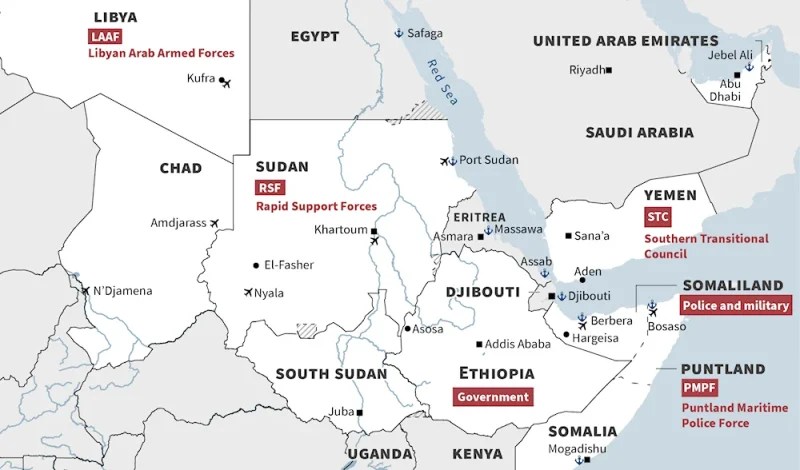
Emirati support for the RSF continued even after Iranian strikes on the UAE, with numerous cargo flights departing from Emirates airports to Ethiopia, apparently to ferry supplies across the border to RSF positions.
A UN panel of experts documented 458 flights involving heavy transport aircraft from Emirati military airports or the transhipment hub of Bosaso to eastern Libya between October 2024 and the end of 2025, 239 of them bound for Kufra, a key hub for RSF resupply, in likely violation of UN arms embargoes on both Libya and Darfur.
A proxy model built on plausible deniability
The UAE rarely deploys its own forces. Instead, it operates through a carefully constructed network of local proxies, private military contractors, and logistical intermediaries. Beyond the RSF in Sudan, its partners include Khalifa Haftar’s Libyan Arab Armed Forces, the Puntland Maritime Police Force in Somalia, and, in a departure from the pattern, the Ethiopian government during its war against the Tigray people.
The report details how the UAE recruited and deployed hundreds of Colombian mercenaries to Sudan via an Emirati security firm, with the US government noting in 2025 that these fighters had served as infantry, artillery personnel, drone pilots, and even trained children for combat.
Supplies to the RSF have been routed through LAAF-controlled Libya, Chad, Kenya, Uganda, and Rwanda, with Abu Dhabi deploying financial leverage to secure cooperation, including a 1.5 billion dollar loan to Chadian President Idriss Déby in 2023.
The UAE also profits from gold smuggling networks in conflict zones, with members of the ruling family reported to have personal ties to both Haftar and RSF commander Mohamed Hamdan Dagalo.
Why the UAE intervenes
SWP identifies several overlapping motives. Economic interests are central, as state-owned logistics giants DP World and AD Ports Group have port and infrastructure projects across the continent, and military interventions serve to protect access to trade routes and strategic resources.
But economics alone do not explain the pattern. The report points to the UAE’s drive to outcompete Saudi Arabia for regional influence, a rivalry that has only sharpened since Riyadh forced Abu Dhabi out of southern Yemen.
Ideological opposition to the Muslim Brotherhood also shapes policy, with the UAE consistently backing actors who suppress Islamist movements. Personal enrichment through resource networks and ruling family ties to conflict actors adds a further layer.
Diplomatic manipulation
The report scrutinises the UAE’s use of diplomatic engagement as cover, whereby Abu Dhabi participates in international peace processes while simultaneously intensifying support for belligerents.
In September 2025, the UAE joined the Sudan Quad format alongside Egypt, Saudi Arabia, and the United States, signing joint commitments to end external support for conflict parties. According to US intelligence reporting, however, the UAE was actively intensifying support for the RSF at the same time.
The UAE also pledged 200 million dollars at a February 2025 humanitarian conference and a further 500 million dollars at a US conference in 2026, while contributing only around 33 million dollars to the UN-coordinated humanitarian plan.
In November 2025, Emirati Minister of State Lana Nusseibeh spent four days meeting with Members of the European Parliament in Brussels. Nusseibeh’s endeavor was successful, as a Parliament resolution on Sudan adopted at the same time made no mention of the UAE’s support for the RSF, following opposition from the European People’s Party to amendments tabled by left-wing parliamentary groups.
The same pattern played out during the Berlin Libya Process in 2019-20, when the UAE pledged to halt arms transfers to Libyan conflict parties but continued them regardless. Transport aircraft flew from the Emirates to eastern Libya on the very day of the Berlin conference in January 2020.
European silence, eroded accountability
The report stresses that Western governments, including Germany, have consistently refused to name the UAE publicly in international forums, despite substantial documented evidence of its role in fuelling conflicts. No UN Security Council member has explicitly raised Emirati support for the RSF in formal meetings, either.
This reluctance, SWP argues, is not incidental but reflects a broader calculation in which trade ties, security cooperation, the UAE’s close relationship with “Israel,” and the strategic goal of preventing Abu Dhabi from drifting further toward China or Russia have consistently outweighed accountability concerns.
The UAE’s open disregard for the UN embargo on Libya from 2014 onward, the report notes, likely encouraged other states to adopt a similar approach, with the same dynamic now being repeated in Sudan.
Five recommendations
SWP outlines five concrete steps for Germany and its European partners:
The report concludes that the war on Iran, mounting tensions with Saudi Arabia, and growing reputational vulnerabilities have made the UAE more susceptible to European pressure than at any previous point, and that this window should not go unused.
By Tamer Ajrami | MEMO | May 17, 2026
When military power fails to impose “deterrence,” oil becomes politics. And the Strait of Hormuz is now writing Gulf security rules instead of the Pentagon.
With Hormuz still closed and the emergency oil stock releases used to calm markets running down, prices are moving _ no matter how much some people deny it _ toward a new surge. The real problem is not the price as a number. It is the chain reaction: gasoline and diesel, shipping and insurance, raw materials, and then inflation that travels from Asia to the United States. And even if the strait opened tomorrow, the damage would not vanish. Supply chains do not reset overnight, and parts of the oil and petrochemicals flow would take time to recover.
In my previous Middle East Monitor article, I said clearly that Gulf states “have nothing but to talk to Iran now”. That was not idealism or goodwill. It was hard security math: the old formula is eroding. Bases do not protect the way people assumed, and guarantees shrink the moment they face a real test. Today, this is no longer an argument. It is a reality driven by markets before politics.
Trump and China: A visit without a lifeline — and Time is against him
Trump’s attempt to turn to China produced no clear exit. Not because Beijing is powerless, but because it sees the issue in simple terms: open the strait through practical understandings, and negotiate with Iran on realistic terms.
The problem is that Washington still wants a “surrender” wrapped in diplomatic language. Iran sees no reason to give that for free as it holds leverage in a global energy shock.
This is the core of Trump’s trap: he can say whatever he wants, but he cannot cancel economics. Markets do not negotiate. They punish.
That is why countries are now moving on two tracks: a unilateral track to protect their own interests, and a collective track to design a new framework that prevents the next shock. Saudi Arabia is stepping forward to lead the collective track, not because it loves “mediation” as a headline, but because the cost of ongoing chaos has become higher than the cost of a deal.
A New “Helsinki Act” — But without the Human Rights Basket
According to Western reporting, Saudi Arabia is floating something close to a “Gulf Helsinki Act” arrangement with Iran—modeled on the Helsinki process of the mid-1970s during the Cold War. It would not be just a Saudi–Iran deal. It would extend to the Gulf and the European Union, aiming to lock in non-aggression, structured economic normalization, and monitoring and implementation mechanisms.
The original Helsinki process was built around four “baskets”: security and non-aggression; economic cooperation; human rights and self-determination; and follow-up mechanisms. In the Middle East, copying the third basket is unrealistic. The region’s unwritten rule is non-interference. Here, states do not use “human rights” language as a tool to destabilize each other internally. So, the Saudi approach seems to focus on three practical baskets: security and non-aggression, economic cooperation and stable energy flows, and verification/implementation.
It is a practical logic: if you want an agreement that can survive, you do not plant a delayed bomb inside it.
The Hard Question: Can a Deal work without the United States?
Here is the central dilemma. A Gulf–EU–Iran non-aggression arrangement without the United States creates a dangerous gap: the Gulf and Europe commit to non-aggression, Iran commits too, but Washington and Israel still retain the ability to strike Iran. What does the agreement do then? Does it become a nice document that collapses at the first air raid?
On the other hand, bringing Washington into the deal is not easy either. The US is struggling to produce a quick bilateral agreement with Iran to end the crisis, so why would it accept a broader framework that limits its freedom of action?
This opens a third, more sensitive option: Gulf states and Europe “bypass Washington” in practice. That would mean refusing the use of their airspace and territorial waters for any military or intelligence activity against Iran. And maybe refusing to enforce sanctions that destabilize the region and recreate the Hormuz shock. This is not a small move. It would be a strategic shift.
The UAE: A Different Vision — and a Dangerous Ceiling
The Gulf is not unified on strategy. Other reporting suggests Emirati efforts to push a coordinated Gulf military “response” against Iran. The problem is not the idea of response by itself. The problem is the ceiling of objectives.
If the goal is limited deterrence to reduce escalation, that is one thing. But if the goal mirrors Netanyahu and Washington _ regime change, dismantling Iran’s nuclear program, destroying its ballistic capabilities, and reshaping Iran from the inside _ that is a long war. And the Gulf does not have the luxury to absorb its costs.
Most importantly, the idea of “escaping Hormuz” through alternative pipelines is not a real solution. If peace collapses, fields, ports, and energy infrastructure across the region remain within range. And Bab al-Mandab can become another choke point. In the end, the issue is not a pipeline or a port. It is a sustainable peace that prevents the drone and the missile before it “manages” the price.
Whoever Ends the War Ends the Chaos
A way out starts from one point: ending the US–Israeli confrontation with Iran through a realistic understanding; then building a regional framework similar to “Helsinki” that locks in non-aggression, protects economies, and prevents a repeat of the strait crisis.
Saudi Arabia is trying to “hold the story together” because Washington entered, got stuck, and now wants to exit; while the Gulf cannot afford to sit between Iran’s leverage and America’s disorder.
The choice is clearer than ever: either a settlement that closes the door on choke-point warfare, or a longer crisis that bankrupts markets before it bankrupts armies. The Gulf; whether it likes it or not; no longer has the option to “wait”.
By Alan Cassels | Brownstone Institute | May 17, 2026
In medicine, we love a good heroic story. A patient suffers a serious disease. A drug company produces a brilliant new drug which proves to be beneficial. Lives are saved. Everyone is happy. Another battle won in the war on disease. Science marches triumphantly forward.
But sometimes the real story is less heroic and far more awkward. And the major “advance” comes not from a new drug, but from the opposite: because patients stopped swallowing a drug that never should have been so widely used in the first place.
That is almost certainly the case of breast cancer in North America in the early 2000s.
The pivotal moment came in the summer of 2002 when a major randomized trial, called the Women’s Health Initiative (WHI) was published, aiming to answer a question which physicians had long pondered: was long-term use of hormone replacement therapy, typically prescribed for women going through menopause, good for the heart?
Up to that point, hormone therapy had been marketed as a kind of fountain-of-youth elixir for menopausal women. Promising to protect the heart, keep bones strong, preserve youthfulness, and generally smooth out biological inconveniences of aging, women were prescribed these drugs and stayed on them for years, sometimes for decades. At that time, there was considerable debate about long-term effects, with some experts claiming the heart protective-effects of hormones were so pronounced that even studying the issue was a waste of time.
Launched in 1997, the WHI enrolled more than 16,000 post-menopausal women to test the effects of combined estrogen-progestin. Another arm tested the effects of estrogen alone in 10,000 women who had undergone a hysterectomy. The larger trial was terminated three years earlier than originally planned, once the findings showed an increased risk of breast cancer, heart disease, stroke, and blood clots among participants. The smaller trial was also halted a year earlier than planned due to increased risk of stroke.
That was the day that the music died for hormone therapy.
Or at least we thought.
Within months women stopped taking and physicians stopped prescribing hormone therapy. The everyday use of this class of drugs fell dramatically, by roughly half within a year.
And then something remarkable happened.
Breast cancer incidence in the United States dropped. Some say that the rates had been in decline for several years, but the drop was significant, falling by roughly six to seven percent in 2003. It was one of the sharpest year-to-year declines ever observed. The drop was especially pronounced among women over 50 and in estrogen-receptor positive tumors, precisely the cancers most likely to be stimulated by hormones.
This wasn’t a subtle statistical wiggle. For epidemiologists, this was the sort of signal that almost never happens so cleanly in real life. Usually population health trends are messy, tangled up in dozens of possible explanations. There are long latency periods with cancer yet here a cause and effect appeared almost choreographed.
Drug exposure goes down. Disease incidence goes down, Just like that. Overnight, by stopping a drug we probably saw the most important advance in the fight against breast cancer in the last half century. But….
HRT Revisited
But today? Memories are short, and for many obstetricians, women’s health advocates, and even health reporters, it seems like the lessons from the WHI are being rewritten. The known and proven harmful effects of hormones on women’s health are undergoing a massive rewrite which is stimulating a resurgence in HRT.
This new Hormone Replacement Therapy conversation lately is captured in such articles as this piece from PBS; “How a Decades Old Study Gave Hormone Therapy a Bad Reputation,” which calls the WHI a “flawed” study. Other major media outlets like the New York Times, the Washington Post and TIME Magazine are eagerly celebrating the renewed interest in menopause, emphasizing that women’s health concerns are never adequately dealt with, and that HRT needs a second look.
The media attention was amped last year up when the FDA convened an Expert Panel on Menopause and Hormone Replacement Therapy for Women. That meeting led to the removal of the boxed warnings in November 2025 even though the labels still warn of the risk of uterine and endometrial cancer associated with estrogen-only HRT, which is typically prescribed to people who have had their uterus removed through a hysterectomy.
A lot of the hullabaloo over the removal of the FDA’s Black Box Warning on Hormone Therapy relied on a strange mix of both revisionism (the science has changed) and egalitarianism (women needed “more choice”). For the media, this was an easy sell.
The rationale used by the FDA committee and hormone aficionados everywhere was that the science has been fully reinterpreted, and “corrected.” Let’s be clear what has happened: there has been new “analyses” of the effects of hormones, but no new original research showing that the previous safety concerns are exaggerated.
Much of the renewed support for HRT uses the ‘window of opportunity’ argument that suggests that it is safe if a 50-year-old woman takes hormones, but in her 60’s it’s unsafe. Can we really accept that the effects of these drugs on women would be dramatically different at some sort of arbitrary age-related cutoff? That’s the line we are expected to believe.
But look at how that argument is easily confounded. If the drugs show a reduced harm in younger women that’s mostly because, for any disease, younger age usually means lower disease burden. The revisionists discredit the WHI even though there were thousands of women in their 50’s in that trial, and many of them were among those harmed.
A distinction needs to be made here, where one has to examine the exact reason why one is taking hormones. Is it to control menopausal symptoms (especially hot flashes, vaginal dryness) or to prevent diseases of aging (breast cancer, heart disease, dementia)?
The WHI study was aimed at determining the long-term, post-menopausal effects of the drug, and hence it was looking at the second question. As to the first question, hormones are undoubtedly effective for treating menopausal symptoms.
Symptomatic treatment is therefore behind the major push for the drugs these days. One doctor friend of mine told me that “every menopausal woman he knows is taking hormones,” implying that this was both right and natural. Another friend, who is turning 60 this year, just recently told me over coffee she’s been on the drugs for ten years and has no plans for stopping them, as she remembers how bad the sleeplessness and brain fog were when she was in menopause. This was a head-scratcher to me, left me wondering why her doctor isn’t concerned about the recent post-black box warning recommendations that if menopausal women are going to take hormones they should do so in the lowest dose possible, for the shortest period of time possible.
The message here: take these drugs, but not for long, and not in high doses. That’s the pharmaceutical equivalent of someone shouting “Danger!”
What pharmaceutical companies do best is not develop drugs, but develop drug markets and you see this on full display in the current menopausal makeover. With a highly malleable clientele, who have both money and motivation, the key obstacle is convincing prescribers that these women urgently need chemical assistance to get through this tough life transition, and that prescribing hormones is one way to fight back against the manosphere. Were it only so easy…
Revising the HRT market depends on the usual tactics: some high-octane marketing including funding pro-HRT “studies,” selectively publishing data that emphasize HRT’s benefits and downplay the harms, funding direct-to-consumer advertising campaigns wrapped in the justice angle, while sponsoring guideline panels and medical education for your and my doctors. By paying off key opinion leaders, and getting social media influencers slurping on the HRT taps the media serves up this revival as a “feel-good” story of female emancipation.
Let’s face it, menopause in 2026 is the sort of uplifting health story that the mainstream media has leaped on with uncommon gusto. In Canada, our public broadcaster, CBC, finds the subject so compelling it runs its own series (Small Achievable Goals) about menopause, organizes noontime Menopause Month call-in shows to dive into the many ‘equity’ issues related to menopause (like why are Canadian women paying out of pocket for menopause care from private practitioners?) and produces a litany of programs that are mostly repetitive recitations over the need to counter the “stigma” caused by menopause. We get it. Menopause is clearly not fun for many women and employers who don’t make concessions for suffering women need to be brought into the 21st century.
The punchline, however, always seems the same: Women are not being taken seriously when it comes to menopause and they’re mad as hell. And no one should stand in their way of getting full access to menopausal treatments, especially those prescribed medications produced by the biggest drug companies in the world. We have a term for this: Pinkwashing. In other words, taking corporate business objectives and painting them in a feminine way in order to show how much you care.
You don’t have to do a systematic review of the mainstream media’s menopause mongering, but even a quick global survey of the main English language outlets can identify some dominant themes. Even though millions of women stopped HRT in 2002, and breast-cancer incidence dropped significantly, not a single story in 2026, as far as I can tell, mentions this fact. It’s curious. Even though most epidemiologists who have examined these data say that all the evidence points towards HRT promoting breast-tumor growth.
The remake of HRT has certainly paid off. Overall HRT demand in North America has grown, driven by what the experts call “increased menopause awareness, guideline updates, and reduced stigma.” Data from insurance claims and health systems show hormone therapy use is steadily rising again after years of decline. Its use among women aged 45–65 increased about 20% between 2020 and 2023. This pink trend is occurring alongside a surge in menopause clinics, telehealth menopause services, and the growing pervasiveness of influencer physicians and social-media menopause advocates.
The HRT market in North America has grown steadily too, worth about $5 billion per year, dominated by drugs like Premarin (branded conjugated estrogens) made by Pfizer. Without any generic competition in the US until late 2025 Pfizer has been able to dominate the market, selling more than $100 million worth of Premarin in 2022 alone. Prempro (conjugated estrogens + medroxyprogesterone,) has been generically available since 2006 or so and has many other generic companies dominating the market due to much lower pricing.
Let’s recap.
Medicine has a long history of embracing interventions that appear beneficial at first glance, only to discover later that the harms outweigh the benefits. Hormone therapy for menopause became a textbook example. The dramatic changes in practice left us with one of the clearest natural experiments in modern epidemiology.
The Women’s Health Initiative revealed a risk.
Millions of women stopped taking the drug.
Breast cancer rates fell.
If you were designing a demonstration of how pharmaceutical exposure can shape population health, you could hardly script it better.
The lesson is not that all drugs are bad or that medical progress is an illusion. It’s that sometimes the most powerful intervention in medicine is restraint.
Before we celebrate the next pharmaceutical breakthrough it might be worth remembering that one of the biggest declines in a major, frequently fatal disease in modern history happened for a very simple reason: Millions of women stopped taking a pill.
Some clinicians and public-health researchers (myself among them) would argue that the media narrative minimizes known and proven downsides of these drugs, often trivializing or ignoring serious harms, including risks of stroke, blood clots, gallbladder disease, and increased breast cancer risk.
The swinging pendulum is now carving its frightful arc from fear and danger towards promotional enthusiasm, and women who are supposed to be beneficiaries of these changes will only suffer further.
Alan Cassels is a Brownstone Fellow and a drug policy researcher and author who has written extensively about disease mongering. He is the author of four books, including The ABCs of Disease Mongering: An Epidemic in 26 Letters.
By Alan Macleod | MintPress News | January 3, 2025
A senior BBC editor at the center of an ongoing scandal into the network’s systematic pro-Israel bias is, in fact, a former member of a CIA propaganda outfit, MintPress News can reveal. Raffi Berg, an Englishman who heads the BBC’s Middle East desk, formerly worked for the U.S. State Department’s Foreign Broadcast Information Service, a unit that, by his own admission, was a CIA front group.
Berg is currently the subject of considerable scrutiny after thirteen BBC employees spoke out, claiming, among other things, that his “entire job is to water down everything that’s too critical of Israel” and that he holds “wild” amounts of power at the British state broadcaster, that there exists a culture of “extreme fear” at the BBC about publishing anything critical of Israel, and that Berg himself plays a key role in turning its coverage into “systematic Israeli propaganda.” The BBC has disputed these claims.
Our Man in London
Berg came to public attention in December after Drop Site News published an investigation based on interviews with 13 BBC staffers who present him as a domineering figure, systematically blocking coverage critical of Israel and manipulating stories to suit pro-Israel narratives.
The 9000-word report, written by popular journalist Owen Jones, is extensive and well-researched. However, one aspect of the story it almost completely avoids is Berg’s connections to the U.S. national security state, which MintPress News can now reveal.
According to his LinkedIn profile, Berg was an employee of the U.S. State Department’s Foreign Broadcast Information Service (FBIS) three years before joining the BBC. The FBIS is understood the world over to be a CIA front group known for gathering intelligence for the agency.
As the first two lines of its Wikipedia entry read:
The Foreign Broadcast Information Service (FBIS) was an open source intelligence component of the Central Intelligence Agency’s Directorate of Science and Technology. It monitored, translated, and disseminated within the U.S. government openly available news and information from media sources outside the United States.
In 2005, the FBIS was subsumed into the CIA’s new Open Source Enterprise.
Berg does not dispute that he was, in fact, a CIA man. In fact, according to a 2020 interview with The Jewish Telegraph, he was “absolutely thrilled” to be secretly working for the agency. Berg said, “One day, I was taken to one side and told, ‘you may or may not know that we are part of CIA, but don’t go telling people.’” He was unsurprised by this news, as the application process was extremely long and rigorous. “They went through my character and background with a fine tooth comb, asking if I had ever visited communist countries and, if I had, did I form any relationships while I was there,” he said.
Mossad Collaborator
The CIA, however, is not the only clandestine spy organization with which Berg has a long history of collaborating. He also has a rich professional relationship with Mossad, Israel’s premier intelligence agency.
In 2020, for instance, Berg published “Red Sea Spies: The True Story of Mossad’s Fake Diving Resort,” a book that tells the story of the Israeli operation to clandestinely smuggle Ethiopian Jews into Israel. That the 320-page account lionizes Israel and its spies is perhaps unsurprising, considering how much input Mossad had in its creation. Berg said that he wrote the book “in collaboration” with Mossad commander Dani Limor, whom he relied on extensively, as he, in his own words, knew “next to nothing” about the story and its background before writing it. Limor opened numerous doors and was able to secure “over 100 hours of interviews” with Israeli military and intelligence officials, including with the head of Mossad.
Limor and Berg became extremely close friends. In 2020, he posted a picture of himself with his arm around the ex-Mossad commander. The first page of “Red Sea Spies” is simply a glowing recommendation from Efraim Halevy, former director of Mossad, a group Berg describes as “the world’s greatest intelligence service.”
Berg has aggressively promoted his book and has, on multiple occasions, expressed his delight that Benjamin Netanyahu has shown interest in it. In August 2020, for example, he shared a picture of Netanyahu at his desk in front of a copy of his book. “First time I’ve been on a prime minister’s bookshelf” I know I’ve got one of Israel Prime Minister Netanyahu’s on mine – but wow!” he exclaimed, tagging Mossad, the Israeli Likud Party, and the Israeli Embassies in the United Kingdom and United States.
The following year, he messaged Netanyahu’s son, Yair, stating, “Your dad has my book, ‘Red Sea Spies: The True Story of the Mossad’s Fake Diving Resort,’ and sent me a lovely letter about it.” That letter can be seen on the wall of Berg’s office in his many public posts and videos, framed and placed beside pictures of him meeting a Mossad commander and meeting Mark Regev, the former spokesperson for the Israeli Prime Minister’s Office.
That a BBC Middle East editor would not only frame these images and documents and put them pride of place in his office but also choose to display them while talking publicly and in an official role is telling. The BBC sells itself as an impartial distributor of news on the Middle East and beyond. And yet, Berg, who, by most accounts, calls the shots when it comes to the network’s Israel-Palestine coverage, clearly believes that this is acceptable and unremarkable behavior.
If the opposite were true – that even a low-level BBC employee was openly sharing pictures of themselves embracing Hamas commander Yahya Sinwar or displaying a glowing letter from Iran’s Ayatollah Khamenei – it is clear that there would be serious repercussions. The BBC suspended six of its reporters for simply liking pro-Palestine tweets. And yet, in Berg’s case, his overt pro-Israel advocacy has been treated as entirely unproblematic.
Relentlessly Pro-Israel
Of course, it is entirely possible that a pro-Israel stance would help one climb the ladder at the BBC, an organization long known to display a strong bias in favor of the country and its interests.
Born and raised in England, Berg always took a keen interest in Israel, moving there to study Jewish and Israel Studies at the Hebrew University of Jerusalem. He worked at the FBIS between 1997 and 1998 and joined the BBC in 2001, starting as a world news writer and producer.
One of his first BBC articles profiled the Israeli military and its recruits, presenting the IDF as brave protectors of their homeland and as a “source of national pride” and framed women serving as a win for sexual equality.
In 2009, at the height of Operation Cast Lead – the Israeli attack on Gaza that killed more than 1,000 people – Berg attended a pro-Israel demonstration in central London. Moreover, he even chastised the Israeli newspaper, The Jerusalem Post, for noting that only 5,000 people showed up to the event. In Berg’s opinion, there were three times as many in attendance. The BBC would later change its guidelines to prevent its newsroom employees from attending controversial demonstrations.
During Operation Cast Lead, the Israeli military was found to have indiscriminately targeted and killed civilians, used Palestinians as human shields, and used banned chemical weapons, such as white phosphorous, on civilian areas.
Three years later, in November 2012, Israel launched Operation Pillar of Defense, a high-profile, bloody assault on Gaza that made worldwide headlines. As Israel bombarded the densely-populated civilian area, Berg went on his own internal offensive, telling his BBC colleagues to word their stories in a way that does not blame or “put undue emphasis” on Israel. Instead, leaked emails show, he encouraged journalists to present the attack as an operation “aimed at ending rocket fire from Gaza,” thereby framing Hamas as the aggressor.
Another Berg email instructed his coworkers to “Please remember, Israel doesn’t maintain a blockade around Gaza. Egypt controls the southern border” – a highly contestable opinion not shared by the United Nations, which declared that Israel was the occupying power besieging the strip.
Extraordinary Revelations
Shortly after Operation Pillar of Defense, Berg was promoted, becoming head of the BBC’s Middle East desk. This position gives him enormous influence in shaping the platform’s presentation of Israel’s current war on Gaza. In this role, he has helped turn the network into “systematic Israeli propaganda,” according to one journalist quoted by Jones in his Drop Site investigation. “This guy’s entire job is to water down everything that’s too critical of Israel,” said another.
The BBC staff Jones talked to painted a picture of a pro-Israel zealot systematically suppressing any content or information that would paint Tel Aviv in a negative light. A micromanager, numerous journalists reportedly attempted to notify management of their issues with Berg, but their complaints fell on deaf ears. “Almost every correspondent you know has an issue with him,” one staffer stated. “He has been named in multiple meetings, but [management] just ignore it.”
“How much power he has is wild,” another journalist told Jones, who explained that essentially every story or segment featuring Israel would have to be signed off by Berg first, even leaving other editors in “extreme fear” of commissioning anything without his approval.
Berg is alleged to have made extensive pre-publication edits to others’ stories, changing the framing of news events to shield Israel from blame. One example of this is the whitewashing of the Israeli attack on the funeral of Palestinian-American journalist Shireen Abu Akleh. In May 2022, Israeli snipers shot the Al Jazeera anchor in the head and proceeded to lie about their culpability. Israeli forces subsequently attacked the public funeral, beating mourners and firing tear gas. The BBC’s text, allegedly penned by Berg himself, read:
Violence broke out at the funeral in East Jerusalem of reporter Shireen Abu Aqla, killed during an Israeli military operation in the occupied West Bank.
Her coffin was jostled as Israeli police and Palestinians clashed as it left a hospital in East Jerusalem.
Thus, Abu Akleh’s murder by Israeli forces was downgraded to a mere death during an operation (with no perpetrator mentioned), while a police attack on a funeral procession was presented as a “clash” between rival factions, presumably of roughly equal responsibility.
A more recent example of this, Jones claims, comes from a July story about IDF soldiers setting an attack dog on Muhammed Bhar, a severely disabled Gazan man, and letting him bleed to death. Under Berg’s supervision, the original headline ran: “The Lonely Death of Gaza Man with Down’s Syndrome.” Only after a gigantic worldwide outcry did the BBC change its framing to note anything about how Bhar met his end. “There has to be a moral line drawn in the sand. And if this story isn’t it, then what?” one BBC journalist said, commenting on the affair.
Since the investigation was published, Berg has remained silent, although he has hired defamation lawyer Mark Lewis, the former director of U.K. Lawyers for Israel.
The BBC, meanwhile, has offered unequivocal support for him and his work, rejected any suggestion of a lenient stance towards Israel, and alleges that the Drop Site article “fundamentally misdescribe[s] Berg’s power, influence, and how the network works.
A Worldwide Network
Whatever the veracity of the Drop Site allegations, the undisputed fact that a former U.S. State Department and CIA operative is calling the shots at the BBC for its Middle East coverage is undoubtedly of public interest.
It also bears a striking resemblance to the accusations of journalist Tareq Haddad. In 2019, Haddad resigned in frustration from Newsweek, claiming that the outlet systematically stymied him from covering important Middle East news stories that did not align with Western objectives. Perhaps most strikingly, though, he claimed that Newsweek employed a senior editor whose only job was seemingly to vet and suppress “controversial” stories, in the same vein as Berg. This editor also had a similar background with state power. As Haddad concluded:
The U.S. government, in an ugly alliance with those the [sic] profit the most from war, has its tentacles in every part of the media — imposters, with ties to the U.S. State Department, sit in newsrooms all over the world. Editors, with no apparent connections to the member’s club, have done nothing to resist. Together, they filter out what can or cannot be reported. Inconvenient stories are completely blocked.”
When contacted by MintPress News for comment, Haddad said he found the BBC, State Department and CIA links to be “staggering,” adding:
When I resigned from Newsweek, I did so because all reporting on foreign affairs went through a particular editor, who, in my case, turned out to be connected to the European Council on Foreign Relations. That prevented me from writing truthfully when it came to a number of sensitive issues.”
CIA-Affiliated Media
The implications of former U.S. national security state operatives dictating global media output are profound. This is not least because the State Department and CIA are among the world’s most notoriously dishonest and perfidious institutions, regularly injecting lies and false information into public discourse to further Washington’s ambitions. As Mike Pompeo, former Director of the CIA and then-Secretary of State, said in 2019:
When I was a cadet, what’s the cadet motto at West Point? You will not lie, cheat, or steal or tolerate those who do. I was the CIA director. We lied, we cheated, we stole. We had entire training courses [on] it!”
Furthermore, both organizations have a long history of organizing invasions of and coups against foreign countries, drugs and weapons smuggling and operating a worldwide network of “black sites,” where thousands are tortured.
The CIA, in particular, has an extensive record of penetrating media outlets. As far back as the 1970s, the Church Committee unearthed the existence of Operation Mockingbird, a secret project to infiltrate newsrooms across America with secret agents masquerading as journalists. Investigative reporter Carl Bernstein’s work found that the agency had cultivated a network of over 400 individuals it considered assets, including the owner of The New York Times.
John Stockwell, former head of a CIA task force, explained on camera how his organization infiltrated media departments across the planet, establishing fake outlets and news agencies that worked to control global public opinion and spread false information demonizing Washington’s enemies. “I had propagandists all over the world,” he admitted, adding:
We pumped dozens of stories about Cuban atrocities, Cuban rapists [to the media]… We ran [faked] photographs that made almost every newspaper in the country… We didn’t know of one single atrocity committed by the Cubans. It was pure, raw, false propaganda to create an illusion of communists eating babies for breakfast.”
This process continues to this day, as the CIA continues to promote dubious stories about so-called “Havana Syndrome” and Russia putting bounties on American soldiers in Afghanistan.
Cable networks routinely employ a wide range of former State Department or CIA officials as personalities and trusted experts. Former CIA director John Brennan is employed by NBC News and MSNBC, while his predecessor, Michael Hayden, can be seen on CNN. Top anchors such as Anderson Cooper and Tucker Carlson have their own connections to the agency.
Meanwhile, in 2015, Dawn Scalici, a 33-year CIA veteran, left her job as national intelligence manager for the Western hemisphere at the Director of National Intelligence to become the global business director of the international news conglomerate Reuters. That this was a political hire was barely hidden; in Scalici’s official announcement, the company declared her primary responsibility would be “advancing Thomson Reuters’ ability to meet the disparate needs of the U.S. government.”
Social media, too, is full of former U.S. national security state agents. A previous MintPress News investigation uncovered a network of dozens of ex-CIA officials working at Google. Most of these individuals work in highly politically sensitive roles such as security and, trust and safety, effectively giving them control over the algorithms that decide what content gets seen and what is suppressed worldwide. Some were even directly recruited from the CIA, leaving the agency to join the Silicon Valley giant.
Competing with Google for the crown of employing most former CIA agents is Facebook. The company’s senior product policy manager for misinformation, Aaron Berman, the man most responsible for deciding what the world sees (and does not see) in its news feeds, was directly parachuted in from Langley, Virginia. Berman was one of the agency’s highest-ranking officers, writing the president’s daily brief for both Obama and Trump until July 2019, when he made the switch from big government to big tech.
And since it became a target of Washington’s ire, TikTok has been on a hiring spree, recruiting large numbers of U.S. State Department officials to run its internal affairs. The company’s head of data public policy for Europe, for example, is Jade Nester, who was previously the State Department’s director of internet public policy. These connections were explored in a MintPress investigation entitled, “TikTok: Chinese “Trojan Horse” Is Run by State Department Officials.”
Cheering on a Genocide
In recent years, Washington has shown considerable interest in influencing the British press. The National Endowment for Democracy—another unofficial branch of the CIA—has spent millions of dollars funding a wide range of media outlets in the U.K. The NED’s sister organization, USAID, is the third-largest funder of BBC Media Action, the company’s charitable arm, donating over $2 million annually.
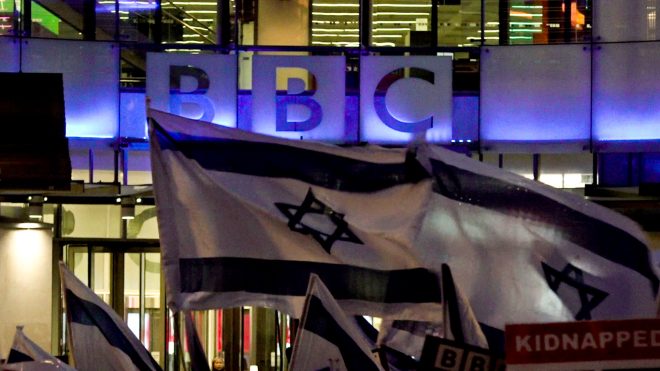
The BBC itself has faced repeated accusations of pro-Israel bias, not only from the public but also internally. Their headquarters are a common start or end point for numerous pro-Palestine marches, including an upcoming national rally in London on January 18. In November, over 100 BBC staff signed an open letter to the corporation’s director-general, Tim Davie and Chief Executive Officer Deborah Turness. The letter admonishes the company for consistently providing “favorable coverage to Israel,” failing to uphold even “basic journalistic tenet[s]” when covering its war on Gaza, and aiding in “systematically dehumanizing Palestinians.”
Haddad agreed that much of the network’s coverage had been subpar, telling MintPress :
The BBC, of course, like many institutions, has fallen way short of their coverage in documenting what Israel has done in a densely populated strip of land we know as Gaza over the last 14 months and prior.”
Partially as a result, public confidence in the broadcaster has fallen to an all-time low. By July 2023, just 38% of Britons said they trusted the BBC to tell the truth – down from 81% 20 years previously. Since October 7, its biases have been put under even more scrutiny.
Israel’s actions, Haddad said, are “growing harder to ignore.” Officially, the death toll from the Israeli attack on Gaza stands at almost 50,000, although credible estimates put the likely figure at many times that. International organizations, such as the United Nations and Amnesty International, have described the onslaught as “genocidal.”
Israel could not sustain its attack without vital military, logistical, economic, and political support from Western powers. It is, therefore, vital for Washington, London and the E.U. that public opinion does not turn too far in favor of Palestine to the point where widespread public rebellion forces a change in policy. The BBC, with its deeply misleading and one-sided coverage of the events, therefore, plays an important role in the perpetuation of crimes against humanity. That this is being driven from the top down by overtly pro-Israel editors, including one with a history in both the State Department and CIA, is perhaps unsurprising but no less shocking, nonetheless.
To be clear, this article does not claim that Berg or anyone at the BBC is a plant. Nor is it accusing him of any specific wrongdoing beyond working at a distinctly biased network. What it is stating is that it is telling that the person in charge of its Middle East reporting has framed pictures and letters of Mossad commanders and high Israeli officials on the wall, as if they are rock stars and he is a teenage fan. That someone such as this rose the ranks is a clear indication of the kind of culture that exists at the BBC – one that has systematically demonized Palestinians and manufactured consent for genocide.
Glenn Diesen | May 16, 2026
Prof. Seyed Mohammad Marandi is a former advisor to Iran’s nuclear negotiation team. Prof. Marandi argues that the U.S. is preparing another attack on Iran after Trump’s failed meeting with Xi in Beijing. Iran has prepared an overwhelming retaliation.
Follow Prof. Glenn Diesen:
Support the research by Prof. Glenn Diesen:
Daniel Davis / Deep Dive – May 16, 2026
An Essay on the Machinery That Decides What Counts as Knowing
Lies are Unbekoming | May 16, 2026
The 1992 Inversion
In November 1992, the Journal of the American Medical Association published a paper titled “Evidence-Based Medicine: A New Approach to Teaching the Practice of Medicine.”¹ The authors, the Evidence-Based Medicine Working Group at McMaster University, led by Gordon Guyatt, announced a paradigm shift. The first paragraph named what was being replaced: “intuition, unsystematic clinical experience, and pathophysiologic rationale.”¹ The replacement was a hierarchy in which the randomised controlled trial sat at the top and clinical observation sat near the bottom.
The paper was not modest. It described its proposal in Kuhnian terms and predicted that the old approach — the physician’s accumulated judgement, the recognition of patterns across thousands of patients, the reasoning from mechanism and first principles — would be superseded.¹ Within a decade, the framework had been adopted across major medical journals, accreditation bodies, and clinical guideline organisations. In a 2007 BMJ poll of more than 11,000 readers asked to name the most important medical milestones since 1840, the sanitary revolution placed first, antibiotics second, anaesthesia third; evidence-based medicine appeared on the shortlist of fifteen.²
What was elevated to the top of the hierarchy was the one form of evidence pharmaceutical companies could afford to manufacture at scale. What was demoted to the bottom was everything they could not control. This was not the discovery of how medicine should be practised. It was the redefinition of what counted as knowing. The framework called itself evidence-based. What it actually was, was evidence-biased — a hierarchy in which what counted as evidence was determined, first, by who could afford to produce it.
The essay examines what that redefinition did, who it served, and the cost in lives.
Explain It to a Six-Year-Old
For a long time, children have learned about the world in many ways. Some things they see with their own eyes. Some things they hear from grandparents who have lived a long time. Some things they figure out by thinking carefully. Some things they know because they have tried them and watched what happened. All of these are ways of knowing.
One day, the school makes a new rule. From now on, the only things that count as knowing are things that have been seen in a special room, by a man with a clipboard, who writes down what he saw. Hearing from grandparents does not count anymore. Trying things and watching what happens does not count. Thinking carefully does not count. The teacher tells the children, “Those were just stories. Real knowing happens in the special room.”
The special room is very expensive. Only one company can afford to rent it. The company pays the man with the clipboard. The company decides what gets looked at in the room and what does not. Apples never go in the room. Sunlight never goes in the room. Grandmothers’ soup never goes in the room. So the school says, “We do not know if apples are good. We do not know if sunlight is good. We do not know if grandmothers’ soup is good. Nobody has seen them in the room.”
The company sells biscuits. The biscuits go in the room every day. The man with the clipboard writes down that the biscuits are good. The teacher tells the children, “We know the biscuits are good, because we saw them in the room.”
Some children eat the biscuits and get tummy aches. They tell the teacher. The teacher says, “Tummy aches have not been seen in the room. We do not know that the biscuits cause tummy aches.” When a doctor visits and says she has seen many children with tummy aches after eating biscuits, the teacher says the doctor is only telling stories. Stories do not count.
Years pass. The children eat more biscuits and fewer apples. Many of them are sick. The company is very rich. The teacher still says the only real knowing is the knowing that happens in the special room.
That is what happened to medicine in 1992.
What Sits at the Top of the Hierarchy
The EBM hierarchy of evidence places systematic reviews of randomised controlled trials at the apex. Beneath them sit individual RCTs, then cohort studies, then case-control studies, then case series, then expert opinion and clinical experience at the bottom.³
The framework is presented as neutral. It is not.
A randomised controlled trial of a pharmaceutical product costs between twenty and three hundred million dollars to conduct.⁴ The trial requires regulatory approval, site recruitment, statistical infrastructure, monitoring, data management, and publication support. The entities capable of funding such trials are, in practice, three: pharmaceutical companies, the National Institutes of Health, and a small number of large foundations whose priorities track institutional medicine. The pharmaceutical industry funds the majority of clinical research in the United States and a higher proportion of late-phase trials of new products.⁵
A trial of a whole food, a traditional practice, a non-patentable substance, a low-cost generic, or a non-pharmaceutical intervention almost never reaches the funding threshold the hierarchy requires. Substances and practices that produce no return on investment do not generate the evidence the framework recognises, and so they sit at the bottom of the hierarchy or fall off it entirely.
The hierarchy then performs a second move. When a question has not been studied at the top tier, the framework declares “insufficient evidence” or “no evidence of benefit.” Absence is treated as a finding. The reader is led to conclude that the unstudied intervention does not work, when what has actually been established is that no one has been willing to pay for the kind of study the framework demands.
The streetlight effect — searching for keys under the lamp because that is where the light is — is not a flaw of the framework. It describes how the framework operates by design. The hierarchy of evidence is a hierarchy of who can afford to generate evidence.
The Trials at the Top Are Built by the Sponsor
The architecture of the modern pharmaceutical trial is the second mechanism. The sponsor — the company that owns the product — controls the design.
The sponsor selects the primary endpoint. A trial of an antidepressant can be designed to measure a small change on a subjective rating scale at week six, rather than functional recovery at one year. A trial of a statin can be designed to measure relative risk reduction in cardiovascular events, rather than all-cause mortality. A trial of a cancer drug can be designed to measure progression-free survival — the time until the tumour grows on a scan — rather than overall survival.⁶ The endpoint determines what answer the trial is permitted to give.
The sponsor selects the comparator. A new drug compared against placebo where an effective comparator already exists tends to win. A new drug compared against an existing drug at the wrong dose, or in the wrong patient population, tends to win. The comparator becomes a design choice rather than a scientific reference.
The sponsor selects the population. Trials that approve drugs exclude the elderly, the polypharmacy patients, the pregnant, those with comorbid conditions, those with abnormal laboratory values, and those with histories of the very adverse events being assessed. The drug is then prescribed to the population that was excluded. The VIGOR trial of Vioxx excluded patients with significant cardiovascular risk; the drug was marketed and prescribed to a population dominated by such patients.⁷
The sponsor selects the duration. A trial of six weeks tells you nothing about a drug that will be taken for life. A trial of two years tells you nothing about lifetime cancer risk. Sponsors routinely halt trials early “for benefit” once a favourable interim result is reached, eliminating the longer follow-up that would have permitted assessment of late-emerging harms; the JUPITER statin trial discussed later was stopped at a median of 1.9 years rather than completing its planned four-year duration.⁸
The sponsor controls the data. Investigators at trial sites send data to the sponsor. The sponsor’s statisticians analyse it. The sponsor’s medical writers produce the manuscript. The 2017 Cochrane systematic review by Lundh and colleagues, examining 75 studies across multiple drug classes, found industry-sponsored research produces conclusions more favourable to the sponsor’s product than independently funded research of the same questions, with the effect persisting after adjustment for methodological quality.⁹ A 2003 BMJ analysis by Lexchin and colleagues found that industry-funded trials of new drugs produced results favourable to the sponsor’s product at roughly four times the rate of independently funded trials.¹⁰
The RCT does not measure efficacy. It measures what its sponsor designed it to measure.
What Happens to the Trials That Find Harm
The third mechanism concerns what happens to the data the sponsor would prefer not to publish.
In 2008, Erick Turner and colleagues at the Department of Veterans Affairs published an analysis in the New England Journal of Medicine of all FDA-registered trials of antidepressants conducted between 1987 and 2004 — 74 trials covering 12 drugs. The FDA records, obtained under freedom of information requests, showed 38 trials with positive results and 36 trials with negative or questionable results. Of the 38 positive trials, 37 were published. Of the 36 negative trials, 22 were not published at all, and 11 were published in a way that conveyed a positive outcome.¹¹ The published literature on antidepressants showed positive findings in 94% of trials. The actual data showed 51%.
This is publication bias as a system, not as accident. The same pattern has been documented for COX-2 inhibitors, antipsychotics, neuraminidase inhibitors, and statins.¹² Trials that find harm are buried. Trials that find benefit are amplified.
A second layer operates below publication. Ghostwriting — the practice of pharmaceutical companies producing manuscripts and recruiting academic authors to attach their names — has been documented across multiple drug classes. Internal Merck documents released in the Vioxx litigation showed company employees drafting clinical trial papers and review articles, then recruiting academic physicians to be listed as authors; in the litigation review by Ross and colleagues, the company author was frequently the first or last name on the draft before the academic name replaced it.¹³ Wyeth’s hormone replacement therapy promotion was supported by at least 26 ghostwritten papers published in the medical literature between 1998 and 2005, identified through documents released in litigation and analysed by Adriane Fugh-Berman.¹⁴
A third layer operates at the journals themselves. When a pharmaceutical company publishes a favourable trial in a major medical journal, it routinely purchases tens or hundreds of thousands of reprints of that article from the journal — reprints distributed to physicians by sales representatives as the academic credential for the product. Richard Smith, former editor of the BMJ, described medical journals in 2005 as “an extension of the marketing arm of pharmaceutical companies,” noting that reprint orders for industry-favourable studies can generate revenues sufficient to constitute a substantial share of a major journal’s income.¹⁵ The journals at the top of the EBM hierarchy depend financially on the companies whose products they evaluate.
The reader of the medical literature encounters what appears to be the considered opinion of an academic physician. The reader does not see the company writer who drafted the manuscript or the company statistician who selected the data presented.
“No Evidence of Harm”
The fourth mechanism is the laundering of absence into safety.
When a harm signal appears in post-marketing data, the framework processes it in stages. The harm is not yet established because no RCT has been designed to test for it. The harm cannot be established because the RCT that would test for it has not been conducted. The harm has not been confirmed because the studies that exist were not powered to detect it. The correlation between exposure and harm is not causation, because the gold-standard trial has not been performed. By the time the gold-standard trial is performed, if it ever is, the drug has been on the market for a decade and the harm is too widespread to deny.
Each stage uses the framework’s own standards to keep the product on the market. Each stage requires the evidence that the framework’s funding structure ensures will not be generated.
The phrase “no evidence of harm” does work the reader rarely notices. It does not mean studies were conducted and harm was not found. It usually means that studies sufficient to detect the harm were not conducted. The phrase converts absence into safety. The asymmetry is structural: “no evidence of benefit” is treated as a finding against an unfunded substance, while “no evidence of harm” is treated as a finding in favour of a marketed product.
The framework is unfalsifiable for the things it protects and fatal for the things it does not.
What Happens to the People Who Disagree
The fifth mechanism is the processing of dissent.
A clinician who observes a pattern of harm in patients and reports it is reasoning from unsystematic clinical experience — the bottom of the hierarchy. The observation is dismissed as anecdotal. A researcher who publishes findings unfavourable to a major product class is subjected to coordinated response: methodological critique, accusations of conflict of interest, retraction campaigns, ridicule in the trade press, and loss of funding. A physician who treats outside guideline-driven protocols is referred to the medical board. A patient who reports the harm is told the condition is unrelated, idiopathic, or psychological.
Peter Gøtzsche, co-founder of the Cochrane Collaboration and author of multiple Cochrane reviews unfavourable to the pharmaceutical industry, was expelled from the Cochrane governing board in 2018 after publishing critical analyses of mammography screening, psychiatric drug regulation, and antidepressant suicidality.¹⁶ The expulsion processed dissent.
John Ioannidis, professor of medicine at Stanford and one of the most cited scientists in medical literature, published “Why Most Published Research Findings Are False” in PLoS Medicine in 2005, demonstrating from within the establishment that the statistical and structural assumptions of the published evidence base were unreliable.¹⁷ The paper was met with hostility from those it implicated and quietly absorbed by those it embarrassed. The framework continued unchanged.
David Healy, a psychiatrist and historian of antidepressants whose research had exposed the suicidality signal in SSRI trial data, was offered the chair of the Mood and Anxiety Disorders Programme at the University of Toronto’s Centre for Addiction and Mental Health in 2000. After a public lecture in which he discussed Prozac-induced suicidality, the appointment was withdrawn. The Centre received substantial funding from Eli Lilly, the manufacturer of Prozac.¹⁸ Nancy Olivieri, a haematologist at the University of Toronto, reported safety concerns about deferiprone, a thalassaemia drug manufactured by Apotex, after observing harm in her clinical trial. Apotex threatened legal action; the university, which was at the time negotiating a substantial donation from Apotex, did not defend her academic freedom.¹⁹ Both cases preceded the EBM apparatus’s deployment against later dissenters; both established the template.
The framework does not produce truth and then defend it against error. The framework produces orthodoxy and then defends it against observation.
Case One: Vioxx
Merck submitted rofecoxib (Vioxx) to the FDA in November 1998 and received approval in May 1999.²⁰ The drug was a COX-2 inhibitor — a new class of anti-inflammatory marketed as gentler on the stomach than older drugs. Before its withdrawal, more than 80 million people worldwide had been prescribed Vioxx.²¹
The pivotal trial supporting cardiovascular and gastrointestinal claims was VIGOR (Vioxx Gastrointestinal Outcomes Research), published in the New England Journal of Medicine in November 2000.²² The trial compared Vioxx against naproxen in 8,076 rheumatoid arthritis patients. The publication reported that Vioxx caused fewer serious gastrointestinal events than naproxen. The published paper also reported that patients on Vioxx had four times the rate of myocardial infarction; further analysis presented to the FDA Arthritis Advisory Committee in February 2001 determined the rate to be fivefold.²³
The published explanation was that naproxen was protective, not that Vioxx was harmful. The cardioprotective effect of naproxen had not been established at this magnitude before VIGOR and was not established afterwards.²⁴ The interpretation served the sponsor.
Internal Merck documents released in subsequent litigation showed company awareness of the cardiovascular signal predating VIGOR’s publication. Internal communications discussed how to manage the signal; the published trial reports did not communicate what the internal analyses had described.²⁵ Merck withdrew Vioxx in September 2004 after the APPROVe trial, designed to assess Vioxx’s effects on colorectal polyps, demonstrated a doubling of cardiovascular events.²⁶ FDA epidemiologist David Graham testified before the Senate Finance Committee that Vioxx had caused an estimated 88,000 to 139,000 excess heart attacks, of which 30 to 40 percent were fatal.²⁷ The lower bound was approximately 26,000 American deaths.
The trial that approved the drug satisfied every requirement of evidence-based medicine. It was randomised. It was controlled. It was published in the most prestigious medical journal in the world. It supported guideline recommendations and reimbursement decisions. The framework that produced it found nothing wrong with it.
The harm was visible in the data. The harm was known to the sponsor. The harm was published in a form that obscured its meaning. The framework continued to recommend the drug for almost five years. When the drug was withdrawn, the framework was not.
Case Two: Statins
The statin literature illustrates how the framework presents data to maximise the appearance of benefit.
Statins reduce LDL cholesterol. Whether they reduce all-cause mortality in primary prevention — in patients without established cardiovascular disease — has been contested in the literature for two decades.²⁸ The framework has resolved the contest in favour of mass prescription.
The presentational device is relative risk reduction. A statin trial reports that the drug reduces cardiovascular events by some percentage. The figure is technically accurate. What it conceals is the absolute risk reduction — the actual difference in event rates between the treated group and the untreated group.
In the JUPITER trial of rosuvastatin (2008), patients on the drug had a 1.6% rate of major cardiovascular events over 1.9 years. Patients on placebo had a 2.8% rate.²⁹ The relative risk reduction was 44%. The absolute risk reduction was 1.2%. The number needed to treat — the number of patients who must take the drug for one to avoid an event — was approximately 95 over two years. The other ninety-four took the drug and received no cardiovascular benefit from it.
The framework permits the relative figure to be reported in the headlines, the abstract, the press release, the guideline recommendation, and the prescribing conversation. The absolute figure appears, if at all, in the body of the paper. The patient is told the drug reduces heart attack risk by 44%. The patient is not told the drug reduces their personal two-year risk from 2.8% to 1.6%.
Adverse effects are processed through related machinery. Many statin trials use a run-in period — patients are given the drug before randomisation, and those who experience adverse effects are excluded before the trial begins.³⁰ Trials then report low rates of muscle pain, cognitive impairment, and new-onset diabetes. Surveys of statin users in real clinical practice — without the run-in selection — find muscle symptoms in 10 to 25 percent of patients, against trial-reported rates in the low single digits.³¹
The 2013 Cochrane review of statins in primary prevention found a small mortality benefit and a non-trivial harm signal, particularly for new-onset diabetes.³² The framework’s response was not to question primary prevention prescribing. It was to expand it. The 2013 ACC/AHA cholesterol guidelines lowered the threshold for statin prescription and added an estimated 13 million Americans to the eligible population.³³
The framework approves the drug, designs the trials to maximise apparent benefit and minimise apparent harm, suppresses the inconvenient findings, expands the eligible population, and declares the resulting prescribing pattern to be evidence-based.
Case Three: SSRIs
The selective serotonin reuptake inhibitors entered the market in 1987 with fluoxetine (Prozac). They were marketed on the basis of a “chemical imbalance” theory of depression — the claim that depressed patients had low serotonin and the drugs corrected the deficiency.³⁴ The theory was never demonstrated. A 2022 systematic umbrella review by Joanna Moncrieff and colleagues, published in Molecular Psychiatry, concluded that the evidence does not support the hypothesis that depression is caused by reduced serotonin activity or concentrations.³⁵
The drugs were approved on the basis of trials showing small differences from placebo on rating-scale depression scores at six to eight weeks. The Turner analysis cited earlier in this essay found that the published literature substantially overstated the actual trial outcomes; when unpublished trials were included, the apparent efficacy fell substantially, with roughly half the trials having failed to demonstrate benefit.¹¹ A 2008 meta-analysis by Irving Kirsch and colleagues using FDA data found that the difference between SSRIs and placebo on depression rating scales fell below the threshold for clinical significance for all but the most severely depressed patients.³⁶
The harms followed the framework’s standard sequence.
Sexual dysfunction was acknowledged in trial reports at rates of 2 to 16 percent, well below the 50 to 70 percent rates documented in subsequent clinical surveys.³⁷ Post-SSRI sexual dysfunction — persistent sexual dysfunction continuing after discontinuation — was denied for two decades. The European Medicines Agency added a warning label in 2019.³⁸ Patients reporting the syndrome had been told for two decades it was not a recognised condition.
Suicidality in children and adolescents was visible in the trial data from the early 1990s. The published literature did not communicate the signal. A 2004 FDA review of pediatric trials confirmed it, and the FDA added a black box warning in October 2004.³⁹ A 2016 BMJ analysis by Tarang Sharma, Peter Gøtzsche and colleagues, using clinical study reports rather than published papers, found the suicidality signal in adults as well — and found systematic misclassification of suicide attempts as “emotional lability” in the original trial reports.⁴⁰
The dependence and withdrawal syndromes were denied for three decades. SSRI manufacturers and prescribing guidelines characterised the discontinuation syndrome as a mild, transient phenomenon affecting a small minority of patients. A 2019 systematic review by James Davies and John Read found 56% of patients experience withdrawal effects when attempting to discontinue, with 46% of those affected describing the experience as severe.⁴¹ The UK Royal College of Psychiatrists revised its position later that year, acknowledging that withdrawal could be severe and prolonged.⁴² The acknowledgement came thirty-two years after the first SSRI was approved.
Around one in eight American adults now takes an antidepressant.⁴³ The framework that approved them functioned exactly as designed.
Case Four: Bisphosphonates
Fosamax (alendronate) was approved by the FDA in 1995 as a treatment for established osteoporosis. The market was small. In 1995, the number of American women with documented osteoporosis was a fraction of what the drug’s commercial prospects required.
The framework supplied the market. In 1994, a World Health Organization study group convened in Rome, financed by the pharmaceutical industry, produced arbitrary diagnostic cutoffs based on bone mineral density measured against the average of a healthy thirty-year-old white woman.⁴⁴ Bone density between one and 2.5 standard deviations below this reference was named “osteopenia.” Bone density more than 2.5 standard deviations below was named “osteoporosis.” The categories were statistical cutoffs imposed on a normally distributed biological variable; they were not derived from outcome data on who actually fractured. Anna Tosteson, a member of the original WHO group, later said the categories had been intended as population research tools, not individual diagnoses; the chair of the meeting, John Kanis, said the same.⁴⁵ A subsequent 1999 WHO panel on osteoporosis cost analysis included eleven members, eight of them employed by pharmaceutical manufacturers.⁴⁶
Merck did the rest. The company established the Bone Measurement Institute, a nonprofit that lobbied for insurance coverage of bone density testing and underwrote the placement of scanners in physician offices across the United States.⁴⁷ In 1997, the FDA cleared a lower 5 mg dose of Fosamax specifically for women with osteopenia. Approximately thirty percent of postmenopausal women now had a “disease” requiring early intervention.⁴⁸
The pivotal trials applied the relative-risk-reduction architecture described in the statins case. The Fracture Intervention Trial reported a 47% relative reduction in hip fracture and a 52% relative reduction in radiographic vertebral fracture in women with established osteoporosis.⁴⁹ The trial enrolled high-risk women in whom even modest relative reductions translated into modest absolute differences. It did not study the population in which the drug was subsequently prescribed in greatest numbers — women with osteopenia, who carried substantially lower baseline fracture risk. The framework approved the prescribing pattern anyway.
The drug’s mechanism of action determined what would follow. Bisphosphonates concentrate in bone and disable osteoclasts, the cells responsible for clearing old bone and allowing new bone to be laid down in response to mechanical load. Blocking the clearing side of the remodeling cycle while leaving the building side unopposed produces bones that are denser by measurement and more brittle by behaviour — old bone that should have been replaced accumulates as highly mineralised, structurally compromised material. The scan reads higher. The bone breaks more easily.
The harm signal emerged after the prescribing pattern was established. Reports of atypical femoral fractures — spontaneous breaks in the shaft of the thighbone, occurring with little or no trauma — appeared in the orthopaedic literature from 2007.⁵⁰ The drug marketed to prevent fractures was producing a different category of fracture in long-term users. The FDA issued a safety warning in October 2010 but did not retract the prescribing recommendation; osteonecrosis of the jaw was added as a separate documented harm.⁵¹ A 2011 JAMA study reported significantly elevated risk of subtrochanteric and femoral shaft fractures in long-term bisphosphonate users.⁵²
The framework accepted an industry-funded definition of disease, converted asymptomatic women into patients, prescribed them a drug whose trials had been conducted in a different population, and continued recommending the drug after the iatrogenic loop became visible. Nothing in this sequence required new science. It required only the framework’s willingness to treat industry-supplied definitions as medical knowledge, industry-funded trials of one population as evidence about another, and a metric the drug improved (density on the scan) as a proxy for the outcome the drug worsened (the strength of the bone under stress).
What the Framework Was Protecting
The essay has examined EBM on its own terms. By its own stated standards, the framework does not produce reliable knowledge, does not protect patients, does not exclude bias, and does not distinguish truth from manufactured evidence. Every claim it makes for itself can be inverted with examples from its own literature.
A deeper question remains.
EBM is the epistemological enforcement layer for a particular model of medicine. That model holds that the body is a malfunctioning machine, that illness is caused by external invaders or internal genetic defects, that the response to illness is the introduction of a patented chemical or biological product, that the practitioner’s task is to match product to diagnosis, and that the evidence required to justify the product is the kind of trial pharmaceutical companies are equipped to manufacture.
The framework’s structural bias against whole foods, traditional practices, low-cost interventions, and reasoning from mechanism is not incidental to this model. The pharmaceutical paradigm requires the bias to function. A framework that recognised the body’s intrinsic capacity for self-regulation and repair, that attended to the actual sources of damage — toxic exposure, nutritional depletion, electromagnetic burden, psychological strain — and that treated the practitioner’s task as the removal of obstacles rather than the introduction of products, would not need RCTs at the top of its hierarchy because it would not be generating products to be tested. It would be observing what the body does when the obstacles are removed.
EBM is not science being corrupted by industry. EBM is the epistemological form industry required. It was designed in the 1990s, codified in the 2000s, and operated at civilisational scale in the 2020s. The framework has done what its architecture predicted.
This is what political economist Toby Rogers, in testimony before the United States Senate in 2025, named epistemic capture — the colonisation of knowledge production itself rather than the regulation of its products.⁵³ When an industry captures regulation, it controls decisions. When an industry captures epistemology, it controls what is allowed to count as a fact. EBM is epistemic capture’s operating system in medicine. The same investment funds that hold major positions in the pharmaceutical companies whose products the framework evaluates also hold major positions in the publishers of the journals that perform the evaluation; the producer and the certifier of medical knowledge share their owners.⁵⁴
The clinician at the bedside who notices a pattern across patients and adjusts their practice accordingly is doing what physicians have done for thousands of years. The framework calls this anecdote and ranks it at the bottom of the hierarchy. The patient who recovers from a chronic condition through dietary change, sunlight, sleep, and the removal of pharmaceutical exposures is doing something the framework cannot measure, because the framework was not designed to measure it. The traditional practitioner whose people have used a plant for fifteen generations is reasoning from a form of evidence the framework excludes by definition.
What the framework calls evidence is what industry can pay for. What the framework calls anecdote is what the body actually does.
The 1992 paper announced a paradigm shift. The shift was real. The direction was not what the paper claimed. Medicine did not move from intuition to evidence. It moved from the physician’s accumulated judgement to the industry’s manufactured documentation. The hierarchy of evidence is the hierarchy of who paid for the study. Evidence-based medicine, examined as machinery, is evidence-biased medicine — biased structurally, by what gets funded; biased methodologically, by what gets measured; biased editorially, by what gets published; biased financially, by who owns the journals; biased institutionally, by what gets recommended after the harm has been documented. The bias is the framework.
The document is publicly available. The signatures are on it. The date is November 1992. Whatever the framework was sold as, the framework is what its architecture produced. What its architecture produced is in the medical journals, in the prescribing patterns, in the disability statistics, and in the cemeteries. It is also in the minds of two generations of doctors and patients who no longer believe their own observations count.
References
Press TV – May 16, 2026
Leaked documents have revealed the US tech firm Cisco Systems’ deep relationship with the Israeli regime in its continuous wars in West Asia, which the United States backs.
The papers leaked by Drop Site News on Friday reveal that Cisco has a deep illegal relationship with the Israeli regime and supported Tel Aviv forces in their atrocities against the people of Palestine, and beyond.
The Silicon Valley-based company, which produces hardware, software, telecommunications equipment, and other high-technology services used in networking, cybersecurity, and Artificial Intelligence (AI) systems, provided support and infrastructure to Israel in its genocidal war against Palestinians in the Gaza Strip, and also ran unlawful operations in illegal settlements in the occupied West Bank.
The leaked papers provided to Drop Site by whistleblowers show Cisco’s deep and growing collaboration with the Israeli military and intelligence communities for its genocide in Gaza and continued regional wars.
The San Jose-based networking giant, with a market capitalization in excess of $270 billion and annual revenue of $56.7 billion in 2025, manufactures the routers, switches, firewalls, and communications platforms that run the internet’s infrastructure, as well as many of its worldwide corporate, government, and military networks.
Cisco’s aggressive pursuit of contracts with the Israeli regime has led to the conclusion that the networking giant condones profiting from genocide.
Its collaborations with the Israeli regime have been documented in public news reports and new business announcements in the country. But the internal documents, including presentations, purchase and revenue records, and schedules, shed light on the rapidly expanding list of services that Cisco has been providing directly to the Israeli regime forces over the past several years, particularly since October 7, 2023, when Tel Aviv launched war on Gaza.
However, an update report by Cisco employees reveals that, as early as 2021, Israeli sources estimated that the US tech company was earning $40-50 million a year from computing contracts with the regime’s military forces.
The report highlights an agreement to provide a new list of itemized services to the Israeli forces, including enterprise and data center networking, cybersecurity, and classified network support.
On March 25, 2025, Cisco management instructed employees to focus on ways “to drive Cisco business, and one example specifically would be the ongoing conflict in [West Asia].” The executive added that, “We have made the decision that this topic cannot be discussed, cannot be debated in company or organization-wide meetings.”
Al Mayadeen | May 16, 2026
Residents of the al-Bustan neighbourhood in Silwan, located in occupied al-Quds just below the walls of the Old City, are being forced to demolish their own homes to make way for “Israel’s” expansionist project in the area, The Guardian reports.
Palestinians have been forced to demolish their own homes for decades as a form of “collective punishment” in an effort for the Israeli entity to continue its settlement expansion.
The coercive mechanism that “Israel” is employing in Silwan is not only meant to dehumanise the families, but is laced with financial threats as well. The Guardian reports that residents are being told that if municipal workers demolish the homes, the cost would reach approximately 280,000 shekels.
One resident, Jalal al-Tawil, described to The Guardian the feeling of watching a hired tractor dismantle the home built by his father, which itself stood on the foundations of his grandparents’ house. “This is something really hard. This is something bitter,” he said, noting that it meant erasing multiple generations of family history in a single act.
He also left the remains of a 35-year-old grapevine until the end, recalling that it once produced fruit for the entire neighbourhood. The vine, like the house, was ultimately destroyed as part of the demolition.
The Guardian reports that residents described the situation as both physically destructive and psychologically draining, as entire family histories are reduced to rubble in front of them.
‘Kings Garden’ as tool of occupation
The demolitions are taking place in preparation for the planned “King’s Garden” project, a biblical-themed development intended to be built on cleared land in al-Bustan.
The project is promoted as a heritage and archaeological initiative, which Israelis claim links to the historical narrative of King Solomon. It is also presented as part of a wider archaeological-tourism network centered on the nearby “City of David” site.
However, the project is not merely cultural or recreational as the Israeli occupation claims, but forms part of a broader strategy of spatial reconfiguration in occupied al-Quds, where archaeological interpretation is used to reshape the urban landscape and occupy land inhabited by Palestinian families.
That said, the transformation of residential neighbourhoods into curated heritage zones is a mechanism for displacing existing communities while embedding a singular historical narrative over a multi-layered living city.
Systematic targeting of al-Bustan homes
More than 57 homes in al-Bustan have been demolished over the past two years, with at least eight additional structures designated for demolition in the coming weeks.
Municipal Israeli bodies allege that the homes were built without permits and that the area was never zoned for residential use. But residents rejected this false claim, arguing that many homes were built decades ago, including structures that predate the occupation of Palestine.
They also point to a broader pattern of unequal planning enforcement in occupied al-Quds, where Palestinian construction is frequently targeted while other forms of unauthorized building elsewhere by settlers in the city are treated differently.
Life under demolition orders and economic strain
The demolition campaign is also increasing severe financial pressure on residents.
Fakhri Abu Diab, the al-Bustan community leader, had his home demolished in 2024. He is still paying a municipal fine of approximately 43,000 shekels, which is being repaid in monthly instalments of around 4,000 shekels.
Abu Diab also reported being charged an additional 9,000 shekels for costs that are associated with police operations during the demolition process.
Following the destruction of his home, he and his wife now live in a portable cabin placed amid the rubble of the original structure. Only a portion of the former kitchen remains standing.
Contesting narrative of ‘public development’
Israeli authorities, in attempts to hide the brutality of their project, told the media that the “Kings Garden” project is intended to serve all city residents and address a shortage of public green space. However, the reality is that it serves as another expansionist project of the Israeli regime to push Palestinians out of their ancestral homes.
Residents and community representatives of Silwan dispute the claims made by the Israelis, stating that they themselves proposed a comprehensive master plan for the neighbourhood that included green space and regulated development, but that it was rejected at the political level.
They argue that enforcement is inconsistent, pointing to the expansion of unauthorised settlement structures in other parts of occupied al-Quds and the West Bank that do not face the same level of demolition enforcement.
or go to
Aletho News Archives – Video-Images
Reknowned economist M. Shahid Alam offers this excellent critique of Noam Chomsky’s defective analysis of the relative influence of Oil versus the Israel lobby over US foreign policy: … continue
 Aletho News If Americans Knew No Tricks Zone
