Seyed M. Marandi: Plans for a U.S. Land Invasion of Iran; Yemen & Iran Enters the War?
Glenn Diesen | July 16, 2026
Sputnik – 17.07.2026
Iran’s March drone and missile attacks disabled numerous critical US radars and forced it to “expend a significant portion of their air and missile defense stockpiles,” military expert and CAST security think tank senior research fellow Yuri Lyamin told Sputnik.
Lyamin pointed out, for example, that “the AN/TPY-2 radar in Jordan destroyed by Iranian strikes in March, was part of the American THAAD missile defense system battery providing cover for American bases in Jordan against medium-range ballistic missiles. The destruction of the radar effectively rendered the THAAD battery inoperable, as it’s used to detect and track targets and guides interceptor missiles to them.”
Fast forward the present, and Iran is freely targeting US barracks, logistics bases and Air Force facilities in Kuwait and Bahrain using Arash heavy drones.
Lack of effective resistance on the US’ part signals that whatever efforts the Pentagon took to restore regional capabilities (like transferring THAAD from South Korea) proved insufficient, Lyamin says.
“Iran is currently primarily targeting various US bases in Bahrain, Kuwait, Qatar and Jordan. The combination varies daily, as the US operates multiple bases [in these countries]. The selection of specific targets depends both on the pre-defined target list at these bases, and on operational intelligence,” Lyamin says.
“Relentless Iranian attacks on US-operated bases in the region generally complicate US operations against Iran that rely on them, and force the US to expend significant forces and resources to protect them. I’d even say that some of the bases nearest to Iran are now causing more problems for the US than they’re worth. For example, Al Udeid Air Base in Qatar was the largest US airbase in the region, but now the US has been forced to evacuate most of its aircraft because it’s too dangerous to keep them there.”
Arash drones have a range up to 2k km, variable warhead weight (up to 260 kg), and versions with advanced optoelectrical and other homing heads “for high-precision target engagement.” They are the Iranian Army’s long-range strike tool – distinct from the IRGC’s Shahed series of UAVs.
Press TV – July 17, 2026
Criminal attacks by the terrorist US Army targeted civilian infrastructure across several Iranian provinces overnight and into Friday, including the destruction of the maritime control tower at Chabahar’s Shahid Kalantari Port, killing eight people and injuring 20 others.
The attacks from late Thursday into early on Friday primarily struck the provinces of Hormozgan, Bushehr, Sistan and Baluchestan, Khuzestan and Lorestan, media reports said.
The latest strikes follow US President Donald Trump’s threats to target Iran’s civilian infrastructure, including bridges and power plants amid international community’s silence on war crimes committed by the US.
With temperatures soaring to 50 degrees Celsius in southern Iran, the Energy Ministry called on citizens to conserve electricity, conceding that US airstrikes have inflicted damage on power facilities and strained the national grid.
It said those areas “are currently experiencing extreme heat and attacks on power infrastructure.”
At least 38 killed, more than 400 injured
Iran’s Health Ministry announced on Friday that 38 people have been killed and more than 400 injured in criminal US attacks by Friday morning.
The ministry said the attacks killed three women and injured 22 others. One person under the age of 18 was killed and nine others were injured. It added that 47 people remain hospitalized.
Chabahar port control tower destroyed
The maritime control tower at Shahid Kalantari Port in Chabahar was struck for the third time by US warplanes on Friday morning and was completely destroyed.
Despite the destruction, the port’s berths, cargo-handling equipment and operational infrastructure were not damaged, and no casualties were reported.
IRNA said technical and operational teams immediately began damage assessments, secured the area and evaluated conditions for resuming port operations. Cargo loading and unloading at the port are expected to restart shortly after safety inspections are completed.
Chabahar holds immense strategic significance as Iran’s only deep-water port with direct access to the Arabian Sea and the Indian Ocean, bypassing the Strait of Hormuz entirely.
This makes it a critical alternative trade route for Iran, particularly as the US has reimposed a naval blockade on Iranian ports and largely closed the Strait of Hormuz.
The port is also a key trade gateway for Afghanistan and Central Asia, developed in close collaboration with India, which has invested heavily in the facility as a route bypassing Pakistan.
By targeting the control tower, commercial berths, and a warehouse in Chabahar, US strikes aim to effectively paralyze a route Iran is relying on to maintain trade while the Strait of Hormuz remains blocked.
Deadly attacks on Hormozgan
Hormozgan Province sustained the heaviest casualties.
Six bridges in Khamir County were hit during the early hours of Friday, damaging key transport routes linking Bandar Abbas, Bandar Khamir and Lar, as well as roads through Latidan, Kahorestan, Keshar and Maru village.
Provincial authorities urged residents to avoid the affected roads, use alternative routes and keep access clear for emergency, police and firefighting teams.
According to the Hormozgan Governor’s Office, seven people were killed and nine others injured in the bridge attacks.
Traffic on the Bandar Abbas-Lar highway through Bandar Khamir has partially resumed, although authorities continued to advise against unnecessary travel.
Separately, one person was killed and eight others injured after terrorist US forces struck the Allah Akbar Hill residential neighborhood in Bandar Abbas.
In another strike, a railway branch station in Bandar Abbas was hit shortly after midnight. Two people were injured and transferred to medical centers. Provincial authorities said the station is located away from residential areas and suffered only limited damage to its infrastructure.
The highway and railway bridge strikes appeared aimed at cutting off Bandar Abbas, Iran’s main port, from roads leading into the country’s central region onward to Tehran, the capital.
While other routes still are open, the terrorist US strikes appear to expand further, clearing aiming to disrupt the movement of goods needed for Iran’s 90 million people.
Bushehr struck again
Bushehr came under two US attack within hours, according to Governor Mohammad Mozaffari.
He said one person was injured and that emergency and medical personnel were responding while authorities continued to investigate the incident.
Attacks near Ahvaz
In Khuzestan Province, Deputy Governor Valiollah Hayati said terrorist American forces attacked areas around the city of Ahvaz on Thursday night.
He said the dimensions of the attack remain under investigation and that further details, including any damage, would be announced later.
The latest attack follows earlier US strikes near Ahvaz that forced the evacuation of Shahid Baghaei Hospital as a precaution. Tehran slammed the attack as a “cowardly war crime”.
Ahvaz Jundishapur University of Medical Sciences said the hospital was temporarily taken out of service.
Strike in Lorestan
In western Iran, Lorestan Deputy Governor Saeed Pourali said US forces attacked an area in the Veysian district of Chegeni County on Friday. No further details were immediately released.
Iran has declared the Strait of Hormuz closed “until further notice” and at least until “the end of US interference in the region.”
Tehran has responded to the US attacks by targeting American military bases and equipment across the region. On Friday, Iranian forces launched salvos of missiles and drones against US assets in Bahrain, Kuwait, Syria, and Oman.
Glenn Diesen | July 16, 2026
Prof. John Mearsheimer discusses how to make sense of the U.S. going back to war against Iran, and Trump’s decision to deepen the U.S. involvement in the war against Russia. Prof. Mearsheimer is the R. Wendell Harrison Distinguished Service Professor in the Political Science Department at the University of Chicago
Follow Prof. Glenn Diesen:
Support the research by Prof. Glenn Diesen:
Glenn Diesen | July 16, 2026

Press TV – July 16, 2026
Pro-Palestinian German journalist Anna Liedtke says Israeli prison guards rape detainees with the systemic intention to “break” their will.
Anna Liedtke, 25, who in September had set sail for the Gaza Strip with the Freedom Flotilla Coalition vessel Conscience, was raped by Israeli prison guards during detention.
“There is no reason for me to be ashamed,” Liedtke said, in her first interview about a legal case filed against the perpetrators.
“It’s clear they want to break our will and silence us, making this so traumatic that we will never talk about Palestine again,” she said in an interview with The Guardian. “Whenever we are silent, they will do it to another person.”
In the meantime, Liedtke’s lawyers have filed a complaint, demanding Israeli authorities investigate the case. Israeli law defines any kind of non-consensual penetration as rape.
Liedtke’s lawyer, Muna Haddad, said her client wanted justice, and that she also aims to raise awareness about the Israelis’ response.
“It is Anna’s wish to seek justice and exhaust all avenues to hold the perpetrators of these acts accountable. We also want to raise awareness and see how the Israeli system responds when faced with our demand to open an investigation,” Haddad said.
“Sexual violence and rape are recurring violations that have been perpetrated against Palestinian prisoners,” Haddad pointed out, noting that the West’s blind support for Tel Aviv has given the Israeli prison guards impunity for sexualized violence and rape against international solidarity activists, as well.
The complaint, sent to the Israeli attorney general, the Israel prison service’s legal adviser, the department for the investigation of prison guards, and the commander of Givon prison, was a challenge to a “culture of impunity” for abuse of prisoners by Israeli forces, Haddad said.
After Liedtke revealed the matter in late December, two other Freedom Flotilla members spoke of sexualized violence performed on them by Israeli prison guards.
Vincenzo Fullone, an Italian journalist, revealed that “on three separate occasions, I was ordered to enter a small, specially arranged room where I was completely stripped and subjected to invasive and painful anal searches… During the third search, the pain became unbearable and was compounded by mockery, verbal abuse – including the words, ‘Don’t you like it, Hamas whore?’ – and the photographing of my body.”
Australian activist Surya McEwen said he “was stripped naked and sexually assaulted by Israeli officers while being held hostage. One held a gun to my head, angrily threatening that he would kill me, while the other yanked and pulled on my genitals, perversely and almost gleefully.”
He said Israeli soldiers dislocated his arm, forcing him to kneel with other flotilla members while the notorious Israeli national security minister Itamar Ben-Gvir verbally abused them.
According to the Gaza-based Palestinian Center for Human Rights, Israeli forces employ sexualized violence against Palestinians.
The Center said that increasing systemic violence against Palestinians has continued for decades and includes “organized and systematic practice of sexual torture, including rape, forced stripping, forced filming, sexual assault using objects and dogs, in addition to deliberate psychological humiliation aimed at crushing human dignity and erasing individual identity entirely.”
Al Mayadeen| July 16, 2026
Sanaa’s Deputy Information Minister Mohammed Mansour told Al Mayadeen on Thursday that the positions laid out by Ansar Allah leader Sayyed Abdul-Malik al-Houthi effectively amount to a formal declaration that Yemen has decided to end the US-Saudi blockade imposed on it.
He said Yemen will see massive demonstrations tomorrow in response to Sayyed al-Houthi’s call, giving the Yemeni people a chance to make their position on lifting the Saudi blockade unmistakably clear.
“The Yemenis have grown tired of negotiations. Either the blockade is lifted in practice, or we move to break it by force,” he said.
Yemen moving toward confronting Saudi blockade militarily
Mansour told Al Mayadeen that Saudi Arabia bombed Sanaa International Airport just nine minutes before an Iranian aircraft was due to land. “By striking Sanaa International Airport, Saudi Arabia made clear that this blockade is its own doing, and that it has no intention of lifting it,” he said.
He added that Yemen is preparing, within days, to confront the Saudi economic blockade through military action. “If political channels fail to force Saudi Arabia to lift the economic blockade, we will confront it militarily,” he said.
He stressed that Yemen never raises a slogan it doesn’t have the means to back up. “Today, we have what it takes to dismantle this economic aggression,” he asserted.
On mediation, Mansour told Al Mayadeen, “We’ve grown tired of mediation, though we do appreciate Oman’s role, since it has not been party to the aggression against our country.”
“This is a matter between Yemen and Saudi Arabia,” he stressed.
He also said Saudi Arabia would do well to take note of Yemen’s positions on Palestine and reconsider the blockade it has imposed.
Yemen will not leave Hezbollah to face the enemy alone
Mansour also voiced regret over the Lebanese government’s stance toward the Lebanese Resistance, insisting that Hezbollah is an asset Lebanon cannot afford to squander.
He affirmed that no party within the Axis of Resistance will ever be left to face the enemy alone, and that Yemen will not abandon Hezbollah.
He recalled that the loudest voice in support of Yemen once belonged to the martyred Sayyed Hassan Nasrallah, affirming that Yemen will never forget it.
Sayyed al-Houthi: Saudi escalation will be met in kind
Ansar Allah leader Sayyed Abdul-Malik al-Houthi said Thursday that Saudi Arabia’s aggression against Yemen has dragged on for years with no legal basis, framing it as an extension of Riyadh’s subservience to Washington and Tel Aviv.
In his weekly speech, Sayyed al-Houthi confirmed that “surrender is not an option in Yemen,” warning that if Saudi Arabia moves toward full-scale escalation, Yemen will respond in kind, “and blockade for blockade.”
Sayyed al-Houthi accused Riyadh of stalling and evading responsibility over the past several years, depriving Yemen’s people of their sovereign wealth and subjecting them to suffering under a severe blockade, and revealing that Saudi Arabia has cooperated with “Israel” against Yemen throughout that entire period.
“Saudi Arabia is reneging on all the obligations arising from the de-escalation phase, which are, above all, humanitarian obligations and inalienable rights of our people,” he said, accusing Riyadh of seeking to control every aspect of Yemenis’ lives, down to deciding who may travel abroad for medical treatment and who may not.
He added that no one, regardless of position or capacity, has the right to deprive the Yemeni people of their oil rights or freedom of movement.
He said Saudi Arabia wants Yemen’s people to remain trapped in an economic crisis, with betraying their homeland presented as their only means of earning money.
“Saudi Arabia should not imagine that this is a picnic,” he concluded. “It will be something else entirely.”
‘Israel’ aided Saudi interception efforts
Israeli aircraft assisted Saudi forces in their attempts to intercept Yemen’s retaliatory strike, which was launched in response to the Saudi bombardment of Sanaa Airport, a senior military source within the Yemeni Ministry of Defense revealed to Al Mayadeen.
According to the Yemeni source, the Israeli deployment consisted of specialized Gulfstream intelligence-gathering aircraft equipped for communications interception, wiretapping, and reconnaissance.
The aircraft took off from “Israel’s” Nevatim Airbase and operated primarily along a flight path over the Red Sea, where they actively participated in tracking and mapping the trajectories of incoming Yemeni missiles and drones, the source said.
By Robert Inlakesh | Palestine Chronicle | July 15, 2026
The US Trump administration sought to weaponize diplomacy once again against the Islamic Republic of Iran and implement a surprise attack strategy – this time, Tehran appears to have preempted the American-Israeli plot.
The Iran-US Memorandum of Understanding (MoU) officially died this week, but in reality it was terminated on June 26 with the Lebanon-Israel deal that Washington brokered. The reason why was simple: the United States decided to print on paper a new deal that violated the former by granting Israel de facto permission to maintain a belligerent occupation of southern Lebanese lands.
Throughout the month that the MoU technically held, the US committed various violations of a number of clauses of the agreement, including by direct threats from Donald Trump himself to assassinate the entire Iranian negotiating team. But the Lebanon issue was far more indicative of where things were heading than the limited skirmishes in the Persian Gulf and threats to commit war crimes.
Clause 1 of the MoU concerned the ensuring of the war’s termination on all fronts, with Lebanon being explicitly mentioned. Tehran made it clear that this meant a full withdrawal of Israeli occupation forces from southern Lebanon and the protection of Lebanese sovereignty.
Instead of implementing the clause, Trump and Israeli Prime Minister Benjamin Netanyahu coordinated a careful approach to the Lebanon war, one that would not result in a withdrawal or end to the war, while simultaneously being careful not to provoke any Iranian retaliatory strikes. Therefore, the US worked with Israel to develop a new conspiracy. This involved the use of the US-proxy regime in Beirut to stir division within Lebanon, an attempt to force the Lebanese army to clash with Hezbollah, combined with an initiative to pressure neighboring Syria to invade the Bekaa Valley region in order to take on Hezbollah.
Meanwhile, as this plot was developing, the Israelis returned to the pre-March 2 status quo more or less in Lebanon – Hezbollah froze its retaliatory operations, while Israel continued to blow up civilian homes, bomb on a lower scale, while maintaining its presence inside south Lebanon.
A US military advisory force is being deployed to Beirut in order to guide the Lebanese army on its newly agreed-upon mission to clash with Hezbollah, the stated goal of which is to disarm the movement. Speculation also has it that the US may even be considering deploying thousands of combat troops into Lebanon in order to help prop up the regime in Beirut if the situation goes sideways, although this assertion is yet to be fully substantiated.
The Syrian Observatory for Human Rights (SOHR) has been documenting the ongoing mobilization and military buildup along the Lebanese-Syria border, as Trump himself has repeatedly stated in public that he seeks to use Syria’s forces to invade Lebanon.
Hezbollah’s sudden silence and lack of operations indicate that it has been taking these threats very seriously. Fighting Israel alone has been a battle that it has proven capable of managing, but preparations to fight US-proxies inside Lebanon, the possible collapse of the Lebanese Army into warring factions, and combating a Syrian invasion all demand new defensive and even perhaps offensive preparations.
Iran, for its part, was clearly also coordinated more heavily with Yemen’s Ansarallah leadership. The Yemen front never fully opened during the war earlier this year. Tehran openly challenged Saudi Arabia’s blockade on Yemen, while Ansarallah was mobilizing its forces and declared that it would fight to break the blockade. When Riyadh took the decision to strike Sana’a International Airport, this reopened the Yemen-Saudi War for the first time since early 2022, collapsing the UN-brokered ceasefire.
Yemen’s role in the renewal of the regional war will add major pressure, especially as it holds the card to shut down the Bab Al-Mandab Strait, imposing a blockade in the Red Sea that will choke the global economy further than it has been under the pressure of the Strait of Hormuz blockade. Ansarallah’s capabilities have also significantly developed since 2022, meaning that they will be able to aid Iran in their war efforts against targets in the Arabian Peninsula.
If the US succeeds in pressuring Damascus to launch an assault on Lebanon, then Iraq’s Popular Mobilization Units (PMU) have already threatened to enter the fight on the ground. The PMU would likely seek to seize areas in eastern Syria, like Deir Ezzor, which would open up new supply lines inside Syrian territory and put enormous pressure on its forces.
A US-Israeli plot to collapse the Lebanese State in order to weaken Hezbollah is a major gamble to say the least, one which will inevitably lead to a rise in regional sectarianism. It is also very likely that Arab Gulf media will also act to portray the conflict as a new Sunni-Shia war, as they begin to take more active roles in support of the US-Israeli war effort.
Ultimately, it appears as if the Iranians are not taking any chances and are being proactive, which has been reflected in the scale of their strikes on US assets in the region, including a surprise attack that took out US ATACMS missiles in Kuwait earlier this week.
A return to full-scale war this time around could trigger a series of conflicts that will spiral out of control and thus make any easy off-ramp impossible. The Global economic repercussions will be horrendous, as the only end to the war is total victory or total defeat. The US will be put in a position where it will be forced to withdraw from the region, while Israel is betting on the idea of Iran being significantly weakened as a result of the conflict’s continuation.
No side appears to be backing down, so unless the US suddenly decides to perform a 180-degree pivot in its approach, West Asia is about to erupt into total chaos.
– Robert Inlakesh is a journalist, writer, and documentary filmmaker. He focuses on the Middle East, specializing in Palestine. He contributed this article to The Palestine Chronicle.
By Dr Mustafa Fetouri| MEMO | July 16, 2026
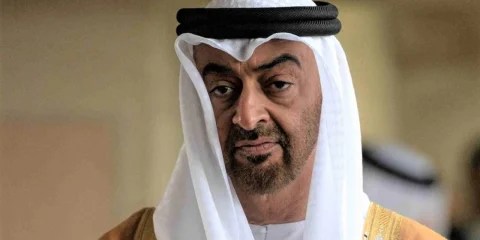
In Kuwait alone—less than 150 kilometres across the Gulf from Iran—the United States maintains a major military hub of approximately 13,500 personnel spread across installations such as Camp Arifjan and Ali Al Salem Air Base. To its south, Saudi Arabia hosts roughly 2,700 U.S. troops, centered at Prince Sultan Air Base in Al Kharj. Elsewhere in the Gulf, every state hosts either a US military presence or provides access and defence cooperation under bilateral agreements: Qatar houses more than 10,000 personnel at CENTCOM’s sprawling forward headquarters at Al Udeid; Bahrain hosts around 9,000 personnel at the headquarters of the US Fifth Fleet; the UAE accommodates approximately 3,500 personnel at Al Dhafra while providing deep-water naval access at Jebel Ali; and Oman offers strategic port and airfield access under bilateral agreements, despite having no large permanent US troop presence.
Beyond the Gulf monarchies, Washington maintains approximately 2,500 troops in Iraq and around 900 in northeastern Syria under Operation Inherent Resolve. To Iran’s northwest, the US operates from Incirlik Air Base in Türkiye— a NATO logistics and intelligence hub too. Until its withdrawal from Afghanistan in 2021, American forces also maintained a major military presence along Iran’s eastern frontier, supported for two decades by extensive supply routes and intelligence cooperation through Pakistan. Although the US lies nearly 10,000 kilometres from Iran, it has constructed an unparalleled regional military architecture of permanent bases, rotational deployments, naval facilities, pre-positioned equipment, access agreements, and security partnerships that stretches from the Eastern Mediterranean across the Gulf to the western Indian Ocean. Combined with the military capabilities of close allies—including Britain, France, and Türkiye—this network almost literally surrounding Iran from all sides. The common thread underpinning this posture has long been the protection of regional partners, the safeguarding of global energy routes, and the defence of US strategic interests.
Yet, this foundational premise has collapsed under the weight of the US-Israeli war on Iran, which has fundamentally transformed the entire regional security landscape. This “war of choice” has exposed how a security arrangement once marketed as an ironclad insurance policy has devolved into a primary strategic liability.
Rather than serving as an effective deterrent, large and static American military installations now act as strategic liability—drawing Iranian retaliatory strikes while denying host states true autonomy or the promised protective shield.
The Gulf states have discovered, at a heavy price, that they are trapped in an impossible paradox: their sovereign territory serves as a staging ground for military operations they were never consulted about—at least that is what they say publically –instantly transforming their critical infrastructure, oil facilities, and urban centers into high-priority targets. Compounding this vulnerability is the stark geopolitical reality that while Washington may eventually pivot away or withdraw—much as it did from Afghanistan—Iran is a permanent neighbour that is going nowhere.
Beyond the immediate threat of missile strikes, the presence of these US installations directly undermines the core national strategies of the Gulf monarchies. Mega-development projects and economic diversification plans—from Saudi Arabia’s Vision 2030 to Dubai’s global trade hubs—rely entirely on an image of absolute regional stability, investor confidence, and open maritime transit. By hosting forward US bases, host nations inadvertently tie their economic futures to Washington’s military posture, creating an environment of perpetual crisis. Furthermore, defending these expansive American footprints forces host militaries to consume their own finite air-defense interceptors and defense budgets to guard US assets rather than securing their own national borders.
At the same time, while almost all Gulf States have, at least publicly, refrained from taking direct offensive action against Iran to avoid total escalation, they recognise that they are already viewed as passive participants in the wider conflict.
Maintaining this precarious balancing act is becoming increasingly difficult against rising domestic anti-war sentiment, as public anger over regional devastation steadily erodes the host governments’ domestic credibility.
For Washington, this massive network of forward-deployed bases has produced a profound strategic paradox. What was designed to project uninhibited American power now ties US freedom of action to the political consent of cautious host nations. When host governments impose strict sovereignty restrictions—refusing permission for US forces to launch offensive sorties or intelligence missions against regional adversaries from their soil—the Pentagon finds its multi-billion-dollar installations functionally sidelined during critical military surges. Instead of providing seamless operational flexibility, these fixed, highly vulnerable outposts transform into costly “imperial entrapment” liabilities: requiring thousands of US troops, high-end missile defense batteries, and constant naval escort deployments simply to protect the bases themselves, rather than executing broader strategic objectives or enabling Washington’s long-sought pivot to the Indo-Pacific. With the conflict between the US and Iran reigniting, Trump is demanding that the Gulf states pay once again to protect the Strait of Hormuz—a vital transit route that never closed until the war was started by Trump, not Iran.
This strategic calculus becomes infinitely more complex when factoring in Israel’s role in the regional security outlook. In recent years, certain Gulf states—most notably the UAE—operated under the premise that normalization and closer security alignment with Israel via the Abraham Accords would yield a net security dividend. Yet, this belief was never shared across the Gulf; nations like Kuwait, Oman, and Saudi Arabia maintained a far more cautious, sceptical stance toward Tel Aviv. The outbreak of the US-Israeli war on Tehran on February 28 utterly shattered any illusion that an Israeli-linked security architecture could bring regional stability. Instead, it exposed deep internal fault lines among the entire region. Reaching a collective, long-term security understanding with Iran was already a formidable challenge; doing so now, in the wake of a devastating conflict that forced Gulf States into the crossfire, is immensely more complicated. Moving forward, no regional framework can hold if it relies on a anti-Tehran pact anchored in Washington and Tel Aviv while ignoring the permanent reality of Iranian geographic power.
Ultimately, the fallout from the US-Israeli war on Iran exposes a fundamental reality that Washington and its regional allies can no longer ignore: the entire Middle Eastern security architecture must be fundamentally re-evaluated.
The core dilemma facing the region is that no collective security arrangement can ever be viable or effective if it seeks to exclude Iran—an indispensable, geographically permanent power armed with increasingly sophisticated offensive, defensive, and asymmetric capabilities.
Moving forward, any stable regional order must not only account for Tehran’s military leverage, but also accommodate its non-negotiable strategic demands. This includes addressing governance and transit rights over the vital Strait of Hormuz—through which one-fifth of global oil flows—and reaching a durable, pragmatic framework on its nuclear program. Regardless of the final outcome of ongoing US-Iran negotiations, the lesson for the Gulf is clear: true security cannot be built on an external garrison model that marginalizes the region’s principal indigenous power.
By Faezeh Firuzeh | Responsible Statecraft | July 16, 2026
Over the past week, the U.S. resumed heavy airstrikes on Iran, hitting over 300 targets in the first three nights alone, according to U.S. Central Command. The strikes killed more than 30 civilians and wounded more than 260, according to Iran’s Health Ministry. This U.S. bombing campaign came amid ongoing peace talks between Iran and the U.S. and while Iran held cross-border funeral processions for the late Ayatollah Ali Khamenei.
At the NATO summit in Ankara on July 8, President Trump declared the ceasefire with Iran “over.” He called Iranian officials “scum,” “sick” and “vicious, violent people.” Such insults against Iranians are not new. Weeks earlier, this aggressive rhetoric and the renewed bombing campaign were foreshadowed by the U.S. and FIFA’s mistreatment of the Iranian football team. I witnessed the rehearsal firsthand.
The opening act came well before the tournament began. U.S. officials accused the Iranian national team of attempting to smuggle Islamic Revolutionary Guard Corps operatives and barred at least eleven members of the delegation from entering the United States.
Iran’s football federation condemned the claims as “false, fabricated, and lacking any credibility.” However, the accusations played their part. By casting the Iranian football team’s attendance at the World Cup as an infiltration risk, the U.S. could frame every discriminatory action it took as a necessary safety measure.
With the premise set, the restrictions followed. The Trump administration would not allow the team to camp on U.S. soil, despite all their matches being in the United States. They were only permitted to be in the U.S. during narrow windows of time to play their matches and forced to leave immediately after. As a World Cup host, the U.S. did not extend hospitality, only hostility.
I had a front-row seat with the Iranian national football delegation during their World Cup stay — at their matches in Los Angeles and Seattle, in the Seattle hotel we shared, and at their base camp in Tijuana, Mexico, to which I traveled twice. Over days of conversations, members of the delegation came to know me. I had not set out to write about them. That came once I heard what the tournament had been like for them from the inside.
At the airport on the way to and from all three of their matches, captain Mehdi Taremi and assistant coach Saeed Alhoei were held for nearly 30 minutes and questioned. The constant detainments, security, and immigration checks made the 127 mile flight from Tijuana to Los Angeles — normally a short hop — take nearly five hours. The team, initially promised they could stay the night in Seattle given their 8 p.m. match, received an email from FIFA three days before their game saying that they were no longer permitted to stay and would have to leave immediately after the match
Driving back to my hotel at 1:30 a.m. that night — the same one the team had been booked into — I was startled to see their distinctive royal-blue bus on the highway: not parked for the night, but moving. After the post-game press conference, anti-doping testing, airport fingerprinting, and flight, they arrived back at their hotel in Tijuana at 4:40 a.m., only to eat a post-game meal near sunrise.
By refusing them hospitality, the U.S. effectively deprived Iran’s World Cup team of time to sleep and eat, even on a match day. Iran was never offered fair play or an equal chance.
Iran’s Alireza Jahanbakhsh put the team’s ask plainly: “To be honest, we don’t ask for much. We just ask for the same procedure for all the other 47 teams.” The answer came from the head of the White House’s World Cup task force, Andrew Giuliani, who told ABC News the players should thank the U.S. for “our hospitality.” After Iran was eliminated came the curtain call. The Secretary of Homeland Security Markwayne Mullin told reporters at a World Cup security briefing that he was “so happy,” that his department had “pulled their visas,” and that he “might’ve sung a song or two or maybe even danced a happy dance.”
On the same day Iran played its final match, the U.S. was bombing Iran. The players took the field while their own country was under American fire. When the players emerged from the plane in Tijuana, Mexico, at the start of the tournament, they were wearing pins reading “168” — a reminder to the world of the 168 Iranians, mostly children, who were killed on February 28, the opening day of the U.S.–Israeli war on Iran, at an all-girls’ school in Minab.
The treatment of Iran’s football team underscored the way wars are marketed to the public. Manufacturing an enemy and treating their people as a mortal danger is not realism, and does not bring security. Demonization and threat inflation are expensive habits. They foreclose possible avenues for pragmatic, effective diplomacy, and narrow the script until war looks like the only option. Even now, with no shortage of diplomats and mediators, Washington is attempting to bomb its way into negotiations. Trump said the strikes would “continue until I say it’s enough,” and threatened to bomb Iran’s bridges and power plants “next week” unless Tehran returns to the negotiating table.
The tactics used to promote the latest war on Iran, applied routinely, are a major reason Washington continues to talk itself into unwinnable and costly wars that the American people do not need. That fatal reflex didn’t end with the tournament. The World Cup was the rehearsal; bombing Iran is the show.
Faezeh Firuzeh is a Los Angeles–based writer and strategist whose work connects popular culture to foreign policy. Born in Iran, she was in the country during the 2025 U.S.–Israeli war. She previously served as managing director of the Rethinking Iran Initiative at Johns Hopkins SAIS and as a researcher at the Quincy Institute for Responsible Statecraft. She holds a master’s degree from the University of Chicago, where she studied social policy and global conflict.
Press TV – July 16, 2026
Iran’s ambassador to the United Nations in Geneva has called on the UN High Commissioner for Human Rights to unequivocally condemn ongoing US attacks on civilian infrastructure, warning that Washington’s renewed illegal war against the Islamic Republic is inflicting grave humanitarian and human rights consequences.
In a letter on Thursday, Iran’s permanent representative to the UN Office and other international organizations in Geneva, Ali Bahraini, urged the UN rights chief to publicly denounce the attacks, saying the continuing US aggression against Iran is causing serious humanitarian and human rights harm.
Bahraini called on the Office of the UN High Commissioner for Human Rights to take a clear and unequivocal stance by condemning the widespread US strikes on Iran, particularly those targeting the country’s southern ports.
He said the attacks constitute a blatant violation of international law, stressing that they have killed large numbers of civilians and caused extensive damage to civilian infrastructure and other critical facilities across the country.
As examples, Bahraini cited the targeting of sections of the Tehran–Mashhad railway, a drinking water production facility in Dehloran, wheat storage silos in the cities of Hoveizeh and Dasht-e Azadegan, fishing vessels belonging to fishermen in southern Iran, missile strikes near Baqaei Hospital in Ahvaz, and the attack on Semnan Airport.
Elsewhere in the letter, the Iranian envoy expressed regret that the Office of the UN High Commissioner for Human Rights has yet to condemn the recent US attacks.
Bahraini warned that, at a time when the territorial integrity of a UN member state has been violated and civilians continue to suffer the consequences of the assaults, the absence of a clear, timely, and firm response could create the impression that human rights protection and the implementation of international law are being applied selectively.
The appeal comes amid renewed US military attacks on Iran, which have struck civilian areas and critical infrastructure alongside other targets.
Tehran has condemned the strikes as blatant violations of international law and the UN Charter, slamming Washington for escalating regional instability and endangering civilian lives through its continued military aggression.
The Cradle | July 16, 2026
International shipping companies are avoiding crossing the Strait of Hormuz through the US-controlled alternative corridor that runs along the Omani coastline due to fears of Iranian strikes, sources told Reuters on 16 July.
After a series of Iranian strikes on ships attempting to bypass the Iranian-designated shipping channels as mandated in the Iran–US memorandum of understanding (MoU), shipping companies are reassessing the safety and viability of US military escort through the strait.
“The US doesn’t seem to have any control over the situation,” one shipping source said, noting that their firm chose to avoid the strait altogether out of concern for crew safety as security conditions worsen.
“Iran’s continued ability to target ships sailing through the Omani route means the Trump administration’s proposed solution to keep ships moving is unlikely to work,” said Torbjorn Solvedt, principal West Asia analyst at risk intelligence firm Verisk Maplecroft.
Following the resumption of US attacks on Iran and the reimposition of the US blockade on Iranian ports and shipping routes, traffic through the Strait of Hormuz has collapsed to a near-complete halt.
Kpler data shows only seven vessels transited the Strait of Hormuz on the first day of the renewed US naval blockade, down from 13 the previous day.
Just prior to the reimposition of the US blockade, Kpler reported 21 monitored transits through the Strait of Hormuz on 14 July, with vessels favoring the Iranian-approved route as the Omani corridor saw no crossings at all.
The firm also verified three additional attacks off Oman, bringing the confirmed toll to 56 incidents and 17 seafarer deaths.
More than 200 non-Iranian vessels applied for Iranian transit permits and insurance coverage in the three weeks between the signing of the Iran-US MoU and the resumption of the war, according to figures released by the Persian Gulf Strait Authority (PGSA) on Tuesday.
The authority approved 79 percent of requests, with tankers making up the largest share at 41 percent, and China and India each accounting for roughly a fifth of outbound destinations – figures that cover Iran-approved crossings only, excluding the US-escorted Omani route.
The Cradle | July 16, 2026
Iranian negotiators sent a private warning to US Vice President JD Vance earlier this year, saying that US special envoys Steve Witkoff and Jared Kushner were “abusing” their roles in the talks to profit from financial markets, Drop Site News reported on 16 July.
The Iranian negotiators sent the warnings to Vance through an intermediary during the late June talks in Lake Lucerne in Switzerland, telling him the pair cared more about profiting from insider knowledge of the negotiations than reaching a deal to end the war on Iran.
The negotiators also said that Kushner had been repeatedly leaking details of the talks to Israeli Prime Minister Benjamin Netanyahu, with one US official telling Axios that Witkoff and Kushner “talk almost every day to Netanyahu” and the head of Mossad.
The Vance outreach came after Tehran had already tried to alert the White House to the pair’s conduct, presenting evidence that “individuals close to [US] President [Donald] Trump” were abusing the war on Iran and diplomatic developments to manipulate financial markets, while warning of Witkoff’s “overall destructive role in the previous negotiation.”
Financial analysts have observed a pattern since the war began in late February of speculative bets and unusually large positions in war-linked markets – oil futures, energy stocks, and prediction markets – often preceded by Trump announcements timed just before Monday trading opens in the US, fueling public suspicion of insider trading.
Iran calculated the profits from these manipulations at around $9 billion by June and formally demanded in writing that half of it, $4.5 billion, be allocated to Tehran.
The official said the exchanged texts “will ultimately become part of the historical record.”
Financial disclosure forms released on 3 July revealed that President Trump’s income soared past $2.2 billion last year, largely built on cryptocurrency ventures that his own administration was regulating.
The Wall Street Journal reported Trump made around $1 billion from crypto deals, including a UAE state-linked investment in World Liberty Financial and proceeds from his $TRUMP memecoin, which later crashed in value by 97 percent.
Trump and those close to him have also profited from massive, highly suspicious trading spikes in oil futures and stock indexes occurring just minutes before the president issued major market-moving announcements on social media about the US war on Iran.
Economists, lawmakers, and market analysts have raised alarms over insider trading, data leaks, and market manipulation coming from the White House.
Almost $1 billion in oil futures trades were executed in early May in the minutes before an Axios report revealed a US-Iran memorandum aimed at ending the war.
Market observers noted the White House’s wild swings between war and peace rhetoric appeared to be little more than a vehicle for insiders to profit through coordinated trading on Polymarket and traditional commodities exchanges
Meanwhile, the Financial Times (FT) reported that the president’s sons, Eric Trump and Donald Trump Jr., were behind a $1.04-billion investment network funneling money into sectors championed by the White House, including drone companies pursuing Pentagon contracts.
The report also noted that Donald Trump Jr. serves as an advisor to Polymarket, where insider trading on US military action is reportedly rampant.
By Larry C. Johnson | SONAR21 | July 16, 2026
On Monday July 13, airstrikes hit the runway at Sanaa International Airport shortly after a Houthi delegation returned from the funeral in Iran for the late Ayatollah Ali Khamenei. Yemen’s Defense Minister Gen. Taher al-Aqili said on X that the runway was struck to stop a plane carrying the Houthi delegation returning from Khamenei’s funeral. The IRG defense ministry said it had exhausted diplomatic efforts to persuade Iran and the Houthis to stay out of Yemeni airspace, that it would respond to hostile aircraft “by all available means,” and held Iran responsible.
However, Israel’s mouthpiece on Axios, Barak Ravid, citing two US officials, reported that Trump gave Saudi leader MBS his backing for the strike in a phone call last Friday — MBS asked for support for military action against the Houthis and received it. The White House declined to comment directly and the Saudi embassy didn’t respond.
The proximate cause is aviation, not ground war. About ten days ago a Mahan Air flight landed in Sanaa — the first Iran–Sanaa flights in over a decade — and picked up a Houthi delegation traveling to the funeral of former Supreme Leader Ali Khamenei. Saudi Arabia blocked subsequent flights, fearing they’d be used to move weapons or Iranian military advisers to the Houthis. (Note the airport itself has been largely destroyed and out of action since Israeli strikes in May.)
Following the Saudi Attack on Sanaa, the Houthis retaliated by firing ballistic missiles and drones at Abha International Airport in Saudi Arabia’s southwestern Asir region — a mountainous area near the Yemeni border and a domestic summer destination. Saree claimed the strike. The Saudi-led coalition spokesman said air defenses “dealt with a threat from ballistic missiles” launched toward the southern region. No casualties reported.
This exchange marked the first Saudi Arabian attacks on the Houthis since the informal truce took effect in March 2022. I thought that the Saudis would retaliate on Tuesday or Wednesday for the Houthi strike on Monday … Thankfully, I was wrong. The Saudis did not follow up by launching new attacks at Houthi positions.
The Saudi attack was foolish and reckless. At present, the Saudis are able to export a bit of oil from Yanbu, a Saudi city that sits on the shores of the Red Sea. This attack on Yemen — albeit an airfield — carried the risk that the Houthis would attack the Saudi oil facility at Yanbu and close the Bab al Mandab Strait. Given the Saudi vulnerabilities if their operation in the Red Sea is suspended or closed, you would think that MBS government would be engaged in further confidence building exercises with Yemen. Nope!! The Saudis almost touched off a renewal of the war with the Houthis.
I don’t know who convinced MBS to put a full stop to further attacks on the Houthi-controlled portion of Yemen, but the Saudis have not attacked again. The Saudis are in no position financially to handle the simultaneous closure of the Strait of Hormuz and the Bab al Mandab strait. It appears that cooler heads in the Kingdom of Saudi Arabia prevailed… for now at least.
or go to
Aletho News Archives – Video-Images
Reknowned economist M. Shahid Alam offers this excellent critique of Noam Chomsky’s defective analysis of the relative influence of Oil versus the Israel lobby over US foreign policy: … continue
 Aletho News If Americans Knew No Tricks Zone
