US should start removing its troops from Germany, proposes AfD co-leader Chrupalla
Remix News | March 30, 2026
Alternative for Germany (AfD) co-chair Tino Chrupalla spoke out in favor of withdrawing American troops from Germany. During a party congress in Saxony, he stressed that, if AfD comes to power, this should be the first step in implementing the party’s program, which calls for the removal of all allied forces from Germany and a withdrawal from NATO’s nuclear weapons sharing system.
“Let’s start implementing this program by withdrawing U.S. troops,” he said, as reported by the Frankfurter Allgemeine Zeitung, cited by Do Rzeczy.
The proposal received loud applause by the audience.
Chrupalla also argued that Germany should not be involved in international military operations, praising Spain for opposing U.S. use of its bases for its conflict with Iran.
“And that is exactly right. Spain is not interfering in this war,” he said.
His criticism of American troops on German soil comes after his sharp criticism of Trump’s decision to launch a war against Iran.
“I am extremely disappointed in Donald Trump when it comes to his campaign promises,” Chrupalla during an appearance on Markus Lanz earlier this month.
“During the election campaign, he also accused Kamala Harris, that she would start World War III. And now we are on the cusp of having probably started the Third World War with Donald Trump. And that’s a breach of his word, which I really resent and which the American people also resent, who incidentally reject this war in Iran at a much higher rate than Germans. So, 70 percent of Americans do not want this war and do not support it.
Chrupalla also stated it was clear the United States was dragged into the war by Israel.
“And I think the Americans, as you can really see now if you look at all the events, were dragged into this war by Israel. There were serious negotiations where Oman, as a peacemaker, came to an agreement with Israel together with the USA, and they basically started bombing Iran on the same day. The Omani Foreign Minister has described this as a huge mistake. The entire Arab world has labeled it a mistake. The Norwegian Foreign Minister has described it as a mistake. It has also been labelled a mistake by Turkey. You can’t ignore all that. These are all countries in this region that are naturally extremely worried that this will escalate into a conflagration. And that’s what we’re seeing now. It’s a huge wildfire.”
In his most recent speech, Chrupalla also addressed Russia’s war against Ukraine. He announced that the AfD would “bring about peace” and that after the conflict ends, Ukrainians in Germany should return to their home country, criticizing the current refugee benefits system.
“This is exactly what must end. All Ukrainians must go back,” he said
Chrupalla’s speech made it clear that the AfD aims to take power in Germany, at both the state and national levels. “We must develop, moving from an opposition party to a governing party,” he said during the party convention in Löbau, as quoted by Deutsche Welle.
Germany’s next federal elections will take place only in March 2029. At that time, Chrupalla plans for the AfD to have a prime minister in Saxony and an AfD chancellor as the leader of Germany. Chrupalla also admitted that this requires further capacity-building and preparing party structures for governance.
Noting that AfD must no longer be perceived as a single-issue party, presumably referring to its focus on implementing mass deportations, and must demonstrate concrete results in government going forward.
“At some point, we will have to present our voters with successes,” he emphasized.
According to Bild reports, the party has already begun organizational preparations to take over the government by establishing a special working group for participation in the government.
Iran Red Crescent: 600 educational centers attacked in US-Israeli ‘war crimes’
Press TV – March 30, 2026
Iran’s Red Crescent Society says around 600 educational centers have been targeted during the United States’ and the Israeli regime’s unprovoked aggression against the Islamic Republic since late last month.
Razieh Alishvandi, the body’s deputy for international affairs and humanitarian law, made the remarks on Sunday, warning that such assaults violated the international humanitarian law and constituted war crimes.
The targeted sites included schools, universities, and other educational and academic institutions, she noted, adding that the attacks had endangered the lives of schoolchildren, university students, researchers, and professors, while leading to the martyrdom of many of them.
Alishvandi said the attacks took place despite the clear legal protections accorded to educational institutions under international law. “Any disregard for that protection constitutes a violation of international law and can be regarded as a war crime.”
The attacks also violate the fundamental rules governing armed conflicts, she added.
“Under international principles and rules, these centers must be protected under the Geneva Conventions, and the principles of proportionality, precaution, and distinction must be observed in this regard.”
The Red Crescent Society has so far sent more than 23 letters to the prosecutor of the International Criminal Court, documenting and reporting violations of humanitarian law throughout the unlawful aggression, including attacks on residential homes, media outlets, airports, passenger aircraft, and medical and educational centers, the official stated.
She added that a separate letter had also been sent to the president of the International Committee of the Red Cross, notifying him of the criminal nature of such assaults.
Russian Oil Tanker Arrives in Cuba Amid U.S. Blockade
teleSUR – March 30, 2026
On Monday, Russia’s Transport Ministry confirmed that the Russian oil tanker Anatoli Kolodkin arrived at the port of Matanzas in Cuba, where it remains awaiting the unloading of the petroleum products it is carrying.
The vessel is transporting approximately 100,000 tons of oil described as humanitarian aid, in a context marked by a severe energy crisis affecting the Caribbean island.
The tanker was initially escorted by a Russian Navy warship through the English Channel. However, after entering the Atlantic, the vessel continued its journey on its own until arriving in Cuba.
The operation represents the first arrival of an oil tanker to the island in three months. The move comes after the United States pressured Venezuela and Mexico to reduce or halt energy supplies to Cuba.
The island has not received oil since Jan. 9, an interruption that led to a sustained deterioration of the energy system and difficulties for the population, which depends on fuel for essential services and the functioning of the economy.
Mexico carried out the last oil shipment but later interrupted supply due to pressure from Washington.
With that chain of cuts, Cuba was exposed to a worsening of its energy situation, affecting both daily supply and the capacity for electricity generation and productive activities.
Last week, Russian Foreign Minister Sergey Lavrov said that Moscow is concerned about escalating tensions around the island and assured that it will maintain a position of solidarity with the Cuban government.
Kremlin spokesman Dmitry Peskov also reiterated Moscow’s support and said Russian authorities are discussing mechanisms to help Cuba.
“We are in constant dialogue with Cuba’s leadership and, of course, we are discussing how to help the island in such a difficult situation,” he said, adding that they are pleased the shipment of petroleum products has arrived in Cuba.
Peskov said Cuba is “under conditions of a very severe blockade” and needs refined petroleum products and crude oil “for the functioning of life-support systems in the country, to generate electricity, to provide medical or other services to the population.”
FTC Warns Visa, Mastercard, PayPal, Stripe Over Political Debanking
By Cindy Harper | Reclaim The Net | March 29, 2026
Four companies that collectively control how most Americans buy and sell things received warning letters this week from FTC Chairman Andrew Ferguson, threatening enforcement action if they deny customers access to financial services based on political or religious beliefs. The targets are Visa, Mastercard, PayPal, and Stripe.
The letters didn’t name a single specific violation, and they didn’t need to. The track record is already public. PayPal has frozen accounts of several political commentators.
Stripe cut off payment processing for President Trump’s campaign website after January 6, 2021. Both companies have spent years making unilateral decisions about who deserves access to the financial system, hiding behind vague terms of service that give compliance teams almost unlimited discretion.
“Full participation in commerce and public life necessarily requires that law-abiding individuals can access, and freely participate in, our financial system,” Chairman Ferguson wrote.
“It is inconsistent with American values to deny law-abiding individuals the ability to run their legitimate businesses and feed their families because they attracted the ire of rogue American officials, overzealous activists, or, more worryingly, foreign governments seeking to control public discourse,” he continued.
“That is why President Trump’s August 7, 2025, Executive Order on debanking makes clear that it is unacceptable to debank law-abiding citizens due to ‘political affiliations, religious beliefs, or lawful business activities.’”
Ferguson’s letters lean on Section 5 of the FTC Act, which prohibits “unfair or deceptive acts or practices.”
The logic is that if your terms promise equal access and you cut someone off for their politics, that’s deceptive. “As an American citizen, I abhor and condemn any efforts to debank or otherwise deny law-abiding consumers access,” Ferguson wrote, citing Trump’s August 2025 executive order on debanking.
He told Visa and Mastercard they’re responsible not just for their own conduct but for member banks on their networks. “Equally concerning is the conduct of payments providers and payment networks that turn a blind eye when their financial institution members debank consumers for these reasons,” he wrote.
PayPal declined to comment. Visa and Mastercard didn’t respond. Only Stripe pushed back: “At Stripe, we do not restrict access to our services based on political viewpoints or affiliation.”
Ferguson’s letters describe payment services as “essential for Americans’ participation in everyday commerce, and, directly or indirectly, for the exercise of core rights and freedoms.” It treats access to payment infrastructure not as a privilege companies can revoke at will, but as something closer to a necessity.
The real question is whether letters become action. The FTC opened no investigations and announced no penalties.
Russian tanker approaches Cuba despite US oil blockade
RT | March 30, 2026
Cuba is set to receive a humanitarian oil shipment from Russia as early as this week, following months of a US blockade that has led to severe fuel shortages and recurring power cuts across the island, the New York Times has reported.
The Russian tanker Anatoly Kolodkin, carrying roughly 730,000 barrels of crude, is approaching the island nation’s territorial waters and could reach the port of Matanzas by Tuesday, according to vessel-tracking services.
Despite US Coast Guard ships being present in the region, “the Trump administration did not order those vessels to act,” an official familiar with the matter told the Times on Sunday.
“Barring orders instructing it otherwise, the Coast Guard planned to let the tanker reach Cuba as of Sunday afternoon,” the source added, speaking on condition of anonymity.
The White House has yet to comment publicly on the reported decision, after US President Donald Trump repeatedly threatened tariffs on countries exporting fuel to Cuba.
The Caribbean nation has faced severe fuel shortages and power cuts in recent months after Venezuela, once Havana’s closest ally, halted oil shipments following pressure from Washington. Multiple international fuel deliveries have been disrupted, vessels linked to Havana have struggled to secure supplies, and some have been turned away or intercepted – with at least one escorted away from Cuban waters, according to ship-tracking data.
Earlier this month, Havana agreed to enter talks with Washington in a bid to defuse tensions and avert a humanitarian crisis. Cuban President Miguel Díaz-Canel confirmed that negotiations were ongoing and aimed at “finding solutions through dialogue to the bilateral differences we have between the two nations.”
Trump, however, has not abandoned his stated intention to take over the island “one way or another.” On Friday, he said Cuba could be “next” following what he described as successful US military operations in Venezuela and Iran.
Marandi: Yemen joins the war – Red Sea could be blocked next – Saudi regime at risk
Glenn Diesen | March 29, 2026
Seyed Mohammad Marandi discusses the ongoing escalation in the Iran War—and why Yemen’s sudden entry could be a game-changer. Marandi is a professor at Tehran University and a former advisor to Iran’s Nuclear Negotiation Team. (Some of the video is lagging due to the ongoing bombing of Tehran). Recorded 29.03.2026.
Follow Prof. Glenn Diesen:
- Substack: https://glenndiesen.substack.com/
- X/Twitter: https://x.com/Glenn_Diesen
- Patreon: https://www.patreon.com/glenndiesen
Support the research by Prof. Glenn Diesen:
- PayPal: https://www.paypal.com/paypalme/glenndiesen
- Buy me a Coffee: buymeacoffee.com/gdieseng
- Go Fund Me: https://gofund.me/09ea012f
Pro-Palestinian French member of European Parliament denied entry to Canada
MEMO | March 29, 2026
Rima Hassan, a French member of the European Parliament of Palestinian origin, said late Saturday she was denied entry to Canada hours before her scheduled flight, Anadolu reports.
“I was prevented from traveling to Canada: a troubling obstruction to parliamentary work and freedom of expression,” Hassan wrote on X.
Hassan is affiliated with France’s left-wing party La France Insoumise (LFI).
The party said Hassan had been invited to speak at two conferences in Montreal and that her initial electronic travel authorization had been approved by Canadian authorities.
However, she was informed by email late Friday, on the eve of her departure, that her application was under review, the party said.
Hassan said Canadian authorities requested extensive personal records just hours before her flight to reassess her travel authorization, describing the move as a “disproportionate request” unrelated to the stated grounds.
According to LFI, the review cited an alleged failure to disclose a prior visa refusal or denial of entry to another country, as well as an alleged failure to report a criminal offense, arrest, formal investigation or conviction.
The party said these issues relate to matters “directly linked to her political engagement in support of the Palestinian people.”
It added that the concerns stem from a 2025 denial of entry to Israel involving an EU delegation that included Hassan, as well as complaints for “apology for terrorism” that did not result in charges.
LFI also claimed that pro-Israel lobbying organizations had been working in recent weeks to prevent Hassan’s visit to Canada.
“The revocation of her travel authorization is part of a concerning trend of restricting the freedom of expression and movement of political representatives, as well as part of a broader pattern of censorship targeting democratic debate,” the party said.
The statement added that representatives of LFI and Canada’s New Democratic Party strongly condemned the decision, calling it “a serious infringement on the exercise of a parliamentary mandate and on freedom of expression.”
Pakistan to Host US-Iran Talks
Sputnik – March 29, 2026
US-Iran talks may take place in Islamabad in the coming days, Pakistan’s Foreign Minister Ishaq Dar said.
All parties have expressed confidence in Pakistan’s mediating role, he added, noting that China “fully supports” the initiative.
Earlier on Sunday, foreign ministers from Saudi Arabia, Turkiye, and Egypt arrived in Pakistan to discuss potential ways to permanently resolve the current conflict in the Persian Gulf.
The ministers also discussed various proposals for reopening the Strait of Hormuz, a critical chokepoint for global oil and liquefied natural gas trade.
The proposals include establishing a management consortium and charging fees, sources say.
Pakistan, which shares a border with Iran, has leveraged its strong ties with both Tehran and Washington to position itself as a key diplomatic channel in the conflict.
How Indonesia’s tilt toward the US left it stranded in the Strait of Hormuz
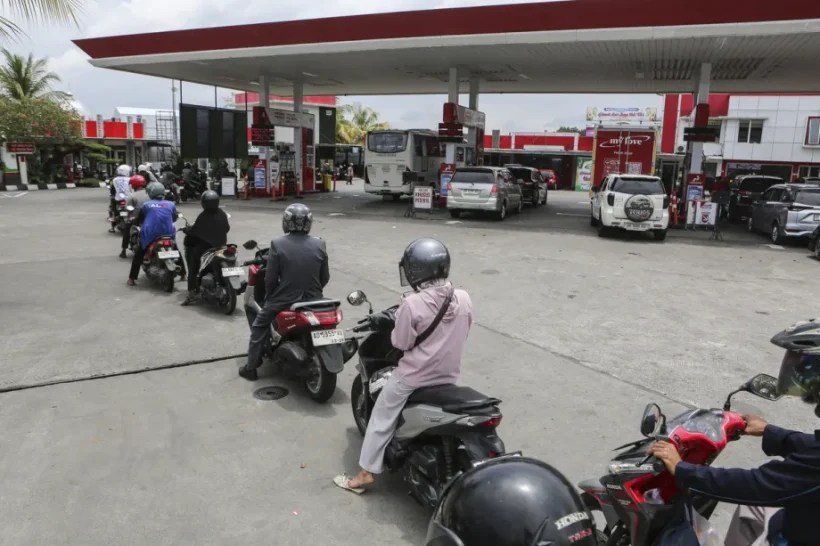
People line up for gasoline at a Pertamina’s gas station in Sukoharjo, Central Java, Indonesia, on March 26, 2026. [Agoes Rudianto – Anadolu Agency]
By Bhima Yudhistira and Dr. Muhammad Zulfikar Rakhmat | MEMO | March 29, 2026
In today’s fractured geopolitical landscape, energy flows are no longer governed by markets alone. They are shaped—often decisively—by politics. Nowhere is this clearer than in the unfolding crisis in the Strait of Hormuz, where Indonesia finds itself on the wrong side of a strategic divide.
As tensions escalate in the Middle East, Iran has adopted a selective approach to maritime access through the strait, one of the world’s most vital energy chokepoints. Rather than a blanket closure, Tehran has opted for a calibrated policy: friendly nations may pass; others must wait.
The consequences for Indonesia are immediate and stark. While countries like Malaysia, Thailand, China, India and Russia have secured safe passage for their tankers, two Indonesian vessels remain stranded. This is not a logistical hiccup. It is a geopolitical signal.
Iran’s own officials have made the logic explicit. Access is granted based on diplomatic alignment and strategic trust. Nations perceived as cooperative—or at least non-hostile—are accommodated. Others are left navigating uncertainty.
Indonesia, it appears, has misread the moment.
For decades, Jakarta prided itself on a doctrine of “free and active” foreign policy—non-aligned, pragmatic and flexible. That posture allowed Indonesia to engage multiple power centers without becoming entangled in their rivalries. But recent policy choices suggest a drift away from that equilibrium.
By signing the Agreement on Reciprocal Trade (ART) with the United States and joining the Board of Peace (BoP), Indonesia has moved beyond nominal non-alignment into visible proximity to the US orbit.
The ART is not merely a trade deal; it reshapes tariffs, supply chains and regulatory frameworks in ways that bind Indonesia more closely to U.S.-led economic and security systems. Meanwhile, the decision to join the BoP—widely criticized at home as a strategic misstep—signals alignment with Washington’s Middle East posture, particularly in the context of Gaza.
In Tehran’s eyes, these moves blur the line between cooperation and alignment. In a conflict environment defined by binary loyalties, even economic agreements and diplomatic platforms are read as strategic signals. In that context, perception is policy.
The cost of that perception is now measurable.
First, energy security. The Strait of Hormuz handles a significant share of global oil shipments, and disruptions there ripple across supply chains worldwide. If Indonesian tankers cannot pass freely, the country must source crude and liquefied petroleum gas from alternative routes—longer, riskier and far more expensive.
Shipping costs rise. Insurance premiums spike. Subsidy burdens swell. In a country where energy prices are politically sensitive, the fiscal implications are profound. What begins as a diplomatic miscalculation quickly becomes a budgetary strain.
Second, competitiveness. Malaysia and Thailand, having secured passage, are better positioned to maintain stable energy inputs and export flows. Their manufacturing sectors—already integrated into global supply chains—gain an advantage over Indonesia’s.
This is not just about oil. It is about the broader architecture of trade. Delays in energy supply affect production timelines. Disruptions in shipping lanes threaten exports of automotive components, industrial goods and commodities. In a tightly coupled global economy, reliability is currency—and Indonesia risks devaluation.
Third, macroeconomic stability. Higher import costs feed directly into inflation. A widening subsidy bill pressures public finances. And as external balances deteriorate, the rupiah faces renewed volatility. These are not abstract risks; they are the building blocks of economic stress.
All of this stems from a single, uncomfortable reality: geopolitics has overtaken economics.
Iran’s policy in the Strait of Hormuz underscores a broader shift in global order. Strategic chokepoints are no longer neutral spaces. They are instruments of leverage. Access is conditional. Neutrality, if not actively maintained, is easily questioned.
Indonesia’s response so far—continued negotiation and diplomatic outreach—may yet yield results. But negotiation from a position of ambiguity is inherently difficult. Other countries have secured passage not merely through dialogue, but through clear, consistent alignment in the eyes of Tehran.
Jakarta must therefore confront a difficult question: can it afford its current trajectory?
Recalibrating foreign policy does not mean abandoning partnerships or retreating into isolation. It means restoring balance. Indonesia’s strength has always been its ability to engage across divides—to be trusted by competing blocs precisely because it was not seen as belonging to any of them.
That credibility now needs rebuilding.
The immediate priority is practical: secure the release and passage of Indonesian vessels, stabilize energy supply and prevent further economic fallout. But the longer-term task is strategic. Indonesia must reassess its positioning in a world where neutrality is no longer assumed, but demonstrated.
The Strait of Hormuz crisis is a warning. It reveals how quickly global alignments can translate into tangible costs—and how vulnerable even large economies can be when geopolitical signals are misread.
For Indonesia, the lesson is clear. In an era of weaponized interdependence, foreign policy is no longer a distant abstraction. It is an economic imperative.
And getting it wrong is no longer affordable.
US has no choice but to retreat from Iranian borders: Top commander
Press TV – March 29, 2026
A senior Iranian military commander says the armed forces’ crushing strikes against US military assets will leave Washington with no choice but to withdraw its forces from Iran’s borders.
Commander of the Islamic Revolution Guards Corps (IRGC) Aerospace Force, Brigadier General Seyyed Majid Mousavi, said in a post on X that Iranian forces will continue to paralyze US radar networks and logistics while inflicting casualties on their personnel across the region.
“Iran’s intelligence superiority and precision strikes will leave the US with no alternative but to retreat from Iranian borders,” Mousavi said.
The commander noted that “the wreckage of AWACS, aerial refuelers, and demolished hangars speaks for itself.”
Mousavi also vowed that the country’s armed forces will soon add “more high-value targets to this list.”
US President Donald Trump is reportedly considering “limited ground operations” on Iranian soil. Iranian officials have warned that such a move will only lead to further casualties among American troops.
Iranian armed forces have launched 86 waves of retaliatory strikes against Israeli and US assets across the region, causing casualties and billions of dollars in damages.
Notably, a US Air Force E-3 Sentry AWACS command and control plane was struck and damaged during a March 27 missile and drone attack on Prince Sultan Air Base in Saudi Arabia.
According to Air & Space Forces Magazine, this specific attack also injured more than 10 service members and damaged several aerial refueling tankers.
Military analysts describe the loss of these “flying radars” as a “big deal” that has significantly crippled Washington’s ability to manage the battlespace in the Persian Gulf.
Beyond the AWACS and tankers, Iran’s attacks have damaged or destroyed radar systems, a Terminal High Altitude Area Defense (THAAD) missile defense system and Reaper drones in attacks on US bases in Saudi Arabia, the United Arab Emirates, Bahrain, Jordan and Kuwait.
Reports have also suggested that the US and its regional allies are “burning through” their supply of Tomahawk and interceptor missiles.
Since the war began on February 28, the Pentagon has already confirmed at least 13 US troops killed and roughly 200 wounded.
Iran Retaliation Strikes Chemical Plant Near Dimona
By Kurt Nimmo | Another Day in the Empire | March 29, 2026
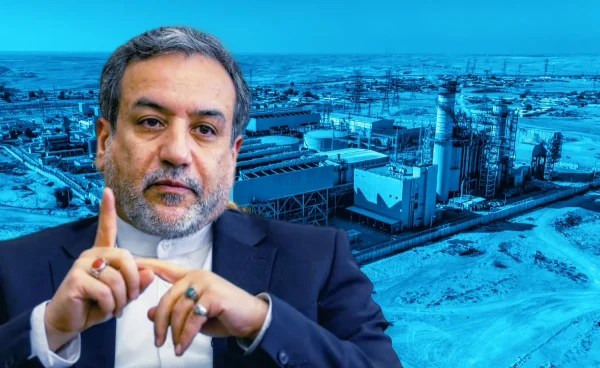
On March 28, Iran’s Foreign Minister, Seyed Abbas Araghchi, condemned Israel’s attack on key Iranian infrastructure, including steel factories, a power plant, and civilian nuclear sites. He described the attacks as a serious escalation and vowed Iran would respond. “Iran will exact a heavy price for Israeli crimes,” he warned.
That heavy price arrived the following day. Israel’s Home Front Command said sirens were sounding in the Negev Desert, Dimona, Be’era, Arad, and Ashkelon. Ne’ot Hovav, formerly Ramat Hovav, an industrial zone (in occupied Al-Naqab) southeast of Be’er Sheva, and the site of Israel’s main hazardous waste disposal facility, was targeted. The Voice of Israel reported ten warheads falling in the Negev, while other sources indicate 27 targets were struck.
The zone is home to 19 chemical factories, including Makhteshim Agan, a pesticide plant, Teva Pharmaceutical Industries (implicated in the opioid crisis), and Israel Chemicals, a bromine plant. It was reported that a disulfide factory was struck. Molybdenum disulfide is an anti-seize lubricant designed to meet the requirements of military specification. It is not known if the disulfide factory in the Negev produced this disulfide variant.
The Negev Phosphates Chemicals Company, part of the ICL Group, is also located in the Rotem Industrial Zone and situated near the Dimona reactor in Mishor Rotem. It is Israel’s sole recognized nuclear fuel cycle facility. Israel extracts uranium from Negev phosphate deposits. The Rotem complex is a critical node within a broader Israeli-US military-industrial network. In addition to phosphates, the facility produces fertilizers and high-purity phosphoric acid.
The phosphate extracted from the Rotem site is exported to several ICL facilities in the United States. ICL is the sole supplier of white phosphorus to the US military, a substance internationally banned for use in munitions. ICL white phosphorus is used by the occupation army in Gaza and Lebanon to burn people, homes, and agricultural lands.
It is important to note that Site 512, near Kmehin west of Dimona on the Har Qeren mountain, is a secretive US War Department ballistic missile early warning facility operated by the United States Army’s 1st Space Brigade.
The AN/TPY-2 Surveillance Transportable Radar, or Forward Based X-band Transportable, a long-range, high altitude digital antenna array surveillance radar, is located at the site. Iran targeted a similar radar facility at the Muwaffaq Salti Air Base in Jordan, and another radar unit in Qatar. “There are strong indications that a number of other similar systems have been destroyed or damaged, as well,” reports the TWZ Newsletter, a website covering military technology.
Initial information provided by the Israeli Ministry of Environmental Protection indicates there was a leak of dangerous ammonia gas at the Ne’ot Hovav site following the Iranian missile attack. “The situation is rapidly escalating and has reached a dangerous and potentially hazardous level,” reported the Israel Home Front Command, a civil defense operation.
Last week, a spokesperson for Iran’s Khatam al-Anbiya Central Headquarters warned “all energy, information technology, and desalination infrastructure belonging to the United States and the (Israeli) regime in the region will be targeted” in response to President Trump’s warning (since scaled back) the US would hit Iranian power plants, “starting with the biggest one first.”
On March 27, Araghchi posted to X saying Israel had violated Trump’s momentary pause and attacked two of Iran’s largest steel factories. “Attack contradicts POTUS extended deadline for diplomacy,” he said, and added that “Iran will exact HEAVY price for Israeli crimes.” In addition, Israel targeted a uranium processing facility in the central Iranian city of Yazd. Iran’s Atomic Energy Organization confirmed the strike, but said there were no casualties or radiation leaks, Aljazeera reported.
The March 29 attack is retaliation for the March 27 strike as Iran, Israel, and the United States continue to escalate a conflict that portends tectonic shocks for the global economy.
Featured Video
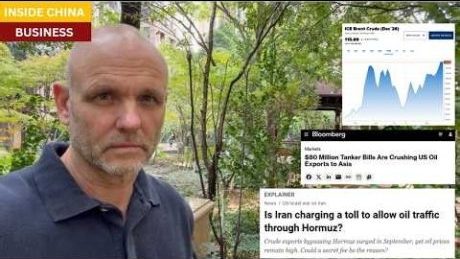
Iran is (probably) collecting tolls, and why Asia stopped buying oil from the US
or go to
Aletho News Archives – Video-Images
From the Archives
The Great Recycling Scam
By Dr. Vernon Coleman – 21st Century Wire – September 2, 2022
Recycling was introduced, worldwide, as a tool to teach citizens to become compliant.
Forcing citizens to sort their rubbish into up to nine separate bags or boxes every week had absolutely nothing to do with ‘saving the planet’ and everything to do with teaching citizens (through a mixture of fines and shame) to behave ‘responsibly’ i.e. to do as they were told without looking too closely at the rationale of what they were being told to do.
The recycling never had anything to do with protecting the planet, of course. Most of the rubbish sorted, washed and collected in the UK was taken abroad, by lorry or ship or train, and burnt or dumped. It was, quite simply, impractical and not cost effective to recycle the material that had been collected. And, of course, collecting the sorted rubbish involved massive costs in terms of cash and pollution.
Today, the recycling business has reached an apogee of lunacy. Councils introduce ever more complex rules and fees. They refuse to take away much of the waste that is collected. And those wanting to take their rubbish to a ‘recycling’ centre will probably have to make an appointment and answer a host of questions.
It is no surprise that fly-tipping has become a major problem. The biggest causes of plastic in the sea are dumped fishing gear and plastic waste (much of it officially designated as recycled) which has been dumped by ships.
The good news, however, is that in Britain, recycling rates are falling. More and more people have become aware that the whole recycling movement was just another piece of manipulative trickery.
Blog Roll
 Aletho News
- Weaponized Journalism: 2021 Sayer Ji Interview with NPR
- Beyond Netanyahu: what Israel’s election means for Palestinians
- Lithuania plans universal conscription
- Lies, Damn Lies, and Ukraine News
- Financial Times rejects Nordic demands to correct Putin call story – media
- The Case for Less Unity in Europe
- Ukraine expands minority rights under EU pressure – but Russians remain excluded
- Albania takes anti-riot crackdown cue from France
- The interest of the House of Rothschild in Ukraine
- Pentagon fires top military planner
- If Americans Knew
- An error has occurred; the feed is probably down. Try again later.
- No Tricks Zone
- Germany’s Green Energy Transition Becoming Increasingly Expensive…Another 6 Trillion Euros!
- Sudden Stratospheric Warming, Powerful El Niño Combination May Lead To Extreme Europe Cold, Energy Crisis!
- Two New Studies Find Thwaites Glacier Melt Cannot Be Driven By Human Activity Or A Warming Ocean
- E-Cars Reduce CO2 Emissions By Only 41% Compared To Internal Combustion Engine Vehicles
- Predictions Made By Renowned Climate Professor Over Past Decades Have Been Proven To Be Poor
- New Study Suggests Large Regions Of The Pacific Ocean Have Been Cooling For The Last 80 Years
- Germany’s Green Energy Debacle: High Energy Costs Force Kahla Porzellan to Close After 182 Years!
- New Study: 50 Years Of The Most Aggressive ‘Net Zero’ Policies Can Only Affect The Global Climate By 0.03°C
- US September “Heat” Was No Record…Many Records Set Decades Ago
- Latest European Green Energy Debacle; Portugal’s Largest Flagship Solar Park Insolvent!

